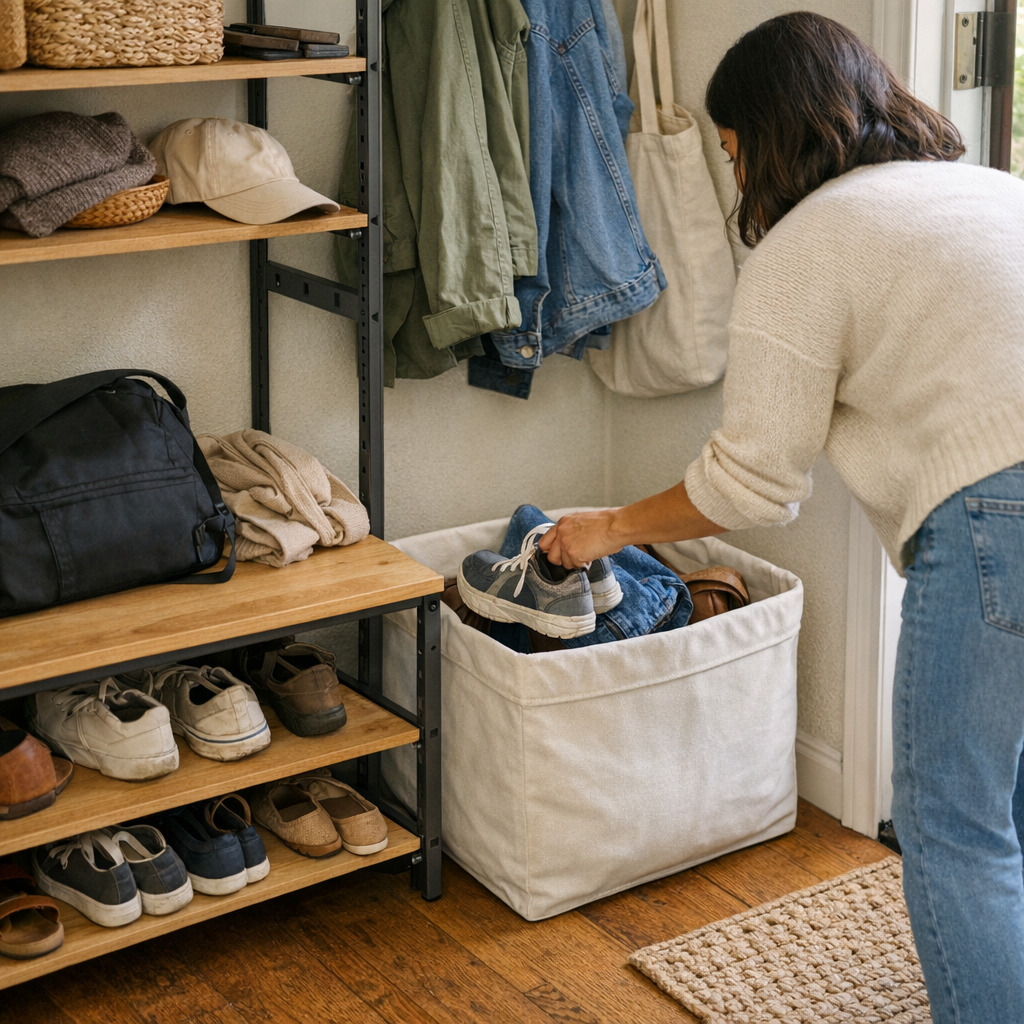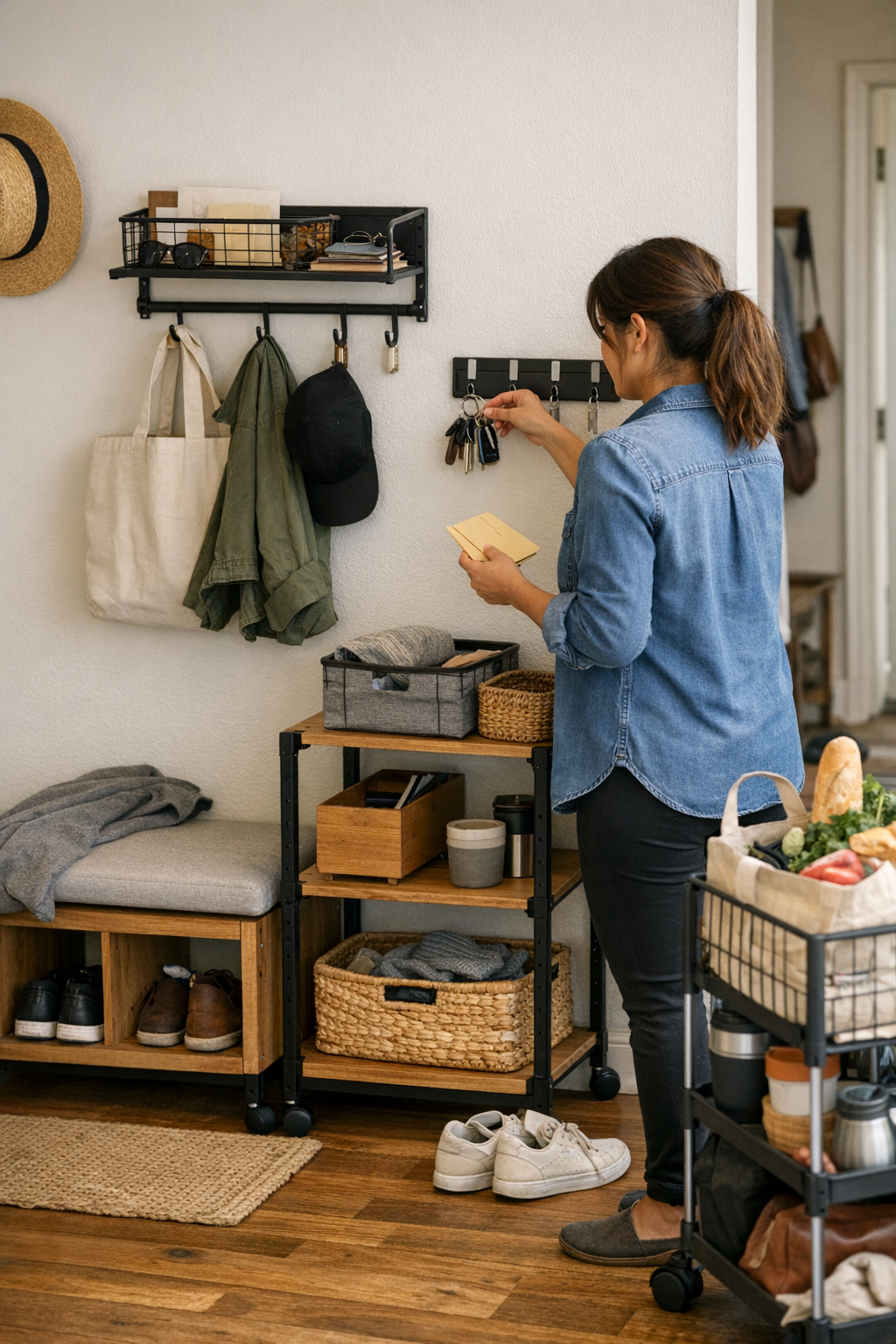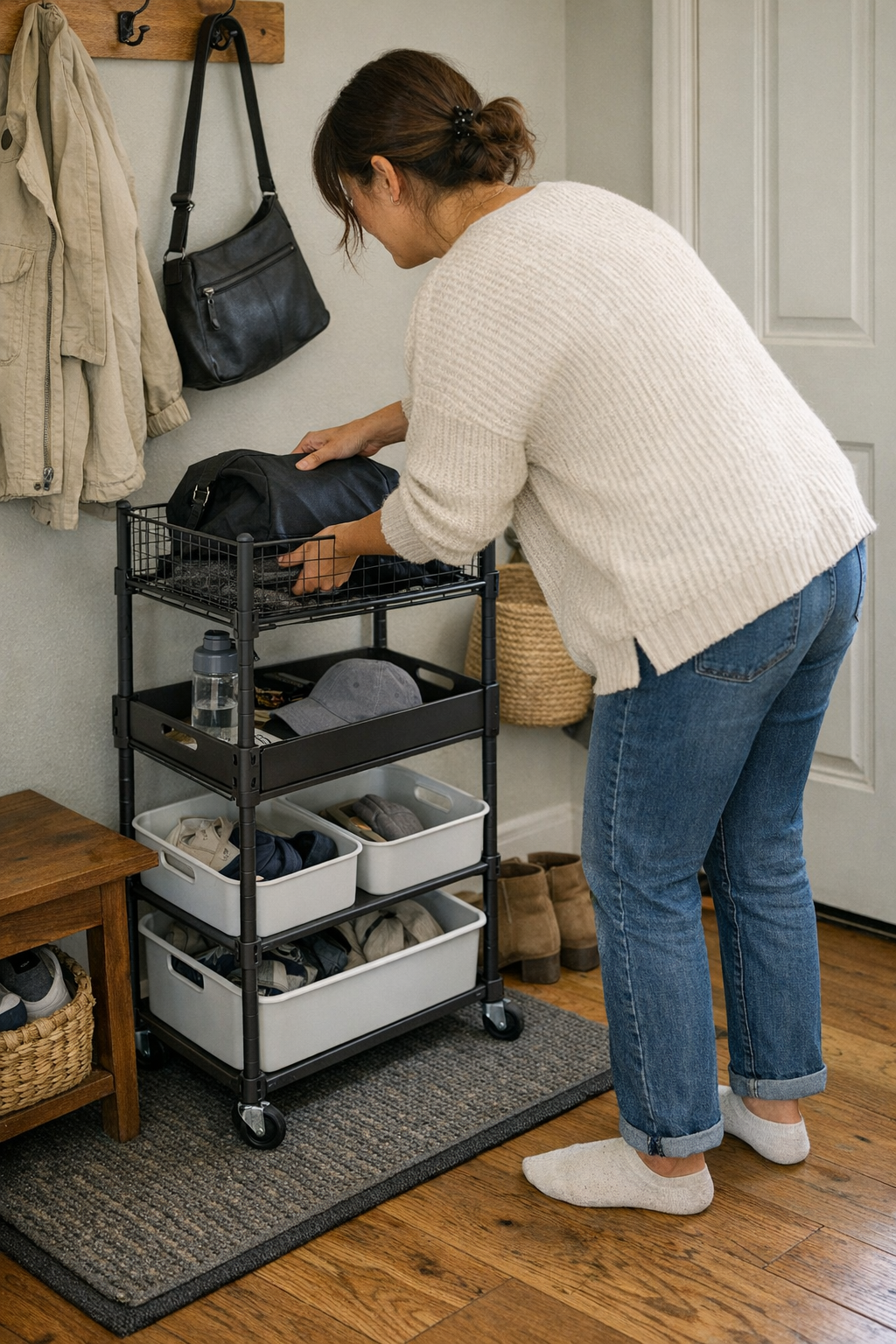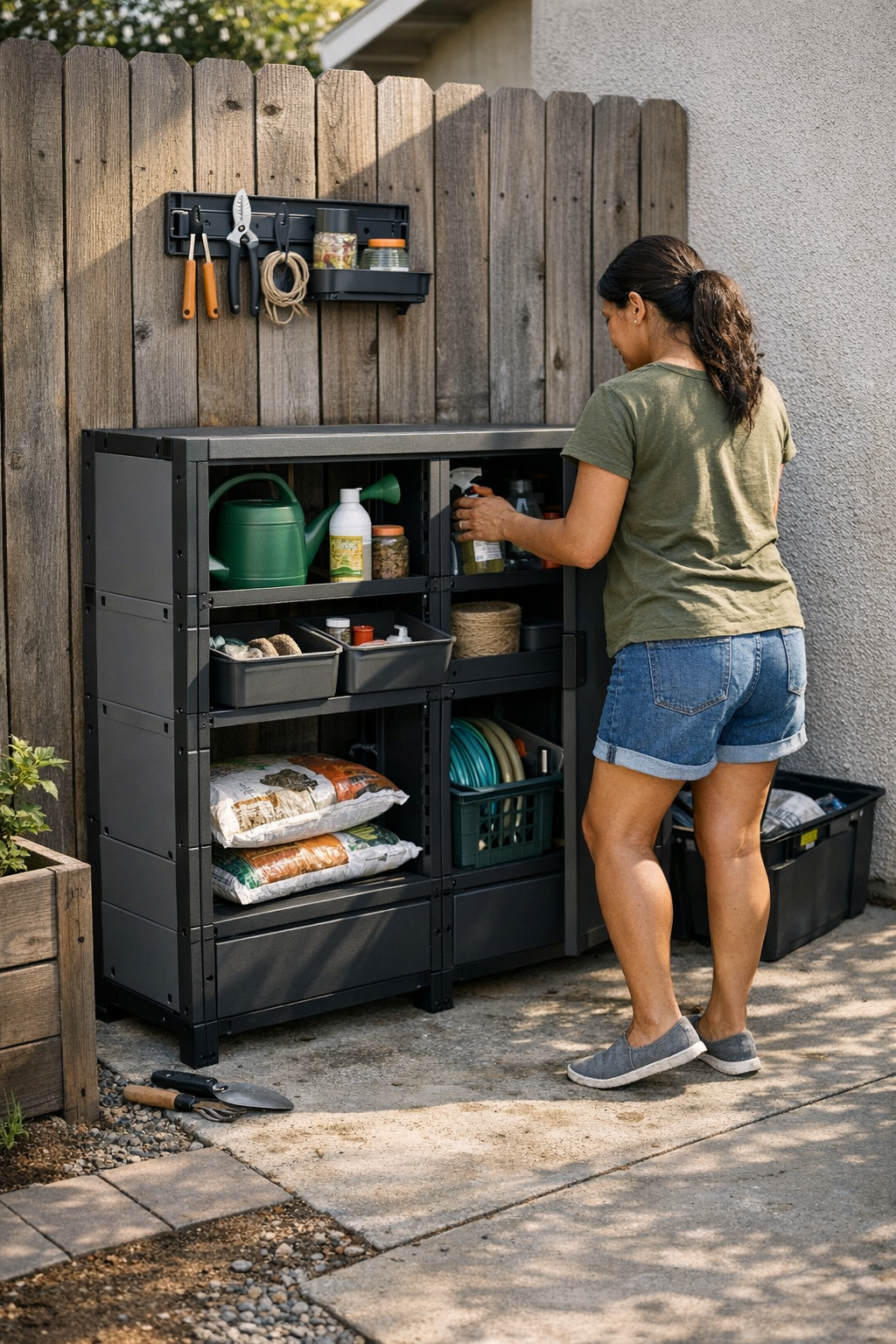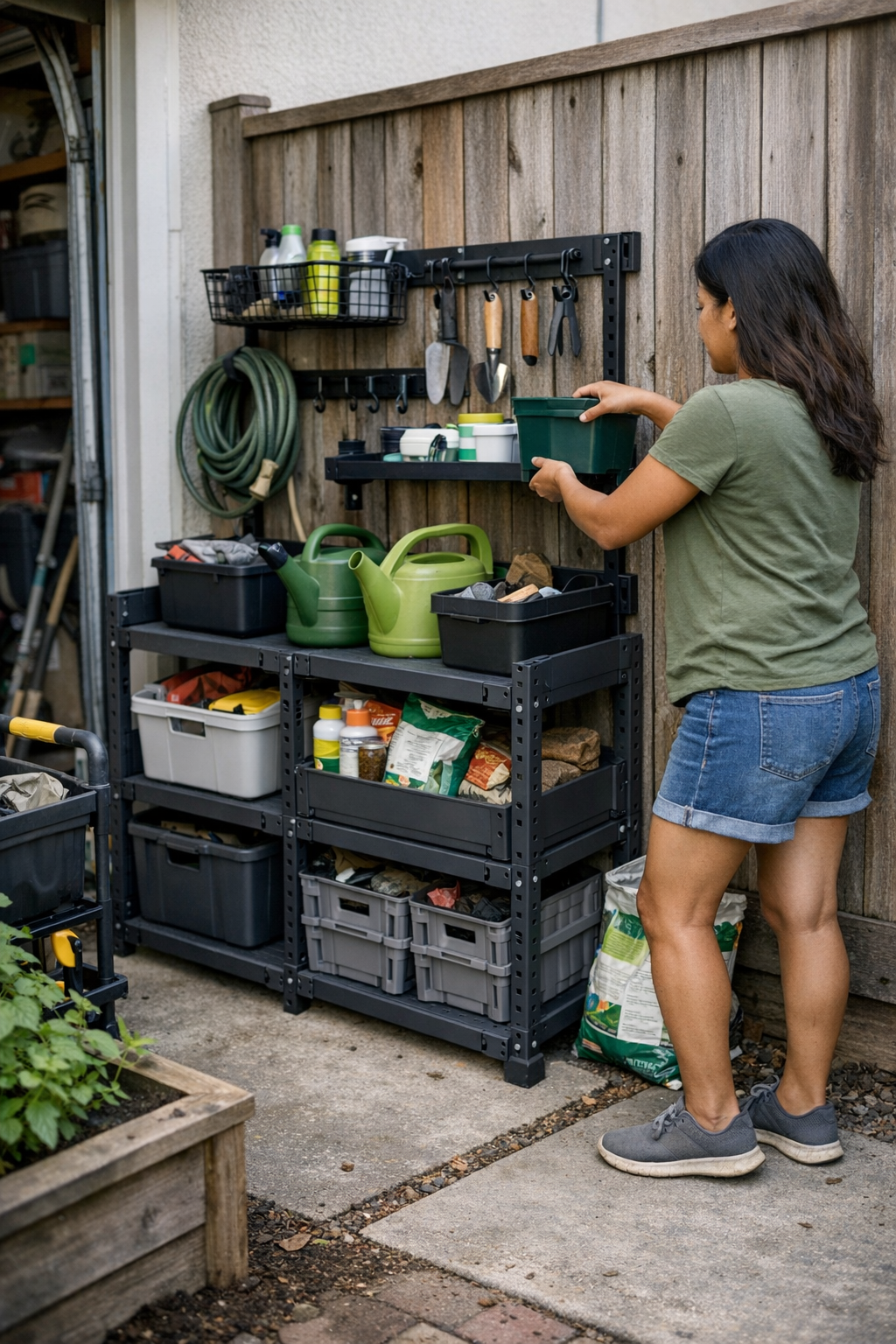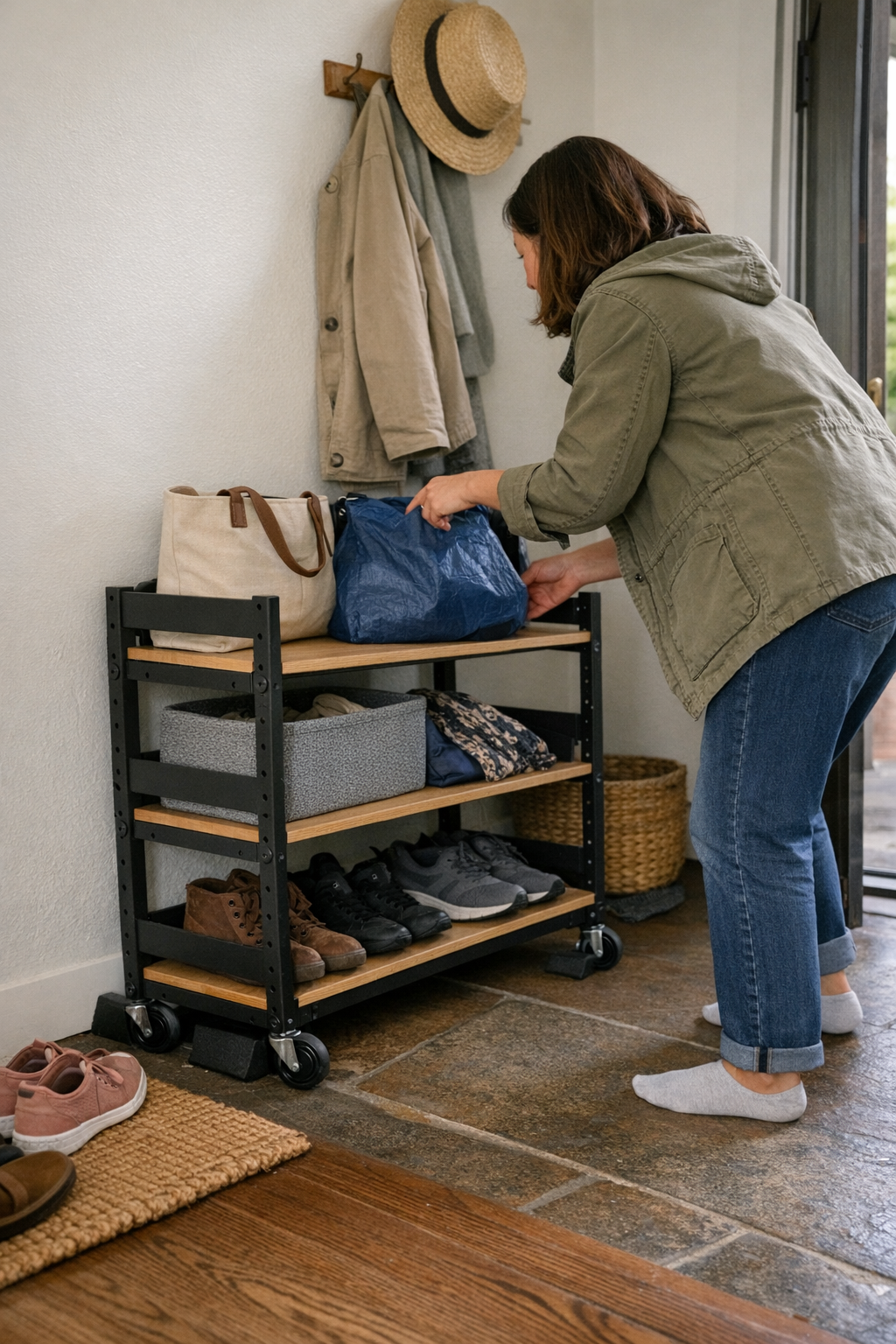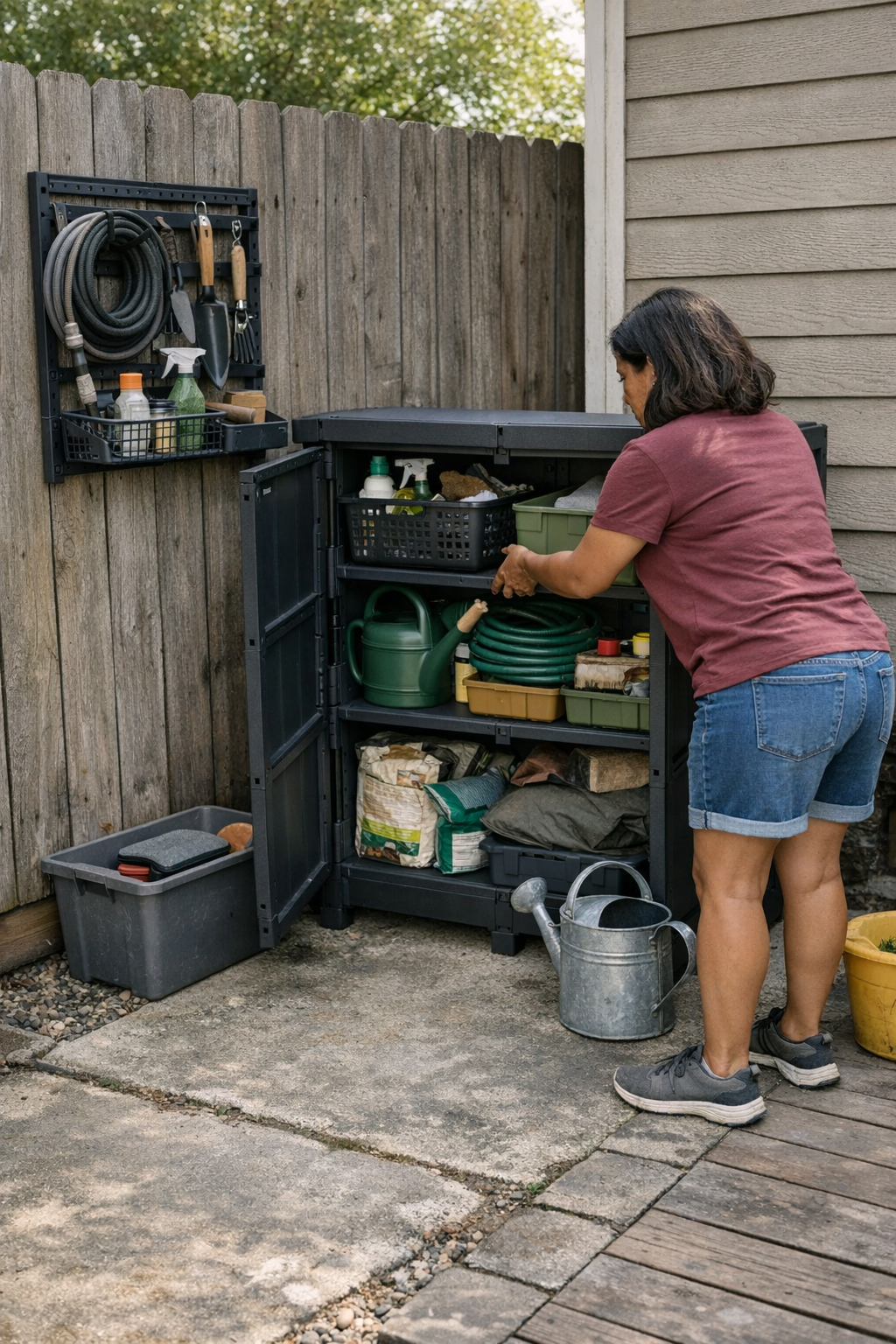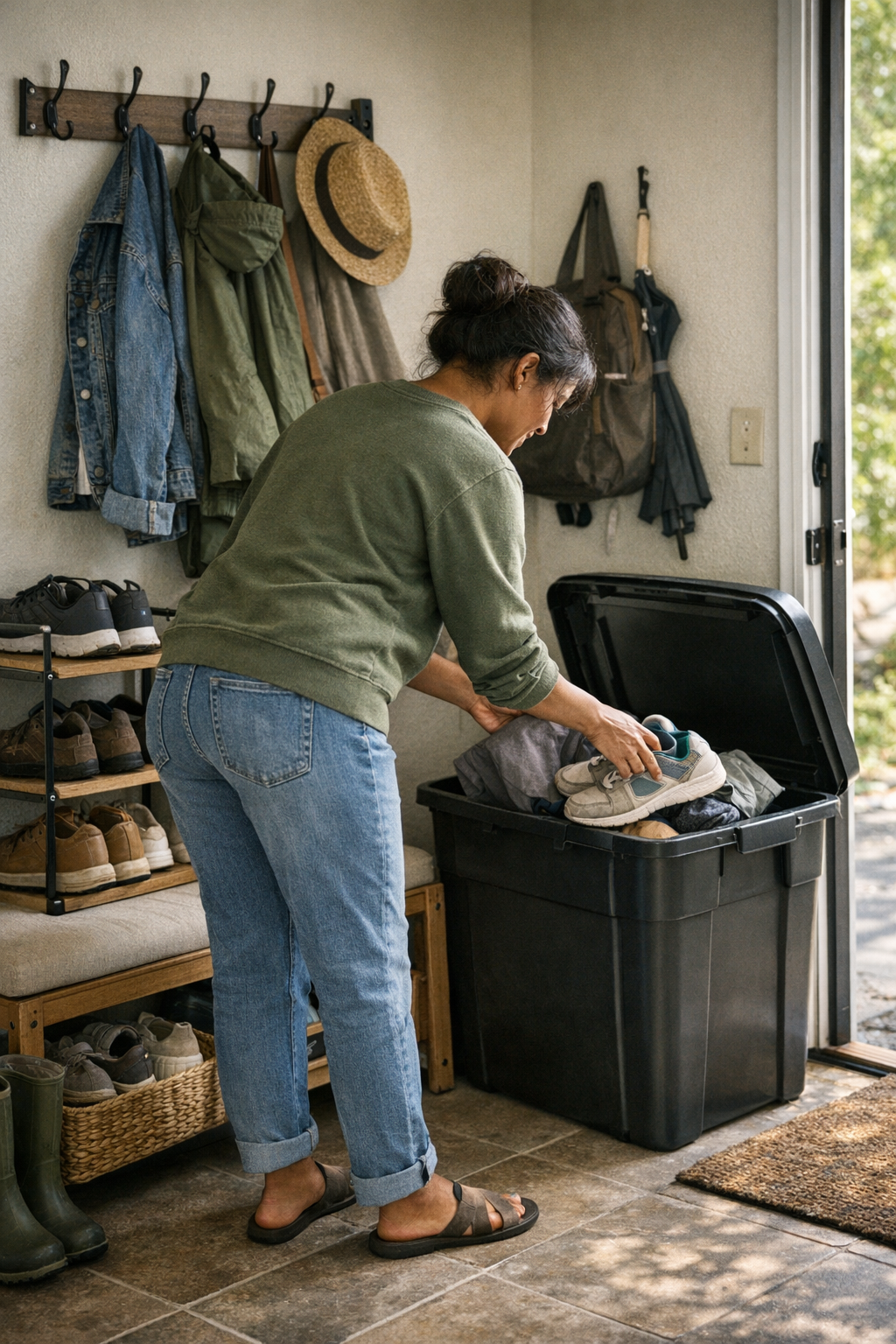
Entryway clutter doesn’t vanish—it just migrates. Without a clearly marked, reachable donate bin, every “to be donated” jacket, outgrown shoe, or extra tote circles back—stalling resets and tightening your threshold, even after you “tidy up.” Most entryways photograph well after a quick sweep, but that’s not the test: friction shows up in daily motion. Bags get dropped, nudged, or perched “just for now.” Shoes spread sideways, then edge into walkways. Items you meant to remove somehow blend back in, day after day. The result is visible only when you try to move through—there’s always something blocking, crowding, or waiting to be dealt with again. That’s the real breakdown: each reset fixes the look but barely touches the buildup under the surface.
The Entryway Reset That Never Quite Sticks
Here’s what actually happens. You come in, drop your bag, nudge shoes out of the way. Someone else repeats the maneuver, their things pushing yours sideways—now the bench is half full, half a seat, half stash zone. By the end of the week, a stray jacket or two settle on the hooks, and the neat shoe row doubles in width, stuffed with pairs nobody’s worn for months but too easy to leave. Each “night reset” means propping up piles, not clearing space. Every item you mean to offload seems to quietly migrate back—never quite making it out of the zone, always returning to the same small bottleneck.
This isn’t disorder. It’s inertia—without a true outflow, temporary turns permanent. Your bench slowly becomes overflow storage. Hooks strain, walkways shrink, organization bends under the pressure of another week’s “should go outs.” Shoe racks play host to backups you never actually wear. Even the small victories—straightening up before guests arrive—are lost the next day as donation piles blend seamlessly with the everyday shuffle.
When Outflow Is Missing, Everything Becomes Storage
Most entryways present a surface order: shoes lined up, bins stashed, everything pretending to stay under control. But without a clear exit route, every “maybe” ends up living there. Any shoes that almost fit, bags that nearly work, jackets not quite ready for storage linger because there’s nowhere obvious to put them out of rotation. Cleanup isn’t a reset; it’s a repeated debate—should this stay, or is it time to go?
The appearance stays neat, but the function quietly cracks. Items loop: floor to rack to bench, never leaving. Donation bags get filled, stall by the door, and one missed drop-off puts everything back in circulation. This slow recirculation ties up usable space, turning resetting into a pointless rearrangement instead of a true clear-out. Every pass under pressure—leaving quickly, arms full—reminds you that the illusion of control is just that: a temporary look, not a working system.
How Small Traffic Adds Up
Even living solo, “later” things add up at the edge. With every shared routine—family, roommates, frequent visitors—the pressure climbs. Forget one raincoat and now half the hooks are blocked. Two pairs of sport shoes arrive, squeeze out everyday pairs, and overflow claims floor and bench. The split between “looks clean” and “actually easy to use” grows obvious with every week until resets feel like clearing a blocked lane, not restoring flow.
The Power of a Purpose-Marked Donate Bin
Real change starts at the exit, not the shelf. Adding a dedicated, unmistakable donate bin—especially one that can take a little weather, and sits just outside the daily-use path—ends indecision. Suddenly, there’s an immediate spot for anything you’re done with. You don’t hesitate, don’t set it down for “later”—it moves from hand to bin before inertia wins.
Where you place this bin matters more than its label. Stuff it between the regular bins and it fades into the blur. Park it off to the path—narrow, sturdy, unobtrusive by the garage or backdoor—and it becomes a one-way lane for offloading. Off-season jacket? Straight in. Kids’ shoes that don’t fit? Out of the lineup in a single move. Trial bags? Gone before becoming background clutter. When the exit route is part of the physical flow, you stop cycling the same “maybe soon” objects and let your storage breathe.
From Draining Chore to Reliable Reset
With donate outflow available, resets hit actual zero—not just cosmetic order. Instead of picking through piles or digging out bench space, you move through the area cleanly. The bench holds people instead of overflow. The floor reopens. If that early-morning exit requires speed, the path is clear—no dodging “pending” items, no tripping over reuse bags, no forgetting the “to be donated” pile blocking the door. It’s not just easier; the invisible pressure disappears.
Scenes That Reveal the True Problem
- Dropped Bag, Again: A donation bag dropped by the door is sat on, tripped over, and buried under random jackets—never moved out, always back in play.
- Shoe Rows Expand: Shoes lined up on Sunday morph into double-depth by Wednesday. Each housemate adds a pair for “just inside,” nobody claims the strays, and the line sprawls until walking through means stepping over unknown shoes.
- Bench Overrun: The seat meant for pulling on boots is now a catchall—donate piles, stray groceries, gear for tomorrow, all stacked together. Sitting requires clearing it, every single time.
- Blocked Threshold: Reaching for the door, you angle around a low mound—every day’s pass adds to it, and sidestepping just becomes routine. No space regains itself without effort.
Making the Setup Hold Up in Real Life
Organization for photos is one thing. Actual transition spaces are stress-tested by repeated, impatient, hands-full use.
- Place the donate bin out of daily drop but near the exit: If it’s next to the bench, you gain outflow without swapping clutter for new clutter.
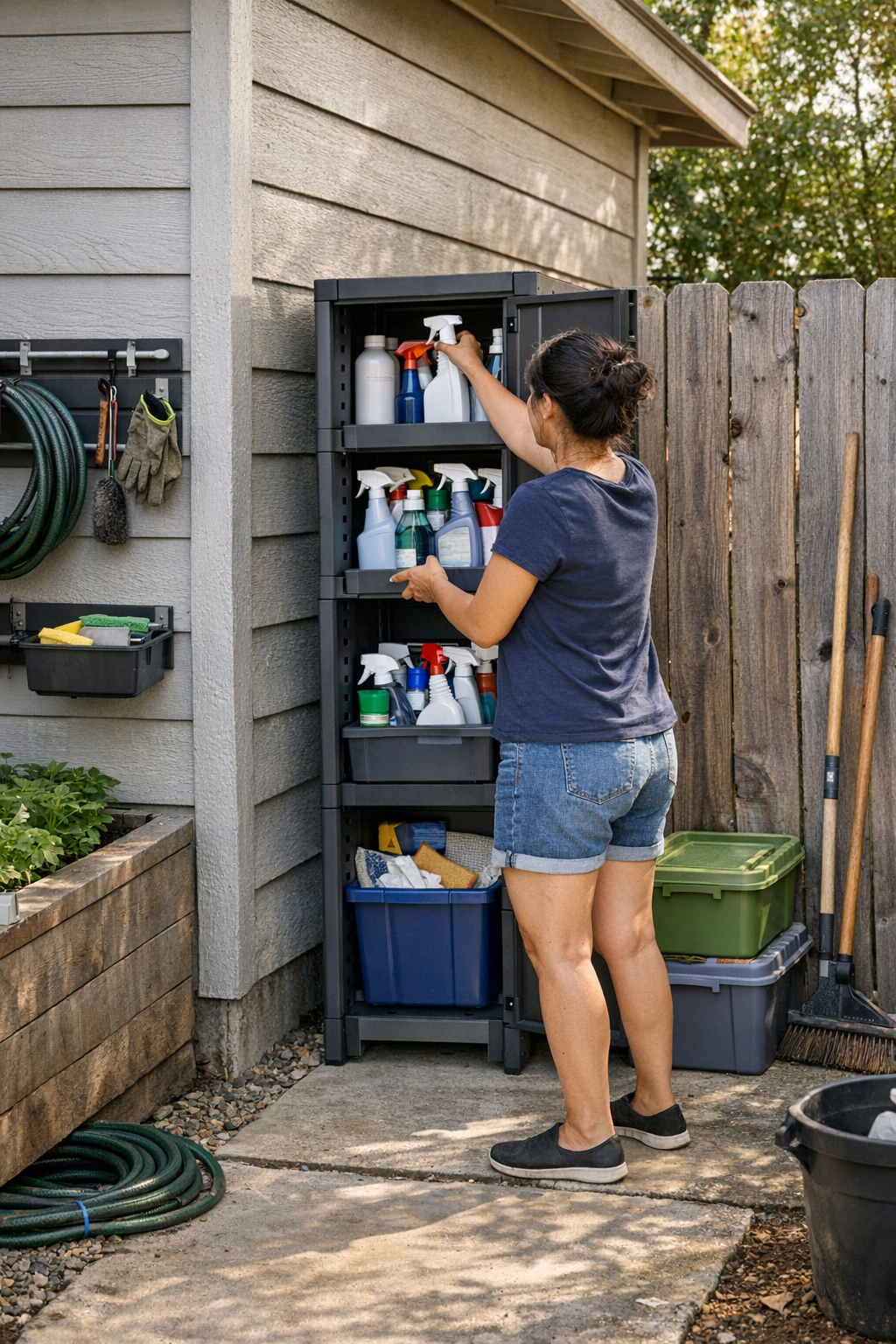
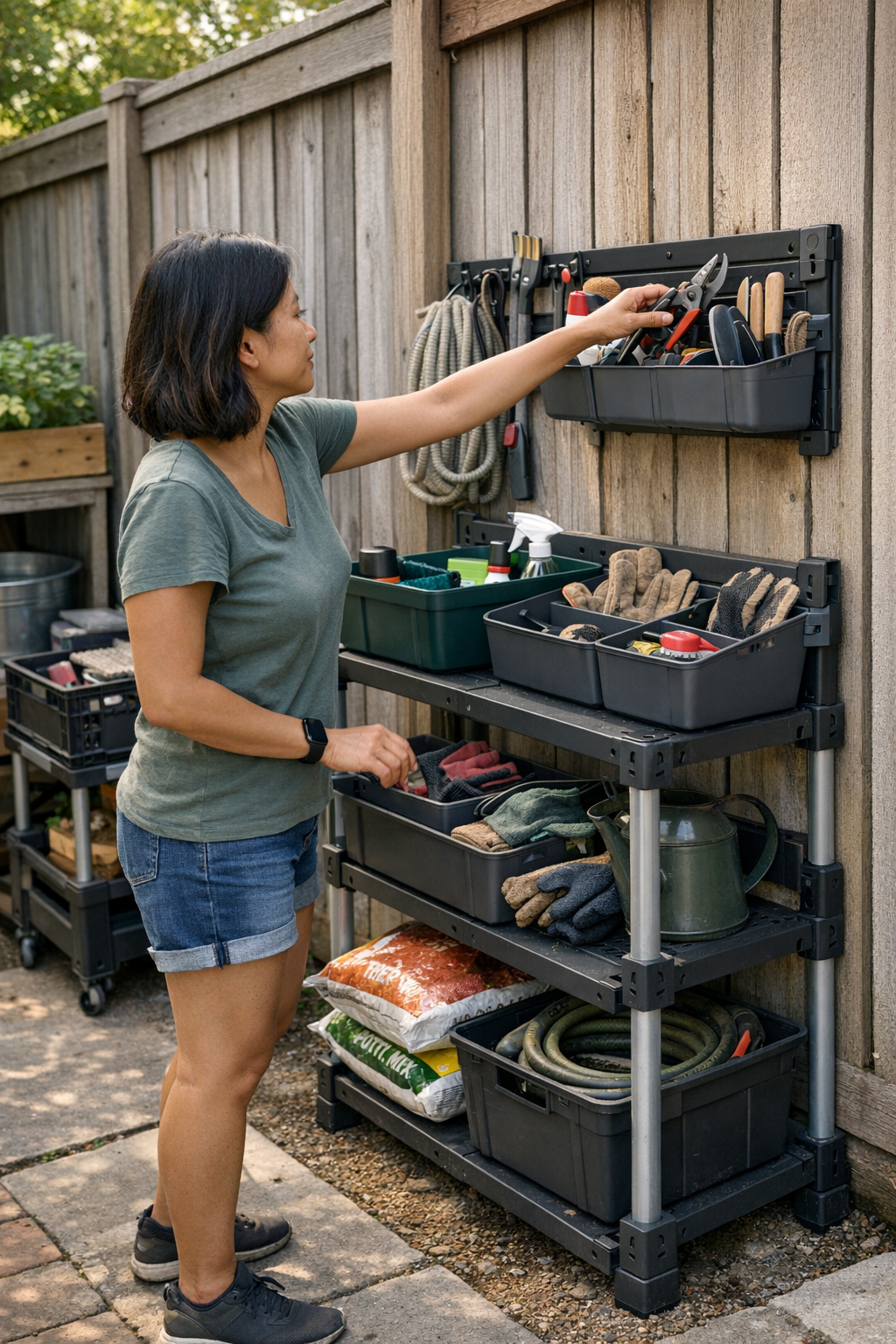
- Use a bin that stands up to real conditions: If it might take rain or muddy shoes, make sure your bin (lidded, hard-sided, vented, or weather-resistant) won’t become another “problem” to step around or excuse for delay.
Above all, keep departure zones clear and categories distinct. The donate bin should not look or feel like just another storage basket. Bold labels and a physical gap work better than good intentions. The moment you have to pause and decide “where does this go?” is when clutter cycles right back in.
Tips for Smoother Resets
Tie your sweep to a quick check of the bin. If it’s filled, carry it to the car trunk now—don’t wait for the next pile to grow. Return the empty bin immediately. And if your path from door to bin gets blocked again, that’s the signal: move the bin or reset the categories before it drifts into background buildup again.
Why the Right Bin Placement Feels Like a Real Fix
Transition-space order collapses fast when there’s no direct exit for surplus. A visible, well-placed outflow doesn’t just “reduce clutter”—it keeps movement and path open. Each time an unwanted item drops straight into the bin rather than blending back in, your threshold recovers. The difference is practical: shoes don’t re-spread, bench seats remain usable, and “reset” means the space is genuinely clear, not just optimistically arranged. Over time, this relief is real. Instead of rearranging an endless series of “almost out” objects, you build an entryway that actually carries you through, not one you have to repeatedly force your way past.
Let your setup solve real problems—not just look organized for a day. For storage and outflow solutions that withstand repeated threshold pressure, find practical entryway answers at Betweenry.