
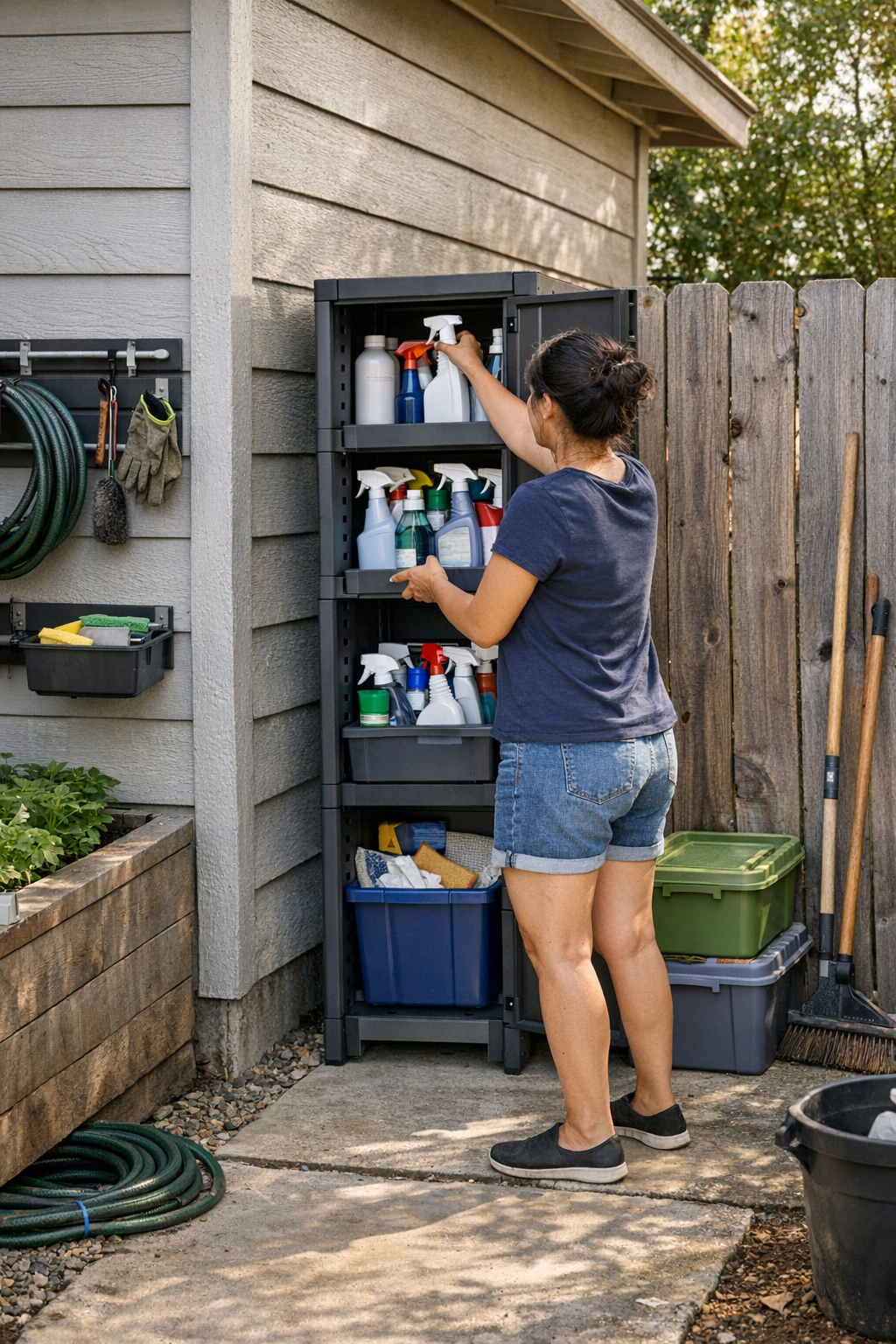
The early days with a new slim utility cabinet can be deceiving. Once the door swings shut, bottles appear lined up, labels turned, and all signs of mess out of sight—a sense of order accomplished in a single push. But this tidy look rarely survives real use. By the middle of the first week—after three laundry loads, a couple of rushed spray-and-wipe routines, and one haphazard guest-ready cleanup—the friction under the surface grows obvious. The slim cabinet turns crowded: bottles knock shoulders, tall sprays wedge against the shelf, and triggers snag under the lip just as you reach with one damp hand. Instead of smooth access, the cabinet begins to slow you down, demanding careful maneuvering every time you retrieve or return supplies.
When Visible Order Hides Everyday Friction
For laundry rooms, hallways, and utility zones with no extra floor space, a slim cabinet promises instant visual relief—clutter gone, mismatched bottles hidden, everything off the open shelf. The catch? Tidy fronts can hide brewing chaos. After the first few resets, new pain points emerge:
- Bottles packed tightly, so pulling one bumps or spins another.
- Tall containers scraping the inside of the door, flexing the shelf, or blocking full closure unless you wriggle them just right.
- Triggers wedged beneath shelf bottoms, getting stuck when speed matters most.
This isn’t a matter of preference—it’s a problem that plants itself in daily routines. When you need to swap sprays in the middle of a chore, a neat row that refuses to move with you becomes a source of hang-ups, not help. The cost shows up as lost seconds, repeated reshuffling, and a subtle buildup of frustration that spreads outward—bottles set aside elsewhere, drips on the floor, and avoidance of the very cabinet meant to restore order.
The Real Test: Repeated Reach and Return
You don’t judge a storage setup on day one, but on the fourth or fifth cycle—when your most-used bottles have migrated forward, the rarely-touched ones gather dust at the back, and every grab for a taller spray threatens a domino effect. In most routines, you reach for cleaning sprays with one hand while the other stays gloved, or doors nudge open just enough for a quick grab. Awkward layouts force you to tilt bottles, extract two to reach one, or store tall sprays on their side, inviting leaks that pool at the bottom—each retrieval gets incrementally stickier.
The small annoyances compound: two steps for every one, bottle caps scraping the frame, sideways containers pushing against the door so it barely shuts. After a few weeks, cleanup isn’t just about refilling supplies—it’s fixing the side effects of a cabinet that can’t adapt to mixed sizes or repeated use. Storage stops being neutral and starts slowing your whole pattern.
When the Setup Interrupts Instead of Assists
Picture a typical weeknight reset: You’re midway through laundry, pulling three different cleaners. The all-purpose fits and returns easily, but the tallest glass spray jams—require you to slide two others aside, angle your hand, and then tuck everything back in just to close the door. By Friday, a sticky patch forms underleaking sprays laid on their side, and now the inside smells like cleaner even when closed. The cabinet that looked sleek last weekend is now a regular cause of drips and stalled cleanups.
A cabinet that interrupts simple movements forces you into maintenance mode—not only cleaning what it stores, but cleaning the cabinet itself over and over again.
Why Shelf Spacing—Not Just Slimness—Makes the Difference
The appeal of a slim cabinet is floor space saved and clutter hidden. But inside, shelf height and usable depth matter more than outward neatness. Squeezed shelf gaps force you to store bottles only as tall as the gap allows, lay tall sprays sideways (inviting leaks), or shuffle the lineup every single time. Shelf crowding means triggers get trapped and caps scrape the frame—and with every awkward movement, the promise of order evaporates into daily friction.
The real divider: Can your tallest sprays stand upright, uncrowded, without bumping shelves or doors? If not, a slim cabinet turns into a source of slow-down, hidden spills, and reluctance to use what’s inside. Floor space is saved, but useability drops every time you need to reach in during a real, messy week.
Practical Adjustments That Change the Routine
Cabinet friction isn’t inevitable. Sometimes a single shelf adjustment—lifting one by a few centimeters—unlocks upright storage for the tallest spray bottle. Suddenly, retrieval becomes smooth, no bottles leak, and resets happen in a quick, confident cycle: out, spray, return, done. Nothing else changes, yet the cabinet is no longer a puzzle or a drip hazard. For homes juggling variable bottle shapes or switching cleaning brands, the jump from “cramped fit” to “easy fit” plays out dozens of times a week, shrinking cleanup and discouraging overflow to other shelves or corners.
Don’t let your cabinet layout trap you in a cycle of reshuffling. Always check the height of your tallest product before settling shelf positions. Sometimes, removing one shelf and allowing extra vertical space does more for flow and sanity than squeezing in another row that gets half-used and half-cleaned.
Avoiding the ‘Hidden Overflow’ Trap
Overflow is the silent enemy of enclosed storage. If a bottle doesn’t fit, it migrates—to the floor, the top, or a different shelf. Every item relocated outside the cabinet is a sign that the setup isn’t genuinely matching real use. Overflow grows quietly, visible only in the run-up to a big reset, and drags chaos across zones you meant to keep clear. The function of a cabinet disappears when it creates spillover, turning one organized section into two problem corners.
Small Real-World Tips for Smoother Use
- Depth matters as much as width. Too-shallow cabinets make triggers catch or bottles tip—even if everything technically fits side by side. Test retrieval, not just storage.
- Give the tallest bottle priority on vertical space. It’s better to have extra headroom than recurring leaks from containers laid flat or crammed in sideways.
- Keep most-used and heaviest items in the direct access zone. This shrinks return friction and discourages category drift or overflow throughout the cleaning week.
Organization That Lasts Beyond Day One
Slim utility cabinets can bring calm to small spaces, but only if shelf structure matches the real movement and pressure of daily routines. Organization that’s only strong in photos falls apart during fast resets or busy weeks. Upright storage, shelf height that fits your actual supplies, and true usable depth aren’t luxuries—they are what keep a system working instead of becoming another slow spot or cleaning burden. Function lasts only as long as the setup tracks with actual usage patterns—not just a plan on paper.
For storage that actually works—remaining resettable, storing what you use most, and preventing chaos spillover—cabinet structure must fit real-life routines, not just fill a corner neatly. When the storage flows with your actual habits, the whole cleaning process runs faster—and your cabinet stops being another hidden source of frustration or drip-prone corner.