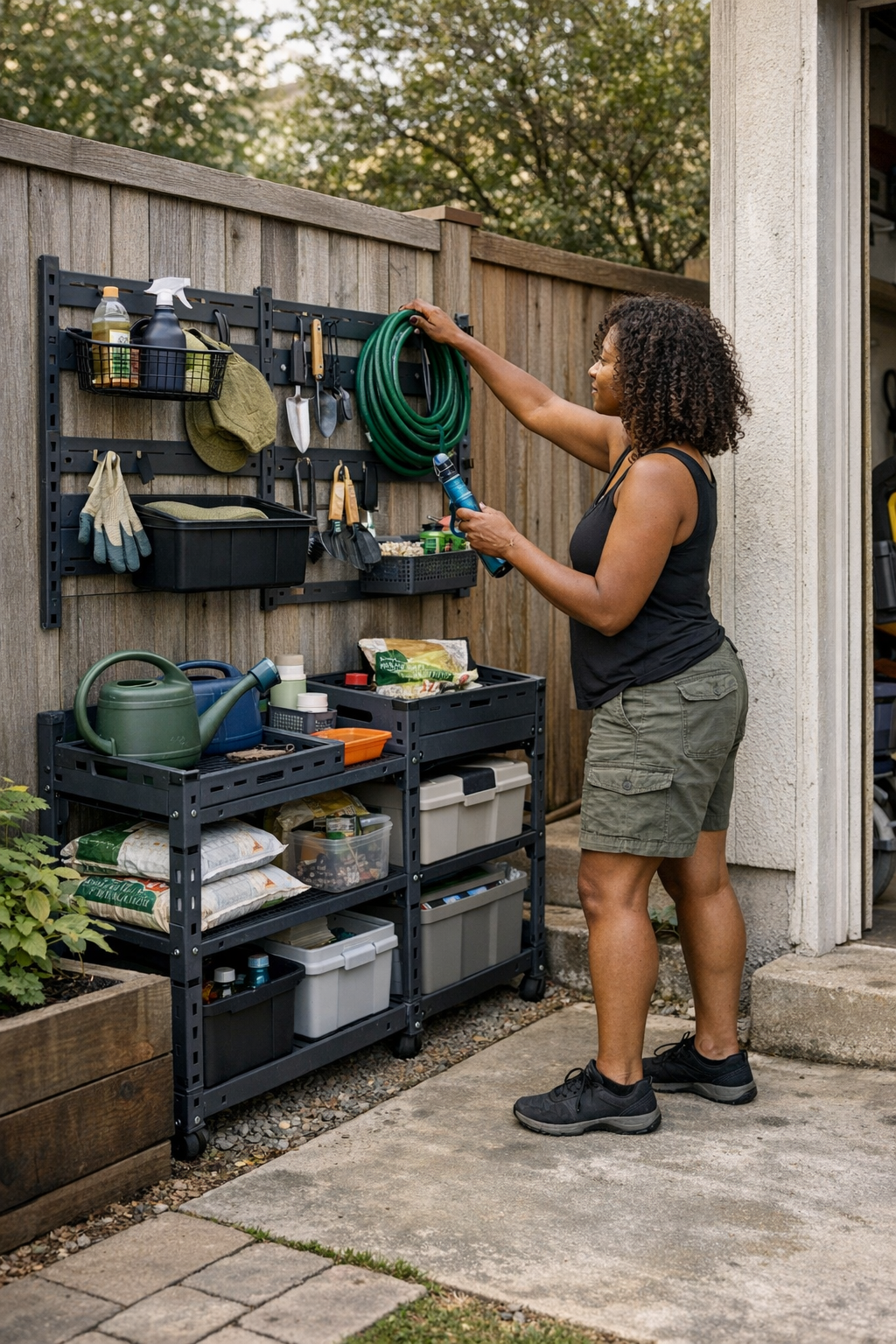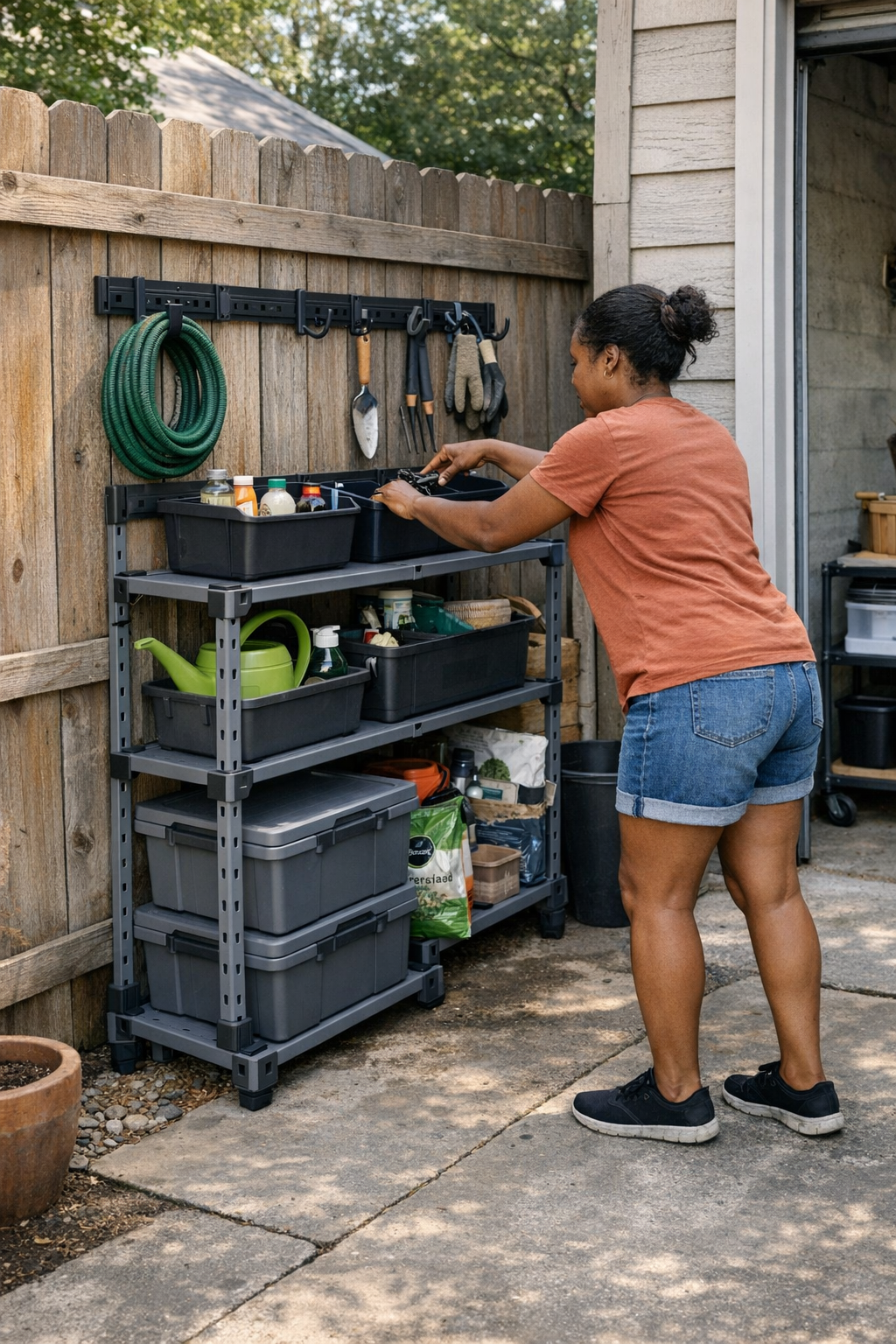
The real yard test isn’t what it looks like right after a big cleanup—it’s how it works, day after day, with shoes cutting new paths and hands grabbing tools in a rush. One floor bin might buy you forty-eight hours of calm, but by next weekend the setup starts to show its cracks: space that felt open enough now crowds your ankles, and the old “organized look” quietly turns chaotic in the edges you actually use. The most visible difference in small yards isn’t the brand of box you buy, but whether the layout stands up to real routines—especially the ones that never go perfectly, and never have enough room.
The Disappearing Path: When “Fits” Doesn’t Mean Functional
In theory, a storage box squeezed into the patio corner should solve everything. But practical outdoor use is a rolling contest between cleared zones and constant, unplanned returns. The “best fit” on move-in day turns questionable the third time someone leaves soccer shoes in front of the bin, or you have to nudge two bikes aside just to swing the lid. Before you know it, the walkway that traced a clean arc after Sunday’s reset now pinches shut, and each trip outside requires side-stepping a spill of tools, sports gear, and half-folded tarps. It doesn’t take long for “everything in its place” to morph into an obstacle course, one minor detour at a time.
One Bin, Competing Habits
Small yards rarely get used one way. Monday: someone runs out the back for a hose nozzle. By Friday: the way back is blocked by a loose bag of potting soil and a stack of muddy gloves nobody wants to touch. A single ground bin turns microscopic habits into micro-obstacles. Grab-and-go turns into scoot-and-bump, where a watering can lands on top of hand tools, and every “quick return” makes it less likely you’ll find open ground next time. Most “organized” outdoor corners leak convenience the instant you stop policing them.
Wall Storage: Freeing the Floor, Clearing the Routine
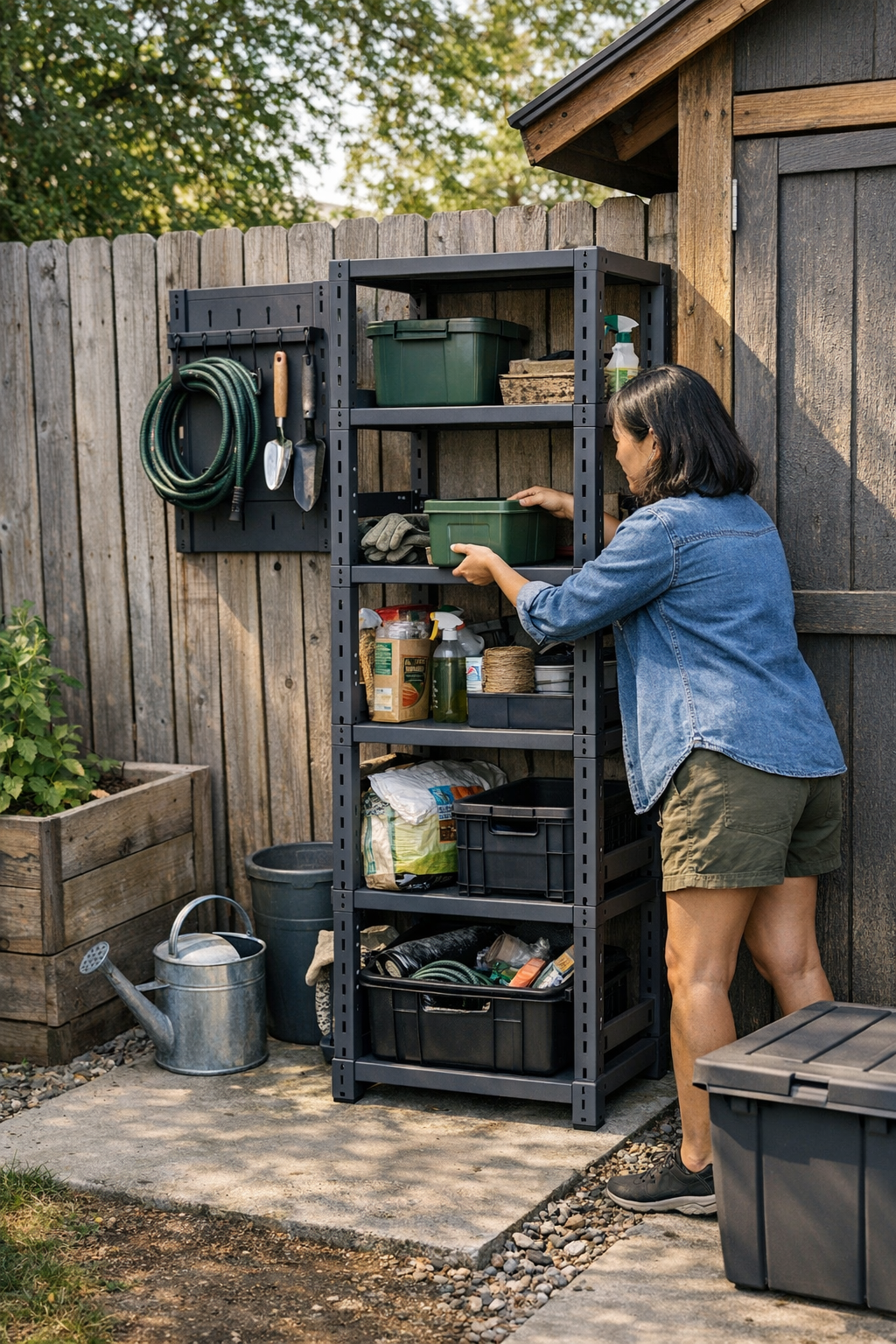
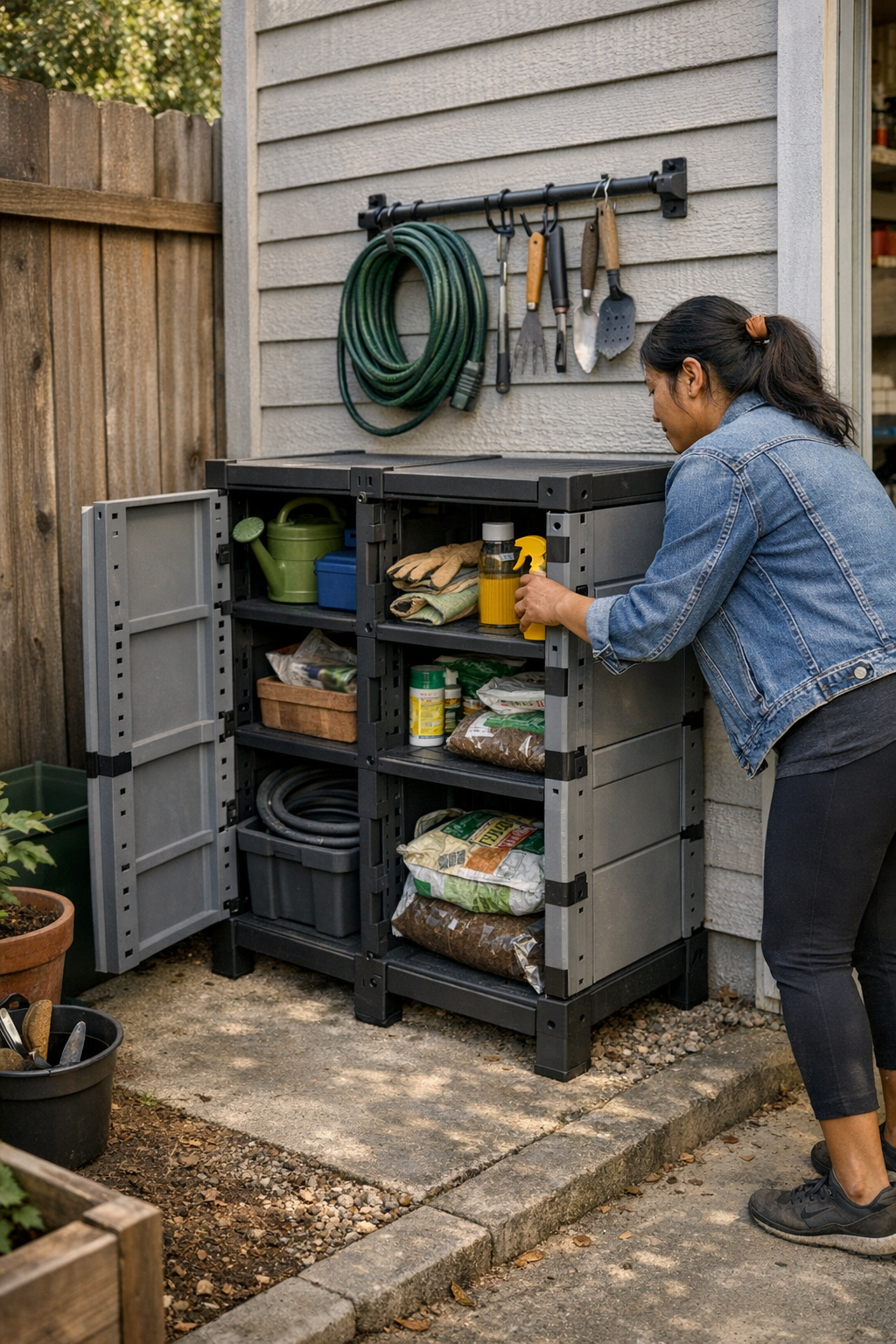
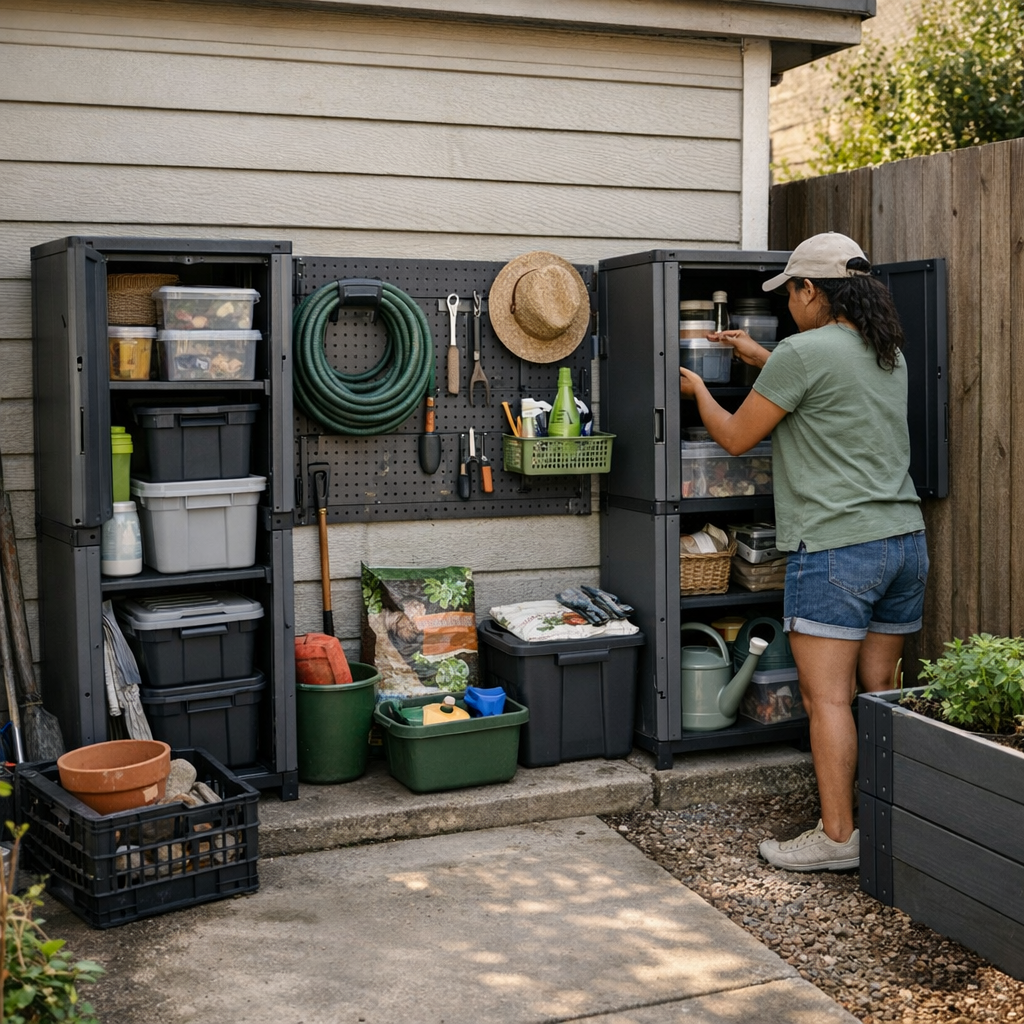
Raised, wall-mounted storage changes the game—not by holding more, but by staying out of the way. Shift your default drop zone up and off the ground: suddenly, movement lines return. Instead of shuffling chairs or stepping around bins, you walk in and spot what you need at eye level. Paths don’t silently narrow, and small, high-frequency items find a spot that isn’t instantly buried or knocked over during the week.
High Traffic: Less Shuffle, Faster Reset
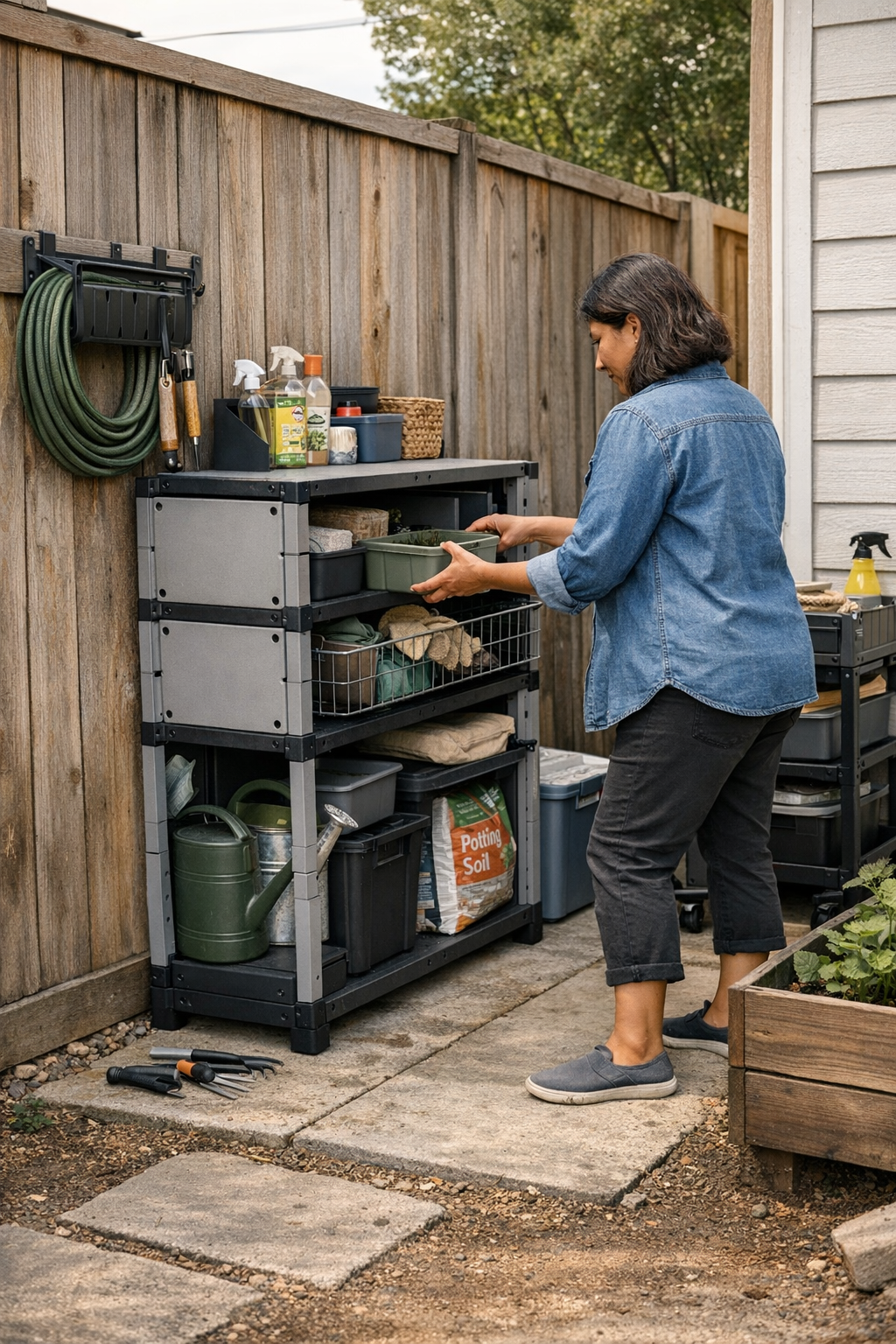
The fence line closest to your back step is the pressure point. That’s where a floor box turns messy fast: the hose drapes over the lid, mulch gets tracked right in front, and by midweek the spot is part mud, part dumping ground. Opening the bin becomes a squat-and-dodge maneuver, often abandoned mid-task. With wall-mounted racks or grids, high-use items hang clear above the splash zone, and nobody has to move three things just to get one. That invisible drag—untangling, relocating, restacking—shrinks to a quick grab, even after the most chaotic weekday.
Overflow Zones: The Slow Trap of Floor Storage
Every ground unit starts with bright intentions, but almost all of them magnetize overflow: a week’s worth of leaves, the soccer ball thumped out of reach, the project bucket that never finds a home. As the physical footprint seeps further, returning anything means finding new space in what used to be a walkway. A single crowded bin along a narrow side path quietly transforms that route into a dead end, or forces a lopsided detour you barely notice—until someone trips, or simply stops using that exit entirely.
“Looks Organized” vs. “Works in Motion”
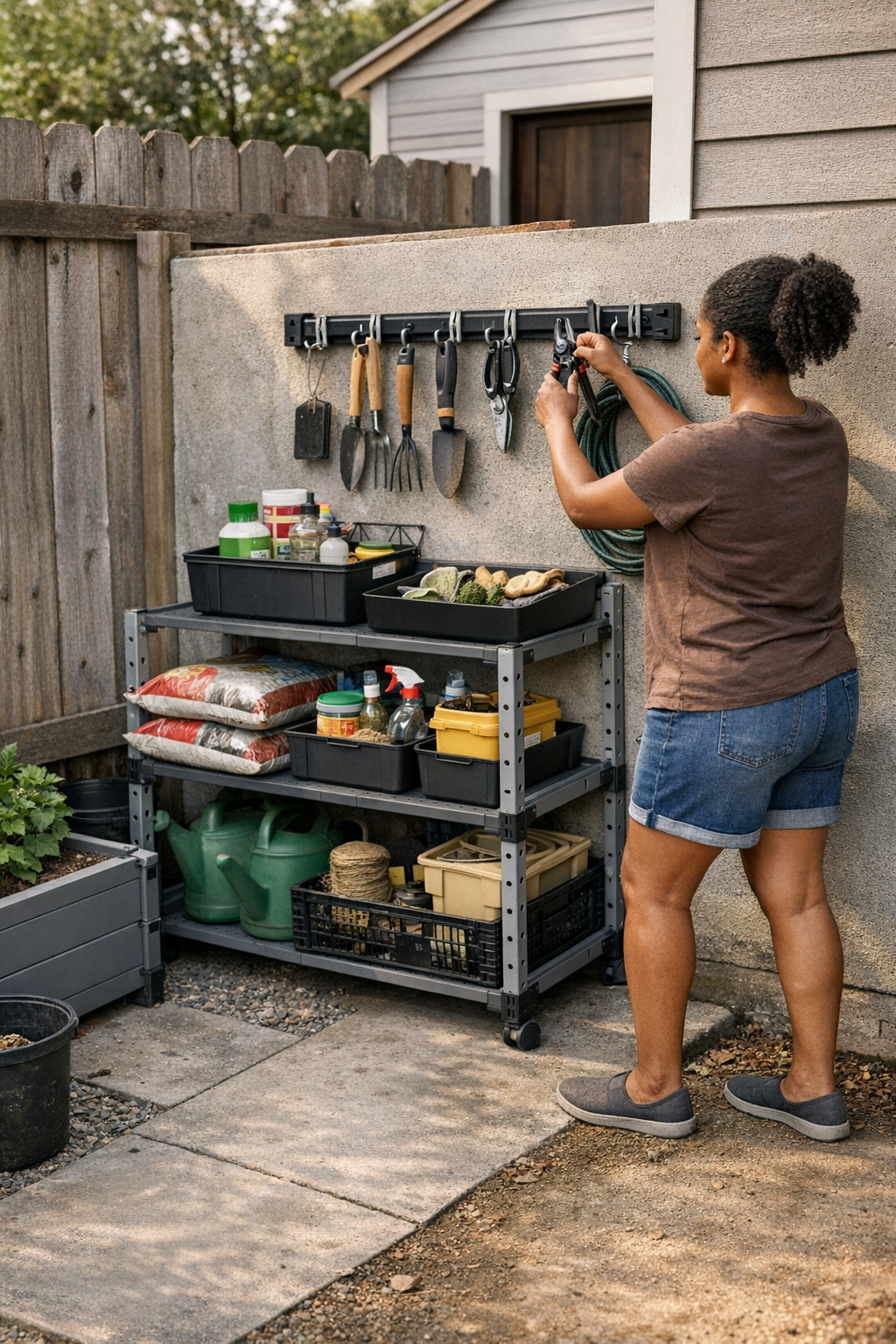
The true gap is between the appearance of order and the stubborn reality of repeated use. That sleek deck box against the fence looks right, until clutching a pair of dirty sneakers means juggling what’s already in the way. In three weeks, if you’re spending more time repositioning gear—or dreading the shuffle—you know the design only works on paper, not in motion. Wall racks that keep tools visible and off the ground help kill this return sprawl, making it obvious when something’s missing and painless to keep main routes open for actual movement.
Small Adjustments, Real Relief: A Working Example
Last season, a TidyYard setup shifted two go-to storage bins off a narrow paver path and onto a modular wall rail in a 30-inch squeeze of side yard. That one move cut out stooping, sidestepping, and half the weekly chore of re-sorting outdoor gear. Suddenly a shovel was always at hand—no digging behind a chair, no stepping into wet dirt for the nozzle. Resetting the space wasn’t a half-hour event; it became a glance-and-go process. Family members who never bothered before started using the wall by default, because it took less effort and didn’t require making piles just to return something at the end of the day.
Ground Storage: Setting Limits That Stick
If you’re stuck with one floor unit, treat it like a strictly controlled zone: wedge it deep against a low-traffic edge, keep the lid or front clear, and set a hard limit on what gets stashed. Lose those boundaries, and even one bin can recapture your open ground within days. Choose the lowest profile possible, and check that it doesn’t cut off access to anything you need more than once a week. The point isn’t perfect order—it’s fighting the sprawl that steals usable space right under your nose.
Reset Routines: Less Work, Fewer Repeats
The real advantage isn’t in how fast you can tidy up, but in how little you need to. A setup with stronger structure—especially one that keeps frequent-use items off the floor and in plain sight—means less touching, less moving, and less invisible energy poured into a daily game of outdoor Tetris. In most homes, nobody returns things perfectly every time; setups that make it physically easier to drop something back without blocking the path turn “reset” from a daily grind into rare, low-effort maintenance.
Quick Win: Make Returns Obvious
Don’t bank on everyone learning a new routine. Instead, carve out one visible, shared wall spot as the obvious return zone. Open baskets, mounted rails—anything that makes it clear what goes where and reveals when an item is left elsewhere. When that return flow is unmistakable, even the messiest user follows along, and floor clutter is cut off before it starts multiplying.
The Long Game: Setups That Hold?
Open ground and clear movement aren’t the work of a single cleanup—they’re a side effect of structure that outsmarts daily friction and the constant, imperfect return flow of real life. Wall systems, rail setups, and tightly enforced floor limits keep outdoor areas usable, even when nobody is paying full attention. The big difference isn’t only in how the yard looks days after the cleanup, but in how much easier it feels to keep using—and resetting—the space through the rough-and-tumble of the week.