
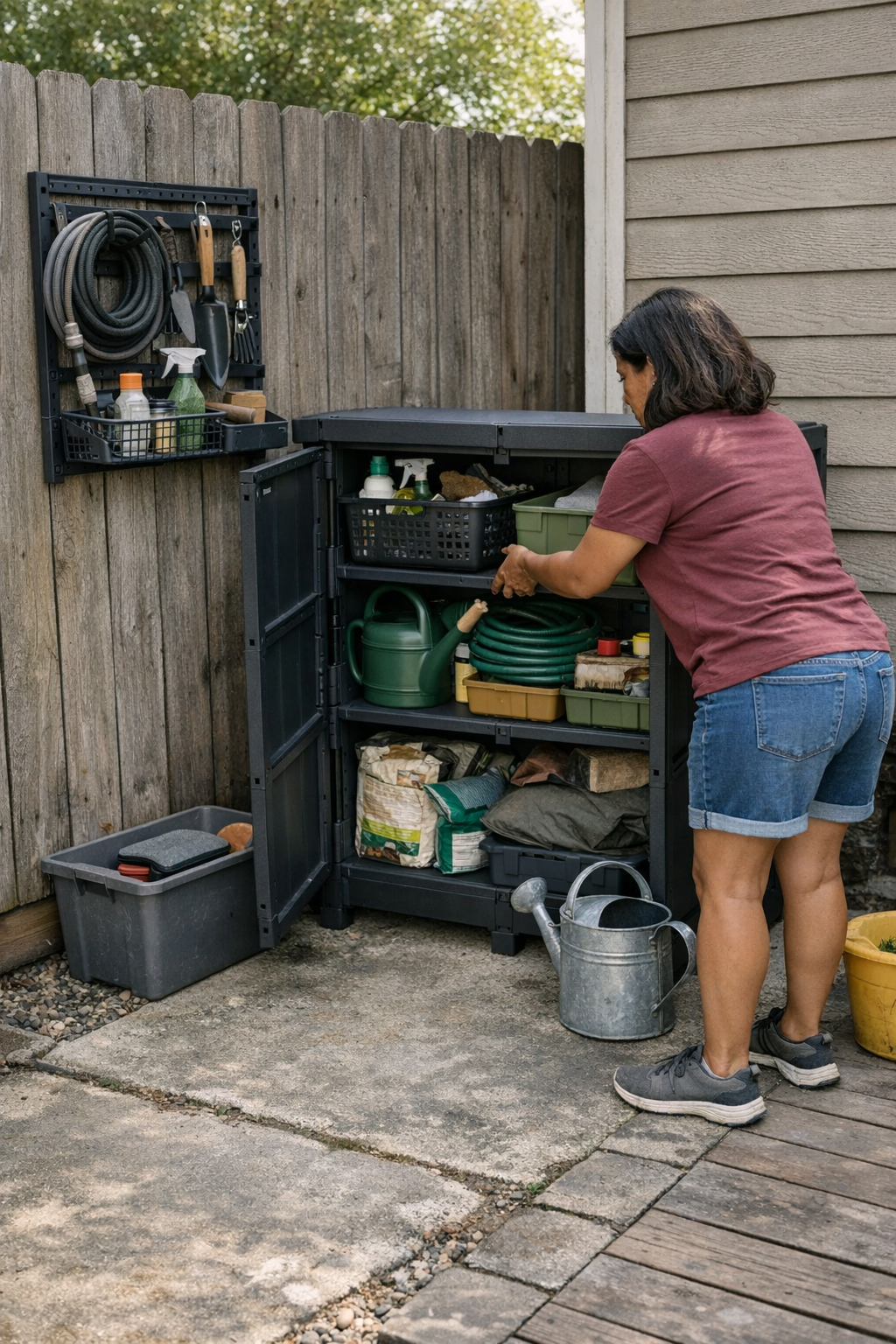
The calm that comes from an organized storage setup usually disappears fast—often after the very first round of real use. Behind closed doors and tucked bins, the system looks finished: shoes lined up, towels stacked, every loose item hidden. But once Monday hits or the after-work scramble begins, that “order” is tested by friction you notice immediately—like having to move a stack just to reach your keys, or having last night’s mail slide beneath a bag where it stalls retrieval all week. Hidden storage promises neatness, but too often it just hides the jam: a system that slows you down, collects broken routines, and breeds clutter one small annoyance at a time.
When Hidden Storage Starts Working Against You
A wall of closed cabinets or deep baskets feels like storage success—right up until repeated use exposes the flaws. If finding or returning everyday items means kneeling, sliding bins, or excavating layers, the setup quietly fails. Shoes mix with out-of-season boots, keys vanish under scarves, and category lines dissolve. What’s hidden isn’t organized, it’s just out of sight—until, in the crush of a busy morning, you’re forced to dig through two weeks of overlap to find what you need.
It’s not about concealment—it’s about function in motion. Every extra step, every mix of unrelated items, makes quick resets impossible. The friction is small but constant: moving one thing just to access another, or hesitating to put something away because it means untangling yesterday’s shortcut. A single overloaded drawer or misfit bin turns retrieval into rearrangement, undermining whatever illusion of order the facade still offers.
Surface Calm Versus Lasting Order
Lack of visible mess is never the full answer. Hidden storage often lets disorder compound quietly—letting socks slink behind out-of-season coats or bills disappear under rain gear—until a normal routine is interrupted by a search that shouldn’t be necessary. Open shelves, for all their risk of visible mess, keep you honest; it’s obvious when categories mix or something is dumped “just for now.” With open shelving, you see category drift as soon as it starts; with deep drawers or baskets, it sneaks up until the next reset ends up twice as hard.
Take a hallway bench meant for shoes and bags: for a few days, it keeps the entry calm. But the first cut corner—a soccer ball dropped on top, a stack of catalogs pushed to the back—sets off a chain reaction. Suddenly, to grab shoes, you’re rearranging a pile that wasn’t supposed to be there. A setup designed to hide overflow instead ends up trapping it, turning the daily exit into a chore instead of a glide.
Divided Zones: A Small Change, a Big Difference
Physical dividers break the silent creep of clutter faster than any “everything bin” ever will. Swapping an oversized under-bench trunk for two separate drawers had an immediate impact in one hallway: no more pulling gloves out from beneath last week’s mail, no more soccer cleats mixed with house keys. Shoes went straight back into their cubby, gloves into their slot—reset in seconds, not minutes. Overflow lost its hiding spot. Every item had a home, visible and separate, so spillover couldn’t quietly blend or block another routine. In use, a broken-up system felt less seamless, but actually worked: fewer bottlenecks, fewer lost items, and no slow buildup of things “waiting for the right moment” to be put away.
Dividers and clear boundaries matter because, in busy stretches, every extra second spent sorting or reaching builds into a bigger disruption. Upright separators, even if improvised, offer a visible place for each thing—so morning rushes don’t become scavenger hunts and evening resets are quick, not a buried job left for “later.”
Recognizing Routine Friction Before It Builds Up
Any setup where you must dig, shift, or unstack to retrieve a daily-use item is already failing under actual use conditions. The signs show quickly: totes stacked over linens, baskets blocking one another, multi-step retrieval for something used every day. When storage slows you down, things are left out, or rehoused in the wrong spot “just for now”—fuel for larger resets later. The cost is not chaos but interruption, and it spreads: the more effort it takes to put something away, the more items linger where they shouldn’t, and the more the system erodes from the inside.
Path blockage is a form of clutter too. Especially in high-traffic zones—entryways, small bathrooms, utility corridors—placing a box at the wrong angle or overfilling a cabinet narrows access and breaks flow. You’ll notice yourself pausing before bothering, or tossing items on a free surface “until next time.” Multiply that by a few days, and simple clutter becomes a habitual obstacle, always in the way yet never urgent enough to clear in one pass.
The Danger of Blurred Categories and Multipurpose Zones
Once category lines disappear—sports gear mixed with daily shoes, kitchen extras creep into pantry bins—every “organized” surface becomes a dumping ground. General-purpose bins promise flexibility but in real use, their endless intake erases boundaries, so anything handy gets dropped in. The weekly reset doubles in length, and small delays stack up: one rummage leads to another, every return becomes negotiation instead of routine. Eventually, the hidden mess dictates movement: instead of quickly retrieving what you need, you’re stuck sorting and reshuffling before you even start.
Sometimes the only real fix is a single divider, one more labeled box, or making do with a cardboard spacer until a permanent system fits the pace of your week. The important signal is where a routine slows or breaks—where, if you notice yourself hesitating, a new storage boundary could turn a slow zone into one that resets almost by itself, no matter how many hands or drop-offs pass through.
A Routine that Survives the Week—not Just the First Day
What proves a storage setup is not how pristine it looks after Sunday sorting, but whether routine flow survives midweek, after everyday interruptions. If by Thursday the system forces you to shuffle, pause, or grumble just to retrieve a basic item, the structure’s intent isn’t holding. When resetting the area takes mere seconds—no digging, no re-sorting—you know it fits the way you actually use the space. Items stay near their real landing spot, not just their “ideal” one from a fresh install or photo day.
Repeated use always exposes a setup’s weak seams. The best inside-storage isn’t finished when it looks good but when it absorbs overflow without breaking down, and lets you move, reach, and return in a snap—even after the week’s messiest moments. For storage components that keep pace with daily routines and make indoor spaces easier to use—not just easier to admire—visit Gridry.