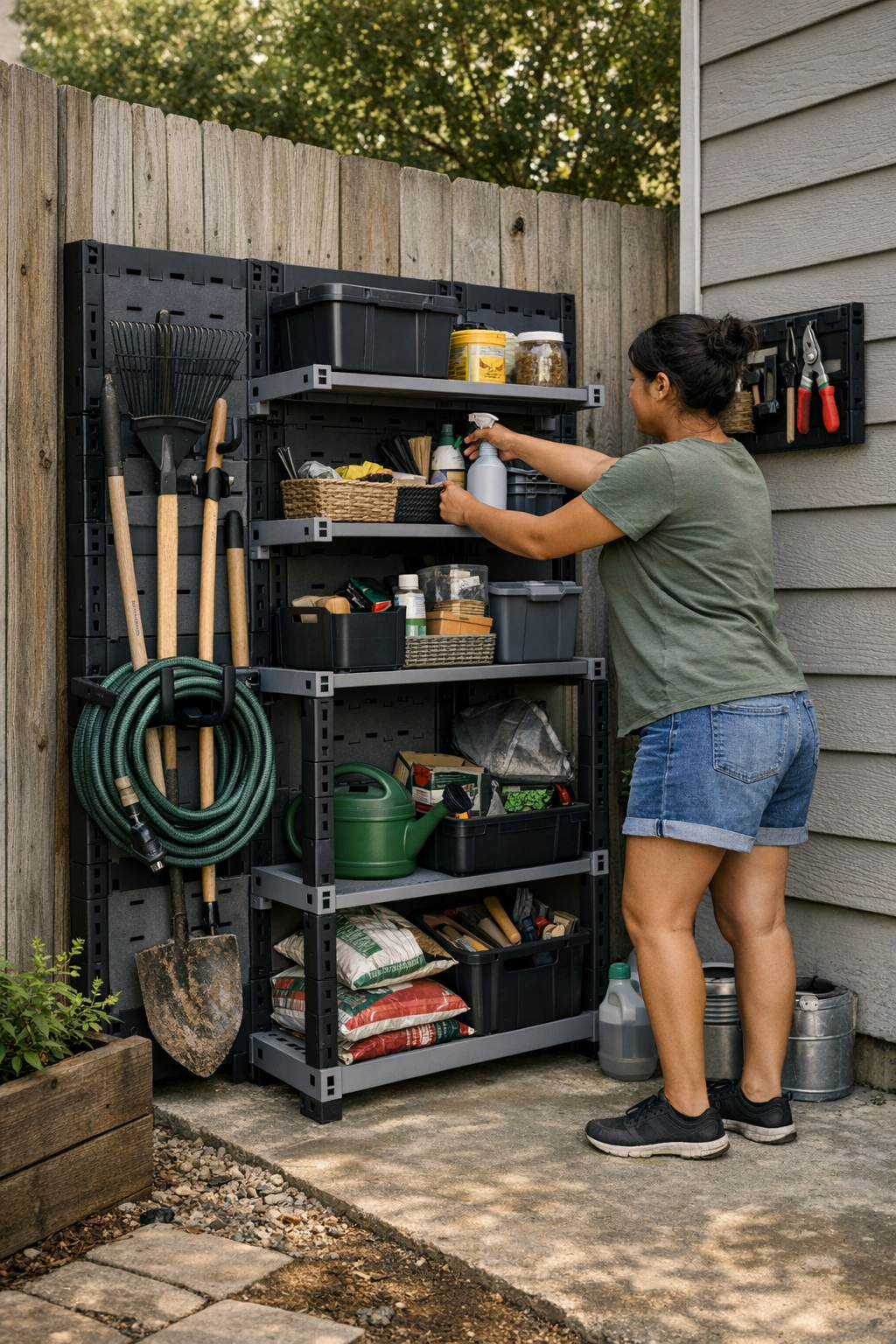
Category: Yard & Utility

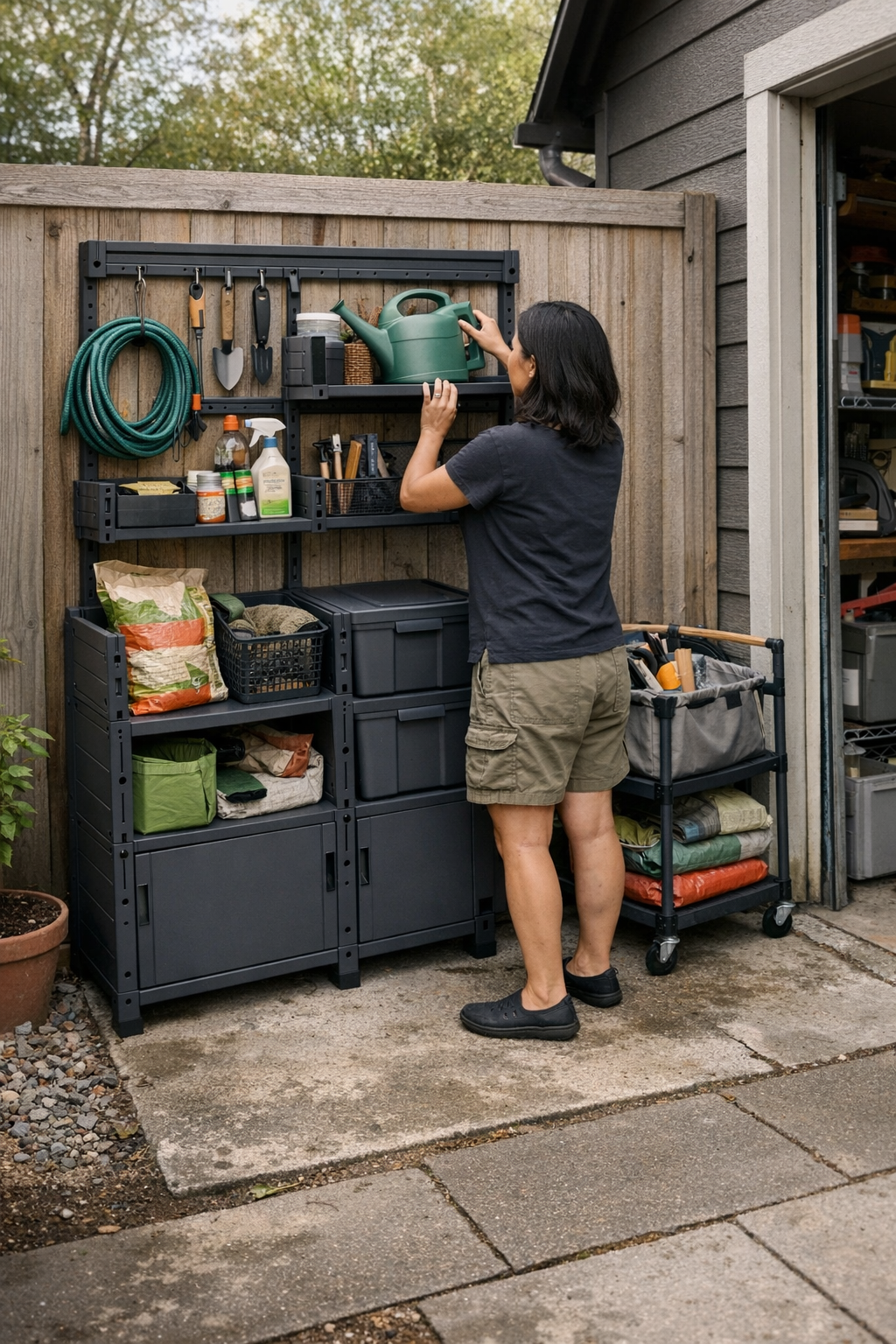
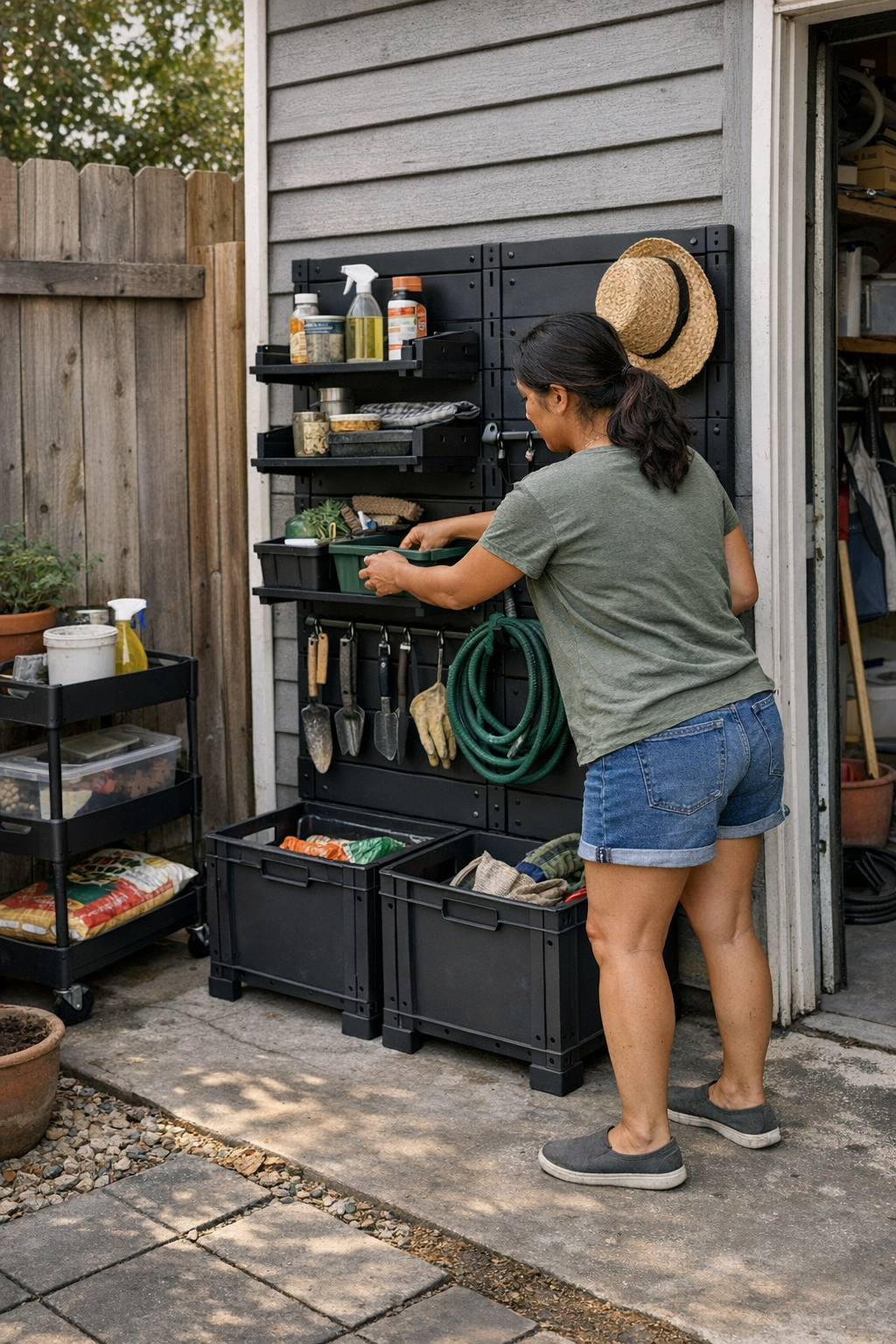
  • Smart Outdoor Storage Solutions That Keep Yard Work Quick and Easy

    Outdoor storage is rarely judged by how it looks after a weekend clean-out; it’s exposed by what happens three hurried days later. Those neat lines and empty pathways vanish the first time you rush in midweek—elbowing past a stack of gear, shoving a half-damp hose aside, or upending a box searching for pruners you just used. When setups turn every fast yard job into a sidestep-and-dodge routine, it’s clear: good storage isn’t about day-one order. It’s about surviving constant, careless, repeated use without turning into an obstacle course.

    When “Organized” Collapses Under Real Routines

    The honeymoon lasts about 48 hours. Sheds and racks look great right after installation: each tool slotted, nothing crowding the edges. But normal life doesn’t run on resets. Maybe you come home late, toss the sprayer “just for tonight,” or nudge a cooler out of the way because your hands are full. One shortcut leads to the next—a coil of rope dumped by the door, a forgotten bucket left by the mower. Suddenly, that intentional lineup becomes an awkward jumble, and resetting it means moving half the pile just to put back one thing.

    The difference shows in every rushed grab-and-go. If you can’t pull a trowel or stash shears without shifting bags or stepping over clutter, your setup is working against you. Overflow creeps outward—a bag sagging into a walkway, a tool propped against the fence, bins wedged into corners. Instead of a working zone, you’re tiptoeing through clusters of nearly-right storage, losing time and patience every lap.

    The Gap Between “Same Size” Setups

    It’s easy to think any side-yard shed or wall rack will handle the churn. But actual use tells the difference—especially when you need something buried at the bottom or need to return gear in a hurry:

    • The deep floor box: Looks generous on day one. But a week later, long-handled tools sink under coolers, sprayers wedge at odd angles, and every buried thing means a quick avalanche onto the patio. What began as organized storage gradually turns into a heap right at your feet.
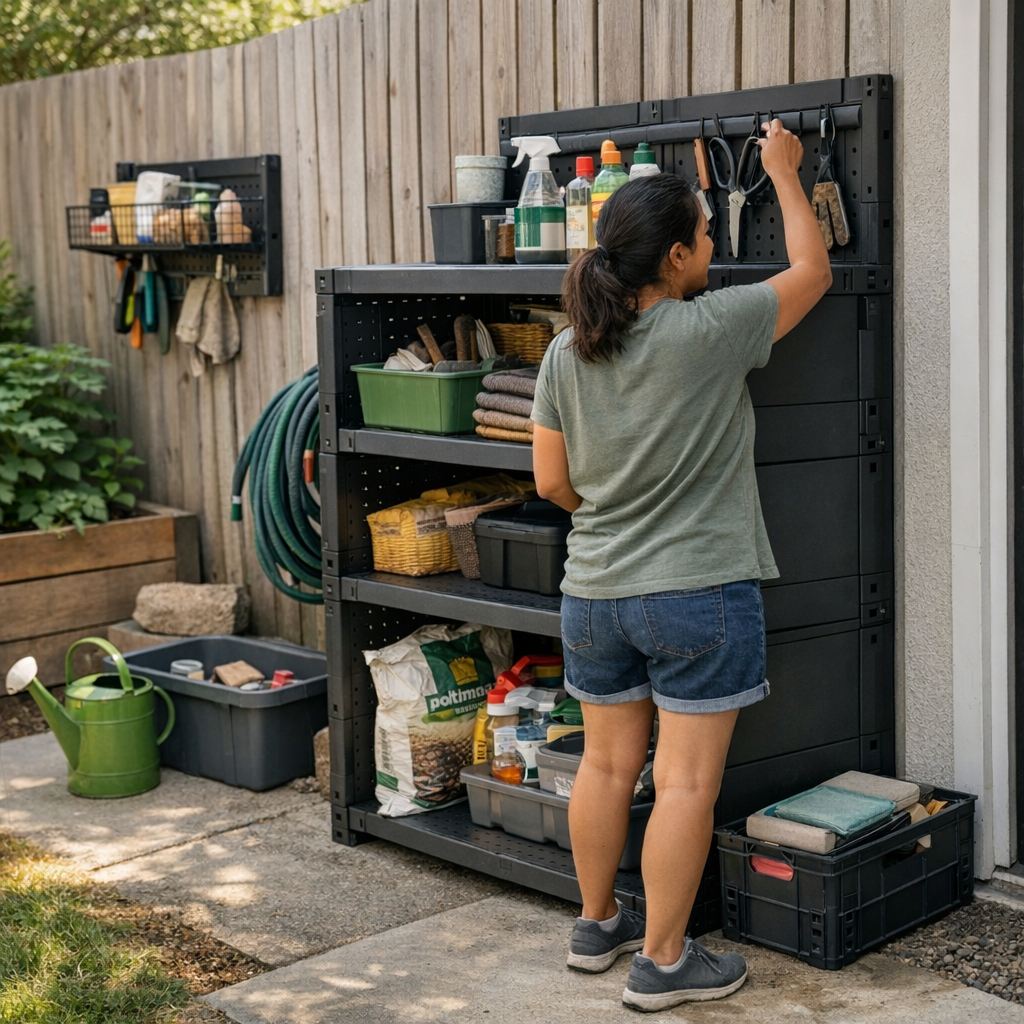
    • The zone-labeled wall panel: Each handle has a marked slot, bins hold stray gloves, and every missing rake is obvious. Nothing’s hiding. Returning or grabbing something is a one-step move, not a rummage. You spot when overflow tries to take root—catching a fallen trowel or a stray bag before the pile rebuilds. It doesn’t magically hold more. It just works harder—allowing repeated, careless returns without losing the thread of order.

    This isn’t abstract. The test shows up by week’s end: in one corner, the box margin creeps outward, tools touch your ankles, and the path narrows. In the other, things slip back into place almost by accident because there are fewer puzzles and fewer opportunities to stall out the system.

    How Narrow Zones Turn into Endless Obstacles

    Side yards and patio edges promise walkable space—right up until a stray trimmer slides from its hook or a tangled extension cord sags into your feet. That “clear path” becomes choked by one folding chair, then two, then bags and loose buckets stuck wherever an open patch appeared. At first, you move things “just for the moment.” Days pass, new gear lands, and before you know it, opening the shed involves shuffling a ladder, weaving around a propped rake, or dragging a bin out by the handle because nothing slides anymore.

    In these tight passages, storage that only maximizes capacity quickly backfires. Every new item blocks the last, and even basic movement—grabbing a mower, hauling out the hose—requires a two-step shuffle. If your gear keeps blocking your own way, the setup is “full” only in the sense that it now controls your route, not your tools.

    Incremental Fixes That Actually Stick

    Resets don’t require a full rebuild. After tripping for weeks over a box that regularly spilled tools into my only side path, I hung a segmented anchor panel three inches higher on the fence. Suddenly, rain shovels finally had vertical clearance; overflow buckets could hang above the traffic line instead of blocking it. Assigning “home stretches” for each tool—so they naturally slotted into place—reduced the quiet urge to just drop things in the closest empty corner.

    The biggest shift? I stopped dreading half-resets. Returning just one lopper mid-task took a quick hook, not a balancing act. Clutter was visible before it grew—so I could catch a problem on Tuesday instead of spending every weekend on a full reset. What changed wasn’t the storage “volume”—it was the layout’s ability to handle the churn without decaying into a mess.

    When More Space Stops Helping

    More square footage won’t save a setup that can’t manage movement. If every trip through your storage means squeezing around junk or stacking gear on the floor, a bigger shed just means a bigger mess to move each time. Floor space and wall space only work when both allow fast, direct access—no detours, no silent pile-ups. Modular panels and adjust-as-you-need hooks let you nudge zones around as seasons change, instead of locking dead corners into every layout.

    The best setups expect “routine messes”—muddy boots, rained-on gloves, supply runs that leave an extra bag behind. Real improvement comes from layouts that let you spot and clear trouble early—so your walkways stay open and your gear flows through the week without demanding a restart.

    Lessons From Messy, Real-World Use

    • Make every spot obvious—even if it means leaving wall space open. The clearest setups mark lanes or color-code hooks, so missing tools are glaring and returns need zero guesswork.
    • Defend movement space. If gear slides into your steps, lift it higher or shift it to the sides—racks should protect traffic lines, not become new obstacles.
    • Don’t let “efficient stacking” trap you. Wall storage that turns into a high-rise of handles or a jigsaw of bins just speeds up the next bottleneck. Leave air between anchors for honest single-move access.
    • Resets are inevitable. But make them a one-minute fix, not a Saturday project. The strongest layouts don’t prevent all mess—they just shrink the fallout and make the reset loop nearly automatic.

    Where Real Storage Proves Itself

    No shed or rack fails on day one—they all shine with a fresh sweep. But actual routines erode the difference between a temporary lineup and a working layout. Systems that keep walking room clear and tool returns frictionless resist collapse week after week. The setups you don’t have to think about—the ones you can use half-tired, one-handed, mid-rush—are the ones worth keeping.

    Outdoor storage that matches how you actually move, drop, and retrieve gear lets you get through any chore without the space biting back. That’s the difference between storage that looks right and storage you barely notice—because it just works.

    Discover practical outdoor storage and zone systems at TidyYard
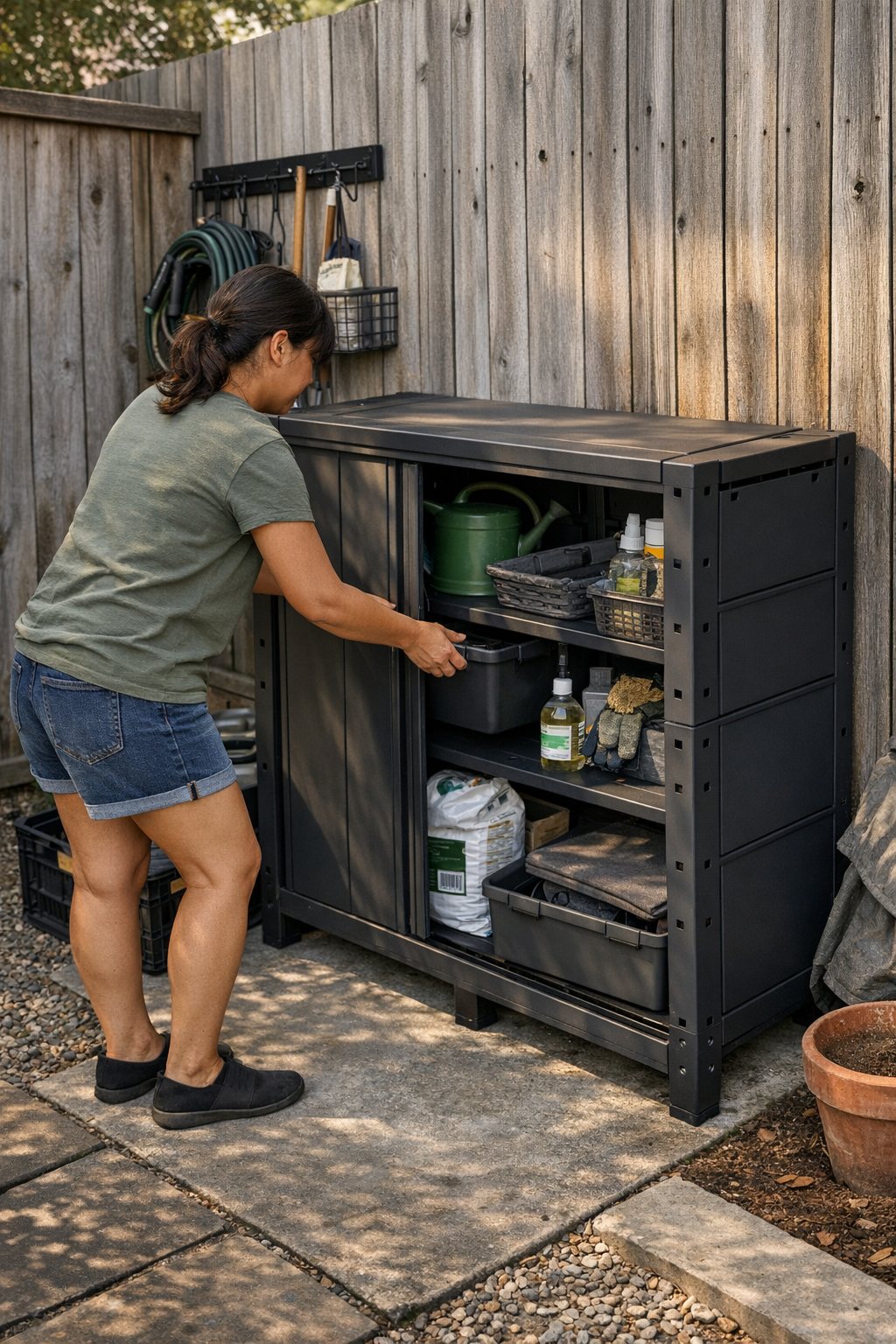
  • Choosing Slim Corridor Cabinets That Keep Walkways Clear and Safe

    In a narrow corridor or hallway, the wrong storage cabinet shows its flaws in days—not weeks. Even a few centimeters of extra depth or an awkwardly opening door can turn an ordinary routine into an obstacle course: bumping a corner when your arms are full, catching a bag handle on a knob, or sidestepping shoes that spill out just to keep the pathway clear. A “slim” cabinet that forces you to pause, pivot, or reset every time you pass isn’t saving you space—it’s quietly eating up time and building annoyance with every repeat trip.

    When a Cabinet Looks Slim but Acts Big

    Slick catalog photos and “compact” labels can mask how a cabinet really performs in a lived-in corridor. Spend just a week with the wrong unit, and the cracks show through: a door that swings into your path, a drawer that jams, shoes piled along the edge because the entry is tight, or bags left dangling from handles simply to avoid dealing with the cabinet’s clumsy access. The problem isn’t storage capacity—it’s the small misalignments that add daily friction.

    Routines Expose the Weak Spots

    These weak points show up exactly when you want everything to flow: heading out with groceries, stumbling in late at night, or rushing to toss a scarf inside before bed. If you have to hold a door open with your knee or try to wedge shoes inside sideways, the design’s flaw is exposed every time. Those messes at the corridor’s edge aren’t just untidiness; they signal storage that feels more demanding than helpful. The longer the minor hassle, the quicker resets get skipped—leaving the area looking organized only when it’s untouched, never in real use.

    The True Test: Nighttime and Rushed Mornings

    What looks efficient under showroom lighting often turns into a nightly pain point under real conditions. Low light, tired minds, and the need to move quickly reveal friction: a swing door that halts you mid-stride, a cabinet that juts too far into the walkway, or a handle that snags clothing. Most people don’t notice the true test until circuits repeat: midnight rummaging for slippers, sleepy armloads, or rushed exits where a cabinet slows you down or becomes a tripping hazard nobody admits to expecting.

    The Accumulation Effect

    That mismatch between what was promised and how you actually move becomes visible: shoes building up where the cabinet slightly blocks the path, random items stranded outside because putting them away takes too much effort in a half-awake state. What started as a solution is now a stutter in daily flow. After several cycles, the cabinet itself feels less like a value add and more like a silent barrier collecting evidence against it.

    Sliding Doors and Shallow Depth: Small Adjustments, Big Impact

    Sliding doors fix what swinging doors sabotage. By eliminating the need for extra clearance, you remove the physical halt and sidestep baked into every access. In a corridor, a cabinet depth matched to what you realistically use—often between 18 and 25cm—means enough storage for shoes and essentials, without slicing into vital passage space. Suddenly you can open the cabinet even when the hall is crowded, and putting things away doesn’t mean disturbing the whole setup.

    Real Example: One Change, Noticeably Fewer Piles

    Picture a cabinet near your bedroom door—25cm deep, settles shoes and daily bags. At first, everything fits. Quickly, handles knock against passing knees, doors block the walk, and shoes cluster at the threshold because entry’s awkward. Swap in a sliding-door version, and immediately, the bottleneck vanishes: you can return shoes almost blindly, bags drop in even when your hands are full, and the floor stays clear through the week. Missing clutter isn’t just neater—it’s proof the friction is gone from routine return flow.

    Staying Usable Beyond the First Week

    The real measure isn’t how much a unit stores or how the finish looks after unpacking. It’s whether the corridor remains passable and the reset doesn’t become its own chore. A cabinet with tuned depth and sliding doors meets repeated, hurried, tired use without complaint—no ankles bruised, no drawers stuck, no shoes stranding in limbo. When the storage matches how the space is truly used, clutter stops accumulating and the routine runs without a hitch in the walkway.

    Why Some Setups Keep Clogging Up

    Cabinets chosen for looks or storage volume—wide-swinging doors, deep bodies—often break down under daily routine. Overflow creeps onto the floor, resets get skipped, and you find yourself dodging around stuck drawers or planning routes around the cabinet instead of through the hall. What looks “decluttered” at first pass is simply staged; with real use, the system keeps losing ground until it’s easier to pile things nearby than return them to where they belong.

    Tips for a Corridor Storage Setup That Actually Stays Clear

    • Check every overhang and handle: Just a couple centimeters can mean an awkward pivot or unexpected bruise.
    • Simulate your path before committing: Open doors and drawers while actually walking through—feel for any snags or forced contortions.
    • Test “return flow” when tired or distracted: If putting something back isn’t effortless in a real hurry, it won’t get done, and overflow will build up in days.
    • Prioritize sliding or partial-opening designs for tight corridors: They forgive crowding and prevent traffic jams, even when multiple people share the space.
    • Forget “maximum capacity” in passageways: Comfort in daily motion beats squeezing in every item the first day. Crowded interiors only postpone the problem.

    What to Watch as Routines Evolve

    No corridor solution wins forever. More people join the routine, bags size up, or the hall shifts roles with the seasons. The best slim cabinet is the one that asks the least from you to stay clear and organized—even with barely any focus left at night or in the morning rush. Check in after a few months: is the floor genuinely clear, or does the cabinet now feel like just another thing to skirt around? If resets slow or fresh piles reappear, it’s time to adjust—maybe swap in sliding doors, reassign the zone, or rethink depth before slipups become the new normal.

    That’s the mark of corridor storage that actually works: it doesn’t demand your attention, yet its absence would immediately slow you down.

    Find practical corridor and slim-storage options designed for real living at Gridry.

  • How Vertical Storage Transforms Entryway Clutter Into Clear Space

    The entryway begins as a controlled crossing—clear path, shoes arranged, bench ready—but that order breaks down fast. One muddy boot, a loose drawer pull, or a busted umbrella lands by the door “just for now.” Soon enough, a catchall repair bin installs itself at the threshold. Meant as a temporary fix, it swallows loose ends and floor hazards—until it drifts from solution to stumbling block. This is how the zone that should absorb daily in-and-out ends up crowding every exit and return.

    How the “Temporary” Repair Box Quietly Grows Roots

    The repair bin feels only temporary at first—a spot for quick fixes, not a lasting fixture. But its presence invites creep. Sports gear goes in “just until Saturday.” Outgrown gloves and bags with mystery contents find a home. The bin spreads sideways, pulling in whatever is awkward to store or “on the list.” Now, grabbing your everyday shoes or dropping bags turns into a shuffle: move the bin, rebalance what’s stacked, hope nothing blocks the path. What should be a reset point at the entry becomes a bottleneck that slows every routine, with small items lingering for weeks and the weekday flow grinding against accumulated odds and ends.

    Each pass through the entryway becomes a negotiation. The bin sits, a reminder and an obstacle at once—its bulk absorbs clutter, but also disguises how much backs up. Missed repairs layer with things you meant to move last week. Soon, rerouting yourself or nudging the container aside feels like part of the routine. The “quick fix” station becomes the main reason resets get skipped.

    From Floor Calm to Daily Friction: Where Bins Break Down

    Large containers promise control but breed hidden chaos. A rugged bin seems like a quick solve—sweep small parts in, lid down, problem gone. But unlike a sectioned wall rack, that big box turns into a mix of priorities: today’s broken umbrella, last month’s skate, a stray glove stuffed beneath. Every retrieval becomes a tangle—bend, dig, balance, and hope you don’t spill odd shapes or fine grit across the entry. The bin is no longer relief; it’s friction disguised as storage.

    This friction accumulates in details: a shoe row nudged out of line, the bench edge re-claimed as overflow, blocked access to a hook or the pathway narrowing under a slow press of clutter. Even one return trip after work can mean swapping bags, shifting repairs, and feeling the reset get heavier every week. The illusion of order erodes as fast as you can fill a “temporary” container.

    Real Use, Real Clutter: Recognizing the Signs

    Most entryway backlogs show up without warning—and stay visible if you look closely:

    • Blocked movement: If pulling shoes or dropping bags gets tangled with shifting bins, your entry’s flow is already suffering.
    • Overflow turns semi-permanent: Forgotten repairs and off-season gear now mingle; last week’s projects have faded into the background.
    • Heavier resets: What started as quick maintenance means excavating a pile, not a simple step. Retrieval drags; the space feels more closed off with each day.

    It’s easy to catch yourself dropping a screwdriver “for now.” A week later, it’s wedged beneath boots from a forgotten season, and the bench has transformed into an overflow ledge. Everyday use chips away the utility of your transition space until it stores things well but supports movement poorly.

    Why Slim and Sectioned Storage Changes the Game

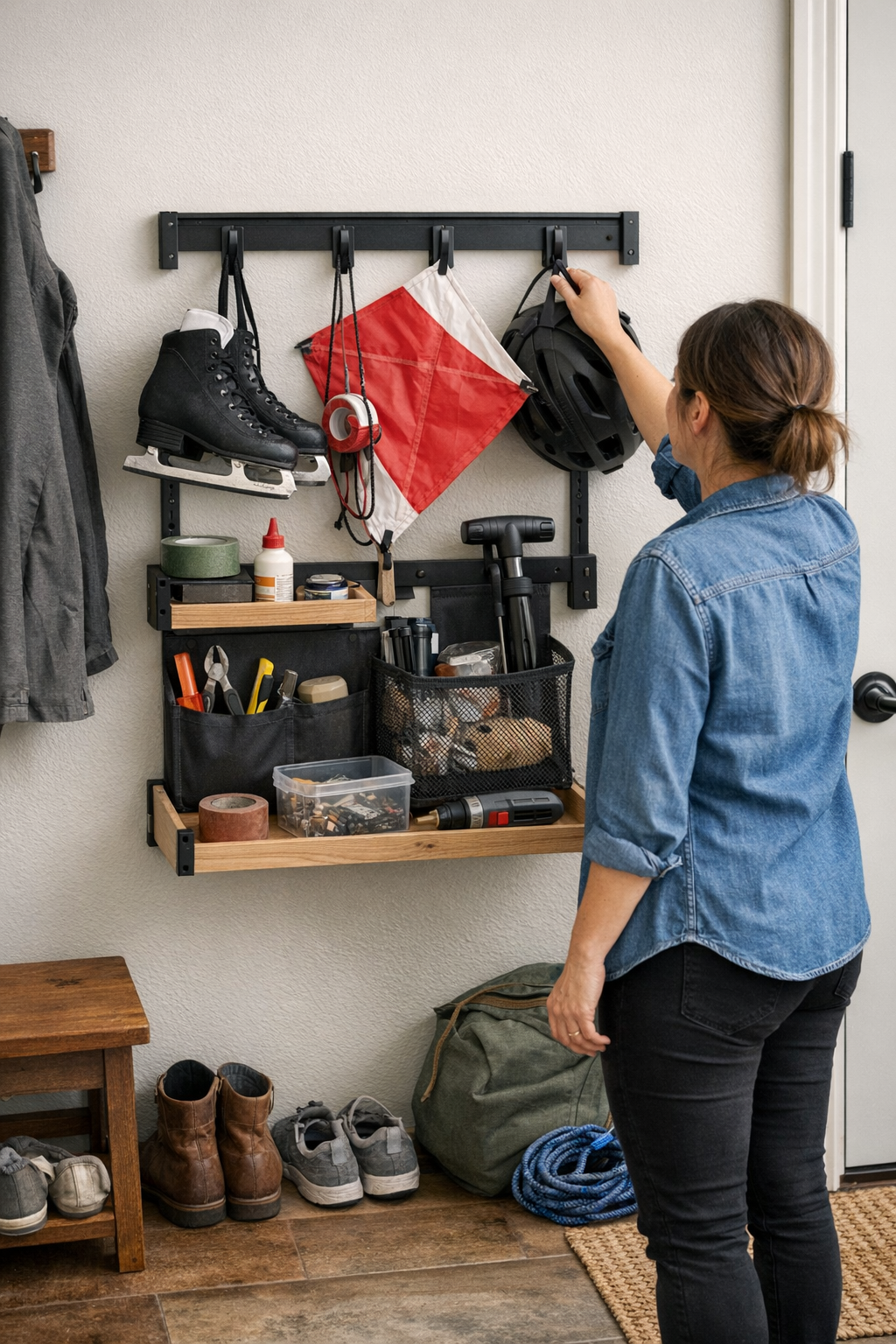
    Separation creates movement. Swapping a single large bin for an array—hooks for repairs, a slim wall pouch for small fixes—forces both visibility and action. Imagine a narrow entry: one wall, a bench, space for a quick change of shoes. Now, every pending “to-do” demands its own place. The broken cabinet handle hangs in sight until fixed, not buried. The loose skate sits on a dedicated hook, not blocking the shoe row. No more hunting; no more hiding backlog with a lid.

    Limiting clutter to small, named spaces cuts the urge to blend categories or stuff new problems into old containers. Everyday items can return to their place without navigating a catchall zone. The entryway returns to what it should be: a pass-through, not a backlogged side project or stalled reset area.

    Practical Tips for Beating Entryway Backlog

    • Enforce a visible limit. Use only as many hooks, slim racks, or pockets as match your normal repair rhythm. If you rarely tackle more than two fixes at once, don’t install more storage than you’ll actually use.
    • Keep clear divisions. Store off-season or non-urgent gear elsewhere. Let repairs live separately—the more visible, the less likely they’ll stall into long-term clutter.
    • Design the flow, not just the storage. Every addition to the entry should feel lighter to retrieve than to ignore. Hanging or stashing a project should support coming and going, not add another step or pile.

    The difference isn’t just aesthetics—it’s how easily you can spot what needs action and how quickly you can clear a reset without rediscovering neglected clutter. When every item claims a precise space, overflow can’t build. Your entry remains a route, not a dead zone.

    Troubleshooting: Is Your Entry Storage Quietly Working Against You?

    • Do resets keep getting slower as you relocate bins to open a path?
    • Does your container conceal overdue fixes—masking problems instead of sorting them?
    • Are you stepping over the same obstacles long after the “quick fix” was meant to be cleared out?

    If so, your setup isn’t just storing objects—it’s storing delay. The difference shows up in lost time and daily frustration, even if the mess stays hidden until you have to move something in a hurry.

    Restoring Real Entryway Flow

    A transition space that works in real life isn’t about impressing guests or showing off neatness; it’s about how the area supports—and recovers from—every day’s cycle of arrivals and exits. Don’t let the temporary box dictate movement. Choose slim, split, or vertical storage that matches your actual use: every repair or “to-do” gets its own clear spot, so resets don’t stack up out of sight or spill into the path. Flow stays functional; reset pressure lifts.

    http://www.betweenry.myshopify.com

  • Why Positioning Storage Near Task Endings Transforms Outdoor Organization

    Anyone who uses a backyard, side path, or patio knows the drill: things look organized at noon, but by sundown, the order slips. You sweep, reset, and tuck gear away, only to watch stray tools, garden shoes, and kid toys wander back into your walkways. It’s not that you don’t have enough storage—it’s that every return trip is just awkward enough, every bin just far enough out of the way, that clutter reclaims the space between resets. A patio can look perfect for a minute, but the constant flow of drop-offs, shortcuts, and “I’ll get it later” piles keep blocking your movement and stretching each reset into a minor battle. If your outdoor setup falls apart as soon as people get moving, this isn’t a storage problem—it’s a flow problem, and it shows up most clearly where your routine keeps getting interrupted.

    Why Setup Placement Decides If You Stay Organized

    It’s easy to celebrate the arrival of any new outdoor cabinet, bench, or box as “the solution.” But after the first week, the real test is visible: does junk still stack up where you step out, or does it finally make it to a proper home? Placement wins over size almost every time. Durable bins and wall racks mean nothing if they’re past a barrier, wedged behind something heavy, or out of direct line with your path. Watch what happens at the end of a task. If tools and toys land on steps or get parked in corners anyway, that’s your signal—your storage spot doesn’t match where your routine ends.

    Picture this: you toss your mower gloves onto whatever’s nearest after you’re done, even if you bought a special weatherproof box for them. Maybe the storage bin “fits” on the far side of the patio, but are you really going to detour past a row of chairs? Or do the gloves end up on the door handle again, until the pile quietly grows into a mess no storage bin ever seems to fix?

    How Overlapping Outdoor Zones Turn Convenience into Chaos

    Real outdoor spaces ignore single-use logic. The hose sits by the play area, the garden trowel follows you up and down the fence, and the gate’s both a shortcut and a traffic jam. Where these zones jostle together, small frictions multiply. A wall hook that’s right by the exit? Used every time. A shelving unit tucked behind your grill? It turns invisible. A storage bin hidden behind a planter becomes another thing to move—so the stuff that should live inside it just stops nearby, again and again.

    Good intentions fall flat the moment your setup blocks your own movements. Shuffle around a bulky pot just to reach the bin; squeeze behind folding chairs to get to the boot rack; slide a trash can out of the way just to hang up a rake. The longer the route, the more stuff collects “for now”—at the back door, on the step, along the fence—and the more each area becomes a holding zone for things that never quite make it home until your next full reset. Eventually, the “organized” corner is always almost full, but never actually clear.

    Real Scenes: Where Things Fall Apart (Or Finally Fall into Place)

    The Almost-There Storage Drop Spot

    Imagine Saturday afternoon: you’ve cleaned out the beds, tools in hand, sweat on your brow. Your heavy-duty storage box is three patio stones beyond the table. But with your hands full and the grill blocking the route, you drop your trowel and gloves onto the nearest open chair. Later, garden twine, bags, and shears join them. By the end of the week, the seat is a clutter monument, and the real storage stays empty—again. The chair isn’t “storage,” but that’s where your routine actually lands.

    One Good Setup Shift Changes Everything

    Then comes the shift: after too many resets and too much lost porch space, you move your rack from its “out of the way” spot behind the mower to right beside the patio exit. Now, the routine meets the storage, not the other way around. There’s no need to sidestep, shift, or backtrack. Suddenly, tools land on hooks, gloves don’t migrate, and clutter shrinks without an extra thought. It looks less curated, maybe, but the yard actually works the way real people move through it.

    Spotlight: Efficiency Is About Movement, Not Just Space

    Photos of “organized” patios miss the mess after one actual weekend. The true test isn’t how it looks once—it’s what happens right after any day of use. If keeping things tidy means stepping over a hose, pushing aside a planter, or opening a sticky cabinet, you’ll end up with catchall corners that just recycle the clutter each week. Movement matters much more than capacity.

    This isn’t about fewer possessions or fancy new models. It’s about matching your return path to your storage location. If your route to the trash bins becomes the natural place to drop off gloves or tools, set up there—even if it throws off “the look.” Routines always beat intentions. The right setup shortens every reset, keeps things off the floor, and prevents the hidden overflow from circling right back to your main walkways.

    Simple, Real Tips for Reducing Setup Friction Outdoors

    Test with your actual routine—don’t guess. Walk the path from yard to step with your hands full. What do you drop, and where? Place storage right there, not just where it’s hidden or pretty.

    Put grab-and-go basics where you always walk. If a tool or shoe gets carried through the side yard every time, store it on that path—even if it means a hook on the fence or a small caddy on the gate post. Convenience always wins over appearance in daily use.

    Don’t count on awkward corners to cure clutter. Gaps behind trash bins or the squeezed space between the shed and the fence will suck in overflow that you never want to return to. If you wouldn’t go out of your way to use that nook, don’t expect anyone else to either. Target the natural pause points instead, even if they aren’t where you wanted your “nice” setup to land.

    Matching Structure to Your Real Routine Keeps Clutter Away

    Forget the fantasy of one huge wall unit or an engineered system that never gets in your way. The best setup is the one you’ll actually use without thinking. This matters every week: less reshuffling, fewer items stranded where you trip over them, and a clear exit path even after a busy weekend. A good outdoor organization system shouldn’t ask you to work around it—it should fade into the background, reducing effort and shortening every reset, not stretching them out.

    For outdoor storage, wall systems, and practical modular setups built for move-through, not just move-around, see what fits your real habits at TidyYard.

  • How Interior Design Transforms Narrow Lockers Into Clutter-Free Storage

    Most narrow storage lockers look like a quick fix: umbrellas vanish, grocery bags disappear, tools stay off the walkway, and the entry zone finally looks open. But looks alone don’t hold up. Within a week—or after the first scramble for a missing glove—any locker with just one tall, empty compartment reveals its flaw: chaos hiding behind a closed door. Handles get jammed under spray bottles. Bags collapse and wedge against corners. The next time you try to grab an umbrella in a hurry, you’re not picking it up, you’re unearthing it. That fast, the setup that looked organized becomes exactly what clutters your day.

    When Hidden Storage Turns Into a Daily Tangle

    The trouble isn’t obvious at first. A single big compartment gives that quick “clean” feeling, but it can’t control the slide. The week piles on—groceries, wet gear, whatever just got dropped during cleanup—and you open the locker only to find umbrellas tangling with rolled-up totes, bottles jammed behind whatever was crammed in last. Retrieval turns into a careful game of extraction. Pull out a bag, disturb three other things. Slide in a tool at night, then dig for it again on Saturday because it’s slipped behind everything else. That clear locker floor turns into a dumping ground—a zone that was built for order but absorbs overflow instead.

    After just a few days, these snags repeat. Need the garden trowel? You’re bending over, shuffling around full bags and umbrella handles blocked by last night’s deliveries. Routine stuff now causes new micro-hassles—each retrieval is slower, each return less likely to fit cleanly back. Eventually, the locker doesn’t encourage use; it quietly punishes it.

    The Hidden Cost of Collapsed Categories

    The problem isn’t dramatic—it’s friction you feel thirty seconds at a time. Those small delays before you reach in or the moments when reshuffling becomes the norm: after three or four rounds, return flow breaks down. That “easy storage” now interrupts your pace. You start to skip the locker. Umbrellas pile by the door instead. Hand tools drift to an exposed shelf because they’re quicker to grab, but they look like permanent clutter. What started as a storage win lines the wall with overflow you can’t put away in one move.

    That’s a sign the locker has shifted from a daily helper to a passive collector. The more you force unrelated items to share one space, the less the “system” works. Real use exposes how little one open compartment can handle before it fails your routine.

    Why Divided Zones Are Essential in Narrow Lockers

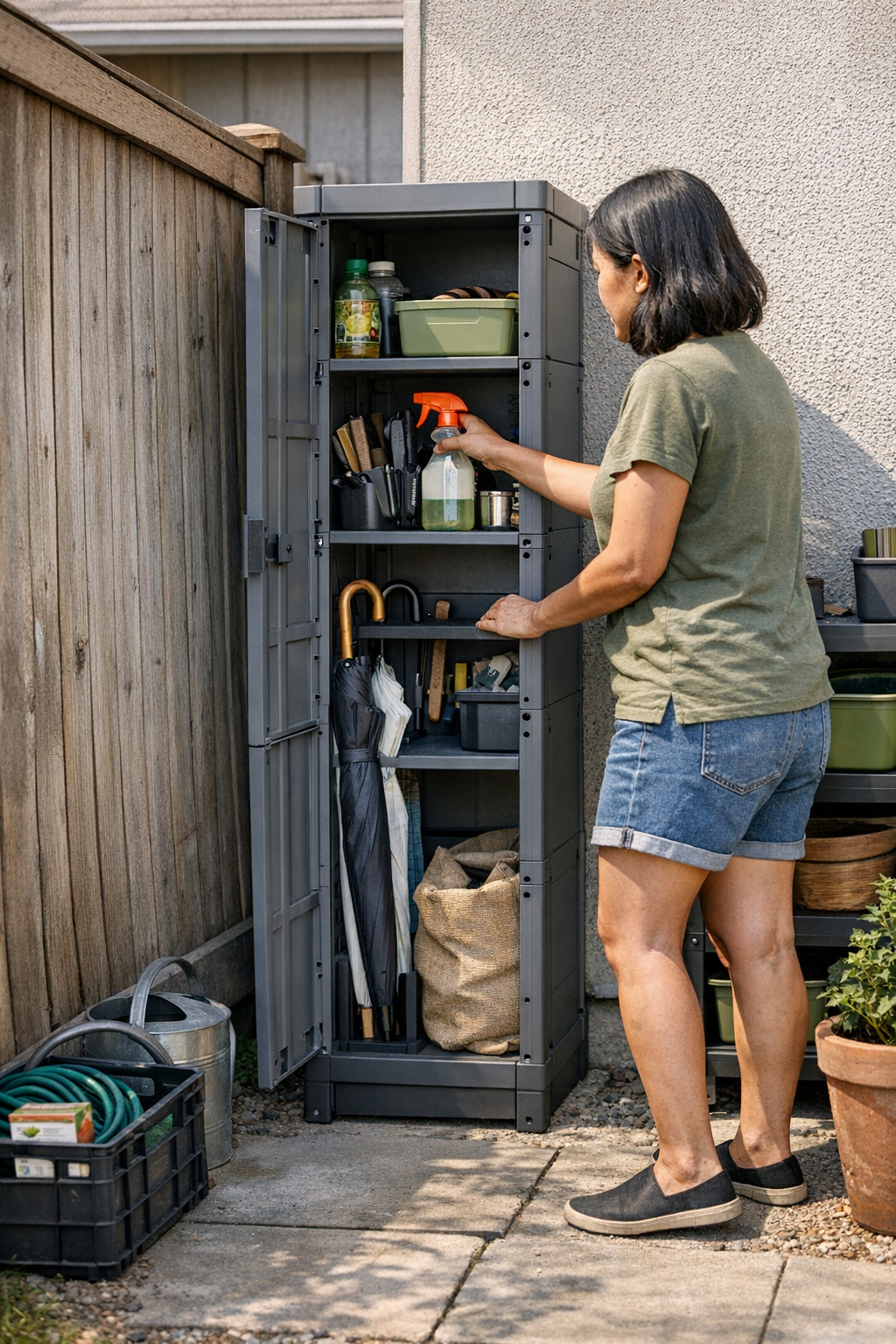
    The answer isn’t more space—it’s better zones inside the space you have. Just one real divider or a sturdy shelf transforms the experience. A shelf at knee height splits groceries from tools. A vertical channel keeps umbrellas upright, not collapsed sideways. Even a single bin at the bottom holds loose odds and ends so they stop drifting. Each separation keeps categories visible and reduces the fight for access. That’s the difference between a locker you can reset in seconds and one where you’re constantly reorganizing or just ignoring the mess accumulating inside.

    In use, separated zones mean you reach for an umbrella and actually grab just an umbrella. Tools stay where you set them, not buried and lost. Bags remain stackable, not crushed into odd corners. Visual calm in the entryway stops being just an illusion; it’s lived reality. Resetting is one movement, not five. The more your setup matches true category separation, the more it actually supports the tempo of daily life—even when that life gets hectic or messy.

    Entryway Reality Check: Where Weak Layouts Show Fastest

    Entry lockers expose design flaws fast. After a wet commute, dropping an umbrella into a crowded locker base isn’t practical; it either doesn’t fit, or it topples and jams the next thing you need. The immediate temptation? Lean it by the wall. Skip the step. Repeat. Un-separated internal zones turn “hidden storage” into slow storage, and the locker becomes another source of background mess and silent frustration—especially in spaces meant to stay clean and open for movement.

    Fixes That Actually Work in Narrow Lockers

    What solves these headaches?

    • Half-Height Shelves: Install one at knee level to elevate tools and smaller items, freeing the base for bags or boots.
    • Vertical Dividers or Channels: Drop a narrow umbrella channel in the corner; handles stay upright, and the next grab is fast, not fumbled.
    • Individual Bins: Use small crates or bins, so each type of item has a visible slot. When overflow happens, you see it immediately instead of discovering it after a spill.

    You don’t need a custom solution—just clear, repeatable zones that survive real use. Every good divider or shelf is one less reshuffle per week, one less pause in your routine, and one less pile of overflow at the edge of your entryway.

    Does Every Locker Need Zones?

    If you only store seasonal items—skis, camping gear, bins for winter or summer—a single cavity might work for months without hassle. But lockers in daily traffic areas, or those taking the mix of groceries, garden tools, bags, and rain gear, break down fast if you don’t separate inside. The visual order you achieved on day one quietly collapses—overflow isn’t a maybe, it’s what happens by default.

    Stay Ahead: Diagnose by Real Retrieval

    Test the setup by its weakest move. If you hesitate to open the locker, if putting something away throws off something else, you already have category drift—your internal zones aren’t strong enough. One check: after a normal week, open the door. If you can’t retrieve the key category you use most without shuffling anything else, it’s time to change the layout.

    One low-tech correction: fix an umbrella stand or channel to the locker base. When it rains, handles are ready; they don’t sprawl across the floor or snag everything nearby. That simple tweak is the difference between using storage and working around it—especially during crowded, weather-driven weeks.

    Lasting Calm Means Storage That Matches Real Habits

    A narrow locker fitted to your actual routine is felt within days. The difference isn’t cosmetic; it’s practical—retrieval in one move, resets that don’t drain your energy, and storage that’s ready when the pace picks up. Most systems hide mess, but a few small separations keep order visible and the chaos from returning just when you need movement most. The right structure lets narrow storage stay useful and reliable—open for the next umbrella, and never just another bottleneck behind a closed door.

    Discover Gridry storage solutions built for lasting order and daily access.

  • Why a Small Repair Box Transforms Entryway Clutter Management

    The first sign isn’t clutter—it’s a blocked path. That “repair later” box you squeezed into the entryway was supposed to keep mess at bay. But too often, it turns a clean threshold into a slow-motion obstacle course. It never happens on day one. Give it a week of wet arrivals: a snapped shoelace, a leaky bike light, gloves with torn seams. These repairs-in-waiting quickly multiply, crowding out shoes, edging bags to the wall, and forcing the “clean zone” to shrink. Suddenly, the daily flow stalls at the threshold. A repair bin meant to help is now squeezing the entry routine, not just storing tomorrow’s problems.

    Why Oversized Repair Boxes Break the Flow

    At a glance, a big repair bin by the door feels like good prevention—just toss any broken item in and reclaim the surface. But extra capacity rewrites the rules: instead of solving problems, it collects them. The bin suggests every snag is someone else’s future job. What belonged in a quick-reset zone becomes a semi-permanent backlog—umbrella missing a spring, jacket with the ripped cuff, mug with a cracked handle—none fixed, all lingering underfoot.

    This doesn’t just create visual clutter. The oversize box tempts everyone to ditch “one more thing,” shifting responsibility to the pile. You notice it in the hesitation—no one sorting, everyone bypassing. Instead of urgent fixes, the box becomes a holding pen for abandoned repairs, half-resolved jobs mixing with your gear. Within days, the space meant for a quick handoff slows to a crowded detour.

    Seeing the Slow Creep: Real-Life Entryway Scenarios

    The “just drop it” habit: Someone comes in, drops their bag, and the box is full or almost toppling. Instead of a clean transition, there’s a shuffle—maybe a glove slips out, or a bag lands in a splatter of “to-be-fixed” scraps. Quick drops get interrupted by a balancing act.

    The shoe row story: Shoes lose their zone as the repair box colonizes part of the bench or floor, so the row of boots and sneakers spreads into the walking path. Mornings become a dance, dodging both repairs and gear, dragging the reset time longer after every busy day.

    The bench-edge clutter trap: The corner you use to tie shoes now has a spillover repair basket poking into your seat. Every time you want to sit or set something down, there’s a micro-shuffle—moving the box, steadying it, dodging another precariously perched item. Miss the edge, and a flashlight tumbles onto your foot.

    Blocked entry resets: The moment you try to return a coat or drop your lunchbox, the oversized repair container is in the way. What should take five seconds turns into tiptoeing and nudging the box aside—if you don’t, you risk toppling it or mixing up repaired and unrepaired items until the reset slows from habit to hassle.

    A Smaller Container Creates Just Enough Useful Pressure

    The fix isn’t getting rid of repairs altogether—it’s shrinking the space they can invade. A box sized for only three or four small fixes—what a household can reasonably address inside a week—forces backlog into the open and caps the spread. Now, pressure moves from storage to action. Every new addition to the box is an obvious cue: delays can’t hide. Overflow means immediate triage—fix something now, or move it out. The entryway regains flow, not just aesthetic order.

    In practice, the right size container prevents the invisible creep. You can handle a busy repair week, but a smaller limit keeps everyone from using the box as a permanent exile for broken items. The container signals when it’s time to act or clear space—no more finger-pointing or letting repairs “live” in the main flow.

    What Happens When the Box Shrinks

    The transition is tangible. Where once forgotten umbrella tips and broken toys settled in strata, a right-sized bin now holds only what you’ll address soon. The visible pile never gets deep enough to hide things. On busy days, you scan what’s in, grab what needs a fast fix, and keep movement snappy—thirty seconds, not another mini-cleanout. If overflow creeps in, it’s a signal, not a failure: time to move old repairs to a utility cabinet, out of the high-traffic flow.

    If the box fills, don’t try to force it—shift sluggish repairs to a slower zone (like a storage cabinet or garage shelf). High-traffic entryways thrive on rules. Repairs that can wait for weeks simply don’t belong in the path you walk through daily.

    Not Just Neat—Actually Functional, Day In and Day Out

    A photogenic entry is easy—an efficient one is elusive. Most repair bins look fine for a day but reveal their true limits in daily churn. A right-sized repair box puts pressure where it belongs—on keeping the entry clear and functional, not just tidy. Shoes don’t get squeezed out by tools, keys don’t vanish under gadgets, the bench doesn’t morph into overflow. The smallest reduction—a slimmer box, a vertical container swapped for a deep one—makes walkways feel wider and returns the bench to its intended use.

    Daily Behaviors That Signal It’s Working

    • Resets are brief and automatic—not another project on the list.
    • Repair items stay visible and move quickly, never getting buried for weeks.
    • Shoe and bag space holds steady—new repair jobs can’t shrink the zone.
    • The household learns the loop: if the bin is full, it’s a cue to act or relocate, not to add “just one more.”
    • Footpaths unclog, and pass-throughs happen smoothly, even on rushed days.

    The setup isn’t flawless—everyday use keeps things fluid—but the entryway stops falling into the same old pattern of backlog and blockages. Instead of each surface attracting another stray, they reset for next use almost on their own.

    When It Looks Organized Versus When It Feels Usable

    A box can look under control while quietly sabotaging the flow. The real test comes a week later: does it nudge you to finish jobs, or does it anchor an ever-growing backlog? Something that holds “just enough” repairs for one week forces friction early before small problems turn into daily interruptions. Functional entry setups aren’t the ones that store the most—they’re the ones that prevent drift, crowd-out, and hesitation when crossing the threshold.

    Choose the repair zone that stays nearly invisible because it keeps moving—never the one that comfortably grows old with things no one’s fixing.

    Practical Tip: Build In a Weekly Reset Routine

    The best transition spaces run on habits, not just containers. Set a fixed time—end of the week, right after school, Sunday evening. Glance at the repair bin: if it’s more than half-full, clear anything you won’t fix in days to deeper storage. Old tasks get priority or get moved out. Over weeks, every inch of the entryway starts supporting momentum instead of slowdowns, making each arrival a non-event, not a miniature reset challenge.

    If your entry system keeps the threshold open, stops new blockages, and lets you reset the space in seconds, the repair box is doing its real job—not stealing the entryway, but returning it to daily use.

    http://www.betweenry.myshopify.com

  • Choosing Outdoor Storage That Matches Your Yard’s Real Needs

    On the first day, backyard storage can look perfect. Everything lines up—tools on a rack, bins tucked away, walkways clear. But after a week or two of real use, the cracks show fast. The watering can ends up stranded behind stacked shovels, the kids dump soccer balls by the gate, and the “quick grab” garden gloves get buried under last night’s cleanup. Smooth movement is replaced by sidestepping tangled hoses or shuffling bins to get at the one thing you actually need. Most setups don’t fall apart because they’re missing storage—they fail because they don’t match the grind of everyday routines.

    The Big Choices: Matching Setup to Routine

    Slick wall hooks, tough sheds, smart bins, rolling carts—every outdoor storage idea looks organized when nothing’s been touched. But after even a few normal weekends, the difference between “storage” and “function” gets obvious.

    Does your setup actually fit the way your yard lives? Nobody asks this when they’re staring at an empty system. You only notice when resets drag out—when you’re working around what was supposed to make things simpler. Even “organized” layouts can become the new source of friction if they’re out of sync with how people genuinely use the space.

    Wall Storage: Vertical Hopes, Real Limits

    Wall-mounted racks promise relief from chaotic floors. They’re great—briefly—at the garage edge or along a fence when tools pile up. Suddenly, a cluttered stretch feels under control.

    But in practice, wall space isn’t always working for you:

    • Interrupted Runs: That “free” wall almost always has something in the way—an outlet, a window, the corner of a gate—so racks land in fragments. Half the system sits empty. The other half turns into a swing hazard as long-handled tools jut into the walkway.
    • Seasonal Buildup: Wall racks thrive until the gear changes. Off-season tools claim the back hooks, but when umbrellas and snow shovels rotate in, what looked like plenty of room now means piling three things on one hook, forcing a full reshuffle to get at anything buried.
    • Overflow Creep: The “return” plan quickly unravels. Hoses droop, tarps sag off overcrowded hooks, and the side yard or garage threshold becomes an obstacle course of stuff “just put here for now.”

    Scene: You return barbecue tongs after a cookout, only to shove them onto a crowded rail—trapping a rain jacket you needed to dry. By the next gathering, you’re halfway inside before you realize where things were left.

    Freestanding Units: Clear Floor, Blocked Flow

    Cabinets and sheds sell a vision: all mess sealed away, backyard path wide open, nothing to trip over. If you’ve got a genuinely unused nook or corner, a freestanding unit can finally bring order—but the “easy fix” is rarely that simple.

    • Pinch Points: The shed that looks small in the catalog turns massive when its doors swing open—blocking half the patio and forcing sideways squeezes to get to the bins behind it.
    • Permanent Obstacles: Drop a big unit into any active space, and it becomes a landmark you’re forced to move around. Storage needs change—your shed doesn’t, and the floor plan stops flexing.
    • Broken Paths: Even a clean cabinet can turn a clear zone into a dead end, splitting up routes and leaving you circling around to retrieve just one ball or bag.

    Tip: If you’re hoisting a half-full bin out just to crack a door wider, or dodging around open lids, the “storage solution” is now in your way just as much as the mess ever was.

    Modular Systems: Flexible, Until They Freeze Up

    Stackable bins and modular racks arrive with big promises: switch things up whenever you need, reclaim space for parties, adapt all year. For changing seasons or families with shifting hobbies, modular is a lifesaver—on paper.

    • Awkward Sizing: Many systems look custom, but miss real-life needs. Long-handled tools flop out of shallow bins; hoses overflow baskets fitted for cushions; oversized boxes eat the path and shrink clear space.
    • The Edge Effect: Resetting gets slower. Bins that once rotated now collect layers of “for now” gear—a broken bat this month, off-season gloves next. What should have been fast becomes a sorting exercise every time you clean up.

    Scene: By mid-summer, you’ve divided pool toys from weeding buckets. Two months later, both bins spill out, and finding a single rake means pulling everything apart—again.

    Mobile Options: Roll to Help, or Roll to Nowhere?

    Rolling carts appeal when your outdoor life keeps changing. One day it’s a backyard game; the next it’s family repairs or garden planting. A mobile bin brings tools where you need them—so long as the ground cooperates.

    • Stuck in Place: Hit a patch of gravel, a lifted paver, or an uneven stone path, and your loaded bin stalls. The “mobile” solution now lives off to the side, a chunky obstacle reblocking a route you fought to clear.
    • Load Clash: High-use light items roll fine; awkward gear—hedgers, heavy planters—don’t. Most mobile storage ends up split: some things left behind, others forever stuck on a half-moved cart.
    • The Forgotten Cart: A bin meant to free up space ends up parked against the house, full of mixed gear, not moving at all—creating as much new frustration as it was supposed to relieve.

    Tip: If you’re dragging a cart backward to clear a bump, or splitting loads that never get recombined, rethink what actually needs to roll (and what should stay put).

    Setup Scenes: Where the Friction Builds

    Side Yards: From Shortcut to Choke Point

    The side yard strip seems perfect for storage… until a few returns pile up. Wall racks help, briefly—then a surprise rain, a found bike, or a couple of new tools squeeze the path to shoulder-width. Suddenly you’re stepping around a daily pileup, or detouring onto the wet grass just to avoid a stuck-out handle.

    Freestanding cabinets are no better when everyone wants “just one more thing” tucked away. The overflow jams up the narrow space, transforming the “smart storage” corner into a slow-motion obstacle course.

    Under-Pressure Patios: Reset or Relapse?

    Shared patio zones require flex. But a rolling bin left out after a gathering becomes a half-permanent fixture, killing square footage that was meant for relaxing. If nobody remembers to reset modular racks, that lounge spot quickly fills with abandoned returns—leaving everyone dancing around clutter that’s now just a part of the landscape.

    Garage Edges: The Gateway Clog

    Garage-side walls start efficient: a few hooks, a row of bins, easy access right at the threshold. But as soon as winter gear or extra sports supplies come home, the slim storage zone floods. Overflow leaks into the driveway, bins start stacking at awkward angles, and the “quick drop” turns into a 3-step process every time you pass through.

    Small Yards: Where More Storage Means Less Flow

    In tight spaces, one ambitious shed or stack of bins can kill the reset. If bins rise too high—beyond reach—or the shed blocks a narrow pass, old gear accumulates, and each reset gets heavier. A setup that stored everything now pins you into a loop of picking up what you just moved last weekend.

    Pressure Check: Is Your Setup Helping, or Slowing You Down?

    Ask yourself in the middle of any busy week:

    • Do certain corners always sprout new clutter, no matter the plan?
    • Are tools or supplies blocked behind unrelated bins—making every “quick grab” a multi-step shuffle?
    • Does one side become a dumping ground, again and again?
    • Is resetting the area truly quick, or does it now feel like undoing a slow collapse every time?

    If you’re sidestepping “temporary” piles, hopping over hoses dropped after use, or dreading resets that require moving things twice, your storage is fighting your real routine—not helping it.

    What Actually Works

    Better outdoor setups clear the way for movement—without becoming their own obstacle. Signs your setup is working with you:

    • Movement paths stay open, even right after heavy use
    • Items
  • Slim Wall Cabinets That Keep Hallways Clear and Functional Daily

    The pain of hallway storage isn’t the big mess—it’s the slow creep that turns order into a traffic jam by Wednesday. A hallway that seemed sorted on move-in day becomes a gauntlet of ricocheting shoes, bags that settle wherever there’s a flat spot, and surfaces collecting things meant for “just a minute.” The real problem isn’t a lack of bins or shelves. It’s a setup that doesn’t match how the hallway gets used: too much floor storage swallows walking room, while every open surface turns into overflow for groceries, keys, and everything that didn’t land where it belonged the first time. The result? You’re sidestepping piles, reaching past repeat clutter, and performing a morning shuffle—because what worked on day one collapses under daily habits.

    The Trouble with Floor-Based Storage in Real Hallways

    When storage pushes onto the floor, the hallway fights back. Floor-bound cabinets and benches start out promising: lots of space, defined spots for shoes, somewhere to stash bags. But within days, the top surface becomes a catchall—every lanyard, mail slip, or grocery tote gets parked there, blocking return flow. Shoes intended for inside the cabinet cluster in front; the intended walkway now requires navigation, not just movement. Trying to stow or retrieve something means shifting piles, bending awkwardly, or retracing steps to clear space—turning a simple hallway into a reset zone that never quite empties out.

    A shoe cabinet that claims to “contain” soon acts as a magnet for the week’s debris. The deeper the footprint, the quicker the corridor narrows. If you need to slide a heavy bench aside just to reclaim space—especially on rushed mornings—you’re living in a fix that betrays its promise. Not because you lack storage, but because the way it claims the floor turns every retrieval into a small negotiation with everything else left behind.

    Why Walkways Get Crowded (and Don’t Reset)

    Any hallway unit that projects more than eight to ten inches from the wall eventually turns “put it away” into wishful thinking. A single bag left askew triggers a chain reaction: shoes get nudged aside, open drawers become blocked, and the next person either piles on or finds a workaround. Reset routines become frantic sprints that barely suppress clutter until the cycle repeats—a hallway designed for storage now interrupts every pass-through.

    What Wall-Hugging Slim Cabinets Actually Change

    Slim wall units don’t hold more, but they control what happens in the open. With no flat top for stacking, a wall-hugging cabinet blocks the drop-zone habit before it starts. Shoes, keys, and mail stay behind closed doors, accessible but not in the walkway or on permanent display. Because the depth is minimal—six to eight inches—these cabinets add almost no floor-pressure, keeping the corridor open even when the day is busy and hands are full.

    Structure That Stops Sprawl

    A slim cabinet, fixed flush to the wall, refuses the role of overflow convenience. If a delivery bag won’t fit, it can’t linger. No balancing acts, no extra surface to accumulate packages or swerve around. Instead, the only overflow becomes instantly visible—forcing a quick decision or re-route, not an invisible backlog. This “strict boundary” approach feels rigid at first but quickly converts chaos into a pattern: what doesn’t belong gets dealt with, not hidden, and everyone in the home interacts with a setup that quietly enforces discipline without announcements or reminders.

    In heavy-use entryways, the difference is immediate. The absence of a pileable top means no more keys vanishing under flyers, no more shoes stacked in clusters, no slow spiral back toward blocked walkways. If there’s nowhere to balance an incoming parcel, the cabinet does the work of resisting backup—keeping daily foot-traffic smooth and resets minimal.

    Hallway Flow Before and After—A Real Scene

    Movement gives away which system really works. With a deep, floor-based unit, quick cleanups become complicated: you edge shoes back in with your foot, struggle to slide a drawer open without catching a bag, or retrieve mail from under the last grocery run. Most attempts to “reset” slide back within hours—if not sooner—because the setup silently invites clutter right at the access point.

    A wall-hugging system flips the script. Retrieval is a single open-and-close—a pair of shoes, keys, or today’s mail moves in or out without piles to dodge or surfaces to clear. The floor stays visible; the walking zone remains intact; and resets shrink to a moment’s check, not an after-dinner project. The design does the enforcement, cutting off the most common paths for mess to return. Instead of playing catch-up, you notice when things land outside the system and deal with them before they multiply.

    How the Right Depth Makes or Breaks a Setup

    The depth line isn’t a style choice—it’s the difference between flow and frustration. When a hallway cabinet stands six to eight inches out from the wall, shoes and key clutter stay contained, but the path itself stays open. Go any deeper and old problems reappear: sidestepping around drawers, returning to a narrowed squeeze point, and finding that what started as a solution added a new source of tension—blocked movement and slow returns.

    But there’s a threat no cabinet can fully erase: category drift. Hallways see every kind of surprise—guests with extra shoes, last-minute mail, things “for now” that become permanent. When you start jamming new categories inside a system built for essentials, the function erodes. Shelves meant for shoes fill with outerwear, overflow mail lands behind doors, and soon the hallway is one stuck drawer away from chaos. The structure only holds if you police the boundaries—what fits goes in, everything else triggers a different solution.

    What Happens When Categories Blur

    As soon as unrelated gear creeps into a slim cabinet, the clarity dissolves. Shoes hide under scarves, small accessories jam the edges, and the ritual of retrieval slows. Within days, a “hidden” mess emerges—out of sight, but not out of routine. Now you’re back to searching, bumping, and reordering, and resets turn unpredictable. If the category line isn’t held, the system feeds the same scatter it was designed to avoid.

    Sustaining Order Through Interruptions and Sharing

    Hallways take hits: guests, delivery runs, surge periods—all test the system’s real value. When a surface is available, overflow will always appear somewhere. But a slim, wall-mounted cabinet keeps pressure contained: with no easy drop-off spot, clutter doesn’t spread. Instead of an occasional, heroic cleanup, the fix is baked in—quick micro-resets that require zero drama or heavy lifts. The system trains everyone, not just the person in charge of resets.

    It’s not a promise of perfect order. Shoes will still land haphazardly if someone’s in a rush, and a key may go missing for an hour. But because the floor stays open, congestion doesn’t spiral. Restoring normal takes a minute or two—a light sweep, a door close, and the hallway is back. The stability is less about tidiness and more about making breakdowns small, quickly reversible, and never sprawling into the living space beyond.

    Small Shifts, Big Payoff: Tips for Hallway Storage that Holds Up

    1. Keep categories explicit and tight. Assign specific places for shoes, keys, mail, and don’t let urgency redraw those boundaries. Mixing in extras sets up the next hidden mess.

    2. Track new overflow points. When piles start on the floor or by the door, don’t blame habits—tweak the setup. This might mean a hook for guest bags or a wall pocket for mail that’s not addressed by the cabinet’s current layout.

    3. Make micro-resets routine. A nightly 30-second door-sweep stops drift cold. These fast resets keep you out of “weekend project” territory and put hallway chaos on a short leash.

    Why the Real Payoff Is in Movement, Not Just Looks

    The point of a slimmer, wall-hugging setup isn’t simply a neater surface. It’s about movement—keeping the passageway clear even when the routines go sideways. The real value is the near disappearance of friction: no more recurring detours, no stuck drawers or missing shoes, and no slow pileups to unravel. Once the daily reset becomes a two-step habit, hallway storage stops feeling like a problem you’re always about to solve—and instead becomes the structure that quietly gets out of your way.

    Visit Gridry for more practical storage and organization solutions.

  • How Visible Refill Shelves Prevent Last-Minute Supply Shortages at Home

    The instant you realize there are no keys, wipes, or pet bags at the door isn’t a forgettable slip—it’s the kind of disruption that can unravel the whole rhythm of leaving or coming home. If the entry zone fails to flag what’s missing, hassles pile up fast: you’re fishing under benches, rummaging through tote bags, or losing another precious minute at the threshold while someone else waits. A missing refill shelf isn’t just an inconvenience. It exposes how quickly even an “organized” space starts tripping you up under real, repeated use.

    The Real Friction at the Threshold

    Most entryways break down where routines collide. Bags get dropped just inside the door, shoes form a moving blockade, and a utility bench—supposed to streamline exits—becomes a catch-all for stray jackets, delivery packages, and anything “urgent” enough to skip being put away. Order lasts until the second rush hour or rainy day. Shoes spread sideways, mail starts stacking at the wall, and the entire threshold zone narrows: not because there isn’t enough room, but because every reset demands a sweep and sort that never sticks. Movement jams up. The baseline control you had yesterday dissolves with one late morning.

    The true gaps appear in the high-turnover basics, not the deep storage: missing keys, half-used sanitizer, vanishing wipes or empty pet bag rolls. These don’t matter—until you’re sprinting for the door and they’re gone. The crisis isn’t in the setup; it’s in the stumble it causes when you’re already late, and the system is too buried, too cluttered, or too hidden to notice what’s running out before it hurts.

    The Difference an Exposed Refill Shelf Makes

    A refill shelf isn’t just minimalist décor or a mini supply line—it’s a daily checkpoint wired into the main flow. Place it in plain sight, near the main bench or right by the door: every pass becomes a built-in status scan. When the wipes are down to the last sheet or the pet bags are missing, the gap is obvious before it matters. There’s no separate tracking routine. The shelf’s visibility does the work, and shortages show up days earlier than with closed bins or buried cubbies.

    Here’s what breaks down with the “hidden” setup: Stashing basics in deep cabinets might look neat, but it clouds what actually needs attention. Shortages sneak in because the deficit is hidden—by the time you notice, you’re blocking the exit, disrupting the next person’s path, or backtracking for a missing item. That “clean” look caves under real pressure; it trades surface order for routine breakdowns you only see at the worst moments.

    Everyday Setbacks: How Small Misses Add Up

    The limits of a closed or cluttered refill system turn up in the repeated scenes: you drop your shoulder bag, and the slim walkway is instantly a traffic jam. You try to file reusable bags into a shelf that’s already crammed with last week’s mail or winter gloves. You open the door and only then realize, again, that the pet bags are out. Multiply this across a shared space—kids coming in, roommates rotating schedules, frequent visitors layering new clutter—and the breakdowns multiply.

    When the refill shelf stays in the main sightline, every missing or overflow item gets caught before it blocks movement or builds into a mess. If overflow starts—extra keys, umbrellas, random gadgets—the misplaced stuff isn’t hidden. It interrupts. That’s the built-in self-reset. You deal with small problems as soon as they appear, and the threshold stays functional. No more sprinting back for missing keys; missed refills don’t become full-blown disruptions.

    Location Is Everything: Making the Shelf Work

    A refill shelf behind a closet door or tucked out of the main pathway is mostly decorative—its status fades into the background noise. For it to help, it has to compete for attention along the route people actually take: mounted above the bench, by the main bag-drop, close enough that no one misses it in a rush. If you have to step out of the regular flow to check it, you won’t. And once it’s out of sight, it starts failing silently. Hidden storage doesn’t remove pressure—it just delays the consequences.

    Visibility means survival for high-use supplies. The best-positioned shelf turns every entry or exit into a split-second scan: keys there, wipes there, gap there—done. Systems that try for perfect neatness or hide essentials for aesthetics can’t keep up. If you don’t notice the missing item until you need it, location cost you the function.

    How Refill Shelves Shape the Reset Routine

    With bins or cubbies, resets become an event, demanding memory and extra steps. With an open refill shelf, the reset is frictionless: you see the shortfall mid-movement, and the fix is obvious before you have to think about it. A half-empty tub of wipes can’t hide; missing keys are a blank space, not a scavenger hunt. Daily surges—construction dust, wet umbrellas, visiting pets—are flagged as they pile up, not after the zone gets blocked. The reset shifts from periodic to continuous. That’s not more work—it’s less drama, less time spent finding or refilling basics under pressure.

    Even better, a consistent placement reclaims the path: kids, guests, or roommates can all see what goes where, and everyone helps maintain the signal. If the refill’s been skipped, the visual gap nags until you fix it. Overflow—receipts, rogue gadgets, mystery toys—gets cleared because there’s no hiding spot for “later.” Instead, the essentials fight back against clutter creep automatically.

    Controlling Clutter and Overflow: Simple, Repeatable Steps

    The refill shelf puts limits back in play by design. Shallow trays show the difference between daily-use and just-in-case instantly. When someone tries to expand into overflow—adding a magazine, stashing a cord—the category lines spill into plain view. That’s the cue for a fast reset, not a growing mess. The shelf self-corrects, and corrections happen right in the course of passing through, not as project cleanups.

    The smallest tweak that compounds: Build a status check into an action you already take—a weekly bin pass, or a reset as you come in on Sunday and change shoes. That two-minute scan avoids whole weeks of threshold frustration. Over time, the cost of letting overflow creep in is lower than the payoff of resetting it, so the habit sticks.

    Why Not Every “Neat” Solution Actually Works

    Closed bins and matching baskets are tempting—they look controlled in a photo and offer the illusion of permanent fix. But routines expose what the catalog doesn’t show: a lid or door means you don’t see the deficit building until it’s urgent. Over time, what’s hidden is lost, and you keep rediscovering the same holes: an empty hook, misplaced keys, missing dog bags. The contrast isn’t visual—it’s functional: a setup that surfaces shortages keeps up with routines, while a “tidy” one that hides them triggers last-minute resets and wasted motion. What looks neat at first unravels fastest when you actually live with it.

    Real Results After a Week in Use

    Switch an underused cubby or too-deep shelf for a refill shelf just above the bench, and the feedback loop is instant. Shoes and bags still roam, quick drops still happen, but nothing blocks the grab-and-go for essentials. Every exit becomes a micro-reset—grab, glance, move—without stalling out. Entry path stays clear, even when weather shifts, guests arrive, or routines get chaotic. Daily pressure on the threshold falls, because the stress doesn’t accumulate out of sight. It gets flagged and sorted before it clogs up the flow.

    It’s not about having the fewest items or the prettiest shelf—it’s about whether your entry setup cooperates with the way people actually use it, again and again. The best refill shelves are rarely Instagram-neat, but they are always in the line of fire and always functional—helping everyone who passes through avoid those avoidable stumbles that turn small gaps into bigger headaches. When routine resets happen before you need them, the whole space moves with you, not against you.

    Shop practical transition-space storage at Betweenry

  • How a Structured Donate Bin Keeps Your Entryway Clutter-Free and Organized

    The entryway donation bin: smart on day one, a problem by week three. It’s easy to mistake a closed bin by the door for an organized, intentional exit path—until daily life unravels that illusion. Shoes you meant to give away resurface for a last-minute soccer run. Jackets waiting for donation slowly blend back into the active lineup. The bin fills, then overflows, and the clear walkway you worked so hard to create slowly chokes off. Instead of streamlining departures, the “donate” station starts running interference—a low-level checkpoint that interrupts every exit or entry, making each pass feel heavier than the last.

    When the Donation Bin Becomes a Roadblock

    Every donation setup hits its turning point: the bin stops serving as a smooth exit channel and starts operating as a holding tank. What seemed like a clean solution collects shoes in limbo, jackets you keep “just in case”—and before long, the divide between outgoing and everyday gear blurs. The result is predictable but frustrating: the path narrows, shoe rows inflate sideways, and you twist around one more bag perched too close to the door. Instead of handling clutter, you’re shuffling it. The bin isn’t helping flow; it’s bottlenecking it.

    You notice the slide. Day one, the area looks clear. By week two, a silent tide of indecision builds: shoes lined up for donation become tomorrow’s after-school pair, and scarves set to go out end up grabbing a hook when the weather shifts. The bin goes from “exit lane” to a silent anchor, clogging up the threshold and making each reset harder than the last.

    Why Bin Structure—Not Just Size—Matters

    Size is tempting to blame, but it’s structure and location that set the real tone. An oversized bin tucked under a bench looks neat for the first week—until its openness invites a mix of outgoing and everyday items. Even matched bins under utility benches can turn the drop zone into overflow, not order. All it takes is one muddy boot edging onto the mat or one backpack dropped “just for now” to throw the system off. If retrieval is too easy, anything you meant to donate can quietly slip back into use, while unrelated gear creeps in. The space fills, but nothing actually moves out.

    When a Drop Zone Turns into a Holding Tank

    The friction isn’t obvious until you live with it: the bin fills after one clean-out, but within days, someone reaches in for a jacket when a cold front hits or sifts for a pair of shoes on their way out. If you stash the bin out of sight, everyone forgets about it and nothing leaves. Keep it too close, and everything hovers in reach—pausing, not departing. Instead of a transition, the bin becomes semi-permanent storage, draining energy from the entry itself.

    The Cost of Blurred Boundaries

    Clutter reveals itself in moments: a delivery knocks and you need to reshuffle containers just to open the door; a bag left at the threshold means you sidestep with every exit. These small hurdles become routine. If benches and bins lack real separation—active gear from outgoing items—clutter mixes fast. Each “temporary” return becomes another obstacle, multiplying the frustrations of cramped mornings or hurried returns home. The symptom: slowing down to reset, tiptoeing around the threshold, and a visible give-up as the space loses its identity as transit and becomes a landing pad for every maybe-later.

    Intentions don’t beat friction. The fix isn’t bigger storage, but stronger boundaries: bins that are harder to access, closer to the edge but out of routine reach, and separated enough to resist blending back. A proper donation flow only works if the setup fights retrieval and speeds things out, not in.

    Shifting the Setup: From Stalled to Flowing

    Swapping one big bin for several baskets doesn’t solve the core problem—access and flow. After months with a lidded box collecting the same stuck pile, switching to a wall-mounted “donate” bin moved the dial. When mounted just above shoe level and outside routine grab spots, it forces a conscious pause. Suddenly, the family’s outgrown cleats and forgotten coats stop being easy to pluck back. When the bin’s contents rise halfway, it’s a visible signal to schedule a run—not to let things stew. The entry regains its job as a launch zone, not a backlog.

    Scene from the Entryway: Real Setup in Motion

    It’s Saturday. The old soccer shoes go into the bin—finally. Thursday, someone thinks about pulling them back for mud season, but a wall-mounted unit stops the quick grab; retrieving now means real intent, not impulse. By Sunday, seeing the bin fill just short of its top, you’re nudged to act. No more cross-contamination: active gear stays in regular rotation, outgoing items don’t drift back. The rest of the threshold stays clear. No more zig-zag navigation or accidental item swaps at the busiest times. Flow is restored—and resets feel possible, even on the tightest weekday mornings.

    Working Guidelines That Actually Hold Up

    Set a Removal Rhythm

    Avoid the overflow trap. Dump the donation bin as soon as it hits half full—or, at minimum, every two weeks. A firmer cadence means less chance for items to creep back and less risk of the bin turning into a fixed feature that nobody really uses.

    Placement Is the Signal

    Choose a spot visible enough to prompt removal but inconvenient enough to discourage retrieval. Wall-mounting, or at least keeping bins off direct walking paths, is your friend. The point isn’t just to store—it’s to signal movement out, not circulation within.

    Stay Modest, Stay Specific

    A huge bin just concentrates more clutter. Keep it slim: vertical wall units or small, dedicated floor bins. Oversized or low-effort options collect everything and blur categories, while tight, vertical setups keep intent and use divided. In a transition zone, every inch and every rule matters. Don’t let your fix compress the flow instead of clearing it.

    From Semi-Order to Reliable Movement

    The difference between an entryway that stacks up and one that stays sharp isn’t cosmetic. It’s the setup’s controlled movement: is this space prompting you to remove, or just storing things until you run out of patience? Over time, sharper boundaries shift the whole rhythm: less midweek tripping, faster resets, and an area that actively resists sliding back into the “maybe later” sprawl. The donation bin isn’t an accessory—it’s the critical test of your transition-space logic. Treat it as a move-out tool, not a storage box, and the rest of your entry finds room to breathe.

    Explore transition-space storage that actually works at Betweenry.