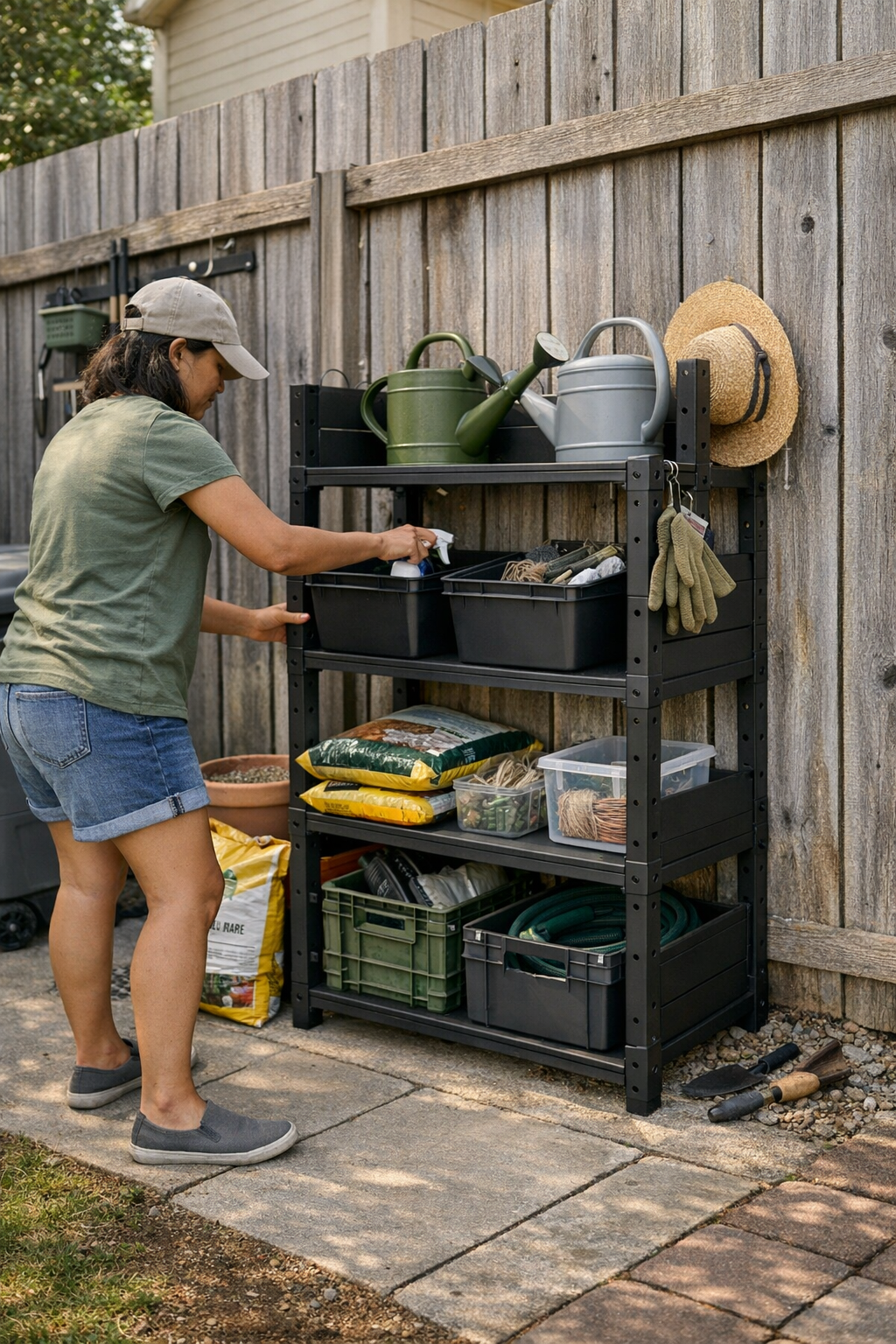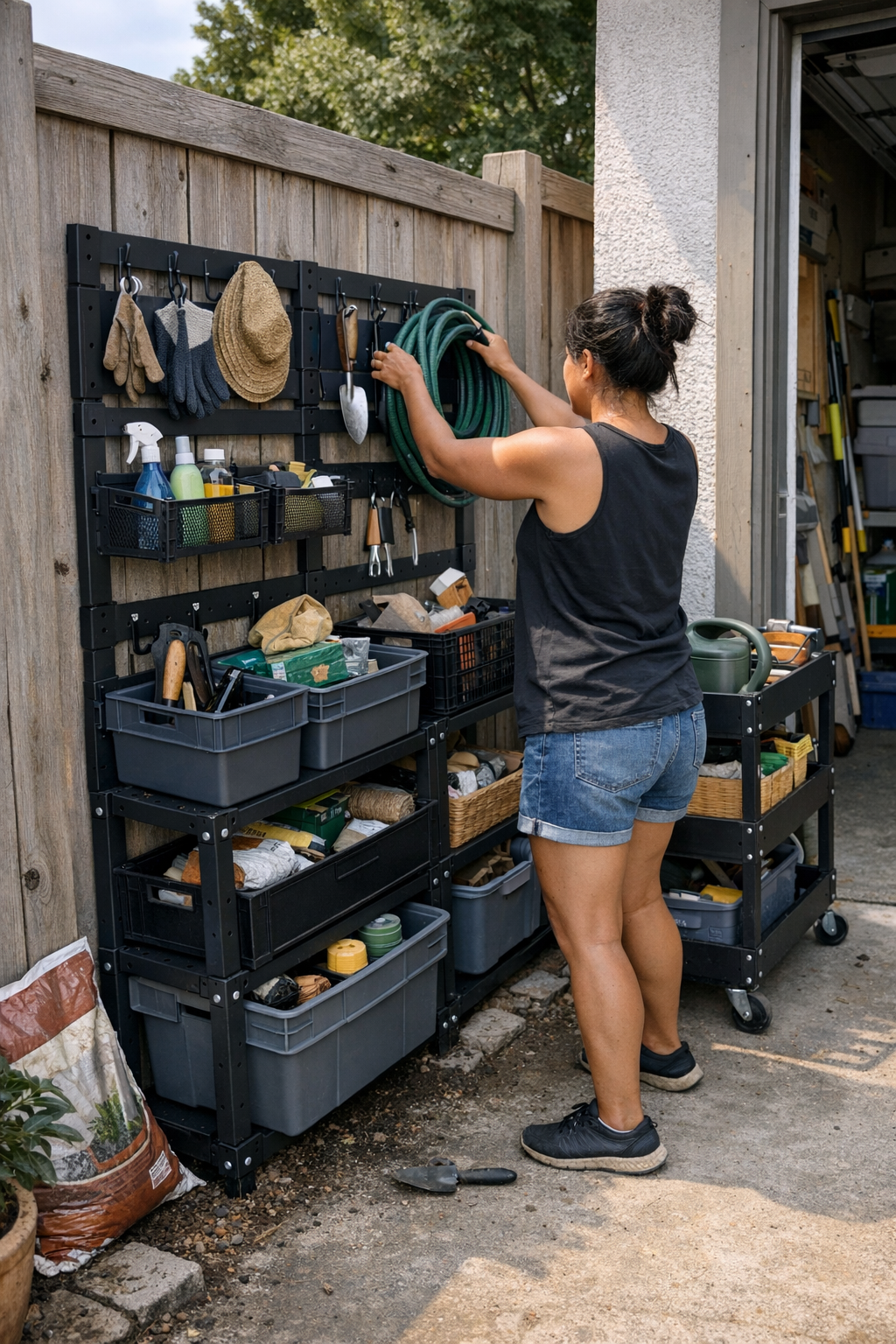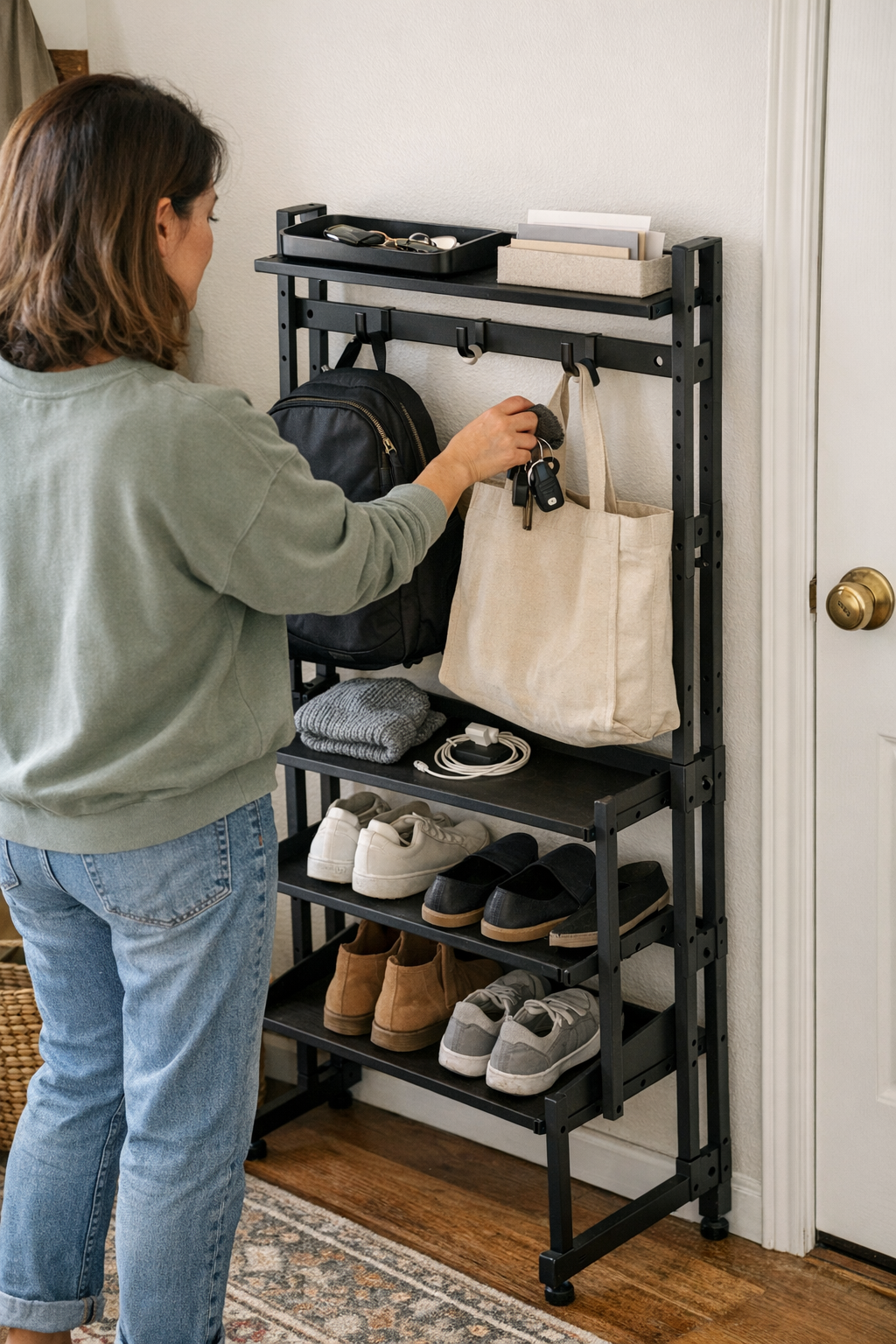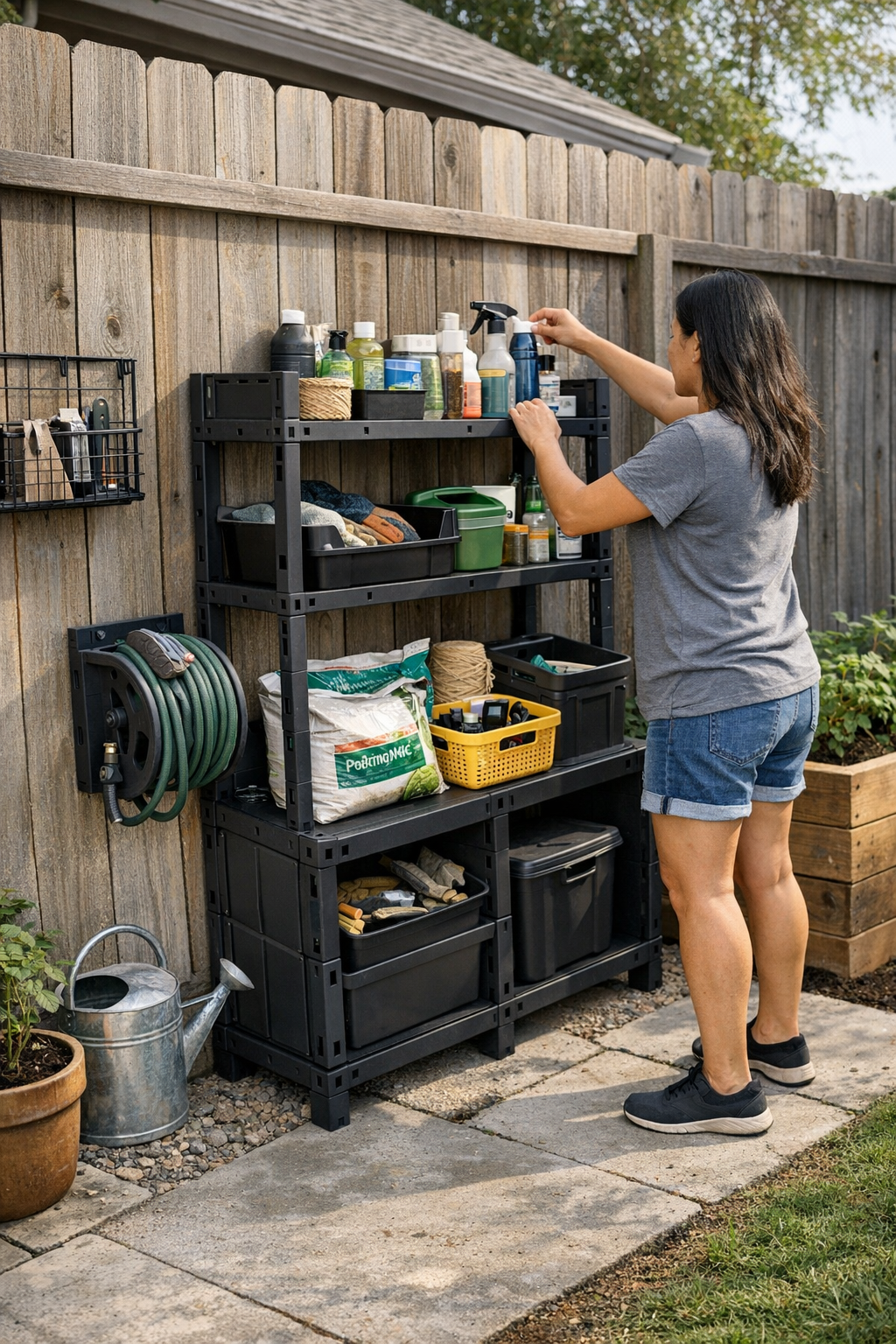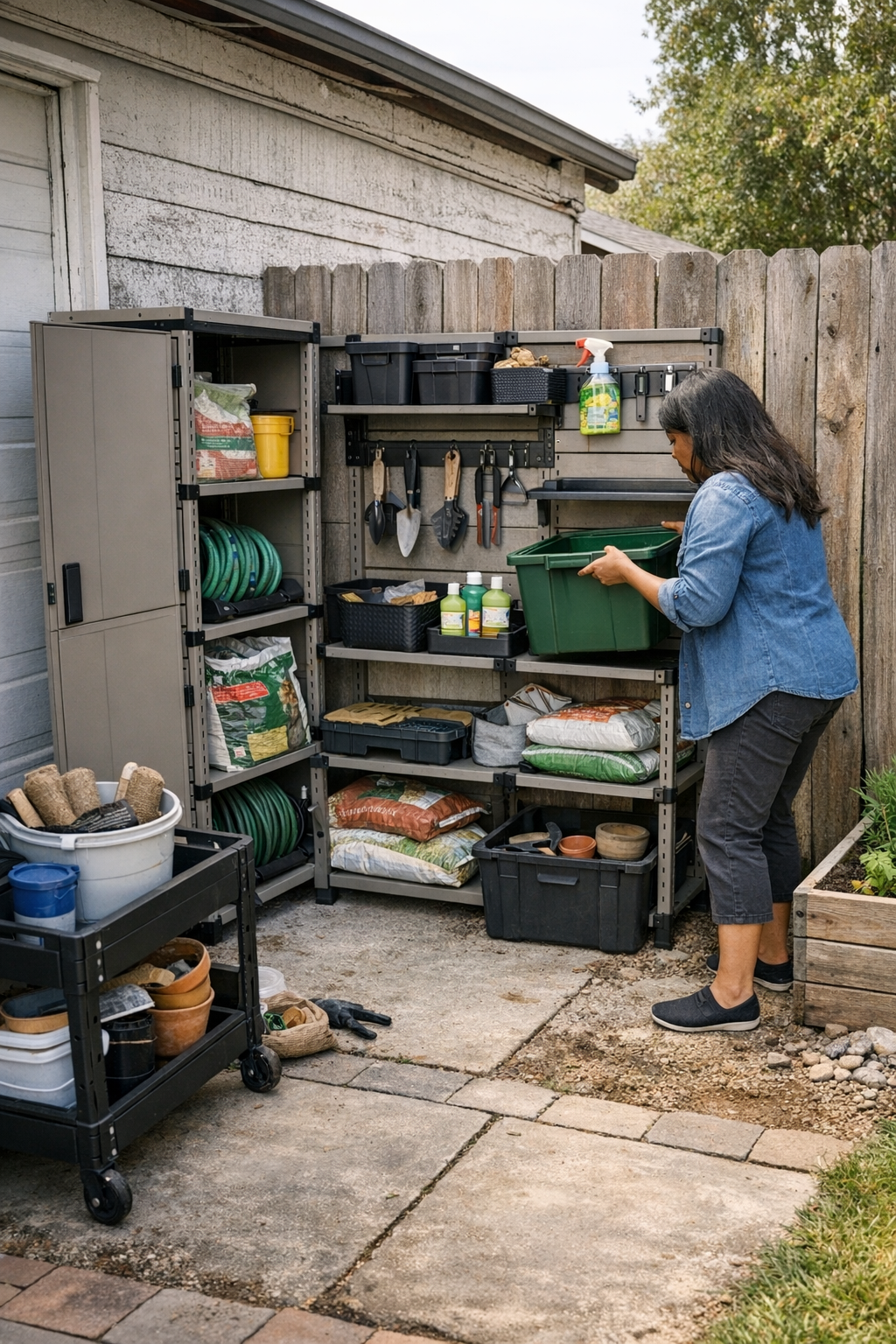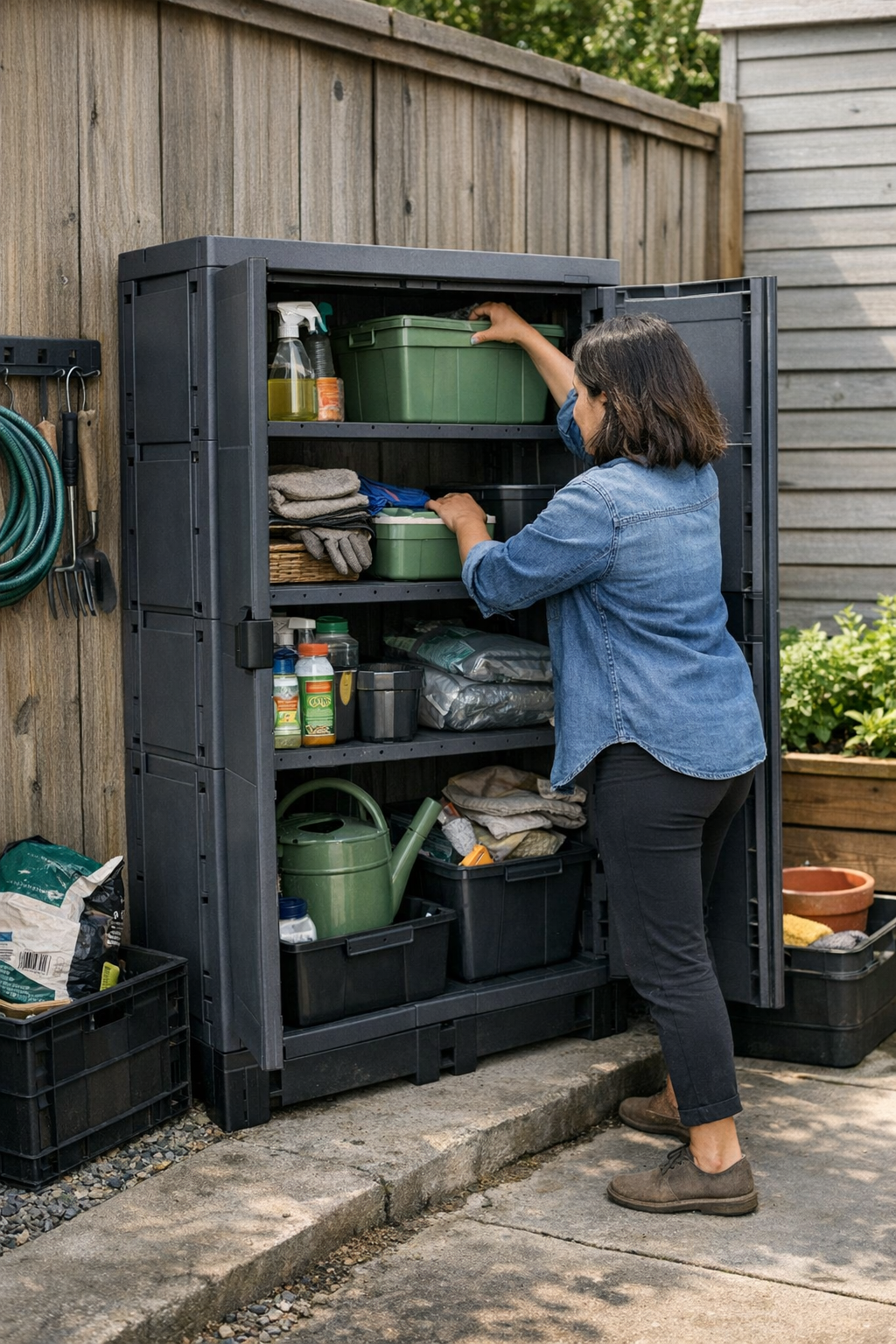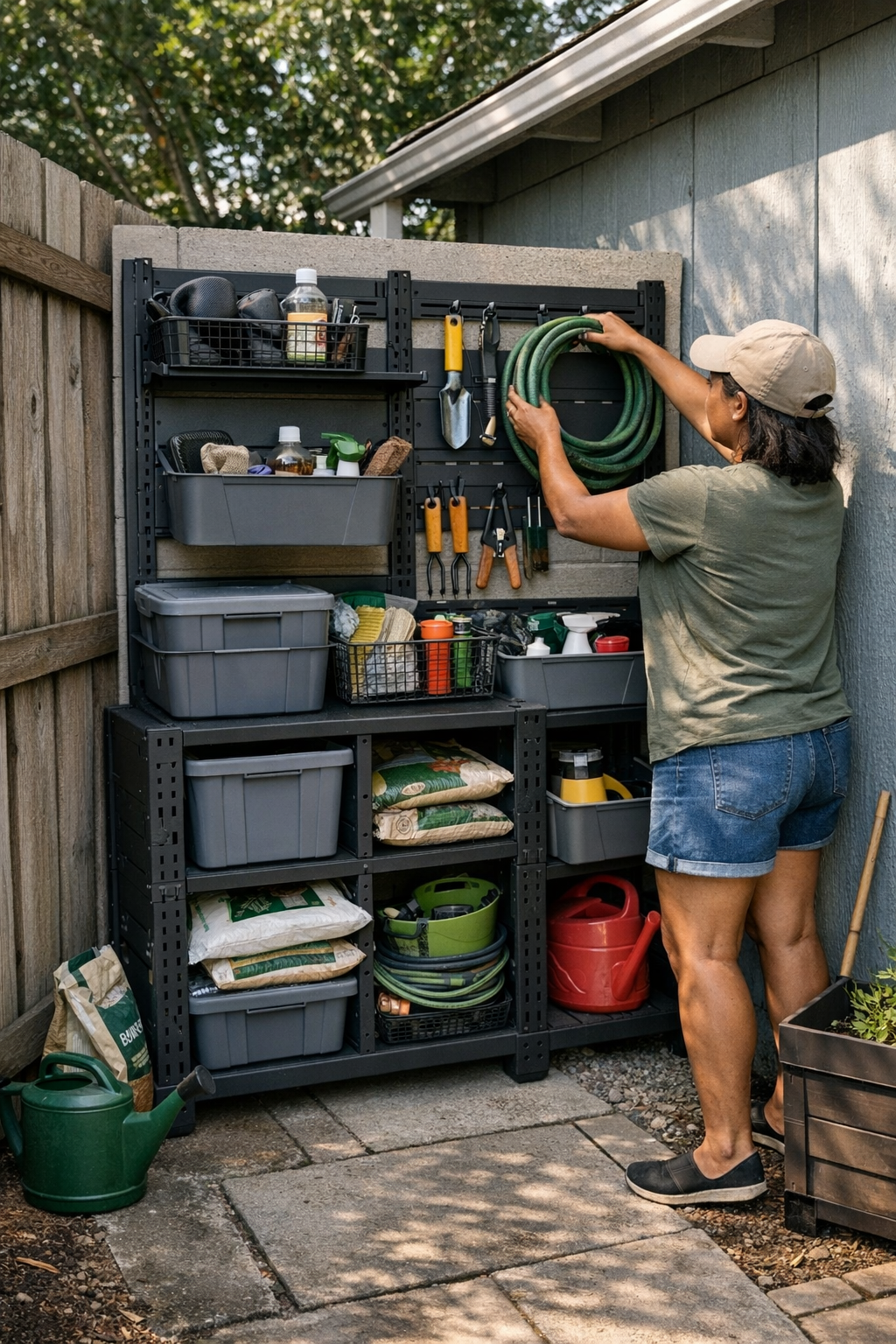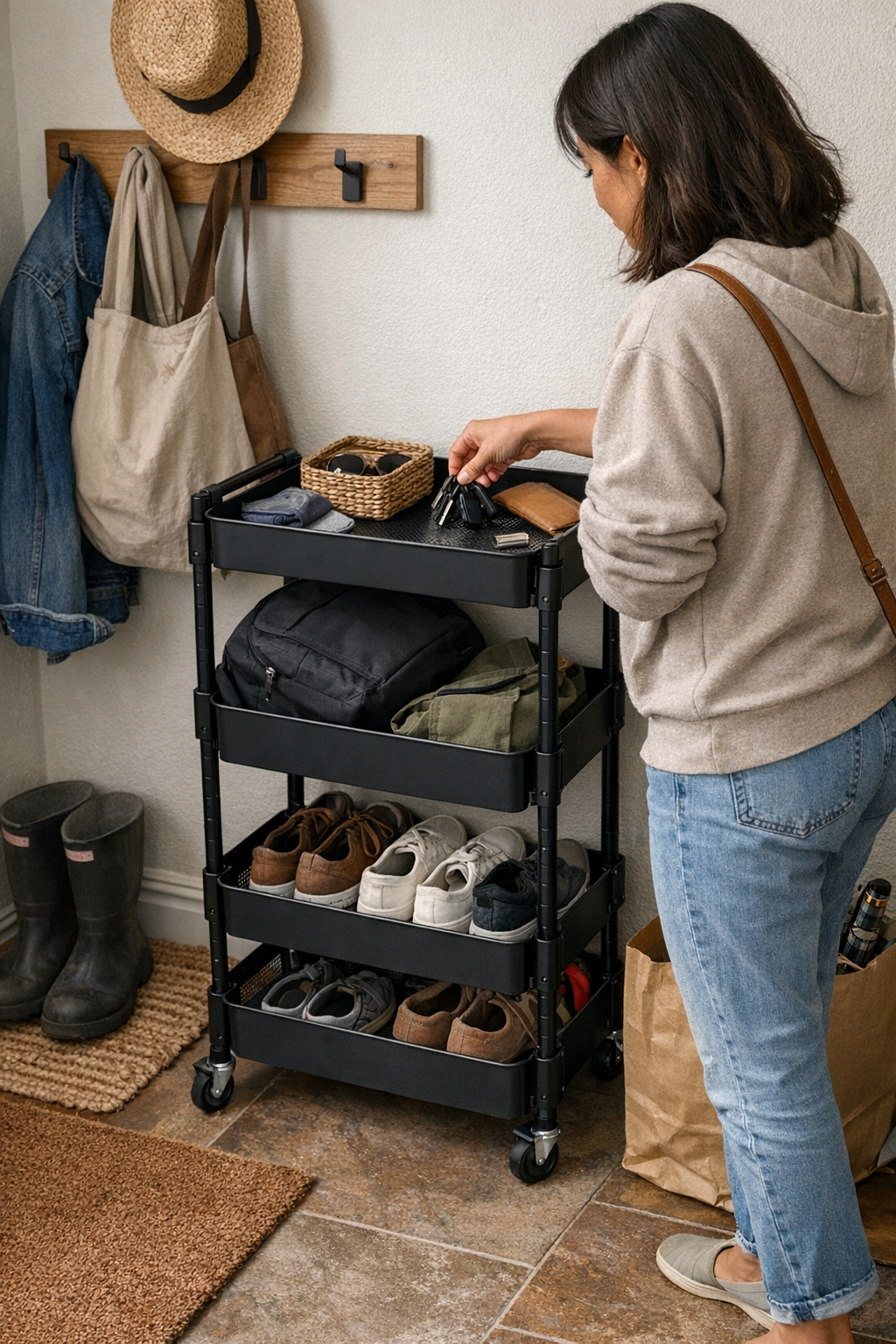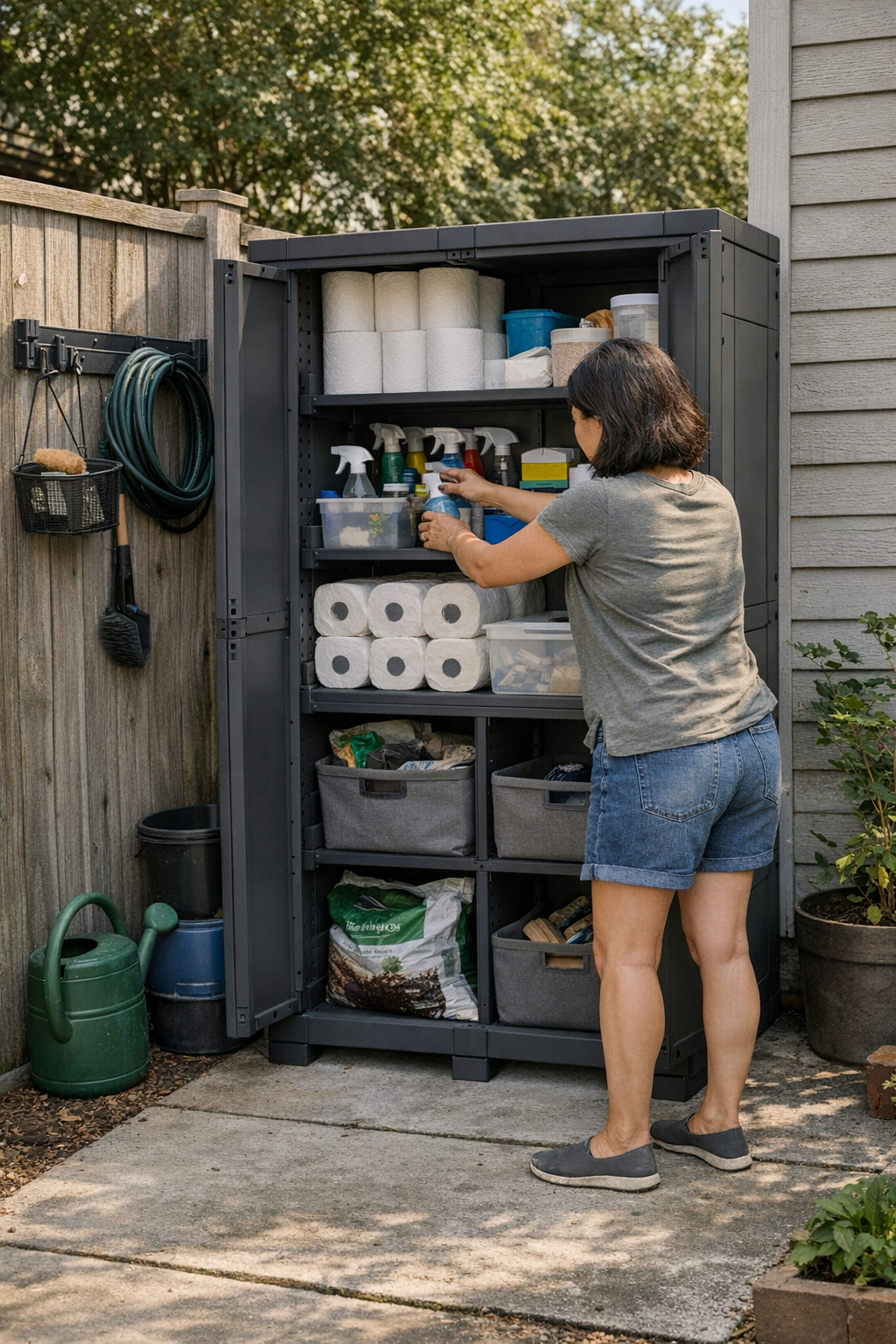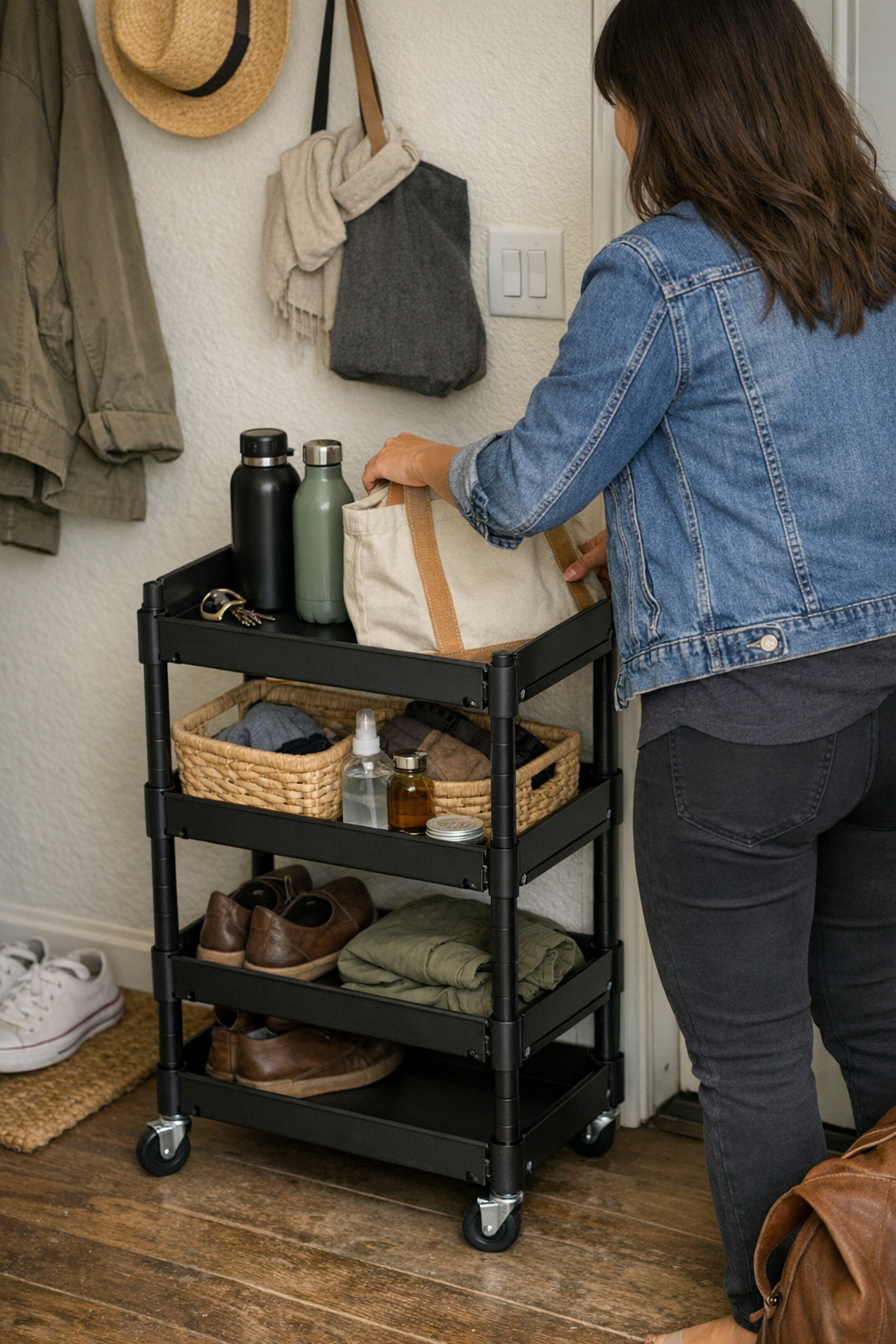
The illusion of a tidy entryway usually unravels by the third trip through the door. That slim cart near the threshold that looked so organized Monday morning? By Wednesday, bottles wedge under benches, shoe lines swell into piles, gym bags dangle half-off the edge. The reset never lasts—not because the setup is ignored, but because quick drops, last-minute grabs, and crowded paths expose the limits of carts built for looks, not for the relentless churn of daily arrivals and departures. Entryway order doesn’t slip all at once; it leaks away with every uncontrolled drop, every bottle rolling loose, every bag that lands an inch from safe. The result is a threshold that looks serviceable after a big reset but turns into a scramble by midweek—clogged, unstable, and one bump away from another reset. This is the real friction: a space that stores, but interrupts.
Why Entryway Order Rarely Lasts—And Where Most Carts Fall Short
Most entry zones (mudrooms, foyers, or that barely-wide patch inside the front door) reveal their pressure points within days. Shoes don’t stay pointed out; bags migrate from hooks to floor; bottles perch on whatever surface is open, just waiting for a passing knee or hasty reach to send them spinning. A setup looks sorted after each clean—but let someone rush through, and chaos is back. No one wakes up aiming to crawl under a bench to hunt for a runaway bottle, but in real entryways, it happens again and again.
The underlying failure is structural. Basic carts or open organizers offer flat shelves—nothing to keep daily-use items anchored once the tempo ramps up. Every casual “set it here for now” increases collision risk. Multiply that by every person in the house, every return trip, every scramble for a missing shoe or bottle, and those smooth shelves turn into launch pads for mess. The system breaks—not dramatically, but persistently—just from being used as intended.
Small Details, Big Difference: The Real Role of Shelf Lips
Here’s where function beats form: add a 1-inch shelf lip to each cart level. Less than a finger’s height, but enough to block bottles and canisters from tumbling during the usual shoves, bumps, and quick grabs. These shelf lips aren’t statement features, but in a muddy, high-traffic entryway, they’re the silent line between barely-contained order and constant reset.
See the difference play out:
- Smooth shelf cart: You drop a chilled bottle on a just-wiped shelf. Looks fine—but when the afternoon rush jostles the cart or a coat sleeve sweeps by, the bottle clatters to the floor, usually rolling into the main walking path or under seating. At best, everyone steps around it. At worst, the gap clogs as someone kneels to retrieve it, blocking others in the process.
- Cart with shelf lips: The bottle stops at the lip’s rim. Even if bumped or nudged, it pitches but doesn’t leap. Traffic flows, chaos stays contained, and that moment you need the zone clear—bringing in groceries, hauling bags, answering a knock—there’s no low-level obstacle course waiting.
What Shelf Lips Change—In Repeated Use, Not Just on Day One
Shelf lips are barely noticeable on install day. But by week two, the difference is visible and cumulative. Every time a bottle slides but doesn’t hit the floor, you skip a midweek cleanup. With each glance at a cart still holding its shape—no collection of items wedged at the edges, no impromptu pileup beneath—it’s obvious: these small boundaries kill the slow drip of extra maintenance that eats up time and mood.
- Fewer resets. Instead of re-staging the cart after each rush, the structure itself does the work—no constant interruptions to your entry-to-living-room movement.
- Less kneeling, fewer blocked paths. With items kept behind a low edge, you avoid the awkward retrieval dance that always seems to happen just when everyone’s in a hurry.
- Thresholds feel open again. Not wide visually, but open in function: the zone stays traversable, drop-offs don’t sprawl, and the cart supports flow instead of breaking it.
The Hidden Tradeoff: Stability vs. Instant Access
The right entryway fix usually costs you something—but shelf lips walk the edge carefully. One inch high is enough to catch wayward bottles, jars, rolled-up cloth bags, yet not so high you need to work around it. Most of the time, reaching in adds half a second: a slight angle, a small lift. It’s an almost invisible price for skipping the parade of dropped bottles and split-second traffic jams that cascade from a single loose item in a high-use threshold.
In daily entryways—where someone always crosses behind you, checks the cart, or squeezes past on the way out—those tiny gains in order beat the imagined speed of a perfectly open shelf. Less clutter, less pause, more pass-through without resetting the whole zone.
Real Threshold Scenes: How Carts Behave During Normal Routines
Scene 1: The Evening Drop-off Chain
Families return in waves. Backpacks bounce off the bench; shoes scatter; water bottles hit the cart. Without lips, at least one bottle shoots into the walking lane, blocking traffic and stalling everyone behind. The bench becomes both a seat and a retrieval site, as someone fishes for a bottle while trying not to crush shoes or bags. Traffic slows, tempers flare, and the whole reset replays before dinner.
Scene 2: Resetting After a Busy Weekend
Sunday night inspection: shoes and bags mostly stayed close to their marks, but bottles—always bottles—have drifted, half off the shelf, or dropped to the floor. With lips in place, a single pass and wipe is enough; nothing escaped the cart, no extra cleanup just to reclaim the threshold before Monday morning’s rush.
Scene 3: The Midday Shift
You try to clean under the shelf or slide the cart for a flooring reset. On smooth shelves, every wiggle sends small things overboard—especially when the floor isn’t level. With shelf lips, even a mild tilt leaves bottles, tubes, and jars intact. No scattering, no hunting, no extra sweep-up needed.
Beyond Bottles: Extended Value of Shelf Lips
This isn’t just a water bottle fix. Shelf lips handle sunscreen, woodworking glue, tote bags, stray chargers—any of the spillover that enters and leaves with the week’s routine. When a cart with lips gets rolled between zones, essentials stay stored; the space between, and the transition itself, remain controlled. No domino effect, no instant mess. The value compounds most in spaces where people and purposes overlap and drift—and where the difference between a cart serving its zone and a cart amplifying the mess is felt daily, not just after a wipe-down.
When (and Where) to Add Shelf Lips
Not every storage cart needs shelf lips—if your organizer only sees dry shoes or heavy boots, flat is fine. But any threshold cart handling a mix of bottles, small boxes, or easy-to-tip supplies, especially with more than one person using the zone daily, needs this small edge. The cost is negligible compared to resetting a scattered cart multiple times a week.
Most lips add one inch or less to depth, and retrofit easily. If floor space is tight, use shallower lips; they still block slides but don’t make the shelf feel boxed in. The difference becomes clear not when you clean, but when you notice what you don’t have to clean again next time someone rushes through.
A Small Boundary That Holds the Line
Entryway pressure never relents—either your setup absorbs it, or you do. Shelf lips don’t transform a chaotic zone into a showroom, but they stop the slow creep of disorder that makes every homecoming harder. Even a one-inch edge turns a high-traffic drop zone into a space you can actually walk through, no matter how many bags, bottles, or boots pass through in a week. Small effort, large shift.
When your threshold piles up dropped bottles and repeat resets, a simple cart upgrade with shelf lips can mean the difference between constant minor interruptions and a zone that quietly functions under daily pressure.