Category: Yard & Utility

  • Creating Efficient Two-Zone Outdoor Storage for Small Yards

    Most outdoor storage holds up for exactly one day—right up until you start actually living with it. The problem isn’t size; it’s the churn. Small yards, garage thresholds, and side-yard strips see tools out, gear in, kids darting by, another day’s stuff crowding the path. Neatly packed bins and wall hooks seem organized at first, but after a week of normal routines, walkways close up, corners fill with overflow, and returning a single thing means shifting two others just to squeeze by. “Organized” turns into “obstacle” fast, and the space meant to free up your yard becomes an unpredictable, barely navigable zone you’re stuck resetting again and again.

    Why That One Big Storage Unit Always Bogs Down

    The appeal is obvious: one large shed or bench, floor clear, everything tucked behind doors—no visible clutter. But as soon as real use hits, the cracks show. The gear you need often—soccer balls, hand tools, watering cans—shifts toward the front or piles onto the floor. Meanwhile, bins of last season’s pool toys or camping chairs settle in and refuse to budge, clogging anything behind. Suddenly, the route from patio to storage shrinks from an open path to a squeeze and shuffle.

    Grab a tool? You’re hauling out half the wrong items just to reach it. Returning a garden stake or backyard frisbee means wedging it above tall bins, hoping nothing comes tumbling down. One dead corner quietly collects the overflow—now you’re blocking yourself in just to get what you actually use. Every reset becomes a clumsy shuffle: moving one stack, re-tucking another, and losing patience before you can even shut the door. Instead of making things easier, the setup works against your routines.

    The Two-Zone Split: How Real Yard Storage Actually Survives

    There’s a reason most tidy setups fall apart: single-zone storage ignores real-life flow. What fixes it is physical or visual separation—one clear zone for everyday gear, another for the stuff you won’t need until next month. This isn’t about expensive cabinets or complicated modular tricks; it’s about moving essentials forward, pushing long-term gear out of the main lane, and keeping return flow fast, especially when you’re just grabbing or dropping something on a busy day.

    Daily-use pieces—hose ends, gloves, favorite balls—go right where your arm naturally lands: open hooks, shallow bins, easy shelves in the direct movement path. Bulky or off-season gear gets pushed down, to the back, or into a low box—out of walkways, out of mind until the weather changes. Without this split, out-of-season stuff creeps up and takes over. Soon your fastest route to that one tool is blocked—sometimes permanently—by a loose bag of mulch or a cover for a pool that’s in storage for good.

    Typical Trouble: Corners That Keep Getting Jammed

    Think of a fence-line corridor or that sliver between the house and driveway. The initial setup looks smart: bins on the ground, hooks overhead. For the first week, all good. Then rain hits, kids rummage, and suddenly, small items drift everywhere—ball pump lost behind bags, gardening gloves shoved onto any free hook. Getting the mower out becomes a puzzle, with tarps and buckets forming a barricade. Each day, non-essential clutter pushes farther into the path, until a shortcut becomes a slow detour. The problem isn’t how much fits, but how easily things move through and get returned—awkward movement, blocked access, and clutter always seem to sneak back in.

    The Simple Fix That Changes the Routine for Good

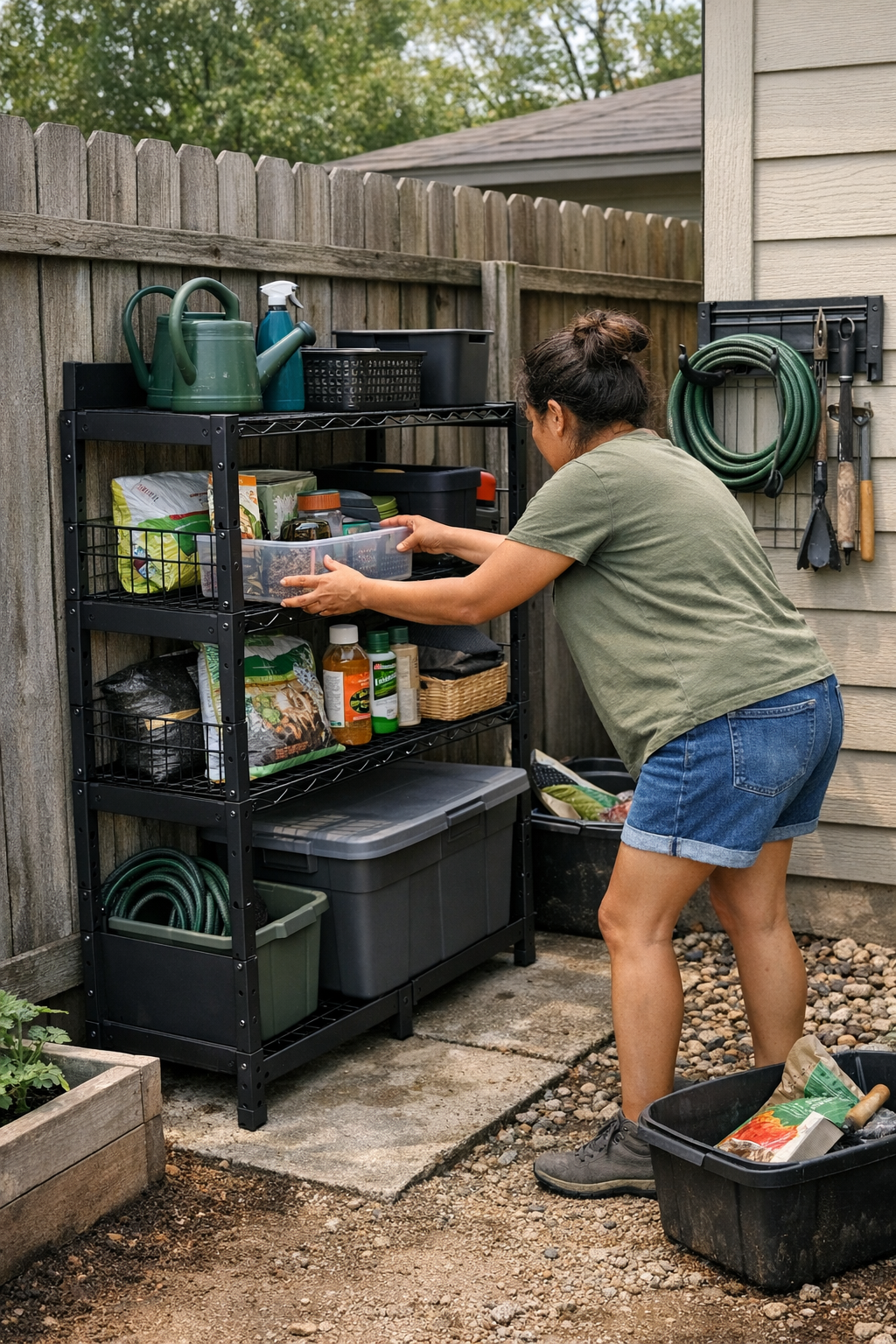
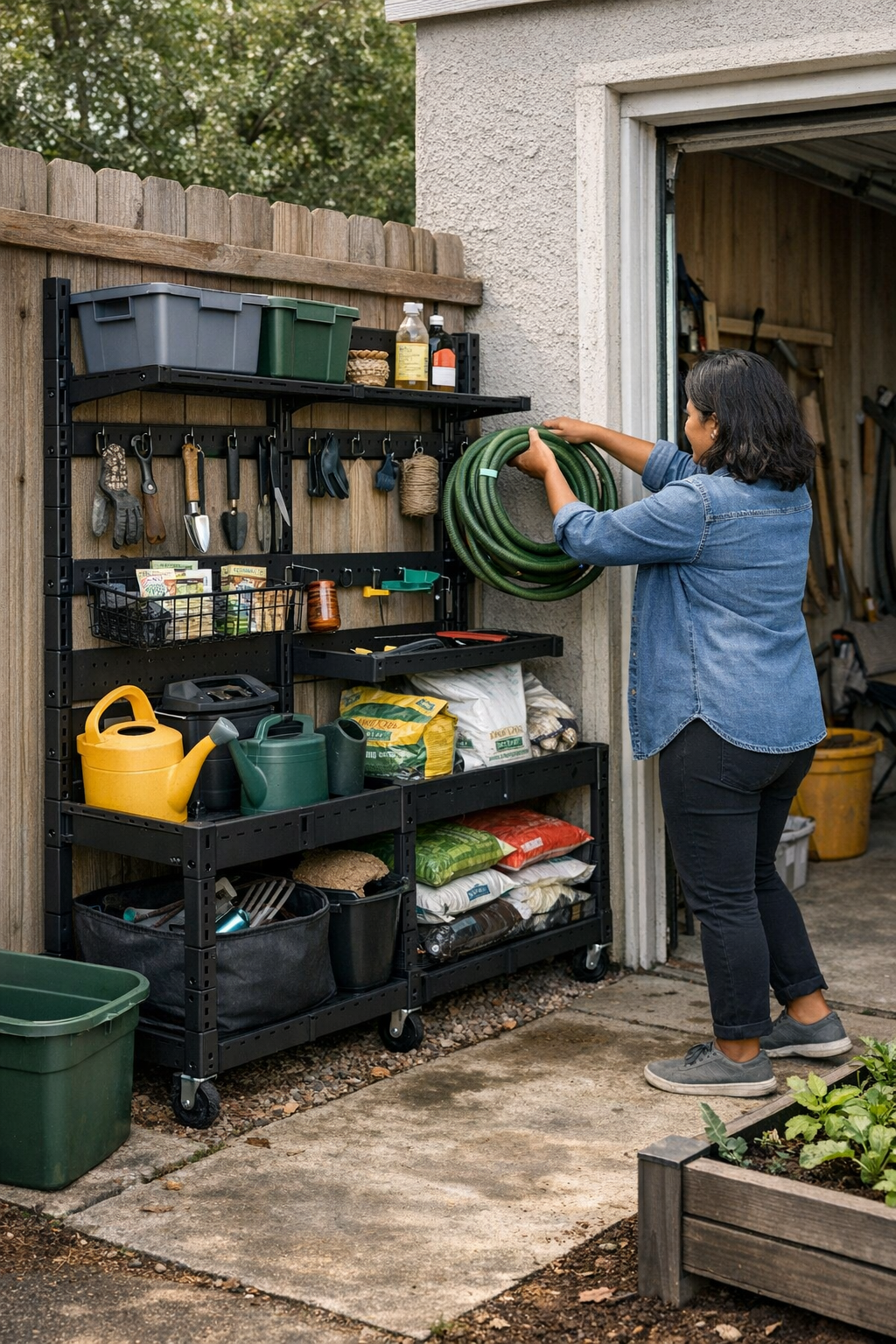
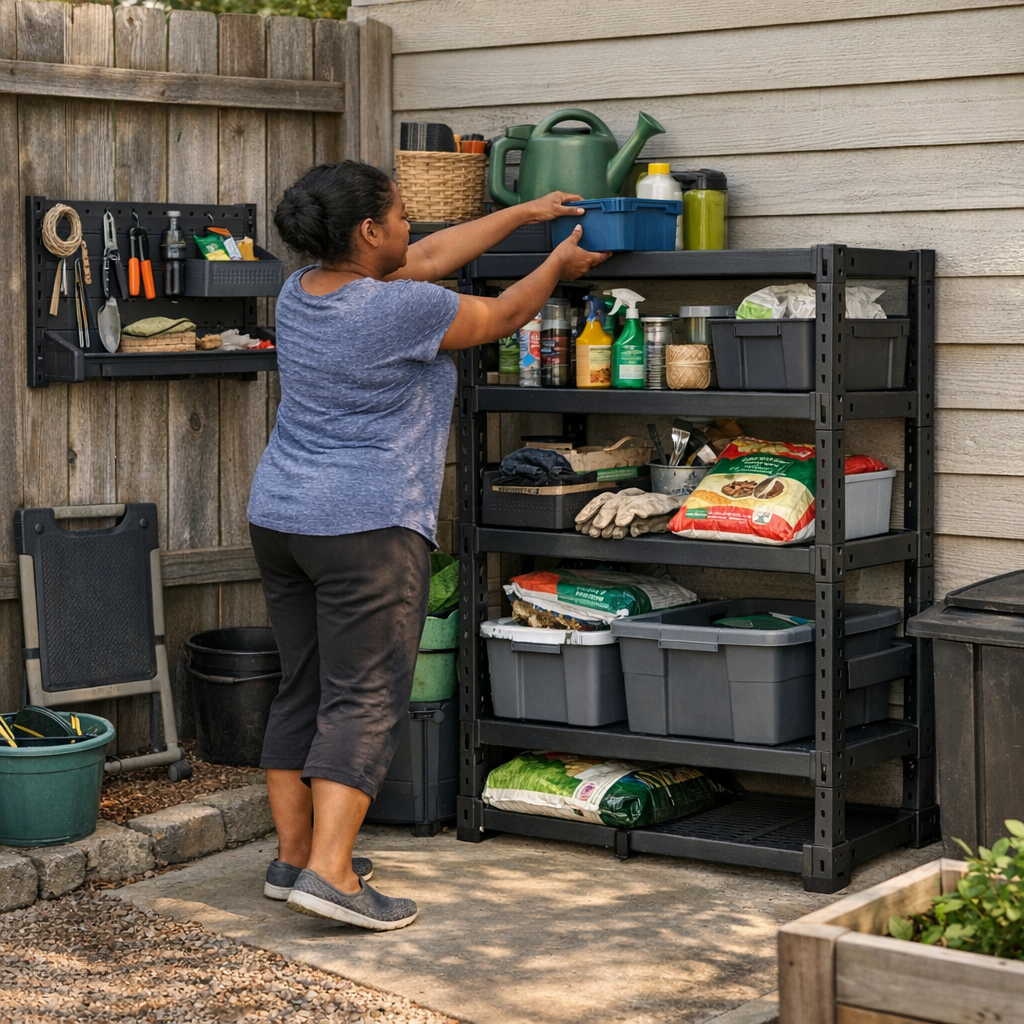
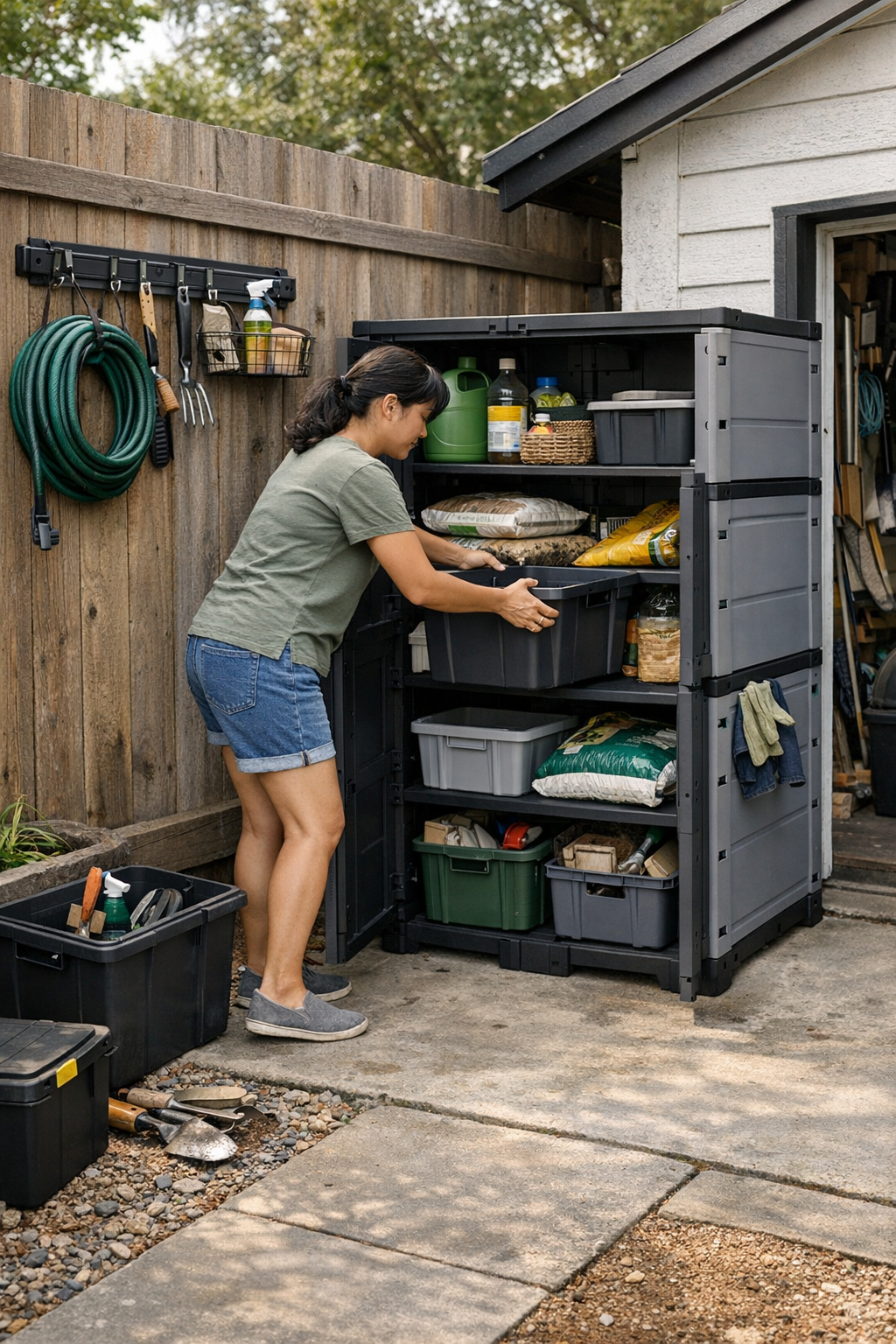
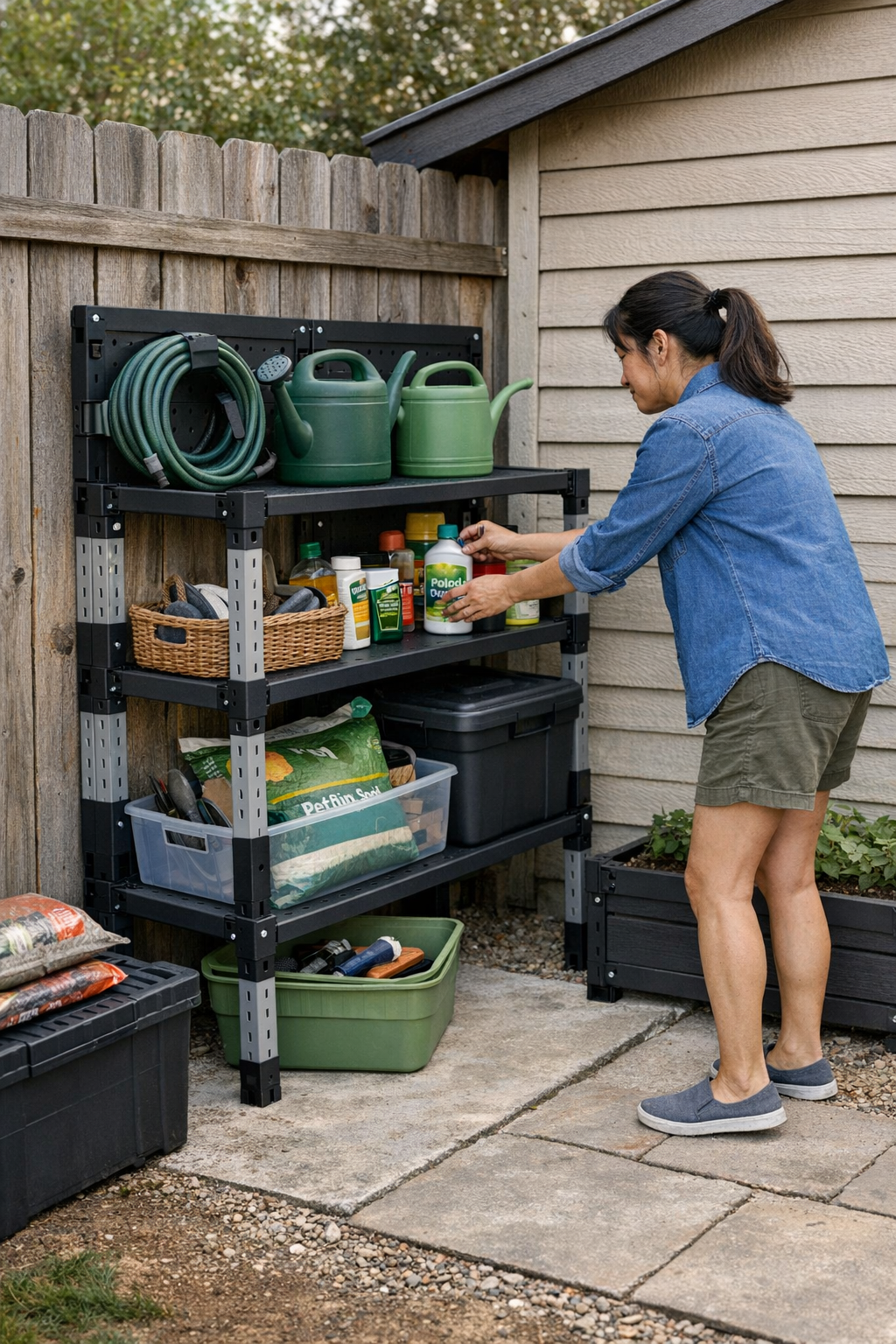
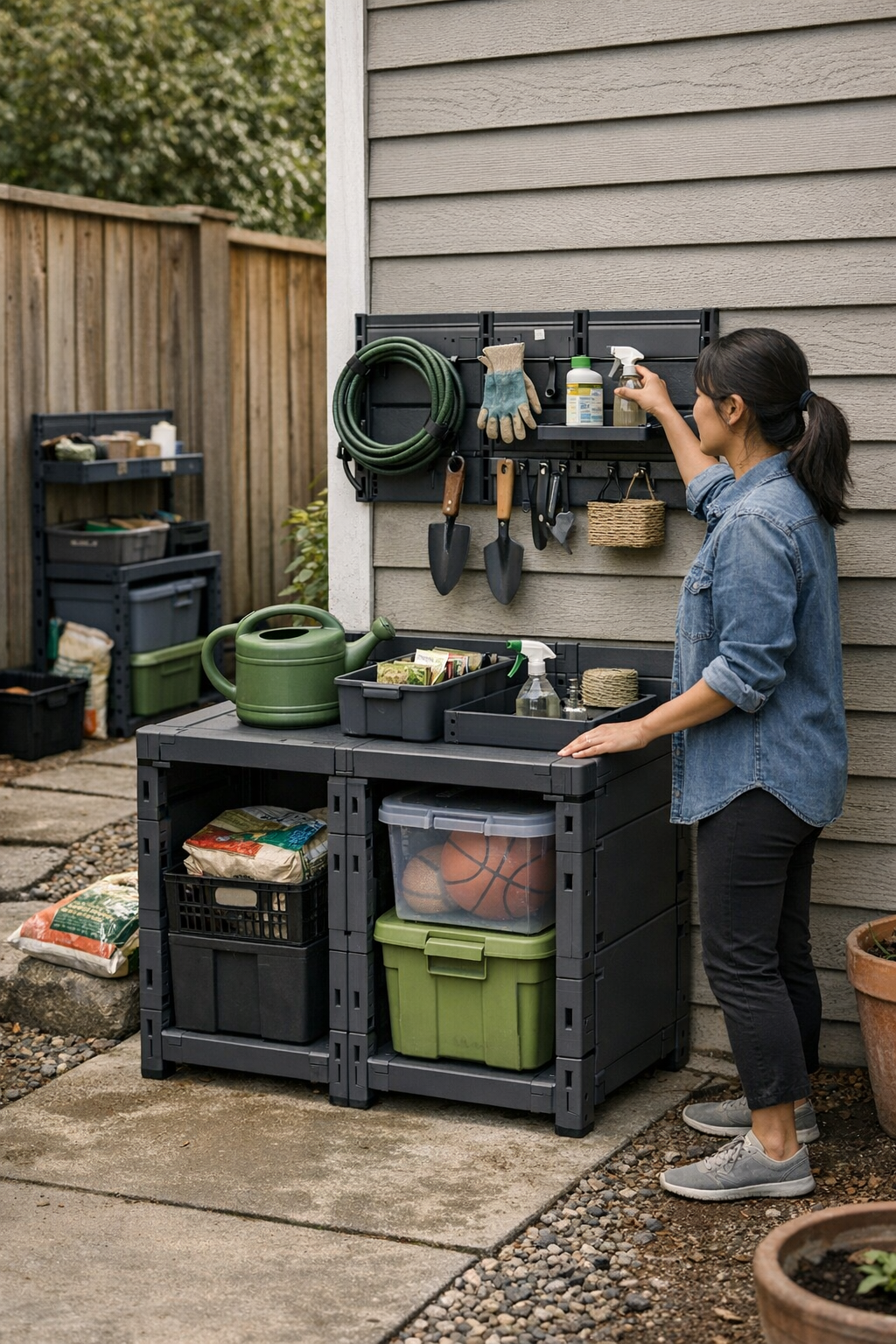
    The breakthrough comes with a clear, usable split. Imagine a slim wall rack mounted right at arm height above a low box along your main outdoor wall. No extra footprints, just a smarter vertical sequence. Everyday gear—balls, sprayers, hand tools—live on the rack and hooks, always in sight and easy to drop back in seconds. The box below becomes the slower lane: stash the folding chairs, extra hose, winter covers out of the way, ready but invisible in regular traffic.

    The result isn’t just tidy—it’s less reset and more return. The path stays open, no matter how disorganized that box gets inside. Drop-offs never block the entry, and spontaneous backyard games or quick project grabs don’t trigger a stack collapse. Even at peak season, flooded with new gear or muddy shoes after a storm, the split prevents spillover from hijacking your walkway. Resets shrink from a 15-minute chore to a handful of seconds: a quick scan, a small nudge, done.

    How to Actually Decide What Stays Up Front

    Rely on a living rule: If you touch it every week, it gets a prime spot. Wall hooks and the front of open racks are for daily reach. If something’s cold since last season, down, back, or into storage it goes—downward, deeper, stashed. During busy stretches or summer rotations, this keeps high-use things fast to find, while seasonal bulk just sits out of the way, not silently coiling into new obstacles.

    The Untold Cost of Single-Box Thinking

    Nothing slows a backyard routine like trying to cram daily and rarely used gear into a single bin or entry. Each rush through for a rope or basketball means “excavating” three things you barely remember storing. Wall space gets used, but racks overflow with random stuff that’s months from relevant. Before you know it, the center of the area is a pile, the path narrows, and the effort to tidy up grows every day. Square footage stays the same, but movement feels tighter, blocks pile, and actual use drops. “Storage” becomes a synonym for reset fatigue.

    What’s Different When It Just Works

    The right setup doesn’t just look tidy—it moves with you, day in and day out. After twenty backyard shakeups, sudden rain, or a string of family visits, things still make their way back without drama. The two-zone split keeps essentials flowing and clutter contained, even as routines change or gear multiplies. The walkway stays open. The wall space finally makes sense. No more full-scale reorganization just to find a trowel after a long week. It’s a daily improvement you can see: resets shrinking from dreaded chores to reflex habits, the frustration of blocked paths replaced by real ease. The setup works—not because it stores more, but because it stores smart, and you can finally trust it to handle real life as it actually happens.

    For practical outdoor storage that fits real routines, explore more at TidyYard.
  • Why Chest-Height Storage Transforms Entryway Organization and Flow

    Entryways rarely fall apart because of generic clutter—they fail when storage fights against movement, slowing down every routine. Floor bins crowd the walking path, high shelves go untouched, bags land on the only bench left to sit. After “organizing,” the reset never lasts: shoes march back into the middle of the hallway, mail reappears where you meant to place groceries, and within days, you’re sidestepping, rebalancing, and stalling out at the door—especially with your hands full or in a rush. If storage isn’t exactly where your arms already move during the daily exit and return, the entire system unravels—bins ignored, hooks left empty, overflow edging further into whatever space you had left.

    When Storage Misses the Mark, Routines Grind to a Halt

    Every threshold, from cramped apartment halls to wide, open foyers, faces the same problem: the instant items cross the door, they drop wherever is least inconvenient at that second—not where you “meant” to store them. If storage zones sit below your knees or above eye level, every transition jams up: one extra squat, one awkward reach, and you’re adding friction to a process already under time pressure. In reality, by midweek the pattern is obvious: shoes half-tucked under benches but spilling out, backpacks flopped where feet are supposed to go, keys missing from trays and stuck between mail pieces. What looked “organized” for a day quietly mutates into blocked doorways and longer resets, as every pass-through reroutes around friction in the wrong places.

    How Chest-Height Storage Rewires the Flow

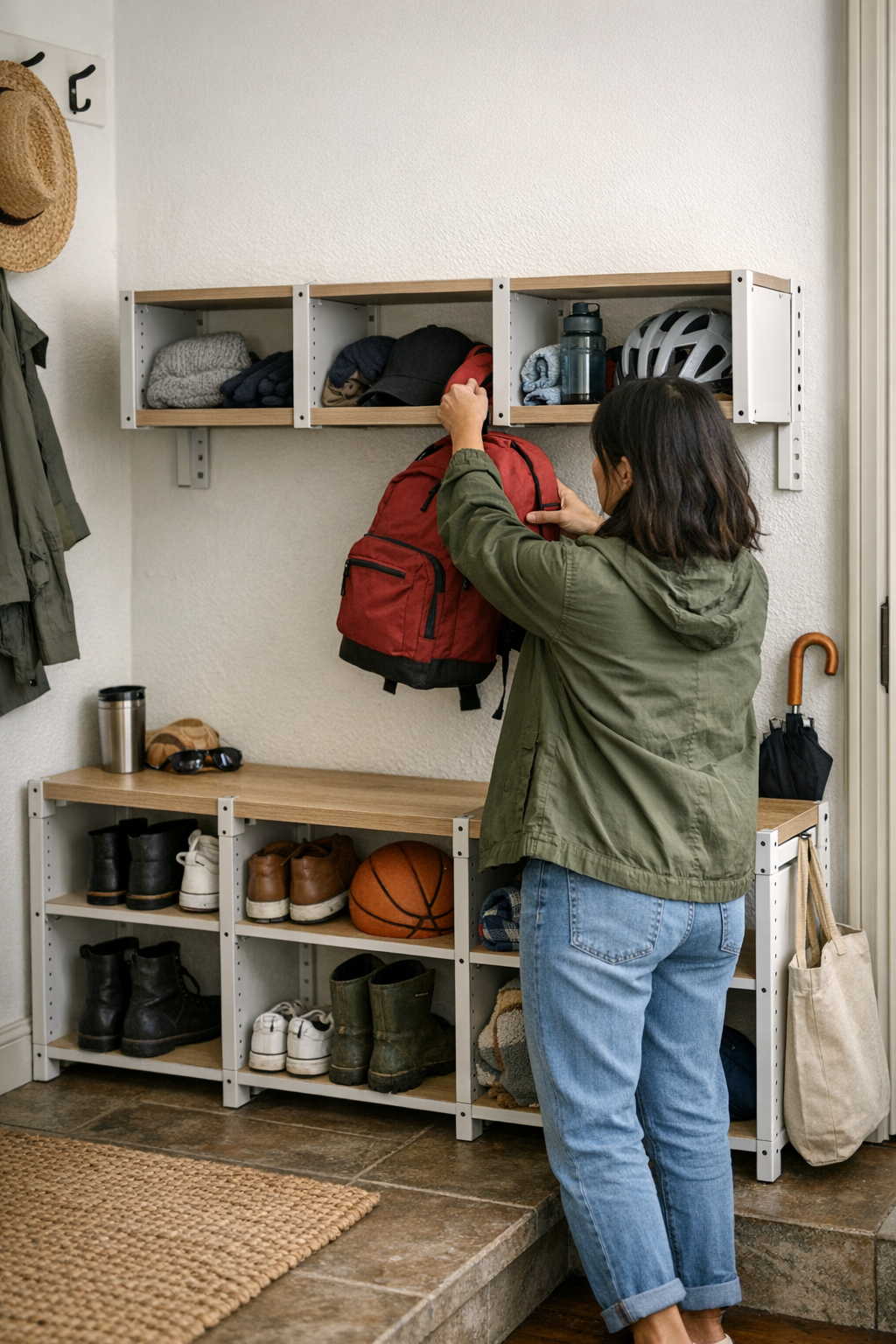
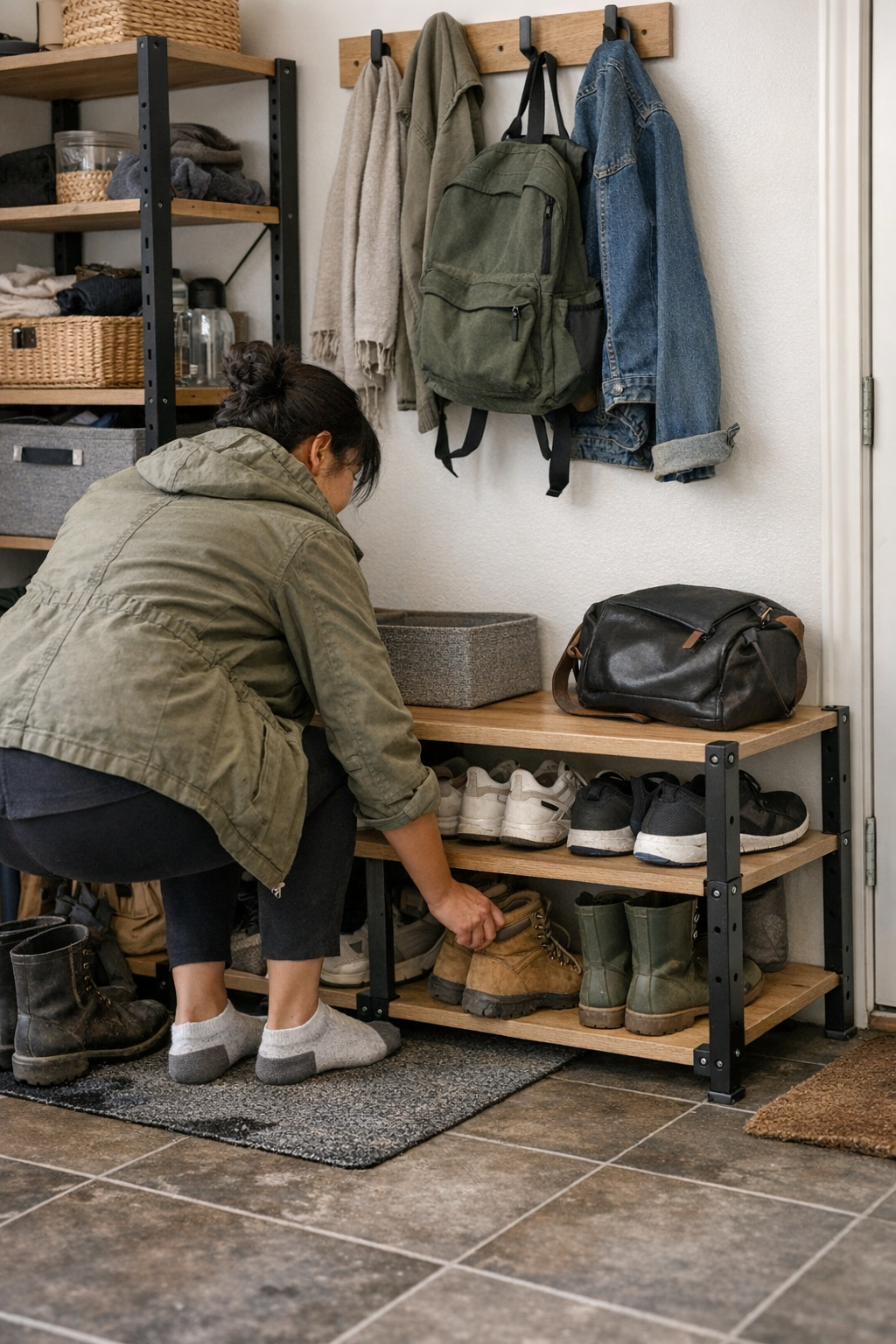
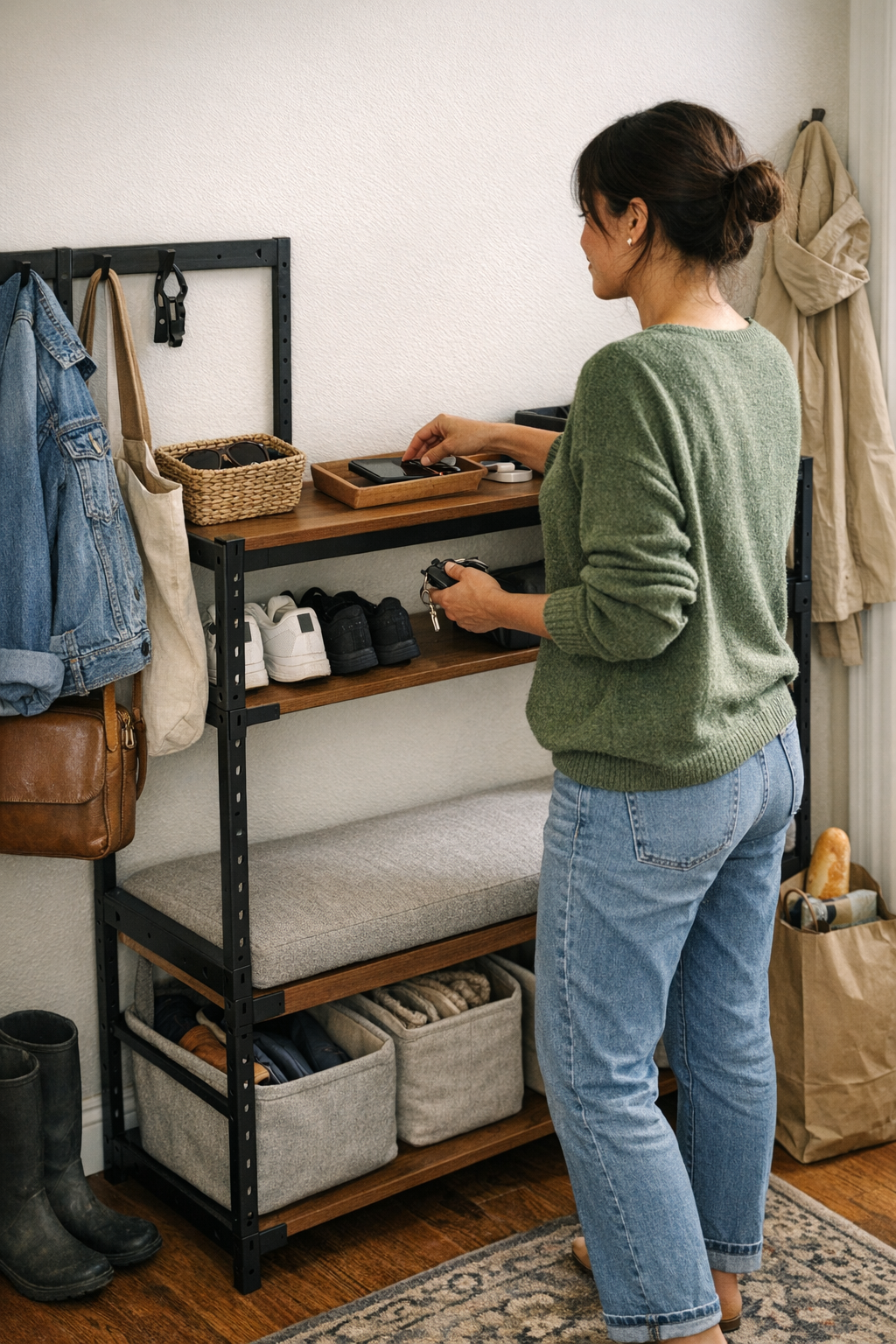
    Chest-height isn’t about aesthetics—it’s about matching storage to the actual angle and height of your hands as you enter or leave. The space from waist to armpit becomes a built-in “motion path” for bags, essentials, and jackets. Hooks at shoulder level catch coats before they hit the nearest surface; a tray above the bench claims keys and mail the second you reach for the door. Instead of bending low for every pickup or forgetting about anything above your head, you work with your own habits. The payoff: no more daily repeats of missing keys, shoes creeping into walkways, or benches collecting every stray item in arm’s reach.

    Been fighting a shoe cubby that sits just above ankle height? Four days out, neatness collapses: pairs fan out into the main hall, and resets stall as extra steps pile up. Meanwhile, high-up mail organizers gather stacks nobody wants to reach for, letting stuff trickle back down into the active zone. If storage fights the movement pattern, even the best plan fails under normal use—resetting just slows down the next unraveling.

    Real Entryway Bottlenecks: Where Storage Fails Routine

    The Bench That Loses Its Job

    Designed for sitting, the bench turns into overflow ground zero: one grocery bag, then a week of mail, then everything else. Sitting down means clearing a whole pile—not grabbing your shoes. When storage sits too low or isn’t immediately visible, the bench turns from utility to permanent drop zone. Resetting means rescuing the seat from its own backlog every single time.

    Bags That Block the Path

    Every new arrival—kids, pets, groceries—pushes bags wherever there’s open floor. If racks or hooks are out of reach, backpacks and totes hit the ground. By morning, you’re fishing for today’s essentials from under yesterday’s pile, while the doorway narrows with every shortcut taken. Far from streamlining entry, the wrong storage pattern punishes every deviation and encourages more workarounds than solutions.

    Accumulated Reset Fatigue

    Organizing gives you a clean slate—once. A few days, a few rushed exits, and bins are buried, tray tops vanish under unrelated items, and shoes spill out in all directions. The space “looks” set up from certain angles, but the walking path shrinks and every pass demands extra sorting. This is where most systems fail—not at the clean-up, but in the slow daily breakdown that costs time, focus, and movement right at the moment when you need the entry behaving on autopilot.

    The Quiet Shift: What Happens When You Raise the Zone

    Across hundreds of entry resets, one physical adjustment outperforms every organizational trend: raise core storage into the zone where your hands already move on entry and exit. Install a wall rack at chest height for active bags. Add a tray above the bench for phones or loose essentials. Shape a hook row to catch jackets in transit rather than after-the-fact cleanup. When the highest-traffic items land in the “active reach” zone, friction drops instantly. Here’s what actually changes:

    • Bags lift off the path without thought—no more targets on the floor, no more obstacle course at the threshold.
    • Shoes hold their lane, anchored by visible, easy-to-access storage—row spread halts and reset requires less effort.
    • Essentials like keys land in plain view, always where your hand already expects them, stopping the last-minute hunt.
    • Overflow stands out as soon as it starts, making backlog visible and motivating resets before things spiral.

    After bumping a household’s main drop tray by just over a foot, the transformation wasn’t subtle. Headphones that used to disappear for days stayed in place. Sunglasses landed in the tray and stopped hiding under mail. Even serial bag-droppers got the pattern: hooks at the natural hand height make it easier to hang up than drop down. Backlog dropped from a full week’s worth to a couple daily resets, and the bench finally acted like a seat instead of a catch-all.

    Fitting Raised Storage into Tight, Busy Entryways

    The busier and narrower your entry, the more you need active-height storage. Wall-mounted units, slim vertical racks, and modular hooks at hand-level carve out order without eating up the path. Even in the smallest zone, a single well-placed hook beats a trip hazard of bins or an unreachable shelf. Return home, drop items at natural reach—now the floor stays clear, walkways open, and everyone can come and go without battling through piles that “fit” the layout but never really flow with daily use.

    When space is tight, low storage may seem like the only answer—but it’s usually a long-term hassle. Floor bins fill up and block movement, while high cabinets hide away what you need most. By lifting core storage, setups finally keep pace with real routines—the difference isn’t just in cleanliness, but in never having to double-back or trip just to get through your own door.

    Two High-Impact Ways to Test and Shift

    • Audit Your Actual Landing Zones. For a couple days, step back and watch where everything lands—without correcting. Is your main drop above waist level or always collecting on the floor or seat? The mismatch is the first sign the current setup is fighting, not helping, your routine.
    • Shift Up in Small Steps. Don’t overhaul in one go. Move key hooks, trays, or racks 12–18 inches higher—trial one spot for high-frequency items and watch what happens. Let the natural reach change what’s used; then adjust further based on real traffic, not theory.

    Your entryway doesn’t need to meet a perfection standard—it needs to work on repeat, under daily pressure. Raising storage into the line of daily movement keeps resets small, walking paths open, and the ongoing burden of re-organizing far lighter. What looks “organized” once is less important than what keeps your threshold moving, clear, and actually livable week after week.

    Explore Betweenry’s collection for real-world transition storage that works under daily pressure.

  • Why Wire Pantry Shelves Keep Your Kitchen Organized and Waste-Free

    The split between solid and wire pantry shelving isn’t visible when you finish reorganizing—it’s visible during the scramble on a busy weeknight. A “sorted” shelf feels clever until midweek, when quick hands shift groceries, categories unravel, and items that were once in plain sight disappear behind deep rows. Suddenly, finding a single can means unloading half the shelf, and weekly restocking turns into a guessing game fueled by expired backups and silent overflow.

    When a “Sorted” Pantry Doesn’t Stay That Way

    Solid shelves promise a neat, lined-up look: boxes stack, cans march in rows, the presentation feels ready. But that system cracks as daily use mounts. In practice, tall boxes are shoved forward, smaller jars get buried behind deep lines, and bagged goods migrate without warning. “Deep zones” quietly develop—the kind you only notice after months, when you’re finally pulling out three opened bags of rice or a backup baking powder from a forgotten corner.

    If you’ve bought another bag of flour only to spot two half-used ones hidden behind pancake mix, you’ve felt the slow breakdown of the “organized” look. By Thursday, what looked straightforward on Sunday now feels like a layered maze—not from new mess, but because access vanished and what you need went out of view.

    Wire Shelving: Built-In Visibility for the Daily Rush

    Wire shelves stop that hidden build-up before it starts. Sightlines don’t get blocked so easily—labels and missing gaps show right through. Even when the shelf is jammed, you can still spot a stray can lodged near the back or realize at-a-glance if you’re low on staples. It’s not about making your pantry look like a retail display; wire shelves simply force everything into your line of sight, yard by yard, so nothing quietly disappears for months.

    This makes a real difference during that after-work rush or when kids plow through for snacks. With solid shelves, bags and boxes collide, and whatever drops behind the front row is gone until the next overhaul. Wire shelves expose those awkward piles and force better stacking or cleanup on the fly instead of three weeks later.

    Everyday Example: The Recurring Hunt

    Picture hunting for the soy sauce you used last night. The front is packed, so you start peeling boxes forward, digging for a small bottle you’ve already restocked out of frustration once this month. Short-cycle chaos like this eats up minutes and rewards overstocking—just in case it’s missing again.

    Wire shelves short-circuit this dynamic. The grid lets you see clear through and spot what’s been left behind—even during a messy, quick restock—drastically cutting down both lost time and forgotten goods. Items are forced into awareness, reducing wasted purchases and those “where did it go?” shelf-clearing sweeps.

    What Actually Changes With Wire vs. Solid Shelves?

    Solid shelving quietly builds lost-and-found zones. As the days pass, more and more gets buried: random jars behind soups, rice hidden by breakfast cereal, ingredients expiring out of sight. Restocking becomes an ordeal, not because you’re messy, but because a pretty line-up turns into a front row that blocks all context. The deeper and higher the shelf, the worse the effect. Layered storage pushes you to store more, see less, and reset everything more often.

    Wire shelves fight back on every level. The design makes single cans and stray containers hard to hide even under the worst misuse. It’s less about perfect order, more about visible absence and instant feedback: if something’s missing, you know, and if something’s piling up, you see it—no blind rummaging required. Resets become quicker. Overbuying drops. Forgotten food all but disappears.

    The Real-World Benefit: Faster, Lighter Resets

    Previously, a pantry reset meant pulling half the shelf just to take stock. No shortcuts—every layer revealed a surprise. With wire shelving, one long glance is often enough. Groupings hold, empty spots are obvious, and the need for a full unload falls away. Over time, less invisible stock means less wasted food and less repeated shuffling, even as routines flex or kids put things back imprecisely.

    Side Effects: Overflow, Return Flow, and Keeping Up

    Crowded pantries broadcast their limits through unintended overflow and awkward return flow. Solid shelves hide overflow until the last minute: piles build up or zones crowd out slow-moving goods, sending excess into other rooms or letting random items vanish into hard-to-reach recesses. Wire shelves can’t disguise the problem—if something teeters between bars or bulges outward, you get a nudge to clear or reorganize before a silent mess turns into actual clutter. Spillover is exposed, not buried.

    Return flow improves too. When everyone can see where items go—because the categories are visible and front-row piles can’t dominate—stuff finds its way home more reliably. Family members can’t just wedge new bags behind the front row and hope for the best. The shelf itself “asks” for better circulation, so the system holds up longer with far less effort.

    Practical Tips for Smoother Wire Pantry Use

    • If small items slip: Use a bin or a grip liner where needed, especially for snacks or loose packets, to keep visibility high while stopping frustrating slides—avoiding one of the only real trade-offs with wire grids.
    • Heavy loads: Anchor big jars, flour bins, and heavy cans on the lowest shelves. Wire handles the weight but keeps upper levels lighter and more accessible for things you reach for every meal.

    Real Use, Real Relief—Not Perfection

    No shelf system erases all chaos. But wire shelving delivers a clear everyday shift: fewer blind corners, less “where did that go?” and more quick pivots from meal to meal. This isn’t about showroom calm or perfect order—it’s about keeping everything visible, cutting down slow resets, and making lost items much harder to ignore. The best pantry feels quieter, not because it’s flawless, but because the structure quietly does its job as the week unfolds—helping you keep pace, spot what drifts, and move on without dozens of small, friction-building checks.

    Browse practical pantry shelving and organization at Gridry

  • How Outdoor Storage That Matches Your Routine Keeps Clutter Away

    The frustration starts quietly— a tidy row of bins along the gate, a rack wedged next to the side-yard fence, or plastic containers stacked by the back door. The setup looks “done,” at least for a day or two. But by Sunday night, the path narrows as gear seeps back into walkways. A stray deflated ball takes up a gap “just for now.” That handy tote from the hardware store ends up blocking half the steps. Every quick outside trip turns into a shuffle—sidestepping bins, shifting lids, finding there’s always one thing in your way. What looked organized becomes a new kind of clutter, hiding beneath the surface of the routine and making every reset harder.

    Why Floor Storage Quietly Takes Over

    Most side-yard, patio edge, and backyard setups begin with floor-based storage—a big bin, a low container, a basket of tools. It seems efficient until you’re actually using the space day to day:

    • You toss in one extra toy for now; later, you’re digging through a pile just to find the garden shears buried at the bottom.
    • Overflow isn’t contained—shoes, hoses, and kicked-off gear land in the open zone beside the bin, slowly blocking the main walkway.
    • The “keep it handy” logic backfires as essentials collect at the edges, forcing you to move something nearly every time you pass.

    What started as a clear route devolves into a hopscotch of blockages and messy pause points. Every item you put back seems to push something else into the path. The reset after use—meant to be one quick sweep—turns into a series of small disruptions that add up.

    Wall Racks Fix More Than They Promise

    Mounting storage on the wall doesn’t look flashy in a cramped patio corner—but the daily difference is obvious. As soon as the gear is off the floor:

    • Walking lanes reappear, making even a skinny side passage or garage edge usable again.
    • Zones stay clear, separating sharp tools from chalk and balls, rain boots from rakes—a visual structure for what goes where.
    • The “drop it anywhere” habit breaks, replaced by a direct path back to the right hook or slot every time the gear returns.

    The early resets feel easier: instead of digging or rearranging, you return an item and move on. The rack’s slots cut down on double work—fewer “Who left this out?” moments, fewer things stranded in the wrong corner. Suddenly, even kids and guests know where things go. Overflow has fewer places to hide.

    Setup Reality: One Shared Yard, Two Kinds of Chaos

    Picture a yard split between kid chaos and garden chores. On Monday, a bulk floor bin means picking your way past loose tools, tangled hoses, or a soccer ball blocking the gate. The main storage doesn’t stop the mess—it just pushes the pile closer to the busiest route. That so-called “solution” creates a new reset tax after every use.

    Switch to a divided wall rack and the week feels different. Chalk and balls get hooked up and out of the trample zone. Gloves and spades aren’t stranded near the steps. Saturday’s clean-up takes ten calm minutes instead of a thirty-minute hunt. The equipment flows back where it belongs, not where it’s easiest to drop. The workload shifts from panic-clearing to minor upkeep. The point was never more storage. It’s less block-and-reshuffle, fewer sighs, and less wasted time staring down another reset spiral.

    Open Racks Won’t Save You Without Real Boundaries

    Open racks and stacking towers advertise easy access. In practice? They turn into a category-jumble. Pool noodles wedge into a pruning tools slot. The sports shelf gets taken over by last season’s garden stakes. Stack too high, and every time you grab something, gear slides off and the “organized” look collapses. The wall fills up, but so does the floor beneath. One shelf is always overflowing, and the “convenient” rack becomes just another landing pad for new overflow cycles.

    The Difference Is Zoning, Not Just Storage

    Clear zones stop the spread. Without real separation, mixed-use corners devolve into everything-piles—no matter the bin, shelf, or rack. When each group (kids, tools, seasonal items) has its own slot or section, things actually get returned, and scatter drops off. Mobile bins are only an upgrade if the inside’s divided. If not, you’re just pushing yesterday’s clutter around on wheels.

    How Every Reset Reveals the Setup’s Weakest Link

    A setup’s real value appears three weeks in, not day one. Look for:

    • A walkway shrinking as the weeks pass, squeezed by gear that never quite makes it back.
    • “Rest stops” like the fence corner or the patch behind the recycling bin, where things pause because returning them is too much work.
    • A reset that still drains you—or just gets postponed until guests visit.

    No amount of clever design matters if the system doesn’t keep up with actual routines. Lasting setups cut out the need to constantly reshuffle and let you keep moving, not sidestepping every loose bin or rogue “temporary” pile.

    Outdoor Storage Questions That Don’t Go Away

    Does wall-mounted storage really help in shared spaces?

    Yes—especially where toys and tools cross paths. Wall slots keep floor lanes open and signal where gear should go. The only catch is keeping an eye on the zone below for those classic “out of sight, out of mind” piles that try to return.

    How do I avoid constant spillover with kids in the mix?

    Give every user group a defined, visible spot. Forget catch-all bins; the key is no fuzzy borders. If it’s obvious where every item goes, you spend less time tracking down lost gear and more time just walking through clean, clear space.

    Will moving bins around really help with changing setups?

    Mobile or rolling storage only works if what’s inside stays sorted. Otherwise, bins-on-wheels just roll the mess from path to path. Choose models with clear dividers, or plan to chase migrating piles until you finally replace the whole setup.

    One Small Change That Actually Unlocks the Space

    Take out a big floor bin, add a segmented wall rack, and something practical shifts: Reset time drops. The entry path stays open. Instead of tossing sports gear “for now,” you put it away in seconds. The new routine is lighter: fewer blockers, no buried tools, and a space that actually feels ready the next time you want to use it. None of this feels impressive until you realize you’re no longer treating every weekend tidy as a rescue mission.

    • No clearing a path just to start a project.
    • No rediscovering last week’s pile buried under unrelated gear.
    • No settling for a layout that only looks neat when unused.

    The floor under the rack is finally just… floor again, not overflow storage in disguise.

    Keep Your Outdoor Setup Working, Not Just Looking Organized

    • Audit every “drop zone” after a busy week: If one area keeps collecting random gear, the current system is inviting clutter—not preventing it.
    • Divide the space by real use: Separate shelves or racks for garden tools, kids’ gear, and seasonal oddballs. Fewer mix-ups, fewer excuses to leave something out.
    • Get things off the ground—even partway: Lifting essentials at least a foot up clears the path and makes every return more likely to stick.

    The best outdoor setups aren’t the ones that impress for a day—they’re the ones that still work when a regular week leaves mud on the boots, chalk in the cracks, and three people running in and out. When your storage fits the way you really use the space, resets get easier, not longer—and the yard or patio finally works the way you wish it would.

    Visit TidyYard to explore practical setups for outdoor organization.

  • Why Accessible Entryway Storage Beats Hard-to-Reach Bins Every Time

    If your entryway looks organized in the morning but collapses by evening, you’re seeing the real cost of mismatched storage—not lack of effort. Shoes start aligned; backpacks and jackets disappear into bins, but by the end of the day, the edge of the zone sprawls with gear that’s slipped out of rotation. Pathways get narrower, temporary piles turn permanent, and what seemed like “good organization” becomes a slow-motion clog that resets itself every time daily life comes through the door. The problem isn’t just mess—it’s the gap between how people move and where storage actually fits along the threshold.

    When Storage Slows You Down Instead of Speeding You Up

    You try to kick off boots and drop bags when you come in—but actually using the arranged storage means bending, pulling out bins, or shifting yesterday’s pile just to reach what you need. The smallest logjam—mail dropped on the bench, gloves tossed by the door—blocks everyone else, and daily gear ends up shuttled to the nearest available surface. Resetting the space is no longer a five-second sweep; it’s a series of small obstacles that eat at routines. What looks tidy in a photo falls apart in use, especially during a busy re-entry with full hands or a family rush.

    Blocked Flow: The Hidden Cost of Stack-Based Setups

    Stacked bins and low cubbies look efficient only until people actually use them. Need something from the bottom of a stack, or sprint to return gear while others try to come in? The whole system seizes up—bins left unstacked, overflow dumped wherever there’s space, and by the third day of rain or after one after-school rush, the planned “places” are buried in layers of gear no one wants to sort. Temporary piles fill the bench, and storage on the floor becomes another obstacle to step around, not through.

    The Real-World Impact: From Controlled Appearance to Daily Headache

    Stack-based systems trade actual usability for theoretical capacity. They work on paper, but punish any household that creates regular churn—families, shared living, guests, routines with different start times. Actual warning signs are easy to spot:

    • Bench buried under overflow: When getting into bins feels awkward, bags and hats collapse onto the nearest surface, turning the bench into off-limits storage instead of seating—until someone does a cleanup sprint that never seems to last.
    • Shoe rows spill outward: With real shoes too hard to slot neatly, they cluster along the wall, stretching wider every day until the entry path squeezes to a single-person track.
    • Resets drag out: Instead of a quick scan and tidy, you face mystery bins and partial stacks, each reset a puzzle where things moved and multiplied under their own steam.
    • Drop zone gets hijacked: The threshold, meant for quick returns, becomes a permanent landing zone—muddy boots, backpacks, and mail sit in the last available space until you either trip on them or block the door.

    Inaccessible Bins: The Clutter Multiplier

    Storage that buries items might disguise clutter briefly, but can’t handle the speed or unpredictability of real-life entryways. During morning chaos, muddy drops, or guest arrivals, hidden bins slow everyone down—items stack up in new, unplanned places, and out-of-sight storage means today’s mittens get forgotten or last month’s umbrella lingers far past its use. Over time, the so-called “organized” area is just a bottleneck waiting to overflow.

    Contrasting Approaches: Hidden Versus Reachable Storage

    Compare two setups in actual use. One: a fortress of closed bins lined up along the wall, hiding everything but blocking access. Two: open shelf cubbies or wall-mounted compartments at the same height as the bench, each slot visible as you pass by. Both look calm before the first muddy day. The difference emerges when you try to live with them.

    Scenario 1: Bin Stack Breakdown

    After a rainy practice, a child tries shoving wet cleats into a bin at the bottom of the stack—can’t reach it, gives up, and leaves them leaning against the wall. A backpack slides out across the floor; to make space, you move yesterday’s pile onto the seat. Guests stepping in do a double-take, unsure where to put their things. By Sunday, the original bin system looks untouched except for the growing heap it can’t contain.

    Scenario 2: Open Cubbies Make Returns Easy

    Now, every bag and shoe has an open, named slot at arm’s reach. Kids can drop gear on their own; adults don’t have to hunt or unstack—one motion in, one out. Guests see the routine and follow it without instruction. The bench stays open for sitting, not as more overflow. End-of-day reset becomes a glance-and-swipe, not an archaeological dig.

    Why Bench-Height Wall Storage Changes the Game

    Wall-mounted storage at bench height matches how people move, not just where things go. Instead of crouching or unstacking when you’re in a hurry, you simply reach across and place or retrieve what’s needed. Each household member, even a guest, finds a spot in plain view—no blocked routes, no double handling. Wet gloves or bags don’t turn into slippery obstacles; hats have a home that isn’t the seat. The space feels less chore-bound, and clutter has fewer places to hide or gather by accident.

    Less Bending, More Flow

    Accessible wall units mean gear lands in its proper zone the first time. Even on hectic days, the bench stays free for sitting—a sign the overflow is under control. Tall, narrow cubbies keep gloves and headgear easy to spot but off the floor, while mobile baskets or vertical racks at the periphery stop the gradual creep of temporary piles. The entry stays clear for passing through, not negotiating bottlenecks or re-shuffling mixed bags and boots.

    Tips for Making Threshold Storage Work—Not Just Look Good

    • Watch the real movement flow. If bins are abandoned or resets stall, the storage isn’t fitting actual drop-and-go habits—try open slots or wall cubbies at hand level.
    • Prioritize grab-and-return simplicity. Place daily shoes, bags, and jackets at standing or sitting height; deep or high bins should only hold off-season or rarely-used items.
    • Optimize for five-second resets. If tidying up after normal traffic takes more than a glance and a push, reorganize to eliminate blockages and pinch points.
    • Block pileups at the source. Wall-mounted compartments with dedicated slots stop “temporary” drops from sprawling across the floor and eating away at shared space.

    From Clean Appearance to Working Entry: Noticing the Difference

    A functional entryway isn’t measured by surface calm, but by whether daily gear lands where it should—instantly, and with minimal fuss. The right storage intercepts chaos before it spreads: shoes don’t invade the path, benches stay usable, and routines run on rails instead of resets. The real difference isn’t better hiding; it’s storage that tightly fits the way your household actually comes and goes, so clutter barely gets the chance to start.

    For more practical transition-space storage options, visit Betweenry.

  • How Structured Adjustable Pantry Shelves Improve Daily Kitchen Organization

    The gap between adjustable and fixed pantry shelving isn’t obvious during that first impressive restock. It reveals itself in the second week—when you’re digging behind a row of left-leaning snack boxes to find a missing jar, or reaching over a tilted cereal box crowding into the can zone. Suddenly, the “flexibility” sold by moveable shelves becomes the frustration of a self-shuffling pantry: categories blur, return flow slows, and the tidy wall system that looked so efficient now hides items behind each other in a growing patchwork of improvisations.

    When Flexibility Starts to Add Friction

    Adjustable shelves look like the smart move for any changing kitchen. Need more space for tall olive oil or an awkward cereal value pack? Shift a tier, drop a divider, or nudge your rows—done. This promise hooks busy households trying to wrangle mixed groceries and surprise bulk buys. But under daily use, flexibility can backfire fast: every slot modified “just this once” creates an uneven grid, disrupting category lines. One shelf goes up for a double-high pasta box—now the jars below slide toward the back. Someone presses soup cans side-by-side instead of stacked, shoving boxed grains to the corner. What’s flexible during installation becomes a setup that demands resets after every grocery run, making it harder to spot what’s running low or where anything actually belongs.

    The Quiet Spread of Category Drift

    The real danger with endlessly flexible shelving isn’t obvious misplacement—it’s subtle, progressive “category drift.” Start with cans, grains, snacks each in their neat vertical slots. By Thursday, an oversized cereal box pushes snacks sideways; someone stacks cans three deep and squashes the grains; by Friday, unlabeled bulk items or half-empty boxes fill every open inch. Overlap piles up. Kids hunting for snacks rip open the wrong box, drop bags behind jars, or return things wherever a gap opens. A partner rebuilding tomorrow’s lunch shelves granola bars on top of tomato cans, hiding dinner staples under breakfast leftovers. In a week, every shelf’s boundary is fuzzy, and essential items vanish into mismatched rows or rogue overflow stacks along the edge.

    After a Week: The Illusion of Order Collapses

    After five days, the pantry feels like a collapsing map. Fixed “homes” for cans or jars are replaced by whatever will fit under the next available slot. Restocking morphs into blocked movement: to put away groceries, you have to shuffle a row, unstack an awkward column, or clear a jammed section collecting overflow. Often, the very actions meant to maximize space—moving shelves up or down, squeezing boxes next to jars—hide things or create spillover bins at floor level. Unopened snacks get buried, duplicates multiply, and the number of steps to find anything increases. What started as a flexible system now takes more time to reset and slows every retrieval, triggering a rushed search through mismatched stacks instead of a simple grab-and-return routine.

    Fixed Shelves: Inflexible or Reliable Backbone?

    Fixed pantry shelving gets dismissed for wasting space or lacking options, but a rigid system does something crucial: it forces lasting zone boundaries. That means a row for cans remains a row for cans—even if there’s a sliver of air above them. No matter who stocks the pantry, the core layout doesn’t drift. You grab tomato sauce, and it’s still exactly where you left it; cereal comes off the shelf without shoving past other categories; pasta is never wedged behind snack bars. Yes, some space goes unused above shallow rows, and yes, an odd-shaped box might not fit. But this very constraint enforces daily shortcuts: less time spent shuffling, less chance for items to hide, and clearer return flow after every meal prep. The real friction comes only if a shelf is set so far off that major categories simply can’t fit at all—a much rarer problem than the daily micro-shuffles of adjustable setups.

    The Actual Reset: Using Flexibility With Deliberate Limits

    The most stable pantries blend a handful of adjustable shelves—set for rare changes and tall items—with committed, unchanging zones for categories that don’t shift weekly. The real shift comes the moment you stop treating every shelf as open to change. Cans double-stack in one definite row, always visible. Snacks line up in a single neat sweep, not drifting up or down. Jars get their own consistently spaced tier. After this re-anchoring, shelf moves aren’t an easy, impulsive fix but a scheduled event: maybe once a season or when an inventory really changes. The difference is stark: no one spends Saturday morning playing shelf Tetris, and restocking means replacing, not rebuilding. Retrieval becomes automatic—not a puzzle—regardless of who did last night’s cleanup.

    Critical Tips for Preventing Creep

    Enforce clear “homes” with physical or visible barriers. Use shelf dividers or minimalist labeling—simple, non-negotiable slots for main item categories. This way, a shelf’s assignment survives creative restocks or hurried breakfast rushes. Even if someone improvises once or twice, the main zones remain unmixed–and everyone quickly gets the signal when things start creeping out of bounds.

    Limit shelf moves to planned resets. Don’t let the “adjustable” label encourage constant tinkering. Set a calendar reminder for realignments (a new school year, or peak holiday stock-ups); otherwise, the system should hold firm. This single habit blocks the slow grind of category drift and the accumulation of overflow piles in unplanned corners.

    From Shelf “Perfection” to Repeat-Use Order

    The real test for a pantry isn’t snapshot aesthetics—it’s whether the system can survive a full week of unpredictable use. Does it let you grab three quick ingredients with one hand while holding a phone, or does it force you to play a guessing game with hidden rows and shifting bins? Behind every setup that feels organized after seven days is a structure that absorbs routine mess without letting boundaries dissolve. Whether your pantry lives in a full-wall alcove, a slivered utility closet, or a make-do kitchen nook, the setups that win always defend zone clarity and daily pathways over micro-optimized shelf height.

    The smallest adjustments make the biggest difference: a fixed shelf line for the highest-use category, a non-negotiable snack row, a “no pileup” rule enforced with a divider or discreet label. Flexibility has its place—but only when used sparingly, not as a default escape hatch every time a new item comes through the door. A reliably organized pantry isn’t about looking perfect. It’s about resetting with less stress, finding things without friction, and making drop-offs and retrievals nearly automatic—no matter who’s rushing through the kitchen next.

    Explore more practical storage setups at Gridry.

  • Why Fixed Joints Make Entryway Storage More Reliable Over Time

    Every household with an entryway bench or shoe rack knows the cycle: The system looks sharp for a few days—until real routines hit. Bags go up, shoes come off, hooks handle more weight, and by week’s end, movement through the threshold starts to jam. A bench edge wobbles. Shoe racks loosen, rows blur, and hooks tilt as backpacks pull harder than the hardware wants to handle. It’s not just mess—it’s daily disruption. The underlying issue: storage joints drift or fail when exposed to the sideways pressure and constant motion of real, repeated entryway use. That first moment something shifts, the promise of a controlled transition zone starts slipping away, turning reset into repair.

    The Problem Hiding in Plain Sight: Shifting Joints and Daily Drift

    The subtle creep of loosened storage is easy to miss—until it turns keeping order into extra work. The typical rundown: you drop your bag, toss your shoes aside, hang a coat, and hope the setup absorbs the shock. But transition-space storage built to be modular or tool-free rarely stays rigid. Each sideways shove and quick drop—barely noticed in the moment—forces joints to flex. What starts level and aligned goes off-plumb. One morning the rack has a gap; one evening the whole bench feels tilted. This slow drift collects: shoes spill into the path, lines collapse, and resets drag on as you realign what was supposed to save you time.

    The Visual vs. the Actual: When Looks Backfire

    Easy-assemble benches and mobile shoe racks grab attention on day one. They fit against any wall, slide into open corners, and promise instant organization. But real use exposes a different story. Over a week or two—sometimes after just a weekend of real traffic—you’ll notice:

    • The bench nudging too close to the swing of the door, forcing a shuffle at entry.
    • Shoe racks creeping outward, shoes scattering past their line and into walkways.
    • Hooks or shelves pulling at their anchors, breaking up categories and feeding clutter instead of containing it.

    Once storage flexes or drifts, temporary items linger—one pair of boots left out becomes a magnet for bags or coats, and what was meant to be a staging zone collapses into a semi-permanent pileup. The threshold doesn’t just look untidy; it slows everyone down, breaking the promise of a quick reset.

    Real Moments: Where Threshold Storage Breaks Down

    The shift from anchored storage to mobile units reveals itself in daily friction, not at unboxing. The cracks appear in the ordinary moments:

    1. The After-Work Pileup

    Weeknights bring repeat pressure. Everyone piles shoes, slings bags, and drapes outerwear—quickly crowding a portable bench. Sit to tie a shoe and the unit shudders, sometimes shifting so much that you have to stop, drag it back, or restack the fallen row before the aisle clears again. What looked like a neat solution now trips up the routine.

    2. The Weekend Reset Spiral

    What used to be a two-minute clear-and-restore turns into a multi-step shuffle. You realign the shoe rack, nudge the bench, pick up scattered items, and still find that things look off—because the storage itself can’t hold its ground. Sweeping or mopping becomes awkward as units skate across the floor, undoing any order gained just moments earlier. Cleanup that should be automatic now depends on wrestling drifting furniture back into place.

    3. Door Blockage and Traffic Jams

    The most persistent culprit is subtle migration: a bench inching into the door’s path, forcing each person to sidestep—or worse, nudge shoes deeper into the walkway. In tight entryways, losing even a half-inch turns passage into a test of patience. Over a few days, misalignment multiplies: stored items spill wider, foot traffic narrows, and the quick in/out flow is quietly interrupted by stuff that will not stay in its place. The whole point of the organizing effort—making movement smoother—gets erased by stealthy drift.

    Why Anchored Storage Holds Up Under Real Routine

    Stability in transition spaces depends on real connection. Wall-anchored benches, doweled cabinets, and bracket-mounted shoe racks take more effort to install, but they change the stakes for everyday use. Anchored storage stands up to repeat stress: bags land hard, shoes scrape forward, kids push or pull, and the structure absorbs the force instead of passing it along as wobbles or gaps.

    Example in Practice: Replacing a loose bench with a wall-mounted, bracketed unit changed the cycle overnight. Shoes stayed put even during family rush-hour, bags held their zone, and quick resets became routine—no more detours to straighten sliding storage or untangle shoe rows. The anchored structure kept its line, giving everything else a chance to return where it belonged no matter the weather or how crowded the threshold got. Resets were about actual tidying, not recovering from slow system failure.

    Testing for Trouble: How to Spot Weak Joints Early

    Most new storage feels steady, but repeated use tells the truth. To find weak points, run a check: press down or wiggle the edge of a bench or rack. Pay attention to:

    • Wobbling or rocking? Indicates play at the joints that will worsen with use.
    • Creaks or joints needing monthly tightening? Hardware is giving out under normal load.
    • Gaping where joints once fit flush? Ongoing stress is bending the structure beyond its limits.

    Anchored units almost never show these issues under daily use, and if they do, it’s usually a quick fix—not a cycle of constant repair or adjustment.

    When Mobility Makes Sense (and When It Backfires)

    Mobile or modular storage has its place—temporary setups, light use, or situations that change often. But in real entryways with multiple users, kids, weather cycles, or gear-heavy days, mobile units shift the reset burden directly to you. The flexibility that feels smart at first becomes upkeep you never signed up for: more resets, more straightening, more time spent fixing the zone between living space and everywhere else. Anchored storage may cost an extra hour to install, but wins it back dozens of times in skipped hassles and stable order.

    Toward Smoother Routines: Anchoring for Real-World Use

    Entryway storage shouldn’t measure its success by how clean it looks when nothing’s happening. The test comes during a week of actual life—bags flying in, shoes changing daily, guests crowding the space, rain or grit underfoot. Storage that creeps or slips just adds to the routine’s friction; storage that holds its line quietly resets itself. The payoff is speed, predictability, and a zone that works with you instead of asking for constant correction. Don’t settle for a setup that only looks right once. Choose the version that handles reality—so you don’t have to rebuild order after every use.

    Shop Betweenry transition-space storage solutions

  • Choosing Outdoor Storage That Fits Your Yard’s Daily Flow

    No outdoor storage system hides its flaws for long. Give it six weeks. That neat shed, deck box, or wall rack that looked dialed-in at first? It becomes a maze of “just for now” drop-offs—folding chairs wedged in back corners, soccer balls rolling under benches, tools exiled to random spots when their hooks are buried. What seems organized on setup day gets crowded, clumsy, and unpredictable after a dozen returns and rushed cleanups. That’s when you notice: is this setup helping you move through the space, or is it quietly tripping you up again and again?

    Blocked Paths and Awkward Returns: Where Tidy Turns Tangled

    An outdoor storage system seems fine—until your normal routine starts to push its limits. Picture the back gate or side-yard squeeze: after using the hedge trimmer, you try to put it away but a ladder is now blocking the shed door, so you lean the trimmer behind a planter “just until tomorrow.” Or you grab a soccer net for Saturday practice, only to bump bikes and bags that migrated into the path. Each workaround leaves behind new clutter, shrinking walkways and stacking frustration, until the whole area feels like an obstacle course built one compromise at a time.

    How Storage Styles Play Out in Real Yard Traffic

    Wall Systems: The Vertical Trap

    Going vertical sounds like a clean fix—until real routines wear grooves in your system. Wall hooks and rails keep gear off the ground at first, but by midseason one hook ends up supporting a tangled hose, two rakes, and a sunhat nobody’s claimed. A kid’s backpack dangles where you need the loppers. Someone raises a row of hooks a few inches “to fit more,” making it just out of reach for everyone else. Getting one thing usually means shuffling three, and the zone closest to the door turns into a clutter magnet or, worse, a dead patch no one uses because the wall is too loaded to approach.

    Standalone Units: The Front-Row Pileup

    Deck boxes and petite sheds promise weatherproof organization, but their “easy access” masks a deeper friction. Soon, the most-used bats, spray bottles, and bike helmets migrate to the top and front. Want a shovel? First move the air pump, then a bag of mulch, then rescue the gloves buried at the bottom. Items used less often drop layers below or vanish to the back wall. The more you cram in, the less you want to reopen the lid—until a storm or party forces a total empty-and-reset session that never lasts as long as you hope.

    Modular and Mobile: Useful Until Everything Drifts

    Bins on wheels, lightweight racks, and stackable crates sound clever—until they lose their home. A rolling bin starts near the sandbox for toys, but by June it’s blocking the barbecue. Tool caddies end up halfway across the patio, waiting for someone to remember where they belong. Over time, mobile pieces blur their boundaries and become obstacles in their own right, snaring feet and collecting whatever doesn’t have a real spot. The “flexible” layout turns into a wandering scatter of storage that interrupts the very routines it was meant to support.

    The Slow Slide: When Clear Zones Turn Complicated

    Real clutter doesn’t appear with a bang—it creeps. A wall system gets overloaded, so someone leans a broom against a stair rail instead. The deck box can’t open all the way for weeks because a folding chair was wedged in fast after a rainstorm. You find yourself stepping around drop-offs that were definitely “temporary” three weekends ago. By the height of summer, what started as tidy zones and walkable paths morphs into a network of workarounds that no one wants to untangle after a long day.

    Is Your Yard Easy to Move Through—or Is It Closing In?

    Every outdoor space shows its true flow in the pinch points. Maybe it’s the skinny side path you use daily, the project corner where supplies build up, or the patio edge where bins and hoses compete for elbow room. How often does someone move something out of the way just to use the grill, mow the edge, or grab a ball? In setups where cleaning up is a constant, small resets keep chaos at bay. But most yards run on project-based resets—an afternoon of order, then a slow collapse as life happens and the system doesn’t absorb the routine. Overflow crowds back in, making tight areas tighter, until it feels easier to dodge the mess than to fix it.

    Real-World Fixes That Actually Help:

    • Respect the ‘front row’ effect: Place bins and boxes so doors and lids still work—even if the bikes migrate up front or bags drop in the way.
    • Anchor modular units: Choose a home base—mark it, edge it, or use ground cues—to stop rolling bins or racks from drifting into walkways.
    • Adjust wall setups for actual reach: Hooks too high or too crowded break flow. Make sure what’s used most often is what’s easiest to grab—without needing a stool.
    • Keep an eye on chronic pinch points: If one area always bottlenecks, rethink its role. Don’t add storage where it interrupts the natural pattern of movement.

    When Storage Units Turn into Barriers

    The real giveaway of a broken outdoor setup? Forced shuffling—moving a bin to open a door, untangling hoses for the hundredth time, or rerouting around gear with no home. Each awkward move cuts into your patience and willingness to keep the space in use. The system packs things away, but at the expense of turning your yard into a zone you avoid, reshuffling the same mess each week instead of moving easily through your day.

    What Works: Storing for Actual Life, Not Just for Show

    Forget showroom perfection—aim for setups that hold up to routines, not just first impressions. The winning systems let you put gear away without a complicated dance, even after a weekend’s worth of mess. They soak up patterns of use—overflow, tool swaps, kid returns—without pushing you into new bottlenecks or sidesteps. If you keep finding yourself half-stalling before you open the storage box or rearranging the same four things at the wall, it’s time to rethink the setup for movement, not just looks.

    See more backyard storage solutions at TidyYard.

  • Maintaining Clear Visibility with Open Pantry Shelving Systems

    Pantry shelves look organized—right up until real use starts testing them. It’s one thing seeing every label lined up on day one. But a week later, that order quietly unravels. Instead of quick snack grabs and speedy dinner prep, you’re reaching past double-stacked cans, sliding items sideways, and losing track of backup staples behind a front row that never stays put. Visible order fades, not in a dramatic mess, but by turning simple retrieval into hunt-and-shuffle routine. The zone built for easy access now hides what you need and makes each return trip a little more awkward.

    The Trouble With Shelves That Seem Well-Sized—But Aren’t

    Extra-deep shelves sound efficient, but daily life exposes their weak spots fast. With every restock or hurried search, items drift into rows two and three—sometimes just for “later,” but they never move back. Cans migrate behind boxes, labels vanish, and long jars tilt sideways where you can’t spot them until supplies run low. The shelf looks full, but your actual workflow slows down. Nothing is ever truly at hand; every retrieval means nudging, shuffling, or emptying part of a row to see if you’re out of what you need.

    Real-World Scenes: Where Friction Sneaks In

    Reaching Once, Grabbing Twice

    You’re mid-recipe, digging for cumin—two jars in, you still haven’t found it. Or you check behind cereal for a backup box, only to knock over tea tins stacked “just for now.” Every extra reach interrupts your flow, and shared kitchens only magnify the chaos: one rushed return and categories blend, with heavy rotation between “easy to grab” and “out of sight, out of mind.” At that point, even a quick check turns into miniature inventory—one more step between you and what you actually need.

    The Overflow Trap: When Extra Space Works Against You

    Shelves without clear boundaries turn into landing pads for every homeless jar, bag, or odd grocery find. Morning order dissolves by evening, as backup rice, snack packs, and random condiments wedge against the end of each row. Overflow then blocks daily-use items, erasing any chance of a simple scan. Instead of shelves showing you what’s missing, they absorb excess—making finding, refilling, or even remembering pantry stock harder than organizing ever intended.

    Room to Walk—Or Not

    When shelves stretch deep or fill to the edge, foot traffic pays the price: cereal boxes edge out into the walkway, bulky sauces take over floor corners, and surplus bottles block base cabinets. Even standing in front of the pantry feels tighter—every restock or retrieval demands shuffling around obstacles that start as tidy overflow but end up as physical roadblocks. Over time, storage “capacity” becomes a slow-down, not a solution, turning a big pantry into a series of bottlenecks.

    Inside Shelves: The Difference Between Photo-Ready and Functional

    A calm, orderly shelf snaps well, but real use exposes every shortcut. Early on, it’s easy to promise rows and categories. After a week, the grab-and-go routine wins: tall bottles end up sideways, boxes migrate, and the quick restage rarely lasts more than a few days. The problem isn’t self-discipline, but how structure encourages (or blocks) better habits. If stacking and hiding solve the layout puzzle faster than maintaining one row, friction takes over and resets become obligatory—never automatic.

    How Fewer, Shallower Shelves Changed the Reset Routine

    Experience points to one hard-earned rule: no pantry shelf should be deeper than your single largest item. When every container fronts a single row—never behind, never under—labels stay visible and every product is truly reachable. Cutting shelf count to fit just what you use most at the right height prevents piles and keeps overflow from hijacking daily routine. A shelf that only fits one can per slot never invites a hidden backlog or jammed sideways jars: what you use leads, what’s backup waits out of the way, and resets take seconds, not rearrangements. If you keep moving things to reach an ingredient, the zone’s structure is nudging you to reset it the hard way. Simpler, forward-facing shelf lines survive family use and late-night returns—without losing track of anything in the back.

    Simple Tweaks for Sustainable Order

    • Match shelf depth to your biggest item: If you can’t see every label in one glance, your shelf is too deep for use, not too shallow for capacity.
    • Lose the “catch-all” zone: Carve out clear boundaries for each category—overflow zones invite clutter faster than you can sort it out.
    • Let workflow guide layout: Keep daily-use foods at eye level and within a single reach. High or low spaces? Save those for sealed bulk extras, not displaced crowd from layers that don’t fit real patterns.
    • Reset by scanning, not reshuffling: If a quick sweep of the shelf doesn’t instantly reveal what’s missing, tighten the plan. The need to reshuffle is a signal, not a solution.

    When Looks and Real Use Finally Line Up

    The best pantry shelves are built for use, not display. Rows, depths, and boundaries that match daily patterns keep storage calm—and keep you moving. Zones that resist drift and overflow support quick scans and faster resets. The payoff? Fewer missed spots, fewer retrieval games, and more time using your kitchen, not searching through it.

    Find more practical storage setups at Gridry.

  • Maintaining Clear Boundaries for Effective Seasonal Storage Rotation

    The trouble with entryway storage isn’t starting out messy—it’s watching what seemed organized become a daily slowdown. You get a sharp setup: bins for boots, a bench for bags, walls clear. But by midweek, shoe rows bleed into bag zones, hats cover what you need to grab next, and one quick drop-off turns into a clumsy search for keys. Instead of smooth transitions, you’re stepping over pileups or pausing to reshuffle before you can even leave the house. The very spot meant to speed you up becomes a choke point in the routine.

    How Category Drift Builds Friction at the Entryway

    Entryway storage rarely crashes outright—it erodes. Category drift starts everything sliding: summer sneakers stacked with wet boots, hats tangled with backpacks, the bench barely visible under overflow. Every time categories mix, routines stall. Instead of walking in, grabbing what you need, and heading out, you’re tracing circles around misplaced gear. Not just a visual mess—the real loss is time at the threshold, with each step interrupted by invisible clutter that suddenly needs sorting.

    Picture the afternoon crunch: muddy sneakers bump up against dry shoes, umbrellas block gym bags, and you’re rifling through a scarf heap just to find your keys. What should take ten seconds now means sidestepping bags, pushing aside overflow, redoing yesterday’s order. It’s a speed bump in disguise—tiny slowdowns adding up, turning the entry from a reset zone into an unpredictable obstacle every day.

    Why Rotation Falls Apart When Boundaries Blur

    Seasonal rotation always sounds manageable—on paper. Rotate bins, switch winter for summer, keep things in play. But real use breaks the plan: boundaries soften, categories overlap, and swap-outs stall. You dig for a winter hat, but gym socks and goggles block the way. Instead of a quick seasonal reset, you’re unearthing the whole pile. Rushed mornings or visitors only make it worse—whatever doesn’t fit lands in the nearest gap, and soon every category is murky. The system dissolves quietly under repeated, normal use, leaving resets harder each cycle.

    Matching Bins: Order or Illusion?

    A matching set of entryway bins delivers surface calm—at first. Labels line up, everything looks ready, but the system can’t enforce discipline where there isn’t any. When the family’s in a rush, wet boots go with clean ones, grocery bags fill the nearest slot, and the labeled order shifts almost imperceptibly. Open baskets offer quick access, but invite faster spread: off-season gear sneaks in, and separation disappears as more hands reach for space.

    Even precisely stacked, lidded bins can’t fix the core flaw if internal structure is missing. Gloves slide under boots, umbrellas wedge into bags, and the original system blurs away. Look away for a weekend, and no one really knows what’s in which bin. Organization lives and dies by practical separation—not just by appearances.

    The Tipping Point: When Movement Gets Blocked

    The real system failure never announces itself with a grand mess—it sneaks up as blocked movement, where routines jam:

    • Wet boots dumped at the door, dry pairs stranded behind, clear tray gone
    • Bags crowded onto the bench, blocking the only seat and forcing a stand-up boot pull
    • Edge clutter—hats, gloves, mail—collecting in pass-throughs, tightening your path until you step sideways to get out

    Suddenly, the entry isn’t just untidy—it’s slow and barely functional. Movement stalls, decisions pile up, and what once felt like a set-and-forget solution becomes a maintenance burden every trip through the door.

    Structural Clarity: Why Real Dividers Matter

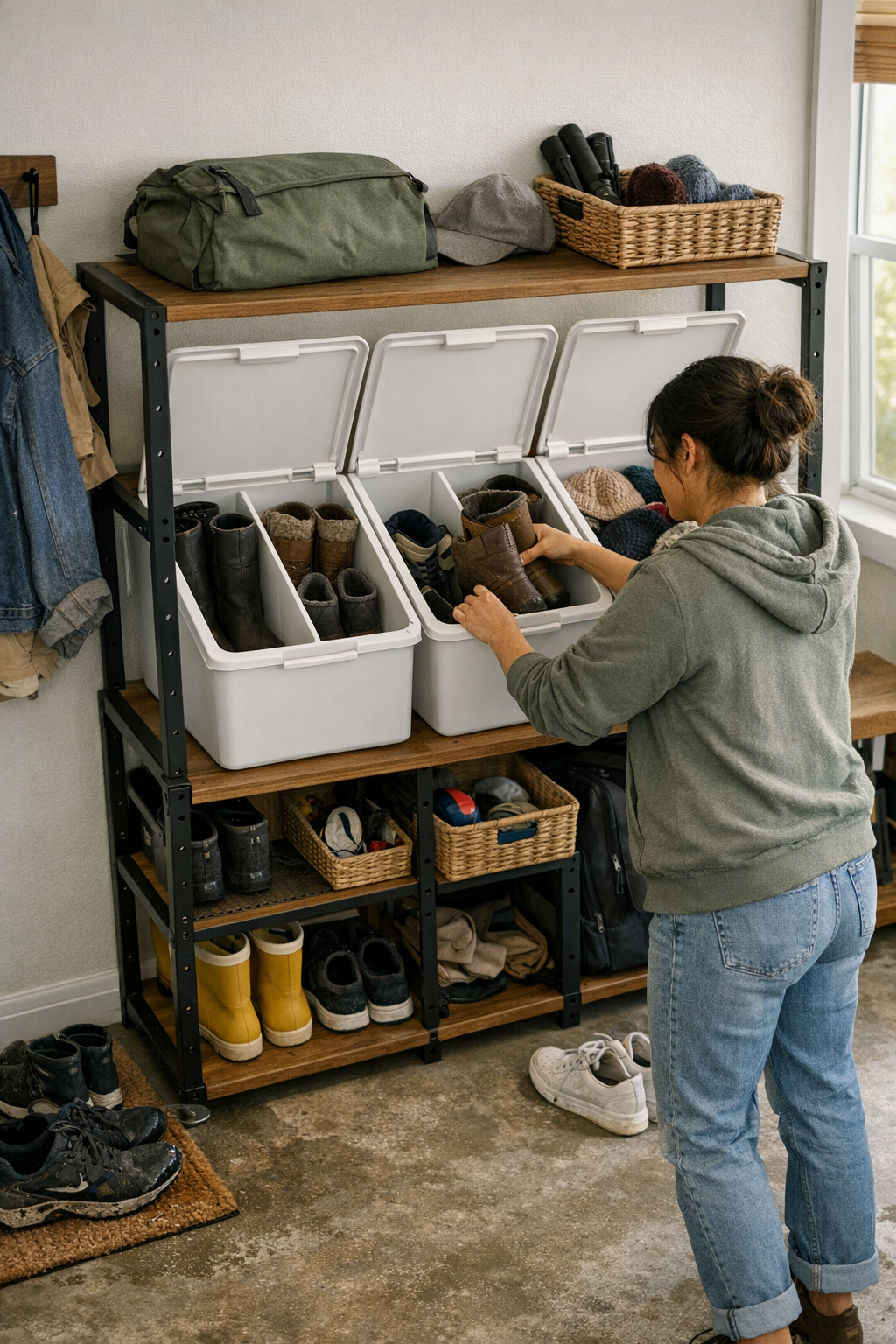
    Beneath every genuinely functional entryway is structure that can take a beating. Bins with rigid, vertical dividers or fixed-lid constraints don’t just look controlled—they hold the line, physically and visually. Shoes keep to their section. Hats can’t wander over to the glove zone. It’s not about looking neat; it’s about preventing slow leaks between categories that gum up even basic routines.

    Dividers set hard boundaries the daily shuffle can’t easily cross. The moment a divider is missing, overflow seeps in—bags slip into shoe slots, mittens end up with mail, and each reset gets more exhausting. One overlooked divider, one flexible bin, and the system returns to “organized for a day, scattered by the weekend.”

    In Practice: How a Better Structure Holds Up

    Switching from open baskets to divider-equipped bins in a busy entry changes more than appearance—it changes flow. Now, each item lands where it should. No cramming a backpack where scarves go. Boots stand, gloves stop migrating, and standing in the doorway, a glance is enough to spot where drift is just beginning. Cleanup shrinks from full-on reshuffling to quick sweeps—stray items are obvious, not camouflaged by overflow.

    Importantly, small mistakes don’t become broad messes. Missed a drop-off? One slot is out of order—not the whole system. End-of-season swaps become one fast motion, not a mini excavation. The structure itself does most of the work, not the user. Instead of reorganizing from scratch each week, you’re only correcting the outliers.

    Scenes from the Threshold: Where Setup Fails and Succeeds

    • Lining up shoes and gradually watching the row expand, toes straying into different “zones.”
    • Sitting to tie a shoe, but the bench is crowded with bags—forcing a shuffle and a quick recalibration of space.
    • Coming home, trying to drop a backpack in its place, only to find the slot blocked, setting off a cascade of misplacements.
    • Wall storage looks neat until the first rush—wet hats and paperwork blend together and blur the system from the inside.
    • Trying to reset: one accidental shuffle, and suddenly you’re re-sorting half the bins, every few days.

    Tips for Enforcing Category Boundaries in Entry Spaces

    • Pick bins with non-negotiable dividers. Internal walls or upright slots maintain strict lanes, reducing accidental blending and category creep.
    • Prevent overflow from finding spare capacity. If bins stretch to absorb “just one more” item, boundaries weaken—tight, defined space acts as a failsafe.
    • Reserve open storage for low-impact, low-traffic locations. High-turnover zones—family entries, weather shift points—need structure, not just surface order.
    • Reset fast, before drift sets in. Brief checks midweek, correcting spillover at the first sign, stop the problem from growing. Waiting for “the weekend reset” lets small errors escalate.

    Less Is More: The Value of Uncompromising Structure

    The payoff isn’t a prettier entryway. It’s the way movement stays frictionless, how little time is spent repeating the same fix, and how order survives the randomness of guests, kids, weather, and routine. Strong physical dividers unlock a difference you can feel each morning: returning the wrong item stops at one slot, not infecting the whole entryway. Seasonal swaps don’t become a chore. A tidy look is secondary—the big gain is daily stay-clear, with no hidden collapse waiting underneath.

    When the structure holds firm, your entryway stops being another soft project. It becomes a working part of the house—surviving daily pressure, making resets faster, and keeping the zone clear enough to actually work. If a storage setup can’t do that, every improvement is temporary—and stranger, slower, more frustrating each return trip.

    http://www.betweenry.myshopify.com