
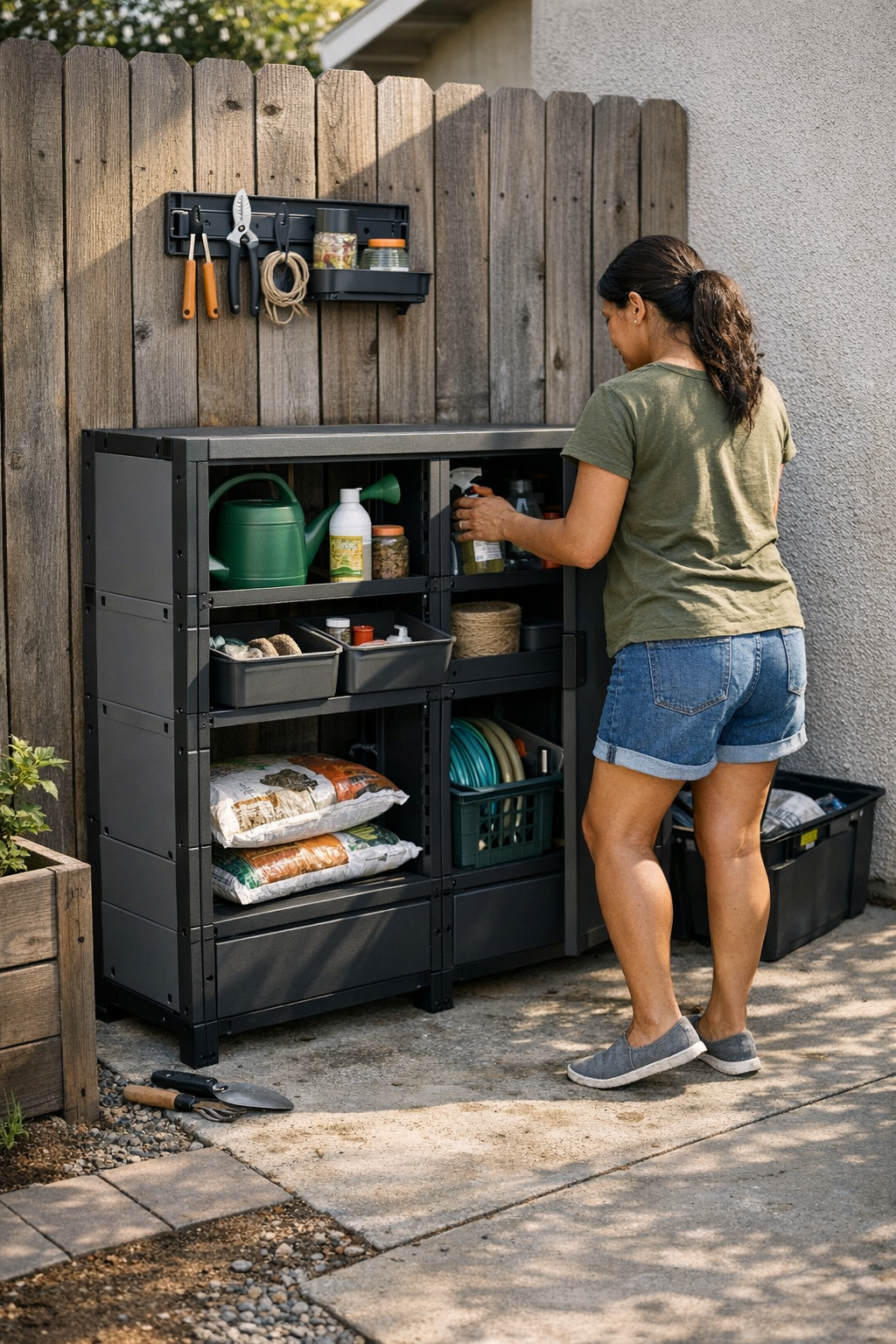
Open the door and the promise is clear: a slim console cabinet, meant to corral keys, chargers, and mail right where the routine needs them. But beneath that clean surface, hidden storage often becomes daily friction. The cabinet works until you need to grab the spare key, find yesterday’s charger, or sort out which piece of mail can’t wait—only to dig through a tangle that looks organized but feels slow the moment you reach inside.
When the Right Inside Matters More Than the Outside
A sleek cabinet looks settled from the outside: doors shut, clutter disappears. But in practice, it’s what happens after a week of real use that makes or breaks it. Unsegmented deep compartments turn every retrieval into a hunt—mail slides behind chargers, keys settle wherever there’s space, and “just put it back” gets overridden by “just get out the door.” On busy days, the interior becomes a turbulent drop zone. Mail piles blend, the charger ends up under envelopes, and the spare key drifts until it’s forgotten where it landed.
The problem is rarely a lack of effort; it’s speed versus structure. A single compartment can’t keep up when everyone dumps, grabs, or shuffles through the same small space. After only days, you start noticing: is this today’s mail, or the leftovers from the week before? Why does every retrieval feel like a micro-search?
The Anatomy of Routine Friction
Real frustration starts the moment you open that slim cabinet, especially after some use:
- Items vanish in plain sight. A charger slides beneath receipts, forcing you to dig past layers.
- Piles form and stick. Today’s documents stack above yesterday’s, with no natural stop point.
- Categories blur. Keys get sandwiched under cords, and what should be a quick drop-off becomes a slow shuffle.
Visually, the cabinet keeps things clean. Functionally, it absorbs time—a scramble when late, an extra search step before leaving the house. The front edge can only hold so much before things crowd, making every next retrieval or return slower.
How a Promising Setup Slows Down
Freshly installed, the cabinet handles the first cycle: clear surface, contained storage. But by the second week, the routine fights back. The cabinet’s doors stay half-open as you pause, deciding whether to reshuffle again or toss one more thing in without sorting. As categories blend—mail drifting into a “paper” heap, chargers disappearing under the pile—movement logic fails. The cabinet starts to look organized, but its insides slow you down.
Clear Boundaries: The Invisible Difference
Durable setups rely on internal boundaries that match real behavior.
Segmented trays and shallow dividers flip the daily experience. When each group—mail, chargers, keys—has its spot, the hunt vanishes. Imperfection is tolerable; visible access counts more than cosmetic neatness. Reach in for keys—they’re at the front, not swallowed by spillover. Need your charger? It sits separately, no digging required.
Even a simple divider can turn a confusing space into something watchable—a front slot for new mail, a rear bin for chargers—cutting retrieval and reset time to near zero. Upkeep shifts from “another project to tackle” to a quick check as you walk by.
Why Deep, Open Space Fails in Daily Use
The logic is tempting: a deep, open space means more storage—until reality pushes back. Unsplit interiors become soft dumping grounds. Unlock the door, toss inside, and next week the bottom is out of sight. Every walkthrough means quick piles become stable chaos, sorting is constant, and only the first few inches are ever “organized.” Deep zones reward the last drop, not the next grab.
Real-World Tips That Change the Daily Flow
What shakes out with repeated use:
- Make boundaries visible before bad habits return. Place trays or dividers on day one; prevent pileup and category drift before it becomes routine.
- Fewer categories, better flow. Limit internal zones to just what needs to be grabbed daily—too many types, and the system collapses.
- Placement affects use. If the cabinet blocks movement or drawers can’t open fully, overflow gathers by default. Make access easy or risk slowdowns and edge clutter.
- Hidden charging isn’t automatic. If cable pathways and airflow aren’t built in, cords will reappear outside or block access inside—undermining both appearance and routine.
A Cabinet That Works Quietly in the Background
Even the cleanest surface won’t fix a setup fighting its own interior. The real win is when structure handles the routine: boundaries that make reset so fast it happens almost unnoticed, divisions that mean one-touch return and retrieval. If every week ends with a mini-reorganization session, the storage itself—not just your habit—needs better logic.
Every lived-in room faces repeated pressure. Each tweak—dividers at the drop point, zone limits, clear return flows—shifts the daily routine from repeating the same search to moving smoothly through the space. The right system doesn’t just hide things; it supports real use, speeds return, and keeps the focus on life, not the next reset.
Find practical storage solutions designed for how you actually live at Gridry.