Category: Tools & Workshop

  • Why Regular Battery Health Checks Prevent Downtime in Tool Fleets

    It hits in the middle of a job: you’re halfway through slicing laminate trim, sawdust in the air, when the multitool stutters, coughs, and leaves a ragged line across the workpiece. There’s a flicker of irritation every operator recognizes—not another pile-up from a dying battery. The blade is sharp, your movement steady, but the cut feels gutless. Tool precision slips, work slows, and suddenly a routine pass drags into another repair. In most jobsite toolboxes, it’s the battery—not the tool head—that quietly decides whether today’s work runs smooth or sideways.

    When Batteries Turn Fast Jobs Into Friction

    Pull two packs from the same set and they seem equal: both light up “ready,” both slot into a charger, both look new. Yet, as the day unfolds—tools bouncing from bench to truss, three or four hands in the mix—the real difference snaps into focus. One multitool melts through drywall and leaves crisp edges behind. The next starts strong, then loses its bite, vibration turning jittery. Cuts that should slide straight stall mid-panel, and sanding passes start skipping—precision slips as battery strength quietly fades away.

    The cost shows up everywhere. Teams swap spent batteries chasing just enough juice for one more screw or plunge cut. The pace gets choppy as focus breaks to check indicator lights or rummage for a pack that isn’t running on fumes. Each stutter adds seconds to every task, and suddenly the far end of that MDF panel looks a lot further away.

    The Quiet Drop-Off: How Underperforming Batteries Sabotage Workflow

    Green indicators lie. A pack that claims “full” before the shift can choke as soon as it bites into cement board or thick plywood. Under pressure—cutting fasteners, sinking blades, running sanding pads through paint—the cracks show. Reliable batteries hold voltage and keep the work rolling. Weak ones sag early: oscillations lose force, the tool body gets hotter, the vibrations turn harsh and unpredictable.

    It often starts subtly—an extra second stuck in a knot, deeper saw marks on a cut meant to be clean, the sanding head leaving behind stubborn ridges. Not disastrous—at first. But the longer you ignore it, the more precise work turns into chasing flaws. One weak battery gums things up for the next operator. You end up finishing by hand, timelines stretching, finish quality dipping. The frustration isn’t theoretical—it’s in the physical drag across every repetitive cut, every awkward stop to swap packs, every time a crew member mutters about “that dead battery again.”

    On the Ground: Battery Failure in Real Jobsite Flow

    Picture a renovation morning. Three people rotate tools: one cutting panel reveals, another grinding out grout, the third sanding back edges for paint. By lunch, the rotation is smooth—batteries fresh, work passes steady. But late afternoon tells a different story. Midway through a dense fiber cement cut, the oscillating tool whines and stops cold. Its battery, which flashed green earlier, now quits 60% through the cut. Suddenly, everyone’s hunting for backup packs—some only half-charged from rushed top-offs between coffees. Each failed swap doubles downtime. By day’s end, thirty minutes are gone to troubleshooting, with a growing pile of messy cut ends to tidy up by hand.

    This isn’t rare on a big job or even in a home woodshop where tools move person to person. One overlooked battery turns into a chain of stalling, repeat swapping, lost minutes, and a noticeable drop in finish. The ripple effect is real—one slip turns a smooth build into stop-and-go frustration for the whole crew.

    From Luck to Process: Building Battery Checks Into the Routine

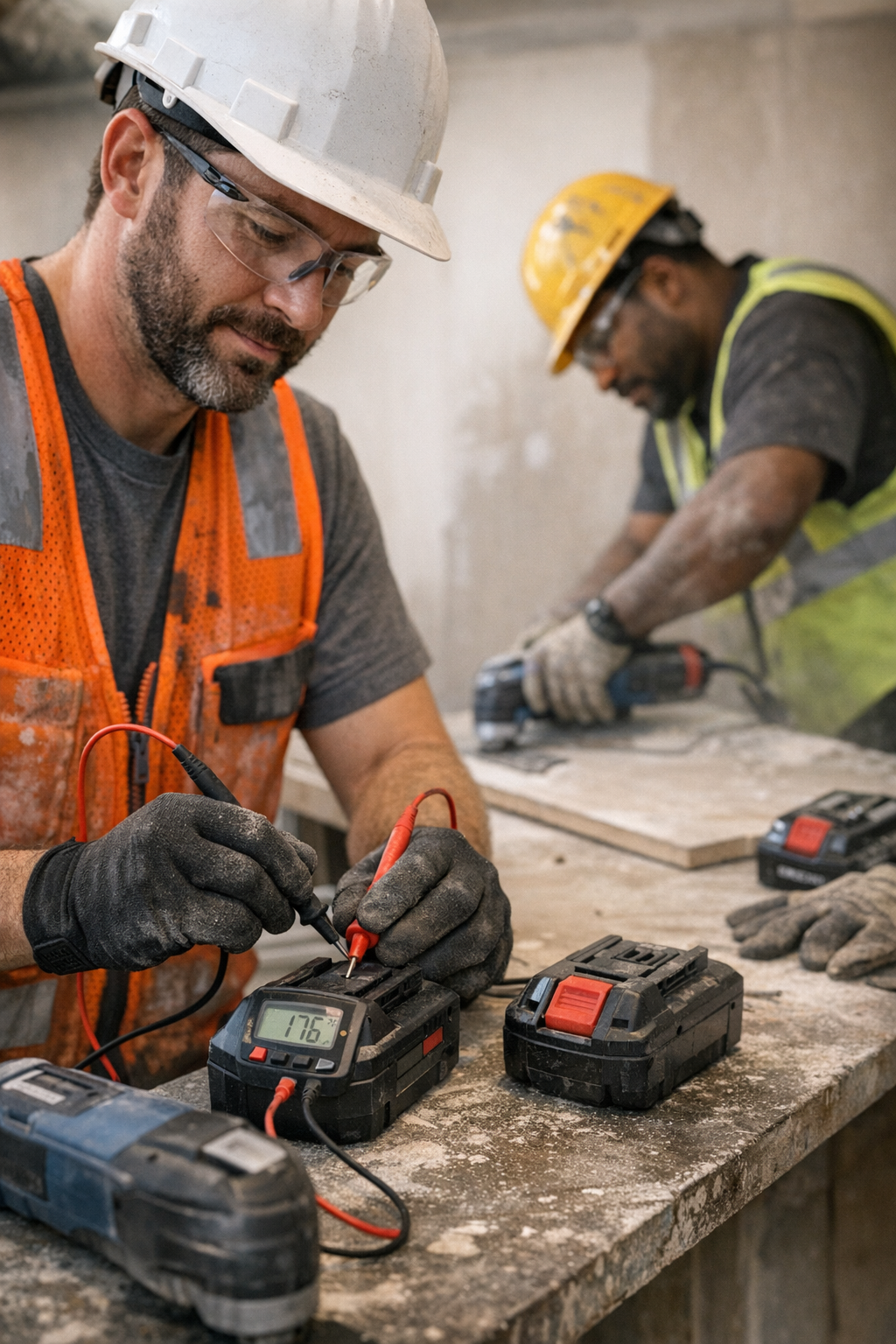
    This headache gets fixed not by working harder, but by working smarter—cutting out the gamble. Don’t just trust the “full” light. Build a quick, deliberate battery test into every shift. Before tools change hands or anyone starts cutting, clamp the multitool, attach a fresh blade or sanding pad, and run it under load for five minutes. Then grab a voltage meter—see what the pack’s really delivering under stress, not on the shelf.

    Batteries showing less than 18V under real load? Pull them from rotation. These are the troublemakers: they’ll fade fast, stall during detail work, overheat, and turn your precise multitool into a guessing game. Flag them for reconditioning or recycling. Don’t let “maybe it’s fine” float into tomorrow’s schedule.

    Simple Work Habits That Eliminate Guesswork

    • Watch how the tool feels and sounds, not just what the indicator says. If you sense the tool getting choppy or losing speed mid-task—change the pack before the cut is ruined.
    • Rotate your strongest batteries to the hardest work. Save older packs for sanding, screws, or lighter cuts. Use fresh packs for long, demanding sections where stalls cost the most time.
    • Mark the month and year on each battery when it joins the fleet. You’ll spot underperformers quickly before they start making more trouble than they’re worth.

    Just a few habit changes make a visible difference. Sudden stalls drop off, sanding becomes smooth and controlled, long blades stop binding mid-beam, and no one is left asking who swapped in “the dead one” before a critical panel cut.

    Why It’s Worth It: The Payoff of Smarter Battery Care

    The change isn’t subtle—it’s all over the workflow. By end of week, you’ll notice fewer slowdowns, snappier tool response, and cuts that stay clean all the way across. Less time disappears into swapping packs, fiddling with chargers, or smoothing out gouged edges with hand tools. When batteries are managed deliberately—not by wishful thinking—crews regain confidence: switch pulls always bring full power, momentum builds through projects, and the jobsite feels reliably in sync again.

    Bottom line: Battery health isn’t busywork. It’s the backbone that keeps precision, pace, and finish quality consistent, especially when the day runs long and delays pile up. Lose track of creeping battery failure, and a single “it’ll be fine” pack can jam up everyone’s progress for hours.

    If you run more than one multitool—at home, in a workshop, or across a team—don’t leave battery performance to chance. Fold in consistent, real-world checks. It’s how the best jobsites keep cuts straight, sanders even, and teams moving at full speed.

    http://gumboll.myshopify.com

  • Why Leaving Space on Closet Shelves Improves Daily Organization and Access

    Open your closet after a typical day and you’ll see it: a scarf dumped on a shelf, a lone sneaker wedged sideways, last night’s laundry balanced on top of an already-teetering pile. At first, filling every shelf, bin, or basket edge to edge looks like the mark of organization. But the real test is what happens the moment real life intrudes—and suddenly, there’s no room for the extras. Bins look full, stacks are flush, yet as soon as something needs to be put away—a sweater you won’t wear until next season, a bag that always seems to float between uses—you’re forced into a game of closet Tetris. Categories blur, folded shirts collapse, and before you know it, overflow spreads to chairs, floors, or anywhere there’s a sliver of open space.

    The Hidden Aggravation of Maxed-Out Shelves

    Standing in front of a closet packed to the gills, you get a short-lived sense of completion. Every surface covered, not a spare inch left—surely you’ve made the most of the space. But try putting the closet to work. Need to grab a sweater from under a pile? You have to move half the stack. That extra pair of shoes? They won’t squeeze into a row that’s already jammed. One returned laundry load, one errant backpack, and you’re back to reshuffling the whole setup.

    The tighter the fit, the faster systems start to come undone. Neatly defined areas turn into catch-alls. Categories blur as you shove “just one more” item wherever it’ll fit. What looked efficient quickly becomes fiddly and slow—each small access, every quick return, is another opportunity for chaos to creep in.

    The Everyday Toll of No Buffer Space

    That empty stretch of shelf you might call “waste” is actually your shock absorber. Skipping a buffer means you’re always making micro-adjustments: shifting one bin to get to another, disturbing a whole row just to tuck away a single hat. Return a library book or empty a gym bag and there’s suddenly nowhere for them to land, except in the middle of an existing stack or on top of something else. Over time, stacks slouch, bins overflow, and the boundaries between “clean” and “catch-all” dissolve.

    Without intentional breathing room, every reset grows more tedious. Finding a favorite shirt buried behind three others? Take out the pile, restack, hope the next person doesn’t knock it all over. One missed reset and your system falters—this isn’t organization that holds, it’s organization on the edge of collapse.

    Scenes You Know: When Storage Breaks Down

    Consider a morning before work. You snag a shirt you need from the bottom of a pile and three neatly folded sweaters topple sideways. Later, you come back with clean laundry and discover every bin is filled right to the brim—not an inch to spare. Where’s the quick place for keys or a rain jacket after a wet commute? With every available slot spoken for, things get left wherever you last touched them: hooked over a closet rod, stowed in the wrong box, or left outside altogether.

    Entryway shelves behave the same way. Maxed-out shoe storage means the extras—wet boots, totes, stray mittens—spill onto the floor. Stacked bins without a gap gradually mix their contents. Categories that felt clear erode as you start to ignore dividers for the sake of “just getting through the day.” You find yourself repeating the same fix-it shuffle—dumping, sorting, and resetting—far more than you’d ever plan.

    Why Reset Speed Matters More Than Shelf Space

    What separates genuinely usable storage from purely decorative “organization” is how quickly you can restore order after real daily use. When every shelf is crammed, resetting after a single day feels like untangling a knot. Grab a hat from the bottom bin? That means emptying everything above it. File returns into a shelf with no space? Get ready to build a new stack from scratch. So things pile up: first a stack on the hallway bench, then a basket on the closet floor, until you’re working around semi-permanent overflow.

    Deliberate buffer zones short-circuit all of this. With a hand-wide empty space, adding today’s laundry becomes as simple as dropping it in. The next week, “tidy up” is a five-minute pass, not a total restack. There’s no mental tax each time you interact with your closet—just easy, smooth resets that keep pace with your routines, not against them.

    Flexible Storage Survives Real Life

    What looks unfinished—an empty stretch, an under-filled basket—quickly proves its worth. That gap absorbs whatever doesn’t fit the normal pattern: the jacket you wore once, the pair of socks for tomorrow’s run, a blanket you might need if the weather turns. Instead of scrambling to invent new spots or letting items roam, you have a ready-made landing zone. The closet stays flexible, not brittle.

    Without this point of give, most setups eventually break down. Socks migrate to coat bins. Loose books or bags sprawl wherever there’s a crack in the system. Laundry resets stretch into twice the time as you push, shift, and dig through already-mixed storage. If “putting something away” regularly means moving two other things first or just hiding them out of sight, the setup has already lost its edge.

    How to Build in Buffer, Step by Step

    If you’re always clearing, restacking, and improvising new spaces, it’s time to experiment with a structural fix: leave a hand-width gap on every shelf or in every bin. This isn’t wasted real estate—it’s the practical safety margin that keeps daily cycles smooth and categories from getting crossed. Your future self—laundry in hand, shoes unlaced and wet, holding three things at once—will thank you.

    • Position the buffer where returns and quick drops are most common—often by the closet door or at shelf midpoints for easier reach.
    • If you share space, mark the buffer off with a slim basket or bookend so it doesn’t slowly get swallowed by regular storage drift.

    This tweak works whether your closet is built-in or just a set of shelves and bins you’ve cobbled together. The payoff isn’t a prettier space—it’s a system that absorbs mess before it spreads, lets you reset almost on autopilot, and keeps piles stable longer.

    Signs You Need Breathing Room (and What to Do)

    If you find yourself moving the same stuck pile, rooting through mixed bins for lost socks, or using floors as overflow parking, your closet has tipped from “organized” to overloaded. More baskets won’t help—what you need is strategic empty space. Give yourself that margin and watch how quickly categories hold together, clutter stops spreading, and the number of times you have to redo the whole shelf drops sharply.

    Almost every closet, shoe rack, and laundry shelf gets easier to use with this one adjustment: treat intentional emptiness as essential, not accidental. The steady system isn’t the one with every inch filled, but the one that leaves room for the unpredictability of real life.

    http://closetworks.myshopify.com

  • Why Shared Tool Storage Systems Fail Without Clear Return Zones

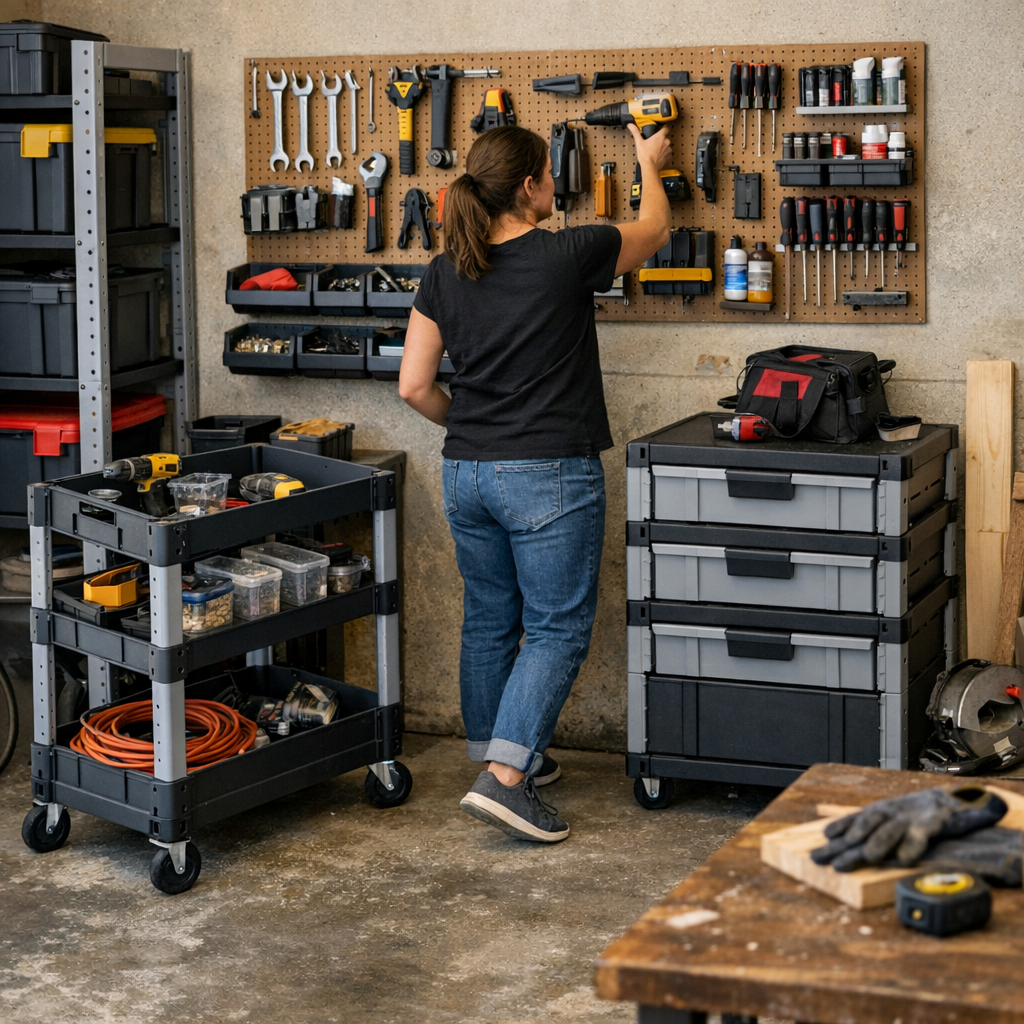
    If you’ve ever shared a garage or workshop, you know the letdown after a fresh reset. The floor is wide open, shelves are flawless, tools line up like they’re posing. But the promise of order dissolves fast. Within days, the setup that once looked so right begins to slide under pressure: carts drift into new pathways, wall racks go ignored, and clutter zones emerge where the design left no margin. The hope for “once-and-done” organization butts heads with everyday habits—and by the second or third round of real work, the difference between a tidy Monday and a functional Friday is painful enough to slow you down.

    Micro-Movements: Where Friction Hides

    The real enemy isn’t just clutter—it’s wasted steps and awkward workarounds. Every scramble for a misplaced driver, every trip from bench to wall for the right wrench, costs a little time and a little patience. At first, wall-mounted rails seem like the gold standard: immaculate, visible, floor untouched. But if the wall isn’t at arm’s reach, those “few extra steps” multiply. By the middle of any busy week, benches sprout their own layer of tools. Repeated use exposes every weak link: unplanned footpaths, cart bottlenecks, dead corners overflowing with stuff that’s got nowhere to go.

    Suddenly every routine reveals the cracks—nudging carts aside just to get through the aisle, grazing a cabinet door that never quite stays closed, or inching past corners where overflow piles up. Even when the space looks “organized,” daily movement gets pinched and the area loses its rhythm.

    How Each Storage Setup Performs Under Real Pressure

    Wall-Mounted Racks: Everything Shown, Nothing Truly Handy

    Wall racks make it possible to see every tool—but rapidly expose weaknesses in real-world use. If they aren’t mounted within arm’s reach of your main work zone, they become another detour. Add more people to the mix and tools get waylaid: left on the bench “just for now,” only to stick there all week. The system relies on everyone’s memory of exactly where each item lives. After a few quick jobs, the wall display is out of sync with real needs, and suddenly there’s a drift—three hammers at the vise, empty prongs on the wall, and no one remembers who left what where.

    Floor Cabinets: Out of Sight, Out of Flow

    Floor cabinets hide mess but often slow things down. The lure of a closed door soon gives way to drawers packed unevenly and front shelves piled with whatever was in your hands at quitting time. Smaller gear migrates to whichever spot is easiest—not where it’s supposed to go. Soon enough, the thing you need is buried behind three other jobs’ leftovers. All that containment can turn into a time sink: quick resets get slower, and clutter just shifts from view to view.

    Mobile Carts: Flexible Helpers, If You Keep Them Anchored

    Rolling carts and tool trolleys offer flexibility—until they become wanderers. For the first project, bringing everything to the workstation feels efficient. But carts drift; someone wheels one out of the way, then leaves it blocking a key pathway or too close to a bench. Without a clear “home base,” the cart becomes a catch-all: loose bits, stray tape, tools waiting to go back but never quite making the trip. Instead of smoothing workflow, carts become speed bumps—footprints in the wrong spot, shelving that starts collecting overflow rather than helping clear it.

    Breakdown Moments: Where the System Stalls

    Most storage systems fail not in theory, but in the rhythms between projects. It’s the “just for now” moments—a tool left out during a fast fix, a shelf filled with half-done work, a cart hijacked for something else and never returned to its spot. If three people share the space, watch what piles up by Friday: hammers and drivers stacked on a bench, carts drifting from dock to dock, cabinets packed at odd angles. The intended order gets replaced by micro-stashes and drop zones, making every reset another round of hunting, stacking, and reshuffling.

    These breakdowns aren’t dramatic. They’re silent—but they require constant small workarounds, and over time, the space simply doesn’t flow. You keep bumping the same cabinet edge every day, or slide a cart aside for the third time in one morning.

    No More “Afterthought” Return Zones

    The setups that hold together don’t just store tools; they make put-away frictionless. The quiet productivity hack: carve out a clear “return zone” near where work actually happens. Not permanent storage—just a short cart shelf or a marked bay for live returns. In one three-person shop, reserving even a foot of cart space for drop-offs changed the pace entirely: benches stayed usable, random piles shrank, and resets became second nature. The key is obviousness: you don’t have to think about where the just-used wrench goes. It’s easier to return it right away than to drop it just anywhere.

    One Adjustment, Real Flow

    Something as simple as parking the cart parallel to the main bench—never blocking the aisle, always close at hand—kept resets quick and eliminated the shuffle. Instead of stepping over wayward carts or dragging shelving back and forth, everyone stayed in motion. The layout stopped fighting your routine and started working for it.

    Make Setup Fit the Work—Not Just the Room

    The best system helps the space work the way people actually use it. Wall racks work only when the route to them is never a detour. Carts are assets when they’re anchored and always include a visible return bay. Cabinets, unless strictly managed, hide mess but slow you down and conceal overflow. The setups that survive real use don’t just store tools—they protect movement paths, prevent dead zones, and resist the slow creep of clutter into corners and aisles.

    If your shop is constantly rerouting paths, losing track of small parts, or shifting the same cart again and again, it’s not the gear—it’s the way the storage collides with reality. The most effective tweaks are practical: keep benches clear, pathways open, and return zones where they’re actually used. The difference: by Friday, you’re still moving free—no ongoing rearrangement, no tool hunts, just a shop that holds up to the work, not just the first reset.

    Find practical storage solutions for real-world use at StackNest.

  • Why Proper Oscillating Multitool Storage Matters for Jobsite Efficiency

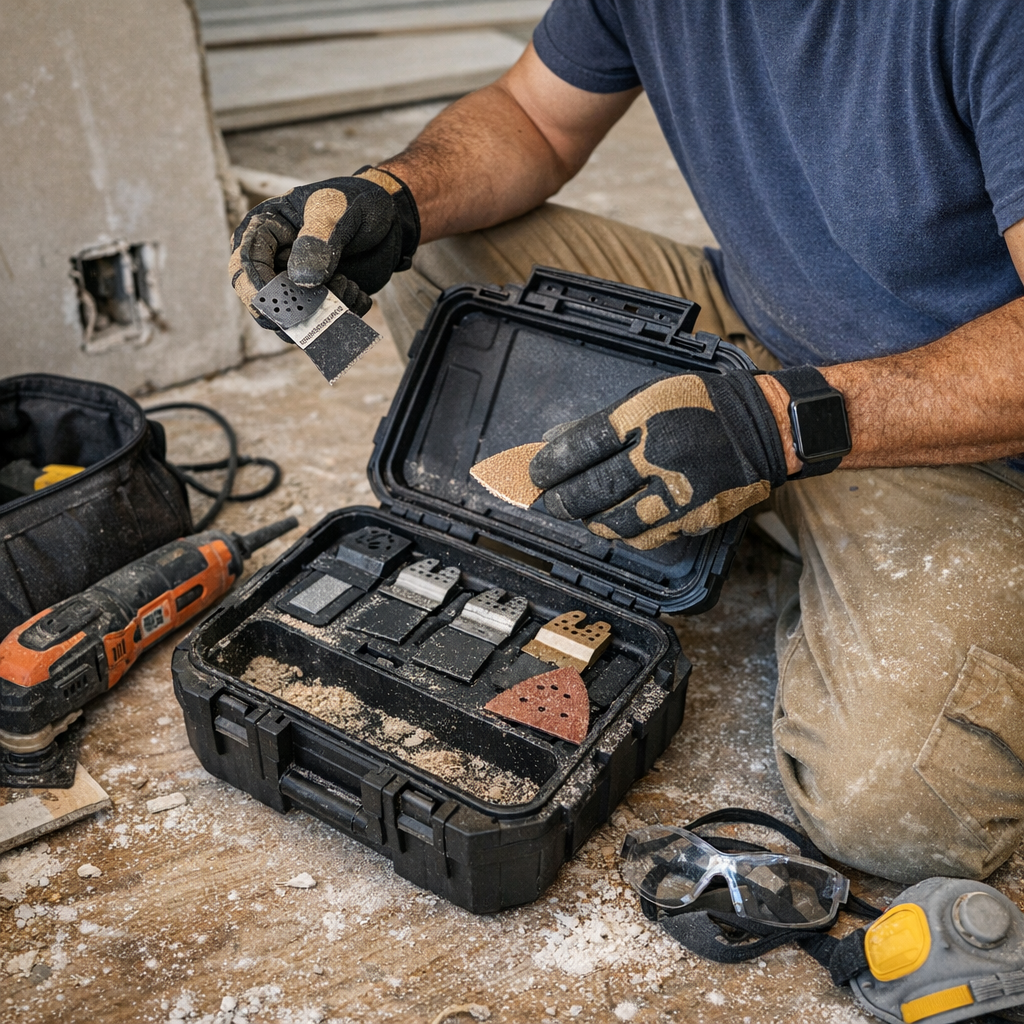
    You’re swapping blades in a tight kitchen, covered in drywall dust, and your multitool kit feels like a junk drawer on wheels: missing pads, mixed-up blades, everything coated in grit. If you’ve logged even a few real days on a job site, you know exactly how accessory chaos eats away at the flow of the work itself. The reality hits hardest when the job speeds up and you’re reaching for a universal accessory kit that—on the shelf—looked “organized.” Suddenly, the pouch or plastic box that promised order delivers only delay, frustration, and another lost minute with every swap.

    How Bad Storage Becomes Another Job to Manage

    The first time you load up a multitool accessory pouch, it seems like you’re set. All those blades, pads, and scrapers in one place—ready for drilling out rusted screws, sanding into a tight corner, or making a quick plunge cut. It should work. But after a week of real use, the cracks show. Dust seeps in, loose items jostle, and you start wasting time: pawing through patches of sawdust, untangling bent blades, and smoothing pads that now feel worn or even slightly warped.

    The real friction isn’t just the wasted seconds. It’s the toll on every tool and job: blades that come out dull or chipped before they’ve seen wood, sanding pads mysteriously warped, and a slow drain on patience as you sort through a growing pile of “almost good” accessories. The grab-and-go idea quickly turns into grab-and-groan when your storage is working against you under real, gritty pressure.

    Storage Design: Where Small Choices Cause Big Hassles

    Most cases will claim to “organize,” but step onto a busy job and you’ll feel the difference between storage that works—and everything else. After all, what works on a clean bench in a store rarely survives a jobsite week of shoving, stacking, and quick hands.

    Why Deep, Tight Slots Actually Matter

    Hard cases with custom-molded slots or dense foam don’t just keep pieces sorted—they clamp each blade in place, edges protected, teeth untouched. Open that lid after hauling through doorways and up stairs, and every piece is where you left it, clean and easy to grab. Even after rough transport, sanding dust clings to recesses, not your cutters. When it’s time to switch between a diamond grout blade and a wood-cutting bit or swap for a sanding pad mid-task, nothing’s gummed up or hiding.

    Soft pouches and generic trays? They quickly turn into a rattle trap. Blades shift, teeth grind against metal, dust packs into gaps, and you’re left with battered accessories—sometimes before you’ve even powered on. A set of saw blades bouncing in a fabric pouch starts to look, and feel, like a handful of old pocket change. Tight spaces wedge pads, and even the right part for the job can come out looking used before its time.

    Small setbacks become a pattern: a bent blade jamming in your multitool, sanding pads with mystery divots, or that moment when half the kit’s vanished under a blanket of site grit. Each seemingly tiny hassle is another loss of control and focus right when you need precision most.

    Field Test: The Renovation Pinch

    Mid-renovation, you’re bouncing between scraping residue off subfloor, trimming a stubborn door jamb, and cutting into paneling—all while dust thickens in the air. The clock is ticking. You swap from a carbide rasp to a fine-tooth blade, but the open tray you’ve tossed them in is already packed with debris. By the time you dig out what you need, one blade is wedged into a corner and the next is dulled—rubbed raw from days of being loose and rattled beside sandpaper pads. Fast-forward a few hours and a sanding sheet is missing, wedged so deep in the pouch liner you give up and reach for a replacement that isn’t quite right.

    This isn’t the rare day when things go wrong. It’s the standard rhythm on any realistic job. The cost isn’t just delays—it’s lost sharpness, more fatigue, unpredictable tool performance, and missed details at the end of a long day.

    Moving from Makeshift to Purpose-Built

    Upgrading to a fitted, hard-shell case doesn’t transform your day overnight. But the difference is steady and unmistakable. Now, each blade has its own no-wiggle seat, pads separate, and grit settles where it can be cleared—never coating your whole kit. You spot what’s missing at a glance. Swaps are faster and more predictable: it’s a one-handed grab, not a scavenger hunt. The pace quickens—not because the tool is “new,” but because the things you reach for actually work as intended, every time.

    Across days or weeks, what started as a “minor” upgrade pays out: no dulled blades from knocking together, no mystery sandpaper wear, and far less time wasted on little searches when focus should be on the cut. The interruptions disappear and you’re left with that rare sense of everything clicking—cut, sand, swap, repeat—even when the site is chaos and you’re feeling the weight in your hands and arms by lunch.

    Tool-Side Questions That Keep Coming Up

    Why do open trays cause so many headaches?

    Because loose bits move. They collect dust and knock together, dulling edges or rounding corners within days. Tracking accessories becomes a job in itself, especially after a few dumps in the truck or quick shifts between tasks.

    Is a hard-shell case overkill for basic jobs?

    If your blade changes are rare, you may not need rigid storage—yet. But if you cycle through attachments in one session, fight with stuck or lost parts, or replace accessories too often, a molded case saves time and keeps your kit lasting longer. Pros know, but even serious DIYers feel the difference by week’s end.

    How can I tell if bad storage is hurting blade life?

    Blades that feel “off” right out of the case, edges chipped before use, or pads that come out stiff and uneven—these all point to storage issues. If you’re running through accessories faster than before, take a hard look at how they ride between jobs.

    What Sets the Standard: Predictability and Performance Under Pressure

    Reliable storage doesn’t just tidy up your kit—it gets out of your way when the job gets messy. Blades are clean, pads are intact, and you lose fewer minutes to simple friction. Whether you’re grinding through remodels, fine-tuning a cabinet, or fixing a subfloor at the end of a long day, knowing exactly where—and in what shape—each tool head will be means less wasted effort and steadier results.

    Check your kit: Are blades going dull before they hit wood? Are accessories buried, bent, or grimy before you even start? Make the switch to purpose-built storage and feel how much easier, faster, and less frustrating every cut, sand, and swap can be—without needing a brand-new tool to feel the difference.

    http://gumboll.myshopify.com

  • How Clear Shelf Boundaries Transform Everyday Storage and Cut Clutter

    You reset a shelf and it looks great—for a moment. Folded rows, labeled categories, everything neat. But then reality steps in: you grab a sweater and a charging cable tumbles out, or you shove a pair of shoes back on the shelf and suddenly the scarf pile sags. A single family week is all it takes to blur the lines you worked to create. The problem? Most shelves aren’t short on space—they’re short on boundaries that can survive actual, everyday use.

    Why Open Shelves Break Down So Fast

    Open shelves seem like the gold standard for flexibility. You see every item at a glance, can slide in any odd shape, and nothing blocks your reach. But after the first round of real-life grabbing, categories start to blend and drift. That “workout gear” stack slouches into the towels. The row of books becomes a landing zone for receipts and random cords. Every quick restock—sometimes rushed, sometimes by someone else—makes the invisible boundaries fade. Within days, a shelf meant for easy access turns into an awkward search, forcing you to move piles just to get at the one thing you actually need.

    How Disorder Sneaks In and Takes Over

    Disorder isn’t dramatic; it’s incremental. You toss socks on folded shirts “just for now,” slip a flashlight behind some paperback books, or drop grocery bags on top of hats because you’re in a hurry. Each shortcut seems harmless—until you need an umbrella during a storm and find yourself elbow-deep in unrelated clutter. Now, every rescue mission leaves the shelf more tangled. What used to be a tidy reset now becomes a mini overhaul, dragging out for far longer and never feeling quite complete.

    The Hidden Mess Behind “Close Enough” Storage

    It’s one thing for a shelf to look fine and another for it to function under pressure. Take a hallway closet: you start with piles for gloves, scarves, maybe a bin for hats. But busy mornings hit, and gloves slide into scarves, hats topple, and categories blur. The real cost creeps in daily. Suddenly, you’re digging for keys under hats or pulling stacks apart to find one glove. Instead of small, quick resets, you wind up resenting the now-daunting task of reclaiming a single spot—and dreading the inevitable weekend re-clean.

    Shared Spaces Multiply the Friction

    Where family routines overlap—entryways, laundry shelves, kid closets—the spread is even faster. One person grabs a pair of shoes and leaves socks askew; someone else stuffs mail behind the hats. In high-traffic zones, boundaries melt in half the time, and everyone pays the price: shoes spread, bags pile up, the “easy-access” entryway turns into everyone’s least favorite traffic jam.

    Boundaries: The Storage Upgrade That Actually Works

    What actually makes order last? Assigning every item or category a specific, reserved spot. Shelf dividers, bins, or even strategic visual cues help enforce simple rules and halt the slow slide of clutter. In the same over-taxed closet, a pair of dividers and one sturdy bin instantly contained drifting piles. Now, when a glove escapes, it returns to its zone fast—without knocking hats and scarves out of place. A dedicated bin for keys or chargers means you don’t have to upend half the shelf to find what matters.

    Dividers and Bins: Small Changes, Huge Improvement

    Dividers turn sagging stacks into stable lanes—your shirts stop lurching sideways and towels keep to their own slice of space. Bins act as catch-alls for loose odds and ends like sunglasses, cables, or little seasonal items. The effect? Instead of re-sorting a jumbled shelf at the end of each week, you just nudge one stray item back home. Urgent retrievals—rain gear on a stormy morning, the right charger before school—start to feel routine instead of fraught.

    The False Promise of Flexible Shelving

    Open, boundary-less shelves promise adaptability, ready for all your odd shapes and changing needs. But flexibility comes at a price: shelves “absorb” whatever lands. Mail, sports gear, jackets—all merge until, next time, you’re shifting half the contents to reach what you want. The supposed convenience turns to frustration as items topple, mingle, and creep into new territory, demanding more tidying than ever.

    Visibility Without the Mess

    Compare this: on one side, an open shelf where folded stacks lose shape with every grab, and bins become mysterious mixes of “whatever fits.” On the other, a divided setup: t-shirts separated by sturdy supports, kids’ socks corralled in their own bin, belts visible and accessible. Not only does each item have a home, but it’s obvious when something is missing or when a category needs attention. You see what you have, you see what you need.

    Simple Shifts That Change the Game

    You don’t need custom-built cabinetry or major changes. Often, a set of affordable dividers or a couple of durable bins breaks the reset cycle completely. For real improvement on shelves you use daily, try these:

    • Separate scarves from gloves so piles aren’t in each other’s way—nothing gets buried or blended.
    • Gather small, easily-lost items (keys, chargers, sunglasses) in a bin that’s easy to pull out and return as a whole.
    • Keep divider edges visible so you can tell at a glance when a stack is creeping out of bounds, making maintenance nearly automatic.

    The bigger win isn’t prettier shelves—it’s faster, frustration-free access. With defined spaces, you grab what you need, reset in seconds, and never waste time digging for hidden treasures or cleaning up pile after pile.

    Habits to Make Order Stick

    Once new boundaries are in place, a few micro-habits ensure they last:

    • Slot it back: Get everyone used to returning items to their designated spot—even when hurrying out the door. This simple practice chokes off clutter creep at its source.
    • Quick tweaks, not giant overhauls: When you spot a scarf edging into the glove zone, or notice a bin getting out of hand, take a minute to realign instead of letting mess multiply. Regular micro-fixes keep the system tight with barely any effort.

    Pay attention to where structure falters. If one bin overflows or a divider never seems to work, adjust the setup. Durable storage isn’t about a perfect one-time solution—it’s about staying responsive to how your shelves actually get used, week after week.

    True Organization Reveals Itself Over Time

    A shelf that merely looks organized rarely stays that way. The difference with real, resilient storage is tangible—day after day, the space works for you rather than against you. Boundaries that last mean you can restock quickly, retrieve fast, and reset with minimal effort—even as the week gets messy and routines change. Purposeful dividers, bins, and zones don’t just hold your things; they hold the line when life speeds up.

    Ready for storage solutions built for the way you actually live? Find shelf dividers, bins, and real fixes at ClosetWorks.

  • Why Workshop Storage Systems Fail Over Time and How to Fix Them

    The workshop felt dialed in—on day one. Racks lined the walls, every tool had its slot, and a mobile cart sat thoughtfully nearby, promising easy overflow. In those first smooth hours, it felt tight and responsive: walk in, grab what you need, put it back. But as the projects stacked up and hands reached for the same driver or mallet for the third time, the initial order started to slip. A single nudge to the cart’s wheels made just enough space for a lumber cut—then left it blocking the main rack. The screwdriver was returned, but not all the way. By midweek, the supposed efficiency was outmatched by small, nagging detours, the workflow quietly devolving into a series of workarounds.

    When “Organized” Quietly Gets in the Way

    Most setups look sharp just after a reset: pegboard lines clean, labeled bins stacked up, a mobile cart ready for “extras.” The layout promises easy flow, but once real work starts, invisible friction sets in. That cart—so convenient for overflow—becomes an obstacle every time it blocks the main rack or crowds the edge of the bench. Returning a tool turns into a mini maze: slide, pivot, reach awkwardly around the cart’s handle. Every sidestep to get around a cabinet or cramped shelf chips away at the feeling of smooth movement.

    Meanwhile, corners turn dead as shelf ends or drawers extend a little too far—just enough to shave usable floor. Overflow clutters quickly: clamps “resting” on the cart handle, measuring tapes left on cabinet tops, screws queued up for return. In the rush, you skip the extra step to proper storage because even tiny obstructions add up. Beneath the surface, efficiency leaks away—one slow return at a time.

    The Routine: How Organization Fades

    Order on paper rarely survives actual workflow. Take the drill everyone uses: it starts with a clear home up front, but by afternoon it’s resting on a half-open shelf, blocked by a shifted cart. To put it back, you now have to shuffle the cart aside (again), or balance it “just for now” somewhere nearby. Multiply that by a dozen daily returns, and within days, a tidy rack has a backlog of half-stashed tools—less from laziness, more from subtle barriers that wear down routine.

    The issue isn’t lack of storage—it’s the constant drag of blocked access and awkward movement. Slow tool returns. Bumping past overfilled carts. Detours and doubled-back steps all because the setup works on a diagram, but chokes up in the real-life surge.

    Where Overflow Hides and Clutter Builds

    Watch any high-traffic zone by a cart or modular chest: “temporary” stacks appear out of nowhere. A mallet hangs from the cart lip. Pliers get jammed into a not-quite-empty bin. Full zones spill over not from capacity but from blocked lines of access. Pileups don’t register on day one, but they’re unmistakable by Friday. The very spots meant for order end up collecting the pieces that don’t fit the flow.

    The Surprising Power of a Small Shift

    The difference between feeling boxed in and moving freely can come down to shifting the cart just 16 inches outside the main return lane. Suddenly, there’s a clear path—no more shuffling or bumping to return essentials. Instead of a traffic jam, the work loop feels natural again. It’s not a massive overhaul, just a tweak that respects how the space is actually used. Immediately, tool returns get quicker, “temporary” stacks fade, and the temptation to abandon items nearby drops off.

    Paired with moving the most-used tools to chest-level rack slots and keeping overflow on the cart—not in the main work zone—routine resets become almost second nature. These tweaks don’t just preserve the intended layout; they defend it from the quiet slip of daily use. By re-mapping the setup to real behavior, order actually lasts.

    Letting Your Layout Reflect Real Life

    No system is one-size-fits-all, and that’s the point. Wall racks maximize airspace but can’t absorb bulky bits once a project swells. Mobile carts enable growth, but park them in the main artery for too long and they become semi-permanent roadblocks. Modular chests and deep shelving create storage—until they sprawl into walkways and corral movement at the edges. Lasting setups are those where wall, cart, and shelving placements track the actual pulse of your routines—where things truly land, not just where they look best for a photo.

    How to Spot a Layout That’s Dragging You Down

    Signs it’s time to rethink the arrangement:

    • You’re always shifting carts or zig-zagging past cabinets just to reach a tool
    • Tools and parts keep piling up “just for now” on whatever’s closest
    • Overflow zones turn into the unofficial dumping ground and stay that way
    • Rerouting your path—taking extra steps—to skirt around dead corners or overcrowded carts
    • The wall looks organized, but is practically a hassle to use at full speed

    If any of this sounds familiar, your setup is creating silent friction—however “organized” it might look after a reset.

    Lasting Ease vs. The Day-One Glow

    The real test of a workspace isn’t a picture-perfect reset. It’s whether, over weeks and months, you can move without thinking, reset without roadblocks, and keep access to every tool as easy as the first week. True clarity comes from layouts that absorb real-life use, not just survive it.

    It’s clearing main return lanes instead of filling every inch. Keeping high-frequency slots comfortably at arm’s reach, not in the name of “grid symmetry.” Resetting carts to the ready position at the end of each session. These are small shifts, but the payoff—faster returns, less reshuffling, more usable space—is cumulative. Little improvements beat dramatic overhauls every time.

    The ultimate measure isn’t an organized look—it’s a setup that works as hard as you do, all the way through the messy details and silent resets of everyday use.

    See what modular storage, wall systems, and smart cart placement can do for real daily use at StackNest.

  • Choosing the Right Pump Seal to Prevent Damage in Power Cleaners

    You don’t notice the pump seal when your air cleaner is fresh and the first duct run is still easy. But on a filthy second shift—knee-deep in sawdust, squeezing the trigger while juggling hoses—the wrong seal can drag your whole workflow down. In real shops, the difference between a job done smooth and a job done twice is rarely dramatic; it’s squinting at patchy spots, wet streaks, or a half-stuck trigger, wondering why control keeps slipping away.

    Where Tool Friction Shows Up: Not at Startup, But in the Middle of Real Work

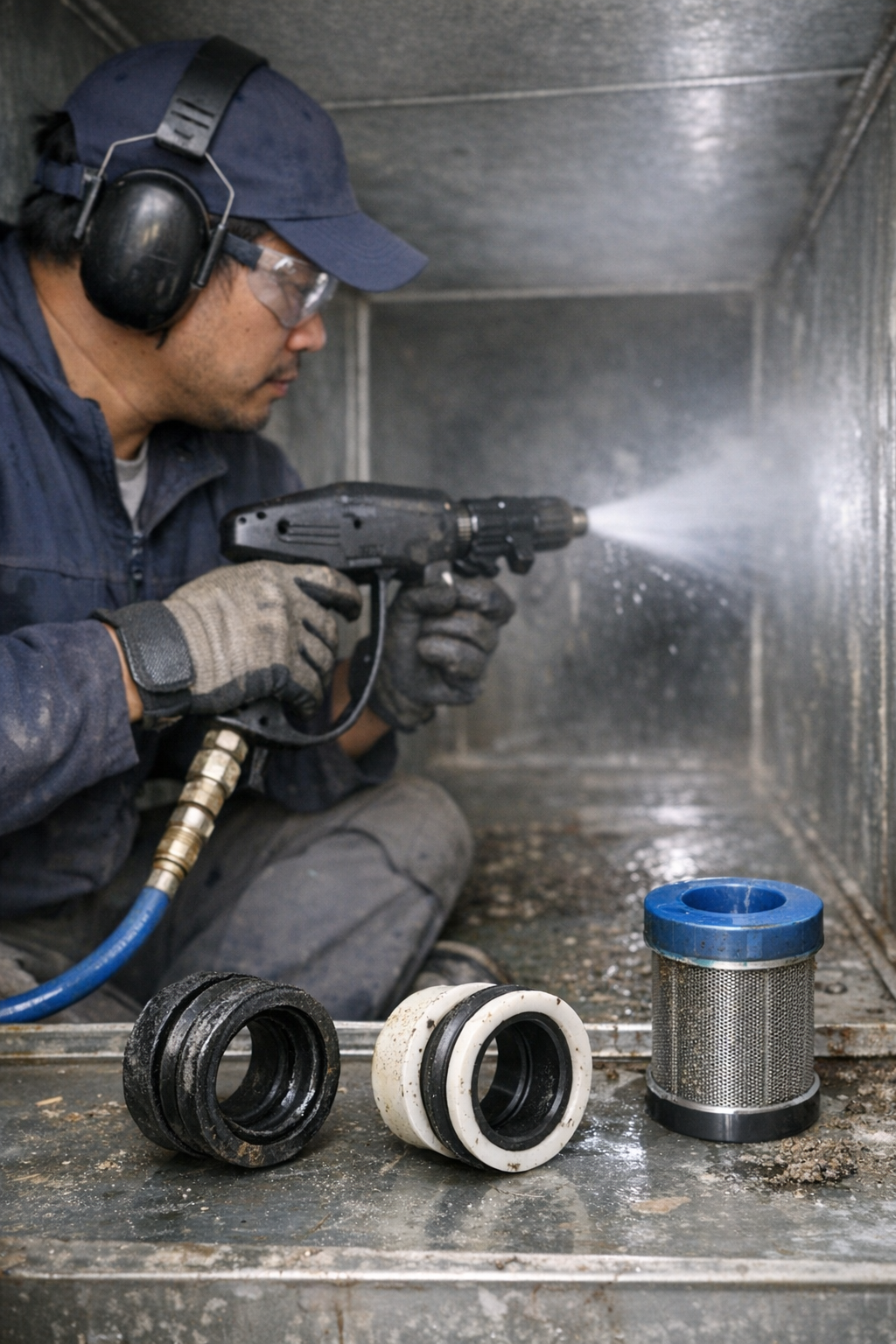
    Imagine it: an unboxed cleaner, still factory-tight, ready to take on a row of ducts choked with gypsum dust, old resin, or metal shavings. For the first set of passes, pressure feels stable, the trigger snaps back, your lines stay crisp. Whether it’s a standard or reinforced seal, everything works as advertised. It’s only once the first hour rolls by—and your arms are starting to ache from overhead work—that the difference creeps in. You feel a sticky lag in the trigger, or a subtle sag in power output. It’s minor, until suddenly you’re doubling back to polish out light haze you couldn’t see at the start.

    Missing the Warning Signs Costs You Time

    Think you’re just tired? Maybe—the job is monotonous and fatigue undercuts your focus. But it’s rarely just muscle: small seal breakdowns trigger mist leaks you can’t ignore. Where there should be a clean line, there’s a faint wet edge. Pressure wobbles unpredictably. As soon as the tool loses precision, so do you—and the job gets slower, messier, and grinds you down twice as fast.

    This is when a weak component quietly becomes your bottleneck: turning solid effort into rework and eroding your standards before you even realize it.

    Standard Seals vs. Reinforced: Invisible Until It Isn’t

    Lay a new standard and a reinforced pump seal side by side—no obvious differences. But clamp in a standard seal, run back-to-back clearing cycles through grit and debris, and hairline leaks sneak up quick. Fine metal flakes or dense sawdust grind straight into the standard edge, and it shows: you’ll notice tiny vacuum drop-offs, dulling your control with every trigger pull. Suddenly, those “normal quirks” are robbing you of speed and precision, especially when you’re already pushing to keep up.

    With a PTFE-backed or reinforced seal, those small breakdowns don’t stack up as fast. The pressure actually stays even. Your arm notices the lighter, more predictable action: no extra fight at the trigger, no guesswork on whether the vacuum will hold at the far end of the run. It’s not a miracle, but it’s a clear subtraction of headaches. Patterns stay tight, less redo, more flow.

    Real Shop Scenario: Weak Link, Wasted Hours

    Recall the end of a long shift—everything dusty, trigger hand cramping. What tanks the finish isn’t your effort, it’s micro leaks at the seal. Dull response, streaks where crisp lines should be, and the frustration of lurching to a halt just to shine a light at the nozzle. If that sounds familiar, you know how fast confidence drains away when the tool starts fighting back.

    How to Stay Ahead: Simple Upgrades That Compound

    If you want to keep your workflow sharp, don’t wait for major breakdowns. Upgrade your seal and clean out your intake before the next grind-heavy project lands. A reinforced or PTFE-edged seal is small insurance against “do-over” days. Pair it with a quality 30-micron intake filter to stop abrasive fines before they reach the pump. This isn’t theory—these are the tiny shifts that keep your tools working with you, not against you.

    Real Payoff: Two Jobs, Two Results

    One shop swapped in PTFE seals and added new intake mesh before tackling their monthly machine-room cleanout. They weren’t hoping for miracles—just fewer breakdowns and clean passes. By hour three, the win was crystal clear: no drop in trigger response, no puddle streaks, no rework. The veteran on the team summed it up: “It just held pressure like day one—even when the air was thick with ceramic shard dust. No pause, no fixing leaks, just work.” For them, it wasn’t hype. It was the first job in months finished on schedule—with energy left for clean-up, not just collapse.

    Sometimes, the mundane wins are the most valuable: consistent passes, less fatigue, no surprise setbacks. That’s what keeping your gear upgraded really delivers.

    Tighter Habits, Better Results

    Replace before failure. If the trigger softens or light haze appears, swap your seal without delay—a half-hour spent now will save a half-day of rework. And always eyeball your intake filter before tackling dirty jobs, especially in older workshops where sediment and dust float everywhere.

    Small changes stack up. Each cycle you skip double-passing, each spot you don’t have to touch up, hands you time—and control—back. Quality work comes from those saved hours, not luck or extra sweat.

    Find more tools tested under real shop conditions at Gumboll.

  • Why Everyday Storage Setups Fail and How Small Changes Improve Use

    Everything looks organized—right up until you actually need something. Maybe it’s your hallway closet, freshly arranged after a marathon cleaning session. Every shelf lines up with labeled bins, towels stacked with crisp edges, every basket in its place. The first day, it feels “fixed.” But the real test isn’t how your setup looks when untouched—it’s what happens at 7AM, hands full, digging for socks, or three weeks later, as life pushes neatness out of shape. Suddenly you’re nudging over a pile to reach one glove, cramming in another sweatshirt, or realizing there’s no easy way to get anything without sending the whole stack sideways. That’s when “organized” doesn’t feel practical anymore—and storage starts working against you.

    Where Order Breaks Down: Recognizing Real-Life Storage Friction

    The first signs aren’t dramatic. They’re subtle tugs and slow jams. You go to pull a single t-shirt, but half the pile comes with it. That perfectly lined pantry shelf? The cans upfront hide what you actually use, and now you’re routinely sliding items aside just to reach the oatmeal in the back. Baskets that once glided out now stick; mystery objects lurk deep in corners. It isn’t chaos—it’s friction, added up in small, daily moments. Every little obstacle steals a bit of energy or speed, especially when you’re rushing, hands full, just trying to get out the door or put groceries away fast.

    When Use Exposes the Gaps in “Organization”

    A setup can look flawless but fight you every day. Take the matching bins in a closet: promising order, but real life quickly bends the rules. The sock drawer on Wednesday morning is a swirling jumble, not a military row of pairs. The bottom “catch-all” basket? It devours hats, chargers, stray mittens—everything except what you’re looking for. In the kitchen, grabbing crackers means shifting three things just to see what’s behind. These aren’t failures of effort; they reveal where the arrangement ignores how you actually reach, see, and reset in the blur of daily routines.

    Hallway Closets: Where Small Friction Grows

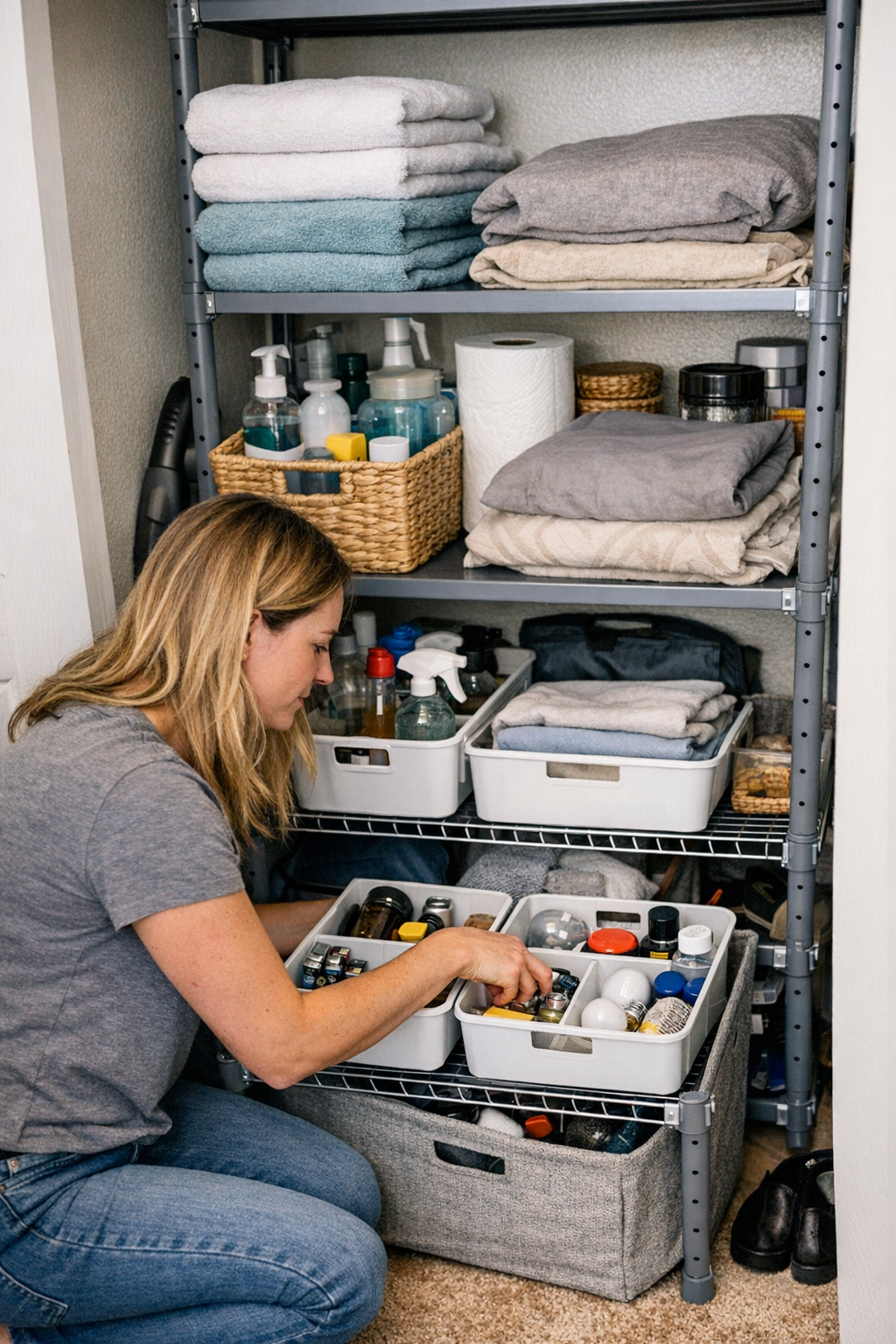
    Visualize your hallway closet after a fresh reset: towels stacked, sheets folded tight, cleaning supplies lined up. Weeks pass. Pulling one towel tips the rest into a lopsided heap. Sheets slip into the bathmat pile. The “once-a-year” bin at the bottom becomes a graveyard for receipts, old phone cords, loose batteries—anything without a clear home. At first you ignore the stray cords; by the next search for lightbulbs, the bin’s overflowing and everything gets tangled. What was spare space now batters back with clutter and confusion, spreading with every missed reset.

    Category Drift: How Storage Loses Focus

    Zones meant for one purpose quietly become dumping grounds. That deep bin for scarves gains shopping bags; a shelf once for towels carries backpacks and baseball gloves. There’s no announcement—it just shifts week by week, as quick fixes become normal. Suddenly you’re hunting in six places for something that used to belong in one. It’s less “mess” than a slow fade: the system fails to match how your household actually uses each zone, and things lose their place in the shuffle.

    How Small Changes Restore Clarity and Access

    You don’t need a full overhaul. Notice one recurring pain point: a bin where nothing stays sorted, a shelf where everything gets stacked and unstacked daily. Replace that deep bin with two shallow trays—now batteries and bulbs go in one, cords and polish in the other. Suddenly you reach in and find what you need in a single motion. There’s no rummaging, no excavating, no reshuffling six items to get one. And when it’s time to reset, the structure holds: things stay separated, stacks don’t collapse, overflow doesn’t get hidden and forgotten.

    The Cost of Unseen Friction

    Micro-hurdles add up without you noticing. If you keep pushing socks back into line, if your “temporary” overflow bin never empties, your storage isn’t keeping pace with real use. Quick resets become half-hour chores. Clutter multiplies in hidden pockets, and every retrieval means wrestling with the setup to make it work. It’s not about needing expensive organizers—it’s about honest matching of system to habit, so putting things away stops being extra work.

    How to Spot When Storage No Longer Works

    Watch for these clues: items block each other, stacks constantly topple, bins swing from empty to overflowing overnight. Old order gets buried—jeans lean, socks scatter, random tools collect at the edges. If getting dressed or making a snack means shoving aside yesterday’s solution, the friction is baked into the structure itself.

    Easy Fixes: Tweaks That Last

    New dividers or different sized bins are often all it takes. Lift daily-use items within easy reach; split “everyday” from “occasionally” so trips in and out don’t disrupt everything in sight. If you’re always unstacking-picking-restacking, break the pattern—one deep basket can become two clear, accessible compartments. Suddenly resets are fast and stress stays low, even as weeks pass.

    Storage That Holds Up to Real Life

    It’s easy to feel organized when the shelves are half empty. The real value is what happens after dozens of uses: whether you can still grab something in one motion, whether piles hold shape, whether “overflow” stays contained. When the setup matches real patterns—keeps visibility, keeps categories, doesn’t create more work than it saves—you stop dreading resets. Your space feels calm, not because it’s perfect, but because it’s built for the way you actually live, not just the way you want it to look on day one.

    Shop ClosetWorks storage solutions

  • Why Clear Storage Roles Make Your Workspace More Efficient and Predictable

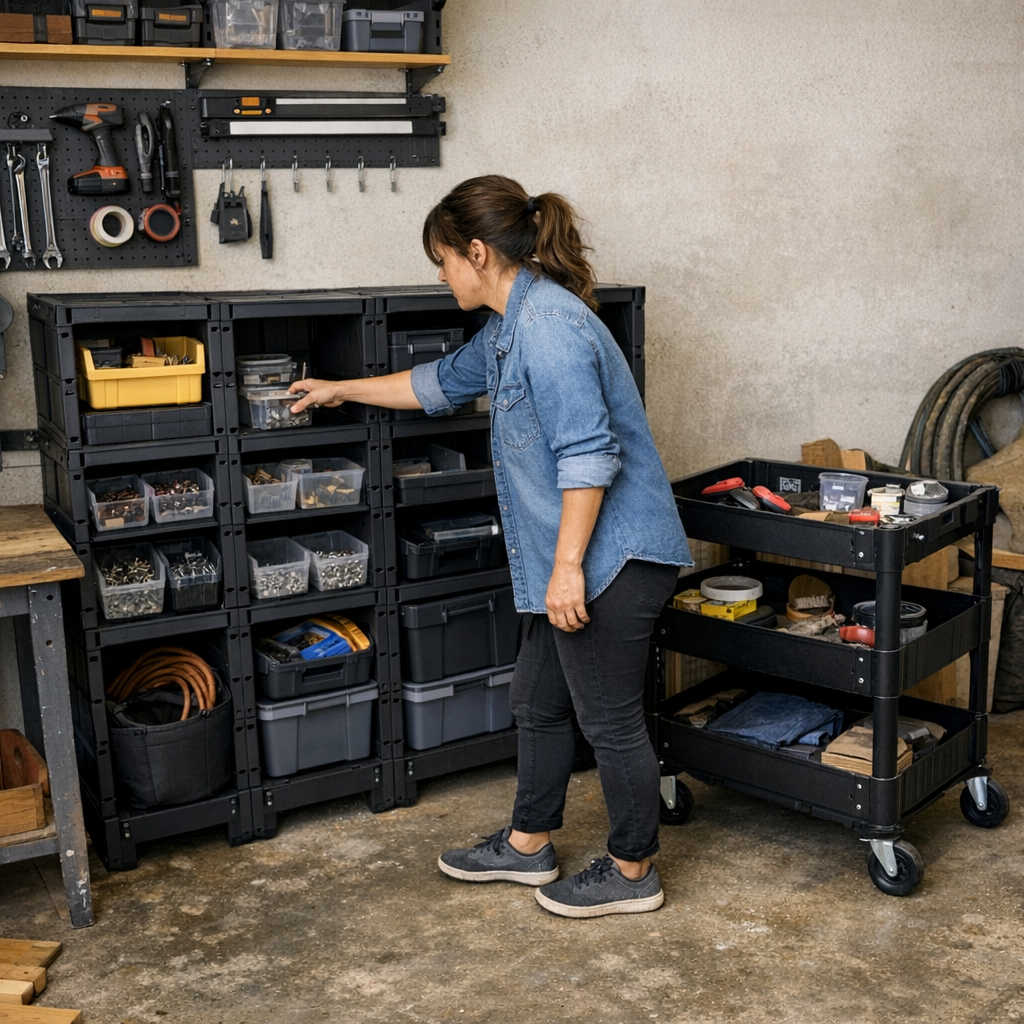
    The illusion of order doesn’t survive the first busy weekend. Step into a freshly organized garage, workshop, or tool corner—everything lined up: modular cubes hugging the wall, a floor chest and wall racks squared away, a mobile cart waiting by the bench. It looks “done.” But as soon as the real work starts—when you’re drilling, fixing, shuffling through half-finished projects—this tidy arrangement is suddenly on trial. Tools land wherever your reach stops. Hardware clusters in corners. The perfect plan, five minutes ago, is derailed by the pressure of actual use.

    Where Neat Setups Unravel: The Slow Creep of Daily Mess

    The first day after organizing is never the problem. The system breaks down quietly—one hurried session at a time. You drop a screwdriver “just for now” on the rolling cart. Unsorted screws build up on the nearest shelf, that “dead” nook in the back absorbs overflow, and clearing work surfaces becomes a pre-project ritual, not a rarity.

    This slow creep is subtle but relentless. Week after week, resets take a few more shuffles. Benches get cluttered with tools waiting to find their way home. Corners that should be open become catch-alls. What started as support for your projects ends up adding friction—until finding anything or even moving through the space gets slower and less predictable.

    When Storage Roles Blur, Routine Clarity Disappears

    Real efficiency comes from clear boundaries—but it’s these boundaries that fade first. Storage zones without a strict job end up tangled: carts, supposed to ferry active tools, become wheeled piles after just a couple projects. Floor chests wind up blocked by the boxes and odds-and-ends you told yourself you’d “sort later.” Even wall hooks and bins lose their purpose, hosting whatever no one had time to put away “properly.”

    Within a month of use, everything overlaps. A project stalls while you search for a measuring tape that never found its way off the cart. The cart can’t roll because clamps and sandpaper are stacked on top. Drawers fill with unrelated leftovers. Resetting order isn’t one step, it’s a multi-stage rescue attempt, and the supposed convenience of your layout begins to feel like a chore.

    Real-World Friction: Where Use Outsmarts “Looking Organized”

    On paper, modular bins and wall racks promise a place for everything. In practice, habitual shortcuts and real project speed expose every weakness:

    • The corner module morphs into a holding pen for “miscellaneous” clutter—because it’s unlabeled, everything ends up there.
    • The cart’s flat surface disappears under small tools, tape rolls, and scraps nobody wants to stash just yet.
    • Wall storage that should make things grab-and-go instead gets crammed; every quick reach nudges something else out of place, or forces an awkward shuffle.

    The setup still photographs well—until you notice how it’s actually used. Week by week, these micro-irritations stack up.

    Defining Roles: The Thin Line Between “Looks Right” and “Works Right”

    Clarity beats capacity every single time. After running through half a dozen setup cycles—reorg, work, reshuffle, frustration—I learned that having “a spot” for everything is useless unless it’s obvious and quick to use every single time. My own space, packed with cubes and a cart, looked organized but quickly revealed the same slide. Hardware never quite made it off the cart. Cords collected on the bench. Eventually, resets stretched out because there was never an automatic return flow—just wishful thinking and more piles.

    The failure wasn’t in how much storage I had, but in how slippery the boundaries were. The cart began as an “active tools” zone but quietly absorbed every stray thing; the cubes became background. Without sharp roles, even a well-planned setup is always at risk of collapse.

    Resetting Flow—The Small Rule That Changed My Shop

    I stripped the chaos back to one discipline: the cart is for current project tools only. Everything else gets returned to its labeled cube, no exceptions. I relabeled the cubes with giant, unmissable categories (“Hand tools—return every use,” “Hardware—no overflow”). I cleared a single, open path for the cart—no bins blocking its wheels, nothing to step over. It wasn’t Instagram-beautiful, but one week in, resets got simple. The cart was always clear by day’s end; anything still out triggered an automatic return. No more shoving aside stacks to roll the cart, no more confusion about what lived where.

    Suddenly, the difference was real: open space stayed open, nothing collected in “temporary” spots, and surfaces stayed useable instead of permanently cluttered. It didn’t just save time—it made working smoother, because there was less thinking and less chasing after missed tools or random debris.

    Spot the Warning Signs: Is Your Setup Dragging You Down?

    If you’re seeing these red flags, your storage isn’t delivering real support:

    • Every project starts with clearing off what’s left from the last round
    • Your “return zones” stay half empty, while benches and carts pile up with tools and parts
    • Resetting order means sorting three or four unrelated categories—every single time
    • Blocked paths, shuffled furniture, or “don’t go there” corners slow you down
    • Labels fade into the background or get ignored completely after a few days

    None of this is a random nuisance—it’s the direct cost of storage roles blurring and paths losing definition.

    Labels Alone Can’t Rescue a Weak Setup

    A label only works if the system behind it makes sense in motion. If a bin is the easiest place to dump overflow, a sticker won’t stop it from turning into a catch-all. True clarity happens before the label: the zone itself must be unmistakable and hard to misuse, even when you’re moving fast or distracted by the next step.

    Pursuing “maximum flexibility” is the classic trap—rows of interchangeable cubes or shelves that promise to fit anything but actually end up hosting everything at once. When boundaries are this vague, resets require double or triple the effort, and no amount of relabeling fixes the core problem. Every time the flow stalls, you’re forced to reshuffle and rethink rather than just work.

    Automatic Return: The Real Benchmark for a Working Layout

    The gold standard for any setup isn’t that it looks organized—it’s how little you have to intervene after repeated use. If, by the fourth or fifth project cycle, resets are down to one simple sweep and the cart, floor, and benches stay mostly clear, that’s true support. Setup friction drops, movement paths stay open, and “finding space” never requires a detour or quick fix.

    Bottom line: A clear, logical storage layout won’t banish every bit of friction, but it will keep the space working for you, not against you. Most setups fail in the small, boring battles—overflow in corners, blocked movement, resets that drag. Winning isn’t flashy, but it’s unmistakable: your workshop feels usable after the tenth round, not just after a photo-friendly re-org. That’s how arrangement turns into actual, repeatable advantage.

    Explore more practical storage setups at StackNest.

  • How Proper Storage Preserves Power Cleaner Performance and Longevity

    Every scar on a tool marks a job finished, an hour saved—or lost—when performance matters most. If you’ve grabbed an air-based power cleaner after a brutal sanding marathon, only to hear it wheeze and cough like it’s older than you are, you know it’s not just about dust in the corners. It’s about trust on the job. Because sawdust and drywall grit don’t care about your schedule, and a cleaner that fails in crunch time can turn a quick sweep before dinner into a scramble for fixes and backup gear you didn’t budget for.

    Where Airflow Fails You—And Your Schedule

    Every worksite veteran knows trouble rarely announces itself up front. You end a day saturated with dust and plaster chips, tuck the cleaner away, and assume the next shift will be a breeze. But come Monday, that familiar machine rattles, stalls, and blows more debris than it traps. Suddenly you’re behind, blaming your tools—or yourself.

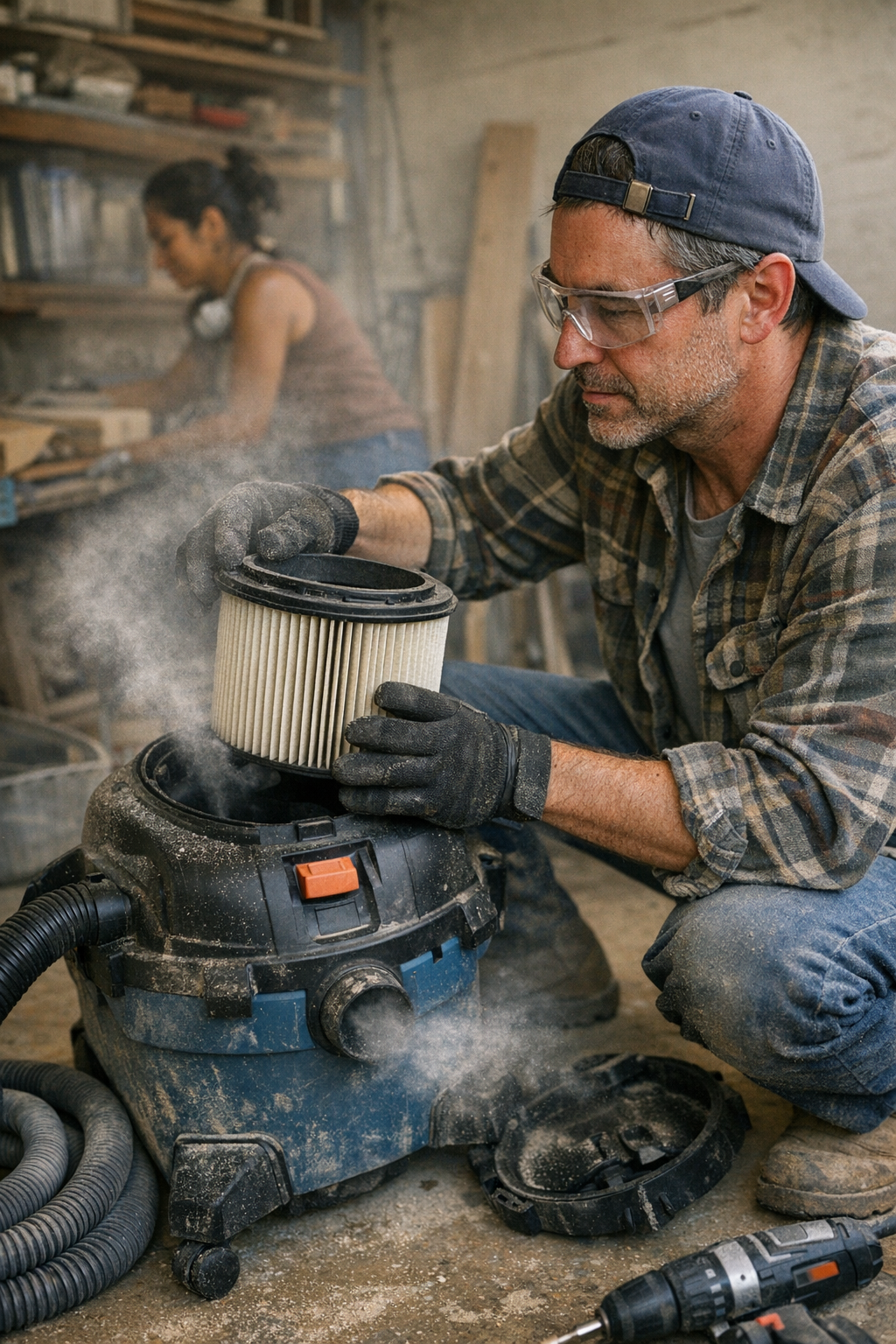
    This isn’t some freak hardware failure. It’s the slow, silent toll from little lapses: dust caking tight channels, condensation trapped beneath a neglected filter, and soft gaskets set into odd angles from last night’s rushed shutdown. Before you know it, your post-job routine—the moments you swear will be faster next time—has ballooned into an afternoon spent scrubbing vents, prying apart sticky buttons, and piecing together a cleaner that should have been ready to run.

    Shutdown Shortcuts: When a Five-Minute Skip Becomes Tomorrow’s Headache

    It’s easy to treat shutdown as an afterthought: blast the main surfaces, coil the cord, slide it beside the miter saw, and forget it. But while you’re moving on, residue settles in. In cramped van bins or on concrete garage shelves, humidity and dust sneak into every joint. If you’ve run your cleaner hard—maybe after back-to-back drilling for cabinet handles or marathon belt sanding—every shortcut compounds. The airflow you’ll desperately need next time gets choked off, and tools that once purged a room in five minutes now limp through a half hour’s work, eating into the next task on your list.

    The difference isn’t subtle. One crew member vents his cleaner, another doesn’t. The next morning? One machine hums, pulling in offcuts and flakes from the first drill plunge. The other spits dust, jams on startup, and leaves you fiddling while everyone else gets back to work. That’s the moment lost prep comes back to bite—right when you need control, precision, and speed from your gear.

    The Real Cost of Saving a Minute

    Every time you rush that end-of-day routine, you push reliability off a little farther. A clump of grit in the intake isn’t cosmetic—it means more push, less pull, and that sinking frustration when you’re halfway through a tricky trim cut and the cleaner shrieks or stalls. That “five-minute save” surfaces as an unplanned hour later, eating your work momentum and testing your patience.

    On the Job: How One Skipped Step Snowballs

    Imagine: It’s 6pm, light fading, you’re wrapping up a kitchen remodel after a day of drilling shelf pins and beveling edges. Floors are a haze of sawdust, your gloves are lined with grit, and you want out. But tomorrow means finishing fast—fastening trim, dialing saws back in, not nursing a tool back to health. That veteran instinct kicks in: give the air cleaner a minute or two on low, filter loosened, just enough to burn off the hidden moisture and bits lodged deep inside.

    It doesn’t feel heroic. But the next shift, when you flip the switch and everything fires without complaint, you dodge the staggered, rough startup that robs you of flow. No mystery blockages. No delay while your crew waits for suction. Just the smooth payoff of prepping right—and knowing your cleaner’s pulling its weight as you rip through a fresh round of work.

    A Storage Routine You’ll Actually Keep

    Practical moves—not perfection—make equipment last:

    • Let the cleaner run on its lowest setting after major jobs. This blasts out stubborn fines, dries any trapped humidity, and prevents grime from hardening deep inside—especially after sanding MDF or punching through plasterboard.
    • Loosen, don’t yank, the filter if it’s staying in. That small step vents the system, so seals don’t dry out misshapen and controls stay light to the touch.
    • Give your tool a dry, cool, uncluttered nook—never jam hoses or clamps tight for storage. Keeping components aired out helps avoid brittle gaskets, seized clips, and those startup glitches that sideline the cleaner on heavy-use days.

    Neglect it for a month and you’ll feel it: toggles stiff, buttons catch, and suction falters when you expect power on command. Smooth control, fast starts—these aren’t accidental. They’re built on small habits that are easiest to ditch when you’re tired and rushed.

    Telltale Signs: Fix Friction Before It Kills Productivity

    Watch for subtle warnings in everyday cleanup: a sluggish grind on startup, suction softer than usual, a button that sticks for just a second too long. Chances are, dust blockages are quietly building inside. That’s more than a minor nuisance—it’s lost rhythm, especially in projects that stretch over multiple days or demand fast tool swaps between sanding, cutting, and clean-up runs.

    Make it routine every week or two: pull the filter, scan for color changes or airflow resistance—particularly after heavy drilling sprees, humid weather, or clouds of drywall debris. Catch friction early and you steer clear of the productivity spiral that comes from limping along with tool fatigue, not thinking about workflow until you’re already behind.

    The Payoff: Tools Ready on Demand, Not on Luck

    The point isn’t to win a prize for neat storage. It’s the confidence that when you’re bouncing from fine joinery to a burst of demolition—switching bits, blades, or batteries—your air cleaner is primed, not groaning through the basics. A few disciplined minutes at shutdown buys you freedom from headache starts, wasted mornings, and awkward workarounds. Build the habit now. In three months, when the schedule piles up and tools need to work, not whine, you’ll know it was worth every second spent doing things right.

    http://gumboll.myshopify.com