
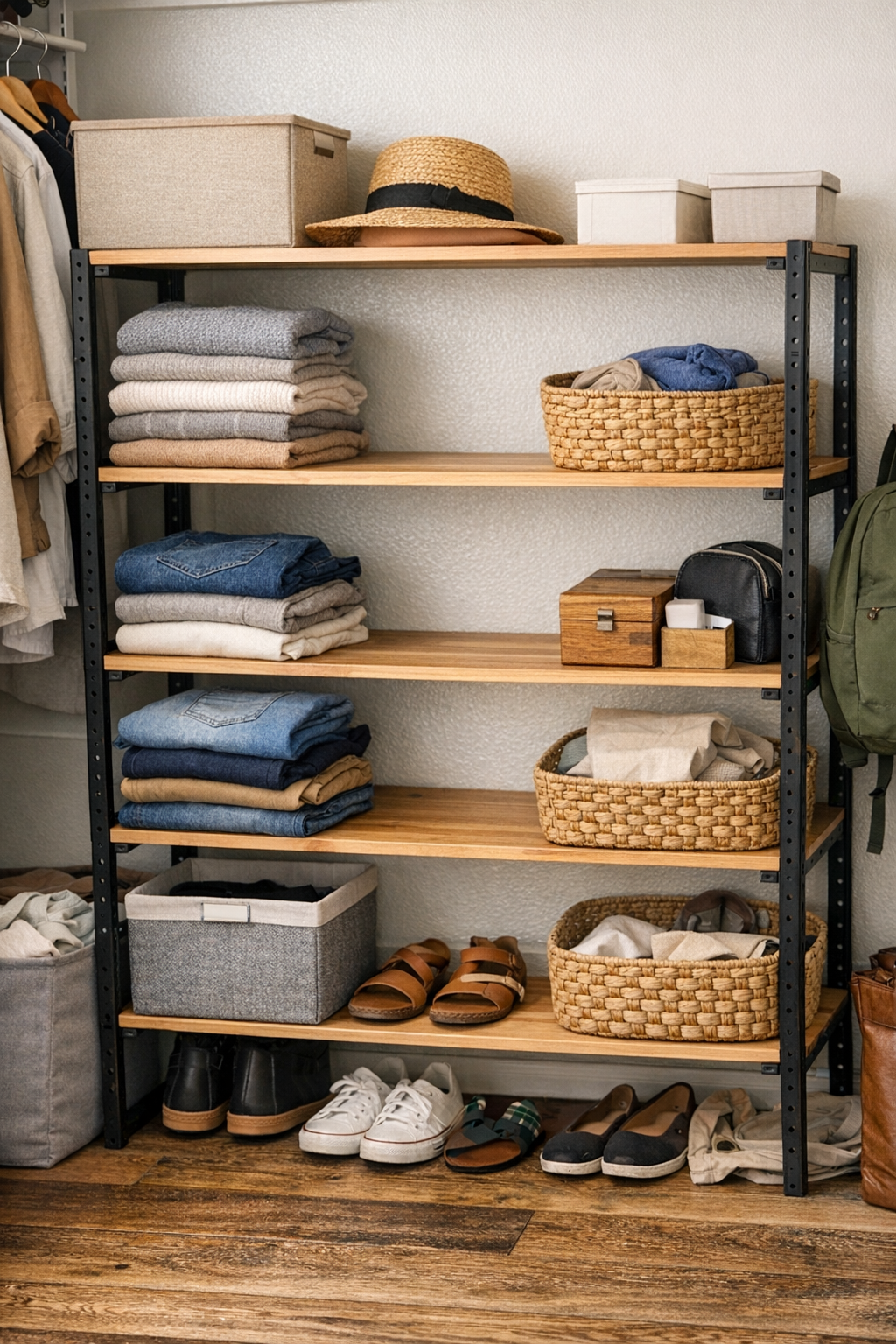
Open your closet after a typical day and you’ll see it: a scarf dumped on a shelf, a lone sneaker wedged sideways, last night’s laundry balanced on top of an already-teetering pile. At first, filling every shelf, bin, or basket edge to edge looks like the mark of organization. But the real test is what happens the moment real life intrudes—and suddenly, there’s no room for the extras. Bins look full, stacks are flush, yet as soon as something needs to be put away—a sweater you won’t wear until next season, a bag that always seems to float between uses—you’re forced into a game of closet Tetris. Categories blur, folded shirts collapse, and before you know it, overflow spreads to chairs, floors, or anywhere there’s a sliver of open space.
The Hidden Aggravation of Maxed-Out Shelves
Standing in front of a closet packed to the gills, you get a short-lived sense of completion. Every surface covered, not a spare inch left—surely you’ve made the most of the space. But try putting the closet to work. Need to grab a sweater from under a pile? You have to move half the stack. That extra pair of shoes? They won’t squeeze into a row that’s already jammed. One returned laundry load, one errant backpack, and you’re back to reshuffling the whole setup.
The tighter the fit, the faster systems start to come undone. Neatly defined areas turn into catch-alls. Categories blur as you shove “just one more” item wherever it’ll fit. What looked efficient quickly becomes fiddly and slow—each small access, every quick return, is another opportunity for chaos to creep in.
The Everyday Toll of No Buffer Space
That empty stretch of shelf you might call “waste” is actually your shock absorber. Skipping a buffer means you’re always making micro-adjustments: shifting one bin to get to another, disturbing a whole row just to tuck away a single hat. Return a library book or empty a gym bag and there’s suddenly nowhere for them to land, except in the middle of an existing stack or on top of something else. Over time, stacks slouch, bins overflow, and the boundaries between “clean” and “catch-all” dissolve.
Without intentional breathing room, every reset grows more tedious. Finding a favorite shirt buried behind three others? Take out the pile, restack, hope the next person doesn’t knock it all over. One missed reset and your system falters—this isn’t organization that holds, it’s organization on the edge of collapse.
Scenes You Know: When Storage Breaks Down
Consider a morning before work. You snag a shirt you need from the bottom of a pile and three neatly folded sweaters topple sideways. Later, you come back with clean laundry and discover every bin is filled right to the brim—not an inch to spare. Where’s the quick place for keys or a rain jacket after a wet commute? With every available slot spoken for, things get left wherever you last touched them: hooked over a closet rod, stowed in the wrong box, or left outside altogether.
Entryway shelves behave the same way. Maxed-out shoe storage means the extras—wet boots, totes, stray mittens—spill onto the floor. Stacked bins without a gap gradually mix their contents. Categories that felt clear erode as you start to ignore dividers for the sake of “just getting through the day.” You find yourself repeating the same fix-it shuffle—dumping, sorting, and resetting—far more than you’d ever plan.
Why Reset Speed Matters More Than Shelf Space
What separates genuinely usable storage from purely decorative “organization” is how quickly you can restore order after real daily use. When every shelf is crammed, resetting after a single day feels like untangling a knot. Grab a hat from the bottom bin? That means emptying everything above it. File returns into a shelf with no space? Get ready to build a new stack from scratch. So things pile up: first a stack on the hallway bench, then a basket on the closet floor, until you’re working around semi-permanent overflow.
Deliberate buffer zones short-circuit all of this. With a hand-wide empty space, adding today’s laundry becomes as simple as dropping it in. The next week, “tidy up” is a five-minute pass, not a total restack. There’s no mental tax each time you interact with your closet—just easy, smooth resets that keep pace with your routines, not against them.
Flexible Storage Survives Real Life
What looks unfinished—an empty stretch, an under-filled basket—quickly proves its worth. That gap absorbs whatever doesn’t fit the normal pattern: the jacket you wore once, the pair of socks for tomorrow’s run, a blanket you might need if the weather turns. Instead of scrambling to invent new spots or letting items roam, you have a ready-made landing zone. The closet stays flexible, not brittle.
Without this point of give, most setups eventually break down. Socks migrate to coat bins. Loose books or bags sprawl wherever there’s a crack in the system. Laundry resets stretch into twice the time as you push, shift, and dig through already-mixed storage. If “putting something away” regularly means moving two other things first or just hiding them out of sight, the setup has already lost its edge.
How to Build in Buffer, Step by Step
If you’re always clearing, restacking, and improvising new spaces, it’s time to experiment with a structural fix: leave a hand-width gap on every shelf or in every bin. This isn’t wasted real estate—it’s the practical safety margin that keeps daily cycles smooth and categories from getting crossed. Your future self—laundry in hand, shoes unlaced and wet, holding three things at once—will thank you.
- Position the buffer where returns and quick drops are most common—often by the closet door or at shelf midpoints for easier reach.
- If you share space, mark the buffer off with a slim basket or bookend so it doesn’t slowly get swallowed by regular storage drift.
This tweak works whether your closet is built-in or just a set of shelves and bins you’ve cobbled together. The payoff isn’t a prettier space—it’s a system that absorbs mess before it spreads, lets you reset almost on autopilot, and keeps piles stable longer.
Signs You Need Breathing Room (and What to Do)
If you find yourself moving the same stuck pile, rooting through mixed bins for lost socks, or using floors as overflow parking, your closet has tipped from “organized” to overloaded. More baskets won’t help—what you need is strategic empty space. Give yourself that margin and watch how quickly categories hold together, clutter stops spreading, and the number of times you have to redo the whole shelf drops sharply.
Almost every closet, shoe rack, and laundry shelf gets easier to use with this one adjustment: treat intentional emptiness as essential, not accidental. The steady system isn’t the one with every inch filled, but the one that leaves room for the unpredictability of real life.