
You’re swapping blades in a tight kitchen, covered in drywall dust, and your multitool kit feels like a junk drawer on wheels: missing pads, mixed-up blades, everything coated in grit. If you’ve logged even a few real days on a job site, you know exactly how accessory chaos eats away at the flow of the work itself. The reality hits hardest when the job speeds up and you’re reaching for a universal accessory kit that—on the shelf—looked “organized.” Suddenly, the pouch or plastic box that promised order delivers only delay, frustration, and another lost minute with every swap.
How Bad Storage Becomes Another Job to Manage
The first time you load up a multitool accessory pouch, it seems like you’re set. All those blades, pads, and scrapers in one place—ready for drilling out rusted screws, sanding into a tight corner, or making a quick plunge cut. It should work. But after a week of real use, the cracks show. Dust seeps in, loose items jostle, and you start wasting time: pawing through patches of sawdust, untangling bent blades, and smoothing pads that now feel worn or even slightly warped.
The real friction isn’t just the wasted seconds. It’s the toll on every tool and job: blades that come out dull or chipped before they’ve seen wood, sanding pads mysteriously warped, and a slow drain on patience as you sort through a growing pile of “almost good” accessories. The grab-and-go idea quickly turns into grab-and-groan when your storage is working against you under real, gritty pressure.
Storage Design: Where Small Choices Cause Big Hassles
Most cases will claim to “organize,” but step onto a busy job and you’ll feel the difference between storage that works—and everything else. After all, what works on a clean bench in a store rarely survives a jobsite week of shoving, stacking, and quick hands.
Why Deep, Tight Slots Actually Matter
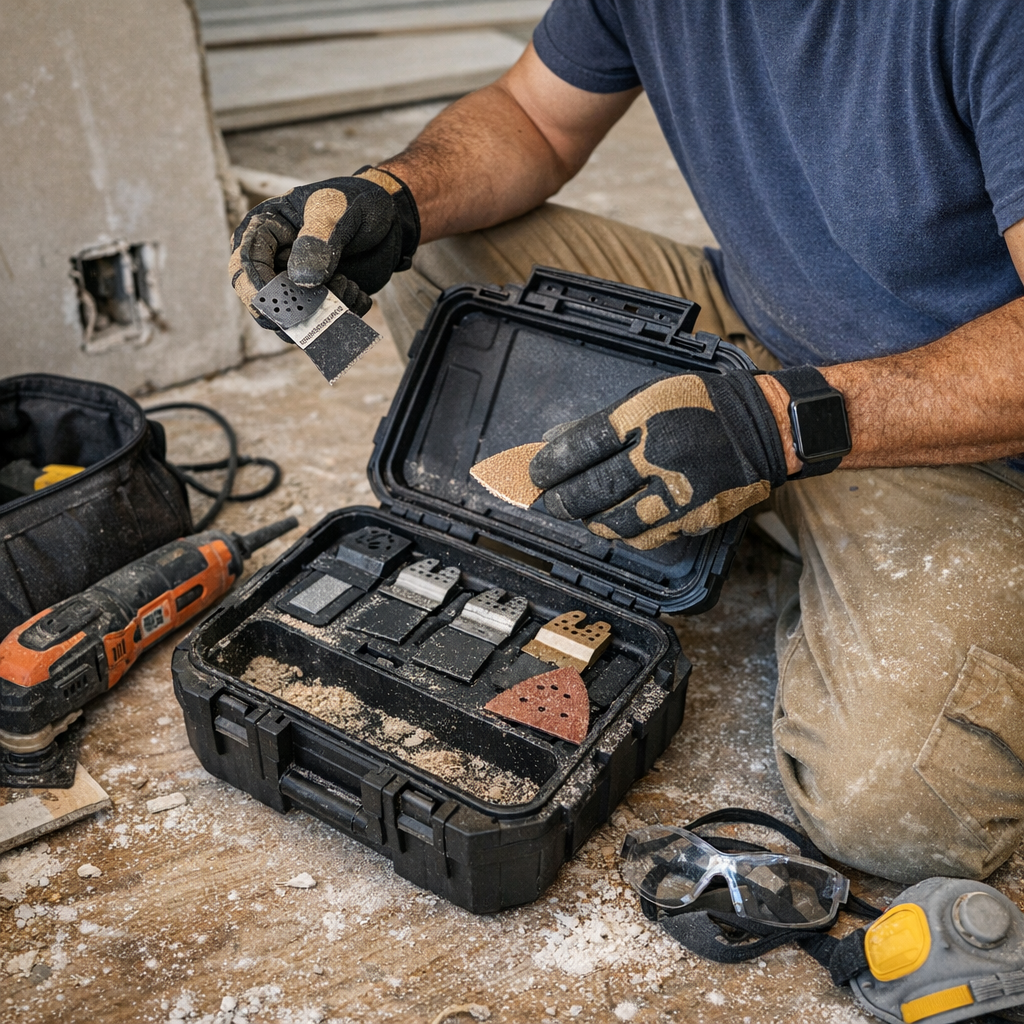
Hard cases with custom-molded slots or dense foam don’t just keep pieces sorted—they clamp each blade in place, edges protected, teeth untouched. Open that lid after hauling through doorways and up stairs, and every piece is where you left it, clean and easy to grab. Even after rough transport, sanding dust clings to recesses, not your cutters. When it’s time to switch between a diamond grout blade and a wood-cutting bit or swap for a sanding pad mid-task, nothing’s gummed up or hiding.
Soft pouches and generic trays? They quickly turn into a rattle trap. Blades shift, teeth grind against metal, dust packs into gaps, and you’re left with battered accessories—sometimes before you’ve even powered on. A set of saw blades bouncing in a fabric pouch starts to look, and feel, like a handful of old pocket change. Tight spaces wedge pads, and even the right part for the job can come out looking used before its time.
Small setbacks become a pattern: a bent blade jamming in your multitool, sanding pads with mystery divots, or that moment when half the kit’s vanished under a blanket of site grit. Each seemingly tiny hassle is another loss of control and focus right when you need precision most.
Field Test: The Renovation Pinch
Mid-renovation, you’re bouncing between scraping residue off subfloor, trimming a stubborn door jamb, and cutting into paneling—all while dust thickens in the air. The clock is ticking. You swap from a carbide rasp to a fine-tooth blade, but the open tray you’ve tossed them in is already packed with debris. By the time you dig out what you need, one blade is wedged into a corner and the next is dulled—rubbed raw from days of being loose and rattled beside sandpaper pads. Fast-forward a few hours and a sanding sheet is missing, wedged so deep in the pouch liner you give up and reach for a replacement that isn’t quite right.
This isn’t the rare day when things go wrong. It’s the standard rhythm on any realistic job. The cost isn’t just delays—it’s lost sharpness, more fatigue, unpredictable tool performance, and missed details at the end of a long day.
Moving from Makeshift to Purpose-Built
Upgrading to a fitted, hard-shell case doesn’t transform your day overnight. But the difference is steady and unmistakable. Now, each blade has its own no-wiggle seat, pads separate, and grit settles where it can be cleared—never coating your whole kit. You spot what’s missing at a glance. Swaps are faster and more predictable: it’s a one-handed grab, not a scavenger hunt. The pace quickens—not because the tool is “new,” but because the things you reach for actually work as intended, every time.
Across days or weeks, what started as a “minor” upgrade pays out: no dulled blades from knocking together, no mystery sandpaper wear, and far less time wasted on little searches when focus should be on the cut. The interruptions disappear and you’re left with that rare sense of everything clicking—cut, sand, swap, repeat—even when the site is chaos and you’re feeling the weight in your hands and arms by lunch.
Tool-Side Questions That Keep Coming Up
Why do open trays cause so many headaches?
Because loose bits move. They collect dust and knock together, dulling edges or rounding corners within days. Tracking accessories becomes a job in itself, especially after a few dumps in the truck or quick shifts between tasks.
Is a hard-shell case overkill for basic jobs?
If your blade changes are rare, you may not need rigid storage—yet. But if you cycle through attachments in one session, fight with stuck or lost parts, or replace accessories too often, a molded case saves time and keeps your kit lasting longer. Pros know, but even serious DIYers feel the difference by week’s end.
How can I tell if bad storage is hurting blade life?
Blades that feel “off” right out of the case, edges chipped before use, or pads that come out stiff and uneven—these all point to storage issues. If you’re running through accessories faster than before, take a hard look at how they ride between jobs.
What Sets the Standard: Predictability and Performance Under Pressure
Reliable storage doesn’t just tidy up your kit—it gets out of your way when the job gets messy. Blades are clean, pads are intact, and you lose fewer minutes to simple friction. Whether you’re grinding through remodels, fine-tuning a cabinet, or fixing a subfloor at the end of a long day, knowing exactly where—and in what shape—each tool head will be means less wasted effort and steadier results.
Check your kit: Are blades going dull before they hit wood? Are accessories buried, bent, or grimy before you even start? Make the switch to purpose-built storage and feel how much easier, faster, and less frustrating every cut, sand, and swap can be—without needing a brand-new tool to feel the difference.