
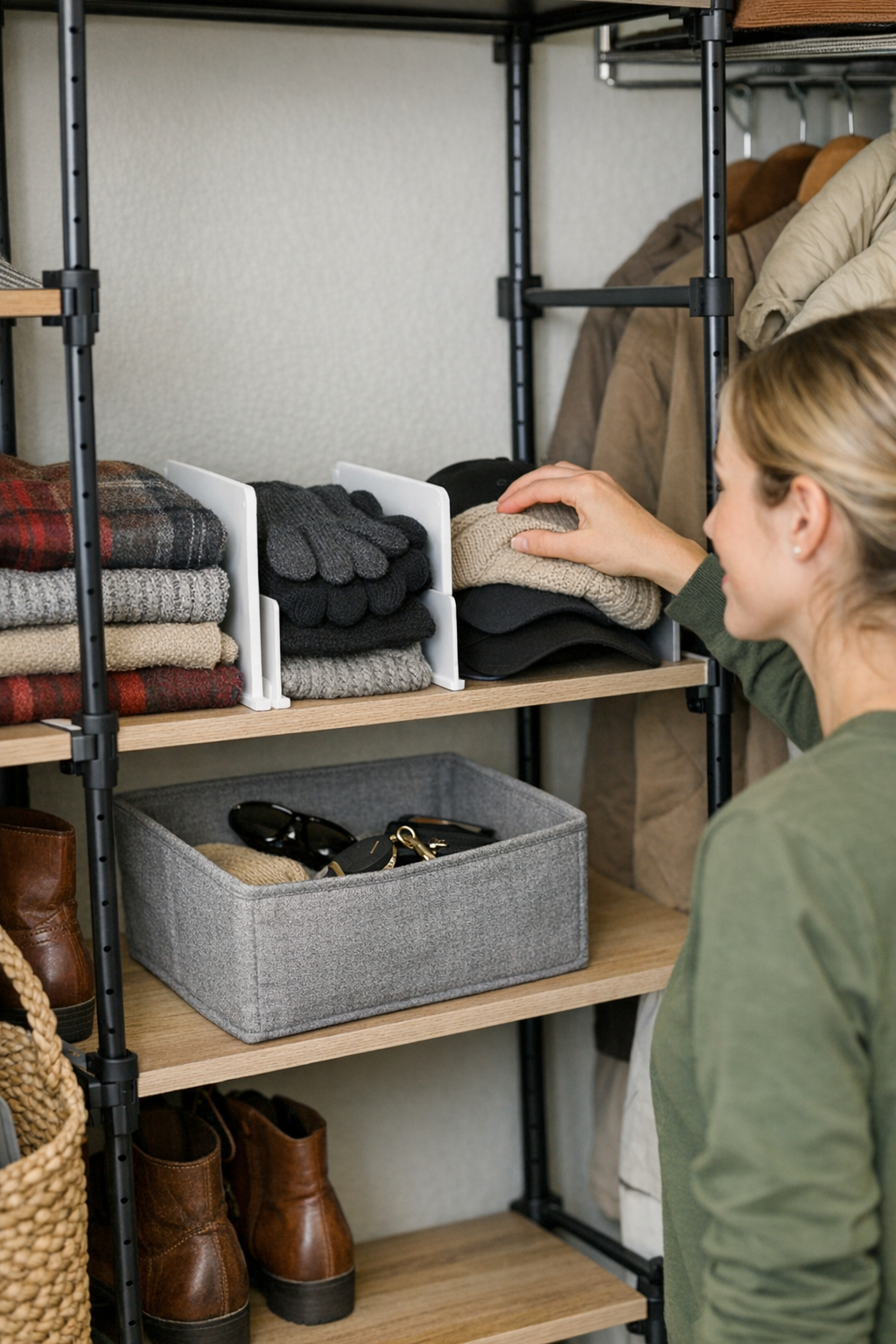
You reset a shelf and it looks great—for a moment. Folded rows, labeled categories, everything neat. But then reality steps in: you grab a sweater and a charging cable tumbles out, or you shove a pair of shoes back on the shelf and suddenly the scarf pile sags. A single family week is all it takes to blur the lines you worked to create. The problem? Most shelves aren’t short on space—they’re short on boundaries that can survive actual, everyday use.
Why Open Shelves Break Down So Fast
Open shelves seem like the gold standard for flexibility. You see every item at a glance, can slide in any odd shape, and nothing blocks your reach. But after the first round of real-life grabbing, categories start to blend and drift. That “workout gear” stack slouches into the towels. The row of books becomes a landing zone for receipts and random cords. Every quick restock—sometimes rushed, sometimes by someone else—makes the invisible boundaries fade. Within days, a shelf meant for easy access turns into an awkward search, forcing you to move piles just to get at the one thing you actually need.
How Disorder Sneaks In and Takes Over
Disorder isn’t dramatic; it’s incremental. You toss socks on folded shirts “just for now,” slip a flashlight behind some paperback books, or drop grocery bags on top of hats because you’re in a hurry. Each shortcut seems harmless—until you need an umbrella during a storm and find yourself elbow-deep in unrelated clutter. Now, every rescue mission leaves the shelf more tangled. What used to be a tidy reset now becomes a mini overhaul, dragging out for far longer and never feeling quite complete.
The Hidden Mess Behind “Close Enough” Storage
It’s one thing for a shelf to look fine and another for it to function under pressure. Take a hallway closet: you start with piles for gloves, scarves, maybe a bin for hats. But busy mornings hit, and gloves slide into scarves, hats topple, and categories blur. The real cost creeps in daily. Suddenly, you’re digging for keys under hats or pulling stacks apart to find one glove. Instead of small, quick resets, you wind up resenting the now-daunting task of reclaiming a single spot—and dreading the inevitable weekend re-clean.
Shared Spaces Multiply the Friction
Where family routines overlap—entryways, laundry shelves, kid closets—the spread is even faster. One person grabs a pair of shoes and leaves socks askew; someone else stuffs mail behind the hats. In high-traffic zones, boundaries melt in half the time, and everyone pays the price: shoes spread, bags pile up, the “easy-access” entryway turns into everyone’s least favorite traffic jam.
Boundaries: The Storage Upgrade That Actually Works
What actually makes order last? Assigning every item or category a specific, reserved spot. Shelf dividers, bins, or even strategic visual cues help enforce simple rules and halt the slow slide of clutter. In the same over-taxed closet, a pair of dividers and one sturdy bin instantly contained drifting piles. Now, when a glove escapes, it returns to its zone fast—without knocking hats and scarves out of place. A dedicated bin for keys or chargers means you don’t have to upend half the shelf to find what matters.
Dividers and Bins: Small Changes, Huge Improvement
Dividers turn sagging stacks into stable lanes—your shirts stop lurching sideways and towels keep to their own slice of space. Bins act as catch-alls for loose odds and ends like sunglasses, cables, or little seasonal items. The effect? Instead of re-sorting a jumbled shelf at the end of each week, you just nudge one stray item back home. Urgent retrievals—rain gear on a stormy morning, the right charger before school—start to feel routine instead of fraught.
The False Promise of Flexible Shelving
Open, boundary-less shelves promise adaptability, ready for all your odd shapes and changing needs. But flexibility comes at a price: shelves “absorb” whatever lands. Mail, sports gear, jackets—all merge until, next time, you’re shifting half the contents to reach what you want. The supposed convenience turns to frustration as items topple, mingle, and creep into new territory, demanding more tidying than ever.
Visibility Without the Mess
Compare this: on one side, an open shelf where folded stacks lose shape with every grab, and bins become mysterious mixes of “whatever fits.” On the other, a divided setup: t-shirts separated by sturdy supports, kids’ socks corralled in their own bin, belts visible and accessible. Not only does each item have a home, but it’s obvious when something is missing or when a category needs attention. You see what you have, you see what you need.
Simple Shifts That Change the Game
You don’t need custom-built cabinetry or major changes. Often, a set of affordable dividers or a couple of durable bins breaks the reset cycle completely. For real improvement on shelves you use daily, try these:
- Separate scarves from gloves so piles aren’t in each other’s way—nothing gets buried or blended.
- Gather small, easily-lost items (keys, chargers, sunglasses) in a bin that’s easy to pull out and return as a whole.
- Keep divider edges visible so you can tell at a glance when a stack is creeping out of bounds, making maintenance nearly automatic.
The bigger win isn’t prettier shelves—it’s faster, frustration-free access. With defined spaces, you grab what you need, reset in seconds, and never waste time digging for hidden treasures or cleaning up pile after pile.
Habits to Make Order Stick
Once new boundaries are in place, a few micro-habits ensure they last:
- Slot it back: Get everyone used to returning items to their designated spot—even when hurrying out the door. This simple practice chokes off clutter creep at its source.
- Quick tweaks, not giant overhauls: When you spot a scarf edging into the glove zone, or notice a bin getting out of hand, take a minute to realign instead of letting mess multiply. Regular micro-fixes keep the system tight with barely any effort.
Pay attention to where structure falters. If one bin overflows or a divider never seems to work, adjust the setup. Durable storage isn’t about a perfect one-time solution—it’s about staying responsive to how your shelves actually get used, week after week.
True Organization Reveals Itself Over Time
A shelf that merely looks organized rarely stays that way. The difference with real, resilient storage is tangible—day after day, the space works for you rather than against you. Boundaries that last mean you can restock quickly, retrieve fast, and reset with minimal effort—even as the week gets messy and routines change. Purposeful dividers, bins, and zones don’t just hold your things; they hold the line when life speeds up.
Ready for storage solutions built for the way you actually live? Find shelf dividers, bins, and real fixes at ClosetWorks.