
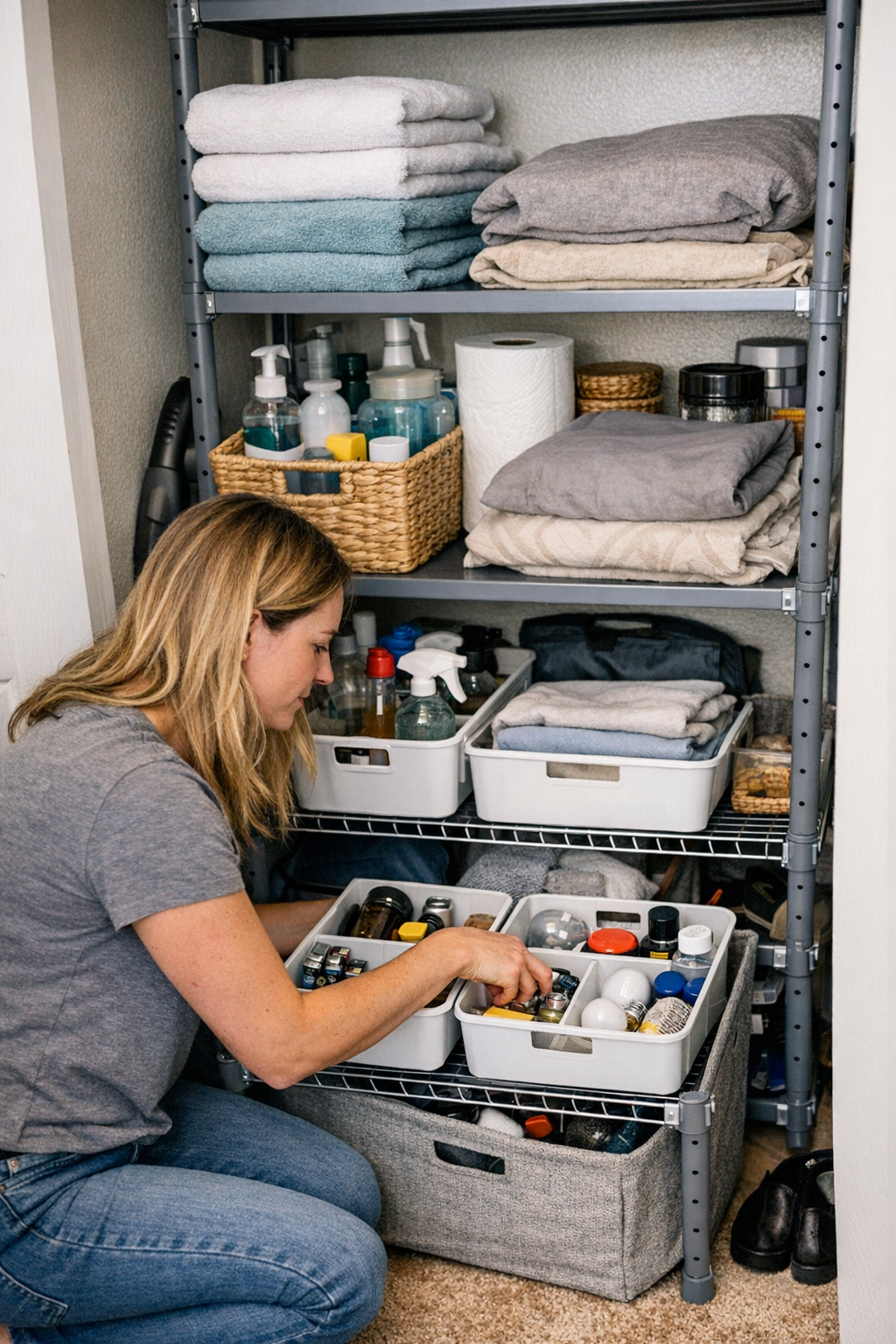
Everything looks organized—right up until you actually need something. Maybe it’s your hallway closet, freshly arranged after a marathon cleaning session. Every shelf lines up with labeled bins, towels stacked with crisp edges, every basket in its place. The first day, it feels “fixed.” But the real test isn’t how your setup looks when untouched—it’s what happens at 7AM, hands full, digging for socks, or three weeks later, as life pushes neatness out of shape. Suddenly you’re nudging over a pile to reach one glove, cramming in another sweatshirt, or realizing there’s no easy way to get anything without sending the whole stack sideways. That’s when “organized” doesn’t feel practical anymore—and storage starts working against you.
Where Order Breaks Down: Recognizing Real-Life Storage Friction
The first signs aren’t dramatic. They’re subtle tugs and slow jams. You go to pull a single t-shirt, but half the pile comes with it. That perfectly lined pantry shelf? The cans upfront hide what you actually use, and now you’re routinely sliding items aside just to reach the oatmeal in the back. Baskets that once glided out now stick; mystery objects lurk deep in corners. It isn’t chaos—it’s friction, added up in small, daily moments. Every little obstacle steals a bit of energy or speed, especially when you’re rushing, hands full, just trying to get out the door or put groceries away fast.
When Use Exposes the Gaps in “Organization”
A setup can look flawless but fight you every day. Take the matching bins in a closet: promising order, but real life quickly bends the rules. The sock drawer on Wednesday morning is a swirling jumble, not a military row of pairs. The bottom “catch-all” basket? It devours hats, chargers, stray mittens—everything except what you’re looking for. In the kitchen, grabbing crackers means shifting three things just to see what’s behind. These aren’t failures of effort; they reveal where the arrangement ignores how you actually reach, see, and reset in the blur of daily routines.
Hallway Closets: Where Small Friction Grows
Visualize your hallway closet after a fresh reset: towels stacked, sheets folded tight, cleaning supplies lined up. Weeks pass. Pulling one towel tips the rest into a lopsided heap. Sheets slip into the bathmat pile. The “once-a-year” bin at the bottom becomes a graveyard for receipts, old phone cords, loose batteries—anything without a clear home. At first you ignore the stray cords; by the next search for lightbulbs, the bin’s overflowing and everything gets tangled. What was spare space now batters back with clutter and confusion, spreading with every missed reset.
Category Drift: How Storage Loses Focus
Zones meant for one purpose quietly become dumping grounds. That deep bin for scarves gains shopping bags; a shelf once for towels carries backpacks and baseball gloves. There’s no announcement—it just shifts week by week, as quick fixes become normal. Suddenly you’re hunting in six places for something that used to belong in one. It’s less “mess” than a slow fade: the system fails to match how your household actually uses each zone, and things lose their place in the shuffle.
How Small Changes Restore Clarity and Access
You don’t need a full overhaul. Notice one recurring pain point: a bin where nothing stays sorted, a shelf where everything gets stacked and unstacked daily. Replace that deep bin with two shallow trays—now batteries and bulbs go in one, cords and polish in the other. Suddenly you reach in and find what you need in a single motion. There’s no rummaging, no excavating, no reshuffling six items to get one. And when it’s time to reset, the structure holds: things stay separated, stacks don’t collapse, overflow doesn’t get hidden and forgotten.
The Cost of Unseen Friction
Micro-hurdles add up without you noticing. If you keep pushing socks back into line, if your “temporary” overflow bin never empties, your storage isn’t keeping pace with real use. Quick resets become half-hour chores. Clutter multiplies in hidden pockets, and every retrieval means wrestling with the setup to make it work. It’s not about needing expensive organizers—it’s about honest matching of system to habit, so putting things away stops being extra work.
How to Spot When Storage No Longer Works
Watch for these clues: items block each other, stacks constantly topple, bins swing from empty to overflowing overnight. Old order gets buried—jeans lean, socks scatter, random tools collect at the edges. If getting dressed or making a snack means shoving aside yesterday’s solution, the friction is baked into the structure itself.
Easy Fixes: Tweaks That Last
New dividers or different sized bins are often all it takes. Lift daily-use items within easy reach; split “everyday” from “occasionally” so trips in and out don’t disrupt everything in sight. If you’re always unstacking-picking-restacking, break the pattern—one deep basket can become two clear, accessible compartments. Suddenly resets are fast and stress stays low, even as weeks pass.
Storage That Holds Up to Real Life
It’s easy to feel organized when the shelves are half empty. The real value is what happens after dozens of uses: whether you can still grab something in one motion, whether piles hold shape, whether “overflow” stays contained. When the setup matches real patterns—keeps visibility, keeps categories, doesn’t create more work than it saves—you stop dreading resets. Your space feels calm, not because it’s perfect, but because it’s built for the way you actually live, not just the way you want it to look on day one.