Category: Travel & Drive

  • How Thoughtful Pet Travel Bags Improve Every Stop on Your Walk

    This is where pet travel gets real: You step out for a quick morning walk, shoulder your organized bag, and—within minutes—start juggling. One leash hand, one sliding bag, and suddenly standing still means hunting for wipes that have disappeared under comfort gear or twisting for that water bottle that’s not where you thought. The setup, meticulously prepped at home, breaks down in motion: quick stops turn into scavenger hunts, pockets block each other, and the bag you trusted for “readiness” becomes a drag the moment you need something fast. The frustration is rarely dramatic, but it’s relentless—the kind you only notice when every pause turns into a mini-reset. That’s the core tension of pet travel: looking prepared versus functioning under real, repeated use. This is the world PawGoTravel exists to change.

    The Quiet Fails of a “Visually Organized” Pet-Travel Bag

    A tidy bag feels like security before you leave. Everything zipped away, compartments neat, the promise of an easy outing. But as soon as your trip stops being static—any quick park detour, every sit-pause, or even a curbside moment—you run into the bag’s hidden weak points. The wipes you need first are never truly at hand. The water bowl that seemed accessible at home now slides beneath towels or is blocked by a rolled-up blanket. The leash’s clip tangles or yanks awkwardly as you dig past pet and personal items. Small friction points multiply until what looked calm at rest becomes an obstacle during real movement—especially when your phone, keys, and pet supplies all jostle for space.

    Few notice a bag’s slow unravel the first time out. It’s the third or fourth stop when you sense it: owner items tangled with pet gear, hands switching between leash and bag, the cumulative drag of pockets designed for calm, not chaos. Each micro-delay exposes the gap between organization you see indoors and what actually survives contact with a real walk.

    When Quick-Grab and Comfort Gear Collide

    That misplaced pouch or blocked pocket isn’t just bad luck—it’s a direct result of a setup tuned for stowage, not fast access. Blankets and plush gear help your pet settle but often end up hiding wipes or obstructing treats. Grab for something mid-walk and your dog pulls unexpectedly, forcing another awkward reach around layers that weren’t in the way at home. Those “comfort” sections, so useful for calm travel or a cold seat, quickly become blockades for items that matter most at a busy pause.

    Your system only starts to show its limits when real-world use forces a choice: easy pet comfort or fast, unblocked cleanup and hydration. It’s a decision you make repeatedly—and every time you reshuffle for faster access, another pocket gets used badly, and the cycle repeats.

    Comfort Gear Isn’t Always on Your Side

    Piling in blankets or any comfort item is great, until you find the seat-side section totally packed, your wipes sliding further out of reach, and hydration gear shrouded under “calm.” In winter, you might forgive it. On any normal day, it’s just an interruption—slowing down what should be a quick fix and pulling your focus off your pet when you least want it.

    The True Test: After the Fifth or Sixth Stop

    No bag design feels “bad” on stop one. It’s repeated use—fifth, sixth, seventh reset—when unchanged flaws start to dictate the flow. By then, the absence of a real quick-access pocket becomes more than a subtle nuisance. Key pouches force an awkward re-grab, and patterns emerge: wipes always lost, bowl always wedged, leash always fighting your reach. The structure that looked clever at rest increasingly slows every decision once real travel rhythm exposes how poorly it adapts.

    This is where differences become obvious: Can you actually grab wipes without upending the bag? Does the water bowl slip free when both hands are half-occupied? Or does every transition ask you to dig, shift, or even drop your own stuff just to reach a basic item? The “prepared” look fades, and what matters is whether your repeated movements—start, pause, restart—run smoother, or if each becomes another small frustration. PawGoTravel’s design focus starts exactly here.

    How Dedicated Sections and Exterior Access Change the Game

    Move your most-used items—wipes, waste bags, water—from the general jumble to a quick-grab section or exterior pocket, and the experience transforms almost instantly. No more digging behind plush gear. No more blocked seat-edge. Now, on every stop, you reach for the same spot, grab what’s needed, and reset with less drama. Fast transition from car to curb, curb to park, and back again. The bag no longer slows you down or interrupts the routine you and your pet have established.

    Repeated Use Makes Structure Matter

    Many owners assume they’ll “get used to” a bag’s quirks, but repeated friction doesn’t fade. Every overlap between pet and personal gear makes quick access less reliable. Each time wipes are pushed deeper by shifting treats or a phone, the weakness compounds. After a few outings, those minor setup mistakes turn restarts into slowdowns. Instead of adapting, you end up fighting your bag’s structure itself—one blocked grab, one shuffle at a time.

    Practical Tweaks That Actually Work

    Here’s where seasoned pet travelers separate hype from real payoff:

    • High-frequency items must have true external pockets. Not just labeled; truly easy to reach with one hand, even when moving or handling your pet.
    • Keep comfort gear from overlapping main access routes. Every item that slips between pet gear and owner stuff is a future delay—even on an ordinary walk.
    • Test your bag by actually running two or three true pauses or curbside resets in a row. Wherever you stall, wherever an item always gets buried or feels slow, that’s where structure (not just neatness) needs changing.

    It isn’t about adding endless pouches or aiming for the most organized look at home. Small, structural tweaks—true quick-access sections, externalized high-use gear, and separation of comfort from action—deliver payback you feel within one week’s worth of real, repeated stops. The travel rhythm improves. Stress drops. Your setup gets out of the way and lets the day flow again—even when your pet’s routine changes mid-walk or at a crowded curb.

    See setups designed for real, repeated pet travel at PawGoTravel.
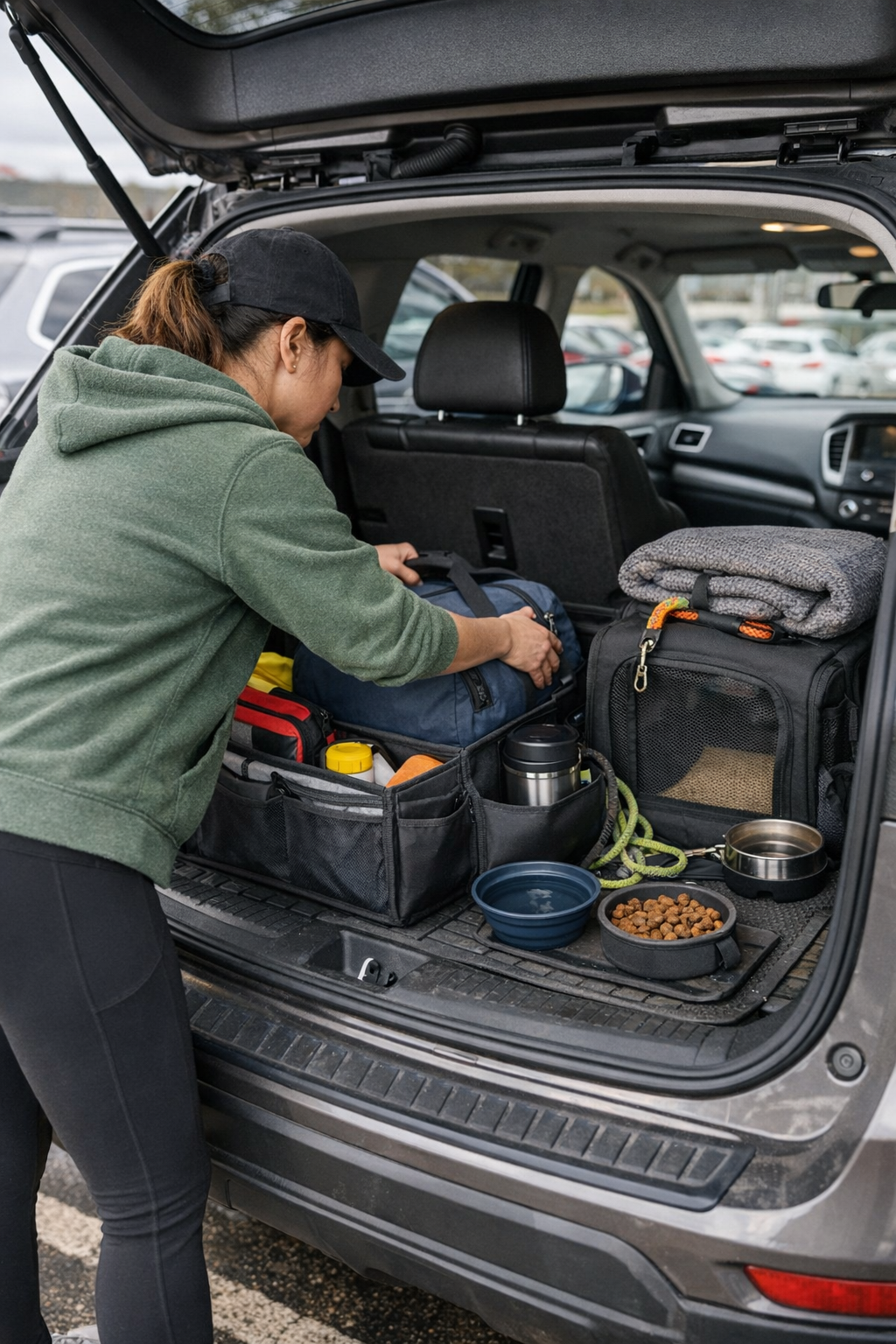
  • How Thoughtful Car Organization Eliminates Daily Driving Frustrations

    A tidy car doesn’t guarantee a smooth routine. If you’re constantly re-adjusting phone chargers, unsticking tangled cables, or rescuing gear wedged in odd places—even when your interior looks “organized”—the real problem isn’t clutter. It’s setup friction that keeps tripping you up where speed and flow matter most: re-entry, quick stops, commutes, or the scramble between errands. What looks streamlined at rest often unravels the second your day accelerates, revealing every weak point in your supposed “system.”

    When “Organized” Still Means Repeated Frustration

    Visual calm hides real-world chaos. You get out after a short drive and the space checks out: surfaces clear, pockets filled, nothing rolling beneath the seats. Yet as soon as you’re in motion, the same trouble re-emerges. Feet catch on a charger cable that’s drifted below the pedals again. Water bottles you nestled in a side pocket now block a quick grab for your work bag. That emergency kit you stashed for safety? It shifts just enough each turn to snag jackets or trip up morning routines.

    The surface tells one story; repeated use tells another. On a single trip, the order holds. But run two errands, cycle through a grocery pickup, and you’re fixing the same interruptions: dragging a mount cable out of the footwell, shifting organizers that wedge the door, or re-tucking a loose mat blocking your seat track. These friction points are not accidents; they’re built into setups that prioritize initial appearance over actual movement and return flow.

    How Small Setup Choices Become Big Repeated Hassles

    Overlapping zones cause compounded hassle. Phone charging leads sneak through cup holders. Bulkier center trays serve as both dump-spaces and makeshift phone stands—until you accelerate, and everything inside shifts to the wrong corner or exposes a charger cord in the pedal well. Mats look secure in the morning but ride up or curl at the edges after a fast park-and-go. You reach blindly for an ice scraper only to run your hand past empty snack wrappers and wipes because the organizer collapses inward or overflows sideways.

    These are not one-off mistakes. When the pressure rises—kids to school, groceries to haul, calls to take—weak spots repeat at the worst time. Your phone is charging but out of reach behind a swaying cable; your bag wedges under a sliding seat protector, adding those seconds of fumbling. Every trip repeats the cycle: fix, reset, move—never truly “solved.”

    Everyday Scenarios: Where Organization Falls Short

    A Routine That Should Flow—but Doesn’t

    Picture a day with three back-to-back stops. First drive: phone inserted, charging initiated, gym bag tossed behind the driver’s seat. By stop three, chain reactions unfold—a cable is now stuck under the seat bracket, the bag is trapped under a seat cover bunched from sliding trips, and the water bottle (once “secured”) has migrated under the passenger seat, just out of reach. The time lost isn’t cleaning—it’s crawling, reaching, and resetting on every short return.

    Clean Surfaces, Messy Experience

    A streamlined trunk, bin, or caddy looks sharp in photos. In practice, inserts and dividers slow down loading, turning a quick unload into an awkward shuffle—even a small grocery run can require three steps where one should do. Floor liners contain mess, but their raised lips catch stroller wheels or snag toes during rush re-entry. These annoyances never show up in before-and-after shots, but they add drag each time you repeat the route.

    Recognizing Familiar Problem Zones

    Where do these repeated difficulties pop up most?

    • Cables and Chargers: Even the “invisible” setups force repeated corrections if cables drift into footwells or need unplugging to access everyday items, turning convenience into an obstacle course.
    • Seat and Floor Protection: Covers that never stay anchored and mats that slide or block pedal zones shift the hassle to cleanup and pre-drive adjustments—tiny stalls that add up over a week’s worth of errands.
    • Pockets and Compartments: An organizer without separation means every blind grab for a charger, umbrella, or snack turns into fishing through crowded bins or cross-contaminated pockets.
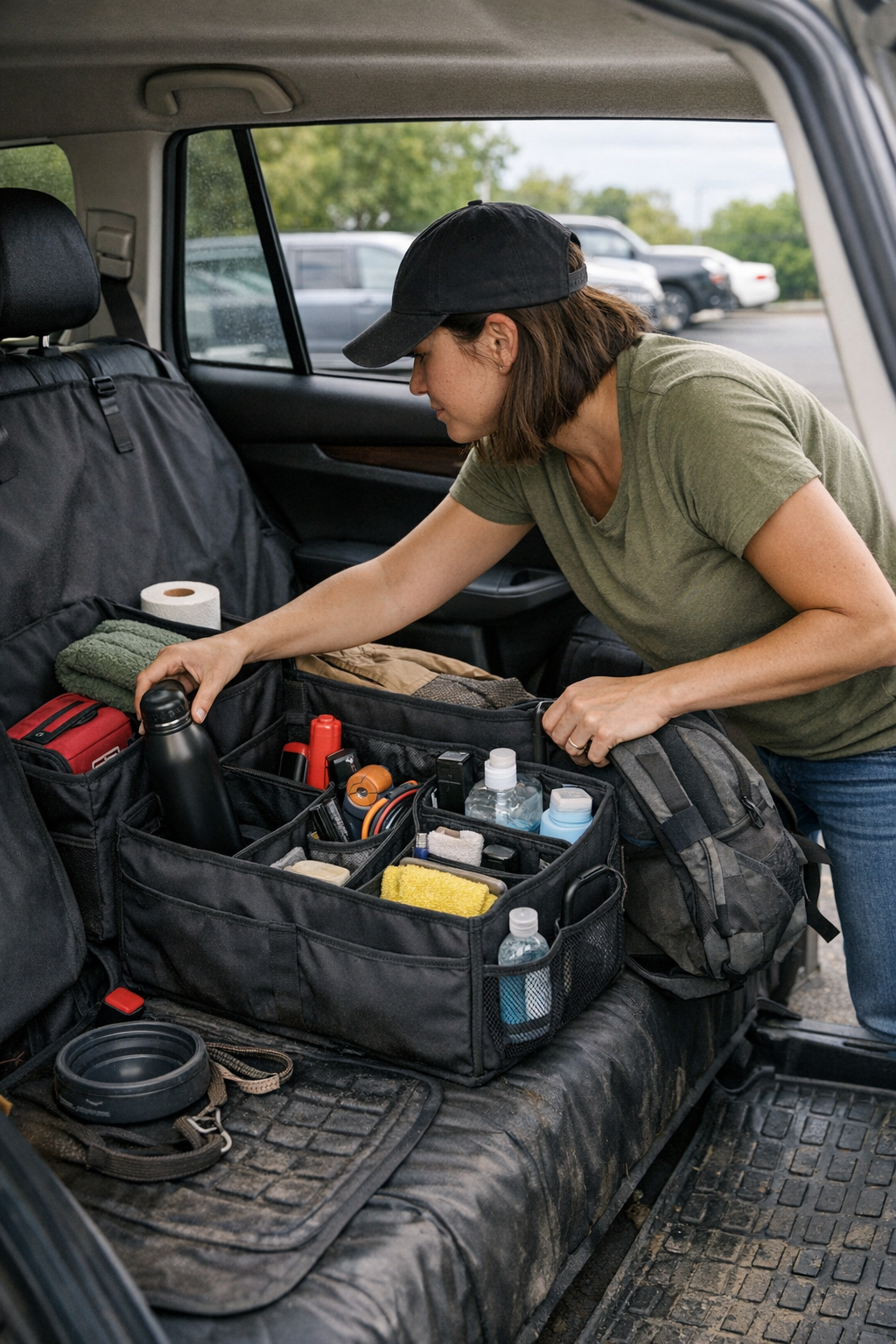
    • Cargo Corners: Trunk bins save cargo from rolling but demand their own rituals—a heavy organizer might require a full rotation just to reach a first-aid kit, or turns a quick bag drop into a puzzle.

    What Real Improvement Looks Like: Minor Tweaks, Major Relief

    Effective fixes aren’t about total renovation—they’re about upgrading repeat weak points.

    • A tray with a snap-in phone slot and cable channel stops lines from ever trailing into foot space, cutting daily fidgeting and accidental yanks.
    • Edge-anchored seat covers end the cycle of bunched fabric or exposed foam, making in-and-out movement automatic—no more bend-and-adjust on rush days.
    • Divided organizers match real behavior: trash in one slot, chargers and charging bricks in another, and seasonal or emergency gear in a separated zone. No more scavenger tasks in traffic or during a surprise rain shower.

    What changes? Suddenly, re-entry is second-nature: hand lands where you want, charger sits ready, bag loops don’t tangle, nothing blocks the quickest path to coffee or car seat. You stop having to check if mats migrated or if cargo has shifted into the loading zone. Post-trip cleanup is a 30-second sweep, not another round of fixing the same slip-ups. Friction fades quietly—not because you obsess over tidiness, but because the tweaks keep routines moving.

    Spotting—And Fixing—Setups That Keep Slowing You Down

    If you always correct the same frustration, you haven’t actually solved it. Here’s where to look for persistent slowdowns:

    • Cables that need untangling or rewinding more than once a week—or that keep invading pedal, bag, or entry space
    • Bins and pockets requiring you to move one item to reach another—turning urgent grabs into side quests
    • Seat or floor covers that slide, exposing ugly wear spots or catching dirt under loose edges and corners
    • Cargo blocks that multiply simple steps: if a trunk organizer demands you shuffle gear just to reach your raincoat, something’s off

    The right upgrades erase these repeat pressures. You win back double seconds—not just time, but headspace—when your car’s setup finally works as fast and flexibly as you do, even on days when plans shift mid-route.

    The Bottom Line: Choose Setup That Moves With You

    What matters isn’t post-clean calm—it’s whether your real setup handles lived-in, pressured use: school loops, grocery dashes, sudden storms, frantic dog pickup, or grabbing gear when you’re late. A “neat” look that brings the same access headaches isn’t helping; small swaps that cut friction, anchor your routine, and protect without blocking flow make the difference when real life hits. Don’t settle for organized drift—upgrade toward a lineup that bends with every return, not just every detail shot.

    http://www.drivewellsupply.myshopify.com

  • Why Carry-On Organization Often Slows You Down During Travel

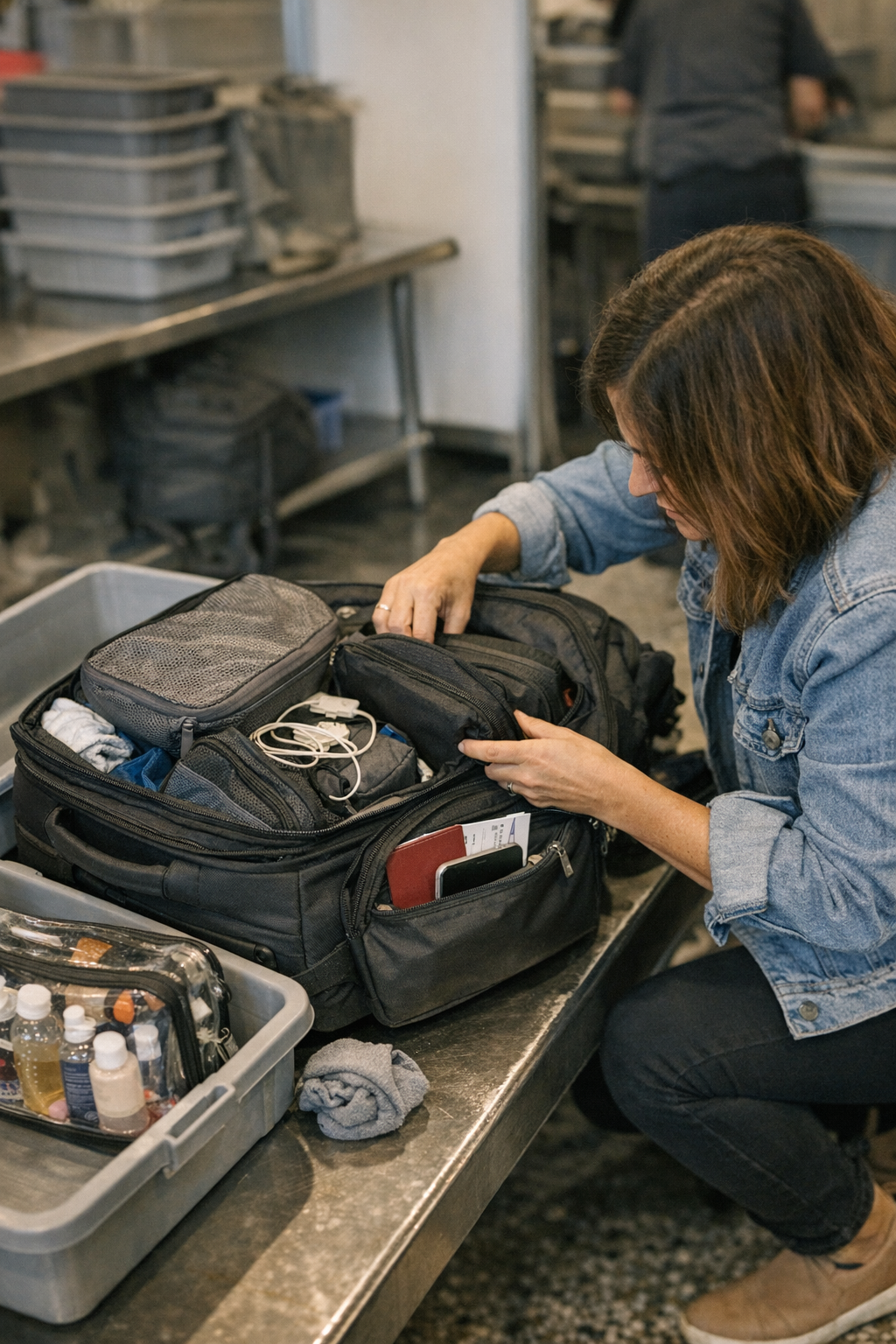
    The carry-on that looks sharp and meticulously packed on your hotel bed can quickly become a weak link once you hit your second airport in a day. What feels efficient—stacked cubes, color-matched pouches, everything secreted away—often collapses at actual checkpoints: you’re stalled at security, knuckles deep in the main compartment, digging past three layers just to find your passport. That impressive hotel-room layout rarely survives the first boarding line, where every extra unzip, pouch-shuffle, or lost document not only slows you down, but leaves you blocking the line and cursing your packing logic.

    When Visual Order Slows Actual Movement

    It’s tempting to trust a bag that looks organized: rows of zipper pouches, precision-folded clothes, tech cords in their own sleeve. Laid out, it gives a sense of being ready for anything. But the friction appears as soon as you leave the controlled packing zone. Real travel exposes the gap between tidy arrangement and quick access—especially when you hit a fast-moving line or your connecting gate flashes an urgent update.

    Repeated retrieval reveals where these setups break down. Needing your ID means unzipping three barriers you’d zipped with care that morning. You’re in the tray area, suddenly repacking on a lip that barely holds your bag, flanked by impatient travelers. Suddenly, that smartly nested cube is an obstacle. You pull one pouch, another shifts sideways, and your carefully built order unravels fast. The tidy stack becomes a clumsy search game—never obvious until you’re the reason the line stutters.

    Packed to Impress vs. Packed for Uninterrupted Movement

    Organization that photos well can sabotage you in the churn of travel. The look of control vanishes during the small crises: boarding lines that lurch forward, bins that close faster than you expect, the double-check for documents just a few feet from the gate. Every time you need a charger or wallet mid-line, you’re forced to trigger an unintended domino effect—grab two, maybe three containers, now repack them while one elbow keeps your spot in line. Worse, every “quick” access risks a misplaced item in the rush, teeing up hassle at the next checkpoint.

    Compartmentalization kills visible mess, but it’s notorious for slowing the very actions you’ll repeat most. A setup that demands four steps for what should be muscle memory does no favors mid-transit. Once you’ve broken the order during a rushed repack, it rarely resets. Instead, each stop—security, boarding, customs—becomes slower and clumsier, even as your setup still looks ordered from above.

    Noticing the Real Signs of Setup Drag

    The cracks in your system show up in ordinary, repeated pain points:

    • Your passport requires two nested-unzip moves—just when your place in the line is shrinking.
    • Cords coil around documents, forcing an on-the-spot untangle with TSA bins stacking up.
    • Packing cubes designed for control split up pairs—making every repack a new puzzle mid-trip.
    • You’re halted at the airplane aisle, weighing whether you can dig for what you need or if the shuffling will set you back in the boarding bottleneck.

    Layered Organization: The Hidden Cost of Control

    Every pouch and cube promises order—until the fifth time you need the same item, and the “system” delivers new friction. Miss an essential on the first grab, and now it’s a full bag dig, main compartment splayed open as you fish past layers you once admired. With each checkpoint, that tightly packed arrangement becomes less a sign of efficiency than a routine interruption, especially when surrounded by travelers flowing past without a pause.

    It’s a familiar pattern for anyone who has left for the airport with a bag that feels impressively secure: the first security stop, your setup demands a mini reset as soon as you reach for ID or boarding pass. The bag teeters on the tray, unzipped; items shuffle out of sequence. The odds you’ll repack in perfect order drop—and your next checkpoint will probably cost you another minute, all because “order” meant hiding what you need most under layers you don’t.

    When Pretty Arrangement Clogs Real Retrieval

    Clever layouts show off well—aligned pouches, sleek zippers, every type of item corralled. But on your third retrieval in under an hour, what matters is whether your hand lands right on what you need. With each added organizer, the chance for slowdowns grows. It’s rarely an issue—until access comes with pressure: the line moving, an announcement overhead, that friction building with every missed reach.

    When Streamlined Access Outperforms the Illusion of Control

    Flawless order is overrated compared to setups built for real movement. Progress comes from identifying what actually gets reached for again and again—passport, phone, charger, boarding pass—and making each instantly accessible. Placing those items in a quick-access sleeve or external zip panel, even at the expense of some “perfect” interior order, transforms the travel rhythm. Less choreography, more automatic grab-and-go.

    In practice, each step you can eliminate reduces friction. Shifting from multi-layer unpacks to a single pull for must-have items—no matter how chaotic the rest looks—makes a bigger difference than most new packing tech combined. You retrieve without ceremony, reload without hesitation, and sidestep the slow creep of minor irritations that add up with every checkpoint, boarding, and repack cycle.

    How a Smarter Structure Pays Off in Plain Travel

    The payoff feels real in regular travel frictions:

    • At security, a passport always comes out of an outer sleeve—never a buried pouch.
    • For boarding, you manage phone and ID in one reach—free from the distracted, one-handed rummage that signals a clog in your system.
    • On arrival, essentials return to their pocket faithfully, not lost in a swirl of reorganized cubes or half-zipped pouches.
    • During seat entry, you pull headphones, pen, or snacks in a move so smooth you barely pause, leaving your neighbors undisturbed and your aisle unblocked.

    Choosing Setup That Lasts Beyond First Impressions

    Packing for order often reveals its limits by the third checkpoint or after a single forced repack. Real improvement doesn’t mean tossing organization, but rebalancing where fast access matters and giving high-frequency items their own fast lane. You let go of a little surface perfection to gain real, repeatable efficiency—not just at first use, but every time movement ramps up.

    If your current layout forces repeated two-handed grabs, unlocks the wrong zippers, or makes you repack on unstable surfaces, those tiny problems compound until a minor delay becomes a routine drag. The best carry-on setups aren’t just tidy at rest—they deliver under motion, checkpoint to gate to seat. Stay alert to the friction, and tweak until your bag moves as smoothly as you try to travel.

    Explore practical carry-on upgrades at CarryOnSupply.

  • Streamlining Pet Travel: The Key to Quick Hydration and Cleanup Access

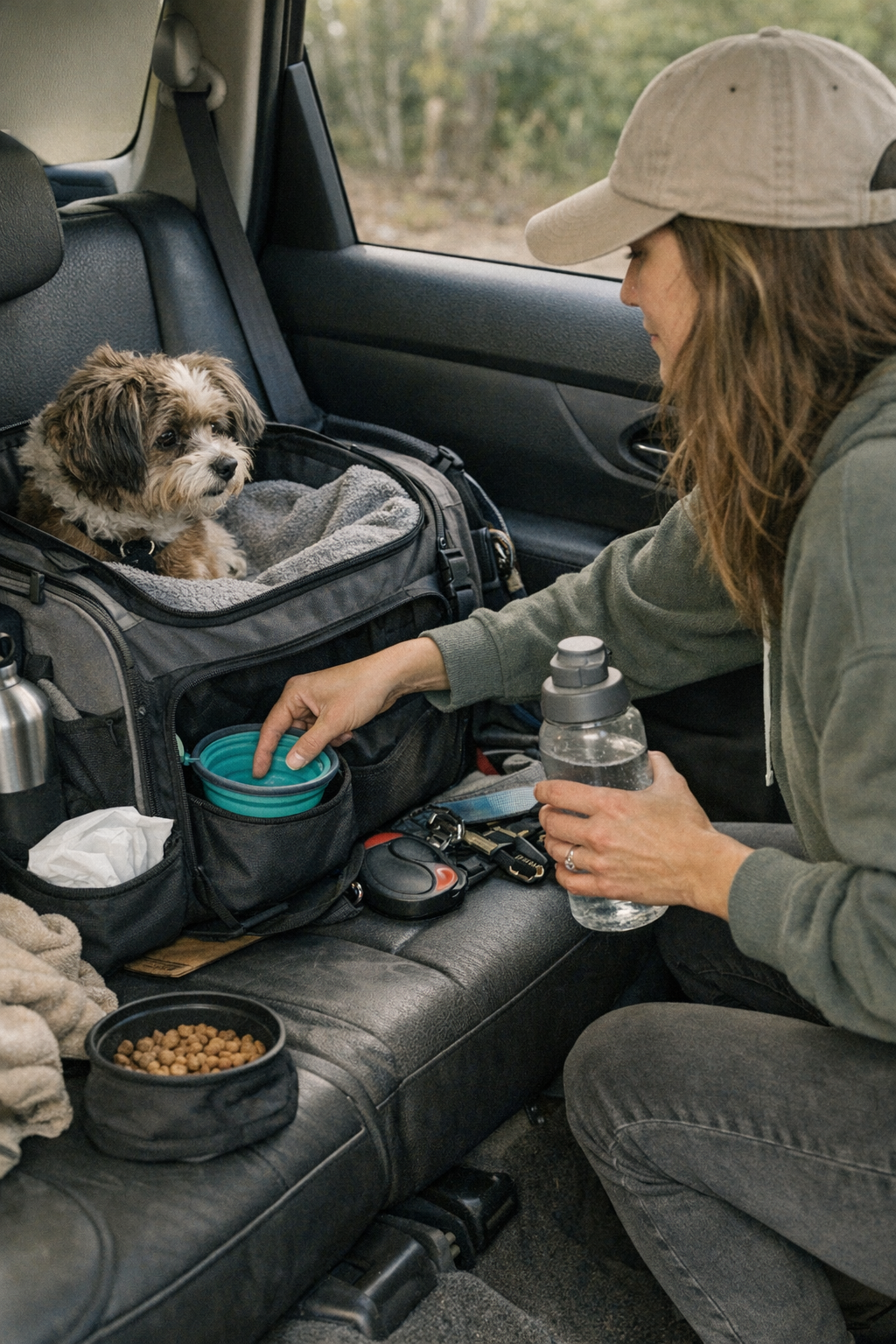
    Every pet travel bag looks ready at home—bowls packed, wipes zipped in, toys filling the gaps. But on real trips with real stops, the “organized” setup turns unsettled fast. The first break is smooth. By the second or third, water breaks turn frantic, wipes hide beneath tangled towels, and every quick need becomes a messy search. Rushed moments leave you juggling leashes, digging past collapsed toys, and steadying a restless dog while half the bag’s contents end up scattered on the car floor. The friction isn’t obvious at first. It builds, trip after trip, stop after ordinary stop, until the time lost and effort spent make a good setup feel like a burden rather than a solution. PawGoTravel lives in these details—where neat packing collides with the reality of repeated, seat-side, on-the-move use.

    The Hidden Friction in “Prepared” Pet Travel Bags

    Home packing makes it easy to trust your careful setup. Water bottle—right pocket. Collapsible bowl—next to the leash. Wipes tucked under the comfort toy. But get out on the road, and the story shifts. Organized compartments turn into obstacles the minute you need something fast—usually at a rest stop with a muddy dog and one free hand. The “everything-in-its-place” feeling fades as repeated stops reveal what’s buried and what’s actually within reach.

    Real scenario: you stop at a busy gas station, leash looped on your wrist, fumble for the water bowl, and realize it’s jammed under a crumpled towel and chew toy. Wipes? Wedged in a tight pouch beneath a bottle you can’t grip one-handed. What started as neat quickly dissolves into reshuffling, with each break adding more chaos. By mid-trip, “organized” means a surface calm hiding a bottom layer of tangled and hard-to-reach essentials. The drag creeps in—not dramatic, but steady, slowing every restart and making even short breaks feel like hurdles.

    Repeat Stops: Where Design Flaws Show Up Fast

    Stopping once may not expose the cracks. Repeated stops—typical on errands, day trips, or leg-stretching breaks—amplify every flaw:

    • Bowl under the leash or towel? You empty half the bag just to get water.
    • Wipes in a sliding pile? By the time you find them, paw prints are deepening on your seat.
    • Toys soothing your pet, but now blocking fast cleanup or hydration.
    • Human items—hand sanitizer, snacks—mixed with pet supplies so thoroughly every compartment becomes a site of crossover mess.

    Every delay feels longer under pressure: wrong zip, awkward reach, or forgetting where you stuck the wipes after last stop. Friction isn’t just the hunt. It’s the repeated reset—the way you have to pause, unpack, and repack in ways that break your travel groove and stretch even simple moments into disruptions.

    Seat-Side Access: Small Change, Big Difference

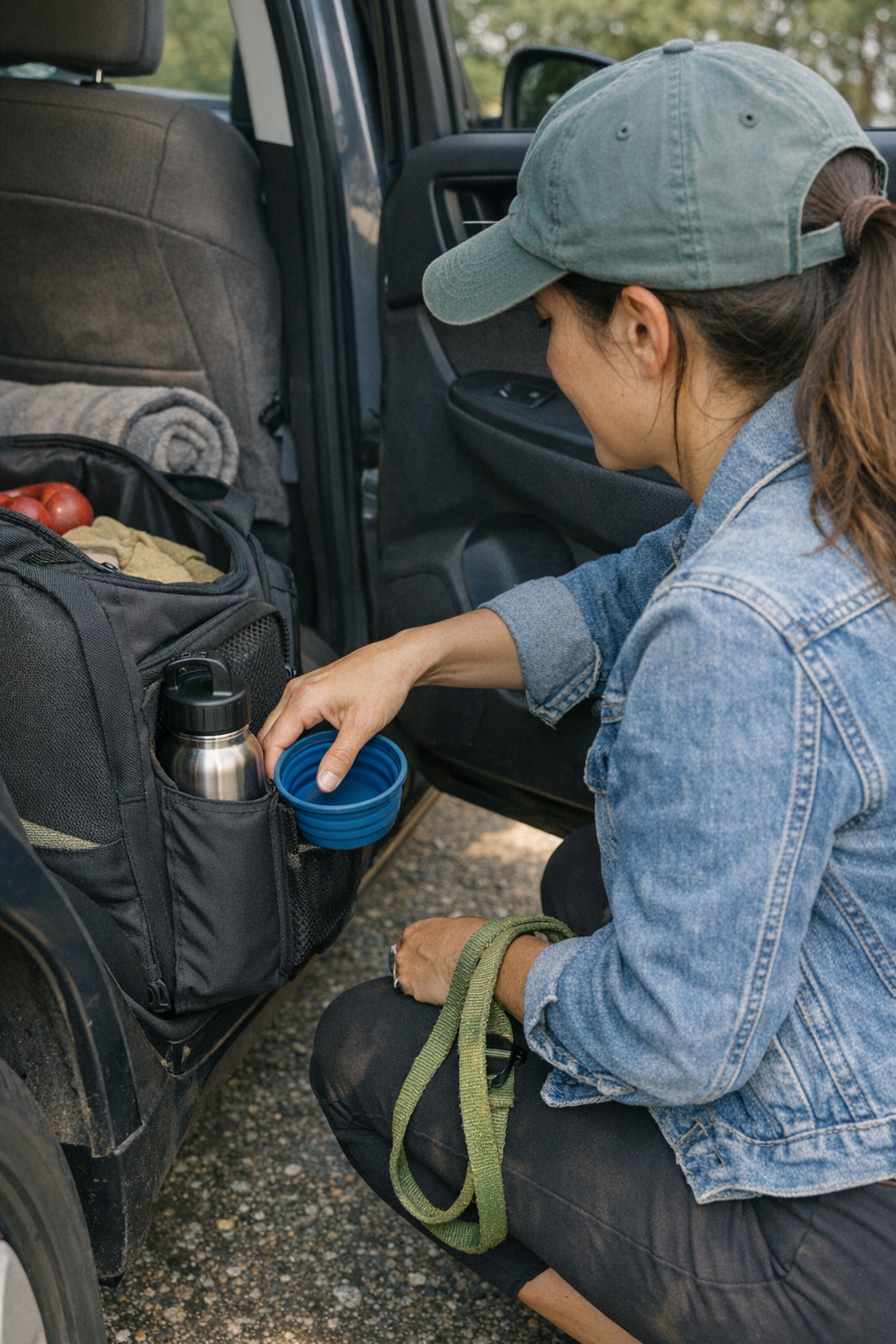
    The difference between controlled chaos and real ease often comes down to where your essentials live. A dedicated, upright seat-side pocket—just large enough for water and a bowl, nothing else—means one-hand access during any pause. Instead of opening a main bag (and risking everything spilling out), a semi-rigid side pocket lets you reach for hydration without disturbing a single toy or wipe. Hands busy with leash? No problem: the gear slides out and back in, so you can serve water and move on without wrestling your setup.

    Concrete example: three short stops in two hours, each with a restless dog and unpredictable needs. With a purposeful seat-side pocket, water breaks don’t require digging; a bowl and bottle unclip in seconds, avoiding drop-zone chaos on the car floor. Main compartment stays zipped. Essentials return to their same spot, so the next stop feels like an extension—not a total restart. The key difference: less interruption, clearer flow, and a pet who spends more time settled, less time waiting while you search the bag for the basics you thought were neatly stored.

    Packing Patterns That Interrupt Your Travel Flow

    The habits that slow you down are the ones that slip in unnoticed:

    • Bowl under toys or tangled leashes: Looks fine when packed but turns chaotic each stop—digging for the bowl topples half your kit.
    • Water gear in interior-only pouches: Keeps things tidy but blocks quick use, leaving you to unstack gear for every simple water break.
    • Cleanup and comfort items mixed together: Overlapping slows retrieval and creates confusion—wipes and toys block each other, especially after multiple stops.

    The first time, it’s tolerable. By the fourth, the repeated rearrangements and search-and-find routine start to feel like the real problem, not the pet.

    Why “Looks Organized” Isn’t the Real Test

    Visual order doesn’t guarantee efficiency on the road. Compartmentalized, color-coded, or neat-looking setups promise ease—but repeated-use reality exposes what’s actually frictionless and what’s just tidy on the surface. True test: can you get water, wipes, and comfort for your pet with one hand, in under a minute, while steadying the leash and watching the door? Dedicated pockets for critical items turn retrieval into a single motion, avoiding multi-layer unpacking and mid-trip frustration. The real gain isn’t a cleaner look; it’s not having to pause, dig, and reset after every stop.

    Small Upgrades, Noticeable Impact

    You don’t always need to swap your whole bag. Sometimes, repacking or moving your hydration kit into a seat-side pouch is enough to end the cycle of digging and delay. When your current layout still trips you after repeated use, that’s the moment to consider a new structure—upright exterior pockets, snap-in carriers, or sectioned organizers designed for quick, one-handed reach.

    Replay your last trip: Where did movement break down? Did a water break stall everything? Were the wipes lost when you actually needed them? These bottlenecks are clues—shifting your setup for separated access, reduced overlap, and single-motion retrieval can shave minutes off routine stops and keep your focus on the journey, not the shuffle.

    When Function Outpaces Form—And Why That Matters

    Travel exposes every hidden flaw—no matter how tidy your bag looks on the couch. Day trips, city errands, and multi-stop travel make the old setup honest. The setups that survive aren’t the neatest at rest; they’re the ones you can actually use on the move, with fewer drop-zones and less frantic searching. Some chaos remains, but friction shrinks: fewer slow-downs, fewer repacking battles, and a more predictable experience for both you and your pet. That’s the difference a smarter travel setup makes after the third, fourth, or eighth stop.

    Explore seat-side and quick-access travel setups designed for real movement at PawGoTravel.

  • Why Your Carry-On Setup Slows You Down at the Airport

    The difference between a carry-on that looks organized in your living room and one that actually keeps up with you at the airport is immediately obvious the first time you fumble for your passport at a checkpoint or get blocked by a tangled charger while the line compresses behind you. Neat cubes, perfectly stacked pouches, color-coordinated pockets—none of it matters if you’re forced to unzip three sections just to find your ID under pressure. That friction isn’t theoretical. It shows up every time airport security lines surge or a boarding gate check returns out of nowhere, revealing the limits of setups that felt flawless at home.

    When an “Organized” Carry-On Slows You Down

    At home, every item feels accounted for, pouches stack precisely, and there’s comfort in seeing a clean packing grid. All of that order falls apart when airport routines demand fast, blind access. The real test comes the moment you dig for headphones as the boarding line inches forward, or you panic-scan your bag for your ID at a checkpoint.

    Layered organizers and stacked cubes feel efficient in theory, but in motion, they become speed bumps. Shared pouches—passport pressed up against device cords—mean repeated untangling. Every access asks you to break the system you hoped would keep you on pace.

    The Real Cost of Overlapping Packing Strategies

    Adding more organizers rarely solves the real problem. Visually, more layers suggest order, but travel exposes their weak points fast. Blocked zippers, tight wedge-pockets, and zippered sections that require a full unpack just to reach lip balm—every snag adds cumulative delay. Grabbing one thing means rearranging three. Under airport pressure or fatigue, each overlap turns into a new obstacle, compounding frustration instead of reducing it.

    On-the-Move Friction: What Actually Happens

    Picture this: You feel ready in the security queue—until the tray lands in front of you. Suddenly, your boarding pass is buried under a hoodie, passport jammed behind your backup battery, and your headphones hooked around a charger pouch. Three zippers now stand between you and the scanner. Structure that holds up when still collapses the moment you start moving.

    Small Delays, Multiplying Stress

    Airports don’t let you pause and reset. You pull out your e-reader in the crowd, toss it back in “for now,” and seconds later, a second security check means diving into a repacked, overstuffed pocket. The main compartment looks undisturbed—inside, you’ve started a cycle of tiny re-shuffles and lopsided cubes. “Organized” surfaces hide the reality: every small retrieval turns into a fresh mini-repack, adding micro-delays and repeating friction that builds as the trip goes on.

    The Problem with All-In-One Outer Pockets

    The slim outer pocket seems built for speed: just drop in everything you’ll need most. But once keys, charger, snacks, boarding pass, and passport start layering, it becomes a pocket of mutual blockage. The third reach-in is usually a mess—cables snag, slim documents disappear behind bulk, and even minimal contents force you to dump the pile just to find a card. Each retrieval gets slower, precision replaced by a scramble while the line waits behind you.

    Finding a Flexible Travel Rhythm

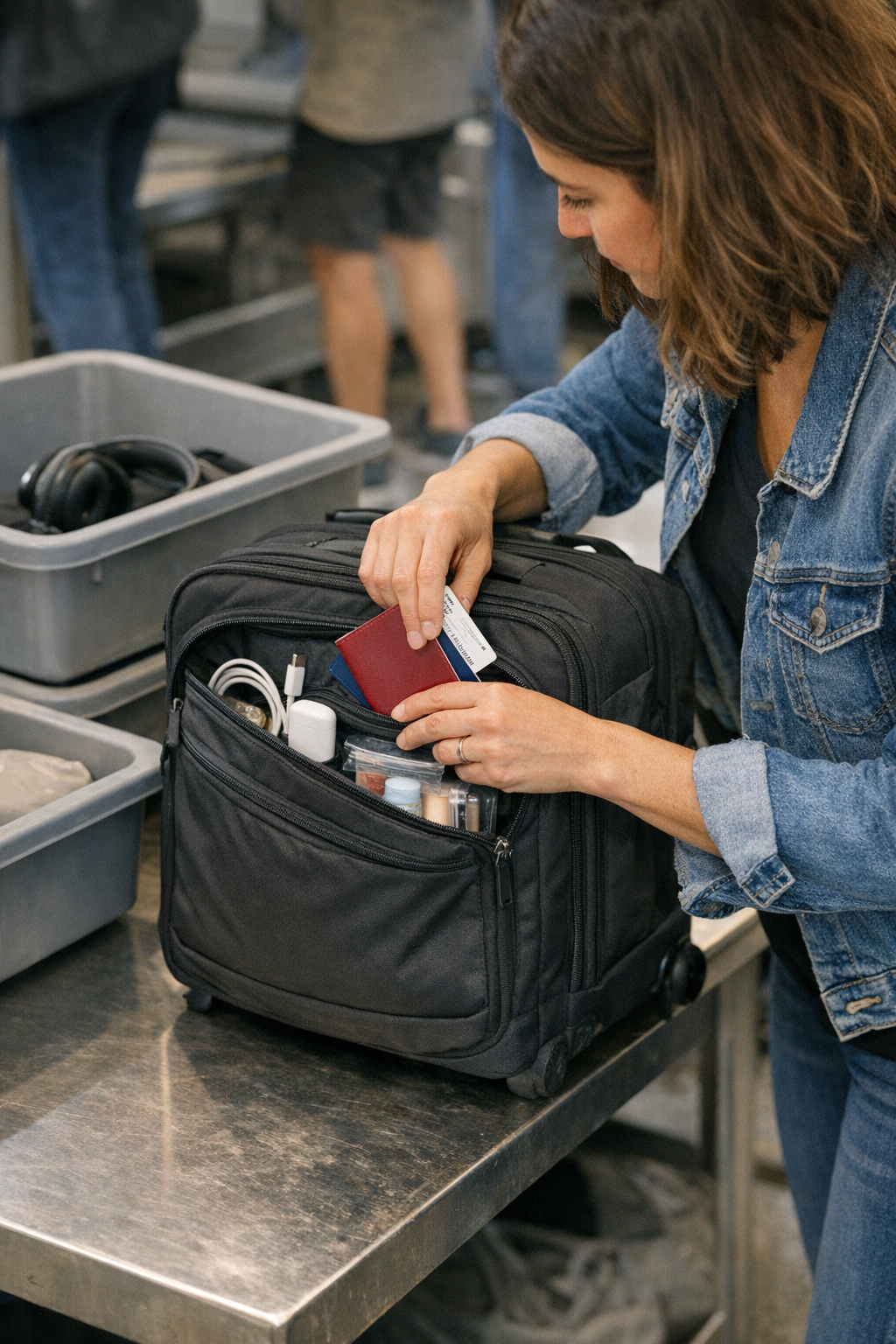
    The solution isn’t tighter cubes or prettier layouts. What consistently works is structural separation—single-purpose pockets for documents, shallow slots for critical items, organizers that let you grab by feel without visual searching or deep unzipping. Dedicate a top-access pocket to your passport and boarding pass, and repeat retrieval becomes mindless. Over a full trip, that’s minutes reclaimed—and tension sidestepped—every time a new checkpoint or gate call appears.

    Retraining Your Hands for Blind Access

    Real carry-on improvement means reaching by touch and returning items to place automatically, not stopping to check that every pouch is zipped or that nothing has collapsed. Once hands know where each essential lives—boarding pass, cable, balm—you recover time and cut stress not by packing “neater,” but by making the movement from item to item uninterrupted, even after hurried handling or turbulence resets your bag’s interior.

    How Quick Fixes Actually Play Out

    • Passport pocketed with device cords? Each document check comes with an untangling break, slowing boarding and triggering a cascade of repacking.
    • Multipurpose pouches holding both documents and comfort items? Retrieval means emptying more than intended—often onto the airport tray, with strangers watching.
    • Compression cubes for everything? Order on the outside, but every in-transit access becomes a slow unzip and repack, bottlenecking movement when you should be stepping forward.

    A Real-World Adjustment That Changed the Flow

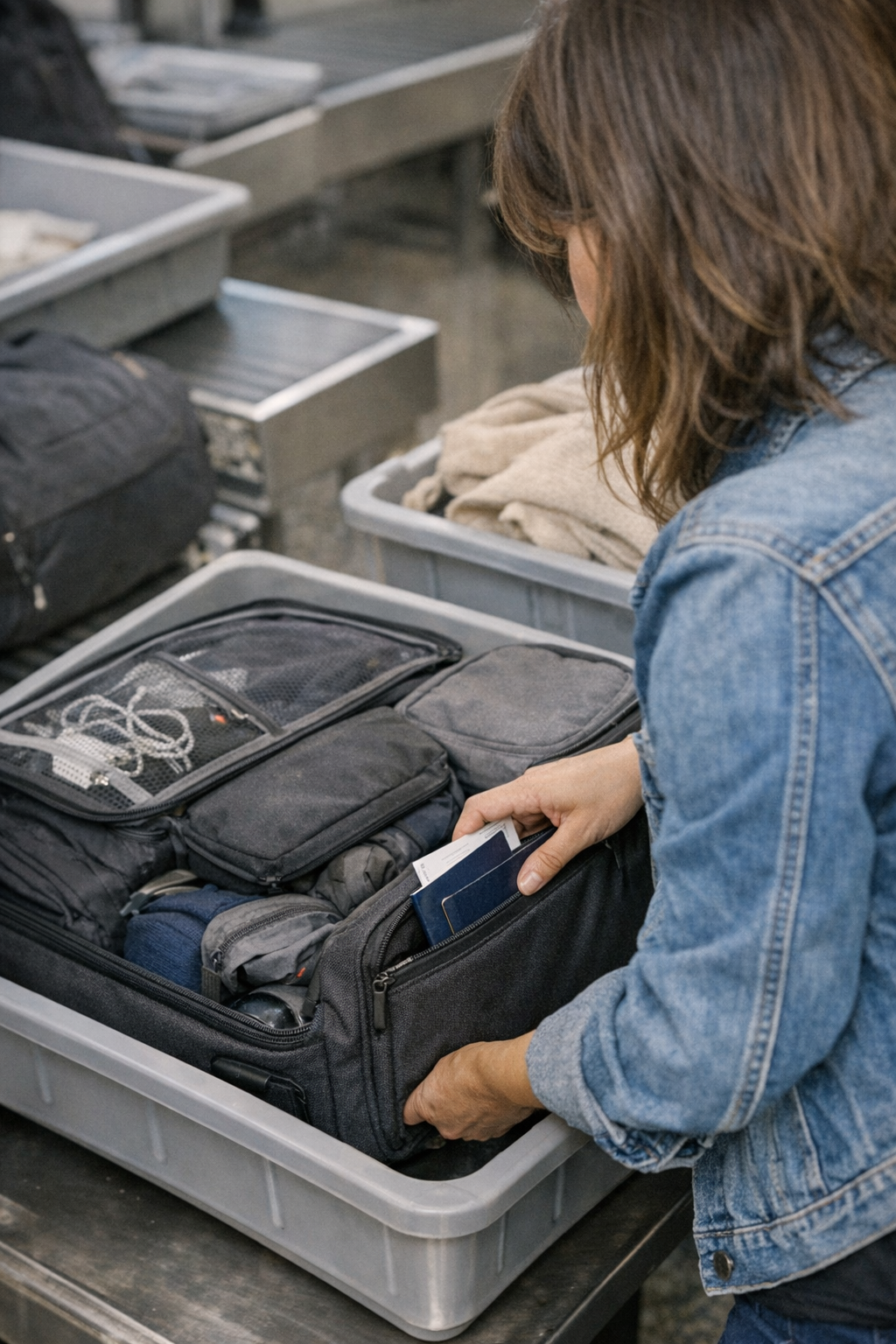
    One practical fix: shifting passport and boarding pass from a deep side pocket to a shallow, top-access zip slot. Instantly, security and boarding drop from repeated unzips to a single motion, and hesitation nearly disappears. Items fall back into place—sometimes without even looking—so even after long hauls and gate changes, you rejoin the flow rather than fall out of step. The drag of lost seconds fades, replaced by a carry-on that quietly keeps pace with you, not against you.

    Repacking Burden: The Hidden Cost of Over-Structuring

    The “perfect” packing system is a false win if it forces full resets after every retrieval. If you’re pausing to realign a collapsed pouch or shuffle misaligned stacks just to restore order, the visual neatness is no comfort. True improvement is a setup that lets items be returned blindly—no visual check, no reset—resuming movement as soon as you’re done, not turning each retrieval into another round of forced organization.

    Practical Takeaways for Smoother Carry-On Travel

    • Designate a document-only pocket. Never pair travel ID, boarding pass, or tickets with cables or comfort items, no matter how orderly it looks.
    • Separate tech, snacks, and comfort by feel, not sight. Use pouches or slots you can access blind—that aren’t buried, blocked, or sharing space with essentials.
    • Reserve cubes and compression for bulk storage. Use them for backup clothing or one-time-access items—not for essentials you need during every transit segment.

    The Real Test: Multiple Airport Cycles

    The real worth of your packing setup isn’t its at-home photo—it’s how you move on your third or fourth airport run, when the same small obstacles start repeating. If the same delays appear every time you reach for a document or try to repack quickly, your system is waving a red flag.

    Category separation and dedicated, shallow-access pockets remove repeated stumbling blocks, replacing performance anxiety with a flow you can trust. When your carry-on lets you move, reach, and reset without interruption, it becomes an extension of your travel, not a source of constant management. Each adjustment that cuts friction turns organization from a static look into real-world function—one airport, one exit row, one tray transfer at a time.

    CarryOnSupply

  • Optimizing Car Flashlight Storage for Quick Access and Safety

    Most car setups fail exactly when you need them most: You’re standing outside your vehicle after a night shift, arms full of groceries, clicking for your keys—only to watch them vanish into the crack between your seats. It’s late, the parking lot is dark, and your flashlight—supposedly “conveniently” stored in your center console—is now unreachable beneath a nest of chargers, tangled cables, and expired hand wipes. This isn’t rare: consoles that look organized in daylight can turn maddening the instant you need fast access. “Clutter” isn’t just a cosmetic problem; it slows you down, raises stress, and leaves you stuck fishing for essentials under pressure. DriveWellSupply knows that real car organization isn’t about looking tidy—it’s about keeping your most important tools ready in the chaos of actual use.

    Why “Organized” Isn’t Always Usable

    Most drivers pack their console, glove box, or door pockets until every inch is filled with “must-haves.” But the difference between visible order and practical access only shows up when something slips out of reach—a wallet, a phone, or especially a flashlight at night. The very systems that look controlled tend to crumble during active use: coins slip over cables, sanitizer bottles roll around, and your flashlight sinks deeper with every errand. Organization that only calms your glance isn’t set up for real retrieval—especially after the first week of new receipts or another charging cable thrown into the mix.

    What the Dark Reveals About Your Setup

    Need a flashlight late at night? That’s when a flawed setup exposes itself. You flick on your dome light and get more shadow than help. Your hand snakes into the console, but wrappers catch, cords slide into the gap, and whatever order you had dissolves as you dig. Every second counts, but each grab triggers another mini avalanche of small gear. The problem repeats in daylight, too: hunting for a lost receipt, reaching for a charger on a crowded school pickup run, or retrieving a dropped toy from under the seat—all spotlight how easy access can vanish behind “order.” If your essentials are buried, you’ve built storage that fails at the moment of need.

    Finding the Hidden Roadblocks

    The signs are there if you look: a sigh before reaching for your flashlight, wrappers hitching a ride, or cords looping around your fingers before you even find what you need. Maybe you break a fingernail digging, or end up dumping half your contents onto the passenger seat. A setup that slows you down—even by a second or two—signals that cosmetic neatness doesn’t translate to actual readiness. If each use brings friction or dread, that’s your cue that your storage system is quietly sabotaging your routine.

    From Neatness to Real Readiness

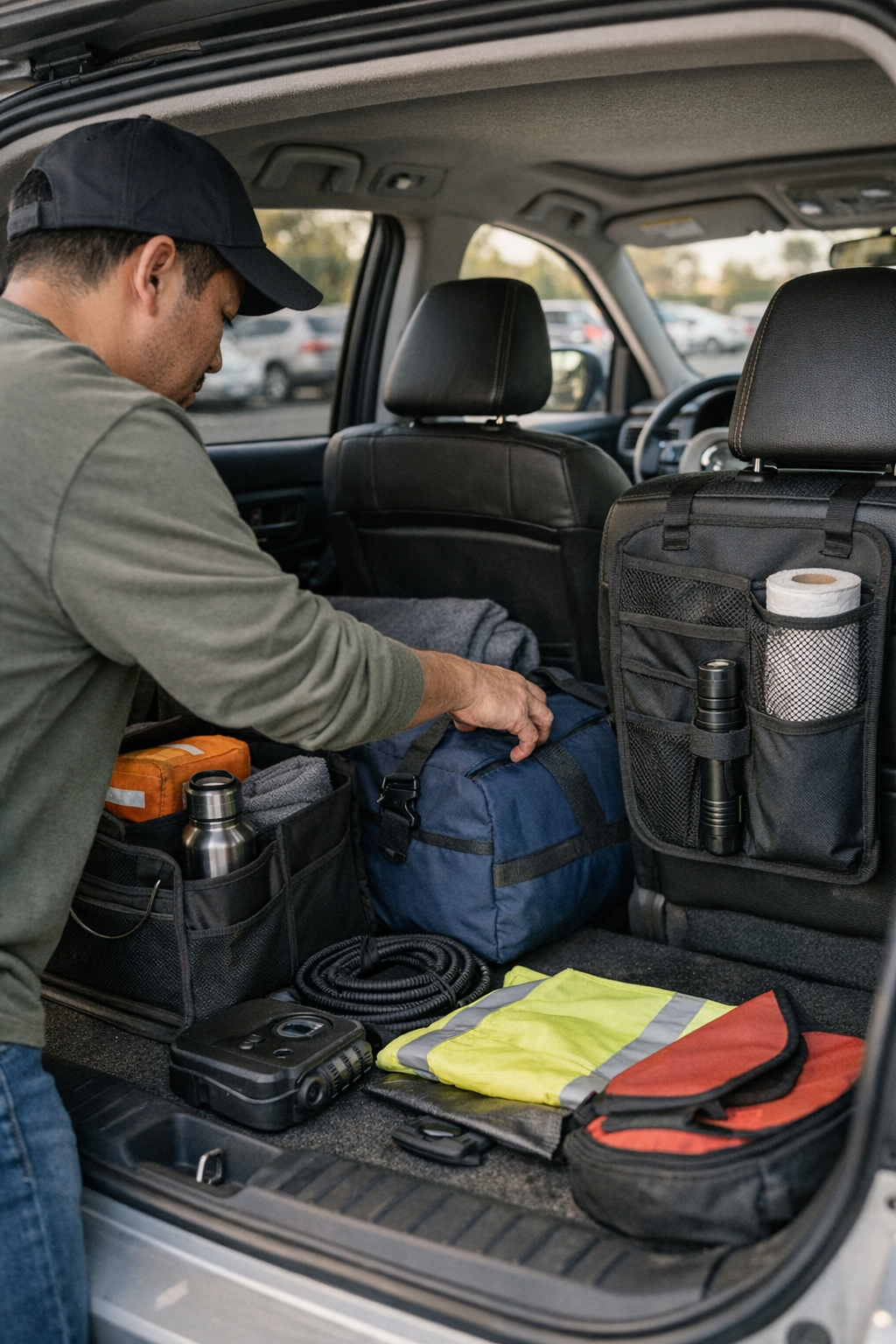
    True car readiness means direct, unobstructed access to what actually matters under pressure. Instead of adding bins or forcing everything into a single catchall, create dedicated paths: mount your flashlight on a seat-back hook, stash it in a side mesh sleeve, or position it within arm’s reach along the driver’s door. That small change flips the real-world test: the next time night falls or your hands are full, your fingers close right around the tool you need—no cable wrestling, no accidental clutter spill, no delay. The purpose of organizing wasn’t to win Instagram; it’s to win those fast, distraction-prone moments when fumbling isn’t an option.

    Streamlining Everyday Reach and Recovery

    Dividing daily tools from random overflow makes every trip—long or short—less of a scavenger hunt. Imagine grabbing your flashlight, charger, or multitool during a last-minute loading dash, and never having to shift three things to reach it. The more your setup insulates essentials from the churn of commuter junk and loose errands, the less effort it takes to reset after a messy day. What starts as easier “emergency access” quietly becomes smoother daily operation: fewer delayed departures, fewer afterthought cleanups, and less temptation to shove everything back in a pile when you’re already tired.

    Where Most Setups Fail—And How to Patch the Gap

    The real cost isn’t just annoyance. If you’re always reorganizing the same bins and trays—stacking paperwork over tools, stuffing loose gear into covered spots—you’re patching symptoms, not structure. The most common mistakes:

    • Storing essentials under layers of “quick access” junk or hiding them in overloaded containers.
    • Letting charging cords, coins, and paper creep over your emergency kit or flashlight, blocking direct reach.
    • Focusing on visual tidiness at the expense of physical pathways, so nighttime (or just rainy-day) retrieval becomes a struggle.

    Instead, reroute the flow: mount your light or vital gear where you can grab without crossing clutter. Choose spaces that are both day-visible and night-reachable—even if that means one less perfectly blank spot. The goal is for access to beat neatness every time.

    Organizing for Actual Driving—Not Just Appearances

    The measure of a solid car setup isn’t in showroom looks, it’s in whether you can act instantly—no rearranging, no fuss—when reality interrupts: a dark lot, sudden spill, roadside issue, or simple case of dropped keys. Can you reach your essentials without making things worse? A system where you never need “recovery time” after using it—that’s the test. If your organization adds steps or leaves you cleaning up after each access, it isn’t designed for real-world pressure. Your car shouldn’t just look calm; it should work with you when the routine fails, not against you.

    Visit DriveWellSupply for practical car storage and real-world driving solutions.

  • How Thoughtful Pet Travel Setup Reduces Stress on Every Stop

    The weak link isn’t what you forget—it’s how many times you have to hunt for it on the move. The downside of most pet-travel setups doesn’t hit the first time you unpack—it’s exposed every time your pet tugs at the leash while you fish for wipes you know you packed “somewhere.” What slows you down isn’t missing gear, but the moments when routines break: leash clipped underneath the water bowl, wipes buried under comfort pouches, both hands full when you need one quick grab. Even a bag that looks ready in your hallway can become a stubborn obstacle in a parking lot, or with a restless pet pacing at the end of your arm. The gap between “organized” and “actually working” starts as a subtle tangle and ends with repeated awkward pauses that drag out travel instead of smoothing it. PawGoTravel’s world starts at that exact moment—when the setup’s supposed strength turns, stop after stop, into friction.

    When “Organized” Isn’t Enough: Where Pet Travel Breaks Down

    The illusion of control fades fast after the first stop. Sleek, compartment-rich bags seem designed to impress, but in real use, order doesn’t always mean access. The problem reveals itself with each motion:

    • Leash trapped under a water bowl when your pet wants out fast
    • Sanitizing wipes sandwiched between snack containers instead of ready at the top
    • Comfort blanket zipped away right when your pet needs a quick calm-down
    • Just the right pouch—locked behind a snap or zipper that costs you seconds every single time

    These aren’t one-off annoyances. With every repeated stop—errands, appointments, or simple walks—each extra motion becomes a hurdle. It’s not a missing supply list, but repeated small delays that add up, with your pet growing impatient while you juggle the same awkward access, again and again.

    Real-Life Mess: Travel Friction in Motion

    Take a typical run of three or four stops. At first, your setup feels solid. But by the second errand, wipes are stuck behind an oddly stiff divider, leash hooks catch on bowl handles, and you’re propping the car door open with your knee while trying to unearth a harness. The deeper into the routine, the more obvious it becomes: every accessory was “organized,” just not for real movement. Contents migrate. Blankets settle in the least accessible place. Critical items seem to hide when you most need them—right as your pet leans, pulls, or starts to fuss.

    Cleanup Delays Cost More Than Time

    One trip: Muddy paws. Wipes, perfectly packed but locked under a snapped flap, require you to wrestle open a stiff closure while balancing both a leash and a dog anxious to bolt. Instead of quick cleanup, you get a fumble—mud wicking up seats and tempers running thinner. The bag’s order kept things “safe,” but safety costs you in minutes lost, stress added, and cleanup made longer by each layer protecting what you can’t reach.

    The Comfort Setup Backfires

    Comfort items are supposed to settle your pet. But when a comfort blanket rides at the bottom, you scramble and repack mid-trip, trying not to spill treats everywhere or crush a toy. In theory, the setup is organized; in motion, it’s an unpacking puzzle just to calm a nervous animal. The most calming item comes last—when you need it fastest.

    Surface Order, Underlying Strain: Structure vs. Use

    “Organized” setups focus on initial packing—a satisfying, camera-ready moment that’s over as soon as you start moving. The stress test comes with repeated reach and return: quick stops, seat-side pauses, real cleanup. Does your bag try to stay beautiful, or does it keep you moving through mess and repeat interruptions? If you have to dig, unclip, or dig again—even for essentials—the structure isn’t working. With each barrier between you and a needed item, the bag goes from protector to obstacle, slowing restarts, stacking tension with every interruption.

    Designing for Real Flow, Not Just Looks

    More pockets don’t fix slowdowns—rethinking which pocket you use does. Owners who’ve felt the drag shift strategies: bowls in open side pouches, wipes no deeper than the main opening, blanket on top—always. Access frequency trumps symmetry or packing logic. The payoff shows up fast: after a puddle or muddy walk, you reach once, not three times. Mud gets wiped, the dog calms down, and you keep moving without a reset drill.

    Action-First Zones Make the Real Difference

    Where things live in your setup matters—especially seat-side, where the first seconds count. One-handed flaps, open pockets, or a dedicated “always grab” spot for water or wipes remove seconds of fumbling each time. Owners sometimes break up even a beautiful carrier’s order on purpose, just to keep two highest-need items in chaos-proof reach. It’s less about maximizing space and more about minimizing restart friction. Leaving “empty” space next to main pockets isn’t wasted; it’s an investment in faster motion—and less frustration for both traveler and pet.

    Why Problems Sneak Back: Old Habits, Slow Setups

    Even if you fix your structure once, “visual tidy” habits try to return. The Monday bag, re-optimized for real stops, feels sluggish again by Friday if every item finds its “perfect” slot but loses flow. Real progress isn’t how good your bag looks at setup—it’s whether you can finish stop four without the old fumble. Watch for these warning signs:

    • Needing to open the same pocket far too often for different essentials
    • Pet grows more restless at each pause—a signal of slow routines
    • Cleanup items hidden away so they always require two hands (never available for a quick wipe)
    • Owner keys, phones, or snacks overlapping pet supplies—each grab rearranges something else

    Practical Shifts: Rethink, Rearrange, Reduce Friction

    You don’t need a new bag—change what goes where. Begin by:

    • Pinpointing items you reach for every stop—make these move up and out
    • Keeping at least one pocket always open or hand-width accessible
    • Putting comfort and cleanup tools on top, not at the bottom, for high-urgency stops
    • Avoiding matryoshka-style nesting—no hiding top needs under infrequent ones
    • Leaving space at the main opening, so function wins over visual order

    A setup that holds up to real movement isn’t finished when the bag is zipped—it’s proven when you can handle three back-to-back stops with fewer pauses, faster resets, and less pet impatience. Every repeated use uncovers whether your “organizing” is for comfort or speed. Flow comes from action-aligned structure, not just clever packing.

    Friction vs. Flow: What Hits First, What Lasts

    The best pet-travel setup isn’t the one that photographs well after packing. It’s the one that, halfway through a messy day, actually lets you grab, clean, and reset without a multi-step reshuffle. Real improvement shows when restart time drops on the third and fourth stop—not when you first step out. Structure that works holds steady under repeat, not just in theory. That’s the difference between just containing chaos and actually keeping pace with your pet—all trip long.

    Explore real-world pet travel solutions at PawGoTravel

  • Why Hidden Car Storage Creates Daily Frustration and How to Fix It

    You know your car’s “clean” setup is failing the moment you reach for your charger, phone, or sanitizer—and your hand lands on empty plastic, tangled cords, or a bottle that’s somehow migrated away from its spot. The floor looks neat, but every grab becomes a small hassle. The real frustration of car organization isn’t a visible mess—it’s the seconds lost fumbling for essentials that should be ready at hand, especially when you’re in a rush to re-enter, load, or get moving again. On paper, your interior might show order. In daily use, those split-second delays multiply: the phone slides behind the seat after one corner, chargers coil around the cupholder, or keys drift under a footwell tote. Every extra second spent digging, tugging, or kneeling yanks you out of rhythm and saps the payoff of that “organized” look. If a setup can’t keep pace with repeated, rushed routines, “tidy” is just friction with a cover on it.

    When Orderly Looks Still Mean Awkward Reach

    Most car organization hacks focus on hiding things: stashing clutter in bins, threading cables through pockets, parking your gear in deep compartments. Visually, it works—until the first busy errand loop. You walk back after a quick stop, expecting flow: in, out, toss, grab, repeat. Instead, a bag has drifted into the console space, cables have twisted themselves out of reach, and your phone sits somewhere weirdly behind your seat instead of in its intended spot.

    “Orderly” setups tend to fail in routine motion. After even a fast grocery stop, you’re fishing for your wallet in a sliding bag, or kneeling to recover a charger that slipped beneath the edge. The surface stays neat, but your access gets more awkward, posture shifts, focus breaks. Stack in school pickups or baggage shuffles, and every re-entry becomes a quick scan for where things have escaped to this time. The setup doesn’t collapse, but it never quite cooperates with your actual flow.

    Hidden Friction in Repeated Use

    Every “little” inconvenience—digging for your phone, untangling a cable, having to move a bag to reach sanitizer—might fade into the background on its own. But day after day, the cost builds up. A design that keeps your charger one drawer deeper for tidiness, or routes your cables under seats to banish clutter, soon reveals its weak points. You notice it most in:

    • Back-to-back errands, where reaching for essentials means encountering something shifted or blocked nearly every time you park.
    • Coming back after school, work, or a pet run—when sanitizer, sunglasses, and receipts have all found ways to pile into the same tight spot you need first.
    • Quick departures, when what should be an instant grab becomes a five-second lunge because sanitizer is hidden behind another bag, or your cable’s suddenly gone limp and tangled.

    After each trip, some items return to the wrong places. You end up spending more time than expected on repeated micro-cleanups—just to keep what should be “fixed” in place. An organizer that looked promising now asks for a daily reset just to maintain that controlled appearance. Visual calm, but practical drag.

    The Loop of Fixing and Re-Fixing

    You adjust: stash chargers deeper, corral loose gear in door pockets, coil wires, pack away the messy-looking lanyards. It removes surface clutter, but every access takes longer. The routine shifts from “grab and go” to “unwrap, uncoil, extract, reposition.” You end up crouched beside the seat fishing out sanitizer for the third day in a row, or tugging a cord around the seat base because it always escapes with motion. What hides mess now builds in more steps, turning each drive into a slow-motion fix-up—proof that surface neatness, without matching real access habits, bakes friction right back into your week.

    Spotting the Clues: Your Setup is Slowing You Down

    Look for these unmistakable signals:

    • Repeat “search and rescue” grabs. If you move something else to reach the same item twice a week, your setup is collecting friction.
    • Frequently used gear journeys out of reach. Phones, keys, sanitizer, or toll tags that shift after routine stops are clearly missing a fixed anchor or tray—and a bin won’t fix what keeps moving.
    • Organizers look right—until used. Closed bins or hidden pockets stay neat only if you rarely touch them. If every school run or errand means opening, digging, or resetting, you’re losing time where it matters most: everyday access, not storage display.

    These aren’t just tiny delays. They chip away at focus and add tension—turning driving into a repeating obstacle course of item retrieval and reorganization instead of straightforward motion.

    Making Small Shifts for a Major Difference

    The difference between a setup that actually works and one that just looks “done” is ruthless practicality. The best car layouts give essentials a fixed, fast-access point that stands up to repeated jostling and hurried routines. Example: Skip burying your charger in a closed console—use a shallow tray so cables take a simple, direct path, always in easy reach, never balled up or buried. Mount your phone where it’s stable and “findable” after rough braking or sharp turns—staying visible and ready, call after call, with zero drift.

    Give sanitizer and keys permanent homes—a door tray, or a slim organizer locked between the seats—and quit rerouting your own reach dozens of times a week. Even moving a cable from a tangling gap to a fixed guide cuts down the invisible chore of repeated untangling. The point isn’t a sleeker look—it’s killing the cycle of small slowdowns so your routines finally fit your car instead of fighting it.

    From “Looks Good” to “Works Every Time”

    Success isn’t a pretty finish. It’s an interior you can actually use—single-motion reach, secure essentials, access that survives backseat chaos, fast parking, and real-world hurry. If every routine errand means slowing down to dig, open, reset, or rescue gear, your “order” is working against you. True improvement means open trays for frequent-grab gear, cable guides that keep reach instant, and organizers that stay stable—so car time is just drive and go, not constant management.

    The visible difference: A setup aligned with real use—open organizers where you need them, cable anchors where reach doesn’t snag, trays that stay put—shrinks cleanup, restores habits, and lets your car work with you instead of demanding attention in every stop-and-go.

    Want car organization that lasts beyond the first clean-out? See practical gear built for real driving routines at DriveWellSupply.

  • Why Carry-On Organization Often Fails During Real Travel Movement

    The “perfectly organized” carry-on can fail you at exactly the wrong time. At home or in your hotel room, every pocket and pouch seems ideal—everything zipped, visually quiet, feeling sorted. That illusion breaks within hours of real airport movement. The minute you rush for your boarding pass, headphones, or charger (the item you thought you made easy to find), you meet resistance: overlapping pouches, layered organizers, zip paths that jam when you’re in a hurry. What looked calm and controlled in private becomes a series of blocks as pressure builds. That’s the part that most neat-packing advice ignores.

    When “neat” packing collides with real airport movement

    A bag that looks excellent on a tidy floor can turn instantly frustrating in airport reality. You step into security—already in a line, bags nudging forward—and you need to pull devices and liquids fast. Suddenly, your “organized” tech pouch is under two other containers, and the single zip you’d visualized opening is now a chain reaction. Every retrieval or return means shifting a wallet, stacking a pen case somewhere, propping open a half-zipped section just to get that one cable out. Friction mounts fast, and by the time you grab what you need, your main compartment is a jumble, and people behind start shifting weight. The gap between packing pride and in-transit function is nowhere more obvious than at checkpoint trays.

    The hidden cost of “too tidy” setups

    Packing with layers—pouches, stacks, meticulously separated categories—promises control but rarely survives more than two or three flow interruptions. Imagine: security staff waves for “electronics out,” you go in for your charger, but it’s under toiletries, under a passport wallet. Remove, prop, balance, try not to drop anything. Moments later your earlier structure is gone; every item put back now feels less certain. Repeat this process for gate checks and sudden document verifications, and the “ideal” setup reveals itself as a slow-motion obstacle course.

    Repeated tension at the wrong time

    The first time it happens, you shrug it off. By the fourth, each small retrieval (passport, phone, earphones) is a hassle—awkwardly stacked in your palm, bag refusing to close, movement bottlenecked in the aisle. Every repetition is a micro delay that adds up over a long trip: slower through lines, more stressed during repack, always a nagging sense that your cool setup can’t keep up once you’re moving for real. Travel drag isn’t theoretical; it’s a slow erosion you feel in every repeated access moment.

    The tipping point: When access beats aesthetics

    Carry-on performance gets exposed in motion, not in the first satisfied glance after packing. A setup can look pristine, but if it blocks you in three separate steps every time you need something, it’s hurting you. The root friction? Organizer overload. Popular packing advice pushes stacking, nesting, maximizing every interior wall. But “perfect visual order” turns obsolete the minute you need speed, reach, or single-handed retrieval. When airport routines repeat, the difference stops being subtle—it’s what slows you down, or lets you move on.

    Why repeated use exposes packing weaknesses

    The decline sneaks up: a bag that survived the hotel lobby falls short at each checkpoint. Tightly nested pouches, deep dividers—smart at first—become a gridlock as you hunt for that same cable, document, or pill bottle over and over. Every time you set the bag down, the retrieval gets slower. The system that felt “done” at packing gets messier and less dependable with use, not more.

    The most common friction point: essentials—documents, chargers, headphones—buried under layers instead of placed up front. The smoothness you expected at packing becomes repeated interruptions, just when your attention is split between lines, trays, and crowds. The difference isn’t minor. It’s the pinch you feel at the worst possible moment, reminding you that calm-looking doesn’t mean efficiently usable.

    Security trays and boarding lines: The real-world test

    No setup hides in a security line. Guards bark for electronics, trays fill, and now you’re juggling two pouches, a document holder, and a half-zipped main compartment—all on display, under a time crunch. Even a rationally-packed bag can fail here if essentials aren’t “grab and go” accessible; fighting with layers or blocked pockets creates drag for you and everyone within arm’s reach. The day’s pace gets defined not by how organized your bag looks, but by how unblocked (or blocked) your movement becomes in these pressured routines.

    A setup that looks right, but works wrong

    The room for error is real. Bag looks smart on the bed, then doesn’t cooperate when wedged beneath a seat or hoisted above into an overhead bin. Every time you fumble for tickets, cables, or IDs, you unspool the structure you started with. That’s the memory you take from the flight—not the initial neatness, but the repeated hassle of getting what you need without the bag fighting back.

    Small changes, big impact: Resetting the pocket routine

    The breakthrough pattern? Single-move front-pocket access. Field-tested: high-frequency items—passport, charger, headphones, pill bottle—move to one outer pocket, strictly reserved. No more unlocking three pouches or reopening the main lid every time security, boarding, or mid-aisle motion demands speed. A simple slide along the front zipper, and you have what’s needed—minimal disruption, no impromptu restacking sessions.

    This isn’t anti-organization. It’s recognizing that over-layering trades future flow for first-glance calm. The most workable carry-on setups put fast-use items in “live zones”—not buried for symmetry, but staged for retrieval. It may look a touch less curated, but in the escalation of actual travel, having reliable access is everything. The payoff shows up the moment a security tray approaches unexpectedly or the plane boards out of sequence—you grab, reset, and move, not juggle and re-pack as everyone pushes past.

    Real-life movement: The difference you feel

    Try picturing an airport transfer: you close the overhead, race down the concourse, get flagged for a random ID check. With essentials staged up front, you don’t break your stride: one pocket, one motion, it’s done. Without that, you’re by the seating area, unzipping, unstacking, trying to keep inserts from dropping. The difference in stress and time is small per access—but becomes the key advantage the more cycles you repeat in three terminals, two checkpoints, and a return journey.

    What to avoid: Packing traps in repeat use

    • Too many nested pouches: Every extra pouch means another round of searching and shuffling—retrieval turns into a multi-step routine.
    • Hiding essentials for appearance’s sake: When go-to items are placed deep for “clean lines,” finding them just creates more chaos when under pressure.
    • Wasting outer pockets on overflow: Resist stuffing these with leftovers; reserve them for crucial, fastest-turnover gear and nothing else.

    The urge to keep things visually flawless runs deep—but travel doesn’t reward it. The setups that survive repeated security and boarding aren’t the ones that hold their tidy look, but the ones that reduce the cycle time and stress for every new check, scan, or sudden repack. In the end, order that interrupts you is just another drag. Make your bag hand control back to you, not just give you a surface-level sense of calm.

    Explore practical, tested carry-on tools and organizers designed for real travel movement at CarryOnSupply.

  • How Smart Pet Travel Gear Keeps Your Gate Seat Organized and Stress-Free

    Most pet travel bags never fail at first glance—it’s after your second or third stop that the frustration starts showing: wipes buried beneath the leash, bowls sliding under blankets, toys fusing into one clump at the bottom. At the curb, everything looks “ready”; but the moment you need access in hurry—reaching from your seat at the gate or during a quick pause—it’s a forced shuffle. You aren’t tripping over drama, just a repeated loop of blockages, hidden essentials, and one more repack because the item you need is never in hand when you need it. A pet carrier or travel bag that stays neat during the first ten minutes almost always unravels after a few seat cycles. The weakness isn’t mess—it’s how small delays stack into distraction right when timing matters most. The PawGoTravel world starts where the real friction begins.

    From Neat Start to Real-World Friction

    The smooth, organized setup at home doesn’t survive the first layover. Bowls migrate beneath the blanket after one jostle. Wipes wedge under a spare leash. You reach for the leash, but it drags half the setup with it—a toy in tow, bowl off-balance, wipes lost. Every trip back to your bag feels less like travel flow and more like damage control. It’s not about dramatic errors, just an ongoing bleed of seconds and energy that repeats at every pause. Each shuffle under a seat, each dig through intersecting items, is time stripped away from the confidence your carrier or bag promised at the start.

    Every Reach Adds Up

    It’s rarely your first reach that slows you—it’s every reach after. Once, twice, then the routine bites: wrong pocket, wipes out of easy line-of-sight, bowl under layers, a comfort toy blocking the quickest grab. These tiny slowdowns crowd the routine until searching, re-folding, and deep digging become normal. Suddenly, the travel bag’s tidy looks give way to the real test: how many seconds you lose the fourth time through. If you notice your focus drifting from your actual trip to fighting with structure, shutdowns aren’t far behind—especially with a moving boarding line or a pet that senses your frustration.

    The Anatomy of Seat-Side Slowdown

    Gate waits and seat-side sprints rarely break down all at once—they erode through repeat friction. A bag with “enough” pockets doesn’t mean what you need is where your hand expects. Common diagnostic signals appear within minutes:

    • Bullseye: reaching for a treat or chew, but first untangling it from wipes and leashes
    • Going for the water bowl, only to uncover it from under calming toys or a spare blanket
    • Creating a spill by over-digging for wipes at the bottom layer
    • Rush cleanup—only to be slowed by pocket order when boarding is called

    The stress is cumulative: every restart, every shuffle, every forced search exposes which parts of the bag’s design make your travel slower and less predictable as time goes on.

    Visual Order vs. Functional Access

    A travel bag that “looks” ready on departure betrays you when the cycle turns: hiding essentials deep behind zipped dividers or nesting high-use items in show-off pockets makes every repeated grab heavier. The flaw is sneaky—the separation you set up at home collapses when you actually move. After three or four cycles, all the clean edges vanish and the routine defaults to digging, re-packing, and re-aligning. The visible test comes not from first impressions but from the fifth actual reach. If the structure can’t keep wipes, bowls, or treats accessible under pressure, the display order is worthless, and the cost hits your pace every single time you stop, start, and try again.

    The Gate Wait: Real Noise, Real Repetition

    Typical scenario: you’re at your gate, pet anxious, bag beside you. First break? No sweat—everything’s primed. Second and third? The wipes and leash tangle, the blanket swallows the bowl, and every attempt to correct makes things less streamlined. When boarding ramps up, the “just-in-case” order you built falls apart mid-motion. Real movement—pet squirming, your hand searching—forces items to overlap, slip, or jam together. Attempting a fast cleanup or grabbing a chew means negotiating a crowd of your own supplies instead of a clean handoff. Every attempt to restore control is another tiny reset—and after a few rounds, you’re battling your setup more than the travel itself.

    Simple Interruptions Multiply

    The true cost of a flat-structured or generic organizer isn’t mess, but repeated drag: leash blocks wipes, snacks block leash, and comfort items migrate to the furthest corner every time you fumble. There’s rarely a crisis—but a genuine cycle of annoyance, especially once you need both hands or quick decision speed, and your gear throws up a new block each time you try to catch back up to the routine. If the setup can’t deliver fast access under basic seat-side pressure, even calm moments can turn tense and distract from the travel experience itself.

    Choices That Reveal Their Value—After the Fifth Reach

    Some pet travel bags look perfect at rest, but their real value—or failure—shows only after repeated, live use. What sets apart the setups that survive multiple cycles from those that break down?

    Why Lateral Pockets Change the Routine

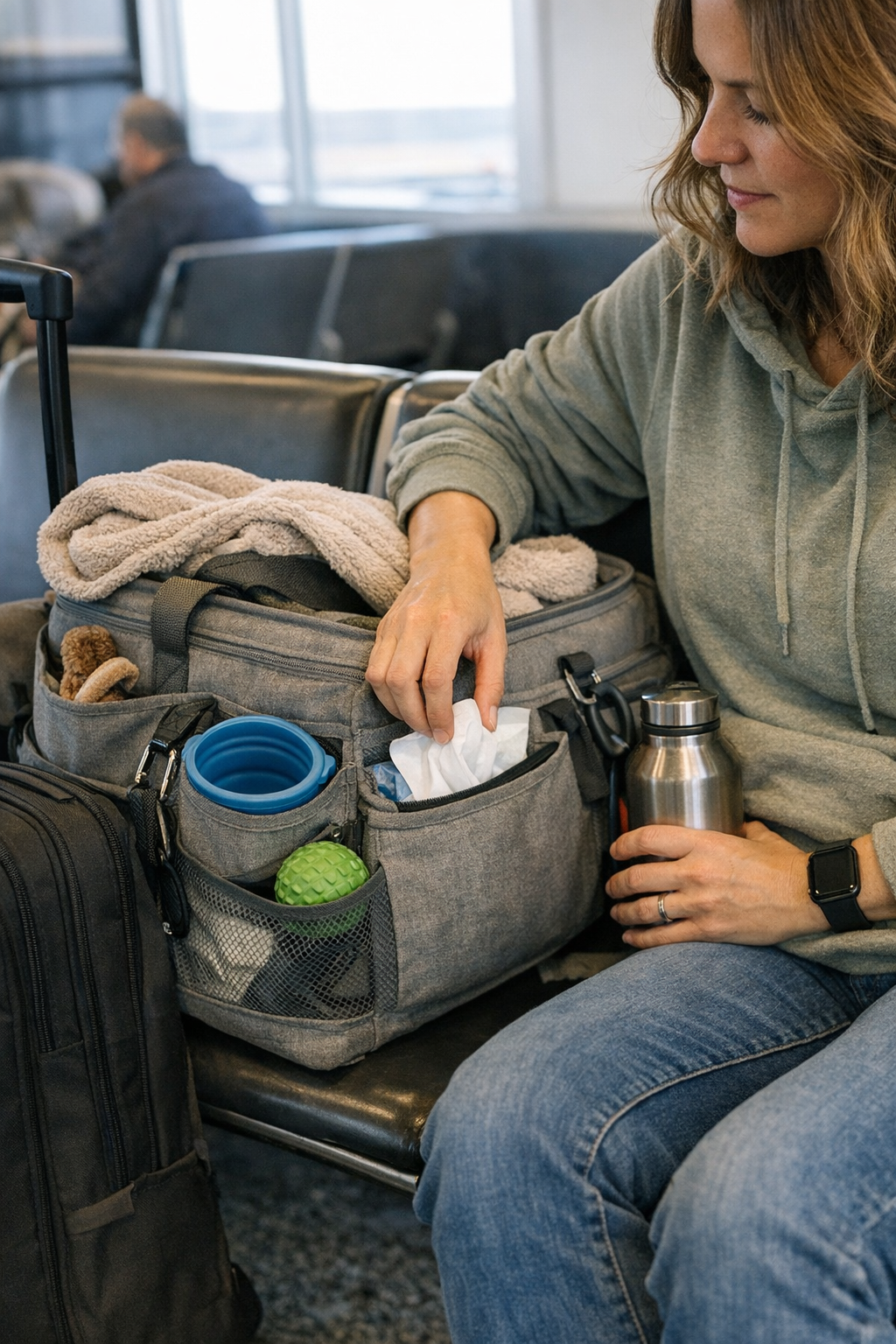
    Flatter, exterior side pockets won’t win a display contest, but grabbing a bowl or wipes shouldn’t require a wrestling match with the entire bag. After real movement, you want items that can be pulled in a single motion. Side-access for wipes means you’ll actually clean up right when you need to; bowls that slide in and out externally don’t end up trapped under everything else. The advantage: you get to act, not pause, even as the rest of the kit keeps shifting with movement.

    External Loops and Real-World Flow

    Leashes run wild when left inside the main bag, tangling around toys and blankets. Moving the leash to an outer loop or clip pares down the repeated drama; the bag looks less zipped-up, but with tension gone, resetting becomes a simple, single movement—not another tangle to undo. These small, external features do more than organize—they disrupt the cycle that usually grinds down your routine.

    How Small Changes Defuse Repeated Stress

    Upgrading from a generic bag to one with actual outside access for wipes and waste bags flips the cleanup routine: no more full unzips, just a quick hand pull. A bowl pocket right at your seat means water is always a second away, no awkward extraction required. Tie-on toys or clipped comfort items finally keep your pet calm without requiring a teardown of your whole setup. Each structural fix isn’t a one-off—they reduce the repeated, stacking stresses that strip minutes from every delay, gate wait, or boarding reset.

    It’s About Handling, Not Just Holding

    A week of travel quickly proves: you don’t need more pockets, you need pockets that survive repeated demands. The right structural detail keeps high-use items ready after four reach-reset cycles, not just at the start of the trip. The result: your seat-side spot remains operational rather than ornamental, with less reshuffling and more immediate action. The difference is visible—a setup built for handling, not displaying, will outlast every minor crisis and keep you and your pet on pace no matter how often routines restart before boarding actually begins.

    What Keeps a Seat-Side Spot Usable?

    The real standard for a functional pet-travel setup isn’t how much it can pack, but whether you can reliably grab your essentials—wipes, bowl, calming chews—after a half-dozen interruptions. Look for organizers with multiple, truly external access points for in-and-out items. Keep high-churn supplies clipped or pocketed outside, saving deep storage for things rarely needed. A dedicated wipe or waste-bag sleeve right at hand is the single most effective way to avoid stop-down chaos. With these changes, restarts shrink from events to non-issues, and the stress of every wait or seat-shift drops noticeably.

    The difference between a seat that stays yours and a setup that keeps betraying you is structure built for real cycles—not just a tidy loadout. A few well-placed access points and a layout designed for live handling—not pretty order—change every airport wait, seat shift, and on-the-go repack into something that works. When your most-used items remain easy to reach through four, five, even six cycles, your travel routine keeps moving, the pressure eases, and travel with your pet stops feeling like a slow leak of seconds you never get back.

    Shop all practical pet-travel arrangements and gear at PawGoTravel