
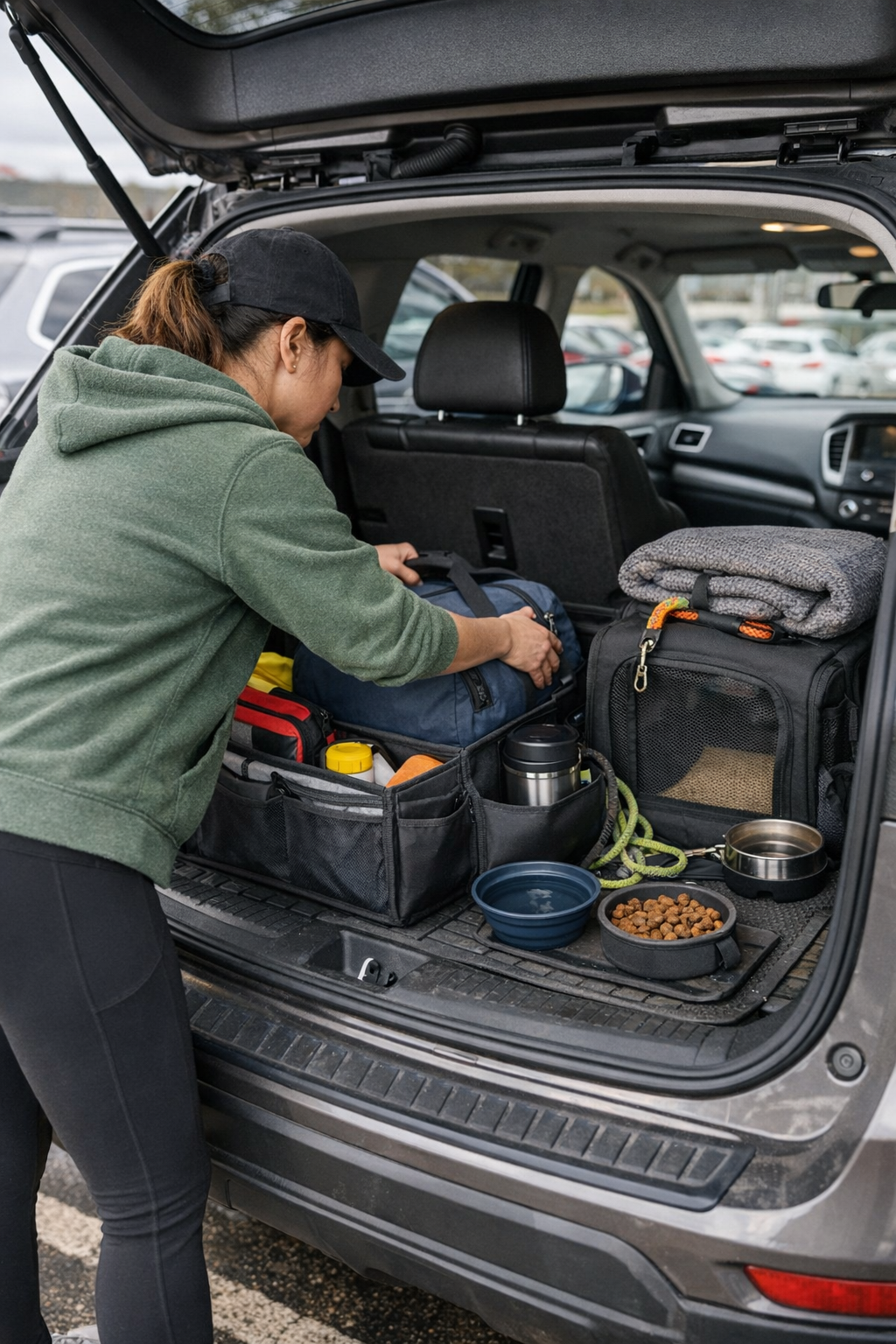
A tidy car doesn’t guarantee a smooth routine. If you’re constantly re-adjusting phone chargers, unsticking tangled cables, or rescuing gear wedged in odd places—even when your interior looks “organized”—the real problem isn’t clutter. It’s setup friction that keeps tripping you up where speed and flow matter most: re-entry, quick stops, commutes, or the scramble between errands. What looks streamlined at rest often unravels the second your day accelerates, revealing every weak point in your supposed “system.”
When “Organized” Still Means Repeated Frustration
Visual calm hides real-world chaos. You get out after a short drive and the space checks out: surfaces clear, pockets filled, nothing rolling beneath the seats. Yet as soon as you’re in motion, the same trouble re-emerges. Feet catch on a charger cable that’s drifted below the pedals again. Water bottles you nestled in a side pocket now block a quick grab for your work bag. That emergency kit you stashed for safety? It shifts just enough each turn to snag jackets or trip up morning routines.
The surface tells one story; repeated use tells another. On a single trip, the order holds. But run two errands, cycle through a grocery pickup, and you’re fixing the same interruptions: dragging a mount cable out of the footwell, shifting organizers that wedge the door, or re-tucking a loose mat blocking your seat track. These friction points are not accidents; they’re built into setups that prioritize initial appearance over actual movement and return flow.
How Small Setup Choices Become Big Repeated Hassles
Overlapping zones cause compounded hassle. Phone charging leads sneak through cup holders. Bulkier center trays serve as both dump-spaces and makeshift phone stands—until you accelerate, and everything inside shifts to the wrong corner or exposes a charger cord in the pedal well. Mats look secure in the morning but ride up or curl at the edges after a fast park-and-go. You reach blindly for an ice scraper only to run your hand past empty snack wrappers and wipes because the organizer collapses inward or overflows sideways.
These are not one-off mistakes. When the pressure rises—kids to school, groceries to haul, calls to take—weak spots repeat at the worst time. Your phone is charging but out of reach behind a swaying cable; your bag wedges under a sliding seat protector, adding those seconds of fumbling. Every trip repeats the cycle: fix, reset, move—never truly “solved.”
Everyday Scenarios: Where Organization Falls Short
A Routine That Should Flow—but Doesn’t
Picture a day with three back-to-back stops. First drive: phone inserted, charging initiated, gym bag tossed behind the driver’s seat. By stop three, chain reactions unfold—a cable is now stuck under the seat bracket, the bag is trapped under a seat cover bunched from sliding trips, and the water bottle (once “secured”) has migrated under the passenger seat, just out of reach. The time lost isn’t cleaning—it’s crawling, reaching, and resetting on every short return.
Clean Surfaces, Messy Experience
A streamlined trunk, bin, or caddy looks sharp in photos. In practice, inserts and dividers slow down loading, turning a quick unload into an awkward shuffle—even a small grocery run can require three steps where one should do. Floor liners contain mess, but their raised lips catch stroller wheels or snag toes during rush re-entry. These annoyances never show up in before-and-after shots, but they add drag each time you repeat the route.
Recognizing Familiar Problem Zones
Where do these repeated difficulties pop up most?
- Cables and Chargers: Even the “invisible” setups force repeated corrections if cables drift into footwells or need unplugging to access everyday items, turning convenience into an obstacle course.
- Seat and Floor Protection: Covers that never stay anchored and mats that slide or block pedal zones shift the hassle to cleanup and pre-drive adjustments—tiny stalls that add up over a week’s worth of errands.
- Pockets and Compartments: An organizer without separation means every blind grab for a charger, umbrella, or snack turns into fishing through crowded bins or cross-contaminated pockets.
- Cargo Corners: Trunk bins save cargo from rolling but demand their own rituals—a heavy organizer might require a full rotation just to reach a first-aid kit, or turns a quick bag drop into a puzzle.
What Real Improvement Looks Like: Minor Tweaks, Major Relief
Effective fixes aren’t about total renovation—they’re about upgrading repeat weak points.
- A tray with a snap-in phone slot and cable channel stops lines from ever trailing into foot space, cutting daily fidgeting and accidental yanks.
- Edge-anchored seat covers end the cycle of bunched fabric or exposed foam, making in-and-out movement automatic—no more bend-and-adjust on rush days.
- Divided organizers match real behavior: trash in one slot, chargers and charging bricks in another, and seasonal or emergency gear in a separated zone. No more scavenger tasks in traffic or during a surprise rain shower.
What changes? Suddenly, re-entry is second-nature: hand lands where you want, charger sits ready, bag loops don’t tangle, nothing blocks the quickest path to coffee or car seat. You stop having to check if mats migrated or if cargo has shifted into the loading zone. Post-trip cleanup is a 30-second sweep, not another round of fixing the same slip-ups. Friction fades quietly—not because you obsess over tidiness, but because the tweaks keep routines moving.
Spotting—And Fixing—Setups That Keep Slowing You Down
If you always correct the same frustration, you haven’t actually solved it. Here’s where to look for persistent slowdowns:
- Cables that need untangling or rewinding more than once a week—or that keep invading pedal, bag, or entry space
- Bins and pockets requiring you to move one item to reach another—turning urgent grabs into side quests
- Seat or floor covers that slide, exposing ugly wear spots or catching dirt under loose edges and corners
- Cargo blocks that multiply simple steps: if a trunk organizer demands you shuffle gear just to reach your raincoat, something’s off
The right upgrades erase these repeat pressures. You win back double seconds—not just time, but headspace—when your car’s setup finally works as fast and flexibly as you do, even on days when plans shift mid-route.
The Bottom Line: Choose Setup That Moves With You
What matters isn’t post-clean calm—it’s whether your real setup handles lived-in, pressured use: school loops, grocery dashes, sudden storms, frantic dog pickup, or grabbing gear when you’re late. A “neat” look that brings the same access headaches isn’t helping; small swaps that cut friction, anchor your routine, and protect without blocking flow make the difference when real life hits. Don’t settle for organized drift—upgrade toward a lineup that bends with every return, not just every detail shot.