Category: Travel & Drive

  • Eliminating Everyday Car Clutter to Boost Driving Efficiency

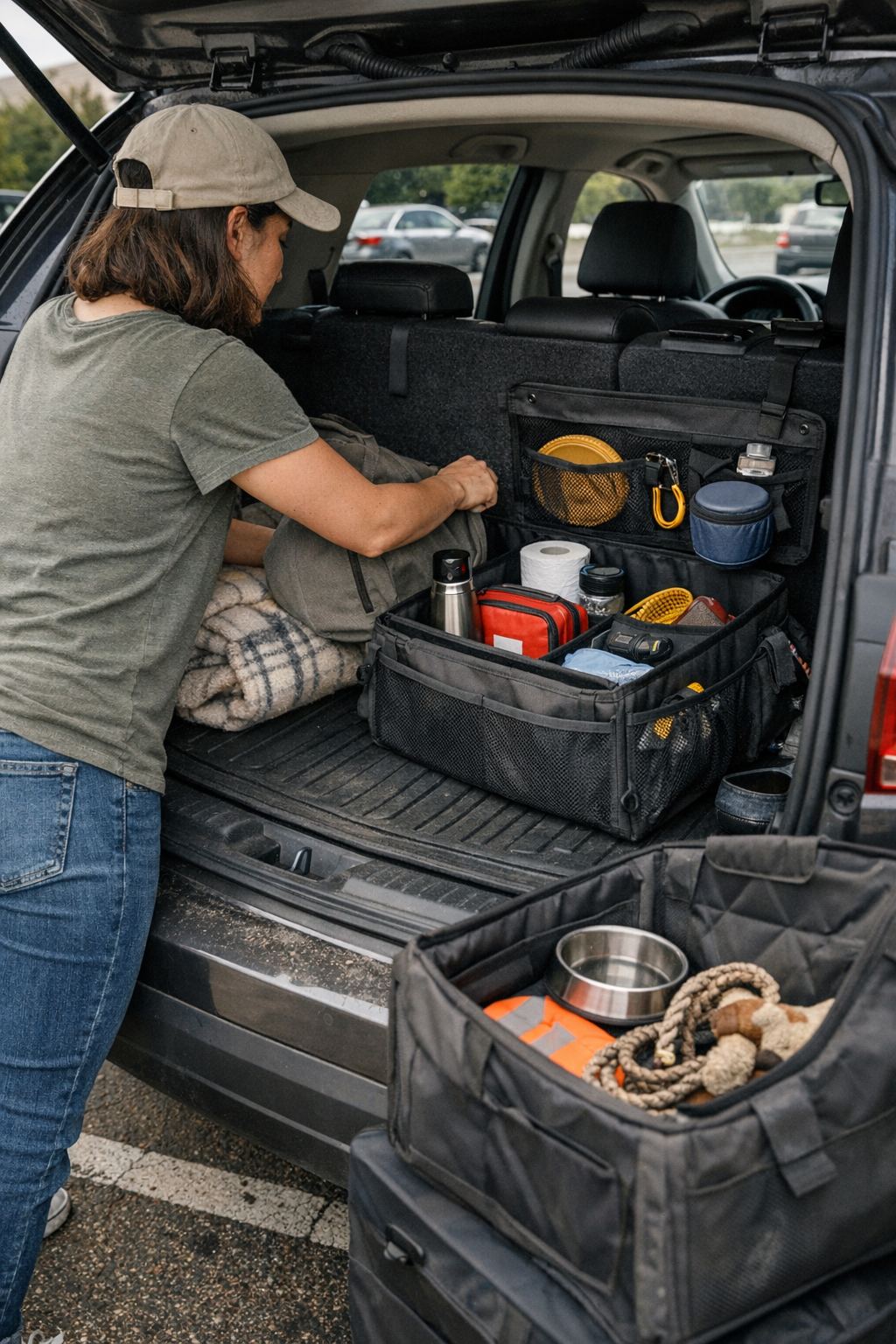
    Most people don’t notice the real source of in-car frustration until it’s right in the way: a charger knotting around the gearshift as you drive, a wipe pack wedged halfway under a seat by day three, an organizer that blocks the only useful port, floor mats that look stable but drift after one errand circuit. These aren’t just clutter problems—they’re signals your setup is slowing you down, even if everything looks “organized” on the surface. Instead of smoothing your drive, the wrong gear arrangement quietly stacks up wasted movements, interruptions, and reach-arounds you can’t ignore.

    When the Car Looks Organized but Still Feels Slow

    It’s easy to think that adding clever organizers, fresh mats, or a phone mount will erase daily annoyances. And for a day, the car snaps into place—cables tamed, compartments filled, floors covered. But as soon as the week kicks in, things shift. A mount an inch too high pulls your attention off the road. A “catch-all” tray pins down the one charging port you actually need. You start detouring around your own gear, realizing the setup isn’t designed for how you drive—it’s just decorated to look neater.

    Repeated Reach-Arounds: The Hidden Time Sink

    The real test is how often you find yourself reaching, pausing, or nudging something aside. That Monday phone charge turns into a morning routine of untangling a cord that doesn’t want to stay in place. By Thursday, you’re tracing the same cable detour, sidestepping a bin every time you plug in. Your problem isn’t missing equipment—it’s structure working against your habits, not with them.

    Micro-Frustrations Compound Quickly

    An interior that looks controlled can still grind against your routine. Maybe wipes slip into a crevice after a sharp turn, or you’ve got to unplug a charger just to move a console caddy out of the way. Floor mats that look tailor-fit drift sideways, exposing damp edges after a single rainy grocery run—forcing cleanup before the car smells musty. None of these are disasters, but together they pull your time and patience every time you return to the driver’s seat.

    A few cycles—workday commutes, errand stops, school pickups—multiply these inefficiencies. Protection and organization become chores to maintain. A “ready” car quietly asks for more adjustment, more resets, just to stay useable.

    Real Use Exposes Weak Points Quickly

    Setup flaws don’t show up in static photos. They emerge in motion, when routines collide with design. Consider:

    • Workday, phone on 2% battery: The charging cord vanishes behind a shifting organizer. You fumble and bend for it at every stoplight.
    • Door cupholder: maxed out with a winter bottle or a coffee means your wipes get shunted under lower-priority junk. First spill? You’re digging blind with one hand.
    • Bags migrate into the footwell, bumping out anything small—even safety tools—so the next driver has to scramble just to make space for their feet.
    • Floor mats “fit” only at rest, but after a week, corners lift and dirt pools along exposed seams—leaving you scrubbing after nearly every errand instead of letting protection do its job.

    The Difference Between Looking Settled and Feeling Settled

    What passes for organization at a glance often trades action for aesthetics. Overstuffed consoles and “custom-fit” trays clog the core spaces you actually touch—charging zone, door edge, cargo floor. Instead of intuitive grabs, you adapt with micro-workarounds: unplugging, jostling, reseating, shifting items just to charge, clean, or load. Every trip is an interrupted flow—two steps for what ought to take one.

    Small Tweaks That Change the Whole Flow

    Fixing these routines isn’t about adding more gear, but about clearing what gets in your way:

    • Scaled-back console organizers leave room for cables to run naturally—one cord sits ready, nothing tangled, charging becomes grab-and-go.
    • Swapping to a flat wipe pack in the door means cleanup happens in a second—not with a rummage, not from the floor, not after you’ve driven a mile with sticky hands.
    • Fewer tools, but smarter placement means nothing upends or escapes during a sharp stop; less daily shifting, less mess when you climb back in.

    The payoff isn’t dramatic—it’s the absence of friction. Instead of a car that just photographs well, you get one that feels invisible until you need something. You act, and the setup never pulls you sideways.

    Not All “Protection” Helps in Real Conditions

    Mats or seat covers that promise coverage but slide after a morning of errands betray you in the smallest ways. Door-edge dirt, uncovered corners, covers bunched after a single seat-slide—every “adjustment” is another demand on your focus. If “protection” means resetting gear before and after routine drives, it’s just shifting the cleaning burden to a daily task instead of erasing it.

    Are You Working With or Against Your Setup?

    A telltale sign your layout needs fixing: your hand pauses, your body repositions, or an extra step sneaks in before you can charge, clean, exit, or load. If the very gear meant to prevent problems becomes the reason for daily blockages—cables kinked, ports covered, trays catching cargo—your car isn’t really ready. Packing for every “what-if” means little if it sabotages the basics you use every drive.

    Building a Car Routine That Actually Works

    The best setups don’t call attention to themselves. Real “readiness” is proven by how little you notice your gear doing its job as your week moves—from quick stops, to muddy errands, to a full car on a rainy day. When you get in, plug in, clean up, and reload all in a straight line with no detours, you know the friction’s gone—and your car is finally on your side, not in your way.

    Ready to equip your car for actual everyday flow? Browse practical solutions at DriveWellSupply.
  • Why Carry-On Organization Often Fails During Real Travel Moments

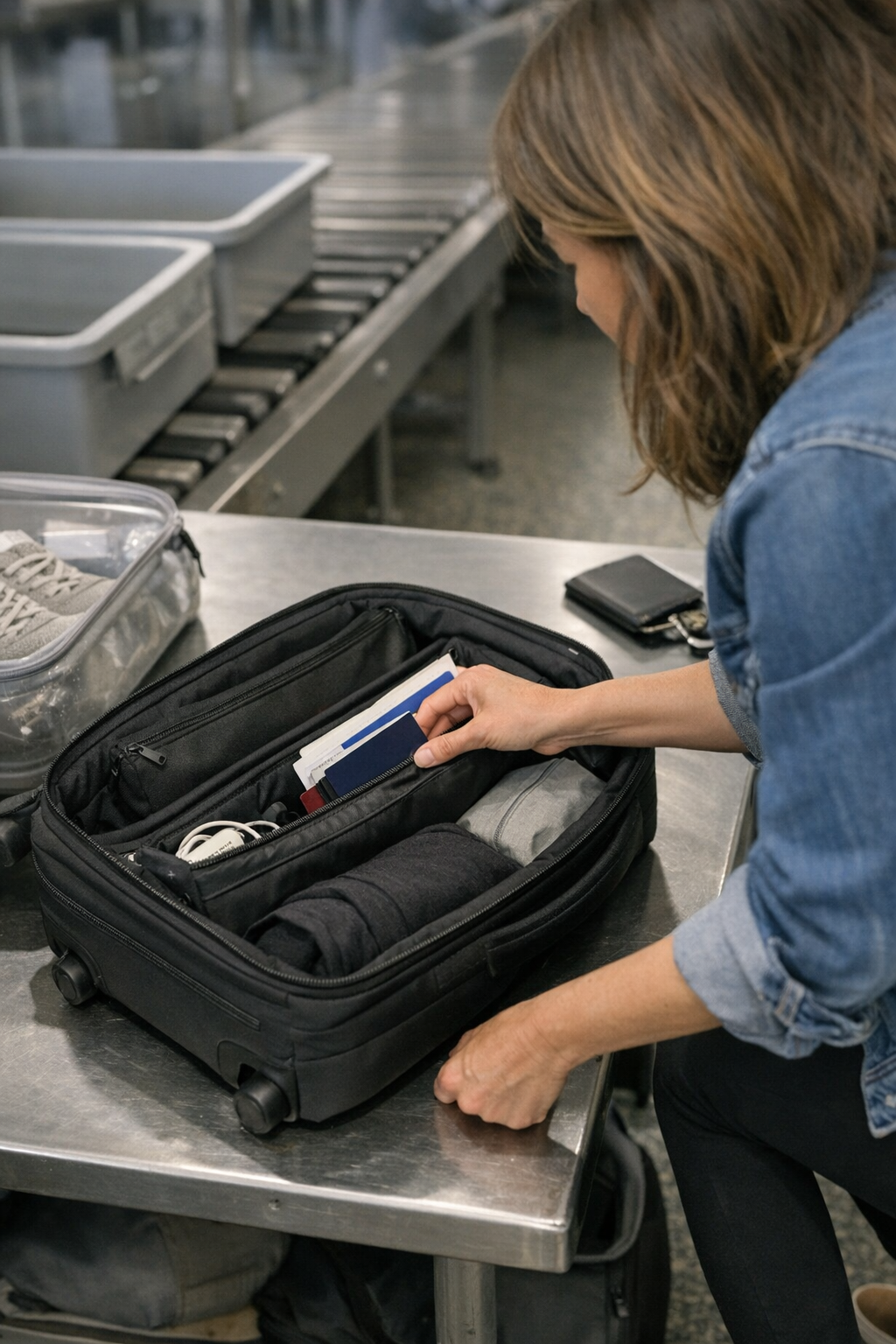
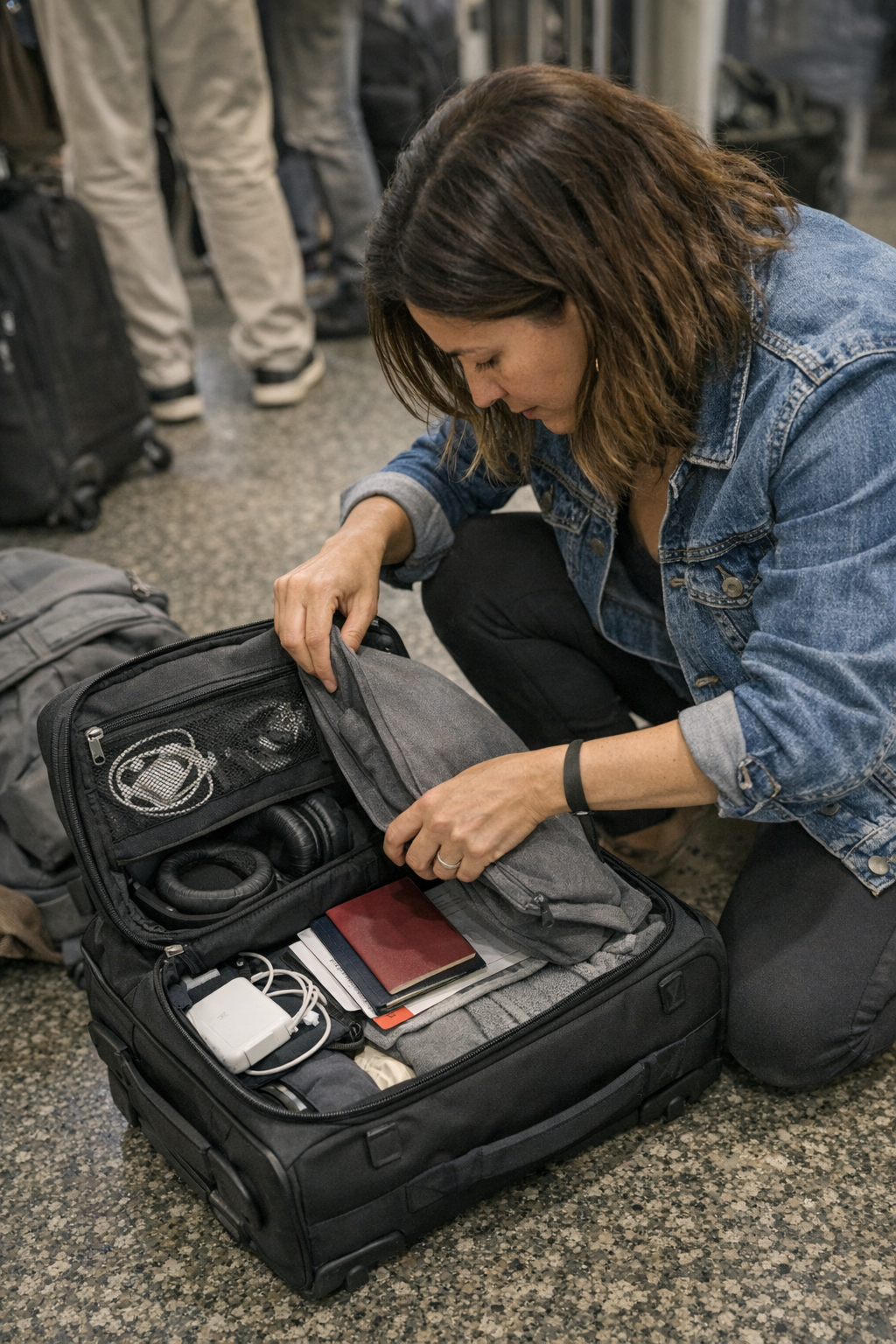
    Perfectly packed at home, slow and clumsy under real pressure—this is the airport test for any carry-on “organization.” In your bedroom, every charger, passport, and wallet is slotted just so, zipped into crisp order. But the moment you hit security, that neat structure turns against you. Reaching for your ID means rooting beneath pouches you thought would help. The line moves. Your hand stalls. Suddenly, the system that looked efficient on your floor becomes a bottleneck—document checks, charger retrievals, and last-minute repacks now trigger friction, not flow. Carry-on order isn’t decided by appearance; it’s exposed (or unraveled) by real airport movement, repeated small demands, and every grab along the way. This is where the real cost of a “perfect” setup shows up.

    The Hidden Challenge of “Organized” Carry-On Bags

    Organization on paper rarely matches the reality of airport use. The route from visual order to actually smooth movement is lined with invisible snags. Unzip, pause—your passport’s buried under the headphones again. Charger? Two compartments away because it looked tidier there. Each friction point—wrist twist at boarding, document dig at security—doesn’t ruin your trip but interrupts momentum, multiplying into a low-level frustration you feel at every routine checkpoint.

    This isn’t about travel stress, but structure-induced friction: The “missed” outer pocket, the moment you repack something incorrectly mid-trip, the nagging pause when you realize your layout creates a new reach obstacle instead of reducing mess. The outside of your bag still looks sharp. Inside, it’s a pattern of micro-stalls: a misaligned arrangement that adds seconds and discomfort, segment by segment, as your trip flows from line to gate to seat.

    When Aesthetic Order Collides with Travel Reality

    A “tidy” compartment layout often falls apart the moment routines start to repeat. At security, you intend to slide out a slim tech organizer, but it’s trapped under a pouch and tangled headphones. In the boarding rush, your boarding pass is sealed off behind zip-on toiletries that never left the spot they occupied at home. Every transfer exposes another overlooked block—the stacking that once felt organized now means three layers to move for one fast retrieval. No single choice derails you, but every extra unzip or awkward shuffle tells you: the order isn’t matching the actual travel flow you’re stuck repeating.

    What causes this? Mismatched flow—arrangement made for visual comfort instead of the rhythm of movement. Hiding your passport under accessories, relying on main compartments for quick-grab items, or using layered organizers that bury travel tools you’re forced to access over and over. The pain isn’t a messy bag; it’s an arrangement that drags at every step, not once, but every boarding, every gate, every time you need the same object on the move.

    Snapshot: The Repeated Reach

    Airport connection. Crowded terminal. You need your ID. You know you packed it “correctly”—right zipper, bottom pouch. Yet, now it’s locked under a neck pillow and water bottle. The main compartment’s packed tight, forcing you to kneel or block the aisle as you dig. The line behind you compresses. This isn’t a random failure—it’s the product of a layout that always asks for extra steps at the exact moment friction returns. The same search, every time that checklist item is called for.

    Small Delays That Add Up

    Every delay takes a toll over time. Unzipping twice for the charger, re-layering pouches as boarding groups are called, fumbling for the right slot mid-aisle—these inefficiencies repeat with every leg. You might notice them shifting trays at security: tech pouch blocks easy access, or passport demands a two-handed reach atop a crowded bin. Across a whole trip, these moments stack: minutes lost, nerves frayed, missed rhythm.

    This isn’t about missing a flight, but about carrying the weight of layered interruptions through every segment—tight layovers, shoulder-to-shoulder gates, restless boarding lines. Each time you tell yourself, “I’ll move that after this leg,” the cycle restarts. Visual order alone can’t unlock flow if the next routine move is always hidden behind a zipper-path or pouch pile.

    Real Movement Tests the Setup—Not the Visual

    At home, your setup checks every box—chargers zipped, passport sleeved, clean separation between tech and documents. But repeated travel is not a single test; it’s the same item accessed over and over, in different spaces, from standing airport lines to cramped seats. That clever hidden slot for your boarding pass turns into a delay. That compact, color-coded tech pouch proves hard to re-pack when you need your headphones mid-flight.

    If your bag makes you hesitate before each retrieval—if you’re replaying the last time you nearly lost a document in the shuffle, or dreading the layered dig for a charger after a layover—your organization isn’t keeping up with your travel reality. The difference between looking orderly and actually moving smoothly is clear in the repeated moments your setup interrupts a basic action.

    Example: Swapping Layers for Access

    After struggling through security lines and missed calls to board, many travelers swap a multi-layered document holder for a single, top-zip pouch. From then on, documents are out in one motion—no sliding under accessories, no re-stacking pouches on the tray, no searching for that one piece of paper while people wait. The change doesn’t show from the outside, but it transforms the sequence: fewer errors, faster repack, noticeably less stress where it counts.

    Recognizing Where Carry-On Friction Hides

    Most friction hides in small design decisions you never notice until real use:

    • Deep document slots: Unnatural wrist bends and forced reaches at every checkpoint.
    • Overlapping pouches: Slow you down during security’s X-ray shuffle, forcing partial unpacking just to reach a cable or ID.
    • Layered zippers: Create cascading time-loss; every retrieval means more zips, more missed timing.
    • Tidy tech organizers: Look efficient, but if your most-used item is always on the bottom, neatness has become its own hassle.

    These aren’t hypothetical problems. They’re repeat offenders—small, repeated blocks that pile up through every movement: walking between gates, clearing trays, or shifting seats in-flight. Micro-delays don’t hit once; they become the rhythm of travel with the wrong structure in place.

    Packing for Access, Not Just Order

    The real carry-on upgrade: Zero in on which items must be reachable in one move. Place them in outer pouches or top zippers—where you never have to move something else first. Avoid letting your best attempt at tidy packing turn into a tangle that costs you every time speed matters—even if that means going against your usual color-code or symmetry habit. A small visible mess beats a prolonged document search every time a gate agent’s hand is out.

    Effective setups don’t add more compartments; they rearrange for flow. Position items for the actual movement sequence—airport checks, seating, tray pulls—not a static still life on your bedroom floor. You want to grab, use, and replace in one unbroken motion—not second-guessing which pocket or layer you’ve buried the essential in.

    Paying Attention to Repeated Annoyance

    The carry-on that keeps frustrating you—same access fumble, same document pause—is telling you something. When a routine repack or retrieval slows you down on every trip, it’s not a personal quirk. It’s a structure problem. The persistent memory of a half-blocked zipper or awkward seat entry is evidence: the layout doesn’t fit your repeated-use rhythm. And that’s worth changing.

    Making Small Changes for Smoother Movement

    Test a tiny shift: put your ID or boarding pass in the spot you can hit without moving the bag itself. Reduce leftover pouch overlap near your most-used slots. Try running through an actual “in-motion” cycle—stand in a hallway, walk through your routine, and note when you have to stop or repack. Most limitations in the flow appear when you mimic real airport conditions—not when nothing’s on the line.

    The point isn’t creating a bag that wows at a packing contest. It’s about beating the grind of interruption. Any move toward faster, more direct access—especially for documents, tech, and things grabbed on the go—means less stress, less seat-edge juggling, smoother boardings and bin lifts, and a bag that quietly improves, rather than repeatedly blocks, your every move.

    Shop all carry-on tools at CarryOnSupply

  • Streamline Your Pet Travel Setup for Faster, Safer Transitions

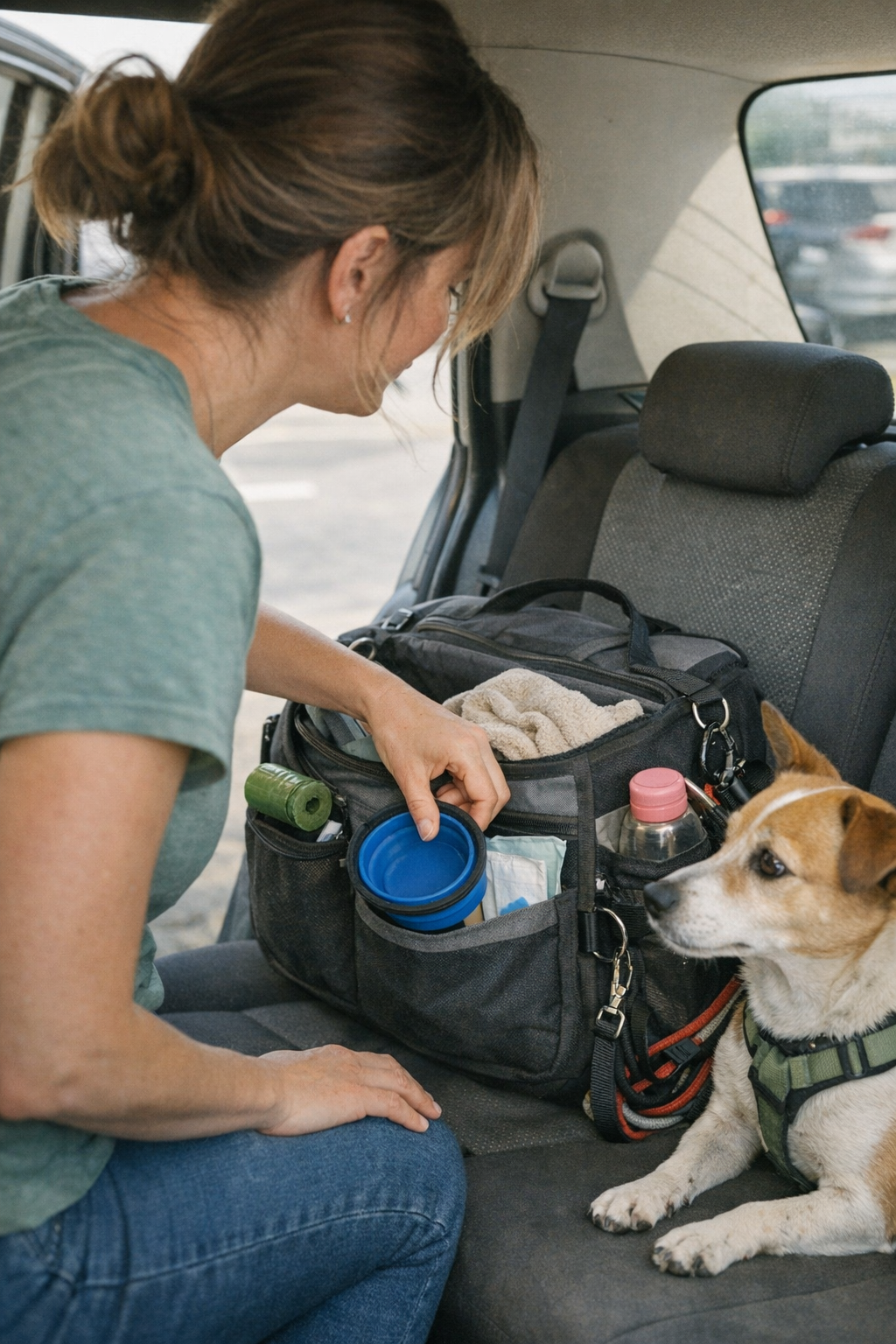
    The difference between a “packed” pet travel bag and a bag you can actually use mid-journey becomes painfully clear the first time your routine unravels at a stop. It’s one thing to close a bag and feel prepared. It’s another to reach for a leash, wipes, or water bowl—and realize they’re all layered or buried, never quick to grab when your hands and eyes are already full, your pet is restless, and the clock is running. This is where most setups break: not by missing items, but by forcing you into clumsy digging, stressful pauses, and repeated mini-disasters at every pause to walk, calm, clean, or move your pet.

    When “Organized” Still Means Frustrating Stops

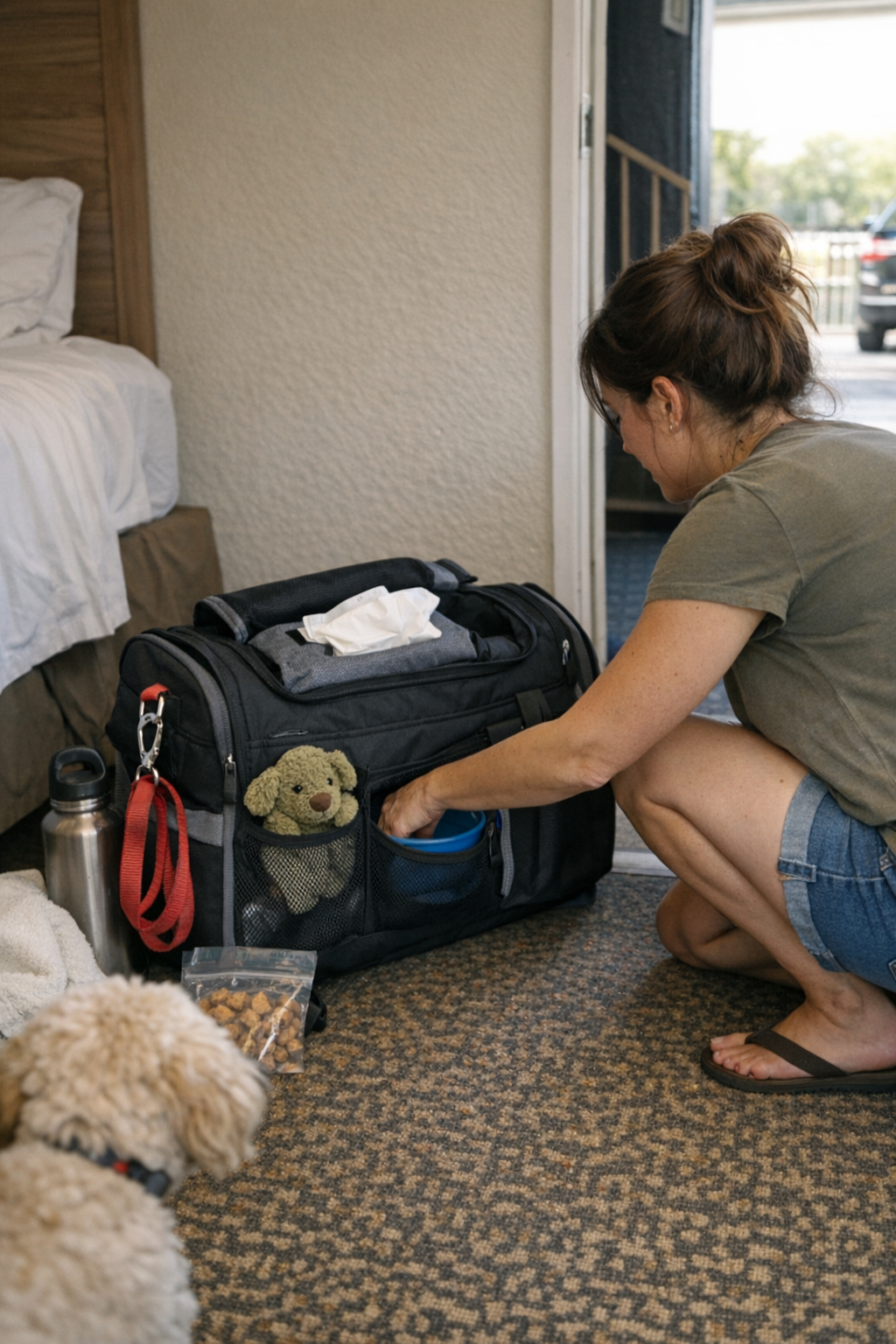
    Picture yourself outside a busy motel, after hours on the road—bag on one arm, leash in the other, pet tugging impatiently. You carefully packed at home, but now, the leash has slipped under a bag of treats and a towel. Wipes are buried beneath a blanket. You block the entry, one knee nudges your bag open, but there’s still a scramble to unearth whatever’s needed next. Crowds move around you, and your sense of “everything in its place” dissolves in seconds. The irritation isn’t about missing gear—it’s the endless, awkward interruptions that undercut any feeling of being truly ready.

    Recognizing the Real Repeated-Use Weak Point

    This is a cycle, not a fluke. The real friction in pet travel isn’t the one-off crisis—it’s the mounting cost of small failures: wipes forgotten at the bottom after restocking at a rest stop; comfort toys sliding under food bowls after a bumpy drive; cleanup bags tangled with your phone charger. What seemed “set” before leaving home now fights you every time you need to move quickly. The first two pauses might feel annoying but manageable. By the third or fourth stop, you start dreading each new exit. The system isn’t failing all at once, but the workflow clearly keeps breaking in the same spots.

    The Moment It All Unravels

    An “organized” bag that hides essentials turns a quick pitstop into a stress loop. Every time you dig for a leash, the treat bag spills, wipes slide under a jacket, and you’re suddenly improvising in narrow doorways with a pet who’s had enough. Even a system that looks neat at rest can become its own obstacle—forcing you to disrupt the flow, lose time, and build frustration with repeat interruptions.

    How Setup Structure Shapes the Whole Trip

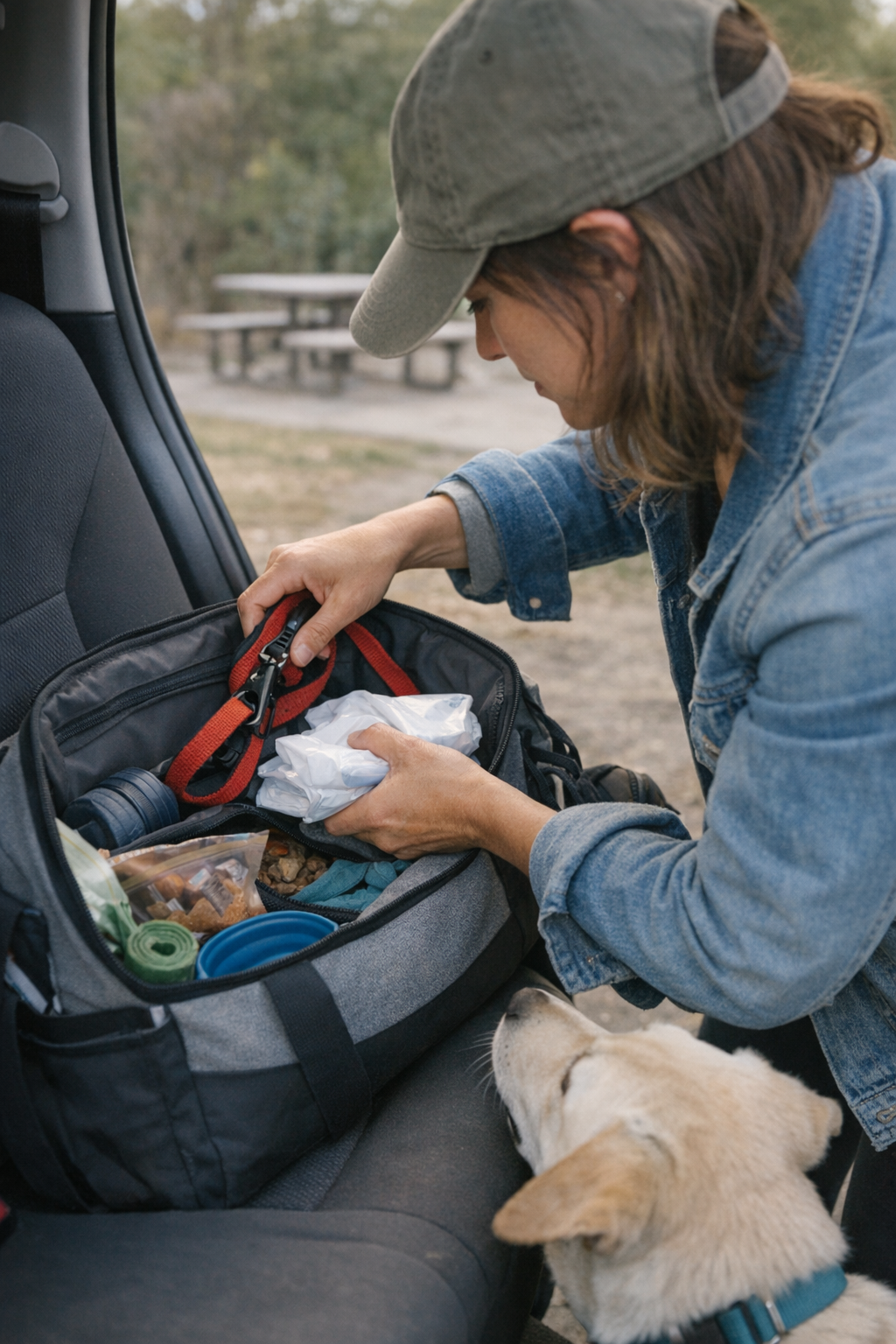
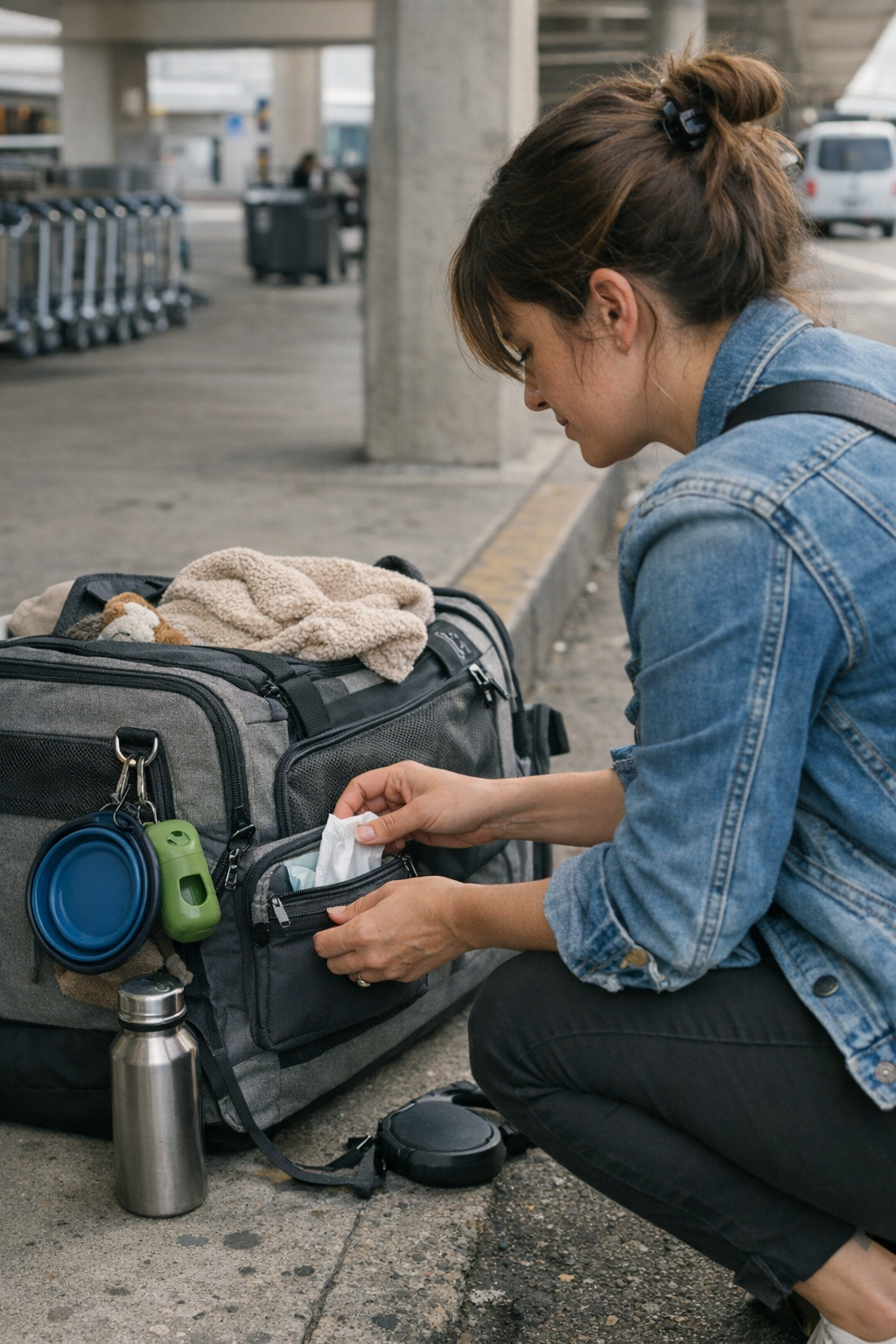
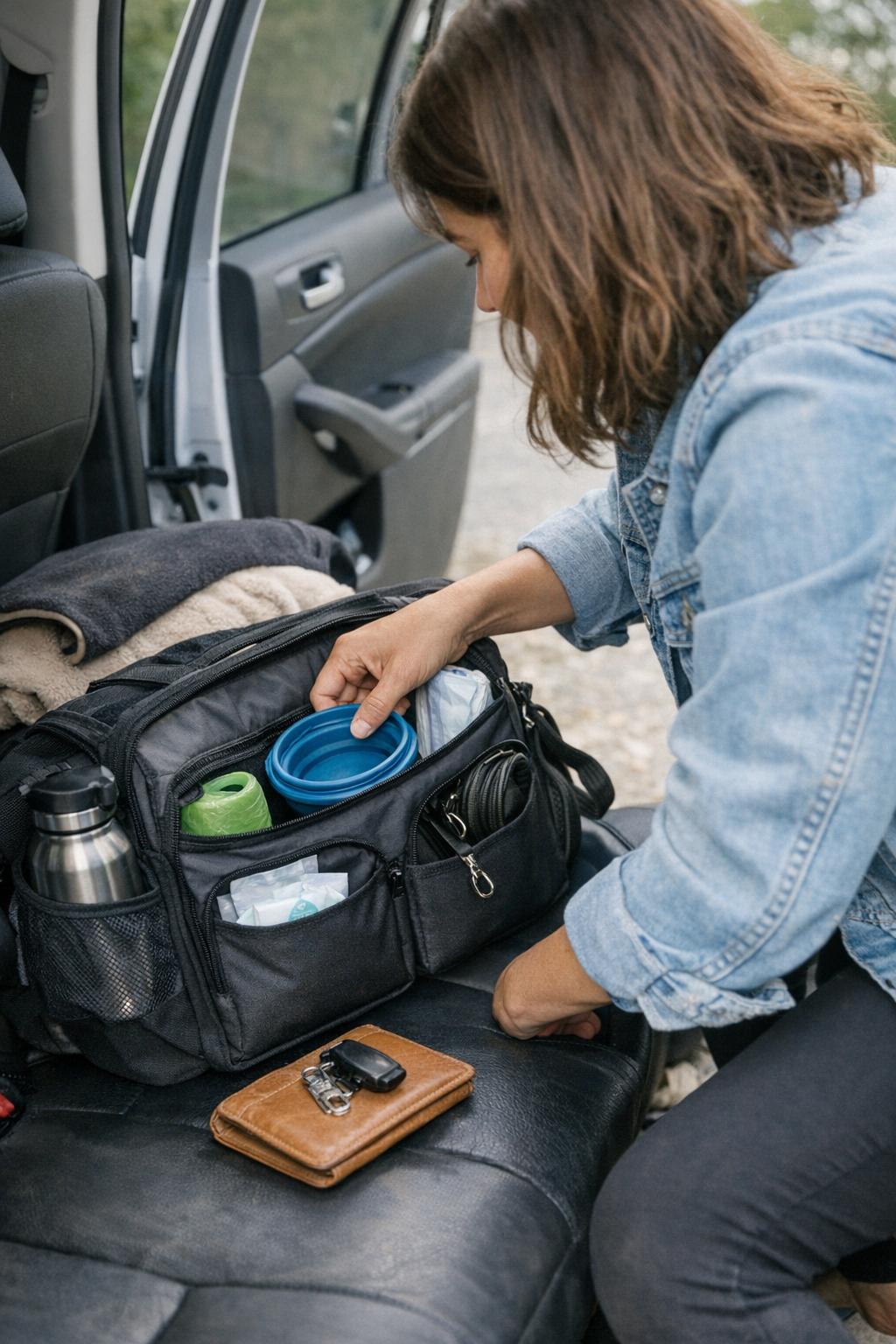
    A pet travel bag succeeds or fails on repeated, one-handed access to essentials—their visibility, separation, and fixed locations matter more than looks. Leash clipped to the outside. Wipes in a front pouch. Water bowl free of nesting. Comfort toy always top or side-facing. These adjustments sound small, but the impact across multiple stops is big: instead of reshuffling everything, you grab what’s needed in one motion, settle your pet immediately, and face each new leg without a reset ritual. Done right, your bag becomes an extension of your routine, not a source of friction.

    Real-World Flow: From Pause to Restart

    Two types of setups reveal their true colors at every stop:

    • Buried-access: Every pause, you’re prying open the main compartment, double-checking pockets, pushing aside food containers and blankets just to seize the core item—meanwhile, your pet gets worked up and space tightens as others try to get by. You tell yourself you’ll rearrange at the next stop, but the cycle repeats.
    • External-access: At a rest area, the leash unclips from a side ring. Wipes slide out a dedicated slot—no need to unzip or rummage. The bowl is ready, not entwined with towels. Your pet calms down sooner, and you’re already moving back to the car before anyone’s impatient glance reaches you. Essentials naturally return to their anchored place, so nothing gets lost or crammed deeper with each use.

    This isn’t just about saving seconds—it’s about turning an unpredictable, stressful travel rhythm into something manageable and repeatable, with less mess, fewer delays, and a pet who moves at your pace, not against it.

    The Downside of Perfectly Packed… but Poorly Designed Bags

    Perfect packing can defeat itself if structure fails real-world use. Many travel bags offer “organization” only on paper: every item has a home, but comfort toys share space with food bowls, wipes nest under containers, and leashes coil with wet towels. The bag looks ready, yet nothing key is at hand. Most trips then turn into a pattern—one hidden pocket, one section too many, and you’re awkwardly blocking a doorway, arm-deep in your pack, while your pet’s patience and your own both run thin. What’s worse, these slowdowns stack up, amplifying tension across the whole journey.

    Small Delays, Growing Mess

    One hard-to-reach wipe leads to muddy paws indoors. A “lost” comfort toy means a pet gets jumpy, ramping up mess and slowing every restart. That minor flaw in reachability keeps inflating stress and increases workload at the next stop. The more the setup blocks smooth access, the messier both the travel and the recovery get—not just for you, but in every space you and your pet pass through.

    A Repeatable Structure That Pays Off in Motion

    The right fix isn’t only about buying new gear—it’s rethinking how gear loads and resets. Setups that work in motion share a few critical traits:

    • High-use items (leash, wipes, travel bowl, calming toy) move to the most immediate-access locations—side ring, front pouch, mesh pocket—never buried or nested.
    • Those spots never change, so you develop “muscle memory” for grabbing and resetting between stops.
    • Fast-exit items stay out of internal compartments, so nothing gets tangled or wedged under other contents after a drive.
    • At every pause, a comfort item is ready—not just for arrival’s sake, but the moment you reach a door, allowing for rapid pet settling and smoother transitions.

    Set this up, and every stop feels less like a disruption. Bag and routine both reset easily, stress doesn’t accumulate, and even post-movement clutter stays contained. Pets match the calm, sensing less owner frustration. The whole setup stops working against you—and starts making the trip easier instead of harder.

    Handle Reality, Not Just Appearances

    Perfection isn’t the aim—recoverability is. The best-ordered layout will get undone by traffic, pet energy, or one rushed moment. But a strong structure is about how quickly you bounce back, not whether the bag absolutely holds its shape. Essentials should never demand a pause-and-dig—especially when your pet bolts, a line forms, or your hands are full. Bad structure draws your attention again and again to the same small friction—in every trip, at every stop—until it finally gets fixed.

    Beyond “Organized”: Making Every Stop Easier

    If every restart feels like a reset—dig, fumble, reshuffle, repeat—it’s time to diagnose the structure, not the packing list. Lock in the anchor spots for high-use items so you can grab what’s needed even after a trunk shake, traffic rush, or five hurried stops. When the real-world rhythm works—less scramble, faster grab, pet calmer sooner—you don’t improvise every time you open a door. You just move.

    Find practical pet travel solutions at PawGoTravel.

  • How Thoughtful Pet Travel Setup Improves Every Walk Loop Experience

    Every “organized” pet-travel setup looks ready in your hallway. Every leash, wipe, bowl, and toy zipped into its own spot—until you actually hit the road. Fast-forward to the first curbside pit stop or gas station loop: what began as sorted turns into a series of reaching grabs, blocked zippers, and items buried under the wrong pouch. You’re not calmly retrieving a leash—you’re contorting your wrist past stiff dividers while your dog hovers, reading every hesitation as confusion. The packed bag that looked dialed now drags you into a struggle every time movement breaks, stalls, or restarts. This is the gap: what functions on paper often stalls in real motion, and nowhere does it show faster than during repeated, everyday stops—and that’s exactly where smart PawGoTravel setups try to redraw the line.

    When a Neat Setup Fumbles in Real Time

    At home, any travel kit can look travel-ready. On the move, repeated stops expose every weak link. The leash that started atop the stack is wedged under a folded blanket by the second gas station. Wipes you tucked for easy cleanup now hide behind a collapsible water bowl, just as you need them, one-handed, for a muddy paw. Treats once in reach manage to slip beneath heavier gear. The difference between “organized” and “usable” is clearest during these real, repeated stops—the orderly plan unravels when you need speed, not symmetry.

    The Routine That Exposes Every Flaw

    Short trips, frequent pauses, and in-and-out-of-the-car cycles repeatedly stress your packing logic. Hooks for leashes claim to keep things “secure”—until you twist the carrier to reach for one and get caught in a web of straps. Owner items—phone, keys, wallet—slide into pet-space, so urgent grabs force you to shove essentials aside just to find a bag or treat. Cleanup gear? Trapped under a comfort toy during the only two seconds you have to react to a mess. Each movement becomes a micro-obstacle. By midday, you’re not repacking the bag because of disaster, but because the layout simply can’t keep up with motion.

    Your dog isn’t oblivious to the friction. Every missed beat—waiting as you invert the carrier, watching you fish for items—teaches your pet to brace for delay. Each extra second handling “organization” erodes the flow that makes travel work for both of you.

    Recognizing the Repeated Pain Points

    What actually separates an efficient travel setup from an ongoing hassle? Not the number of zippered pockets or how “neatly” things stow, but whether you can instinctively reach essentials, every single time:

    • Wrong-first grabs: Hand finds the obvious zipper, but the leash is elsewhere, out of sight and muscle-memory.
    • Delayed cleanup: The wipes are always somewhere, but when speed counts, it takes a full-hand search or unzipping two layers.
    • Owner-pet item overlap: Rummaging for a toy means brushing past your keys—messy on a moving day, forgettable at home.
    • Comfort blocks function: A blanket meant for pet calm now blocks fast actions—you reposition it at every single stop.

    Each small failure isn’t dramatic; it’s the friction that kills travel rhythm. Your “organized” start rarely survives the churn of real, repeated use.

    Seat-Side Handling: The Unseen Bottleneck

    Most travel gear gets its truest test at the car seat edge. Door open, bag half-on the seat, your pet ready to jump; any poor design in pocket angle or opening direction shows up instantly. If your quick-grab section faces away from the seat—requiring an awkward reach over a restless dog—every fast movement turns slow. “Logical” layouts made for tabletop access force you to rotate the bag, fumble, even tip out contents just to grab a leash. The difference rarely comes from extra compartments, but from how those compartments open and orient when you’re getting in or out, fast.

    Pocket Choices and Small Structural Tweaks That Matter

    Reducing repeated friction means shifting structure, not adding complexity. Flip the main access pocket so it faces your natural grab at the seat’s edge, and leash reach becomes one move, not a mini-search. Place wipes and quick-clean gear shallow—just one layer from the surface, never under heavy comfort items. These aren’t cosmetic changes; after five or ten stops, every second saved is a tiny win that keeps both your head and your pet’s routine clear. Tiny tweaks in layout fight the silent loop of missed grabs and forced rearrangements that add up over a trip.

    The Difference Between Neatness and Usability

    That day-one pride—everything zipped and perfect—only hides real movement problems until you reach the first clumsy stop. Need to move the same tangle of bedding again? Find the leash gone wandering after a turn? Still guessing which pouch holds the bags—after countless walks? If every repetition leaves you untangling, shifting, and searching, your setup looks organized but isn’t keeping pace. Workflow trumps appearance, every time. The proof isn’t a tidy bag, but a routine where each stop flows faster and the same snags never return.

    Building a Setup That Moves With You—Not Against You

    Repeated travel isn’t about perfection—it’s about setups that don’t constantly get in your own way. Structural wins are subtle: a bag returns to “ready” after every stop without a reset, you reach wipes without tilting everything on the seat, leash handoff is one move, not a dig. These aren’t headline innovations, but the difference stacks in hundreds of small travel moments. When every repeated stop releases more motion—less interruption for you, less guessing for your pet—your setup starts working for real life, not for a photo. That’s the logic behind travel layouts that hold up under repeated use, not just first impressions.

    For products and practical setups designed for real travel routines, explore PawGoTravel.

  • How Pet Travel Setups Can Make or Break Your Trip Comfort

    Arriving with your pet isn’t the victory—it’s the beginning of every friction point that clever packing alone can’t solve. That quick “I’m ready” confidence fades the first time you need wipes or a leash and grab the wrong thing. A carrier that looked organized by your door starts showing its real structure—good or bad—on the first curbside stop. What counted as “prepared” under your kitchen light doesn’t always survive the pressure of repeated stop-and-go travel, fast reach needs, or a restless animal shifting with every pause.

    What Looks Ready Doesn’t Always Handle Smoothly

    Packing in rows doesn’t guarantee you’ll handle the real mess of travel smoothly. Most pet owners jam cleanup wipes, treats, bowls, and extra comfort items into neat layers “just in case.” But real travel exposes every shortcut: the leash that’s visible at packing time ends up buried under blankets. Minutes after landing, you’re already misreaching—tugging out bedding instead of essentials. By the next stop, the sections blur: wipes slip under pads, treats vanish behind your water bottle, comfort toys jam the only pocket you can reach one-handed. What was calm at the start turns into one interruption after another.

    Every Stop Highlights Overlaps—and Grows the Friction

    After the first transfer, every “organized” bag shows its weak points. Reaching for a cleanup pouch means digging through pet bedding mixed with your own home basics. Someone, not always you, drops keys or a phone into the first open pocket—often the one you now desperately need for wipes or a leash. Spaces that showed off matching accessories at home devolve into hidden items and blocked reach at the worst possible time. Even a minor holdup—a squirming pet or urgent cleanup—unmasks the mess: you’re juggling, fumbling, always losing momentum, forced to reshuffle instead of moving. Each new stop slogs through the same routine instead of flowing forward.

    Why Quick Access Makes or Breaks Real Pet Travel

    A travel bag isn’t “working” unless you can pull out what matters instantly, without hunting, shifting, or sharing space. The difference between easy travel and stressful stalls isn’t how many pockets your setup boasts or how neatly it sits at check-in. It’s whether fast-use items are reachable one-handed, never shared, never buried—trip after trip.

    Most setups fail when overlaps turn into confusion: quick-use pouches end up blocked, every pit stop means unlocking, unzipping, and un-layering. Delays stack up. “Organized” is replaced by stop-and-start chaos—reaching, failing, losing your rhythm.

    The Hidden Cost of Overlapping Storage

    A pet blanket or plush toy packed for comfort can be the exact thing slowing you down. You notice it not the first time you reach, but the fourth—lifting the same layer, shifting a loose bowl, working around soft padding just to find a single wipe. Each small delay adds up fast, especially with a tense pet by your side and your attention split. Noticing that slow-down is the first sign your setup is organized for first impressions, not real travel use.

    The Real-Life Annoyance: When Travel Feels Like Damage Control

    Blocked access is more than an inconvenience—it becomes a background drag that wears down every trip. When pet travel bags or organizers force you to reshuffle, what should feel routine turns into repeated stress. Before long, handling cleanups or leash changes means sorting through spilled treats and loose comfort gear. Even if you chose sturdy gear, if every key supply (cleanup, leash, treats, hydration) demands extra motions or a guessing game of pockets, you’re always a beat behind what your pet needs.

    It’s easy to feel out of sync, caught pausing or blocking traffic while you reorganize in public. Every missed cue—a fumbled leash, a hidden pouch, a toy dropped at the wrong moment—pushes both you and your pet further from the “calm travel” the bag promised. It’s a chain of small inconveniences that never makes the trip easier, only more tiring.

    What Actually Shifts the Experience: External, Separated Essentials

    The change that matters isn’t more storage—it’s ruthless separation for anything you’ll grab on the fly. The moment high-use items get their own exterior spot—an outside wipe pouch, a clipped leash, hydration tools never combined with bedding—scrambling stops. Cleanup wipes on the side, away from toys and comfort items, puts the right tool in reach, even one-handed. Pockets inside stay soft for bedding or treats, but the working gear lives on the outside, always visible, untangled, and ready.

    This is more than avoiding mess. It’s stopping the slow slide into micro-delays and confusion as trip routines stack up and energy flags. The setup actually holds—not just in photos, but after layovers, seat switches, or a string of small setbacks. Less time digging means your focus stays where it should: on your pet and your travel path.

    Why Less Repacking Means Faster Returns to Movement

    Every extra motion is time lost. When cleanup and handling supplies are always externally separated—never squashed by blankets or locked away—your restart after each stop is seamless. No tangled gear, no repeated resets. Every move feels sharper, and the flow of pet travel finally matches the pace you want, not the slow crawl of fixing your own setup over and over.

    Seeing Beyond a “Neat” First Impression

    The neatest setup at boarding means nothing if the access structure collapses after two stops. Zipped pockets and smoothed bedding may win on first appearance, but only dedicated, exposed essentials survive real travel. If you keep finding yourself pausing to reshuffle, or pulling one thing just to find another—your setup is losing. The fix is trading the idea of “everything in its place” for one rule: each quick-use item gets a pocket or clip that stays clear, every time, every cycle.

    Giving up one catch-all compartment for an always-open access point can double your ease of movement. It means you handle stops faster, recover your rhythm, and your pet moves with you—not against your frustration. The success is visible: fewer interruptions, more fluid handling, less chance of a small crisis ballooning into a much bigger one.

    Building a Pet Travel Setup That Survives the Whole Journey

    Most travel routines sell calm but end up delivering repeated friction because the core problem—access—gets buried under aesthetics. The rare setups that truly hold up across unplanned stops, seat swaps, or airport sprints take quick-access and compartment separation seriously. Keep every high-frequency tool visible, externally placed, and never behind comfort gear. Interior spaces serve rest and comfort; exterior clips, side pockets, or snap pouches serve the routine. Get that right, and you stop having to block exits, dig through soft layers, or flatten every delay just to move forward again.

    Comfort isn’t how your bag looks before you leave—it’s how easily it lets you recover after every interruption. The right set of exterior, separated quick-access pockets and non-overlapping zones means your routine adapts—item after item, stop after stop. It’s what keeps the trip moving, no matter how many small, real stops test your patience.

    Find more practical solutions for smoother, real-world pet travel at PawGoTravel.

  • How Smart Pet Travel Gear Keeps Your Journey Smooth and Stress-Free

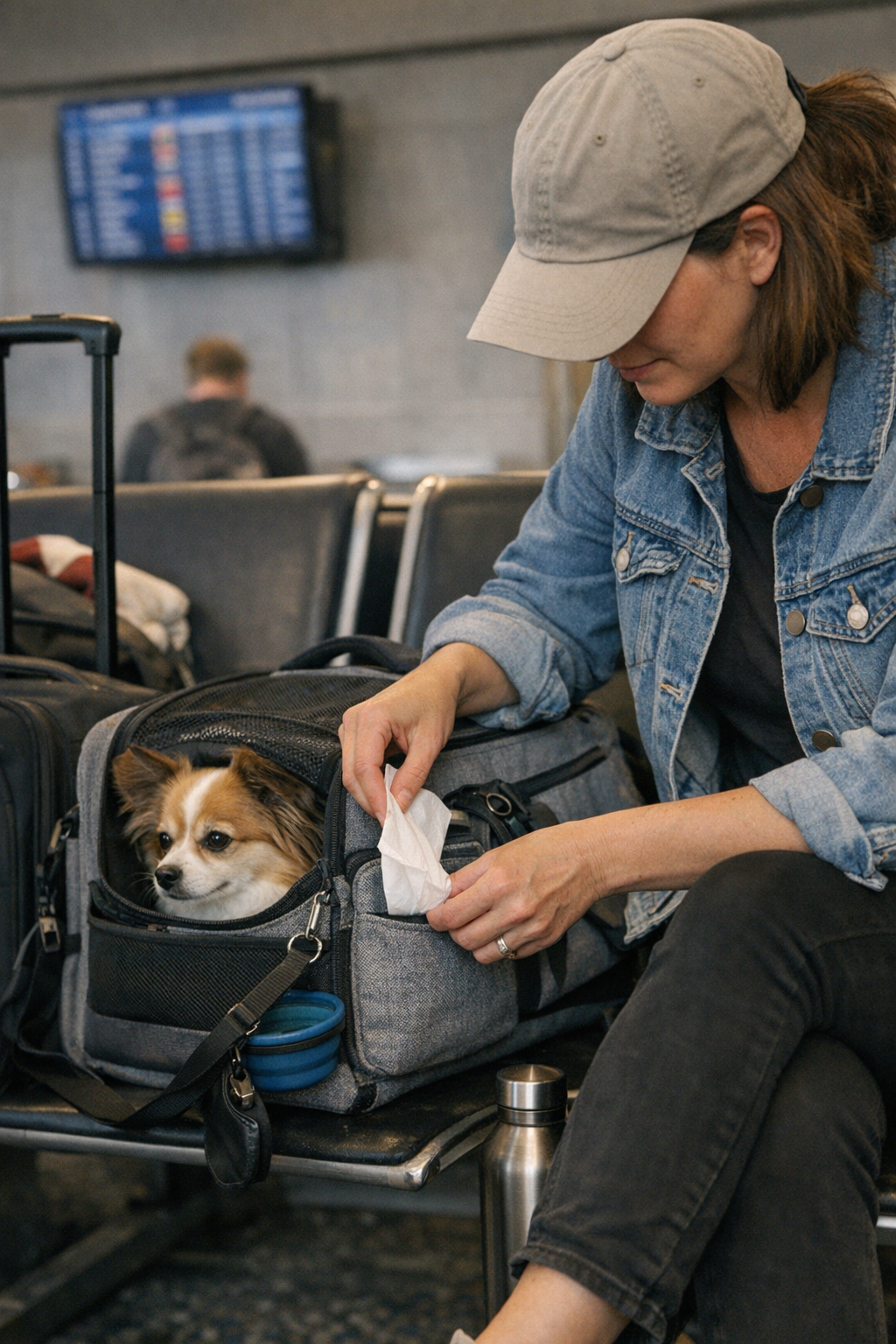
    A pet-travel setup that looks ready at home can start breaking down the moment you hit real movement—lines, platforms, quick stops—where every friction point reveals itself fast. That bag that seemed organized by the door turns into trouble when your hands are full, your dog needs a quick treat, or your cat’s carrier blocks you at a cramped waiting seat. All it takes is two or three everyday pauses—a scan at security, a coffee pick-up, a sudden leash grab—and what seemed “prepared” shows its weakness: the right item tucked just wrong, cleanup gear out of reach, pockets positioned fine for storage but backwards for on-the-go use. The PawGoTravel world starts where good-on-paper setups fall apart in actual use—and every repeated stop makes the difference louder.

    When Looking Prepared Isn’t the Same as Moving Smoothly

    A travel bag can look flawless sitting on your hallway bench: pouches zipped, items labeled, everything sorted. But as soon as you squeeze through the terminal crowd, “ready” turns into a tangle. You reach for a wipe—it’s behind a wall of treats, locked in by a water bottle, forcing you to unzip and reshuffle while just trying not to drop the leash or block the line. The less mess you see, the more you notice the slowdowns—digging, unzipping, hunting—none of which mattered until you needed them mid-trip.

    After even a few stops, every action costs time. Those side pouches that looked efficient now face away from you when you wedge the bag at your seat. The comfort blanket packed “for easy access” means pulling half your kit just to reach one treat. Instead of breezing through travel moments, you struggle: tugging zippers, balancing snacks, apologizing to the next traveler as you fish out supplies one-by-one with a dog nudging your knee. “Organized” at home, disjointed in motion.

    Repeated Quick Access: Where Most Setups Falter

    After two or three restarts, the main complaint isn’t lack of gear—it’s the grind of getting to it. Most setups fail not from missing pieces, but by blocking you from the same items, over and over, right when you need them. An “efficient” pack can kill your speed if the most-used zone isn’t instantly reachable or if “quick access” means flipping, rooting, or unzipping the whole bag each time.

    A Real-World Scene: The Pause by the Boarding Monitor

    Picture juggling your boarding pass, phone, and pet carrier. Your dog bolts toward a scent. You need wipes—fast. But they’re inside, behind snack bags and a leash, tangled with loose chews. As your pet fidgets, each extra second turns small mistakes into real hassle. The setup never looked messy—but in use, the flow locks up at the worst moments. Multiply this by every bathroom break, snack stop, or sudden leash adjustment and the hassle compounds each time.

    Structure Stress Points: The Repeat Offenders

    Compact, labeled travel bags seem logical until real movement starts exposing:

    • Stacked pockets: every grab becomes a three-step hunt.
    • Too-tight sleeves: reach blocks when your hand’s at an angle or you’re wedged in tight seats.
    • Overlapping sections: taking out wipes shifts the treats and jams the water pouch, slowing your next grab.
    • Cleanup gear stowed deep: you need to stop everything for a tiny fix, breaking the flow again.

    Owners start tensing before each checkpoint or seat change, already bracing for another fumble or backtrack. The issue isn’t chaos—it’s “almost right,” a setup just off enough to force extra steps or awkward pivots each time routine actions repeat.

    Small Structural Tweaks, Real Travel Relief

    One targeted change—like shifting wipes from a buried sleeve to an outer pouch that faces you in a seat—saves seconds and sanity at every stop. Instead of reshuffling the entire setup, a single quick reach gets you what you need, freeing your other hand for pet control.

    Across a trip with multiple pauses—even a short one—this shaves away the resentment and adds calm to your routine. Those micro-adjustments build: fewer restarts, less scrambling, a steadier pet, and no lost time doubling back for basic items.

    How Setup Choices Shift the Repeated-Use Equation

    Ask yourself: how many times per outing do you actually need towels, snap leashes, or treats on the fly—and how many times do you end up pulling the wrong zipper first? If nested means slow, swap in fewer but smarter outside-access pockets. Anything you reach for most should land in a pouch that’s always facing out when your bag is parked beside your seat or under your arm on a train.

    Build for the reset, not the photo. “Packed for looks” slows everything. Pack essentials to land at your fingertips without shifting half your kit. Every time you stop and have to reshuffle, the friction gets worse. Clean travel is about escaping repeat annoyance, not just tidying before you leave.

    Comfort and Control: Not Every Solution Is Perfect

    No setup eliminates all trip friction. Sometimes your quick-access blanket blocks treat pouches, or that leash snap catches the zipper again—small, persistent tradeoffs that even smart organizers can’t fully erase. The best structures strip out the major pause points and keep interruptions occasional instead of routine. For every frustration reduced, one micro-annoyance sometimes crops up elsewhere.

    The real gain: your most predictable needs (wipe, leash, treat, baggie) snap into reach when you actually pause or restart, not after five extra moves. It’s not about flawlessness, but about turning stop-and-go travel from a chore into a smoother sequence. Less mess is good, but less repeated fiddling is what makes days feel lighter.

    What Really Turns Chaos into Flow

    What separates easy pet travel from the usual grind isn’t how tidy you start, but how your gear behaves through every stumble, seat-jam, or waiting moment. If you’re spending your stops untangling the same two items, or pausing simply to reset your bag again, you’re carrying the wrong friction.

    The trick isn’t layering on features or aiming at perfect order—it’s structuring your bag so wipes, leashes, treats, and cleanup gear live right at the edge of reach, always in the same place, always ready for a one-handed grab. Every trip exposes new weak points, but even a single tweak can save three restarts in a row. The real test is not how impressive it looks lined up at the door, but how it moves once real travel starts.

    The setups that work aren’t just neater—they reduce the drag of repeated small failures. If you want a kit that actually moves at the speed of your travel—not just one that looks organized at the start—look for pet carriers and organizers that keep your essentials in play through every seat change and surprise pause. That’s where smoother, cleaner movement finally clicks into place.

    See practical pet-travel setups at PawGoTravel

  • How Thoughtful Pet Travel Gear Eases Stress During Frequent Stops

    Most pet travel setups fall apart the moment your day starts moving. The look of a tidy carrier at home means little the second you pull into a busy parking lot or try to grab wipes at a muddy roadside stop. What actually matters isn’t how clean your kit appears before leaving—it’s how fast you can grab that water bowl, cleanup bag, or leash exactly when you need it, without blind rummaging or forced reshuffling while your pet squirms nearby.

    The Hidden Weakness: Looks Ready, Feels Awkward

    Many pet travel bags give off a false sense of readiness. Blankets folded, wipes zipped, bowl stacked. The problem is structural: by the first or second real stop—seat-side leash moments, curb unloads, quick pull-overs—the order that made sense at home becomes the reason you get slowed down. Actual friction shows immediately:

    • Water bowls are buried under leash knots or tucked beneath comfort gear you don’t want to unpack yet
    • Muddy paw wipes sit behind two other zippers, forcing you to fish through layers mid-mess
    • A quick grab for waste bags leads to a spillover of everything else, turning a ten-second reach into a scattered re-pack

    What’s missing isn’t equipment; it’s efficient access. Each stop, the order in your bag blocks the very speed you need—making even short pauses a hassle to get through.

    One Problem Repeats: Reach, Pause, Reshuffle

    Pet travel exposes the same structural flaw every cycle: move, stop, handle, move again. The real test isn’t a single long trip—it’s how quickly your setup cooperates after four or five stops, especially when you or your pet are impatient.

    • You open the “right” zipper but hit the wrong pocket, hand landing on a comfort item instead of wipes
    • Your dog pulls at the limits while you dig; the longer you fumble, the more restless the pet (and more obvious the scramble)
    • Even when you finally fish out the bowl, the leash is wedged and you’re left rearranging half the bag just to serve water

    Each of these moments translates into real tension—not just lost time. As the day continues, the friction rises for both you and your pet, revealing that it’s not the “missing item” that breaks travel flow, but the repeated disruption at every pause.

    “More Organized” Doesn’t Always Mean “Easier”

    No amount of internal pockets or nesting solves a broken grab-flow. On the move, order doesn’t equal speed if:

    • Your most-used items—wipes, waste bags, and water bowls—sit deeper than things used maybe once per trip
    • Stuffed pockets block seat-side access, and just pulling a bag out means shifting the layout every time
    • Pet and owner items are stacked together, leading to overlap and confusion the second you need either without thinking
    • That “easy” pouch at home becomes impossible to reach when the carrier sits awkwardly in the footwell or behind a seatbelt

    The repeat problem: small friction grows as the trip goes on. What seems organized during packing slows everything down in real use. By the third stop, the urge to repack mid-trip becomes a quiet regret, not a solution. A tidy bag isn’t a fast one under real seat-side pressure.

    The Real-Life Scenario: How It Unfolds

    After an hour’s drive, you park in a shaded lot. Your dog shifts, ready to go. As you half-juggle a leash and flip open the bag, your hand finds a blanket first, then the water bowl jammed under it, then a tangle around the waste bags. The quick reset you pictured now turns into awkward shifting and a pet growing restless. Every second you spend rummaging in a tangle of your own organization, the “prepared” look of your carrier doesn’t matter; routine motion is gone, replaced by minor stress and a messier seat than you started with.

    This isn’t a simple checklist issue—it’s what happens when the real movement of the trip breaks down. Every stop you make re-exposes bad structure, making the flow slower instead of smoother.

    Why Some Setups Keep Getting in Their Own Way

    Most travel kits start neat and end up layered in frustration. The warning signal isn’t always visible at the beginning—it’s how often you have to move something out of the way just to keep going. Over time, these reveal themselves:

    • You’re close to being ready, but there’s always something blocking what’s needed most
    • Cleanup is possible, but never quick—each muddy surprise means a scramble through half the kit
    • Comfort items for your pet force you to unsettle essentials for yourself, disrupting both sides of the trip

    The flaw is structural, not visual: real use exposes setups that only look prepared, not ones that truly allow you to move, reach, reset, and go again. When delays and annoyance stack up, the difference between “organized” and “actually easy” is hard to deny.

    Recognizing True Access: Small Tweaks, Real Relief

    Where does the daily cycle finally break? It’s when a travel setup stops just being organized and starts working with repeated action. Kits with dedicated seat-side access—leash anchor close-by, wipes unzipped and at the edge, quick-pull bowl location—make it possible to handle a pet with one hand and snag a cleanup bag with the other, without crawling into the back seat or dumping everything out. Bowls stay in outer pockets; essentials stay high, never under comfort gear. Routine reshuffles vanish. Water, wipes, and bags simply land where your hand expects, even mid-movement.

    It’s not more features—it’s smarter order: cleanup on the outside, comfort items stable but never obstructing, owner and pet access points separated. That means:

    • Seat-side pouches for waste bags and wipes, always at arm’s reach
    • Leashes clipped or anchored to avoid tangling with anything else in the bag
    • Soft items kept stable but never blocking high-use gear

    The real payoff isn’t just a few seconds saved—it’s less agitation, smoother resets, and a pet who settles instead of squirming while you sort. Quick access means the whole trip moves, not just the bag’s contents.

    Real Improvement Is About Ease, Not Perfection

    No kit is flawless for every road and every stop. But the setups that win out aren’t the most complicated—they’re the ones that treat every repeated pause as the main event, not a background problem. When high-use items land in the right spots, and every reach matches a real moment in the routine, interruption turns into flow. The trick isn’t hoping for less mess; it’s building in less friction, so the trip’s rhythm survives every short stop and reset.

    Explore practical, rhythm-tested pet travel setups at PawGoTravel.

  • How Structured Pet Travel Bags Prevent Frustration on the Go

    The illusion lasts until the second stop. You set out with a travel bag that seems perfectly arranged—every leash, treat, and wipe in its own space. But the moment you reach for a waste bag while holding a leash at a busy curb, organization cracks: the wipes shift, the snack pouch spills into the comfort mat, your keys wedge under a folded bowl. What felt “ready” at home quickly mutates into blocked pockets and clumsy reshuffling. Real pet travel exposes these weak spots, not at the first stop, but over every repeated grab, dig, and quick restart—and the right structure makes all the difference in whether you’re stalled or moving.

    Where Pet Travel Setups Start to Fail

    Organization at home is easy—each accessory has a spot and nothing feels out of reach. But start moving, and the neat pack loses its logic. The leash goes in and out. Treats disappear between layers. One rushed stop and your wallet or phone is suddenly impossible to reach under a tangle of dog gear. Packing thoroughly only helps until the first real-world stop—after that, each new reach, return, or tuck makes the original layout less workable.

    The breakdown starts subtle. You dig for a waste bag and end up dragging out a leash. Grab a snack and a bowl catches on the zipper, holding everything else hostage. Even before anything’s truly missing, friction sneaks in—forcing you to reshuffle for every routine pause.

    The Repetition Problem: How Overlap Sneaks In

    Most travel setups don’t fail on the first use—they quietly unravel by the third. An outer pocket meant for wipes ends up stuffed with loose treats, collapsed bowls, or owner essentials you added in a hurry. The next time you’re in motion, grabbing one urgent item means clumsily nudging past several others—never the smooth, one-move access you expected.

    This overlap isn’t fixed by repacking: After each stop, you tell yourself you’ll reset the layout, but items slide together either way. Waste bags mingle with treat crumbs. The leash handle tangles with your phone cord. Suddenly, every restart includes a pit stop to dig for something basic—slowing things down even though everything technically “fits.”

    Real Travel Scenes: Where Organization Isn’t Enough

    Picture an ordinary day: a quick bathroom break, a city sidewalk pause, one coffee run. With each stop, your travel setup faces new pressure—wipes must be instantly at hand, snacks leap to the top, comfort gear shifts to make way for a last-minute bottle. The kit that felt seamless indoors now forces you to move three things to get to one, all while your dog waits and traffic builds.

    By the third restart, the bag starts fighting you. The comfort mat crowds the wipes pocket, so cleaning up becomes awkward. Shared access points mean your own wallet blocks the pet bowl. Redesigning the layout in your head becomes part of every stop—because no matter how neat things looked at home, the friction to move, grab, and restart piles up along the way.

    The Difference: Separation That Holds Up After Multiple Stops

    The real upgrade isn’t just a neater bag—it’s a structure built for repeat friction. True improvement comes from enforced separation and targeted access: outer pouches for wipes only, a zip section for just your wallet and keys, and fast-grab pet gear split away from anything bulky, slow, or not needed on the move.

    With compartments that don’t force tradeoffs, you get one-handed reach—nothing stacked, nothing blocking. You open a zip, pull wipes or treats, and nothing else shifts out of place. By the third cycle, you’re not silently dreading a repack. Friction drops, and you get actual easy movement, not just organized clutter.

    One Small Change, Big Repeated-Difference

    Just splitting out high-frequency items—like waste bags and foldable bowls—into their own, top-access pocket fixes much of the recurring mess. When blankets and comfort mats stay out of the way, your quick-grab section is always ready, not overloaded. The next time you reach mid-walk, you don’t hesitate or mis-grab; you just move, knowing nothing blocks what matters most.

    What Weakens Structure on the Move?

    Soft bags and “flexible” main sections inevitably allow drift: bottles sneak under blankets, treats vanish beneath towels, your own essentials get buried. Even zipped up and tidy, too many setups rely on stacking—fine when nothing moves, but weak the moment you actually use, return, or squeeze in a single late-arriving piece.

    No single collapse—just loss of speed, step by step. Each time a pocket handles too much, or shares space between pet and owner gear, a new sliver of friction forms. The difference between “seems prepared” and “stays fast” is painful after a trip or two: hesitation, digging, and unnecessary interruption built into every stop.

    Quick Access for the Real Moments

    The best systems split fast-access and comfort storage cleanly. Wipes and bags go in a top or outer zip—never with blankets, never under a bowl. If you can grab what you need with one hand, leash in the other, handling is fluid. One mixed pocket, and suddenly you’re juggling, not managing.

    Comfort matters only when it doesn’t block the urgent. The mat or towel is great for a long stop or car ride, but if it’s clogging the wipes pocket in motion, it just adds pressure. Rest gear should never compete for the spot you use mid-mess, mid-move, or mid-cleanup.

    Long-Term: Structure That Keeps Up With Your Routine

    Repeated-use performance—not just visual organization—makes pet travel less of a chore. The first trip shows nothing; by the third or fourth, you know whether friction is controlled or compounding. If you keep facing reshuffling, missed items, or slow restarts, it’s not the details of your packing—it’s the underlying structure refusing to separate high-use from slow-use items.

    Lasting improvement comes from setup logic, not checklist upgrades. Less time digging, less mental interruption, and a quiet sense that nothing’s falling behind at each handoff—that’s what separates “looks ready” from “actually ready” in real pet movement. If little scrambles and slowdowns keep creeping in, the next worthwhile fix is probably in your layout, not your effort.

    Find straightforward, practical gear for real pet travel at PawGoTravel.

  • Why Visible Emergency Kits Improve Safety and Accessibility in Your Car

    Stowing your emergency kit out of sight feels responsible—until the day you actually need it. The minute something goes wrong, all those clever hiding spots turn against you: under the seat, wedged behind cargo, inside a zippered pocket you can’t see or feel by hand. In a real emergency, it’s not orderliness you remember—it’s how impossible it is to grab what matters when every second drags longer.

    Why the “Neat Car” Look Can Cost You Real Time

    It’s easy to get attached to a clutter-free car. Who doesn’t want the interior looking fresh, floors swept, nothing obvious rattling around? But that visual calm never lasts past a few errands, carpools, or grocery runs. By midweek, the emergency kit that started under the seat is crammed up against someone’s duffel bag, wrapped with a charging cable, or blocked by last night’s takeout. That “organized” feeling unravels the second practical use collides with real cargo.

    This breakdown is familiar: Kids’ backpacks pile up on a busy Thursday, sports gear migrates forward, the footwell turns into a lost-and-found of someone’s jacket, and your kit—once within reach—slides out of memory and sight. No big deal… until it’s needed. With no pressure, hunting for it is a small annoyance. When a finger’s bleeding or a stalled battery is blocking the way, that lost minute is the cost you actually feel.

    The Pressure Test: When Seconds Stretch

    Emergencies don’t wait for tranquil, empty-car moments. More often, they explode during real-world chaos: rain starting as you load groceries, wrangling a cranky toddler, or hustling to a school pickup. It’s in those moments that someone asks, “Where’s the first aid kit?”—and suddenly you’re squatting in the dark, moving bags, rooting under seats, maybe scraping a knuckle on a hidden latch or pushing aside cracked ice melt.

    Every second out of reach makes the difference painfully obvious. When finding a bandage is a blind search—and not a direct grab—“organized enough” means nothing. Emergencies reveal: you need the kit where you reach, not where it once looked tidy.

    Hidden Storage: Tidy, But Treacherous

    The smoother answer seems to be deeper storage: trunk side pocket, floor compartment, or zipped organizer out of view. On a photo or clean-out day, it feels smart—zero mess, nothing announcing “emergency kit here.”

    Reality tests this system fast. Repeated routines highlight fragile spots:

    • Stowed kits get buried by stroller wheels or a sack of dog food after one trunk load.
    • Side pockets slip into chaos—old receipts, random cords, extra gloves—swallowing the kit hole by hole each week.
    • Simple latches jam after a grocery run, or become sticky from leaked detergent, turning a two-second grab into a finger-pinching struggle.

    “Everything in its place” is merely surface-deep, breaking down under rush and confusion. Memory falters. Hands fumble. When it counts, you reach for what you see—not what’s hidden behind layers of planned storage.

    Adding Drivers, Errands, and Life: How Real Use Changes the Game

    Most cars don’t stay under one driver’s control. Partners swap, kids borrow the keys, a friend fills in on the school run. Each swap means the emergency kit drifts: one driver tucks it into the door pocket, another slides it into the trunk. Nobody remembers. Then real life piles on—reusable bags, a stray umbrella, errant soccer shoes—and finding the kit becomes a cold-weather parking lot scavenger hunt.

    Pressure builds in daily scenes: you unload groceries at curbside, balancing bags on one knee, while scrabbling for jumper cables buried behind the spare. Or, on a wet night, you unload muddy boots before realizing the kit fell below a pile of jackets days ago. The car’s surface neatness slips in favor of daily habit, and when routines break down, every extra layer of search is another minute lost. The result isn’t just “not ideal”—it’s friction you feel every time the routine stutters, the weather shifts, or a new passenger rides along.

    Visibility and Reach: The Trade-off That Pays Off

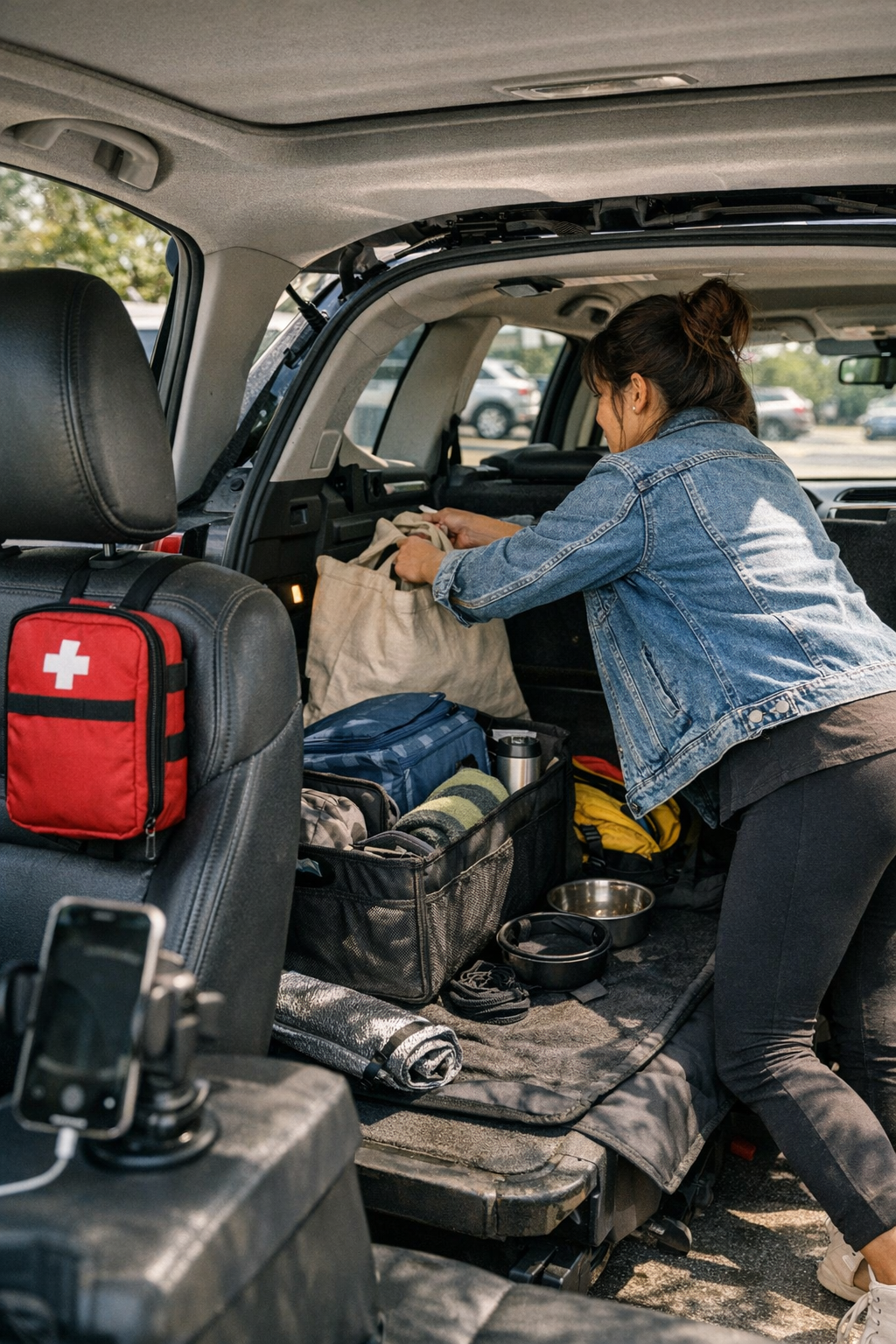
    Making an emergency kit visible changes every step of real use. Mounted in plain view—a seat-back with a zipper out, a labeled cargo panel—it becomes part of muscle memory. Need it? You reach, open, and move on. There’s no scramble; just a known, repeatable gesture.

    The interior feels less ornamental, more functional. You may give up a tiny bit of that showroom flatness—the “just vacuumed” look—but the payoff is confidence: that readiness is visible, and the solution is always in play. Those few square inches of exposed kit beat the illusion of control when real circumstances demand action.

    What the Switch Actually Feels Like

    Difference shows up fast. After errands, your kit’s in the same place—no hunt, no memory test. When someone else takes the car, there’s no briefing required: everyone sees where it is, and the hesitation’s gone. A small accident—jammed finger, low battery—no longer involves setup or retrieval, only action. Cleanup goes smoother too: the kit doesn’t become another missing item under a mat or behind seats. End-of-week unloads are simpler, with no risk of the kit falling out with spilled groceries or rogue crumbs.

    The car still reads as put-together, but now actual function beats the look of order. Nothing critical slides out of routine; the kit stays in circulation, not in hiding.

    Choosing Peace of Mind Over Perfect Appearance

    For anyone who’s prized that “just detailed” look, a visible emergency kit may feel like a concession—an imperfect edge in a sea of symmetry. But time and use prove: grabbing the kit in under three seconds beats searching in circles for three minutes. Especially where stops are frequent, drivers rotate, and cargo changes daily, speed and certainty matter far more than a few square inches of tucked-away order.

    Static, showroom arrangements break instantly under real driving strain. True readiness means being able to reach what matters without searching, juggling, or guesswork—again and again, no matter who drives or what gets loaded next. You want your hand to land where help sits, not waste seconds hoping you remembered your last “perfect” spot.

    Get practical upgrades for real driving routines and more dependable car setups at DriveWellSupply.

  • Streamline Your Carry-On with the Light-Day Packing Method for Travel Efficiency

    The first sign isn’t visual—it’s the moment your “organized” carry-on slows you down at the one place you can’t afford delay: airport security or boarding. You reach for your passport or phone and realize what looked tidy at the hotel is suddenly a clumsy, layered obstacle when speed matters. The neat stack of pouches and perfect zipper pulls fooled you in your room, but with three trays ahead, documents to show, and strangers close behind, every extra unzip or pouch shift costs time, pressure, and sometimes, your place in line. It’s the difference between packing for a catalog shot and packing for actual movement: the structure that feels manageable on a calm morning becomes a drag on every checkpoint, tray-transfer, or quick boarding transition.

    When Order Slows You Down: Recognizing Hidden Movement Friction

    It’s not mess that breaks your travel flow—it’s friction. The warning signs start after just a few document checks between curb and gate: a pouch blocks quick reach, or a neatly zipped compartment slows you by one futile motion too many. Your “quick access” pocket is jammed by a sideways organizer; a passport sleeve now sits under a tech pouch; the tidy stack slips and reshuffles every time you dig for ID. Seconds lost reopening and resealing bags at the tray add up fast, and line pressure makes each flustered search feel twice as long. This isn’t a one-off annoyance. It’s the same sequence—pause, shift, repack, reset—repeating until even the most careful setup feels heavy after a half hour of real-world use.

    Real-World Example: The Line That Won’t Wait

    Security at 6AM: trays everywhere, staff waving people through, dozens moving at once. You know your passport sleeve is “in the right spot,” but a tech pouch has edged over the zipper just enough to jam access. You fumble, unstack, and re-stack under the gaze of the impatient travelers behind you. Instead of breezing through, you’re holding up the line, reaching awkwardly, or worse, dropping a card because your setup has turned quick reach into a multi-step puzzle. With every checkpoint, you reassemble your so-called order—each round under time pressure, each round less convinced the arrangement works beyond the hotel room.

    The ‘Light-Day’ Packing Mindset: Fewer Layers, Faster Movement

    Flyers who move fastest don’t chase perfect visual order—they chase practical access, especially after recognizing how the wrong structure collapses under repeated strain. The light-day method throws out maximal sorting for minimal, logical layering. Instead of a vertical parade of pouches, the focus shifts to surface-level essentials: the few things you’ll actually need to reach between security, boarding, and seat entry. Passport, charger, ticket—each sits on the surface or right at the main zipper path. Everything else—snacks, backup cables, toiletries—gets assigned to lower-access, “long stop” zones where slow retrieval won’t matter. This isn’t a neatness downgrade; it’s an upgrade in how little you have to handle or shuffle under time pressure.

    Why Flat Dividers Beat Pouch Stacks

    The classic mistake: trusting a “one-pouch-per-function” system to work during real movement. But in the field, each stacked organizer adds an extra shuffle and every misplaced sleeve becomes a tiny obstacle course. Standing in an aisle or hunched over a tray, you realize that moving one pouch just to swipe your passport or headphone case is friction you can’t afford. Flat dividers or wide sleeves make a difference because they turn access into a single motion—an unzip, a reach, a done—no puzzle, no reshuffling, and no regrets after three or four real uses.

    Packing That Stays Functional, Not Just Tidy

    Structural weakness in a setup surfaces fast during travel sprints: checkpoint resets, last-minute document checks, or seat-side digs for essentials. Several cycles in, most travelers will notice:

    • Visual order decays while friction mounts. Stacked pouches shift against each other, hiding the very pocket you need next.
    • Routine access turns multi-step. Opening one pouch means moving another, then realigning everything before boarding pressure builds up behind you.
    • Repacking steals your flow. What started as an “orderly” arrangement becomes a constant repack-and-reset cycle with each new movement.
    • Stress and error rates rise. Wrong pocket, missing pen, misplaced USB drive—all because you’re shuffling more than you’re moving forward.

    The Moment the System Breaks Down: Seat Entry and Overhead Bin Chaos

    Boarding exposes anything your packing routine hid. Squeezed in the aisle, people behind, you search for two essentials—headphones, ticket stub—only to find everything requires a shuffle and a memory test. There’s no time to calmly unzip and search. Instead, you’re blocking traffic, digging past the well-meant “order,” wishing your carry-on worked for right-now instead of five minutes ago. What looked tidy at home slows down the entire boarding process, while fellow travelers wait for you to solve a puzzle you didn’t notice until it cost you real time and comfort.

    Practical Shifts: How Small Layout Changes Beat Fancy Systems

    You don’t need a new bag—you need a realignment. The breakthrough? Keep essentials right at the surface, always accessible with one zipper, no matter how rushed or crowded the setup gets. Sliding documents into a surface sleeve, anchoring your tech pouch sideways against a main edge, or keeping comfort items only in outermost zones cuts search, cut delay, and builds real trust in your own setup—regardless of what the bag looked like zipped at the hotel. Over repeating flights or tight transfers, these changes erase the “where’s my stuff?” pause and keep your movement fluid, not interrupted.

    A Slimmer Tech Pouch Pays Off in Transit

    Tech is the same story. Bulky, over-segmented pouches impress at leisure, but any organizer that buries cords or chargers you’ll actually use just adds to the clutter. Prune it to the must-use items—keep the pouch slim and flat, and wedge it into a side pocket, keeping prime access zones clear for documents and right-now needs. This isn’t about looking minimal—it’s about not losing time and patience every time you move, reach, or need to reset in line or in the seat.

    Why ‘Neat’ Isn’t the Same as ‘Easy’: Over-Segmenting Creates Its Own Trap

    Too many pockets and sub-pouches lure you into thinking “everything in its place” means “easy retrieval.” But over-segmentation introduces new friction: split-second confusion about which compartment holds a boarding pass, or micro-hesitation unzipping one case too many as the queue tightens. Each extra barrier is a new opportunity to fumble, mistime, or misplace. In peak moments or crowded spaces, the cost is measurable, even if it isn’t obvious when you packed.

    Live Use Over Cosmetic Perfection

    The light-day method puts functional movement above cosmetic perfection. You can spot a setup that works because after three or four checkpoint runs, it still delivers direct, reliable access—no repeated ceremony, no shuffling, no rising anxiety as you approach another tray or boarding call. Cosmetic order counts for less with every real use; flow and instinctive handling count for more. If your bag helps you move, not just repack, it’s doing its job. If not, the difference shows up somewhere between the third zipper pause and the final overhead-bin scramble.

    The true test isn’t how your bag looks zipped and still—but how it handles at speed, under pressure, and after five or six cycles of real airport movement. A bag that stays functional in motion is what makes repeated travel less of an obstacle and more of a smooth sequence.

    CarryOnSupply