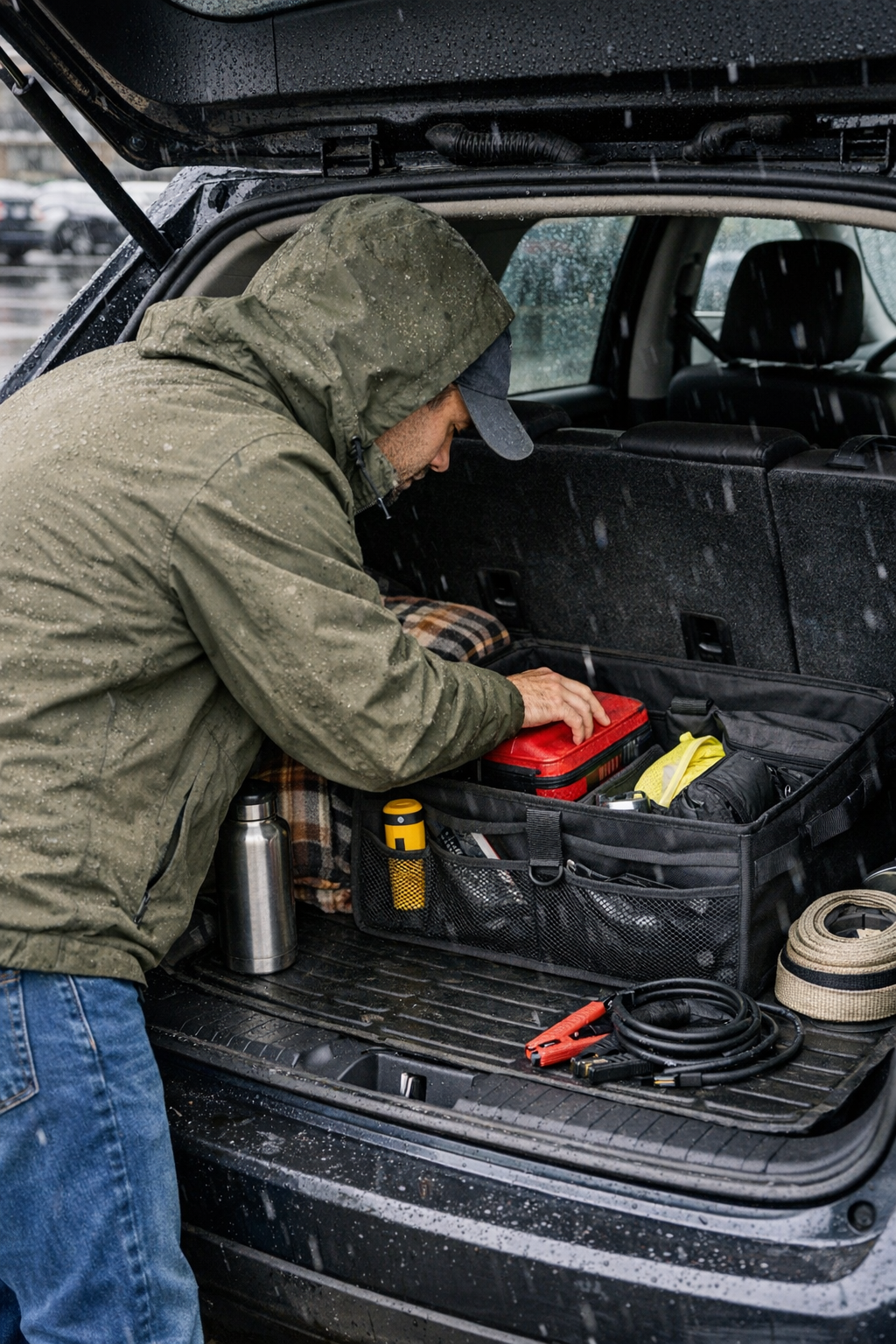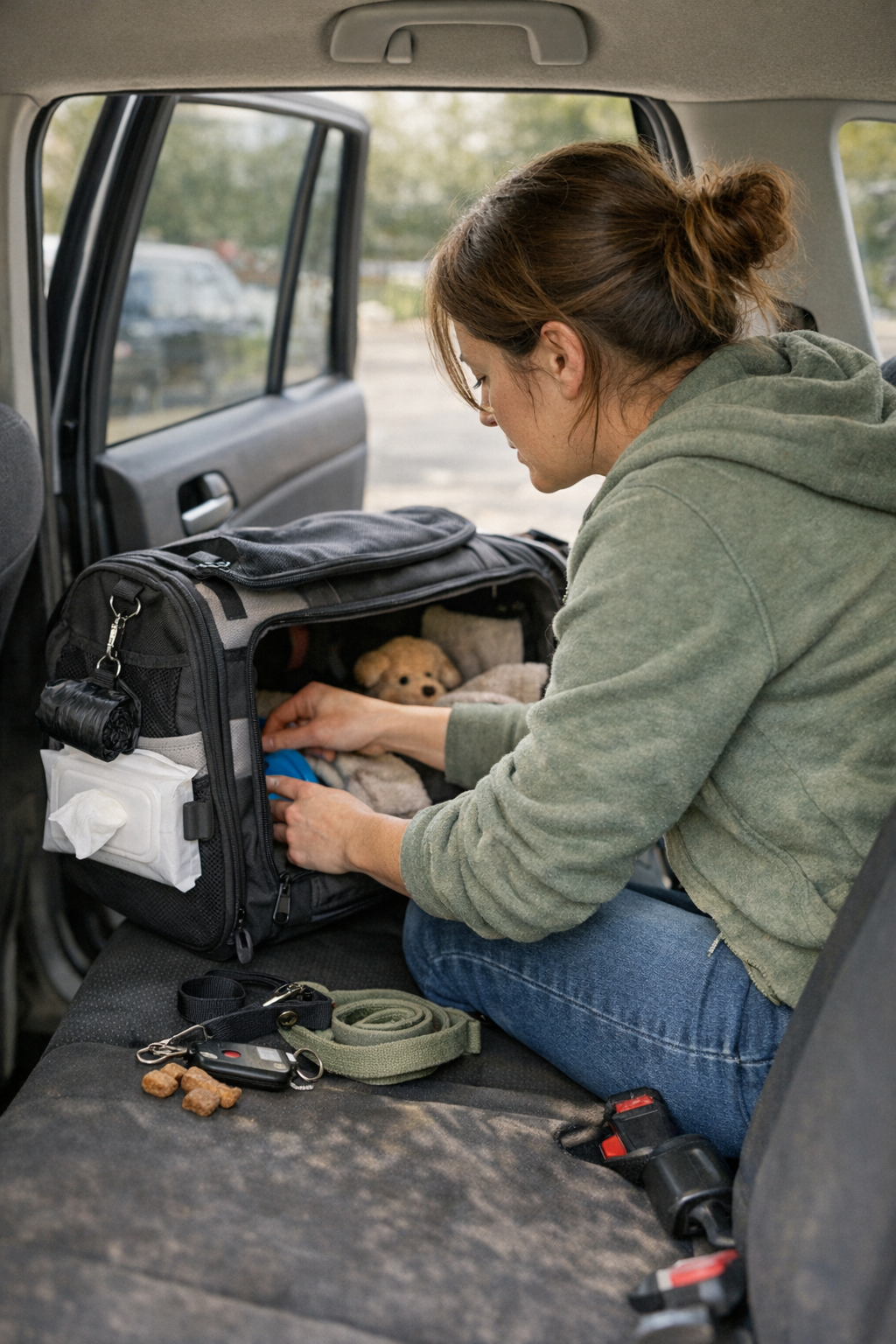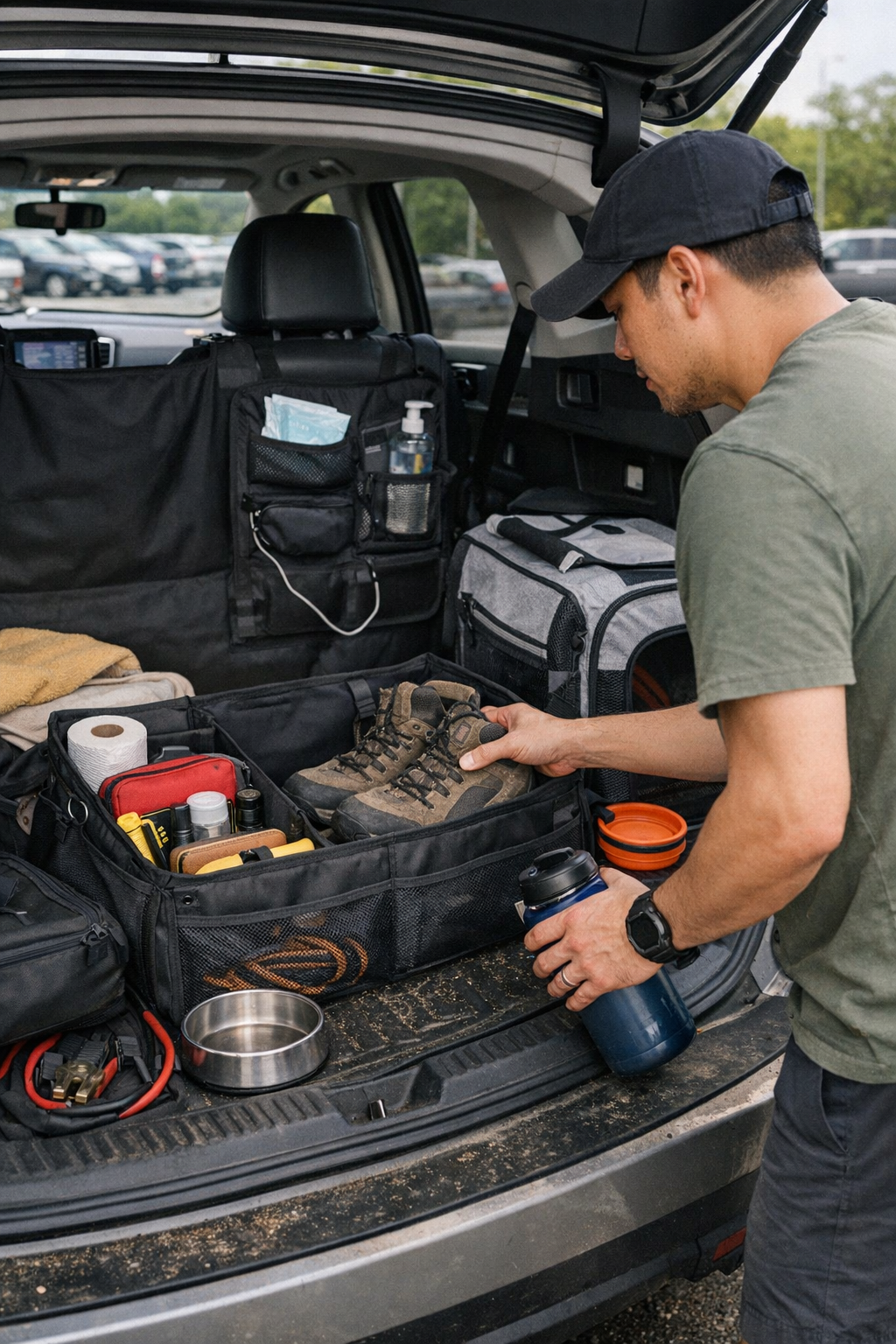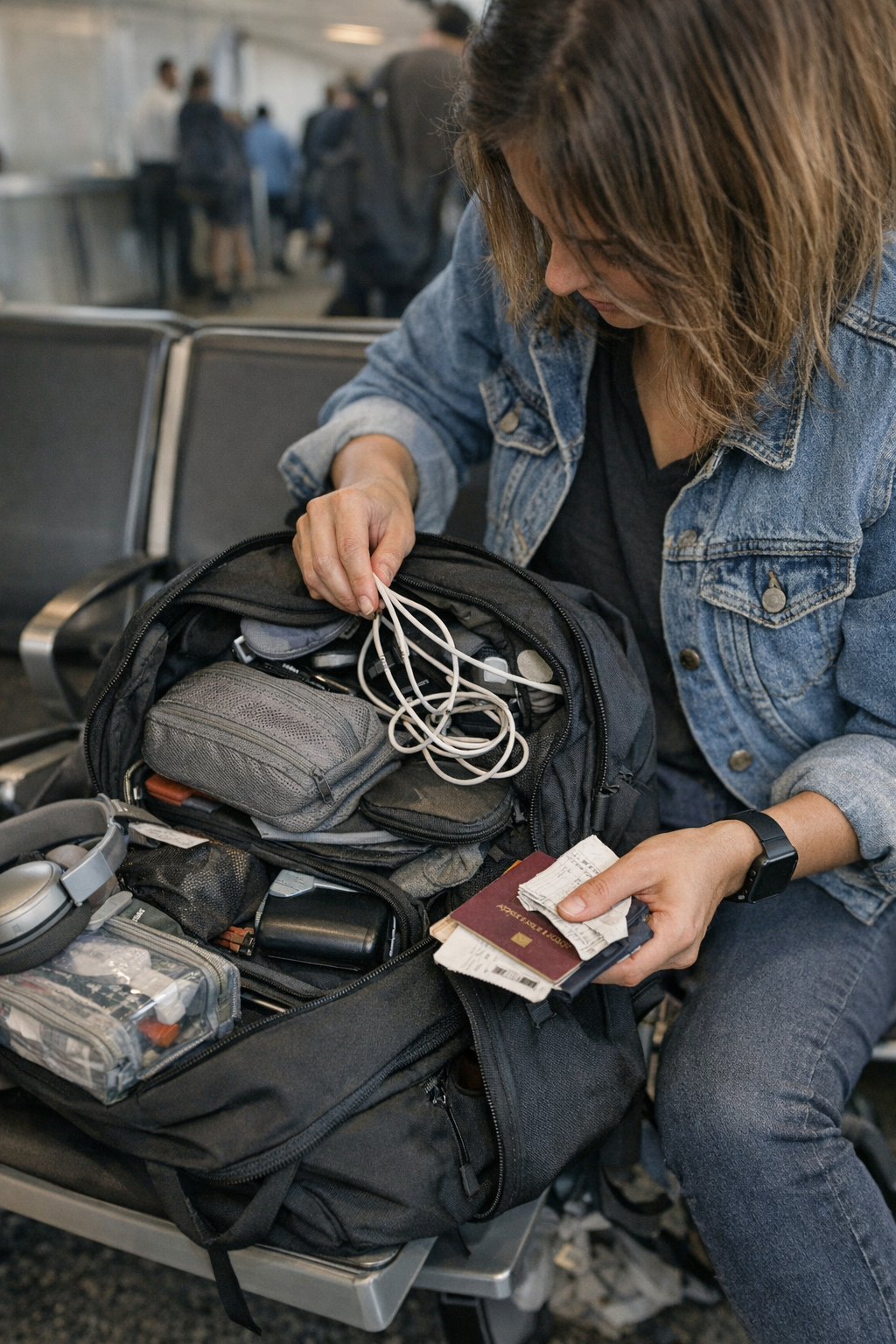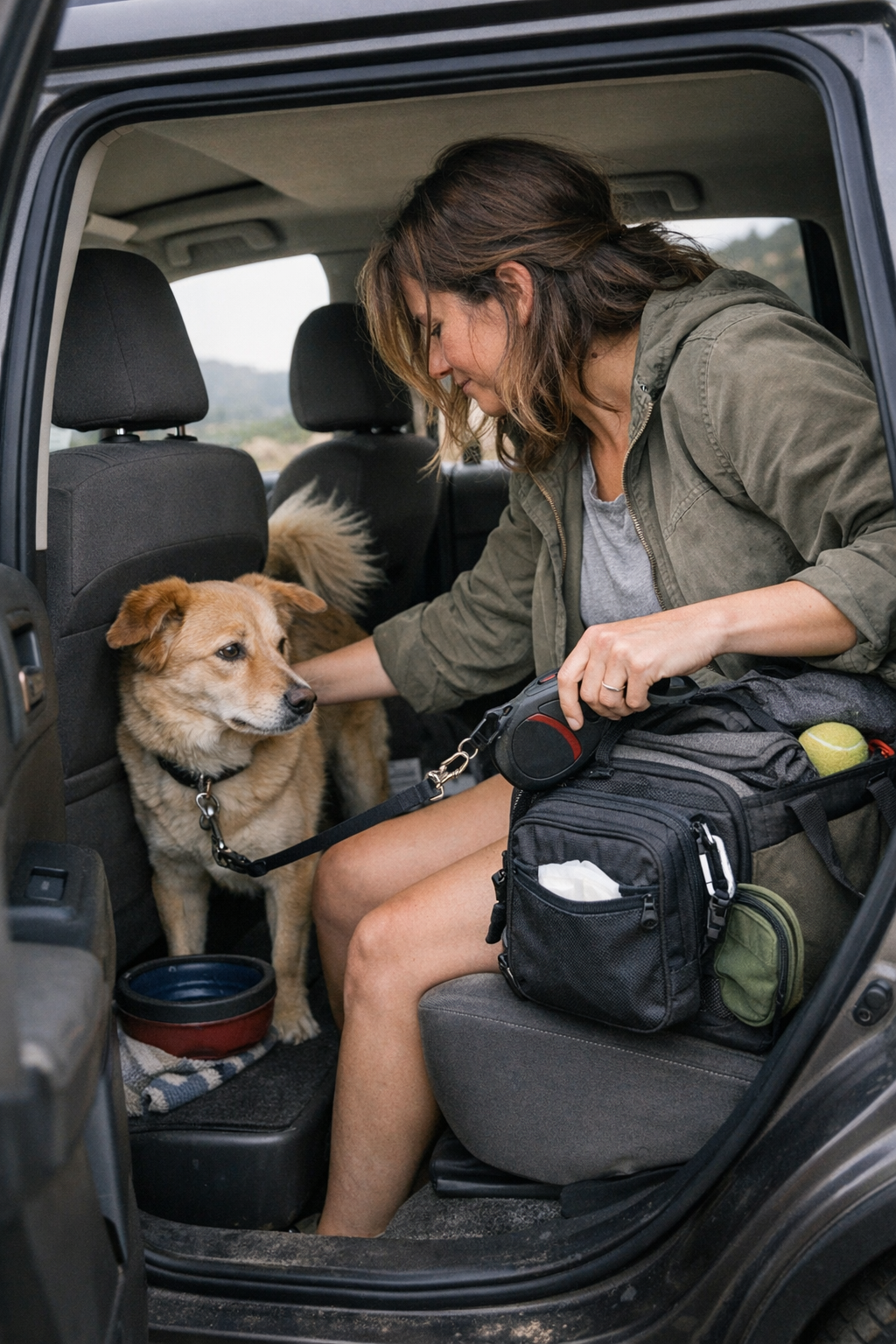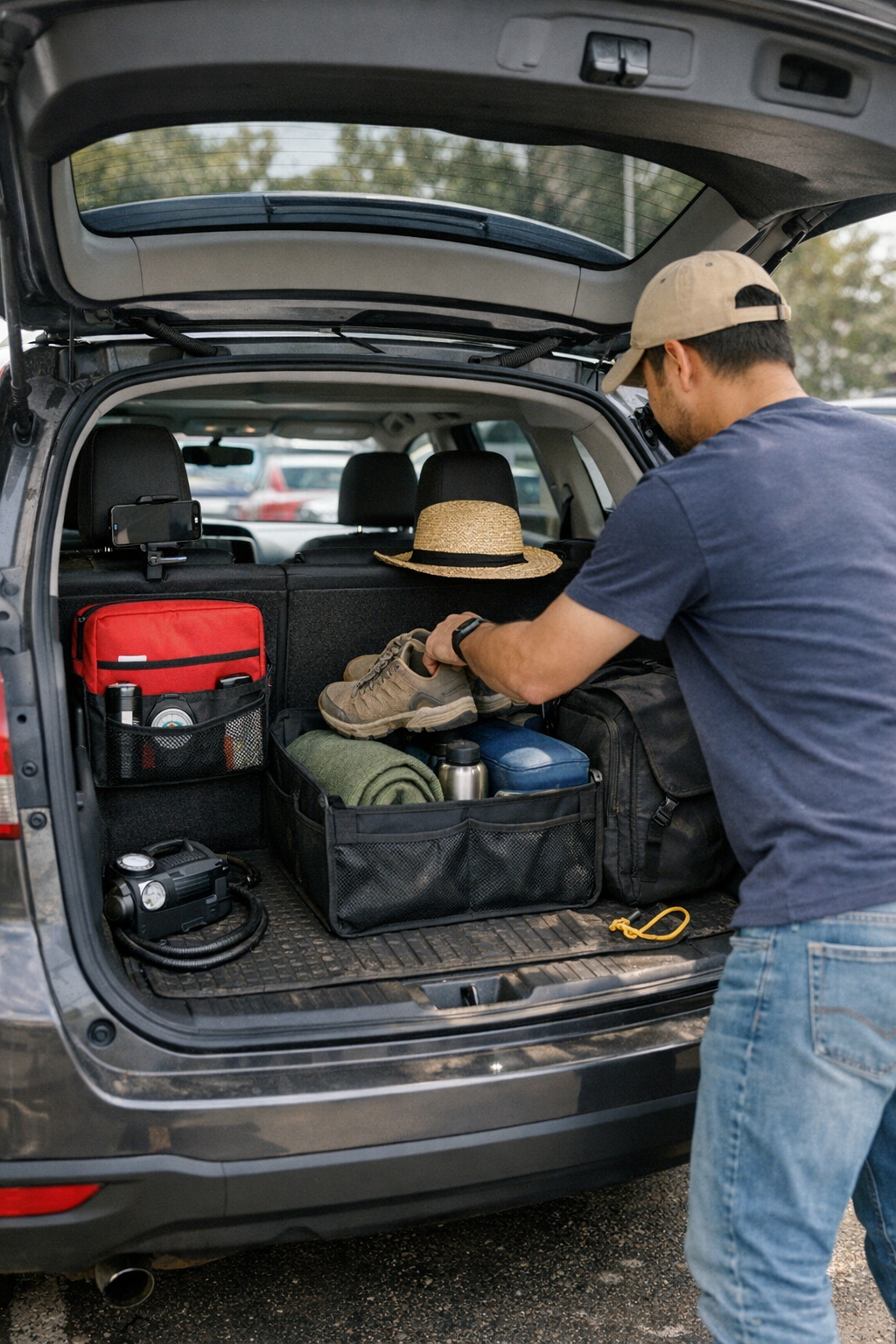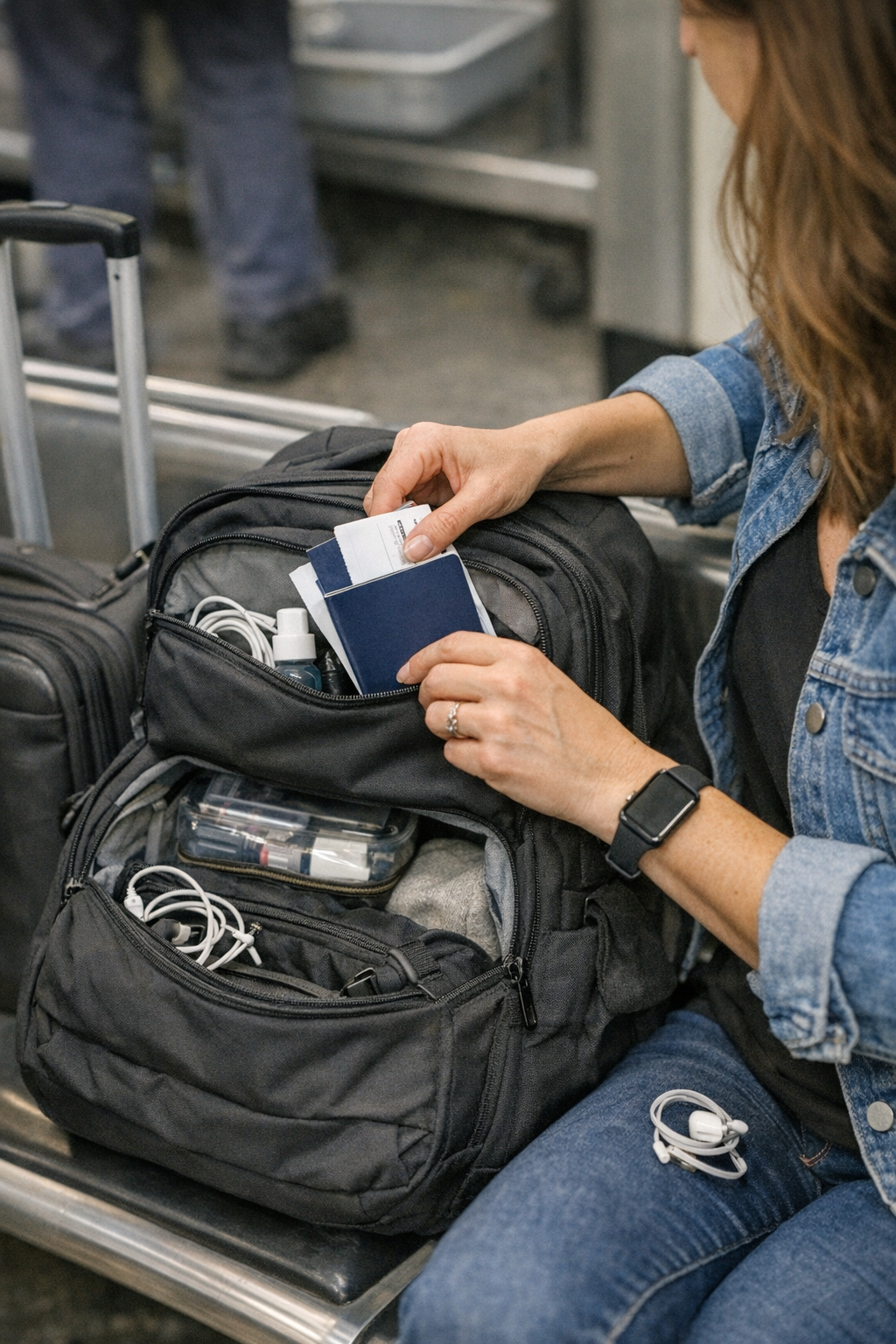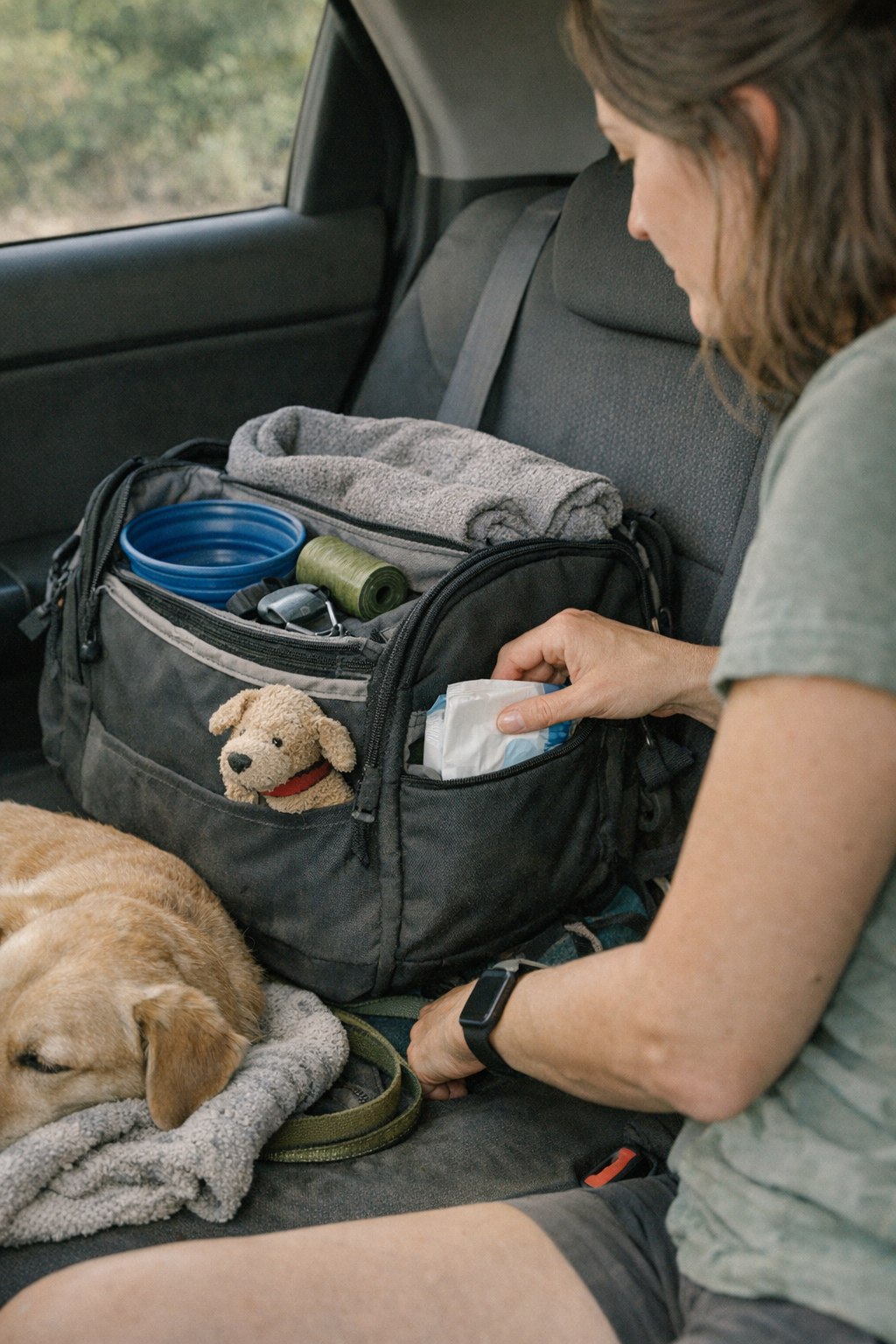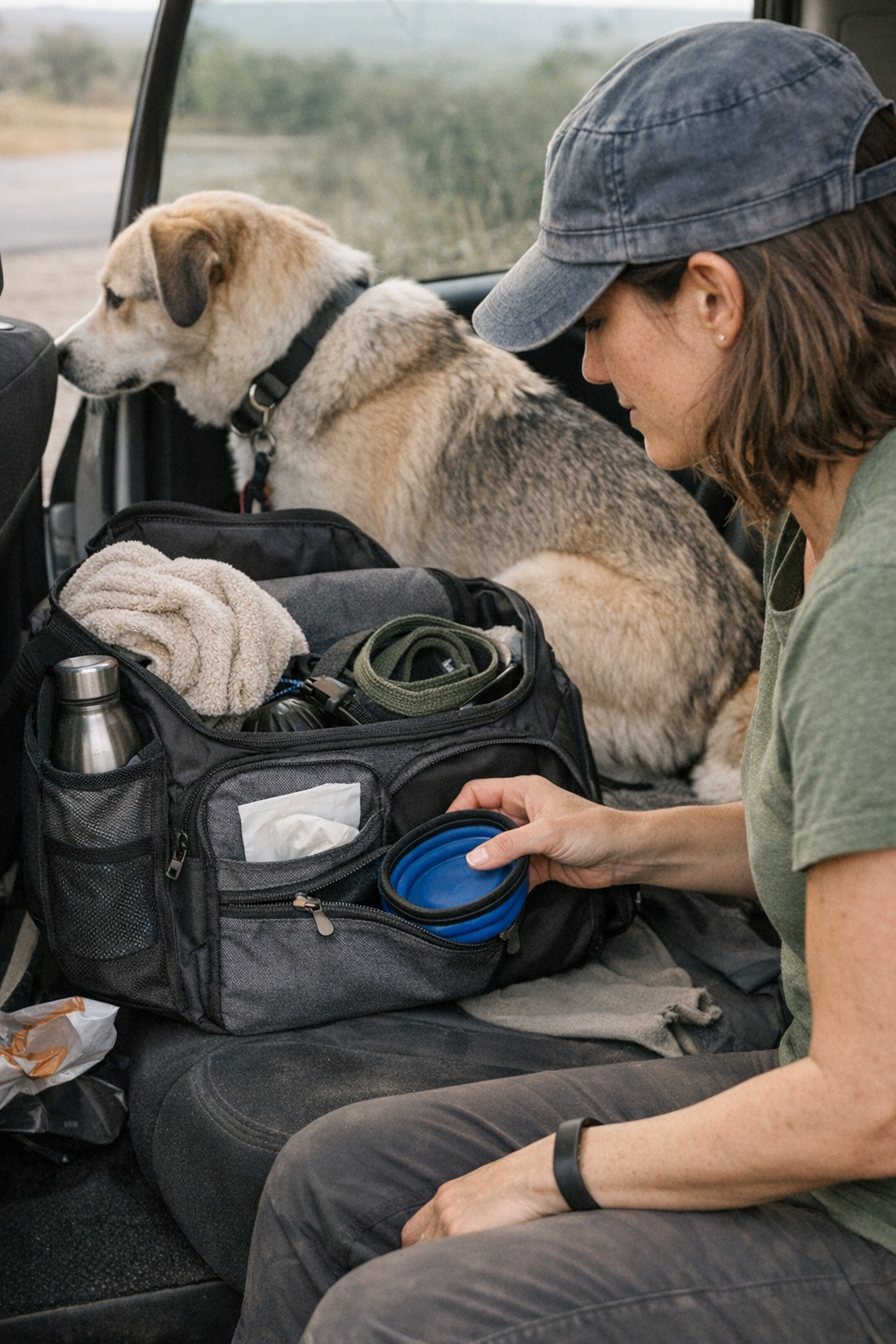
The difference between a pet bag that looks organized and one that actually works—every stop, every time—shows up fast when you’re on the move. The first scheduled pause: reach for wipes, and suddenly you’re peeling back blankets, unhooking a bowl, and watching your dog tangle himself in his own leash while you dig. Even the best-packed bag at home becomes a source of irritation when the real trip starts: what was “all set” becomes “not quite there” after the first turn off, one hand still on the leash, the other stuck between the cleanup kit and a shifting water bowl. The PawGoTravel world is built around this constant, repeated friction—the pressure point between appearing ready and actually functioning in motion.
When Organization Doesn’t Survive the First Stop
Most pet-travel kits start out photo-perfect: pockets lined up, leashes rolled, wipes sealed somewhere logical. But real travel—a dozen small stops, seat-to-sidewalk-to-seat and back—quickly reveals how that setup cracks under repeated pressure. With every pause, items shift: wipes that seemed handy are now blocked by a comfort blanket, the bowl you need slips beneath a tangle of straps, and just getting a hand on essentials means unlearning your “system.” Each scramble slows the next. Dog grows restless; you get visibly more impatient with each recovery.
You see it as soon as you have to reach for wipes in a hurry—the leash is on top, but the only thing coming up is the edge of a towel, while somewhere a bowl slides out only if you take out half the bag first. These aren’t disasters, but the flow breaks down. The small, repeated chase for the right pocket saps attention and patience—each disruption tightening both leash and nerves, and leaving you worse off the next time you stop.
A Bag That Looks Ready but Drags in Use
Initial neatness tricks the eye. Freshly organized, some bags open flat, show everything, and convince you the setup is locked in. But by the second or third pause, you reach for wipes and catch a toy instead; the cleanup kit is now behind two layers. Smooth seat-side handling, in practice, means awkward dig-and-close, items threatening to tumble, and the sense that “well-organized” at home doesn’t hold up to start-and-stop travel. Comfort items help your dog—but in blocking faster wipe access, they slow you down where it matters most.
The main issue isn’t lack of pockets—it’s how repeated, quick access keeps failing once movement and unpredictable stops are real. A single delay: fine. Three or four stops in, now you’re dealing with jammed zippers, half-open pouches, reshuffling gear. More interruptions. Each “small mess” forces another reset. The longer the trip, the more you brace for the next breakdown in flow.
Where Interruptions Stack Up: The Real Travel Pattern
Trips with pets bend around variables you can’t schedule—a busy gas station, an anxious dog at the curb, unexpected bathroom sprints. These transitions expose bag weaknesses: when your wipe pocket locks behind an awkward zipper or your water bowl slips under everything else, short breaks drag out and your pet’s patience wears thin. Every extra minute wrangling gear means another tail tangle or car-door standoff.
A routine pattern: you squeeze in a walk stop, leash in hand, but can’t spot the cleanup pouch you packed on top just an hour ago. Bowls get doubled under towels, wipes vanish behind chews, so every retrieval turns into a minor hunt. Each run-through blurs original order, leaving both you and your pet a little less ready for the next round.
Overlaps That Don’t Seem Like a Problem—Until They Are
Packing less won’t solve it if the essentials still overlap. A trim bag with bad pocket placement means basic items—bowls, wipes, leash—overlap and switch places with every movement. Efficient on paper, but in motion the “system” becomes a repeating trial: grab one thing, displace another, reset after each stop. The problem isn’t too much stuff; it’s the wrong things always blocking quick reach.
The Shift: Structure That Absorbs Constant Use
What changes everything is structure—quick-access design that matches seat-side urgency, not just shelf appeal. Switching to a bag with an exterior wipe pocket, or a fixed bowl slot you can open one-handed, means less unzipping and less rearranging. You keep your eye on the dog, grab gear in one motion, and don’t have to brace the whole setup against a car seat just to avoid a spill.
The real shift is visible: dog waits calmly while you grab the right item the first time; pockets aren’t left half-dangling open in the rush; restocking between stops takes seconds, not another round of folding and stuffing on a crowded curb. The bag’s layout stops being a hidden opponent and starts supporting the rhythm of repeated, real stops—not just looking neat parked at home.
Identifying the Persistent Weak Spot
If you regularly find yourself pushing aside items to reach basics, fighting blocked zippers, or dreading the next bag opening, your setup is outmatched by your actual travel habits. Notice these tells—a brief pause before each retrieval, a sigh before opening a “neat” compartment, the drained expression when you realize reset time is creeping up. The weak spot isn’t hypothetical; it’s slowing you every cycle.
Sometimes, structure is the fix—a marked external pocket for wipes, a side-zip bowl access, or dedicated slot for the leash. The bag won’t make travel clean, but it can remove a constant interruption. Ease of access does more to settle both you and your pet than any perfect fold or detailed organizational chart. It’s the interruptions, not a subtle mess, that break real travel flow.
A Bag That Holds Up to Real-World Movement
Genuine calm on the road comes from a travel bag that won’t set off a new scramble at each stop. What matters, trip after trip, is not the look of the starting layout, but how the bag responds when every piece gets put to the test. You want a structure that holds access open: effortless reach, no hidden dig, and a reset so automatic that the movement from seat to curb to seat again flows without hesitation. With the right structure, each handling moment becomes manageable—not because everything stayed neat, but because you never have to pause, unpack, or rethink mid-trip.
Find travel setups designed for repeated movement, not just first-glance neatness, at PawGoTravel.