Category: Travel & Drive

  • Streamlining Night Walks with Dogs for Safer, Smoother Outings

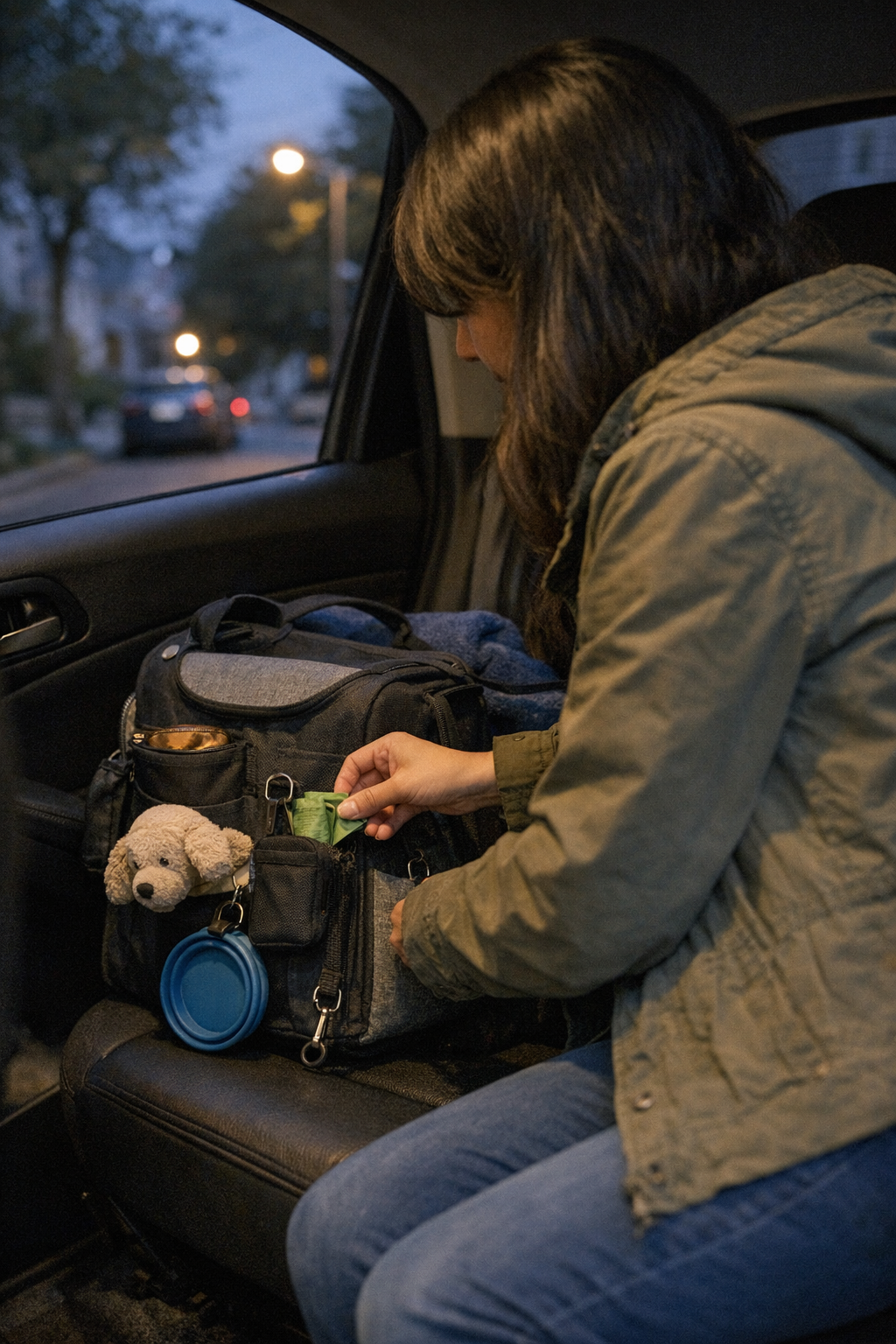
    Getting your dog out for a night walk looks simple—until you need to pull a waste bag or flashlight in the dark, one-handed, while your pet strains against the leash. That’s when the line between “packed and prepared” and “actually equipped for real use” appears. A setup can look organized inside your car, but the first time you pop the door in a dim parking lot and fumble through zipped compartments as your dog impatiently pulls, you see where most pet night-walk routines break down. It isn’t what you have—it’s whether you can reach it, move smoothly, and handle your dog without stopping everything else.

    When “Organized” Isn’t Enough: Night Walk Weak Points

    After-dark routines push every weak spot to the surface. The layout that seemed neatly “ready” during the day—leash looped, waste bags tucked, light packed just in case—starts to unravel after a few real-world stops. You might find the flashlight trapped at the bottom of a side pocket, forcing you to dig just as a car rounds the corner. Waste bags slide to the wrong section, hidden under backup gear or mixed with your own essentials. It feels minor until the fifth time you pause, blocking the door with one knee, dog impatient, pulling at your wrist—each extra second risking a lost moment, a missed cue, or an interrupted schedule. The neat look in daylight doesn’t survive repeated seat-side handling after dark. Instead, it exposes every setup that can’t shift from parked to moving—fast.

    Real Use, Real Pause: The Trip-Reset Trap

    The failure point in most night walk setups isn’t missing gear; it’s blocked access. As you swing out of the car, you’re juggling leash, keys, cleanup, and traffic. Cleanup bags buried under a loose jacket or flashlight wedged behind your wallet slow every handoff. Seconds pile up each time you reshuffle, restart, and dig. The friction isn’t always obvious—until you catch yourself opening the wrong pouch for the third time, or drop a waste bag on the ground while your dog darts past. Easy in theory, clumsy every night. A problem you notice, quietly, only once it repeats one stop after another.

    Why Access Timing Matters After Dark

    At night, losing a few seconds searching for the right item is enough to miss the window where your pet is controllable and the street is clear. It’s not about having every tool displayed, but being able to snag the one thing you need—by feel, not luck, even when your coat’s zipped and one hand’s full. Every missed cue—whether you’re struggling for a flashlight or untangling a bunched-up waste bag—pulls your attention from your dog and the road. Tidy internal compartments or double pouches sound practical, but force slow, awkward pauses where quick, single-move access is what the routine demands.

    How Setup Choices Play Out Under Pressure

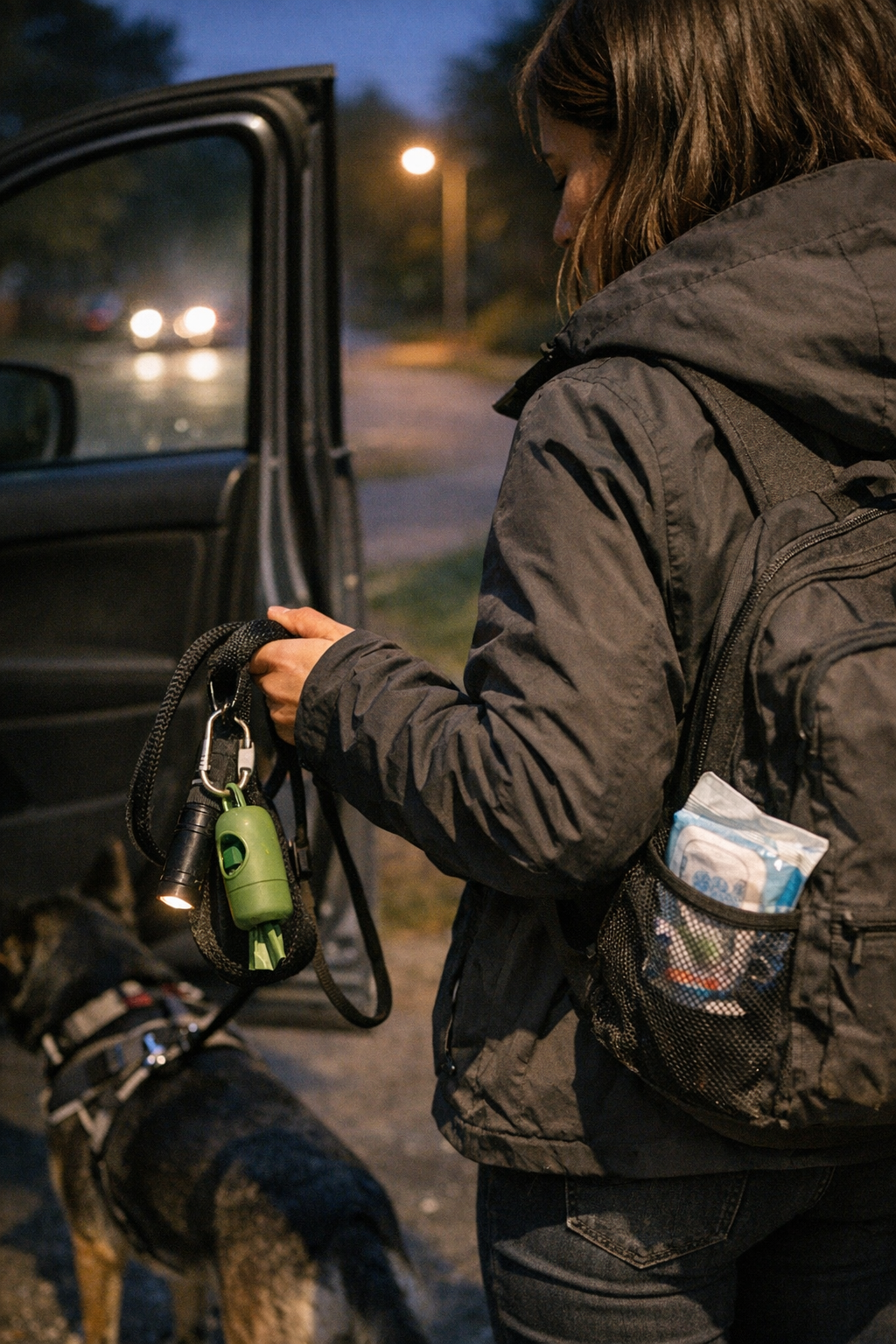
    What works on paper rarely lasts through a week of quick after-dark stops. Waste bags dropped in your jacket, wipes crammed with your own items, or a flashlight tucked out of reach make each trip slower. The “set it and forget it” approach turns into a shuffle-and-delay ritual. The adjustment is simple but makes a real difference: move waste bags to clip-ons, flashlight to your leash or belt, wipes to an outer pocket—so each one is ready, not buried, for each restart. Fewer stops. Less awkward re-packing. Less risk of dog and owner tripping over loose items. Perfection is rare, but a setup that keeps you in motion gives you a routine that doesn’t fall apart under pressure.

    Practical Adjustments that Actually Work

    Move Key Items to Fixed, External Points

    The “organized bag” only works if you never need anything fast. In reality, waste bag canisters clipped to the leash handle become a one-motion routine: grab, tear, done, even if your other hand’s full or your dog is already pulling forward. Clip-on lights—never zipped—cut out the seconds spent fumbling at every car exit and stop.

    Separate and Anchor Essentials

    Assign a visible, unblockable spot to every item that matters mid-walk. Puncture-proof mesh for wipes and belt clips for lights cut down the overlap. Stop stacking cleanup, hydration, and pet toys in the same space. When only one move is needed for each essential, the routine flows instead of stalling. Each double-layered pocket or mixed compartment adds another chance for confusion or delay—especially when conditions aren’t forgiving.

    Don’t Let “Backup Supplies” Crowd the Routine

    Keep extra towels and spare waste rolls out of direct reach. They belong in the organizer bag, trunk, or a secondary pouch. For daily stops, only the essentials—those you always reach for first—get an exterior, always-grab spot. The less you shuffle, the more time you control.

    What “Ready” Really Feels Like: Scenes from a Night Walk

    Imagine squeezing into a narrow parking space, your dog primed to jump out. There’s no time to fumble—one hook, bag in hand, light already on. Wipes are at your fingertips in an external mesh or belt pouch. The whole movement is over before your dog’s tension turns into pulling. The difference is seconds, but they add up: calmer handling, fewer mistakes, less stress on both sides. Flip that scene: you dig through three pockets, drop a bag on the ground, twist the leash as your dog pulls—every small snag stretches out the stop, magnifying restless energy and human impatience. The friction isn’t obvious at first, but it stacks up until the walks blur into a rolling set of micro-delays and misplaced focus. The weakest point isn’t your gear; it’s the overlooked gap between what looks tidy and what lets you move on demand.

    From Tidy to Usable: The Fix Is Focusing on Movement

    Night walks turn from routine to hassle if you set up for looks instead of use. Reworking your setup to prioritize access—waste bag, flashlight, wipes each in their own quick-grab spot—translates into fewer stops, quicker recoveries, and a walk your dog doesn’t fill with stress. What matters most isn’t the perfect layout, but the sum of small upgrades: less digging after dark, smoother transitions, less spilled frustration for you and your pet. That’s the PawGoTravel difference: setups shaped by actual movement, not just checked boxes. The payoff isn’t a flawless walk, but a routine that finally matches how you—and your dog—move in real time.
    Shop at PawGoTravel

  • Why Carry-On Organization Matters More Than Neatness Before Boarding

    The gap between a carry-on that looks organized and one that actually works in real airport flow becomes blindingly clear the moment you have to pull your passport from a packed bag while boarding is already moving. At home, sorting everything—cables, documents, small comforts—into neat compartments feels like control. But under real pressure, what seemed “ready” turns stubborn: you’re digging through hidden pouches, unzipping main compartments wedged between armrests, and finding the same charger stuck beneath yesterday’s careful order. Actual travel exposes the limitations of setups built for stillness, not movement.

    Where Order Cracks: The Hidden Friction of “Neat” Packing

    The friction starts small: sitting at the gate, you unzip what you thought was a smart setup only to find your wallet under a toiletries pouch or your boarding pass buried past an unnecessary layer. Each retrieval turns into a mild scramble. You shift organizers aside, shuffle a sweater to reach a document, and every touch means extra seconds—just as space shrinks and your focus splits between announcements and crowd movement. Neatness back home becomes shallow currency the moment you need something fast; every reach interrupts the supposed order and nudges you out of flow.

    These disruptions aren’t isolated. In busy terminals and between repeated checks, the seconds add up. Each time you dig past tightly stacked pouches or disrupt a “layered” compartment, bit by bit, the visual order you built collapses into a cycle of minor resets and new mess—just to get one thing out and back in without scattering contents across the airport floor.

    Reaching and Repacking: Where Most Setups Falter

    The repeated pattern quickly appears: every document pull, cord grab, or snack retrieval means reopening the same zipper, shifting at least one item out of the way, and fighting to put everything back without losing more time. The “orderly” look erodes after just two cycles: pouch stacks loosen, smaller items hide under bulkier ones, and the feeling of control gives way to uncertainty. If grabbing your wallet means lifting half your bag onto your lap, squeezing everything back into place, or propping the whole setup on your knee while others walk by, you’re living out a layout that values neatness over speed, and smooth airport movement pays the price.

    What was designed to look tidy soon becomes a repacking burden—every quick access produces another mini reset, until the structure no longer fits the real movement of airport life.

    Gate Pressure: Where Visual Order Fails Real Movement

    It’s during gate calls and seat entry that weak setups betray themselves. The line moves, you’re juggling your bag in one hand while your phone buzzes for an update, and now the “safe” storage choice—an inner sleeve or a too-deep pocket—raises the stakes. A simple boarding pass check becomes an awkward two-handed dig; a missing charging cable forces you to crack open the main compartment in a bottlenecked aisle, drawing impatient glances. What worked for a packing photo fails under shifting bodies, crammed seats, and a real need for immediate access.

    Even well-meaning “compact” designs backfire: the same tight layout that keeps the exterior clean now blocks your reach, forcing wide unzipping and extra balancing. The result is a recurring risk—contents slipping out, or your quick move stalling the line as you re-sort stray items. The setup that promised order exposes its limits as soon as you need real flexibility in crowded, time-sensitive moments.

    Quick-Access Pockets: Moving Retrieval to the Front Line

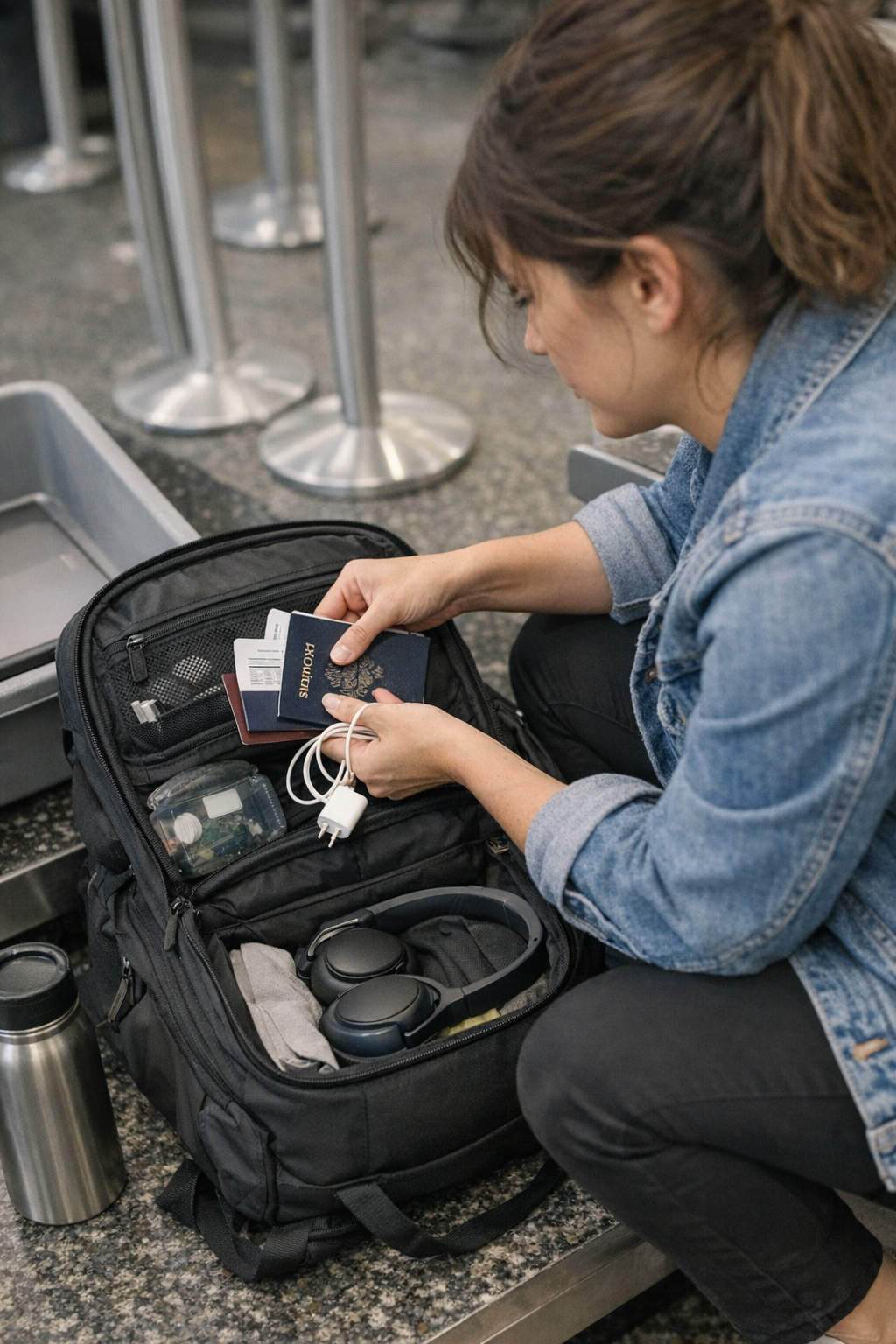
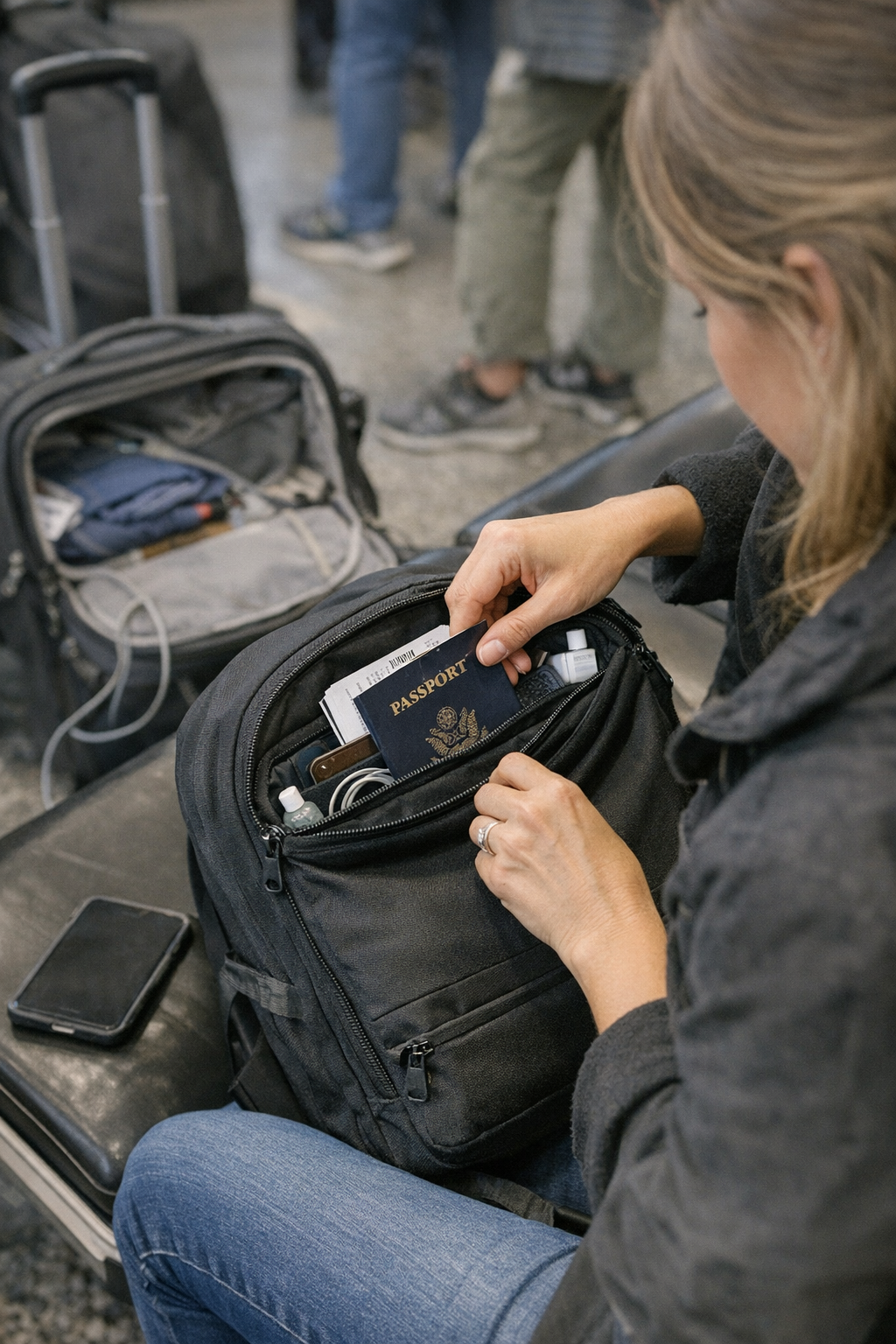
    The shift isn’t about packing less—it’s about where your essentials actually live. Placing your high-frequency items—passport, wallet, boarding pass, charger—into a single, quick-access pocket shifts your entire rhythm. Now, whenever you pause at a checkpoint, field a surprise request, or need to recharge, you open one zipper and solve the problem without touching the main compartment. There’s no chain reaction of shifting organizers around, no fear that pulling your phone will dump toiletries onto the seat or floor.

    This structure lives at the intersection of speed and control: the main pouch stays fully sealed and visually untouched; the quick-access zone handles the chaos of movement. Each retrieval returns the essentials pocket to readiness, instead of resetting the entire bag, shrinking stress and keeping you mobile. The system isn’t just neater, it’s structurally lighter in repeated use.

    Repeated Use: Where Efficiency Proves Itself

    Most carry-on setups fail not in the first hour, but after multiple cycles: security check, waiting zone, boarding, stowing, mid-flight retrieval, hotel arrival. Every time you reach for something vital and have to unpack or repack more than necessary, the inefficiency compounds. The warning sign is familiar—a five-step routine just to charge your phone at the gate, or another fumble through three layers to show a document at a checkpoint. Each repeated scramble is attention lost and comfort drained right when you need it most. Every extra moment spent reorganizing cable pouches during a tray transfer is time you don’t get to unwind or plan for the next leg.

    A structure that demands constant reordering wears on you—not because it looks messy, but because real movement always outpaces static design.

    Small Shifts, Big Improvement: Making Access Frictionless

    Most travelers don’t need a full makeover to avoid these frictions. Repurposing a front pocket as your essentials hub, adding a thin travel organizer, or simply moving key items out of layered storage to a dedicated top-access zone can completely change the flow. The move that matters is isolating frequent-use items—passports, chargers, documents—from the main cavity, and guarding this quick-access area from clutter. Now, even if you reach in five times in an hour, each retrieval feels fast, calm, and interruption-free. The bag’s outward order holds, but the internal flow now matches real airport movement, not just a tidy room photo. Forgotten tension fades each time you skip the old scramble, marking the shift from looking organized to moving with purpose.

    Discover more setup-focused travel tools and essentials at CarryOnSupply.

  • Why Daily Car Upkeep Beats Monthly Deep Cleaning Every Time

    The difference between a car that’s merely “tidy” and one that actually works for you shows up after the third quick stop, not on the first clean sweep. Charging cords loop under your bag again. The floor mat rides up to reveal grit where your heel lands, even though you squared it before leaving. On paper, your car’s setup passes the visual test. In practice—especially through a week’s worth of errands and re-entries—it turns into a slow, friction-filled sequence of fixes and mini-cleanups you can’t see coming until the aggravation builds.

    Friction You Don’t See Until the Routine Breaks Down

    Most car setups fail by Wednesday, not Wednesday next month. Charging lines look contained until a shoulder bag yanks them loose each morning. Coins and receipts lie flat until a single hard turn scatters them into odd corners, just as you reach for your coffee. A mat you adjusted before work creeps back under each shoe entry, so dirt grinds into newly exposed carpet midday—again. None of these feels major at first, but after a handful of stops and starts, the return-to-car moments become less automatic, and more about correcting the same annoyances on repeat.

    It’s never about one pile of visible mess. It’s how quickly “organized” slides into “now I have to fix this again.” A neat surface starts to unravel at the edge—trays that become spill zones, hooks that turn into tangle points, covers that shift just enough to matter without looking obviously wrong. The time you spend digging, untangling, or realigning adds up, making the entire drive feel heavier than the mess ever suggests.

    Why Most Setups Can’t Survive Repeated Errands

    Clutter returns so quickly because almost nothing stays anchored under routine pressure. Every loose charging cable is a slow booby trap; a sharp turn or an under-seat slide away from blocking you when you’re in a rush. Mats drift, seat protectors bunch, and “catch-all” organizers quietly overflow into dumping grounds that slow your retrieval of just one thing—keys, charger, sunglasses—when you actually need it. Flexible bins become mobility magnets: what was handy on Sunday turns into a fumble point by midweek, especially if the organizer you “added for convenience” is the very thing slowing down loading or unloading.

    This invisible friction isn’t just about more cleaning. It’s about setup structure failing to support real car use. If your car’s system lets slip anything—charging lines, cargo trays, door bins, emergency kits—the result isn’t just more mess: it’s lost time, cleanup that never quite ends, and a near-constant low-level frustration each time you restart your routine.

    Everyday Scenes Where Setup Weakness Quickly Shows

    It’s never “just one thing” slowing you down. Reaching back after a coffee run: receipts wedge under the seat. Multi-stop errands: a sweater or gym bag slides off the seat, landing in the footwell each time you brake. Shopping for groceries: handled bags press cables out of their dock, so your phone cord winds up tangled around bottle necks by the next stop. Trunks look compartmentalized—until a suitcase and a new package bump trays out of the way, exposing how easily loosely placed organizers turn into loading obstacles.

    The real weaknesses show up when routines overlap. Shared cars with family or pet gear? One person’s mat fix is undone by the next entry. Dog harness anchor blocks access to a charger. What seemed calm and under control on Sunday devolves by Friday—all because repeated, real-life movement reveals where the system breaks, bunches, or lets clutter drift straight back in.

    The Compounding Effect: Why Small Issues Become Routine Roadblocks

    Most cars aren’t sabotaged by one glaring mess—they’re undone by layers of minor slowdowns that stack up until the routine collapses. A mat that catches your heel forces a pause every time you get in. A phone cable you left “just so” ends up looped under the cupholder by day two. Storage bins collect rolling change or random paper, which slide into armrest access by Friday’s commute. The small pauses you take to fix or adjust just keep adding up, especially as each “quick fix” slips a little further out of alignment by the end of the week.

    This isn’t dramatizing small problems; it’s what actually happens to those initial “solutions” that aren’t truly anchored or well-placed. Each small friction point not only frustrates, but slowly creates more to clean, more to move aside, and more to reset—raising the overall maintenance cost of your routine until you start to dread the next drive.

    What Actually Makes Car Routines Easier?

    The only setups that hold their own against five days of errand loops and work runs aren’t necessarily the most minimal—they’re the ones designed for repeated impact and reset. Anchored phone cables using fixed dash clips mean you don’t fish around on the floor before every other drive. Shallow, seat-side bins (secured with Velcro or built-in anchors) keep coins, keys, and transit cards hand-ready instead of collecting at the bottom of a wobbly tray. Genuine flush-fit mats—with grips or anchors at threshold spots—stay in line even as shoes drag grit over them, stopping dirt before it cuts into exposed edges.

    High-contact points—where your heel lands, where your elbow reaches, where a passenger drops a bag—predict real friction. Accessories that lose position at these spots create the very drag you bought them to avoid. That’s why reliable setups always start by fixing what gets touched, kicked, or pressed the most, not just what “looks tidied up” to start.

    Daily Resets: The One-Minute Habit That Protects Your Flow

    Full overhauls take time. But one minute after a park or trip—clipping the cable, straightening the mat, tossing loose clutter into a stable bin—prevents friction from creeping back. The aim isn’t to keep it showroom clean, but to interrupt tiny slowdowns before they spread: keeping heel lines flush to the mat edge, securing the charger right where your hand will expect it, making sure item bins haven’t drifted from their spot. This habit turns a car from a catch-up zone into a workspace that’s ready, not always waiting for rescue.

    The difference is immediate: entry and exit clear up, access points remain open, and your go-to essentials are right where muscle memory expects—no sidelong glance or adjustment needed. Cleanup before the next drive takes seconds, not a full session with vacuum and wipes.

    How Anchored Solutions Quietly Outperform Quick Fixes

    Flexibility can feel like an asset—until the third or fourth trip jars everything loose. Loose cable, floating trays, and soft bins inevitably slide or flip, setting up small blockages that only show during real driving. In contrast, bin edges that grip, mats that lock, and cable channels that stay fixed all week deliver a subtle relief: you stop even noticing the setup, because nothing interrupts your move from park to drive and back again. That’s the real signal an accessory is earning its keep—not that it stays clean, but that it stops creating new problems in use.

    The payoff is cumulative. Anchored, well-designed routines become invisible partners. Every time you reach, load, charge, or re-enter and don’t have to un-knot, lift, or realign, it’s one more drive free of minor friction. Across a week, the car feels not just less messy, but more responsive—never asking you to reset the same loose tray or cable yet again.

    Organization Is About Repeated Comfort—Not Just First Impressions

    No setup is perfect, especially when the car gets shared, kids bring in new messes, or a dog harness gets added in the rush. Still, when mats, bins, organizers, and cable runs are set up to absorb the reality of repeated entry and crash, the result is less sudden interruption—less sprint cleaning, less hunting for what rolled away, less fighting the same spot over and over. The biggest benefit is a routine that functions, not just a cabin that “looks” passable at a distance.

    What’s left isn’t Instagram-tidy, but it is reliably ready for the next run, whether you’re reloading groceries on a rainy Tuesday or hustling everyone in after soccer. The setup endures because it’s built for the pressure that actually comes—setup that relieves you, not just the interior, from the cycle of messes returning by Friday.

    Explore anchored, repeat-use car accessories that stay put when real-life pressure hits at DriveWellSupply.

  • Streamlining Pet Travel Gear for Smoother Evening Walks in New Places

    Here’s where most pet travel setups fall apart: you’re out with your dog after dark, a leash in one hand, and what looked like a well-packed carrier now turns into a slow-motion scramble. Every stop, you’re guessing—was the clip in the side pocket, or buried with the wipes? That waste bag isn’t lost, but it’s pinned under a blanket and a collapsed bowl. The bag felt ready at the door, but now, every pause exposes one awkward truth: looking organized does nothing for speed when you actually need to grab, calm, or clean in motion. What you set up for neatness at home now works against you, trip after trip, and the moments you spend shuffling for essentials drag out your pet’s focus, notch up your own frustration, and turn a simple walk into a series of restarts.

    The Little Delays That Add Up

    Even a bag that leaves the house looking sorted—treat pouch stashed, bowl snapped flat, everything zipped up—doesn’t stay that way after a few real stops. The first delay comes when you stop to clean up; the wipes and bags are rarely on top. Instead, you’re elbow-deep, shifting folded mats for the same supplies every time. Try to pull a comfort toy quickly and find it has slid behind something else. It isn’t just wasted seconds. These repeated interruptions break your pet’s rhythm, making the outing less calm for both of you. Handling that seems fine at first exposes small flaws with every pause you did not plan for.

    Evening Movement Magnifies the Mess

    As light fades, search time nearly doubles. Items that seemed easy to reach are now scattered, or half-hidden in unfamiliar pockets. Your dog gets jumpy, tugging at the leash, while you fish for a leash clip that slid down behind stacked gear. The problem isn’t shortage of supplies—it’s unreachable supplies. Each new stop—grab waste bag, find treat, settle pet—becomes a blind dig.

    You reach for a waste bag but pull up the treat pouch instead. The spot you put the calming toy now means unzipping two compartments while your pet is already winding the leash tighter. The setup hasn’t completely failed, but friction creeps in with every repeated move, making return-to-action slower and clumsier—and your pet feels the tension first.

    Looks Organized, Handles Chaotic

    The false comfort of tidy packing vanishes the moment you’re actually in motion. Carefully built rows of gear look impressive at home, but by the third stop, your “system” demands you lift and shuffle items just to reach a simple need. Visual calm turns into physical chaos. With each restart, you replace visual clutter with shuffle time. What passes as “organized” before you leave the house becomes the very thing that interrupts the flow of a normal outing.

    Compounding Friction, Stop After Stop

    Each interruption builds on the last. The waste bags sink to the bottom by the second stop, blocking cleanup in a pinch. Leash clips and toys, wedged for tidiness, now mean everything moves when you tug one item. By the last half of a walk, your gear demands reset after every use. The more you have to reshuffle, the less your dog settles, and the more frustrated you get—because every extra second spent searching is one more moment pulled out of stride.

    Real-World Weak Points—Exposed Again and Again

    Actual travel weak points don’t show up the first time you use a bag—they creep in after a handful of ordinary interruptions. Standing by a dim street, your pet reacting to an unexpected noise, you realize the calming aid is buried for the sake of “tidiness.” Or as you wait to cross a busy intersection, you miss your window because your cleanup pouch tangled with your own essentials. Supplies that could resolve tension end up being the new source of it—because “organized” means little if you can’t get to what you need when you need it.

    When pet and owner items overlap—your phone blocking the leash, wipes wedged between snacks—every stop comes with its own extra handling. Each supposed “reset” makes the main problem worse: every stacked layer only demands another round of sorting at the next stop.

    The Value of Quick, Predictable Access

    True organizing wins when your most-used essentials—cleanup pouches, leash clips, calming items—are reachable in one direct move. Not “neatly nested,” not “tucked away.” Side or exterior-pouch access is what makes the real difference. Waste bag drawn in four seconds, not twelve. Toy grabbed right as nerves spike, not after a mat and treat switch. That’s the real test: repeat access, without new rummaging, every single outing.

    What Replaced the Hassle

    Adding just a few “movement-first” choices—cleanup pouch clipped right at hand, treats pocketed on the outside, comfort toy up front—not only sped things up but removed the constant bag reassembly ritual after every pause. What once felt like a series of forced stops now runs closer to “pause, grab, go.” Less reshuffling means your pet resets quicker, you keep pace, and the walk stays focused on the outing, not the bag.

    Choosing Structure Over Appearance

    Repeated use makes the real lesson obvious: efficiency always beats appearance. A good pet travel setup never hides essentials to create a look of order. If you have to unzip, lift, and hunt for a high-use item on every stop, your system isn’t working. Efficient structure means the stuff you need right now is always in one predictable spot—with less-used items sorted out of reach and out of the way. The best setups aren’t about being “packed” but about being ready for use without pause.

    When you judge bags, organizers, or carriers, focus on how they perform under travel, not how they appear fully loaded on a table. If access to waste bags or comfort items ever takes more than one step—or if a normal stop means a total reshuffle—you’re trading smooth movement for aesthetic neatness. That trade becomes painfully obvious the first time you need something fast on a dark curb or after an anxious startle.

    Better Walks, Fewer Interruptions—For Both of You

    Pet travel gear reveals itself in the little moments: a short reset, a quick-clean, a sudden grab for a comfort item. The only setups that work in real life are the ones built for reach and repetition, not a perfect pre-departure photo. When structure puts the right tool in the right place, you get a smoother outing, less stress with every stop, and an easier reset—trip after trip. Visible order means nothing if it eats up time and patience.

    The difference isn’t subtle to anyone who’s struggled with repeated reshuffling: the bag that moves with your routine—not against it—solves more than just mess. It keeps both pet and owner in rhythm and does the real work of travel, wherever the next stop actually takes you.

    Shop PawGoTravel for practical pet-travel gear and organizing essentials.

  • Why Packing Your Carry-On for Movement Beats Neatness Every Time

    The bag that looks “perfect” at home rarely keeps up inside an airport. Neatly stacked organizers, tucked-in document pouches, and zipped pockets all promise control—until you hit your first security line or need your passport in a hurry. It’s only after a few real-world retrievals that minor packing choices start turning into real slowdowns: multiple zippers to open for one boarding pass, a charger tangled under layers, or your bag suddenly splayed open across a checkpoint tray while others nudge forward and you dig for what you thought was accessible.

    When “Organized” Turns Into “Hard to Use”

    Tidy packing—cables rolled, toiletries locked away, documents slotted in labeled organizers—can fool you into feeling ready. But as soon as your feet hit busy airport concrete, appearance and function diverge fast. The structure that looked sharp at the kitchen table now requires you to unzip two or three compartments for a simple passport pull. At your first tray-transfer, you’re hesitating, pulling apart organizers, and stacking mesh pouches on the fly, with every delay amplified by the pressure of the line. Each time you repack after security, the “order” you built slips further out of reach.

    This isn’t just bad luck—it’s a side effect of setups made for storage, not movement. Things you reach for repeatedly—boarding pass, headphones, ID—end up buried under zipped pouches or behind layers built for visual neatness. That first access might feel smooth, but each repeated retrieval multiplies the problem: friction mounts and the original packing logic collapses through constant interruption.

    Repeated Access Reveals the True Structure

    The real test of any carry-on isn’t the first grab. By the third or fourth document check, access patterns start to show their weaknesses. A passport that’s slickly hidden behind organizers, a charger jammed below a mesh pouch, or an earbud case always at the bottom—they all slow you down at the worst moments. Each re-pack gets messier. A charger never quite goes back in its slot, a mesh pouch bulges after you pull just one cable, and what looked organized now refuses to cooperate. At home, none of these frictions exist; but in line, or on the move, every missed detail compounds. Flow is interrupted. Small messes accumulate.

    Recognizing the Cost: Slowdowns in Real Transit Moments

    Security Checks That Expose Every Flaw

    Airport security rarely cares how “clean” your packing looked before you left. One call for a laptop, another for liquids, and now your planned layout is scattering open on a hard tray. Mesh pouches catch, stacked organizers need to be transferred and restacked, and there’s no time to gingerly relayer everything. Your hand keeps darting into the bag just to find things that seemed obvious hours ago. Jam something back hastily, and it will slow you down again at your next checkpoint.

    Boarding and the Seat-Entry Struggle

    Breezing through security only trades one challenge for another. In the boarding line, your passport is lodged under the in-flight tech pouch—meaning you now have to balance your bag on one knee while you unpack in public. At your row, grabbing a tablet or headphones mid-aisle forces another round of loosening compartments, disrupting the fragile stacking order that looked so clever at home but now unravels into a juggling act.

    Overhead Bin Realities and In-Transit Retrievals

    Eagerly lifting your bag into the overhead bin? You’ll likely be pulling it back out within minutes if you miss a needed item. What was “on top” shifts and sinks, pouches slide, and suddenly a passport or boarding document is embedded in the middle instead of on hand. Each retrieval tugs at clashing layers—zippers catch, compartments sag, and a bag that looked organized when zipped now trips you up with every attempt to move quickly. The cost isn’t a visible mess—it’s the drag on your routine and confidence.

    Packing for Movement, Not Just Order

    Real airport cycles prove it over and over: storage-only setups get in your way, but packing for movement reduces friction. Every item you need more than once—passport, boarding documents, earbuds, a single charging cable—belongs in a spot you can reach in a single motion, with no layered pouches or secondary zippers in your path. Gear you won’t touch until landing? Bury it deep—out of reach, out of mind.

    Small structural tweaks quickly separate bags that slow you down from those that move with you:

    • Consolidate travel documents and top-use tech into one quick-access compartment, not scattered across pouches.
    • Keep separate organizers for cords and other low-frequency items, but out of your main retrieval zone.
    • Treat “organize everything” methods as checked-bag logic—not for your in-motion carry-on.

    After even a single trip, the change stands out. Instead of opening three zippers at every checkpoint, you’re making one move for high-frequency items. A laptop drops onto the tray without disturbing a dozen pouches. You can grab and stow your passport without losing the thread on airport flow. The bag looks less pristine—pouches and pockets might be a little looser—but it works with you, not against you, every time the routine repeats.

    Where “Less Orderly” Means More Useful

    The biggest concern many travelers have—“won’t my bag devolve into chaos?”—almost never matches reality. Allowing a little looseness in your main compartment gives you flexibility to adapt: this morning it’s your phone, this afternoon it’s your charger, every checkpoint your passport. Nothing ends up buried for long, and no retrieval feels like a teardown. The day’s rhythm gets smoother, not messier: fewer stops, fewer course corrections, less time untangling gear for a five-second ID check. The real improvement is cumulative—your movement gets easier, the small stresses fade, and you stop dreading every pause in the airport gauntlet.

    Small Adjustments That Deliver Lasting Relief

    The best setup isn’t the one that looks best right after packing, but the one that survives repeated in-transit use. Every multi-step retrieval—passport trapped under three layers, charger caught behind a sleeve, toiletries wedged deep—costs you seconds and patience each time. Changing the home for even one repeated-use item can make you the person breezing through security instead of the one rifling through pouches at every stop.

    So before you reach for another travel organizer, pause: think about which items you’ll want instantly, and whether your setup keeps them on hand when it really counts. The best systems aren’t just tidy—they keep up when your routine is exposed to real travel pressure, letting you move, reach, and reset with less drag at every step.

    See travel tools and organizers designed to make real movement easier at CarryOnSupply.

  • How Clear Access to Emergency Gear Transforms Your Driving Safety

    A car that looks perfectly organized can still leave you stranded when it counts. Daily driving brutally exposes the difference between “neat” and actually usable: you return to your vehicle, everything appears sorted, but the gear you need is blocked, buried, or somehow harder to grab each week. That’s when you realize—tidy bins and hidden compartments aren’t worth much if it means fumbling under pressure, especially during rain, darkness, or a roadside stop.

    When Order Hides a Hidden Weakness

    Picture the everyday return: you open the door after a grocery run or shift, floor mats are clean, bags look squared away, maybe the trunk is even lined up for show. Then your low-battery warning pings, and the charger is wedged between jackets and old receipts. Next drive, you spot a tire light—only to remember the pump is sitting beneath soccer gear and last week’s reusable bags. Tidy looks don’t help while you’re hunched in awkward reach, kneeling in a puddle, or groping in the dark for a tool that should be in hand. And just because nothing is spilled onto the seats doesn’t mean you won’t be stuck moving three things just to find the fourth.

    Repeated Friction in Normal Routines

    This is not a rare disruption. Routine parking, reloading, and car-sharing expose the pattern week after week—setup that looks settled but makes common actions clunky:

    • You re-enter the car after errands, bumping aside a tote to get to a supposedly “easy-access” bin—never as smooth as intended.
    • You return jumper cables one day, only to bury them under the next load of bags or groceries—so the “organized” trunk becomes a slow trap at the next battery scare.
    • Your seat-back organizer brims with useful stuff, but a mix of paperwork and emergency tools slows you down more than if they had been left in a pile.

    With every loading and unloading, the system becomes harder to trust. The more you “sort” and tuck away, the more likely your next urgent grab means kneeling on the driveway, digging past extra layers.

    Why Visual Calm Doesn’t Guarantee Smooth Access

    Minimal-looking cabins and clever stowage are tempting—until a real situation demands speed. Every hidden compartment or jammed center console is just one more layer spoiling your flow: cords twisted beneath water bottles, tire kits lost behind snack packets, the first-aid bag shuffled under a hoodie. It only takes a midweek cargo shift for what “looked organized” to become three added steps before you get to the useful gear.

    Pressure Reveals the Real Structure

    The gap shows up fast: rain hammers the roof, you’re stranded at night, or a kid’s scraped knee demands first-aid—and your system’s flaw is exposed. Suddenly, unfolding half the trunk to get a warning triangle feels like a failure. Even thirty seconds lost to searching ups your frustration, or keeps you out in the cold, or turns an easy fix into a nerve-wracking pause for everyone on board.

    The Core Problem: Overlapping and Shared Storage

    Catch-all bins and multipurpose organizers create more subtle friction than obvious piles. Any spot that collects unrelated stuff—the trunk side bin, the floor bucket, the seat-back pouch—gets clogged after ordinary weeks:

    • A floor bin fills with chargers, then absorbs empty bottles, umbrellas, and shoes—until your actual cables are buried out of sight.
    • A seat-back pocket started for roadside tools, but now carries parking passes, leftover snacks, and random gloves—making emergency access indistinguishable from glove-box clutter.
    • “Hidden” spaces become both harder to check and easier to block, meaning every real emergency kit gets lost behind three daily items.

    Even with regular cleanup, it takes just a handful of trips to reset all your effort—turning “order” into a new kind of slowdown.

    Consequences in Real Use

    This all shows up as delayed access: that split-second pause, the sift through wrappers, shuffling bags just to find a light or tool. If it happens during mild weather, it’s an annoyance. Add rain, darkness, or a roadside rush, and the difference between “neat” and “actually ready” becomes a risk not just to your nerves, but your time and safety. Hidden friction makes everyday trips feel manageable, but exposes its cost the moment routine fails.

    How Single-Access Zones Change the Routine

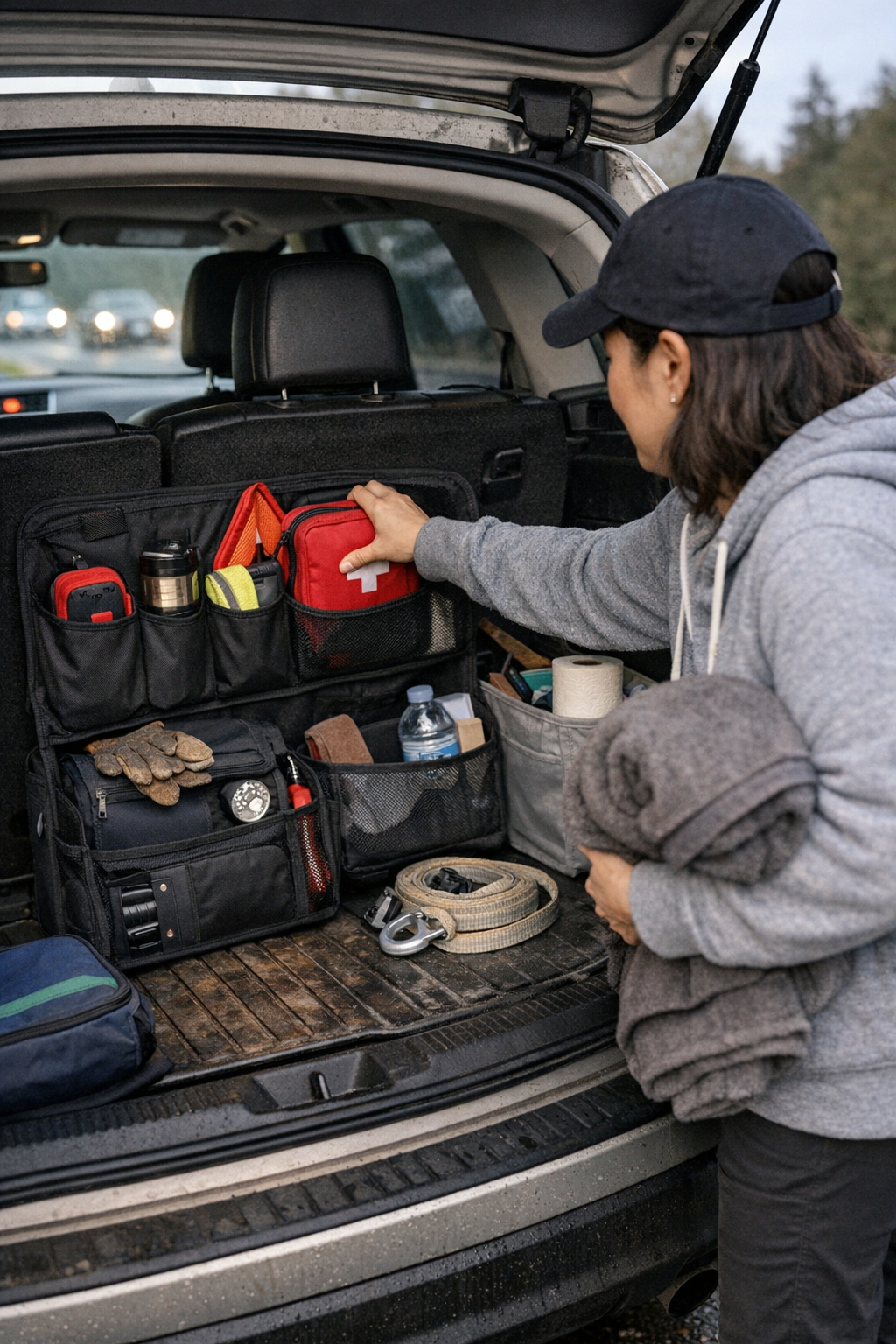
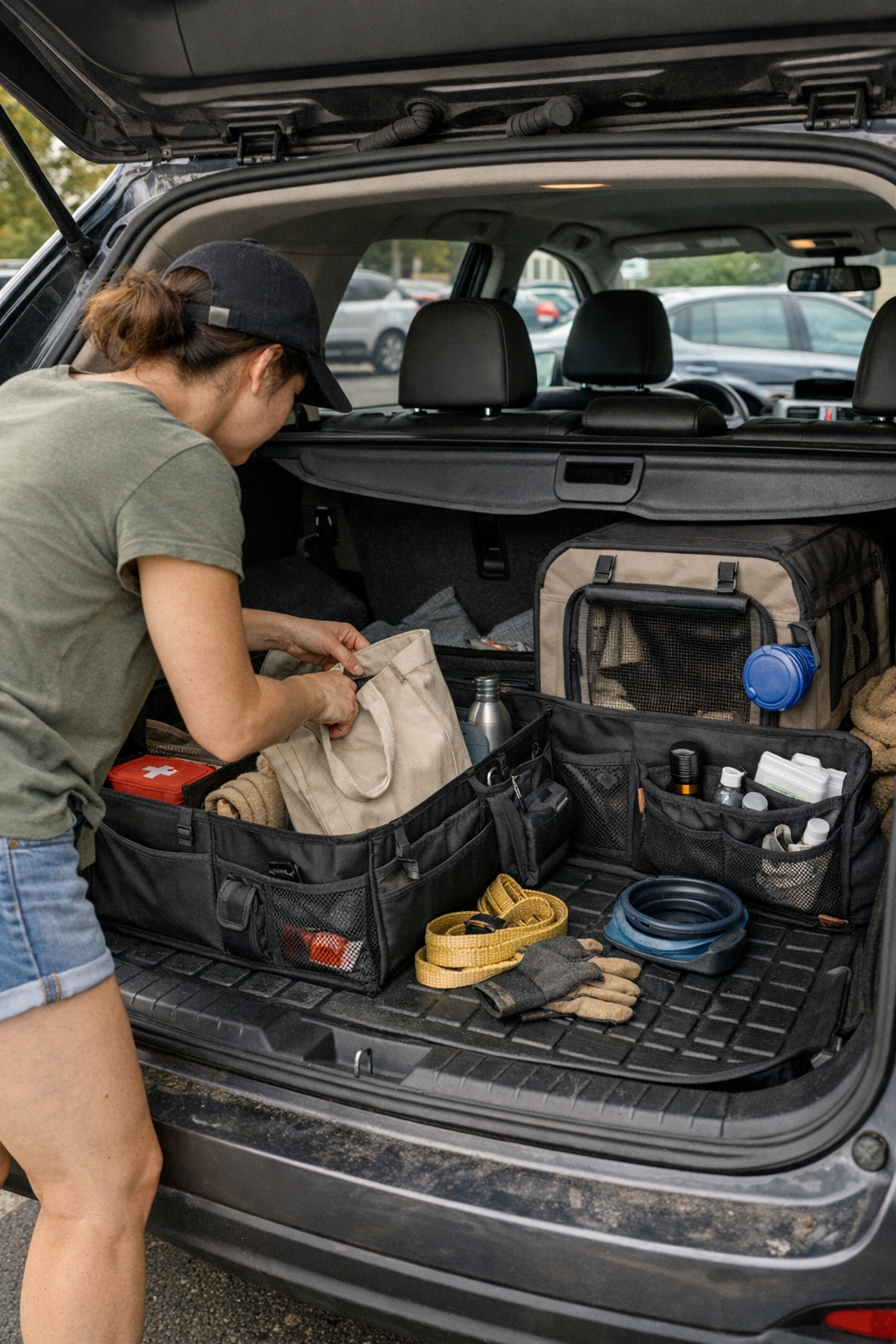
    The real fix isn’t stacking more clever organizers; it’s separating true essentials from daily drift, using single-use, zero-compromise spaces. That might mean a side-pocket for jump packs and flashlights, a trunk divider for flares and the inflator, or a seat-back slot for medical gear—and nothing else ever invading that space. The seat might look busier, but now, during anything from a flat tire to a sudden storm, your hand finds the right item instantly, not with a desperate search.

    Field-Tested Adjustments that Stay Reliable

    Recently, switching my jump pack from the trunk bin (every week it disappeared under groceries) to a seat-side pocket meant one grab—no delays, no wasted searches, no arguing with awkward trunks during a downpour. Even after loading the back for sports or errands, I still reach directly for a flashlight and glucose kit, knowing nothing else blocks the way. What once involved unpacking, rechecking, and second-guessing now takes less than six seconds. It’s not theory—it’s fast action, week after week, chaos or calm.

    Small Daily Trade-Offs Add Up

    No, the car isn’t “showroom neat” this way. The dedicated emergency spots stay visible, sometimes a little cluttered. But every time you re-enter under pressure—a late-night stop, kids needing a bandage, or hands full of bags—the payoff is obvious. You can chase visual perfection any time, but the seconds lost fumbling for gear aren’t coming back. Function always pays you back faster than appearance.

    Practical Tweaks that Outlast the First Impression

    Try the real test: assign one trunk-side bin or seat-back pocket to actual emergencies only. No receipts, no snacks, no “extras.” When you’re parked on a shoulder after dark or hustling everyone in from a rainstorm, you’ll see why the change is worth it. Reset the system each week if you have to, but always let essentials stay separated from daily overflow. The gap between easy access and slow reach is not small—it’s the difference between stress and smooth handling.

    From Tidy-Looking to Trustworthy Under Pressure

    Emergency readiness isn’t about a spotless dashboard or spotless trunk. It’s about knowing your access points survive real-world chaos—multiple drivers, changing cargo, the mess after a road trip, or daily stop-and-go. Ignore this structure, and you’ll cycle through the same old friction: each “organized” drive ends with one more thing in the wrong spot. When car storage finally matches access—when every essential has a fixed, single-use home—routine driving feels lighter, and even actual emergencies become less of a disruption. It’s not perfection; it’s predictability under pressure.

    No setup stays flawless. But when you trust your car’s layout, every return, loading, and stop goes smoother—and what matters most is never out of reach.

    Find more practical car organization solutions at DriveWellSupply.

  • Why Pet Travel Calm Depends on Smart, Accessible Bag Design

    Your bag leaves the house looking calm and prepped—every zipper closed, every bowl and leash in its “perfect” slot. But by that second or third stop, the cracks show. You’re reaching past a tangle of straps, wipes buried at the bottom, the leash sliding under treats—each urgent grab turns into a fumble, and you’re forced to dig, reshuffle, or unzip with one hand while your impatient pet strains the lead. This isn’t bad packing. It’s friction built into the design: most pet travel bags hold a pose for photos, but lose their advantage the moment repeated use begins.

    The Difference Between Looking Ready and Being Ready

    Order collapses fast in practice. On a normal morning—errands, park, vet—you might feel set. But as soon as the route involves multiple stops, the “organized” vertical pockets and deep pouches turn into traps. Your hand closes around a wall of stacked toys before finding the wipes. A slightly off-placed leash clip blocks the only zipper you actually need. Even if you start early and zipped-up, the structure starts working against you once the day begins moving.

    Looks deceive; depth hides the chaos. Bags built for that crisp, initial impression end up hiding the vital items under layers. It’s not setup style that matters, but seat-side, quick-hand access—especially when your dog or cat adds lively interruption. The split second it takes to reach a bowl shouldn’t depend on interrupting the whole system, but deep, vertical designs force you to disassemble just to grab what always goes first.

    Real Pet-Travel Friction: Reaching, Waiting, and Resetting

    The stress reveals itself fast. Use any traditional pet travel layout for four or five outings, and a pattern forms: wipes slide beneath pouches, water bowls jam in tight corners, leashes caught under chews. When you’re handling a wriggling animal and trying not to spill treats in the car, the “order” of your bag stops helping. Each small delay—feeling in the wrong pocket, pulling out half the kit for a single item—adds up to practical strain and stops your trip from getting back on track.

    Scenes From a Typical Week

    Watch any real series of pet stops: midweek, the supposed organization frays. Drive-through lunch after the park? The bowl that sat neatly this morning now tumbles out, wipes wedged out of reach. At the vet, instead of a quick check-in, you’re untangling the leash tip from a snug, narrow pocket while your pet squirms. No single event is catastrophic, but the flow of slowdowns, fumbles, and misplaced essentials repeats—especially wherever different items overlap or settle into awkward blind spots.

    Item Overlap: The Silent Trip Wrecker

    A bag may look split into neat compartments. But overlap sneaks in, and by the third or fourth movement, it’s your main obstacle—not “disorganization,” but design stacking basics sabotaging speed. No matter how carefully you reset every night, even a minor shuffle jostles essentials into new hiding spots. That perfect exterior means nothing the first time you need wipes now, but your hand sticks to a misplaced leash pouch, or a treat bag bulges in the way. Car seat grab-and-go turns into a clumsy two-handed search, and a single unexpected mess at a rest stop is suddenly much harder to contain.

    The main offenders? Multipocket, zipped, and stacked designs, which sound logical but always seem to trap the most-used items behind unused weight. Their promise of “separation” and “organization” barely survives three real stops—after that, it’s all searching, reshuffling, and the sharp divide between how organized your bag looked and how unreliable it now feels.

    The Setup Shift: Why Shallow, Seat-Side Pockets Work

    What fixes the pattern isn’t a prettier layout, but a total shift to in-motion structure. Shallow, open, seat-facing pockets let you break the cycle:

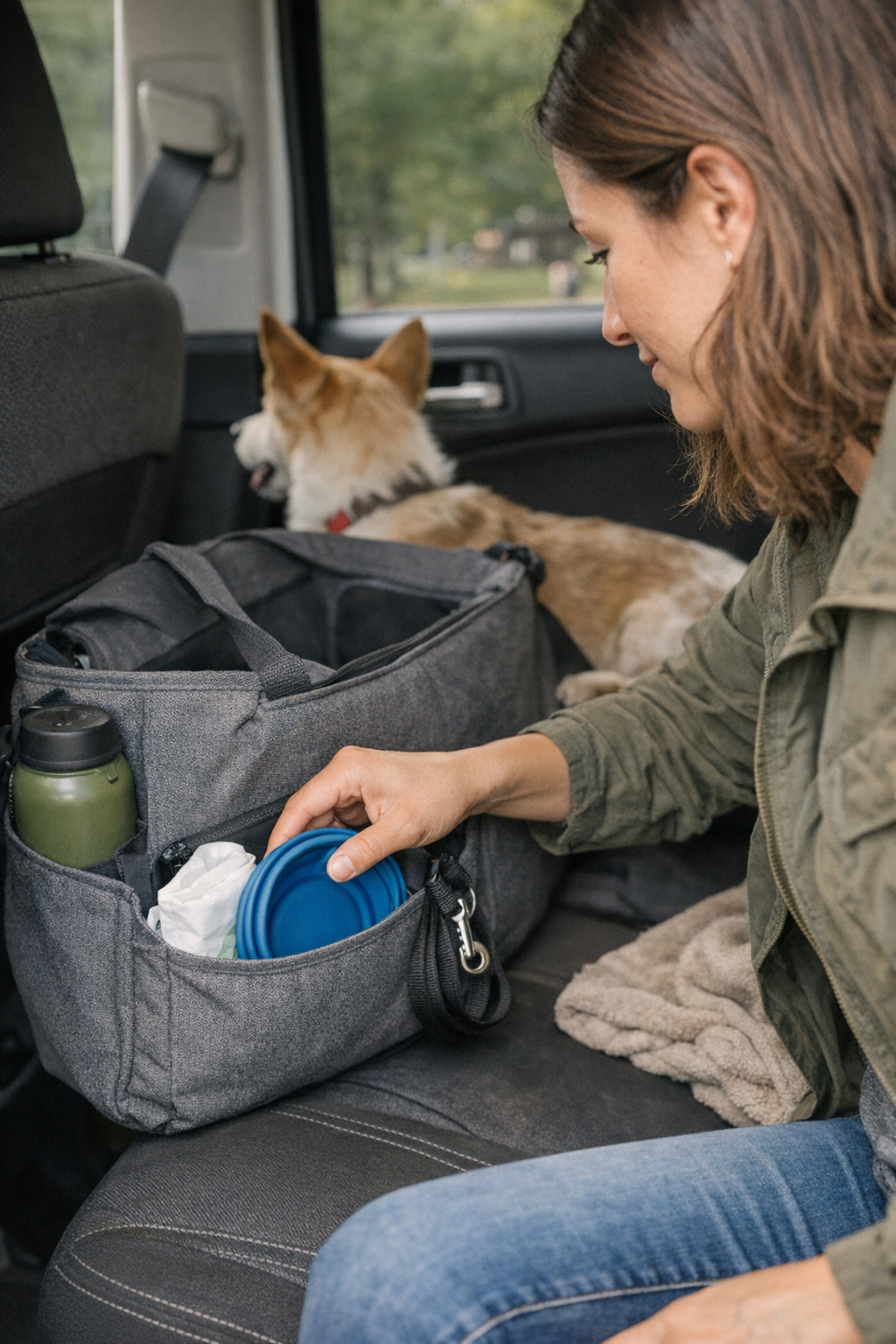
    • Every core item—leash, bowl, wipes—lands within a simple, four-inch hand reach right from the car seat. No unzipping, no stacking battles.
    • One-hand access becomes automatic; your free hand stays with your pet, not buried in your bag.
    • Cleanup for spills, drool, or muddy paws turns into a quick grab, so you’re back on the move without dumping your whole bag out every time.
    • No deep overlap, no buried items—so repeated-use drag and reshuffling simply stop before they start.

    A shallow pocket system won’t win a “tidiness” contest on looks—but after two or three days of real use, you’ll see the weight of handling vanish. No more sighing at stubborn gear, no more awkward wrestling for wipes while your dog gets restless. The system trades neatness for function, and the improvement kicks in faster than any initial reveal.

    Testing for Real-World Flow—Not Just Appearance

    Before trusting a new carrier or organizer, run a real test: while seated, try to extract bowls, wipes, and leash with one hand, in any order, without standing or stacking items outside the bag. If you find yourself shifting gear, catching a clip, or losing time to zipper maze, expect that friction on every outing. It multiplies, not fades, in day-to-day use.

    End-of-Day Reset Habits That Actually Work

    Full repacks waste time and re-create the same flaws. Instead, empty just the seat-facing, shallow pocket at the end of each day, reset the main-use items to face the seat, and tomorrow’s awkward buildup never even starts. This small reset tackles “item drift” directly, blocking the slow creep of mess and lost reach that most bags never solve.

    How Genuine Calm Carries Over—Even After a Messy Day

    The real comfort isn’t a photo-ready pack, but one that shrugs off the long day—through traffic, parks, waits, and sudden messes—by keeping every essential instantly at hand. Each stop can be reset with no drama. Interruptions stay contained, the trip doesn’t snowball into frustration, and you don’t face that slow dread before the next outing. True travel calm isn’t “being packed” but knowing you won’t face the same weak spot or tangled overlap tomorrow, no matter how many times the routine repeats.

    Browse travel-tested pet carriers and essentials at PawGoTravel.