Category: Travel & Drive

  • Streamlining Pet Travel Gear for Faster Access During Stops

    The promise of a perfectly packed pet travel bag fades fast once you’re actually on the move. A setup that looked ready—zippers smoothly sealed, compartments filled, every item “in its place”—can quickly turn into a slow-motion scramble when you stop, reach, and realize you need the same leash, bowl, or cleaning wipe you buried under your earlier attempt at neatness. By the third stop, “organized” can feel like a trap: every reach becomes slower, every reset more frustrating, and your pet’s restlessness only underscores how travel-ready doesn’t always mean travel-easy. In the PawGoTravel world, this isn’t new—it’s the difference between a bag that looks sorted and one that actually keeps pace with you and your pet’s constant, seat-side adjustments.

    When Organization Turns Into a Roadblock

    Arranging wipes with wipes and toys with toys might look brilliant in your hallway. But the trip exposes what home packing hides: easy access isn’t the same as “well-organized.” The first sign? Grabbing the leash from under a mound of folded blankets—and noticing your one-handed reach makes the whole bag collapse sideways. A bowl, crammed in for tidiness, vanishes behind a spare harness. Suddenly, a water break for your pet becomes a puzzle with extra moves. The “neat” setup falls apart under real travel speed, its order gone after just a couple of unplanned stops.

    Small Delays Add Up at Every Stop

    Picture a basic routine: a drop-off, a quick park walk, a coffee run. Each time the car stops, a repeat performance—stretching, poking at zippers, digging for the right pocket. The wipes you need for a muddy paw are stuck behind three stacked toys that were supposed to “stay tidy.” You unzip for the leash, but reach a bowl first, tangling with fabric you just repacked. Meanwhile, your dog stares out the window, getting antsy with every second lost. What started as small snags multiply, turning “organized” into an invisible line of friction that blocks your flow, not just your access.

    The Hidden Friction in Repeated Travel Moments

    It doesn’t take long to see a pattern: the same delays, the same stuck points, the same low-level frustration building as the stops add up. Certain signals show up again and again:

    • Wipes are packed, but never in hand—they always need three steps to extract during cleanup.
    • The leash is safely tucked away, only to require a full unzip and contorted reach every outing.
    • Pet treats mix with your coffee thermos, so pockets reshuffle and spill, every single time you park.
    • Blankets—meant for comfort—end up hiding seat-side essentials or blocking the door-side access you need most.

    This isn’t about poor organization. It’s the wear and tear of actual travel: short stops, grab-and-go demands, a pet pulling at the end of the seat. The weakness isn’t mess—it’s blocked movement in the moments when you don’t have time to reorganize.

    Seat-Side Surprises and The Cost of Calm

    The best-looking bag can blow up when you’re jammed in traffic and the carrier’s “easy” zipper is wedged behind a seatbelt buckle. On the ground, those clever layouts lose their magic if your cleanup pouch doesn’t open with one pull. That mess-free, contained look often comes with hidden cost: delays, awkward fidgeting, and a rising sense of being stuck. Your pet catches on, too—extra patience lost every time your hand disappears into a pouch, instead of back on the leash where it belongs.

    Recognizing Where Setups Break Down on Real Trips

    Repeated movement exposes familiar snags:

    • You grab for a leash, but fingertips catch the mesh lining or pull out a shape-shifted toy instead.
    • A “comfort” item blocks the wipes when you least want to dig for them—great for calm, bad for cleanup.
    • Fast-clean supplies live in the right section but just deep enough to make you pause and rethink the effort.

    The trouble isn’t dramatic—it’s the repeated five-second glitches that slow your restart, especially at short hop stops. The initial calm of an ordered bag thins out, replaced by a running battle between what you packed and how you have to move.

    One Weak Link Keeps Returning

    No matter how neatly you arranged things back at home, the same weak spot returns: the thing you need right now is always the thing blocked by “organization.” After a couple of cycles—hoisting, reaching, re-zipping—you start bracing for that awkward pause, the sigh, the extra shuffle you never accounted for. Rarely a full disaster, always an extra drain. It stacks, silently, until you wonder why a ready-looking bag somehow feels harder every trip.

    Restructuring for Flow Instead of Just Neatness

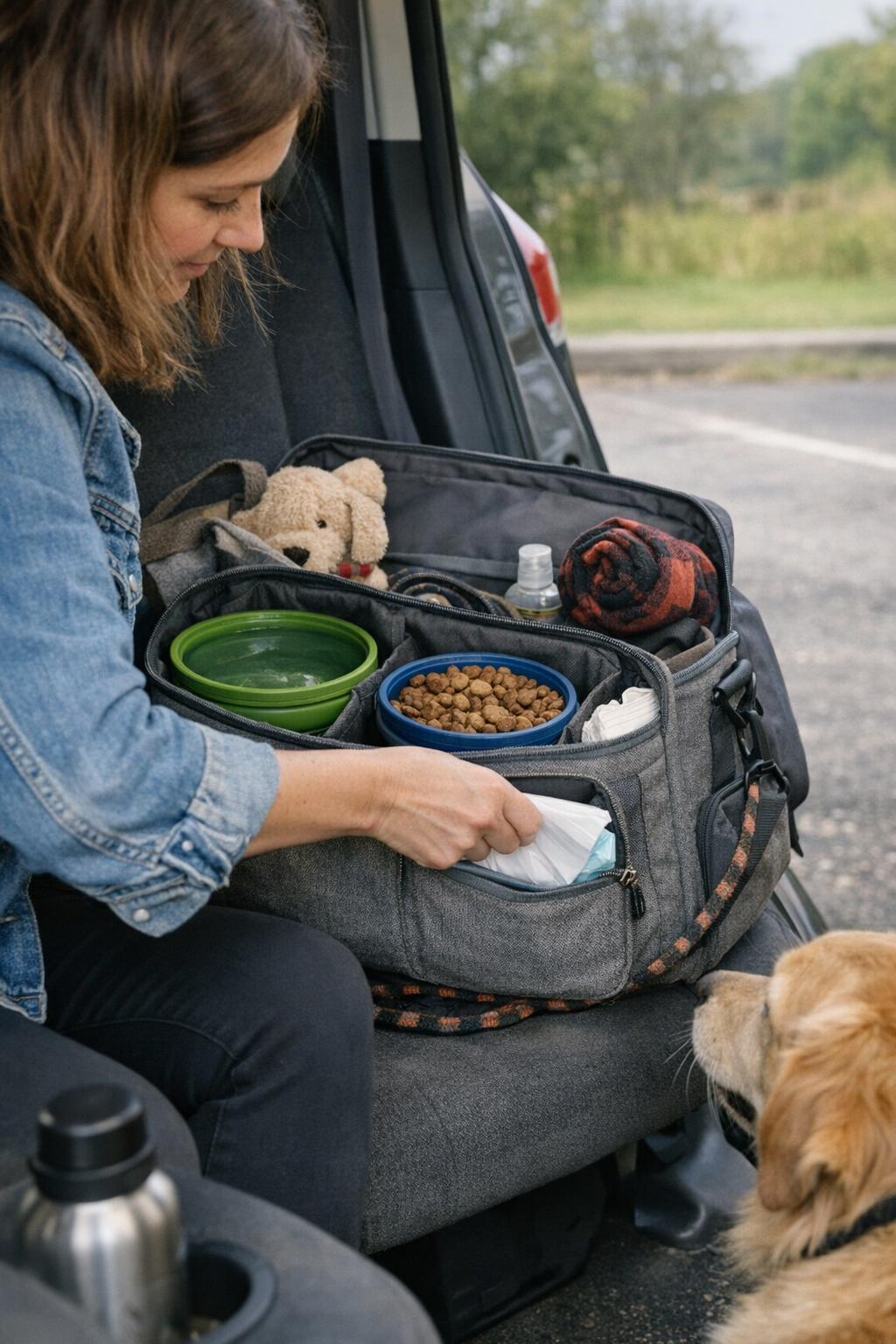
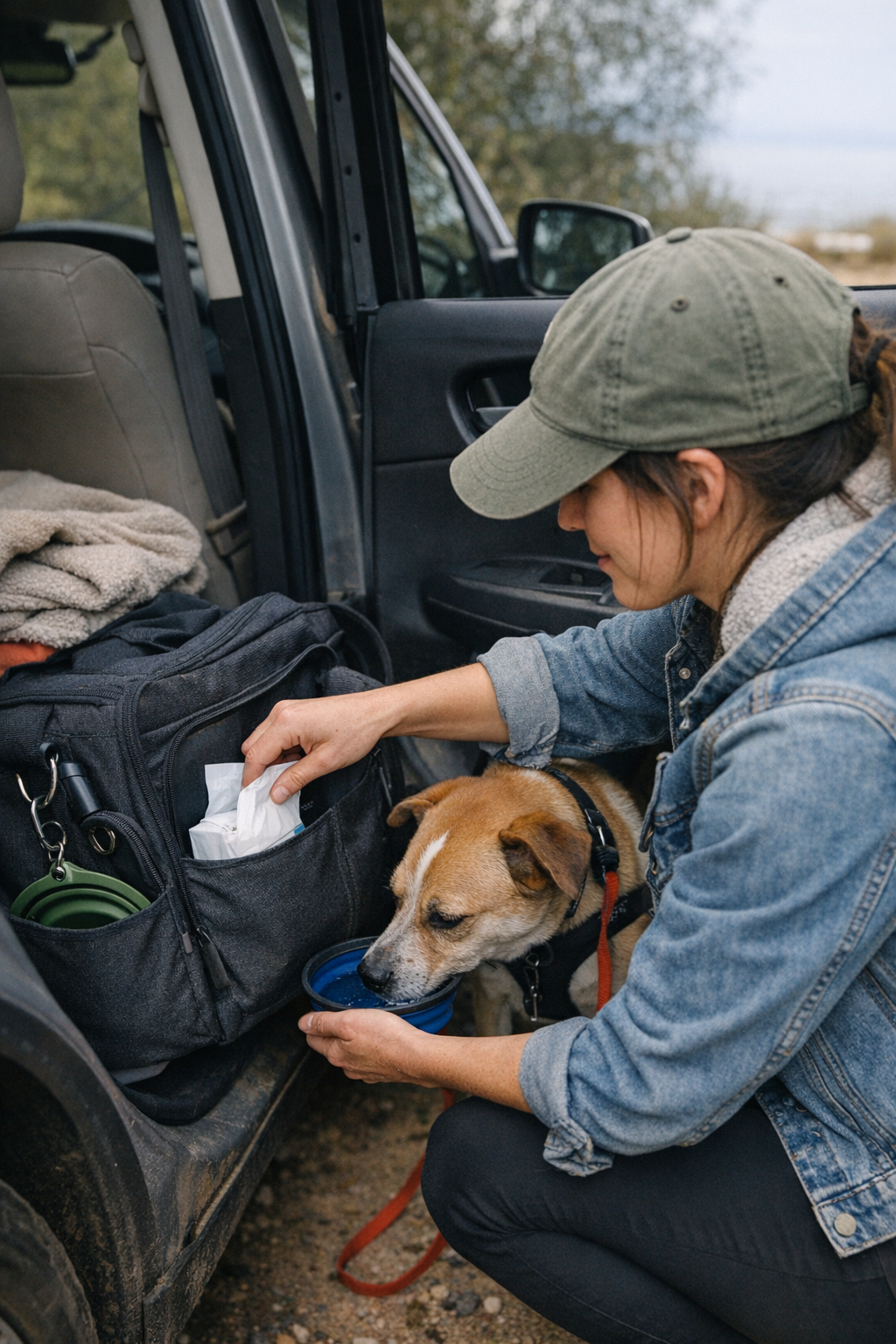
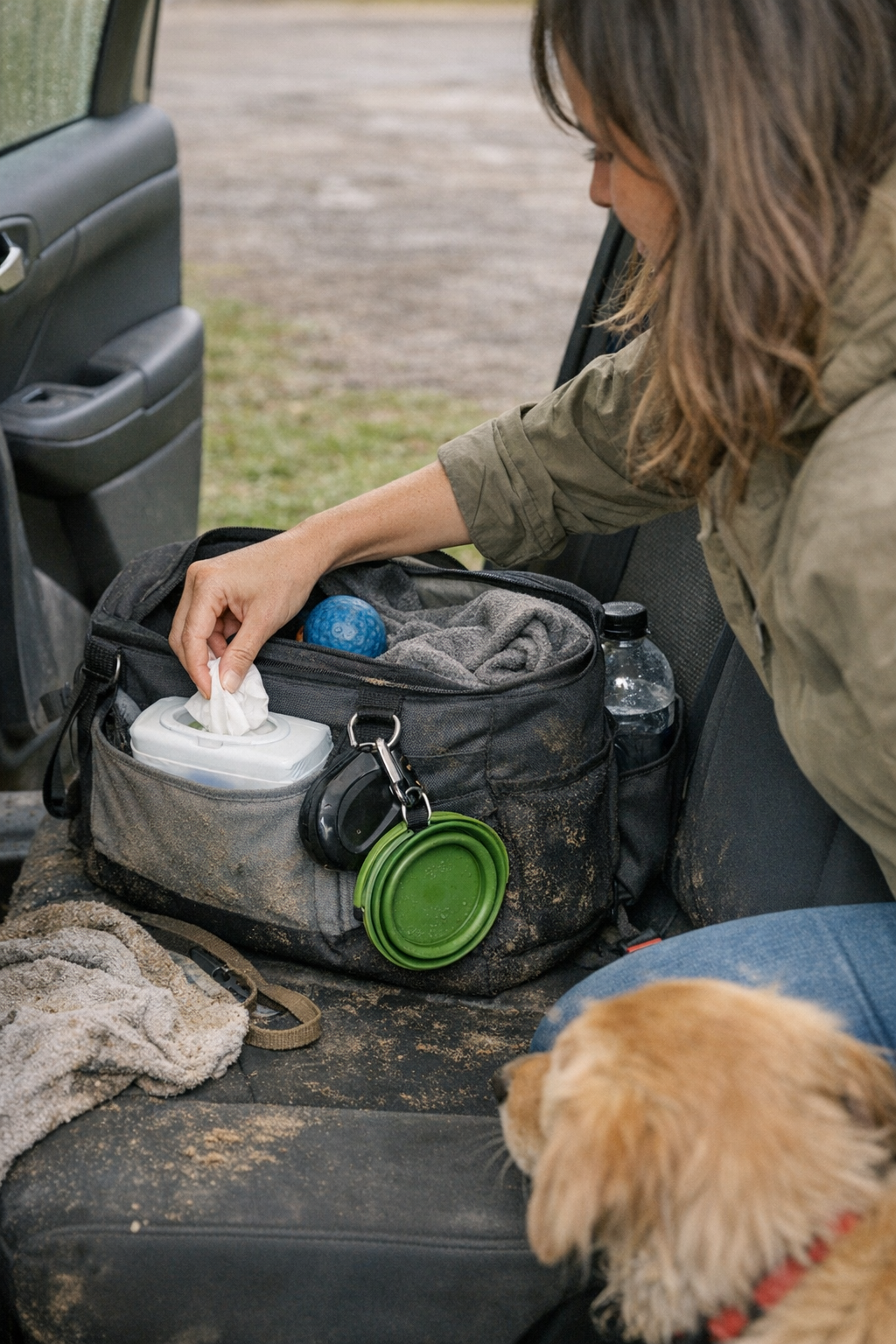
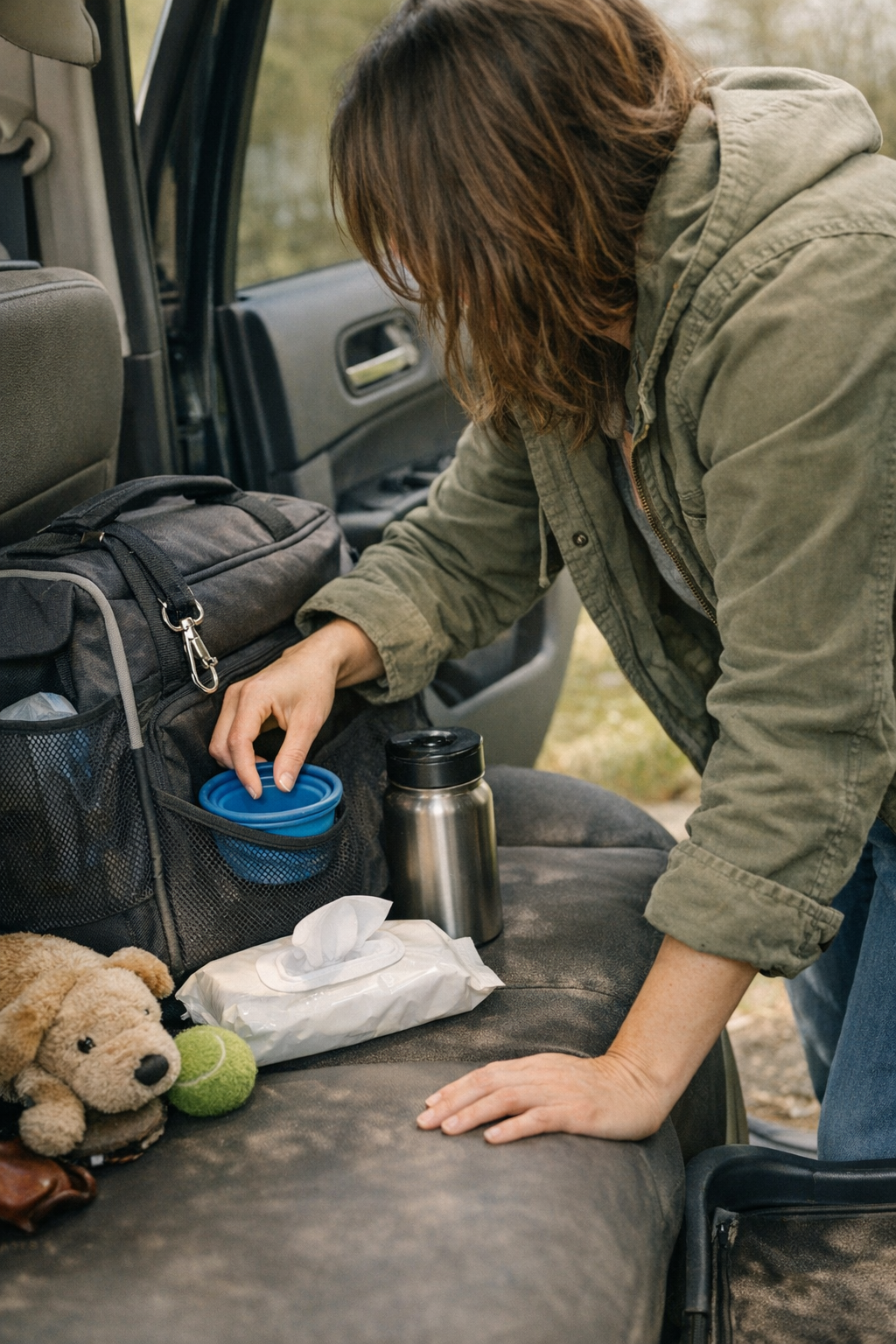
    The setups that actually work on the road throw neatness under the bus when needed. The difference isn’t another compartment—it’s rerouting the items you need mid-trip to the fastest path. That means: bowl in an outer mesh sleeve for a one-swipe grab; leash clipped to a carry loop, not zipped away; wipes in a front pouch, visible before you even sit. Now, water breaks, leashing, and cleanup all become single-move actions. Instead of reorganizing after every stop, you only reset the essentials—and skip the bag-wide fidgeting after just a few uses.

    Real-World Relief: Fewer Moves, Less Frustration

    After a few real trips using this layout, the payoff isn’t just visual. The repetition breaks: no more juggling between seats, no more balancing an armload of gear as your pet twists the other way. A leash and bowl are in hand when needed, not on a scavenger hunt. Resetting the kit for the next stop takes seconds, not minutes, and you drop fewer things. Your pet picks up on your steadier moves—and the quiet, invisible tension of juggling “organization” just stops showing up in your routine. The change isn’t flashy, but the effect builds with every interruption you avoid.

    A Setup That Keeps Up—Not Just Keeps Order

    Packing your pet’s travel kit isn’t just about appearances—it’s about engineering flow into your reality. If a sleek setup asks you to do too many contortions for every grab, it loses its value where it counts most: during all those tiny, repeated moments between stops. Real structure means the bag, bowl, wipes, leash, and backup treats stay in position for the moves you actually make—not for a photo, but for a dog paw streaking over the upholstery or a spill you need to handle while on the clock. The real upgrade? Turn every trip into fewer “almost” moments and more seamless transitions—even if your travel day remains as unpredictable as your co-pilot.

    Ready to rethink your pet travel routine with gear that’s set up to move with you? Explore practical, repeated-use options at PawGoTravel.
  • How a Thoughtful Carry-On Reset Improves Every Airport Experience

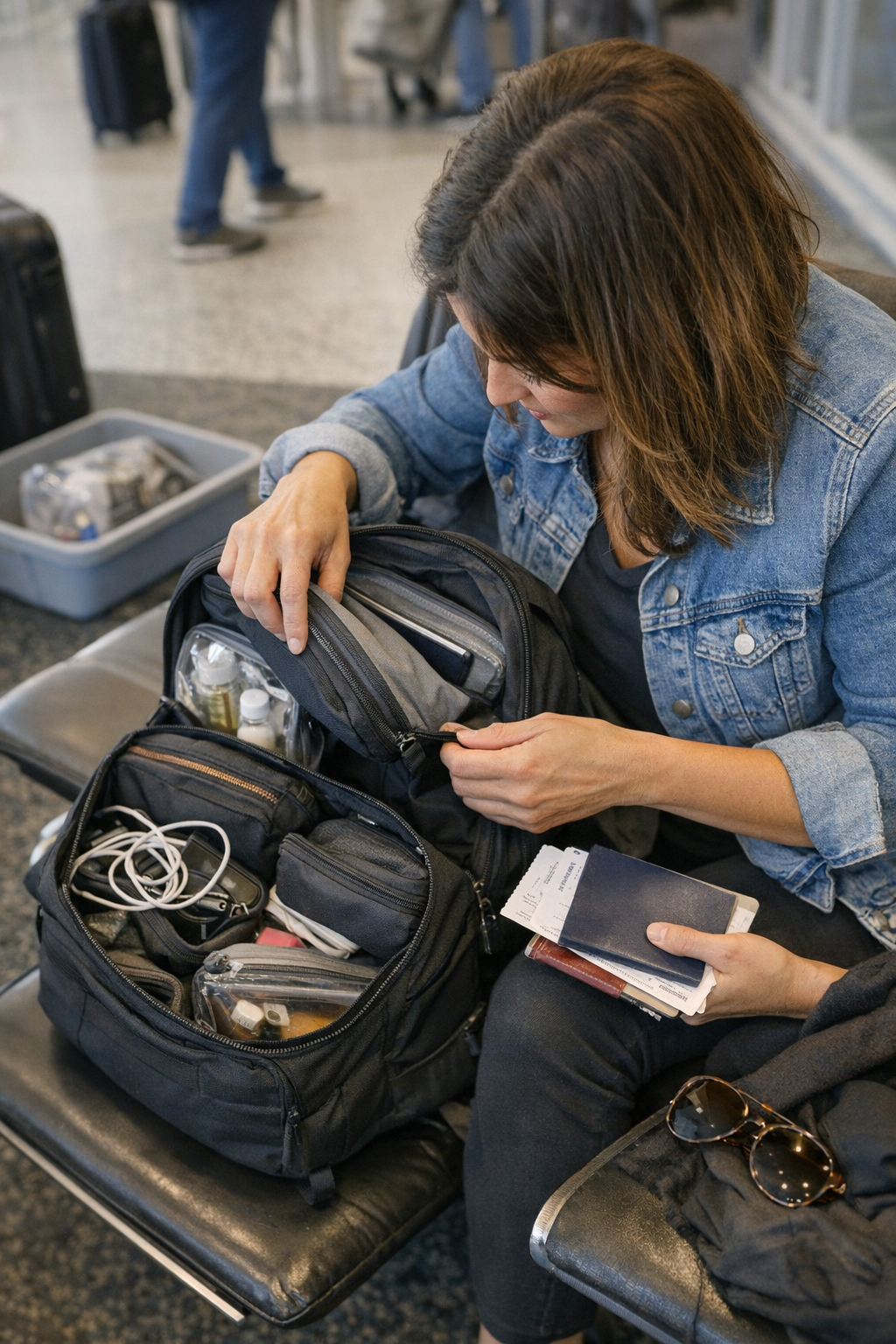
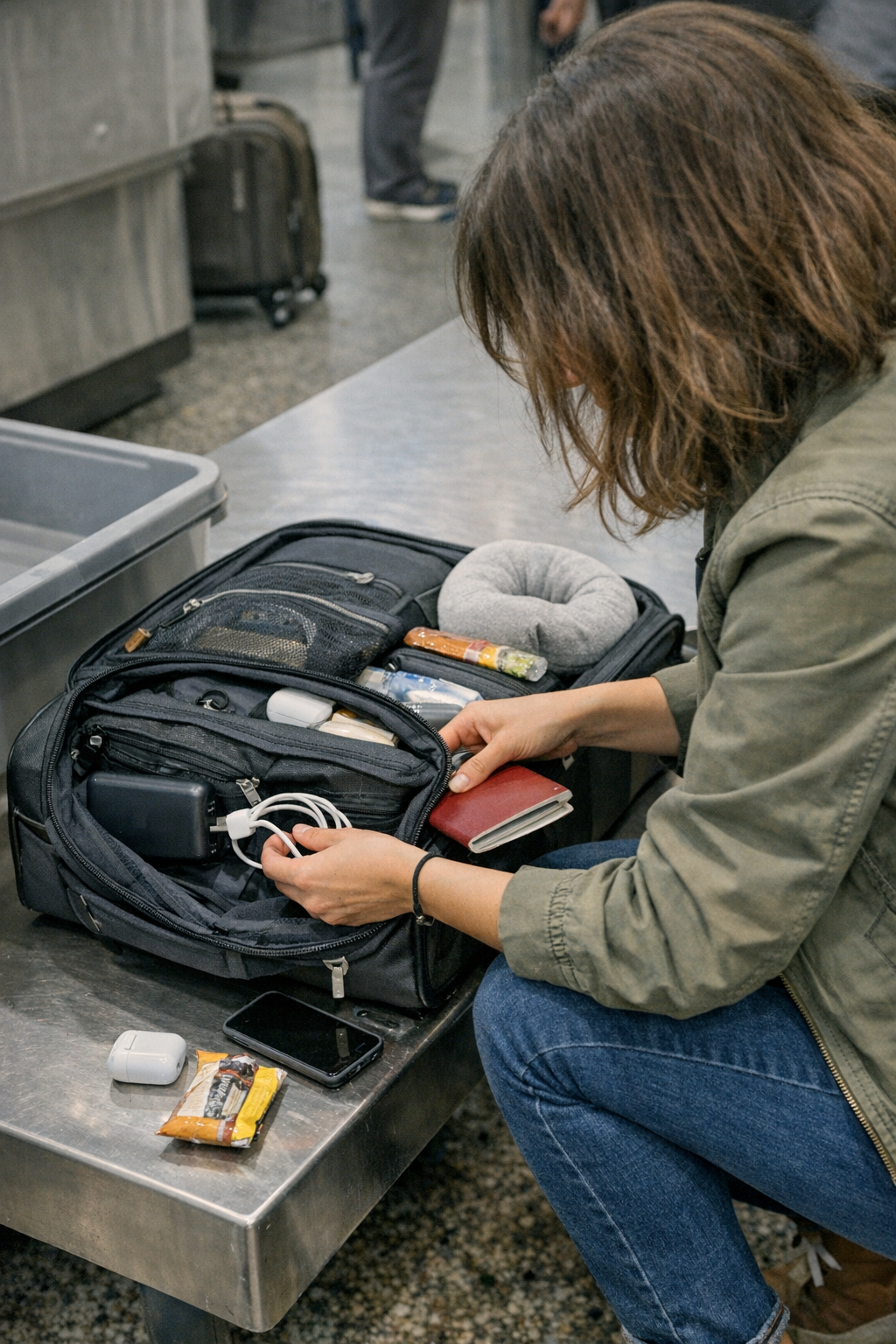
    A carry-on can look perfectly restocked after a trip—until real airport movement shows you what’s still wrong. The cycle is familiar: you return home, drop your bag, and “reset” every item, snapping chargers into a pouch here, travel docs into a sleeve there, snacks lined up at the top. Visually, nothing’s out of place. But the next time you reach for your passport during security, you’re fumbling under a toiletry bag. The charger you need at the gate is, again, sandwiched behind a power bank and a half-zipped snack pack. Organized at home, tangled in use—the hidden cost becomes obvious as soon as airport flow takes over. Most carry-on setups only reveal their real strengths or failures under pressure: tray transfer, boarding rush, or the first repack at a busy terminal. This is where CarryOnSupply’s product world enters—centered on setups that hold up in motion, not just in the hallway.

    When “Tidy” Still Trips You Up

    The illusion of readiness is powerful: a neat bag promises an easy trip, but routine use exposes the same snags, trip after trip. Documents that always slip down one layer deeper, tech getting tangled with last-minute additions, snacks instantly out of reach just when you need them. Packing on autopilot—repeating the old home arrangement—means dragging yesterday’s hassles into every new airport line.

    You notice it in the same places, every time:

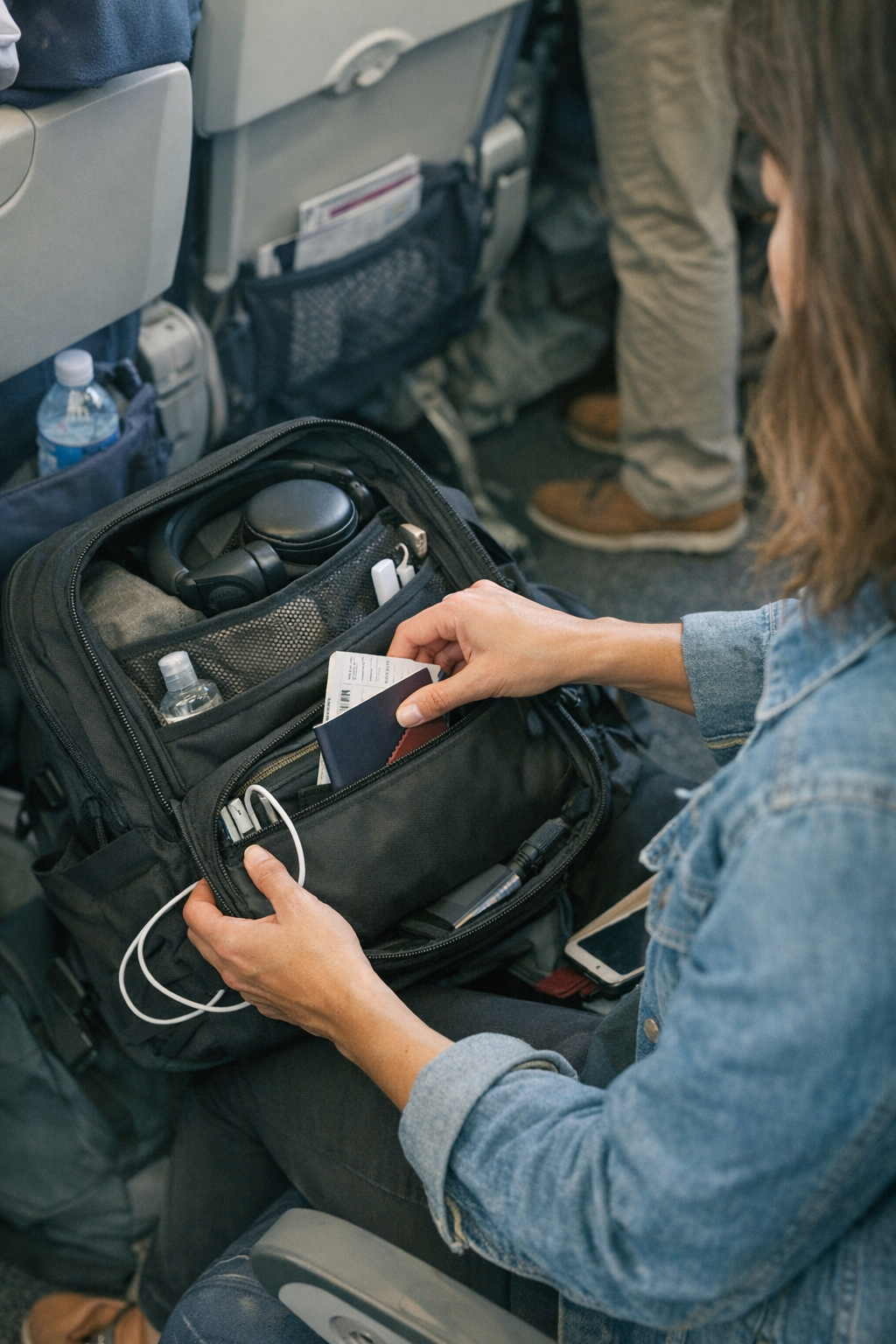
    • Outer pocket packed “for quick access,” but always needing to move wet wipes to grab your passport.
    • Chargers that slip behind toothpaste, so you’re kneeling on the terminal floor, digging.
    • Boarding pass you thought was up front now wedged flat under a power bank as the line surges forward.

    The Gentle Reset: Rethinking Instead of Repeating

    The fix isn’t just laying things out “like new”—it’s quietly tracking which spots caused a stumble last time. A real reset means unpacking far enough to spot what you actually grab first and what slows you down. Did the doc pouch get blocked at security? Was tech access awkward mid-boarding, or did you have to move three items for a snack? Each stall is the bag’s way of telling you something in the layout is breaking at speed—not just a random mishap, but a pattern waiting to trip you up again.

    Spot the repeat interruptions:

    • Two zipped pouches and one tray transfer just to find the charger you always use between gates.
    • Fumbling into side pockets while managing boarding passes, jacket, and the nudge of thirty other travelers.
    • Struggling with a stuck zipper at your seat—fastening your belt, only to realize your headphones are still out of reach.

    True-to-Flow Packing vs. At-Home Precision

    A bag that’s tidy on your bed may turn on you instantly at the terminal. Pouch-based, maximally “organized” setups break down when the essentials are layered, not sequenced by when and how you actually use them. Time after time, you see which sections break first under pressure—especially at points where the environment is moving faster than you are:

    • Security: Toiletry case on top of documents looks sharp at home, blocks everything when the tray comes up.
    • Boarding: Tech pouch hiding headphones behind snacks. Quick at home, slow when everyone’s shifting forward.
    • Seat entry: Neatly packed pillow in front, but now you’re kneeling in the aisle nearly unloading the whole bag just to fish out an e-reader.

    Static “order” doesn’t survive active transit. If you have to stop, juggle, or shuffle just to reach your go-to item, it’s not just a preference issue—it’s a breakdown waiting for your next busy airport.

    Airport Moments Reveal What Home Packing Conceals

    The real cost of a bad setup isn’t a lost item, but lost time and constant interruption from bad pocket and pouch sequencing—seconds that become a hassle in line or at your seat. These issues grow sharper and more visible the more times you move through a checkpoint or repack under pressure:

    • Security trays: Passport under a loose battery equals an awkward pause and impatient glances from behind.
    • Boarding lines: Forced pouch search with too many layers—just as the gap closes toward the gate.
    • Overhead bins: Items layered the wrong way force last-second reshuffling, stranding you mid-aisle when all you needed was one quick grab.

    After two or three travel legs—and just as many quick repacks—what felt like a small snag at home starts to stretch each transition. A clumsy charger pouch or doubled-up outer pocket can add grind with every checkpoint.

    Real-World Fixes: Small Shifts, Big Relief

    Every real improvement starts with observing where the sequence breaks down—not just what looks neat. I kept tripping over the same bottlenecks: passport, charger, travel snack. Rebuilding true first-grab access, not just front-pocket theory, cut out most in-motion delays. After one quick adjustment, my next security tray shift ran smooth, and boarding became less of a scramble—because nothing blocked those three key items anymore.

    The trick wasn’t overfilling outer pockets or squeezing every pouch tight, but building in a little breathing room: just enough for a fingertip to reach and retrieve without shifting other items. That made “crowded” sections feel open and repeat grabs nearly automatic.

    Spotting the Weak Links in Your Reset

    A silent check after every trip: if you hesitated once—or double-checked a pocket more than needed—your bag is flagging a misfit between what’s visible and what’s workable. Pay attention to where your hand slows, curls awkwardly, or returns to the same spot after missing the item. Usually, one or two friction points can be fixed before the next trip without touching the whole setup.

    A partial unpack beats a blind reset. If the snag keeps coming from tech or docs, start there. Sliding the power bank to the pouch edge, keeping snacks unblocked, or giving travel docs a solo slot—even if it breaks visual symmetry—can unclog the sequence for the whole trip. Often, switching the order of two or three high-traffic items transforms daily frustration into plain, frictionless access.

    One Reset Doesn’t Solve Everything—But It Starts the Right Cycle

    No “perfect” organization lasts more than a few trips. Each new travel leg stress-tests your choices. The real edge: build your setup for the way you’ll move through airport checkpoints, not just for home neatness. What matters is how access flows at speed, in real time, with real stakes—a carry-on that isn’t just reset, but re-sequenced for motion.

    Carry-ons that work for you adapt after every checkpoint—refined by each pause and retrieval, not just packed for the start. If your bag works better each trip, not just looks better on your bed, you’re ahead of the cycle.

    For practical organizers, travel pouches, and carry-on tools that help you set up for actual airport conditions, visit CarryOnSupply.

  • Smart Car Organization Tips to Keep Your Interior Tidy Every Day

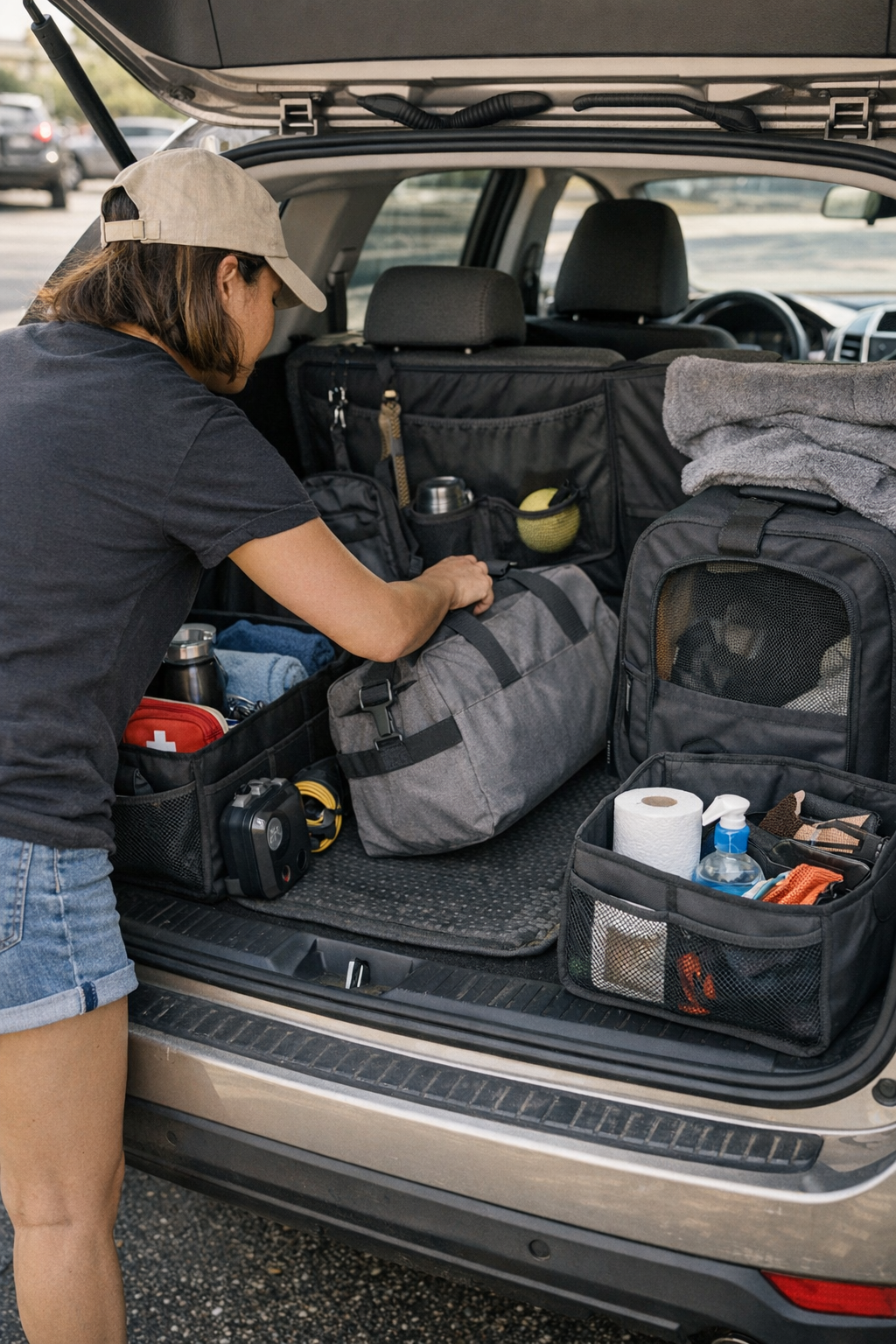
    A spotless car doesn’t stay functional for long if the setup fails under repeated use. Neat trays and tucked-in cables look fine at first, but by your third stop of the day, you’re back to untangling cords, fishing for chargers, and moving items around before you can even plug in your phone. The real issue reveals itself not as mess, but as those constant moments you’re knocked out of routine—just when you need your essentials, they’ve drifted, vanished, or gotten blocked again. That gap between order and actual use is where DriveWellSupply’s world of practical car gear begins.

    When Order Looks Right but Feels Off

    You re-enter your car after a routine store run. Visually, everything’s in place—the cupholder’s clear, the tray holds your phone and keys, and surfaces look managed. But reaching for your charger, the cable vanishes below the shifter—again. Your phone’s there, now wedged under a heavier item that slid during your last turn. You pop open the console to grab a wipe, but sunglasses and spare masks spill over and bury it deeper. “Organized” becomes another reset, forcing you to interrupt your flow and start hunting already.

    This is the trap: a car that passes the visual test can still fail in motion. Minor choices—where a cable’s routed, what bins catch overflow—compound into daily interruptions. Cords tangle near the pedals, organizers become new barriers, and every grab for an “essential” triggers another scramble or awkward reach. The friction isn’t loud; it just never really stops.

    The Real Cost of Repeat Interruptions

    Tossing everything into a central bin or making a catch-all pile feels efficient—until the first sharp braking sends gear off the seat or tips your organizer. Each lurch or turn scatters items, wedging chargers and devices into unreachable corners. That’s how you end up half-kneeling on the curb, arms under the seat, or pausing a drive to unclog a pedal from yet another loose cable. Every “easy” shortcut comes back as a slower start or another lost minute you didn’t plan for.

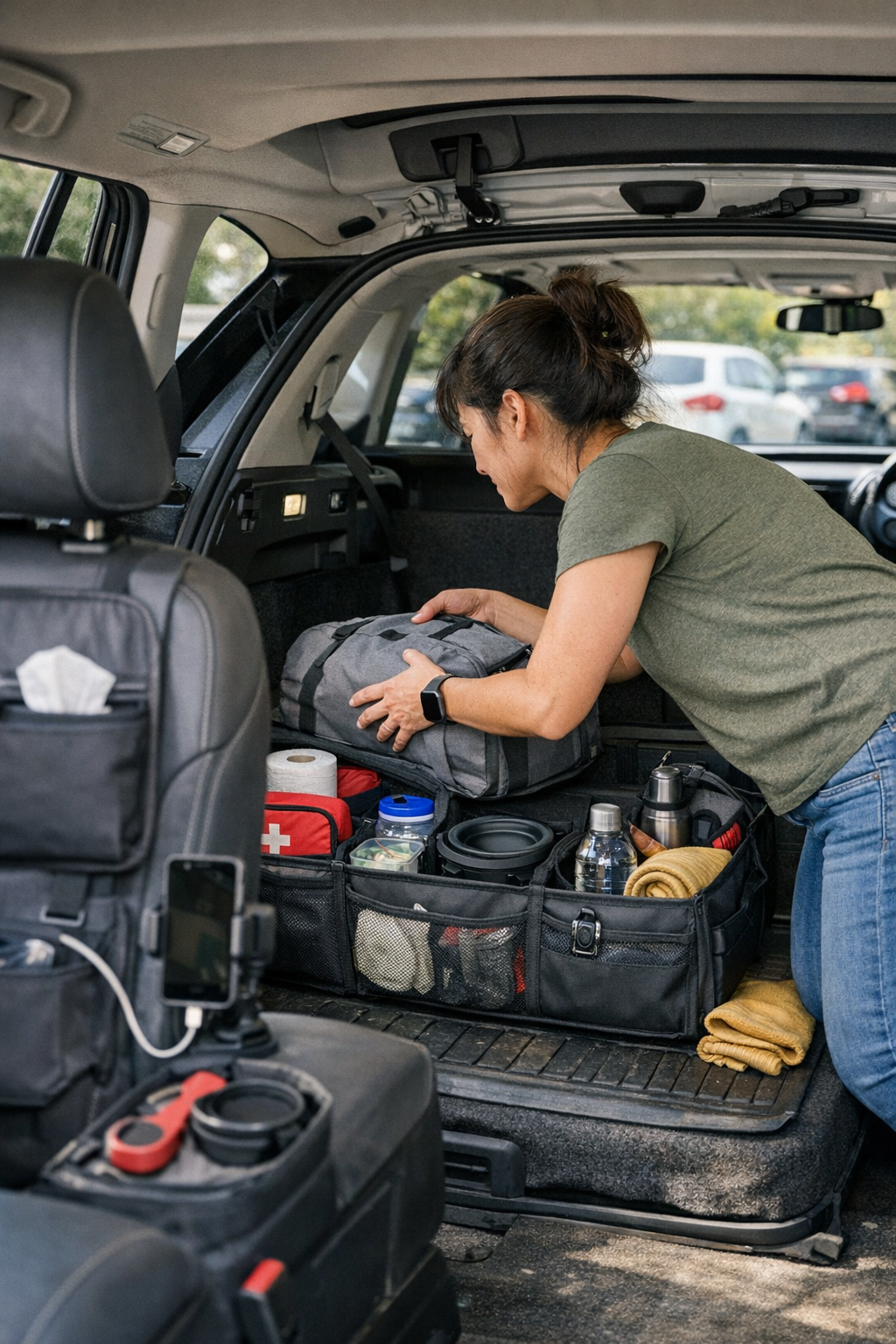
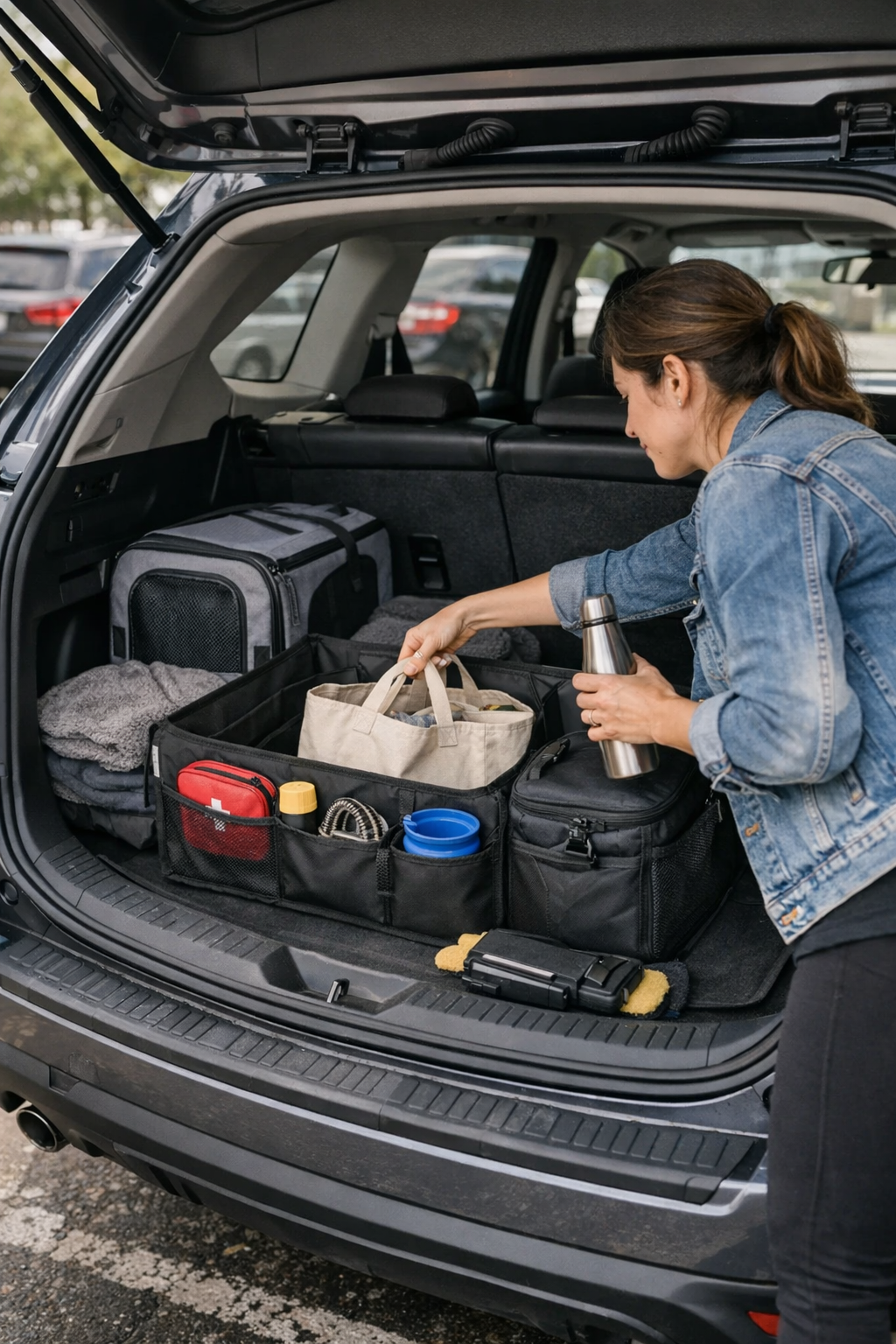
    Trunk organization isn’t immune. A box that holds everything tightly for a cleaning session becomes pure friction when you need space for groceries or need to swap in new bags on the fly. A setup that looks streamlined when everything’s planned collapses when real errands force change—suddenly, the organizer is the obstacle and not the solution.

    Telltale Signs Your Car Isn’t Set Up for Everyday Routines

    • Cables disappear or tangle, catching in seat tracks or under pedals when you reach for a charge mid-drive.
    • Chargers and phones slide away, ending up under seats or stuck in tight gaps just as you need a fast grab.
    • Everyday items get buried, hidden behind heavier gear that always settles on top during motion.
    • Shared bins overflow with random stuff, so phones, wipes, and keys collide and migrate out of order.
    • Trunk organizers stifle your flow, slowing down load-ins or blocking quick swaps when routines change unpredictably.

    Patterns start to emerge. That “just cleaned” look resets after every drive, as friction points reappear—forcing you to untangle, search, or reorganize nearly every time you return to your car. What passed for tidy yesterday is a new hassle today.

    Real World, Real Friction: The Difference Between Order and Flow

    How does your car setup stand up to repetition? The cracks show up after two commutes or a week of errands:

    • Key items are always one move out of reach, blocked, buried, or forced under something else—even though you “put them back” every time.
    • Accessing wipes or sanitizer is never seamless, so a quick spill or stop means a slow search instead of a quick swipe.
    • Cables sprawl across the floor, ending up underfoot, risking not just frustration but real damage or distraction.
    • Zones set up for sharing—center bins, seat pockets—turn chaotic, again mixing up your essentials and forcing a new round of sorting by day’s end.

    This isn’t about surface-level neatness. The actual difference is whether you reset your system after each use—or if you can move in and out of the car, grab what you need, and leave things intact without re-organizing after every drive.

    Building a Setup That Actually Holds Up

    The right turn happens when you stop organizing for show, and start structuring for reach and momentum. Real convenience means mapping the cabin to your habits—not just grabbing the nearest bin, but placing every high-use item where it’s reliably accessible even in tight parking or mid-errand rushes.

    • Dash-mounted phone holders cut neck strain and keep cables from dragging across controls—one reach, no drop, no tangle.
    • Clipped or routed cables stay clear of your feet, secured above floor level so neither seat movement nor shoes ever snag or loosen them.
    • Wipes sit in a dedicated, open pocket—never buried, so cleanup isn’t a chore, even while double-parked or parked curbside.
    • Routine-based gear splitting—keys, chargers, wipes, and documents assigned by access zone—prevents collisions and repeat reshuffles.

    Sorting by use, reach, and routine, instead of looks, turns “organization” into flow: fewer repeat resets, less last-minute searching, and a more predictable drive every time. Cleanup shifts from overhaul to fine-tune—no more full-tray dumps just to find what you need.

    Small Adjustments, Real Progress

    Car interiors don’t stay perfect, but a few deliberate fixes deliver outsized gains. Anchored cables, assigned gear zones, and one-grab holders for wipes or sanitizer slice through the daily return of “micro-messes.”

    Car organization isn’t about impressing yourself with a just-ordered look—it’s about cutting interruptions. You notice the difference not just after a deep clean, but after a week of real use: fewer clutter rebounds, no more lost minutes chasing cords, and a setup that keeps pace, not just appearances. In the end, small changes compound—until your organization works for you every day, instead of needing a rescue every other drive.

    Find practical, field-tested car organization solutions at DriveWellSupply.

  • How Pet Travel Bag Design Impacts Efficiency on Multi-Stop Journeys

    The travel bag that looks “sorted” in your living room can turn on you by the second or third rest stop. What started as neat compartments becomes an awkward scramble: wipes tangled under toys, a leash caught behind a snack pack, and cleanup supplies somehow always one move out of reach. The difference between feeling ready and actually moving smoothly—stop after stop—shows up fast, and nowhere is this friction more visible than when your bag’s structure meets the reality of repeated seat-side use. PawGoTravel designs for this moment, not just for the organized photo before the trip starts.

    When The First Reach Sets the Tone

    You hit your first stop. Before you even unclip your pet’s harness, you’re reaching—one hand on the leash, the other searching for a bowl or wipes. The system you set up at home already feels trickier: wrong pocket, mislayered items, something in the way every time. That split-second pause—where you’re nudging snacks aside to get at cleanup gear—sets the tone. With each return to the bag, the logic you planned gets harder to follow, and the contents start migrating after every stop.

    This isn’t dramatic friction. It’s the quieter drag of having to reset, re-zip, and re-layer, even when nothing looks visibly wrong—until nothing stays where you placed it in the first place.

    Organization That Breaks Down at Seat-Side

    The “everything in its place” feeling disappears fast beside the car or curb. Out here, layered compartments usually force awkward shuffling: wipes jammed under stuffed toys, water bottles edged deep behind a comfort blanket, nothing grabbing cleanly one-handed. What looked accessible at home breaks down as soon as the bag must flex between comfort on arrival and quick access during a messy pause. Each repetition—trying to grab just one thing—leads to more jumbling and slower resets, while your pet gets restless or tries to bolt.

    Why Surface Order Isn’t Enough

    Most bags survive a single stop. Start adding more—short detours, urgent bathroom breaks, snack waterups—and the “organized” structure unravels. Bowls nudge wipes out of position. Zipped pockets block fast cleanup. Owner and pet items compete for the same spot, forcing three moves for one result. Every quick grab for a cleanup pouch ends with two items unstacked and pet hair stuck to a stray charger. The more you try to work around it, the more the setup drags against the flow you need.

    Common Friction Points on the Road

    Blocked Cleanup Access

    Stacking comfort up front sounds smart—until you need wipes now and they’re under blankets and toys. Mid-mess, you’re digging with an impatient dog dancing at your feet, making a small spill into a full bag-reshuffle. The faster solution is blocked by well-intentioned layering.

    Overlapping Owner and Pet Items

    The all-in-one bag seems efficient. But after you stuff your wallet or keys into a side pouch, they pin down the single roll of cleanup bags or get tangled with treats. Each stop triggers a tiny gear shuffle, making even a short break drag out—momentum broken, your patience thinning, and your pet ramping up for a dash.

    The Repeated Reshuffle Dilemma

    By the third or fourth stop, even an “organized” bag becomes a puzzle. Side pockets pop open, interior items slide out of order, one-handed access stops working. Instead of a quick grab-and-go, you’re fighting with the zipper and pushing aside items just to close the bag— all while a thirsty dog circles or a cat meows for attention.

    The Price of Poor Access: Handling, Comfort, and Patience

    Poorly structured access means real handling cost. Every pause takes longer, your pet feels the tension, and quick cleanup turns into a juggling act. Your rhythm breaks; the pet’s mood shifts. By trip’s end, frustration builds—not just from wasted time, but from the steady interruption of what should be simple, easy pauses.

    The wrong setup makes each stop heavier, messier, and less calm for both pet and owner—especially on multi-stop days when the price is cumulative.

    Recognizing a Setup That Really Holds Up

    The bag that wins is not the one that looks the best at home, but the one that delivers quick access, reliable separation, and one-handed operation—again and again. Cleanup essentials belong in a reachable side pocket, not buried with food or blankets. Pet and owner zones shouldn’t overlap. For example, a dedicated zip side pouch for wipes or bags, and a separate main compartment for bowls and comfort, turns the stop-and-go rhythm smoother immediately:

    • Cleanup never requires shifting half the bag—just reach, grab, and go
    • Water stays accessible, not wedged under playthings
    • Resets are instant; organization survives more than one stop

    This isn’t cosmetic—it’s the structure holding up under real conditions. The payoff is less scrambling and more time moving, so each stop is a simple, brief interruption—not a reset marathon.

    Small Adjustments, Big Difference

    Separating fast-grab travel items from comfort and overflow changes everything in repeated use. Every stop flows more naturally: you go straight from car to curb, hand to wipe, leash to cleanup, without the cross-traffic of mixed-up gear. Comfort stays put for later, and owner essentials stop jamming pet access. That’s not about being “extra organized”—it’s the difference between routine hassle and effortless travel movement, even across a messy, multi-stop day.

    A bag that looks tidy counts for little if it doesn’t reset for real stops. What matters is how a setup works when you’re moving, reaching, cleaning—and restarting again and again, through every trip.

    Explore solutions designed for smoother trips at PawGoTravel.

  • Why Carry-On Bags Become Harder to Use After Packing for Travel

    The gap between a “picture-perfect” carry-on and a carry-on that actually keeps up with you in an airport shows up harshly the first time you need something fast and everything you packed seems to block your hand. Neatly zipped pouches and carefully stacked organizers look controlled at home, but at the gate, one awkward retrieval can make your whole setup feel slow and resistant. The real weakness isn’t how “finished” the bag felt after packing—it’s how fast the order breaks down when you need quick, repeated access under pressure.

    Where Order Fails: The Unseen Weak Points That Appear in Transit

    Airport movement exposes problems that never appear when you’re packing at home. Layers that stayed put on the living room floor shift and migrate—pouches slip, compartments overlap, and outside pockets go from “easy-access” to clutter traps once you add boarding passes, receipts, or a last-minute charging cable. Crowds force your bag to tilt and compress, so now you’re struggling against your own setup. What felt logical now requires unstacking two zipped compartments just to find a document. Every time you reach in, the sequence gets messier, the retrieval gets slower, and each repack grows less predictable as your travel flow breaks down with ordinary use.

    Real-World Carry-On Moments: Where the Friction Builds

    The right setup holds up through real pressure points—not just the initial pack, but the repetitive moments that test a carry-on most:

    1. Security Tray Surprises

    That tech pouch you set “near the top” is buried after a jostled walk to security. Under the officer’s eye, you’re forced to dig through a tangle of toiletry bags and sliding sleeves to fish out your passport. Those seconds stall you while trays jam up behind you—every retrace costs more than planned.

    2. Boarding Backups

    Headphones needed before takeoff are now locked beneath two other pouches, each requiring a different zipper path. The line compresses, impatient eyes on your fumble. Suddenly, a detail that worked packed flat is failing with an audience and a cutoff to move forward.

    3. Seat Entry Squeeze

    A crowded row means you can barely wedge the bag between your legs. The outer pocket, once “quick access,” is now crammed tight with scattered boarding passes, tangled receipts, and stray pens. Your hand can’t slip inside—retrieving sanitizer or a cable becomes a frustrating mini-struggle, each time making you question your choice of pocket layout.

    4. Overhead Bin Repack

    When your essentials shift mid-flight, that neat pouch stack doesn’t return. Digging through a compressed main compartment to grab a medication or document now means a partial unpack in the aisle, while a line forms behind you and every second feels exposed. A structure that looked in control at home now asks for more from you each cycle.

    The False Sense of Order: When “Looking Tidy” Isn’t Enough

    A carry-on arranged for a photo doesn’t guarantee real-world performance. Lined-up organizers and squared-off pouches satisfy before the trip, but constant movement is where setups separate. Cosmetic order often conceals friction points—hidden paths, blocked essentials, or layers that “look clean” but add work each time you access them.

    How Tidy Structures Break Down in Repeated Use

    • Essentials buried: Items placed with care disappear behind bulk or zippers, requiring repeated shuffling for basics like a passport or phone.
    • Nested pouch traps: Sub-organizers collapse into each other, making a simple retrieval unreasonably layered and slow.
    • Slipped alignment: Every lift, tilt, or squeeze shifts your system—what was topmost now blocks or jams an access route you thought was clear.
    • Zip-path blockades: The “tidy” pouch placement forces you to maneuver around your own setup, turning fast retrievals into repeated puzzles.

    Repeated Access Is Where Most Setups Fail

    Every fast access—at security, during boarding, after landing—tests your structure again. Each disruption on the way stacks up: more hesitation, more repacking, more mental drag. A carry-on that felt efficient on your first try starts slowing you down by the second or third round of reach-in-and-repack. By the time your trip is half over, what looked organized becomes a source of regret you can’t ignore every time you need something basic.

    How Movement-First Structure Makes a Visible Difference

    Real improvement comes from designing your structure for movement: minimizing overlap, reducing single-compartment stacking, and protecting a direct zone for top-use essentials. That means your passport, sanitizer, and main charger aren’t buried—they’re in one motion’s reach, even in a squeeze. CarryOnSupply layouts make this visible by making “one-handed access” possible in a crowded row or a moving line; retrievals feel lighter, and the repeated repacking spiral is cut off before it starts sapping your pace for the rest of your trip.

    Why More Organizers Often Mean More Friction

    Stacking on more pouches or clever containers rarely leads to better flow—it’s more to unzip, more layers to move past, more that can slip out of reach when you’re under pressure. Over-organization looks tidy on the floor but becomes a series of barriers in real travel. In repeated use, a single, shallow-access outer pocket outperforms a multi-layered system every time you move.

    Building for Real Use: Reset Your Packing Priorities

    Packing for the “moment of retrieval”—not just the packing photo—means training your structure to support fast, predictable access at each pinch point: security trays, gate checks, seat entry. Structure your carry-on by:

    • Refusing deep stacks—keep quick-grab items always one reach away.
    • Assigning one shallow outer pocket designed not to distort or create a dump zone.
    • Making sure every everyday essential remains visible and reachable, even at odd angles or when the bag is upright and crammed.
    • Using less—just the right organizers in the right places—so nothing gets blocked or lost mid-trip.

    The Real Test Is in the Rhythm of Arrival and Repack

    The only organization that matters is the one that holds up after you’ve reached, retrieved, and had to put it all back—quickly, repeatedly, and usually with someone waiting. The real question isn’t how tidy your carry-on looks at home, but how little it interrupts you every time you need something while moving. If every access doesn’t return your structure to order for the next round, small delays pile up.

    Tune your setup for your actual travel rhythm: the tray pull, the seat squeeze, the overhead fumble. A carry-on that resets easily and keeps friction down—trip after trip—means fewer slowdowns and less time spent fixing order that didn’t survive the real world in the first place.

    CarryOnSupply

  • How Small Car Organizer Choices Impact Daily Driving Convenience

    It only takes one drive for “organized” to become “awkward” again. A car can look under control, yet every entry, grab, or turn reveals what’s still not working: the charger cord that snakes out of easy reach, the wipes pouch that slips under the seat, or the bin that slides every time you brake. It’s not about a visible mess. It’s the daily drag—the minor, steady interruptions that slow down even your simplest routines. If you find yourself shifting items aside, re-adjusting after every drive, or chasing down cables before every quick errand, something in the setup is leaving friction where there should be flow. That’s the real difference DriveWellSupply exists to solve.

    The Quiet Return of Car-Use Frustrations

    Surface neatness fades fast once real driving starts. You slide in with a laptop bag, and now the “universal” organizer blocks the charger. Your passenger steps in, and the phone cable vanishes behind a seat seam. The trunk looks sorted—until a single stop sends everything drifting out of reach. These are the pressure points that tidy setups can’t hide. After three days of errands and kid pickups, you notice your car looks “organized” but your reach, access, and re-entry are all slower than they should be.

    Everyday Interruptions Stack Up

    The friction isn’t dramatic; it’s relentless. The pen never stays in the same spot. The charger tangles in the footwell again, just as you load up for soccer drop-off. The cleaning wipes roll a few inches deeper under the seat every day, until you’re half-kneeling to retrieve them. Quick tasks—like charging mid-drive or tossing gym clothes in the back—turn into stop-and-adjust rituals. Every pileup of small delays reminds you: good looks don’t equal real efficiency.

    When “Good Enough” Organization Slows You Down

    A setup that seems fine on day one can turn into a slow leak of time and patience by week’s end. Pouches with open tops dump chapstick or coins onto the floor with every lane change. Floor covers keep dirt off one surface, but leave scuff marks right where boots hit the exposed seat edge. Cargo bins without anchoring just drift and scatter when you brake. If every drive means resetting, untangling, or crawling for something that “should have stayed put,” you’re not organized—you’re just redoing the same work, quietly, every day.

    The Lived-In Contrast: Looks Versus Use

    Real driving exposes every gap. Seat covers that lack overlap along the edge collect grime where you can’t clean without pulling them off. Cables routed for looks end up tangled again once passengers use the outlet. Trunk bins that seem perfect—until a full grocery load shows the sides collapse. It’s not the lack of organizers that slows down your routines; it’s setups that fight back the moment conditions get real: rainy days, quick handoffs, backseat shoe marks, and every bump that sends loose items rolling out of arm’s reach.

    Recognizing Signs of Slow-Down in Daily Driving

    If you notice these signals repeatedly, your setup isn’t holding up to real use:

    • Retrieving items that drift to the passenger footwell or under seats after every turn.
    • Searching for chargers or ports hidden under covers, seat edges, or organizer sleeves.
    • Seeing new shoe scuffs in the same spot, even though covers are supposedly “protecting” the seat.
    • Needing to pause to clear a path or re-set storage before each drive, despite a tidy appearance.

    These aren’t small quirks. They’re repeated signals: your car looks clean but interrupts your habits every day.

    The Real Cost: Repeated Cleanup and Reset Moves

    Every “small” fix adds up. When wipes, chargers, or cargo bins don’t stay put, cleaning stops feeling optional—it becomes routine. Your attention splits between the drive and the constant mental checklist of what you’ll need to reset at the next stop. Routine use should get easier, but here it quietly gets harder, drive after drive.

    From Distraction to Routine Ease: What Lasts in Daily Car Use?

    Real, lasting convenience comes from setups that survive repeat cycles—school runs, commutes, dog walks, quick trades with a family member. Consider the visible difference:

    • A seat cover designed with true edge overlap actually blocks muddy marks during side entry, saving you from scrubbing after each rainy pickup.
    • Cables routed out of foot traffic stay where you need them, stopping the cycle of fishing under seats or moving gym bags just to plug in.
    • Organizers with structure and grip keep pens and wipes within arm’s reach, even on sharp turns—no more crawling around or scavenging for scattered items.

    The real benefit appears after days—not just minutes—of repeated use: you exit and return without cleanup, and nothing slides, bunches, or blocks your next move.

    A Trade-off Worth Making

    You won’t always pick the prettiest setup—but you’ll save time, sanity, and movement every time you skip a reset. The best solutions are the ones you touch less and trust more, week in and week out. Less time untangling wires or chasing drifting organizers means more actual momentum to your routines—even if it doesn’t look like a magazine spread.

    Better Car Organization Is Measured in Less Friction, Not Flash

    This isn’t about showroom gloss. It’s about the car that quietly supports you through rain, clutter, and tight turns—where organization means no more surprises, no more repeated work, and setups that keep pace with your driving life.
    If your interior keeps making you slow down, look for the structure that lasts without fuss—solutions that stop hidden friction from creeping back in. That’s the upgrade that matters, drive after drive.

    Shop DriveWellSupply for car-use solutions that stand up to repeated, real-world routines.

  • Streamline Pet Travel with Easy-Access Essentials for Stress-Free Trips

    The gap between a bag that looks organized and one that actually works at the curb shows up fast—usually during the first rushed stop with your pet straining at the leash. The travel setup that felt neatly zipped in your driveway quickly turns frustrating the moment real motion starts. If you’ve ever tried to grab a wipe only to find it trapped under tangled blankets, or found your bowl wedged beneath spare clothes while your dog circles impatiently, you know how “organized” can dissolve into a five-minute scramble just to get moving again. That’s where the PawGoTravel world starts—at the point where routine breaks, not just at the packing checklist.

    Travel Setups That Look Ready, But Don’t Work Under Pressure

    Packing is easy in theory: treats pocketed, bowl collapsed, waste bags tucked, leash rolled, wallet zipped away. But no trip plays out in perfect order. The real test comes when your stop is unplanned—at a rest area, the side of a busy road, a city curb—and your pet’s energy flips your “system” into an instant mess. Suddenly, the leash is tangled in snack pouches, wipes are buried two layers deep, you’re holding back a restless pet with one hand while digging through pockets you can’t see. Every stop starts to feel like a puzzle where you’re always one move behind.

    This friction repeats itself. Reach for the leash, and a sweater shifts. Try for wipes, and you knock loose a bowl. What looked like practical prep forces you into constant reshuffling, repacking, and the feeling you’re always restarting the trip instead of moving forward. An “organized” pet travel bag can actually trap you into more stops and longer transitions—and you notice it most with every unscheduled pause.

    Where Quick Access Makes or Breaks the Trip

    The real difference between a workable setup and a frustrating one isn’t capacity or looks—it’s whether you can grab what you need without searching. On the road, reach matters more than how tidy something stays. Wipes, leash clips, bowls: you need these fast for muddy paws or quick water breaks. If they’re stuffed in the same pocket as backup supplies, even routine stops drag out. Nothing breaks momentum faster than struggling with a bag while your pet pulls or whines.

    Instead of one-off hassle, these slowdowns layer up: city errands, road trips with repeated stops, even a day of park runs. Every moment you spend digging adds tension, tests your grip, and strains both your patience and your dog’s calm. Real access—what you can grab immediately, not after reshuffling—draws the line between smooth travel and a loop of small, preventable headaches.

    Real-Life Scenes: A Routine Complicated By A Bad Setup

    An hour into the drive, your dog gets jittery. You pull over: water break, quick walk. The layout that looked organized now unravels. The bowl is crushed below a hoodie, wipes are stuck in a half-zipped mesh. Holding the leash with one hand, you use the other to fish for whatever’s at the bottom. Meanwhile, leash clips snag on zippers, and your “quick” stop grows noisy and slow. The struggle isn’t rare—by the second or third pause, you start dreading every reach into the bag.

    These small breakdowns accumulate. Each time you’re forced to unpack or redo your setup for a basic task, you lose more time than you realize—and your pet’s restlessness spreads. A bag that seemed ready actually becomes the biggest barrier to a calm routine, making every trip feel disjointed, never truly settled, no matter how much you pack in advance.

    The Overlapping Spaces Problem

    The most common snag: owner and pet items packed into the same main space. Wallet next to leash, phone sliding behind wipes, backup snacks tangled with cleanup packs. At home it seems tidy, but repeat stops expose the flaw—pull for a snack, and you’ll unspool the leash or bury the wipes again. The more items rub together in a single pocket, the more access turns into interruption. You’re not battling mess; you’re battling the way structure works against rhythm.

    The real disruption isn’t visual clutter but constant loss of momentum. Even a bag that looks clean on the outside can slow you down if it forces you to pause, fumble, or redo your routine at every reach-point. Order doesn’t help if it ignores the actual pattern of stops, grabs, and restarts that shape travel with a dog.

    A Practical Fix: Seat-Side Access for Essentials

    The most fixable weak spot? Essentials—collapsible bowl, leash, wipes—must get their own exterior, seat-side compartment. When these items aren’t buried or overlapping, every stop shifts: your hand lands right on what you need, and the scramble disappears. Stopping turns from a mini-crisis to a 30-second reset.

    This isn’t about looking more prepared or owning “smarter” gear. It’s about physically changing where critical supplies sit—so that one repeat reach lands on a ready solution instead of a blend of everything. Once a bag’s structure gives you arm-level, seat-facing access to your highest-use items, your trip’s entire pace improves. The moments you spend stuck, digging, or juggling—gone. The routine, for both you and your pet, smooths out without any new tricks to memorize.

    What to Look For In a Pet Travel Setup

    The bags and organizers that work aren’t necessarily the prettiest or most compartment-heavy. The test is simple: can you get the leash, bowl, and wipes from a single, outer-access pocket, every time, without unpacking half your gear? Avoid any setup where frequent-use items are layered with backups or comfort extras. A smart, clean access sleeve outperforms segmented bags with too many hidden zips. If you’re moving blankets to reach wipes, or sliding your wallet to get a bowl, your setup is failing where it matters most—in motion.

    Real support means your bag adapts to your movement, not the other way around. Structure—seat-side, top-of-hand, quick-open pockets—matters more than how it scans at a glance. You’ll feel the improvement not in how it looks in your trunk, but in how little you have to think about it at every stop.

    Travel Routines Test Every Setup—Even the “Organized” Ones

    Whatever you tolerate at home—extra shuffling, hidden wipes, overlapping pockets—turns into a repeated headache on the road. The more stops you make, the clearer the difference between styled organization and real-world flow. Instead of fighting the same access bottlenecks and repeated slowdowns, swapping in a seat-side, quick-grab setup makes every transition smoother. What matters in practice is not the outer neatness, but whether your bag keeps pace with how you and your pet really travel—stop, access, restart, repeat.

    Explore practical travel setups at PawGoTravel

  • Streamline Your Carry-On Setup to Maintain Travel Momentum

    A “packed and ready” carry-on can feel like a minor victory—until the airport exposes every hidden flaw. At home, zipped pouches and a clean bag layout look controlled, even reassuring. But move that same setup into a boarding queue or security rush, and its tidy seams start snagging: a tangled search for your passport, fingers stuck fishing behind lookalike organizers, or a charger buried one layer too deep when the gate calls your group. That’s when the real cost of a “looks organized, moves slow” approach hits. What keeps things neat on your bedroom floor shows its limits fast in the churn of real travel. CarryOnSupply’s world is built around this friction—not just what fits, but how your setup really moves when every access moment counts.

    Recognizing Where Carry-On Order Slips

    Smooth zippers and lined-up pouches fool you in the calm of home. Once you’re in motion—pushing your bag through plastic bins or inching down a boarding ramp—those same organizers turn into an obstacle course. A bag that closes crisp may open into confusion if your essentials are layered or split across copycat pouches. What seemed effortless to pack becomes a quiet, repeated delay as you chase the right thing at the wrong time.

    Small Delays, Big Impact

    Picture security: unzip, shuffle, tug at a pouch identical to two others, and the document you need is stuck under an earbud case or cable knot. Or at the gate, you need your charger during the five-minute lull before boarding, but you fumble past identical organizers, flipping open each one under the eyes of your row-mates. Every interruption breaks your flow—not just seconds lost, but mental energy sapped each time you replay the same mini-mistake, from security bins to overhead-bin repack and into your seat.

    Over-Organized? When Neat Packing Slows You Down

    The big myth: matching pouches and a main-compartment stack spell efficiency. On paper, it looks orderly—a lineup worthy of an Instagram flat lay. But hours into real transit, that crispness collapses into sly chaos. Each matching pouch blends into the next. Zipper pulls knot together. The pen or boarding pass you need at a pinch slips backwards, forcing a full pouch shuffle at the worst moment. Your supposed “system” turns retrieval into a repetitive obstacle course, every essential needing an awkward, multi-step dance under real pressure.

    Friction Hiding in Plain Sight

    Identical organizers stop being “sorted” and start creating static. Retrieve one thing and two unrelated items fall out. The outer pocket you thought would mean easy access now jams with random overflow. Each stressed search—not just for documents, but headphones, snacks, or sanitizer—pulls apart your tidy stack and turns quick retrieval into repeated interruption. Real order is function, not just appearance: if grabbing a charger means disturbing three zones, your setup is holding you back.

    Checkpoint Crunch: Where Structure Really Gets Tested

    Airport flow is relentless—no one in line pauses because your tech pouch blocks your liquids bag. If your main compartment buries essentials beneath layers, every scan or repack is fraught. Overhead-bin juggling? If pulling a charger from under a stack risks spilling everything, you hesitate, then give up. Structure shapes every decision: visible, single-zipper access usually wins when speed matters, while hidden or “over-protected” systems expose you in real time.

    These friction points aren’t theoretical—they hit hard:

    • Retrieval blocked by pouch layering or deep inside pockets
    • Document checks slowing as access paths shift mid-trip
    • Mixed essentials forcing hand-over-hand repacking of multiple items for every small need

    Real-World Consequences: Routine Interruptions Add Up

    Imagine sliding sideways into a window seat as the line piles up behind you. You need your boarding pass, but it’s wedged behind layered organizers; you end up upending contents into your lap (or worse, someone else’s). Or, at the x-ray tray, you realize your “quick-access” liquids are blocked by your tech kit, causing a hold-up as frustrated travelers queue behind you. These aren’t epic failures—they’re a slow leak of time, calm, and personal space, repeated until your “organization” begins to cost more than it saves.

    The result: the bag that looked efficient at home keeps snapping rhythm in real use. Instead of smooth progression, you’re stuck in a cycle—retrieve, repack, re-find, repeat. The price is constant awareness of the next access point, not freer movement.

    Learning From Repeated Friction

    The real insight rarely comes after one trip. It’s several rounds of double-handling, repeated digging, and repacking before the breakthrough: true function comes from clear, no-more-than-one-zipper-deep zones for each high-use item group. Tech with tech, documents isolated, comfort items in their own lane—each in its own dedicated, direct-access compartment. No more throwing toiletries in with cables, or documents in a pouch under a stack of gadgets.

    What Actually Improved Flow?

    After enough missed retrievals and tray scrambles, reorganizing for movement—not just neatness—flipped the script. Giving tech, documents, and comfort their own logical, no-compete spots trumped any obsession with matched sets. This meant living with a little visible jumble but winning speed and calm at every checkpoint. Travel rhythm returned: no more accidental spillovers, no more fumbled checks, no more starting over every time you dipped into your bag. The final structure didn’t look perfect, but it functioned right where pressure was highest.

    Spotting When Your Setup Needs a Reset

    Not sure if your carry-on is holding you back? Watch for these signals:

    • Grabbing a single essential always means unlocking or shifting more than one zone
    • Items stray or get lost after only a trip or two
    • Fast access—documents, headphones, pen—always triggers a cascade of smaller removals and repacks
    • Security, boarding, and seat entry feel harder than they should, even on simple legs

    If you’ve felt any of this, your setup is quietly working against you. Fixing it isn’t about forcing more order or tighter packing. It’s about new travel logic: less overlap, clearer divisions, and structure built for movement—not just for a tidy reveal at home.

    Balancing Order and Access: Structure That Moves With You

    Packing “perfectly” isn’t the goal. Instead, structure should remove the most frequent friction: repeated unzips for one item, blocked quick-retrieve lanes, endless pouch reshuffling in the face of real airport pace. When function overtakes appearance—when you stop fearing a little visible mix for the benefit of direct access—your bag finally matches your movement. That’s the difference CarryOnSupply is built for: carry-on setups designed to move with your rhythm, not against it.

    Ready to rethink what’s slowing you down? Find carry-on organizers, in-transit tools, and setups made for real repeated use at CarryOnSupply.

  • How Anchored Storage Transforms Daily Car Use and Reduces Clutter

    The car that looks tidy on Sunday feels slow and cluttered by Wednesday—that’s the test repeated use reveals. When you return from errands or park for work, it’s not dramatic spills or obvious trash that slow you down. Instead, it’s the charger cable looped for the third time around the shifter, the sanitizer that escaped its slot and now blocks your heel, or the bag that, once again, found its way from behind the passenger seat back into the footwell. The car appears organized, but each re-entry exposes the same patterns: reset, awkward reach, shift something aside, drive, repeat. Over a week of commutes and short trips, these small obstacles add up, turning “organized” into “surprisingly inconvenient.”

    Spotlight on the “Out of Sight” Problem Zones

    Everyday friction hides in the corners you clear without thinking—then re-clear an hour later. Door pockets fill with forgotten receipts, a loose charging wire finds the path of your left foot just as you merge, and wrappers wedge themselves beyond easy reach. You don’t see the mess until you feel it slow you down: a mat that bunches under your heel, a bottle clattering into the driver’s footwell on a turn, the stop to untangle a charger before plugging in. Tidy looks fade and function slips further after each errand loop. By midweek, the car you “finished” on the weekend demands another round of spot-readjustments before every drive.

    Short Trips, Long Friction

    Major clutter isn’t the real culprit. It’s micro-resets: shifting a cord before shifting gears; picking up the same stray bottle after each trip; removing wrappers from the leg space, again, no matter how recently you cleared them. These low-level interruptions only surface under daily pressure—when you’re racing school drop-off, juggling a supply run, then darting across town for an appointment. What seemed organized proves brittle with each stop-and-go.

    Why “Looks Organized” Isn’t Always “Easy to Use”

    There’s a wide gap between being clear of visual clutter and being frustration-free in daily use. Cupholders stuffed with charging lines or bins hiding wrappers might buy a moment’s relief, but those “solutions” unravel just from normal driving. Each time you sit down, you pause and rearrange before setting off. Each ride means objects migrate outside their zones—resulting in small interruptions that layer into daily annoyance. Over time, you build a habit of unconsciously clearing the same spaces, not noticing your routine has become a slow-motion obstacle course.

    Small Objects, Big Interruptions

    Picture the moment: you open the car, arms full—phone, coffee, keys. The charger you left ready last night is now wedged under a seat anchor. The sanitizer has slipped forward, blocking the pedal. You fix both, but one slips loose again on your next trip. These are not big problems, but they break the flow, making every re-entry slower than the last. When a car’s “order” falls apart after one fast drive, it’s a sign the setup isn’t holding up to actual use.

    The Subtle Burden of Repeated Cleanup

    Hidden clutter isn’t just cosmetic. Any time you need to move a bag to buckle up, or fish a cable out from a pedal zone, you lose momentum. The five-second fix you repeat becomes a recurring source of delay, adding up to frustration you feel more than see. With every commute and errand, you encounter these “solved” problems all over again—they persist because tidiness isn’t anchored, just shuffled between zones.

    When “Protected” Creates Another Problem

    Intentional add-ons—mats, covers, trunk bins—promise order or protection, but if they aren’t physically locked in, they breed new issues. Mats that slide forward collect crumbs at the edge or jam under pedals. Seat covers that ride up demand readjustment each morning. Trunk organizers slide sideways, snagging bags out of reach or blocking fast loading. Protection fails when it requires constant intervention to stay useful during real commutes, not just at rest.

    From “Floating Fixes” to Anchored Solutions

    Real improvement comes from switching to anchored, fit-for-purpose organizers and mounts—the kinds of small upgrades designed for repeated daily use. A mounted phone holder stops the “where do I prop this now” scramble and keeps your sightline clean. Cables routed along hard points or anchored with a clip simply stop drifting into motion zones. Attaching a trash solution to a fixed point—like the seatback—not only keeps floors clear, it kills the backward drift of wrappers and bottles. These aren’t cosmetic tweaks or hidden storage games; they are strategic placements that trade shuffling for flow.

    The flip isn’t filling the car with accessories—it’s removing the cycle of last-minute untangling or repeated pickups. The tiniest adjusters—a cable no longer in reach, a bottle upright, a pocket that holds instead of hides—make the difference you notice on the most routine days.

    How Anchored Setups Change the Driving Flow

    The immediate payoff: resetting your car between trips is no longer a chore. With each spot clearly set, there’s little in the way—no surprise floor mat bunching, no dives after runaway gear, no mid-drive hunts for the charger. What used to cause friction now moves you from stop to go without a cleanup detour. That margin matters when you’re most rushed, not when you have time for a detailed reorg.

    Recognizing Patterns—and Breaking the Cycle

    If you keep moving the same sanitizer, re-routing the same cable, or finding wrappers at your feet every day—your setup fits a photo, not your routine. The true test of car organization is not a brief visual win, but a week of real life: fast errands, shifting loads, unexpected stops, and redeployed seats. With the right anchors, you stop playing cleanup on repeat. Clutter has nowhere to collect, and daily resets become unnecessary, not just less frequent.

    Real-World Switching Points

    Small, practical changes stand up to real routines:

    • Charging lines routed out of reach zones mean the cord never returns to entangle your feet or shifter.
    • Anchored, accessible trash spots stop loose wrappers from creeping back around your ankles.
    • Storage that stays put ensures surfaces stay usable—no more slow drift of bags, tools, or bottles back into your way.

    These aren’t one-time fixes. They keep working after four stops in a day because they’re locked to the way you use your car, not just how it looks when parked.

    Making Car Organization Work for You

    The strongest setups are the ones you barely think about on Friday afternoon—where you step in, reach for what you need, and nothing blocks your route or returns out of place. No scramble, no repeated tidy-up, no running mental inventory. That’s what makes a car ready—not just neat on display, but consistently functional in the push and rush of everyday driving.

    Shop DriveWellSupply for practical car-use essentials

  • Optimizing Pet Travel Bags for Quick Access and Smooth Trips

    The pet-travel bag that seems “organized” at home usually breaks down by the first real stop. You’re balancing a leash, you reach for wipes, and immediately you’re stuck—blocked by comfort items, fishing under toys, losing seconds while your dog tugs forward and dirt spreads. This isn’t mess. It’s the grind of routine friction: easy access vanishes, simple tasks slow, and every stop uncovers a weak point in your setup—even when the bag looked ready on your kitchen table. “Preparation” isn’t a look. It’s how the bag holds up under real movement, restarts, and pet-side interruptions. PawGoTravel exists in precisely these moments—the cracks between curbside need and seat-side access, when an ordinary travel bag feels suddenly inadequate.

    When ‘Neat’ Isn’t Enough: The Real Pressure Points of Travel Bags

    An impressive-looking pet bag—clean compartments, neatly zipped—usually falters by your second or third stop. The bag that seemed streamlined at home turns awkward fast: finding wipes after a muddy walk means shaking out towels first; the quick water bowl is now blocked by a tangle of leash and toys. Every small reshuffle signals growing drag. From bag to curb and back to car, the “orderly” setup unravels; the visual neatness simply hides how poorly it handles searching, repacking, and repeat motion.

    Stuck in the Grind: When Every Simple Stop Feels Harder

    The frustration doesn’t stay subtle. Every errand, dog park visit, or rainy day makes the same pressure points flare up again:

    • Wipes are technically packed—but trapped, so by the time you pull them free, your dog’s tracked mud to a wider area.
    • The water bowl is deep under comfort gear, demanding a full-on dig just for a quick drink.
    • By the third stop, order collapses: fast access becomes guesswork, and your bag feels heavier, more scrambled, less responsive.

    This isn’t just inconvenience. Slow, repeated interruptions mean your grip, movement, and control degrade every time you leave the car or return. The bag drains energy precisely when travel should pick up pace.

    The Cycle of Repacking: The Momentum Trap

    You’ve lived the reset cycle—back in the car, stacking toys, shoving in treats, zipping up with a new hope that, this time, you’ll be set for the next pause. But if “reset” means shuffling the same friction points, progress collapses: wipes never stay up top, leashes knot with bowls, snacks slip out of reach. Every stop is a small battle to re-establish control. The bag asks for patience and handwork, rather than smoothing your return to movement.

    Scene: The Delayed Cleanup Ambush

    A typical park exit: you open the back seat, ready for paw cleanup. Instead, you’re sorting through a mixed heap—soft toys, unbuckled bowl, rolled blanket all blocking the wipes. Your dog fidgets, shakes off more debris, and the small slip multiplies—a messier seat, delayed restart, the illusion of “well-packed” gone. The bag didn’t fail for lack of storage; it failed because the essentials were never ready in the right place for repeated access.

    The Solve: Outermost Access for What You Use Most

    The travel reality: the most-used items need edge access, not layered display. Frequent travelers spot the flaw—bags set for neatness break at the point of action. Wipes buried behind snacks, leash clips under spare gear, bowls mid-stack: beautiful to start, all wrong at the moment of need. Moving wipes to a true side pocket, bowls at the zipper, leash clips on the outmost loop—these swaps refit your routine. Each stop becomes a single motion, not a rummaging session.

    This isn’t about “less structure.” It’s about structure that stays useful after the third, fourth, and fifth stop. Looks matter less than low-friction reach. Once you place essentials up high and outside—wipes, travel bowls, quick-clip leash—your routine regains pace. Every pause and restart turns quick and predictable, instead of another order-busting interruption.

    Packing Order > Packing Appearance

    Easy test: If any high-frequency item requires you to move something else first, your bag is failing at real use. A “neat” layout that delays access builds invisible drag into every routine. The top-performing setups are sometimes visually cluttered but hyper-functional, with wipes ready, bowls loose at the edge, and the leash always clip-in-hand. Travel days with three, four, or six stops quickly expose this kind of utility—the best order is built for quick reach and quick reset, not kitchen-table symmetry.

    Small Reset, Big Change: Keeping Access Repeatable

    After each pause, push wipes back in their side pouch, put the leash clip back up top, and let backup comfort items settle deeper. Don’t rely on the morning’s careful setup—reset your access after every movement. Over time, every saved “grab” turns into less chaos and a lighter-feeling trip, no matter how many restarts pack your travel day.

    Know the Signs: When Your Routine Outgrows Your Setup

    Warning signals crop up quickly with real use:

    • You keep yanking the wrong zipper before finding the right pocket.
    • Cleanup consistently takes longer than the spill or mess that started it.
    • Your quick-grab items start “sinking” behind comfort gear or supplies after each stop.
    • Every pause shuffles your bag further out of sync, making movement stutter instead of flow.

    More pockets won’t save a bag from this cycle—only smarter, repeat-focused item placement can. A truly “travel-ready” setup is the bag that resets to your real routine, not your home layout.

    The Core Shift: From Looking Ready to Staying Ready

    The break point is always the same: “looks prepared” fails once the trip goes live. Repeated friction, not first-glance mess, kills momentum. If every event—mud, curb, water break, cleanup—turns into a hunt for essentials, your setup is draining your energy, not saving it. Winning structure means high-frequency items always stay at the edge, positions reset after each use, and bag flow matches movement—not just storage capacity. Every seat-side reach, curbside clean, or quick unpack is judged in the moment—over and over, all day long.

    The bag that works isn’t the prettiest at the start. It’s the one whose structure doesn’t collapse by stop four, whose essentials can always be grabbed with one hand, and that never turns a two-second task into a twelve-second scramble.

    Find practical pet travel solutions built for real routines at PawGoTravel.