
Every pet travel bag looks ready at home—bowls packed, wipes zipped in, toys filling the gaps. But on real trips with real stops, the “organized” setup turns unsettled fast. The first break is smooth. By the second or third, water breaks turn frantic, wipes hide beneath tangled towels, and every quick need becomes a messy search. Rushed moments leave you juggling leashes, digging past collapsed toys, and steadying a restless dog while half the bag’s contents end up scattered on the car floor. The friction isn’t obvious at first. It builds, trip after trip, stop after ordinary stop, until the time lost and effort spent make a good setup feel like a burden rather than a solution. PawGoTravel lives in these details—where neat packing collides with the reality of repeated, seat-side, on-the-move use.
The Hidden Friction in “Prepared” Pet Travel Bags
Home packing makes it easy to trust your careful setup. Water bottle—right pocket. Collapsible bowl—next to the leash. Wipes tucked under the comfort toy. But get out on the road, and the story shifts. Organized compartments turn into obstacles the minute you need something fast—usually at a rest stop with a muddy dog and one free hand. The “everything-in-its-place” feeling fades as repeated stops reveal what’s buried and what’s actually within reach.
Real scenario: you stop at a busy gas station, leash looped on your wrist, fumble for the water bowl, and realize it’s jammed under a crumpled towel and chew toy. Wipes? Wedged in a tight pouch beneath a bottle you can’t grip one-handed. What started as neat quickly dissolves into reshuffling, with each break adding more chaos. By mid-trip, “organized” means a surface calm hiding a bottom layer of tangled and hard-to-reach essentials. The drag creeps in—not dramatic, but steady, slowing every restart and making even short breaks feel like hurdles.
Repeat Stops: Where Design Flaws Show Up Fast
Stopping once may not expose the cracks. Repeated stops—typical on errands, day trips, or leg-stretching breaks—amplify every flaw:
- Bowl under the leash or towel? You empty half the bag just to get water.
- Wipes in a sliding pile? By the time you find them, paw prints are deepening on your seat.
- Toys soothing your pet, but now blocking fast cleanup or hydration.
- Human items—hand sanitizer, snacks—mixed with pet supplies so thoroughly every compartment becomes a site of crossover mess.
Every delay feels longer under pressure: wrong zip, awkward reach, or forgetting where you stuck the wipes after last stop. Friction isn’t just the hunt. It’s the repeated reset—the way you have to pause, unpack, and repack in ways that break your travel groove and stretch even simple moments into disruptions.
Seat-Side Access: Small Change, Big Difference
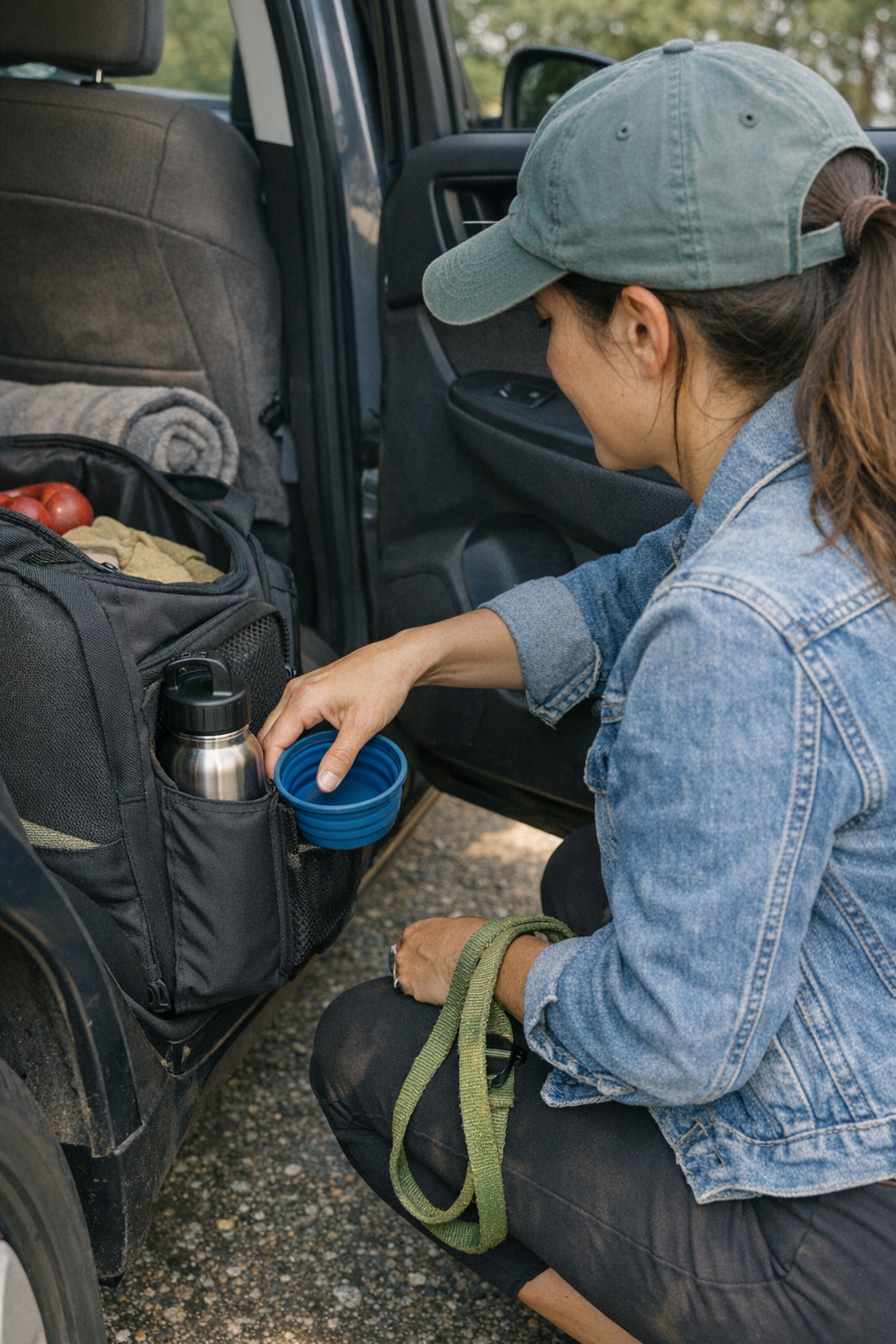
The difference between controlled chaos and real ease often comes down to where your essentials live. A dedicated, upright seat-side pocket—just large enough for water and a bowl, nothing else—means one-hand access during any pause. Instead of opening a main bag (and risking everything spilling out), a semi-rigid side pocket lets you reach for hydration without disturbing a single toy or wipe. Hands busy with leash? No problem: the gear slides out and back in, so you can serve water and move on without wrestling your setup.
Concrete example: three short stops in two hours, each with a restless dog and unpredictable needs. With a purposeful seat-side pocket, water breaks don’t require digging; a bowl and bottle unclip in seconds, avoiding drop-zone chaos on the car floor. Main compartment stays zipped. Essentials return to their same spot, so the next stop feels like an extension—not a total restart. The key difference: less interruption, clearer flow, and a pet who spends more time settled, less time waiting while you search the bag for the basics you thought were neatly stored.
Packing Patterns That Interrupt Your Travel Flow
The habits that slow you down are the ones that slip in unnoticed:
- Bowl under toys or tangled leashes: Looks fine when packed but turns chaotic each stop—digging for the bowl topples half your kit.
- Water gear in interior-only pouches: Keeps things tidy but blocks quick use, leaving you to unstack gear for every simple water break.
- Cleanup and comfort items mixed together: Overlapping slows retrieval and creates confusion—wipes and toys block each other, especially after multiple stops.
The first time, it’s tolerable. By the fourth, the repeated rearrangements and search-and-find routine start to feel like the real problem, not the pet.
Why “Looks Organized” Isn’t the Real Test
Visual order doesn’t guarantee efficiency on the road. Compartmentalized, color-coded, or neat-looking setups promise ease—but repeated-use reality exposes what’s actually frictionless and what’s just tidy on the surface. True test: can you get water, wipes, and comfort for your pet with one hand, in under a minute, while steadying the leash and watching the door? Dedicated pockets for critical items turn retrieval into a single motion, avoiding multi-layer unpacking and mid-trip frustration. The real gain isn’t a cleaner look; it’s not having to pause, dig, and reset after every stop.
Small Upgrades, Noticeable Impact
You don’t always need to swap your whole bag. Sometimes, repacking or moving your hydration kit into a seat-side pouch is enough to end the cycle of digging and delay. When your current layout still trips you after repeated use, that’s the moment to consider a new structure—upright exterior pockets, snap-in carriers, or sectioned organizers designed for quick, one-handed reach.
Replay your last trip: Where did movement break down? Did a water break stall everything? Were the wipes lost when you actually needed them? These bottlenecks are clues—shifting your setup for separated access, reduced overlap, and single-motion retrieval can shave minutes off routine stops and keep your focus on the journey, not the shuffle.
When Function Outpaces Form—And Why That Matters
Travel exposes every hidden flaw—no matter how tidy your bag looks on the couch. Day trips, city errands, and multi-stop travel make the old setup honest. The setups that survive aren’t the neatest at rest; they’re the ones you can actually use on the move, with fewer drop-zones and less frantic searching. Some chaos remains, but friction shrinks: fewer slow-downs, fewer repacking battles, and a more predictable experience for both you and your pet. That’s the difference a smarter travel setup makes after the third, fourth, or eighth stop.
Explore seat-side and quick-access travel setups designed for real movement at PawGoTravel.