Category: Travel & Drive

  • How Small Changes Make Pet Travel Gear Work Smoothly on the Move

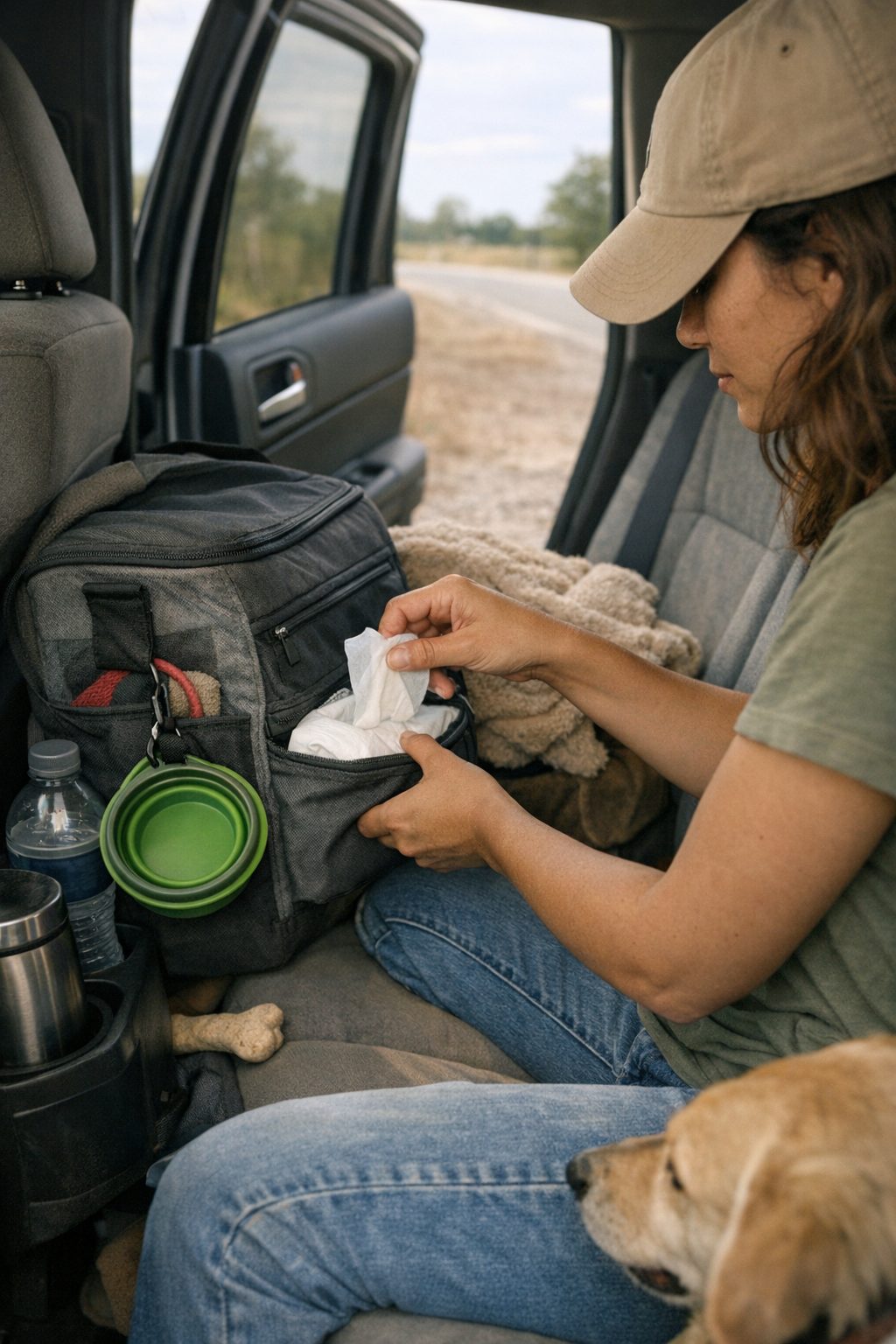
    The problem isn’t packing—it’s what happens after the first stop. At home, your pet travel bag looks ready: wipes, leash, treats, all zipped up. But once you’re parked and your dog needs a quick clean or a comfort item, organization turns into obstacle. You dig through a tangle, open the wrong pocket twice, disturb three other items just to reach one. Every everyday stop—coffee, gas, a stretch at the next park—adds another round of awkward shuffling. What passed for “ready” in your living room stalls out when real travel demands fast access, calm handling, and cleanup at the speed of actual use. This is the gap PawGoTravel setups are built to close: not perfect order, but stress that doesn’t pile up with every restart.

    The Hidden Friction in “Organized” Pet-Travel Setups

    A bag can look fine on the seat but leave you struggling once you’re in motion. The biggest cracks show up at routine, short stops—not while packing. Every moment you reach for wipes and find them under two bowls, or trigger a mini landslide grabbing a comfort item, you feel the difference between “stored” and “actually reachable.” Each pause to reshuffle what should have been ready is a small repeat penalty that piles up through the day.

    • Wipes stuck under layered bowls or blankets when mess hits fast
    • Comfort item grabs turn into clumsy treat-leash avalanches
    • Every restart means re-stacking gear just to regain order that shouldn’t have fallen apart

    Order on a checklist isn’t the same as order in action. Stops get slower, frustrations stack, and all that neat packing means little when you’re blocked on the basics.

    Why Reach—and Not Just Storage—Defines Real Travel Use

    The more you stop and move, the more your “system” reveals weak links. If a wipe pouch is “safe” behind two layers, cleanup is never quick. If water bowls are buried for security, hydration becomes an ordeal. Accessories placed for photo neatness rarely survive the third stop without friction. A bag with one outside, always-ready wipe or treat spot immediately outperforms one with a dozen clever compartments if it saves you fumbling when your pet needs speed.

    Pet travel works on repeat. The process is never just pack and go—it’s settle, supply, soothe, clean, reload, and restart, again and again. Every extra move you make, every layer, multiplies the difficulty and turns organization into a drag on your flow.

    The Real Test: Repeated Use, Not First Impressions

    Picture the morning: a few short errands, your dog joining you stop-to-stop. After step one or two, setup seems fine. But by the third stop, your order starts breaking down. Wipes are deeper in, now under the leash and snack bag. The blanket your dog needs is stuck—again—beneath bowls and treats. Each return to the car becomes more about untangling than traveling. That convenience you organized at home turns into a slow cycle of setup and reset, where every essential is technically present, but never quite at hand.

    The irritation is cumulative. A few lost seconds for a wipe, another scramble for a treat, another shuffle for comfort—they all start to slow you down, break your routine, and make the “organized” setup feel clunky fast.

    Recognizing Recurring Weak Points

    The same logic traps repeat every trip:

    • Moving the same leash to snag wipes at every stop
    • Storing calming items so deep they take five moves to actually use
    • Cleanup gear “present” but buried, turning a quick grab into a minor search

    There’s a difference between location and accessibility. Real-world cycles reveal where your bag’s structure works against you, not just whether everything has a “spot.”

    Seat-Side Access: A Game Changer for Speed and Sanity

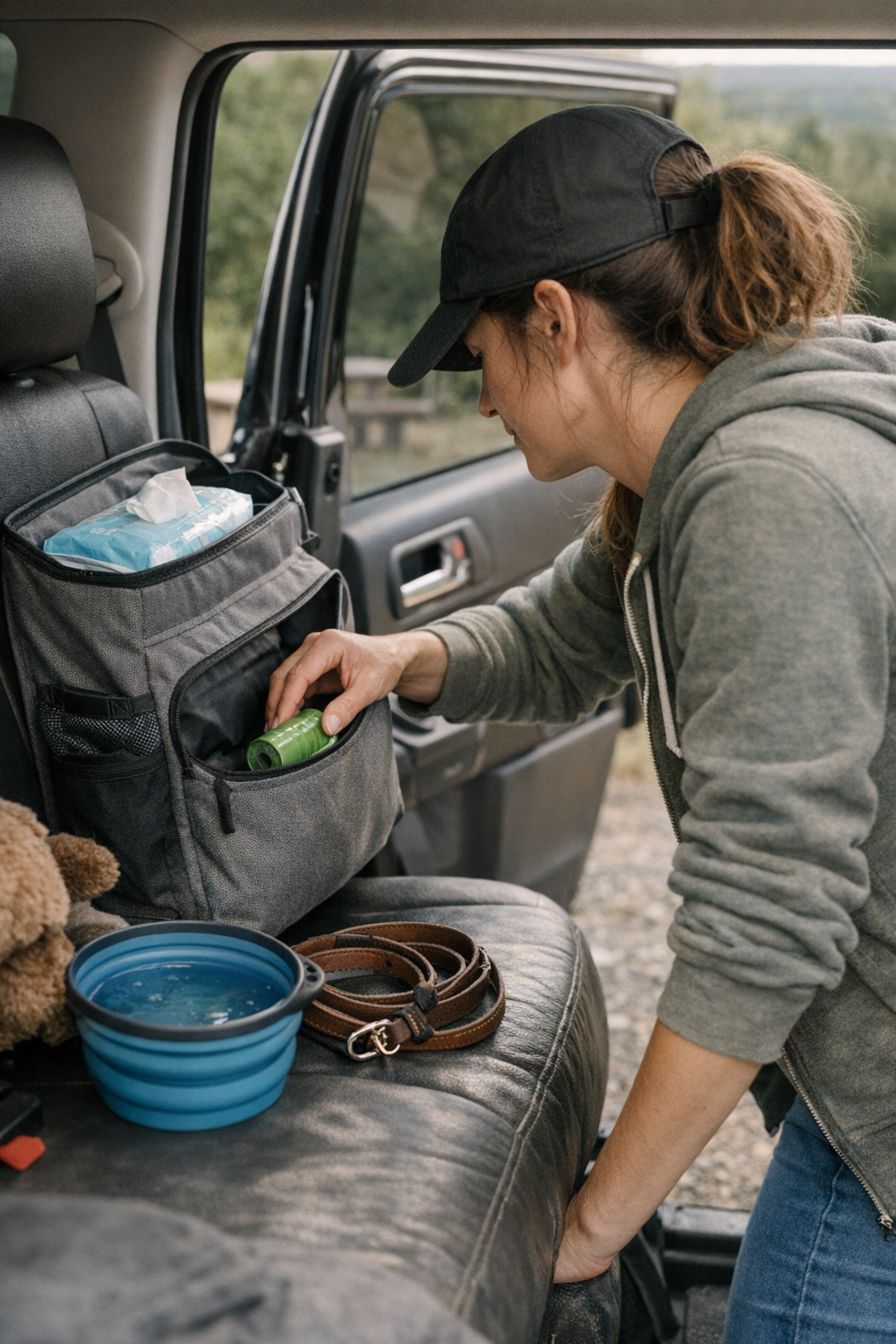
    Setup location, not just sorting, changes your daily friction. The wipes you can pull seat-side, the travel bowl with a grab-and-go outside slot, the leash stored unclipped but upright—these shifts reduce each restart from a mini-reset into a single, thoughtless motion. Forms that look simple—like a broad, flexible side pouch—can eliminate layers of fuss without adding bulk or complication.

    In practice, moving from deep nesting pockets to open, seat-access sections kills two pain points immediately: the need to dig, and the urge to re-pack after. What the bag gives up in looks, it gains in momentum. Reach, clean, go—no pile, no reset, no lost pace.

    Repeat Exposure: When Good Structure Outperforms Extra Organization

    Packing for photo order fades after your fifth stop. You notice which items truly need to be at hand and which can wait. The systems that last aren’t “maximally packed”—they’re built for the cycle: grab, use, move on. If reaching for a must-have means shifting two other things, every restop is a test your bag keeps failing. Responsiveness, not layers, keeps your travel pace smooth.

    Each stop is an audit. If you’re not gliding through seat-side wipes, open treats, and quick comfort resets, order becomes drag—and all the extra pockets aren’t helping.

    Troubleshooting the Most Common Pet-Travel Slowdowns

    Are You Moving Items Just to Reach the Essentials?

    If grabbing one item means uprooting or untangling others every time, your structure is working against you. Placement must match frequency; every extra layer burns time.

    Comfort Items: Helpful or Hindrance?

    If your pet’s soothing blanket is always trapped under bowls and treats, it’s doing as much to slow you as it does to calm your dog. Frequent comfort needs deserve top visibility, not deep nesting.

    Quick-Access for Frequent Use

    Test your setup by literally tracing your stops: how often do you reach, pause, or reshuffle for just one small thing? Each repeated snag signals structure, not just storage, is the culprit. Mark those pressure points—then adjust before your next outing.

    Practical move: Assign your top three travel essentials to always-open or seat-side slots. Even removing just one layer of friction can cut the worst delays—and you’ll know it by the third stop.

    The Outcome: Smoother Restarts, Less Friction, Real Relief

    Effective pet travel isn’t judged by how tight the kit looks at departure, but by how quickly you can handle, clean, and settle at stop eight. The gear that feels best is almost invisible in use—items fall to hand, cleanup is automatic, comfort is available without a scramble. Keep watching for those repeat points of drag or overlap—places where you lose pace for no good reason. Those are the structure fixes that matter. Pet travel reliability is won or lost in the pattern, not the first impression.

    Find travel setups designed for real use at PawGoTravel.
  • Designing Car Interiors That Stay Organized Through Everyday Use

    The gap between “organizing” your car and actually making it usable shows up the moment you repeat your routine. That first glance at a “clean” car is a setup: cables tucked aside, wipes in bins, everything looks in place. One trip, maybe even two, and the cracks start showing. You snag your bag on a charger cord every entry. The sanitizer bottle, supposedly handy, migrates under the passenger seat or toward your pedals after a stop. You try one more time to wedge your phone into a mount that never lines up right, so it always ends up tossed in a cupholder instead. These aren’t big breakdowns—they’re small, stubborn snags that stack up through repeated use. The car looks organized, but the problems come back each drive.

    Small Snags Add Up: Everyday Access Challenges

    Real-world car use isn’t tidy: it’s reach, grab, move, repeat. Coming back after an errand, you want a phone or sanitizer without hunting, but the same issues repeat. Cords dangle across your footwell or snag your hand every time you get in. The wipes you thought would stay handy are now under a shifting tote bag. Organizers claiming “less clutter” slow you down the second you grab something mid-drive. Surface order means nothing if, in a rush, you’re forced into a juggling act just to find what you use constantly.

    One common scene: you pop open the door, toss in groceries, wedge the cooler, and try to reach for your phone—while the charger line manages to hook your sleeve yet again. Every move after re-entry tests whether the clean look equals real function. “Tidy” slips quickly into “annoying”—a longer reach, a block in your path, or a distracted fumble, right when you can least afford it.

    Why Tidy Isn’t Always Functional

    Seat pockets and bins can hide mess, but the “solved” look often masks new problems. Minimalist dividers corral stuff, until a hard brake sends loose items flying—or drifting out of reach down the side of a seat. Charger routes laid across open floor space snag your heel, block pedal movement, or get stepped on in any stop-and-go traffic. Protectors meant to solve mess can instead create a new hassle: covers that bunch, shift, or slide just far enough to annoy your feet every drive. Hidden inconvenience replaces visible clutter.

    Recognize Where Friction Begins

    Most trouble builds in “overlap zones”—the gaps between seat and console, the space near your feet, the spot you always reach for passes or sanitizer. If cable, bin, or organizer blocks that path, you notice: a sanitizer knock you can’t ignore, a cord you tug loose every trip, or a small item you keep having to chase. Friction rarely announces itself. It’s the low-level hassle that turns simple routines—grabbing, plugging, or loading—into small contests that repeat on loop.

    Real-World Scenarios: The Pressure Test

    Picture the morning routine: grocery bag in one hand, dog leash in the other, phone alert chiming as you try to get settled. The charger cable cuts right through your entry route, meaning you twist awkwardly every single time. Or you’ve loaded up from a store run but now have to move a shifting bag just to pop open the wipe container—barrier after minor barrier, none show in photos, all add up fast. Over dozens of stops and starts, what’s “solved” on paper unravels. You end up resetting trays, chasing keys under the seat, tugging shoe heels loose from a misplaced mat, or spending five extra seconds detangling cables each time—a cost you feel more with every repetition.

    Once you’re using your car daily, shallow fixes get exposed fast. The console looked tidy, but every drive, chargers and odds-and-ends migrate into the footwell, or stuff still slides off hard trays. That feeling of clean fades when even small inefficiencies—untangling, chasing drifted items, awkward loading and unloading—repeat over and over.

    Anchored Solutions: What Changes with Pressure-Tested Gear

    Setups that truly hold up don’t just look under control—they actually remove repeated friction points:

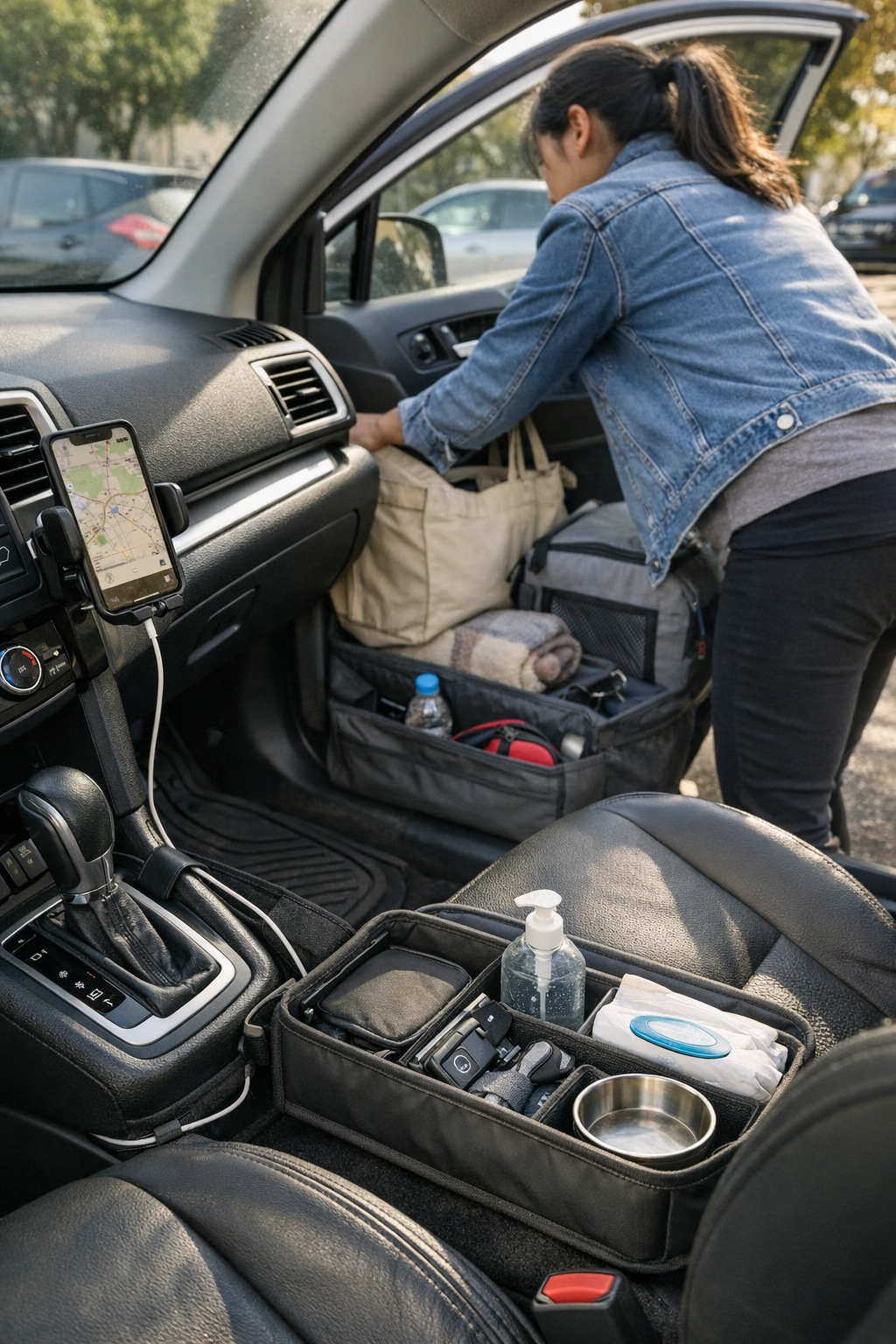
    • Anchored cable routes follow and stay against the seat base, never in the way of hands or feet and never snagging, so plugging in doesn’t mean detouring your arm around a live wire.
    • A shallow, divided tray replaces a deep bin, turning every “search” grab for sanitizer, cards, or sunglasses into a one-move reach—no more slow digging or off-balance hunting.
    • Seat-edge organizers or anchored footwell bins stop item drift completely, blocking the migration of stray wipes or cards under seats or into pedal territory even after a sharp stop.

    The reward isn’t just less visible mess; it’s a smoother, faster, lower-effort routine. Anchored arrangements cut the friction you notice (searching, re-tucking, detangling) and the friction you feel after every drive when “clean” starts breaking down in practice.

    Common Pitfalls: When Order Masks Ongoing Inconvenience

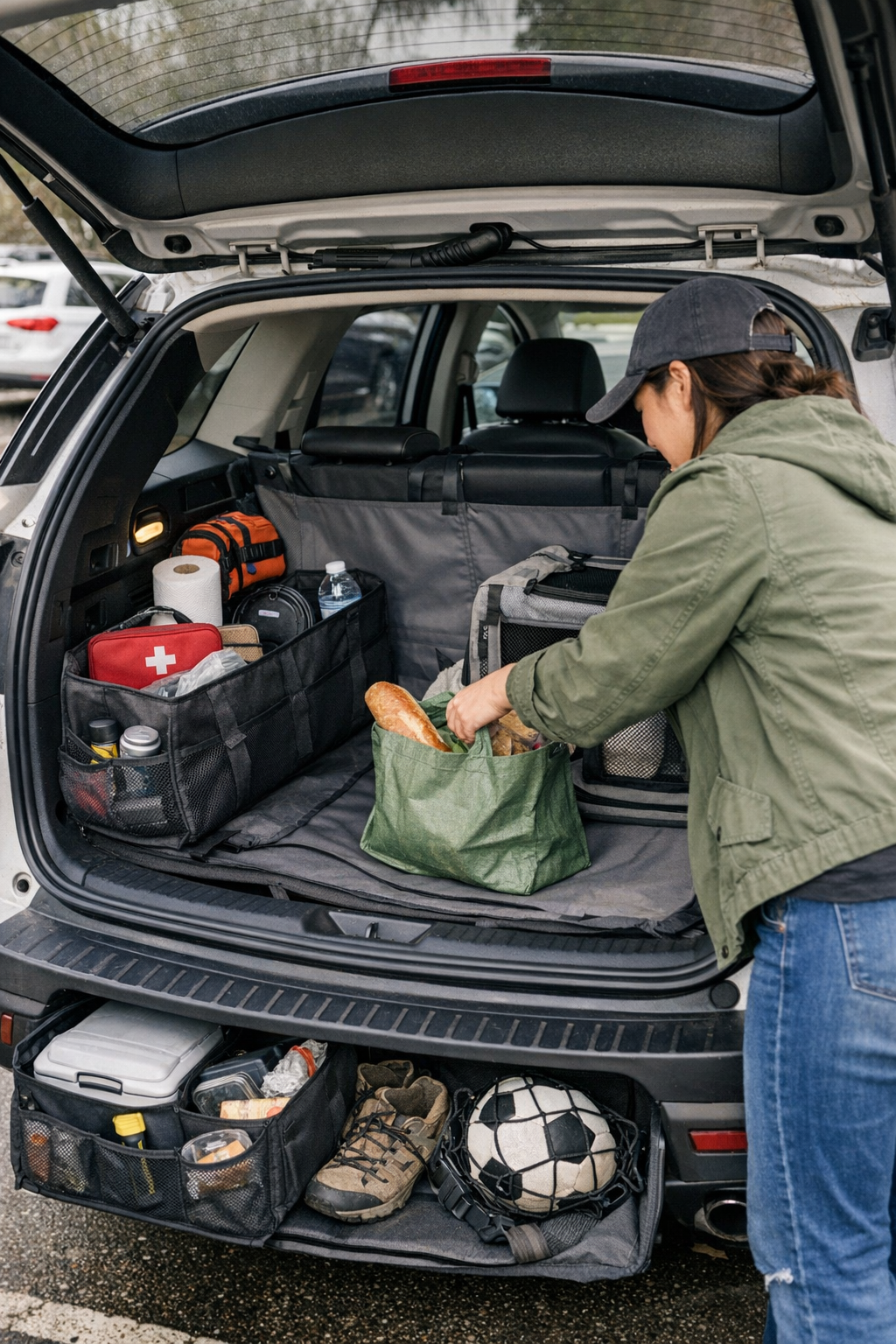
    Plenty of systems hide chaos and still leave you stuck at the moment you need something. Sleek organizers swallow the items you use most, so you’re forced to dig or shift three other things just to reach them. Mats and floor covers trap dirt, only to slide under your heel or up against the pedals, giving you a new reason to fidget mid-drive. Even trunk organizers can force you to play Tetris with bins and bags—great for lifting, bad for getting that one thing in a hurry. Looks like order, but you still stall, search, or shift at every turn.

    If your hand or foot stops, hesitates, or reroutes more than once a trip, the setup is failing its real job. Repeated inconvenience is the sign. In practice, a useful system signals itself by what you don’t notice—nothing blocks your reach, nothing slips out of place, nothing slows you down on your normal routine. Anything else is just organized clutter.

    Building a Car Setup That Goes Beyond Looking Tidy

    The setups that survive actual life are built for cycles—hands, bags, and pets landing in the same spot, repeated grabs for the most-used gear, sideways knocks from parking-lot shuffles. What matters isn’t the photo at the start, but whether every tool, charger, or wipe stays where it should after a week of errands and real parking returns.

    Ask two things as you build or adjust: Does this stay put under actual pressure? and Can you grab what you need instantly, even after everything’s been loaded, jostled, or parked in the sun? Anchor what moves, define lanes for cables, give each essential an obvious home that fits real reach, not just appearances.

    Because what works isn’t just tidy, but pressure-tested—staying functional after all the hurries, stops, and daily bumps that reveal what you only learn after real use.

    Find practical, pressure-tested car-use solutions at DriveWellSupply.

  • Why Your Carry-On Setup Fails During Unpredictable Travel Moments

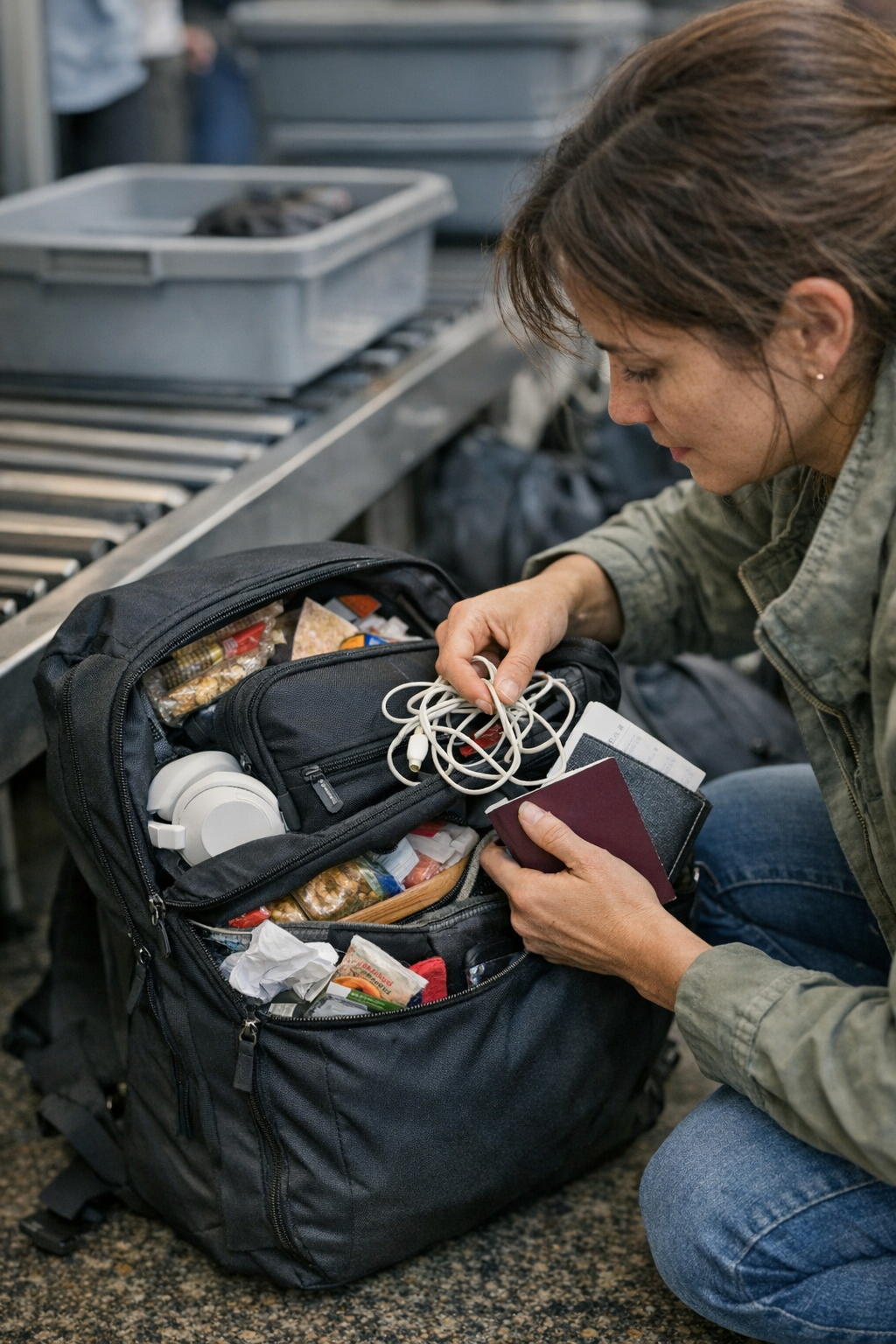
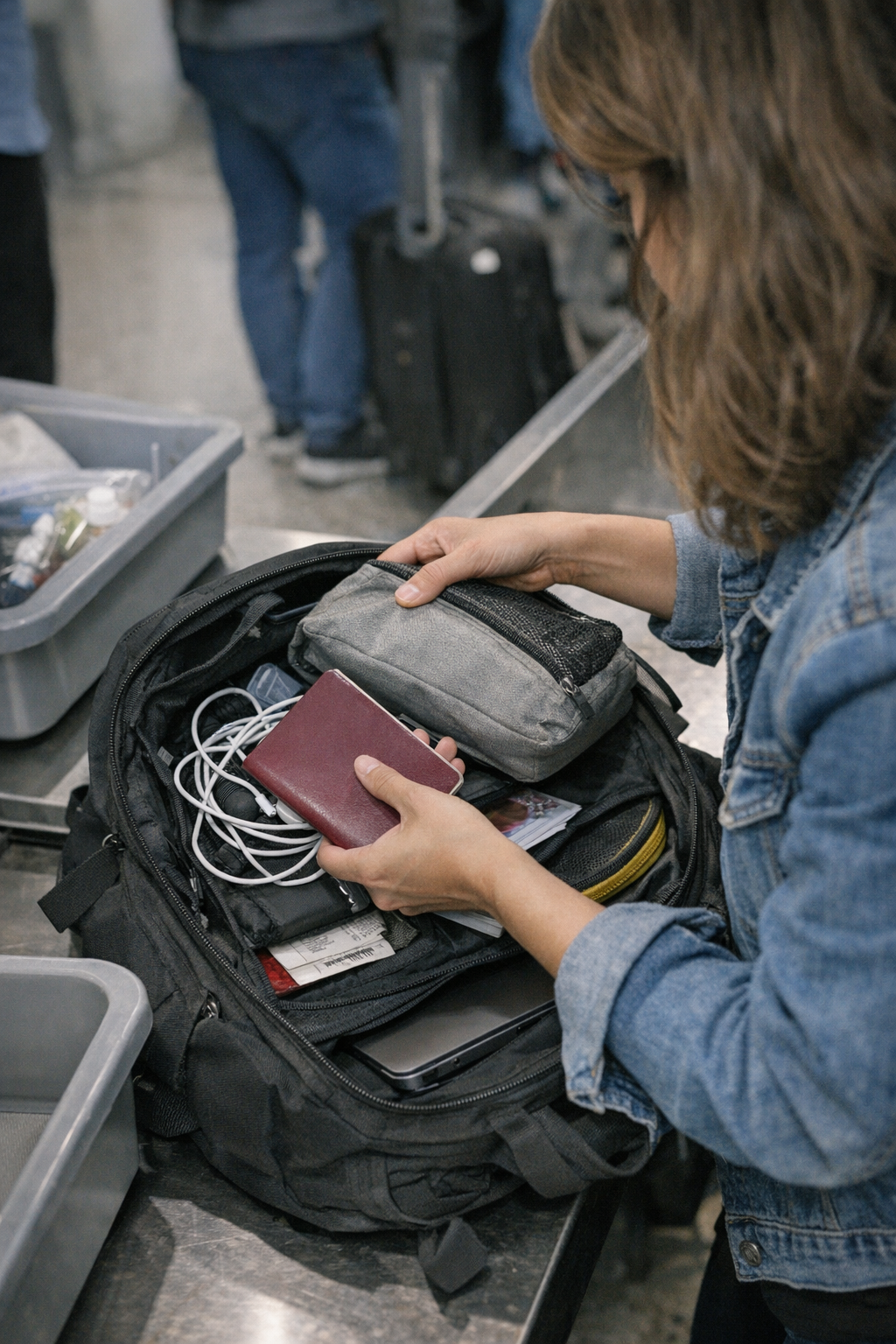
    A carry-on bag that looks meticulously organized at home often fails when it hits real airport flow. The moment you hit security trays, boarding queues, or document checkpoints, those tidy pouch grids and stacked cubes become a test—can you actually get your hands on what you need, fast? That “ready” feeling in your living room dissolves the first time you reach for a passport and hit a wall of overlapping pouches, or unzip for a charger only to spill half a snack bag. Travel doesn’t reward good packing form; it exposes the difference between setup that only looks orderly and a carry-on that slides through repeated reach, retrieval, and repack without friction. When every airport movement is a countdown—tray moving, line pressing, plane filling—finding the right item without stalling matters more than arranging it perfectly.

    The Unseen Friction of a ‘Visually Ready’ Bag

    Visual order is a setup you see, not a system that moves with you. At home, color-coded organizers, stackable tech sleeves, and slim wallets seem travel-proof—until a sudden document check or revised gate number shoves your planned sequence out of order. Instead of a quick handoff, you’re rooting for a boarding pass but landing on a power bank, or peeling up snack sleeves stuck over your passport. Every checkpoint, boarding call, or seat entry repeats this friction—tiny roadblocks that add up. What you thought was efficient at the start morphs into a menu of delays: more stops, more digging, more public repacking, with each loop making order harder to maintain.

    When ‘Organized’ Backfires Mid-Trip

    Failure signals show up immediately—not after hours, but on the first round of airport movement. At TSA, your liquid pouch is trapped underneath headphones and a tangled charger. In the boarding line, impatience builds as you hold things up, shuffling notebooks to reach your ID. By the second or third access cycle, the bag that impressed you at home becomes a cluttered guessing game, where retrieving a simple document means fidgeting through layers, blocking the flow behind you, and messing up your system further with each rushed repack. The pattern is clear: when every retrieval creates more disorder, the setup loses its promise of control.

    How Compartment Overlap Turns Into a Bottleneck

    Packed-in multitasking pockets easily create roadblocks in action. Nest a document sleeve under a tech pouch and you’ll pay for it the first time your ID is called and everything slides out at once. Share an “essentials” pocket between snacks, cables, and receipts, and you’ve set up the next spill during a fast check. The real-world effect isn’t theoretical—it’s a loop of micro-stalls:

    • Wrong pouch, wrong moment: You open two or three before hitting the one you need—contents exposed, order lost.
    • Transit shift: Cables and chargers shift, blocking zipper paths and jamming up quick access points.
    • Out-of-sequence return: After two live cycles, your “organized” layout breaks down—key items drift out of position while less-used pouches migrate to the top.

    The result is not just hassle—it’s repeated slowdowns at every choke point, from lining up for security to dropping your bag under the seat, with each interruption building on the last.

    Scenes from Real Airport Movement

    Security Tray Transfer: Where Setup Weakness Shows Up

    At security, the test is brutal and public. If your liquids kit is buried under backup pouches or tangled in tech cords, you’re forced to unpack in the moving tray, fumbling with layers as the bins stack up and travelers behind you get impatient. Every extra reach or rearrange exposes a weak packing link—what worked for a flight checklist can unravel in seconds under airport pressure.

    Gate Change Scramble: Access Can’t Be Optional

    Repacked after document checks, bag zipped—new gate announced. Standing up, you face a time squeeze and realize that the accessible pocket for your boarding pass is blocked by a cosmetic bag or tech pouch that slipped out of line. The clean packing logic that made sense in your living room now clogs the works the moment the travel routine becomes urgent.

    Seat Entry and Overhead Bin: The Quick-Access Mirage

    As you squeeze into a tight seat, your bag snags on the aisle. The so-called “quick access” pouch can’t unzip without spreading half its contents on your lap or the floor. If a cable crosses the entry point, you end up forcing the zipper, bending your charger, or closing up with loose items. Neatness returns after repacking, but the underlying layout keeps fighting against fluid movement, and every return to the compartment demands another fumble.

    Why the Same Traps Keep Returning

    Organizers help—until each access forces a reshuffle. Stack cubes or use dividers, and you’ll still find yourself shifting gear just to reach one commonly used item. What starts as control ends up as chore: a repeated cycle of pause, shuffle, and rebuild. With each brief stop—security, snack break, inflight battery hunt—your organization resets visually but gets messier to use, pointing out that the system wasn’t built for actual access. Frustration surfaces not during packing at home, but at the third, fourth, or fifth reach when you stop caring about neatness and start wishing the right item would just land in your hand.

    Travel exposes what a static setup can’t handle: repeated, uneven access under real-time pressure, loose order that crumbles with real use, and a layout that slows down every checkpoint instead of clearing the way.

    Resetting Your Setup for Repeated Reach

    Every Item Needs Its Place—For a Reason

    The only layouts that hold up in the field are ones built on purpose, not appearance. Travelers who separate tech gear, documents, and essentials into truly dedicated, consistently placed sections find their setup holds under pressure. One outer pocket assigned for documents will do more to speed your airport time than any catchall space that claims to handle everything. Set a predictable spot for each core cycle—no improvising, no last-minute cram. This stops the overlap and makes each return fast and reliable, not just neat at rest.

    Split your setup with use in mind: one defined location each for documents, tech, and small on-the-move extras. Build a packing habit around these repeated access points—a quick boarding pass pull, a security tray liquid check, a charger grab that never blocks your passport. Every time you return something mid-movement, it lands back in the same place—no second guessing, no reshuffle.

    Packing for Real-World Flow, Not Just Good Looks

    The setups that survive aren’t just compact—they’re the ones you can reset blind after a rushed check. This means straight zipper access for boarding passes, tech cables routed far from crucial documents, and the discipline to quarantine essentials instead of mixing “convenient” with “urgent.” A carry-on that works is one you can enter and exit over and over during a normal trip without a cascade of mess, pause, or lost time. The difference is not only visual—it’s the freedom to move through trays, gates, and aisles without your bag tripping you up.

    When Setup Improvement Makes the Real Difference

    Airport movement isn’t about getting it right once. It’s about reliability under repeat, often unpredictable, pressure. A good setup won’t solve every inconvenience, but it limits the points where you get stalled—removing backup at security bins, fumbles at boarding, or aisle crowding during repacking. Each smoother retrieval isn’t just a time saver—it’s the difference between steady progress and a trip punctuated by needless slowdowns and tension points. In practice, the only carry-on that works is the one you reach into—over and over—without it ever reminding you where it went wrong.

    If you’re ready to reset your routine for real movement—not just visual order—find carry-on solutions built for access, not just appearance, at CarryOnSupply.

  • Why Soft Pet Carriers Can Slow You Down During Frequent Stops

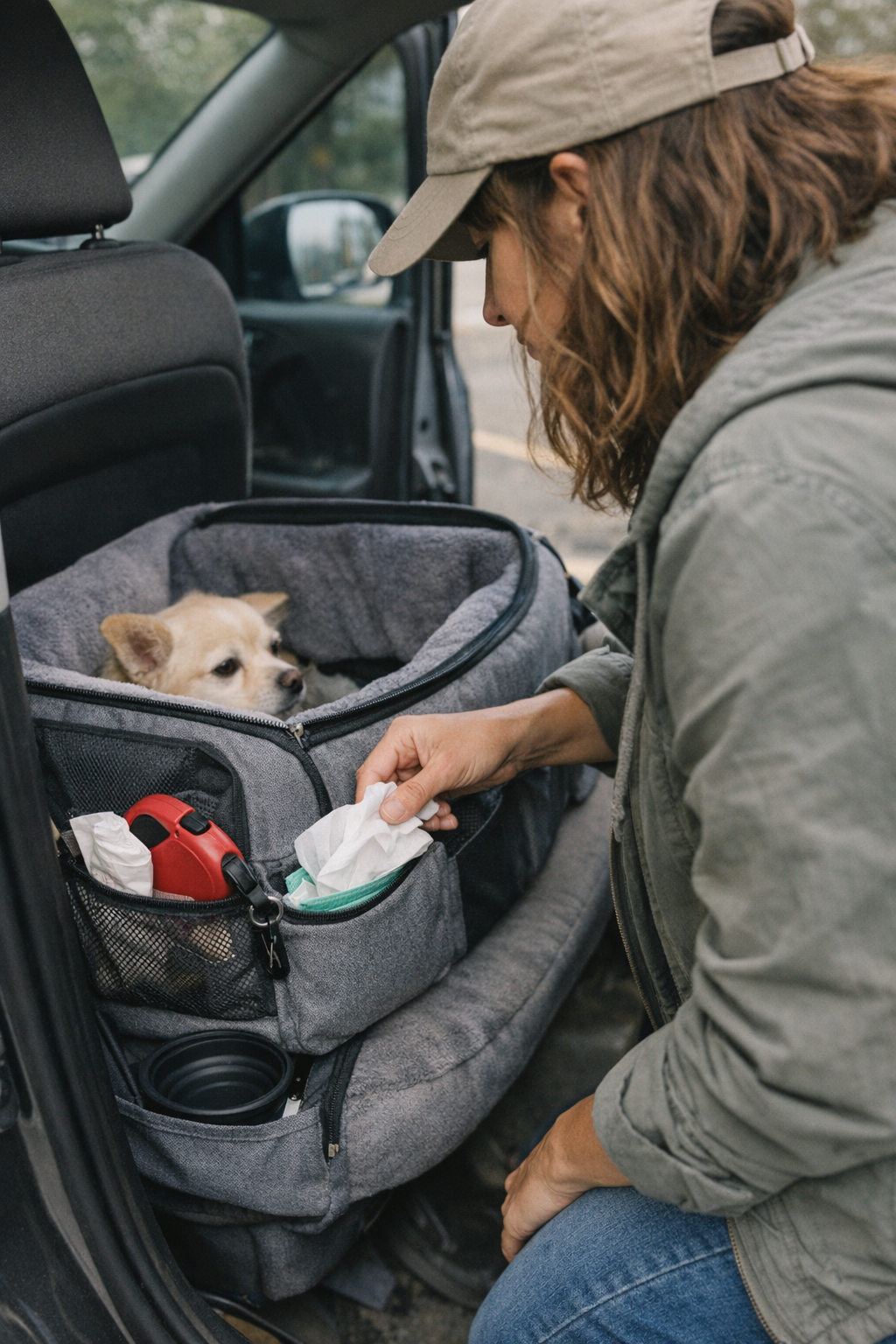
    Pet carriers always look organized—until you use them for more than one stop. Zip up bedding, check the supplies, and the bag could pass for “ready for anything.” But after two quick errands, the truth hits: your leash is buried, the wipes have shifted beneath padding, and every attempt to grab one needed item turns into a quiet scramble. With each pause, the once-tidy setup turns slower and rougher to handle—even though nothing’s technically missing. Anyone routing through pet travel with more than a single trip notices the same friction: each return to the bag means another hunt, another small reset, another chance for routine movement to break the smooth start. The “prepared” carrier keeps looking neat while feeling less workable with every stop. PawGoTravel specializes in setups that address this exact kind of practical breakdown.

    Why One-Stop Comfort Fails in Real Travel Routines

    The soft, plush carrier feels perfect at first glance—a calm zone, an organized nest. But the illusion fades almost immediately after real use starts. The first stop? You might get away with just reaching for the leash. By stop two or three, you’re shifting bedding, unzipping compartments that feel just out of reach, and waking a confused pet just to access the treats. That “all-in-one” comfort carrier never quite recovers from a busy round of errands; what started as organization turns into an obstacle, with each essential now layered, hidden, or out of sync with how you really move. The gear looks made for peace, but in routine motion, you get an interruption every single time you need anything fast.

    The Repeated Return: A Test Most Setups Fail

    This isn’t just an inconvenience you brush off—it’s a repetitive hassle that only gets worse as the day goes on. Common pain points show up fast:

    • Picking up the carrier again, noticing the leash clip now lost beneath a folded blanket—again.
    • Wrestling a zipper stuck on bedding, just when you need smooth access.
    • Grabbing for wipes, only to find them pressed into a corner, now damp from a shifting water bowl.
    • The outer look is still neat, but every use after the first feels more cluttered and slower than before.

    Most setups are ready for one scene—almost none stay smooth for repeated in-and-out travel.

    When Pet Comfort Starts Causing Extra Friction

    It makes sense to value softness and structure; no one wants a stressed-out pet. But excess plush layers and tight compartments make every routine exit harder. Park runs and banking stops morph into mini time-sinks, with bedding jostled and “quick grab” zones now just confusion. The more layers or closures the carrier adds in the name of comfort, the longer it takes to access simple essentials. Instead of easing movement, comfort layers start adding steps, squeezing pace and patience on both sides. The pet may snooze, but the owner is left hunting for one pouch that’s drifted out of line with every bump or pause.

    Owner and Pet Supplies: Colliding in the Same Carrier

    Another overlooked struggle: travel routines mixing pet gear with your own essentials. When leash, wipes, treats, water bowl, keys, and phone all compete for deep-compartment space, the result is friction that spills from one stop to the next.

    • Wipes tangled with treats mean even a basic cleanup turns into a scavenger hunt.
    • Bedding stacked on top of small items virtually guarantees at least one “where did that go?” mid-trip.
    • Comfort setups that block quick access mean you’re constantly resetting the whole carrier for just a one-minute errand.

    This overlap isn’t a design flaw—it’s a reality for most bag layouts that look orderly at home but fail under repetitive travel pressure. Every real stop exposes the tradeoff between looking prepared and actually functioning without extra steps.

    How Setup Design Turns into Everyday Handling Trouble

    The real test for any pet carrier is not its out-of-the-box look, but how it handles after hours of stop-and-go use. When structure prioritizes appearance—dense foam, deep plush, hidden pockets—real-life movement slows everything down. Bowls, leash clips, and wipes all wind up pressed aside or half-hidden, making each grab slower. The more you pack for peace of mind, the more you end up rediscovering the same stuck or shifted items, as if your organization resets after every stop. It isn’t about having enough—it’s about having essentials in the right place when you need them the third or fourth time that day.

    Everyday Story: Three Stops, Three Interruptions

    Picture a standard run: first trip out, the bag looks perfectly arranged. Second stop, you already find yourself waking the dog just to fish out a leash. Third stop, the treat pouch has slithered under rumpled bedding and wipes are buried against the side. These aren’t one-off annoyances—they’re the pattern. Movement is interrupted, the travel rhythm falls apart, and each restart feels longer. The difference is never “productivity”—it’s the constant drag of rearranging, searching, and soothing a newly unsettled pet.

    Structure Over Looks: What Actually Helps with Movement

    Switching to a structure-centered carrier—a low-profile design, side flaps, real external pockets—doesn’t advertise itself with plushness. But in real use, the effects are permanent:

    • Essentials are in grab-ready outside pockets—safe from bedding shifts.
    • Leash, wipes, and treats are accessible at seat level, not buried beneath or separated by layers.
    • Cleanup routines no longer compete with comfort: the bag opens wide, you’re moving again in seconds, not minutes.

    After the switch, exits and restarts blur together. The carrier’s structure fits the repeated-movement reality, not just the picture of “preparation” before any actual travel begins.

    Quiet Improvements, Stronger Routines

    The difference isn’t loud, but you feel it: bedding stays put, pet rests undisturbed, and you stop dreading the next reach for a treat or wipe. External pockets and easy openings shrink the distance between “packed neatly” and “usable mid-trip.” Once quick access and comfort are designed to coexist, you don’t notice the setup so much—until you have to borrow a basic one-stop carrier again and the old frustration snaps right back.

    Don’t Let Visual Neatness Hide Real-World Weak Points

    No matter how good your setup looks before leaving the house, repeated stops quickly reveal whether it really works. When every pause means slower access, shifting supplies, and overlapping needs that rub together, that’s your structure—not your packing—exposing its limits. Don’t assume visual order equals practical readiness. The difference shows up only with repeated movement: comfort isn’t about extra plush, it’s about every item being where you need it, every time. When your actual routine is a pattern of stops and restarts, your carrier needs to move with you, not slow you down.

    Discover practical carrier designs and travel setups at PawGoTravel.

  • Why Car Organization Fails After the First Drive and How to Fix It

    Your car looks organized—until you actually use it for more than one stop. First drive of the week: cupholders are tidy, cables tucked, mats clean. But by the third errand or coffee run, the “organized” setup starts breaking down. Charging cables drift under seats, your phone slides out of reach, crumbs and receipts stack up near the pedals. The problem isn’t messiness—it’s that setups designed for surface neatness can’t keep pace with real use, especially when routines pile on and access keeps getting interrupted. Friction creeps in fast when you need to grab, plug, drop, or reload without stopping to rearrange. And suddenly, that clean look costs you a little more time every time you climb back in.

    What Looks Organized Isn’t Always Easy to Use

    The difference between a car that functions and a car that just appears organized usually shows up during a rushed or routine stop. You might start with everything put away, but real-world demands expose the weak spots instantly: reaching for a phone that’s wedged out of sight, plugging in a charger while cables snake across the floor, or shifting a bag off the passenger seat for the third time. The tidier the setup, the more obvious it becomes when you have to hunt, untangle, or dislodge something to keep moving.

    It doesn’t take a long road trip for these sore spots to show up. Just a few rounds of town errands or a commuter morning, and you’re repeating small adjustments—re-grabbing cables, digging out receipts, shifting organizers—just to do the basics. When your “organized” system sacrifices repeat access for empty-looking surfaces, each trip chips away minutes and patience.

    The Hidden Tension of ‘Put Away’ Accessories

    The idea of “everything in its place” falls apart the second you actually need that stuff in motion. Chargers stashed in glove boxes leave you fumbling for the right wire from a seat that doesn’t swivel. Armrest organizers with zipped pockets hide keys and tools, but force you to stretch and fumble while parked sideways in a busy lot. Accessories that disappear out of sight tend to give you the cleanest dash—and the most interrupted flow when you’re loading, connecting, or bailing out of the car in a hurry.

    This turns small car returns into a constant low-level obstacle course. Every time your hands are full—or you’re pressed for time—those buried or pretty solutions make access slower, not easier. The worst friction always pops up when you need two or three things at once: map, charger, and a hand free for carryout or groceries.

    Moments When Organization Backfires

    Picture a fast grocery run in bad weather. You juggle groceries onto the passenger side, drop your phone somewhere while toggling navigation, and a charger cable wraps around your leg as you slide back in. On return, your phone’s wedged between the seat and center console, the charger is tangled underfoot, and groceries have rolled off the seat to the floor, every “put away” item just a bit too far or stuck behind another. The interior looks tidy until you need anything in a hurry—then the “neat” setup turns into a tangle of minor delays: untuck, unhook, reach, reclaim, start again.

    This is where slick organization layouts actually get in the way. Perfectly zipped bins, tightly stashed cables, and hideaway pockets make sense parked—until your routine is moving fast or you’re balancing more than one bag. The extra reach and frequent stops turn a cleaned-up car into a slow, high-friction space, with seconds lost each time you try to get life moving again.

    The Repeat Offenders: Cable Chaos and Shifting Essentials

    Every organized car has spots that fall apart first. Cables slip from their tidy routing, sliding beneath the mat after a few tosses of the phone. Multi-use gear lands wherever it’s most convenient—sometimes on the seat, sometimes jammed in the rear door. Cargo organizers that impress on Sunday can force you to bend, reach, or move half the trunk’s content just to grab a single item while parked at the curb. What felt “solved” on the first drive becomes a repeated problem on the fifth or sixth, as your routine exposes limits that weren’t visible while everything was still carefully placed.

    This is the cycle: neaten, use, shift, repeat. By the end of a normal week, you’re back to searching for missing cables and fishing gear out of footwells. It’s not lack of effort. It’s the difference between setups designed to look controlled and setups built for shifting, repeated, real-life use.

    When Protection Adds Its Own Problems

    Floor mats and seat covers mean to keep your interior clean—they just don’t always make things simpler. A waterproof mat folds up at the footwell edge, blocking your backpack and catching new debris. Seat covers meant to shield against dog hair slide enough to push your own go-bag out of reach. Chunky cargo organizers demand an extra round of re-loading whenever you need to toss in a stroller or awkward parcel. Solutions that protect against spills or grime often create a new layer of interruption for anything that isn’t small and flat.

    It’s not about skipping protection—it’s realizing that “solved” messes can generate repeated micro-inconveniences. When you’re in-out-in all day, any setup that needs adjusting, tucking, or rearranging every time isn’t really covering you—it’s just moving the problem around to new spots.

    How Simple Adjustments Change Repeated Use

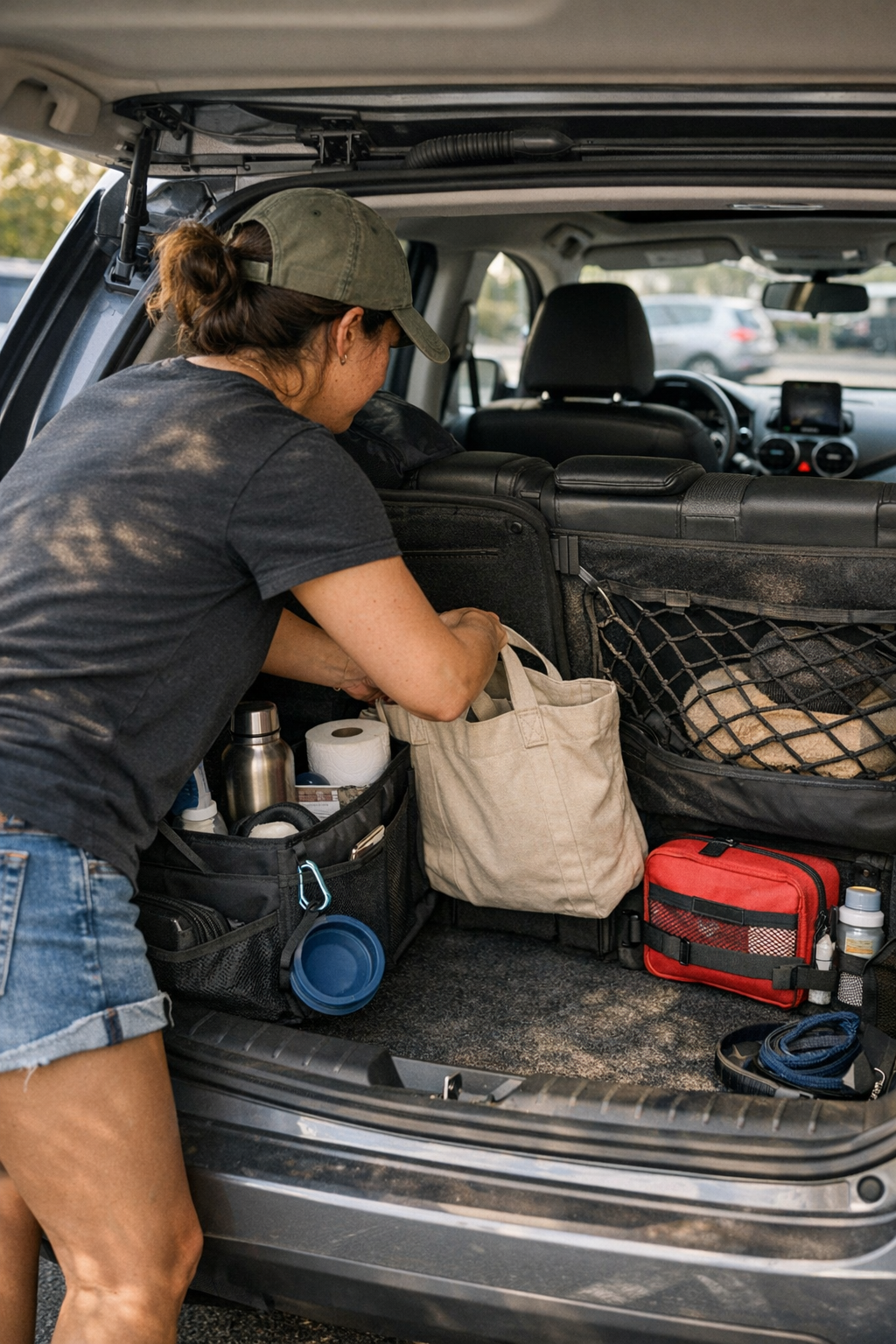
    The best fixes aren’t always the fanciest or the ones that disappear from sight. If your charging cable keeps migrating, a clipped guide along your seat edge keeps it anchored—no digging under seats, no cable knots, just plug and move. A shallow bin near the center console beats a zippered pouch every time for wallets, keys, and sunglasses—items you grab repeatedly, not just at the start or end of a trip. Even a weighted floor mat corner in the trunk lets you load and unload bags without wrestling the protection out of the way.

    Usable setups solve for friction, not for appearances. The goal shifts from “can I hide this?” to “can I reach, return, and reclaim without repeating old mistakes?” Even a slightly visible organizer that stays put is better than an invisible one you have to re-find every time.

    Recognizing What Actually Makes Your Car Easier

    The real test of your car interior isn’t how it looks clean—it’s how it works return after return. Do you automatically find your phone mount without fishing through a crevice? Plug in to charge without a hunt? Reach for an umbrella, leash, grocery bag, or charging brick and not find it tangled, jammed, or out of place? If not, you’re probably solving for surface, not for repeated use. The strongest setups let you bypass that cycle of fidgeting, reaching, repositioning—so the inside of your car stays ready for what you do, not just how it looks parked.

    The difference shows when you stop noticing the old friction—because it’s gone. For car organizers, phone mounts, cable clips, protection covers, and real solutions that actually hold up to repeated use, see what DriveWellSupply has in store: DriveWellSupply.

  • How Small Travel Habits Keep Your Carry-On Organized and Stress-Free

    If you travel more than a couple times a year, you already know the pattern: A carry-on that looks orderly on your hotel floor turns into a slow-motion struggle by your second airport transfer. A passport you stowed proudly in its “spot” is suddenly wedged beneath a scatter of charging cables. That tech pouch you zipped smoothly into place now demands a total shuffle—just to reach the one charger you really need, while the security line breathes down your neck. Visual neatness means nothing if every small retrieval feels like untangling someone else’s logic under travel pressure.

    Why Visual Tidy-ness Isn’t the Same as Real Efficiency

    A bag that photographs well does not guarantee a faster trip. Packing cubes stacked perfectly and mesh panels zipped tight lull you into believing your setup will stay sharp through every stage. In reality, these “clean” layouts often disguise the very flaws that slow you down. The order you see before takeoff dissolves the moment you reach for anything twice—what worked on the hotel bed rarely survives real, repeated retrieval and return cycles. It’s not just about looking good for the pre-flight shot; it’s about whether your system can withstand the wear of actual movement and interruption.

    Cross-packed compartments are a classic trap. Toiletries ride beside travel docs “just for now.” Cables get layered under a sweater to keep things snug. None of it feels wrong—until the first document check or charger search stops you cold. You pull out one item and trigger a half-undo of your whole arrangement. What started as calm order now becomes a scramble, every small retrieval turning into its own frayed puzzle.

    The Real Scenarios That Break Order—And Why They Matter

    Checkpoint Chaos: When Packing Order Falls Apart in Line

    The moment of truth usually isn’t packing—it’s that pressurized pause just before the security tray. You go for your ID, but it’s blocked by layered pouches and a cable sack that’s slipped off its mark. Forced to unzip fully, you fumble through overlapping gear, hoping nothing spills out as the line inches forward. Once you finally clear security, repacking is anything but tidy: now you’re restacking half-blind, pushing items wherever there’s room. That “system” that made sense an hour ago? It’s breaking down, piece by piece, at exactly the worst time.

    Reaching, Retrieving, Repacking: The Unseen Drain on Movement

    Boarding is fast until you hit the aisle squeeze. The moment you need something—headphones, travel docs, sanitizer—your brain already knows the dig is coming. Instead of a quick grab, you have to push past three soft pouches and a sagging cable roll while the queue stacks up behind you. What should have been a seamless move now marks you as the person clogging the flow. For every retrieval, you add small delays and extra attention, trading calm for awkwardness again and again.

    Overhead-bin Surprises: Why Compactness Isn’t Always Convenient

    The “ultra-compact” carry-on seems efficient—until you’re standing mid-aisle, hunting for an item you thought you’d only need at your seat. Instead, your charger hides beneath a compression cube, and getting it means unlocking the entire main compartment. Now you’re balancing the bag half-open in a too-narrow aisle, risking a messy spill or clumsy re-pack that unravels on arrival. The clean look turns into real hassle the moment you need anything out of sequence.

    The Subtle Difference: Looking Packed vs. Moving Smoothly

    A carry-on that only looks tidy almost always falls apart after real use. The collapse isn’t dramatic—just silent, repetitive breakdowns. You start the trip with chargers on top, documents where you expect, and pouches stowed for quick access. By the third retrieval, cables snake their way under shirts, boarding passes drift, and you find yourself improvising temporary “fixes” that slow you down again at the next checkpoint. Every small interruption signals that your setup isn’t truly built for rapid, repeated access. Order that can’t survive movement isn’t order at all.

    Habits That Actually Make a Difference

    Dedicated Pockets, Zero Overlap

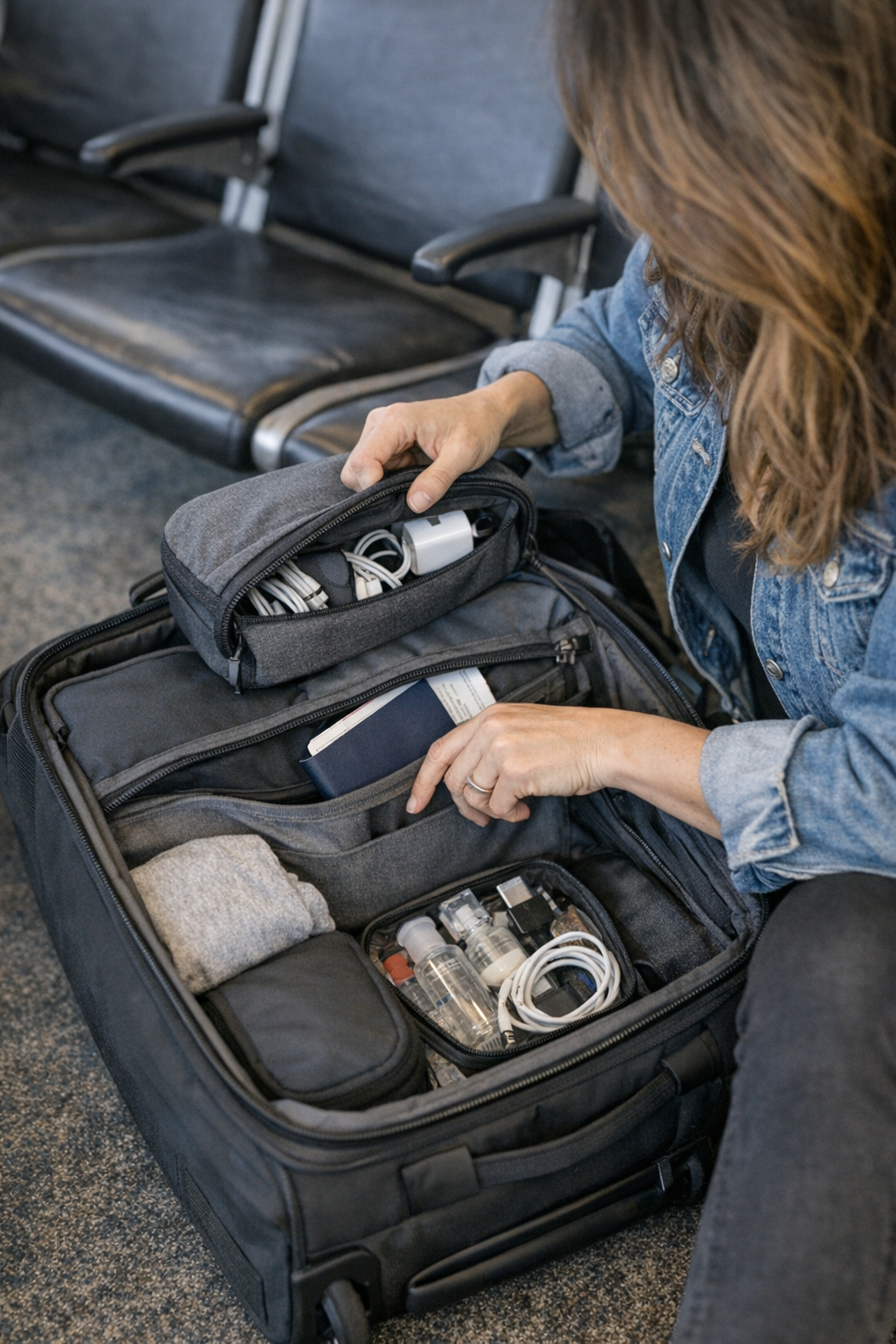
    Speed and sanity come from strict separation. Assign one top or exterior pocket for documents—never for snacks, coins, or spare tech. That way, you train both hand and memory: the item you need is always in the same place, every time. Tech—chargers, cables, headphones—belongs in a single, upfront pouch: no digging, no tracing random wires, no stress when the tray line moves. Use it, return it, same spot—no exceptions. When your essentials have fixed homes, retrieval and return become second nature, not fresh problems.

    Modular over Monolithic: Why Separated Items Win

    The “everything-in-one” organizer feels efficient until you need just one item—again. Modular pouches for clear categories (one for tech, one for overnight, one for liquids) prevent the domino effect, letting you grab and replace each type without disrupting the rest of your setup. At a checkpoint or during forced repack after searching for a passport, you return each piece to its predictable place. There’s no cascade; disruption is minimal. Over a long day’s travel, the accumulated savings in time and energy are impossible to ignore, especially when systems that once seemed neat start to fail after only a few retrievals.

    Recognizing Trouble Early—And Resetting Before It’s Too Late

    One clear signal your system is failing: you find yourself digging for the same item several times an hour—a passport behind toiletries, a charger lost under layers, a boarding pass buried under headphones. If, halfway through the trip, you invent a “temporary” holding spot because returning something is too much hassle, it means workflow breakdown has already set in. That’s when it’s time to stop, strip down, and assign each essential its own clear place. A quick reset, strict pouch discipline, and ruthless avoidance of overlap restore flow—and keep you from stacking repack mistakes for the rest of your journey.

    What Actually Speeds You Up: Practical Takeaways from Lived Travel

    The best carry-on setups aren’t the ones that look untouched on arrival; they’re the ones that recover fast, retrieval after retrieval. The advantage isn’t in the initial neatness but in the repeatable, predictable access patterns when tired, rushed, or interrupted. Assign zones—tech, documents, comfort basics. No mixing. No creative repurposing mid-trip. Each return and retrieval follows the same path. After dozens of flights, the difference is measurable: minutes saved, stress dropped, and fewer mid-aisle repacks under pressure. Your bag won’t stay photo-perfect, but your movement through every gate and aisle finally feels as streamlined as it looked back at the hotel.

    For travelers who are done with systems that look good only before the first boarding, it’s the setups that withstand real use—and recover after every interruption—that actually change the trip. Move toward modular, separated, purpose-built arrangements. See what order feels like when it works at every phase, not just the start.

    Shop at CarryOnSupply

  • How Structured Pet Travel Bags Improve Comfort and Efficiency on the Go

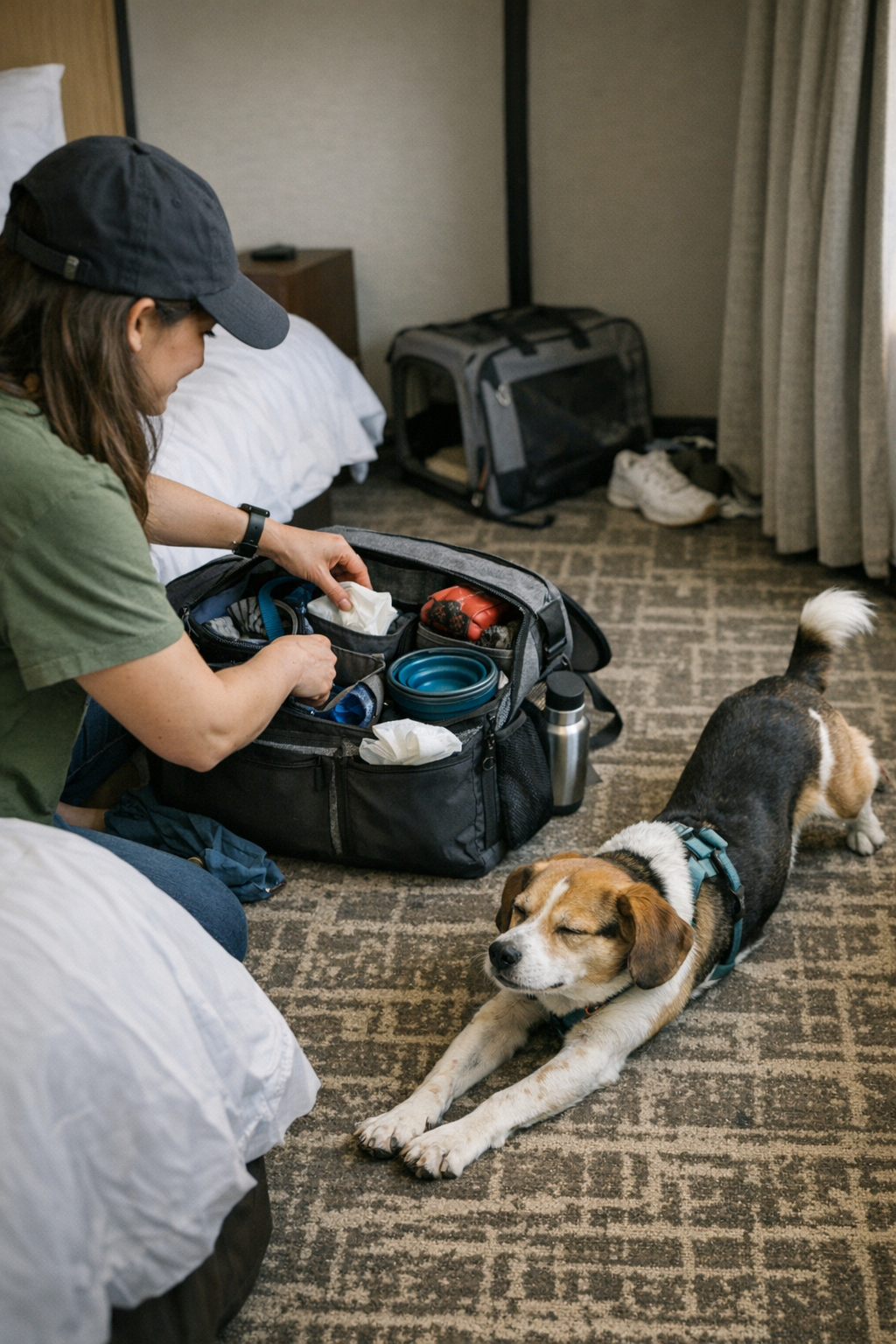
    The difference between a travel bag that looks ready and one that actually works appears the moment real movement starts: Your pet is eager to step into a new hotel room. Bags look tidy on the floor, but within minutes, a hidden mess surfaces. You reach for wipes—blocked by treats. Bowls shift into the walkway. The leash? Buried under yesterday’s rearrangement. Whether you’re heading out or resetting from another stop, order unravels as soon as you need fast access. The friction’s not in the first impression—it’s in every rushed pickup, blocked reach, or slow restart that interrupts what should be simple routine. PawGoTravel’s world exists to solve exactly this gap between “organized” and actually usable on the go.

    When “Ready” Falls Short in Real Travel

    What passes as “travel-ready” on your kitchen counter can’t always handle a real day’s pace. Short stops expose weak spots: the wipes you stacked at the bottom, the bowl rolling loose again, the leash tangled with a charger you meant to keep separate. Suddenly, your pet is waiting at the door while you reshuffle gear, one-handed, in a parking lot. The setup works great until it matters—and every small delay costs not just time, but patience. Travel routine doesn’t reward neatness; it reveals structure that only pretends to help when movement starts crowding the day.

    By lunch, you’ve repeated the same fumble three times. Hand busy with your pet, you reach for cleanup or comfort items and hit the same wall: the “organized” setup blocks you instead of backing you up. That gap—between looking sorted and moving effortlessly—shows up over and over.

    How Small Friction Builds Up Stop After Stop

    The first pack always feels hopeful. Everything fits, every compartment is zipped, each accessory placed just so. But by your second stop, separated sections have started to blend—a bowl sliding over wipes, squeaky toys cushioned into cleanup pouches, leashes twisting around your own wallet. Deep bags that store everything become bottomless pits when speed matters. “Easy access” is lost to hunt-and-peck as you fish out what should be on standby.

    Patterns repeat whether you notice or not. If you keep moving bedding aside for the leash, or always wrestle the wipes free, the structure’s not keeping up. It’s a design that wins at home but falters in motion, chipping away at calm and making each stop a little heavier. Your pet senses it before you do—the lost rhythm, the hesitation, the stall instead of go.

    Real Travel: Reach, Reset, and Restart

    By hotel number three, your pet’s ready to rush in, but you’re stuck untangling—again. A bowl blocks the zipper, wipes are now under toys, and the leash is jammed on the other side. Even after repacking, the weak points return. This is where tidy looks fade and practical function matters. Each stop is a test of whether your setup supports fast reach, quick cleanups, and a restart that doesn’t drag.

    If you’re tripping over the same access points—quietly losing time on what should be grab-and-go—the setup isn’t actually working for how travel really flows.

    Where Overlap Sabotages the Flow

    Bringing every “essential” won’t save you from structure that sabotages itself. Blended sections force you to dig for the leash past your phone charger or untangle snack pouches from wipes just as your pet pulls ahead. When comfort items pile into the same space as cleaning supplies, you lose speed on both fronts—never quite ready for cleanup, never quite fast on comfort. Overlap isn’t a sign of messy packing; it’s a setup that doesn’t defend quick reach or return. That repeat disruption is what turns “good enough” into travel drag you feel with every pause or scramble.

    As trips stack up, one small overlap becomes routine frustration—a pocket you end up avoiding, a section that slows emergency cleanup, a repeated pause during what should be smooth returns to movement. By the end, you’re not just tired; you’re wary of your own bag.

    The Quiet Power of Dedicated Structure

    What finally untangles travel friction? A setup with clear separation—wipes claim their pouch beside the opening, leash gets its own lane (no need to push past bowls), and bowls sit in fixed slots. With structure built for motion, these small design shifts remove mini-fumbles. What used to be a pause is now a half-second move.

    This difference only grows over time: The third, fourth, or tenth stop stays as clean as the first. Fewer slowdowns, less reshuffling, and your pet is back in comfort—fast. Most bags look organized once; only a few prove it trip after trip.

    Warning Signs Your Structure Is Slowing You Down

    • You end up digging for the same item on every stop—never in the spot you expect it.
    • The first reach is blocked or mis-aimed every time you need speed.
    • Your pet waits—shifting, antsy—as the shuffle repeats, even though “everything fits.”
    • Your wallet or charger gets tangled with pet gear, making both slower to access or repack.
    • By trip’s end, pockets get ignored or dreaded because recovery is always awkward.

    These aren’t just annoyances—they’re proof the layout isn’t supporting real travel. The most organized look won’t make up for access that fails routine checks in motion.

    Choosing Structure That Keeps Up with Movement

    The right travel bag or organizer isn’t about adding more compartments—it’s about separating the right items for movement. Key pouches for wipes always at hand, leash slots that slide free without untangling, bowls held where they can’t roll across the opening. This isn’t organizational theater but structure for everyday travel stress.

    A setup that lets you grab, handle, and reset in seconds—no digging, no stopping the flow—wins back actual time and patience for you and your pet. The test isn’t a photo. It’s how the gear works after the fifth stop and the next restart, when routine should be frictionless and neither of you has to wait on the bag.

    Real Travel, Real Calm, Real Flow

    The real payoff isn’t visible in a packed bag—it’s in the moments when hands land on the right item, reach stays instant, and your pet isn’t left waiting. Order isn’t just about looking neat; it’s about how quietly and quickly you can move, clean up, and reset, stop after stop. When a bag really works, your pet’s first stretch in a new room isn’t delayed by another round of sorting—and your routine finally matches what you hoped travel would be.

    Find the travel gear that earns its place after every stop, not just the first one. http://www.pawgotravel.myshopify.com

  • How Anchored Car Accessories Improve Daily Driving Flow and Readiness

    Organized on the surface, awkward in practice: that’s the reality for many drivers after a typical week. You climb back into your car, expecting order, but the small frictions are back—stretched awkwardly for a charging wire that’s slipped underfoot, pausing to un-bunch a seat protector at the edge, or reaching for a supply kit that has wandered out of the “easy grab” zone. These minor disruptions aren’t emergencies, but over days of errands, pickups, and commutes, they start to add weight to every drive—and quickly reveal when a setup only looks organized but fails to stay workable.

    The Gap Between Looking Organized and Feeling Ready

    A tidy trunk, spotless dash, or “hidden cords” often signal new-car energy—the sense everything’s locked in place. Give it a week of real use, and the cracks show. The true test of car setup is repetition: does it hold up through short errand loops, school drop-offs, and returns where you need quick access, or does it stall you with the same awkward adjustments day after day?

    • Your seat mat, flat on day one, keeps bunching exactly where you slide in. You stop, adjust, try not to sigh, and know it will happen again tomorrow.
    • The first aid kit you stashed for emergencies has slid after a hard stop—now you have to dig under the seat with one hand while balancing groceries.
    • Charging cords tucked “out of sight” make their way into the footwell, brushing your leg or tangling with your shoes at every in-and-out. It’s never a crisis—just the same annoyance, over and over.

    Everyday Interruption: When Routine Re-Entry Becomes a Hassle

    The grind is slow but real: after a few active days, inconvenience isn’t a rare event—it’s routine. Most frustration doesn’t come from obvious design flaws, but from small, steady snags that stack up while simply living with your car.

    Blocked and Fumbling for the Basics

    That dashboard phone mount looked like an upgrade—until you count how often it blocks a cup holder or means re-routing your charging cable. An organizer that fits perfectly between the seats is less helpful if it now traps your registration behind a narrow slot, turning every quick grab into a fumble—especially at rush hour or during a quick stop, where speed actually matters.

    Frustrating Cord Chaos

    Loose charging wires hide neatly at first, but every drive shifts them forward, winding through the same area your foot needs clear. The routine becomes predictable: pull into a lot, lean down, untangle or fetch the cord, and wish for a setup that actually stays anchored during daily use—because one scramble per day is already too many.

    Kits and Supplies: Out of Sight, Out of Reach

    Emergency kits and cleaning wipes slip under seats or in hard-to-reach cubbies, out of sight but not out of mind. The organization lasts until a spill happens or you need quick access on a rainy day—now you’re half-crawling or reaching awkwardly, exposing how “tidy” doesn’t equal “ready.”

    Why This Friction Escalates Over Time

    What looks fine when parked falls apart in motion. Each use creates a tiny misalignment—cords drift, mats shift, kits migrate. By mid-week, you’re bracing for the same setup problems as yesterday, predicting the drag before even opening the door. No matter how often you tidy, organization that demands constant correction becomes its own kind of clutter—just reshuffled, not removed.

    The Familiar Return of Clutter

    Cleanups never really stick if the layout can’t handle repetition. You know the usual hotspots: the footwell where wrappers return, the trunk’s slippery corner that collects bags, the door pocket that fills by Friday. Organization isn’t failing because of messiness—it’s structure that doesn’t solve for driving, loading, and parking on loop.

    Small Setup Shifts That Change Everything

    The most useful solutions feel nearly invisible, but pay off every single time you use them. Real access isn’t about a showroom look—it’s about touchpoints and routines that survive real disruption. Here’s where the big changes start:

    • Anchor, don’t just store: Use dash clips or fit-specific mounts so charging cables stay locked along your path—not snaking loose. Suddenly, charging the phone means reaching without hunting, no matter how many stops you make.
    • Bring kits to the edge: Secure an emergency or cleaning kit with a loop at the trunk entry, not half-buried. This puts basics in your “standing reach,” keeping you out of seat contortions after a long haul or sudden stop.
    • Clear your entry lane: Focus on the slice between the pedals and seat—if it’s free from cords, wrappers, or shifting mats, quick re-entry becomes an unthinking habit, especially in bad weather or busy hours.

    It’s not about a flawless photo—it’s about trusting your setup every time you get in, reach, or load. Gear that stays anchored, mats that don’t shift, chargers that don’t get lost—they don’t just “organize,” they prove themselves every time you test their hold in daily chaos.

    Choosing a Setup That Survives Real-World Pressure

    If you’re still repeating pauses, shifting gear, or fighting cords by week’s end, your setup is costing you time—and patience. Ask where you reach first after re-entry: is the item truly grab-ready, or does it require a deliberate workaround? Are you re-straightening the mat at the door, moving the same cargo bag twice, or untangling the charger for the third time in one loop?

    The best setup isn’t the one with the most features—it’s the one that removes repeat pain. Sometimes, it means anchoring supplies in line with your regular grab zone; sometimes, it’s about using organizers or covers designed to stay put when jolted, loaded, or used by more than one person in a day. Looking organized on day one is easy—continuing to function after dozens of normal drives is the real win.

    Organization That Reduces the Everyday Burden

    Real car routines are never friction-free. School runs, supply pickups, last-minute stops—they all test whether your setup helps you move faster or forces you to re-do the same small tasks every day. Clever choices—anchored access, protected but functional mats, stable cargo layouts—quietly erase slowdowns, so driving, loading, and re-entering actually feel less like work.

    If the bumps, snags, and re-adjustments fade from daily memory, you’ve found the edge: not perfection, but a setup that stands up to real use—one that lets you drive, park, and return without having to think about what’s about to slide, snag, or block your reach.

    Find practical solutions that outlast the surface tidy at DriveWellSupply.

  • How Organized Carry-On Layouts Reduce Travel Stress and Save Time

    The most organized carry-on at home can turn into a slow-motion obstacle course the second you start moving through an airport. You zip bags closed, stack every pouch just right, only for every routine—security check, document scan, seat entry—to expose a flaw in your layout. A cable blocks your passport. A toiletries pouch jams the main zipper. The bag that looked efficient on your floor now feeds a series of micro-delays: reaching, pausing, unzipping three pockets, and putting your energy toward finding the right item instead of moving forward.

    Why Neat Packing at Home Isn’t Enough

    Packing is not performance. Bag order on the kitchen table means little when airport movement takes over. The first test comes before security, where headphones tangle around a pen or your passport wedges behind a bottle. Each pause—digging past stray chargers, sliding out a document stuck under yesterday’s receipts—costs seconds and exposes what the home setup missed. A well-intentioned pocket becomes a delay point, and after a single checkpoint, what once seemed neat already needs a partial repack.

    Momentary holds add up. By the time you’ve done a security tray transfer, shuffled in a boarding line, and had to reach for that one repeat-use item again, the superficial order you brought with you splinters into a new kind of clutter. The real test of packing isn’t how it looks when zipped; it’s what slows you down once you’re in motion.

    The Hidden Cost of Carry-On Friction

    No traveler expects their own bag to work against them—but even carefully planned compartments fail under repeated pressure. Packed tight almost always translates to packed difficult under airport stress. Here’s where the small breakdowns show up:

    • Headphones out of reach, buried behind a novel you swore you’d start onboard
    • Passport hiding under knotted cables just as you hit a document check
    • Toiletries pouch wedged where your laptop sleeve folds—tripling your time to produce it for security
    • Tech and snacks jammed into outer pockets, forcing you to dig for charging cables every single time

    Each snag is minor by itself. But as these access hurdles repeat, they chip away at your focus, chip by chip, until airport routines start dictating your pace—not the other way around.

    Real-World Scenarios Where Efficient Access Matters

    Security Checks: A Repeated Test

    At the tray transfer, speed isn’t showy—it’s survival. You’re juggling shoes, belt, and a laptop, and suddenly notice a tight zipper fighting you or find yourself reaching through two layers for a liquid pouch. Every pocket you open past the first multiplies stress—especially with a dozen impatient travelers waiting behind you. Repacking after each scan isn’t just busywork; it interrupts momentum and invites disorder that wasn’t there when you zipped the bag at home.

    Boarding and Seat Entry

    Now the real bottleneck: the aisle shuffle. If your passport or headphones aren’t right up front, you end up pulling out pouches and shuffling layers just to get in your row. What felt streamlined now has you repacking on a seat edge, holding up a line of travelers with nowhere to go. Neat packing helps nothing if quick-access items are buried or blocked by your own system.

    Overhead Bin Access and In-Transit Retrieval

    Another round of frustration: you stand up halfway through the flight or dash to your connection, ready to grab a charger—only to find outer pockets jammed, pouches blocking your main compartment, and urgent items shuffled away mid-transit. The repacking spiral repeats: open, dig, shove, try to restore false order before another rush. “Set and forget” becomes “set and redo.”

    What Actually Improves Flow: Structure Over Appearance

    Efficiency isn’t about squeezing more in; it’s about separating vital from secondary. Fast-access essentials—passport, headphones, boarding pass—need space where nothing overlaps or stacks above them. Looks can deceive: overlapping pouches seem tidy but guarantee you’ll be digging or dislodging every time you need something quickly. The best setups make it physically impossible for a cable to block a document, or a sanitizer pouch to trap your charger.

    Change the rule to placement, not exclusion. Give each high-frequency item its own shallow, obvious zone—a sleeve that doesn’t share space with tech or snacks, a pouch that never gets buried. Keep cables and power banks in a secondary layer if you only need them mid-flight. Move toiletries where they can be extracted in one clean motion at security. The bag doesn’t need fewer things; it needs structure that matches movement, not just a surface impression of order.

    Recognizing the Red Flags in Your Current Setup

    Stop and notice if you’re hunting for the same item at more than one checkpoint, repacking after every retrieval, or unzipping extra pockets just to get one thing. The friction isn’t failure—it’s the natural outcome of categories that compete for the same space and force you into manual reshuffling just to keep pace with airport routines.

    You’ll see it most starkly at the gate or entering your row: headphones or a boarding pass tangled under a toiletries kit, or a passport you can’t reach without unloading a tech organizer. Smooth travel depends on flow, not just tidiness—in practice, that means never letting a high-frequency item get blocked more than once in a journey.

    Small Changes, Big Impact on Travel Days

    • Move every repeat-grab item into its own dedicated sleeve or pouch—never overlapping, never buried.
    • Pick the shallowest, most visible compartments for the big three: passport, boarding pass, headphones.
    • Aim for a structure where tech, toiletries, and “sometimes” gear don’t interfere with your main flow access points.

    The goal isn’t just looking organized—it’s moving with trust in your bag on every transition. In crowded lines, tight seating, or while racing to a connection, you need a system that holds up, not a setup you keep having to fix.

    The Real Outcome: Progress Without All the Pause

    Build around friction-free movement, not just visual neatness, and travel changes. It’s not about finishing faster—it’s about eliminating the hundreds of pauses: those half-a-minute delays, aisle moments, or tray transfers that sap energy trip after trip. The payoff is quiet but lasting: getting home without remembering a single aisle apology or repack panic. Structure beats surface, each time.

    Find carry-on solutions designed for efficient movement at CarryOnSupply.

  • Streamlining Pet Travel: Avoiding Hidden Delays in Your Setup

    Packing your pet-travel bag feels like you’ve solved the chaos before it starts—everything zipped, stacked, looking ready for anything. But that tidy setup rarely survives an ordinary trip. The first time your dog is pawing at the car door and you’re fumbling for wipes—trapped beneath a blanket, blocked by your own keys—you realize: organized doesn’t always mean usable. Every necessary item is there, yet the second you need fast access, the bag’s “order” becomes the problem. What starts as small delays—digging for a leash that’s slipped under a bowl, hunting wipes buried in a central pocket—quickly piles up stop after stop, grinding the promise of a calm travel routine into a loop of minor, repeated friction.

    Setups That Look Ready—But Stall When You Move

    Consider a normal travel pause. You pull up, bag by your feet, dog ready to leap. The moment you try to grab the leash, you’re blocked: one zip, then a shuffle because the leash handle is caught under the fleece. The wipes are now under a tangle of treats you stacked “neatly” before leaving. Your dog is already impatient—so you grab handles, toss packets aside, slam compartments closed—losing time and, often, dropping something in the rush. That’s the price of a setup built for stillness, not for movement: as soon as the trip goes beyond a single opening, each restart demands more reshuffling, sidestepping calm for pure scramble.

    Most travel setups stall during the “just get going” moments. Layered pockets or tight compartments slow you down. Every time the outer pouch fills with less-urgent gear, essentials sink deeper—forcing double-handling, awkward reach, and a stream of small, mood-breaking bottlenecks. The rhythm of travel—stop, handle, resume—breaks down into irritation, with both owner and pet absorbing the cost.

    The Quiet Burden of Repeated Friction

    The pauses compound. First rest stop: you nudge a treat tub aside for the water bowl. Second: towels are messily thrown back on top, wiping muddy paws but leaving organization behind. By the third or fourth pause, you’re no longer just “reaching”—you’re actively hunting, pushing aside bags, keeping the car door wedged open, feeling your setup jam at the same pressure points every time. Quick errands or longer drives start to resemble a cycle of shuffling, blocking, and mentally bracing for the same minor hassle.

    The trouble is never a mystery: certain pockets become repeat traps. Each time you pause, you hesitate, already dreading the next dig for wipes or the leash. Your setup doesn’t match the rhythm of what real travel demands—fast hands, clear spaces, stop-and-go flexibility—so each round, things get incrementally messier and slower.

    Missed Moments: When “Organized” Isn’t Enough

    Travel exposes every setup flaw: muddy paws need cleaning now, but wipes slip further out of reach with each drive. Clip-in leashes wedge under supplies, pausing movement while you fish them out. Comfort items bulk up the inner space, layering over quick-grab tools. Outer order disguises the hidden cost—delayed access, forced reshuffling, repeated frustration. Even when nothing spills, the structure itself drains the ease out of the trip.

    Why Do Access Delays Keep Happening?

    It’s not carelessness—it’s design friction. Bags built with layered compartments or all-zipper access seem smart standing still, but force three steps for every grab in real use. Shared spaces for owner and pet gear create blockages that slow you down when every second counts. Add travel pressure—restless dog, crowded parking, rain coming on—and the bag becomes a bottleneck you can’t ignore. The more stops you make, the clearer it is: good looks and packed supplies can’t make up for a layout that bottlenecks every common task.

    A bag that “photographs well” but keeps burying essentials leads to improvisation: holding your dog with one hand, digging with the other, tossing items into the footwell just to keep pace. The result isn’t a minor slowdown—it’s a steady grind. Trips become about handling the bag, not the actual pet care or travel itself.

    The Shift: Direct-Access Beats Layered Storage

    The fix isn’t adding more organization—it’s removing steps between you and what you actually grab, every single time. Think outer pockets for wipes and baggies, a single flap for bowls, an uncluttered sleeve for the leash. When your hand’s movement matches your intent—no digging, no rearranging—the time spent stopped drops dramatically. Direct-access design doesn’t just feel faster; it eliminates the chained delays that quietly sap every stop’s momentum.

    Over a full trip, one small change—positioning wipes and bags in a fast-reach section—removes a whole category of micro-frustrations. After tying my own wipes and cleanup bags to an outside loop instead of burying them, cleanup pauses shrank to seconds. Instead of hovering outside the car, tossing packs and restacking, I was back in motion quickly, and every outing felt one notch smoother. The physical relief was immediate—movement, not management, at the center of every pause.

    Examples From the Road: Noticing the Difference

    A short drive with your dog: you stop for a coffee, wet paws, minor mess. If wipes are buried, you lose time, fumble keys, risk a tracking paw slipping onto upholstery. But with wipes and cleanup bags at hand—side pocket, quick loop—every action is one step, not a chain. Or when hunger hits mid-trip, a bowl at the bottom under toys means extra digging, extra delay. Shift “first-grab” gear to their own fast-access spot, and suddenly even tired, distracted mornings run cleanly—no unpacking, no searching, just movement.

    Choosing Practical Calm Over Perfect Order

    Smoother travel comes from setups that work with movement, not just survive it. True calm isn’t about more storage or tidy stacks, but about not having to think about your next reach. Outer sleeves, single-flap pouches, and direct-access spots mean you’re not pausing, blocking, or restacking just to get on the road again. Less handling equals more control, and after a handful of trips, the value isn’t in how the bag looks packed—it’s in every time you don’t have to fight it. Notice if you keep tripping over the same bottleneck: if the bag forces you to block aisles, reshuffle every break, or slow down for the same repeated reason, it’s a sign the setup values appearance over repeated function. Travel is about movement; the only order that matters is the kind you barely notice—because it supports your routine, instead of interrupting it.

    Explore practical, travel-tested pet gear focused on smoother movement and less friction at PawGoTravel.