Category: Tools & Workshop

  • Balancing Open Shelves and Basket Storage for Lasting Closet Order

    Every closet looks promising on day one—rows of folded clothes, empty shelves, everything in its place. But real life quickly unravels that tidy promise. What begins as crisp organization meets the chaos of daily routines: piles get jostled, socks disappear into the back, stray scarves migrate, and the clean divide between gym gear and work bags blurs with every hurried grab. That “system” you thought would last all year? It’s fighting against your mornings—and losing.

    Open Shelves: From Orderly Display to Daily Shuffle

    Open shelves feel like a fix-all when you move in. Every item is visible—sweaters lined up, accessories stacked in neat piles. But the reality of getting dressed knocks that order off balance. You reach for a t-shirt in the middle and disrupt every shirt above it. Grab a gym towel for a last-minute workout, and half the pile sags out of formation. Scarves slide off their perch when you pull out just one.

    This is where friction builds: Socks drift behind sweatshirts, a stack of tees loses its shape, and the ends of every shelf quietly gather random items—yesterday’s belt, a pair of headphones, winter gloves no one bothered to return. The space between categories vanishes; soon, “sports gear” is covering “work layers” and “everyday basics.” Your shelf isn’t a stage anymore—it’s a battleground for daily negotiations.

    Hidden Costs: The Re-Stack Ritual

    By day three, organization is mostly an illusion. You spend precious minutes re-stacking the same piles just to grab what you actually wear. Need that navy sweater at the bottom? Everything on top comes out for a temporary relocation—often spilling over to other stacks. The quick grab always turns into a reshuffle, and the put-away routine becomes a balancing act: press and hope the stack holds, knowing it rarely does.

    Baskets: Containment with a Catch

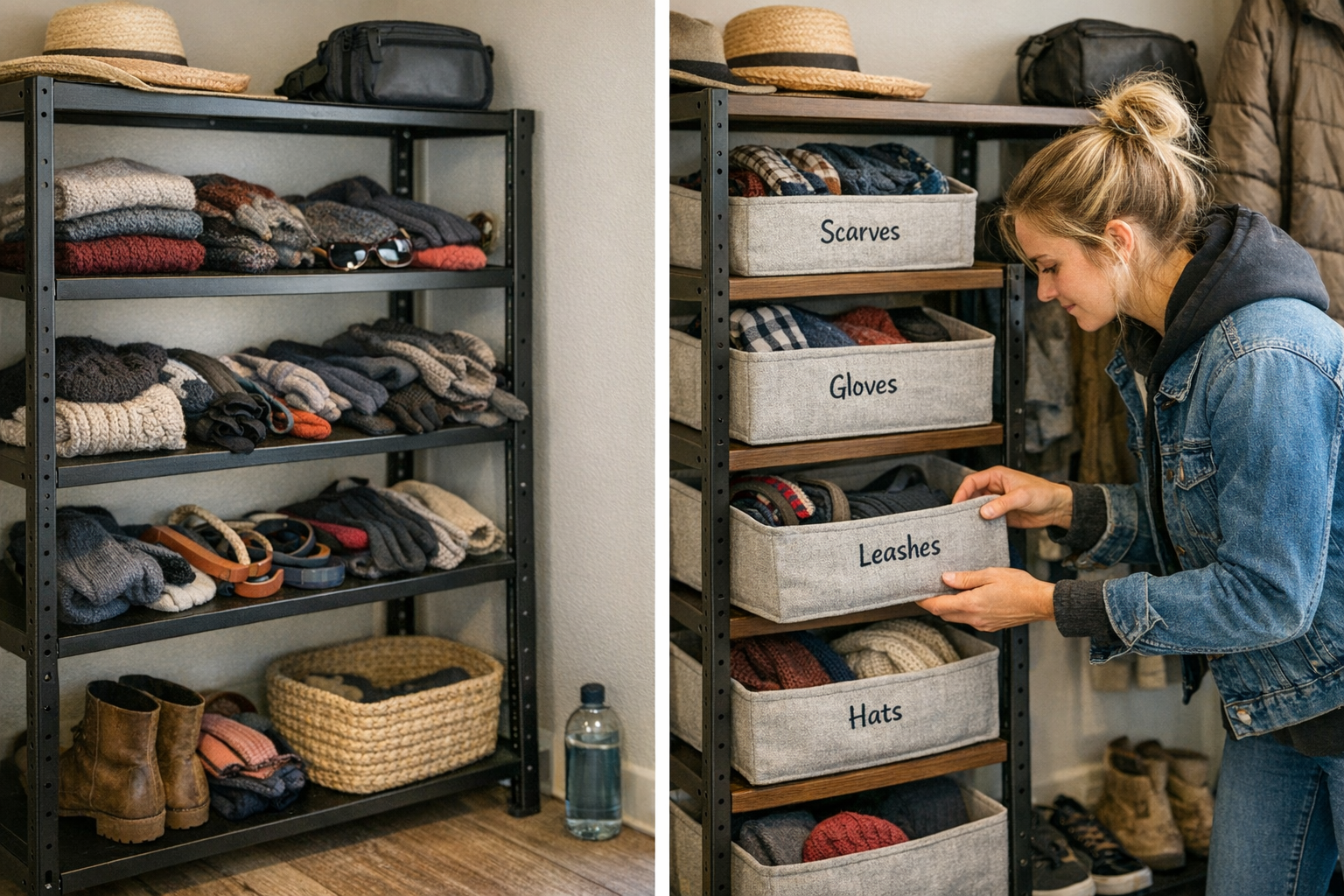
    When open shelves lose the battle, baskets look like relief. Instead of fighting every item back into a pile, you drop gloves, beanies, or charging cords into a basket and let the sides corral the chaos. For soft, slippery, or oddly shaped belongings—especially those that migrate daily—baskets give you the boundaries shelves never can.

    Instant containment means: No more scarves sliding into shirt stacks, no more loose gym towels taking over a whole shelf. The front of your shelves stays open and usable. After a busy week, the “reset” is a matter of tossing things into their baskets—not a full-scale resorting mission. The uprising of clutter pauses right at the basket edges instead of spilling across your closet floor.

    The New Hassle: What’s Out of Sight Gets Lost

    Baskets come with their own pitfall: Searching blind. Overfilled, unlabeled bins turn into a guessing game—did you leave your hat in the “winter” basket or “sports”? Is the other glove at the very bottom? In busy moments, searching means hauling out three containers, digging to the base, then reassembling what you just scattered. Visibility trades places with containment—organization stops looking chaotic but begins feeling slower.

    Labeling isn’t optional—it’s your map. Masking tape with big marker letters beats a pretty label you have to squint at. The real secret: one category per basket. “Miscellaneous” bins become unsorted junk drawers within days; the narrower the category, the faster you find (and return) what you need.

    The Telltale Signs Your System Isn’t Working

    How do you know your storage setup is failing? The signs show up almost overnight: shelves look crowded even when half-full, you’re reshuffling the same piles every few days, and the front of every shelf is clogged with things that should have a home. Entryway closets are a perfect storm—gloves, dog leashes, hats, and keys multiply and spread, especially after a weather change.

    These stress points aren’t always about too little space—they’re about role confusion. Baskets rescue the categories that refuse to fold, won’t stack, or travel from room to room. Shelves still shine for what’s boxy, sturdy, and doesn’t need constant reshuffling. The closet that feels easiest to maintain is usually the one that mixes both, dividing by what survives the daily grab-and-go cycle and what needs a border to stay contained.

    Minimal Tweaks, Noticeable Results

    Test this in your own routine: Move just one category—say, unruly accessories or scattered tech gear—from a shelf into a basket. After a week, notice the small wins: shelves that finally stay neat, less sprawl on flat surfaces, and quicker resets at the end of the day. Suddenly, you’re not fighting your storage—you’re making it work with you, not against you. The space feels organized because it actually functions that way.

    Smart, Real-World Storage Fixes

    • Shallow baskets beat deep bins. Low, wide baskets mean everything is within reach, not buried at the bottom. Grabbing what you need never becomes a dig.
    • Labels must be bold and obvious. Fast retrieval beats pretty aesthetics. A strip of masking tape and a black marker can save daily minutes over designer tags.
    • Keep “misc” out of your system. If a shelf or basket always attracts out-of-place items, reassign its job. Change the function—don’t let clutter set the rules.
    • Leave breathing room. Shelves and baskets filled to maximum are the first to unravel. Keeping them 20% empty turns “resetting” into a light touch instead of a chore.

    A Closet That Holds Up Under Real Pressure

    No closet survives untouched. Between rushed mornings, seasonal gear shuffles, and everyone’s habit of dropping things wherever, the work is never truly “done.” Open shelves display, but demand discipline. Baskets contain, but obscure. The real win isn’t perfection—it’s reliability under stress. When the things you reach for most spill into baskets, and what needs visibility stays on shelves, the routine feels lighter. Your closet functions not just for a photo, but for how you actually live—less time reorganizing, more time using what you have.

    Find practical storage solutions and more everyday tips at ClosetWorks.
  • Why Standard Laser Levels Struggle with Bright Outdoor Conditions

    Midway through a cut, the line vanishes. It’s not subtle—you step back, the sun’s at your shoulder, and the laser you relied on has simply faded out. Now you’re no longer guiding the saw, or the drill, or the sander. You’re squinting, guessing, propping up your body just to catch what used to be a clear, bold guide. What was supposed to be a quick, precise setup out on the slab or pavers turns into a slog of double-checks and backtracks. Each tool pass grows more cautious; every movement gets tenser. And somehow, the jobs you planned for one trip across the line end up forcing two, three, or more—just because your alignment faded away the moment you needed it to last.

    When Sunlight Erases Your Reference

    Laser levels are a given for cutting, fastening, marking, or aligning outdoors. Indoors, nearly any cheap red laser holds up. But take that same tool out onto an exposed patio or driveway, and its line disappears as the sun clears the trees. On pale stone or wet concrete, even turning your head can lose the alignment.

    The friction isn’t just “harder to see.” You’re suddenly shielding the laser with a gloved hand, crouching at odd angles, and moving gear around just to make the beam visible. There’s a constant choreography—dropping tools, blocking glare, hoping you can hold everything steady long enough to mark a single true line. As the day rolls along, all those adjustments snowball. Precision unravels; tool trust goes out the window. By noon, your tape measure gets more use than your blade.

    How Faded Lines Multiply Mistakes

    A single missed alignment rarely ruins a project—it’s the snowball effect that eats the day. Lining up for the fourth brick cut, now the guide’s a guess. Later, installing deck brackets, you find yourself drilling slightly off, making mental notes to “fix it later.” Every pass where the line is faded means the next task inherits that slippage, whether it’s a grinding disk straying off or a sanding block tracing yesterday’s crooked guess.

    Gradually, jobs take longer—marks need adjusting, seams don’t close, cuts overlap. By late afternoon, actual progress gets lost in a cycle of fixing what wasn’t right on the first go. When the guide line can’t keep up with the conditions, your whole rhythm turns into repair work and remeasurement, not building.

    Hands-On: The Laser That Disappears in Plain Sight

    Imagine grinding tile for an outdoor step. You grab the laser, fire it across your workspace, and for the first hour, it’s crisp. Then sunlight hits full force. What used to be a bold line now flickers—one minute clear, the next a suggestion. You waste time ducking and weaving just for that brief angle where the line’s visible. Each time you guess, there’s a wobble in the cut. The result? Uneven joints, extra sanding, and the same tool running twice as long, all because the beam vanished under open sky.

    When “Good Enough” Isn’t—Why Laser Choice Matters

    On the shelf, all laser levels seem similar—solid blocks, bright packaging, the same line promises. In use, they’re worlds apart.

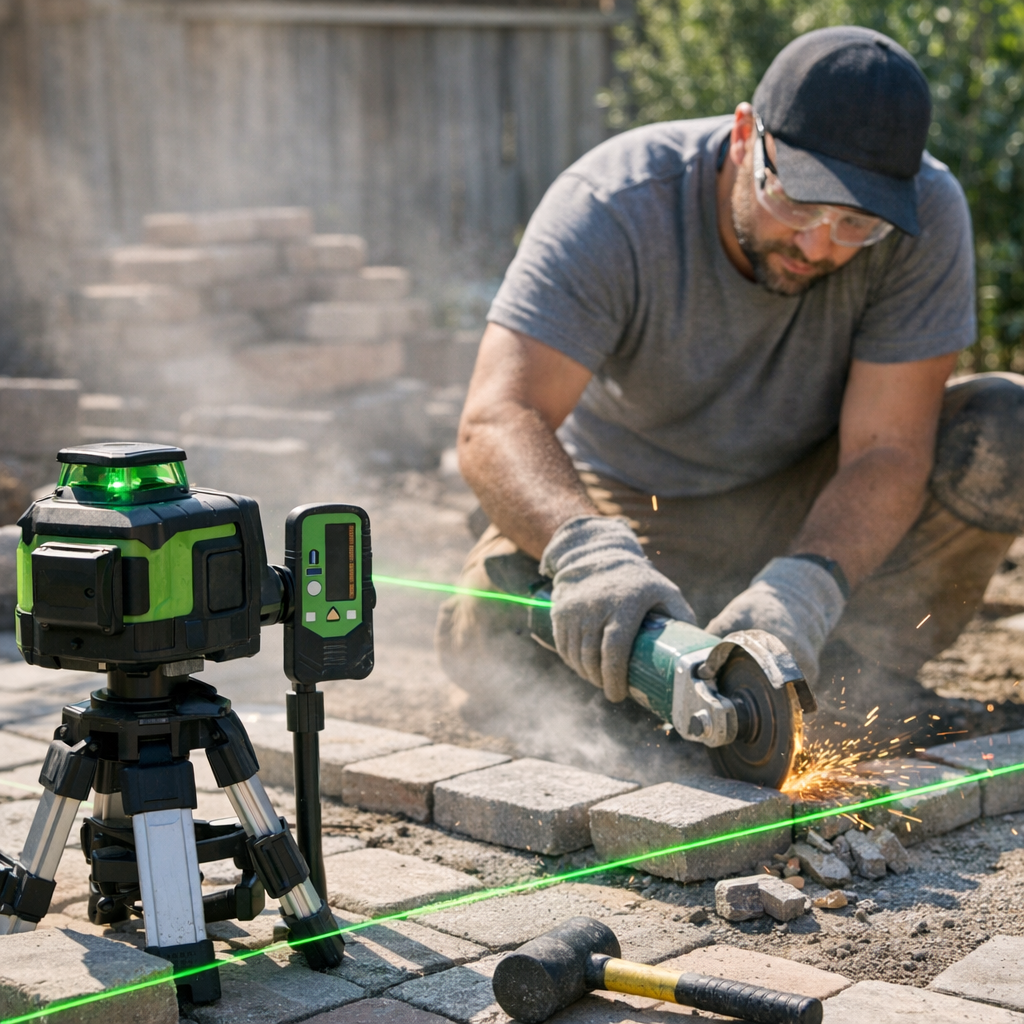
    Field-ready models stand out by output, color, and accessories designed for real outdoor stress. Entry red-beam levels run soft diodes—their lines evaporate in sunlight. A good green-beam upgrade means richer visibility at a glance. Lock in a pulse mode or use a receiver, and the laser becomes readable at surprising distances, even across light stone or asphalt. The difference isn’t just comfort; it’s fewer stuttered stops, less repositioning, and far less guesswork on every pass.

    The Fatigue Factor: What Cheap Tools Cost

    Use a bargain indoor laser outside, and the hassle compounds: more kneeling, more arm strain from awkward reach-ins, more bent-neck stares waiting for the beam. You start feeling it before you notice; fatigue creeps in as every step turns manual. At end of day, it’s not just thrown-off cuts, it’s the drag of physical wear—time and energy lost wrestling with a tool never designed for the light you’re actually working in.

    What Improves with the Right Laser in the Mix?

    Upgrading isn’t about “tech for tech’s sake.” It’s the difference between trusting every move with the saw or driver, or checking, correcting, and apologizing for drift all afternoon. A green-beam outdoor laser with a receiver means one bold line, visible at the actual spot you need it: on sun-washed tile, on a hot deck, on pale block. Cut paths turn steady again. Fasteners find their holes. There’s a visible guide from first setup to final fit—no matter what the sky’s doing.

    Shielding the beam goes away. You’re no longer trying to remember where the line was—you just see it. Movement smooths out. Your body stops contorting to chase a signal that’s always fading. There’s real, physical relief: less second-guessing, less rework, more time moving forward.

    Real-World Gain: Smoother Flow, Fewer Corrections

    The biggest shift isn’t perfect speed. It’s the return of quiet control—with the right tool, you finish more jobs on the intended line, not the fallback. You stand up straighter, use fewer bandaids, and the workday feels productive rather than patched together. When you have a reliable line, every tool—from grinders to sanders—performs closer to its real potential on the first pass, not after a round of fixes.

    When Your Laser Level Is Quietly Holding You Back

    Not sure your old laser is the bottleneck? Look for the red flags: repeated seam gaps, angles that don’t add up, long shadows as you eye the mark from three spots before moving. If you’re holding tools still just to make out a line or squatting for “the right view,” the job’s already harder than it ought to be. The cost shows up in wasted cuts, sore wrists, and—over a week—a lot of lost minutes and material.

    Field tip: Test your current laser outside mid-afternoon. If the beam’s nowhere to be found—or fades by the time you walk a few paces away—it’s not up to outdoor reality. Consider a dedicated green-beam model with a good receiver for conditions your projects actually see.

    What You Miss When You Don’t Upgrade

    Precision on site isn’t just about tools—it’s about tools that suit the actual friction of your day: sunlight, glare, squinting, and lines that vanish with every cloud break. The wrong laser level drains accuracy, saps energy, and demands more bodywork than you’d ever plan for at the start of a shift. A proper upgrade pays for itself not in marketing claims, but in hours recouped and work that finally tracks with your own standards.

    The next outdoor job—be it pavers, patio cuts, or bracket installs—comes down to the line you can actually see when you start, and when you finish. Choose the tool that keeps up, and the entire process shifts from patchwork toward real, usable progress—on schedule, and under open sky.

    Explore more job-ready laser levels and outdoor tools at Gumboll.

  • Why Circular Saw Performance Really Matters for Deck Building Projects

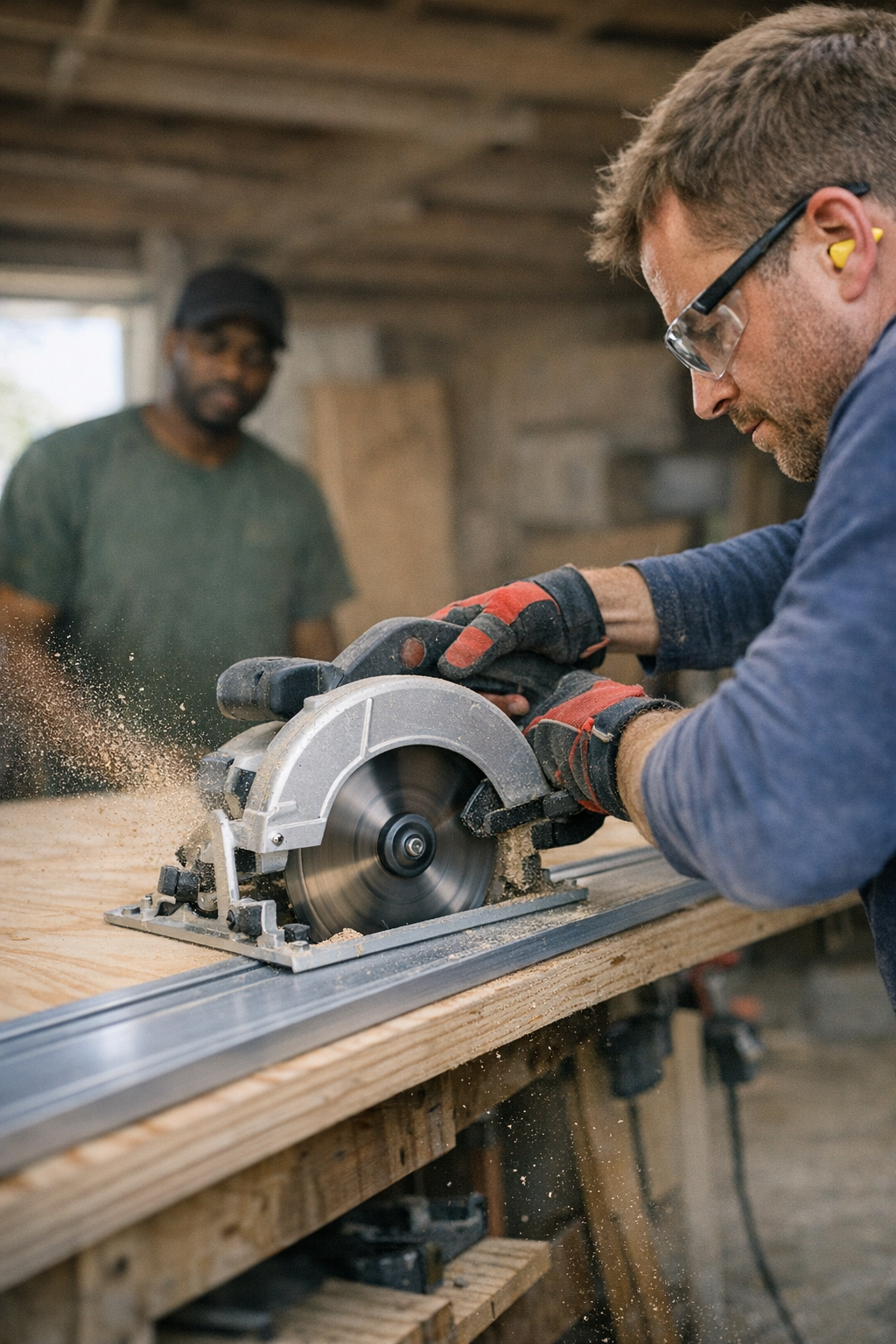
    It’s not the first cut—it’s the fiftieth—that decides whether you’ve got the right circular saw in your hands. By the time the sun is overhead and you’re deep into a deck’s pressure-treated boards, every choice you made—blade, baseplate, grip, weight—hits back. The boards get heavier. The knots get meaner. And a tool that felt “good enough” starts to show every shortcoming, one stuttering cut at a time.

    The First Few Cuts: A False Sense of Security

    You know the routine: new saw, fresh blade, stacked lumber on sawhorses. The first pass is smooth enough to make you think specs might actually tell the whole story. RPMs, amps, price tag—all blend together as you knock out those opening boards. But every deck builder knows these early wins mean nothing. When the wood’s dry, the blade’s at its sharpest, and your arms are still fresh, even a bargain saw can fake it.

    Wait a few dozen boards. Once the lumber starts to sweat, knots turn ragged, and you’ve pushed through the edge of your patience, the real test begins. Pressure-treated pine doesn’t just resist blades—it wears them down. Pitch, moisture, and crooked grain start gluing up the teeth, and suddenly that clean, crisp cut wobbles just a hair off line. Fine at first—but run your palm along the edge. You’ll feel the difference in every chip, splinter, and micro-shake.

    The Real-World Grind: How Tools Expose Their Limits

    The steady rhythm you found in the morning—pulling the trigger, riding the line, flipping boards—falls apart as you get deeper into the stack. Now, the saw’s subtle flaws start adding up. The blade sinks slower. Sawdust piles up between your shoes. Vibration creeps into your wrist until it’s not just the wood resisting, but your own grip getting tired.

    Tool specs go silent when fatigue sets in. It’s easy to bench-race saws on no-load speed or cord length, but what matters is how the saw handles the hundredth cut. Does it hold its speed into a knot, or does the motor note dip and the cut angle wander? Do you need a break to shake away tingling in your fingers, or can you keep going without wincing? These pain points don’t show up on the box—they appear one rough cut at a time.

    Head-to-Head on the Job: Where Specs Stop, Reality Starts

    Picture the scene: two nearly identical saws, both with 7-1/4″ blades, both fresh out of the box. By the end of a long afternoon, you can tell them apart by the feel alone. With one, chips eject clean and you’re hardly dusting the edge between cuts. The other bogs down on every joint, leaving fuzz and tear-out that needs sanding. You start swapping batteries or blades just to keep up, but the real difference comes in how you have to babysit the “off” saw every step—the tool fights you, never the other way around.

    The Fatigue Factor: When Small Issues Slow Down the Entire Day

    By midday, what looked like a lightweight saw becomes a lead weight. Even a few ounces off in balance feel like a mistake after your twentieth board. Each knot needs an awkward pause and more force. Tiny shudders up the handle steal momentum from every push. Now the little problems you ignored in the morning—vibration, binding, awkward switches—start to cost you time, cut after cut.

    This is the cumulative effect of short-sighted choices. The saw that felt okay at first now eats into your energy, and you find yourself reaching for sanding blocks or extra batteries as often as the tape. Over a full day, the result isn’t just slower progress—your patience and finish quality wear thin too.

    Sudden Relief: What a Real Upgrade Feels Like

    Every builder’s been there: You swap in a saw with a true low-friction baseplate. Instantly, that sticky plank that just fought you now glides, the blade tracking straight with half the effort. It’s not a revolution—but suddenly boards cut cleaner, hands cramp less, sanding is an afterthought, and you’re not double-checking for burn marks after every pass.

    Even a minor design change—a slimmer grip, better line of sight, less motor strain—makes the workflow smoother and steadier. Cut after cut, your pace holds up. The pile of finished boards grows instead of the list of little fixes you’ll need to make later. The “just good enough” saw gets benched, and you remember what production looks like when the tool helps, not hinders.

    Spot the Signs Your Saw’s Slowing You Down

    Listen close: dropping RPMs or a strained whine on dense grain means the blade is working too hard. If you’re seeing more dust than chips thrown from the cut, you’re losing efficiency—more resistance, more sanding later. If vibration lingers in your hand after a pass, imagine sixty more of those. These micro-frustrations, minute by minute, drag a project from satisfying to slog.

    Specs Mean Nothing in the Long Haul

    No tool looks bad sitting fresh on a shelf. But by the last cut of a real job, the difference between “fine on paper” and “right in the hand” is obvious. The gulf between a passable saw and a genuinely good one doesn’t show up for the first five cuts—it compounds over hours of real use.

    If edges are rough, the sound changes, or you’re tightening your grip just to stay straight, don’t wait for the tool to quit on you. Even small gear upgrades—a better glide, a more consistent motor output, a dust port that keeps the line clean—chip away at frustration and keep the day moving forward. That’s not marketing. That’s just what keeps the job finish sharp and your energy intact, no matter how long the project drags out.

    For equipment that stands up to real work, visit Gumboll.

  • Why Fixed Storage Compartments Struggle With Everyday Clutter

    At first glance, crisp dividers and perfectly measured bins look like storage salvation. The promise is tempting: a closet remodel where every scarf, hat, and pair of gloves sits in its designated home, clutter supposedly banished for good. But a few weeks in, that showroom order can quietly fall apart. With each laundry day or weather change, your neatly separated bins start blending, and everyday routines turn “organized” into just another source of friction. The danger isn’t mess—it’s a storage system that can’t absorb real life’s small surprises.

    Where Compartments Start Betraying You

    Consider a closet with bins carefully marked: hats, gloves, scarves. On day one, everything sits in line. But the minute you bring home a new pair of oversize mittens or switch to a thick winter scarf, harmony unravels. Hats spill onto gloves. Scarves wedge themselves against bin walls or hang out too far, snagging hands each morning. You start playing a daily shell game—rearranging piles just to grab a single glove, or squeezing scarves into spaces an inch too tight.

    This isn’t just a closet problem. Any fixed system—rows of cubbies, unadjustable drawers—looks flawless until you actually live with it. Socks migrate in dresser organizers. Grocery bags overflow their box after a shopping spree. One busy week and the boundaries blur, categories blend, and you’re working against the very system meant to speed you up.

    Frustration on Repeat: How Rigid Storage Slows You Down

    Rigid compartments shine in theory but trip you up in practice. In bedroom drawers, a set of little trays keeps socks and belts tidy—until you swap in bulkier winter socks or try to fit an odd-shaped accessory. Suddenly, instead of seeing your options, you’re digging behind a gap-toothed stack or undoing your careful folding just to find a single item. The “reset” after laundry takes twice as long, dragging new items into old, unmoving boxes.

    Entryways are even less forgiving. Maybe you have a bin for shoes, one for bags, one for cold-weather gear. But after a muddy day or a friend’s oversized tote, shoes stick out, bags flop over, and gloves end up in a pile on the bench. What started as clear order becomes a bottleneck, each category crowding the next until the surface itself is a landing zone for overflow.

    Organization That Can’t Flex—And How That Shows Up

    Storage systems built on static roles fail quietly, slowly. At first, you might ignore the creeping disorder—hats perched precariously, labels peeling off, an “overflow” mound near the door. But over time, you start rerouting your own process: slipping things onto any available surface, lowering the bar for putting things away, or skipping the bin entirely. Suddenly, the dividers and labels are just for show.

    Even the fridge catches the curse—those “salad” and “snack” bins that fill up with odds and ends when routines shift, or a big shop undoes the careful balance. It’s the same old tension: seamless for a snapshot, jammed by the unpredictable.

    The Trouble with ‘Perfect’ Compartments

    Order feels great—briefly. But systems that demand precision create a hidden tax. A sweater an inch thicker than usual pushes the whole stack crooked. An oddly-shaped shopping bag won’t sit in its bin, so it lands wherever gravity lets it. Every time you return something to its “place,” you negotiate with a system that resists change. Bit by bit, effortless resets become a chore.

    Watch closely: when stacks slide, bins overflow, or labels fade in relevance, the compartmental illusion cracks. You’re no longer organized; you’re just volunteering for more tidying work.

    The Power of Small Margins and Movable Parts

    One minor tweak changes everything: a bit of give at the edge, or a divider you can slide or remove. In a real closet refresh, a homeowner decided to ditch two fixed dividers and let one bin float: immediately, it became the zone for extra hats, travel thermals, or a friend’s borrowed gloves. When seasons changed or shopping patterns shifted, nothing needed a full resort—items just found temporary room in that flexible gap.

    Small space to overflow or blend, without constant rearrangement, means fewer rogue piles outside bins, faster resets after laundry, and less time “undoing” your own organizing effort. A system with an escape route simply works longer without you having to think about it.

    Recognizing When Your System Is Working Against You

    Be alert for these sure signs of storage friction:

    • Bins or baskets always left open, as if waiting for something that won’t fit
    • Loose piles forming on floors or benches near “full” containers
    • Having to shift one stack just to free something hidden underneath
    • Original labels now ignored, or half-right categories repurposed on the fly
    • A pause or sigh every time you try to tuck something away

    When these patterns repeat, your system is asking for flexibility—or else, clutter will simply find its own space outside the system.

    Low-Effort Adjustments with Outsized Benefits

    You don’t need a full overhaul to fix chronic mess. Sometimes, removing one divider is enough to make a shelf work for both heavy sweaters and lighter tees—no more domino tipping when you reach for something on the bottom. In the entryway, trading a rigid bin for a woven basket with soft sides lets boots and shoes squeeze in, instead of spilling out every busy morning.

    Leave room for wild cards: a purposely empty spot, just for the random or seasonal—the extra tote, a neighbor’s returned umbrella, the overflow pair of gloves. Giving unpredictability a landing zone means less pressure everywhere else, and fewer “temporary” piles lingering for weeks.

    Why Storage That Bends, Endures

    A closet, shelf, or cubby shouldn’t be measured by a perfect snapshot, but by how little fuss it takes to put things back a week—or a month—later. Items and routines shift, new things arrive, and the weather itself can upend your categories. The best systems share an almost invisible trait: they absorb change without demanding constant attention.

    When your setup has slack—removable dividers, a margin in a bin, a wild card shelf—you spend less time fixing and more time finding, using, and putting away. The payoff isn’t just a neater photo; it’s a storage space that keeps up with you: the surprises, messes, and resets of real life, not the momentary calm of organizing day.

    Find classic and flexible closet solutions at ClosetWorks.

  • How Mobile Storage Transforms Garage Routines with Faster Access

    A “perfectly organized” garage or workshop looks impressive—for seventy-two hours, maybe. On day one, every shelf lines up, bins stack with military precision, wall hooks gleam with potential. But return mid-week, arms loaded with tools or materials, and that order blurs into a slow grind. The floor is still clear, the bins are still labeled, but suddenly, what seemed efficient on Sunday leaves you stepping around obstacles on Wednesday. The friction isn’t dramatic—it’s the tiny, repeated delays that quietly drag on your routine.

    When Order Becomes an Obstacle

    Designing a “clean” storage system looks sensible on paper. Towering cabinets, neat stacks of labeled bins, every square foot allocated. But run through a typical week and the realities set in:

    • Grabbing a part means unstacking bins for the third time before lunch.
    • That pristine wall corner is a dead zone, cutting off movement and quietly collecting scattered overflow after each rush.
    • Heavier tools force a crouch, a twist, or an awkward two-handed lift from a low shelf yet again.
    • The “tight” layout that once looked smart turns into a blocked pathway by Friday—just when you’re ready to speed up, not slow down.

    This isn’t clutter. It’s subtle structural friction built into setups that look right in theory, but stall routines in reality. The result? Your “order” demands more work just to keep basic access flowing.

    Static Storage: The Setup That Pushes Back

    Picture the classic arrangement: a closed cabinet packed with bins, wedged tight against the wall to maximize open floor. For a moment, it’s the model of efficiency. But reach for anything on a busy afternoon and the problems pop up fast:

    • Bending low to yank out a bin—because, of course, the one you need is at the bottom.
    • Lifting two containers just to grab a drill or socket you swore you left up top.
    • Dodging the swinging cabinet door again, cramped between wall and workbench with no wiggle room.

    None of these are show-stopping disasters. But every grab, reach, and restack breaks your stride. What started sleek now saps energy in constant, invisible redirects. After two or three cycles, it’s clear: you’re spending more time working around the storage than actually working.

    When Storage Moves, Everything Else Gets Easier

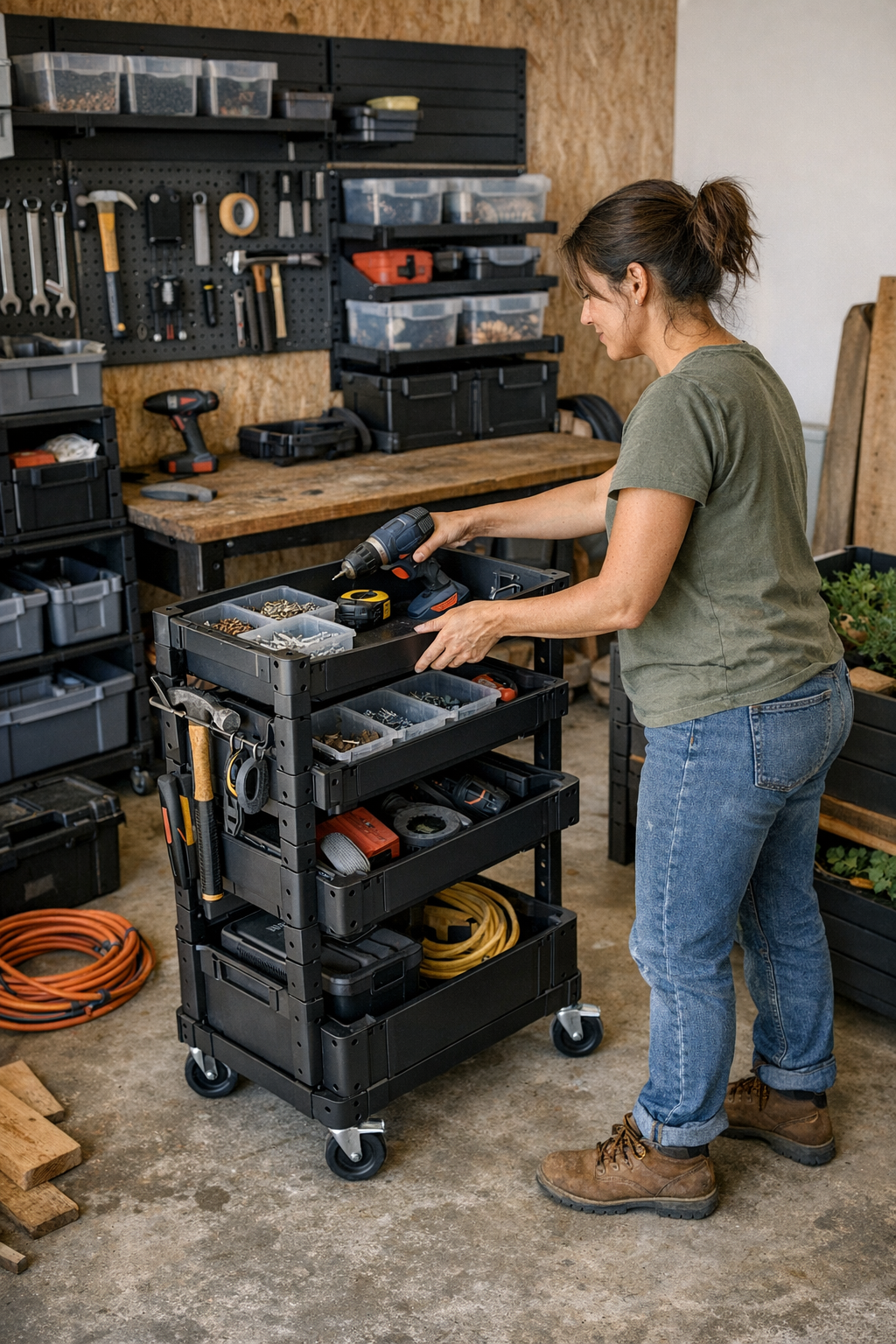
    There’s no magic in “more bins.” The real shift comes with equipment that moves as your work moves. Rolling carts, modular trays on wheels—these small adjustments flip the script:

    • Instead of rearranging yourself, slide the cart aside with your knee to clear the path or open up workspace.
    • Reach at bench height, not three feet below or behind your shoulder. Your main tools are always at hand, not buried in the stack.
    • When routines change or another person joins, the storage pivots with the moment—no reshuffling or squeezing past fixed barriers.

    It’s a chain of tiny gains. The cart shifts—so you don’t have to. Hand tools drift back to where you need them. Resetting the zone is a slide, not a chore. Suddenly, the area adapts to your pace, not the other way around.

    On-the-Job Adjustment That Actually Pays Off

    Put daily-use items in the top tray or front slots of your rolling cart—right at hand height. That one change cuts out the zig-zagging, crouching, and reshuffling that slow down every small project, especially when you’re trading back and forth between jobs all day.

    The Quiet Price of Crammed Footprints and Forgotten Corners

    Layouts that “maximize wall use” or claim zero floor clutter can look sharp—until you try to move. What happens next?

    • The overflow zone appears—the shelf or tray that always holds whatever you couldn’t quickly deal with, building into a mess by default.
    • Dead corners become a fixture: awkward wedges too tight for real storage but impossible to ignore, so you shuffle around them every time.
    • The “full” wall leaves resets harder, slowing each return trip and stretching the end of your day into overtime.

    The real value of modular, movable storage doesn’t come from a sleeker empty space. It’s the end of workflows that stall and stack up. A mobile cart glides out of the way; a tray parks right where tasks wrap up—no blocked zones, no routine broken for the sake of aesthetics. Even in tight garages or narrow garden sheds, the difference is obvious: fewer detours, faster cleanup, and a zone that feels ready, not rigid, each round.

    Is It Time to Rethink Your Setup?

    If ordinary routines become obstacle courses, your setup is signaling for change. Notice if:

    • The same corners are jammed by Wednesday—no matter how often you reset.
    • Supplies or tools land on the floor “just for now”—and stay there all week.
    • Gear clusters by the exit because the “proper” spot is a ten-step hassle.
    • Most days, you’re shuffling bins and boxes just to pull off normal tasks—not just at peak rush.

    The answer isn’t a mega-cabinet, but a smarter flow. Open trays for the stuff you use every session. Add movement so equipment follows the workbench, not the wall. Let your storage park at the finish line of each job, not where it fits best on a blueprint.

    One Small Shift Makes Every Session Easier

    Swap out those top-heavy, fixed-bin stacks for wheeled carts with shallow trays. See measurable, repeatable returns in your own space:

    • Your daily loop across the floor shrinks by several trips.
    • No more splitting time unstacking bins just to grab a screwdriver.
    • Tools actually go back to their haul spot because it’s right where your hand lands.

    These aren’t pipe dreams. They’re the practical shifts that stay with you project after project—easier access, fewer obstacles, and a zone that holds up to everyday use. It may not look showroom-perfect, but it works every time you step in.

    Find practical storage options for real workspaces at StackNest.

  • Understanding Circular Saw Blade Wobble and Its Impact on Cut Precision

    The real cost of crooked cuts isn’t just wasted material—it’s that slow build of frustration and lost time as simple projects mushroom into edge repairs and touch-up tasks. In the thick of shop work, you rarely spot the root cause right away. A wobbling saw blade doesn’t announce itself with sparks or shrieks—it chips away at your results, quietly turning precision layouts into post-cut headaches that pile up faster than sawdust on the shop floor. Whether you’re fitting finish panels for a client, banging out repeatable cabinet pieces, or ripping plywood on a makeshift table in the garage, you expect your saw to track straight. But plenty of blades stamped “precision” start to drift under the pressure of dense material or the wear of a long day.

    The Hidden Tells: Spotting Blade Wobble Early

    The earliest signs of blade wobble are easy to overlook. Maybe it’s a faintly uneven whine, a puff of dust from the side, or an edge that looks clean until you go to join panels. What starts as a hairline wave in your cut builds momentum: fence-guided rips ripple, panel joints reveal daylight, and that tight, easy assembly you counted on starts demanding filler and sanding you never budgeted for.

    Why does it happen? It’s usually not about blunt teeth. Blade plate warping, an out-of-round arbor hole, or simply uneven mounting pressure can all set up the shake. You’ll feel it creep in most clearly during:

    • Batches of sheet goods—cutting more than one panel at a time, or dialing in matching parts for cabinetry.
    • Ripping tight-grained or thick hardwoods—where resistance exposes any hint of blade flex.

    If you let a fluttery cut slide (“it’s just some plywood, right?”), the misalignment quietly compounds. By the time you catch it, half your work is already in the fix-it bin.

    When Specs Lie: Why Not All “Precision” Blades Cut the Same

    Put two fresh blades side by side and they look nearly identical—same tooth count, same carbide shine, even the same weight in your hand. But under real pressure, differences emerge fast. Slice through a clean pine 1×4 and nearly any blade behaves. Start feeding it Baltic birch or a dense sheet of MDF, though, and the rigid blade keeps humming true while the flexible one starts to wander.

    The stiffer blade glides a clean, steady line—almost like the saw’s on rails. The weaker plate starts vibrating, chatters out chips, and tracks away from your fence. Soon, you’re babysitting the wood, adjusting position between every run, and picking out splinters where the exit tearout shows up. What seemed like a small difference in “feel” becomes a domino of lost time, wasted panels, and strained joints halfway through assembly.

    Shop Reality: The Moment Precision Slips

    Picture a Saturday morning: you’re cutting finish faces for a built-in. Rail stops are set, layout is dialed, cuts are flying. By midday, you’re dry-fitting—and the joints should snap tight, but instead they show a wobbling seam or an odd tactile bump where the panels meet. You question your skills, the saw, even the plywood. Only after swapping in a blade with extra lateral stiffness does your edge-to-edge fit snap back into place, gaps close, and those unplanned sanding rounds vanish. That little change in the saw’s feedback—the early hint of wobble—was the first warning you missed. Ignore it, and you’re locked into tedious rework before you even realize what happened.

    Blade Plate Thickness: The Hidden Difference-Maker

    The spec that rarely gets spotlighted? Body thickness. Most pro blades run a plate around 1.7 mm thick. Upgrade that to 2.2 mm and you feel it—not just in stability, but in the confidence to feed denser stock or run longer rips without steering corrections halfway through. Real-world tests? Measurable kerf wander from plate flex drops to almost nothing—less than half a millimeter over a full meter’s cut.

    In the shop, that translates into edges you can trust: crisper kerfs, minimal chatter, less side-dusting, and almost no need to rethink your assembly sequence. Thicker blades do ask a bit more from your saw’s motor, but the uptick in control saves you from double-cutting, patching, or—worse—remaking panels because the first ones refused to line up.

    A Fast Way to Detect Wobble (Before Your Day Unravels)

    Cut after cut, it’s easy to rationalize flaws—until your stack of parts won’t fit. Whenever you change blades, or sense a subtle shift in cut quality, do this simple check: Spin the blade by hand. Watch closely—

    • Are tooth tips weaving, side-to-side?
    • Any soft “click” or rolling catch in the sound as it spins?

    A true blade will hold a single, unwavering path. If you notice drift, don’t gamble with reassembly—remount or swap it. Dullness won’t always wobble a blade, but increased friction and heat from a blunt edge exaggerate any imbalance, and that’s when problems scale up fast on the job.

    Real-World Blade Performance: More Than Just “Sharp”

    Anyone can sell you a “sharp” blade, but that won’t keep your workflow smooth. Out in the grit and noise of actual builds, it’s the blade’s ability to lock into its own path, resist deflection under load, and keep every cut on course that determines whether your cut list stays ahead of schedule—or falls apart at assembly. Blades with proven stiffness reward you twice: less waste now, and less fatigue later, because you’re not fighting the tool for control or spending hours sanding out mistake edges.

    Don’t lose stretch after stretch of work to barely-visible wobbles or tiny kerf shifts. A stiffer, slightly thicker blade isn’t a cure-all, but it’s often the line between productive momentum and watching a project stall because your parts no longer fit. The best shop habits don’t just chase “sharp”—they pay attention to what the blade’s telling you, before small problems multiply into a full afternoon lost to fixes. Check your blades. Trust your instincts. And don’t underestimate how much less effort and frustration you’ll face with even a small upgrade in blade quality—especially when the pressure’s on and deadlines don’t wait.

    Find reliable blades and saw accessories built for real shop demands at Gumboll.

  • Balancing Open and Closed Closet Storage for Lasting Organization

    The first week with a freshly organized closet—open shelves gleaming, drawers smoothly closed—feels like getting a clean slate. But by day six, the truth surfaces. Where you store your sweaters, bags, and everyday essentials doesn’t just shape how tidy things look, but how easy (or maddening) every grab, toss, and return becomes. This is the difference between open and closed closet storage: not a question of taste, but how your setup stands up after a week of real-life mornings, laundry marathons, and half-awake evenings.

    Open Storage: Instant Access, Instant Mess

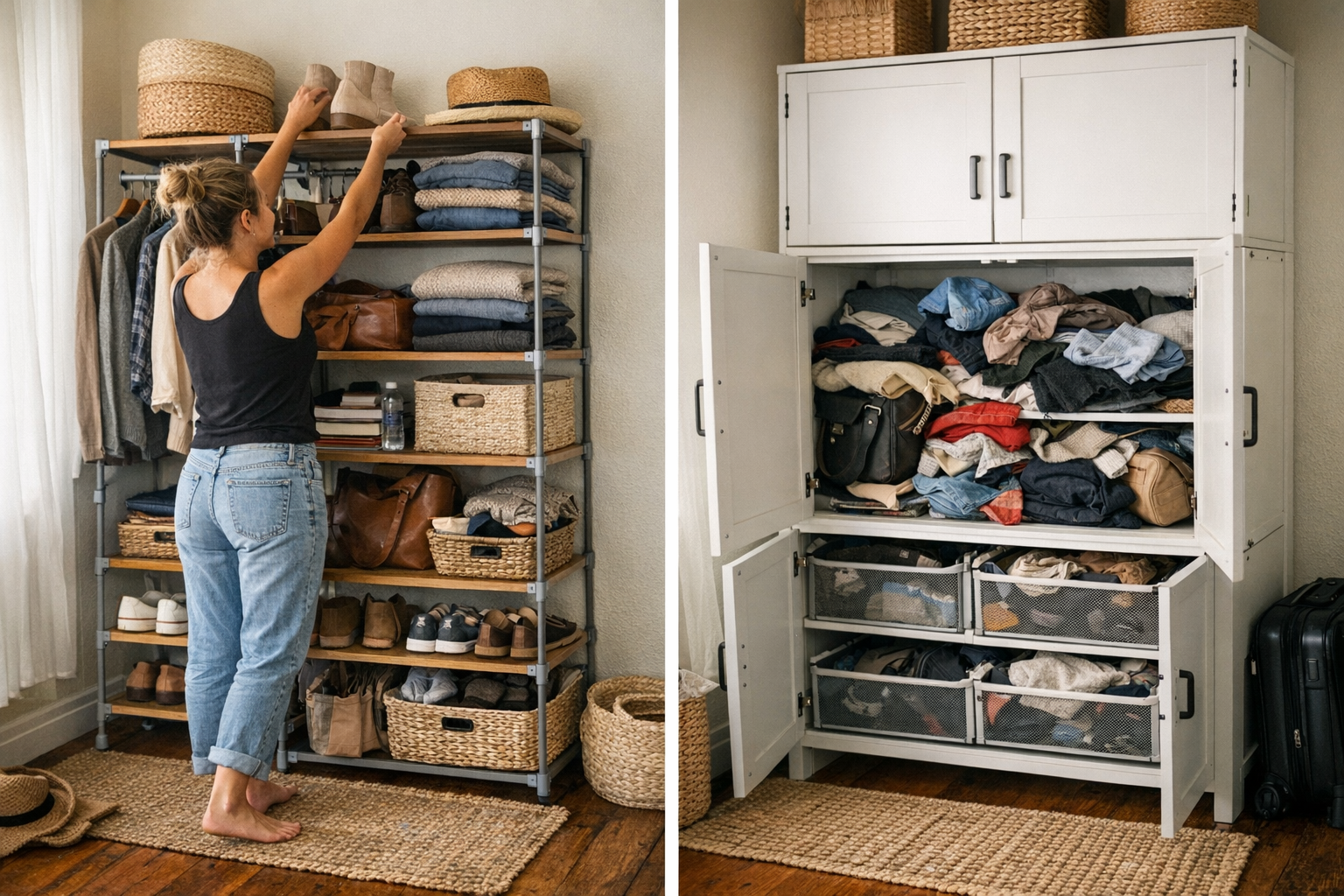
    Walk into a closet with open shelves, and everything you own is visible, grabbable, and—at first—perfectly lined up. In the rush of a weekday morning, it’s easy to snatch a shirt, slip a bag off a hook, or return a folded hoodie right in view. But the same visibility that invites order also amplifies every small break in routine.

    One missed return becomes everyone’s problem. Maybe you shove a T-shirt to the side looking for yesterday’s jeans or nudge a pile aside to fish out a hat beneath. Suddenly, stacks that once looked purposeful start to buckle. A scarf drapes unevenly, more mail lands on an empty shelf “for now,” and the spillover travels fast—especially if you’re juggling everyday traffic or a shared closet. Resets grow more frequent. What started as easy access turns into tight, unstable stacks, and the visual highlight quickly becomes a daily irritant.

    Daily Scenes: The Unraveling in Real Time

    Picture a shelf that was just sweaters and jeans on Sunday. Two days later, a lunch bag claims space at one end. Midweek, someone tosses in mail and that stray umbrella. By Friday, grabbing a sweater means shifting random piles and hoping nothing falls. With no doors to buy you time, open shelving is either perfectly reset—or instantly reveals every shortcut, missed fold, and “just for now” addition. The mess isn’t hidden. It insists on being noticed and, eventually, dealt with.

    Closed Storage: Clean Lines, Hidden Piles

    If open shelves announce every mistake, closed drawers offer another kind of fiction: the illusion of calm. From the hallway, everything looks serene. But that calm surface often conceals a private, slow-climbing avalanche behind each door.

    Open a cabinet after a busy week and you might find last Friday’s folded shirts jammed under socks, scarves stacked sideways, and a tangle of accessories clumped together. You dig for what you need, shifting heaps with one hand as the pile sags and something inevitably falls out. Instead of a reminder to tidy as you go, closed storage gives your mess a hiding place—until it builds up enough that you dread tackling it.

    The Painful Reset: When Hidden Problems Catch Up

    Closed storage doesn’t shame you daily, but it makes for a tougher reset. Without visual pressure to tidy, clutter festers—until “where’s my belt?” or “why is there a shoe with the scarves?” tips you into a full-blown reorganization session. The mess creeps up quietly, and the job of restoring order becomes a Saturday project instead of a quick weekday tweak. In shared closets, this means more time spent trading blame or hunting for lost things—all hidden neatly until the doors swing open.

    Mismatch Means More Trouble: When Storage Fights Your Routine

    A closet that ignores your habits creates constant micro-friction. When every type of item is jammed onto open shelves, daily resets become nearly full-time. The more you pile on, the more the shelf loses its role—you’re stacking hoodies on gym bags on yesterday’s mail, and by Wednesday, the original categories are gone. But when everything is behind closed doors—with no quick view or easy grab—you end up with “out of sight, out of mind” clutter. Important things disappear into the heap, and finding what you need means destabilizing the entire stack.

    The real pain comes when systems don’t fit how you move: folded shirts toppling as you reach for one at the bottom, bins turning into mixed catch-alls, lost items, and slow morning shuffles while you try to remember whether your favorite scarf landed in a box or under a pile. The setup looks fine at a glance, but each reset takes longer, and going back to “organized” gets harder each week.

    Finding Balance: Sharper Zones That Actually Last

    The fixes that work aren’t about perfection, but about reducing headaches. Keep open shelves within arm’s reach for your highest-velocity items—the coat, the daily shoes, the bag you swap twice a week. Shift overflow, off-season, and “backup” stuff into closed storage or up high, out of the main flow.

    This single change means fewer daily reshuffles. Your go-to items have a clear landing zone, so shelves don’t crowd early—and resets shift from daily interruptions to fast, once-a-week tweaks. Bags and oddballs that used to get dumped at the entry, or left on the floor, finally have a home, and the stress points fade. Roles stay clearer: the top shelf is always for out-of-season gear, not a random heap. Less mixing, fewer surprises.

    Easy Tweaks for Lower-Frustration Closets

    • Label bins and inside drawers. A sticky note by the edge stops bags and hats from overtaking one another.
    • Resist overfilling—leave open shelves with room to spare. A “buffer” makes quick drops easier and keeps piles from tipping.
    • Use your best real estate for what rotates most. Put high shelves to work for out-of-season or rarely used stuff; handle daily favorites at the “grab” level, never above eye line.

    Why Single-System Setups Wear Out Fast

    Closets rarely fail because of capacity; they fail when open shelves or closed bins are given every job. Open storage looks good out of the gate, but needs nonstop upkeep. Closed storage keeps the peace at eye level, but lets clutter pile up in secret. The only approach that survives a hectic life: mixing both. Open shelves for what you’ll touch before your second cup of coffee, closed bins and drawers for what only surfaces every few days or weeks. Each zone gets a job, and the system doesn’t collapse as soon as routines get messy.

    Organization That Holds—Not Just Hides

    It’s easy to be lulled by a tidy exterior, but real, lasting order is about closets that support your movements, your speed, your habits. Revisit what you actually reach for. Notice which categories drift and blend. Make each shelf, basket, or hook earn its space by matching how you actually use them, not just how clean they look. This keeps routines smoother and frustration down—even when the rest of life doesn’t cooperate.

    See practical closet options at ClosetWorks

  • Why Grounded Storage Systems Outperform Wall-Mounted Shelves Over Time

    It’s easy to be fooled by that first rush of order: fresh shelves mounted on the wall, racks lined up, everything swept off the floor. But the real test of any garage, workshop, or mudroom isn’t how sharp it looks on day one—it’s what happens after a messy month of daily use. That’s when hidden friction points start appearing. Setups that seemed perfect quickly reveal their limitations as routines, heavy gear, and clutter patterns take over.

    Wall Storage: The Disappearing Illusion of Control

    Wall-mounted systems always look impressive at the start. Rails run straight, each shelf artfully spaced, floor space suddenly wide open. It’s a temporary feeling of freedom—until you’re forced to use the space as it’s actually meant to be lived in. Hanging bins and tools on the wall solves surface-level clutter but leaves a subtle layer of inconvenience lurking behind the clean lines.

    Stack anything with real weight—heavy totes, power tools, a pair of car batteries—on floating shelves and you begin to sense the give. Studs bow, brackets lean. Even with good installation, the difference between setup day and week three shows itself in tiny, growing shifts: the most-used bins always end up on the lowest shelves, making overhead sections awkward to reach and risky to unload. Carefully labeled containers start stacking out of order. Before you realize it, the “easy access” is gone, replaced by cautious one-handed retrievals and shuffling maneuvers just to get what you need without knocking something loose.

    The Floor-Based Payoff: Reliable, Predictable Movement

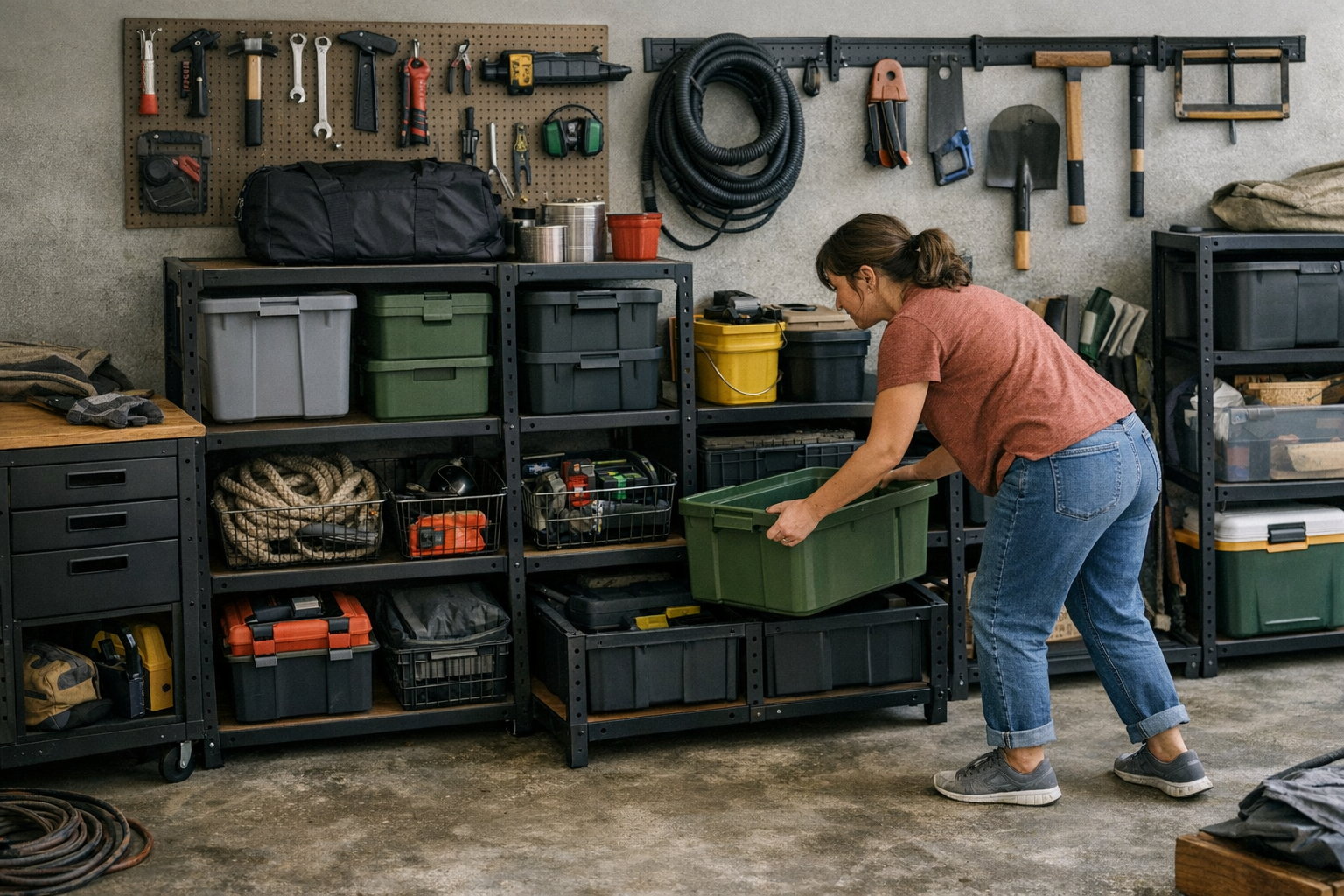
    You don’t notice how tense wall storage makes you until you switch to floor-based shelving and feel it lift. When I swapped my strained overhead system for a modular bench and heavy-duty base shelves, the daily pattern changed immediately. Each bin landed with a solid thud. No forced balancing act to get a toolbox down. No checking whether the brackets were still tight. Every chore—moving parts bins, switching out seasonal gear, fetching an awkward bin of cables—happened in one clean motion.

    This stability is what turns space into something you can actually use. If you’re hauling in muddy tools, moving sports gear in and out for the weekend, or stocking up for a month of projects, you want storage that absorbs the load from the ground up. Instead of letting gravity drag everything downward and crowd out the floor zone, floor-based storage expects the weight and makes it accessible. There’s no hesitation or need to brace a hand against the wall before removing a box. The clarity isn’t just visual; it’s in how you move through the area without thinking.

    The Quiet Breakdown of Wall Storage Over Time

    On paper, wall shelves and cabinets seem like a fix-all. In reality, their weaknesses add up quietly. Pulling down a heavy bin at shoulder height gets harder every week. Old studs and drywall anchors loosen; a loaded shelf sways, or starts to sag so that the sides don’t quite line up. Relying on overhead or wall-only setups invites a slow accumulation of awkward workarounds—sidestepping around overhanging corners, finding one zone that always collects overflow, or realizing you’re moving carts just to keep the path clear.

    “Dead corners” appear: sections of wall that look available but are always blocked by stacked items on the floor below. Reaching around one shelving edge becomes a daily ritual. Resetting after a big project means endless shifting, as bins migrate down and living clutter spills into walkways. The once-tidy array is now a series of little choke points, and restoring order starts to feel like wrestling the layout itself.

    One Month In: How Habits Expose the Weak Spots

    Think through a typical four-week cycle: the initial setup looks great; bins lined up, gear in its place. By week two, you’ve started shuffling heavy items downward, assigning the overhead shelves to lighter, rarely moved things out of self-preservation. Smaller tools and loose pieces fill in cracks, and something almost always ends up in front of a cabinet you use the most. By week four, walkways are pinched. The rolling cart you need is blocked by a stack that migrated from a top shelf. A cabinet door is sticky from a slight lean. Returning items to their place often means detouring around a stumble spot or bracing a sagging rail before pulling something down. Familiar order has turned into a series of little interruptions.

    Why Modular Floor Storage Changes the Routine

    The main advantage of modular, grounded storage isn’t just the space—it’s the disappearance of hesitation in your movements. My own swap to a deep, floor-based system instantly freed an entire foot of usable walkway. There was no more squeezing past jutting shelving legs, no dodging a unit that had shifted or leaving items perpetually out “just for now.” Cleanup became direct: every bin slid back where it belonged, and the grab-and-return routine ran smoothly. Overflow didn’t collect in dead corners; the major zones stayed defined after every use.

    Routine reset speed improves. You stop cycling the same boxes from place to place just to reclaim floor space. Instead, the system flexes to hold the load day after day. Small changes—spinning one unit sideways for better reach, using open vs. closed shelving to handle quick swaps—actually stick, because you’re not battling instability or awkward reach. The space starts to work with you, not against you, and the temptation to let clutter pile up fades naturally.

    Recognizing When Your Setup Is Failing

    If moving through your workspace means shifting a cart out of the way, sidestepping a sagging rail, or repeatedly stacking and unstacking the same bins, your setup isn’t suiting your real habits. Storage that demands constant vigilance—bracing, tightening, or reshuffling—signals a mismatch between what’s stored and how it needs to be used. Overflow piles and blocked movement tracks are silent alarms that the layout is slowing you down, not speeding you up.

    Designing Storage Around Actual Routines

    Wall-mounted solutions make sense for light, infrequently used items, or where wall height is all you have. But if your daily routine involves heavy, awkward, or often-in-motion gear, a grounded, modular setup keeps pace with real use—not just first impressions. Stable floor units absorb weight without drama, hold zones steady, and let routines run friction-free. Everything stays easier to reach, return, and reset—without a slow drift toward chaos.

    A truly effective storage system isn’t about how clean it looks the day you install it—it’s about how much less it gets in your way after a month of real, repeated use. When you shift to solid, adaptable storage you reclaim not just floor space, but a workflow that survives the messiest stretches and the heaviest weeks. Routine tasks become smoother, resets are faster, and you don’t spend time dodging your own setup just to get work done.

    Find more practical modular solutions at StackNest.

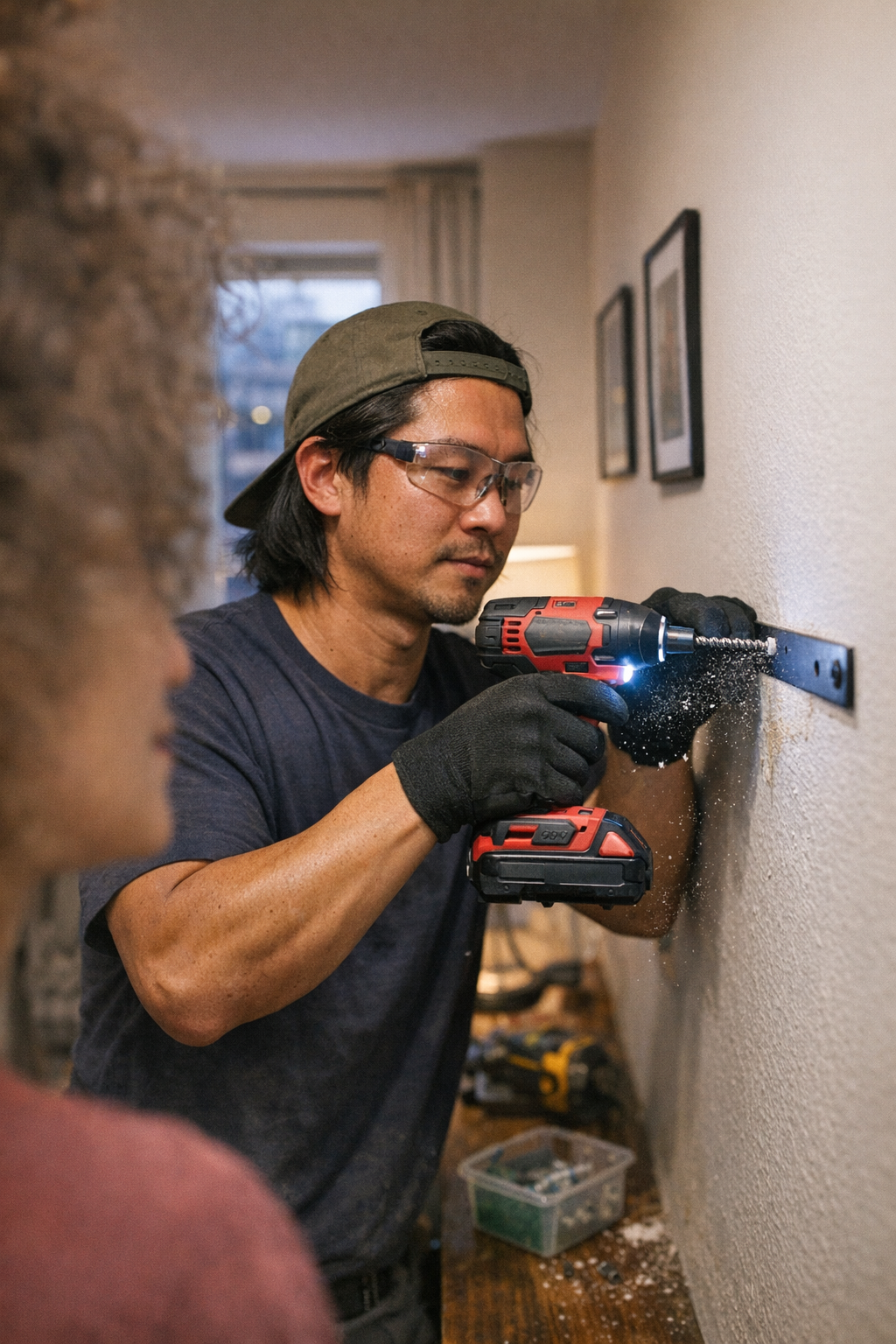
  • Choosing Impact Drivers That Protect Apartment Walls and Reduce Noise

    Every job looks clean and easy from the outside—until you’re sweating over drywall dust in a cramped apartment, one screw away from a dented wall or a noise complaint. Tool catalogs brag about horsepower and torque, but in real rooms with thin partitions and the clock ticking down to your lease renewal, what separates the “almost good enough” from “never again” is how the tool actually feels—and what it leaves behind.

    Apartment Fastening: Friction Shows Up Fast

    If you’ve ever assembled a shelf set or mounted curtain rods in an apartment, you know the routine. You walk in thinking, “I’ll be done in an hour.” The first anchor goes in, fine. By the third, the buzzing tool starts to bite. Jittery vibration creeps from your palm up your wrist. The noise spikes as the screw seats, echoing not just in your ears, but in the apartment below. Dust pools along the baseboard. And with every next anchor, holes widen, plaster flakes, and your confidence shifts to damage control.

    It’s the accumulation of little problems that grinds you down—bit slips, bounced anchors, and the spreading mess. One bad driver and suddenly ten anchor points become five cleanup projects.

    Spec Sheets Don’t Silence the Neighbor

    Marketed specs—RPM, weight, torque—mean little when you’re partway through a wall of fastening. You switch to high gear expecting speed, but instead get more rattle. The wrong driver transmits vibration with every screw, turning your living room wall into a low-grade percussion instrument. In thin units, the reality isn’t just noise, but physical feedback: cracked seams, splintered drywall, anchors that won’t bite flush. What looked “powerful” in the ad just feels reckless in your hand.

    Contrast that to a tool with decent vibration dampening. Each drive is controlled, anchors stop just where you want—no sudden kicks, no cloud of dust spreading three feet out. You power through awkward angles without bracing for the ache after every fastener.

    When Poor Tools Make More Work

    A cheap or mismatched driver means scrapes, stripped bits, torn paper, and that slow ballooning of patch jobs: spackling, sanding, and repainting over craters where an anchor blew out the back. And for every echoing bang, the risk rises—the neighbor’s fist, the building manager’s warning, the mounting stress.

    What’s supposed to be an afternoon project piles up into days spent restoring your own mistakes. Fatigue isn’t just physical, it’s mental—repeating the same action, dreading the next flaw, constantly cleaning droppings you never planned for.

    Scenes from the Real World, Not the Showroom

    Imagine it: Friday night, bracket kit laid out, driver battery freshly swapped. You start mounting shelves; after a handful of fastenings, you’re feeling every impact both in your wrist and your patience.

    • Noise snowballs: Each drive drumrolls through plaster. By anchor eight, you’re bracing for the next complaint as much as the next screw.
    • Mess multiplies: Bits of paint and grit scatter across furniture and carpet—more time with the vacuum than the tool.
    • Anchors fudge or fail: Lack of control means the anchor’s not square or buries deep, forcing the dreaded wall patch even before the shelf’s up.

    Minutes saved with a bargain-bin driver evaporate into hours lost redoing, cleaning, and running apology circuits with neighbors or landlords. Cheap seems fast. It rarely is.

    Switching Drivers, Shifting Experience

    The first job with a properly engineered driver feels like switching to noise-canceling headphones for your hands. Vibration doesn’t jump back at you with every pull. Wrist pain subsides, even with repeated anchor runs. Most notably, the clatter drops instantly: the job sinks comfortably below the level that travels through walls. Dust and chipping slow, anchors stay tight, and drywall stays intact.

    The difference is precision—anchor after anchor goes exactly where you wanted. Seams stay crisp. By the end, you’re not scrubbing corners, redoing holes, or apologizing for the disaster. The real win isn’t speed; it’s the way each small fix stays small.

    Fatigue and Friction: Work Smarter, Not Harder

    Fatigue sneaks in. Squeeze a vibration-heavy driver and your hand cramps; you start skipping the fine touches, just wanting the job finished. With the right dampening, control returns: you brace less, slip less, and each run feels measured instead of rushed. The job doesn’t just go faster, it feels lighter—mentally as much as physically. There’s no holding your breath to counter stray kicks, no crossing your fingers you haven’t missed a stud or widened the hole.

    Why “Lightweight” Can Work Against You

    That featherweight driver on sale? Sometimes it’s a shortcut to more vibration, not less. Lightweight bodies pass more of the fight to your hand—and through every thin partition you touch. Suddenly, your afternoon job turns into a lesson in drywall repair: splintered holes, spidered paint, and yet another lost afternoon beneath the patching kit.

    If you feel the floor shake after three or four fastenings, or hear the walls echo next door, your tool’s isolation has failed the test. And in apartment living, that’s a shortcut to a growing repair list and annoyed neighbors.

    Bit, Blade, and Battery: Control Matters Most

    Sure, upgrading to a better bit helps—less cam-out, less stripped hardware—but it only fixes half the problem. The real leverage is in the driver’s “feel” itself: whether sanding, cutting, or sinking anchors, the more control you get, the less fallout you manage. It’s in how you swap bits without fighting stiff chucks, how a fresh battery slots mid-job, and how the driver’s balance prevents accidents on the very last run.

    This is where experience shifts: tool behavior becomes prevention, not just correction. You spend less time patching and more time actually progressing, because mistakes stop multiplying.

    Protect the Job, the Walls, Your Sanity

    In apartment work, specs don’t tell the whole story. What matters is how the tool counters the friction points: persistent vibration, creeping fatigue, control slipping away at the worst moment. The right driver means tighter anchors, less dust roaring out over your floors, and a quiet enough workflow to finish a job without planning an apology script.

    If you’ve patched one wall too many or found “quick” fixes spiraling out, you already know the truth: the impact driver isn’t just about what you put into the wall—it’s about what you don’t have to fix after.

    Shop practical, work-proven drivers and fastening gear at Gumboll.

  • Identifying and Fixing the Hidden Weak Spot Behind Shelf Clutter

    Every organized shelf hides its risk of chaos. Even the best-looking closet or storage nook has a weak spot—a single shelf that never seems to keep its promise. At first, the system feels solid: bins lined up, labels neat, each category in its place. But as soon as life gets busy—kids come blasting through the door, you’re running late in the morning, or groceries pile up faster than you can put them away—the fault lines appear. That well-ordered shelf is suddenly the bottleneck, and disorder radiates out from it, reshuffling your whole system from the inside out.

    How Shelf Clutter Actually Starts

    Clutter doesn’t start everywhere at once. It begins in small, familiar ways—one shelf is too high to reach easily, or a divider fails to keep stacks upright. Maybe gloves and scarves share a bin that looks perfect after a reset, but within days the contents are tumbling into each other. The routine moments—pulling out a hat and having two scarves come with it, or reaching for a folded shirt and toppling half the stack—expose the shelf’s hidden weakness long before the closet looks “messy.”

    The signs are subtle but relentless: Shift one pile to reach something behind it, and now nothing fits right. Return a basket in a hurry, and next time you just push things aside to make space. The system wears down in daily, invisible increments until you’re constantly searching, shifting, or giving up.

    Everyday Clutter: When Storage Starts to Slip

    Entry Closet: The Winter Pile-Up Problem

    Take a standard winter entry closet—an attempted set-up: hat shelf, glove bin, spot for scarves. It looks controlled on Sunday. But by Wednesday, gloves pool at the bottom of the hat bin and scarves are blurring into bags. Why? Maybe the “glove zone” was never separated, or a too-deep bin swallowed the smallest items. Short on time, you stuff hats and gloves anywhere close, convinced you’ll sort it later. Soon you’re digging for that missing mitten and knocking three hats to the floor just to find it.

    It’s the closet’s catch-22: baskets appear organized, but nothing is where you expect it. Everyday access becomes a mini scavenger hunt, and returning anything to “its place” feels harder than it should.

    Bedroom Shelves: The Leaning Towers of Laundry

    Even the most careful folding can’t conquer a weak divider or a too-wide shelf. Shirts stack beautifully on day one, but by day three, stacks tilt, piles merge, and you’re pulling socks from between two toppled mounds. Pull one item in a hurry, and the rest threaten to follow. Quickly, that snug stack becomes a generic pile—shirts, shorts, odds and ends, everything blurring by midweek. Resets grow slower; you spend more time restacking than storing or retrieving.

    Looks Organized, Works Sloppy: Spotting the Gaps

    At a glance, your shelves pass the “organized” test. But the cracks show up in real life. How do you know when structure is breaking down?

    • You double-handle items just to get what you actually need.
    • Baskets get stuffed, sending small things to the bottom, practically lost until next month’s cleanout.
    • Labels stare back at you, but what’s inside never quite matches up—especially after a rushed day.

    The true verdict isn’t the after-clean photo—it’s how fast things slide out of place between resets. If putting away a simple stack or bin requires more steps each time, or if you avoid using a shelf because it’s always a hassle, your system is quietly failing the daily test.

    How One Weak Shelf Triggers a Chain Reaction

    Persistent clutter doesn’t explode; it spreads. One loose bin, shallow divider, or ambiguous category quietly creates overflow. Suddenly, bags start piling where coats go, shoes drift off their rack, or hallway surfaces collect a “temporary” drop zone that never empties. In laundry rooms, towels drift into the cleaning shelf, eating up space and unraveling the order you set on day one.

    The more you work around the problem, the worse it gets. Small frustrations—moving a stack for the third time, blindly rooting through a bin—add up. Even if the rest of your system is solid, that one weak shelf turns storage into a guessing game and makes every reset feel like a lost cause.

    Repairing the Real Problem: Sharpen the Shelf’s Role

    The weak spot isn’t always the most obvious mess. It’s often the shelf you keep tinkering with or the bin you dread opening. Watch for these tells:

    • Grabbing for the same item and moving two others just to free it.
    • Piling “random” everything into one catch-all container.
    • Reaching into a bin and coming up empty-handed because things have drifted into the next zone.
    • A hesitancy to use part of your storage because it’s never quite right.

    Take a normal week. Where do categories cross over, piles grow, or you always “just leave it for later”? Here’s the real leverage point: install a divider at exactly the width you need, or swap in a shallower bin you can see into at a glance. Instead of fighting the shelf, you let structure do the work.

    Micro Adjustments, Major Impact

    One winter, I finally got tired of the entry closet avalanche. Oversized bins weren’t helping. I measured and added a simple wood divider, splitting the hat-and-glove shelf in two. Suddenly, gloves stopped leaking into hats, and everything stayed in view. The reset time disappeared—I could toss things in without stacking, and they still ended up sorted. It wasn’t perfect, but that tiny shift turned a daily “I’ll fix it later” into a less-than-a-minute tidy-up.

    It’s not about a showroom finish—it’s about making good habits nearly automatic so daily clutter has nowhere to spread.

    When to Use Bins, When to Use Dividers (And When to Mix Both)

    Customize the fix to the stuff you actually use. Small, loose items—think winter gloves, toiletries, or hardware—do best in open bins you can scan with a glance. But bins that are too deep or too many create their own chaos, hiding things at the bottom. Dividers rescue flat, foldable items—shirts, towels, sheets—by keeping piles upright and categories separate. The real win? Combining both to match the shape of your chaos: a divided shelf with bins for the smallest things, one clear zone for stacks, and nothing too crammed or hidden.

    Quick test: If every day you’re restacking or shuffling through piles, measure the usual width and add a divider that’s just wide enough for the max load. You’ll see the pile hold its ground for a full week—or at least long enough that resets feel trivial.

    Fix the Weak Link, Watch the Whole System Improve

    The payoff for upgrading one shelf isn’t in show-off neatness—it’s how much smoother everything around it gets. Once that trouble zone is contained—bins aren’t overflowing, stacks actually stay up—suddenly, everything else works better. Categories stop mingling, reset time shrinks, and you spend less energy on finding, fixing, or faking order. It isn’t flawless, but it’s steady, and you stop dreading the moment things go off track because now it’s easy to restore normal.

    Shelf systems don’t collapse overnight. They quietly unravel from one weak section out. Fix that point of friction—right bin, right divider, right size—and the rest of your storage feels simpler, calmer, and tougher to undo.

    Visit ClosetWorks for more practical storage solutions.