
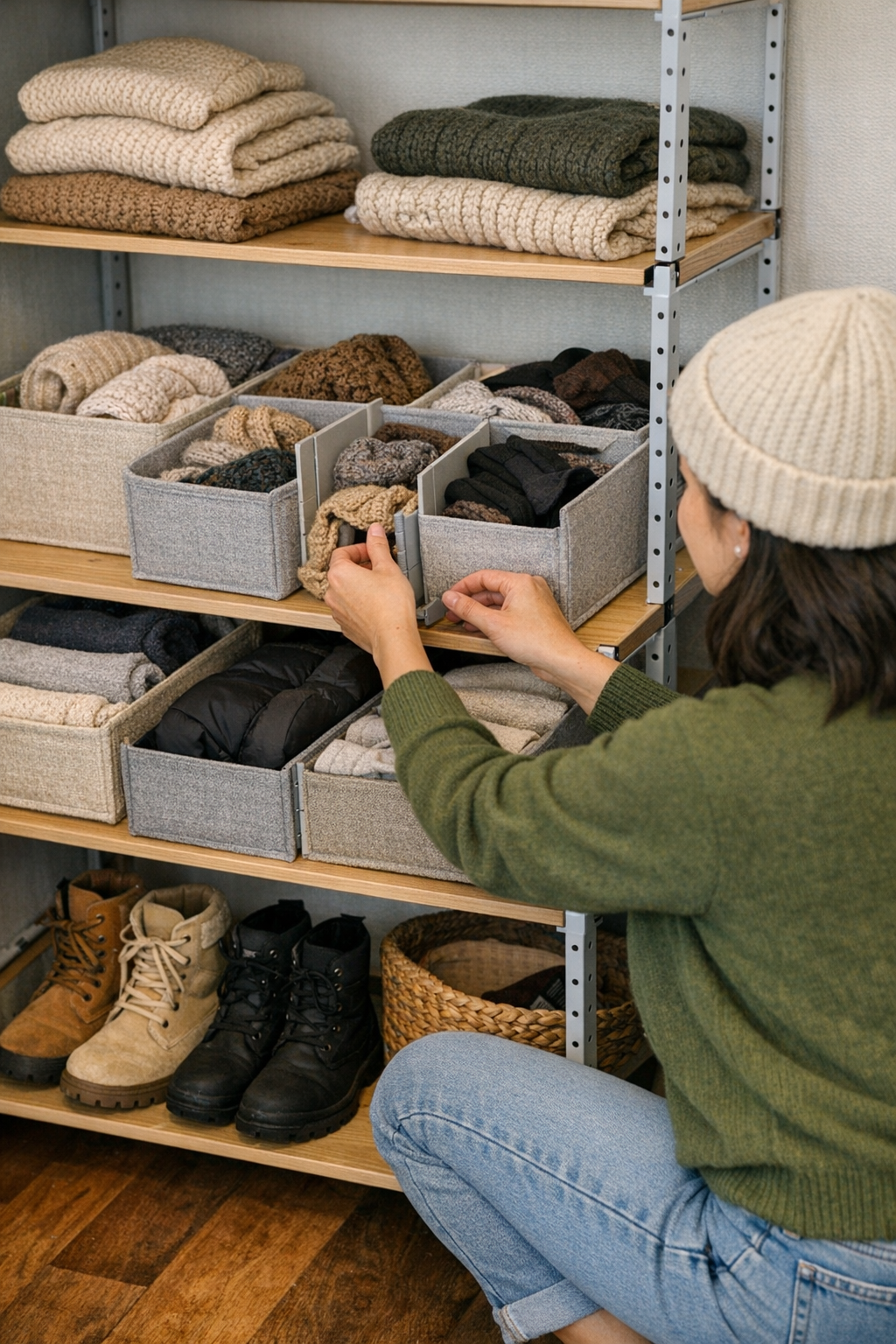
At first glance, crisp dividers and perfectly measured bins look like storage salvation. The promise is tempting: a closet remodel where every scarf, hat, and pair of gloves sits in its designated home, clutter supposedly banished for good. But a few weeks in, that showroom order can quietly fall apart. With each laundry day or weather change, your neatly separated bins start blending, and everyday routines turn “organized” into just another source of friction. The danger isn’t mess—it’s a storage system that can’t absorb real life’s small surprises.
Where Compartments Start Betraying You
Consider a closet with bins carefully marked: hats, gloves, scarves. On day one, everything sits in line. But the minute you bring home a new pair of oversize mittens or switch to a thick winter scarf, harmony unravels. Hats spill onto gloves. Scarves wedge themselves against bin walls or hang out too far, snagging hands each morning. You start playing a daily shell game—rearranging piles just to grab a single glove, or squeezing scarves into spaces an inch too tight.
This isn’t just a closet problem. Any fixed system—rows of cubbies, unadjustable drawers—looks flawless until you actually live with it. Socks migrate in dresser organizers. Grocery bags overflow their box after a shopping spree. One busy week and the boundaries blur, categories blend, and you’re working against the very system meant to speed you up.
Frustration on Repeat: How Rigid Storage Slows You Down
Rigid compartments shine in theory but trip you up in practice. In bedroom drawers, a set of little trays keeps socks and belts tidy—until you swap in bulkier winter socks or try to fit an odd-shaped accessory. Suddenly, instead of seeing your options, you’re digging behind a gap-toothed stack or undoing your careful folding just to find a single item. The “reset” after laundry takes twice as long, dragging new items into old, unmoving boxes.
Entryways are even less forgiving. Maybe you have a bin for shoes, one for bags, one for cold-weather gear. But after a muddy day or a friend’s oversized tote, shoes stick out, bags flop over, and gloves end up in a pile on the bench. What started as clear order becomes a bottleneck, each category crowding the next until the surface itself is a landing zone for overflow.
Organization That Can’t Flex—And How That Shows Up
Storage systems built on static roles fail quietly, slowly. At first, you might ignore the creeping disorder—hats perched precariously, labels peeling off, an “overflow” mound near the door. But over time, you start rerouting your own process: slipping things onto any available surface, lowering the bar for putting things away, or skipping the bin entirely. Suddenly, the dividers and labels are just for show.
Even the fridge catches the curse—those “salad” and “snack” bins that fill up with odds and ends when routines shift, or a big shop undoes the careful balance. It’s the same old tension: seamless for a snapshot, jammed by the unpredictable.
The Trouble with ‘Perfect’ Compartments
Order feels great—briefly. But systems that demand precision create a hidden tax. A sweater an inch thicker than usual pushes the whole stack crooked. An oddly-shaped shopping bag won’t sit in its bin, so it lands wherever gravity lets it. Every time you return something to its “place,” you negotiate with a system that resists change. Bit by bit, effortless resets become a chore.
Watch closely: when stacks slide, bins overflow, or labels fade in relevance, the compartmental illusion cracks. You’re no longer organized; you’re just volunteering for more tidying work.
The Power of Small Margins and Movable Parts
One minor tweak changes everything: a bit of give at the edge, or a divider you can slide or remove. In a real closet refresh, a homeowner decided to ditch two fixed dividers and let one bin float: immediately, it became the zone for extra hats, travel thermals, or a friend’s borrowed gloves. When seasons changed or shopping patterns shifted, nothing needed a full resort—items just found temporary room in that flexible gap.
Small space to overflow or blend, without constant rearrangement, means fewer rogue piles outside bins, faster resets after laundry, and less time “undoing” your own organizing effort. A system with an escape route simply works longer without you having to think about it.
Recognizing When Your System Is Working Against You
Be alert for these sure signs of storage friction:
- Bins or baskets always left open, as if waiting for something that won’t fit
- Loose piles forming on floors or benches near “full” containers
- Having to shift one stack just to free something hidden underneath
- Original labels now ignored, or half-right categories repurposed on the fly
- A pause or sigh every time you try to tuck something away
When these patterns repeat, your system is asking for flexibility—or else, clutter will simply find its own space outside the system.
Low-Effort Adjustments with Outsized Benefits
You don’t need a full overhaul to fix chronic mess. Sometimes, removing one divider is enough to make a shelf work for both heavy sweaters and lighter tees—no more domino tipping when you reach for something on the bottom. In the entryway, trading a rigid bin for a woven basket with soft sides lets boots and shoes squeeze in, instead of spilling out every busy morning.
Leave room for wild cards: a purposely empty spot, just for the random or seasonal—the extra tote, a neighbor’s returned umbrella, the overflow pair of gloves. Giving unpredictability a landing zone means less pressure everywhere else, and fewer “temporary” piles lingering for weeks.
Why Storage That Bends, Endures
A closet, shelf, or cubby shouldn’t be measured by a perfect snapshot, but by how little fuss it takes to put things back a week—or a month—later. Items and routines shift, new things arrive, and the weather itself can upend your categories. The best systems share an almost invisible trait: they absorb change without demanding constant attention.
When your setup has slack—removable dividers, a margin in a bin, a wild card shelf—you spend less time fixing and more time finding, using, and putting away. The payoff isn’t just a neater photo; it’s a storage space that keeps up with you: the surprises, messes, and resets of real life, not the momentary calm of organizing day.
Find classic and flexible closet solutions at ClosetWorks.