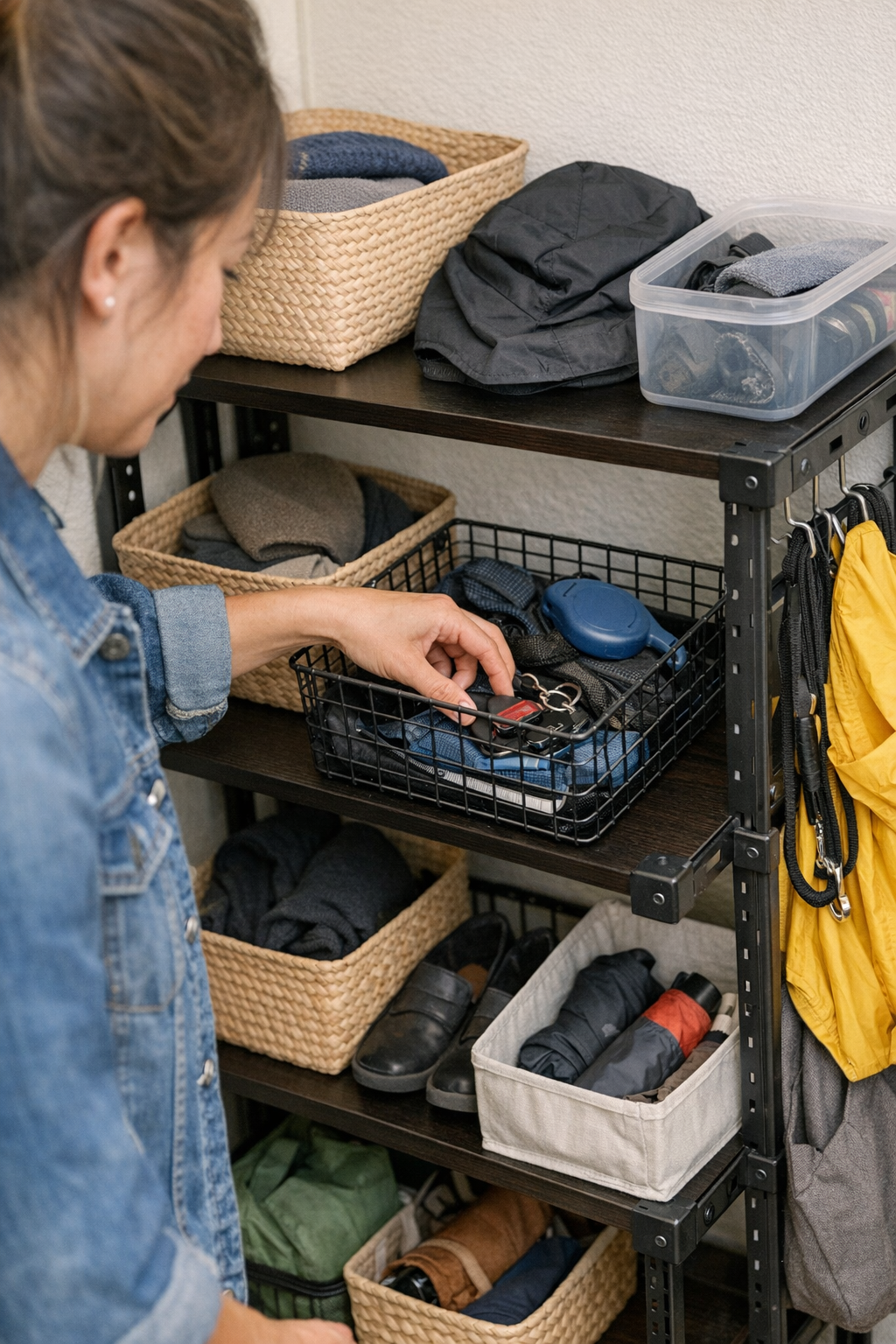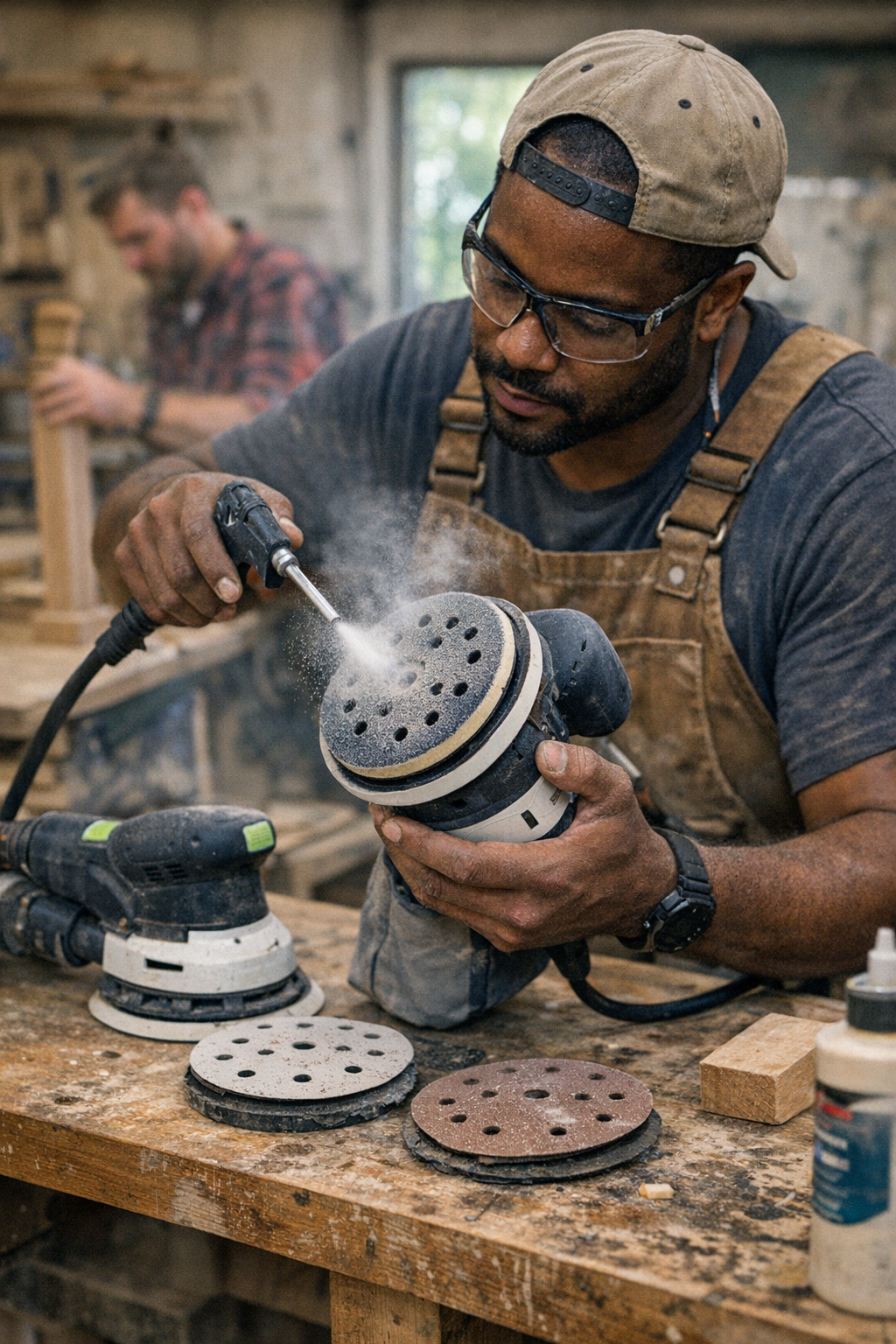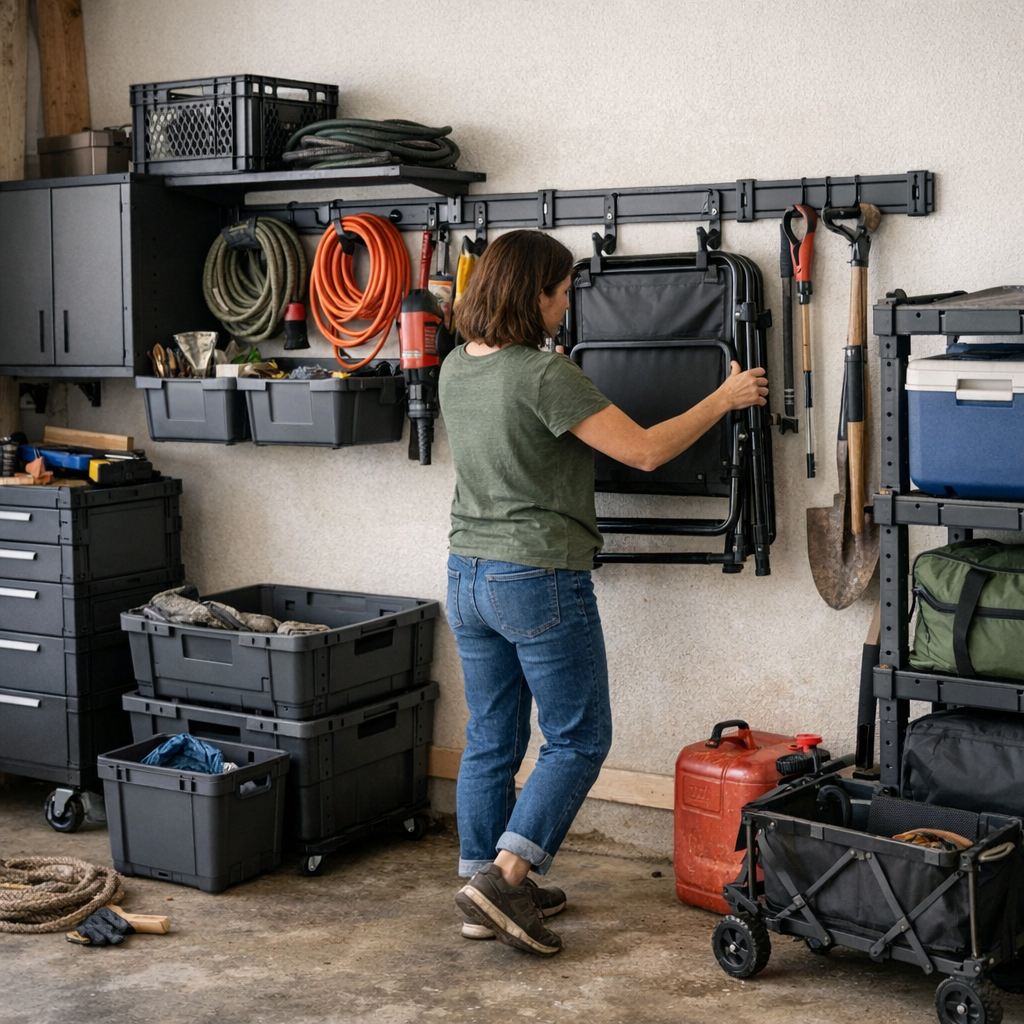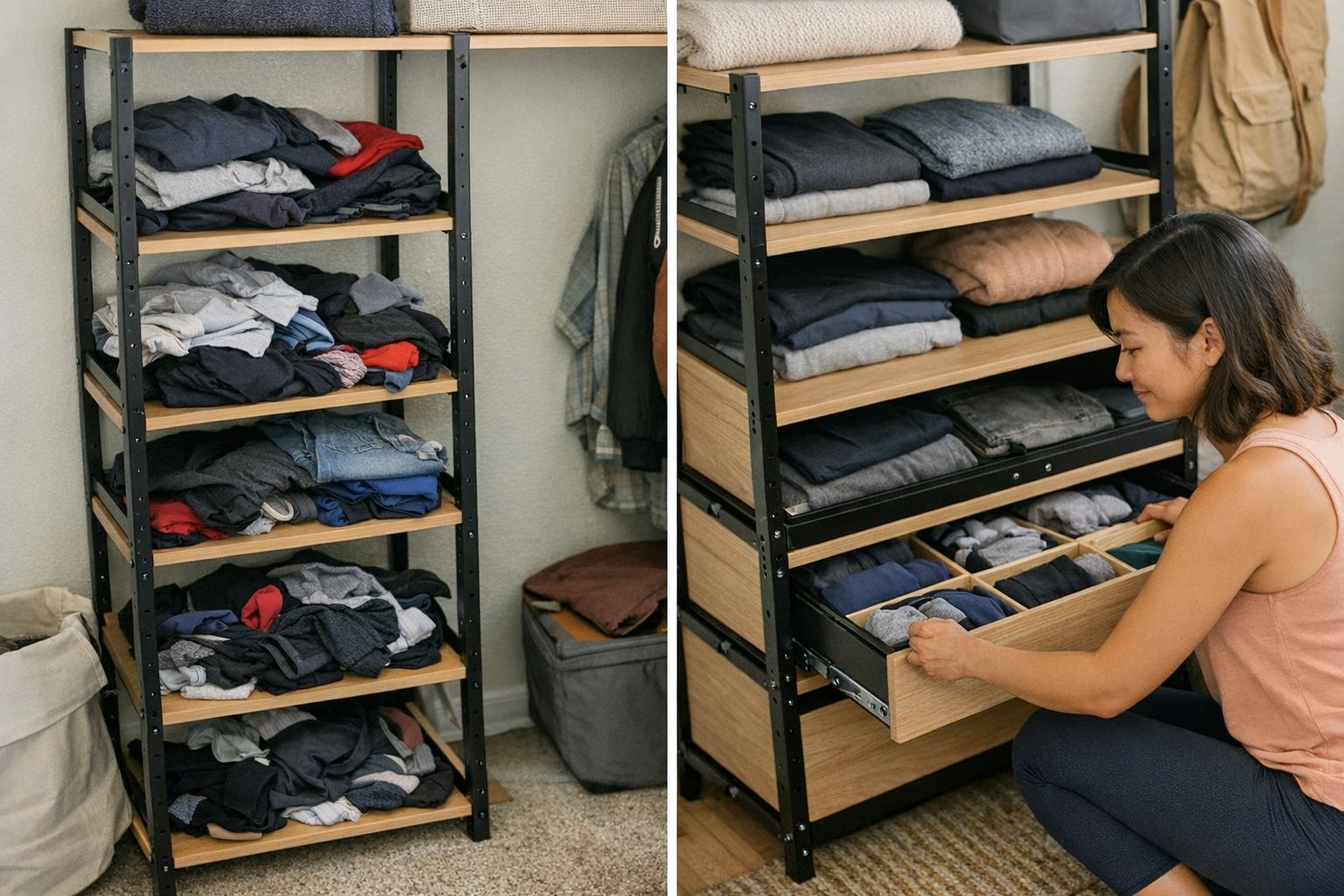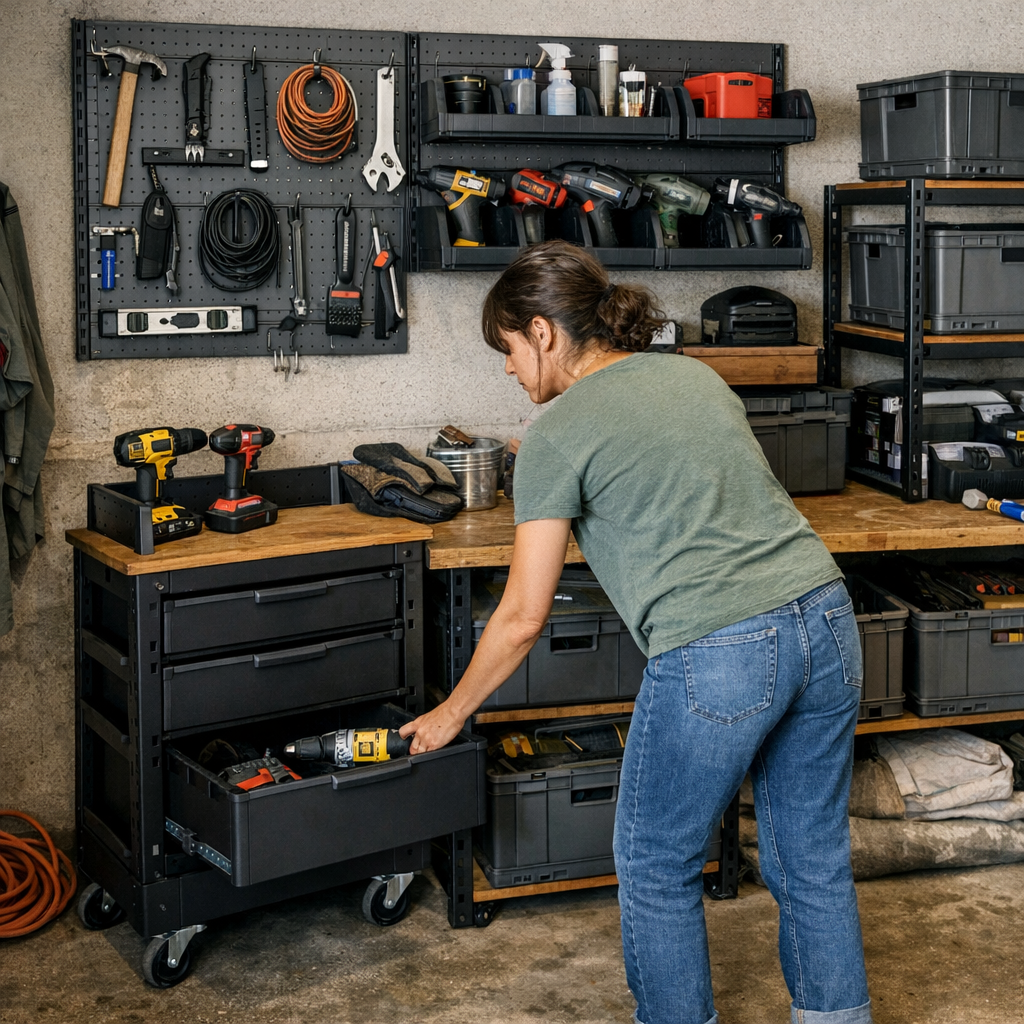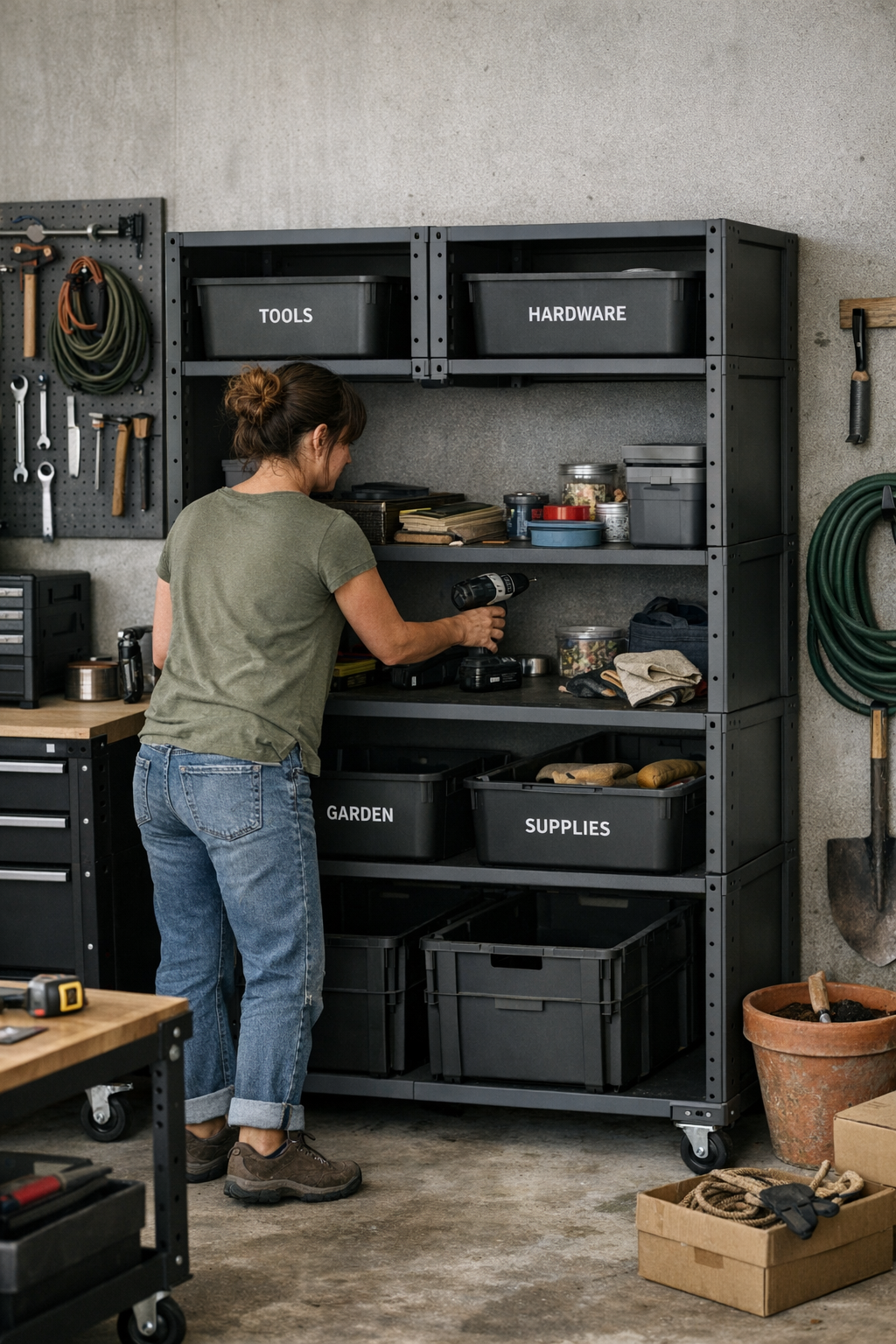
The freshly organized cabinet always looks convincing—bins lined up, every shelf accounted for, labels sharp enough to impress any guest. But that first wave of satisfaction crashes fast. By day three, you’re prying a cartel of containers out of the way just to get to your favorite wrench. Your arm snakes past the “Garden” bin because the pruners never made it back after the last project, and somehow there’s a loose pile of drill bits wedged into the nearest open nook. The cabinet isn’t backing you up; it’s calling your bluff.
When an Organized Cabinet Turns into a Speed Bump
Garages and workspaces aren’t showrooms—they’re built for motion. On launch day, every shelf shines under its new labels: “Painting,” “Garden,” “Electrical.” Fast-forward one busy week, and those same bins become roadblocks. Picture yourself halfway through a project: Do you really stop to analyze where a paintbrush belongs, or do you shove it where there’s room and move on? Instead of streamlining your moves, the system quietly inserts extra steps—a slow creep of shelf nudging, bin swiveling, and diagonal slides as you sidestep whatever cart is hogging open floor.
It’s more than inconvenience: with every trip, you negotiate old decisions. That promising wall unit holds tools hostage behind a curtain of containers, and “modular” means swapping bins until your pathway closes in. What looked tidy now feels like a maze. Your walking line, once clear, is blocked by boxes of overflow or that awkwardly-placed cabinet edge you keep skimming with your hip. Meanwhile, dead corners become havens for cast-offs, and resets only restore the look—not the real flow.
When Organizing Gets in Its Own Way
It’s easy to over-categorize—tiny bins for every size screw, a tote for each half-finished project, a cord basket for cables you haven’t used in months. But the busy reality is rarely granular. Most action lives in just a few sections: the “everyday” bin, the catch-all shelf, the space near the door. The rest sits half-empty or fills randomly with overflow. Each trip from the yard or bench turns into a guessing game: Do I force this gear into an overstuffed box, or do I leave it in a growing pile?
This is when small annoyances compound. Floor space begins to vanish under “temporary” stashes. The drill lives with the garden stakes—just until next weekend, you promise—and anything odd-sized lands on top of whatever’s closest. Resetting doesn’t feel like organizing anymore; it feels like you’re hunting for loopholes in your own system. Over weeks, the search time grows, while the supposed order falls behind the pace of your real work.
Stop Micro-Sorting—Try Flexible, Broad Categories
You don’t need an index—just a handful of smart, broad zones that absorb real-life mess. Three to five big categories per standard cabinet clear out daily gridlock. A sturdy “Hardware” bin eats up what once clogged three separate boxes. A “General Tools” catchall means the stray wrench actually has a home, not a pile between micro-bins. The more your setup flexes by day, the less you find yourself stuck reshuffling by night.
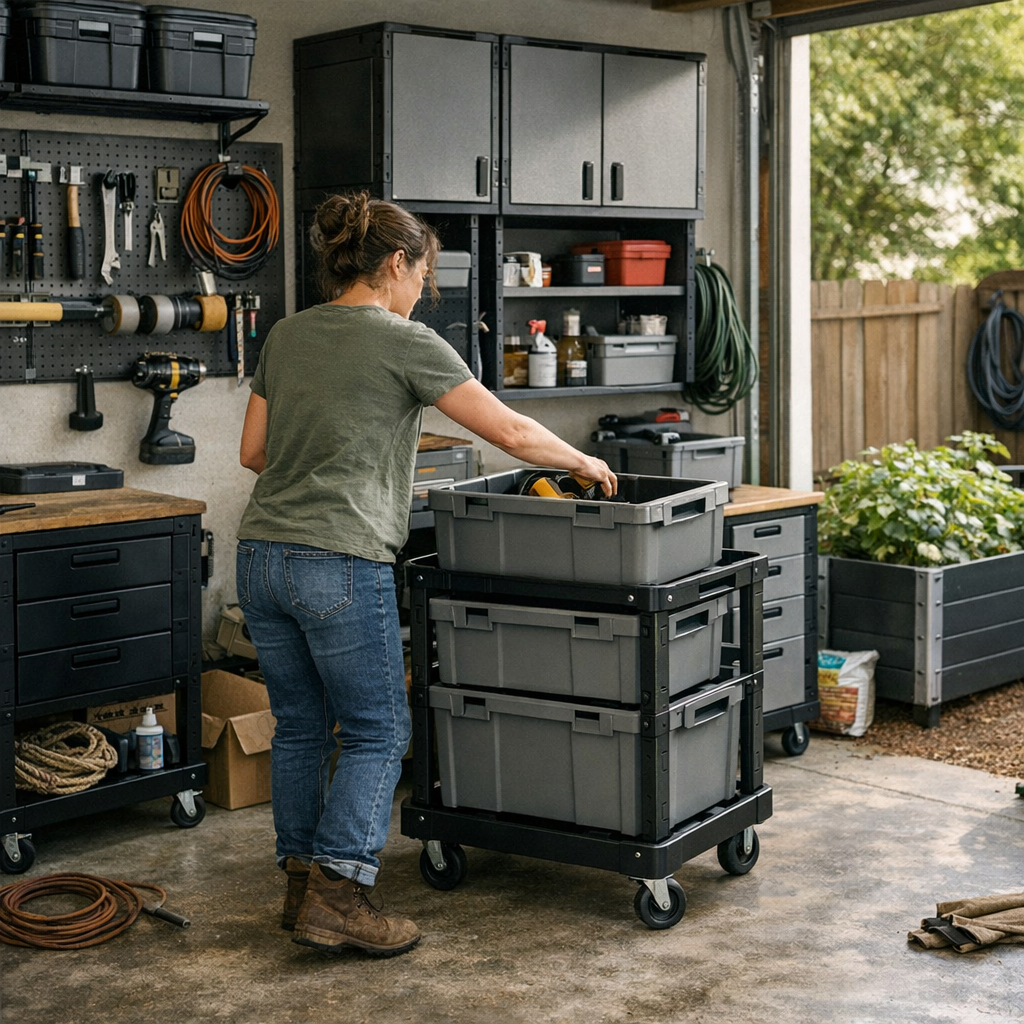
This works especially well for modular units you want to keep adapting. Today it’s a bike tune-up, tomorrow it’s soil mixing for a planter box—gear changes, routines zigzag. Fewer bins to open, fewer decisions to make. When overflow hits, it slows you down less: you can actually find space without raiding the floor or playing cabinet Tetris. Movement through the garage stays quick, not clogged by the choreography of micro-containers.
Keep One Shelf Open—Your Setup’s Pressure Valve
Deliberately leave one shelf empty and unassigned—a true landing zone with no questions asked. Finish a job, dump those awkward extras here. By morning, a single glance resets the area—nothing buried, nothing trapped, just a quick sweep and you’re back to ready. You sidestep the classic frustration: no standing around re-labeling bins, no reorganizing three containers because you picked up a new part or tool. This one decision absorbs the flux that otherwise floods your floors and eats your energy every reset.
Telltale Signs Your System is Failing Your Routine
You know your storage plan needs help if you spot these patterns:
- The same shelves are overrun while others gather dust.
- Every session means shifting bins just to retrieve regular-use tools.
- Gear collects near doorways or on benches because there’s nowhere that “makes sense” for them.
- Piles mushroom in corners you rarely visit—overflow that never gets properly put away.
When these inefficiencies show up, resets drag, and you lose momentum every session, the routine has started serving the system—not the other way around. Over a season, wasted steps and constant negotiating with your cabinet decisions become a drain that makes every project less inviting.
Design for Recovery, Not Just Display
The real payoff isn’t that “brand new” look after a deep clean. It’s how little thinking and shuffling you do after a jam-packed weekend. Build your setup for quick recovery: broad categories, a visible landing zone, open movement. Walls and floors stay clear enough to move without detouring. That awkward dead zone—the one that eats all the stuff you’d rather forget—finally empties out. Resetting the space stops being a second job. What you gain isn’t perfect storage; it’s a garage or shop that makes the next day easier to jump into, with your routine flowing instead of fighting back.
For more practical storage ideas and modular setups that fit the reality of garage work, visit StackNest.