
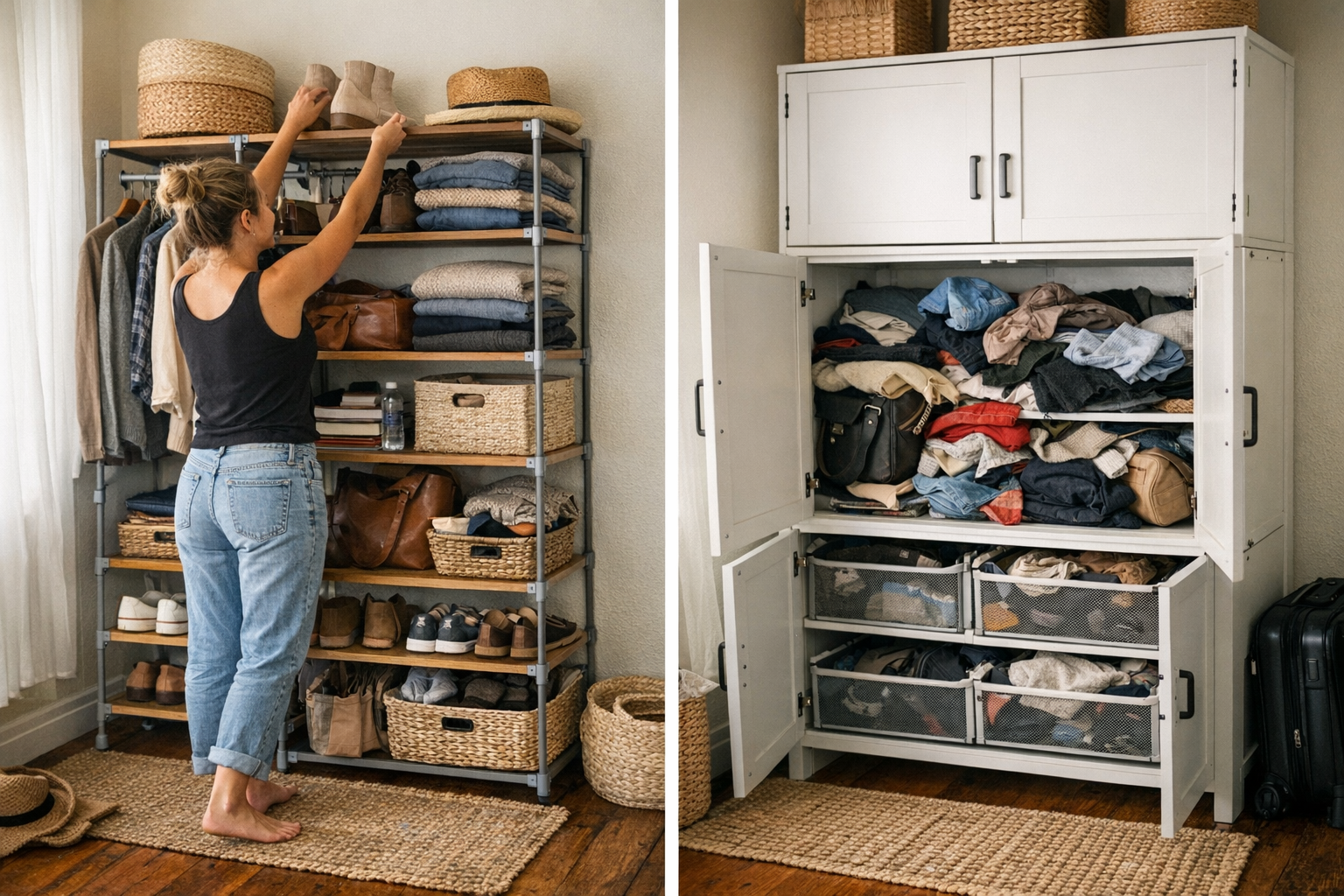
The first week with a freshly organized closet—open shelves gleaming, drawers smoothly closed—feels like getting a clean slate. But by day six, the truth surfaces. Where you store your sweaters, bags, and everyday essentials doesn’t just shape how tidy things look, but how easy (or maddening) every grab, toss, and return becomes. This is the difference between open and closed closet storage: not a question of taste, but how your setup stands up after a week of real-life mornings, laundry marathons, and half-awake evenings.
Open Storage: Instant Access, Instant Mess
Walk into a closet with open shelves, and everything you own is visible, grabbable, and—at first—perfectly lined up. In the rush of a weekday morning, it’s easy to snatch a shirt, slip a bag off a hook, or return a folded hoodie right in view. But the same visibility that invites order also amplifies every small break in routine.
One missed return becomes everyone’s problem. Maybe you shove a T-shirt to the side looking for yesterday’s jeans or nudge a pile aside to fish out a hat beneath. Suddenly, stacks that once looked purposeful start to buckle. A scarf drapes unevenly, more mail lands on an empty shelf “for now,” and the spillover travels fast—especially if you’re juggling everyday traffic or a shared closet. Resets grow more frequent. What started as easy access turns into tight, unstable stacks, and the visual highlight quickly becomes a daily irritant.
Daily Scenes: The Unraveling in Real Time
Picture a shelf that was just sweaters and jeans on Sunday. Two days later, a lunch bag claims space at one end. Midweek, someone tosses in mail and that stray umbrella. By Friday, grabbing a sweater means shifting random piles and hoping nothing falls. With no doors to buy you time, open shelving is either perfectly reset—or instantly reveals every shortcut, missed fold, and “just for now” addition. The mess isn’t hidden. It insists on being noticed and, eventually, dealt with.
Closed Storage: Clean Lines, Hidden Piles
If open shelves announce every mistake, closed drawers offer another kind of fiction: the illusion of calm. From the hallway, everything looks serene. But that calm surface often conceals a private, slow-climbing avalanche behind each door.
Open a cabinet after a busy week and you might find last Friday’s folded shirts jammed under socks, scarves stacked sideways, and a tangle of accessories clumped together. You dig for what you need, shifting heaps with one hand as the pile sags and something inevitably falls out. Instead of a reminder to tidy as you go, closed storage gives your mess a hiding place—until it builds up enough that you dread tackling it.
The Painful Reset: When Hidden Problems Catch Up
Closed storage doesn’t shame you daily, but it makes for a tougher reset. Without visual pressure to tidy, clutter festers—until “where’s my belt?” or “why is there a shoe with the scarves?” tips you into a full-blown reorganization session. The mess creeps up quietly, and the job of restoring order becomes a Saturday project instead of a quick weekday tweak. In shared closets, this means more time spent trading blame or hunting for lost things—all hidden neatly until the doors swing open.
Mismatch Means More Trouble: When Storage Fights Your Routine
A closet that ignores your habits creates constant micro-friction. When every type of item is jammed onto open shelves, daily resets become nearly full-time. The more you pile on, the more the shelf loses its role—you’re stacking hoodies on gym bags on yesterday’s mail, and by Wednesday, the original categories are gone. But when everything is behind closed doors—with no quick view or easy grab—you end up with “out of sight, out of mind” clutter. Important things disappear into the heap, and finding what you need means destabilizing the entire stack.
The real pain comes when systems don’t fit how you move: folded shirts toppling as you reach for one at the bottom, bins turning into mixed catch-alls, lost items, and slow morning shuffles while you try to remember whether your favorite scarf landed in a box or under a pile. The setup looks fine at a glance, but each reset takes longer, and going back to “organized” gets harder each week.
Finding Balance: Sharper Zones That Actually Last
The fixes that work aren’t about perfection, but about reducing headaches. Keep open shelves within arm’s reach for your highest-velocity items—the coat, the daily shoes, the bag you swap twice a week. Shift overflow, off-season, and “backup” stuff into closed storage or up high, out of the main flow.
This single change means fewer daily reshuffles. Your go-to items have a clear landing zone, so shelves don’t crowd early—and resets shift from daily interruptions to fast, once-a-week tweaks. Bags and oddballs that used to get dumped at the entry, or left on the floor, finally have a home, and the stress points fade. Roles stay clearer: the top shelf is always for out-of-season gear, not a random heap. Less mixing, fewer surprises.
Easy Tweaks for Lower-Frustration Closets
- Label bins and inside drawers. A sticky note by the edge stops bags and hats from overtaking one another.
- Resist overfilling—leave open shelves with room to spare. A “buffer” makes quick drops easier and keeps piles from tipping.
- Use your best real estate for what rotates most. Put high shelves to work for out-of-season or rarely used stuff; handle daily favorites at the “grab” level, never above eye line.
Why Single-System Setups Wear Out Fast
Closets rarely fail because of capacity; they fail when open shelves or closed bins are given every job. Open storage looks good out of the gate, but needs nonstop upkeep. Closed storage keeps the peace at eye level, but lets clutter pile up in secret. The only approach that survives a hectic life: mixing both. Open shelves for what you’ll touch before your second cup of coffee, closed bins and drawers for what only surfaces every few days or weeks. Each zone gets a job, and the system doesn’t collapse as soon as routines get messy.
Organization That Holds—Not Just Hides
It’s easy to be lulled by a tidy exterior, but real, lasting order is about closets that support your movements, your speed, your habits. Revisit what you actually reach for. Notice which categories drift and blend. Make each shelf, basket, or hook earn its space by matching how you actually use them, not just how clean they look. This keeps routines smoother and frustration down—even when the rest of life doesn’t cooperate.