Category: Pet Life

  • How Small Changes Make Daily Cat Care Smoother and More Reliable

    When Calm Looks Easy—But Isn’t: The Everyday Reality of Daily Pet Care

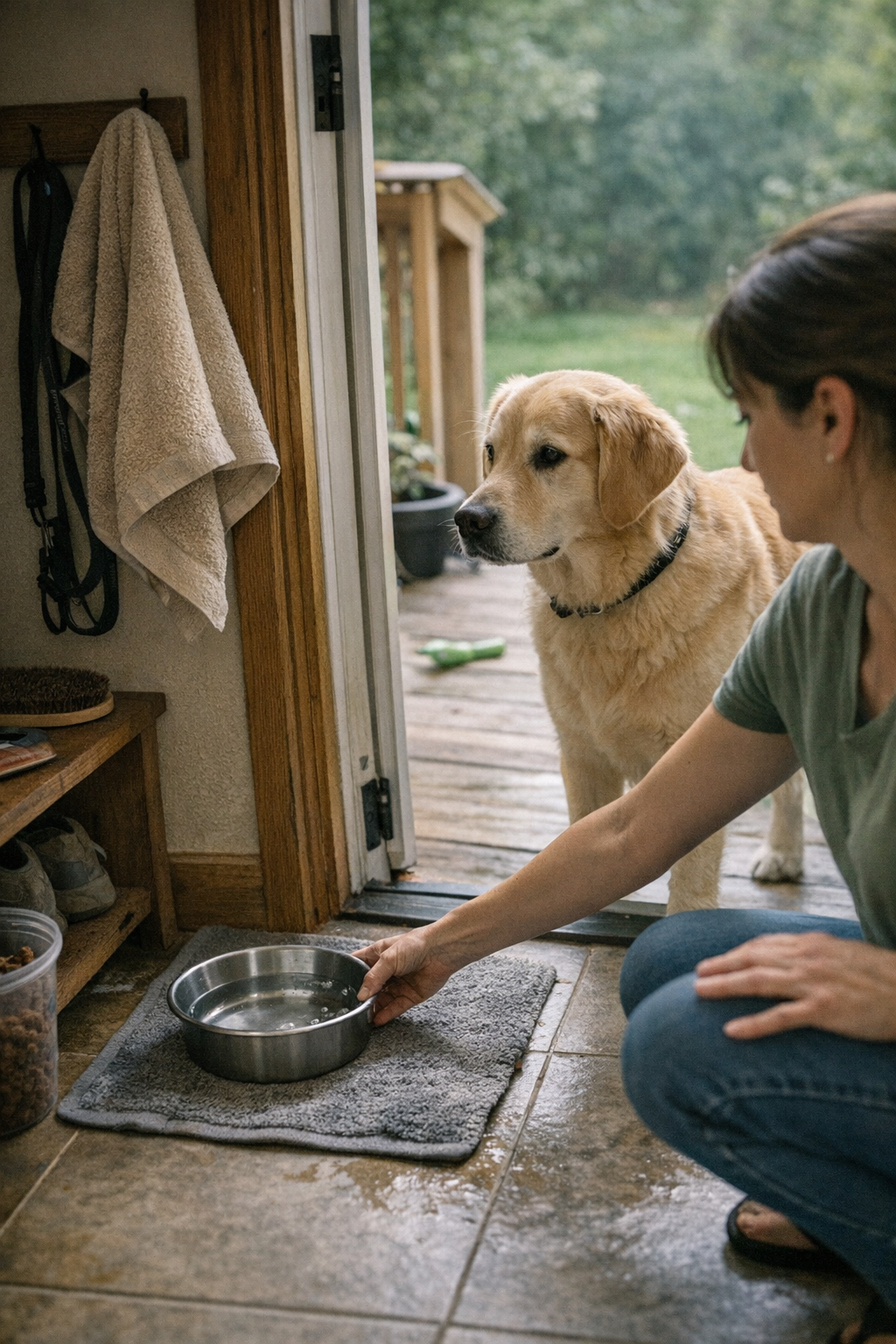
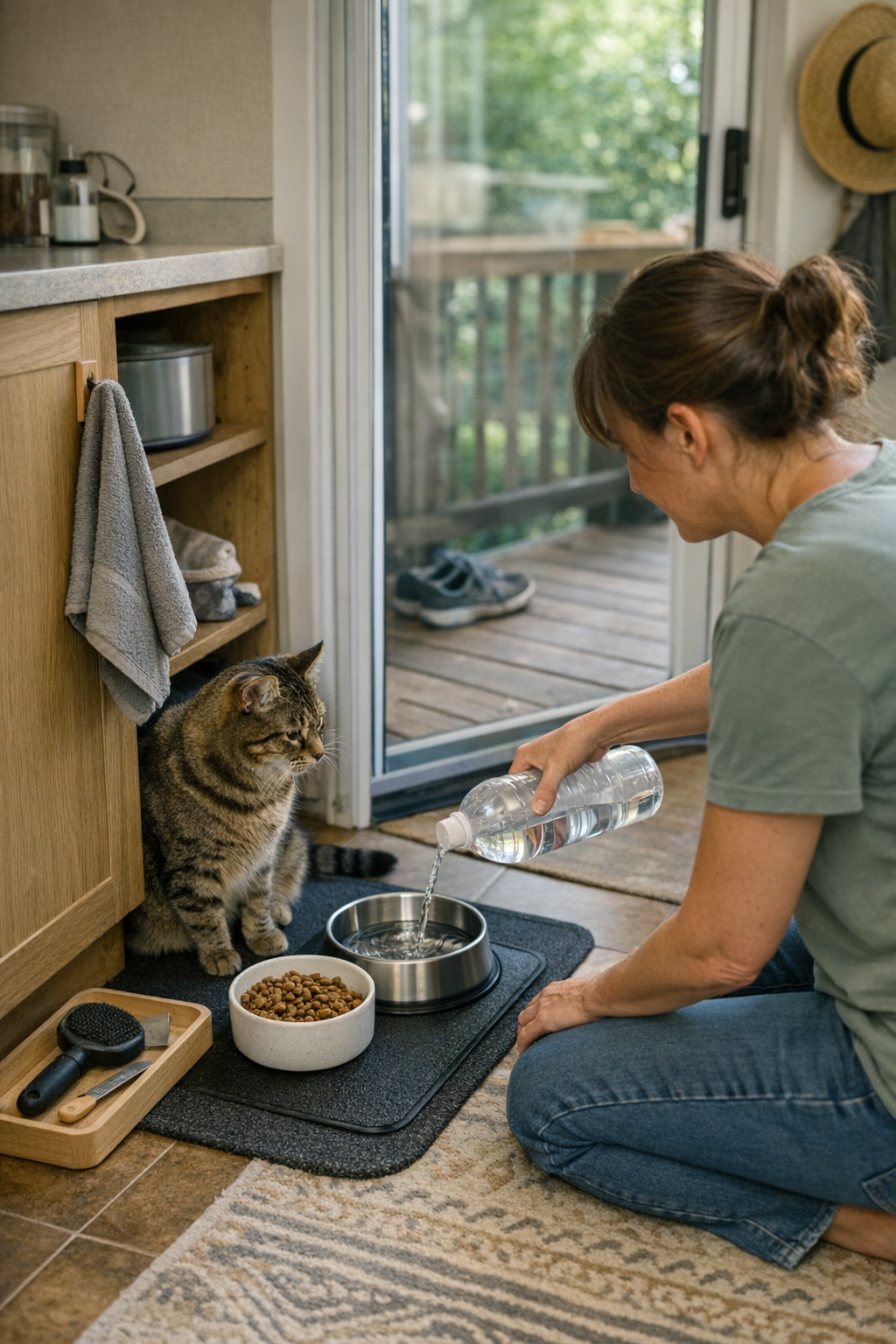
    A pet-care area can look calm and under control—bowl wiped down, towel hanging straight, everything in place—right up until you actually start your day. It only takes one missing cloth or a single bowl nudged behind the table to remind you that “looks tidy” isn’t the same as “works better.” When routines collide—prepping coffee, guests arriving, your cat circling, or your dog waiting to eat—small setup gaps turn into real friction. Now you’re crouched under a chair to reach the bowl, wiping up spills with paper towels because the real towel is in the laundry, or bending down a second time because crumbs reappear around the water stand. Calm is only as real as your next reset—something the CalmPetSupply world understands in every repeated use.

    Why Gaps in Routine Get Bigger With Real Life

    Alone, you might shrug off hunting for the brush or wiping a mat later. But routines don’t stay solo—life piles on pressure points. A refill becomes a hassle if the water bottle’s jammed behind pantry snacks; the brush goes missing during a haircut of shed fur. Each out-of-place tool chips away at the idea of “quick” resets. The more your mind splits between tasks (talking to a guest, wrangling a kid, answering the door), the less forgiving your setup gets. What looked streamlined five minutes ago now means bumping into clutter, retracing steps, or letting a tiny mess linger because what you need isn’t actually ready.

    Real Use Scenarios: Interruptions That Don’t Show in Tidy Photos

    Scene 1: Reaching for the Bowl—And Finding It Blocked
    Early evening. You squat to tidy spilled kibble, but the feeding bowl has wedged itself behind a chair or under a stray envelope from yesterday’s mail. Instead of a five-second fix, you’re scooting furniture, muttering, and crumbs remain just long enough to become tomorrow’s problem.

    Scene 2: Cleanup Supplies There, But Not There
    The towel for wipe-downs was supposed to hang nearby. Now it’s buried with drying dishes across the kitchen. Spills wait, mats get sticky, and an immediate cleanup gets delayed for hours—meaning the next feeding starts with the last mess barely managed.

    Scene 3: The Brush Blockade
    Fur collects in the corner by noon. The brush? In a storage bin with leashes, behind dog shampoo and bulk food. Suddenly, grooming—which could be a thirty-second swipe—means unpacking, reshuffling, and stalling every time you see tufts collecting on the cushions.

    Scene 4: The Hidden Reset Weak Point
    Morning layouts look photo-ready—bowls aligned, tools stacked, counters clear—but resets come slower as the day wears on. Each grooming touch-up or water refill means fishing around in a drawer or cabinet, stepping into another room, or getting stalled mid-routine because one piece is always just out of reach.

    The Cost of Repeated Small Interruptions

    Most daily pet care doesn’t fail in the obvious mess; it breaks down in the constant minor slowdowns. Needing to move a stack of items for each refill. Leaving fur behind because the brush got reshuffled. Wasting time doubling back for a towel. Over a week, these half-done resets pile up, shrinking your patience and making what should be simple—like a water top-off or grooming swipe—a stubborn source of annoyance that quietly builds stress into your routine.

    What Actually Improves Flow (and Reduces Hidden Mess)

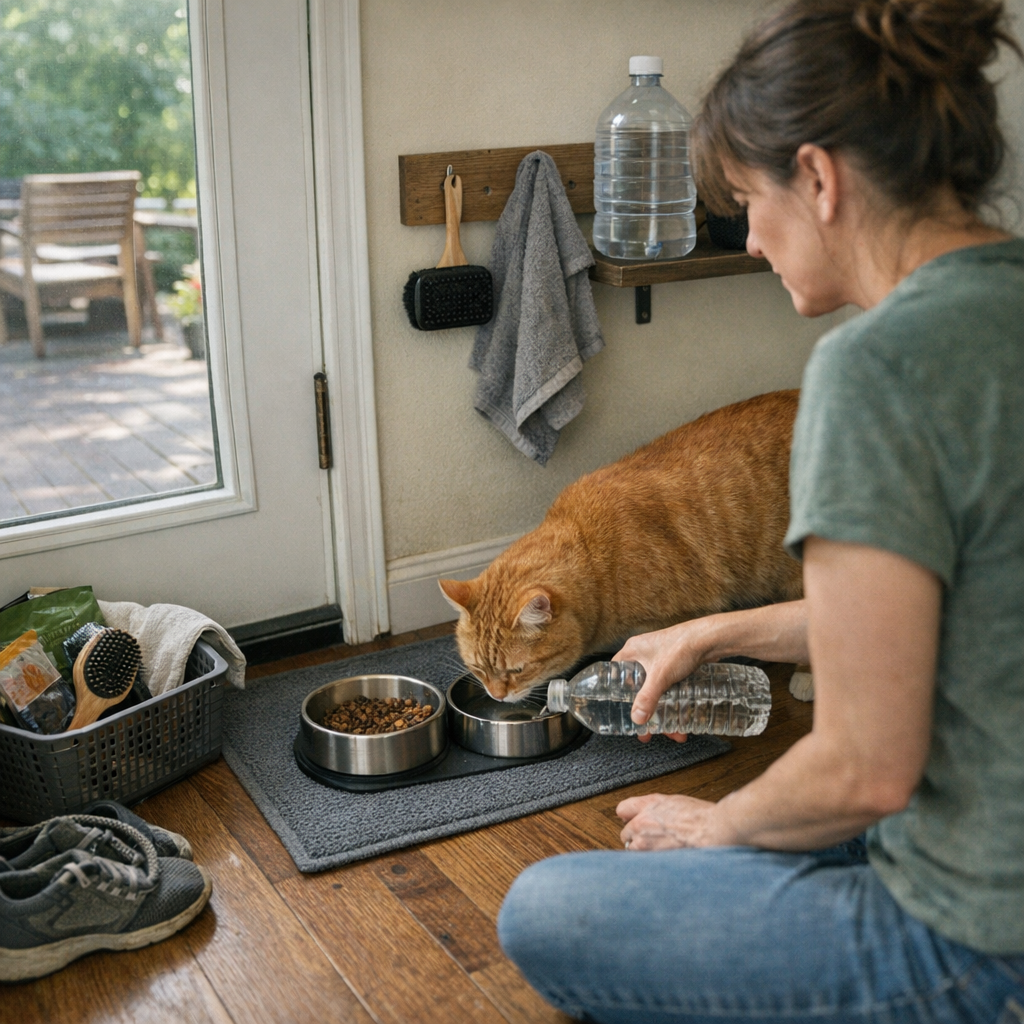
    Small, invisible tweaks—not big overhauls—make routines work. When every tool has a checkpoint at the exact point of use, repeat work evaporates. A dedicated hook at bowl level keeps the cleanup towel within arm’s reach, so every spill is handled on the spot. A refill bottle stored in an open bin near the bowls means water never runs low or waits for a big reset. Brushes tray-staged beside the feeding area sweep up fur before it travels, not after it clings everywhere. That one move—placing an item where your hand goes instinctively—removes “later” from the equation and keeps routines immediate.

    The best setups don’t rely on memory. Keep a grab-and-go cloth by the door if that’s where paw prints appear. Store the brush and scoop in plain sight rather than buried in a bin. Make it so each action—feeding, refilling, wiping, or quick grooming—becomes a single movement, not a scavenger hunt. The gains aren’t just tidier floors, but the absence of nagging backtracking or the build-up of mess that saps energy out of the day.

    Beyond Tidy: Focus on Usability, Not Just Looks

    There’s a difference between a pet zone that snaps into place for photos and one that actually reduces friction hour after hour. The setup that just “looks calm” often hides all the ways you’ll get slowed down—blocked access, missing basics, delayed cleanups. The setup that’s built for actual use means resets are quick, tools show up exactly where you need them, and small jobs don’t spiral into bigger chores. It’s why daily comfort isn’t about perfect order—it’s about setups that don’t let repeated care become a daily catch-up game.

    When repeated actions—refilling, wiping, grooming—become automatic and frictionless, the day moves smoother and your space stays truly ready, not just seemingly so. Out-of-reach tools guarantee invisible messes: lost fur, stray kibble, or sticky mats that come back to haunt you by evening. A neat surface feels calm for a minute; an actually usable setup lets you stay ahead of daily pet care, even on busy, unpredictable days.

    For practical ideas and tools designed to fit into real homes, visit CalmPetSupply.

  • How Structured Treat Times Restore Calm in Your Dog’s Daily Routine

    After a walk, you set down the leash and expect quiet. But before you’re even settled with a book or a cup in hand, your dog is orbiting: pacing between you and the treat spot by the door, standing exactly where you’ll trip over them, keeping that intent stare fixed on your hands. This isn’t just anticipation—it’s a setup problem you feel every time you try to reset. What’s designed to be a smooth routine starts to feel like a cycle of silent interruptions. Even when the house looks tidy, your downtime is getting chipped away by a dog whose rest never quite clicks in.

    When Treats Drift into Downtime

    Treats usually start as a transition reward: a signal that the walk or the cleanup is done, that the routine has a defined end. But fast-forward a few weeks and your dog’s expectation shifts: now, the line between “done” and “still waiting” blurs. You sit down to read or finish chores, and instead of truly relaxing, you’re fielding silent requests—circling by the treat bin, lurking near wherever you rest, or nudging a knee with a practiced paw.

    The problem isn’t chaos; it’s discomfort that goes mostly unsaid. Small signals—hovering near the treat jar, shifting between resting spots, steady eye contact—end up breaking what should be real pause. Instead of downtime, you get a loop: a dog scanning for the sound of a drawer, you glancing up just in case. Calm is possible, but the routine doesn’t allow it to land.

    How Treat Timing Shapes Your Routine

    Treat-giving habits sneak into daily flow. Maybe it started when you offered a biscuit during a quiet minute; now, every pause—yours or your dog’s—feels like an excuse to give another snack. Where your dog once flopped in the corner after a walk, now they’re on high alert, watching for any hint you might deliver another treat. You stretch. They stare. You stand. They follow.

    The friction multiplies: each time you break for what should be true rest, you get a subtle interruption—a nose nudge, a shift toward the kitchen, another long look. The outcome isn’t dramatic but the cost stacks up. The moment you try to unwind, you’re back negotiating instead of resting.

    The Subtle Signals That Replace Real Rest

    This isn’t misbehavior; it’s a signal of a routine losing shape. Instead of treats wrapping up an active moment, treats now leak into every pause. Quiet time gets recast as waiting time, and the signals grow: restless circling, gentle nudges, that persistent stare. Downtime dissolves into fragments, each broken by the hope of another treat, and neither of you fully resets.

    What a Treat Routine Looks Like Up Close

    A typical afternoon shows all the cracks:

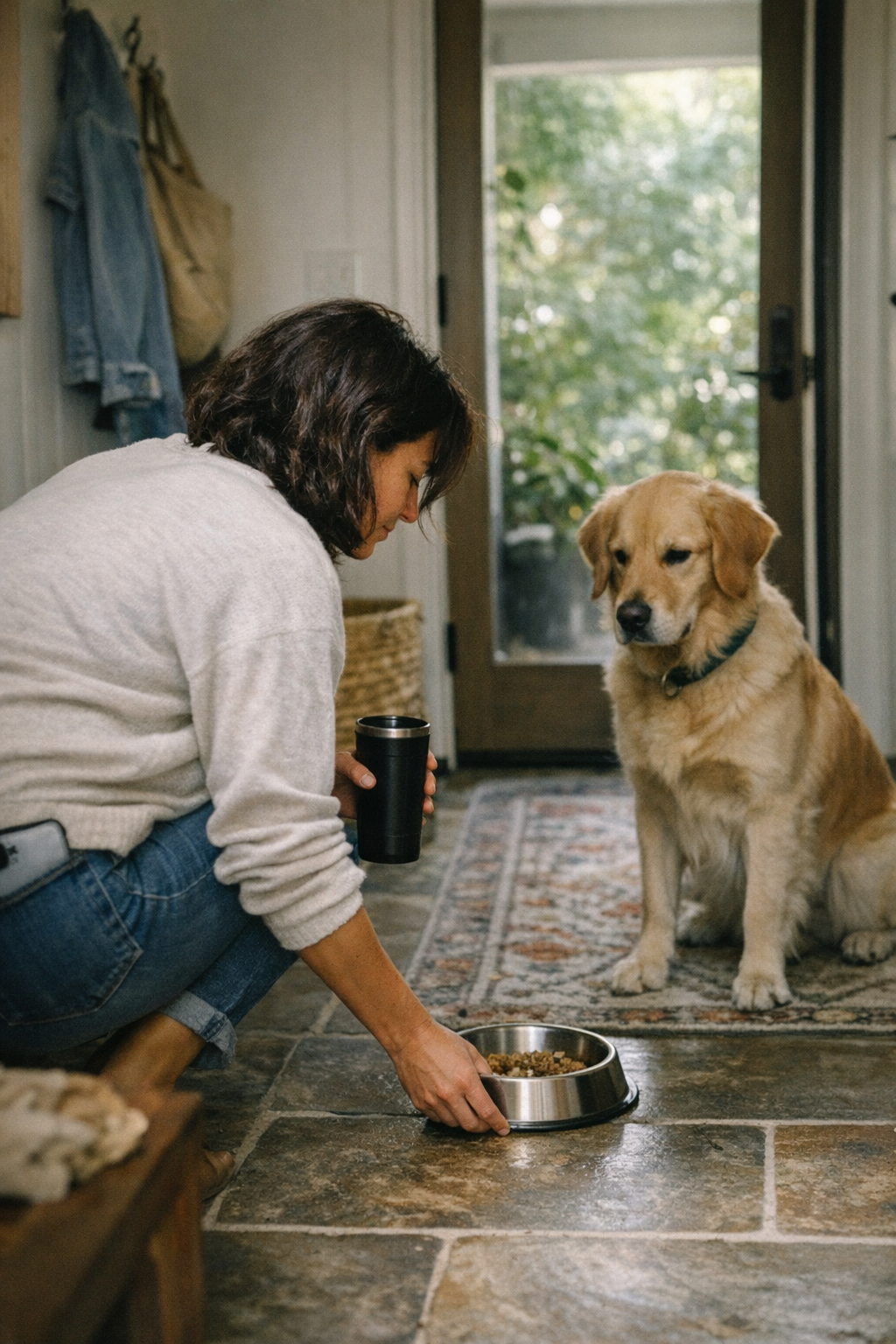
    • Back from a walk, you towel paws by the door. Your dog expects—and gets—a treat from the bin by the mat. The transition is crisp, the area functional.
    • Later, you tidy up or work. Your dog shadows you: drifting to the treat station, watching every movement, pressing just close enough to be in the way. The ask is silent: a shift, an extra stare, a subtle hover whenever you look up.
    • Night falls. You’re reading or ready to wind down. The dog appears—supposedly settled—but soon they’re up again, prowling for the next unearned snack, just in case the routine resets have blurred again.

    These aren’t explosive disruptions—just enough interruption, repeated, to break the rhythm. Pauses shrink into short windows before anticipation takes over and the dog resumes their “just-in-case” circuit.

    When Treats Fill the Gaps: The Erosion of Calm

    This becomes a loop faster than you expect. Respond once or twice—offering treats just because—and your downtime is replaced by a routine of near-constant signaling. It’s rarely a mess, never outright chaos, but it’s always an undercurrent: dog circling, you pausing to “just check” the treat bin, rest never quite achievable. The room might look uncluttered, but the routine is quietly out of sync. Mini-interruptions fill your afternoon, and your dog’s supposed rest time? Gone, replaced with patient watchfulness.

    One Weak Point, Many Repeated Interruptions

    Here’s the true friction point: when “looking organized” and “actually working” part ways. Treats stashed in every drawer or bin create the illusion of control but offer endless opportunities for repeat signaling and interruption. If treats are always visible or within reach, downtime never really starts; you’re resetting, but the pattern pulls you back to the same friction. The setup isn’t failing explosively—just enough that ordinary moments are harder than they should be.

    Why Structure Matters: Seeing the Change

    Treats need boundaries, just like routines do. Link them strictly to transitions after activity—not to downtime, not to silent looks. Try stashing treats only by the main door, away from living zones. Instantly, every reward marks the end of something real—walks, play, grooming—never a vague pause. Move them off the end table and out of sight during chill time, and the orbit dies down fast: less pacing, fewer stares, and rest becomes possible again—not just for your dog, but for you. The change is nearly invisible, but the effect is unmistakable: routine clears, silent cues drain away, and the friction’s off the hook.

    • One treat spot, clearly linked to activity, not rest.
    • No more treats slipped mid-read or during kitchen passes—only after you’re truly done with a task.
    • Your core downtime—reading, after dinner, focus work—reclaims its full length and quality.

    The Real Use Challenge: Setting Boundaries in Busy Spaces

    No setup is perfect, and the demands pile up. You want treats handy for after walks—but you also need to defend rest spaces from becoming free-for-all treat stations. In most homes, the dog zone and people zone blur: bins creep toward the sofa, and before long, you’re dodging toys and stray treat bags on your way out. What felt efficient on day one quickly feels like an obstacle course by week two: wipes buried under leashes, treats too close to the living room, and “tidy” setups that still trip you mid-flow. Open access—treats everywhere, routines nowhere—ensures the same weak points return until you set hard limits and stick to them.

    Routine Example: How One Adjustment Changes Daily Flow

    Before: Treats scattered around—near the kitchen, by the couch, at the door. Any glance or sigh from you gets answered with a snack. Dog learns to ask in every lull. Downtime is sliced up, and cleanup feels constantly behind. The room is neat, but the routine keeps grinding at you.

    After: Treats only by the main entry. Given only after walks, post-groom, or at real transition points. Rest spaces—couch, workspace, bedroom—are clear. The dog’s idle requests taper off, the orbit shrinks, and interruptions fade. You don’t notice the absence of mess; you notice real stretches of calm. A single shift—where and when you give treats—is all it takes.

    What Repeated Experience Reveals

    The difference shows up in cycles. At first, it seems harmless—even rewarding—to hand out treats during any quiet moment. But with time, even the most organized setups spiral into silent negotiation. The background tension grows unignorable. With just one structured tweak—tying treats to real transitions—the soft chaos stops: your dog actually settles, you stop scanning for signals, and downtime can finally exist. The home looks nearly the same, but living in it feels entirely different: less interruption, less negotiation, and friction quietly gone from the daily flow.

    Smoother Routines, Better Days

    Treats aren’t best when rare—they’re best when reliable and clear. Marking transitions with a treat trains everyone to rest the rest of the time. Your dog learns this pattern overnight: once treats stop spilling into the quiet, the asking stops. Margins return to your own routine too. An after-walk treat, then real rest—no more wandering to every bin, no more gentle nudge for attention when you’re half-way to relaxing. The best setup is simple: keep reward moments and rest zones separate, with just one or two treat access points. The result isn’t just less mess—it’s less friction every single day.

    Key Reminders for Real Dog-Life Treat Setups

    • If your dog starts tailing you as soon as you pause, treats are drifting into downtime—you’ll feel it in every room.
    • Connect treats to moments with a finish—walks, grooming, post-cleanup—not just quiet periods or “why not?” breaks.
    • Store treats in one spot, out of sight and reach during rest, easy to grab only after activity resets.
    • Check your setup when interruptions creep back: a system that looks organized but feels awkward still carries the same
  • Creating Personal Corners for Cats Cuts Daily Maintenance Hassles

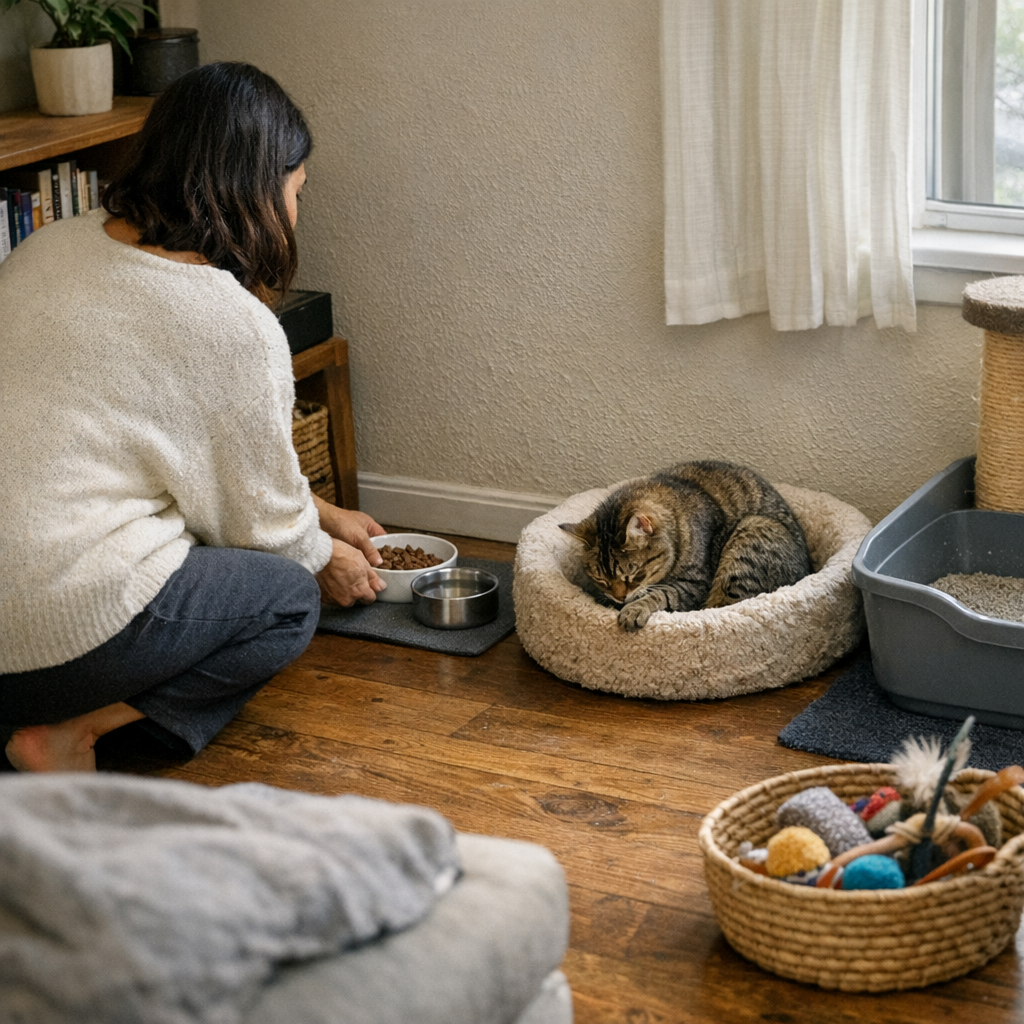
    If you’ve ever set up a shared feeding or litter area for two or more indoor cats, you know the mess doesn’t come from chaos—it’s the daily pattern of having to fix what keeps sliding out of place. Twin bowls lined up neatly on a single mat? By noon, one cat is crowding the other’s dish and dry food trails off the mat. Water seeps to the mat’s edge, then under, merging with yesterday’s spill. Toys you corralled overnight have already made their silent reappearance in the walkway. No matter how often you wipe the floor or nudge bowls back, the same friction zones keep returning—right where you most need predictable order. The StillWhisker world starts here: not with perfect organization, but by surfacing the reality that setups which seem space-saving often turn into repeat work, undermining calm with endless small fixes.

    The Hidden Cost of Overlapping Setups

    In apartments or smaller homes, combining cat gear looks clever until daily life exposes new annoyances. One “double” feeding mat doesn’t stop one cat from inching another out—now you’re watching a constant nudge for position and sweep for crumbs. Water bowls too close together mean splashes run together, and damp spots stay unnoticed until you step through them. Side-by-side litter trays, pitched as a space saver, guarantee both cats crowd the same tray—their scatter crosses the intended boundary, and you catch yourself chasing litter into the living area just as you’re trying to leave for work. With every “shared” arrangement, you’re not just repeating effort—you’re always forced to react at the moments you least have patience or time.

    Why “Looks Organized” Isn’t Always “Stays Manageable”

    You can line up bowls, tuck in a toy bin, and smooth a mat to get a guest-ready cat corner—but that surface order evaporates fast under real routines. By midweek, the wipe-down spot returns around the mat, the toys creep out of containment, and you’re picking stray litter off the same patch of rug as yesterday. The neat line between “looks fine” and “works in practice” only becomes visible in repeated, boring resets that erode both the plan and your nerves. The tidier it starts, the more frustrating it is when invisible maintenance multiplies underneath.

    Crowded Corners: Where Repeated Friction Builds

    Cat routines ignore your storage logic. Morning rush? Both bowls get claimed at once—expect scattered food, shared splashes, and bowls pushed out toward the hallway. Relocated toys roll back into human paths even if picked up the night before. Litter grains escape, caught in corners where two trays blend into one big cleanup zone. Trying to conserve room by overlapping items only moves the problem: now your own movements (sidestepping a rolled toy at the fridge, straightening a mat slipping off a baseboard) get just as interrupted as the cats’. Reshuffling cat spaces adds to your own detours—and none of them stay solved for long.

    The Day-by-Day Reality of Shared Zones

    The strain shows up during normal routines. Reaching in for a quick bowl refill? One hand bumps the extra dish, or you have to lean awkwardly over the “wall side” while a cat crowds you. Mats seem absorbent until water seeps below, binding up stray kibble for next clean up. Pulling one litter tray for cleaning shifts the other, sticks both mats together, or leaves tools wedged where your hand can’t reach cleanly. Each fix feels small, yet the time lost compounds—and the visible order does little to prevent the hidden scramble.

    Even rest zones betray the promise of simplicity. One blanket-topped nook feels minimal until both cats wedge in—fur clumps quickly, corners lift, and what started as a “contained” cushion transforms into another daily straightening job. Morning neatness is undone by evening, and the cycle reboots without relief.

    Assigning True Personal Corners: A Small Change with Big Impact

    The difference comes from separation, not just spacing—distinct feeding, litter, and rest zones for each cat, mapped to actual room flow rather than a single shared corner. Over a few days, you’ll notice: refills become quick tasks, not a cluster of interventions. Instead of a single battle for food at each meal, there’s a staggered routine—fewer head-bumps, fewer spills to mop in a hurry, and no synchronized rush right before you want a moment of calm.

    Mapping Out the Space to Cut Repeated Resets

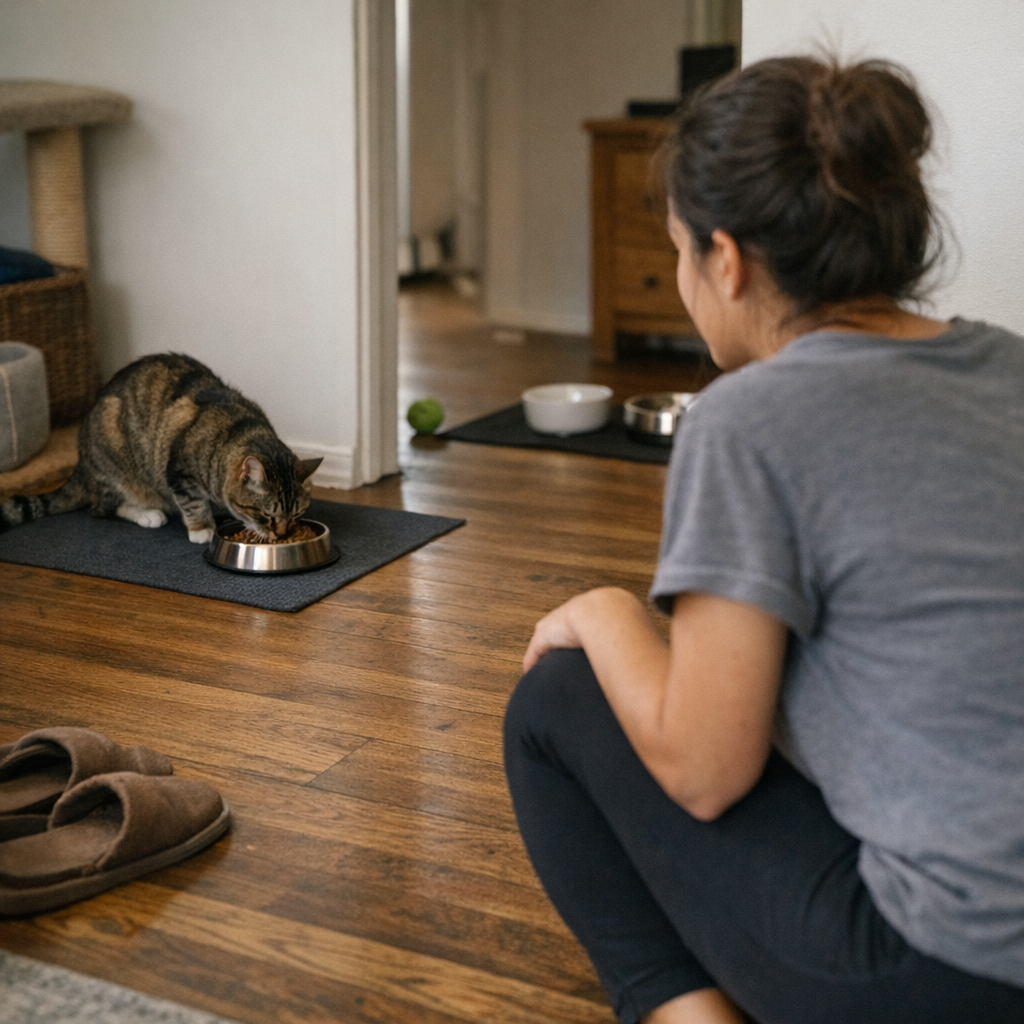
    Actual shifts are blunt: move one feeding mat to a quiet window, tuck the other by a bookshelf, and place litter trays at opposite ends of the room, not pressed together. Each with its own small mat. At first, nothing seems to change—until the routine repeats. One cat claims her window-side bowl, the other takes the bookcase; meal traffic divides naturally. The daily “mess zone” mat stays almost where it started, needing less than half the sweeping. The point isn’t instant perfection, but noticing that the interruptions stop stacking—less urgent cleanup, more invisible prevention, and room flow that feels lighter by the end of the week.

    The Difference: Fewer Traffic Jams, Less Work

    What actually shifts: the count of interruptions you make in a week. In a split setup, your paper towel stays put, the scoop doesn’t need daily relocation, and you stop dodging a cat at the exact moment you’re trying to pour kibble. Litter resets stop crossing into each other’s patch—no more fused mats, no more double-track dust to sweep up later. Toys, released from one launch point, end up dispersed rather than concentrated underfoot. What fades is the background noise of tiny fixes—a strong sign the structure is finally serving you, and not just appearing more organized for show.

    The Subtle Frictions You’ll Actually Notice Over Time

    Problems stack slowly, but they become visible as repeated strain. With overlapped setups, even basic chores lag: refilling a dish means nudging another aside; quick litter dumpers become clumsy, with grains hopping mats and crossing boundaries. If comfort setups share the same favored spot, you’ll find yourself untangling blankets twice as often—a single “best” rest zone is now a magnet for fur, mess, and minor annoyances. A plush mat that feels like an upgrade can, in a shared rush, become just one more slow-reset corner.

    Cleanup Supplies: Present, But Are They Handily Placed?

    Tools at hand don’t help if they’re all jammed together. One hook, one caddy for wipes and scoops in a single spot might save wall space—but it guarantees that, like the cats, you get stuck navigating your own gear traffic jam. Assign a cleanup bin or hook to each cat’s corner—those seconds reclaimed matter across dozens of daily micro-cleanups, erasing extra trips and reducing the impulse to put off a quick wipe or sweep. Setup and convenience rise together only when access isn’t blocked by the very organization meant to simplify things.

    Smooth Transitions: Making the Switch Without Upsetting Cats

    Cats notice change, but resistance fades faster if each new zone feels familiar. Re-anchor with a favorite mat or basket, hold scent by using towels that already smell right, and give a few days for adjustment—some trial returns to the old spot are normal before the new corner “sticks.” So long as placements don’t keep shifting, both cats and people settle into the new structure, and the most visible change is a quiet drop in interruptions, not a showy shift in cat behavior.

    Less Overlap, More Calm: How the Room Actually Changes

    No setup is frictionless, but split zones do one crucial thing: they flatten the intensity of fixes and spread the work into gentler, more optional tweaks. Daily wipe-downs shrink. Toy clearing shrinks to a quick spot-sweep, not an apartment-wide chase. Litter frays out in small, manageable arcs—not a trail across the room. Even if the surface order is less than Instagram-tidy, the reduction in recurring interruption makes the room truly easier to inhabit, both for humans and cats. The StillWhisker approach doesn’t sell perfect calm—but it does anchor daily routine in structure that bends with how cats and people really collide, reset, and move through each day.

    Visit StillWhisker for practical cat-life arranging tools and setups designed for real shared homes.

  • How Small Interruptions from Your Dog Can Disrupt Daily Care Routines

    Why the Littlest Dog Pauses Slow Down Your Entire Pet Care Routine

    You’re ready to dump out a used water bowl, reset your pet’s food corner, or toss a towel back on its hook—but then your small dog stops dead at the door, waiting for your okay before crossing into the room. What seems like a few seconds of hesitation turns into an entire stalled routine: your one free hand juggles leashes and mail, the wet bowl is dropped wherever fits, and now the floor’s streaked and the next cleanup tool is nowhere nearby. It’s these tiny, repeated pauses—with one item out of place or one tool just out of reach—that quietly unravel an ordinary pet care setup. If you’ve ever watched a tidy feeding corner slide into daily disarray, you’ve seen how a simple pause can trigger a chain of missteps CalmPetSupply was built to handle.

    The Compounding Cost of Small Interruptions

    Picture coming back from a walk, armful of leashes and a dripping bowl balanced in one hand. Your dog halts on the threshold, waiting for permission—a routine pause you already anticipate. That’s all it takes: you set the bowl down just inside the door, rarely on a mat that’s in place, often beside a bag of treats or a scattered towel left from last time. Now, water gathers where it shouldn’t, towels slip off hooks, and even a quick reset becomes a tangle. The plan for a two-minute transition turns into five: the bowl sits, half-cleaned, licking up counter space. With every repeated pause, these “small” interruptions add up, and missed wipes or delayed tool returns start piling into visible clutter.

    These moments don’t stand alone. Over a week, the shortcuts compound: a scoop buried under mail, towels stranded on dining chairs, bowls that never quite get clean and ready before the next feeding rush. Areas that looked organized fall back into old patterns, especially when the right supply isn’t right there where you need it most. Even with everything appearing put away, the same awkward step returns—just when you’re least prepared.

    When “Looks Tidy” Isn’t the Same as “Works Well”

    A feeding setup can seem neat, at least at a glance, especially after a quick surface wipe or a bowl pushed out of the way. But real friction shows when the daily rhythm gets interrupted—a towel isn’t at the entry, a scoop is in the sink, the wipes are stashed with shoes instead of near spills. Each time your dog pauses at the door, the break in flow becomes another chance for clutter to build up or for quick cleanup to get skipped, unnoticed until the “tidy” illusion wears off.

    The more you stack tasks—refilling water, greeting a guest, cleaning after a walk—the more obvious it is: the neat look covers up backup and missed resets. Working around unfinished steps is draining, and “organized” quickly slips into a repeat cycle of searching, reshuffling, and fixing after the fact. A system that only looks tidy creates a back-and-forth drag that a real-life setup can’t hide for long.

    Real-life Scenes: Where the Routine Stalls

    • You want to refill the water bowl, but the drying towel’s somewhere else. A napkin does the trick—barely. Streaks and drips slow you down and leave a sticky floor for later.
    • The leash finally comes off after the walk, but brushes and wipes are buried under a pile of outgoing mail. Five extra seconds here, a mental note to clean up later—delay layers on delay.
    • Litter check before bed turns into a hunt when the scoop is buried behind a load of laundry rather than beside the box. Bedtime stretched yet again because one item migrated out of reach.
    • Feeding is thrown off because the main bowl is still at the sink, half-cleaned, leaving the backup in use while the mess stacks up for tomorrow’s you.
    • On a late check, the hallway’s cluttered with abandoned toys and towels, slowing even your last sweep before sleep. The day never seems fully reset.

    One Weak Link Drags Down the System

    These breakdowns aren’t about training—they reveal how easy it is to miss a step in a setup that wasn’t made for real-world repeat use. A towel never on its hook, wipes always in the wrong corner, the brush behind the door—each missing piece becomes a recurring tripwire. No matter how carefully you organize, the one item that goes missing or gets buried means you’re repeating work and letting disorder slip back in, especially as the routine gets busier.

    How Staging Essentials at The Pause Point Changes Everything

    Everything shifts when essentials stay visible and reachable at those proven pause points. Instead of putting towels in a closet or scoops with the bulk supplies, hang them right by the main entry, or mount wipes by the feeding area—exactly where hesitation or chaos most often hits. You sidestep the need to search, grab, or “make do” every single reset. Brush by the door, towel actually on its hook, wipes not only in a drawer—these placements cut extra steps before they even start.

    The payback is immediate: cleanup and resets that happen in real time, not as a backlog. Water bowls get refilled and dried on the spot. Gear doesn’t disappear under mail. Litter change is one pass, not three. Every small interruption has a direct fix—the right tool at the right place—so pausing becomes a built-in moment to reset, instead of a missed opportunity that echoes through the week.

    Conclusion: The Long-Term Effect of Small Setup Changes

    Dogs pause and check in at the threshold—that’s how they show trust, not trouble. But most routines break down not from bad habits, but from setups that demand too much backtracking to run smoothly. When the basics are staged at the true pinch points, even frequent interruptions stop stacking into bigger weekly messes. It’s about closing the gap between what seems organized and what makes ordinary care easier to keep up—one towel, one scoop, one shelf at a time.

    The difference is durable: a setup that still looks calm a few days later, not just five minutes after cleaning. When you stage pet essentials where real-life friction happens, your routine finally stays manageable, even when the pauses keep coming.

    For more ideas on practical pet care routines and solutions, visit CalmPetSupply.

  • How Consistent Portions Reduce Food Watching and Calm Your Dog’s Routine

    Every dog owner has felt it: you finish dishing out the food, hoping for a quick transition to the next thing; instead, your dog plants themselves at the bowl, watching your every movement, waiting. It’s not just hopeful eyes—it’s a slow-motion traffic jam at the kitchen doorway. Grab the leash for an after-meal walk? There’s a body blocking your reach. Wipe up under the bowl? Your dog repositions, convinced a second scoop might slip their way. After a dozen neat feedings, the same snag keeps creeping back: the space around the bowl looks right, but the actual routine never resets as smoothly as it should. This is where DogPile’s focus on everyday routine makes itself obvious: the difference between a tidy setup and an actually workable one shows up fastest at mealtime.

    That Persistent Food Watch: More than Curiosity

    The daily drama isn’t hunger—it’s friction built from repetition. Every meal turns into a standoff: your dog refuses to budge, you debate scooping just a little more, and normal flow stalls. The “right” amount never feels final. Even with bowls cleaned and mats straightened, the routine still fractures at the same pressure points:

    • Your dog: hovering, eyes darting, always believing the ritual isn’t finished
    • You: hesitating, repeating directions, or picking up the bowl just to prove you’re done

    This isn’t about how much you love your dog. It’s how reliably the setup closes the loop—or doesn’t. Each small shift in portion or timing teaches your dog that the rules might change any second, so they wait for a signal that rarely arrives cleanly.

    Routine Gaps: The Real Source of Mealtime Tension

    Picture a weekday scramble: you’re running late, eyeballing portions, maybe adding or subtracting food to match yesterday’s guess. Your dog eats, then re-stations—nose inches from your ankle as you sidestep to fill their water or find your keys. The kitchen, which seemed organized yesterday, now doubles as an obstacle course. A slip in routine here—one careless scoop, one random treat thrown in—drags the transition out. You start wishing the “clean up, walk, move on” sequence could actually happen smoothly, without detouring around one stubborn food-watching dog.

    The bigger pattern exposes itself over weeks. Chasing consistency one day, improvising the next, you end up with a routine that always feels slightly off, leaving both you and your dog in a waiting game that interrupts the logic of the rest of the day. The invisible cost isn’t even mess—it’s the repeated inefficiency that blurs the line between mealtime and everything after.

    It Looks Tidy—But Does It Work?

    Anyone can stage a feeding nook that looks organized—a fresh mat, storage bin, maybe even a hook for the scoop. But that’s not what stops the routine from breaking down. If you reach for the scoop and debate how much, if the bowl drifts closer to the action, or if the dog keeps circling between kitchen tasks—those little cracks in routine spill over into everything else. Suddenly the “organized” setup creates more movement to manage, not less. Instead of clearing out, you end up negotiating foot space, nudging the dog back again and again. The area looks finished but doesn’t actually support the repeated flow you need.

    Uncertainty, not mess, is what lingers. Even small gaps—switching to a different scoop, pouring by sight, forgetting to feed at the usual time—teach the dog that they should keep eyes (and nose) on alert. The friction is subtle but persistent: clean kitchen, sticky movement, more double-checking by both you and your dog.

    Recognizable Signs Your Routine Is Stuck

    The symptoms don’t take long to pile up:

    • More circling or blocking near the empty bowl, even after the meal ends
    • Quick glances toward kibble storage whenever you pass through the kitchen
    • Dog movements syncing with your own, always cropping up in the path to the next task
    • Pauses and resets—a feeding that should end keeps re-opening as the dog waits for round two or for a dropped scrap
    • Other routines domino—cleaning up takes longer, walks and errands are delayed, your prep for the next event gets derailed

    It’s easy to misread this for true hunger, leading to “just a splash more” or frequent mid-routine adjustments. But the loop stays open not because they need more, but because each meal never firmly signals the end, so the friction spills out into the rest of the schedule.

    Multi-Use Spaces Make the Problem Harder to Ignore

    In most homes, the feeding zone overlaps with every other kitchen task. As you chop vegetables, your dog stays parked near the bowl. As you wipe a counter, you have to ask your dog to move—again. Organized doesn’t equal friction-free. Tiny weaknesses in your setup—like an unreliable routine or a bowl that shifts from its spot—multiply each time you double back and find the way blocked, or have to work around a dog in “waiting for more” mode. After the third or fourth interruption, it’s clear: whatever looks tidy isn’t holding up when the kitchen becomes a shared, high-traffic zone.

    The cost is cumulative, not dramatic. Multiple small resets—moving the dog aside, returning after you thought they’d walked away, rearranging gear—make a supposedly organized feeding area the reason dinner takes longer or cleanup never fully sticks.

    Small Portion Swings, Big Behavioral Ripples

    Consistency isn’t about calories—it’s about how predictably your setup functions. Pour a bit extra one night, cut back the next, and the ritual starts to fray:

    • The scoop looks different from yesterday
    • The bag comes out again after the meal was “over”
    • Schedules stretch or compress, creating suspense instead of closure

    Every adjustment trains your dog that feeding is still up for negotiation—so they keep one eye on you and one paw near the bowl, waiting for another exception. The after-meal wait grows, routines collide, and what should be a calm end to feeding keeps re-opening and delaying every next step—from post-meal walks to evening wind-down.

    The Power of Absolute Routine (Without Overthinking It)

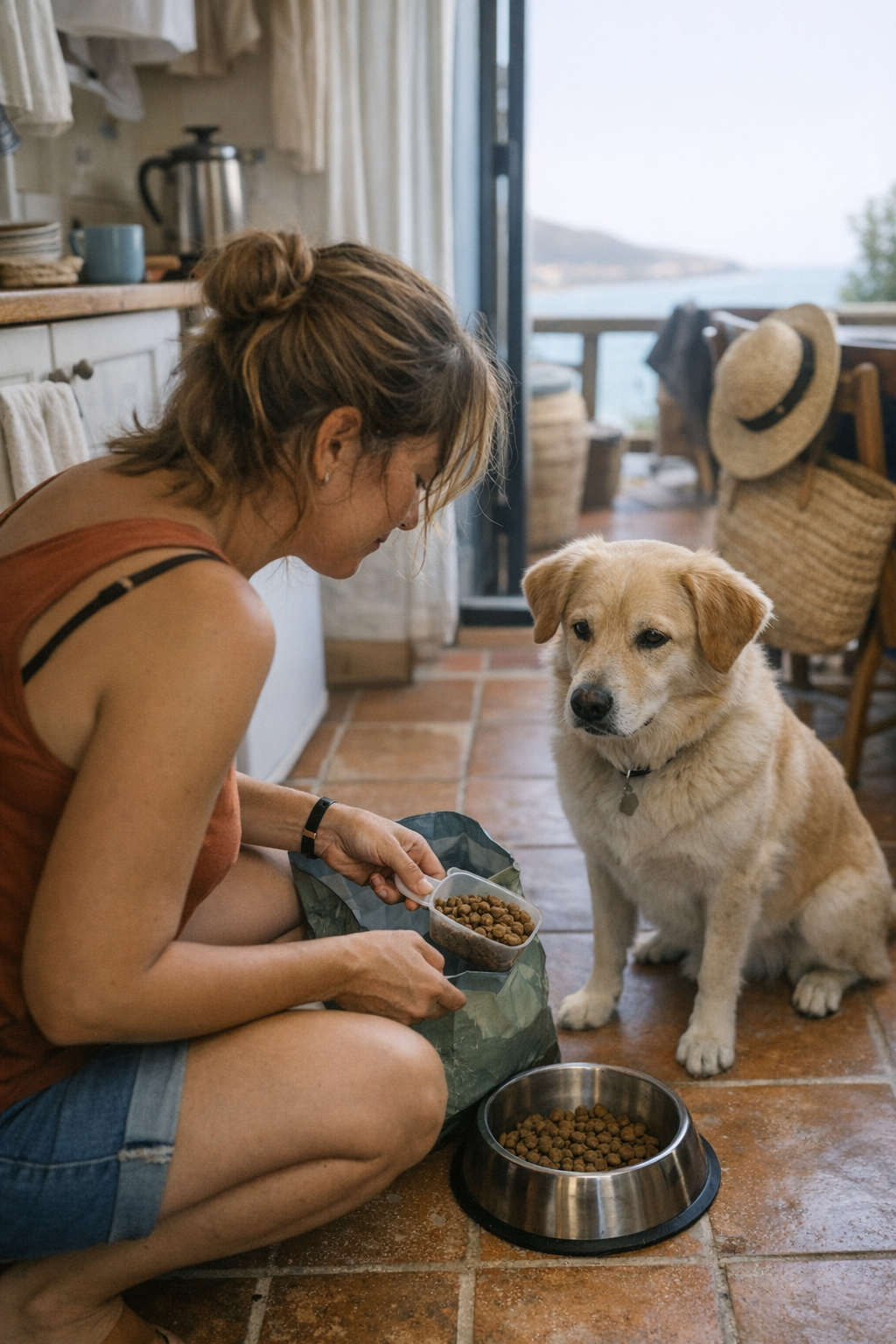
    The smallest, most reliable reset: one leveled scoop, placed in the bowl, at the same time in the same spot. No topping off, no rounding the scoop with guesses, no on-the-fly adjustments because of treats earlier in the day. Owners who break from “maybe a little more” see the standoff pattern fade within days: dogs eat, move on, and stop blocking the next task. The difference isn’t that the area looks better, but that you don’t have to manage friction in the space again and again. In homes where meal size or timing flex to mood, every departure prolongs the open loop—keeping hope (and your dog) glued to the bowl long after it should be routine.

    Every time you slip into adjusting for snacks or stretching the window, more time gets lost to repeated interruption. It’s not about controlling calories to the decimal—it’s about making sure the routine itself becomes invisible, not a recurring drama you have to referee every night.

    Beyond the Bowl: How Feeding Routine Shapes the Whole Day

    Once friction takes root at feeding, it infects every routine that follows. The morning walk starts late as you clear the kitchen yet again. Play sessions get detoured by food-checking detours. Cleanup is never as fast—there’s always fur, crumbs, or a damp patch in the same spot, since you can’t sweep or mop without dodging your dog’s hopeful presence. Even bedtime routines bog down as restlessness ripples into other corners of the house. What seemed like a small inefficiency at the bowl becomes a drag on the whole home rhythm.

    The “organized” look doesn’t translate into a routine that actually runs friction-free. If your setup breaks down every time it’s repeated, it isn’t just a cosmetic issue—it’s a sign that the flow of home life, not just the look, needs a reset.

    What Actually Works: Routine, Spot, Scoop, and Timing

    The real solution isn’t complicated gear or a new method—it’s removing points of friction and closing the loop with reliable tools:

    • One scoop: The same measure, leveled, at every meal. No guessing, no “today feels different.”
    • Same spot: Never improvise the bowl location, even if your space gets busy. Repeat placement, every time.
    • Set schedule: Keep meal times steady. A window is fine, but avoid surprise shifts that pull your dog back into “is this different?” mode.
    • Don’t balance for treats: Let snacks stand alone, so the primary meal stays fixed and predictable.

    These small details—not extra decor, not just surface tidiness—shut down

  • How One Elevated Cat Perch Transforms Multi-Cat Indoor Spaces

    The weak spot in a shared cat room isn’t obvious—until you trip over it twice in a day. At first, laying out food bowls, water, mats, and toys for two indoor cats looks handled. But fast-forward through a week of actual living—feeding, quick refills, hurried cleanup—and what started as order is now a crowded strip of cross-traffic. Bowls slide out into the walkway. Mats curl at the edges. Toys wedge behind a table leg. “Tidy” mutates into a persistent, low-level obstacle course. The difference between a cat room that looks ready and a room that actually works isn’t where you put things, but how the setup holds up against the grind of repeated resets, rushed cleanups, and—every single day—short tempers and slowdowns for both you and the cats.

    How Crowding on the Floor Builds Up—And Where It Shows First

    Everything claims its space on day one. Set up bowls, a litter mat, a few toys—fine. But with two cats, the friction builds quietly:

    • Bowls nudge further into crossing paths after each rushed refill.
    • Mats that don’t sit flush let litter escape further every “reset.”
    • Toys slide under furniture and disappear—out of reach right when cleanup is needed.
    • The rare sun patch kicks off silent turf wars: one cat sprawls, the other sticks to doorways, detouring around feeding and water just to get through.

    Tidy starts losing to utility. Any “set and forget” idea dissolves as the week spins forward. The crowding doesn’t announce itself—it just keeps eating up space and time until every step in the room is bumping into something—or someone.

    The Unseen Cost: Reset Fatigue and Rising Cat Tension

    Routine exposes flawed setups fast. After a few cycles of sidestepping puddles, scooping litter with one hand and toeing a curled mat straight, or fishing a lost toy out from behind the couch again, the reset strain piles up. Not just more picking up—longer detours, more time spent just trying to reclaim the original layout, more friction at every transition. The result isn’t just clutter; it’s slower routines, missed windows to clean, and cats growing unsettled from having their routes blocked or comfort corners taken over by a food bowl that won’t stay put.

    One cat starts to avoid favorite patches. The other keeps rerouting, never certain the path won’t cross another bowl or a scattered mat. Skipped or delayed resets build up: a little more mess, a bit less comfort, and a definite dose of tension, both feline and human.

    Flat Arrangements: Why “Set” Isn’t Always “Stable”

    At a glance, lined-up bowls and squared mats look organized enough. In a real shared cat space, though, first impressions haze over problems that repeat. The flaw isn’t aesthetic, it’s functional:

    • A water bowl jutting past a mat edge means someone trips—cat or human.
    • The single sunlit spot vanishes under feeding gear and sudden clutter.
    • Cats leap over, skirt around, or pause, unwilling to cut through a muddle of “neutral zone” objects.

    Give it three days: bowls wander off-line, mats wrinkle, toys sneak out of sight. Organization doesn’t survive rush hour—reaching for water means negotiating past mats and spilled litter. “Looks set” gives way to “works until next feeding, then falls apart.”

    Maintenance Creep: When Every Reset Gets Slower

    The ghost cost in any cat setup is upkeep. It’s not about tomorrow’s deep clean; it’s the endless string of fast corrections: ducking down for a toy you just knocked loose, nudging a drifting bowl back with one foot, or brushing a chunk of loose fur from a mat that’s become the day’s detritus collector. Over time, these resets demand more mental bandwidth—little tasks that gum up routines.

    A window shelf meant for lounging turns into limbo: half human storage, half a persistent cat holding pattern. The tighter the space, the more everyone crowds and reroutes. What should be “shared” space becomes a series of small territorial treaties—each reset less effective, each attempt to tidy up requiring more reshuffling than the last.

    Adding a Higher Perch: A Small Change With Real Payoff

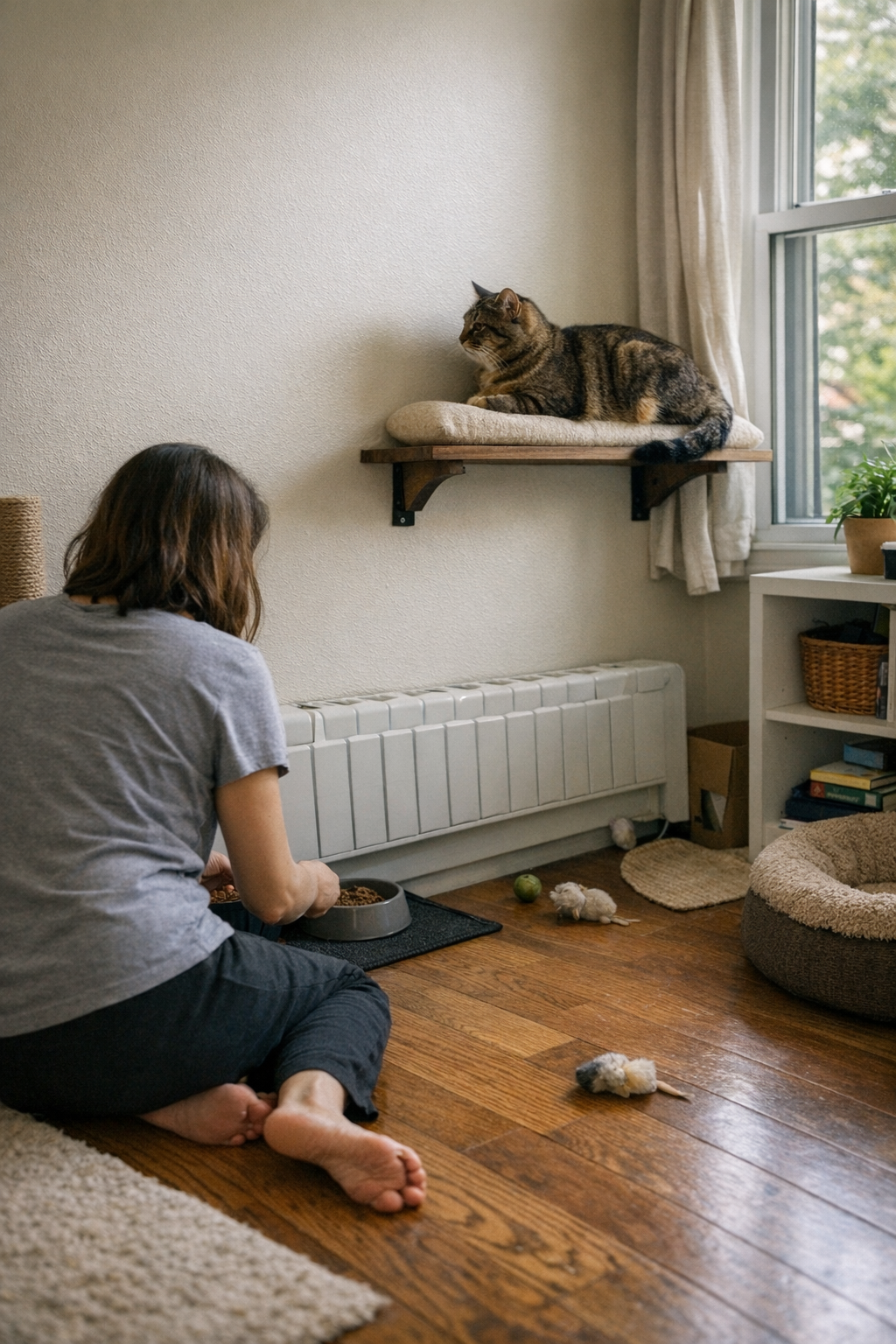
    One higher perch is a pressure valve for the entire setup—function, not flair. Screw a simple shelf above an unused radiator, and suddenly traffic shifts: bowls stay anchored, mats stop trapping as much fur, both cats claim their own territory instead of coiling around each other. The payoff isn’t just visual; it’s structural relief. Sweeping fur takes half the time. Resetting bowls and mats stops being a full-room negotiation. One cat vanishes upstairs for a nap. The other settles low, out of anyone’s path. Repeat-maintenance time drops off—less daily rearranging, fewer accidental bowl bumps, faster rebounds after each cycle. The space doesn’t just look different. It works better by not asking you and the cats to maneuver around the same obstacles every day.

    Why Perches Work: Vertical Space Offloads the Floor

    Cats are built to use vertical as well as horizontal space. When feeding setups, water bowls, litter mats, and toys all brawl for the same patch of floor, gridlock follows. Just one stable perch higher up:

    • Draws feline foot traffic off crammed walkways.
    • Lets cats observe, retreat, or rest from non-overlapping zones.
    • Contains bowl and toy spread—fewer “creeping clutter” problems with each reset.

    Small rooms see the largest difference—especially when two cats need real separation to relax, and baseline congestion keeps tripping routines. It won’t fix every bottleneck, but there’s less crowding, fewer mid-day resets, and the room feels easier to breathe in, hour by hour.

    Separating the Perch From Essentials: Guarding the Traffic Lines

    Perch placement is make-or-break for actual relief. Mounting it straight over feeding or litter only moves the jam upward. The smart move: put the perch away from all key zones—opposite, ideally, or diagonally from food, water, and main sleep mats. This splits vertical from ground traffic, allowing cats to move freely: one up, one down, neither negotiating for passage after every meal or reset.

    Your reward: resets shrink to fewer steps, the accidental bump or fur pile happens less, and cleaning or refilling bowls no longer means evicting a sleeping cat or dodging tangled gear.

    Is One Perch Enough?

    For two cats and a moderate sprawl of daily gear, a single high, steady perch—attached to a wall or above a radiator—takes most of the friction out of the daily shuffle. Once a third cat, or more floor clutter, enters the mix, a second perch often becomes the needed circuit breaker, spreading out pressure before it morphs into another daily annoyance.

    No need to overhaul the entire room. The point is to find where crowding repeats—at feeding, during play, after cleaning—and let a basic vertical divide do the hidden labor instead of expecting every reset to “fix” the same problem over and over.

    What Changes After a Week: Practical Gains in Real Use

    With better room flow—one reliable perch, smarter zoning—the upgrades become obvious within days:

    • Bowls stay where you put them, with fewer after-meal tweaks
    • Fur doesn’t blanket ground mats as completely
    • Each cat finds a reliable rest zone (and stays there)
    • Resets become quick sweeps, not all-hands-overhauls each time
    • You stop needing mid-day “fixes” just to walk across the floor

    The payoff is practical: less awkward stretching, less chasing scattered toys, less shoving things back in place while running late. Litter stops invading every walkway. The slow, steady pressure of constant resets eases up—noticeably.

    The Ongoing Reset: When Setups Stop Stealing Extra Work

    The difference between “looks fine” and “lives fine” isn’t obvious day one—but after a week, with a higher perch and a split setup, you’re not perpetually behind. Bowls stay lined up. Mats uncurl with a flick. Walkways clear. Both cats know their spots. The real test? Not one big fix, but those small, repeated resets: when the setup holds under feeding, cleaning, play, and rest, the room finally stops sapping your time (or patience) just to keep up.

    Explore indoor cat setups and practical solutions at StillWhisker

  • Creating a Cat Room That Supports Daily Care and Curiosity Seamlessly

    Why a Neat Pet Room Often Fails During Real Daily Care

    An organized pet room—bowls in a corner, bed lined up, toys in a basket—looks ready for anything. But after just a day or two, small daily care friction shows up: refilling the water becomes a hunt for a misplaced bottle, a trail of fur leads to a brush that somehow migrates out of reach, or a basic towel is always in another room after a sudden mess. Each gap turns a quick task into another loop across the house. A space that seems calm at first starts piling up new chores and interruptions. The setup promises order, but routine care keeps splintering as missing basics, delayed wipe-downs, and blocked access make it feel like upkeep never really ends. CalmPetSupply setups are meant to cut these breakdowns—not just hide them under surface neatness.

    The Difference Between Looking Ready and Running Smoothly

    Any pet area can look the part: bowls lined up, bedding by the window, supplies tucked out of sight. Under real use, though, the cracks show fast. Does every brush, cloth, and treat stay within easy reach, or do you keep shuffling between rooms looking for what you need? A missing cleaning cloth can turn a one-minute job into a roundtrip. One refill bottle left out of place means water resets now spiral into a sidetracked cleanup. Even a set of treats or a bag of liners in the wrong drawer makes feeding and reset time longer, not quicker.

    Typical scene: mid-morning, you rinse the food bowl. The refill jug isn’t in its spot—now you’re searching the kitchen while your pet waits. Next, you notice fur on the cushions, but the brush is missing from the console. Each of these isn’t a crisis, but together? They slow everything, disrupt your routine, and throw off your pet’s day.

    Everyday Care Breaks Down When Supplies Drift Out of Place

    Repeated care routines only feel simple if every tool stays where it belongs, every time. But with daily use, items drift—a bowl inches behind the counter after a rush, towels travel to another floor after one “temporary” move. That drifting piles up: clutter creeps back in, the dog starts pawing for attention longer, and your reset steps multiply. Meals, water, and cleanup get tangled together as the area gets disjointed. Each lost item or delayed refill is a tiny stop that stacks up across the week.

    Repeated Use Reveals Weak Points

    After a long day, you plan a quick check-in: scan the feeding area, refill water, maybe a fast wipe-down. But the spot isn’t clear. A pet bowl sits trapped behind mail, or a cleaning cloth is missing after three days of “I’ll return it later.” Night routines that should be fast are suddenly full of extra steps. These weak links don’t vanish after a big tidy—if daily-use tools scatter or get blocked, small hang-ups keep returning. Actual calm isn’t a visually clean reset; it’s when daily resets get easier, not just neater, as setup choices either remove resistance or quietly add to it.

    Visible Tidy vs. Working Comfort: Where Setups Fall Short

    You might sweep clutter into bins or clear off the feeding mat and call it progress, but real comfort breaks down when basics end up less accessible. Toys no longer underfoot may just mean food liners wind up in an out-of-reach drawer, or a treat bin ends up by the door instead of under the prep area. So, you keep circling the house for one more supply—and jobs get skipped rather than finished. Clean edges don’t guarantee quick resets when it matters most.

    Recurring Routines, Repeated Interruptions

    Every pet owner feels the drag: after feeding, you reach for the cleaning cloth—and realize it’s still damp, forgotten in a pile. Grooming tools are “put away” but now require a stepstool after too many reorganizations. “Technically there” is never the same as “ready at hand.” This reset friction creeps in with each awkward reach, missing supply, or extra trip. The routine doesn’t break, but it keeps getting slower, more scattered, and oddly exhausting.

    After-lunch grooming is a classic stumble: the brush lives on a shelf just high enough to skip returning it after use. Next time, you can’t find it, so shed fur sticks around longer. Routine drag snowballs every time a step is anything but seamless.

    Small Changes Make Lasting Ease

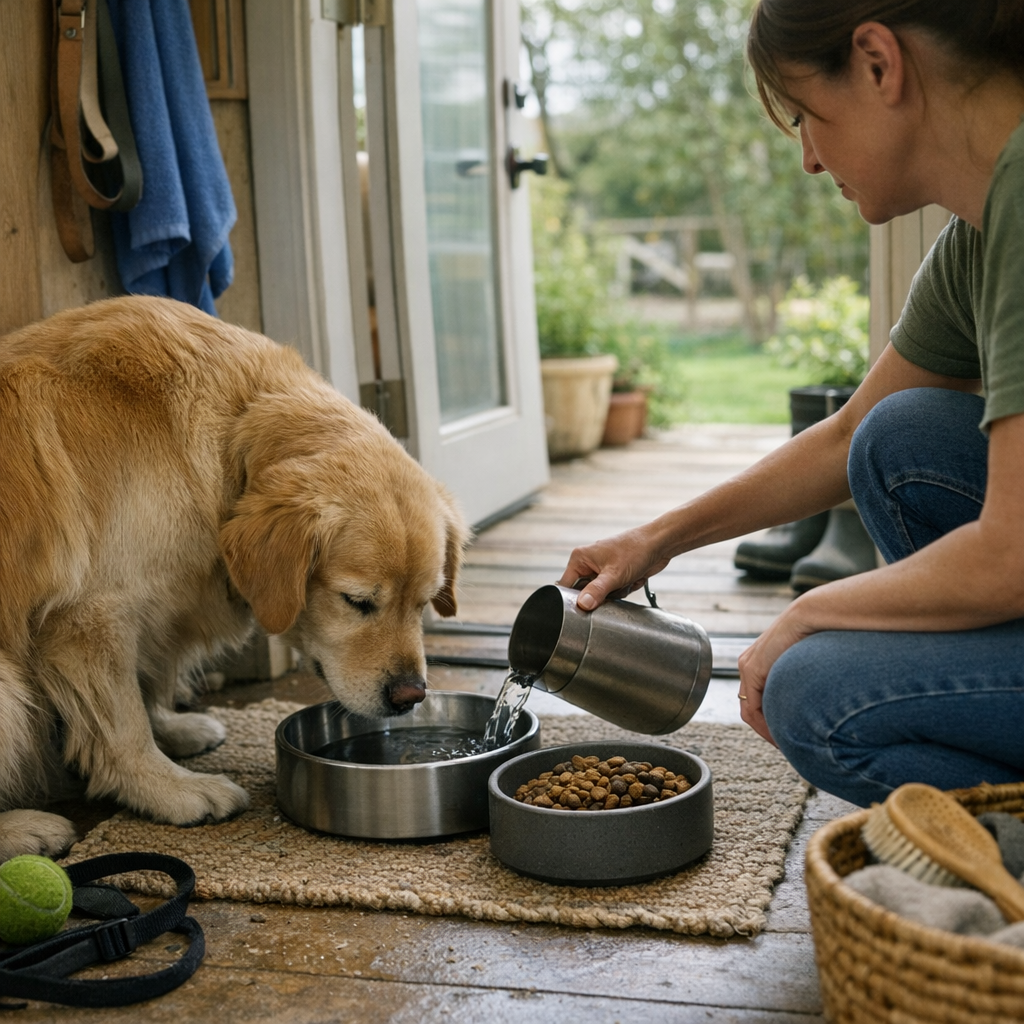
    Real improvement comes from shifting the basics—closer and easier, not prettier. Move the water refill bottle directly above or beside the bowls: no more cross-room hikes. Hang the cleaning cloth on a visible hook, not buried in a drawer. Keep treats and liners in an open bin right below the care area, so restocking or resetting is one motion, not a scavenger hunt. This isn’t about extra gear—it’s about linking every care move to a single, accessible zone and preemptively cutting delays before they multiply.

    Habits for Ongoing Calm and Real Care

    Let your care area reset automatically by small, intentional placements. Put down a washable mat under every bowl. Hang a cleaning cloth within direct sight and reach—don’t fold it away. Gather brushes, wipes, and treats in an open basket in the pet’s main zone. Swap out or refresh placements every few days to match reality, not just when messes force your hand. These habits reduce reset time and keep interruption cycles from reappearing.

    Real Calm: Less Correction Needed, More Daily Ease

    A calm-feeling pet area isn’t about how neat it looks after a weekend sweep. It’s about how little chasing, hunting, and extra resetting you do while caring for your pet—during meals, after walks, in late-night check-ins. When every essential is visible, reachable, and always ready, the routine finally flows. Clutter stops rebounding, chores shrink, pets settle sooner, and you spend less time fixing small setbacks that shouldn’t exist in the first place. The right setup turns surface order into real daily ease—practical calm that endures, not just appears after a tidy.

    Try a setup that actually fits your routine at CalmPetSupply.

  • How Adjusting Bowl Placement Transforms Your Dog’s Mealtime Routine

    If you live with a dog, feeding isn’t just pouring kibble in a bowl—it’s stepping over paws, dodging noses, and making snap decisions with a dog orbiting every move. Kitchens turn into obstacle courses at mealtimes: one second, you’re reaching for the bowl; the next, a streak of fur blocks your path or knocks the bowl at your ankle. The “routine” is rarely smooth. You can tidy the bowls, sweep up spills, and straighten mats, but every handoff still risks a collision. The metal ring of the bowl may sound familiar, but what it sets off—a scramble, a blocked entrance, or another dropped scoop—is what wears on you, day after day. This isn’t a dog behavior issue; it’s a setup problem. That’s what DogPile’s world is built to solve.

    The Feeding “Obstacle Course”: Where Calm Breaks Down

    What actually drags your routine isn’t the dog’s excitement—it’s how unprepared layouts feed the chaos before a single bite is taken. The first day, it’s nothing: sidestep, smile, move on. The tenth day, it’s choreography with both hands full—bowl in one, mug or leash in the other, dog zig-zagging wherever you step. That’s when kibble bounces across tile for the third time this week, or the water bowl tips into the footpath again. Suddenly, breakfast becomes a footrace—before your own coffee is poured.

    The pattern isn’t “cute dog energy”—it’s friction built into your house. Missed beats creep in: every morning you’re held up as the dog rushes, every dinner starts with a shoulder-nudge blockade. Friction that feels small at first expands, until meal handoffs steal a real chunk of your day.

    Blocked Paths, Jostled Bowls, Slowed Mornings

    Bowl placement shapes every step. If your dog eats anywhere near your path—at the kitchen door, close to the main hallway—the sprint begins the second you reach for food. With both hands full, feeding isn’t simple. You angle your body, nudge your dog back with a knee, clutch your mug, and still spill kibble or water while readjusting. Even tidy corners break down in daily use: the step from “prepped” to “fed” turns into a slow, unpredictable shuffle repeated every meal.

    Single interruptions don’t feel like much, but multiply them. The difference between a one-minute meal setup and three minutes of repeat negotiating adds up, trading away whole mornings for a fix that never sticks. Instead of cruising through the kitchen, you end up plotting alternate routes just to avoid another block-and-reset dance.

    The Pattern Adds Up: When “Manageable” Turns into Repeated Drag

    Ignore friction and it becomes your default—right until a rushed morning exposes every weak spot in your setup. The “just a minute” delay snowballs. When you’re already late, excitement means a bumped bowl, another pause, lost rhythm. What should be automatic—a calm, fast handoff—becomes another source of noise and frustration. At the root: bowl access and delivery always feel at odds with everything else you’re juggling.

    “Tidy” Isn’t Always “Easy”

    Mats, matching bowls, an organized counter—on the surface, it’s calm. Under pressure, the system reveals cracks: resetting the bowl position every time a paw slips, wiping new puddles before your own meal, or sliding bowls back into place after each feeding. The mess may look contained, but if you’re still stepping over the same problems, your setup is organizing the friction, not removing it.

    Real Users, Real Friction: Scenes That Break the Routine

    The friction isn’t rare, it’s the standard:

    • Leash in one hand, kibble in the other: The path is clear until you turn—then your dog parks sideways in the gap, blocking your next move.
    • After a muddy walk: You grab the bowl, but realize wipes are shoved in a drawer across the room. Cleanup is a late scramble every time.
    • Trying for calm: “Wait” means little against the bowl’s noise—your dog lunges, you reset, tension spikes. “Simple” feeding turns into a performance of stop-and-start.
    • Chasing tidiness: Even neatly stacked bowls force you to step over the waiting dog, so the routine never speeds up—just looks neater from a distance.

    These hiccups aren’t flukes—they are recurring friction points, showing the routine was never built to lower owner interruption and handoff clutter. The setup organizes the look, but it can’t untangle the real daily traffic jams.

    What the Bowl Clink Really Means: Predictability vs. Excitement

    The quick sound of a bowl shouldn’t dictate your whole morning, but in most homes, it does. For the dog, “bowl hits the tile” means surge forward now—every time. If the sound always signals “go,” it’s baked into both your routine and theirs. When that clink becomes “wait for calm access” instead, the difference isn’t in what you see, but how the flow of events changes: calm for you, calm for them, and fewer hands-busy collisions.

    Repeated use exposes every shortcut. A setup that lasts isn’t the one that looks tidy for company photos—it’s the one you don’t curse under your breath after five rushed mornings. It keeps transitions smooth every time: with hands full, phone buzzing, or just not enough energy left for one more reset.

    Access Timing: Does Your Dog Anticipate or Hold Back?

    The best handoff isn’t “command, then drop bowl”—it’s a routine where the dog waits out of the main path, away from the direct entrance. Precise location matters: if the bowl stays near the outer wall or mudroom and the dog holds back until the motion stops, you get a clear runway. If they bounce at your feet, the old slow-motion shuffle returns. The difference is visible in posture and speed: quick, distraction-free, or interrupted every step by resetting the setup with a knee or raised voice.

    The Setup Shift That Actually Changes the Routine

    The biggest change isn’t a new command—it’s physically shifting where and how the bowl is delivered. Most owners don’t plan it at first: the bowl lands at the old spot, chaos repeats. Move the feeding zone—across a line, near a back wall, away from the room’s mouth—and pause before setting down. With the dog waiting out of the direct path, a “clink” no longer means “charge.”

    Creating a Pause: The “Three-Second Rule”

    Add three seconds of true stillness before you set down the bowl. At first, it’s awkward—sometimes you wait, sometimes you don’t. But over a week, the routine starts flowing: bowl down, dog waits, your body moves freely through the kitchen. The mess, the darting, and the coaching all shrink. What once guaranteed a scramble now becomes forgettable—just one clean beat in your day, not the routine’s main event.

    It’s a setup decision, not a behavior overhaul. No need for new gadgets or a training plan. You change delivery, access, and space, and the downstream chaos fades out. Mealtime becomes just something that works—even if the rest of the day is running late.

    Spotting the Weak Points: Where Setup Still Trips Up the Routine

    Here’s where the cracks usually appear—even in what looks organized:

    • “Tidy” placement blocks critical access: Bowls along a wall seem fine, but if that wall is your only kitchen entry, you still have to bump a dog out of the way every meal.
    • Cleanup always delayed: Wipes or towels live across the room, so any spill means retracing your steps, letting drips spread before you can fix them.
    • Gear spills into movement zones: Bins and bowls drift toward central footpaths, and suddenly each routine demands more detours and careful steps—for you and the dog.
    • Resetting never ends: Every tidy-up is followed by a new traffic jam or bowl nudge that undoes the “system” a week later.

    Routine That Works: Less Reset, More Flow

    Feeding patterns that last aren’t about visual order—they’re about setups that clear the true friction points before and after meals. That means:

    • Bowls positioned just out of main footpaths—so neither human nor dog needs to sidestep with hands full.
    • Calm is built into the routine: access hinges on a reliable pause, not a command yelled across the room.
    • Movement space around feeding stays clear—no more micro-corrections or high-tension pivots to avoid a collision at your feet.

    The result isn’t instant perfection

  • How Adjusting Cat Bowl Placement Can Reduce Feeding Time Tension

    The difference between a feeding setup that just “looks settled” and one that actually works appears within days. Most indoor-cat homes start with matching bowls lined up on a mat, everything photo-ready. But fast-forward a week: the same mat now slides off-center, food bits stick just beyond reach, and one cat keeps pausing mid-step, waiting for the other to move. If every meal ends with crumbs edging past the mat and a silent standoff over who eats first, you’re dealing with the real limits of a standard shared feeding zone. What looked organized is quietly draining minutes—and momentum—from your routine. In the StillWhisker world, that gap between tidy appearance and practical function matters.

    The Hidden Friction of Shared Indoor Feeding Spots

    At first glance, a shared cat feeding area with bowls lined up on a mat appears fine. But daily patterns expose what the photo misses. If you find yourself scrubbing the same stubborn mat edges or watching one cat linger on the fringe while the other circles in—those are early signals of a setup that’s slowing your day. Seams become obvious: bowls push further apart after each meal, wipedown feels never quite complete, one cat darts away before finishing because the shared space pushes them both into uneasy negotiation.

    These frictions aren’t always dramatic, but over time, they’re hard to ignore. Food piles up where the mat doesn’t reach; cats pace and retreat instead of eating together; bowls migrate out of line as if pulled by routine tension. The clearest sign? Spotting yourself, once again, fishing stray kibble from under the baseboard just as you’re trying to leave for work. That’s the sound of a setup creating new chores by being only “good enough.”

    When “Looks Settled” Isn’t the Same as “Works Well”

    Most problems aren’t about mess—they’re about setups that clash with your cats’ rhythms. When bowls bump up against each other or share a mat without boundaries, both cats stall. One circles, one hesitates, and neither fully commits to eating. Even with spotless surfaces, you end up with half-finished meals and repeat wipe-downs. The silent negotiation between cats isn’t just background drama—it adds invisible seconds and cumulative friction for you too.

    In practice, you take extra steps: another sweep after every meal, a double-take at that bowl lingering half-full near the edge, a sinking feeling of “not quite done” that shadows every feeding. The signals stack up:

    • Stray food always escapes the mat, pulling your broom out every time
    • Bowls creep out of position or wedge into corners, forcing awkward cat approach
    • Cats flick between approaching, circling, and avoiding the food space altogether
    • Water bowls crowd the entry—meaning you step over them, detour after detour
    • Organization that looks good on Sunday, but piles up new micro-tasks by Tuesday

    Day-to-Day: What Friction Really Looks Like in a Busy Home

    Picture the ordinary work-morning cycle: you’re juggling your coffee, and one cat edges up to the bowl, stalling and peering at her housemate. The other paces at the mat’s edge or hides around the doorframe. Food sits untouched, or both make hurried, incomplete visits, leaving half the meal behind. Within minutes, you notice a few rogue kibbles trailing toward the living room, and the mat’s shifted again—resetting the bowls for the third time that week.

    The true problem isn’t just crumbs—it’s the way every feeding drags in more steps: fidgeting with bowl placement, shaking crumbs free, straightening the mat, redirecting traffic around a too-close water dish. Add it up, and breakfast for your cats takes longer than your own. Worse: even after resetting, the lingering feeling that the problem is waiting for you at the next meal never quite disappears.

    The Overlap Problem: Where Cat, Human, and Space Collide

    Most feeding spots end up squeezed into corners or run alongside doorways. Bowls technically fit, but your day keeps running into them. The water bowl blocks your route to the fridge; the mat’s short edge lets food pile up just out of easy reach. Instead of a quick mat shake, you’re stuck sweeping the entire area—and the setup slowly tugs your routine toward more cleanup, more adjusting, and more small avoidable interruptions. “Organized” counts for little if your real flow falls apart over a few inches of misplaced mat or a bowl nudged into walk space.

    Some issues only reveal themselves after living with the setup: that “tidy” plan becomes cleanup glue, drawing your attention back every meal. A bowl always off-kilter, a mat caught on the table leg, a cantankerous bit of wall that blocks a cat’s favorite path—each is a trigger for hesitation, owner interruption, or both. Fixing them once rarely holds; the repeat work sneaks right back in.

    How Personal Space Impacts Meal Flow

    Cleanliness is only half the story; the rest is about respect for invisible boundaries. Every shared mat or clustered bowl arrangement pushes cats into close quarters, raising tension even without a scuffle. Direct line-of-sight, overlapping mats, and unbuffered corners are the usual suspects for stalling routines. Watch for the adaptation you don’t hear—slower eating, food abandoned in the bowl, one cat hovering until the other retreats, a wave of toy drop or litter scatter right after feeding fails.

    Real-World Adjustment: Spacing Bowls Further Apart

    If you see the signs—hesitation, slow starts, or meals that seem to drag—one of the most reliable fixes is simple: space the bowls out. Leave three to four feet between feeding spots. Create visual breaks so each cat eats without staring down her housemate. Set bowls at the room’s edge or around a corner, out of frequent foot traffic. Use mats that actually extend several inches past the bowl (not just beneath), so stray food lands where you expect—and nowhere else.

    This low-effort reset quickly changes the routine: cats eat faster, leave fewer scraps, and the work zone shrinks. What felt like a battleground that needed constant resetting becomes a background process that rarely interrupts your day—and stops pulling you back for more cleaning.

    Bowls and Mats: Tiny Details That Change Daily Cleanup

    The most stubborn messes aren’t solved by new gadgets, but by structure tweaks that cut repeat work. The mat should catch the actual spill zone, not just be present. A mat that’s too narrow or short means you’re vacuuming the perimeter after every meal. Stable bowls, not just pretty ones, prevent sideways drag and food scatter. If you keep resetting the same spot after every feeding, that’s where the system is quietly siphoning your time.

    Placement of cleaning tools is just as real—if your broom, paper towel, or sanitizer stays a detour away from the feeding spot, cleanup multiplies. Store supplies within arm’s reach but tucked from view, so you’re never forced to cross the room or bend awkwardly around furniture mid-reset. Every task that costs one more step is a setup asking for redesign.

    Recognizing When the Setup Needs an Overhaul

    Multi-cat homes know the “fix and slip” cycle: after a deep reset, the area looks solid—then bowls creep closer, mats crumple, crumbs reappear in the same corner, and suddenly one cat’s hanging back again. If you’re resetting more often than seems reasonable, or see the same hesitation in your cats, the setup isn’t just slightly off—it’s repeating its own weak point.

    Ask these silent diagnostics:

    • Am I wiping the same area after every meal?
    • Do both cats finish eating in the intended spots?
    • Is one bowl always half-full, ignored, or sidestepped?
    • Are cleanup tasks carving into my own flow every day?
    • Why do cleaning and feeding tools never feel instantly accessible?

    If these resonate, skip lineup upgrades and focus on small, structural adjustments: add space, realign bowl and mat boundaries, and store tools for real-time use. These micro-resets outperform nearly any product switch.

    Building a Setup That Holds Up—Even After Hundreds of Resets

    The only measure that matters for an indoor-cat feeding zone is whether daily friction stays low after endless cycles—not how neat it looks right after a reset. The goal isn’t a photoshoot moment. Instead, aim for a layout where you refill, wipe, and walk away without hesitation—where repeated resets shrink down, not pile up. The feeding zone you can use, reset, and ignore for the rest of your morning is the only one that really proves itself after months in a lived-in home.

    The strongest feeding setups quietly contain food to defined areas, minimize micro-cleanup, keep cats from crowding and stalling, and store all supplies within arm’s reach—without creating new clutter or detours. If your setup still demands attention after each meal, or you find yourself dodging bowls and regrouping mats yet again, it’s a

  • Small Distance Changes That Improve Pet Greeting Safety and Home Flow

    The Impact of Subtle Clutter in Daily Pet Care

    The real drag in day-to-day pet care isn’t a puddle by the water bowl or the visible pile of toys—it’s the string of micro-obstacles that interrupt routines: a bowl nudged too close to where you walk in, a towel bunched on the floor where you expect bare tile, or a grooming brush awkwardly wedged near your spare keys. The mess isn’t always dramatic, but the consequences stack quickly: every refill, greeting, or quick wipe gets slowed by the constant sidestep, reach-around, or reshuffle. What starts as a harmless placement—one bowl, one towel—turns into missed essentials, delayed cleanup, or an awkward hand-off every time you move through your own home.

    Let a week pass and watch small misplacements disrupt smooth routines. You walk in with coffee and mail, meet your dog at the door, and immediately bump a bowl out of the way or dance around a drifted bed to avoid a near-trip. Over and over, “tidy enough” morphs into clumsy workarounds: pets hover in the gap, owners detour or backtrack, and cleaning jobs multiply. The difference? Messes become harder to ignore, and so do the small points of friction that make ordinary care feel like extra work.

    Where Distance Matters Most

    The most-used pet items always drift toward high-traffic areas. Scrub in a new habit or get distracted and suddenly the water bowl edges into walking space, a towel sprawls by the threshold, or the litter scoop sits right where your hand lands next to the doorframe. Move a daily-use item within arm’s reach of your busiest entry, and you guarantee a collision—sometimes literally.

    Repeated use makes the disruption obvious. Arrive with groceries and it’s the bowl blocking your step. Try greeting your dog after work and find yourself nudging past a spray bottle, or sidestepping half-draped towels that migrated from their original hook. The issue isn’t just visual clutter: routines fragment, steps multiply, and homecomings become obstacle courses when simple resets fail.

    Real Scenes: When Clutter Changes the Day

    These aren’t rare problems—they repeat daily in small, overlooked ways. Reaching for a water refill, your elbow knocks last night’s shoes into the path. Wiping up stray kibble, you realize the towel “within reach” is actually half-pinned under a pet leash. Late at night you scoop the litter, only the scoop always slides between bin and wall, guaranteeing a clumsy grab or small spill each time. The seconds wasted here aren’t dramatic, but the rhythm of care stutters: what should be a quick swipe or refill becomes multiple steps, small resets, and frustration that returns every evening.

    After a long day, one more drag: the food bowl has drifted deeper into the entry again, forcing yet another sidestep before you’ve even set down your bag. Your dog’s greeting collides with your own need to get inside, while a cleaning cloth half-fallen on the mat quietly reminds you about unfinished chores. Even when the area looked organized that morning, the routine workarounds are back by evening—it feels like no setup ever stays set.

    The Quiet Cost of Imperfect Placement

    No matter how organized you try to be, pet gear migrates—and any piece that shifts into a busy path becomes the new weak spot. Bowls edge toward thresholds, towels creep onto walkways, toys pile up in door gaps. The real problem isn’t obvious clutter, but the “reset friction” you feel as cleaning, feeding, and quick resets demand repeated nudging, repositioning, or “just one more” adjustment.

    Even in a room that looks orderly, you repeat micro-corrections: a water bowl that slides back after filling, a grooming brush shifting close to your shoe rack, a spray bottle that tips over when you grab your coat. With every extra move, the pace of care slows. The real damage shows up when routines go from flowing to piecemeal—morning exits, after-walk cleanups, and bedtime rounds turn clunky, all thanks to pet supplies that look managed but keep getting in the way.

    Smoother Care by Simple Shifts

    Routine clutter isn’t solved by perfection. The shift that really makes a difference is practical: move daily-use items back from main traffic by a couple feet, hang towels just above pet height, and keep refills off the floor’s natural path. The owner who slides the water bowl a foot back or stows wipes up high comes home to a silent improvement—one clean entry, no sudden sidesteps, and a pet that can greet without being shooed away from a dish or mat.

    Clearing these “repeat clash” points is about more than a tidy look—it’s a smoother transition every time you walk in or reset a space. Without bowls to nudge, towels to avoid, or tools to hunt down, feeding, cleaning, and quick grooming get done in a single pass, not three. The benefit is less visible mess, but even more, routines that don’t slow down simply because gear crept back across your daily path.

    What Actually Changes: Less Visible, More Functional

    A daily setup that works isn’t measured by how clean it looks, but how little it interrupts. Shifting pet supplies out of “collision zones” makes the best difference when you hardly notice you’re caring for your pet—the bowl is where you need it, not blocking the walk; towels are grab-ready but out of your way; your dog’s bed keeps its edge clear of the footpath.

    Most improvements won’t win style points. But routines transform fast: you spend less time rescuing towels, moving bowls, or sweeping a trailing mat. Feeding, cleanup, post-walk wipes—all move smoothly when the space stops requiring constant micro-rearrangement. A functional pet care area isn’t perfect, just “ready”—nothing waits to trip you up, and every tool is reachable without breaking stride.

    Shop CalmPetSupply for practical pet care solutions that fit real routines.