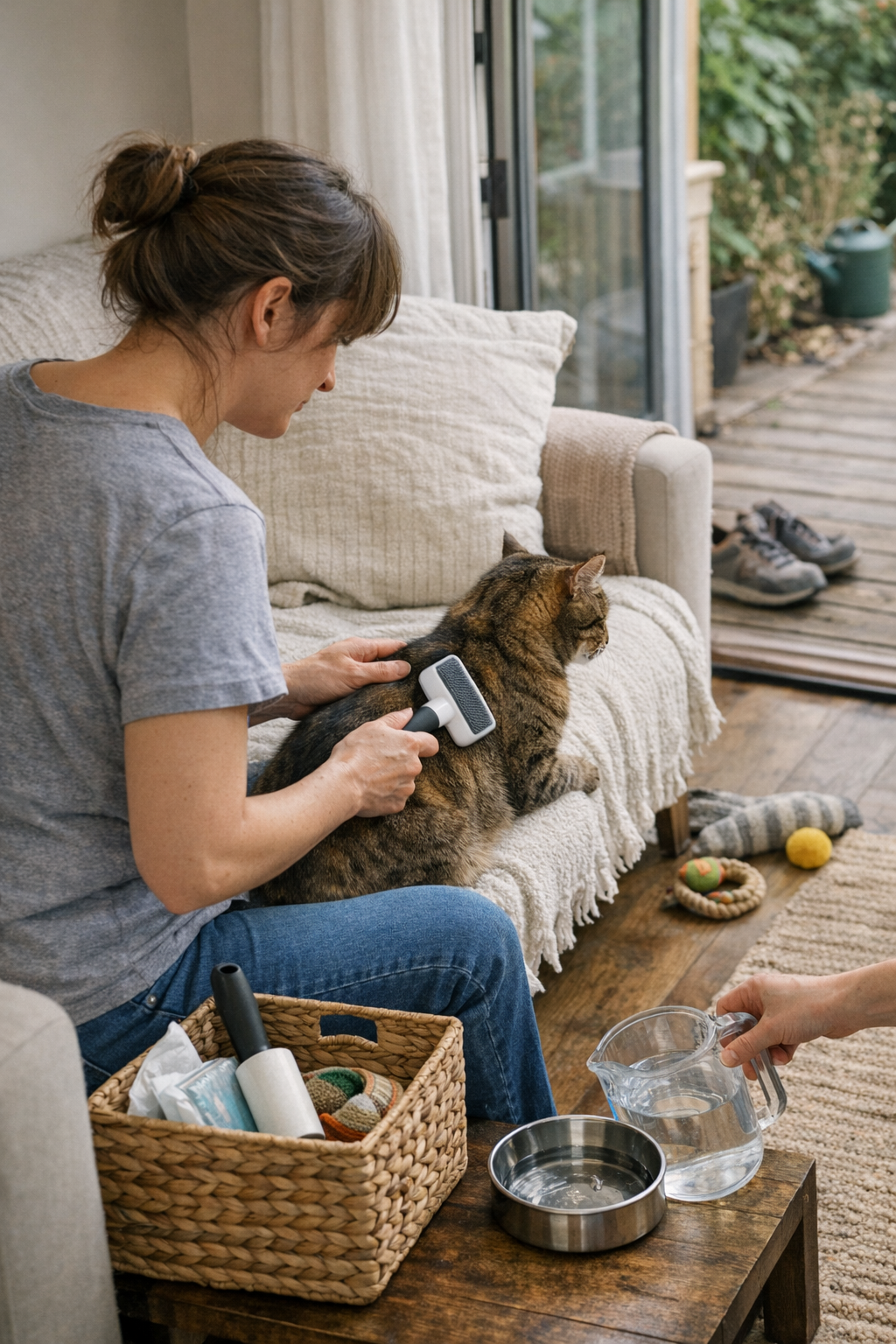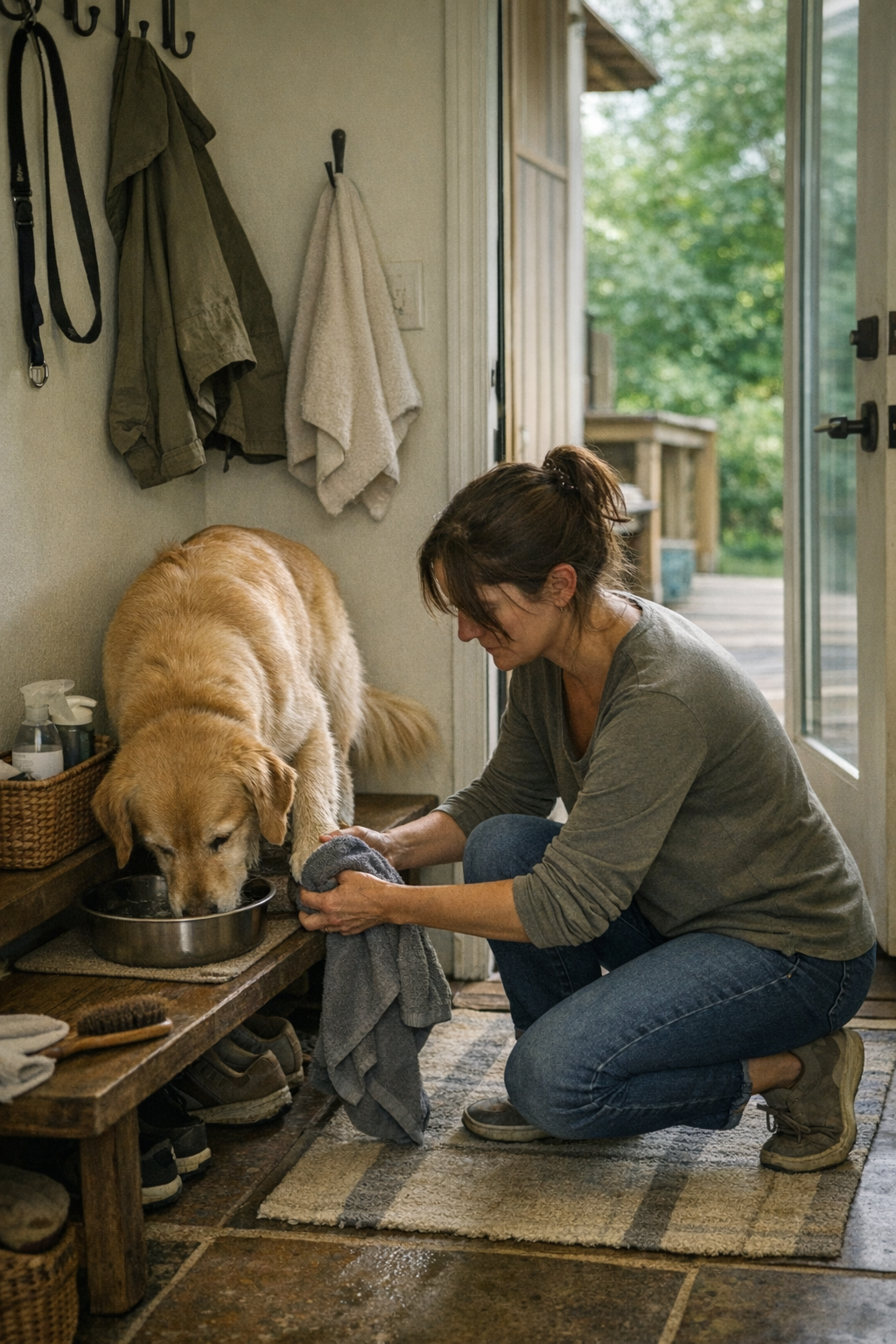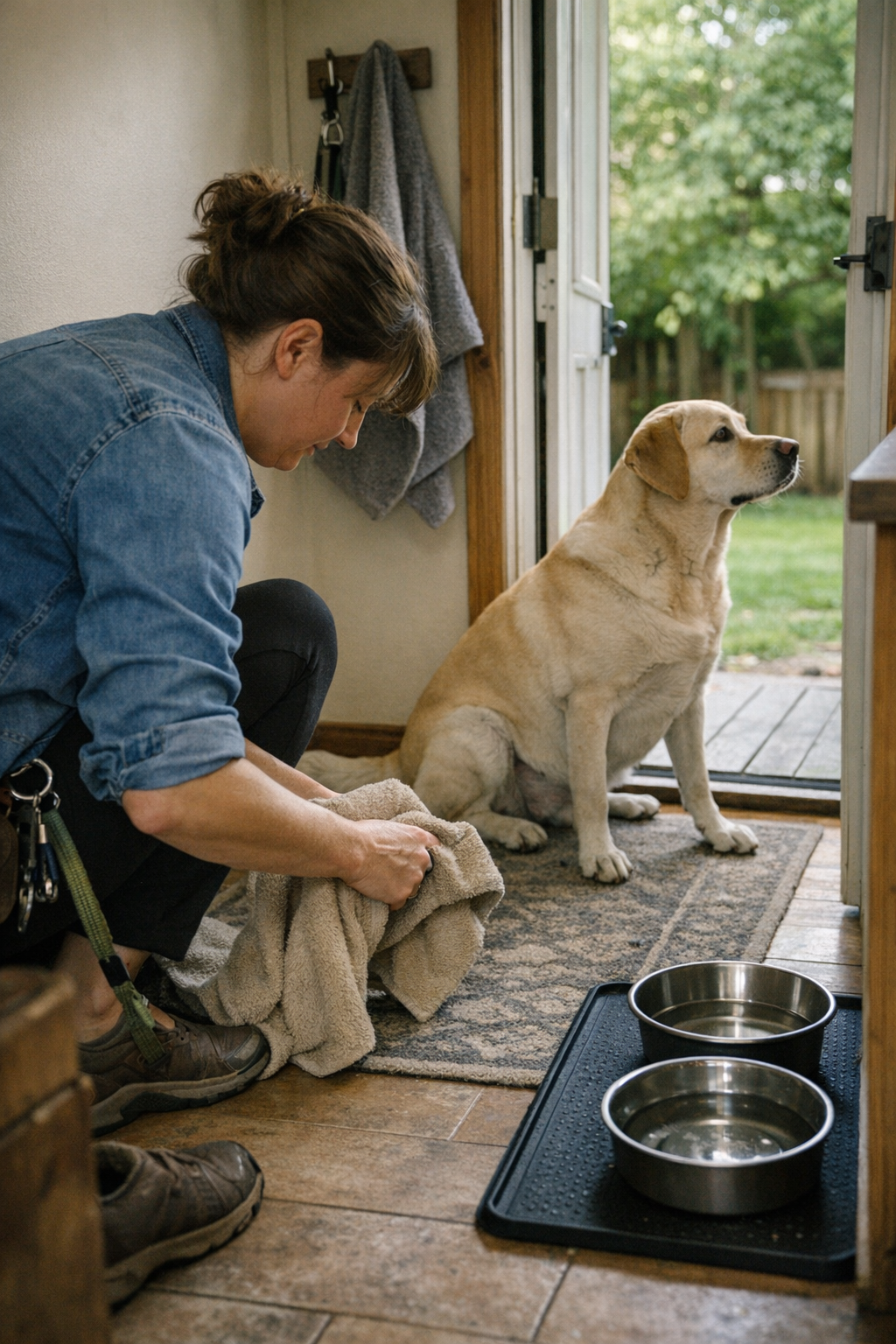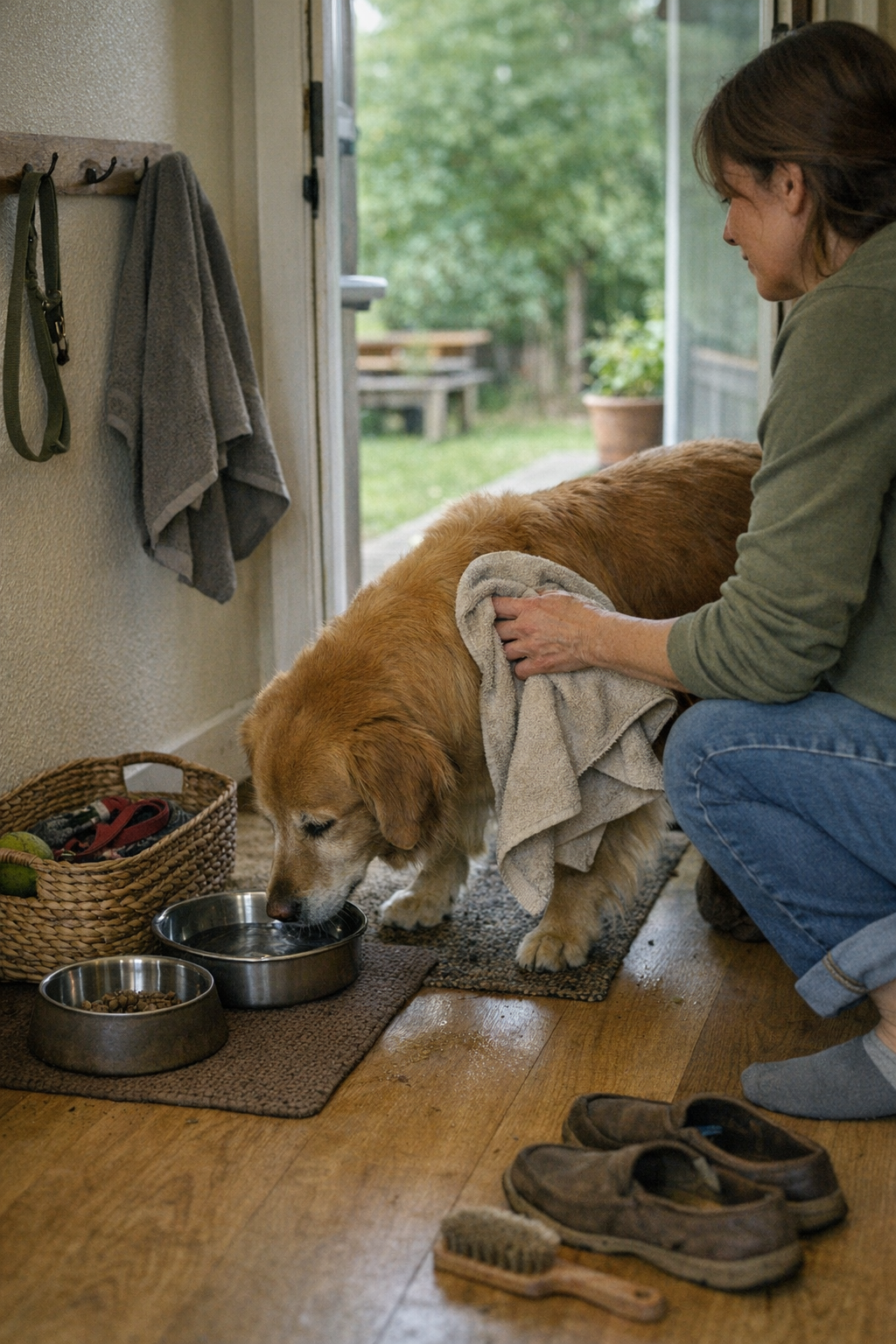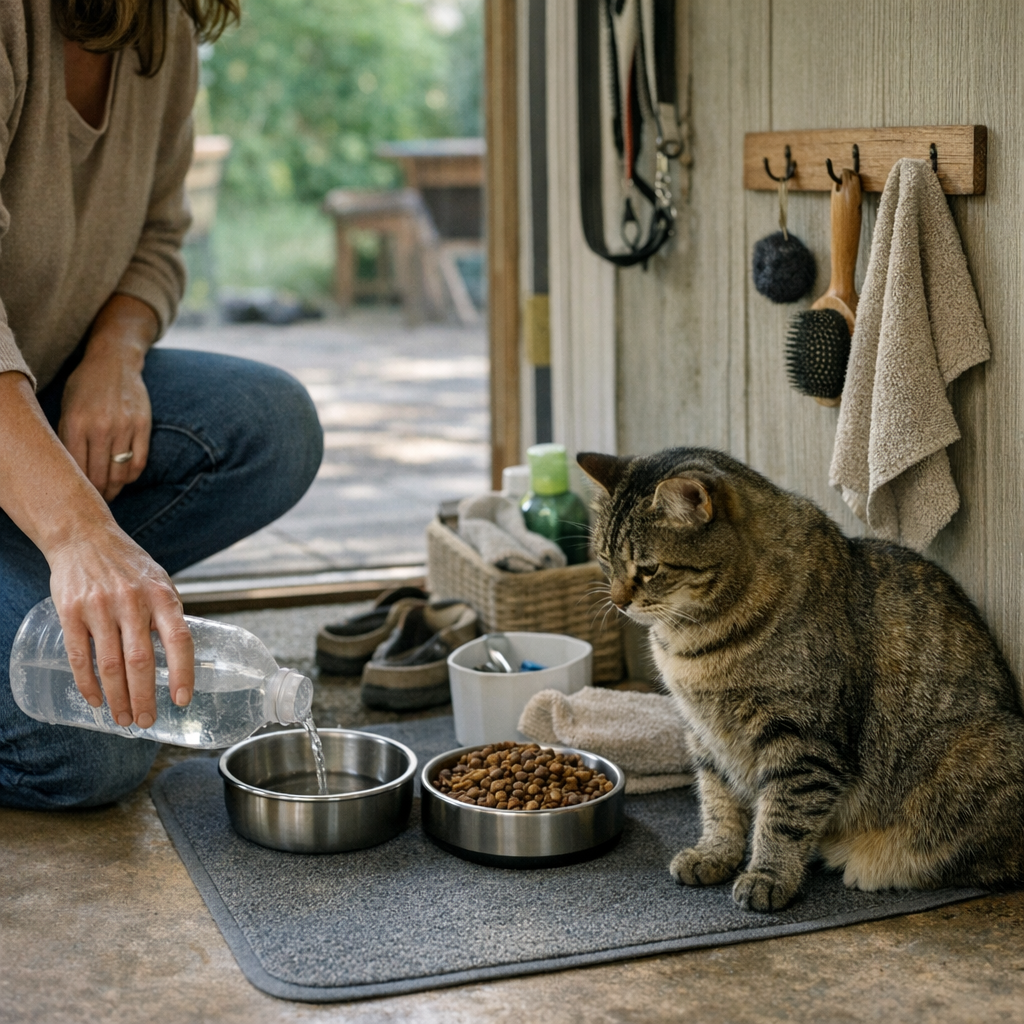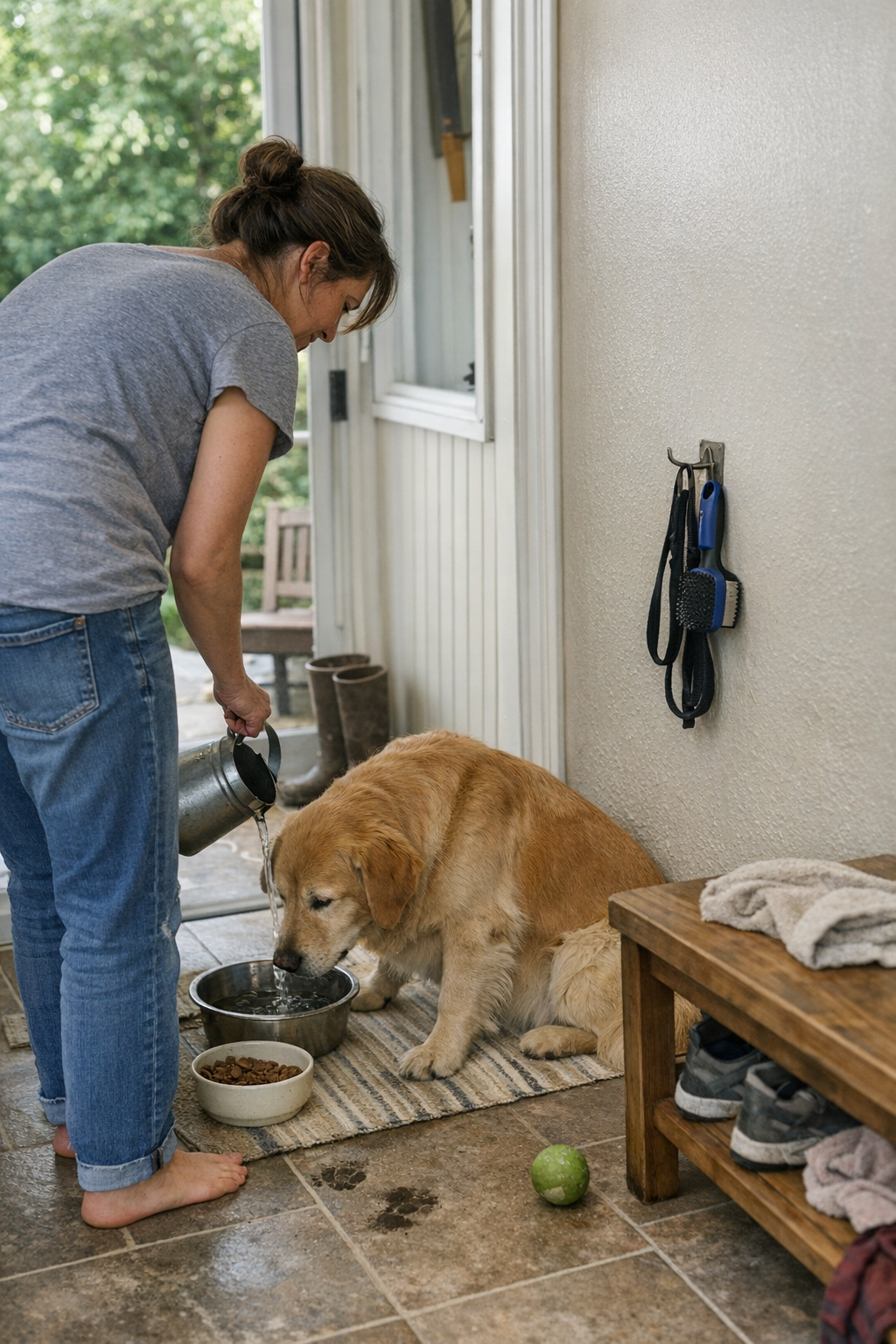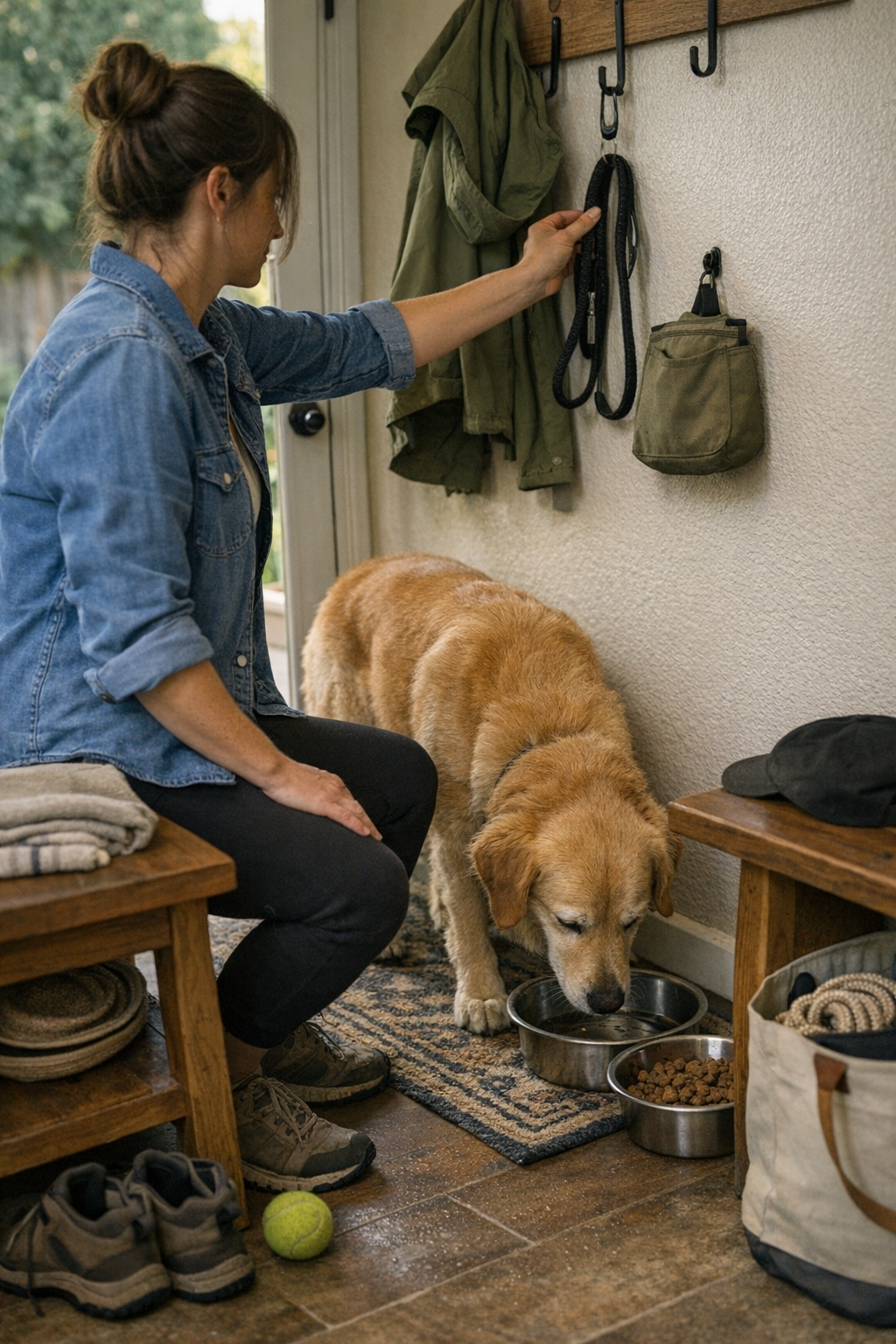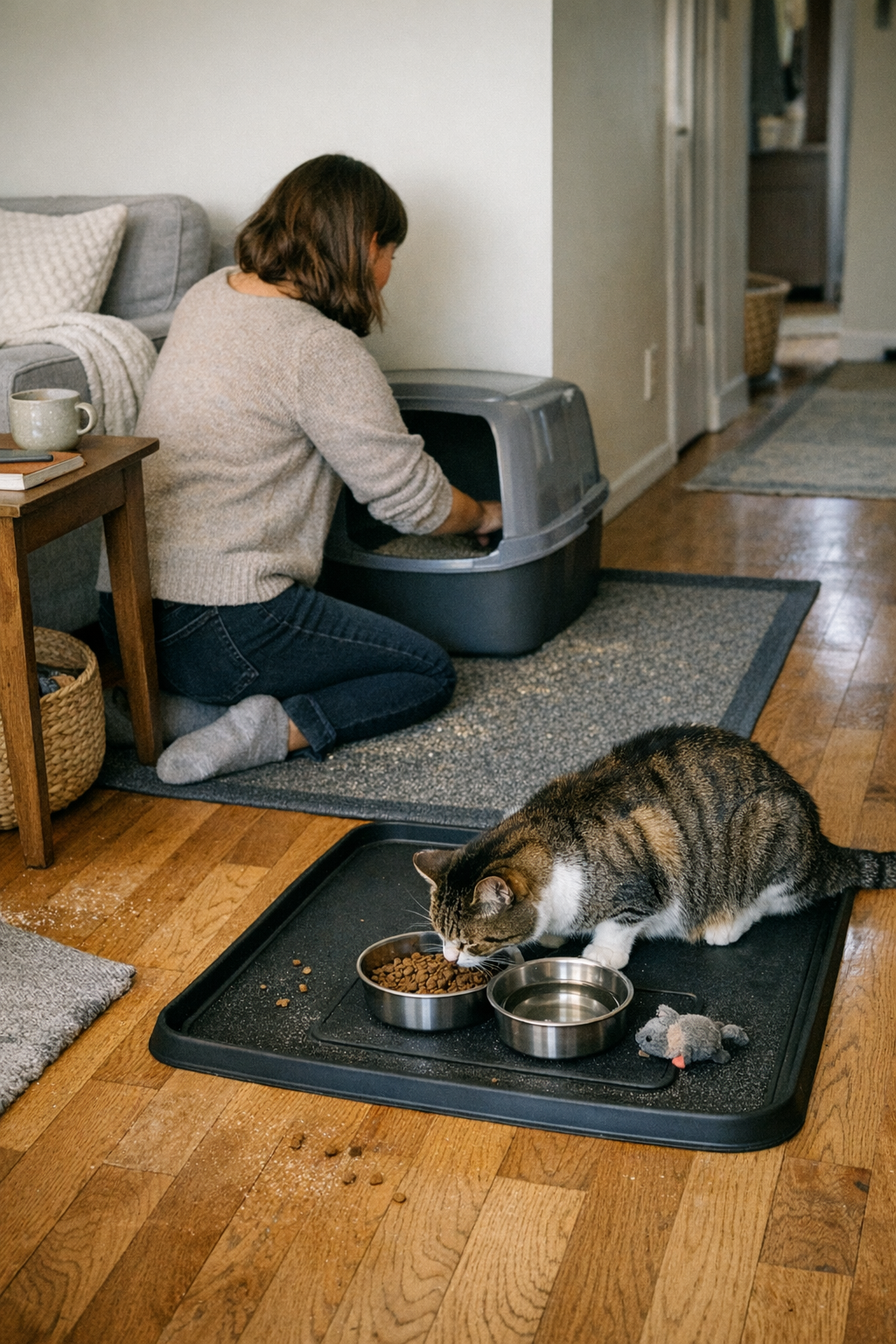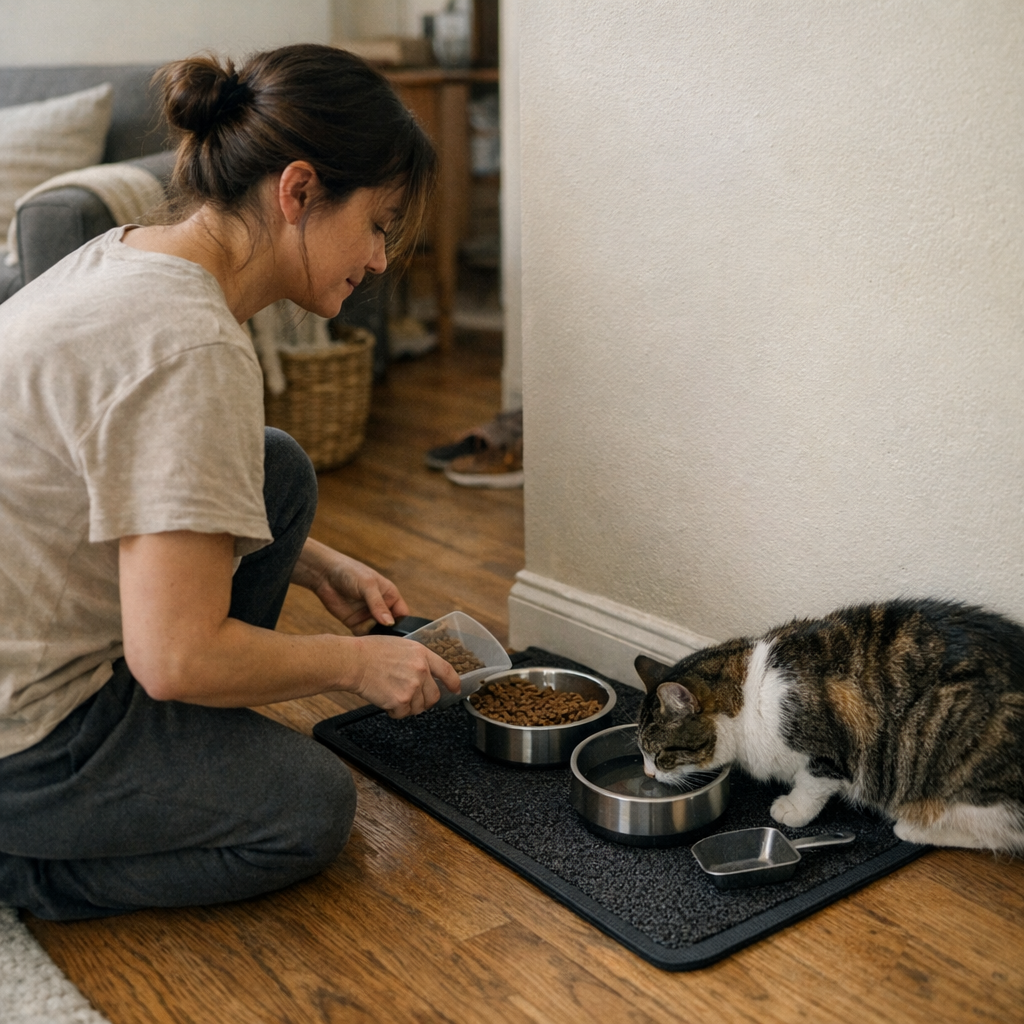
The evening routine hits all the marks: dinner finished, last walk done, lights down—everything in place for a quiet night. But at 2:17am, your dog stirs, padding over hardwood, maybe circling the mat, nudging the bowl, or scratching at the door. The signal is clear: a step is off. It isn’t chaos, but it isn’t rest either. Every night, small frictions—bowl too close, toys half-stashed, mat bunched, wipes blocking the threshold—erode real calm and pull you out of sleep. The setup on paper makes sense, yet when every routine flows through the same space, the difference between “looks right” and “actually works” shows up in the dark. If your nights keep skidding on the same invisible bumps, you’re living the gap between tidy routine and dog-life reality. This is where DogPile starts paying off—not by making things pretty, but by fixing what breaks under real, repeated use.
Why “Routine” Isn’t Always the Solution
Evenings planned to the minute don’t save you if the details reset against you before dawn. The belief that predictability alone prevents chaos evaporates by night three of broken sleep. Most routines hide small mismatches: a water bowl close enough for sipping out of habit, a leash looped over the bedpost to be “ready” but now crowding your hand, a mat that always ends up crumpled by your dog’s feet. These aren’t outright mistakes, but each one slowly ramps friction.
Patterns develop. You catch your dog looping the bed, interrupting the settling you assumed was locked in. A last-minute water run, late toy hunt, or surprise request to go outside—all cracks in the “settled” routine. The problem isn’t that you lack routine, but that familiar details let small gaps persist, making “almost calm” the new normal.
Visual Calm vs. Real Calm: What’s Hiding in Plain Sight
Rooms arranged for visual order mean little if the micro-details don’t hold up under dog pressure. A tidy look can disguise routine disruptions:
- Water bowl next to the rest spot: solves spills, but makes midnight drinking—out of boredom, not thirst—too easy. Each visit triggers a restart for everyone’s rest.
- Toys kept close: convenient for tomorrow’s walk, but a signal that play is never fully put away. Energy lingers just when you want it to drop.
- Mats and beds: chosen for comfort but still sliding, bunching, or folding as your dog circles. The night becomes a patchwork of restless re-settling.
- Extra leashes, wipes, and towels “on hand”: crowd the door zone, jam up morning flow, stall the before-bed wind-down, and invite stumbling in the half-light.
The friction isn’t about clutter; it’s about timing and reach. Night after night, what’s “organized” proves just a step off from actually usable. The setup looks like it should work, but it stumbles at the same points again and again.
Repeated Wakeups: Patterns That Reveal Real Weak Points
After just a week, you stop blaming luck. Specific patterns expose which setup details don’t hold:
- Dog wakes up, drinks, and then paces or shifts—the water’s too close, the mat slides, nothing helps him really settle.
- Stepping into the morning: your first move is tripping over a towel, or nudging last night’s leash/searching for a wipe in a “convenient” but impossible spot in the dark.
- Cleanup must-haves are “right there,” except when you’re desperate not to wake anyone at 2AM, and the arrangement forces a noisy search.
Nighttime friction creeps into morning. Your dog stalls at the threshold, waiting while you dig past clutter. The first meal is delayed by a groggy search for that particular bowl. Resetting for the next night is never just a clean sweep—each object finds a new way to slide out of place.
- Rest area is never quite clear—shoes, leashes, and wipes migrate right where you need bare floor.
- Dog wanders for water while you’re still untying your shoes.
- The “calm look” of the room doesn’t match the friction lived through every morning and night.
The repeated friction isn’t random. When setup details fail at the same moments, the problem is structural—buried in how routines use real space, not just how the space looks once.
The Right Adjustments: Subtle, Practical, Night-After-Night
Real improvement is subtle. The strongest improvements don’t come from a perfectly staged corner, but from details changed in response to friction you’re forced to feel—night after night.
Move the Water Bowl (but Not Too Far)
Relocate the water bowl just enough—say, two meters from the sleeping zone—for nightly “just because” sips to drop off, while your dog still gets a needed drink before actually settling. You’ll notice fewer wet pawprints by dawn, less pacing, and a slot of real quiet returning to the routine.
Downshift Energy Before Bedtime
If toys, wipes, or brushes are visible or handled too late, the energy never drops. Wind down with slow, low-stimulation steps. Stash toys out of the sleeping area entirely before final lights out. Don’t just let the routine “fade”—signal a true end to dog activity.
Keep Sleeping Corners Truly Clear
Get ruthless—any chew, spare leash, or wipe in the rest spot risks calling your dog back to “almost active.” Actually move these items out of sight and reach just before bed. The empty space cues rest more reliably than a neatly trimmed pile of supplies by the mat.
Spot Rituals That Signal Unfinished Business
If your dog circles, paws, or resettles four times in ten minutes, or if the mat slides every night, something’s off. Watch the pattern—does moving the mat, adding traction, or shifting the bed help him stay down longer? Tweak the setup each night until repeat motion drops off.
Handling Morning Cross-Talk
How the setup is left overnight governs the next morning’s friction. Wipes in the wrong spot, leashes tangled with towels, toys creeping back underfoot all delay the first reset. The right structure means you use less energy fixing, and more seeing what needs actual attention. Fewer hesitations—by both you and your dog—means the routine’s friction points finally fade.
Examples from Real Evenings: Where Theory Meets Practice
You reach for the leash, but your hand snags a towel left to dry after the last walk. It falls, your dog perks up, and now water’s on his mind instead of bed. Or you re-enter after closing up, only to find the bowl right in the walkway—and the night’s quiet broken by one more round of lapping and circling. On Saturday, the mat fit—the next day it folds under the chair, forcing a noisy fix that wakes both dog and partner.
Individually the issues seem minor, but they multiply when repeated. The difference is clear: setups that just “look right” do little for the third night in a row when the dog and owner keep repeating the same wrong dance. Practical dog-life means looking for what keeps snagging and shifting it for real—not just arranging, but actually resetting the routine weak points.
Questions from the Real Routine
Why does my dog wake up at the same times every night?
Most repeat wakeups aren’t random. They track with specific triggers—water too available, leftover stimulation, toys in reach, or an awkwardly placed mat. If your dog is up at nearly the same time, check for these consistent invitation spots right by his rest zone.
Will adjusting food or walk times affect my dog’s sleep?
It usually does. Squeezing walks, dinner, and bedtime too close together leaves both you and your dog too “on.” Even quick changes in the schedule can create tension that leaks through the night. Give some space for activity to wind down before lights-out; otherwise, you’ll see the cost on both sides of the morning routine.
If your setup keeps asking you to adjust in the middle of the night or forces morning delays, it’s time to rework not just the look but the everyday function. See what holds up after a week of real use—and what still needs resetting. The difference between another night of micro-interruptions and real rest usually comes down to a handful of details, not a sweeping overhaul. For setups tuned to everyday dog-life friction, see what fits at DogPile.