Category: Pet Life

  • How a Simple Pause Transforms Indoor Cat Feeding Cleanup Routine

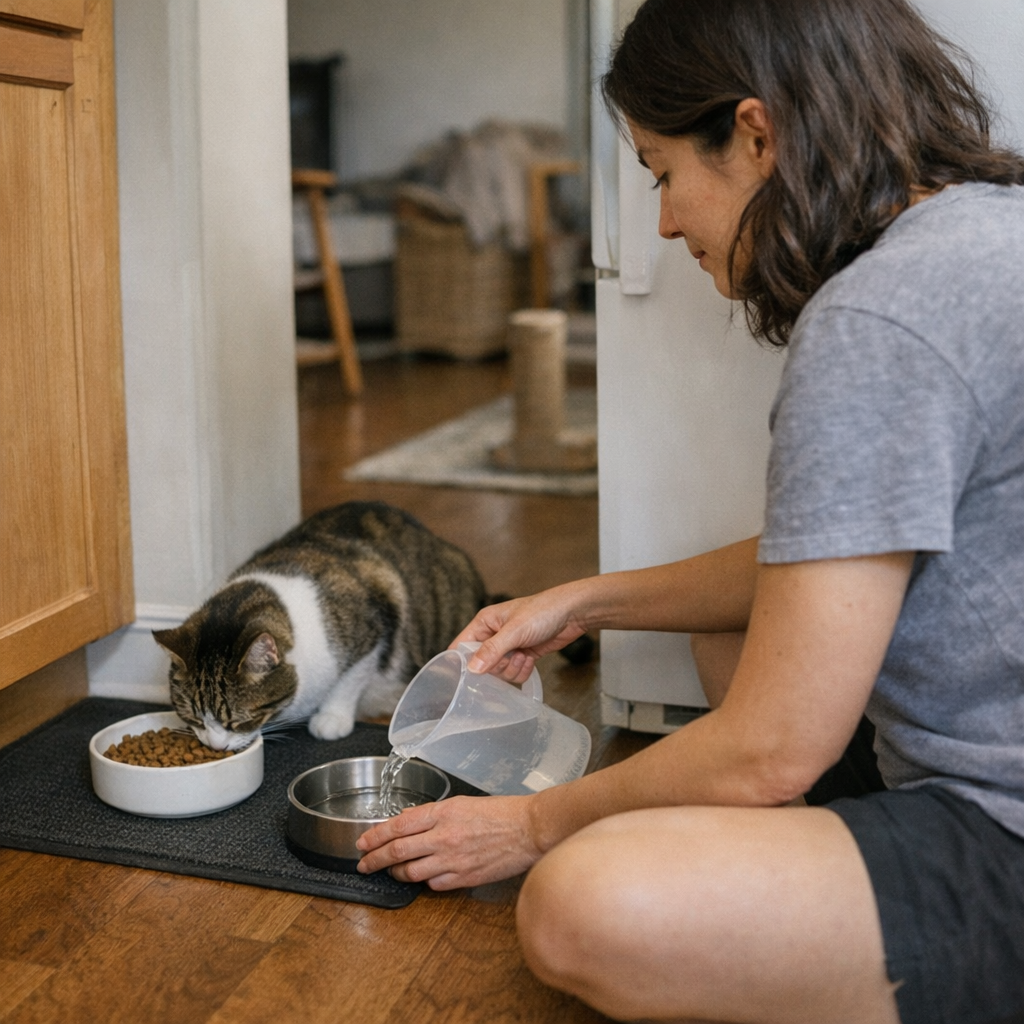
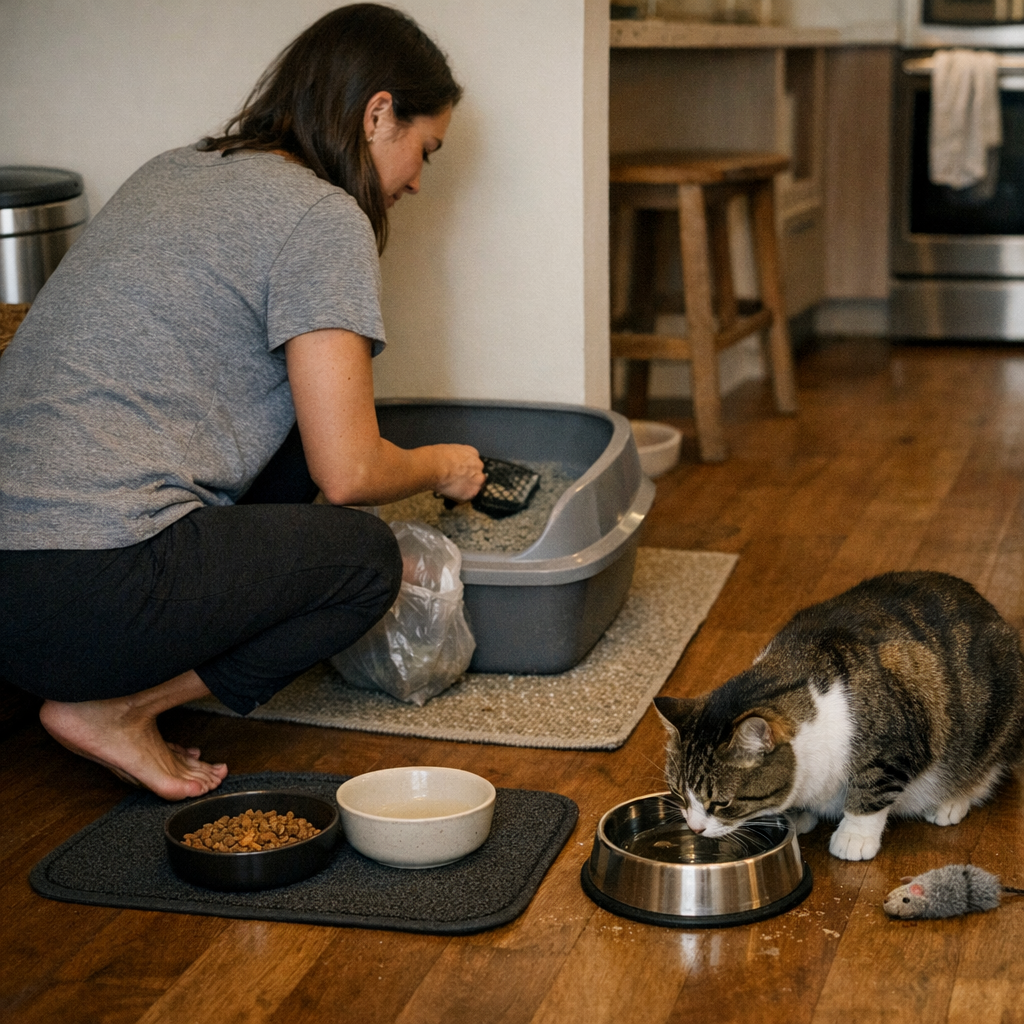
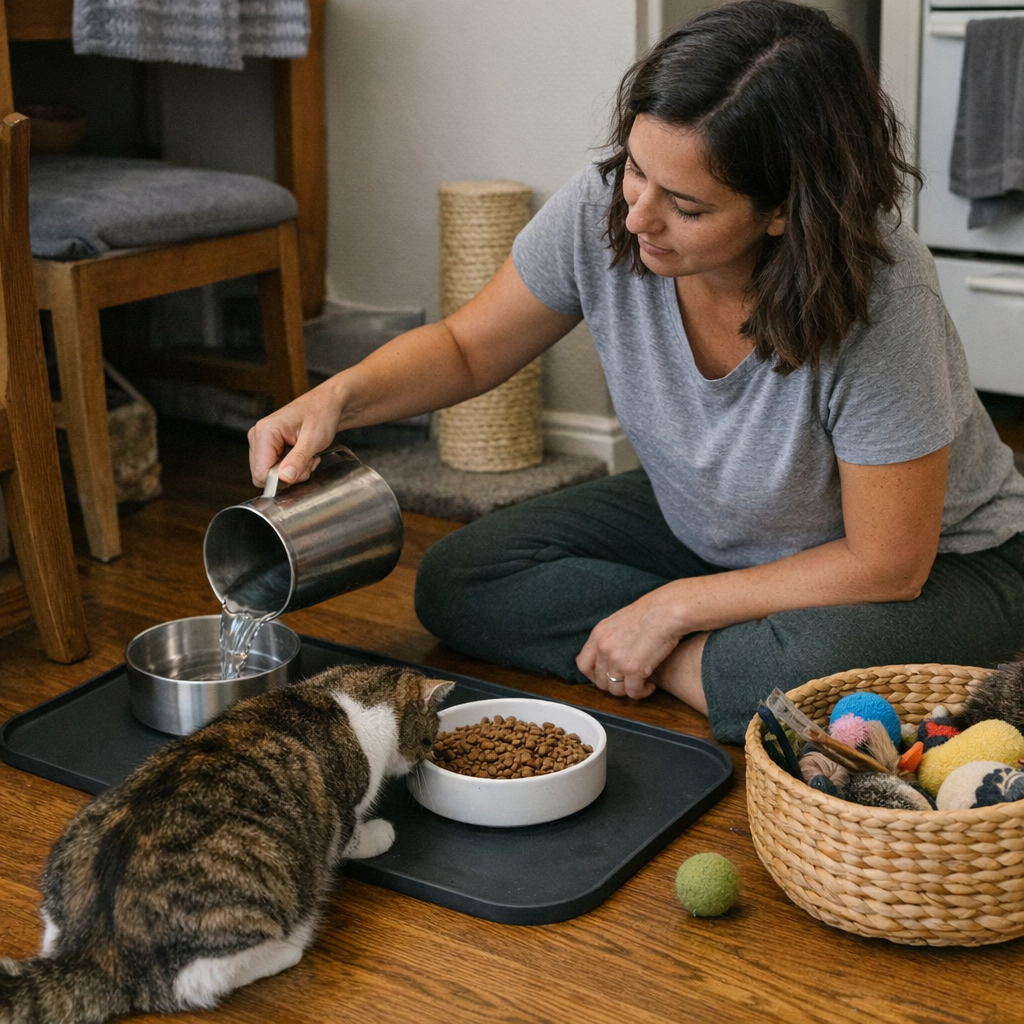
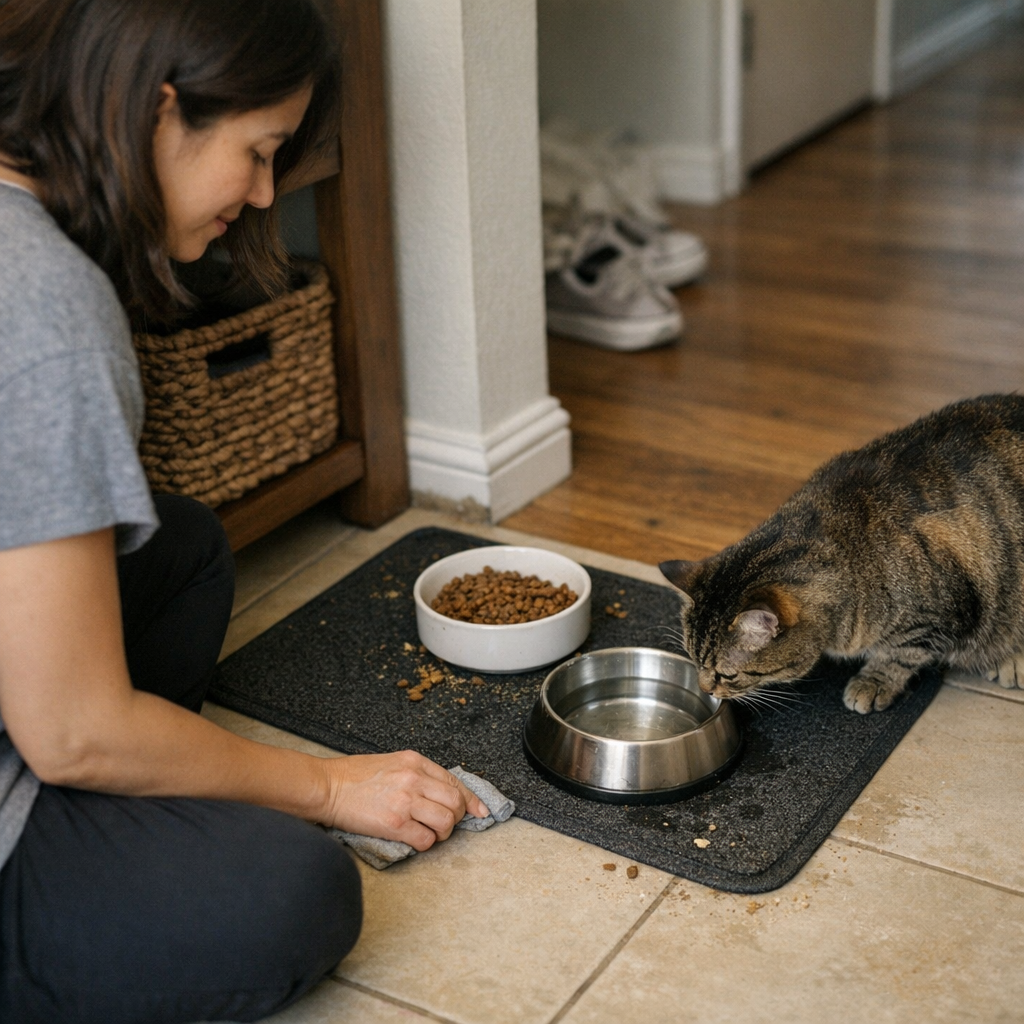
    A cat feeding area can fool you. The mat looks clean, the bowl is where it should be, and nothing stands out as wrong—that is, until your socks catch a stray puddle or you kneel down and find a trail of crumbs hiding behind the bowl. The first setup might work for a week, maybe two, but the real test is not whether it looks tidy at a glance. It’s whether the design holds up under repeated use—refills, resets, half-done wipe-downs—and daily habits that never seem to line up with “just once and done.” StillWhisker’s world is full of these quiet frictions: the feeding corner that seems stable, then quietly spills into the rest of the room, the mat that claims ‘containment’ but spreads work into your routine instead of reducing it.

    When “Tidy Enough” Turns Into Trouble

    A feeding station that appears calm on day one rarely stays low-maintenance. Quick sweeps may push mess out of sight, but after a few routines—top-up, cat circles back, water slops—the flaws begin to show. Crumbs edge toward the cabinet base, cling to the textured mat, or get mashed into the grout underfoot. Water bowls with lower rims mean splash marks creep outward; they aren’t obvious until you cross the kitchen, socks suddenly damp. Mats with patterns disguise debris, but don’t keep it localized. Every supposed improvement—a more “grippy” surface, a mat with a raised perimeter—tends to shuffle the mess rather than solve it. Instead of staying easy, every setup you try starts feeling like a setup for extra work.

    That’s the trap: a space looks calm, but the quiet drift of debris multiplies the job. You’re not cleaning a single spill, but tracking the same stubborn spot from morning to night—usually because a “tidy enough” setup lets invisible mess radiate outward, only to become impossible to ignore when it finally crosses into main home space.

    Minor Messes, Major Repeats: The Endless Loop

    Lift the bowl, and you’re just as likely to drag crumbs as to clean them. Poke at a corner, and kibble slips further out of sight. The feeding routine spawns its own repeat tasks: a crumb chase under the fridge, damp patches connecting hall to kitchen, or a quick rescue run for a toy that ricocheted off the bowl and now rolls into a clean zone. Most owners find this annoyance routine—every time you skip a reset, the radius of the mess increases. Damp prints appear along threshold lines. The “just a little” wipe becomes a series of hand vac runs, spot fixes, and half-hearted promises to deep-clean—later.

    Especially when the food station sits near a shared path, every skipped step comes back: a few crumbs picked up on the way to refill water, a sticky patch rediscovered at dinnertime, another tiny mop-up that interrupts whatever else you were doing.

    Real Use Friction: Feeding Area vs. Daily Movement

    No feeding setup is neutral. Each layout either adds or subtracts friction every time you touch it. Maybe you reach for the bowl and have to wiggle it free, dragging mat and crumbs together. Maybe you try to pour in food without blocking the footpath, but shoes and bags pile up and leave you stretching awkwardly just to pour. Bowls that promise anti-splash effects become pointless the moment the mat beneath them soaks up a spill and starts smelling by day two. “Grippy” mats keep the bowl in place—until those same features cause crumbs to wedge themselves just out of reach, so quick resets turn into full cleanups later.

    The problem isn’t just one of looks; it’s the lived experience—scattered debris by late afternoon, unexpected sticky patches, detours to grab wipes or vacuums you wish were closer. Even the visually neatest spot quickly demands extra attention as everyday movement—yours and your cat’s—pulls mess back into the shared space.

    Mat and Bowl Details: Not All Solutions Are Equal

    Every detail changes maintenance. A blended-pattern mat looks clean while dirt quietly accumulates, forcing deeper scrubbing later. Lipped edges on mats might hold in bigger spills, but also force you to pry out hidden clumps. Textured surfaces trap grime, while slick mats let splashes escape. Bowls with higher rims limit spill—unless refilling means shoving the bowl, loosening crumbs, and pushing moisture under the edge. Some fixes just mask mess for longer; others shift the work to a different part of the routine.

    No “miracle” layout exists—the right answer for one household might create headaches in another. A mat that solves one overspill issue in a small kitchen might create sticky corners in a bigger space. If the bowl sits near a main walkway, you either block human movement or end up reshuffling the setup after every feeding. Perfection is impossible, but some setups shrink the cleaning burden, while others only spread it wider.

    The Hidden Margin: Where Mess Hides

    Mess piles up along the invisible borders: in a ring just beyond the bowl, or the outer inch of the mat—precisely where quick passes always miss. These margins collect both crumbs and moisture, then launch the problem the moment feet or paws brush past. Mats that “trap” debris very often simply disguise the inevitable: sooner or later, that buildup bursts into visible space, multiplying cleanups and interruptions.

    Reset Scenes: One Extra Step is the Game Changer

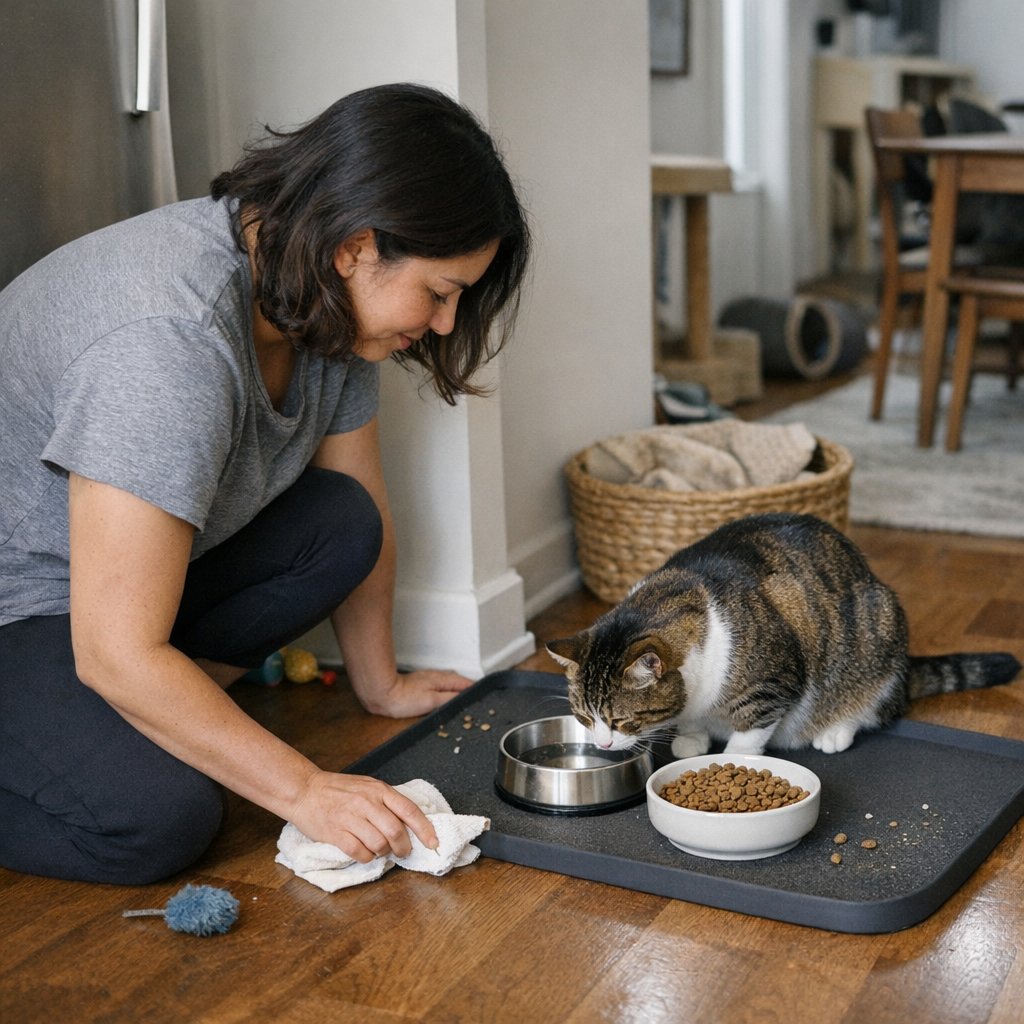
    Adding a short, direct reset after each feeding is the small habit that keeps mess local. Instead of automatic refills and forget-it, a single swipe around the bowl’s base and mat’s outside line—the three-inch buffer that soaks up most strays—delivers disproportionate impact. No need for special scrubbers: just a nearby towel or wipe, used before you walk away. Missing this pause lets crumbs spread; landing it keeps cleanup tightly contained.

    Over a week, that single margin pass means fewer drop-to-the-floor moments, fewer trips for the hand vac, and much less run-on work bleeding past the feeding station. Homeowners don’t notice the effect as a sparkling mat, but as fewer annoying interruptions, less stress over “where did that sticky spot come from?” and faster resets between routines. Skip the habit, and even the best setup leaks back into chaos by Friday.

    Less Drama, Fewer Interruptions

    The payoff isn’t dramatic but shows in the cracks: not in spotless looks, but in routines that stay contained and don’t drag chores into the rest of your day. That margin reset shrinks disruption, buys time, and stops mess from hijacking the energy meant for something else. Optimized bowls, lipped mats, and easy-clean surfaces all help, but without that repeatable pause, every system backslides. Even strong gear can’t outpace a shortcut cleanup habit for long.

    Real-Life Tweaks That Reclaim the Day

    • Cleanup within reach: If wipes or towels live across the room, you’ll delay the reset and let the mess travel. Locating supplies within arm’s reach of the feeding area blocks this excuse and keeps resets automatic.
    • Focus on borders, not just surface: Most debris slips out around the edges. A quick margin check beats a bulk clean every single time and actually shrinks the radius of each chore.
    • Placement trumps perfection: If the station lives right in a traffic lane, you’ll keep tracing debris deeper into the house. Nudge it just outside the main path so resets don’t collide with daily movement.
    • Frequent small resets over rare big ones: More frequent, minimal cleanups keep mess from compounding and make deep cleans rare—not weekly punishment.

    The biggest weak point is how many return trips you have to make within a single day. If you’re circling back to the same corner two or three times—because a mat dragged, a bowl stuck, or you missed the outer edge—it’s a sign your “contained” zone still leaks work into the rest of home life. That’s the margin worth closing.

    How an Intentional Setup Changes the Routine—But Stays Imperfect

    No feeding area eliminates work, and no layout—no matter how clever—stays effortless for more than a few cycles. But upgrading the setup and the habit together narrows the chore field. An intentional arrangement isn’t about picking the fanciest accessory; it’s about choosing a bowl, mat, and spot that not only look better, but make the daily margin swipe faster. Every system reverts if you let resets slide. Ordinary indoor-cat setups don’t need to be flawless, but the right structure plus a short, reliable post-feed reset can contain the spread and keep interruptions from taking over the day.

    This isn’t about buying the fanciest accessories or adopting a complex cleaning ritual.

    Explore more practical feeding setups and containment ideas at StillWhisker.
  • How Small Changes in Dog Care Routines Prevent Daily Chaos at Home

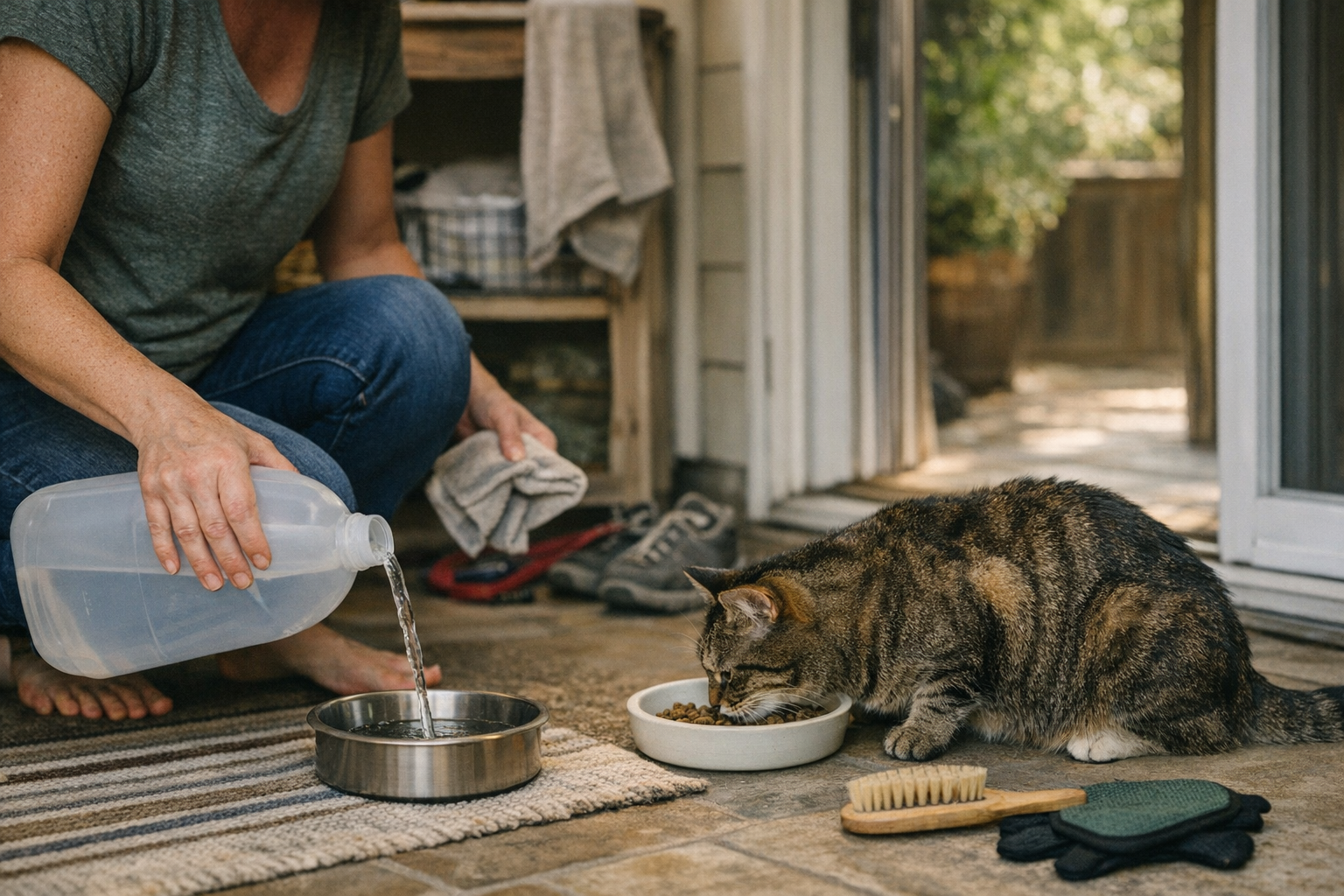
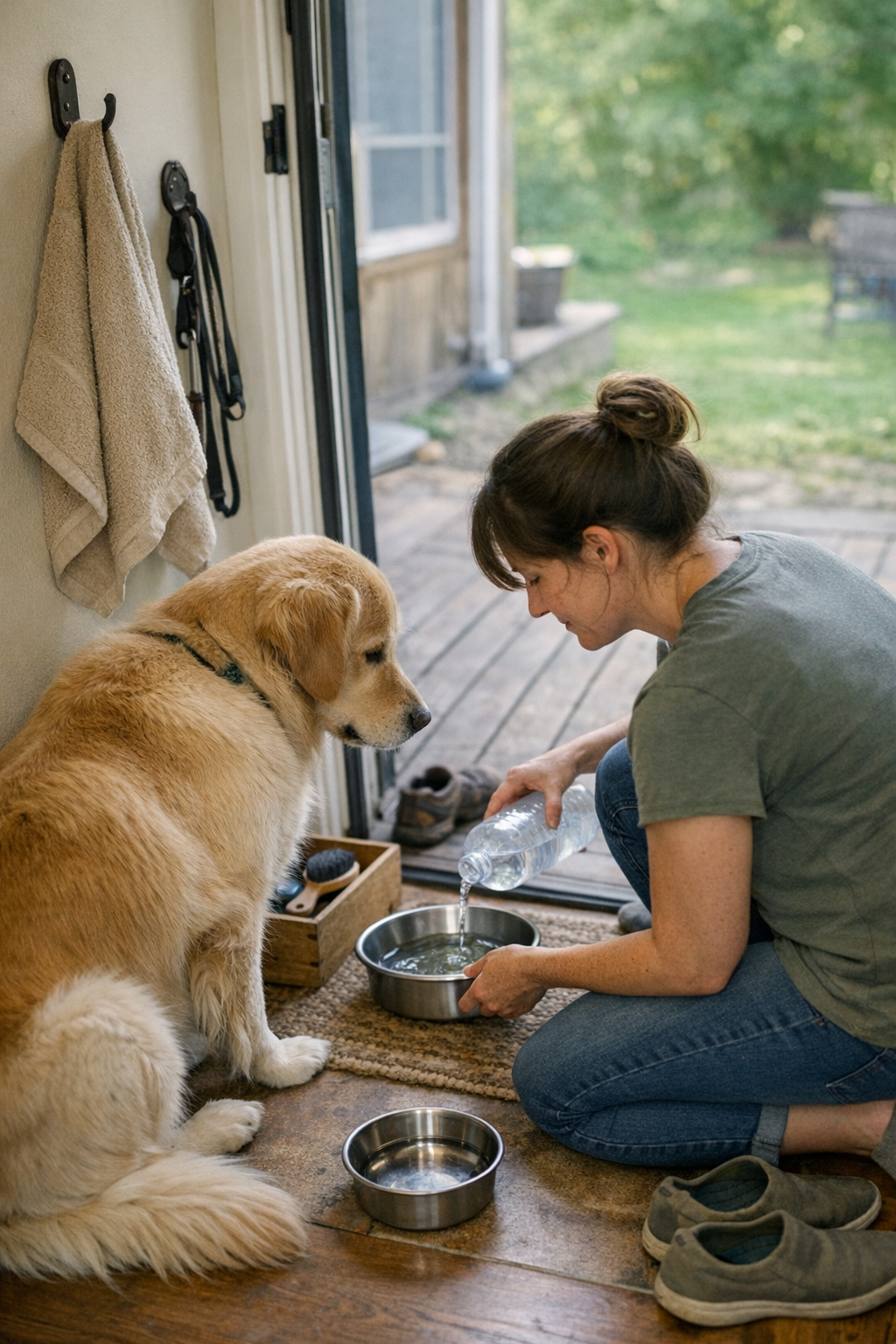
    On paper, a pet care space looks ready—bowls lined up, towel folded, leash in sight. But put the setup to work, and the cracks show fast. Every dog owner recognizes the moment: your hands are busy, your dog is already halfway inside with wet paws, and the towel you counted on is missing. Or you bend down to fill the water bowl, only to realize it’s dry because nobody remembered the last refill. In theory, these are simple fixes; in real life, the smallest gap in routine keeps returning at the worst moment. The CalmPetSupply world starts where most neat setups fail—repeated use, fast resets, and last-minute friction that never really goes away unless the basics stay visible and reachable.

    Repeated Friction in Daily Routines

    Most setups work until the first real rush. A food scoop slides behind dishes, a towel that started by the door ends up across the room, the cleaning spray sits just out of sight—or buried behind shoes. You’re not dealing with single accidents, but the quiet annoyance of pausing to find what you need whenever the pattern repeats. These aren’t flukes: the more often you use the space, the more the missing or misplaced basics interrupt the supposed “flow.” What feels organized at 8 a.m. looks scrambled by noon.

    When the Routine Slows Down

    The breakdown hits exactly when time matters. You’re leaving, hands full—leash, waste bags, your own keys—and pause for muddy paws, but the towel is somewhere else. Or you scoop dog food, only to find a crusted bowl from last night and another pause while you make it useable again. Water refill becomes a juggling act because the bowl shares countertop space with a bag of treats and yesterday’s mug. Routine hardship isn’t dramatic—it’s the persistent drag of starting and stopping. Every two-minute job picks up two extra steps, and the dull frustration builds.

    The Unseen Cost of “Good Enough” Organization

    The Sunday-night reset, the lineup of “essentials”—both deteriorate as days roll on. Tools drift. A brush ends up in the catchall tray, the leash joins a pile near the shoes, toys shift under the couch or coffee table. By Thursday, the once-tidy setup takes an extra minute for every basic task. Wiping paws, finding the scoop, grabbing the leash—all become scavenger hunts, not reflexes. “Good enough” order hides new points of friction: mess piles up, steps get skipped, and real routine demands expose the weak link over and over.

    How One Simple Change Reduces Strain

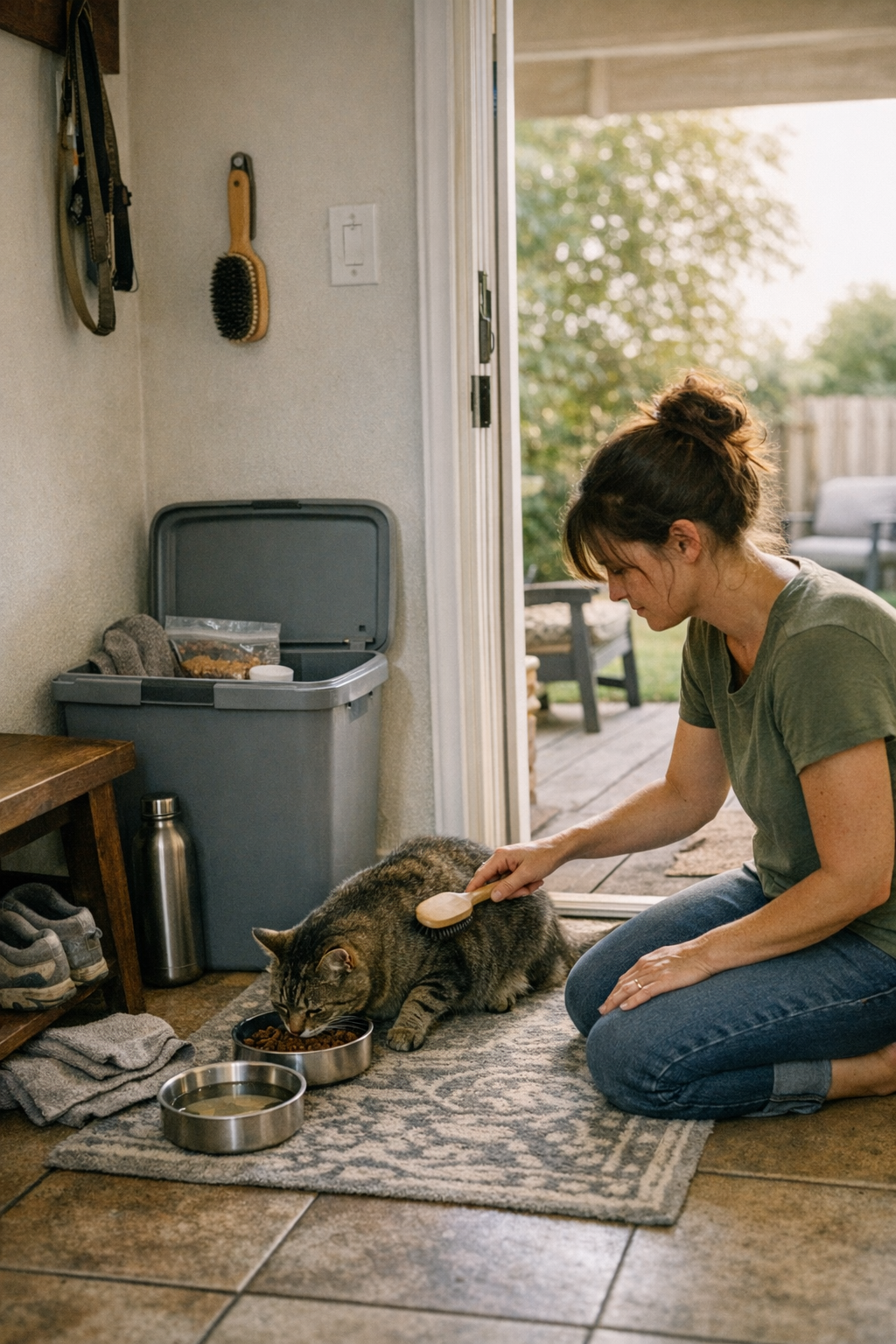
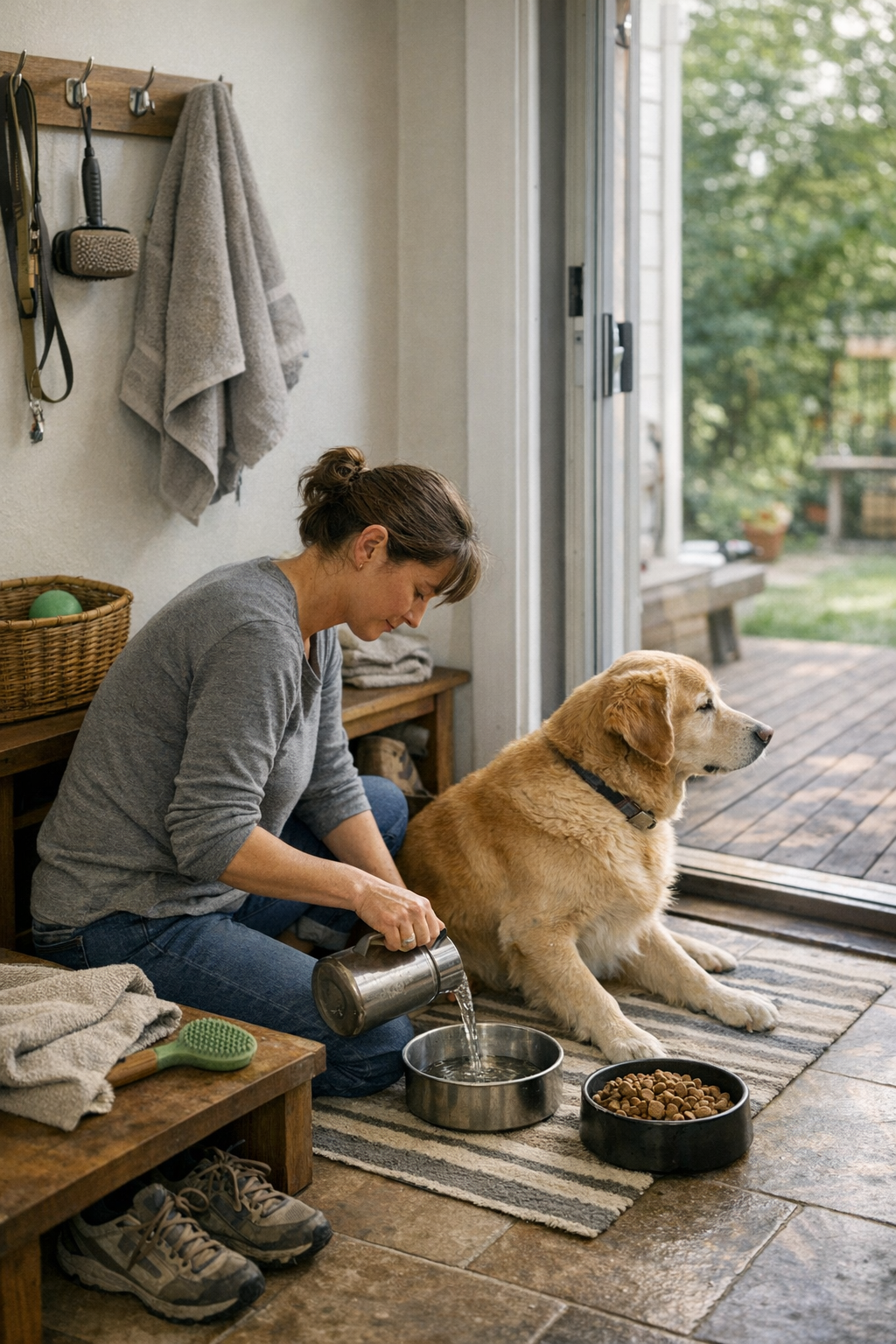
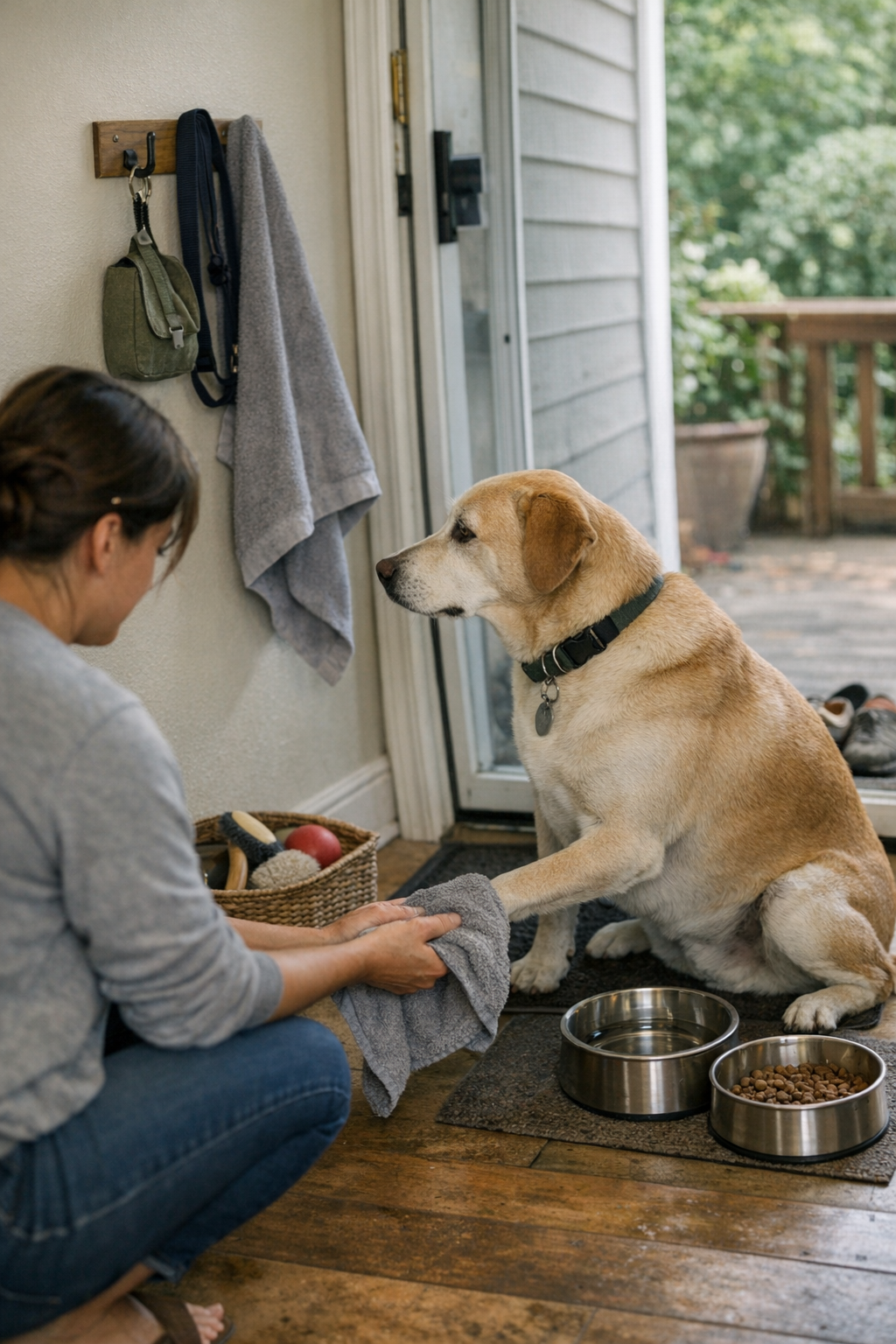
    The turning point almost always comes from placement, not aesthetics. Mount a towel hook exactly where paws meet floor—now the right towel is always there, not drifting or damp or doubled as a dish rag. Bowls stacked by the door, not a cabinet—suddenly water is easy to dump, wipe, and refill. The leash on a visible hook ends the scramble through jackets or the mail heap. These are not upgrades for neatness—they’re anchors for speed and endurance. Every micro-delay you cut is one more routine that stays on track, instead of collapsing into improv and mess.

    The Difference Between Tidy and Functional

    A pretty surface doesn’t hold up under rush or fatigue. Bowls out of the way do nothing if you have to walk across the room for the next meal. A grooming brush on a shelf means nothing if you skip a quick brush midday because you dread climbing for it. Supplies that blend into the décor often vanish when you need them most—turning a five-second task into another round of searching. Function means each tool actually supports your real routine, not just your sense of order.

    Scenes from Real-Life Routine

    Monday morning, your dog sits by the door—leash in hand, bowl still grimy from last night, cleaning spray hidden behind the coffeemaker. The towel is missing. After the walk, you’re left juggling a muddy towel, half-closed bins, leash, and an impatient dog—none of it resetting fast, even though it looked organized at the start. By midweek, it’s clearer: tools are never back in place, feeding means hunting for the scoop, the reset feels more like a daily rescue operation than a routine. The “ready” space is a memory by Friday.

    Habits That Hold Up—Not Just Look Good

    The real lasting fix is physical boundaries. Visible hooks for the leash and towel, a bin that always holds every brush, a canister for kibble right at arm’s reach—these are setups that stop the daily drift. Efficiency builds quietly: you reach for a towel and it’s always there, never ask where the leash went, refill without detouring around kitchen clutter. Each fraction of effort saved in the background means fewer interruptions, less tension, and a routine that doesn’t need constant rescue.

    Why Repeated-Use Resilience Matters

    Pet care setups fail or succeed in the grind of repeated daily use. Surface order fades fast under real pressure. Systems that give you what you need within reach—every time—shrink mess, slash delays, and keep the day moving. It’s not just less visible mess; it’s a routine that works even when your patience is thin and the clock is ticking. Your setup should deliver stability not just on the most organized day, but every rushed, mud-splattered, late-evening reset that dog and owner go through together.

    For more insight into practical daily pet care, visit CalmPetSupply.

  • Creating a Calm Morning Routine for Indoor Cats with Smart Feeding Setup

    Nothing exposes the cracks in an indoor cat’s feeding setup like using it day after day. That corner looks clean at 7 a.m.—bowls lined up, mat uncurled, water topped off—but that surface order unravels fast. By the end of the first week, the truth arrives quietly: you’re nudging the bowl out of your morning path for the third time, straightening a mat you “fixed” yesterday, or following a gritty trail of kibble past the threshold. The problem isn’t disaster—it’s a setup that turns one quick task into five small, invisible chores. You’re not dealing with chaos, but you are picking up the pieces in the background, and the pattern is hard to escape. This is the StillWhisker world: not a catalog of cat decor, but the daily pressure test for where setups genuinely fail or quietly hold up.

    Where Feeding Setups Go Wrong—Even After Careful Planning

    Most cat owners start with a simple fix: bowls and a mat in a quiet-looking corner. For two days, it works. Then the commute from fridge to coffee pot becomes a sidestep routine because a bowl is against your ankle or the mat creeps under the cabinet door. Maybe that “no-slip” mat turns out to slip anyway, or the bowls sit just close enough to the fridge that bumping them is nearly guaranteed during any refill. The logic felt solid, but the lived-in routine exposes every small miss.

    As the days go on, what started as “tucked out of the way” turns into one more obstacle in the household race. Morning means: skip a puddle, correct the bowl angle, pause for stray kibble, and listen as your cat waits impatiently for the setup to return to working order. Every step is a quiet feedback loop you didn’t sign up for.

    The Small Signals That Routine Isn’t as Smooth as It Seems

    Spot these in your own mornings?

    • Refilling the bowl requires smoothing out a mat edge that buckles under the bowl or your hand—nearly every time.
    • The water dish appears in place until droplets show up where your sock lands on first pass.
    • Your cat vocalizes, not because of an empty bowl, but as if to say, “this station still isn’t ready.”
    • Kibble escapes to the hallway—a narrow, visible stream—despite your quick after-breakfast sweep.
    • Even a so-called quick tidy-up means you’re realigning the setup instead of just cleaning.

    This is not a problem of laziness or neglect—it’s a mostly-organized area that never crosses into truly usable. Each “minor” fix tugs at your routine with new, hard-to-ignore friction.

    Repeated Friction Sets In—And Keeps Returning

    The pattern isn’t stopped by a single improvement. It’s what happens when you think you’ve solved the issue—only to spot the mat sliding again, or realize moving everything closer to the wall makes cleanup more cramped. Every adjustment triggers its own compromise. The real line appears after several cycles—not in a dramatic mess, but in steady, quiet demand for correction.

    The crucial difference: some setups invite new work, while others get out of your way. Over time, the better arrangement doesn’t need daily rescue; the weaker one piles up micro-corrections, stretching a one-minute process into a sluggish, sidestep-heavy hassle. You don’t notice it in the first hour, but by day seven, it’s shaping how you move.

    When “Calm” Feels Like More Work Than Cleanup

    Chasing a tidy look often backfires. You end up compensating:

    • Dragging a dish from under a cabinet, then guessing how it should “sit right” for the next meal.
    • Sweeping up crumb trails that keep extending past the linoleum onto shared carpet areas.
    • Flattening a mat that rebounds after every touch, turning small spills into wipe-first, reset-later rhythms.
    • Your cat waits, watching for the moment the area stops shifting and actually opens for breakfast.

    The pain point isn’t mess—it’s friction and the pressure to intervene over and over. A feeding area that only looks calm teaches your household a reality of short-term fixes, not reliable routine.

    Better Structure Means Fewer Hidden Corrections

    A feeding or water corner that stays functional isn’t just “organized”—it works with you. Key factors:

    • Pick a genuinely quiet location, not just a visually hidden one, so daily traffic (both yours and your cat’s) doesn’t collide with the setup.
    • Choose mats with real grip or enough weight to stay put after a paw scrapes or a spill—not just matching the floor for aesthetics.
    • Place bowls where you never have to squeeze past cabinet doors, stand on one foot to reach, or backtrack when cleaning up. Refill should never involve obstacle negotiation.

    The mark of real improvement: by week two, intervention is rare. The setup needs less, not more, of your attention. Practical changes appear across daily details:

    • Calmer cats—because the area is always “ready,” not mid-reset or on pause for a fix.
    • No more crumbs or water tracks bleeding into main traffic areas.
    • The mat and bowls don’t roam, so you stop spending mornings setting things straight.

    Scene: Breakfast in Three Movements—With and Without Friction

    Mornings with friction: You enter, immediately angle your path: the mat has drifted again and must be reset before you can even start. As you refill, two kibbles scatter away—one toward the fridge, one under the counter. Reset, again. Overnight, the water bowl has slid into the walkway; now you’re pushing it back and mopping up a thin splash with a napkin you have to fetch from the next room. Your cat circles, waiting for the routine to finally work.

    With a setup that holds: The bowl remains in place, dead-center in a clear zone. The mat’s edges stay pressed to the floor, not curled, not creeping past its boundary. There’s no waiting—refill is direct, cleanup is just that, and nothing requires shuffling or do-over. Your cat settles in; you move on.

    Why Visible Doesn’t Always Mean Messy

    Concealing the feeding area behind a door or squeezing it beside the utility bins might spare your décor, but function usually suffers. Hidden spots become the new hassle:

    • Every closed door creates one more step or prompt for your cat to scratch or stall.
    • “Out of the way” rarely matches how your household actually moves—you or your cat end up blocked at the worst time.
    • Reaching past brooms, boxes, or storage just to refill water turns a two-second job into a repeat delay.

    Contrary to instinct, a clearly visible—but structurally smart—feeding zone saves you work. You instantly spot escaped food bits, can wipe or adjust in real time, and miss the slow buildup of hidden messes that attack the area after days out of sight. Reliable setups aren’t invisible—they’re stable, easy to check, and impossible to miss when maintenance is needed.

    Placement Details That Save Time—Or Add Work

    Accessories matter less than placement and structure. Inches count:

    • Moving the station even six inches out of the primary footpath can end daily bump-and-reset routines.
    • Give a tiny buffer between bowls and swinging cabinet doors; a one-inch gap can stop weekly spills and creeping mat curl.
    • Pick mats that don’t twist or rise after contact. Soft-edged mats may blend visually, but turn maintenance into two-step jobs—straighten, then clean—every time.

    The proof that it works: Your setup stays still. Location needs one correction, not constant nudging. No mystery kibble in the hallway, no unexpected puddles at the coffee machine, and your cat simply waits to eat instead of waiting for a fix.

    The Ripple Effect: How Setup Friction Spills Into the Whole Day

    Setup friction does not end at the feeding zone. Crumbs migrate to living room rugs; displaced bowls mean morning detours and stray puddles mean more frequent sock changes. Even tiny delays add up: when cleaning spray is one cabinet away, or towels are out of reach, you delay wiping up until stickiness sets in. Toy scatter and feeding mess can intersect, compounding the clutter. The setup that “contains” the mess often just displaces the problem—making every reset slower than it should be.

    How Changes Actually Show Up in Daily Life

    After adjusting feeding and watering

    Find more practical structure ideas at StillWhisker

  • Streamlining Your Cat’s Entry Routine to Cut Daily Clutter and Delays

    Most indoor cat care breakdowns aren’t about getting “nicer” containers or organizing shelves for appearances—they start the moment your routine stutters. If you’ve ever tried to feed your cat or do a quick wipe-down, only to fumble for a missing bowl or the wipes trapped behind a stack of deliveries, you know the gap: a calm-looking corner that falls apart under real pressure. What looks tidy quickly turns inconvenient when you’re forced to pause, hunt, or reshuffle—especially around entryways or wherever your cat’s daily needs collide with your own comings and goings. This is where CalmPetSupply’s practical daily-care world actually lives—in setups that either survive the repeat or quietly unravel with every missing piece.

    Spotting Where Your Routine Stalls

    Most people spot scattered toys or open bins first, but the real frustration is the routine snag: the moments your process stops cold. Quick examples:

    • You reach for the food bowl—blocked by yesterday’s shoes or a tote bag left by the door.
    • Refilling water means unlocking a cabinet, dodging a pile of flyers, or realizing the jug is still in the kitchen.
    • Cleanup wipes are “put away,” but grabbing them means another trip or clearing out other items first.
    • Grooming brushes end up on a random shelf again, never close by when the after-walk routine actually needs them.

    It’s not a one-off. These stalls repeat on the busiest evenings—after work, after errands, or in a half-asleep blur before bed—stacking up until small steps feel heavier than they should.

    When Tidy Isn’t Functional

    You can stage the entry to look spotless on Sunday, but real life tests every shortcut. After a few days, the entry zone you “decluttered” becomes an obstacle course: the food bowl shoved beside boots, towels for muddy paws balled up under the bench, the brush missing yet again. Every small detour means one more trip—for a refill, a wipe, or a tool. An entryway that seemed “managed” now forces you to backtrack or improvise, and simple daily care stretches into a series of slow resets.

    Picture it: keys in hand, your cat weaving around your ankle, and nothing where you need it. The food bowl is wedged behind delivery boxes, wipes buried in a drawer, brush nowhere in sight. Instead of one smooth handoff, you circle through the entry, raid the utility drawer, then double back to clean up paw prints. You lose not just time but any rhythm—turning a quick welcome into a slow, friction-packed routine.

    Symptoms of a Weak Entry Setup

    If you’re shuffling pet gear back and forth, chasing down tools, or clearing shared space every time you start a routine, your setup isn’t holding up to repeated real use—even if it looked functional day one. Watch for symptoms like:

    • Opening a bin takes two hands because something else always ends up stacked on top.
    • You have a “spot” for the brush, but never the same place twice—no muscle memory forms.
    • The litter scoop migrates to other rooms after every quick cleanup and isn’t back when the next mess hits.
    • The water bowl stays clean, but you’re always missing the jug or have to abandon the spot to fetch it.

    What Causes the Gap?

    Most pet stations are staged for their first use or showroom neatness—not the distracted, unpredictable rhythm of real living. The moment a setup requires too many extra steps, you’ll start to shortcut. Tools wander, messes multiply invisibly, and any small barrier—missing wipe pack, blocked access, a basic item in the wrong spot—turns a routine reset into another circuit around the house. The system that looked “easy” becomes the repeat slow spot.

    Resetting Daily Care for Less Friction

    The setups that actually work have one thing in common: you can do the next step right where you are. Place sealed food bins and easy-grab wipes at the door, add a hook or tray for essentials, and keep one backup water bottle with basics. Real improvement isn’t about making things “perfect”—it’s about saving steps in stress moments. Ask yourself:

    • Do you need to leave your entry zone for food or water refills, or can you handle everything in one move?
    • Can you grab cleanup supplies with one hand, without opening extra cabinets or containers?
    • Does each tool have a real habit spot—one it returns to without thinking, after every use?

    Any step that slows you down week after week—that’s the weak link exposed by repetition.

    What Really Works for Everyday Use

    Small, lived-in changes have outsized impact: a towel always stacked by the door, a food bin that actually opens with one hand, every tool landing in a visible spot. The goal isn’t rigid organization, but removing slow points—so care, cleanup, and feeding reset instantly, no detours. When your brush, wipes, and bowls fall to hand right at the threshold, clutter recedes and routines finish in the time they should, not a minute longer.

    Conclusion: Less Steps, Less Stress

    The real test of your pet-care setup isn’t how calm it looks, but how it absorbs a run of chaotic mornings or stacked-together late nights. If one small flaw—like a missing bowl or hidden wipes—breaks the chain, your system will double your effort when you’re least able to spare it. An entry that truly works keeps the right tool visible and the next action effortless, no matter how distracted you are. Everything else is just surface order.

    For more daily-use ideas and real-world solutions, visit CalmPetSupply.

  • Creating Indoor Cat Setups That Reduce Daily Cleanup Hassles

    The real test for any indoor cat setup isn’t how clean it looks the first morning—it’s how much it interrupts you by the third or fourth routine reset. Feeding corners that seem perfectly settled at breakfast are soon chipped away by scattered kibble behind the bowl, water droplets trailing underfoot, or toy bits collecting under the table. By midweek, you’re bending down to wipe the same dried gravy you scrubbed yesterday, bumping the water bowl back into place again, and pulling the mat from where it’s bunched against the wall—realizing that “maintained” often just means fixing the same trouble spots on repeat. This is the hidden friction at the center of every indoor-cat home—where even tidy-looking setups quietly create more work than they promise to prevent.

    What Looks Settled Isn’t Always Easy to Live With

    Most indoor cat areas start on paper with order: a feeding mat, side tray, soft bedding, everything in its place. But after a few cycles, the surface calm shows cracks. The mat fits until a paw scoots a bowl off-center; crumbs start piling at the far edge; water seeps past the border line with each refill. Reshuffling becomes routine—mat back, crumbs swept, bowl shifted, but the fixes never stick.

    Improvisation—swapping towels, grabbing whatever’s handy—buys time but builds up work in the background. Small tasks add up: toys showing up where you walk, food bits edging into open floor space, and wipes that leave just enough residue to start over again in hours. The area stays quietly needy, demanding another pass, another reset—more for you than for guests who’ll only see the broad outline of order.

    Where Routines Collide: The Feeding Zone and Shared Home Paths

    The feeding zone is always just a moment away from crossing into your main home path. The quick scoop at breakfast runs into a misplaced toy; water webs connect bowl to hallway; crumbs stretch into spaces meant to stay clean. Shared space means the cat’s routines and your routines keep bumping into each other—literally—forcing daily collisions between pet area and human traffic lane.

    Every refill or fast tilt of the bowl is a small hazard. With busy hands or heads, you’re one distracted motion away from a spill that spreads underfoot or a bowl that skids into open space. Walkways gather what the feeding mat can’t catch. By midweek, the patterns are set: fur stuck where you wiped yesterday, mats drifting into open walking space, small detours around food scatter that never quite stays contained.

    Small Messes That Stack Up

    • Wiping the same dried spot nightly, only for it to crust back up every afternoon
    • Fishing toy mice from behind appliances you never wanted to move
    • Dragging the water bowl back again, leaving a wet trail twice a day
    • Finding gritty litter dust in new places even after multiple sweeps

    The pressure builds through these small, unseen chores. It’s not the one dramatic mess—it’s the cumulative pull of small resets, each one just inconvenient enough to interrupt the day. If a setup feels settled at first but keeps demanding your time, it’s revealing its weak point: the difference between order that sticks and order that just postpones the next hassle.

    Containment That Actually Contains: Beyond the “Tidy Mat” Illusion

    Most feeding mats look like an easy fix, but the gap between looking contained and staying contained is where real-world failure shows. Mats too narrow push kibble outside the boundary. Lightweight liners slide with every nudged bowl. Smooth surfaces route water wherever they please. Hidden bins might shrink the mess visually but put the cleanup just far enough out of reach to make every reset slower and more awkward.

    Spotting False Finishes

    • Frequent hands-on work: centering mats, reattaching bowls, wiping new seepage—not just once a day, but after every bump or refill
    • Repeated escapes—food drifts into walkways, litter flakes escape the tray, toys migrate everywhere except the intended zone
    • Cleanup that divides into too many small jobs, each slowing the entire reset, nudging you to stretch “maintenance” across the whole day

    An arrangement works only if, after a week, mess stays noticeably contained and correction time doesn’t double. Order at a glance is easy. What matters is whether the setup absorbs mess or reassigns it to new trouble spots.

    When Reset Friction Adds Up

    No indoor cat setup is better than the speed with which you can reset it after daily use. When each refresh means kneeling to full-wipe the mat, steering furniture, or re-anchoring a runaway bowl, the friction isn’t solved—it’s just broken into more steps. Slowdowns add up:

    • Trying to refill water only to find a toy wedged in place
    • Mat edges curled under by last night’s spill or a stray paw
    • Food tracked just beyond the “contained” zone—pushing you from a quick sweep into a full-on mop

    If every reset feels like you’re “almost finished” but never done, or if each improvement leads to another micro-interruption, that’s the structure fighting you—not helping. Over time, the cost isn’t just time lost but a setup you can trust less and less to stay put when you’re busy with something else.

    What a Worked-In Adjustment Actually Feels Like

    The difference shows once you move beyond band-aid fixes. One practical change: swapping out sliding mats for a weighted, low-profile, raised-edge mat that actually holds its ground, slightly offset from the highest traffic lane instead of dead center. This caught more mess before it could spread, stayed aligned without constant nudging, and made finding lost toys and crumbs much less frequent.

    That upgrade compressed four or five daily cleanups into one genuine reset. Less bending, fewer splashes outside the zone, less searching for what’s gone missing. The test isn’t how neat it looks in photos—it’s whether the area resets fast and mostly disappears from your mind through the week. Good structure respects actual cat movement, not just where you hope they’ll eat or stay. That means fewer rewinds, less self-defeating reshuffling, and more predictable routines for both sides of the feeding setup.

    Real-World Test: Does the Setup Hold After a Week?

    • Kibble, spills, and toys remain inside a reachable, honest boundary
    • Mats stay anchored—so the pet area and walkways don’t blend
    • Daily checks become brief, usually just one or two resets instead of constant mini cleanups
    • Weak points—recurring pileups or lost items—are obvious and easy to adjust on the fly

    Surface order fades fast if the baseline isn’t reliable after a few cycles. Don’t let the feeling of “freshly arranged” cover up a creeping shift of effort and mess somewhere else in the room.

    Experimenting for a Friction-Free Zone

    No single mat, tray, or bowl position works for every combination of cat and space. Some cats skirt rough edges, some avoid bowls crowded by a mat—real signals show up only in repeated use. Tweak spacing and test edge height; try moving mats slightly out of the walkway. Best-case setups are the ones both you and your cat actually use without struggle—and that you can reset with just one hand while crossing the room.

    • Does your cat avoid or track water onto main floors after each drink?
    • Is the mat still where you want it after dinner, or has it wandered?
    • Are wipes, sweeps, and storage tools actually within reach in the moment you need them?
    • Does the area disrupt your day less—or just look less messy for someone else?

    When Structure Makes the Room Easier, Not Just Neater

    A reliable cat setup doesn’t just cut visible mess—it reduces the need for you to think about it at all. If you’re not pausing to fix, swipe, or rearrange after every meal or refill, that’s the real win. The best indoor cat zones slip from your mind, refusing to add more micro-tasks to your week and letting shared home space stay functional for everyone else, too.

    STORE LINK:

    http://www.stillwhisker.myshopify.com

  • Creating Calm Moments for Pets Before Visitors Arrive with Simple Daily Routines

    The promise of an easy pause for your dog or cat—before guests show up, or just to reset after a walk—usually breaks down in the same spot: everyday pet chores left half-finished, supplies not in reach, or the “quick cleanup” delayed just long enough to throw off your timing. The friction doesn’t come from lack of care; it’s the bowl still tacky from breakfast, the wipes caught behind a stack of pans, the towel missing from its usual hook. In theory, you’ve got the basics. In practice, the next calm moment either lands smoothly—or gets blocked by a scramble for tools you thought were already set. CalmPetSupply exists right at these everyday tension points: setups that lower friction, not just look tidy for inspection.

    When Small Routines Block Calm Moments

    Routine pet care falls apart in seconds when a single item goes missing or gets buried. Maybe the brush migrated under the couch, or a wipe container ended up behind weekend groceries. The food bowl gets rinsed, but not wiped fully—and now a quick snap inspection turns into a doubly messy job later. Suddenly, what should be a ten-second reset costs you time and focus. The friction isn’t always loud, but each tiny snag chips away at your chance to pause, breathe, and help your pet settle without last-minute hassle.

    Real-World Scenarios: How Routine Snags Add Up

    Five minutes’ warning before your friend walks in. You look at your dog—then spot the greasy bowl, the towel that disappeared, the grooming brush stashed “for later.” Instead of sitting down, you’re backtracking through the kitchen, upending a closet, and speed-searching in corners you thought were already cleared. If your dog picks up your urgency (they usually do), the stress spreads faster than you can hide. These routine interruptions do more than eat up minutes; over weeks, they build a background hum of “almost ready”—until those rare, easy calm moments seem further and further apart.

    Real calm for your pet gets lost in hundreds of micro-delays: a missing towel after a muddy walk, digging for treats that shifted behind a stack, reshuffling a shelf just to find yesterday’s grooming mitt. The cost isn’t disaster—it’s steady interruption, small enough to ignore once, big enough to drain you over time.

    Accessible Supplies Aren’t Always Ready-to-Use

    Most homes own the right basics: towels, brushes, water bottles, food bins. The hang-up is always in actual access. The towel’s on a hook…but two rooms away. The food scoop is technically in the bin…under yesterday’s mail. You’re set up to succeed, but blocked by minor obstacles at the exact moments you want to move fast. The difference between “stored” and “grab-ready” rarely sounds dramatic—until you’re wiping a half-dried bowl after work, or giving up on a grooming session because the brush is at the bottom of an overfilled basket.

    Cleanup becomes a grind if every feeding or water refill means first clearing unrelated clutter, or peeling back layers of not-quite-dry kitchen gear. A setup might look perfectly ordered from a distance—surfaces neatly clear, pet items out of sight—but if you’re always shuffling bins and shifting piles, calm slips away. Routine drag isn’t loud, but it’s what turns simple care into something you’d rather avoid.

    The Subtle Difference: Tidy vs. Functional

    The first week of a new system feels promising—everything tucked into one spot, baskets labeled, a single closet holding toys, towels, and grooming supplies. But real pressure builds after the novelty wears off. If the brush is always under two towels, or food toppers get lost behind stacked bins, quick resets start to fail. Suddenly, a spot that looked streamlined now slows you down every day.

    These friction points rarely announce themselves; they return only in the rush. You organize on Saturday, but by Monday night, the brush is buried in outdoor gear or the wipes have drifted to the laundry shelf. Every late-evening check-in or porch routine brings the same pause—a minor block, then a workaround, then an invisible ding to your energy and your pet’s rhythm. Over time, what started as “good enough” proves too easy to unravel under repeat use.

    Shifts That Sustain Calm—Practical Adjustments

    What makes a long-term difference isn’t owning more gear—it’s doing the last cleanup step while you’re still there. Wiping food bowls fully after dinner, not leaving it “fine for later.” Returning the towel to its hook as part of the final walk, not as prep for some big occasion. Keeping the brush one grab away—on a shelf you don’t have to open. The stress lifts not because your space is styled, but because you’ve made the next care moment frictionless by default.

    When essentials are visible and always in reach, a water refill or after-walk wipe-down becomes as fast as grabbing a glass. The scramble fades. Calm actually lands—not because you scheduled it, but because barriers are gone. Pet-care setups that last aren’t models of perfection; they’re systems where resets can really stick, so comfort for both you and your pet becomes routine, not a rare win.

    Starter-level changes can turn an “acceptable” system into one that quietly reduces slog: shelves placed by main doors, hooks at your dog’s height, a repeat spot for each go-to item. The result isn’t visible order alone, but function that holds up even on a hectic afternoon.

    Everyday Flow Over Occasional Order

    Sustainable calm is less about a deep overhaul, more about the right move at the right moment: wiping down now, not at the next big event; refilling water after use, not as part of rushed prep. The difference shows up in the details—no last-missing brush, no hunt for wipes during the night check, no dog pulling at the door while you clear the same hurdle again.

    True calm isn’t found in picture-perfect setups but in everyday routines where all basics are already ready, not buried or “good enough for now.” When resets are quietly built into your daily flow, you and your pet get to settle in—without always scrambling to catch up. For practical home setups designed around these small but costly points, see more at CalmPetSupply.

  • Creating a Stable Indoor Cat Setup That Simplifies Daily Routines

    The difference between an indoor-cat space that looks organized and one that actually works is painfully clear the second you reset after breakfast. The bowls seem lined up, the mat looks fresh, but you’re already nudging scattered kibble off the edge, bending to reclaim a hacky toy from under the couch, or spotting new litter grains escaping the box with every cat lap. What passes for order at early morning inspection falls apart by noon—splashes spreading past mats, bowls drifting out of place after each refill, supplies always an arm’s reach away right when messes show up. A cat setup that looks sorted can still put you five steps behind, stacking annoyance with every cycle and dragging down the day’s flow. The real pressure isn’t in how the setup looks at rest—it’s in the small, repeated failures that turn every routine into a slow war of resets.

    Why “Neat Enough” Setups Drift Off Track—Fast

    No one chooses a daily routine built on patching up cat zones—but that’s exactly what happens when setups stop at surface order. A visually neat space collapses quickly when its logic fails under repetition. It shows up every time you reach for a bowl and shoulder another aside, or when you come back for the scoop only to find it stranded on the wrong shelf. If every refill or wipe-down asks you to untangle mats, step over gear, or retrace steps, the routine multiplies friction instead of removing it.

    The failed promise isn’t visible at first—only after enough cycles do you spot the peripheral scatter, the edge puddles never caught in time, the “big enough” mat that always seems to miss the real aftermath. These aren’t big messes but ongoing slow leaks: seconds and steps that add up until the cat’s stuff feels like it controls your schedule. Instead of just feeding or cleaning, you’re reorganizing on repeat.

    Daily Reset Friction: Where Annoyance Emerges

    Scattered Food and the Endless Mat Shuffle

    The standard feeding zone—bowls nested on a mat, corners swept, everything in alignment—looks “solved” for about a day. By round three, crumbs and slush outpace the mat’s rim, turning each refill into a full shuffle: mat scooted back in place, crumbs brushed sideways, bowls re-nested after another food attack. The “quick feed” turns into a multipart reset—again—before you’ve even uncapped the bag.

    Litter Drift That Creeps Farther Out

    Litter setups break down on repeat use. A mat might corral the first footsteps, but grains soon leap beyond the intended line—especially if the box empties into a busy corner. Each cat exit trails a wider scatter, pulling you into a sweep-and-repeat: here, three steps out, and—on unguarded days—clear to the next room. If the litter sits near any main traffic, the track-out doubles: what started as a “contained” zone becomes a chain reaction across shared flooring.

    Water Zones That Blur the Boundary

    Water bowls introduce chaos far more quietly. If they share space with the food mat, you’re one excited drink away from a sticky mash of food, water, and debris. Every refill, the bowl drifts a little—and suddenly you’re mopping water that creeps toward high-traffic paths, threatening socks and floorboards. “Quick access” disappears when zones start bleeding together and cleanup loses its boundaries.

    When Tidy Zones Take Over the Room—And Your Routine

    The corner setup that makes sense at first soon sprawls. Feeding areas edge into kitchens meant for people. Litter corner “solutions” start to overflow, and living room toy spread becomes its own layer underfoot. Give a bowl a few inches’ drift, and soon you’re hauling out the vacuum for crumbs and debris that now dominate the walking lane. The original plan collapses not with one big mess but with gradual, routine creep—nudging you to adjust, reset, and negotiate room use with every round.

    Blocked Paths and Shared-Space Slowdowns

    Attempting to cluster feeding, water, litter, and rest in one corner can feel efficient—until you start reaching, bending, and sliding everything aside just to perform a basic reset. Each small obstacle multiplies: mat in the way of storage, bowl blocking the litter scoop, a trail that never syncs with where cleanup gear is actually needed. Life in the room shifts from ease to low-level disruption—room for the cat, less for you.

    Breaking the One-Corner Habit: What Actually Changes the Daily Flow

    The real game-changer? Structural separation—not surface upgrades. Moving just one item can shift everything:

    • Offset the water bowl nine inches from the food station. Now, water drips and food debris land on their own mats—not as an inescapable puddle of mush you have to wipe off both zones at once.
    • Place the litter box away from major walkways. Tracked grains stall well before reaching the busiest thoroughfares, and you’re not sweeping half the home for one cat trip.
    • Use mats sized for the mess, not just the item. A bowl that always pushes over the mat edge? Switch to a mat that extends past where food actually lands—or add a separate one if clutter starts merging the stations.

    It’s not “prettier.” But this small split cuts out double- and triple-work in every reset. Less debris chasing, less mat scooting, fewer re-alignments—and a sense that your living space finally holds up to real use.

    Managing Mess at the Source: Mats, Placement, and Spill Flow

    Choose Mats for the Real Mess, Not Just the Gear

    Softness or style makes mats look right, but daily use exposes their actual performance. A lightweight mat slides away; one too small demands constant policing. Sturdy mats with enough border hold the mess where it happens—and if they’re placed away from main walk routes, messes don’t ride out with every step. Run separate mats for each station—close, but not merged. That’s the real leak-stopper, not the design alone.

    Reach and Reset: Trim the Micro-Delays

    With every daily task—refilling, scooping, straightening—you’ll notice if you’re always blocked by a misplaced item or supply stashed out of instant reach. Tiny shifts work: hang the litter scoop above the box, keep towels or sprays in an open basket right where you stand, choose bowl weights that don’t skate with every refill. These aren’t big changes, but they peel off the seconds and hesitations that drain routines over time.

    Shared Home Space vs. Cat Zone: Keeping Both Usable

    A working cat setup isn’t a catalog shot. The best ones:

    • Break up cluster traps; don’t let one “neat” area turn into a mess-magnet that dominates the floor.
    • Use color, mat shape, or surface marker to set clear visual separations between feeding, water, litter, and play—so every person (and cat) knows the map.
    • Let each piece settle where it works without demanding you shuffle others first—good placement beats good storage every time in day-to-day survival.

    Perfect-looking setups fall apart by day ten. Spaces that separate cat jobs hold longer—they don’t keep re-commandeering rooms or interrupting flow when you least need the extra work.

    Cleanup That’s Actually Quick—Not Just in Theory

    Reset Should Mean “Done”—Not a Hidden To-Do List

    A strong setup makes daily cleanup direct: sweep, wipe, reset—done. The proof? No surprises lurking an hour later. Separate mats and split stations show you what to tackle and stop debris from ghosting into the rest of the home. Deep cleans need less panic; daily resets need fewer double-backs—so upkeep falls to minutes, not half-hour grinds.

    Don’t Dress Up a Weak Point. Move It.

    Notice where the cycle always trips up: maybe it’s a sliding bowl, or the scatter always escaping one mat. The first impulse is to buy a better style, but what actually fixes the routine is moving the weak link out of collision. Shift the water station out of the food splash zone, upgrade a mat only if it holds firm, store supplies right where the mess starts. What seemed like a constant “cat problem” usually stems from structure, not decoration—and changing setup position closes out the loop of fixes that never quite held last time.

    The Setup That Holds: Practical Adjustments for Real Days

    The setups that last go beyond looking tidy—they remove repeat friction from daily cat life and make ordinary resets actually stick. When mats, bowls, and boxes live where resets happen fastest—not just where they look straight—the routine shrinks to size, and the rest of your day stays yours.

    Explore more indoor-cat setups that don’t give up under real pressure at StillWh

  • Recognizing Hidden Struggles in Your Cat’s Daily Care Routine

    When Calm Routines Build Up Hidden Friction

    A pet care corner can look squared away—bowls pushed into their spots, waterproof mat down, wipes in a tidy stack, brush at the ready. But the real test starts after the first feeding of the day, when “organized” proves much less smooth in real motion. One bowl is still damp from last night’s wash; a brush sits inches out of reach when fur starts to shed; a water dish is full but stale. What looks like control on the surface often hides a slow-moving mess: unfinished resets, blocked grab-points, and basic items migrating just far enough to get skipped, delayed, or forgotten.

    The Slippery Slope of Unfinished Steps

    Mornings seem handled: breakfast poured, bedding brushed off, a quick wipe of the nearby mat. But if your dog hesitates at the bowl—sniff, pause, side-eye at a half-wiped dish—or your cat circles and hops away before you can clean a tangle, the small stall starts multiplying. The bowl stays out for “one more hour.” The water dish isn’t swapped until you’re looking for it late in the day. Towels for drying bowls dry out on a chair all afternoon, never making it back to good use.

    These incomplete resets stick around. Instead of a quick meal prep, you’re facing last night’s crusted bowl after work—again. A grooming brush floats from shelf to countertop, then gets lost under yesterday’s mail. In a single week, what felt like a crisp morning setup devolves into a background of catch-up chores, one lingering step at a time.

    Real-Life Bottlenecks: What Keeps Slowing Things Down?

    Anyone with a dog or cat recognizes the daily loop. You reach for a refill bottle, but the cleaning spray is blocking the way. You set down a meal, only to confront the bowl you meant to clear earlier, old food now dried into place. A hair-removal glove is tossed on a table “for later,” only to disappear under other clutter. Cleanup wipes are visible but never within fast reach—so you run across the room mid-task while your pet hovers, attention slipping.

    Items meant to help the routine can tangle it instead. You bury a brush in a drawer to keep counters clear, then let tangles go because it feels just out of reach. The feeding area is wiped down, but bowls end up on windowsills, becoming trip hazards or blending into kitchen clutter until night. The result: a space that passes a glance test, but a daily flow that’s still snagging on missing basics and deferred resets.

    How Subtle Delays Change the Whole Routine

    Even when pet areas look calm, every skipped or delayed step stacks more handling on the owner. After an early meeting, you find your cat circling the feeding spot. The water looks clear, but you’re juggling yesterday’s bowl, the half-damp cleaning towel, a while-ago-grooming mitt—all collecting near shared living space. Each reset drags another item out, inching pet supplies into high-traffic zones: a mat that shifts underfoot, towels now sharing your entryway, a brush left on the mail table. A routine that should take thirty seconds now sprawls across spaces, blocking a quick reset or a calm handoff from one care phase to the next.

    Over the week, these patches turn into workarounds: moving dishes to make room for a refill, chasing down a stray brush before prepping the next meal, coaxing your pet back to a zone that no longer feels orderly. “Almost done” becomes the norm, and you watch minutes slip away, especially on jammed schedules or after guests disrupt the usual flow.

    The Practical Fix: Specific, Repeatable Adjustments

    The way out isn’t an overhaul, but smaller moves: anchor routines with fixed steps and avoid setups that depend on willpower to keep order. Shift the food bowl just off a main walkway—easy for your pet to find, but not sitting where it snarls foot traffic or blocks a quick tidy-up. Keep grooming tools at the actual pause-point (the back corner your dog always stops or where your cat likes to observe) but out of direct sightlines. Build in one reset—wiping the bowl right at refill with the same cloth, same moment—so that repeat work can’t slip into “later.”

    Placement patterns cut future friction. For a dog, anchor the leash on a single hook: avoid the pile, stop digging. For a cat, park a favorite blanket beside, not on top of, the food mat: comfort, but less clutter. Don’t react to every stray item with a new habit—nudge routines where they fail most often and accept your pet’s patterns instead of fighting them. Let familiar resets replace the slow tide of unfinished jobs piling up around the edges.

    Steady Routines Work When They’re Actively Maintained

    Reliable routines don’t hinge on spotless spaces; they cut down repeated stalling where small inefficiencies take root. A quiet dog or a patient cat doesn’t mean the setup works—it just means friction has shifted somewhere harder to spot. When you catch yourself looping back for the same brush, resetting the same bowl, hunting for a supply that’s now migrated rooms, it’s time to address the pattern, not just the mess. Early fixes to repeated friction—bowl always back to its spot, wipes in arm’s reach, leash never lost—turn “one more thing” evenings into routines you can rely on, with fewer nagging chores and more real time left at the end.

    For more ways to keep your setup both calm and functional, visit CalmPetSupply.

  • How a Simple Cat Feeding Setup Cuts Clutter and Impulse Buys

    The real test of an indoor-cat feeding setup isn’t how neat it looks after one tidy—it’s what starts to go wrong by the third day of daily routines. The mat that promised to corral the mess is now collecting a fresh fringe of kibble, a supposedly anchored bowl has slipped just far enough to block your cabinet door, and the same one-eyed toy keeps reappearing right where your foot wants to go. Resetting the area starts taking longer each time. Soon, you’re not just wiping down—you’re nudging bowls, clearing a new path for water refills, and moving that “quick-fix” storage bin out of the way yet again. The surface looks managed in photos, but the real-life strain piles up, leaving every reset a little slower and less convincing. For most cat owners, this friction isn’t dramatic. It’s unrelenting: small chores multiplying, messes creeping farther into shared space, and the whole area drifting away from the “easy upkeep” you meant to build.

    The “Almost Tidy” Trap: Why Setup Shape Matters More Than Surface Order

    It’s easy to judge a cat zone by how fast it snaps into visual order for unexpected guests. But after a day or two, the chaos reasserts itself: bowls edge into the walkway, toys trickle from their bin, and a constellation of crumbs resettles between mat and floor. You notice it right when you want to do something else— another refill pause, another sweep for scattered food, another tray drag just to reach the water bowl without bumping elbows with your own cat or shifting three other things first.

    Each “organization upgrade”—an extra bin here, a cuter mat there—offers a brief sense of progress but quietly increases daily handling. The real work just shuffles around. Instead of lessening your burden, these patches build a maintenance loop: another thing to move, align, or wipe down at every turn.

    Everyday Friction in Real Home Use

    The pain points that push you to reset aren’t dramatic—they’re relentlessly practical. There’s the grit line sneaking out from under the food mat, the cleaning wipes stranded behind a toppled bowl, or the barefoot trip into the kitchen where you step on last night’s plastic ball. “Managed” becomes constant interruption: every refill, every wipe-down, every sweep finds an item in the way or a surface you can’t quite clear in one motion.

    A week of this, and you’re losing time: trays drift off their mark, letting litter spread into the hallway; a comfort mat, once helpful, turns refilling the water bowl into an awkward sidestep; toy bins multiply but sprawl wider as the week wears on. Resets get slower, and the border between your cat’s zone and the rest of the house blurs as pieces leak into main walkways and shared rooms.

    The Repeated Reset: Where Most Setups Fall Short

    Even the most organized feeding area looks fine immediately after a reset, but gaps reveal themselves in real use. A bin labeled “toys” or “clean-up” only helps until a needed item is buried or tipping one thing dislodges half its contents. A mat that filled the space when you set it up now leaves windows for crumbs, and cleanup tools are always just far enough away to slow you down.

    Here’s what breaks down: bowls and bins clump up and block each other, so even a simple refill becomes a three-step diagonal shuffle. Mats don’t catch every spill, and wipes or dustpans are “close”—but out of practical reach right when you actually need them at the spill site. Tidy in principle, high-friction in practice.

    The Slow Creep: How Cat Items Push Into Shared Spaces

    You start with a compact, defined spot for cat life. But after a few weeks, a trail of stray litter points toward the bathroom, and plush mice dot the floor from the fridge to your desk. It’s not a dramatic mess but a repeated seep—each tidy-up fades fast, and the “cat zone” quietly expands, interrupting your day at odd angles.

    This isn’t just about having to clean—it’s about how often. The misaligned bowl or knocked-over bin is never where you expect it. That feeling of control dissolves under stacks of micro-messes and repeated tweaks you never planned to spend time on.

    Instant-Fix Purchases: Short-Term Calm, Long-Term Work

    Every new irritation—a drifting food bowl, a mat that sheds instead of containing—pushes you into another online search (“This one might solve it, right?”). But each fix plants its own burden: another place to stoop, another edge to line up, another surface to monitor. You don’t get freedom; you inherit more steps. The root routine—refill, wipe, reset—rarely gets lighter.

    Real Relief: The Impact of Simple, Anchored Layouts

    The setups that hold up over time don’t just look better; they act as friction-breakers. The most valuable improvement comes from layouts and materials that prevent drift, sprawl, and routine disarray. A basic, broad silicone mat that actually fits both bowls and cuts off side mess—paired with open, reachable storage for toys—makes a difference in lived use, not only in theory:

    • Bowls stay anchored—no creeping into main traffic paths or needing a midweek reset. Reaching for a refill doesn’t mean rearranging the whole area first.
    • Kibble gets stopped at the edge, not the far corner. Clean-up shrinks to a single swipe, not a furniture-corner hunt for lost crumbs.
    • Toys stay contained but accessible. An open bin—close to the play zone but not camouflaged—means lost foam balls are found before midnight and dropped back in with zero search-and-rescue effort.
    • Refill and reset break the full-cycle grind. When every item returns to its spot without conscious effort, you don’t keep reaching for more organizers, and the daily wipe-down happens at the right moment—less often, less annoyingly.

    Example: A Week with an Improved Feeding & Play Area

    The change isn’t instant. Day one and two feel familiar, but by day three the difference lands: you’re not bending twice to move a sliding bowl; the mat actually collects mealtime debris instead of letting it sneak onto tile; toys get played with but always find their way back to a visible bin. The urge to buy another bin or realign the whole area fades away—reset gets quicker, and that stubborn crumb line becomes an easy, one-pass fix instead of a drawn-out routine under baseboards.

    Recognizing Signals: When Your Setups Need a Change

    The most obvious sign your setup is broken? Repeated reset friction. If you’re sliding bowls around just to wipe, lifting mats to reach a spill, or still stepping over the same tired toy no matter how many resets you do, your system is fighting your actual patterns. Every “solution” that doesn’t fit how you live just creates another maintenance job.

    Ask yourself: Does the area keep pulling you into more fixes, or is it basically stable between resets? Stop-gaps that keep spills and messes contained, and arrangements with storage within true reach—not theoretical but real—are what cut down repeated work. Upgrades work when they let you refill or clean without extra shuffling or new purchases each week.

    Lasting Control Comes from Structure, Not Surface Calm

    The feeding setups that actually lighten routine aren’t just visually neat; they’re built for reset speed and repeated use. That usually means fewer total items—but ones that anchor, separate, and open the right way. Storage within natural reach, mats that do their job at the boundary instead of hiding fallout at the edges, and bowls that resist creep save daily seconds and keep “clean” from turning into a background chore loop.

    Nothing is perfect. But the difference shows in the ordinary: water gets topped up without dragging a mat, sweeping doesn’t mean threading your way around bins, and you forget about new organizers because the space finally matches the rhythm of real use. Improvement isn’t about more stuff or constant upgrading. It’s about making resets easier—and daily cat life smoother—without turning every day into another rearrange-and-tidy session.

    Find practical, real-use solutions for your feeding, water, litter, and shared home-cat zones at StillWhisker.

  • How Small Changes Simplify Your Pet’s Outdoor Greeting Routine

    Daily pet care rarely falls apart in one dramatic moment. Instead, it snaps at small, repeated pressure points: a water bowl blocked by a shoe, a towel for muddy paws missing from its hook, a brush buried beneath yesterday’s mail. You plan for quick resets—feed, wipe, refill, out the door. But over a regular week, these setups quietly break down. The “just for now” spots become default. Before you notice, going outside, coming back in, or even topping up water is now a hunt for missing basics. One simple handoff stretches into minutes of improvising, delay, and mess—signals that your entry routine looks calm but doesn’t keep up with real use. CalmPetSupply is built for exactly this: routines that have to work, not just look neat.

    Where Everyday Routines Actually Slow Down

    Most setups fail when the pace of real life collides with vanished towels and misplaced refill bottles. It’s not a matter of planning—nearly everyone begins with tidy intentions. But after three busy days, the towel is still in the washer, the water dish slides behind loose boots, and the brush shifts further from reach each evening. The result: after a late walk, you realize nothing you need is where you expected it. Reaching for a towel means rummaging, using the wrong cloth, or tracking in more dirt—turning what should be a two-minute reset into a ten-minute, multi-surface scramble.

    Water bowls offer another quiet snag. They might be “available,” but actually grabbing them means shifting shoe piles or digging behind bags. The gear you set out to speed things up becomes its own blockade. Nothing is missing, just never in the right place—so every outing, cleanup creeps longer.

    Real-World Examples: Blocked Access and Clutter Creep

    Say you return from an after-work walk. Your pet needs a wipe down, but the towel isn’t on the door—it’s sitting under laundry from earlier. As your dog waits, mud drips onto the mat, and you backtrack to find what already should be at hand. Now your “quick” return involves extra cleaning and leaves you behind on everything else.

    Or picture a rushed morning. The leash is within reach, but the water dish is behind a jumble of shoes. Every day, you pull apart the same pile just to refill. By the time you’ve untangled it, what looked organized yesterday is back to a slow, awkward puzzle. Week by week, these friction points don’t go away—they resurface, quietly dragging down the entire entryway routine.

    Even the best intentions fade under real pressure: supplies migrate, clutter creeps, and a one-step handoff mutates into a four-step loop. The “pet zone” spreads, clashing with the flow of everything else—making the home look tidy at a glance but feel constantly interrupted in use.

    Why “Looking Tidy” Doesn’t Guarantee Smooth Routines

    There’s a hard line between “looks put together” and functions in real time. An invisible brush tucked in a sealed bin under the bench, a towel hidden where it won’t show, or water topped off behind the coats: each fix delivers tidiness at the cost of adding seconds or full minutes to your repeated routines. Grab a brush with full hands? Not happening. Reach for a hidden towel in a hurry? Too late—mud’s already inside.

    A setup that hides mess but blocks access means every shortcut quietly backfires. The more steps or barriers between you and the basics, the more likely cleanup gets missed, items get abandoned halfway, and routines stop fitting the reality of day-to-day use.

    How Small Misses Create Predictable Slowdowns

    In almost every house, daily snags come down to one missed piece: the thing you need is not within a single reach. Whether it’s a towel, bowl, or brush, the absence means a pause, detour, or outright mess. Yesterday’s solution—just putting it “somewhere out of sight”—adds to today’s delay. One skipped prep can turn a full week into double cleaning, repeated checks, or awkward shuffling at the door.

    Even clean spaces hide these routine failures. The towel too far from the entrance delays every wipe-down. The empty water bowl sits, forgotten, just beyond the doorway, waiting for a refill bottle that got moved. Fast grooming tools left loose end up blocking walkways, while the essentials pushed away out of sight make every transition slower.

    What Actually Shifts Daily Flow

    The turning point is always reset speed—how quickly the space returns to ready for the next go. Simple, visible anchors—a hook for towels within easy reach, an open bin for water or brushes right by the exit, a leash spot that stays unblocked—change the math. Each missing anchor means another shuffle, bend, dig, or missed step. With no baseline reset, even beautiful order can’t hold. The routine buckles under repeated micro-friction.

    Quick Scene: Two Minutes That Turn Into Ten

    Evening walk: you’re back, leash off, pet in the doorway—and the towel is nowhere. Instead of a smooth entry, you juggle bags, lift shoes, pat the floor for a drying rag, and promise to sweep again later. The lost moment seems small, but it stacks. Routine pet care shifts from autopilot to constant troubleshooting.

    The same friction hits after feeding or grooming: a blocked water dish, a spritz bottle missing, a brush wedged far from where you stand. Not disasters, but steady irritations that quietly raise your background stress.

    Clear Strategies For a Smoother Routine

    Consistent function never comes from perfect appearance; it depends on fixed, open, obvious storage—one hook for the towel, one open bin for water gear, a clearly unblocked leash path, all within one step from the door. Returning each tool to its post right after use stops the slide into disarray. The question isn’t “what looks tidy,” but “what’s always ready?”

    Every overlooked reset—a towel left elsewhere, a water dish blocked by clutter—underlines the cost. Small hesitations become routine, and almost always, the friction returns by the end of the week.

    The Payoff: Function That Fits Real Days

    A welcome home for both person and pet isn’t about staging a perfect entryway. It’s about hands finding exactly what they need, in the spot where the mess actually happens, even on the busiest Wednesday. A few setup changes—kept visible and easy to reset—transform the handoff with your pet from constant interruption to a process you can trust to work, every round, without thinking.

    When your basics have a permanent place and resets become three-second habits, routine pet care really does stay calm. No more lost towels, no more repeated cleanup cycles, just a reliable bridge between indoors and out.

    For more ideas on setting up a truly easy daily routine, see what fits your needs at calmpetsupply.myshopify.com.