
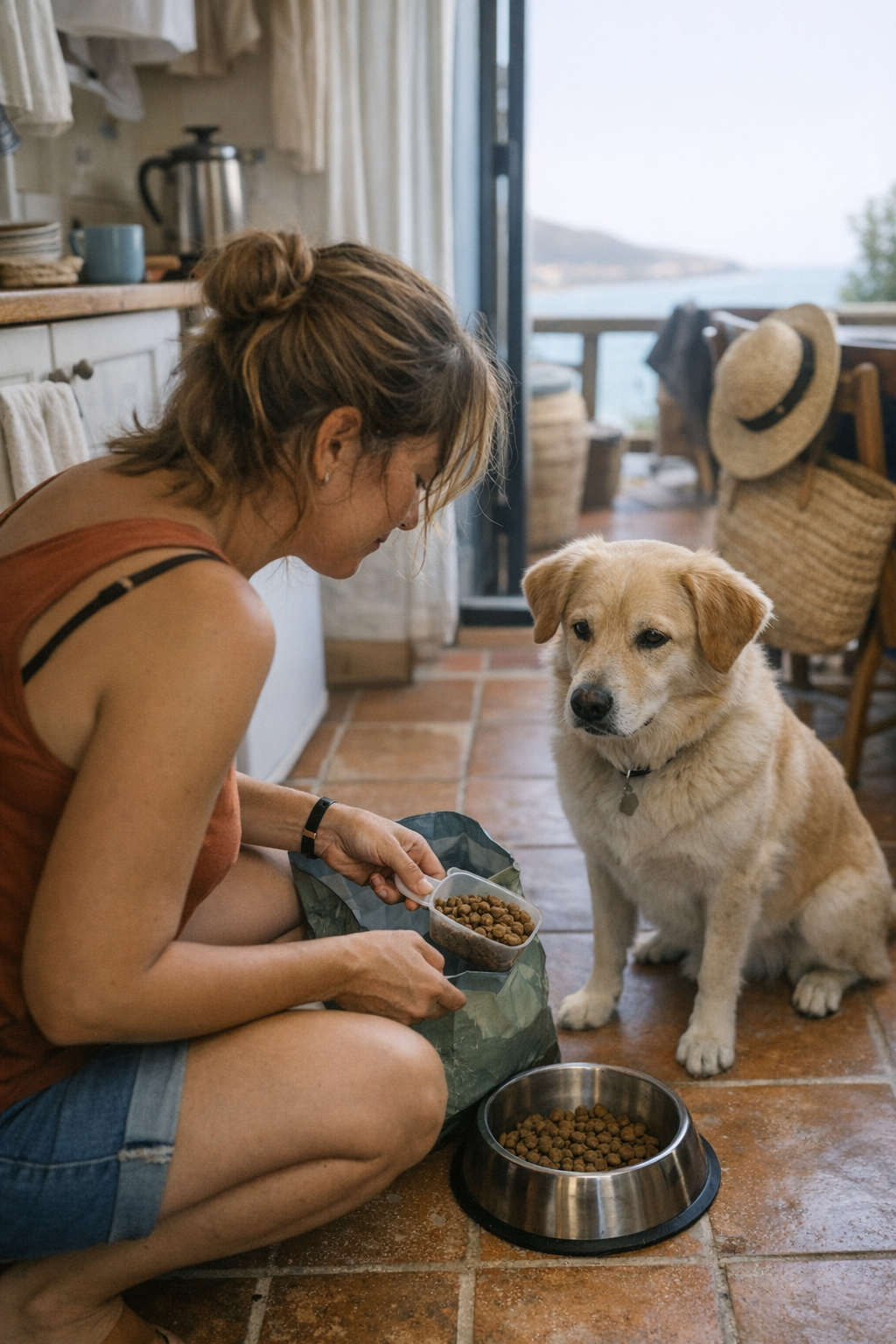
Every dog owner has felt it: you finish dishing out the food, hoping for a quick transition to the next thing; instead, your dog plants themselves at the bowl, watching your every movement, waiting. It’s not just hopeful eyes—it’s a slow-motion traffic jam at the kitchen doorway. Grab the leash for an after-meal walk? There’s a body blocking your reach. Wipe up under the bowl? Your dog repositions, convinced a second scoop might slip their way. After a dozen neat feedings, the same snag keeps creeping back: the space around the bowl looks right, but the actual routine never resets as smoothly as it should. This is where DogPile’s focus on everyday routine makes itself obvious: the difference between a tidy setup and an actually workable one shows up fastest at mealtime.
That Persistent Food Watch: More than Curiosity
The daily drama isn’t hunger—it’s friction built from repetition. Every meal turns into a standoff: your dog refuses to budge, you debate scooping just a little more, and normal flow stalls. The “right” amount never feels final. Even with bowls cleaned and mats straightened, the routine still fractures at the same pressure points:
- Your dog: hovering, eyes darting, always believing the ritual isn’t finished
- You: hesitating, repeating directions, or picking up the bowl just to prove you’re done
This isn’t about how much you love your dog. It’s how reliably the setup closes the loop—or doesn’t. Each small shift in portion or timing teaches your dog that the rules might change any second, so they wait for a signal that rarely arrives cleanly.
Routine Gaps: The Real Source of Mealtime Tension
Picture a weekday scramble: you’re running late, eyeballing portions, maybe adding or subtracting food to match yesterday’s guess. Your dog eats, then re-stations—nose inches from your ankle as you sidestep to fill their water or find your keys. The kitchen, which seemed organized yesterday, now doubles as an obstacle course. A slip in routine here—one careless scoop, one random treat thrown in—drags the transition out. You start wishing the “clean up, walk, move on” sequence could actually happen smoothly, without detouring around one stubborn food-watching dog.
The bigger pattern exposes itself over weeks. Chasing consistency one day, improvising the next, you end up with a routine that always feels slightly off, leaving both you and your dog in a waiting game that interrupts the logic of the rest of the day. The invisible cost isn’t even mess—it’s the repeated inefficiency that blurs the line between mealtime and everything after.
It Looks Tidy—But Does It Work?
Anyone can stage a feeding nook that looks organized—a fresh mat, storage bin, maybe even a hook for the scoop. But that’s not what stops the routine from breaking down. If you reach for the scoop and debate how much, if the bowl drifts closer to the action, or if the dog keeps circling between kitchen tasks—those little cracks in routine spill over into everything else. Suddenly the “organized” setup creates more movement to manage, not less. Instead of clearing out, you end up negotiating foot space, nudging the dog back again and again. The area looks finished but doesn’t actually support the repeated flow you need.
Uncertainty, not mess, is what lingers. Even small gaps—switching to a different scoop, pouring by sight, forgetting to feed at the usual time—teach the dog that they should keep eyes (and nose) on alert. The friction is subtle but persistent: clean kitchen, sticky movement, more double-checking by both you and your dog.
Recognizable Signs Your Routine Is Stuck
The symptoms don’t take long to pile up:
- More circling or blocking near the empty bowl, even after the meal ends
- Quick glances toward kibble storage whenever you pass through the kitchen
- Dog movements syncing with your own, always cropping up in the path to the next task
- Pauses and resets—a feeding that should end keeps re-opening as the dog waits for round two or for a dropped scrap
- Other routines domino—cleaning up takes longer, walks and errands are delayed, your prep for the next event gets derailed
It’s easy to misread this for true hunger, leading to “just a splash more” or frequent mid-routine adjustments. But the loop stays open not because they need more, but because each meal never firmly signals the end, so the friction spills out into the rest of the schedule.
Multi-Use Spaces Make the Problem Harder to Ignore
In most homes, the feeding zone overlaps with every other kitchen task. As you chop vegetables, your dog stays parked near the bowl. As you wipe a counter, you have to ask your dog to move—again. Organized doesn’t equal friction-free. Tiny weaknesses in your setup—like an unreliable routine or a bowl that shifts from its spot—multiply each time you double back and find the way blocked, or have to work around a dog in “waiting for more” mode. After the third or fourth interruption, it’s clear: whatever looks tidy isn’t holding up when the kitchen becomes a shared, high-traffic zone.
The cost is cumulative, not dramatic. Multiple small resets—moving the dog aside, returning after you thought they’d walked away, rearranging gear—make a supposedly organized feeding area the reason dinner takes longer or cleanup never fully sticks.
Small Portion Swings, Big Behavioral Ripples
Consistency isn’t about calories—it’s about how predictably your setup functions. Pour a bit extra one night, cut back the next, and the ritual starts to fray:
- The scoop looks different from yesterday
- The bag comes out again after the meal was “over”
- Schedules stretch or compress, creating suspense instead of closure
Every adjustment trains your dog that feeding is still up for negotiation—so they keep one eye on you and one paw near the bowl, waiting for another exception. The after-meal wait grows, routines collide, and what should be a calm end to feeding keeps re-opening and delaying every next step—from post-meal walks to evening wind-down.
The Power of Absolute Routine (Without Overthinking It)
The smallest, most reliable reset: one leveled scoop, placed in the bowl, at the same time in the same spot. No topping off, no rounding the scoop with guesses, no on-the-fly adjustments because of treats earlier in the day. Owners who break from “maybe a little more” see the standoff pattern fade within days: dogs eat, move on, and stop blocking the next task. The difference isn’t that the area looks better, but that you don’t have to manage friction in the space again and again. In homes where meal size or timing flex to mood, every departure prolongs the open loop—keeping hope (and your dog) glued to the bowl long after it should be routine.
Every time you slip into adjusting for snacks or stretching the window, more time gets lost to repeated interruption. It’s not about controlling calories to the decimal—it’s about making sure the routine itself becomes invisible, not a recurring drama you have to referee every night.
Beyond the Bowl: How Feeding Routine Shapes the Whole Day
Once friction takes root at feeding, it infects every routine that follows. The morning walk starts late as you clear the kitchen yet again. Play sessions get detoured by food-checking detours. Cleanup is never as fast—there’s always fur, crumbs, or a damp patch in the same spot, since you can’t sweep or mop without dodging your dog’s hopeful presence. Even bedtime routines bog down as restlessness ripples into other corners of the house. What seemed like a small inefficiency at the bowl becomes a drag on the whole home rhythm.
The “organized” look doesn’t translate into a routine that actually runs friction-free. If your setup breaks down every time it’s repeated, it isn’t just a cosmetic issue—it’s a sign that the flow of home life, not just the look, needs a reset.
What Actually Works: Routine, Spot, Scoop, and Timing
The real solution isn’t complicated gear or a new method—it’s removing points of friction and closing the loop with reliable tools:
- One scoop: The same measure, leveled, at every meal. No guessing, no “today feels different.”
- Same spot: Never improvise the bowl location, even if your space gets busy. Repeat placement, every time.
- Set schedule: Keep meal times steady. A window is fine, but avoid surprise shifts that pull your dog back into “is this different?” mode.
- Don’t balance for treats: Let snacks stand alone, so the primary meal stays fixed and predictable.
These small details—not extra decor, not just surface tidiness—shut down