
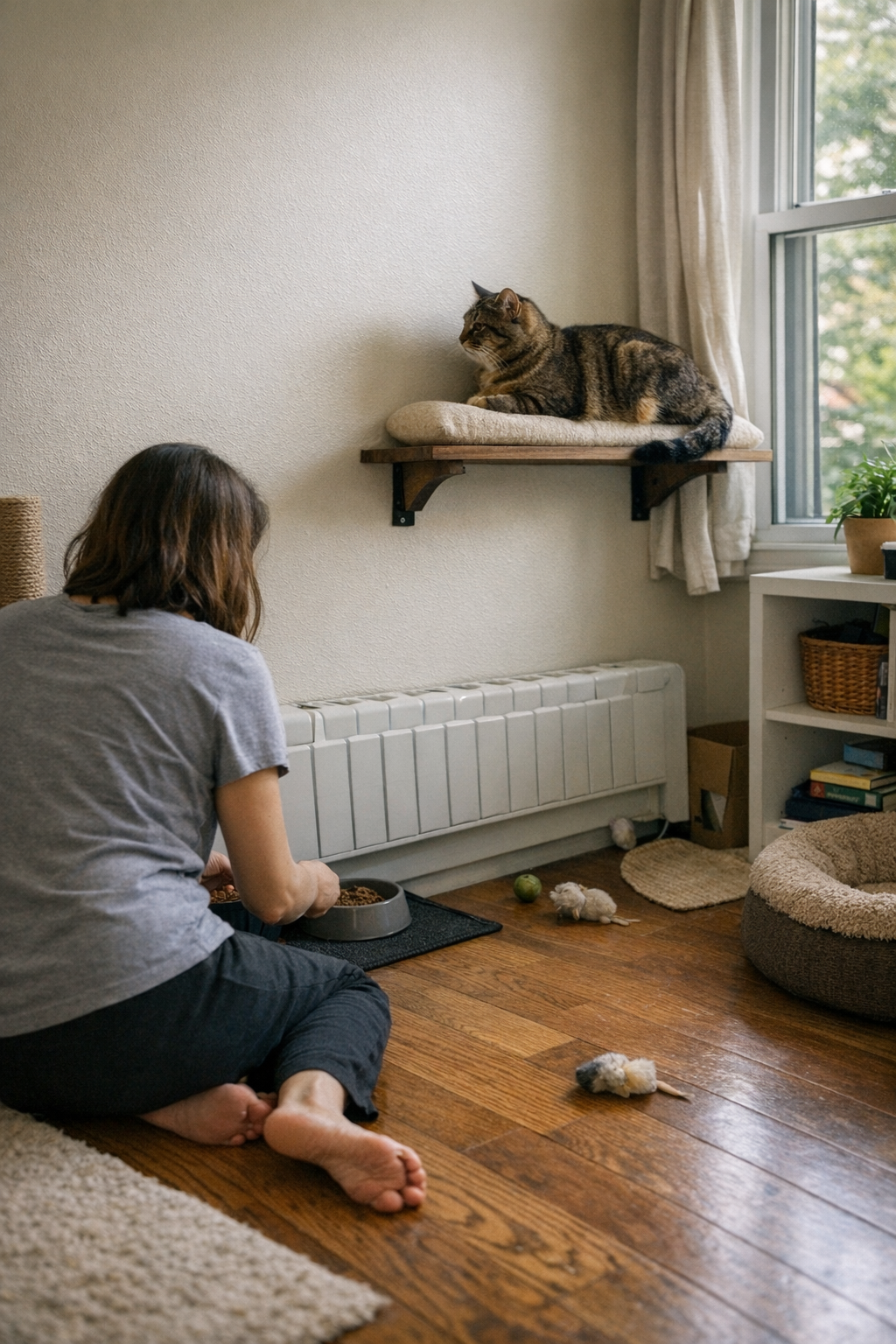
The weak spot in a shared cat room isn’t obvious—until you trip over it twice in a day. At first, laying out food bowls, water, mats, and toys for two indoor cats looks handled. But fast-forward through a week of actual living—feeding, quick refills, hurried cleanup—and what started as order is now a crowded strip of cross-traffic. Bowls slide out into the walkway. Mats curl at the edges. Toys wedge behind a table leg. “Tidy” mutates into a persistent, low-level obstacle course. The difference between a cat room that looks ready and a room that actually works isn’t where you put things, but how the setup holds up against the grind of repeated resets, rushed cleanups, and—every single day—short tempers and slowdowns for both you and the cats.
How Crowding on the Floor Builds Up—And Where It Shows First
Everything claims its space on day one. Set up bowls, a litter mat, a few toys—fine. But with two cats, the friction builds quietly:
- Bowls nudge further into crossing paths after each rushed refill.
- Mats that don’t sit flush let litter escape further every “reset.”
- Toys slide under furniture and disappear—out of reach right when cleanup is needed.
- The rare sun patch kicks off silent turf wars: one cat sprawls, the other sticks to doorways, detouring around feeding and water just to get through.
Tidy starts losing to utility. Any “set and forget” idea dissolves as the week spins forward. The crowding doesn’t announce itself—it just keeps eating up space and time until every step in the room is bumping into something—or someone.
The Unseen Cost: Reset Fatigue and Rising Cat Tension
Routine exposes flawed setups fast. After a few cycles of sidestepping puddles, scooping litter with one hand and toeing a curled mat straight, or fishing a lost toy out from behind the couch again, the reset strain piles up. Not just more picking up—longer detours, more time spent just trying to reclaim the original layout, more friction at every transition. The result isn’t just clutter; it’s slower routines, missed windows to clean, and cats growing unsettled from having their routes blocked or comfort corners taken over by a food bowl that won’t stay put.
One cat starts to avoid favorite patches. The other keeps rerouting, never certain the path won’t cross another bowl or a scattered mat. Skipped or delayed resets build up: a little more mess, a bit less comfort, and a definite dose of tension, both feline and human.
Flat Arrangements: Why “Set” Isn’t Always “Stable”
At a glance, lined-up bowls and squared mats look organized enough. In a real shared cat space, though, first impressions haze over problems that repeat. The flaw isn’t aesthetic, it’s functional:
- A water bowl jutting past a mat edge means someone trips—cat or human.
- The single sunlit spot vanishes under feeding gear and sudden clutter.
- Cats leap over, skirt around, or pause, unwilling to cut through a muddle of “neutral zone” objects.
Give it three days: bowls wander off-line, mats wrinkle, toys sneak out of sight. Organization doesn’t survive rush hour—reaching for water means negotiating past mats and spilled litter. “Looks set” gives way to “works until next feeding, then falls apart.”
Maintenance Creep: When Every Reset Gets Slower
The ghost cost in any cat setup is upkeep. It’s not about tomorrow’s deep clean; it’s the endless string of fast corrections: ducking down for a toy you just knocked loose, nudging a drifting bowl back with one foot, or brushing a chunk of loose fur from a mat that’s become the day’s detritus collector. Over time, these resets demand more mental bandwidth—little tasks that gum up routines.
A window shelf meant for lounging turns into limbo: half human storage, half a persistent cat holding pattern. The tighter the space, the more everyone crowds and reroutes. What should be “shared” space becomes a series of small territorial treaties—each reset less effective, each attempt to tidy up requiring more reshuffling than the last.
Adding a Higher Perch: A Small Change With Real Payoff
One higher perch is a pressure valve for the entire setup—function, not flair. Screw a simple shelf above an unused radiator, and suddenly traffic shifts: bowls stay anchored, mats stop trapping as much fur, both cats claim their own territory instead of coiling around each other. The payoff isn’t just visual; it’s structural relief. Sweeping fur takes half the time. Resetting bowls and mats stops being a full-room negotiation. One cat vanishes upstairs for a nap. The other settles low, out of anyone’s path. Repeat-maintenance time drops off—less daily rearranging, fewer accidental bowl bumps, faster rebounds after each cycle. The space doesn’t just look different. It works better by not asking you and the cats to maneuver around the same obstacles every day.
Why Perches Work: Vertical Space Offloads the Floor
Cats are built to use vertical as well as horizontal space. When feeding setups, water bowls, litter mats, and toys all brawl for the same patch of floor, gridlock follows. Just one stable perch higher up:
- Draws feline foot traffic off crammed walkways.
- Lets cats observe, retreat, or rest from non-overlapping zones.
- Contains bowl and toy spread—fewer “creeping clutter” problems with each reset.
Small rooms see the largest difference—especially when two cats need real separation to relax, and baseline congestion keeps tripping routines. It won’t fix every bottleneck, but there’s less crowding, fewer mid-day resets, and the room feels easier to breathe in, hour by hour.
Separating the Perch From Essentials: Guarding the Traffic Lines
Perch placement is make-or-break for actual relief. Mounting it straight over feeding or litter only moves the jam upward. The smart move: put the perch away from all key zones—opposite, ideally, or diagonally from food, water, and main sleep mats. This splits vertical from ground traffic, allowing cats to move freely: one up, one down, neither negotiating for passage after every meal or reset.
Your reward: resets shrink to fewer steps, the accidental bump or fur pile happens less, and cleaning or refilling bowls no longer means evicting a sleeping cat or dodging tangled gear.
Is One Perch Enough?
For two cats and a moderate sprawl of daily gear, a single high, steady perch—attached to a wall or above a radiator—takes most of the friction out of the daily shuffle. Once a third cat, or more floor clutter, enters the mix, a second perch often becomes the needed circuit breaker, spreading out pressure before it morphs into another daily annoyance.
No need to overhaul the entire room. The point is to find where crowding repeats—at feeding, during play, after cleaning—and let a basic vertical divide do the hidden labor instead of expecting every reset to “fix” the same problem over and over.
What Changes After a Week: Practical Gains in Real Use
With better room flow—one reliable perch, smarter zoning—the upgrades become obvious within days:
- Bowls stay where you put them, with fewer after-meal tweaks
- Fur doesn’t blanket ground mats as completely
- Each cat finds a reliable rest zone (and stays there)
- Resets become quick sweeps, not all-hands-overhauls each time
- You stop needing mid-day “fixes” just to walk across the floor
The payoff is practical: less awkward stretching, less chasing scattered toys, less shoving things back in place while running late. Litter stops invading every walkway. The slow, steady pressure of constant resets eases up—noticeably.
The Ongoing Reset: When Setups Stop Stealing Extra Work
The difference between “looks fine” and “lives fine” isn’t obvious day one—but after a week, with a higher perch and a split setup, you’re not perpetually behind. Bowls stay lined up. Mats uncurl with a flick. Walkways clear. Both cats know their spots. The real test? Not one big fix, but those small, repeated resets: when the setup holds under feeding, cleaning, play, and rest, the room finally stops sapping your time (or patience) just to keep up.
Explore indoor cat setups and practical solutions at StillWhisker