Category: Pet Life

  • Why Keeping Familiar Cat Bedding Helps Your Pet Settle Faster Indoors

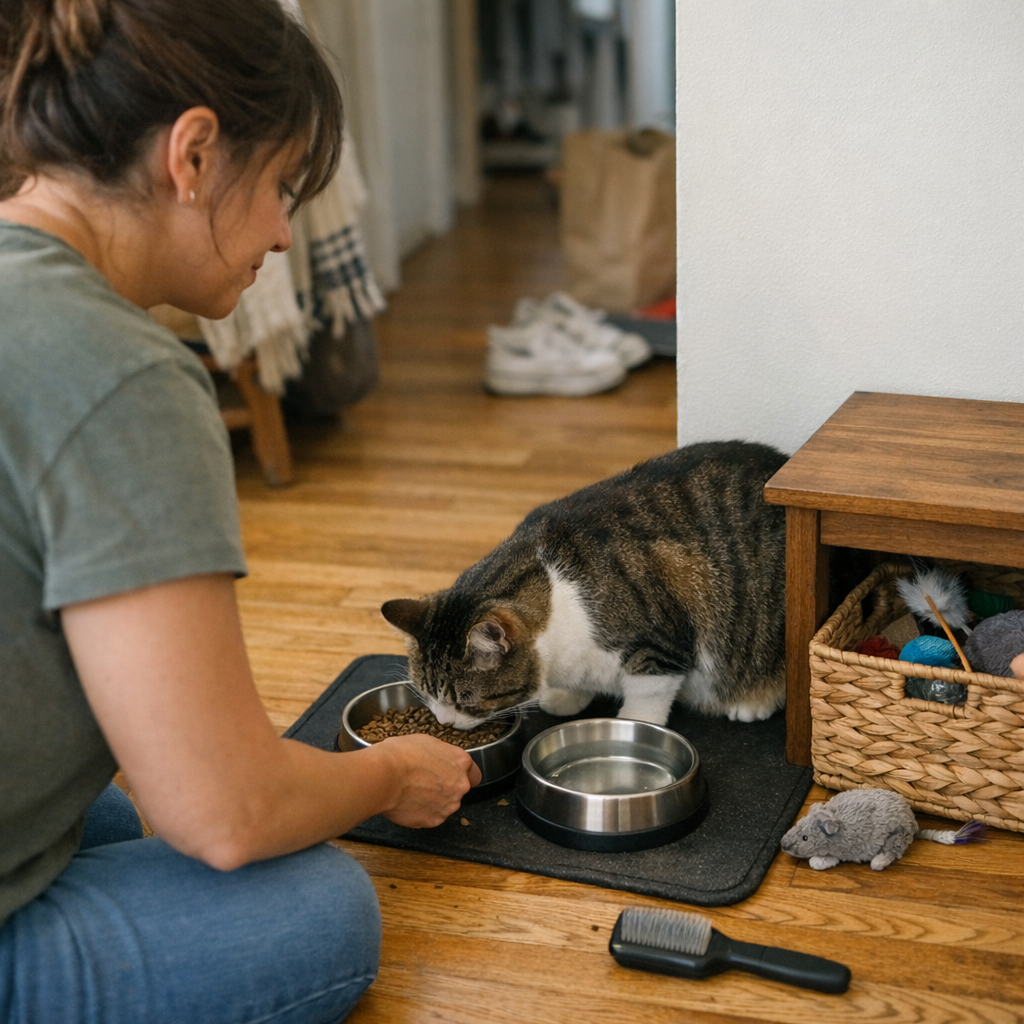
    Swapping your cat’s bedding too often feels like the right move—tidy corner, clean texture, nothing out of place near the food bowls or litter lineup. But beneath that fresh layer, a strange inconvenience creeps in: your cat’s “rest spot” starts to scatter elsewhere. One week you’re refolding laundry; three days later you’re crouching in socks, picking cat toys from unexpected places because your cat avoids her official bed completely. The payoff for clean bedding? Repeated friction: roaming naps, more clutter in shared spaces, and a setup that never fully settles—for you or your cat. This is indoor cat life where real comfort and actual upkeep keep missing each other, and where StillWhisker setups matter more than a stack of clean throws.

    When Cleanliness Backfires: Rest Area or Revolving Door?

    An overwashed blanket can make a rest nook look pristine but strips away what anchors your cat. Change the bedding three times in a week and the pattern often flips: instead of curling up, your cat paces, circles, or skips the bed to annex a mat, a patch of rug, or any soft spot—no matter how inconvenient its location for you. She stretches under the table leg, plants herself by the litter mat, or slides into the walkway where her fur ends up tracked across spaces you thought were “off-limits.”

    This isn’t just a minor adjustment. It becomes obvious on your next pass with the water refill or vacuum—her “designated” corner sits empty, bedding crisp but unused. What’s missing is scent: laundering too often wipes away the odor and texture marks that say “safe zone.” Instead of inviting rest, that clean bedding says “not yours” in cat logic, and the territory game plays out in every other corner of the room.

    Where Scent and Routine Collide: Shared Zones Get Complicated

    The problem intensifies in smaller rooms or shared zones—the exact places most cat setups are forced to live. Her bed shares airspace with feeding bowls, a litter mat, or the edge of a play corner crowded by stray mouse toys. Here, swapping bedding isn’t a silent upgrade. It erases your cat’s map and restarts the routine for everyone: your shortcut turns into another detour, her comfort move triggers new clutter. You tidy; she claims new ground—right where you’ll walk, vacuum, or wipe later. The invisible price for “freshness” is rest lost, friction gained, and a cycle of chasing after the problem each time comfort migrates out of bounds.

    The Real Difference: “Looks Clean” vs. “Feels Right”

    What seems like visual order rarely equals real comfort for either side. A setup meant to be quick to refresh and guest-ready can backfire if it’s too sterile: your cat seeks a familiar scent, not a showroom. You notice the cost first in micro-annoyances: an extra round of moving the bowl to reach the mat, a surprise pile of toys away from their bin, fur tracked onto places you just cleaned. If every reset means hunting for your cat and inviting her “back,” the room isn’t working—it’s just keeping up appearances.

    Real friction shows up fast in daily habits:

    • Bumping a food bowl, only to find the rest mat shifted from cat traffic instead of bedding.
    • Finding new tracks of litter or fur because her comfort spot keeps moving.
    • Wiping down surfaces a second time after your cat’s nap migrated mid-day.

    How Cats Actually Use Their Space: Anchors and Shortcuts

    Most bedding resets miss what really holds a corner together: the subtle build-up—a flattened patch, the scent her paws left behind, a crumb of kibble absorbed by the base layer. These are cues that quietly anchor a routine, turning a throw blanket into a proper territory marker. When you erase them with every wash, the routine gets foggy: the tidy look is temporary, but cat behavior drifts all week. Naps move to the sofa, fur shows up on guest chairs, and play overlaps the very zones you hoped to keep untouched.

    Small Adjustment, Real Difference: The Layered Bedding Approach

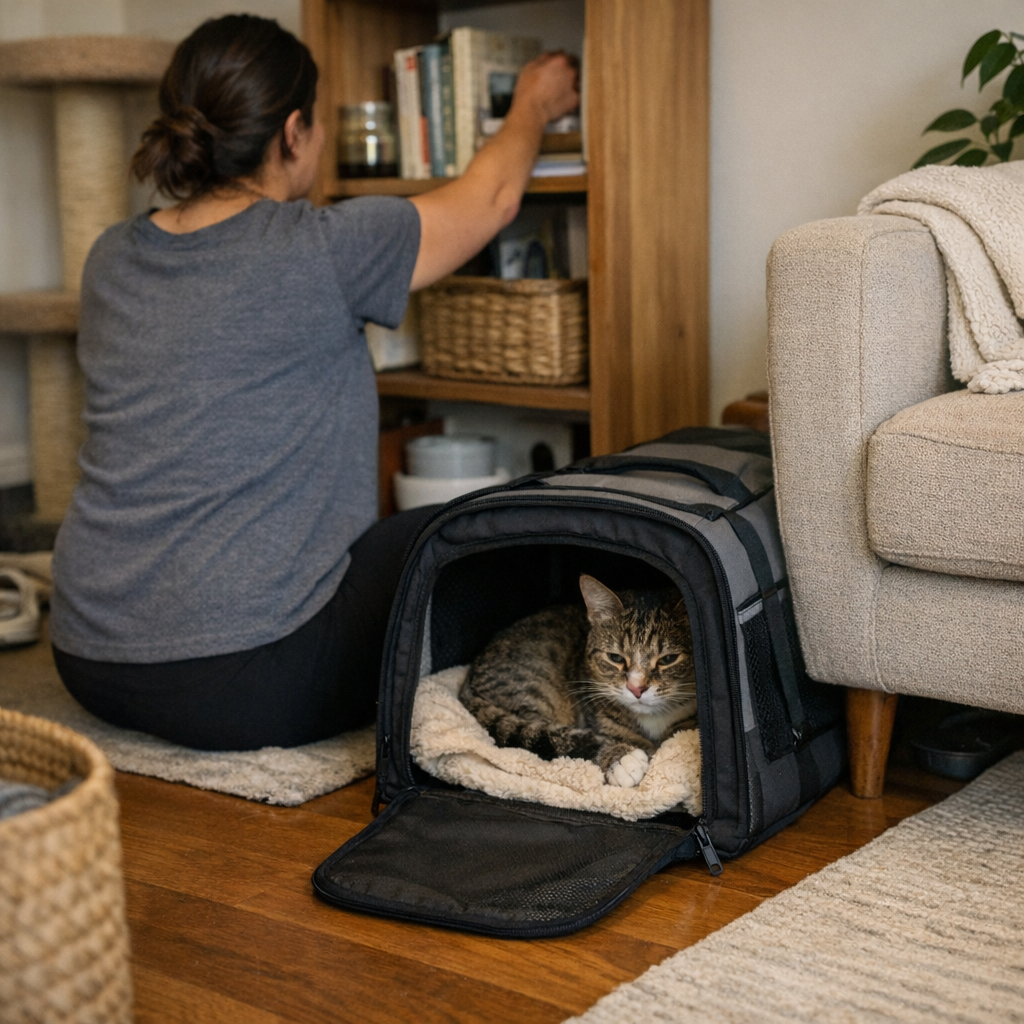
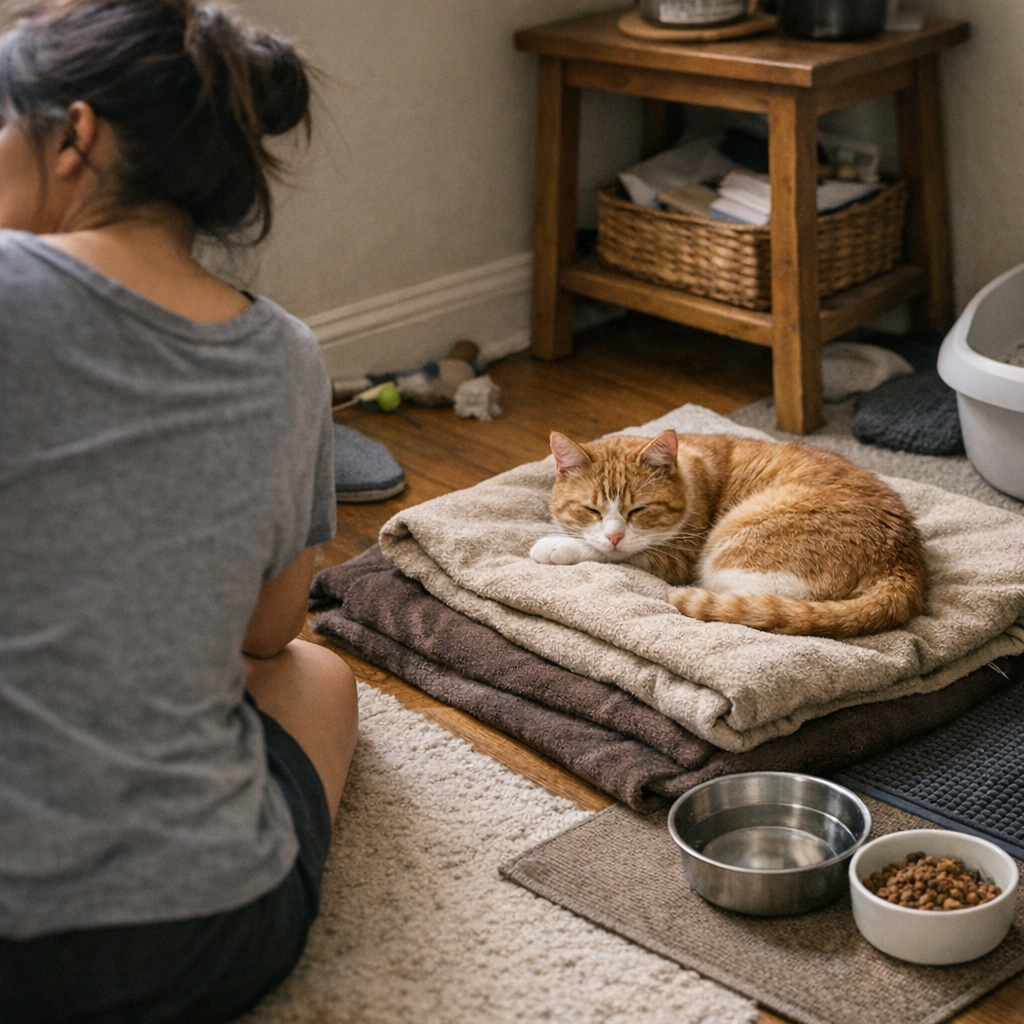
    The practical fix: pivot from full resets to layering smartly. Wash the top blanket or visible cover, but leave the base undisturbed unless soiled. The top can look clean for guests, but the real comfort—the scent, shape, and warmth—remains intact for your cat. Suddenly, the pattern returns: after you fill the water or shake off the litter mat, your cat reclaims her spot without being coaxed. Toys stop wandering. The rest area doesn’t bleed into traffic lanes. Reset friction fades; habits settle. Your setup doesn’t just look ready—it actually works repeatedly, and the need for constant micro-cleanups drops away.

    Practical Home Use: The Realities of Reset and Shared Space

    Quick-Reset Friction

    The clash with daily flow is clear: you bend to move a bowl, only to find bedding crumpled or misplaced from yesterday’s cleanup. Fresh laundry can’t anchor your cat if it resets her comfort every time. The real cost? Again and again, you interrupt whatever you’re doing to nudge her out of the wrong spot or refold a blanket as she circles for somewhere “right.”

    Spillover Into Human Routine

    Especially in tighter quarters, the fix for cat comfort creates new interruptions for you. A just-swapped blanket means your cat picks fresh sites to nap—by the door, in your work space, or on anything you don’t want fur on. Suddenly, your day becomes a series of detours: stepping around her, pausing to grab the vacuum again, running the lint roller twice on the chair you were about to sit on.

    Comfort Can Slow the Setup Down

    New bedding can look “done,” but if it breaks your cat’s pattern, you pick up a different burden: lost shortcuts, extra improvising, and familiar debris spreading into rooms you thought were handled. Even the right supplies, in the wrong reset routine, trap you in a repeating cycle of do-over cleaning and shuffled comfort zones.

    What Actually Works: Comfort That Stays Put

    • Anchor the familiar when you can. Unless bedding is truly soiled, remove fur and rotate visible layers—don’t clear all scent cues at every wash.
    • Spot clean, not overhaul. Air out and tidy up but let your cat’s base scent and comfort marks stay—sanitized does not equal supportive.
    • Balance order with function. In high-traffic, multi-use areas, keep the trusted base layer in place and only swap what’s needed.
    • Watch for real signals— circling, pausing, or skipping the bed mean routine is off, no matter how fresh it looks.

    The Quiet Payoff: Less Reset, More Real Rest

    Reliably good setups for indoor cats aren’t about spotless display—they’re about anchoring comfort where it’s needed, with less fallout for everyone. A blanket that’s a little musty and a mat with some give signal “home” to your cat and save you repeated micro chores: no endless toy roundups, no extra lint rolling, no daily resets just to get back to baseline. When rest stays put, your whole routine feels lighter. The setup not only looks handled—it makes each refill, wipe, or reset actually quicker through the week.

    If you’re stuck in a loop of shifting rest spots, scattered toys, and repeating the same cleanups, test the layered approach. Sometimes the real win is bedding that spends less time in the wash and more time quietly holding the whole routine together.

    http://www.stillwhisker.myshopify.com

  • How Afternoon Noise Disrupts Your Dog’s Rest and Routine

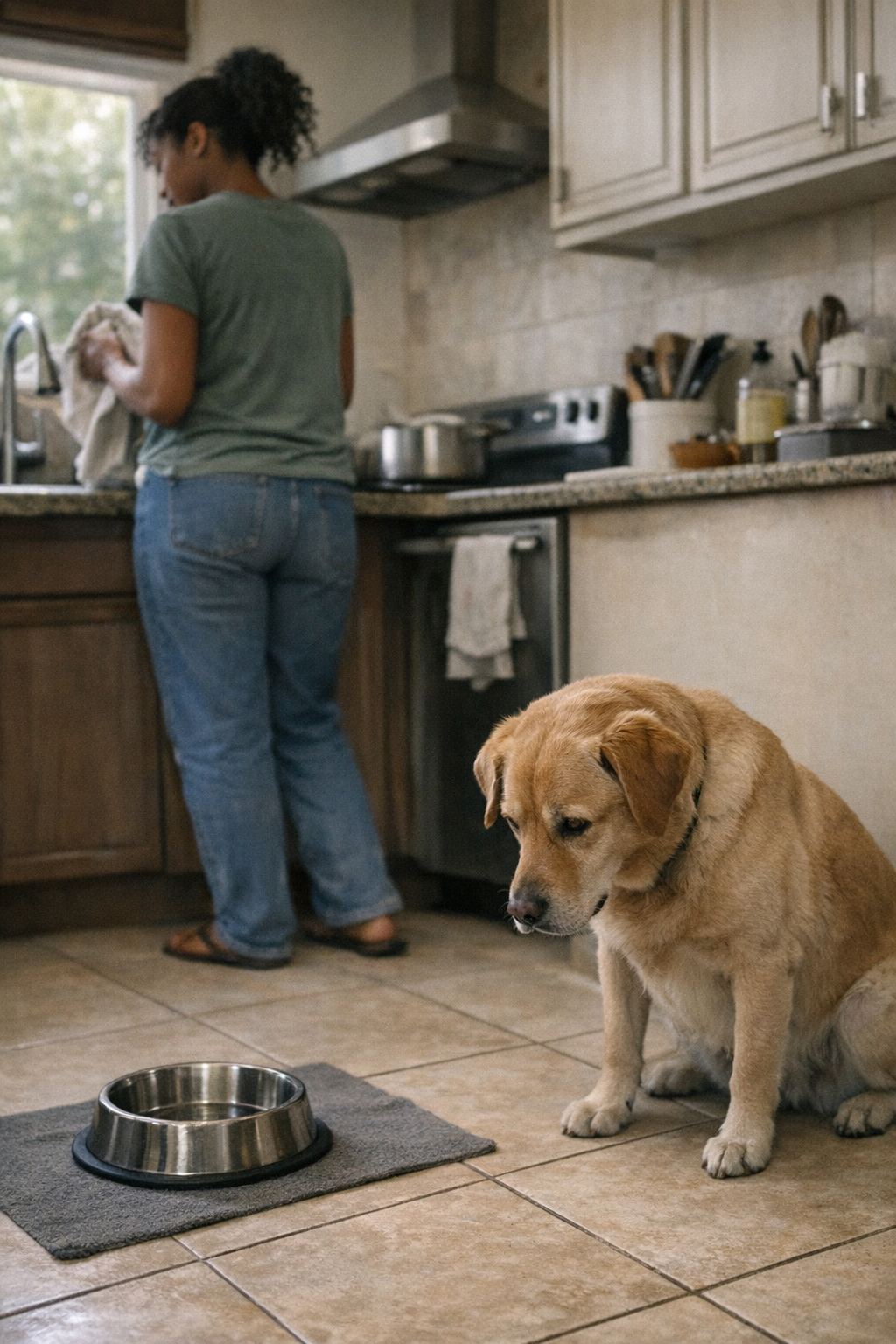
    Afternoon pacing isn’t just restlessness—it’s a daily friction point most dog owners keep tripping over. Late in the day, as kitchens fill, shoes pile by the door, and voices bounce between rooms, a familiar pattern repeats: your dog cuts the same path between bed, bowl, hallway, and threshold, never settling. It’s not boredom or a simple bathroom request. It’s a breakdown in routine reliability. When a dog abandons their bed for the fourth time in under an hour or sidesteps bowls because a shoe rack or laundry basket blocks the way again, you’re living with the daily gap between a “neat” setup and one that actually holds up to repeated use. That’s the DogPile world—routines nudged off course by tiny, continual misses.

    What Afternoon Pacing Really Signals

    Many owners dismiss pacing as pent-up energy or impatience for a walk. But true afternoon pacing isn’t sharp or playful—it’s a low, steady shuffle through spaces just as household noise crests. You see it in the hesitation before settling, the way your dog stands half-on the bed, eyes locked on the next doorway, ears twitching each time a family member passes or a chair scrapes in the kitchen. These aren’t random laps; they’re the signs of downtime routinely interrupted by the flow of daily life.

    What starts as subtle drifting—moving from water bowl to door to hallway—adds up. When your dog glances at the bed, then at you, then at the pack of feet crossing the entryway, it means even rest is now a calculation. Comfort becomes contingent on the next interruption: a noisy appliance, a misplaced bag, the traffic in a supposedly “quiet” zone.

    When Routine Friction Adds Up

    Let this repeat a few afternoons in a row and the cost becomes obvious. Meals are rarely finished in one go, the dog’s bed is a stopover, not a haven, and downtime never fully resets for either of you. Owners often write it off as “midday jitters,” but the cycle grinds down routines until every homecoming or meal time feels like starting from scratch.

    Picture a Tuesday: laundry machine clattering, a dropped pot in the kitchen, footsteps echoing down the hall. Your dog circles from den to kitchen, pauses at the water dish, then shifts closer to the door, waiting. You find paw marks scuffed into the floor by the bowl, toys pushed aside, and when dinner prep begins, the dog hovers at the edge, ready to slide away from the next incoming noise. These aren’t quirks—they’re the visible cost of relaxation lost to ordinary commotion.

    The Real Cost: Fragmented Days and Rising Tension

    It isn’t a single dash or bark that wears down your routine, but the steady circuit of laps that never settle. Play becomes scattered. Feeding routines splinter. Instead of relaxed transitions, both you and your dog mark time until the next pause collapses under the daily rush. Every “break” is temporary, and everything needs resetting again before it sticks.

    Behind the Quiet Erosion: How Setup Shapes Routine

    It’s a hard fact: tidy setups don’t always translate to practical, usable routines. The bed lined up just so? Worthless when it sits right in the hallway traffic, and your dog stands mere seconds before darting out of the way. Bowls optimally positioned in the kitchen? All it takes is a jostle from passing bags, and water splashes or food gets nudged off course. The toy basket, “in its place” in the walkway, becomes a stumbling block every time your dog grabs something, only to find feet in the way.

    • Bed on the edge of a busy hallway—your dog drops his head, only to snap up as someone charges past.
    • Nap broken by rolling laundry baskets or an oven timer’s blast.
    • Toys “stored” in neat baskets, instantly scattered by little nudges and redirected steps.
    • Water bowls never truly out of reach—until a hasty cleanup or grocery drop shifts them mid-meal.

    This is where setups that pass the “looks organized” test fail the lived-in one. Slow access, repeated interruptions, and pathways that keep sliding into each other—the practical friction wins out every single time if the arrangement can’t withstand repeated, real-life movements.

    Changing the Placement, Changing the Routine

    The wins almost never come from buying more gear—but from watching where your dog repeatedly tries to land when the commotion hits. Most dogs aren’t angling for the prettiest corner; they’re angling for any spot buffered from the parade of feet and commotion.

    In one real-world pivot, sliding the bed away from a busy threshold and into a window nook—half-hidden behind a stationary chair—immediately dropped the ambient noise, and fewer footsteps grazed the resting zone. Moving water and food bowls closer to this corner meant meals could happen with less restart and fewer sidesteps. The result? Longer stretches of true rest. Less persistent standing by the door. Play that lasted, rather than fragmenting after each footstep.

    Fine-Tuning Matters: Small Adjustments, Big Results

    It rarely means an overhaul. Pivoting a bed so it’s shielded by a wall, placing bowls just out of the corridor’s line of fire, or buffering the rest zone with a soft runner or side table can mean the difference between a dog who paces and one who actually settles. Instead of endless re-circling, you get completion: meals eaten, paws dry before tracks appear, a rest area that isn’t another “chore spot.”

    Typical Scenes Where Friction Returns

    This friction isn’t theoretical—it’s visible in routines every owner endures:

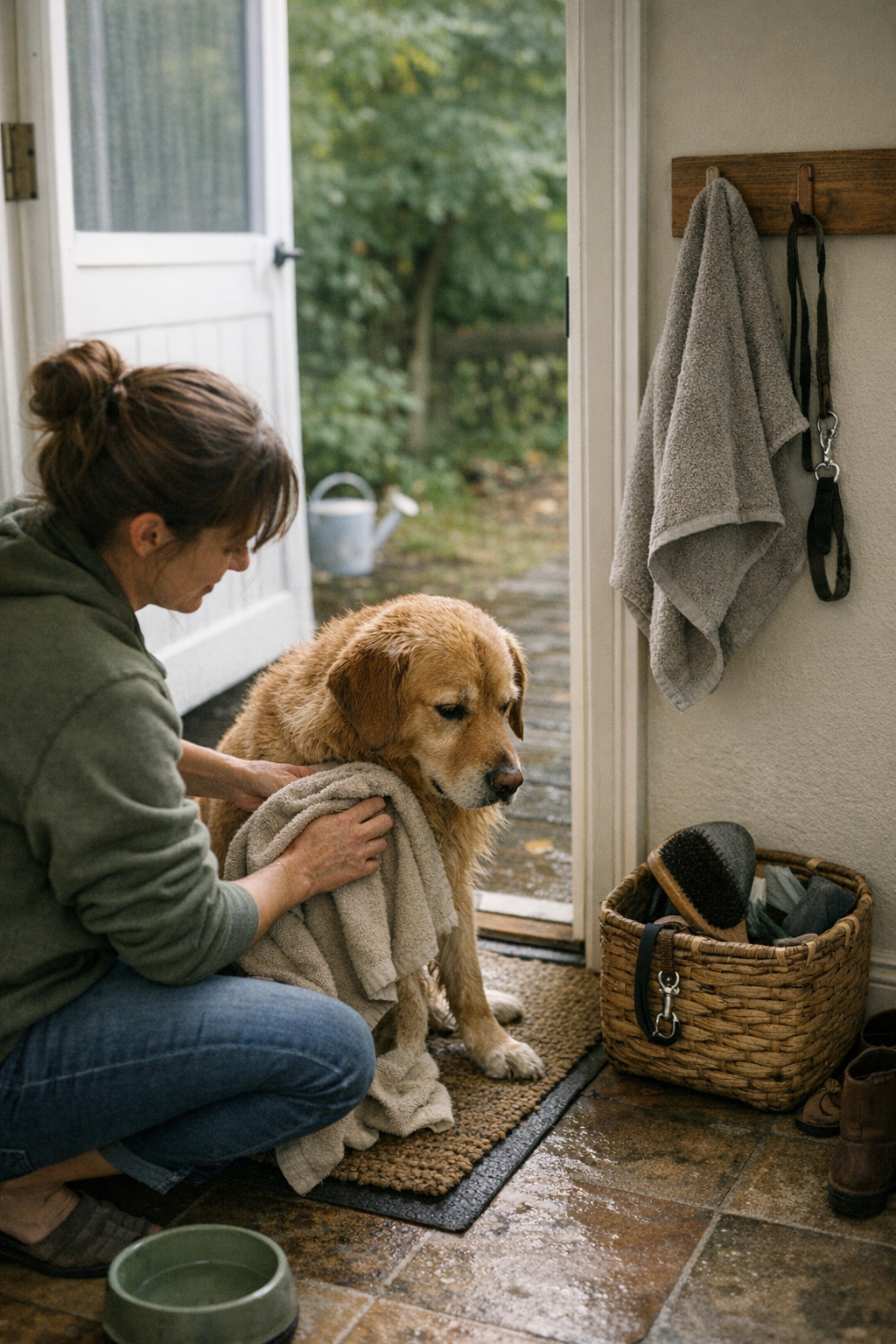
    • Post-walk return: You reach for a towel but realize it’s been pushed behind the door again. Your dog dances in place, dripping or muddy, as you scramble, prints multiplying with every second of delay.
    • Crossing toy territory for the third time: You step over the same plush squirrel or chew rope blockading the path to your keys. Morning order dissolves as daily use scatters everything underfoot.
    • Mealtime fumble: You bump the water bowl with a stray bag on your way to unload groceries; suddenly, the floor’s slick and feeding stops and restarts in short, anxious bursts.
    • Evening reset stalls: You want to set a calmer tone, but the bed sits right in the main thoroughfare. Instead of downtime, you’re negotiating where everyone—dog included—can actually land.

    Each time, the problem isn’t “stuff everywhere”—it’s access blocked at exactly the moment it matters most. Picking up and resetting only helps until the next rush. Friction will always cycle back unless the arrangement survives the day’s pattern, not just the morning’s tidy sweep.

    The Difference Between Looking Tidy and Living Easy

    Morning can fool you: a corner free of clutter, a bed plumped, bowls aligned. But as the day intensifies, the weak points show up. The dog bed loses its calm shield. The bowl’s at risk of a spill or shuffle every single meal. Toys that seemed contained creep farther into walking space. A setup that photographs well collapses under repeated movement.

    Progress comes not from another organizer or stricter tidying, but from tracking which pain points survive after three, four, or five resets. If your leash still tangles around an entry bench, or your dog’s nap gets clipped by kitchen chaos every day, you’ve found the honest spot that needs changing. That’s the gap between routine that holds and routine that just “looks better.”

    Reliable Progress: Living With, Not Against, Your Home’s Patterns

    No setup is perfectly frictionless. Even the right corner picks up noise or the occasional misstep. But setups tuned to the dog’s actual movement—where towels are within hand’s reach after a walk, rest zones aren’t instant shortcuts, and bowls aren’t reset after every meal—cut down on the slow build of owner annoyance and dog frustration. Results show in:

    • Faster post-walk resets—towel where you actually grab it, mud tracks held closer to the entry
    • Rest spots that don’t need constant policing to stay usable, even when the house surges
    • Bowls that survive the rush and don’t become just another thing to move around again and again
    • Routines that don’t unravel at the first sign of noise, bag drop, or movement clash

    The solution isn’t perfection—it’s real setups that absorb daily traffic, not just disappear at the first challenge. With each small change, the afternoon gets less scattered, the return flow less tense, and the difference between living “around” your gear or moving through your day finally becomes visible.

    DogPile — practical setups for real daily life with dogs

  • Streamlining Pet Care Routines to Reduce Hidden Daily Frustrations

    Feeding your dog, wiping paws after a muddy walk, filling the water bowl—these daily moments should run smoothly. But too often, your routine gets tripped up in small, predictable ways: the scoop is missing, the towel’s in the laundry, cleaning wipes are out of reach. These aren’t rare hiccups; they’re chronic interruptions, cropping up exactly when you’re trying to keep the day moving. A setup that looks organized at a glance can still break under pressure where it counts—one missing item at the wrong moment, and you’re left circling the house instead of caring for your pet. The CalmPetSupply world centers on solving these repeat snags, not just hiding them.

    How Routine Gaps Appear in Daily Pet Care

    Every pet owner recognizes this scene: you head to the feeding station, food bowl ready, only to find the scoop buried under yesterday’s mail. Rinsing out a water dish, you reach for a drying towel—except it’s in a back room, not where you need it. The routine still “works,” but it forces you to improvise, grabbing a paper towel from the kitchen or calling to your dog to wait while you hunt for an essential. Calm gets broken not by big disasters, but by these repeated, tiny failures in setup.

    Each moment of searching or reaching triggers a visible disruption—a task that should take seconds stretches out and signals to both you and your dog that something basic is missing. These aren’t just minor inconveniences; over time, they wear down the sense of steady routine.

    Mid-Task Delays: The Hidden Cost to Calm

    The real test of your pet care setup doesn’t come when it’s freshly tidied. It’s when you’re already mid-task and need one thing that’s not there. Consider:

    • You refill the food bowl, realize the rim is still wet, and reach for a towel that’s nowhere near the station.
    • After a rainy walk, you need paw wipes—only to find them trapped behind a pile of shoes by the door.
    • The broom for stray kibble is stored out of sight—and just as out of reach—so crumbs linger until the next round of cleanup pressure builds.

    These mid-routine delays quietly drag down your flow, repeating at exactly the wrong time and breaking your momentum.

    When a “Tidy” Setup Falls Short

    A pet care corner can look neat, with bowls stacked and wipes out of sight, but if every use means shifting clutter, it’s not working. Most common: you kneel to fill a bowl but have to move a bag of dog food or clear out scattered leashes just to reach the wipes. Organization that seems fine when unused often becomes friction when you actually run the routine. Over a week, the clutter creeps back—tools migrate, storage bins get blocked, and once-easy access becomes a series of repeated maneuvers.

    Especially during rush times—after work, late-night checks, or before heading out—the extra seconds lost add up. A drawer meant for towels gets filled with odds and ends, or a basket of brushes goes missing under laundry. That “tidy” look delivers less and less until friction becomes the new normal.

    Realistic Scenes: When Convenience Gets Blocked

    Evening is when weak setups show their hand. You’re ready to feed your dog; he’s waiting by the bowls. But the wipe for spilled water is missing, or the scoop is somewhere at the back of a hard-to-reach drawer—so you detour and your dog’s patience wears thin. After a muddy walk, towels exist, but you’re stuck fetching them from another room while paw prints spread across the floor. Simple grooming becomes a hassle when the brush is hidden behind laundry piles. These aren’t dramatic crises, but they are routine slowdowns—adding just enough resistance that quick care becomes drawn-out work.

    Each extra trip across the house, or reshuffling to uncover the basics, gives away that the setup is still patchwork. Tidy on the outside, inconvenient on repeat use.

    Small Fixes That Reshape the Routine

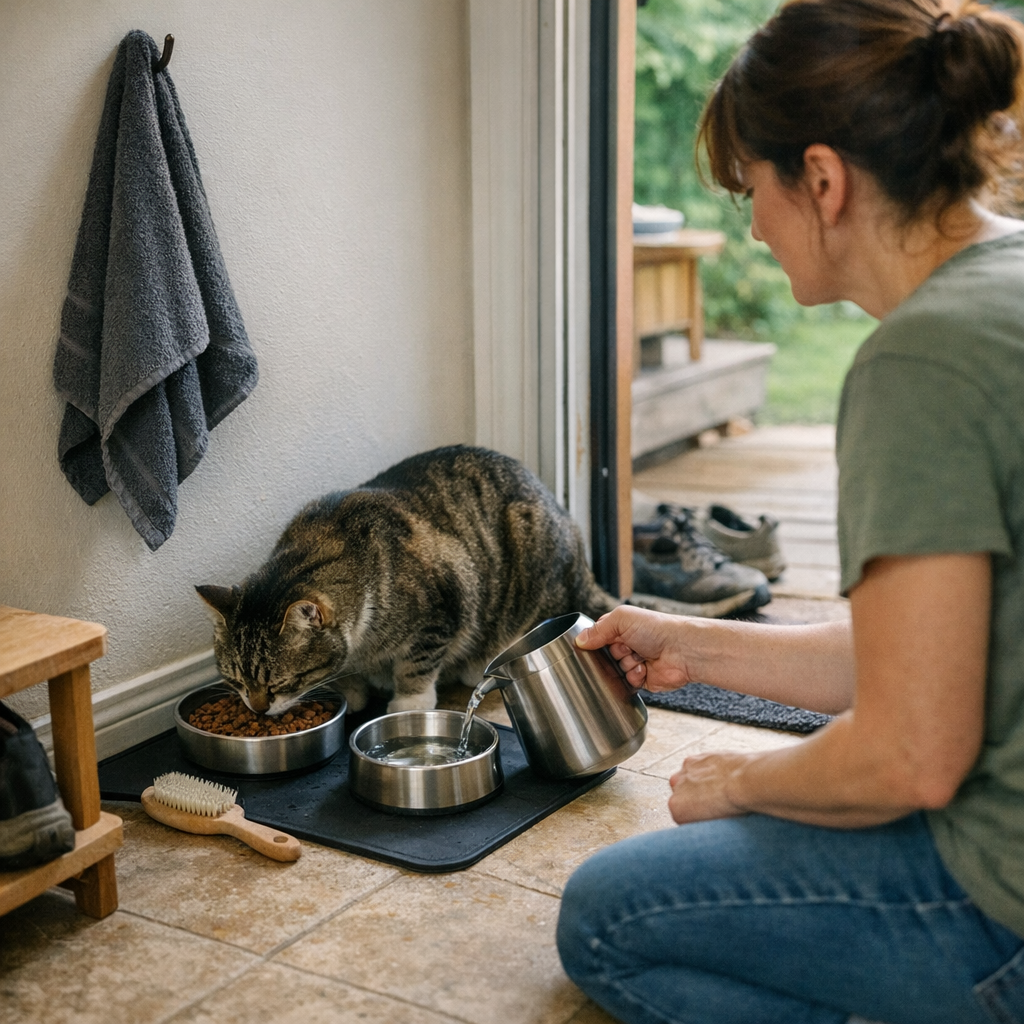
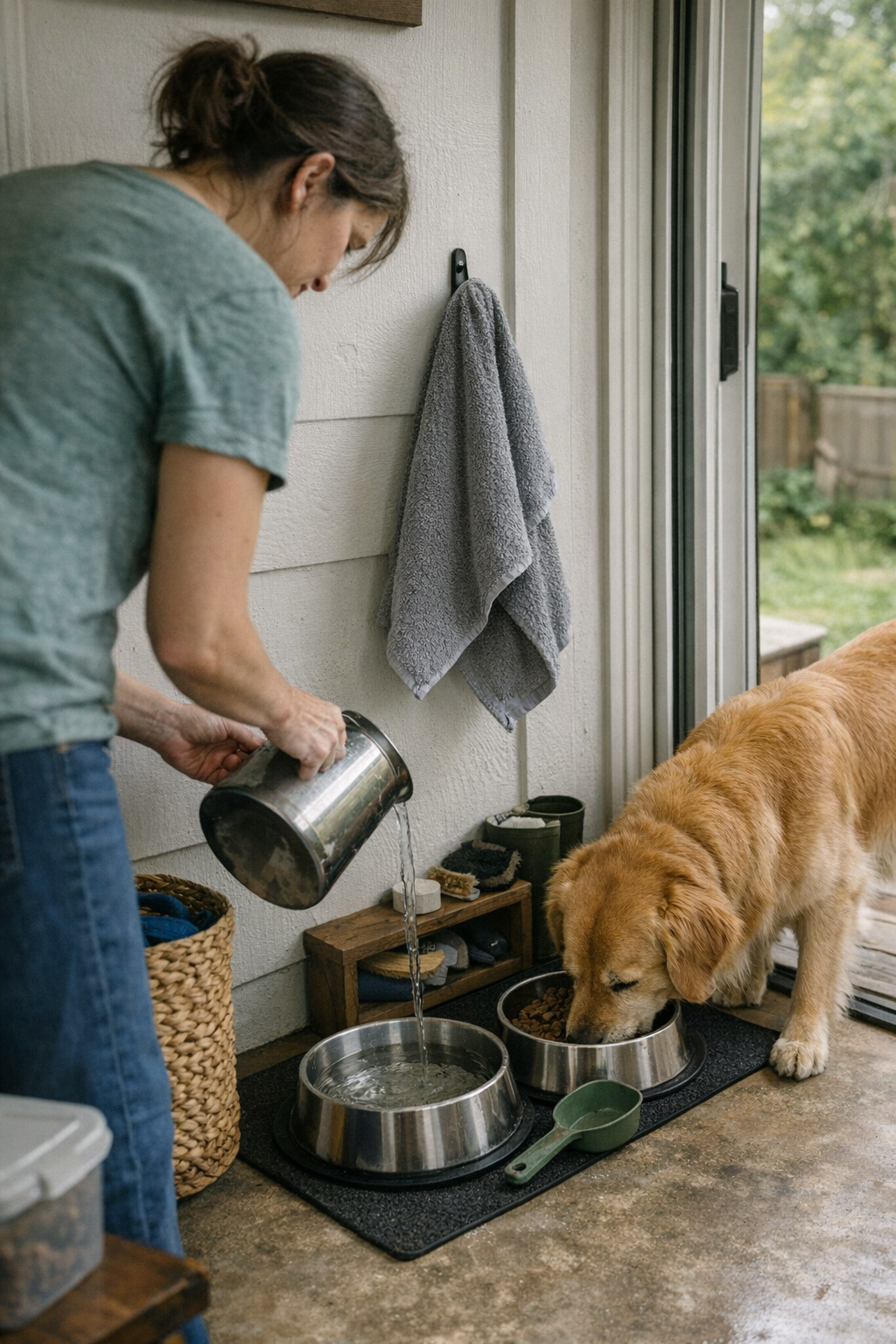
    Most real-world improvements aren’t about total makeovers—they’re about putting the right item in exactly the right location. Mount a towel hook above the feeding zone and hang a thick, visible towel: suddenly, drying a wet bowl happens in one move, not three. You’re not balancing a drippy dish on the counter or rummaging through the kitchen. The refill now flows without the clumsy back-and-forth.

    You feel the shift instantly; there are fewer “hold on” moments, less waiting for your pet, more time just moving through the routine. Keeping a drying towel within reach, a drop-cloth for floor spills near the action, or a paw brush parked by the entry takes your care from scattered patches to a single, reliable rhythm. These fixes don’t add work—they subtract micro-pauses and patch jobs.

    From Hidden Work to Real Ease

    If you catch yourself making two extra trips or apologizing for slow routines, there’s likely a structural gap repeating behind the scenes. Effective care isn’t about “almost” calm—it’s about being ready at every step. Does your setup let you finish feeding, clean, and reset in one flow, or does it keep you cobbling together quick fixes? Every time an item is exactly where you need it, you avoid the hidden effort that turns basic pet care into a layered hassle.

    The real difference isn’t in appearances—it shows up in repeated handling. The process gets lighter only if the basics are always present, always ready, right at the pinch-points of your daily rhythm.

    Supporting Calm that Lasts

    Beneath most pet care routines lies a quiet obstacle course—missing towels, wipes that drift out of reach, or supplies that block each other. Spot the sticking points where your flow gets interrupted, and adjust the placement or access. Hang the towel above the bowls, park the scoop in the same dish after each use, keep wipes visible near the entry—these micro-adjustments turn “looks fine” into care that actually feels sustainable. The more repeat routines run without these slowdowns, the easier daily life gets for both you and your pet.

    Sometimes calm just means being prepped for the next pause or cleanup—not perfect, but always ready right where it matters.

    See more daily setup solutions at CalmPetSupply.

  • How Small Changes in Cat Zones Cut Down Daily Mess and Stress

    A cat space that looks tidy in the morning rarely survives a full weekday without showing its weak spots. When the water bowl is wedged by an abandoned toy, the mat curls up right where you step, or the grooming brush is just out of reach—what started as “clean and contained” grinds daily routines to a halt. The setup that once seemed settled quickly slows you down in the middle of dinner prep or a late dash for the door. That’s when the difference between looking tidy and functioning smoothly becomes impossible to ignore—and this is exactly where the right StillWhisker setup begins to matter.

    Why ‘Neat Enough’ Cat Setups Break Down Fast

    The real pain points show up mid-routine, not during Sunday resets. Maybe the bowls are perfectly aligned and toys sit untouched—until you juggle groceries at six, and your cat claims the feeding corner, cutting off your way through. Or the zone looks organized until you’re late, swipe for a brush that’s slid out of reach, and discover litter and crumbs scattering past the “cat area.” A setup that looked simple to maintain turns into clutter to dodge, finding you doing unplanned reset work every time pressure builds.

    Visual order blurs fast when routines overlap. Life with an indoor cat means stacking micro-tasks: feeding, spot-wiping, toy returns, awkward water refills. Each layer exposes new reach problems, misplaced supplies, or mess creeping past its boundary. If your setup isn’t designed for actual routines, it starts to work against you—especially by the second or third reset of the day.

    Moments When Friction Stacks Up Instead of Down

    Bowl Refills Blocked by the Usual Clutter Creep

    You want to refill water, only to stop short: a plush toy blocks the way, or there’s an unseen sticky patch curling the mat. Instead of a quick top-up, you’re kneeling awkwardly, moving clutter, and risking a spill. Each small annoyance adds up, making the reset slower and multiplying frustration across the week.

    Cleanup That Spreads Beyond the “Cat Zone”

    Mats bunch, bowls drift, and toys escape—letting water or crumbs wander out onto the main floor. Suddenly cleanup isn’t limited to the feeding corner: you’re wiping under the table, chasing litter, and retracing your steps after every pass. The edge between “cat mess” and “whole-room work” fades quickly.

    Supplies Present, But Never Instantly Handy

    Brushes and wipes are somewhere in the right area—just not right where you need them. You lean or stretch in the middle of cleaning, vowing to “fix it later,” but pressure always crowds out good intentions. Tools migrate inches from their base after every round, and that little gap always eats up valuable time on busy days.

    Shared Spaces That Stop Feeling Shared

    Your cat loves spreading out, but their comfort can scramble your traffic zones. Feeding mats nudge into hallways, toy baskets drift toward doorways, and sharp storage bins block the path with laundry in your arms. Human spaces shrink, friction increases, and containment lines mean less with every day lived in.

    Why Most Setups Feel Good—Until Daily Life Starts

    An organized zone feels fine at a distance, but real routines hit hard. Your cat drags things, pushes bowls, and expands territory as days go by. What felt manageable wakes up old frustrations every morning rush or evening reset—and those stress points only become obvious under repeat use, not in the first hour after a big cleanup.

    Comfort That Quietly Increases Your Upkeep

    Soft mats or cushy blankets may keep your cat napping, but if the mat can’t stay flat or the blanket collects fur that won’t shake off, resets get slower and more annoying. One comfort fix turns into another clean-up chore, especially once habits settle in and you can’t keep resetting from scratch.

    An Area That Resists Rush Hour

    The test isn’t about having “less stuff”; it’s whether the setup holds up under real overlap. If every toy or tool adds an extra pickup step, or if a single bowl out of line blocks the rest, resets get exhausting fast. Repetition reveals weak points no surface-level organization hides.

    Moments That Expose Hidden Weak Points

    Certain routines break the illusion of control, whether or not you notice every day. If you’ve lived with an indoor cat, these probably sound familiar:

    • You reach for a bowl—only to knock into an old chew or treat buried just out of sight.
    • Losing track of time until wet socks tell you water has crept under the mat again.
    • Cleanup spray is close but not visible, so the sticky spot remains until it’s hardened in place.
    • You tuck away toys, only to spot escapees back on the main walkway half an hour later.
    • Running late, you realize grooming tools have drifted behind bowls or lamps, forcing another awkward shuffle.

    Small Tweaks, Real Impact: Adjustments That Last

    The simplest fixes aren’t about perfect tidiness—they’re about shielding your setup against collapse when real pressure hits. For example, sliding the food bowl a bowl’s width away from the mat edge creates a spot-clean zone that stops crumbs and water from wedging straight into seams. It’s a minor change with a big payoff for next-day upkeep.

    Or, after play, sweeping toys fully under a table ledge—not just beside their basket—keeps them paw-accessible but stops toy sprawl from creeping into every high-traffic area. With repeated, low-cost adjustments like these, your area becomes not just set-and-forget, but actually able to survive daily repetition at real speed and pressure.

    Set Boundaries, Cut Repeated Work

    Clearing just enough space from clutter means fewer resets. Anchoring mats, giving zones a little extra width, and grouping tools by true reach—not just by category—lets resets shrink, not stack. The goal isn’t a showroom look, but a routine that doesn’t fall apart outside the rare quiet morning.

    Containment That Still Moves When You Do

    Stowing supplies out of the walkway—yet instantly grabbable—provides order without pushing work further away. Your cat’s zone stays open for them, but shared spaces stop being constant trip hazards. Daily maintenance gets smaller and more automatic, instead of turning upkeep into an everyday event.

    What to Watch for After Each Use

    Don’t trust last night’s tidy look to last. After each meal, play, or grooming session, take ten seconds to check the core trouble spots:

    • Are bowls drifting off the mat or blocking paths?
    • Did every toy make it back, or are some already on the move?
    • Is the mat migrating or curling toward your shared space?
    • Do brush and wipes sit where your hand expects—or where it has to dig?

    Fast, specific checks halt drift and keep the little messes from growing—eliminating the need for yet another “big” reset.

    The Payoff: Practical Trust in Your Setup

    This isn’t about perfect containment or a static system. It’s about building trust that your cat’s area will keep up—through busy days, surprise visitors, and repeat pressure—without falling apart or adding hidden work. When a space absorbs repeated use instead of spreading out tasks, you get more than an area that’s clean: you get a setup that actually keeps your home easier to live in, even when nothing is going according to plan.

    For setups and supplies that make everyday cat life genuinely easier, visit StillWhisker.

  • Why Keeping Dog Shoes and Towels Together Transforms Your Entryway Routine

    The stress point in your dog’s daily walk isn’t the walk itself—it’s the silent breakdown at your front door. You reach for your dog’s leash, but your shoes are buried halfway down the hall. The towel for muddy paws? Out of reach, folded somewhere “tidy,” but useless when you actually need it. Every day, this split layout doesn’t just slow you down; it multiplies frustration: juggling leash, dog, door, and missing essentials, all while muddy paws threaten the clean floor. If you’ve ever skidded across wet footprints or lost control as your dog zips into the house, you know the setup isn’t working. The ordinary friction—missed towel, delayed wipe, wrong shoes—builds up until you realize: daily comfort depends more on entryway reality than how organized it looks.

    The Surprising Cost of a Split Setup

    No one plans for the setup to fail—at first, separate storage feels like the ultimate in neatness. Shoes vanish into closets, towels fold smoothly in the linen stack, leashes dangle calmly by the door. But the moment real use hits, flaws appear. You gear up: shoes first, leash clipped, only to realize the towel’s missing. Shoes off, dash to fetch, leash tangles. After rain? Mud works its way across the threshold before you’ve even grabbed the right towel. The “tidy” system turns clumsy, and what should be a single fluid exit becomes a scattered, drawn-out hassle. The more demanding your walks—think muddy parks, sudden storms—the faster these splits take over your routine.

    When Tidy Turns into Trouble

    Visual order means little once a restless dog is waiting. Shoes tucked away, towels stacked with linens—all looks good until that first wet walk. You reach home with a damp, excited dog, only to fumble for a towel that’s nowhere close. Three or four wet walks in, and your entryway’s “calm” design exposes its flaws: you’re carrying the scramble from the door into the kitchen, every new streak a reminder that the routine isn’t keeping up. The time you “save” on tidying up is wasted three times over in post-walk resets, floor scrubbing, and untangling leash and limbs as your dog charges ahead. Tidy, in this case, becomes daily trouble—not a solution.

    Morning Rush: When Efficiency Really Matters

    In the morning, seconds count. Any block slows you down. Your coffee’s cooling, your dog’s bouncing, and you can’t find those shoes—or the right towel. Instead of one smooth motion, you freeze: backtracking across rooms, bumping into misplaced supplies, losing the leash as your dog coils around your legs. With misaligned storage, every morning is a rerun: grab, realize, reverse, wipe, wish it were simpler. The result? Tension rises before you even make it to the sidewalk, and muddy prints remind you all day exactly what didn’t work.

    Why “Looks Organized” Isn’t the Same as “Feels Easy”

    There’s a difference between organized and useful—a difference your dog surfaces immediately. Clean baskets and matching hooks solve nothing if gear is out of the way when you need it. The space can look peaceful but force constant crossing, searching, and one-handed juggling. What feels under control visually often leads to more daily movement, not less: standing with a searching pause at the exit, irritation flickering up every time a missing towel means letting dirt in. If it takes two trips and a silent curse to reset after a walk, that organization isn’t helping day-to-day flow. Every step that feels “just one more” is another signal that setup and real use are out of sync.

    Recognizing the Routine Weak Points

    Weakness shows up as soon as routines repeat. Shoes stored out of sight, but they end up by the door after one sloppy outing. Towel basket perched too high, so you’re balancing on one foot while muddy paws circle your ankles. You notice: backtracking becomes normal, and quick resets are never actually quick. These glitches aren’t rare—they’re signals. The more you find yourself reshuffling, returning, or improvising a workaround, the clearer it is that your current layout is fighting your daily routine, not helping it.

    What Gets Better When Shoes and Towels Live Together

    The difference isn’t subtle once you combine what you need where you need it. Placing dog-walk shoes and towels next to each other—right at the entry—turns chaos into a routine reset: leash reached, shoes on, towel grabbed, all with one stop. No more crossing rooms, no more rushing for last-minute wipes or slipping across the threshold with a leash in one hand and nothing in the other. Coming home, towel and gear are waiting: the dog pauses, you wipe, and everything lands in its spot—fast, repeatable, and no stray dirt left behind. Even backup gear—extra towels, a spare leash—finds a home in arm’s reach, shrinking that inevitable scramble when walks multiply or conditions turn messier.

    Space Limits and Hallway Traffic

    No entry can handle a heap of gear. This isn’t about front-door clutter—it’s about only keeping what works for your actual walk: the pair of shoes you always reach for, a clean towel or wipes, leash, and a backup if things get muddy twice in a row. Pick a bin that fits the spot, or wall hooks strong enough for daily grabs. If you’re squeezed for space, a slim basket or two hooks mean doorways stay clear of trip hazards, but nothing you need is out of reach. The balance: accessible without overflow, supportive without upending hallway flow. And if it’s done right, you can grab everything for two walks, complete a cleanup, and still have room to drop gear post-chase or rainy dash inside.

    The Repeated-Use Reality Check

    Any setup looks good on day one—real test comes when it’s been hit by bad weather and rushed mornings. A one-handed grab (leash, shoes, towel) while steadying your dog? That’s a system tuned for real-life demand. If you’re still circling back for towels or side-stepping blocked shoes, it’s a sign to shift things—fast. Notice what keeps sliding out of reach or what gear refuses to “stay put.” These repeated faults aren’t minor; they shape every walk and every cleanup. The longer the setup drags, the more the routine resists becoming easy muscle memory. Each walk is its own review—listen to where it drags and let your storage respond.

    Entryway Setups: Avoiding Mess Without Slowing Down

    A dog-adapted entry doesn’t look like gear piled high. It looks like the absence of frantic scrambles:

    • The right towel within arm’s reach—even during a muddy paw disaster.
    • Shoes, leash, and towel ready in the same stop—zero shuffling, zero sidestep.
    • Dog shooting for the kitchen? Cleanup gear blocks the mess right at entry.

    Every step clipped from the exit and return shortens recovery, shrinks reset stress, and stops the day from leaking chaos across the whole house. Even if it’s not perfect, a unified setup catches the worst moments—fast—before they can turn small friction into a full reset job.

    The Emotional Reset: Smoother Walks, Calmer Returns

    Remove those nagging pauses—dog waiting, leash slipping, owner scrambling—and a tense threshold melts away. The entryway becomes a launchpad: walk gear, wipe, go. On return, everything’s right where you’d want it, not drifting into another room. Routine syncs to repetition, your dog settles into “pause and wipe,” and your cleanup no longer feels like a daily punishment. You don’t have to overthink it—order follows function, and stress fades because the next action is always easier.

    Real-World Adjustments: Making It Work in Your Space

    Every home’s limitation shows up differently. Tight entryway? Pick the smallest workable bin and enforce the rule: only walking gear here. Share with others? Everyone uses the same spot—no wandering towels or shoes. Rotate supplies so you’re not left with only the still-damp towel at the key moment. If you notice items drifting away (shoes stray, towels vanish), it’s a prompt to tighten up your reset habit. The essentials can’t keep escaping—anchor them at the door, and routine follows.

    The Quiet Payoff—And How to Keep It Going

    Give it two weeks and the real difference isn’t just less mess—it’s less interruption. The daily walk no longer feels like you’re negotiating with your setup. It’s not about a flawless entry or a matching basket displayed just so; it’s about shrinking invisible stress and shifting focus back to your real routine. When the right pair of shoes and towel are actually in reach, you’ll feel it—in calmer exits, faster resets, and a house that stays under control even on the messiest of days.

    See more practical setups at DogPile.

  • Creating a Stable Cat Care Routine That Handles Daily Household Movement

    An area that looks organized on Sunday night can break down fast by Tuesday morning. You bend to refill your cat’s water, but a sneaker blocks the bowl. The towel you’d normally grab is missing—still in the bathroom from last night’s rush. Small obstacles multiply: bowls skidding across tile, grooming brushes migrating behind clutter, cleaning wipes buried under mail. Each out-of-place item slows you, interrupts feeding, leaves a sticky spot, or sends your cat scrambling away mid-meal. CalmPetSupply setups are built for these exact repeated-use problems—where “tidy” doesn’t hold, but anchored, practical basics actually fit live-at-home routines.

    Why Stable Setups Make the Difference

    A visually calm feeding corner does nothing if your cat’s dish ends up nudged under a cabinet, or you have to search two rooms just to wipe a spill. True stability means your essentials hold position, no matter who or what passes through. Frustration stacks up: a misplaced towel delays the cleanup, causing tracked-in water or crumbs; a blocked bowl makes you crouch or reach awkwardly. Each gap forces a reset—disrupting both your rhythm and your cat’s, and making even basic care feel like a repeating detour.

    Common Pain Points in Daily Cat Care

    Routine tasks start fraying the moment your tools don’t stay put. The brush that made last night’s grooming quick is now lost behind leashes or under a bag, right as you need it for a calming stroke before bed. Bowls lined up on Monday are shoved sideways by Wednesday—meaning every water refill now involves kneeling, feeling around, or pulling out sticky mats. If towels are stored in a hallway or behind closed doors, spills sit longer, become tacky, or get tracked, and the small messes left behind add up until wiping down feels like a bigger chore each time.

    Real Scenes from Active Homes

    Picture this: breakfast time, and your cat angles in for a bite while you sidestep toys or bags in the entry. A stray foot bumps the water bowl—it glides several inches on slick tile, water sloshes out, and your cat hesitates or bolts. Now your socks meet a cold puddle. You reach for the towel but remember it was borrowed for a late-night bathroom dry-off. Suddenly, a one-minute reset spirals into a five-minute scramble for supplies while the morning only gets busier.

    Same with after-work grooming—intending a quick brush to reset your cat and yourself, you lift the lid on a shared storage basket only to find the brush hidden behind everything else. A job that should take ten seconds gets skipped or delayed until it’s no longer quick or comforting, leaving both routine and space slightly off.

    The Cost of Repeated Small Frictions

    When every part of care requires a micro-scramble—nudging bowls back, clearing countertop chaos, digging for missing tools—maintenance doesn’t just slow down, it turns into unreliable half-resets. A home can look less messy yet still feel harder to handle because the critical pieces keep drifting out of reach. The schedule means nothing if the towel’s not next to the food bin, the scoop gets wedged behind supplies, or essentials domino into other rooms. Even the best-laid routine falls apart when the setup can’t anchor daily pressure points.

    Calm, Predictable Spaces Build Trust (and Save Time)

    The difference is practical: secure bowls with grippy mats in the same corner every day, towel hooks mounted above the food prep area, and grooming tools tucked in an open basket beside your main station. Each item needs to land where the action happens—not just to look contained at night, but to stand up to that morning rush and late-evening restock. When things hold their spot, there’s no sudden search or forced detour; your cat glances at foot traffic but can finish eating, and your reset runs on autopilot.

    A simple tile mat stops dish drift and wipes up in a single pass. Keep a towel always within arm’s reach, not just in the room, and reset after each meal is automatic, not another mental burden. Leave the brush visible but not scattered—accessible, not hidden. These are the kinds of setups you spot in CalmPetSupply’s world: choices made to control the real friction points, turning scattered effort into a repeatable, low-drag flow instead of a fight to keep up.

    From Looking Tidy to Functioning Smoothly

    A neat area means little if you have to pause or reshuffle with every use. True function is revealed mid-rush, when an item lives not just in the room but in immediate reach, and you can move through the routine—even as the household tempo jumps—without stumbling over what’s missing or misplaced. If you keep finding yourself stopping, stretching, or doubling back, the setup isn’t matching the real pressure of daily care.

    Final Takeaway

    Sustainable cat care doesn’t hinge on a spotless look, but on setups that absorb rush-hour energy and turn repeated moments—feeding, grooming, quick wipes—into something steady. Stable basics, mats that stay put, and reachable tools all protect your day from spiraling resets and let real care become automatic. Make the daily routine easier to keep up with—so care feels manageable long past the first organizing push, and busy days don’t undo your work overnight.

    See everyday setups built for real routines at CalmPetSupply.

  • How Intentional Treat Placement Transforms Cat Carrier Use at Home

    The plan: leave the carrier out, toss in a few treats, and soon it’ll just be part of the furniture—no battle at vet day. What actually happens: the treats sit untouched, crumbs harden along the carrier grooves, fur gathers in the corner, and by the next week the only thing “normalized” is the new pocket of mess. For indoor cat owners, a carrier isn’t a neutral box; it’s a constant fixture tripping up daily flow, changing how you refill, wipe down, or even just pass through a room. The real test isn’t whether the carrier looks settled—it’s whether it keeps grinding up routines or finally fits the stop-and-start of real home upkeep. StillWhisker homes notice these frictions early.

    When a Carrier Just Sits There—The Hidden Friction

    Most indoor cats treat carriers as a threat, not a hangout. Owners hope to break the cycle by “normalizing” the carrier: leave it open, scatter a treat, walk away. But in actual living rooms and hallways, an unused carrier picks up more trouble than trust. The open door nudges into the walking path. Laundry baskets bump hard edges. Toys ricochet underneath and stay lost until the next deep clean. Meanwhile, cat fur and grit pile up wherever the carrier sits, all while you sidestep one extra obstacle on the way to refill a water bowl or fetch the scoop from the closet.

    The deeper problem creeps in over repeated routines. At first, the carrier looks harmless—a corner placeholder. But each day, the overlap increases: you bend around the carrier to refresh food, trip on toys wedged below, and realize you’ve skipped the wipe-down yet again. The carrier’s original purpose—to calm—gives way to a new burden nobody really tracked until now: perpetual slowdowns, small room bottlenecks, one more sideline hassle wherever routines run tight.

    The Trap of Casual Treat Placement

    Dropping treats in the carrier is the classic “good enough” move for easing feline nerves. It works the first day—curiosity wins, crumbs disappear. After that, the cycle shifts. Treat dust grinds into the mat. Unclaimed bits get kicked out or stuck inside the carrier’s grooves, where they trap fur and dirt every time a cat brushes past. The area around the carrier gets visually worse, not neutralized—now every step through the area sends dust or flakes wider, sticking to paws and trailing across the floor.

    This is not like maintaining a food or water setup. Bowls anchor themselves: the mess is predictable, the reset simple. But the carrier resists easy integration. It never quite lines up with traffic flow, and every “normalizing” attempt creates extra, awkward cleanup work. Each time you miss sweeping up after a treat session, the aggravation carries into the next day, turning encouragement into a repetitive cleanup hole.

    Cluttered Access, Slower Routines, and Shared-Space Spillover

    Letting the carrier park in a shared room links its problems across routines. Suddenly, plugging in a vacuum means twisting around its edge, and quick sweeps drag on as you angle around the base. Litter supplies are just over there—but the carrier blocks the best route, its open gate swinging at shin or knee height. Toys, once visible, vanish under the rim and only get pulled free on the fourth reminder, not the first. End-of-day resets now always include a carrier-and-mat detour you never intended.

    Residue and fur tell you what’s spreading. After a few cleaning delays, a greasy patch appears along the carrier’s base—a warning that mess, once hidden, has migrated into shared living space. Unlike a rest bed you can shake clean in seconds, the carrier is heavy, awkward, and if it sits directly on bare floor, the grime boundary steadily creeps outward. Each missed reset makes next time slower; the “contained” clutter isn’t really contained at all.

    The silent trap: A carrier that blends into the corner at first slowly destabilizes the room. The gap between tidy-looking and easy-to-live-with only grows—until daily movement exposes every skipped reset and every corner now out of sync with the rest of your setup.

    How an Anchored Carrier Makes Cleanup and Flow Easier

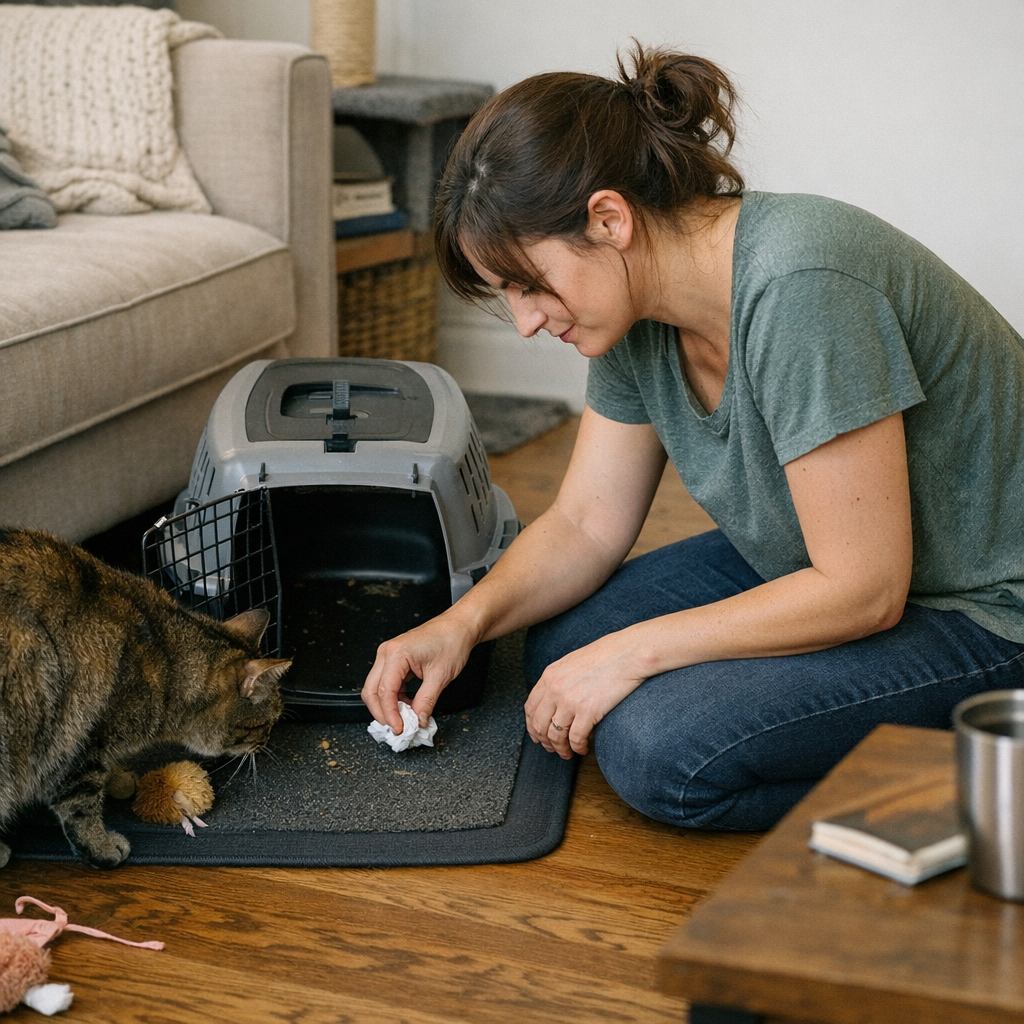
    Solving this isn’t just a matter of “trying harder.” Structure changes everything. Assign the carrier a defined place on a washable mat—with a noticeable edge—and keep it near, but not in, main walking paths. Now there’s a cleanup boundary: crumbs and fur hit the mat, and don’t drift across the room. Treats go on the mat, not loose in the carrier, so you can vacuum or sweep up messes in one go. The carrier doesn’t slide around unpredictably, so neither does your cleaning routine.

    • Reduced spread: The mat contains the mess. The rest of the floor stays in better shape for longer stretches.
    • No more toy limbo: Balls and plush mice stop rolling under the carrier and re-emerge at reset time. No more accidental toy graveyard.

    The biggest difference: the carrier becomes part of your daily rhythm. The mat’s edge marks a clear, predictable stop for your sweep or quick vacuum. Wipe downs happen without delay because the carrier spot is contained—no need for an extra cleanup circuit, no unplanned pause in the flow as you jump from litter box to water bowl to reset.

    Resetting the Flow: Daily Upkeep That Doesn’t Slow You Down

    With a carrier on a proper mat, the benefits aren’t theoretical. After a few days, the pattern is obvious. End-of-night cleaning means a single loop: sweep over the mat, shake it out, grab toys at the edge, quick wipe along the carrier, and move on. Instead of hunting stray dust or crawling after lost objects, the maintenance zone shrinks and resets blend into your actual habits. The area no longer blocks the room’s reset pace; it keeps up.

    But this system isn’t effortless. Consistency still matters. Ignore a day’s sweep, let crumbs settle into the mat line, and the creep returns. The difference: cleanup is now easier to stick to and fold into ordinary tasks. Instead of dreading an extra step, you handle it in real time—right after water refills, on your path back from the litter edge—before buildup reclaims its ground.

    The Little Tension Points—And Why They Return

    However neat it looks, the carrier area develops routine annoyances. Sometimes the door won’t stay at the angle you want; sometimes it swings open at the worst moment. Morning sprints mean blankets get jostled or mats slide off-center, putting the obstacle right back in a bad spot. Crumb piles slip under the edge and get spotted later, not sooner. Each awkward step or shifted mat edge is the system reminding you: arrangement alone never fixes everything—illicit buildup and repeated detours don’t disappear, they just return in new forms.

    The goal isn’t to win total order, just to outpace slow leaks into your daily reset. Regular sweeps, mat checks, toy grabs—these steps, built into the reset pattern, keep the carrier from mutating back into a disruption. The moment setup starts blocking more routines than it saves, it’s your cue: shift, scan, and anchor before the friction multiplies again.

    Integrating for Both Cat Comfort and Human Routine

    Leaving the carrier open with a treat may make travel day less traumatic, but the bigger benefit is for the daily keeper of the room. An anchored carrier, defined by a mat, does more than look intentional—it resists clutter buildup, avoids turning into a mess factory, and streamlines the flow between feeding, play, and cleanup.

    • Clear placement: Consistent, mat-bounded, not drifting through the house with every errand.
    • Planned treat use: Only what’s easy to sweep—never left to crust or scatter.
    • Built-in maintenance: The mat and carrier get a scan and spot clean as part of your existing room reset, not as a separate, frustrating chore.

    The carrier stops being a lurking obstacle and becomes part of the furniture you actually use—without stealing time from all the other upkeep you’re already doing for feeding, water, litter, and rest.

    Room Function vs. Looks: Beyond the First Glance

    It’s not about picture-perfect order on day one—it’s whether the area works after regular life happens. A carrier on a mat stands up to real routines: everything lands where one quick pass collects the loose ends, and the cleanup fits the way you already move through the room. Real improvement isn’t spotless; it’s a reset that holds after busy days and rushed nights, no matter how many times you walk by.

    For realistic, practical structural help—feeding, water, litter, rest, and more—visit StillWhisker.

  • How Sudden Noise Disrupts Dog Routines and What Owners Can Do

    One sharp noise—pan, door, or sudden laugh—can turn a rapid, fluent dog routine into clumsy stop-starts that don’t recover on their own. It’s not the loud moment itself that breaks things, but how every routine after feels slower, slightly off. You notice it at feeding: the dog hovers before bowls, not sure if it’s safe. At the door, the leash is ready, but your dog hangs back, scanning for another shock. A rest area looks tidy, yet settling takes extra laps and coaxing. On paper, nothing has changed—items are in their usual places. In practice, everyday flow is jammed by delays, awkward reaches, and routines now burdened with extra resets that didn’t exist before.

    How Sudden Noise Reshapes Daily Dog Routines

    Dogs rely on tight patterns: bowl, walk, wipe, settle. But after one sudden noise, the pattern fractures. The shift isn’t dramatic—just invisible drag. A normal food approach turns into anxious circling, weight shifting from paw to paw; at the door, a leash within arm’s reach isn’t enough, because the dog now needs a double cue to step past the threshold. The tension leaks into crate use, too: you open the door, but your dog waits, head low, looking for some quiet reassurance. Most setups feel “fine” unless you track these tiny stalls hour by hour.

    Real Life: When the Routine Doesn’t Flow Anymore

    Right after dinner, a plate crashes into the sink. Your dog gets up, alert and uneasy. You call for dinner—halfway to the bowl, they stop cold, checking your face as if asking, “Is it really safe?” Later, you grab the leash, but after another startle, your dog stays planted until you repeat their release word. Coming back inside from a muddy walk, you reach for a towel, but it’s in another room; too late—your dog’s already pacing muddy circles. By bedtime, the dog bed looks carefully arranged, but now takes three passes before your dog finally folds in.

    Routines That Work—Until They Don’t

    The routines seem organized: bowls lined up, leash hung by the door, cleanup mat nearby. But the weak points show up when reality interrupts. Cleanup gear is right there—until you need a wipe instantly and end up rooting through a basket, muddy pawprints multiplying. Bowls stay put, but the dog never gets all the way to them on first try. The rest corner is orderly, but after a jolt, it’s just a harder place to settle, with extra hair and dust building up because every pause means more scatter.

    The difference isn’t about “messy” or “tidy”—it’s about whether the system still works when routines don’t go to script: Does a misplaced towel derail cleanup? Does delayed crate entry burn ten extra minutes? Is the neat leash hook just out of fast reach when your dog is finally ready to go?

    Small Frustrations Adding Up

    It’s rarely a major event—it’s a string of minor delays. Dogs start eating slower, water bowls are left unfinished, mud isn’t intercepted before it hits the hall rug. Getting out the door means coaxing a dog who now hesitates every time. These moments multiply: sticky mats under half-eaten food, walks that begin five minutes late, rest spots that never fully clear off. The house appears organized, but the actual pace and ease of care spiral down. Owners who once barely noticed routines now find themselves improvising extra signals, fetching gear after the window closes, and spending more time on backup fixes than planned resets.

    Cleanup, Reset, and the Problem of Reach

    Any setup looks finished at first glance—until you run it after a disruption. You need a towel by the door—not one room away. Wipes should be ready by the crate, not buried under the secondary leash. Feeding mats hold crumbs, but delayed eating means mess travels outside the “safe zone,” making basic cleanup drag on. A single missed beat exposes rigid systems built for order, not for recovery. If you’re always moving after the fact, “organized” shortcuts start costing you more in time and calm than visible clutter ever did.

    When you need to move fast—before mud spreads or nerves turn mealtime into another endurance test—it’s painfully clear if supplies force awkward reach, extra steps, or shuffling. The right item in the wrong location keeps routines on edge and turns every reset into an unplanned detour.

    Micro-Adjustments: Repairing Flow Without Chasing Perfection

    No home is silent forever. The fix isn’t to seek absolute quiet—it’s to redefine the reset. Quiet, practiced cues (“all done,” “ready now”) restore calm, but only if they’re paired with setups that let dogs—and owners—start again quickly. Move bowls so they aren’t behind a tangle of door shoes, stash towels at grab-level, lay out wipes where a startled dog actually pauses. Over days, routines recover: food gets finished, walks start smoother, and cleanup isn’t held captive by hesitation.

    Don’t mask every pause with extra comfort, but don’t ignore them either. Build one neutral reset into each sticky routine: a clear cue, a beat of waiting, then the invitation to start. Skipping this step means old delays keep returning. Making it standard lets both dog and owner move with less coaxing and more direct flow, even when life stays noisy.

    How to Notice the Slower Spots—And Why They Matter

    Most homes seem “put together” at a glance, so repeated hesitation is easy to miss. Start watching for:

    • Pauses at food, door, crate, or bed—especially after a sharp sound
    • Cleanup stalling while you search for what’s supposed to be ready
    • Reluctance to move through doorways or routines that used to feel automatic
    • Mealtimes or walks that now require fresh encouragement every round
    • Resets that stall because items aren’t within true quick reach

    These friction points don’t fix themselves—every repeat signals a setup that needs a practical repair, not just tidying. Sometimes this means shifting gear location by two feet, carving a straight path to the door, or adding a firm but neutral reset cue. The bottom line: routines that recover quickly are built by setups that can be reached, used, and reset in real time—no matter how good they look after a cleaning spree.

    Beyond Looking Organized: Living With Smoother Flow

    There’s a gap between setups that only “look organized” and those that work while routines are stumbling. Slower eating, circling before rest, delayed leash handovers—these aren’t quirks but signals that a functional setup needs a tweak at actual points of stress. Over time, every few seconds lost to hesitation expand, dragging out simple care into a sequence of micro-recoveries. The true marker of a good system isn’t visible order but reliable response: can you and your dog recover rhythm after surprise, or does your system force you to start improvising under pressure?

    Tracking slowdowns—how long it takes to fetch a towel, cue the next meal, or restart after noise—reveals where your setup costs more effort than it saves. The aim isn’t perfection, but fewer roadblocks: less energy spent on missed cues and more on routines you barely have to think about. A home that absorbs shocks and resets itself keeps dog life smooth, even when “organized” never quite matches “easy to live with.”

    Find practical, easy-to-live-with solutions for everyday dog routines at DogPile.

  • How Simple Entryway Setup Transforms Your Dog Walk Cleanup Routine

    The Small Details That Slow Down Daily Pet Care

    Feeding, walk returns, and water refills seem simple until you’re halfway through and a basic supply is missing, buried, or just out of reach. The towel’s still in the wash. The wipes have migrated behind bottles. The scoop you always need is across the room, or blocked by dog food stacked in the way. Instead of a quick reset before moving on, you’re shuffling bowls, searching shelves, and cleaning up twice—the cost of setups that look organized but interrupt routines at the worst moment. This is where daily pet care hits friction: not in the core steps, but in small gaps that turn an easy routine into a series of avoidable slowdowns. CalmPetSupply starts every category from that pressure point—the stuff that breaks flow, costs minutes, and leaves mess or work where only order should be.

    The slow drain doesn’t come from once-a-week deep cleans; it’s the towel missing for a muddy dog, the brush tucked away during evening mess patrol, or the water bowl that’s impossible to grab without moving half your supplies. Each minor miss sounds small, but repeated across days, these friction points add up to household drag—a cycle of repeated reach, rummage, and reset that’s too easy to overlook until routines feel heavier and time gets lost.

    Where Routines Really Break Down

    Pet routines rarely collapse at the big jobs—they unravel at the small point of failure: the missing wipe, the towel not on its hook when you really need it, the feeding dish that stayed in the wrong room. Open the door on a wet evening without a towel within reach, and by the time you’ve searched two cabinets, muddy paw prints are already sinking into your rug. A brush stationed out of sight means loose fur stacks up before you can respond. These aren’t occasional slipups; they’re patterns made worse by setups where “easy to find” never survives a busy week.

    On the best days, you glide from walk to cleanup to feeding. On the days when one thing’s out of place—even if the area looks organized—every step requires a detour. Stashed wipes, towels used elsewhere, cleaning rags gone missing: with every missing or misplaced piece, small interruptions compound, turning pet care into a sequence of stumbles that force delayed cleanup and missed resets. It emerges not as one big mess, but as a repeated grind against small, fixable details.

    Repeated Interruptions: Real Scenes at Home

    You reach to refill the water bowl and have to shift two stacked bags of food first—morning and night, every day. After a muddy walk the towel’s in the house, but shoved under a leash pile; by the time it’s free, dirt’s spread across the floor. Even with labeled hooks or tidy bins, routines veer off when tools go missing after laundry or a worn-out day. Instead of reaching for what you need, you’re filling the gap with whatever’s closest—an old shirt, kitchen rags—leaving the “organized” zone looking untouched but letting real cleanup slip.

    Brushes put away “for now” don’t return for days, turning quick grooming into a hunt while the fur multiplies on the couch. Wipes visible on counters slip behind bottles, delaying paw cleanups and turning transitions into awkward pauses. The pattern repeats: even solid setups drift as daily action scatters supplies, and each untidy moment echoes back through the routine, making next time slower.

    Beyond Looking Tidy: Function Over Appearance

    Surfaces might look calm enough: toys binned, dishes stacked, everything “put away.” But if you have to cross the kitchen for a brush, dig behind cleaning products for pet wipes, or move storage bins before you can pour kibble, the order is a facade. Neatness that hides everyday tools creates invisible speed bumps—pet mess lingers, bowls wait for refill, and each routine gets just a bit longer. Setup friction doesn’t show up in decor, but in how often you double back for something that should’ve been at arm’s reach.

    The difference isn’t about owning more organizers—it’s about putting every daily tool (towel, scoop, brush, wipes) in a fixed, grab-ready spot, never farther than your next step. When the towel returns to a hook by the door, or brush and wipes are always within sight at the “landing zone,” after-walk care is one motion, not a juggling act. These small placements trim both the mess and the wasted motion—shrinking cleanup time, reducing missed spots, and keeping routines repeatable under real daily strain.

    Solving for Repeated Use—Not Just One-Time Cleanups

    Strong daily routines aren’t built by adding more storage options—they survive by minimizing slowdowns in the spots that get used most. A low basket for a brush beside entryways or a dedicated towel hook by the exit can make after-walk care sudden and automatic, not optional or easily forgotten. When the scoop always lives next to the bin, or wipes are stashed by the door—not hidden away—transitions run smoother and messes don’t linger.

    The cracks reveal themselves after any feeding, refill, or end-of-day check: if the brush ends up at the sink, if the towel walks off in laundry, if any essential tool migrates away from its spot, the drag returns at your next pass. Setups that only “look” right—without resisting this drift—force new friction every cycle, trapping you in routine reshuffling no matter how tidy the space appears on inspection.

    From Clutter to Consistency: What Actually Lasts

    Breakdowns in daily pet care almost always trace to a basic supply not reset at the right place, at the right time. Towels wander to other rooms, brushes go forgotten outdoors, wipes get lost among kitchen cleaners—and every time, a feeding or cleanup turns into a small scavenger hunt. The mess isn’t just what you see—it’s the silent buildup of lost seconds, blocked flow, and interrupted home routines.

    The most resilient setups leave every key supply at a fixed, reachable spot—at the entryway, beside the food station, along the walk route, or by the couch where grooming actually happens. With this level of readiness, cleanup shrinks to a single reach and routines become sustainable enough to live alongside your day, not as another hidden chore stringing through the house. Pet care blends into the rhythm, because the right tool is always waiting at the moment it’s needed most.

    The lost minutes and nagging messes of daily pet care don’t disappear by hiding tools—they disappear by anchoring basics where your routine needs them, every day. That’s the real shift: fewer delays, faster resets, and a calmer space that keeps up, not just keeps looking clean.

    See practical daily-care setups at CalmPetSupply.

  • How Carrier Placement Transforms Cat Comfort and Home Routine

    An open cat carrier seems like an easy win—leave it out, skip the closet shuffle, help your cat chill before the next vet trip. But as the days tick by, the logic starts missing its mark. Instead of a seamless routine, you keep hitting the same hidden snags: brushing bedding away from the water bowl, nudging the food mat back into position, picking kibble or toys jammed under the carrier’s half-open door. The setup that looked so practical starts to slow you down exactly where you need speed—during the daily circuit of feeding, refilling, wiping, and resetting the room. The StillWhisker world is about setups that work, not just look tidy, and this is where the cracks first show up.

    How an Open Carrier Quietly Reshapes Everyday Routines

    The first day, an open carrier tucked into a corner looks harmless. Your cat investigates, maybe curls up inside, and nothing feels out of order. But home routines are built on repetition. With every reset—feeding, water top-offs, litter sweeps—small soft frictions surface. The carrier, meant to ease cat anxiety and owner stress, now quietly creates micro-complications you feel in your hands, feet, and patience.

    Comfort in One Zone, Complications in Another

    Those tiny obstacles barely register at first. Maybe the carrier door nudges the edge of the food mat, or a paw-marked blanket flops into the refill zone, or toys find shelter under a barely-open door. One day you flick bedding aside without thinking. But after a week, all those half-second fixes add up—until your so-called “low-profile” carrier is the most persistent obstacle in your daily reset loop.

    Yesterday’s minimal setup now means every task is slightly out of sync:

    • Water refills paused by bedding that creeps toward the bowl edge, always one swipe away from a spill.
    • Extra fur build-up hugging the carrier, making broom work a bend-and-reach exercise.
    • Toys willfully trapped under or behind the carrier, never where they’re supposed to be.

    The Difference Between Looking Under Control and Feeling Under Control

    Rooms with every item in its “place” do look calm on the surface. An open carrier in the corner feels like a tidy solution, saves closet trips, and gives your cat a steady den. But as routine blends into routine, visible order splits away from functional order. What looked set now keeps you circling back, fixing what the carrier placement keeps undoing.

    Clutter Creep: When Small Moves Add Up

    Picture a morning where you just want to top off the water and sweep tracked litter. Now the food mat catches bedding, and the water bowl presses against the open carrier door. Avoid soaking the carrier fabric is now an extra dance step—and when something does spill, it’s spot cleaning, not just a quick towel. Litter and fur ride out of the box into your path, drawn by the edges and lips of the open carrier, always in the line you just cleaned. If your routine feels slower each cycle, this is the reason, not bad luck or messy pets.

    The Reset That Never Quite Resets

    Quick resets are the lifeblood of indoor cat life. Scoop, wipe, refill, and move on—that’s the plan. But when the carrier lives too close to feeding or traffic lanes, every “quick” task has a hidden extra: move the blanket off the corner, wrestle a toy out from under the door, swipe fur from a spot your slippers land every morning. The setup resets, but you never really get ahead. It’s a game of catch-up with the same frustrating piece.

    Why Placement Makes the Real Difference

    Open-access isn’t enough. Where the carrier lands in your room—relative to food, water, and cleaning lines—determines if your setup lessens or multiplies repeat work. A carrier just inches too far into the path of daily routines doesn’t look like a problem, but it’s where everyday friction keeps coming from.

    When Comfort Becomes a Tradeoff

    You imagine less stress for your cat, maybe more naps in the carrier. What you get: food mat edges squeezed, dishes jostled by every pass, toys funneling under the open door. Your cat’s comfort pulls nightly; your flow fragments with each minor rescue or reset. Grooming and bedding bring it home—cats always shed and settle where they rest, so the new favorite den now means more shed fur and more bedding bunched up right where you need quick, clean access.

    Scenes From a Typical Week: Real-World Carrier Friction

    Reaching for the Bowl, Finding an Obstacle

    You’re hungry, your cat’s hungry, you try to refill the bowl. The carrier door catches your sleeve. Tomorrow, it’s a stray toy between mat and carrier. By day three, you’re awkwardly shifting the whole setup just to do what used to be automatic.

    Cleanup That’s Never Quite Done

    Nightly sweep: fur sticking wherever broom bristles can’t reach cleanly, litter making a new lineup next to the carrier—not where you intended your “line” of clean to land. Even water bowl wipes multiply if a scrap of bedding soaks up a drip and starts a new load of laundry. You don’t “see” bigger messes—but the effort adds up all week.

    Shared Space Becomes Shared Frustration

    Cross the room with coffee? Now it’s a sideways step, every pass. Your partner heads in with groceries—a quick detour around the carrier cluster. Nobody complains, but both of you clock that this easy-looking setup demands attention at the worst moments. The inconvenience isn’t dramatic, but it saps the sense that your space is really yours.

    The Surprisingly Simple Fix: Redefining Carrier Zone

    Among all these small, sticky disruptions, placement is the one variable you can always shift—no special gear, just better zones. It’s not about banishing the carrier, but recognizing when its footprint leaks into the routes you use most. Moving the carrier a couple of feet away from water, food, or major walkways often erases half the repeated pain points instantly.

    • The food mat clears, allowing honest refills without bedding edge drama.
    • Bedding stays inside the carrier—no more fishing out blankets or toys stuck in the under-door gap.
    • Litter drift slows or reroutes, making sweeping once land where it counts instead of creating a secondary mess zone.
    • Your sequence—refill, scoop, wipe, reset—returns to the unthinking flow you had before.

    Tips for Long-Term Flow

    • Keep one bowl’s width between the carrier and feeding or water setups.
    • Turn the carrier door away from traffic and reload routes so it can’t drift into cleanup work zones.
    • Swap thick, floppy bedding for snug padding that won’t crawl out with your cat—or use carriers with higher bedding lips to keep loose ends in check.
    • Test carrier placement during your most active daily resets—don’t trust “out of the way” when the room is quiet.

    Comfort for Your Cat, Calm for Your Routines

    Most cats trust the carrier more when it’s always there, but owner-side comfort matters too. If the carrier works for your cat but means more resets, spilled water, or surprise laundry, both sides lose. StillWhisker setups focus on layouts that flex—catering to your cat’s hiding and grooming, while letting you keep the daily upkeeps quick, sharp, and clean. If relocation doesn’t help, or the same blockage keeps cropping up, weigh swapping the carrier for a softer hideaway or tucked-in rest spot that doesn’t crowd your high-traffic areas.

    What Lasts: Setup That Reduces Repeated Work

    The clean look on day one fades fast if it steals time by week three. The setup worth keeping is always the one that shrinks invisible extra work—less nudging, less bedding cleanup, fewer side detours, and more uninterrupted time. Indoor cat routines are sharpest when nothing quietly drags them out—not even “solutions” that seemed like wins at first glance. Small shifts in carrier location or bedding control repair the flow of daily resets, and the difference you’ll notice is in the reduced friction, not just a neater floor.

    Ready for a carrier setup that saves seconds—and patience—every day? See what StillWhisker setups look like in real-world use.