
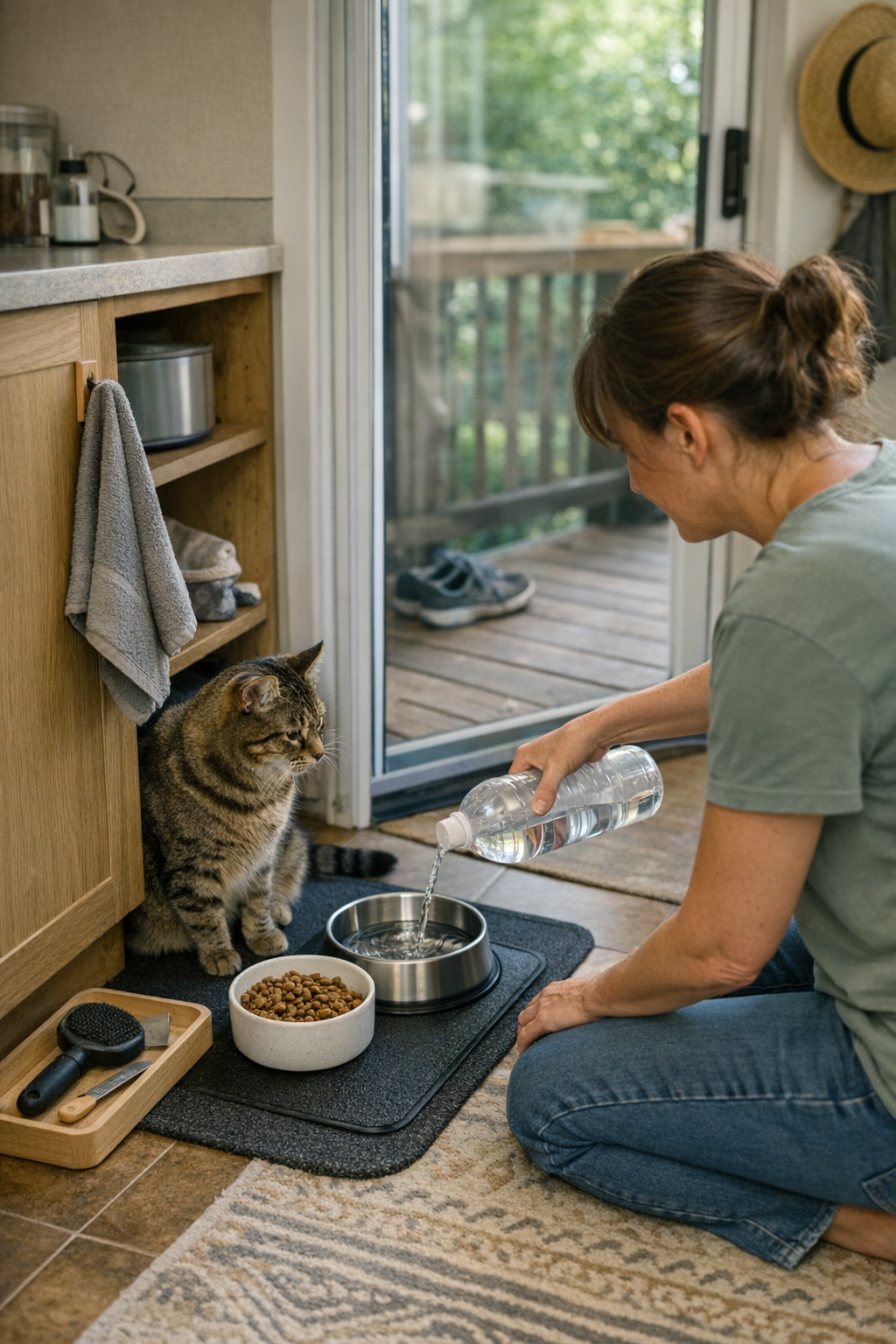
When Calm Looks Easy—But Isn’t: The Everyday Reality of Daily Pet Care
A pet-care area can look calm and under control—bowl wiped down, towel hanging straight, everything in place—right up until you actually start your day. It only takes one missing cloth or a single bowl nudged behind the table to remind you that “looks tidy” isn’t the same as “works better.” When routines collide—prepping coffee, guests arriving, your cat circling, or your dog waiting to eat—small setup gaps turn into real friction. Now you’re crouched under a chair to reach the bowl, wiping up spills with paper towels because the real towel is in the laundry, or bending down a second time because crumbs reappear around the water stand. Calm is only as real as your next reset—something the CalmPetSupply world understands in every repeated use.
Why Gaps in Routine Get Bigger With Real Life
Alone, you might shrug off hunting for the brush or wiping a mat later. But routines don’t stay solo—life piles on pressure points. A refill becomes a hassle if the water bottle’s jammed behind pantry snacks; the brush goes missing during a haircut of shed fur. Each out-of-place tool chips away at the idea of “quick” resets. The more your mind splits between tasks (talking to a guest, wrangling a kid, answering the door), the less forgiving your setup gets. What looked streamlined five minutes ago now means bumping into clutter, retracing steps, or letting a tiny mess linger because what you need isn’t actually ready.
Real Use Scenarios: Interruptions That Don’t Show in Tidy Photos
Scene 1: Reaching for the Bowl—And Finding It Blocked
Early evening. You squat to tidy spilled kibble, but the feeding bowl has wedged itself behind a chair or under a stray envelope from yesterday’s mail. Instead of a five-second fix, you’re scooting furniture, muttering, and crumbs remain just long enough to become tomorrow’s problem.
Scene 2: Cleanup Supplies There, But Not There
The towel for wipe-downs was supposed to hang nearby. Now it’s buried with drying dishes across the kitchen. Spills wait, mats get sticky, and an immediate cleanup gets delayed for hours—meaning the next feeding starts with the last mess barely managed.
Scene 3: The Brush Blockade
Fur collects in the corner by noon. The brush? In a storage bin with leashes, behind dog shampoo and bulk food. Suddenly, grooming—which could be a thirty-second swipe—means unpacking, reshuffling, and stalling every time you see tufts collecting on the cushions.
Scene 4: The Hidden Reset Weak Point
Morning layouts look photo-ready—bowls aligned, tools stacked, counters clear—but resets come slower as the day wears on. Each grooming touch-up or water refill means fishing around in a drawer or cabinet, stepping into another room, or getting stalled mid-routine because one piece is always just out of reach.
The Cost of Repeated Small Interruptions
Most daily pet care doesn’t fail in the obvious mess; it breaks down in the constant minor slowdowns. Needing to move a stack of items for each refill. Leaving fur behind because the brush got reshuffled. Wasting time doubling back for a towel. Over a week, these half-done resets pile up, shrinking your patience and making what should be simple—like a water top-off or grooming swipe—a stubborn source of annoyance that quietly builds stress into your routine.
What Actually Improves Flow (and Reduces Hidden Mess)
Small, invisible tweaks—not big overhauls—make routines work. When every tool has a checkpoint at the exact point of use, repeat work evaporates. A dedicated hook at bowl level keeps the cleanup towel within arm’s reach, so every spill is handled on the spot. A refill bottle stored in an open bin near the bowls means water never runs low or waits for a big reset. Brushes tray-staged beside the feeding area sweep up fur before it travels, not after it clings everywhere. That one move—placing an item where your hand goes instinctively—removes “later” from the equation and keeps routines immediate.
The best setups don’t rely on memory. Keep a grab-and-go cloth by the door if that’s where paw prints appear. Store the brush and scoop in plain sight rather than buried in a bin. Make it so each action—feeding, refilling, wiping, or quick grooming—becomes a single movement, not a scavenger hunt. The gains aren’t just tidier floors, but the absence of nagging backtracking or the build-up of mess that saps energy out of the day.
Beyond Tidy: Focus on Usability, Not Just Looks
There’s a difference between a pet zone that snaps into place for photos and one that actually reduces friction hour after hour. The setup that just “looks calm” often hides all the ways you’ll get slowed down—blocked access, missing basics, delayed cleanups. The setup that’s built for actual use means resets are quick, tools show up exactly where you need them, and small jobs don’t spiral into bigger chores. It’s why daily comfort isn’t about perfect order—it’s about setups that don’t let repeated care become a daily catch-up game.
When repeated actions—refilling, wiping, grooming—become automatic and frictionless, the day moves smoother and your space stays truly ready, not just seemingly so. Out-of-reach tools guarantee invisible messes: lost fur, stray kibble, or sticky mats that come back to haunt you by evening. A neat surface feels calm for a minute; an actually usable setup lets you stay ahead of daily pet care, even on busy, unpredictable days.
For practical ideas and tools designed to fit into real homes, visit CalmPetSupply.