
Why a Neat Pet Room Often Fails During Real Daily Care
An organized pet room—bowls in a corner, bed lined up, toys in a basket—looks ready for anything. But after just a day or two, small daily care friction shows up: refilling the water becomes a hunt for a misplaced bottle, a trail of fur leads to a brush that somehow migrates out of reach, or a basic towel is always in another room after a sudden mess. Each gap turns a quick task into another loop across the house. A space that seems calm at first starts piling up new chores and interruptions. The setup promises order, but routine care keeps splintering as missing basics, delayed wipe-downs, and blocked access make it feel like upkeep never really ends. CalmPetSupply setups are meant to cut these breakdowns—not just hide them under surface neatness.
The Difference Between Looking Ready and Running Smoothly
Any pet area can look the part: bowls lined up, bedding by the window, supplies tucked out of sight. Under real use, though, the cracks show fast. Does every brush, cloth, and treat stay within easy reach, or do you keep shuffling between rooms looking for what you need? A missing cleaning cloth can turn a one-minute job into a roundtrip. One refill bottle left out of place means water resets now spiral into a sidetracked cleanup. Even a set of treats or a bag of liners in the wrong drawer makes feeding and reset time longer, not quicker.
Typical scene: mid-morning, you rinse the food bowl. The refill jug isn’t in its spot—now you’re searching the kitchen while your pet waits. Next, you notice fur on the cushions, but the brush is missing from the console. Each of these isn’t a crisis, but together? They slow everything, disrupt your routine, and throw off your pet’s day.
Everyday Care Breaks Down When Supplies Drift Out of Place
Repeated care routines only feel simple if every tool stays where it belongs, every time. But with daily use, items drift—a bowl inches behind the counter after a rush, towels travel to another floor after one “temporary” move. That drifting piles up: clutter creeps back in, the dog starts pawing for attention longer, and your reset steps multiply. Meals, water, and cleanup get tangled together as the area gets disjointed. Each lost item or delayed refill is a tiny stop that stacks up across the week.
Repeated Use Reveals Weak Points
After a long day, you plan a quick check-in: scan the feeding area, refill water, maybe a fast wipe-down. But the spot isn’t clear. A pet bowl sits trapped behind mail, or a cleaning cloth is missing after three days of “I’ll return it later.” Night routines that should be fast are suddenly full of extra steps. These weak links don’t vanish after a big tidy—if daily-use tools scatter or get blocked, small hang-ups keep returning. Actual calm isn’t a visually clean reset; it’s when daily resets get easier, not just neater, as setup choices either remove resistance or quietly add to it.
Visible Tidy vs. Working Comfort: Where Setups Fall Short
You might sweep clutter into bins or clear off the feeding mat and call it progress, but real comfort breaks down when basics end up less accessible. Toys no longer underfoot may just mean food liners wind up in an out-of-reach drawer, or a treat bin ends up by the door instead of under the prep area. So, you keep circling the house for one more supply—and jobs get skipped rather than finished. Clean edges don’t guarantee quick resets when it matters most.
Recurring Routines, Repeated Interruptions
Every pet owner feels the drag: after feeding, you reach for the cleaning cloth—and realize it’s still damp, forgotten in a pile. Grooming tools are “put away” but now require a stepstool after too many reorganizations. “Technically there” is never the same as “ready at hand.” This reset friction creeps in with each awkward reach, missing supply, or extra trip. The routine doesn’t break, but it keeps getting slower, more scattered, and oddly exhausting.
After-lunch grooming is a classic stumble: the brush lives on a shelf just high enough to skip returning it after use. Next time, you can’t find it, so shed fur sticks around longer. Routine drag snowballs every time a step is anything but seamless.
Small Changes Make Lasting Ease
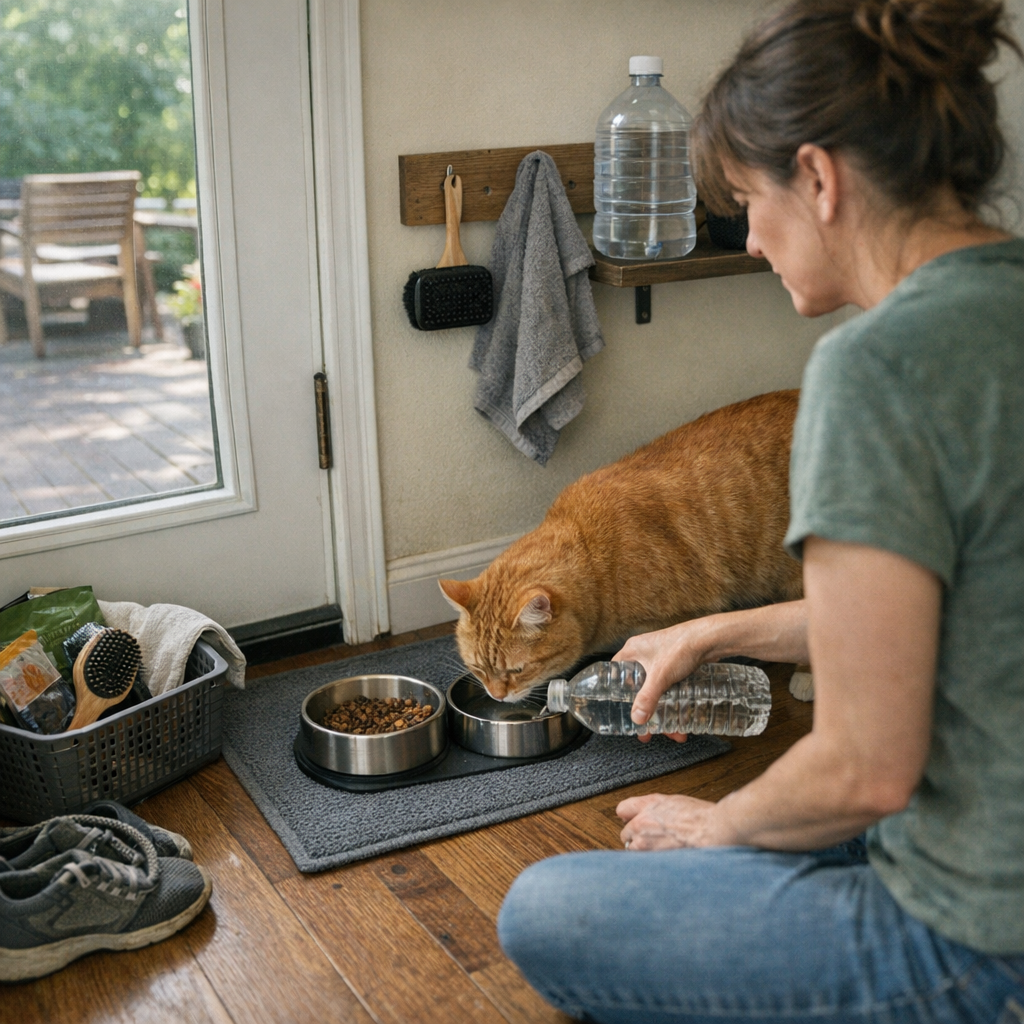
Real improvement comes from shifting the basics—closer and easier, not prettier. Move the water refill bottle directly above or beside the bowls: no more cross-room hikes. Hang the cleaning cloth on a visible hook, not buried in a drawer. Keep treats and liners in an open bin right below the care area, so restocking or resetting is one motion, not a scavenger hunt. This isn’t about extra gear—it’s about linking every care move to a single, accessible zone and preemptively cutting delays before they multiply.
Habits for Ongoing Calm and Real Care
Let your care area reset automatically by small, intentional placements. Put down a washable mat under every bowl. Hang a cleaning cloth within direct sight and reach—don’t fold it away. Gather brushes, wipes, and treats in an open basket in the pet’s main zone. Swap out or refresh placements every few days to match reality, not just when messes force your hand. These habits reduce reset time and keep interruption cycles from reappearing.
Real Calm: Less Correction Needed, More Daily Ease
A calm-feeling pet area isn’t about how neat it looks after a weekend sweep. It’s about how little chasing, hunting, and extra resetting you do while caring for your pet—during meals, after walks, in late-night check-ins. When every essential is visible, reachable, and always ready, the routine finally flows. Clutter stops rebounding, chores shrink, pets settle sooner, and you spend less time fixing small setbacks that shouldn’t exist in the first place. The right setup turns surface order into real daily ease—practical calm that endures, not just appears after a tidy.
Try a setup that actually fits your routine at CalmPetSupply.