
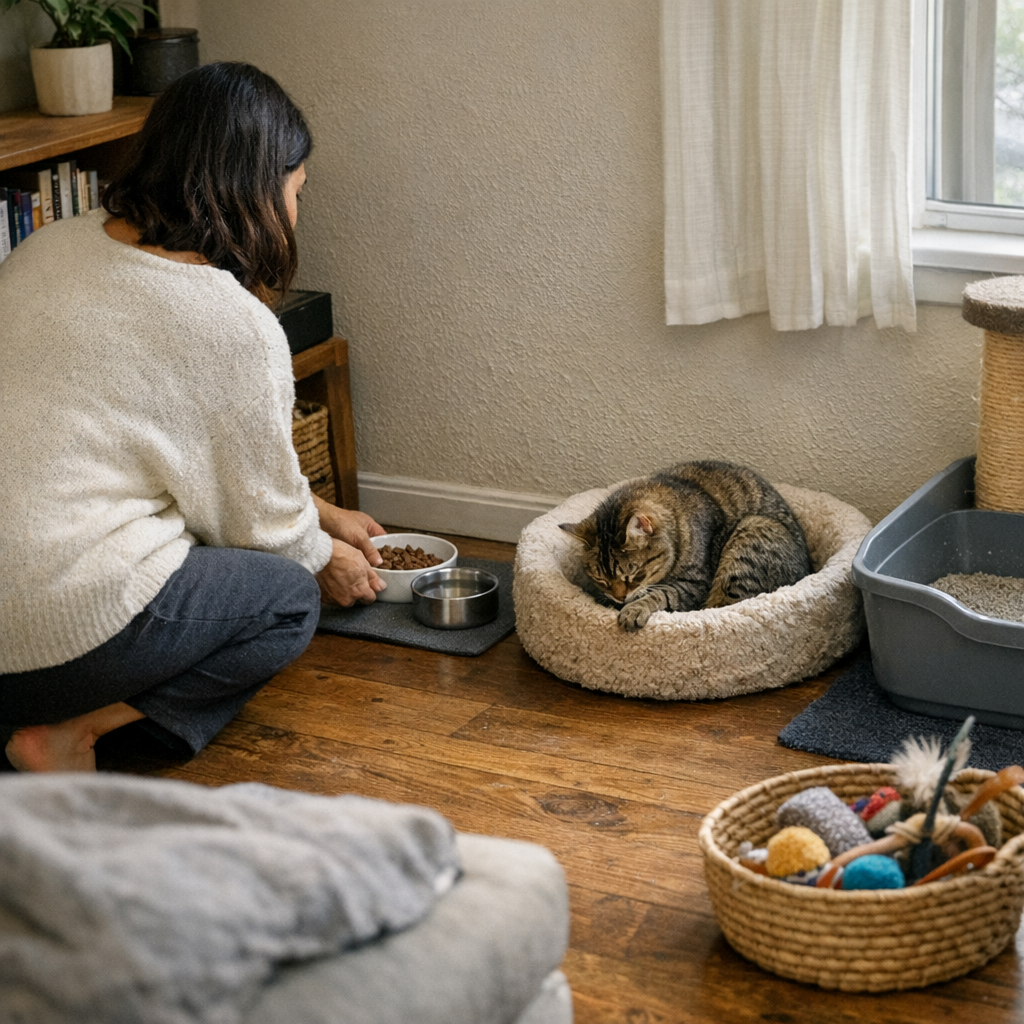
If you’ve ever set up a shared feeding or litter area for two or more indoor cats, you know the mess doesn’t come from chaos—it’s the daily pattern of having to fix what keeps sliding out of place. Twin bowls lined up neatly on a single mat? By noon, one cat is crowding the other’s dish and dry food trails off the mat. Water seeps to the mat’s edge, then under, merging with yesterday’s spill. Toys you corralled overnight have already made their silent reappearance in the walkway. No matter how often you wipe the floor or nudge bowls back, the same friction zones keep returning—right where you most need predictable order. The StillWhisker world starts here: not with perfect organization, but by surfacing the reality that setups which seem space-saving often turn into repeat work, undermining calm with endless small fixes.
The Hidden Cost of Overlapping Setups
In apartments or smaller homes, combining cat gear looks clever until daily life exposes new annoyances. One “double” feeding mat doesn’t stop one cat from inching another out—now you’re watching a constant nudge for position and sweep for crumbs. Water bowls too close together mean splashes run together, and damp spots stay unnoticed until you step through them. Side-by-side litter trays, pitched as a space saver, guarantee both cats crowd the same tray—their scatter crosses the intended boundary, and you catch yourself chasing litter into the living area just as you’re trying to leave for work. With every “shared” arrangement, you’re not just repeating effort—you’re always forced to react at the moments you least have patience or time.
Why “Looks Organized” Isn’t Always “Stays Manageable”
You can line up bowls, tuck in a toy bin, and smooth a mat to get a guest-ready cat corner—but that surface order evaporates fast under real routines. By midweek, the wipe-down spot returns around the mat, the toys creep out of containment, and you’re picking stray litter off the same patch of rug as yesterday. The neat line between “looks fine” and “works in practice” only becomes visible in repeated, boring resets that erode both the plan and your nerves. The tidier it starts, the more frustrating it is when invisible maintenance multiplies underneath.
Crowded Corners: Where Repeated Friction Builds
Cat routines ignore your storage logic. Morning rush? Both bowls get claimed at once—expect scattered food, shared splashes, and bowls pushed out toward the hallway. Relocated toys roll back into human paths even if picked up the night before. Litter grains escape, caught in corners where two trays blend into one big cleanup zone. Trying to conserve room by overlapping items only moves the problem: now your own movements (sidestepping a rolled toy at the fridge, straightening a mat slipping off a baseboard) get just as interrupted as the cats’. Reshuffling cat spaces adds to your own detours—and none of them stay solved for long.
The Day-by-Day Reality of Shared Zones
The strain shows up during normal routines. Reaching in for a quick bowl refill? One hand bumps the extra dish, or you have to lean awkwardly over the “wall side” while a cat crowds you. Mats seem absorbent until water seeps below, binding up stray kibble for next clean up. Pulling one litter tray for cleaning shifts the other, sticks both mats together, or leaves tools wedged where your hand can’t reach cleanly. Each fix feels small, yet the time lost compounds—and the visible order does little to prevent the hidden scramble.
Even rest zones betray the promise of simplicity. One blanket-topped nook feels minimal until both cats wedge in—fur clumps quickly, corners lift, and what started as a “contained” cushion transforms into another daily straightening job. Morning neatness is undone by evening, and the cycle reboots without relief.
Assigning True Personal Corners: A Small Change with Big Impact
The difference comes from separation, not just spacing—distinct feeding, litter, and rest zones for each cat, mapped to actual room flow rather than a single shared corner. Over a few days, you’ll notice: refills become quick tasks, not a cluster of interventions. Instead of a single battle for food at each meal, there’s a staggered routine—fewer head-bumps, fewer spills to mop in a hurry, and no synchronized rush right before you want a moment of calm.
Mapping Out the Space to Cut Repeated Resets
Actual shifts are blunt: move one feeding mat to a quiet window, tuck the other by a bookshelf, and place litter trays at opposite ends of the room, not pressed together. Each with its own small mat. At first, nothing seems to change—until the routine repeats. One cat claims her window-side bowl, the other takes the bookcase; meal traffic divides naturally. The daily “mess zone” mat stays almost where it started, needing less than half the sweeping. The point isn’t instant perfection, but noticing that the interruptions stop stacking—less urgent cleanup, more invisible prevention, and room flow that feels lighter by the end of the week.
The Difference: Fewer Traffic Jams, Less Work
What actually shifts: the count of interruptions you make in a week. In a split setup, your paper towel stays put, the scoop doesn’t need daily relocation, and you stop dodging a cat at the exact moment you’re trying to pour kibble. Litter resets stop crossing into each other’s patch—no more fused mats, no more double-track dust to sweep up later. Toys, released from one launch point, end up dispersed rather than concentrated underfoot. What fades is the background noise of tiny fixes—a strong sign the structure is finally serving you, and not just appearing more organized for show.
The Subtle Frictions You’ll Actually Notice Over Time
Problems stack slowly, but they become visible as repeated strain. With overlapped setups, even basic chores lag: refilling a dish means nudging another aside; quick litter dumpers become clumsy, with grains hopping mats and crossing boundaries. If comfort setups share the same favored spot, you’ll find yourself untangling blankets twice as often—a single “best” rest zone is now a magnet for fur, mess, and minor annoyances. A plush mat that feels like an upgrade can, in a shared rush, become just one more slow-reset corner.
Cleanup Supplies: Present, But Are They Handily Placed?
Tools at hand don’t help if they’re all jammed together. One hook, one caddy for wipes and scoops in a single spot might save wall space—but it guarantees that, like the cats, you get stuck navigating your own gear traffic jam. Assign a cleanup bin or hook to each cat’s corner—those seconds reclaimed matter across dozens of daily micro-cleanups, erasing extra trips and reducing the impulse to put off a quick wipe or sweep. Setup and convenience rise together only when access isn’t blocked by the very organization meant to simplify things.
Smooth Transitions: Making the Switch Without Upsetting Cats
Cats notice change, but resistance fades faster if each new zone feels familiar. Re-anchor with a favorite mat or basket, hold scent by using towels that already smell right, and give a few days for adjustment—some trial returns to the old spot are normal before the new corner “sticks.” So long as placements don’t keep shifting, both cats and people settle into the new structure, and the most visible change is a quiet drop in interruptions, not a showy shift in cat behavior.
Less Overlap, More Calm: How the Room Actually Changes
No setup is frictionless, but split zones do one crucial thing: they flatten the intensity of fixes and spread the work into gentler, more optional tweaks. Daily wipe-downs shrink. Toy clearing shrinks to a quick spot-sweep, not an apartment-wide chase. Litter frays out in small, manageable arcs—not a trail across the room. Even if the surface order is less than Instagram-tidy, the reduction in recurring interruption makes the room truly easier to inhabit, both for humans and cats. The StillWhisker approach doesn’t sell perfect calm—but it does anchor daily routine in structure that bends with how cats and people really collide, reset, and move through each day.
Visit StillWhisker for practical cat-life arranging tools and setups designed for real shared homes.