Category: Pet Life

  • Why Consistent Dog Bowl Placement Improves Mealtime Flow and Routine

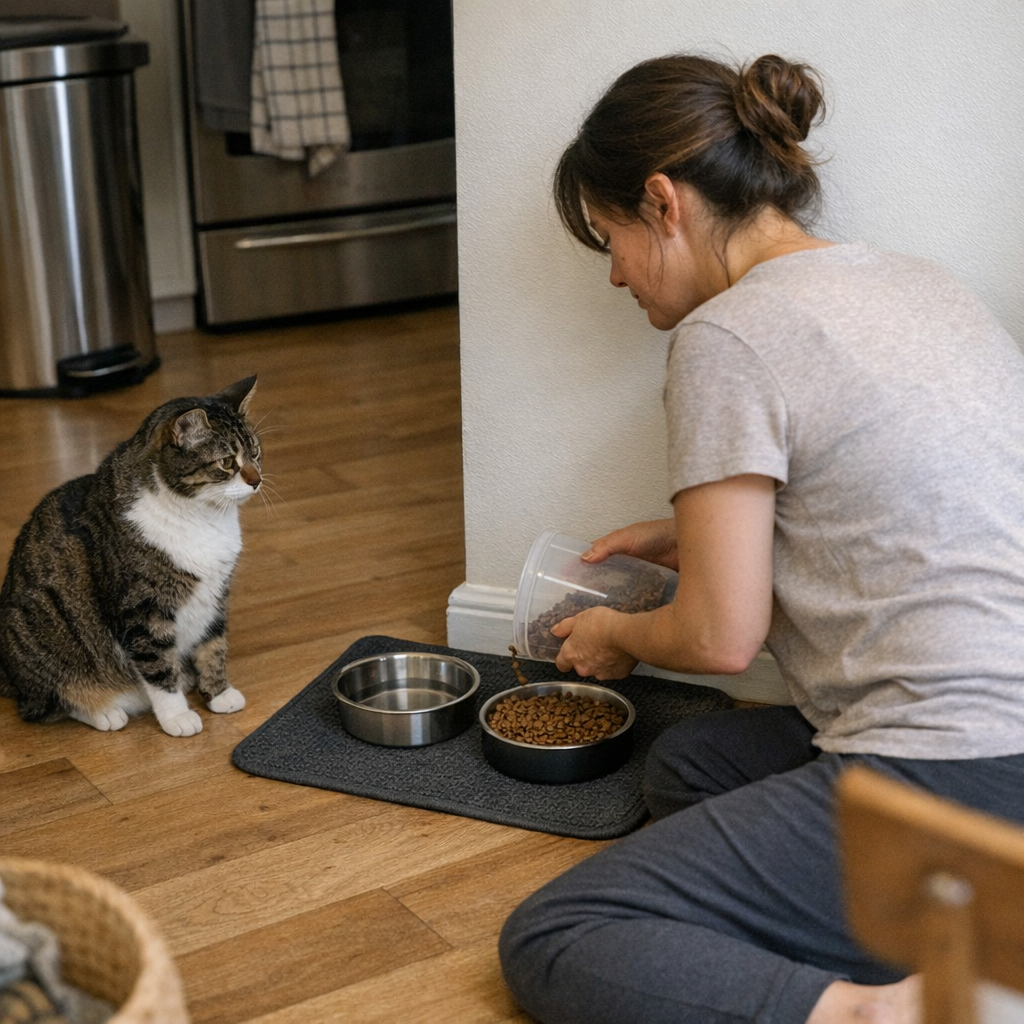
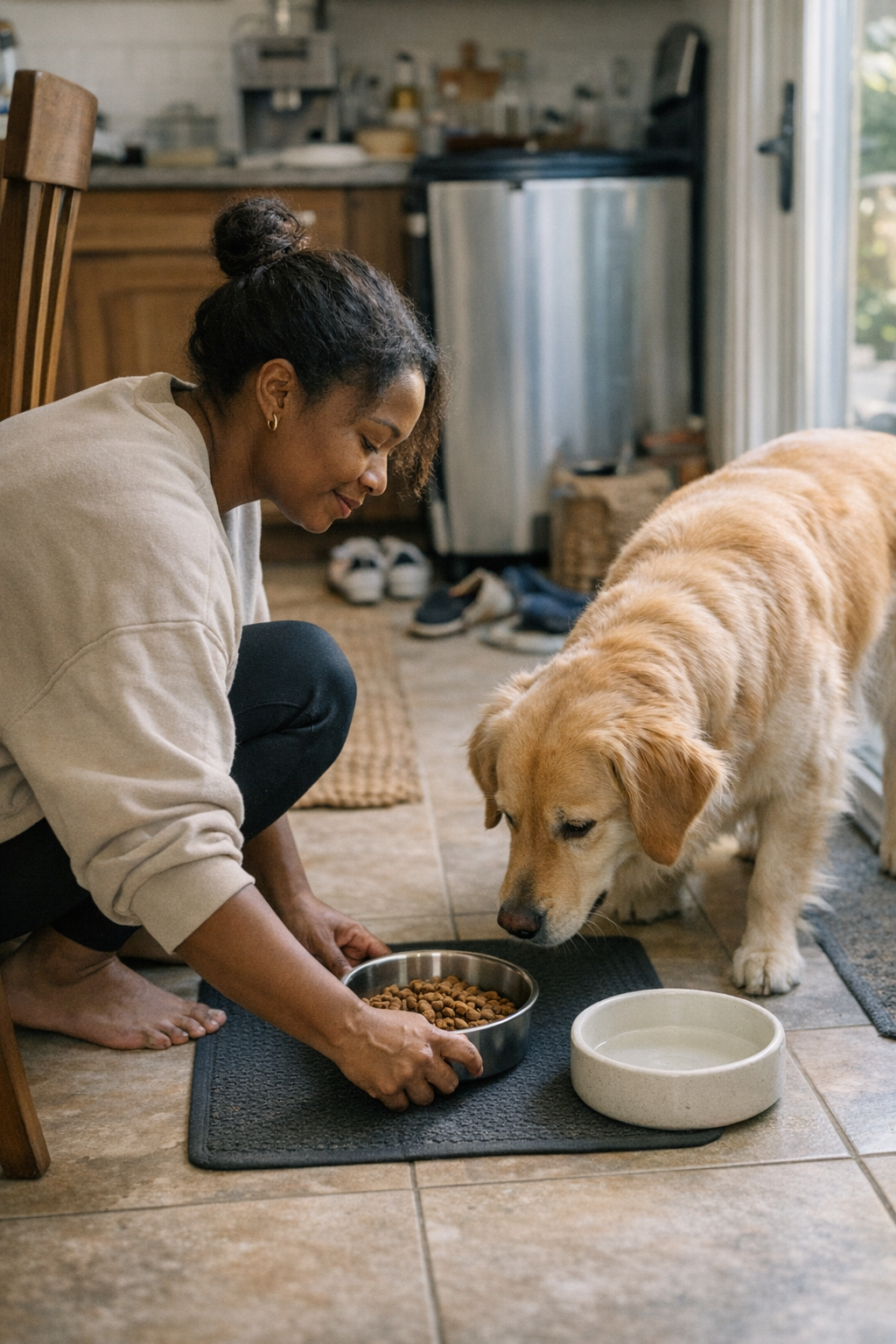
    Every dog owner thinks the feeding spot is “set” — until the routine grinds. You notice it because you have to: the bowl is off the corner by three inches. The mat is nudged out from cleaning, just enough that your dog loses the usual quick walk-up. Maybe shoes slide into the zone, or the food bin drifts, or you’re sidestepping clutter every time you refill. It’s forgettable until you watch your dog slow down, hesitate, or circle before each meal — not because of appetite or mood, but because the “routine” is now a guessing game.

    When Your Dog’s Routine Slows Down (and So Does Yours)

    The breakdown doesn’t hit all at once. The feeding area is supposed to be reliable — bowl, mat, food nearby, done. But daily life pushes that “fixed” spot around. Mop under the table and the mat ends up off-angle. Shoes edge in, and you relocate the bowl for traffic — just for now. Each tiny shift adds up, and soon your dog’s “automatic” meal path is interrupted, causing her to pause, scan, or double back while you wait. That hesitation isn’t random; it’s the cost of the zone being a moving target.

    Dogs aren’t overthinkers, but they recognize the difference between a bowl that’s always on the third tile from the fridge versus a bowl that’s wherever you last set it. Meals devolve from a direct approach to a minor search session — every pause multiplied across two meals a day, repeated endlessly. The friction is subtle, but it drags. Routines slow. Attention leaks away from everything else that matters — even for five seconds at a time.

    Invisible Friction: What Actually Gets Interrupted?

    A feeding area that only “looks” okay and one that actually functions well feel different every single day. Small, consistent signals give it away:

    • Your dog waits at the “old” corner, ignoring the bowl inches from her nose, expecting continuity.
    • You watch her navigate boots, shoes, laundry baskets — anything creeping into her path — turning meals into obstacle courses.
    • Scattered kibble follows the bowl’s latest stop, now outside the usual mat, so cleanup is never automatic.
    • You correct micro-errors over and over: nudging the bowl back, straightening the mat, promising to “get it right” next time — but forgetting, because life keeps shifting things again.

    No crisis, just an endless string of minor holdups. They aren’t dramatic enough to demand a reset, but they quietly chip at your routine — until the friction becomes the norm.

    The Drift: How Feeding Zones Quietly ‘Walk’ Across The Room

    The drift starts with one “temporary” nudge. You want counter space clear, or a tidier look, or you’re mopping and push the bowl aside just for now. Problem solved for the mess, but every cleanup adjustment shifts the dog’s reference point. Soon, she’s walking circuits, searching the old spot even when the newest one sits in plain sight. What seems like a small placement tweak is, to your dog, a lost anchor. And as the bowl’s position drifts, so does the habit. The feeding area becomes wherever nothing’s blocking it — at least for that meal.

    Most of the time you only notice when the tension stacks up: mornings crowd quick routines with stumbling, evenings crowd with cleanup that now takes twice as long because nothing lands in its expected chute. You see your dog pause, look up, and wait for your cue — not sure which setup to trust.

    When the Routine Breaks Down: Real-Life Moments You’ll Recognize

    Daily routines make the consequences obvious:

    • Morning crush: The bowl is hidden under a table to make floor space, so while people dodge each other for coffee, the dog runs laps, looking lost. Patience runs thin, and the meal gets folded into the chaos.
    • Freshly mopped floor: The mat has dried out of position. Your dog slows, eyeing every change, and you realize “clean” means less certainty for her. The setup wins visually but costs time and clarity.
    • Shoes blocking the spot: The meal zone is now wedged next to a doorway. You’re stepping over gear, your dog is looping, and the feeding area now interrupts everyone’s flow — not just hers.

    None of these require a full overhaul, but they turn “should be easy” into another small job. The space appears organized but doesn’t deliver on routine.

    Why Dogs Rely on Predictable Feeding Spots

    For dogs, habit forms around sameness. The bowl’s place on a particular tile becomes a signal — this is food, this is safe, this is certain. When the physical anchor moves, your dog’s built-in map breaks: searching, sniffing, stalling, checking the old spot, looking for permission to eat. These pauses aren’t quirks or pickiness. They’re side effects of a pattern that keeps changing — slower eating, less settled behavior, and you wasting mental energy making up for the weak point every time. Some dogs adapt, others hang onto the old spot longer, but the invisible cost is shared either way.

    When you’re aware, you notice the feedback loop: bowl moves, dog pauses, you adjust, next time you forget, bowl moves again. The “routine” is now a series of corrections and compensations. You keep half an eye on the dog to see if she needs help — not because the system broke, but because the structure keeps shifting underfoot. What should run itself is now something you have to manage.

    What Happens When the Routine Snaps Back to Center?

    When the feeding spot actually stays fixed, ordinary friction drops away. Instantly visible changes: your dog heads straight in, no lost effort or missed steps. The meal begins as soon as it’s served, and there’s no stall-out waiting for clarification. Cleanup becomes a habit too: every crumb drops in the same, predictable spot. You stop looking for the bowl, and your attention moves to the next task. Other routines — door traffic, grocery runs, evening resets — flow around a known anchor, not a floating obstacle.

    • Meals start and finish without mental reminders about placement or correction.
    • Feed spills are reliably contained, making sweeps efficient, not aimless.
    • The feeding area is a set part of your home’s traffic map; it doesn’t bounce in and out of your own movement path at random.

    It’s not dramatic — just unmistakably easier. Your dog stops searching. Your hand doesn’t pause to double-check. The everyday pressure point is gone, and the zone holds steady even when the rest of life is shifting.

    When Consistency is Hard: Trouble Signs and Simple Fixes

    In many homes, a “permanent” feeding spot isn’t realistic — shared spaces, shifting furniture, narrow walkways. But certain misery signals stand out:

    • Your dog paces at mealtime, fishing for the right spot before she’ll eat.
    • Kibble turns up outside the usual mat — a not-so-subtle sign that the cleanup area keeps following the bowl.
    • The bowl’s “home base” isn’t known — you or someone else has trouble remembering where to put it back, even once a week.

    When this friction returns, try returning to the original anchor — same tile, same wall, after every meal, even on cleaning days. Improvement is often fast: your dog settles, you recover seconds or minutes, and meal routines slide back into place. The effect isn’t dramatic but it reduces a nagging, repeated inconvenience that only grows with time.

    The Hidden Cost of a Wandering Bowl

    A feeding setup that looks organized but floats between spots piles tiny costs on both you and your dog. The appearance is orderly, but the experience is unreliable: meal times get chopped up, your reach is awkward, cleanup is unpredictable, and your dog acts like each meal is a new puzzle. The real value of a fixed feeding spot isn’t perfection. It’s a daily structure you don’t have to fix in motion — so attention and patience are saved for things that actually change.

    When the bowl’s location goes from “wherever” to “always here,” you reclaim a small piece of your routine — and those gains, minimal per instance, stack up every day. It’s about function, not just form: dog-life where resetting the basics never slows the rest of the house.

    Every Meal, Easier to Trust

    If your meal routine feels off, or your dog appears unsettled, check the bowl’s location history. Invisible drift has real impact — on your dog, your cleanup, and the speed of every reset between meals, walks, and home traffic. Lock in a fixed feeding zone, and the improvement is more than perceptible: it’s a daily reset that stops needing a second thought. DogPile’s practical everyday setups make that baseline easier to keep — because a calm feeding spot is more than tidy, it’s dependable.
  • Why Separating Cat Feeding and Play Areas Reduces Household Mess

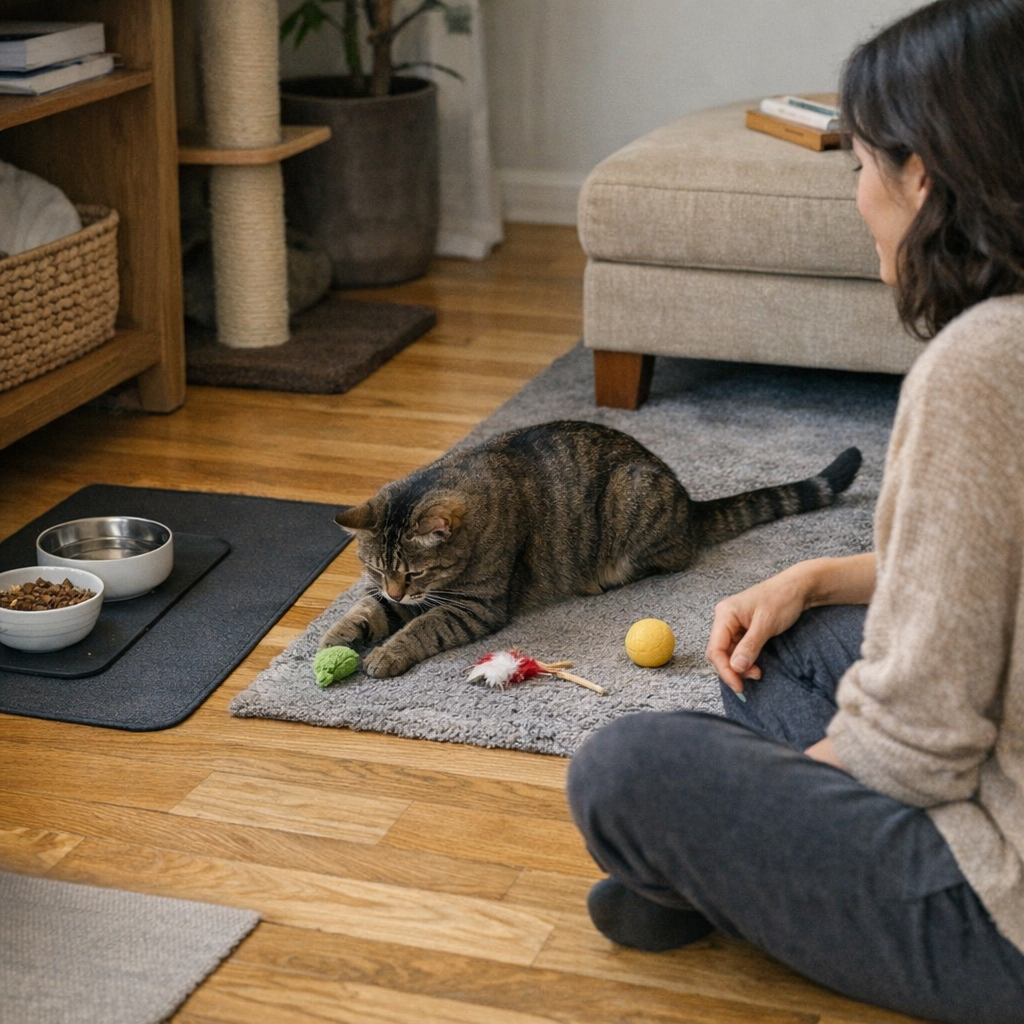
    Every indoor cat routine breaks down faster than it looks: you reset the calm after a meal—bowls lined up, water topped, mat neat—then you blink and the order is gone. Now you’re nudging a bowl that slid halfway across the tile, sweeping stubborn crumbs out of walkway corners, and sidestepping stray toys that weren’t there ten minutes ago. What’s actually wearing you out is never just your cat’s energy—it’s the friction from feeding, play, and rest constantly overlapping the same patch of floor. When your setup looks “settled” but you keep redoing the same cleanups, the underlying structure isn’t working with you. You need a setup built for routines that never stay neat for long—a StillWhisker home recognizes this cycle isn’t just normal, it’s a design problem you can see and fix.

    Invisible Boundaries: Why Feeding and Play So Easily Collide

    Combining feeding, water, and toys in a clean corner always seems efficient—until repeated use proves it’s wishful thinking. That tidy post-breakfast lineup unravels the second a ball ricochets under the feeding mat or stray kibble gets kicked behind the water bowl. The mess isn’t loud, but you notice the aftershocks: crumbs catching bare feet at night, water pooling where a toy blocked the bowl, and feeding setups mysteriously migrating into walkways you meant to keep clear.

    Shared zones invite quiet mess that keeps coming back. Every “almost-fits” arrangement slowly leaks—feeding cycles spill into play, play encroaches on nap mats, lines blur. Instead of a cleanup, you end up retracing your steps, finding the same toy tangled near the bowl, or realigning the same mat at midday because the reset won’t hold under actual use. The space can look organized; living with it tells a different story.

    Scenes from a Real Day: Where Cat Calm Turns into Hidden Upkeep

    The Feeding Area That Won’t Stay Still

    Morning: your setup’s in line—bowl against the wall, mat flat, water level just right. Then, that all-too-familiar scramble: a quick dash and the mat glides half a foot, bowl tips sideways, crumbs forced into new territory. By lunch, a single play burst forces you to sweep, pick up, and reposition what should have stayed put. When the “reset” feels like three jobs instead of one, your arrangement is doubling your work.

    Play Zones That Don’t Stay Contained

    Toys rarely respect their boundaries. A mouse from the living room ends up under the food dish. Crinkle balls wedge near the litter box or surface under kitchen chairs. You spot food-dusted toys peeking from under sofas, and discover the so-called “play zone” is now a landing pad for splashes from the water bowl. Moving through the room means navigating not just obstacles but fragments of every routine—barely noticing until the vacuum jams or a foot catches a ball.

    Cleanup Supplies Never Where You Need Them

    You stashed wipes and the broom in a “handy” drawer, out of sight. But as soon as the water bowl slides or crumbs scatter after play, you’re walking across the room for supplies instead of grabbing what you need where the mess begins. The cleaning itself isn’t always hard but gets fractured: each spill waits, growing until you’re forced into a full-area sweep, right when you least want to.

    Looking Tidy Isn’t the Same as Working Smoothly

    Non-skid mats, weighted bowls, favorite toys nearby—these look like sensible upgrades. But under real routines, items drift even when upgrades are in place. At noon everything lines up; by afternoon, you discover the mess has quietly spread its borders—crumbs in the walkway, toys among feeding gear, mats out of step with the rest of the room.

    The headache grows concrete: you reach to refill the water, only to move two toys first; you plan a quick mat wipe but have to clear extra debris from a shared path; a rest mat, meant to comfort, edges too close to feeding, sowing the next round of scattered kibble. Visual order hides a persistent maintenance problem—once even one item shifts, routines tangle back together quickly.

    The Real Cost of Overlapping Routines: Time, Attention, and Reset Fatigue

    Let a few inches slide between feeding and play and the cycle gets relentless: toys drag crumbs, water travels with paws, mats snag or overlap, and before long yesterday’s small spill is today’s underfoot obstruction. The mess is easy to dismiss until it becomes another round of pickups that chop up your day, especially during busy mornings or before guests arrive. You were aiming for a ten-second reset; instead, invisible overlap forces you back for double or triple work.

    The clear sign your structure needs help: fixing the same failure point—feeder inching into play, mat bunching up, toys blocking refill—over and over no matter how “organized” the area looks. Letting feeding and play blend “just for now” only locks in that cycle, making one fix the trigger for the next mess.

    One Simple Fix: Physical Separation That Lasts

    Physically split your cat’s feeding and play space—even if all you can manage is a mat’s length or a furniture edge. Most indoor cat owners underestimate what a few feet, a chair leg, or a storage bin can do. Once even a minimal boundary goes in, spills no longer fuse with toy debris, bowls stay put, and each routine stops disrupting the others. The result isn’t perfect, but you’ll notice fewer double-messes—and when you need to reset, jobs stop bleeding into one another.

    What a “Separated” Setup Really Feels Like

    • Feeding mats keep crumbs contained—no longer dueling with stray toys for the same territory.
    • Water bowls stay out of play’s collision path, reducing surprise puddles or forced resets.
    • Toys wait in their actual corner, so debris and cleanups collect where you expect, not all over the house.
    • Reset time drops: wipe, refill, and pickup become single-purpose actions, not an all-area sweep.

    What Counts as a “Boundary”

    No major remodel needed. Try:

    • Placing the feeding mat behind a chair, with play gear anchored elsewhere.
    • Positioning a storage bench or shelf to break up the routine overlap.
    • Spacing a bowl and play area the distance of a second mat—often enough to block most encroachment.

    Even a modest gap forces routines to show you where they overlap, making it clear what needs containment and what finally stays manageable without constant correction.

    Why This Works Over Weeks—Not Just the First Day

    Mess creeps, resets drag out more than you expect. The crucial difference between a home that stays settled and one that doesn’t is how often you’re interrupted by the same friction. Owners using physical boundaries—rigid or soft—consistently find that areas “hold a reset” days longer. Fewer spot cleans, briefer midday nudges, less chasing the same bowl for the third time. The energy you used to spend doubling back goes back to actual routines, not perpetual re-tidying.

    Added bonus: cats often nap in the last place they played. When play and feeding zones stay distinct, it’s less likely the rest mat creeps into a bowl, or water gravitates toward a tangle of plush toys. Boundaries shape behavior by reducing the crossover that kicks off the next cleaning spiral.

    Calm Isn’t Just Appearance—It’s a Setup Designed to Hold

    If you’re resetting the same floor patch twice daily, or your feeding mat has drifted into walking space by dinner, your setup isn’t matching your cat’s cycles—it’s quietly adding more work. True calm isn’t about chasing after crumbs; it’s about a structure that keeps each routine in check. If you keep finding owner interruptions, not just visual clutter, try moving a boundary, not just another bowl. You’ll know difference not by a perfect look, but by which jobs finally stop repeating—meal after meal, reset after reset.

    For more practical structures and solutions built for real indoor cat life, visit StillWhisker.

  • Managing Cat Care Challenges When Visitors Are Around Your Home

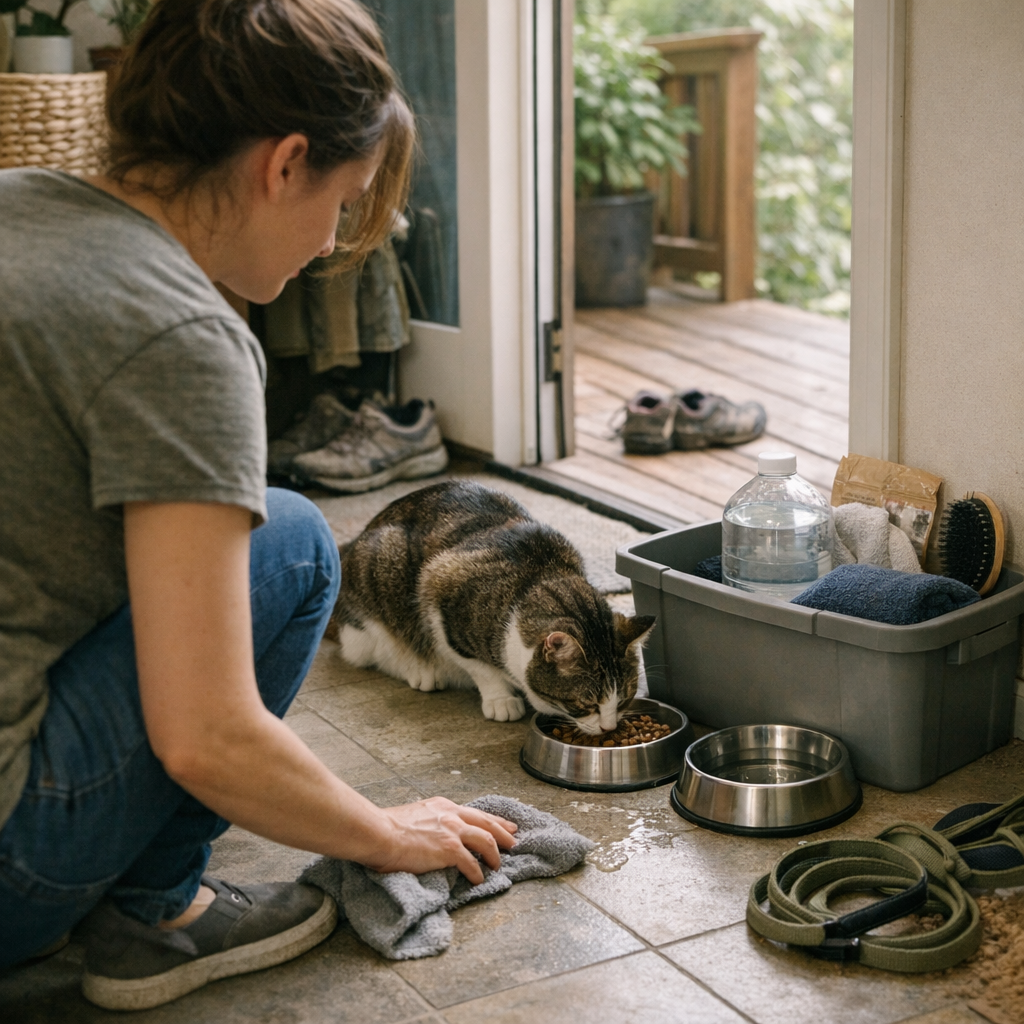
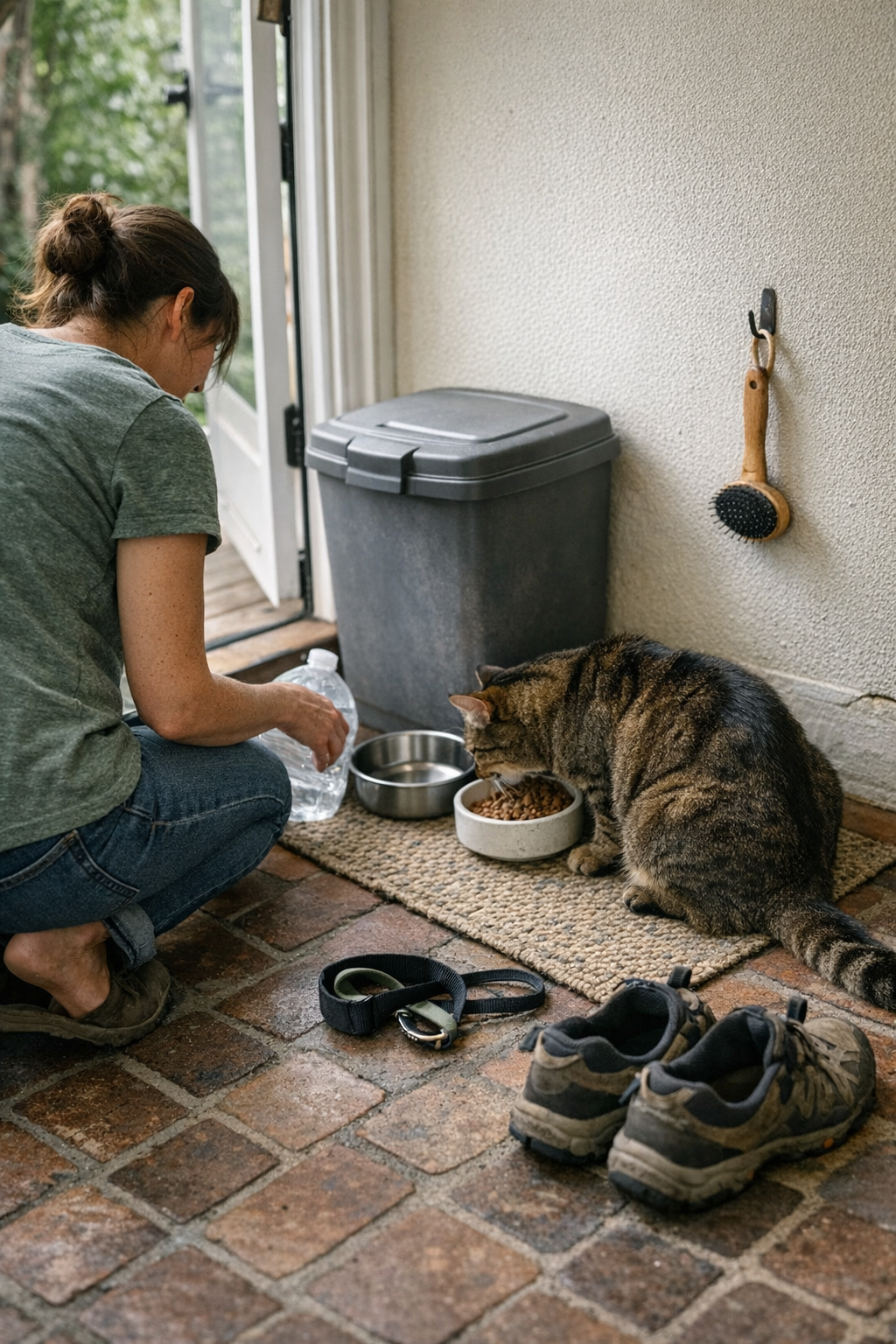
    Feeding your cat should be as simple as refill, wipe, and move on. But as soon as the day gets crowded—or a guest steps inside—routine shortcuts start showing their cracks. The bowl that was easy to nudge aside alone is now blocking foot traffic. A grooming brush, left halfway between rooms, vanishes just when you need it. And the water jug? It’s been nudged behind a bag of litter that wandered out during last night’s rushed clean-up. The same setup that looked “fine” on a quiet night becomes a source of near-constant interruptions the minute routines stack up, or your cat decides to camp out in plain view.

    When Routine Shortcuts Become Roadblocks

    It’s easy to leave the water bowl by the doorway, or the food bin half-shut, when home is empty and pace is slow. But those habits snap into focus as soon as your cat lingers by the entry or a visitor starts a conversation within sight of the setup. Routine movements—grabbing the scoop, topping off water—bring unexpected snags: a foot kicks a misplaced bowl, a drawer jams because the brush migrated, or you scramble for cleaning wipes that wound up under a tangle of bags. The small-time wins that made solo care faster turn into real blocks when you have to keep pace with more eyes and a less predictable cat.

    Here’s what that actually looks like: stretching to refill a dry water bowl, only to realize it’s shoved under the edge of a shoe rack. The refill spout, left open for a “quick return,” is now seeping near the back tile. You spot crumbs from yesterday’s meal under a side chair and reach for a cleaning cloth, but it’s buried—again—below a pile of cat toys and unopened litter. Every step adds another detour, and the reset you used to squeeze in quietly turns into a public scramble.

    The Subtle Cost of Deferred Tidying

    Skipping a post-meal wipe or closing bins halfway barely registers—until you look for the brush at feeding time and it’s missing, or find food scattered along the floor from a rushed scoop yesterday. The next routine starts with clearing leftover messes before real care can even begin. The gaps multiply: what “worked” for one person now means shuffling bowls, picking up stray tools, and explaining to anyone in the room why the system lags. Instead of smooth resets, you’re now doubling back, and even your cat starts pacing around the clutter.

    Wiping after the fact or improvising with the wrong towel drags out the process. If the care spray is uncapped or hidden behind clutter, cleanup becomes two jobs, not one. These delays don’t just mean a messier routine—they build stress that eats into whatever calm you hoped setup would bring. The more corners you cut, the less reliable each reset gets.

    Routine Friction: More Than Just a Mess

    Routine friction isn’t about what the area looks like—it’s about function breaking down. If the scoop’s wedged behind paper mail, or water refills mean dodging a stack of bags, actual feeding gets stalled. Your cat waits, sometimes loudly. You lose time reshuffling the same items you hoped were already handled. Essentials drift into other parts of the house, forcing you to cross rooms for a brush or navigate a feeding zone that clutters normal walkways. A “tidy” space still interrupts you if every use comes with a micro-obstacle course.

    Over time, incomplete resets mean every bowl swap requires clearing yesterday’s drying mat, and a grooming detour means searching for a comb that didn’t make it back to its hook. You start doing more work to keep the area acceptable, but every shortcut creates one more step to remember before the next routine can begin. Instead of calm, daily care feels like it needs a notepad.

    Hidden Work in “Tidy Enough” Spaces

    It’s easy to line up bowls, toss toys into a basket, or sweep supplies into one corner and feel organized—for a minute. But if the bin won’t close, the scoop isn’t actually within reach, or the spray bottle keeps popping up outside the feeding area, the difference between looking ready and working smoothly becomes clear after three or four rounds of repeated care. Every missed reset returns as a delay: feeding pauses while you hunt for liner bags, the broom for a quick sweep is now in the hall, and frustration spikes as the system keeps interrupting itself.

    Think about a late-night check: you go to tidy up, reach for the last litter liner—then realize the cleaning spray is sitting in the wrong room and the broom’s gone missing, again. You lose minutes hunting for basics. The space looks fine at a glance, but nothing is ready when you need it, and every shift in routine just re-exposes the same weak points.

    Improving Care Rhythm Through Placement and Consistency

    Fixing these weak points doesn’t mean color-coding the house. It’s more about changing what lands where, and why. Use only bins that close completely so you don’t leave covers half-off. Hang brushes on hooks at the end of the reset route. Put water jugs and feeding tools just out of high-traffic areas but close enough for a one-handed grab. These aren’t organizing hacks; they’re friction-busters. Each small switch shrinks the odds of having to double back, clearing the route for a care routine you can repeat even if the room is full or the schedule is tight.

    The payoff isn’t just tidiness—it’s being able to reset the area in one motion so you don’t have to scramble when something changes. Bowls that don’t block walkways, wipes at arm’s reach, bins that always close, and used items returned to a default spot: these are the differences that hold up when the cat stays underfoot or company turns up early. Even surprise interruptions don’t send you hunting for tools or trying to explain why the brush is in the bathroom again.

    Maintaining Calm, Even as Routines Shift

    The right layout acts like insurance for unpredictable days. Block routine clutter from drifting, keep reset points visible but unobtrusive, and set up care zones to support repeat use instead of just looking good for drop-in guests. Skip last-second scrambles by staying slightly ahead—reset after each use, not before company arrives.

    As your cat grows more confident spending time around you or in shared spaces, the payoff of a functional setup isn’t just less noise. Both you and your cat settle into patterns that stay reliable even when the pace changes. A routine built for repeated resets means fewer stumbles, less waiting, and a system that works on real days, not just good ones.

    Routine cat care isn’t about achieving perfect order—it’s about closing off small, repeated sources of frustration, so the feeding, filling, and quick cleanups stay easy even when the day stacks up and your cat chooses to stick around.

    For more solutions and ideas adapted to real-life pet care, visit CalmPetSupply.

  • Why Your Dog Hesitates to Settle and How to Fix Rest Space Issues

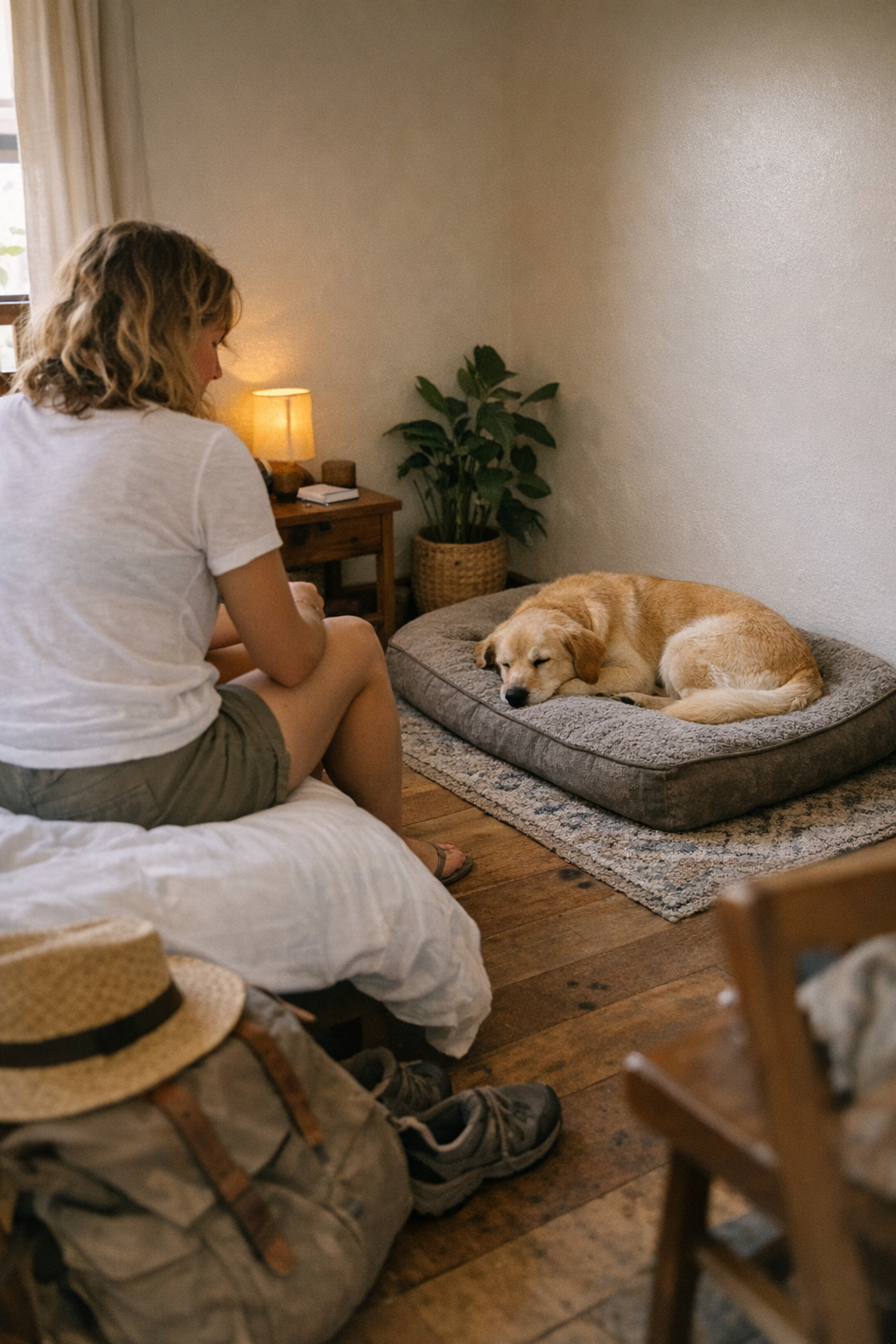
    See your dog hesitate at her bed, circle, half-settle, spring up again—then pace the same awkward loop every night? It looks like odd energy, but the underlying problem almost always hides in the setup: a dog bed squeezed into high-traffic zones, surrounded by shoes, bags, and the fallout of daily life. Instead of relaxing, your dog fields every footstep, shuffle, and sudden grab for the leash—a rest area in name, but an obstacle course in practice. Here’s how the wrong bed placement and boundary choices quietly undermine your daily flow, and how a smarter arrangement stops the cycle cold.

    When “Settling Down” Never Quite Settles

    Routine means little when your dog’s rest spot is jammed against the day’s traffic. Picture a bed inches from the hallway, where keys rattle and backpacks drop. Your dog approaches, hovers at the edge, half-commits—never really claiming it. The moment you or anyone else moves past, she’s up, rechecking the room, neck craned and attention fractured. Even after a tiring walk, there’s no true rest: your dog wears out by degrees in the background noise of the home.

    • Dog stands on the rim of her own bed, just watching—never curling up for real sleep.
    • A passing family member or dropped leash makes her flinch up, alert to every shift in motion.
    • She might settle for a moment, but the return of footsteps or a shuffle beside her resets everything—again.

    Why It Adds Up: Routine Drag and Repeated Friction

    Each interruption looks minor—a nudge here, a hop up there. Ignore it too long, though, and these frictions stack to drag your whole evening down. In daily routines, their cumulative effect is loud:

    • Returning from a walk, you dodge around the dog bed blocking the doorway. The detour jostles your dog awake just as she’s winding down, stealing her calm and slowing your own routine.
    • During dinner, her bed is squeezed beside the kitchen, trapping her in the swirl of moving feet and dropped snacks—she’s up and shifting every time the fridge opens.
    • Even a “neat” space feels unstable—shoes wander, bags pile up, and your dog pauses, uncertain whether the patch still belongs to her at all.

    The cost isn’t obvious right away. But neither you nor your dog ever really reset—you both spend the week tracking small annoyances and restless energy instead of recharging. Sleep gets lighter, tempers shorter, patience thinner.

    Common Traps: When Rest Zones Blur with Everyday Life

    Most rest-area mistakes sneak in slowly, not as big failures but as layered compromise:

    • The “cozy” blanket goes next to the only free spot—smack in a doorway draft.
    • Dog bed shoved beside the couch, bracketed by bags and a drifting rain boot or two.
    • Toys collect, bowls inch closer, and soon the whole area is a cluttered “dog zone”—never truly for rest.

    The difference at first is invisible. After a few days, circling, pausing, and hyper-alert sleeping surface—triggered not by quirks but by beds that never get buffered from the day’s churn. The illusion of organization fades fast under real use: a rest area that looks tidy but keeps fracturing your dog’s attention (and yours) each time you cross the floor.

    The Ripple Effect: How One Weak Point Undermines the Entire Routine

    That badly placed rest zone does more than just clip nap time. The location’s weak point keeps popping up all day:

    • Morning scramble: reaching for your keys or bag, you sidestep the encroaching bed—spilling water, losing precious seconds, or knocking your dog off her rhythm before breakfast.
    • Cleanup limits: you want to wipe muddy paws fast, but towels stashed beside the half-sleeping dog are hard to grab—so you delay, fumble, or skip the cleanup altogether.
    • Bedtime hesitation: your dog stares at the bed, waiting for a clear “go ahead” from you, reading the ambiguous setup as a shared, uncertain space. She hovers at the edge rather than taking it as hers.

    The result: transition times get rougher. Walks end with double shuffles, grooming stops require detours, and the whole routine gets chunkier—slower, less reliable, more easily derailed by one wrong placement.

    Is It Energy, Mood, or Just the Wrong Place?

    If you blame your dog’s restlessness on her personality or “needs more exercise,” watch the routine: restless hovering usually signals the space itself isn’t truly buffered from background movement, sound, or the churn of daily objects. A bed sucked into hallway drafts, jostled by bags, or hemmed in by bowls can’t let a dog really switch off. Most owners find themselves nudging clutter away night after night, hoping their dog adjusts—only to see the same interrupted routine tomorrow.

    Resetting the Rest Zone: A Real-World Adjustment

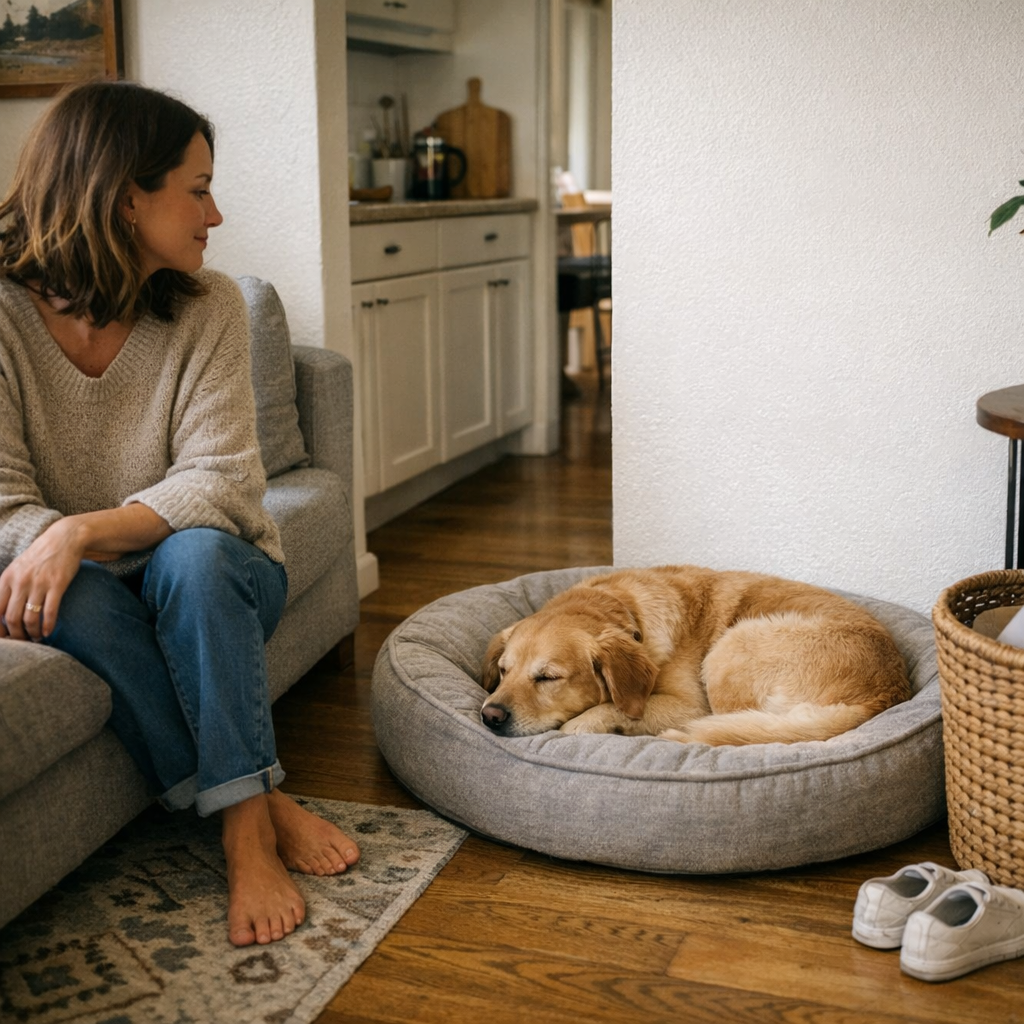
    Improvement rarely means buying another bed—it’s about moving what you have off the beaten path and guarding its boundaries. Here’s the pattern that fixes it: shift the bed just an arm’s length—about a meter—off any main walkway and anchor it to a calm wall. Purge shoes, bowls, and toys from arm’s reach. A quiet corner is suddenly, almost instantly, a reliable signal: “Yours. Safe. Switch off.”

    The immediate difference is clear: your dog approaches, circles once, and folds into sleep—no unfinished hover or split attention. You notice how downtime goes from fragile to solid. Both of you stop bracing for the next interruption.

    How to Judge If the Rest Fix Is Working

    • Your dog lays down after a walk without sitting up at every sound—rest starts quickly, lasts longer.
    • The old “pop up and check” routine disappears; background movement no longer triggers a patrol or reset.
    • You move through daily tasks—grabbing keys, handling cleanup—without weaving around the bed or tripping on scattered gear.

    This shift isn’t about style. The bed’s location looks almost bland—but works on repeat, and the anxious resets and daily friction finally subside. You stop dreading the next evening reshuffle.

    Reducing the Churn: Everyday Tips to Keep a Rest Zone Stable

    No setup stays perfect—a week later, shoes inch back and items migrate. Prevent “creep” and keep the rest boundary firm with habits, not just good intentions:

    • Weekly spot-check: Remove anything (bags, laundry, toys) closing in on the bed before your dog acts out the friction for you.
    • Cleanup supplies nearby, never inside: Towels and wipes within reach, but not where they spill into the rest spot itself—so post-walk resets are easy but the zone stays undisturbed.
    • Use routine signals: If hovering, circling, or restless shifts return, look for the new invader—a basket, water bowl, or random jacket—that’s muddied the boundary again. Remove, reset, repeat.

    Forget “perfect”—focus on stable and predictable. A small bit of vigilance keeps the space smooth for both you and your dog. The payoff, every day, is fewer failed transitions and real rest that doesn’t constantly get lost in reset mode.

    A Setup That Feels Good—Even After The Tidy Look Wears Off

    The line between “organized” and “usable” is visible in motion. A bed moved just out of the human flow, shielded from stray shoes and bags, doesn’t just look better—it quietly unlocks a calmer whole-home rhythm. The dog chooses it without nudging, circling, or glancing at you for permission. And keeping that setup going isn’t an ordeal: often, it’s a two-minute move or a weekend declutter—not a big renovation. What you get back is a day with less sidestepping and a stop to the tiring pattern of constant adjustment.

    When the rest setup actually works, you stop noticing it at all. The difference isn’t in how stylish it looks, but in how little resistance it puts up during real use.

    Find more practical solutions for real-life dog routines at DogPile.

  • How Consistent Meal Zones Simplify Indoor Cat Feeding and Cleanup

    When you shift your indoor cat’s feeding corner—maybe to vacuum, to clear space before guests, or just to make the kitchen look more open—it often backfires fast. Your cat stands in the old spot, scanning the empty floor, expecting dinner on familiar ground. You, meanwhile, find yourself hunting for a bowl that’s now off to the side, mats dragged halfway toward high-traffic zones, and supplies not where muscle memory reaches. What started as a quick adjustment for tidiness quietly multiplies daily friction. The first move seems harmless, but by week’s end, you’re dodging water dishes near walkways, picking up crumbs from new angles, and both of you are just a step slower than before. The StillWhisker world isn’t about show setups—it’s about avoiding the compounding hassle created by setups that don’t stay put.

    The Ripple Effect of a Wandering Meal Zone

    Sliding food bowls or relocating the water mat might win back a bit of floor or keep a hallway open for an hour. But once the meal zone starts drifting, the routines that held together crack—quickly. Your cat’s habits, built on reliability, go out of sync. Suddenly, every mealtime means double-backing, confusion, or waiting. Not just for the cat, but for you: a bowl now blocks cupboard doors, water leaves drips in the path you just cleared, and cleaning supplies are always one room further away.

    • Your cat circles back to the old corner and lingers there, giving up speed and certainty with each misplaced bowl or mat.
    • Refilling water turns awkward—mat not where you expect, bowl awkwardly jammed next to chair legs, hand reaching for food with something always in the way.
    • Cleanup takes longer: crumbs scatter wider, water trails appear under furniture, and you wipe down spots that felt settled yesterday.
    • “Tidy” setups just trade one mess for another—surfaces still need extra wipe-downs, while wipes or spare food end up somewhere inconvenient when a spill hits.

    It’s rarely dramatic on day one, but the interruptions pile up. Meal times drag, walkways get blocked by supplies or dishes that haven’t found home, and leftovers keep showing up in corners you didn’t plan to check. Every extra move you make is a symptom: the setup felt right for the room but not for repeated use.

    How Setup Instability Builds Friction—One Move at a Time

    Routine likes repetition—and setups that drift erode that. Cats adapt, but not instantly. A shifting meal zone confuses them and drains your time with minor detours. Every time you clear a walkway or rearrange for guests, you invite a fresh mismatch between where the setup looks good and where it actually works. Movement between “cat zone” and “human zone” blurs: what’s meant to streamline ends up interrupting.

    • Morning: The bowl set aside for floor mopping lands in front of a cabinet. You reach to put it back, but it slides, food spilling under the fridge—another round of cleanup no one had time for.
    • Evening: Water bowl, dragged out of the walkway, leaves a wet streak you only notice barefoot on the next trip through.
    • Midweek reset: The mat bundled for vacuuming sits out of place a day longer than planned. Next feeding, crumbs and stray toys are scattered two steps further out, making containment impossible.

    Each “temporary” relocation breaks muscle memory for both cat and human. By the third or fourth move, the feeding area becomes a moving obstacle, never quite feeling like it belongs. You notice it most when you’re trying to move quickly—the old convenience is gone, replaced with a routine that pulls your attention sideways at every handoff.

    Why a Stable Feeding Zone Changes the Whole Flow

    A fixed meal spot stops the quiet chaos from creeping in. When the feeding zone anchors to one location—corner, counter edge, or alcove—the routine settles down. Cats land where they expect. Cleanup collects in one pattern: crumbs and spills are predictable, not roving annoyances. Supplies gather within reach of that spot, not scattered wherever you last hit pause. In small spaces or shared rooms, the benefit shows up immediately—a loop forms that you can run with less thinking and less backtracking.

    • Meals speed up, because both you and your cat are already in sync—no searching, less silent waiting, fewer missteps between bowl and bag of food.
    • Cleanup locks in, with messes local and wipe-downs on schedule. You know which corner collects spills, and stray residue stops showing up under chairs or behind doors.
    • Mats and bowls stay put, so you’re no longer kicking a dish into the walkway or straightening a mat every time you want to open a cabinet or cross the kitchen.
    • Supplies don’t wander, since you return the cleaning cloth, extra dish, or refill jug to the same reach zone after each use—mid-routine resets stop being a scavenger hunt.

    Positive Side Effects for Cat and Human

    Once the setup stops moving, tension evaporates. Your cat approaches with less hesitation, you recover minutes each morning, and feedings start to feel automatic. The pause for silent negotiation—cat at your heels, you with bowl in hand—happens less. Cleanup doesn’t get skipped by accident. The house feels less tangled: you spend less time redoing small chores, more time in a space that stays ready. It’s never about making life perfect—it’s about cutting the tiny, repeated losses from chasing a tidier look at the cost of function.

    The Cost of “Looking Tidy” over “Working Easily”

    Moving bowls or mats for the sake of a spotless floor might offer a cleaner photo for a few hours—but it rarely survives everyday life. “Hidden” meal zones and out-of-the-way setups often mean food tracked into main walkways, bowls left just out of reach when you need them, or mats blocking outlets and doorways. The appearance improves for a moment, but the snag returns by the next reset: you step over shifted dishes, hunt for wipes, and end up doing just as much (or more) routine repair than before. Each move traded a visible mess for a slower, less reliable flow.

    Boundary-Defining Tools: Why the Right Mat Matters

    The practical payoff comes from structure, not surface. A feeding mat with a real boundary—raised edge or grippy texture—holds bowls in place and keeps crumbs from spreading into the rest of the room. Spills don’t run wild; cleanup is a fast, repeatable action. The difference shows the moment something tips: instead of a water line creeping under chairs, you have an edge that contains, a zone that signals its use, and a mat that lifts out in one go. Choosing mats designed for easy wipe-down, fast lifting, and quick reset pays off over hundreds of repeats—it isn’t just for looks, it’s for keeping every reset simple and the meal zone stable.

    Practical Observations from Real Repeated Use

    • Crumbs gather where they can be swiped at once—instead of under every cabinet or along the baseboard.
    • Water stops migrating, reducing slip hazards in places you don’t expect and keeping wet paws (and floors) contained.
    • The area is quieter and visually less cluttered: you’re not tracking mess by sound (the rattling bowl under a chair or the splash of water near an outlet), but seeing the setup actually settle down.

    Small Adjustments, Tangible Payoff

    Keeping the meal zone anchored isn’t something you notice all at once—it’s the slow disappearance of repeated snags: feeds are smoother, cleanup gets cut to a cycle you can finish without guessing, and those mental lapses where mess reappears shrink away. The win isn’t pristine appearance, but the steady removal of friction from each day—a setup that stands up to repeated use rather than just surviving in between deep cleans. In a home where space and routines overlap, a meal zone that sticks to its corner solves more than just today’s clutter; it trims the invisible work that stacks up when setups drift and routines break. That’s the real StillWhisker difference—a choice that holds up after the third or tenth reset, not just the first.

    Explore practical feeding zone setups at StillWhisker.

  • How Simple Storage Fixes Transform Your Dog’s Calm Handshake Routine

    Why “Calm” Pet Routines Fail When Daily Details Slip

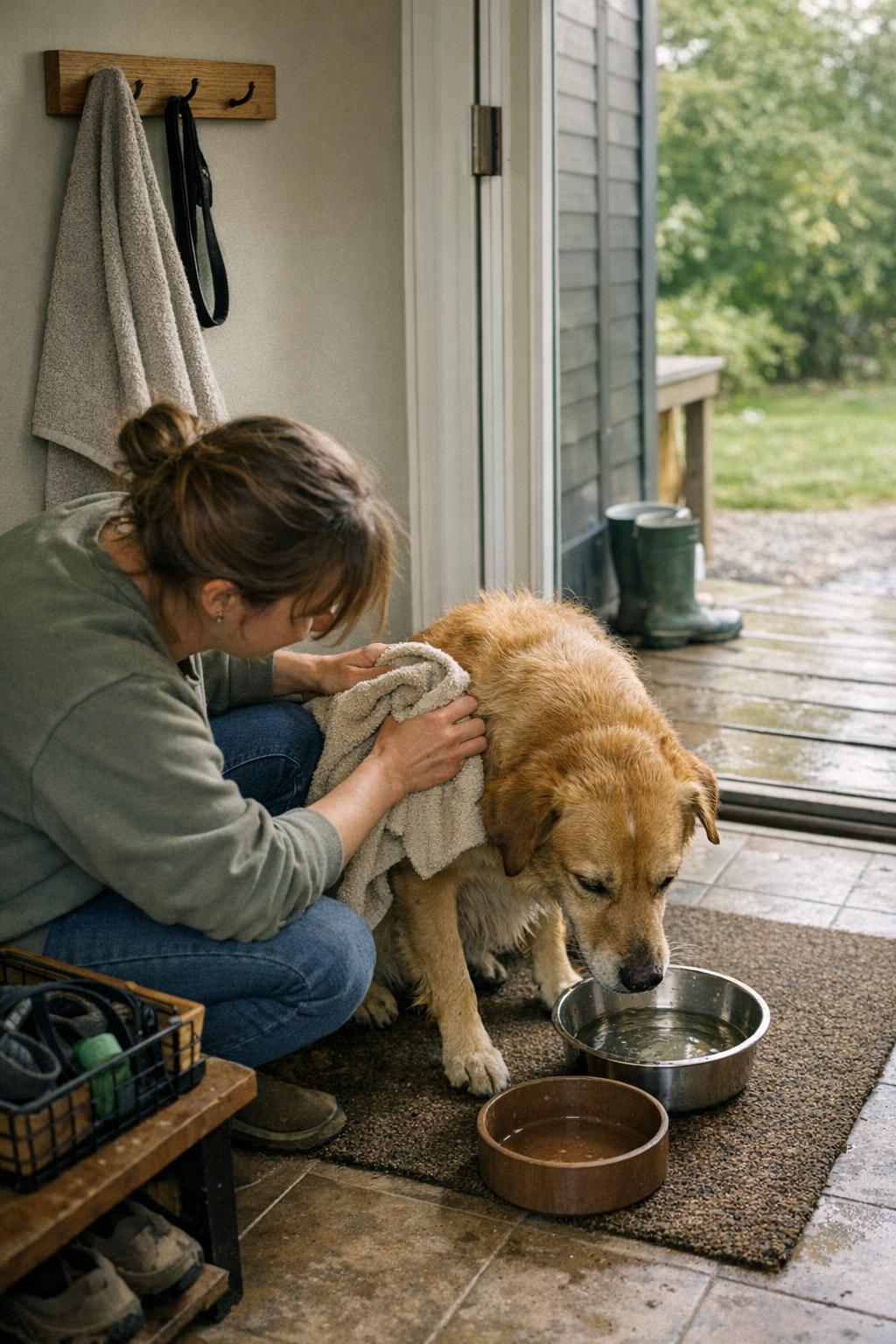
    At first glance, a “calm handshake” sounds simple: pause at the door, towel ready, leash off, paws wiped, bowl refilled—then on to the next thing. But the promise of calm cracks the moment a basic item isn’t where you expect. One missing towel after a rainy walk, a bowl in the dishwasher when dinner’s due, or a leash shoved behind a coat pile: these aren’t rare disasters, just regular weak points that turn an easy routine into chaos by increments. The effect is felt in seconds—a muddy doorway, a restless dog pacing while you dig for the right supply, your own patience running out before the mess is even handled. This is where CalmPetSupply’s world of simple, anchored setups shows its difference: not in how things look for a photo, but in making the basics actually ready every time.

    The Hidden Cost of a Weak Routine

    Most pet-care breakdowns aren’t dramatic—just one step out of place when you need it. The towel you count on is missing the moment muddy paws reach the entry. The food bowl is still unwashed when your pet is already waiting to eat. As these slips add up, every meal or walk stretches out, each reset becoming a stumbling block instead of a pause. A routine that should be over and done in seconds becomes a new friction point you dread repeating.

    Picture the return from a wet walk: you stretch for the towel, but it’s moved—maybe tossed in the laundry or hiding across the room. The leash is nowhere near the door; instead, it’s trapped under a line of boots. The water bowl you cleaned last night is now plugged behind other kitchen clutter. Instead of a seamless transition, you’re juggling supplies, tracking mud, and letting stress run straight into your home with every pawprint. What looked organized for company collapses exactly when the routine repeats under pressure.

    Routine Disruption: How Small Delays Build Up

    You don’t notice the slow breakdown at first. But over time, small absences—lost leashes, detoured bins, brushes never where you left them—pile up. You end up doubling back for clean-up bags or stumbling around furniture for a grooming tool that should always be in arm’s reach. One forgotten item means another pause, another minor reroute—multiplied by every meal, walk, or late check-in. The effect? Routines drag on, feel unreliable, and eventually get skipped because handling them is just too much trouble.

    This isn’t just about space “looking” tidy. Supplies might be stocked—somewhere—but if the towel is perched out of reach, the detergent locked under the sink, or the brush buried at the bottom of a shared bin, the disruption is just as real. Each small detour erodes the reason for a calm setup in the first place, making every task more awkward, not less.

    When Pet Items Invade Shared Space

    Calm routines don’t just fail in the pet zone. Bowls slide from the kitchen to the hall, leashes migrate from their hook to the couch, and cleaning brushes never quite return to their home. Storage bins shift, inching further from the door every few days. At first, these moves don’t even register. But soon every return means stepping around displaced supplies—raising the odds you’ll miss an item or build up a fresh pile for next time.

    For families, one “solved” spot can still leak friction. You organize leashes only to realize the towel is drifting to another corner; the brush always ends up wherever it was last abandoned. A room can look organized for five minutes, then glitch at the very moment you actually need to move fast.

    Mess Management Versus True Ease

    A corner that looks neat isn’t the same as a setup that saves work when it counts. “Calm” only sticks when the necessary items don’t move, wander, or get buried. When you always know where the towel hangs or where to grab a leash after a walk, resets stop being tasks you want to avoid. This isn’t about hiding clutter—it’s about making sure what you need actually stays within reach, ready every single time.

    The real difference is in the flow: after a walk or before a meal, your hands go directly to the supplies, no rerouting, no digging. The towel sits on its hook; leashes don’t snarl with boots; bowls return to their spot with zero thought. Cleanup, refills, and end-of-night checks happen automatically—before mess builds up—without any reshuffling or hunting under tables.

    Real-Use Patterns: How Small Choices Add Up

    The everyday “drag” isn’t always obvious until you hit it a few times. Leave the bowl out once, and next time you’re blocked at dinner. Stash wipes in the pantry, and they’re never there when you need to swipe up muddy prints by the door. Every “temporary” move adds up until supplies keep slowing down routines and clogging family traffic—especially where space gets tight or entries are busy.

    Even the best intentions—like moving items to look tidier—can set you back when you reach for them mid-routine and find nothing within arm’s length. Over a week, the extra steps start to add up, and that hidden effort becomes heavier than the visible mess ever was.

    What Actually Works: Anchored Basics, Fewer Steps

    The setups that really deliver calm aren’t the ones that just look neat—they’re the ones where key parts never move unless you mean to move them. A towel that lives on its hook, a bin that stays by the door, a bowl that’s never blocked by other “tidy” objects—these are the anchors that keep routines running without friction, regardless of weather, family schedule, or unexpected chaos. When the foundation holds firm, resets take seconds and routines don’t deteriorate after a good week.

    The trade-off is real: steadier transitions, less frustration, and routines that don’t steal time from everyone involved. True calm isn’t about controlling appearances but about lowering the burden and hassle at every care touchpoint. When each detail matches up with the pace of real life, calm isn’t just a look—it’s the absence of friction, mess, and repeated work built up over time.

    For real-world pet care supplies and practical setups that hold up to repeated use, visit CalmPetSupply.

  • Why Consistent Dog Bed Placement Improves Daily Home Flow

    A dog bed looks like a solution—until you’re nudging it aside for the third time in one morning. You tell yourself it’s temporary: after the next vacuum, once the groceries are in, when the dog finally settles. What actually happens is a steady crawl of small hassles: squeezed footpaths, a dog that hovers awkwardly at the doorway, and a spot that never quite feels “set.” Underneath the neat surface, a drifting bed jams up daily routines, trips up transitions after walks, and chips away at both your dog’s comfort and your own flow. At DogPile, the real test isn’t how the setup looks—but how much daily drag it adds, or removes.

    The Invisible Cost of a Wandering Dog Bed

    You shift the bed to vacuum, wedge it near the door hoping your dog will settle, or push it out of the way before friends arrive. Each tweak feels inconsequential—until your dog stops at the threshold, waiting for a cue, or you find yourself awkwardly kicking the bed aside with an armful of laundry. The “just for now” habit creeps into every routine. Return from a walk, and the bed is blocking access to wipes. Go to put away dog gear, and you’re sidestepping padding that drifted back into your path. Your dog paces, circles, sometimes hesitates before committing to a spot that’s always on the move.

    It’s not just your patience wearing thin. As the weeks go by, these resets begin to stick out. The living room slants out of symmetry. Your walk from front door to kitchen gets choppy. Your dog senses the shift, lingering in walkways or avoiding that spot altogether. Tiny interruptions stack up into a routine drag: the day never feels reset, and your dog’s rest is unsettled without ever being obviously wrong.

    Spotting the Signs of Bed Drift in Daily Life

    Rarely does “bed drift” slam routines all at once. Instead, friction shows up in moments you barely register—until you realize how often they repeat:

    • A bed edge blocks the hallway when you’re hauling in groceries or crossing with laundry.
    • The bed migrates into your walking lane—sometimes after a quick guest cleanup, sometimes thanks to a careless nudge.
    • Your dog pauses at doorways, waiting for the obstacle to be shifted instead of just settling down.
    • The endless micro-reset: straighten, fluff, align, repeat, until your hands do it automatically without thinking.
    • You delay cleanup because moving the bed feels like one ask too many—never fully committing to leaving it or shifting it again.

    By week’s end, the collective detours and hesitations slow everyone down. You feel it most during routines that ought to flow: leash-off at the door, grabbing a clean towel, prepping for bed.

    Routine Friction: When Function Loses to Tidiness

    A tidy placement rarely survives the day. The bed that looked neatly tucked after breakfast now crowds the kitchen as your dog follows you for snacks. By lunch, it’s catching stray water or blocking storage bins. Come evening, it’s worked its way across the living room, edging into the walk path you need for a clear reset before bed.

    The trouble isn’t moving the bed once—it’s the cascade of small fixes. Each repositioning answers an immediate problem but sows new chaos a little later. A “nice” room gets harder to use. A predictable rest zone for your dog turns into a puzzle, which means more circling, more hesitation, maybe a flop in exactly the worst spot. Visible order isn’t routine order. The more often you rearrange, the less functional the setup becomes during ordinary, repeated use.

    Common Scenes Where the Drift Shows Up

    • After a walk: You drop the leash, reach for wipes—blocked once again by the bed, right when you need fast paw cleanup.
    • During chores: Vacuuming pulls the bed askew, and nobody bothers resetting it, so the next crossing becomes a sidestep or stubbed toe.
    • Hosting: Someone sets the bed “out of the way,” and now your dog waits, adrift, for a cue that never comes, the spot never fully restored.
    • At bedtime: Your dog searches for “their” place, circles longer, or nudges the bed until it’s closer to where it was—meanwhile, you notice your own sense of calm hasn’t quite arrived.

    Building a Steady Resting Zone: Why a Fixed Bed Beats a Mobile One

    Some owners eventually get fed up, pick a spot, and keep the bed there—resisting the urge to optimize for a quick tidy-up or better photo. The right location isn’t always obvious, but it consistently works better if it frees up footpaths, keeps gear reachable, and doesn’t need another move each time life shifts.

    Visible differences in daily life when the bed is fixed:

    • Smoother routines: Physical flow improves—a deliberate gap of two feet keeps walkways clear, no more juggling laundry and maneuvering around dog padding at once.
    • More predictable settling: Your dog heads straight to their one spot after walks or play, cutting out circling and hesitation.
    • Less daily wear: Since the bed isn’t dragged or bunched, it holds its shape, corners stay tidy, and you’re not fluffing or re-centering after every reset.

    Often, nothing else at home changes—but the days suddenly run smoother, and rest becomes more reliable for both dog and owner. No single routine is “transformed,” but the subtle friction fades. The room stops fighting you back.

    How Much Distance is Enough? Finding the Buffer That Works

    Is there a perfect distance from the bed to the walkway or door? There’s no formula, but in ordinary routines, a two-foot buffer is usually enough to avoid the worst crowding. The goal isn’t exile—it’s keeping walk lines hazard-free, so you aren’t always calculating angles carrying towels, meal bowls, or gear.

    The right buffer solves repeated hangups:

    • Keeps foot traffic flowing, especially when hands are full or the pace is quick
    • Kills the endless debate—move the bed now, or later?—by making placement automatic and out of the way
    • Stops the cycle where you ask your dog to move, apologize for nudges, or disrupt their rest to regain floor space

    Your dog settles faster; so do you. There’s no scramble, no “almost-tripped” feeling, and the house structure finally works for both species.

    What If You Actually Need Several Beds?

    If your dog tracks you around the house, or the living space is open and busy, one fixed bed isn’t always enough. Multiple reliable spots—by the door for checking outside, near the sofa for evening downtime, and a quiet rest corner near a crate—means nobody is stuck shuttling bedding twice a day. The trick is consistency: each location needs to remain stable, not get shuffled in a panic before guests or after chores.

    That way, your dog never has to guess where they belong, and you’re not the one dragging gear from one end of the house to the other just to regain access or fix a suddenly crowded routine.

    When to Move the Bed (and When Not To)

    Some moves make sense: deep cleaning, big gatherings, or trialing new zones to see how flow improves. What doesn’t help is moving a bed to patch a cosmetic gap, or because you haven’t yet found a spot that solves the real daily annoyances. Every unplanned move creates a churn that outpaces any gain in tidiness.

    Think of fixed bed placement—and the steady routines it unlocks—as a daily tool, not an afterthought. Persistent drift signals the setup isn’t working for actual lived routines, not just for quiet moments when the house looks perfect.

    Small Fix, Real Impact: Recognizing What’s Working

    The difference between a drifting bed and a stable resting zone sounds insignificant—until routines unfold without the slow drag of constant adjustments. The next time you catch yourself or your dog hesitating at a half-blocked doorway, or stalling out mid-chore, pause and notice: the setup isn’t just about dog comfort or appearance, but about practical, repeated function that holds up under ordinary home pressure. Getting this one point right opens up the rest. See how the right setup can stabilize your dog’s routine at DogPile.

  • How Proper Placement of Timed Feeders Reduces Cat Feeding Conflicts and Mess

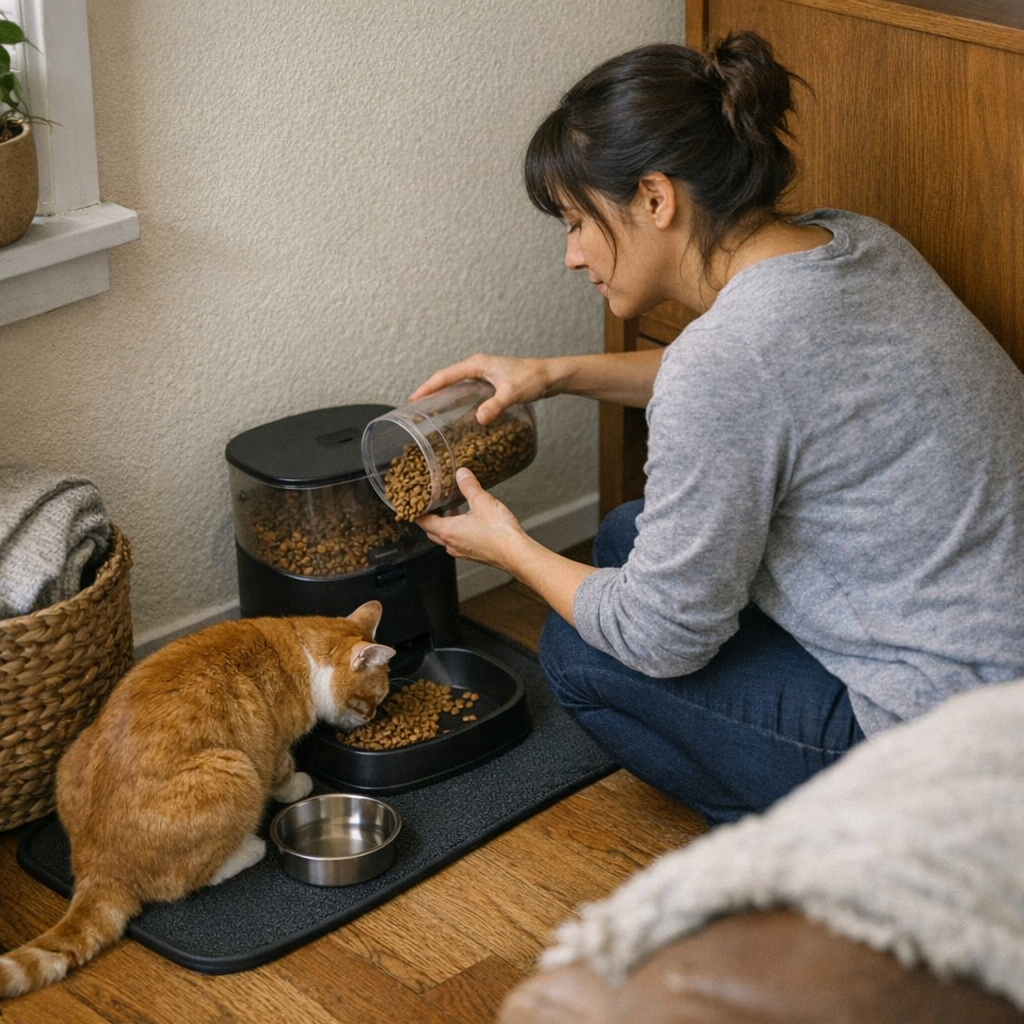
    Add a timed feeder to your indoor multi-cat setup and you expect smoother routines—but friction shifts fast. Instead of ending bowl duels, a poorly anchored station turns meal resets into a chore loop: you’re forever nudging the mat back, picking kibble from corners, and sliding the whole feeder away from walkways that cats and humans both keep crossing. What looked organized on the first day quickly turns into a high-traffic zone where feeding time spills out, and cleanup creeps across the room. That’s where StillWhisker’s structure-first approach makes the difference: less about appearances, more about what stops your setup from falling apart after the third refill.

    Why Feeding Time Still Gets Messy—Even With a Timed Feeder

    Timed feeders sound like a solved problem: portioned meals on schedule, less food anxiety, calmer cats. But when the tray spins and cats swarm, one always rushes the bowl—scattering food and shifting the setup. Two days in, the routine grows lopsided: dried food rings appear on a mat that won’t stay put, crumbs roll just under the edge of the cabinet, and every refill becomes a messy pause, not a smooth move. You bend down, realign the mat, wipe off residue, and slide the feeder back for the second or third time. That’s not meal control—it’s repeated, slow-motion cleanup.

    The Routine That Looks Settled—But Never Really Is

    The feeding corner might seem stable after initial setup, but small frustrations keep stacking up. Bowls slide, mats drift, and a quick glance turns into a spot-check: is everything lined up, or did a cat nudge the bowl halfway under the fridge again? Every pass through the room means another interruption—scraping stuck kibble off tile, fixing the feeder’s angle, or swatting loose crumbs out of your own path. Instead of stability, you get an endless micro-reset, each time just off enough to slow you down.

    The Hidden Cost of Mess That Moves—And Grows

    Here’s where “looks tidy” falls short of “stays easy”: once mess starts moving, it grows. The feeder isn’t anchored, so bowls inch away from their zone, mats bunch underfoot, and stray bites track out to walkways or under sofas. Each nudge, whether from a cat’s paw or your morning rush, inches the whole setup out of its lane. Instead of reducing work, every subtle shift creates one more cleanup job—for you, not the cats.

    • Bowl edges cross onto the kitchen path
    • Mats fold and crumple under doors or furniture
    • Kibble and crumbs slip into gaps you can’t reach without moving everything

    Instead of one controlled area, you fight a slow, spreading mess that resists any quick fix.

    The Real-Life Feeding Zone: Small Decisions, Big Effects

    Watch the pattern after a few cycles: does one cat muscle the other out, shoving the bowl with every bite? Does the mat jump the gap between wall and feeder over and over? Find yourself picking crumbs from the same corner night after night? Those patterns show up fast. Within days, you know if your setup contains chaos or just scatters it further into your space—adding new resets to each feeding routine.

    Split Bowls: The Problem Hides, But Never Leaves

    Adding extra bowls in different spots can mask tension but rarely solves it. One empties faster, “backup” bowls start collecting uneaten food or sticky rings, and before you know it, you’re on daily patrol for where today’s mess hid. Assertive cats double-dip, quieter cats wait out the chaos, and your refill routine breaks down into scattered checks and surprise finds. It’s not less competition—it’s more surface area to cover and more time spent wondering what you missed.

    • Uneven food disappearance—one bowl raids, one ignored
    • Persistent buildup in the “secondary” dish
    • Cleanup hunt as bowls drift out of sight or under foot
    • Refill routine that never finishes in one loop

    The symmetry looks tidy—but the daily work just multiplies out of view.

    The Slow Creep: How a Weak Setup Makes More Work

    Mats migrate, feeders drift, and that unnoticed trail under the table waits for you to finally move a chair—or, worse, not notice until crumbs build up. Meals become a series of small tasks: repositioning the feeder, shaking out the mat, running a cloth over sticky patches, or moving objects out of the way just to refill. That’s time lost every single day to a setup that keeps slipping out of alignment—even when it looks neat at a glance.

    The Walkway Trap: Mess Finds Its Way Out

    Feeder placement isn’t cosmetic—set it near a walkway or shortcut and every foot or tail will push the boundaries wider. Mats ride up over thresholds, the feeder noses its way into cooking space, and within a week crumbs show up in hallway corners or under the couch. Mistaken “neutral” spots become accidental spread zones:

    • Crunch under your heel on the coffee run
    • Mat pushed against or half-under the fridge
    • Kibble dust collecting where no vacuum reaches easily

    Now you’re not just resetting the feeder—you’re chasing a mess that broke into the rest of the house.

    Everyday Examples: When the Feeding Zone Doesn’t Hold

    You step into the kitchen and immediately feel one: a gritty crumb underfoot right by the sink—again. After dinner, you see the feeder at a new angle, mat folded up, crumbs radiating out like it’s been swept by a fast tail. You “fixed” this yesterday. But the reset never sticks. The feeding zone is a moving target, always a little more chaotic than you left it.

    How Anchored Structure Changes the Routine

    The right structure turns the feeder from a fragile guest into a fixed part of the room.

    The practical upgrade? Set the feeder and mat in a guarded corner, far from walkways, with a mat that has a raised lip—just half an inch, but enough to catch most sprawl. That detail resists the sideways push from paw or foot, keeps the mat where you put it, and stops routine slides. Now, the full reset is one contained cycle: move the bowl, wipe a single area, shake the mat, refill. One check, one pass. Cleanup happens where you expect it—not everywhere else.

    Why a Raised-Lip Mat Is a Game-Changer

    Not all mats are equal; a simple raised edge marks the boundary. Kibble paws can’t fling food as far. The feeder, nudged by hungry cats, holds position instead of drifting with every meal. When feeding gets chaotic, the chaos stays boxed in. Cleanup time and effort shrink. Instead of multitasking your way through scattered sites, you find mess contained and returns predictable.

    The Role of Surface Underneath

    Miss this detail and you fight the same battle: mats on slick wood or tile just slide, no matter how neat the rest looks. Non-slip backing, adhesive pads, or simply pressing the mat flush against two walls changes everything. The less the base moves, the fewer resets sneak in—and you stop burning attention on a zone that’s always in motion.

    Anchoring for Both Cats and Humans

    A feeding zone must work for you—not just the cats. Invisible placements mean surprise spills behind the feeder or stale buildup hiding where you never check. It’s not enough to look organized once—usability needs to survive every refill.

    Check your space for:

    • Visibility: Can each cat approach with a clear line of sight—no blocking or blind turns?
    • Reach: Can you lift bowls and sweep mats without shuffling other items first?
    • Cleanup access: Are the right supplies already at hand when spills hit—or do you lose time fetching paper towels from another room?
    • Reset speed: Does everything return in a single movement, or does “almost done” drag out with one more trip?

    A strong structure cuts not just mess, but the friction that makes daily meals a string of little extra jobs. The goal isn’t spotless looks—it’s setups that don’t keep interrupting you at every pass.

    Spotting When Your Setup Isn’t Working

    How do you know it’s time for a structural feeding fix? Watch for these cues:

    • Your cleanup takes longer than the refill itself
    • You keep finding stray food outside the feeding zone
    • Bowels or mats migrate even when you “just fixed” the area
    • Cleanup supplies are present—but never the moment you actually need them
    • The setup looks organized, but still forces you into mini-reset mode with every meal

    The difference between a setup that

  • How to Maintain a Steady Cat Care Routine Despite Daily Interruptions

    Smooth-looking pet routines break down fast the minute real life steps in. A cat’s care station can look organized at breakfast—until a midday delivery, a surprise visitor, or even a pile of mail blocks the only open counter. Suddenly, that water bowl is nudged off the edge, the food scoop is buried under yesterday’s packaging, and the grooming brush has vanished just as your cat darts under the couch. In the span of an ordinary morning, what started as a tidy setup quickly turns into a scramble for basics you thought were already handled. CalmPetSupply’s practical routines live in this gap—the difference between a care area that looks fine and one that holds up under repeated, everyday interruptions.

    Why Small Disruptions Reveal Routine Weak Points

    Most pet-care setups work—right up until you need them to recover quickly. The friction isn’t dramatic: you reach for the food bowl, only to dig past boxes or yesterday’s mail. Water spills get wiped up late because your towel never stays put—it’s either in the laundry or misplaced for the third time this week. At first, these delays seem minor. But as they add up, feeding gets delayed, water sits too long, and cleanups start skipping steps. Missed basics don’t announce themselves; they just turn daily cat care into work that never quite gets easier.

    Everyday Scenarios That Break the Flow

    Come end of day, your cat’s feeding area looks ready: bowl, scoop, refill bag, maybe a brush tucked nearby. But try to refill water, and the cloth for quick wipes is under unrelated clutter, nowhere you actually need it. That “handy” brush? Two rooms away, last used during TV time. Cat toys drift into busy home spaces, where just reaching the bowl interrupts whatever you’re doing. Every time tools migrate or get buried, another care step slows down or gets skipped entirely.

    The pattern repeats after dinner: you want to scoop the litter and top off water, but the scoop is outside the bathroom and all spare towels are lost in the laundry heap. Even with a staged, tidy look, the routine starts eating up more time and effort with every cycle, purely because the core tools aren’t where they need to be.

    Visible Tidiness Isn’t Always Routine-Friendly

    An “organized” pet zone is easy to create—and just as easy to outgrow. One decorative basket or a neat feeding corner cuts visible clutter, but still forces you to dig for the necessary item when you’re already in a rush. Food and water near the kitchen looks efficient until family traffic blocks access at the exact times you refill. Too often, setups that appear calm on weekends can’t absorb the hit of weekday chaos: one missing or misplaced tool still derails the whole routine, usually exactly when you’re least able to reshuffle.

    Key signal: if you keep needing to shuffle or search, the area isn’t really supporting your routine. Even after a fresh organizing spree, the same weak point returns—always forcing that last-minute hunt or extra trip for something basic.

    The Impact of Recovery Time on Pet Care

    Pet routines rarely break from the big steps—they crumble in the recovery time between tasks. If grabbing a scoop or towel means a detour to another room or rooting through a pile, every lost minute adds frustration. Delays stack up: food is late, water gets overlooked, fur and crumbs collect around missed cleanup edges. What should be a quick, stable part of your day now drags out, making daily care feel like a burden instead of a background routine.

    Specific Adjustments: Anchoring Essentials for Smoother Flow

    Change isn’t buying all-new gear. It’s making each tool genuinely reachable at its point of use, every time. A dedicated bin or wall hook right at the feeding zone keeps the scoop, brush, or towel from wandering off. Anchor the water refill bottle, clip the brush close, keep cleanup supplies in a spot that never shifts, even if visitors or pets move through. These tweaks look small but erase the daily pause where something critical goes missing.

    Moving a brush to a wall hook beside where your cat actually spends time eliminates the midday scavenger hunt. Cleanup cloths anchored by the food area stop puddles and crumbs from lingering. Practical anchoring turns random mess into quick resets—not because the house is perfectly organized, but because each routine tool stays ready, close, and out of other people’s way.

    Reducing Friction, Not Perfection

    Daily cat care will never be spill-proof or interruption-free. The goal isn’t to prevent every dash under the bed or every water splash; it’s to prevent a minor snag from becoming a time-sink. Anchoring essentials where you need them means a quick recovery stays possible—without launching a housewide search for the missing item. Your cat may vanish, but your core tools remain at hand, keeping resets short and stress down.

    How a Functional Setup Changes Daily Life

    Setups that hold up in real-world use don’t just look calm—they prevent daily care from slipping behind or getting messier after each interruption. Fewer missed meals, drier floors, faster transitions back to normal: that’s the functional calm that matters day-to-day. When everything is anchored where it’s actually used, every care step absorbs problems without turning disorder into a project.

    It’s not about the show of order, but about resilience in the ordinary chaos. CalmPetSupply is built around this baseline: simple, reachable, repeatable tools that make your pet-care setup faster to recover, even when the day keeps shifting underneath.

    Explore the everyday difference at CalmPetSupply.

  • Why Short Familiar Walks Can Increase Dog Walk Friction Over Time

    You know the routine: leash by the door, shoes on, and you’re outside—same route, same return, convinced the predictability should save time. But after a week, the cracks show. Each walk interrupts your morning for all the wrong reasons: feet stuck at the same gate, leash snagged behind a backup harness, towel always out of reach when muddy paws land. What looks “ready” by the door hides a line of friction points that slow you from first step to the last bowl wipe. DogPile’s world makes one thing clear: the tangle isn’t from chaos, but from routine setups that look neat but stall your actual flow.

    Why Familiar Walks Still Get Stuck

    What holds you up isn’t just your dog’s curiosity—it’s a routine that keeps bottlenecking itself in the same stubborn spots. If you can feel leash tension tighten before you hit the usual corner, you’re not imagining it. That patch of grass or battered trash can—your dog makes a pit stop, you brace for a pause, and seconds leak away. These stalls aren’t random; repeat them enough times and they carve delays right into your daily reset, no matter when you try to move faster.

    Even a route you know blindfolded builds friction where it doesn’t show on paper: a fence with lunging dogs freezes your leash arm, your own dog digging in, and then a crosswalk hesitation stalls everything again. The real price isn’t “lost enrichment”—it’s morning minutes leaking into breakfast, chores, and the mad scramble to regain your home rhythm.

    The Small Delays that Undermine the Flow

    A walk that’s supposed to be simple never quite is. The hold-ups aren’t one-offs—they stack, checkpoint by checkpoint: a fire hydrant held hostage for sniffing, a driveway that’s always a dramatic pause, a mailbox claimed as a daily ritual. The route repeats, and so do your dog’s stalls.

    • Stuck waiting at an intersection, your dog scanning for something invisible while you look at your watch.
    • Trying to gently tug your dog forward while she turns cement into an anchor at the same old gate.
    • Finally moving on, only to pause again as she fixates on a lamppost—meanwhile, you’re reworking your mental checklist on the fly.

    Each pause ripples: your breakfast sits cooling, wipes are where you can’t grab them, and your coffee break shrinks because the “efficient” walk has thrown off your entire schedule.

    Efficiency Isn’t Always What It Looks Like

    A tidy entryway hides the traps a repeated routine leaves behind. Predictable walks should mean faster resets: leash off, paws wiped, water down, back to business. But a perfect setup on the surface—leash hung straight, treat pouch set, toy bin tucked—only hides the actual interruptions that come from lived use. The moments that count don’t happen where you thought, especially after several days of the same start-stop drama. One misplaced harness turns reaching for the leash into a fumble. The towel is somehow never on the right side of the door, again. Or worse: your just-cleaned mat gets soaked because your dog cuts off your step at the water bowl the second you walk through the door.

    Visual order means nothing if your repeated actions keep getting blocked. Where bowls, towels, and gear actually land in your setup—whether on purpose or by shrugging convenience—decides whether your routine keeps you moving or quietly jams the flow every single morning.

    Why Sticking Points Keep Coming Back

    You expect that with routine, the sticking spots will fade. But when the route stays the same, the same stalls don’t just persist—they become built-in. By week’s end, you know your dog will anchor herself at the fence or fixate on the trash can, even when the clock is ticking. These aren’t training mishaps; they’re the cost of repetition, embedded right inside the structure. The more familiar the path, the more your dog confirms those as “approved” pausing spots. The walk isn’t getting easier—it’s quietly locking down your flexibility, making the idea of a “quick walk” a memory.

    The Ripple Effect: One Stall Can Reshape Your Whole Morning

    Delays on your walk don’t stay outside—they drag into every step that follows. A run of pointless stops means your reset at home comes derailed. Breakfast bowls go missing under cabinets. The towel you need for muddy paws isn’t by the door when it matters. Suddenly, you’re kneeling, stretching, managing a leaping dog, and realizing that your time-saving routine is stealing time at every stage.

    Real-World Example: When Routine Fails the Reset Test

    Say you use the same route every morning. You fudge the timing because you know the routine bottlenecks—a fence, a gate, a familiar patch of grass. But one morning, it all runs late anyway—ten extra minutes lost because your dog dug in even harder than usual. Back inside, you’re stuck searching for the right towel, fishing breakfast bowls out from under the cabinet as your dog paces impatiently, and nothing feels reset. The setup that looked efficient added two new interruptions before you ever sat down with coffee. The friction wasn’t random—it repeated right on cue.

    Adding Variation: Small Shifts Make the Routine Work Again

    Breaking bottlenecks doesn’t require reinventing your whole setup. Sometimes a tiny shift resets the flow. It might mean sliding water bowls out just far enough that you’re not crouching or risking a spill on your way in. Or switching your walk start to a different door, so the most stubborn stall comes earlier—or later—instead of at the worst possible moment. Shake up the route, and your dog’s predictability blunts. She can’t anchor to the same old distractions. The walk finishes cleaner, with fewer backtracked steps and less frustration carrying over to feeding, cleaning, or settling in after.

    Variation Adds Interest—But Also Practical Flow

    Dogs hunt for friction points. Shake up their “auto-pause” cues by varying direction or switching up the handoff, and you’ll spot shallower stalls and fewer planted paws. This isn’t about fancy novelty—it’s about making sure your morning doesn’t trip over the same weak spots, day after day.

    Fix What’s Sticky, Not Just What’s Messy

    Neatness and flow are different battles. It’s not the visual mess that kills your speed—it’s the hidden traffic jam where gear, toys, and walk tools stack just wrong. Look at:

    • Toy baskets nudged too close to the crate, forcing a shuffling act every time your dog comes home for a break.
    • Leashes tangled together so the one you use most takes three tries to grab—or causes you to drop everything else on the way out.
    • Cleanup wipes always almost within reach, but never quite where your hand lands as you step through the door with muddy paws.

    If your hand has to hunt, pause, or sidestep, the “tidy” routine is already slowing you down. The friction’s built into the layout—not your habits.

    When Short Walks Backfire

    Cutting your loop down to ten minutes, thinking it’ll buy you margin, only works if the routine actually gives back that time. But identical routes mean identical stalls. If your dog comes home restless or starts pacing right after a “quick” walk, the time saved is lost at new sticking points—restlessness, poor reset, or splashes into other routines that needed a smooth handoff.

    Efficiency is more than just minutes on the clock; it’s how the routine sets

    DogPile