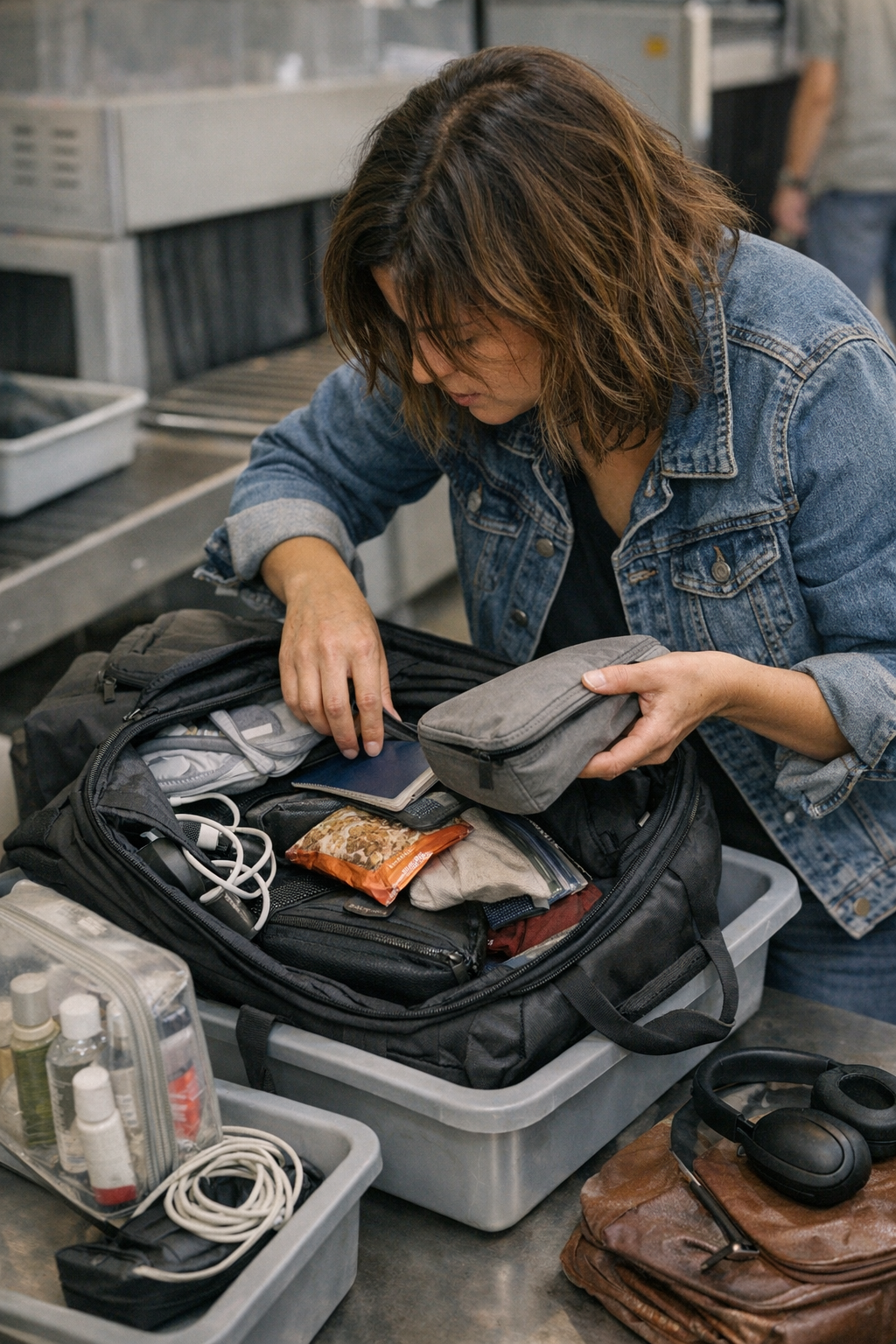
The real test for any carry-on isn’t at home—it starts the moment you hit your first airport checkpoint. That perfectly arranged bag, zipped and stacked with organizers, falls apart at the first sign of real movement. What looks ordered on your bedroom floor starts showing invisible traps in the churn of security trays, boarding calls, and cramped seat rows. Suddenly, “organized” means rifling through nested pouches and doubling back for a travel document that slipped under tech gear. In travel, the friction builds with every reach, every awkward unzip, every time you realize the clean setup at home doesn’t cut it when you’re pressed against the boarding line or rushed at the security conveyor. The CarryOnSupply world is full of gear built to solve these specific failures: what actually works is setup that survives the test of repeated access.
Packed to Perfection—Until the First Security Check
A bag that feels dialed in at home is usually at its best when untouched. The illusion breaks almost instantly once the airport routine starts. That passport—neatly pocketed minutes ago—now hides behind a tech pouch. Chargers and headphones mix after one random repack. Small mistakes compound every time you’re forced to open just one layer too many or dig past a pouch you thought you’d always keep on top. Organization only counts if it works in motion.
Security: The Real Reveal
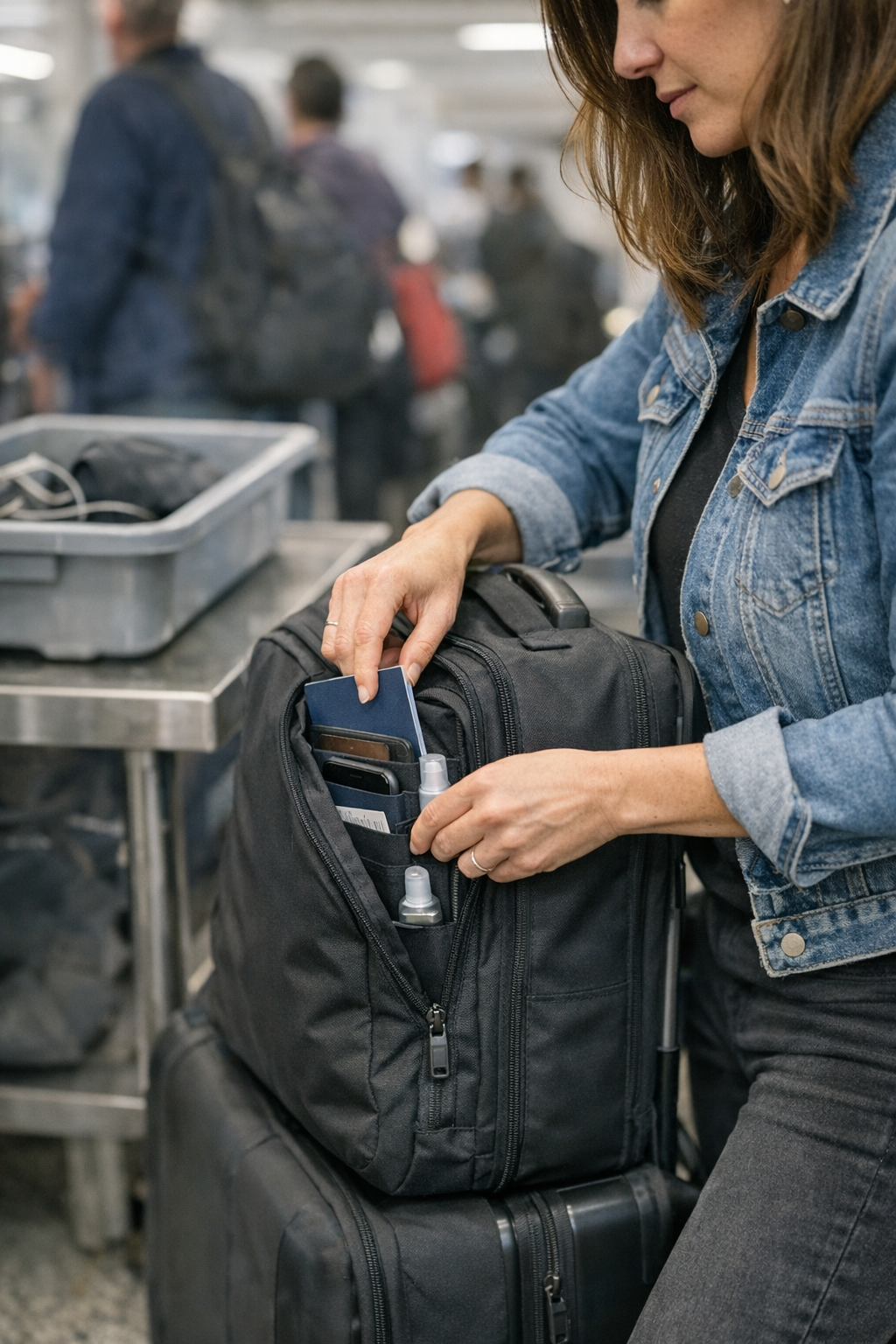
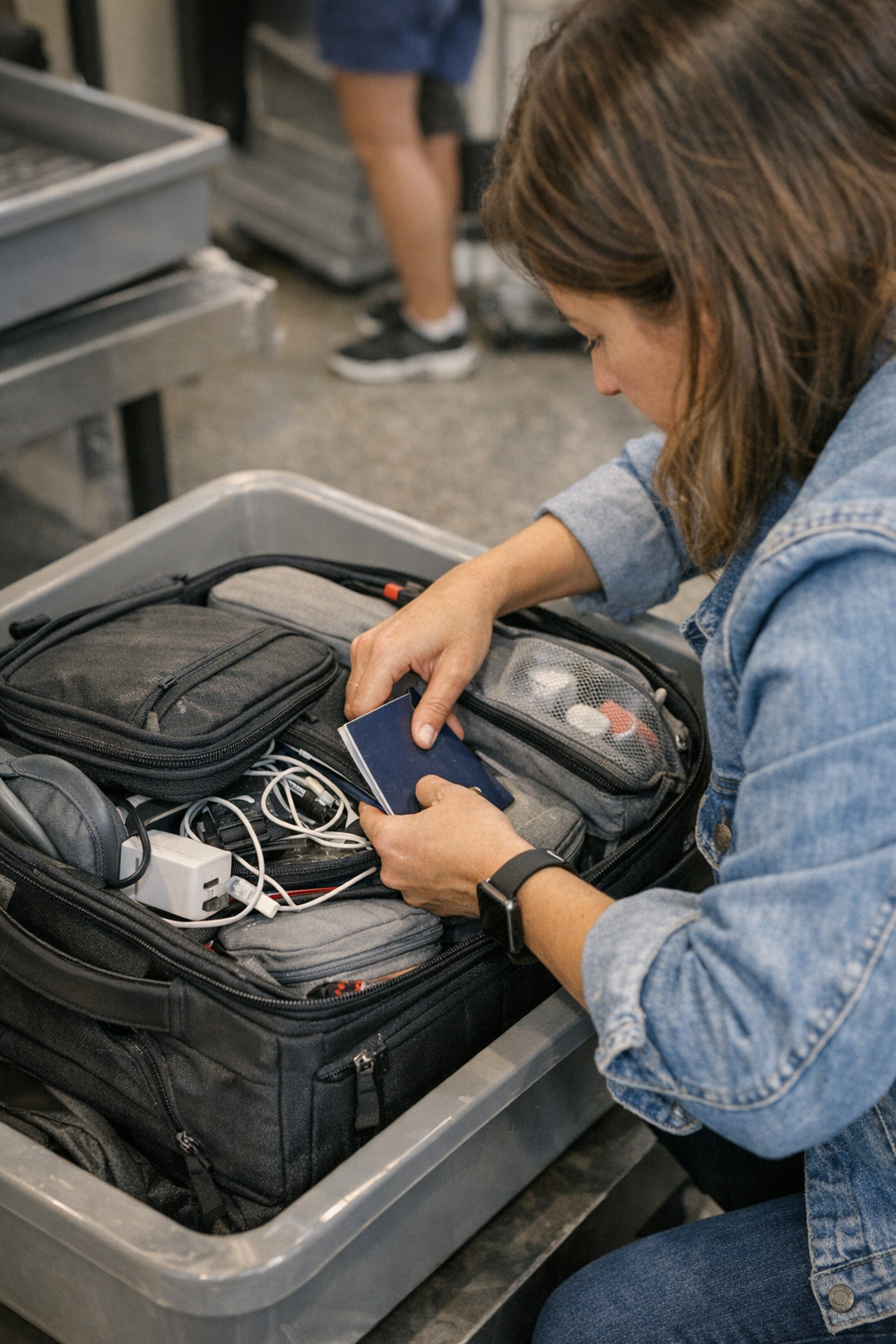
The security tray makes packing mistakes obvious. Urgency forces you to move backwards through your logic, yanking out a cable pouch to get at the liquids bag buried underneath. At home, the stack looked smart; now, pulling one piece means rearranging everything else—while a growing line watches. Each second lost isn’t just frustrating, it signals a setup made for standing still, not real travel flow.
The Routines Where Friction Grows
Next-level inconvenience appears in routine use—never in a static checklist. These familiar scenes expose what the wrong structure actually costs:
- Boarding line scramble: Movement starts, you need your boarding pass, but it’s buried behind papers or stuck under a notebook—again. Quick access becomes a repeat annoyance.
- Overhead bin shuffle: You’re in the aisle, everyone’s watching, and your seat-side essentials are two pouches deep. Getting them blocks others, slows you down, and disrupts the flow.
- Arrival repack drag: Post-flight, you reach for a charger and find it wrenched around toiletries. The quick repack at security now means extra time unraveling cables at your hotel.
Hidden Costs of “Efficient” Packing
“Tight” setups feel controlled but backfire in daily use. Stacked organizers and nested pouches look efficient but make every retrieval a hassle if you’re constantly interrupting one setup to get to another. The end result: slowed-down routines and repeated micro-frustrations every time an airport task asks for a “quick” grab.
It’s not the first try that matters, it’s the inevitable repetition. The more you search, unzip, and reshuffle in transit, the more those little problems add up—especially on days with layovers, multi-segment flights, or just the cumulative drag of reaching for the same item out of order several times before landing.
When Visual Order Masks Real Movement
Order, when it’s only visual, is a setup waiting to fail under pressure. The bag feels “set,” but real travel sets off invisible dominoes:
- Pouches snag or overlap; pulling one snags the next, causing resets.
- Mixing quick-access with back-up gear means every security check becomes a mini repacking session—forcing you to rearrange what doesn’t need moving.
- Documents slip under small accessories, so every routine check requires a frustrating search, not a simple grab.
Visually “tight” packing may impress until a real-world interruption exposes how easily flow collapses—especially at security, on the plane, or while transfering through crowded terminals.
The “One-Movement” Principle: Simplifying Access
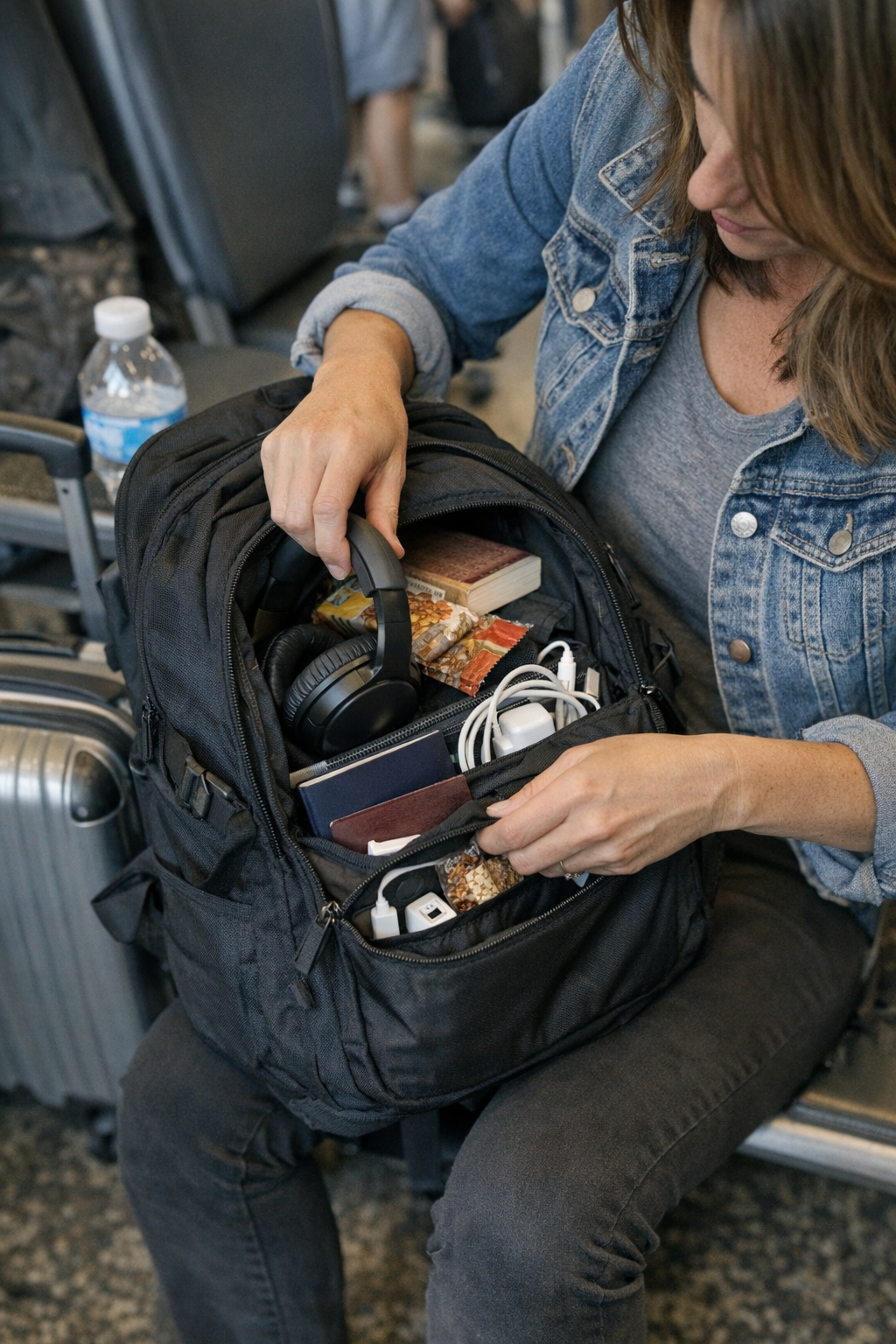
Actual improvement is not about inventing a complex, multi-layered system—but choosing placement rules that survive airport logic. Essentials must live in the outermost, easiest-to-hit spot—always. Commit one pocket or sleeve purely to documents and tickets; never mix with chargers or pens. Dedicate a single pouch for seat-side necessities (headphones, e-reader, gum), pack it near the zipper, and don’t bury it under anything that delays a one-move grab—even in cramped aisle space. You’ll see the change instantly: fewer accidental pulls, less aisle-blocking, no more double-handling the same pouch every time you stand up or sit down.
Work with your carry-on’s built-in structure. Most bags are made with some logic for outer, middle, and inner zones. Don’t fight that; instead, assign items by frequency of access and transit moment. This reduces fumble-time and keeps every routine smoother—even on the third flight of the day.
Practical Moves for Real Trips
- Lock documents into a standalone front pocket—nothing else shares the space.
- Reserve a secondary (but separate) pouch for daily-use tech. Don’t obscure fast-access items with things you’ll need to sit down to use.
- Move anything truly secondary (like spare cables or non-urgent supplies) deeper, so flow items always stay interruption-free and at hand during transitions.
Feeling Progress, Not Just Control
Every time you fumble, pause, or trace the same item—especially in the third leg of a trip—you feel the weight of your setup’s weak link. The smallest tweaks—like splitting security-tray items from mid-flight pouches or creating a truly solo quick-grab zone—can shift your whole travel experience from reactive to routine. You won’t eliminate all friction, but you’ll decide where the interruptions happen: no more losing time to unnecessary resets or stopping flow to fix what “looked” perfect.
Real structure means a bag that moves as you do: choices, not layers; a packing order that matches real access, not just a tidy visual. In the end, the best carry-on is the setup you barely notice—because the right piece is always at hand, and the friction fades with every trip.