
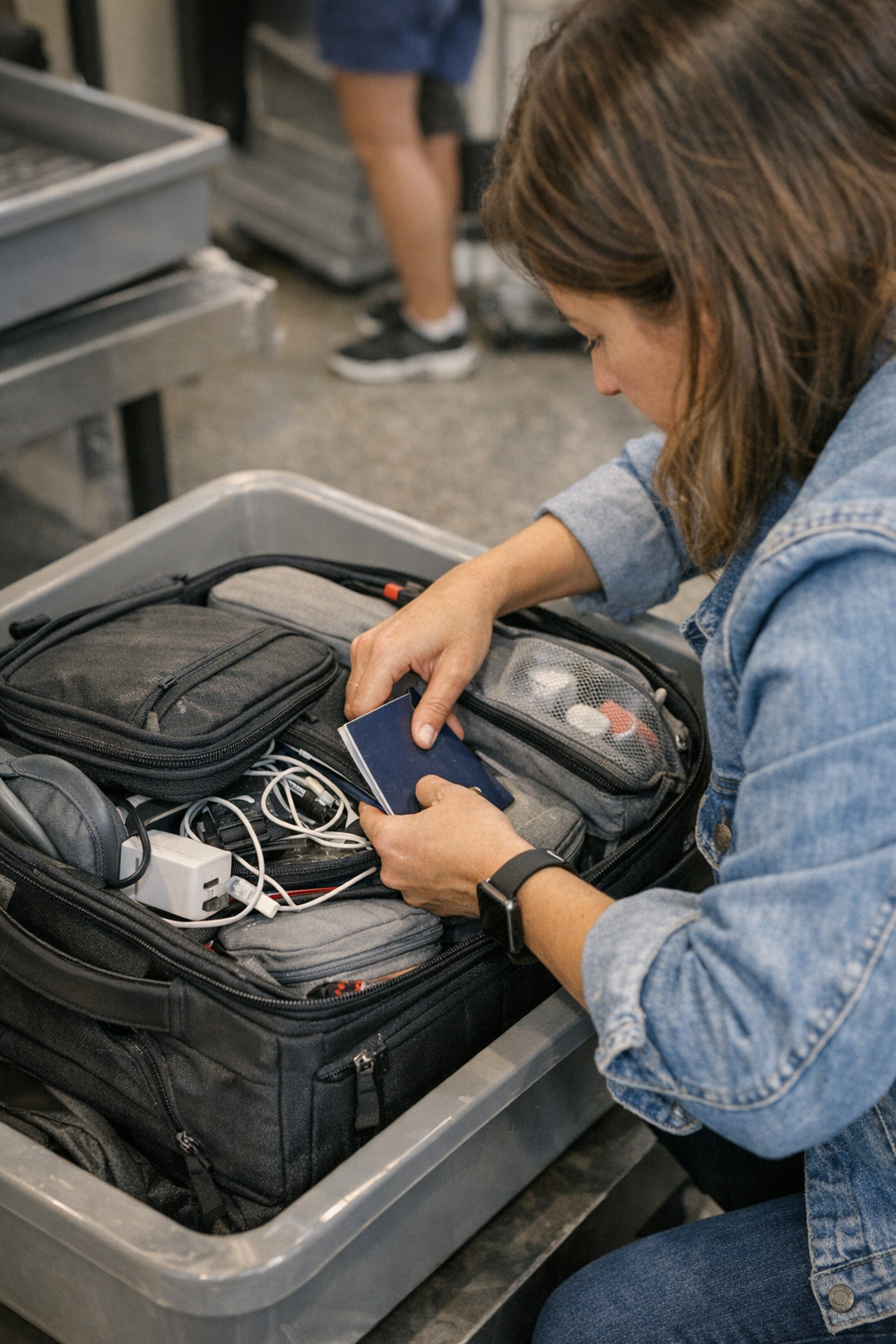
Packing for travel feels complete at home: every slot filled, pouches lined up, zippers running smooth. But the real stress test for your carry-on starts the moment you reach the airport. What looked organized now shows its limits—outer pockets jammed, document holders blocked, and every quick retrieval slowed by layers of careful packing. Each checkpoint and boarding call turns “order” into a source of slowdowns. What works on your bedroom floor often fails at the first security tray or as you reach for your passport in a moving line. With every reach, unzip, or repack, the bag that looked ready now drags the routine, turning what should be fast moments into friction you feel again and again. CarryOnSupply tools are built for this reality: not just neatness, but movement under airport conditions.
When “Organized” Turns into an Obstacle
At home, it makes sense to file your passport, headphones, boarding pass, and charger into neat, shared compartments—until you find yourself squeezed in a security line. Suddenly, you’re reaching for your passport but it’s trapped beneath headphones or mashed against a charger, forcing you to shift and reshuffle while dozens watch. That just doesn’t happen at home. The moment isn’t rare: every time you try to retrieve something critical, other items cling together. What looks like efficiency quickly reveals itself as a clumsy tangle under real pressure.
The problem isn’t one-off. With every access—verification, charging on the move, snack search mid-flight—you feel a repeat: unzip, dig, find the wrong item on top, replace, try again. Items stray from their original place, hard compartments can’t flex, and each new urgent grab makes the bag less structured than before. By the end of the day, what started organized now resists every basic task and forces you into awkward repacking rituals just to keep moving.
Compounding Friction: The Hidden Cost of Packed-to-the-Brim Bags
Stacking every slot full creates a fragile arrangement—one that breaks down at speed. Try returning your ID after a gate check with a front pocket packed tight: zippers catch, pockets bunch, and you end up turning sideways or balancing your bag on one knee just to stuff things back in. If you rush, something always hitches—a charger tugs loose, a cable snags, or you drop a boarding pass right when the line moves.
Filling pouches to the limit turns every access into a performance: headphones must come out so you can reach a phone, cables shift in lumps instead of sliding out, and “quick access” starts meaning “pull half the pocket just to get a single charger.” One forced zipper or misplaced pouch always costs you extra time at the worst possible moment, especially when you’re blocking a narrow aisle or struggling with a crowded security tray.
Airport Security: The False Sense of Readiness
Security strips any illusion that your layout is ready for real travel. You slide your bag onto the tray and instructions come rapid-fire: “laptops out, liquids separate, documents shown.” If your daily order stacks charge blocks with passports or headphones with ID, your hand dives through a mess—one tug pulls three items out by accident, chargers tangle with cables, and toiletries jam up the path. Each security cycle scrambles your system a bit more, making the next repack sloppier and slowing you down even once past the checkpoint. Fumbling with zippers or hunting in the bottom of a pouch, you feel pressure rising—from yourself, the staff, and everyone queued up behind you.
Less Than Full: Why 80% Capacity Wins in Real-World Travel
Most packing errors come down to filling every inch. But leaving deliberate slack—packing key pockets, tech organizers, and travel pouches to about 80%—makes the airport routine run smoother. Leave space in your document pocket, and passports glide out and return without collision or bunching. Looser cable rolls and less-stuffed tech kits let you pull out a charger or headphones without snagging everything else. Quick-access means true access; you grab what you need, then get moving before you ever hold up the line.
That slack pays off fast. Run through a few real trips and you notice it immediately: zippers close in one try, nothing spills while standing in the aisle, and you can reset your bag in seconds at the end of screening or after someone bumps you in a boarding crowd. That half-inch of open space is the difference between a smooth grab and a pause that disrupts boarding, security, or your own momentum during layovers.
Travel Scenes Where Slack Pays Off
Routine document checks: Airport staff ask for another look at your boarding pass. With slack in the pocket, you go straight in—no shuffling, no shifting other items, no fumbling. The process takes seconds and you’re free to move up in line without apologizing or dropping anything.
Fast in-seat access: You need headphones quickly while letting another passenger squeeze past. When outer pockets aren’t overpacked, the zipper slides for a one-handed grab—no jammed contents, no mess left on the seat, and you’re not blocking traffic longer than necessary.
Security tray transfer: Sorting out tech from liquids gets easier when everything’s got breathing room. Chargers don’t tangle with ID, and nothing needs to be emptied out just to find the one thing screening staff want to see.
The Risk of Neat-Looking but Clumsy Systems
There’s a difference between looking “packed right” and traveling without hassle. Tight systems, filled-to-the-edge pouches, or loaded outer pockets might look streamlined at home, but often trigger micro-blockages in real use: chargers packed flat can’t be reached, items shift each time you return them, and every new stop leaves your layout a little more jumbled. What’s gained in surface tidiness is lost in flow—the more careful you are at home, the more each step on the trip can undo your work, one small inconvenience at a time.
After two or three repacks, sequence fails: the quick grab for your headphones leaves your document pouch out of order. Retrieving your phone after boarding means shifting half a kit around, and each new interruption resets your system in a way that costs actual minutes and increases dropped items, missed pockets, or awkward returns. The system you trusted turns unwieldy exactly when you need it most.
How Small Margins Change the Packing Game
It’s not about leaving things behind—it’s about refusing to sacrifice movement for appearance. Keeping extra space in key areas prepares you for the changing rhythm of travel: gates that jump without warning, document checks you didn’t predict, or a need to grab essentials from the overhead bin mid-flight. That extra bit of give in your bag is leverage: you stay nimble, each grab works as intended, and you navigate crowded aisles, surprise requests, and fast boarding calls without a string of slowdowns.
Every small margin makes life smoother. You won’t notice on first use, but by the end of a full trip, you’re less burdened by repacking, less caught by surprise, and far less likely to curse your once “perfect” system. That’s the difference CarryOnSupply tools are designed for—travel setups that actually move with you, not against you.
Find practical tools and smarter packing solutions at CarryOnSupply.