
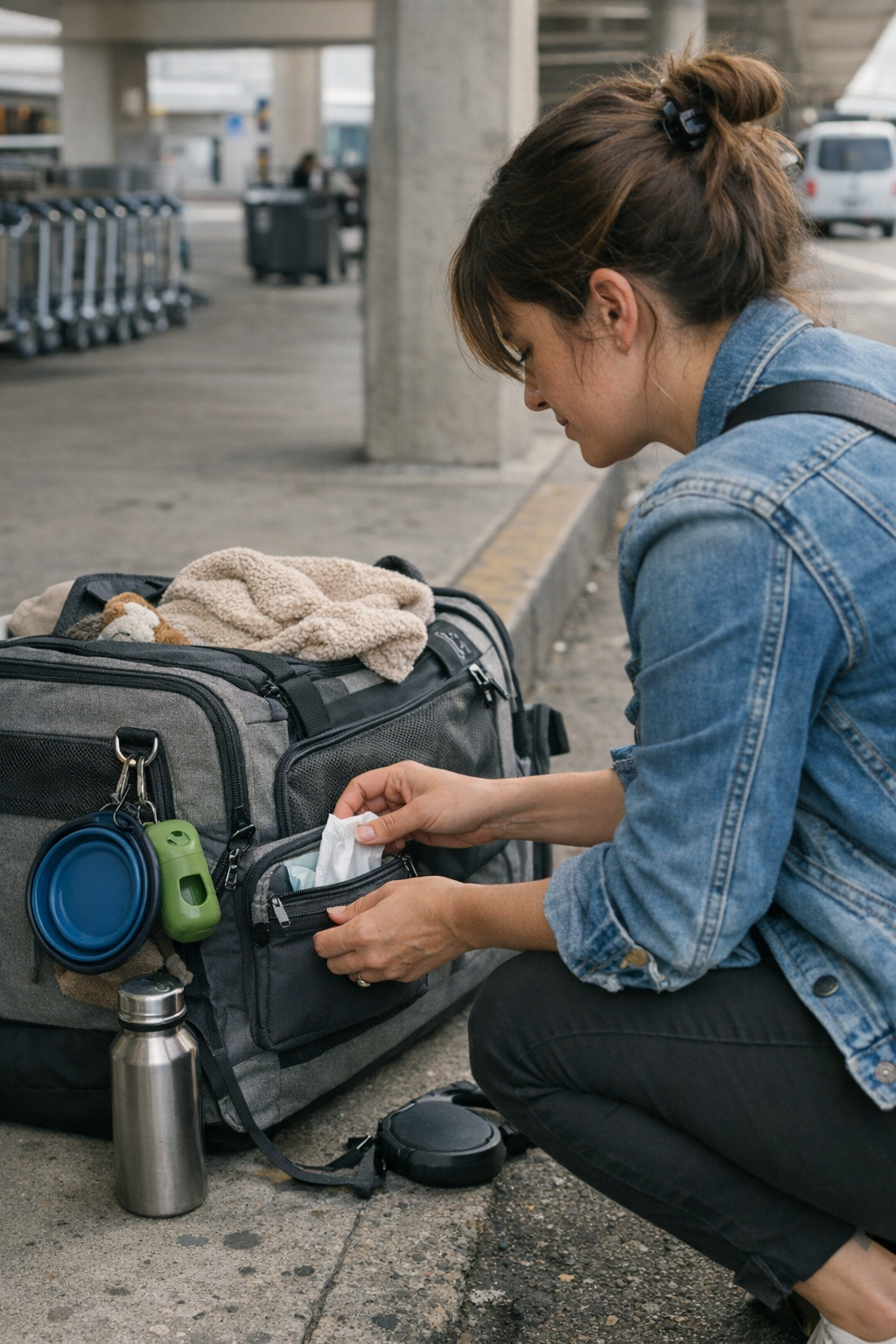
Arriving with your pet isn’t the victory—it’s the beginning of every friction point that clever packing alone can’t solve. That quick “I’m ready” confidence fades the first time you need wipes or a leash and grab the wrong thing. A carrier that looked organized by your door starts showing its real structure—good or bad—on the first curbside stop. What counted as “prepared” under your kitchen light doesn’t always survive the pressure of repeated stop-and-go travel, fast reach needs, or a restless animal shifting with every pause.
What Looks Ready Doesn’t Always Handle Smoothly
Packing in rows doesn’t guarantee you’ll handle the real mess of travel smoothly. Most pet owners jam cleanup wipes, treats, bowls, and extra comfort items into neat layers “just in case.” But real travel exposes every shortcut: the leash that’s visible at packing time ends up buried under blankets. Minutes after landing, you’re already misreaching—tugging out bedding instead of essentials. By the next stop, the sections blur: wipes slip under pads, treats vanish behind your water bottle, comfort toys jam the only pocket you can reach one-handed. What was calm at the start turns into one interruption after another.
Every Stop Highlights Overlaps—and Grows the Friction
After the first transfer, every “organized” bag shows its weak points. Reaching for a cleanup pouch means digging through pet bedding mixed with your own home basics. Someone, not always you, drops keys or a phone into the first open pocket—often the one you now desperately need for wipes or a leash. Spaces that showed off matching accessories at home devolve into hidden items and blocked reach at the worst possible time. Even a minor holdup—a squirming pet or urgent cleanup—unmasks the mess: you’re juggling, fumbling, always losing momentum, forced to reshuffle instead of moving. Each new stop slogs through the same routine instead of flowing forward.
Why Quick Access Makes or Breaks Real Pet Travel
A travel bag isn’t “working” unless you can pull out what matters instantly, without hunting, shifting, or sharing space. The difference between easy travel and stressful stalls isn’t how many pockets your setup boasts or how neatly it sits at check-in. It’s whether fast-use items are reachable one-handed, never shared, never buried—trip after trip.
Most setups fail when overlaps turn into confusion: quick-use pouches end up blocked, every pit stop means unlocking, unzipping, and un-layering. Delays stack up. “Organized” is replaced by stop-and-start chaos—reaching, failing, losing your rhythm.
The Hidden Cost of Overlapping Storage
A pet blanket or plush toy packed for comfort can be the exact thing slowing you down. You notice it not the first time you reach, but the fourth—lifting the same layer, shifting a loose bowl, working around soft padding just to find a single wipe. Each small delay adds up fast, especially with a tense pet by your side and your attention split. Noticing that slow-down is the first sign your setup is organized for first impressions, not real travel use.
The Real-Life Annoyance: When Travel Feels Like Damage Control
Blocked access is more than an inconvenience—it becomes a background drag that wears down every trip. When pet travel bags or organizers force you to reshuffle, what should feel routine turns into repeated stress. Before long, handling cleanups or leash changes means sorting through spilled treats and loose comfort gear. Even if you chose sturdy gear, if every key supply (cleanup, leash, treats, hydration) demands extra motions or a guessing game of pockets, you’re always a beat behind what your pet needs.
It’s easy to feel out of sync, caught pausing or blocking traffic while you reorganize in public. Every missed cue—a fumbled leash, a hidden pouch, a toy dropped at the wrong moment—pushes both you and your pet further from the “calm travel” the bag promised. It’s a chain of small inconveniences that never makes the trip easier, only more tiring.
What Actually Shifts the Experience: External, Separated Essentials
The change that matters isn’t more storage—it’s ruthless separation for anything you’ll grab on the fly. The moment high-use items get their own exterior spot—an outside wipe pouch, a clipped leash, hydration tools never combined with bedding—scrambling stops. Cleanup wipes on the side, away from toys and comfort items, puts the right tool in reach, even one-handed. Pockets inside stay soft for bedding or treats, but the working gear lives on the outside, always visible, untangled, and ready.
This is more than avoiding mess. It’s stopping the slow slide into micro-delays and confusion as trip routines stack up and energy flags. The setup actually holds—not just in photos, but after layovers, seat switches, or a string of small setbacks. Less time digging means your focus stays where it should: on your pet and your travel path.
Why Less Repacking Means Faster Returns to Movement
Every extra motion is time lost. When cleanup and handling supplies are always externally separated—never squashed by blankets or locked away—your restart after each stop is seamless. No tangled gear, no repeated resets. Every move feels sharper, and the flow of pet travel finally matches the pace you want, not the slow crawl of fixing your own setup over and over.
Seeing Beyond a “Neat” First Impression
The neatest setup at boarding means nothing if the access structure collapses after two stops. Zipped pockets and smoothed bedding may win on first appearance, but only dedicated, exposed essentials survive real travel. If you keep finding yourself pausing to reshuffle, or pulling one thing just to find another—your setup is losing. The fix is trading the idea of “everything in its place” for one rule: each quick-use item gets a pocket or clip that stays clear, every time, every cycle.
Giving up one catch-all compartment for an always-open access point can double your ease of movement. It means you handle stops faster, recover your rhythm, and your pet moves with you—not against your frustration. The success is visible: fewer interruptions, more fluid handling, less chance of a small crisis ballooning into a much bigger one.
Building a Pet Travel Setup That Survives the Whole Journey
Most travel routines sell calm but end up delivering repeated friction because the core problem—access—gets buried under aesthetics. The rare setups that truly hold up across unplanned stops, seat swaps, or airport sprints take quick-access and compartment separation seriously. Keep every high-frequency tool visible, externally placed, and never behind comfort gear. Interior spaces serve rest and comfort; exterior clips, side pockets, or snap pouches serve the routine. Get that right, and you stop having to block exits, dig through soft layers, or flatten every delay just to move forward again.
Comfort isn’t how your bag looks before you leave—it’s how easily it lets you recover after every interruption. The right set of exterior, separated quick-access pockets and non-overlapping zones means your routine adapts—item after item, stop after stop. It’s what keeps the trip moving, no matter how many small, real stops test your patience.
Find more practical solutions for smoother, real-world pet travel at PawGoTravel.