
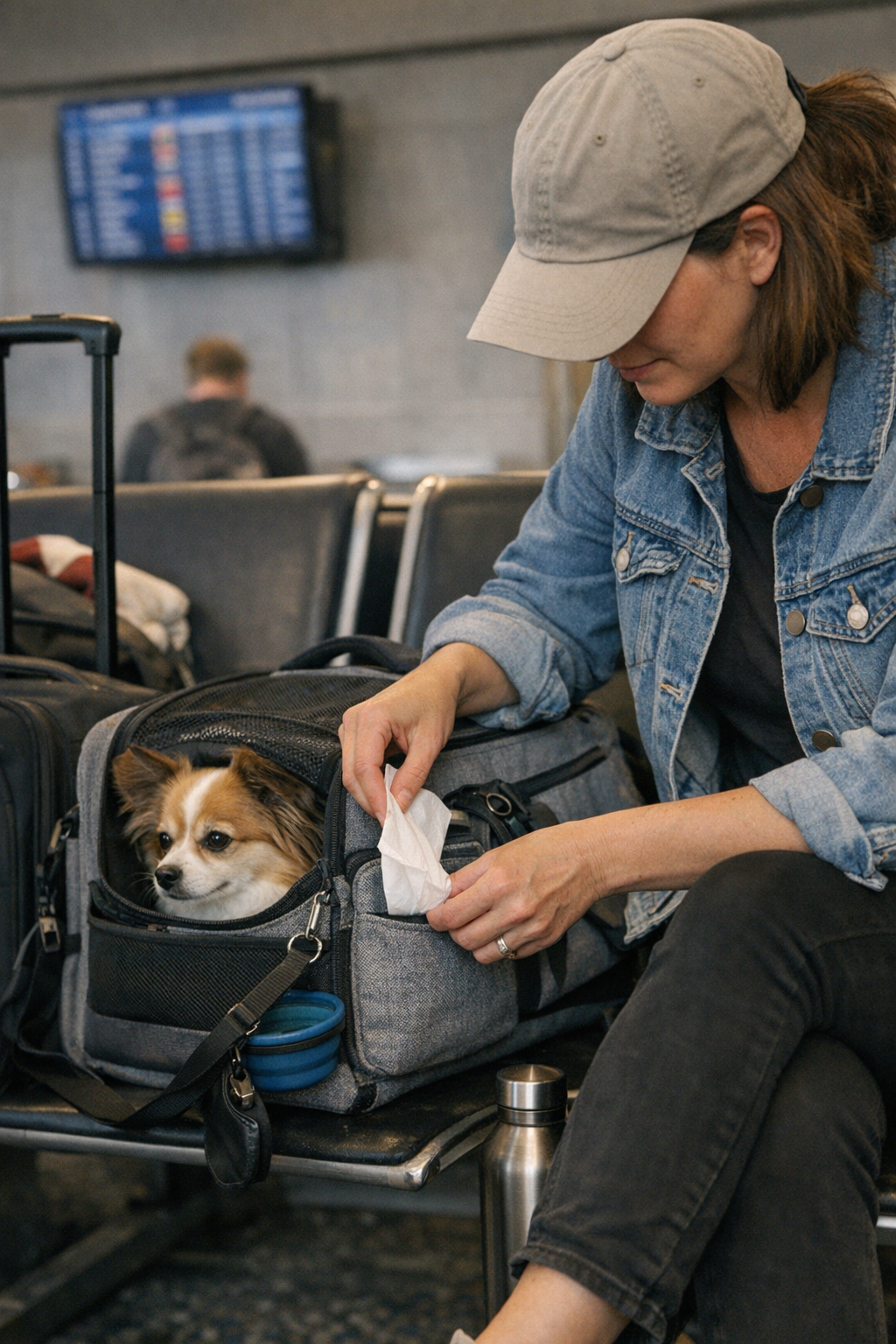
A pet-travel setup that looks ready at home can start breaking down the moment you hit real movement—lines, platforms, quick stops—where every friction point reveals itself fast. That bag that seemed organized by the door turns into trouble when your hands are full, your dog needs a quick treat, or your cat’s carrier blocks you at a cramped waiting seat. All it takes is two or three everyday pauses—a scan at security, a coffee pick-up, a sudden leash grab—and what seemed “prepared” shows its weakness: the right item tucked just wrong, cleanup gear out of reach, pockets positioned fine for storage but backwards for on-the-go use. The PawGoTravel world starts where good-on-paper setups fall apart in actual use—and every repeated stop makes the difference louder.
When Looking Prepared Isn’t the Same as Moving Smoothly
A travel bag can look flawless sitting on your hallway bench: pouches zipped, items labeled, everything sorted. But as soon as you squeeze through the terminal crowd, “ready” turns into a tangle. You reach for a wipe—it’s behind a wall of treats, locked in by a water bottle, forcing you to unzip and reshuffle while just trying not to drop the leash or block the line. The less mess you see, the more you notice the slowdowns—digging, unzipping, hunting—none of which mattered until you needed them mid-trip.
After even a few stops, every action costs time. Those side pouches that looked efficient now face away from you when you wedge the bag at your seat. The comfort blanket packed “for easy access” means pulling half your kit just to reach one treat. Instead of breezing through travel moments, you struggle: tugging zippers, balancing snacks, apologizing to the next traveler as you fish out supplies one-by-one with a dog nudging your knee. “Organized” at home, disjointed in motion.
Repeated Quick Access: Where Most Setups Falter
After two or three restarts, the main complaint isn’t lack of gear—it’s the grind of getting to it. Most setups fail not from missing pieces, but by blocking you from the same items, over and over, right when you need them. An “efficient” pack can kill your speed if the most-used zone isn’t instantly reachable or if “quick access” means flipping, rooting, or unzipping the whole bag each time.
A Real-World Scene: The Pause by the Boarding Monitor
Picture juggling your boarding pass, phone, and pet carrier. Your dog bolts toward a scent. You need wipes—fast. But they’re inside, behind snack bags and a leash, tangled with loose chews. As your pet fidgets, each extra second turns small mistakes into real hassle. The setup never looked messy—but in use, the flow locks up at the worst moments. Multiply this by every bathroom break, snack stop, or sudden leash adjustment and the hassle compounds each time.
Structure Stress Points: The Repeat Offenders
Compact, labeled travel bags seem logical until real movement starts exposing:
- Stacked pockets: every grab becomes a three-step hunt.
- Too-tight sleeves: reach blocks when your hand’s at an angle or you’re wedged in tight seats.
- Overlapping sections: taking out wipes shifts the treats and jams the water pouch, slowing your next grab.
- Cleanup gear stowed deep: you need to stop everything for a tiny fix, breaking the flow again.
Owners start tensing before each checkpoint or seat change, already bracing for another fumble or backtrack. The issue isn’t chaos—it’s “almost right,” a setup just off enough to force extra steps or awkward pivots each time routine actions repeat.
Small Structural Tweaks, Real Travel Relief
One targeted change—like shifting wipes from a buried sleeve to an outer pouch that faces you in a seat—saves seconds and sanity at every stop. Instead of reshuffling the entire setup, a single quick reach gets you what you need, freeing your other hand for pet control.
Across a trip with multiple pauses—even a short one—this shaves away the resentment and adds calm to your routine. Those micro-adjustments build: fewer restarts, less scrambling, a steadier pet, and no lost time doubling back for basic items.
How Setup Choices Shift the Repeated-Use Equation
Ask yourself: how many times per outing do you actually need towels, snap leashes, or treats on the fly—and how many times do you end up pulling the wrong zipper first? If nested means slow, swap in fewer but smarter outside-access pockets. Anything you reach for most should land in a pouch that’s always facing out when your bag is parked beside your seat or under your arm on a train.
Build for the reset, not the photo. “Packed for looks” slows everything. Pack essentials to land at your fingertips without shifting half your kit. Every time you stop and have to reshuffle, the friction gets worse. Clean travel is about escaping repeat annoyance, not just tidying before you leave.
Comfort and Control: Not Every Solution Is Perfect
No setup eliminates all trip friction. Sometimes your quick-access blanket blocks treat pouches, or that leash snap catches the zipper again—small, persistent tradeoffs that even smart organizers can’t fully erase. The best structures strip out the major pause points and keep interruptions occasional instead of routine. For every frustration reduced, one micro-annoyance sometimes crops up elsewhere.
The real gain: your most predictable needs (wipe, leash, treat, baggie) snap into reach when you actually pause or restart, not after five extra moves. It’s not about flawlessness, but about turning stop-and-go travel from a chore into a smoother sequence. Less mess is good, but less repeated fiddling is what makes days feel lighter.
What Really Turns Chaos into Flow
What separates easy pet travel from the usual grind isn’t how tidy you start, but how your gear behaves through every stumble, seat-jam, or waiting moment. If you’re spending your stops untangling the same two items, or pausing simply to reset your bag again, you’re carrying the wrong friction.
The trick isn’t layering on features or aiming at perfect order—it’s structuring your bag so wipes, leashes, treats, and cleanup gear live right at the edge of reach, always in the same place, always ready for a one-handed grab. Every trip exposes new weak points, but even a single tweak can save three restarts in a row. The real test is not how impressive it looks lined up at the door, but how it moves once real travel starts.
The setups that work aren’t just neater—they reduce the drag of repeated small failures. If you want a kit that actually moves at the speed of your travel—not just one that looks organized at the start—look for pet carriers and organizers that keep your essentials in play through every seat change and surprise pause. That’s where smoother, cleaner movement finally clicks into place.