
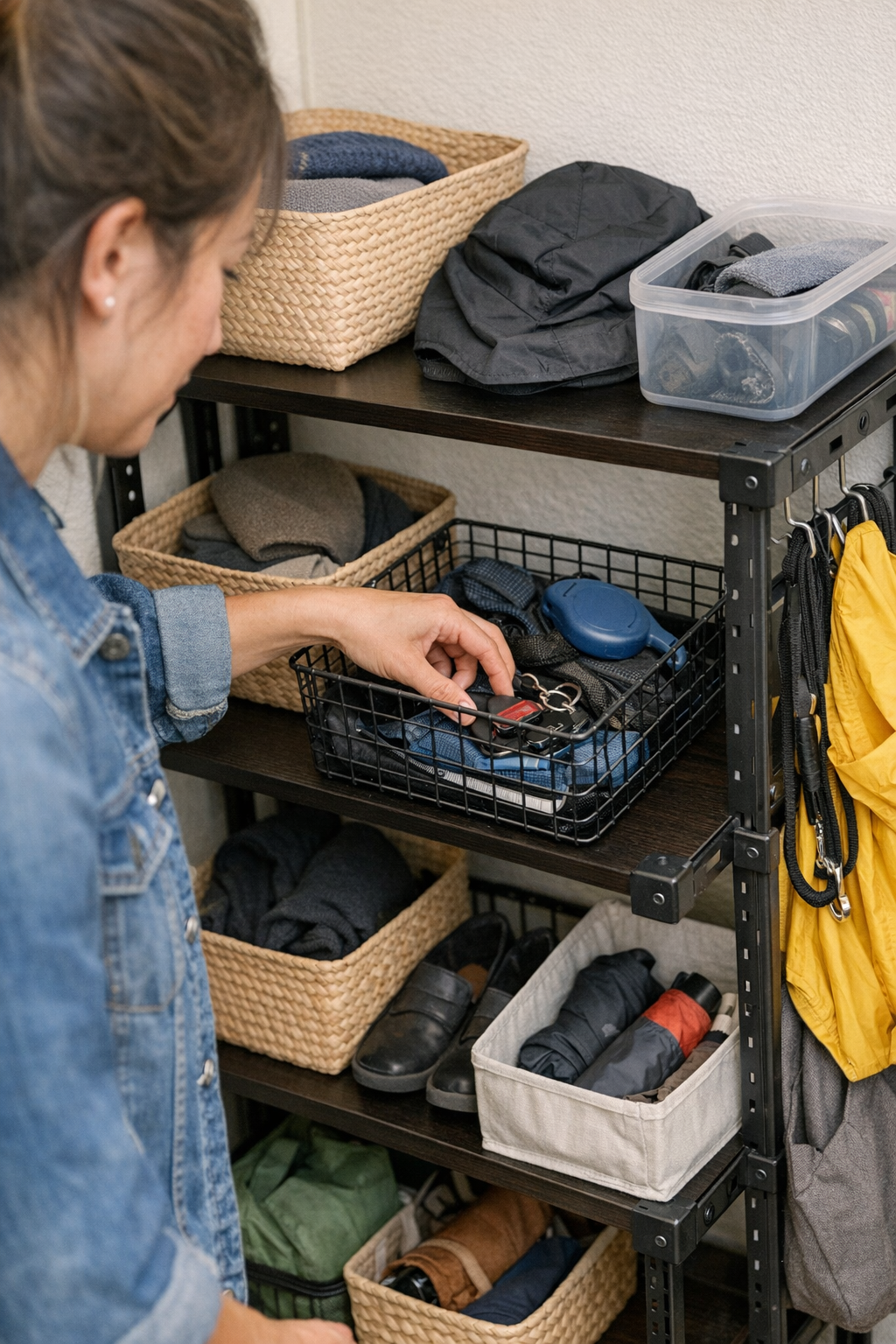
The thrill of a freshly organized closet—the rows of crisp bins, every label perfectly matched to its contents—rarely survives your first busy week. Socks stay with socks, for a day or two. But by Thursday morning, it’s no longer a question of where things theoretically “live”—it’s how much you have to shuffle, dig, or restack to actually grab what you need. Storage systems that look sorted on paper quickly reveal friction points nobody advertises: stacks collapsing, shelves giving way to scattered overflow, and daily essentials somehow always a step too far away.
Why Category-Only Storage Doesn’t Last
At the outset, sorting by category feels foolproof. Labeled bins for hats, scarves, notebooks; a plan where nothing ever mingles out of turn. But reality creeps in fast: getting today’s tie means removing two bins and a loose winter hat first. Your notebook slips under a heap of off-season gloves. The promised “grab and go” deteriorates into a maze of small obstacles—a routine of moving piles for one tiny thing, then not quite returning everything to its rightful home. Each extra shuffle slows you down just enough to spawn shortcuts: the umbrella stays on the shoe rack, keys migrate to an open shelf “for now,” and soon, the system flatlines under fresh clutter.
It’s a pattern as old as busy mornings: You need three items—umbrella, keys, dog leash. All technically sorted, all in different bins, some up high, some behind another. You lose seconds at each stop, and the cost is cumulative. After a few days, bins stand half-open, stacks start to lean, and the “labeled order” is masked by drifting items and new overflow zones. Surfaces that started as blank are now default drop spots for whatever was too much hassle to put away “correctly.”
When Visual Order Masks Daily Chaos
The disconnect worsens as space gets tighter—entryway closets, overfilled bathroom shelves, the infamous “utility” rack. On paper, every item has a place. In practice, grabbing gloves means pulling out rain pants, because both are crammed in one awkward bin. The label says “gloves,” but you haven’t seen a matching pair in a week. Folded shirts mulch into wrinkled piles. By Friday, everything looks orderly at a glance but works against you in motion.
Change the Flow: Organize for Movement, Not Just Match
The most useful tweak is almost never about getting more containers—it’s about arranging for how you actually move. Effective storage fits your real routines—not just your inventory. Instead of splitting everything by type, cluster what you need together for your common sequences, right where your hand lands.
An Entryway Closet in Real-Time
Picture a front hall closet: if every dash out the door means hunting for keys, badge, umbrella, or dog leash, scattering them across several bins only ensures more searching and more mess. Instead, a single “heading out” bin—mid-shelf, always open—means one scoop gathers everything. No more crawling to the floor for fallen keys, no more guessing which basket you used last week. Return home, toss essentials back in, and move on. The routine tightens, surface clutter recedes, and the shelf resets itself with almost no effort because the flow matches the habit.
Bedroom storage is no different. The magazine-perfect vision is rows of labeled stacks. But every day, you reach for what’s on repeat—jeans, a favorite tee, socks—not the special-occasion accessories. The taller and neater the pile, the more likely you’ll disrupt it or start improvising (folded shirts on top of the dresser, socks mixed in with workout gear) just to avoid the time sink of perfect sorting. Photos look great; real life, less so.
Families and Shared Spaces: The Friction Multiplies
In spaces everyone uses—family bathrooms, shared mudrooms, kids’ toy shelves—category-based order breaks down even faster. Labels help, but quick retrieval wins. A bin that gathers all bath-time supplies for the baby, or every hat and glove for school mornings, can save six separate digs every week. Open containers, by-the-door hooks, and grouped routine kits let anyone reset the zone in seconds. No more family scavenger hunts, no more secret piles tucked “out of sight.”
Smart Tweaks for Storage That Keeps Up
Disorder isn’t solved at a single sweep—it’s managed by real, repeatable tweaks:
- Slide seasonal or occasional-use bins up and away, opening front-and-center spots for items you touch daily.
- Replace many small bins with a single “action” bin—group the essentials together at one reachable level for the smoothest morning exit or evening wind-down.
- Prioritize open baskets, trays, and bins for what comes and goes multiple times a day. Reserve closed or deep bins for true long-term storage.
- Continuously adjust “prime real estate.” As routines shift—say, summer running replaces winter gear—swap contents between shelves so fresh habits have a front-row seat and old routines get demoted without a full overhaul.
How You Know Your Storage Works (or Doesn’t)
You’ll spot a system working when:
- Stray gloves, keys, and charging cables stop drifting to every flat surface
- Random piles rarely appear except during brief transitions
- Resetting the main area after a busy day is a two-minute job
- Any visitor (or family member) can find and return essentials without a walkthrough
This isn’t about a picture-perfect, showroom feel. Storage that actually works survives week after week of messy exits, returns, and schedule pivots—without constant tweaking or frustration. It keeps you moving, not managing.
If It Keeps Breaking Down, Try This
If clutter keeps re-forming, or you constantly reshuffle bins to get at daily items, stop and scan—does your storage actually match how you move through the space, or just how things “should” be grouped? Reduce how high you stack, relocate your most-used items to where your hand naturally goes, and bring routines to the center of your layout—not the back row.
One direct adjustment—like centering a “grab-and-go” bin for essentials—can change how the whole closet works within 24 hours. Suddenly, you do less work, surfaces stay clearer, and even at peak chaos, the gap between action-based and category-based setups becomes painfully obvious.
For honest, practical tools to design storage that bends to your day—instead of adding another obstacle—find more at ClosetWorks.