
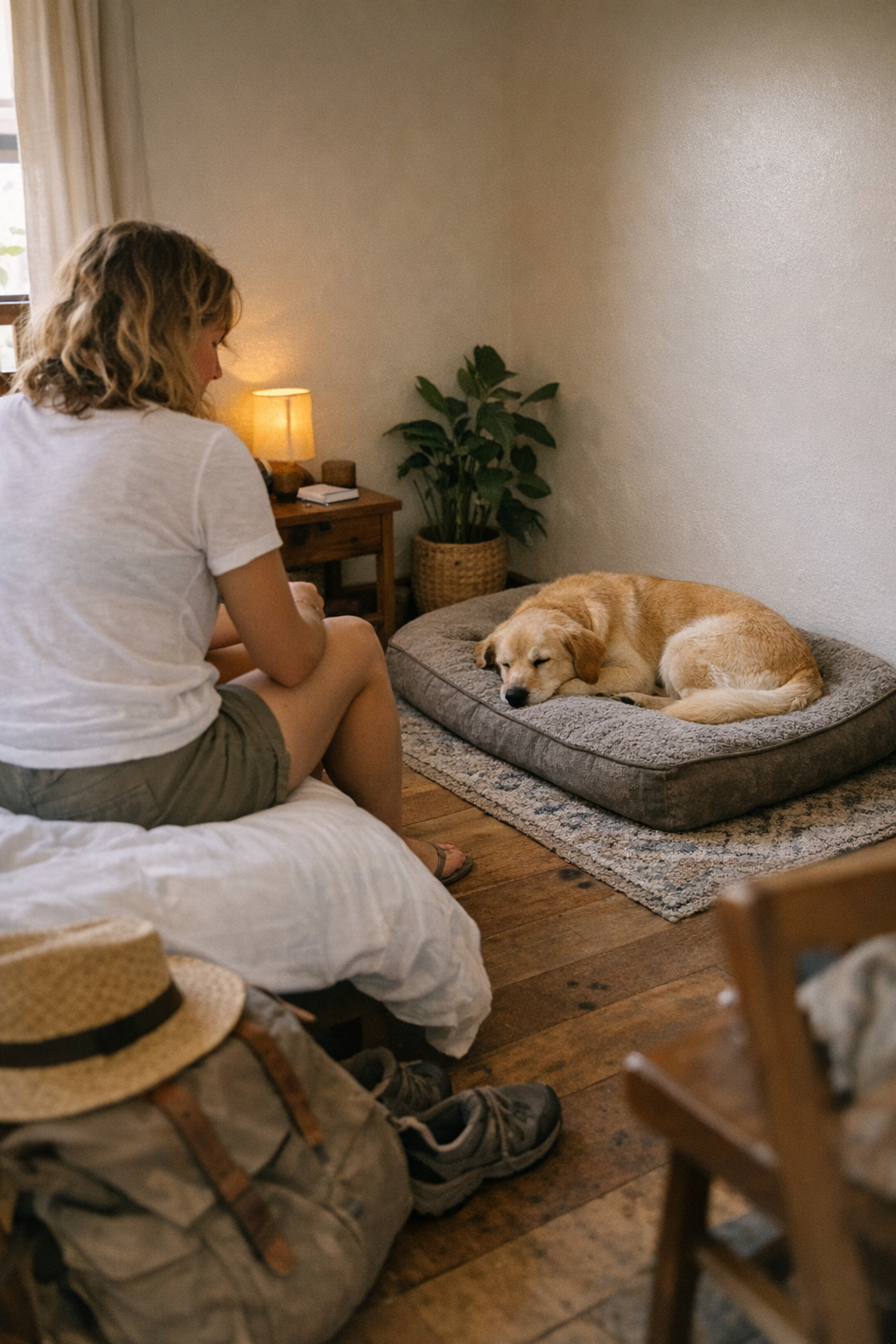
See your dog hesitate at her bed, circle, half-settle, spring up again—then pace the same awkward loop every night? It looks like odd energy, but the underlying problem almost always hides in the setup: a dog bed squeezed into high-traffic zones, surrounded by shoes, bags, and the fallout of daily life. Instead of relaxing, your dog fields every footstep, shuffle, and sudden grab for the leash—a rest area in name, but an obstacle course in practice. Here’s how the wrong bed placement and boundary choices quietly undermine your daily flow, and how a smarter arrangement stops the cycle cold.
When “Settling Down” Never Quite Settles
Routine means little when your dog’s rest spot is jammed against the day’s traffic. Picture a bed inches from the hallway, where keys rattle and backpacks drop. Your dog approaches, hovers at the edge, half-commits—never really claiming it. The moment you or anyone else moves past, she’s up, rechecking the room, neck craned and attention fractured. Even after a tiring walk, there’s no true rest: your dog wears out by degrees in the background noise of the home.
- Dog stands on the rim of her own bed, just watching—never curling up for real sleep.
- A passing family member or dropped leash makes her flinch up, alert to every shift in motion.
- She might settle for a moment, but the return of footsteps or a shuffle beside her resets everything—again.
Why It Adds Up: Routine Drag and Repeated Friction
Each interruption looks minor—a nudge here, a hop up there. Ignore it too long, though, and these frictions stack to drag your whole evening down. In daily routines, their cumulative effect is loud:
- Returning from a walk, you dodge around the dog bed blocking the doorway. The detour jostles your dog awake just as she’s winding down, stealing her calm and slowing your own routine.
- During dinner, her bed is squeezed beside the kitchen, trapping her in the swirl of moving feet and dropped snacks—she’s up and shifting every time the fridge opens.
- Even a “neat” space feels unstable—shoes wander, bags pile up, and your dog pauses, uncertain whether the patch still belongs to her at all.
The cost isn’t obvious right away. But neither you nor your dog ever really reset—you both spend the week tracking small annoyances and restless energy instead of recharging. Sleep gets lighter, tempers shorter, patience thinner.
Common Traps: When Rest Zones Blur with Everyday Life
Most rest-area mistakes sneak in slowly, not as big failures but as layered compromise:
- The “cozy” blanket goes next to the only free spot—smack in a doorway draft.
- Dog bed shoved beside the couch, bracketed by bags and a drifting rain boot or two.
- Toys collect, bowls inch closer, and soon the whole area is a cluttered “dog zone”—never truly for rest.
The difference at first is invisible. After a few days, circling, pausing, and hyper-alert sleeping surface—triggered not by quirks but by beds that never get buffered from the day’s churn. The illusion of organization fades fast under real use: a rest area that looks tidy but keeps fracturing your dog’s attention (and yours) each time you cross the floor.
The Ripple Effect: How One Weak Point Undermines the Entire Routine
That badly placed rest zone does more than just clip nap time. The location’s weak point keeps popping up all day:
- Morning scramble: reaching for your keys or bag, you sidestep the encroaching bed—spilling water, losing precious seconds, or knocking your dog off her rhythm before breakfast.
- Cleanup limits: you want to wipe muddy paws fast, but towels stashed beside the half-sleeping dog are hard to grab—so you delay, fumble, or skip the cleanup altogether.
- Bedtime hesitation: your dog stares at the bed, waiting for a clear “go ahead” from you, reading the ambiguous setup as a shared, uncertain space. She hovers at the edge rather than taking it as hers.
The result: transition times get rougher. Walks end with double shuffles, grooming stops require detours, and the whole routine gets chunkier—slower, less reliable, more easily derailed by one wrong placement.
Is It Energy, Mood, or Just the Wrong Place?
If you blame your dog’s restlessness on her personality or “needs more exercise,” watch the routine: restless hovering usually signals the space itself isn’t truly buffered from background movement, sound, or the churn of daily objects. A bed sucked into hallway drafts, jostled by bags, or hemmed in by bowls can’t let a dog really switch off. Most owners find themselves nudging clutter away night after night, hoping their dog adjusts—only to see the same interrupted routine tomorrow.
Resetting the Rest Zone: A Real-World Adjustment
Improvement rarely means buying another bed—it’s about moving what you have off the beaten path and guarding its boundaries. Here’s the pattern that fixes it: shift the bed just an arm’s length—about a meter—off any main walkway and anchor it to a calm wall. Purge shoes, bowls, and toys from arm’s reach. A quiet corner is suddenly, almost instantly, a reliable signal: “Yours. Safe. Switch off.”
The immediate difference is clear: your dog approaches, circles once, and folds into sleep—no unfinished hover or split attention. You notice how downtime goes from fragile to solid. Both of you stop bracing for the next interruption.
How to Judge If the Rest Fix Is Working
- Your dog lays down after a walk without sitting up at every sound—rest starts quickly, lasts longer.
- The old “pop up and check” routine disappears; background movement no longer triggers a patrol or reset.
- You move through daily tasks—grabbing keys, handling cleanup—without weaving around the bed or tripping on scattered gear.
This shift isn’t about style. The bed’s location looks almost bland—but works on repeat, and the anxious resets and daily friction finally subside. You stop dreading the next evening reshuffle.
Reducing the Churn: Everyday Tips to Keep a Rest Zone Stable
No setup stays perfect—a week later, shoes inch back and items migrate. Prevent “creep” and keep the rest boundary firm with habits, not just good intentions:
- Weekly spot-check: Remove anything (bags, laundry, toys) closing in on the bed before your dog acts out the friction for you.
- Cleanup supplies nearby, never inside: Towels and wipes within reach, but not where they spill into the rest spot itself—so post-walk resets are easy but the zone stays undisturbed.
- Use routine signals: If hovering, circling, or restless shifts return, look for the new invader—a basket, water bowl, or random jacket—that’s muddied the boundary again. Remove, reset, repeat.
Forget “perfect”—focus on stable and predictable. A small bit of vigilance keeps the space smooth for both you and your dog. The payoff, every day, is fewer failed transitions and real rest that doesn’t constantly get lost in reset mode.
A Setup That Feels Good—Even After The Tidy Look Wears Off
The line between “organized” and “usable” is visible in motion. A bed moved just out of the human flow, shielded from stray shoes and bags, doesn’t just look better—it quietly unlocks a calmer whole-home rhythm. The dog chooses it without nudging, circling, or glancing at you for permission. And keeping that setup going isn’t an ordeal: often, it’s a two-minute move or a weekend declutter—not a big renovation. What you get back is a day with less sidestepping and a stop to the tiring pattern of constant adjustment.
When the rest setup actually works, you stop noticing it at all. The difference isn’t in how stylish it looks, but in how little resistance it puts up during real use.
Find more practical solutions for real-life dog routines at DogPile.