
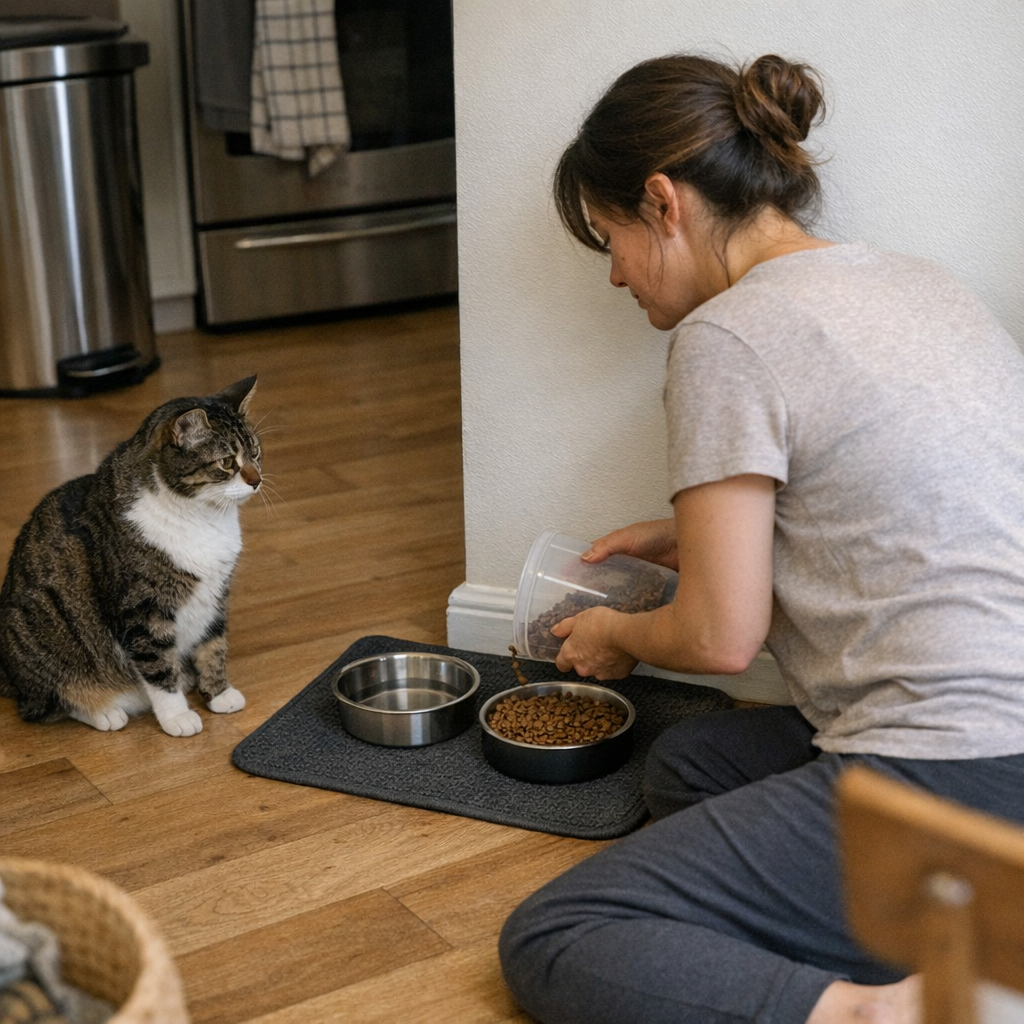
When you shift your indoor cat’s feeding corner—maybe to vacuum, to clear space before guests, or just to make the kitchen look more open—it often backfires fast. Your cat stands in the old spot, scanning the empty floor, expecting dinner on familiar ground. You, meanwhile, find yourself hunting for a bowl that’s now off to the side, mats dragged halfway toward high-traffic zones, and supplies not where muscle memory reaches. What started as a quick adjustment for tidiness quietly multiplies daily friction. The first move seems harmless, but by week’s end, you’re dodging water dishes near walkways, picking up crumbs from new angles, and both of you are just a step slower than before. The StillWhisker world isn’t about show setups—it’s about avoiding the compounding hassle created by setups that don’t stay put.
The Ripple Effect of a Wandering Meal Zone
Sliding food bowls or relocating the water mat might win back a bit of floor or keep a hallway open for an hour. But once the meal zone starts drifting, the routines that held together crack—quickly. Your cat’s habits, built on reliability, go out of sync. Suddenly, every mealtime means double-backing, confusion, or waiting. Not just for the cat, but for you: a bowl now blocks cupboard doors, water leaves drips in the path you just cleared, and cleaning supplies are always one room further away.
- Your cat circles back to the old corner and lingers there, giving up speed and certainty with each misplaced bowl or mat.
- Refilling water turns awkward—mat not where you expect, bowl awkwardly jammed next to chair legs, hand reaching for food with something always in the way.
- Cleanup takes longer: crumbs scatter wider, water trails appear under furniture, and you wipe down spots that felt settled yesterday.
- “Tidy” setups just trade one mess for another—surfaces still need extra wipe-downs, while wipes or spare food end up somewhere inconvenient when a spill hits.
It’s rarely dramatic on day one, but the interruptions pile up. Meal times drag, walkways get blocked by supplies or dishes that haven’t found home, and leftovers keep showing up in corners you didn’t plan to check. Every extra move you make is a symptom: the setup felt right for the room but not for repeated use.
How Setup Instability Builds Friction—One Move at a Time
Routine likes repetition—and setups that drift erode that. Cats adapt, but not instantly. A shifting meal zone confuses them and drains your time with minor detours. Every time you clear a walkway or rearrange for guests, you invite a fresh mismatch between where the setup looks good and where it actually works. Movement between “cat zone” and “human zone” blurs: what’s meant to streamline ends up interrupting.
- Morning: The bowl set aside for floor mopping lands in front of a cabinet. You reach to put it back, but it slides, food spilling under the fridge—another round of cleanup no one had time for.
- Evening: Water bowl, dragged out of the walkway, leaves a wet streak you only notice barefoot on the next trip through.
- Midweek reset: The mat bundled for vacuuming sits out of place a day longer than planned. Next feeding, crumbs and stray toys are scattered two steps further out, making containment impossible.
Each “temporary” relocation breaks muscle memory for both cat and human. By the third or fourth move, the feeding area becomes a moving obstacle, never quite feeling like it belongs. You notice it most when you’re trying to move quickly—the old convenience is gone, replaced with a routine that pulls your attention sideways at every handoff.
Why a Stable Feeding Zone Changes the Whole Flow
A fixed meal spot stops the quiet chaos from creeping in. When the feeding zone anchors to one location—corner, counter edge, or alcove—the routine settles down. Cats land where they expect. Cleanup collects in one pattern: crumbs and spills are predictable, not roving annoyances. Supplies gather within reach of that spot, not scattered wherever you last hit pause. In small spaces or shared rooms, the benefit shows up immediately—a loop forms that you can run with less thinking and less backtracking.
- Meals speed up, because both you and your cat are already in sync—no searching, less silent waiting, fewer missteps between bowl and bag of food.
- Cleanup locks in, with messes local and wipe-downs on schedule. You know which corner collects spills, and stray residue stops showing up under chairs or behind doors.
- Mats and bowls stay put, so you’re no longer kicking a dish into the walkway or straightening a mat every time you want to open a cabinet or cross the kitchen.
- Supplies don’t wander, since you return the cleaning cloth, extra dish, or refill jug to the same reach zone after each use—mid-routine resets stop being a scavenger hunt.
Positive Side Effects for Cat and Human
Once the setup stops moving, tension evaporates. Your cat approaches with less hesitation, you recover minutes each morning, and feedings start to feel automatic. The pause for silent negotiation—cat at your heels, you with bowl in hand—happens less. Cleanup doesn’t get skipped by accident. The house feels less tangled: you spend less time redoing small chores, more time in a space that stays ready. It’s never about making life perfect—it’s about cutting the tiny, repeated losses from chasing a tidier look at the cost of function.
The Cost of “Looking Tidy” over “Working Easily”
Moving bowls or mats for the sake of a spotless floor might offer a cleaner photo for a few hours—but it rarely survives everyday life. “Hidden” meal zones and out-of-the-way setups often mean food tracked into main walkways, bowls left just out of reach when you need them, or mats blocking outlets and doorways. The appearance improves for a moment, but the snag returns by the next reset: you step over shifted dishes, hunt for wipes, and end up doing just as much (or more) routine repair than before. Each move traded a visible mess for a slower, less reliable flow.
Boundary-Defining Tools: Why the Right Mat Matters
The practical payoff comes from structure, not surface. A feeding mat with a real boundary—raised edge or grippy texture—holds bowls in place and keeps crumbs from spreading into the rest of the room. Spills don’t run wild; cleanup is a fast, repeatable action. The difference shows the moment something tips: instead of a water line creeping under chairs, you have an edge that contains, a zone that signals its use, and a mat that lifts out in one go. Choosing mats designed for easy wipe-down, fast lifting, and quick reset pays off over hundreds of repeats—it isn’t just for looks, it’s for keeping every reset simple and the meal zone stable.
Practical Observations from Real Repeated Use
- Crumbs gather where they can be swiped at once—instead of under every cabinet or along the baseboard.
- Water stops migrating, reducing slip hazards in places you don’t expect and keeping wet paws (and floors) contained.
- The area is quieter and visually less cluttered: you’re not tracking mess by sound (the rattling bowl under a chair or the splash of water near an outlet), but seeing the setup actually settle down.
Small Adjustments, Tangible Payoff
Keeping the meal zone anchored isn’t something you notice all at once—it’s the slow disappearance of repeated snags: feeds are smoother, cleanup gets cut to a cycle you can finish without guessing, and those mental lapses where mess reappears shrink away. The win isn’t pristine appearance, but the steady removal of friction from each day—a setup that stands up to repeated use rather than just surviving in between deep cleans. In a home where space and routines overlap, a meal zone that sticks to its corner solves more than just today’s clutter; it trims the invisible work that stacks up when setups drift and routines break. That’s the real StillWhisker difference—a choice that holds up after the third or tenth reset, not just the first.