
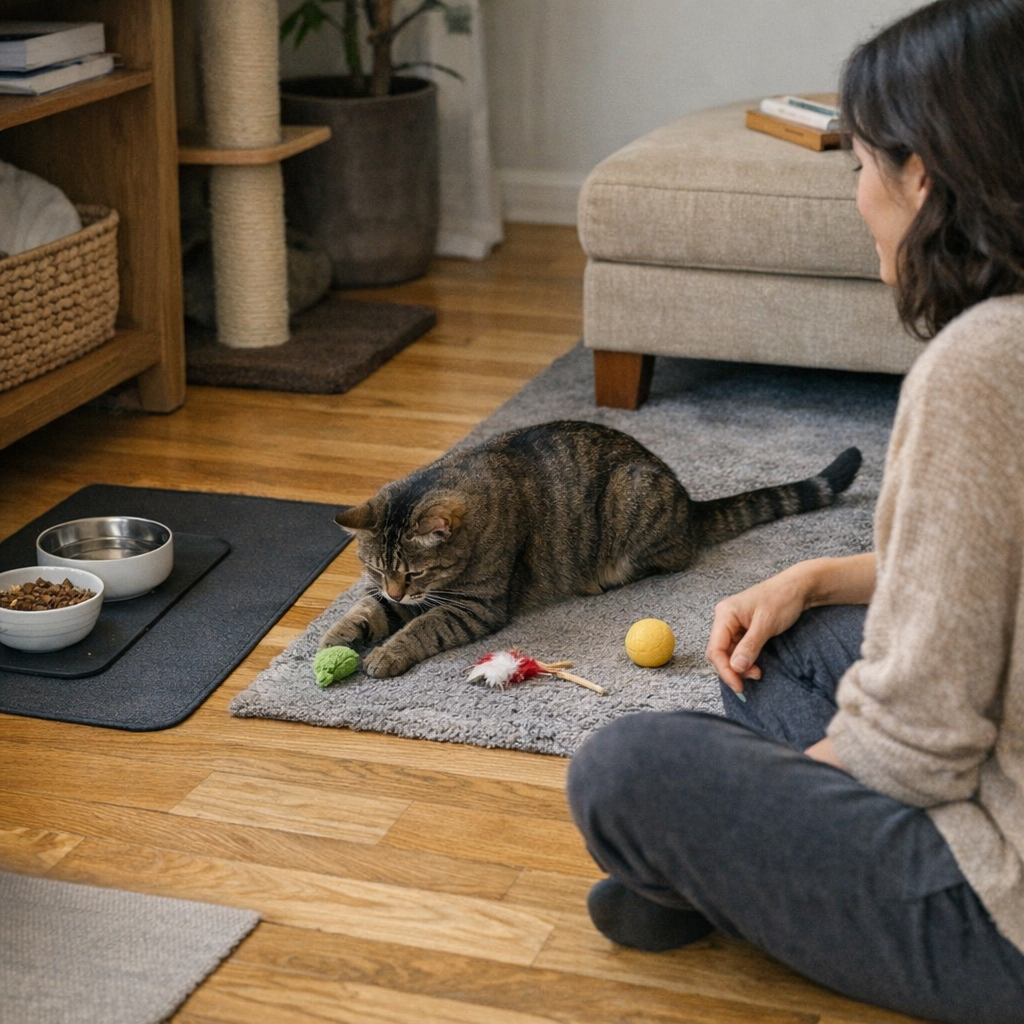
Every indoor cat routine breaks down faster than it looks: you reset the calm after a meal—bowls lined up, water topped, mat neat—then you blink and the order is gone. Now you’re nudging a bowl that slid halfway across the tile, sweeping stubborn crumbs out of walkway corners, and sidestepping stray toys that weren’t there ten minutes ago. What’s actually wearing you out is never just your cat’s energy—it’s the friction from feeding, play, and rest constantly overlapping the same patch of floor. When your setup looks “settled” but you keep redoing the same cleanups, the underlying structure isn’t working with you. You need a setup built for routines that never stay neat for long—a StillWhisker home recognizes this cycle isn’t just normal, it’s a design problem you can see and fix.
Invisible Boundaries: Why Feeding and Play So Easily Collide
Combining feeding, water, and toys in a clean corner always seems efficient—until repeated use proves it’s wishful thinking. That tidy post-breakfast lineup unravels the second a ball ricochets under the feeding mat or stray kibble gets kicked behind the water bowl. The mess isn’t loud, but you notice the aftershocks: crumbs catching bare feet at night, water pooling where a toy blocked the bowl, and feeding setups mysteriously migrating into walkways you meant to keep clear.
Shared zones invite quiet mess that keeps coming back. Every “almost-fits” arrangement slowly leaks—feeding cycles spill into play, play encroaches on nap mats, lines blur. Instead of a cleanup, you end up retracing your steps, finding the same toy tangled near the bowl, or realigning the same mat at midday because the reset won’t hold under actual use. The space can look organized; living with it tells a different story.
Scenes from a Real Day: Where Cat Calm Turns into Hidden Upkeep
The Feeding Area That Won’t Stay Still
Morning: your setup’s in line—bowl against the wall, mat flat, water level just right. Then, that all-too-familiar scramble: a quick dash and the mat glides half a foot, bowl tips sideways, crumbs forced into new territory. By lunch, a single play burst forces you to sweep, pick up, and reposition what should have stayed put. When the “reset” feels like three jobs instead of one, your arrangement is doubling your work.
Play Zones That Don’t Stay Contained
Toys rarely respect their boundaries. A mouse from the living room ends up under the food dish. Crinkle balls wedge near the litter box or surface under kitchen chairs. You spot food-dusted toys peeking from under sofas, and discover the so-called “play zone” is now a landing pad for splashes from the water bowl. Moving through the room means navigating not just obstacles but fragments of every routine—barely noticing until the vacuum jams or a foot catches a ball.
Cleanup Supplies Never Where You Need Them
You stashed wipes and the broom in a “handy” drawer, out of sight. But as soon as the water bowl slides or crumbs scatter after play, you’re walking across the room for supplies instead of grabbing what you need where the mess begins. The cleaning itself isn’t always hard but gets fractured: each spill waits, growing until you’re forced into a full-area sweep, right when you least want to.
Looking Tidy Isn’t the Same as Working Smoothly
Non-skid mats, weighted bowls, favorite toys nearby—these look like sensible upgrades. But under real routines, items drift even when upgrades are in place. At noon everything lines up; by afternoon, you discover the mess has quietly spread its borders—crumbs in the walkway, toys among feeding gear, mats out of step with the rest of the room.
The headache grows concrete: you reach to refill the water, only to move two toys first; you plan a quick mat wipe but have to clear extra debris from a shared path; a rest mat, meant to comfort, edges too close to feeding, sowing the next round of scattered kibble. Visual order hides a persistent maintenance problem—once even one item shifts, routines tangle back together quickly.
The Real Cost of Overlapping Routines: Time, Attention, and Reset Fatigue
Let a few inches slide between feeding and play and the cycle gets relentless: toys drag crumbs, water travels with paws, mats snag or overlap, and before long yesterday’s small spill is today’s underfoot obstruction. The mess is easy to dismiss until it becomes another round of pickups that chop up your day, especially during busy mornings or before guests arrive. You were aiming for a ten-second reset; instead, invisible overlap forces you back for double or triple work.
The clear sign your structure needs help: fixing the same failure point—feeder inching into play, mat bunching up, toys blocking refill—over and over no matter how “organized” the area looks. Letting feeding and play blend “just for now” only locks in that cycle, making one fix the trigger for the next mess.
One Simple Fix: Physical Separation That Lasts
Physically split your cat’s feeding and play space—even if all you can manage is a mat’s length or a furniture edge. Most indoor cat owners underestimate what a few feet, a chair leg, or a storage bin can do. Once even a minimal boundary goes in, spills no longer fuse with toy debris, bowls stay put, and each routine stops disrupting the others. The result isn’t perfect, but you’ll notice fewer double-messes—and when you need to reset, jobs stop bleeding into one another.
What a “Separated” Setup Really Feels Like
- Feeding mats keep crumbs contained—no longer dueling with stray toys for the same territory.
- Water bowls stay out of play’s collision path, reducing surprise puddles or forced resets.
- Toys wait in their actual corner, so debris and cleanups collect where you expect, not all over the house.
- Reset time drops: wipe, refill, and pickup become single-purpose actions, not an all-area sweep.
What Counts as a “Boundary”
No major remodel needed. Try:
- Placing the feeding mat behind a chair, with play gear anchored elsewhere.
- Positioning a storage bench or shelf to break up the routine overlap.
- Spacing a bowl and play area the distance of a second mat—often enough to block most encroachment.
Even a modest gap forces routines to show you where they overlap, making it clear what needs containment and what finally stays manageable without constant correction.
Why This Works Over Weeks—Not Just the First Day
Mess creeps, resets drag out more than you expect. The crucial difference between a home that stays settled and one that doesn’t is how often you’re interrupted by the same friction. Owners using physical boundaries—rigid or soft—consistently find that areas “hold a reset” days longer. Fewer spot cleans, briefer midday nudges, less chasing the same bowl for the third time. The energy you used to spend doubling back goes back to actual routines, not perpetual re-tidying.
Added bonus: cats often nap in the last place they played. When play and feeding zones stay distinct, it’s less likely the rest mat creeps into a bowl, or water gravitates toward a tangle of plush toys. Boundaries shape behavior by reducing the crossover that kicks off the next cleaning spiral.
Calm Isn’t Just Appearance—It’s a Setup Designed to Hold
If you’re resetting the same floor patch twice daily, or your feeding mat has drifted into walking space by dinner, your setup isn’t matching your cat’s cycles—it’s quietly adding more work. True calm isn’t about chasing after crumbs; it’s about a structure that keeps each routine in check. If you keep finding owner interruptions, not just visual clutter, try moving a boundary, not just another bowl. You’ll know difference not by a perfect look, but by which jobs finally stop repeating—meal after meal, reset after reset.
For more practical structures and solutions built for real indoor cat life, visit StillWhisker.