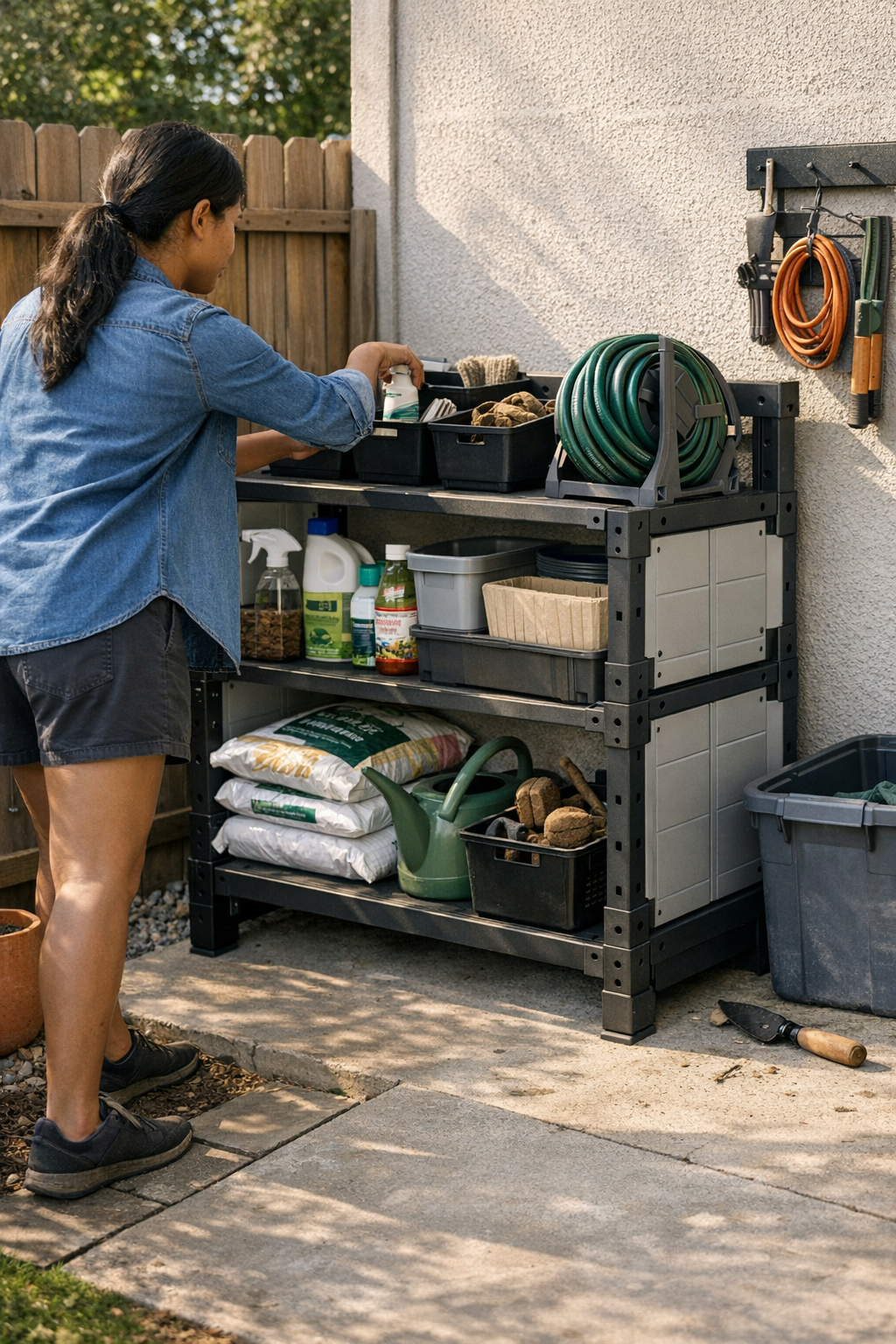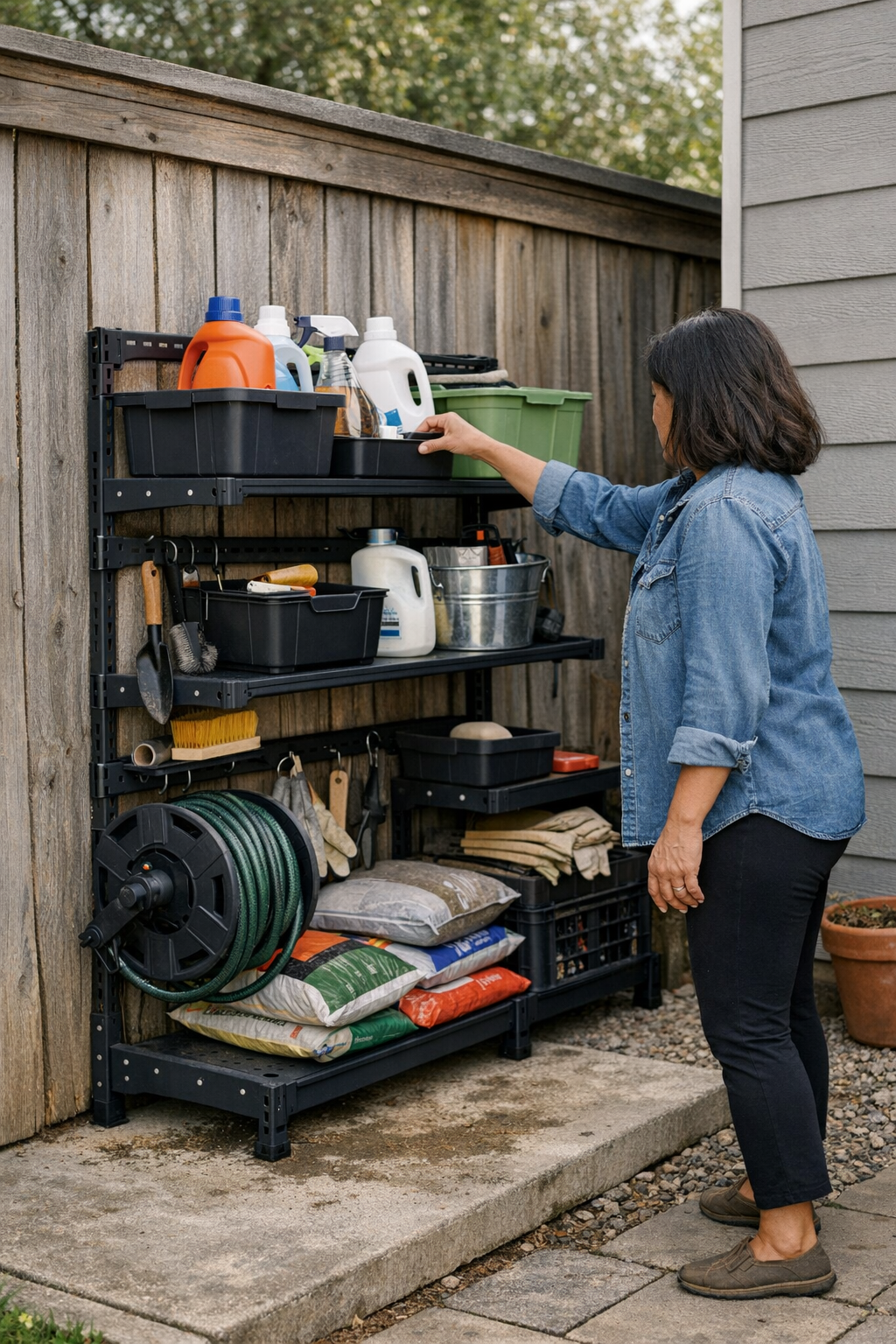
Laundry rooms fail when floor-level storage quietly breaks down the routine. The first day, you stack detergent, softener, and stain remover in a neat row on the floor—an easy grab, no setup. By midweek, that “convenience” has slipped: bottles drift, powder boxes wedge in back, and single-purpose containers block the cleaning path. You go to mop, but now you’re shifting supplies to chase a runaway drip. Each time you crouch down (again) to find the cap, reach around the laundry basket, or realign a powder box that’s crept into the walkway, the floor setup that looked sensible is clearly working against you. What looks orderly after a reset quickly becomes awkward clutter, and the friction grows with every load.
How Floor Storage Gradually Breaks Down the Routine
Floor-level laundry storage might seem practical—everything’s visible, theoretically within reach. Yet in daily use, this system loses shape fast. Most loads require you to nudge, reach around, or even move multiple bottles just to get to the item you need. Small containers vanish behind larger ones, and powder boxes press against wall edges or slide into corners—setups that look neat for a day but erode each time you reach in. Basket traffic makes it worse: every basket dropped for sorting, every cabinet opened for supplies, every footstep across a crowded lineup. Items collect at the baseboard and pile into messy clusters, turning intended grab-and-go zones into minor obstacle courses.
Resetting doesn’t just take longer; it becomes a chore that creeps into every cleaning session. Before mopping or wiping down the floor, everything must be picked up and sorted—sometimes more than once in a single week. Spilled powder disappears under containers, and leaky bottles form sticky spots that go unnoticed until they’re stepped in. Especially in tight alcoves or shared utility corners, every stray bottle shrinks the usable path, and each week ends with more drift and more time spent putting things back in order.
Wall Shelves: Not Just Prettier, Actually Smoother
Raised shelves above floor level do more than make the room look less crowded—they reorder how you move through laundry tasks. Change is subtle on day one, but over several loads, the advantages become obvious:
- No more crouching or hunting behind the basket—detergent is always at chest level, never blocked by laundry in progress.
- Bottles and boxes stay fixed in a visual row. No more sliding apart or toppling forward—motion stays clean, order stays visible.
- Leaks and spills are detected instantly—you see the cap, you see the drip, you address it before it turns into sticky buildup.
- Cleaning paths stay open. You can sweep or mop underneath with nothing to move and no lineup to disrupt.
This format lets reach become routine. With everything visible and within arm’s reach, you re-shelve a bottle in one motion (even with a towel pile in the other hand). There’s no test for balance, no domino effect. The difference isn’t just less bending—it’s less wasted movement, less risk of knock-over, and a space that stays clear without repeated interventions.
Repeated Use Reveals the Real Difference
Where floor setups demand constant realignment, wall shelves quietly resist drift. Over a week of use, the hidden time wasted on resets disappears—you aren’t pulling lost boxes from behind a bottle, or searching the floor for the stain stick that slipped out of sight. After several loads, resetting is almost instant: sweep your hand across the shelf to square it up, spot-check for leaks, move on. Nothing needs to be shifted to see what’s low or out. Shelves act as stable tracks—each item returns to its home, and the zone doesn’t flood with overflow or creeping powder trails.
Contrast that with the floor, where crowding and lost items slow you down at every step. You start each cycle fixing last cycle’s mess, and in shared spaces, the problem compounds. A week later, the difference is clear: one setup asks for daily discipline, the other quietly maintains itself with less effort.
“Easy on the Eyes” Isn’t the Same as “Easy to Use”
Floor storage may look organized after a cleanup, but every adjustment (bend, reach, shuffle) is a friction point waiting to return. The true wear shows up in hidden leaks, spreading powder, or the gradual crowding of containers that forces slow-down at the worst moment. In real laundry rooms, appearance alone means nothing if categories blend together, paths narrow, or every cleaning day starts by resetting storage that can’t hold its shape in use.
Wall shelves avoid this silent decay. A lip up front keeps boxes from drifting or falling. Open sides make it impossible for items to disappear behind an accidental stack. Each supply stays visible, and you’re not troubleshooting “which bottle leaked” at floor level. The small design choices become big time saves after dozens of cycles—and the room finally matches the way you actually use it, not just how you want it to look for a day.
Real Setup, Real Life: One Small Shift, Many Payoffs
Upgrading to a double-depth utility shelf about three feet from the floor, the payoff showed up almost immediately:
- I stopped having to crouch or reach around baskets; detergent was always where my hand expected.
- Containers no longer edged outward or toppled—the shelf’s front lip corralled every box and bottle after use.
- End-of-week resets became one-handed: quick lineups, leaks checked without any heavy shifting, and straight to the next load with no wasted steps.
That ripple effect matters. The floor never became a spill zone, and nothing overflowed out of view. Any drip was spotted and wiped up before it ground in. Shelving between 36 and 48 inches high keeps supplies out of the path but doesn’t force awkward stretching or added steps. Skip portable racks that wander, wobble, or invade the walkway—these only trade one kind of drift for another and pressure the floor even more as items pile on.
Why Return Flow and Reset Speed Matter
The success of any laundry setup isn’t judged by how calm or photogenic it looks after a reset. True value shows up in the return flow—the ease of putting things back mid-cycle, the absence of hidden cleanup tasks—and in how quickly the area is ready for the next load. If you’re double-handling items, clearing a path before every job, or losing track of essentials each week, you’re paying for a storage decision that doesn’t match real use. Wall-mounted utility shelves don’t just hold supplies; they hold the system together, resist creep, and open up the floor you actually need.
The ultimate difference isn’t surface order; it’s a setup that works without nagging resets or chronic “where did that go?” moments. With the right-height shelf, the laundry zone becomes reliably functional, no matter how busy your week gets or how many hands use the space. You’ll spot what’s running low before it becomes a supply emergency—and every sweep, mop, or reset takes less time, not more. For homes where even a small zone needs to keep up with real routines, a better storage structure changes everything about how livable that area feels.
See practical wall systems, utility shelving, and organization options for every inside zone at Gridry.