
Spot the first sign your kitchen storage is failing: counters that were clear yesterday are crowded again tonight. Deep shelves trap infrequently used bottles behind a front row of mugs; a single awkward cabinet leaves prep tools too far from reach, while the items you use every night—spices, strainers, spatulas—begin piling up in your main workspace anyway. The original shelving hasn’t reduced clutter; it’s just shuffling the overflow from one zone to another. As routines adjust, you spend more time doubling back, sliding aside jars, and untangling a fresh layer of disorder with every reset. The cost is subtle but persistent: what looked organized on install day simply can’t keep pace with the real repetition and movement of daily cooking.
The Real Impact of Poorly Chosen Utility Shelving
Only by living with a mismatched shelving setup do you realize that wasted effort adds up fast. On paper, it sounded efficient—a roomy rack, neat labels, everything visible. Three days in, you catch yourself slipping a bowl out from behind a trapped colander, or reaching around a bent shelf for that lost spice tin. Poor depth or odd placement means storage becomes a series of workarounds: essentials wander back to any available surface. Clearing yesterday’s “overflow zone” becomes part of your nightly reset, and the friction never fully leaves.
Overflow Zones: Where Kitchen Routines Break Down
In a real kitchen, every step matters. Put your shelved items even a foot too far from the core path between stove and sink, and retrieval turns into a detour. By midweek, fruit bowls creep onto the prep board, spices are stranded next to the burner, and your dish rack migrates to a patch of counter you thought you’d freed. The ideal “reset” you imagined is replaced by a three-step shuffle: reach, backtrack, nudge three items aside, then finally put something away. What should take seconds quietly drags into a mini reorganization—every single evening.
Depth, Distance, and Category Logic: Why Setup Details Matter
It’s not the idea of extra shelves that backfires—it’s the fit. Shelves deeper than 12 inches reliably invite double-stacking and hiding; suddenly, you’re guessing whether the tomato paste is behind the blender or under the mixing bowls. Category drift is just as fast: mugs edge into snack storage, utensils blend with plastic wrap. Each trip to the shelf grows more complicated, and each “quick return” leads to a pile-up at the edge. The system loses discipline, and every part of the kitchen works a little harder, only to feel less organized by the week’s end.
How Small Choices Create Consistent Chaos
The mess rarely explodes all at once. Instead, shelves turn into holding pens for “just for now” items: lids without containers, opened boxes balancing where they don’t belong, forgotten gadgets wedged out of sight. Eye-level shelves fill and rotate naturally because they match the way you move—upper shelves become “out of mind” drop zones for anything that doesn’t have a proper home. What’s truly lost isn’t space, but flow: routines break up, resets require backtracking, and the energy you hoped to reclaim is lost in repeated, invisible interruptions.
Real Scene Shift: Resetting the Counters With Smarter Shelving
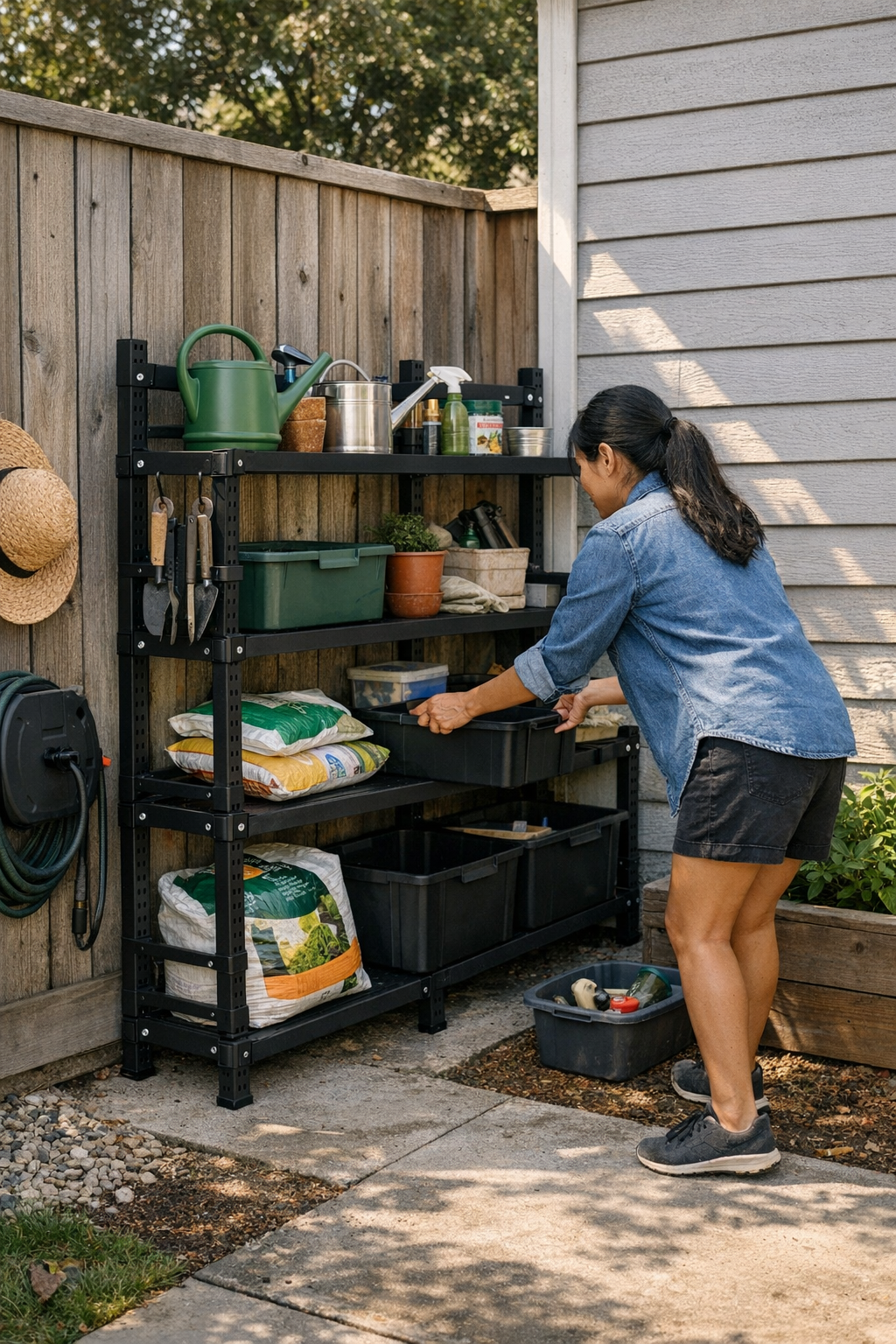
The difference shows up the first time you don’t need both hands to find a pan or clear the counter after dinner. Swapping from a single, deep rack to two open, clearly divided shelves—placed at eye and elbow height—changes the math entirely. Each category (bottles above, tools below) gets a visible resting spot, and the end of night reset is a one-motion process: nothing to stack, nothing to search, no step skipped. What’s left is an open counter, even after a week of cooking, simply because the shelves match the real flow of prep and return.
Category Zones: The Key to Ongoing Order
True order isn’t about filling up shelves—it’s about strong zoning. Shelves in the 8–12 inch range support single-row storage: nothing gets buried, nothing is hidden behind another layer. Instantly visible categories—spices all together, utensils as their own row, prep bowls with clear separation—erase the reset headache. Neglecting clear divides means the shelf becomes just another landing pad, one doomed to bleed categories and invite the same old spillover in days, not months.
Not Just Looks: How Shelving Choice Changes the Daily Flow
Resets that take longer every week signal a storage system that quietly resists you. The creeping return of clutter isn’t a failure of cleaning—it’s a failure of fit. When shelving doesn’t match how you move, you’re forced to shift, stack, or restack daily just to make your own space work. That constant, minor rearrangement is the hidden drain behind setups that never quite feel “done.”
Small Shifts, Big Relief: Spotting Better Use Moments
The difference is measured not by decor but by movement: reaching for a tool and finding it in one step, or finishing the reset without circling the room. Responsive shelving follows the real rhythm—prep, cook, reset—making each step less about locating things and more about using them. The goal isn’t perfection; it’s the steady relief of knowing you’ll never have to reorganize the whole system just to cook dinner or reclaim your counters.
Practical Tips: What Actually Works (And What Doesn’t)
Stick to accessible depths: Shelves between 8 and 12 inches deep keep storage single-layered—no shoving, no buried rows.
Mount storage near high-use zones: When shelves are beside your main prep surfaces, you eliminate the distance that encourages drift.
Maintain strict categories: Give every shelf a single job—don’t let “just put that here for now” crowd out true zones. Shelves without strict categories always revert to random overflow.
Why Storage Needs to Match Your Real Kitchen Routine
There’s a sharp difference between looking organized for a photo and functioning clearly for daily life. The right shelving setup preserves open counters by eliminating double handling, hidden overflow, and nightly re-sorting—no matter how hectic the week. Good storage isn’t invisible; it’s the quiet discipline that lets the kitchen stay as usable on Friday night as it was Monday morning.