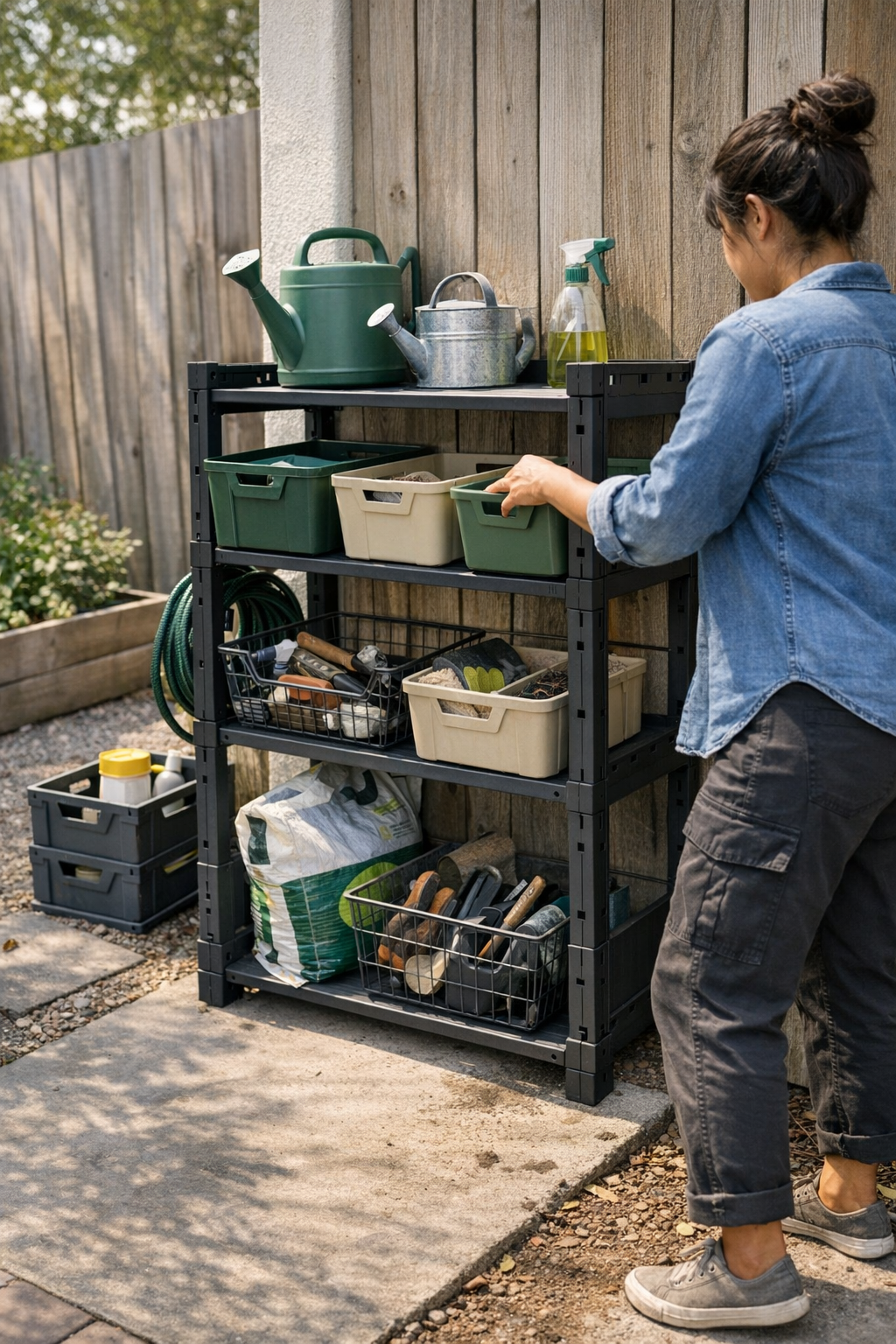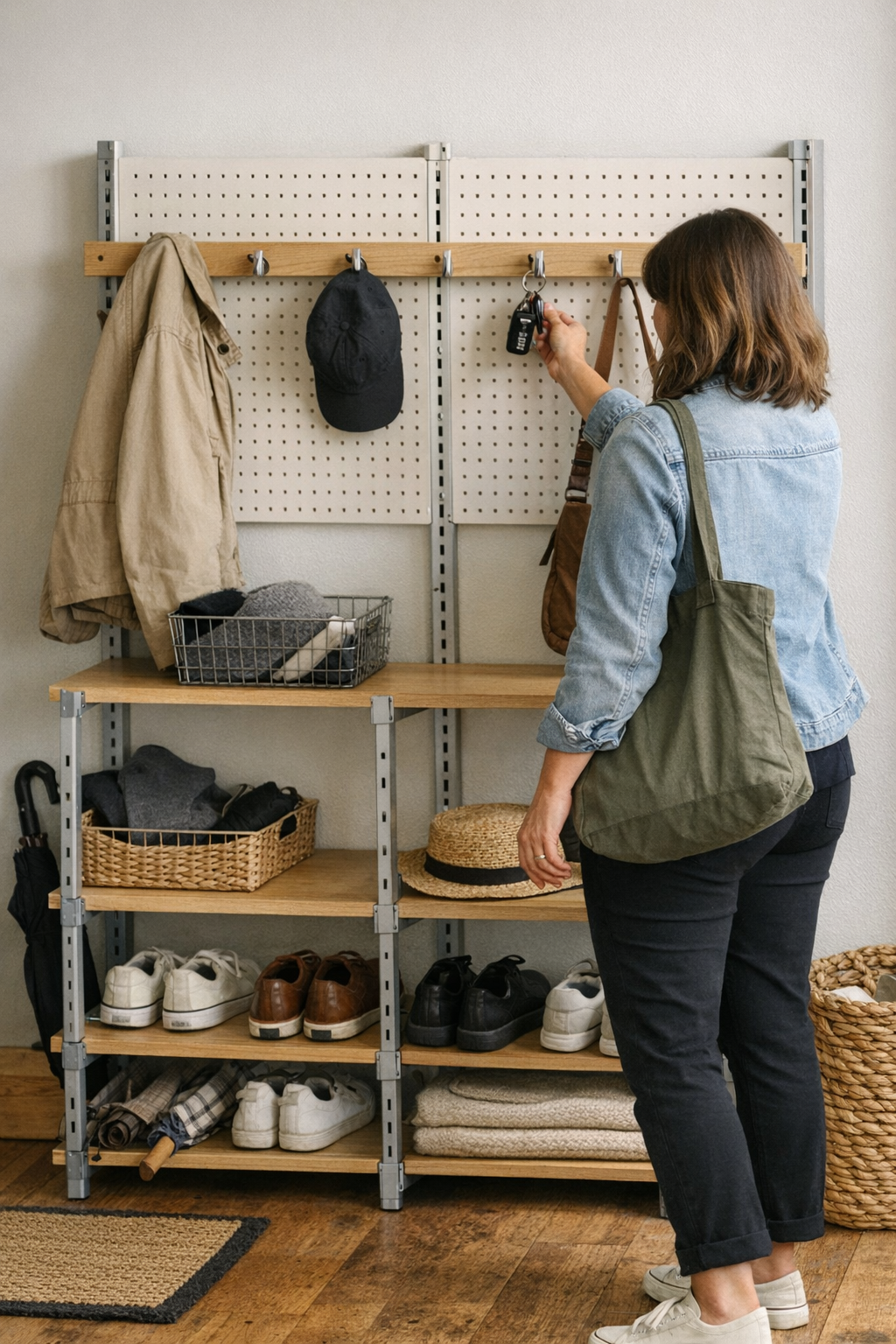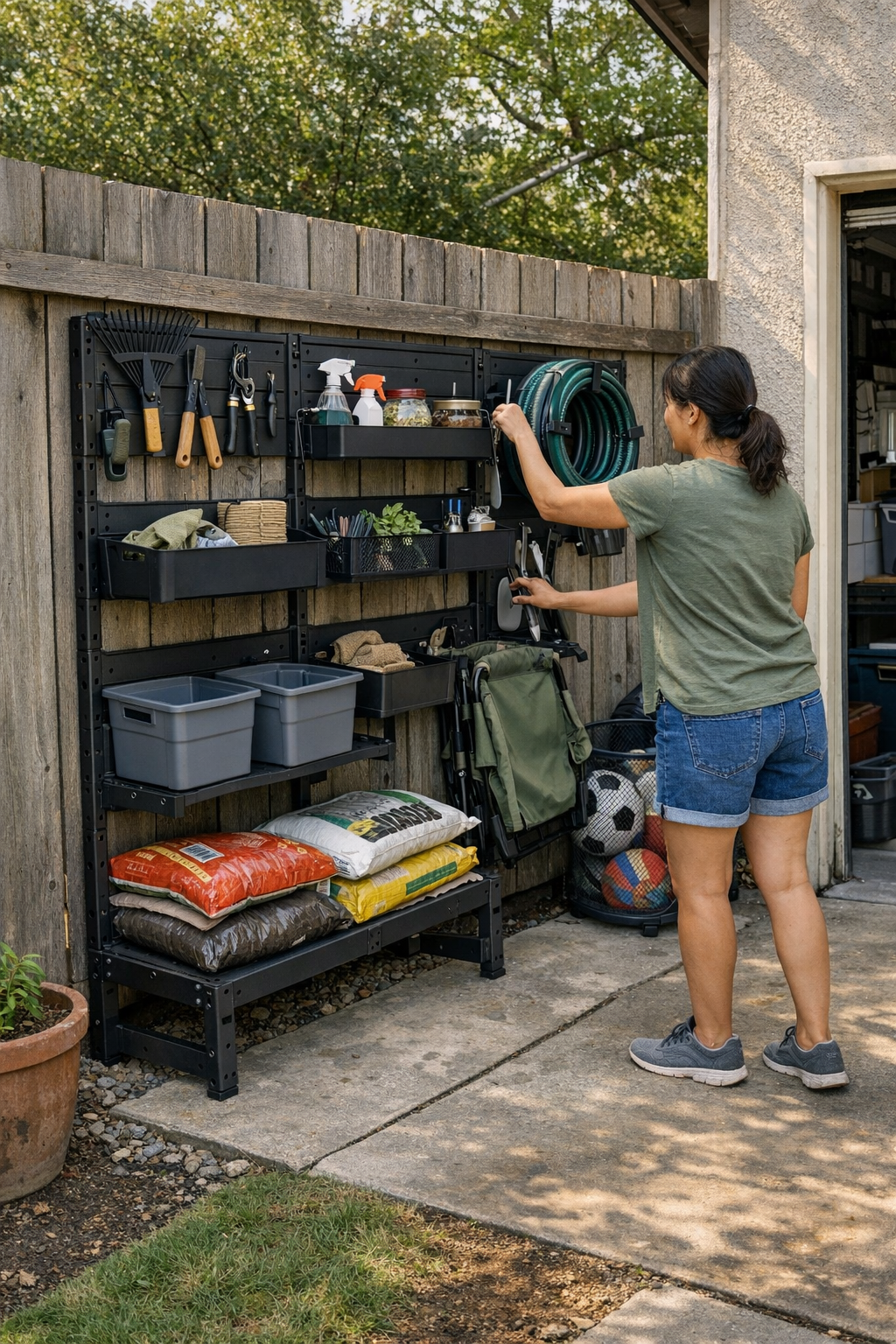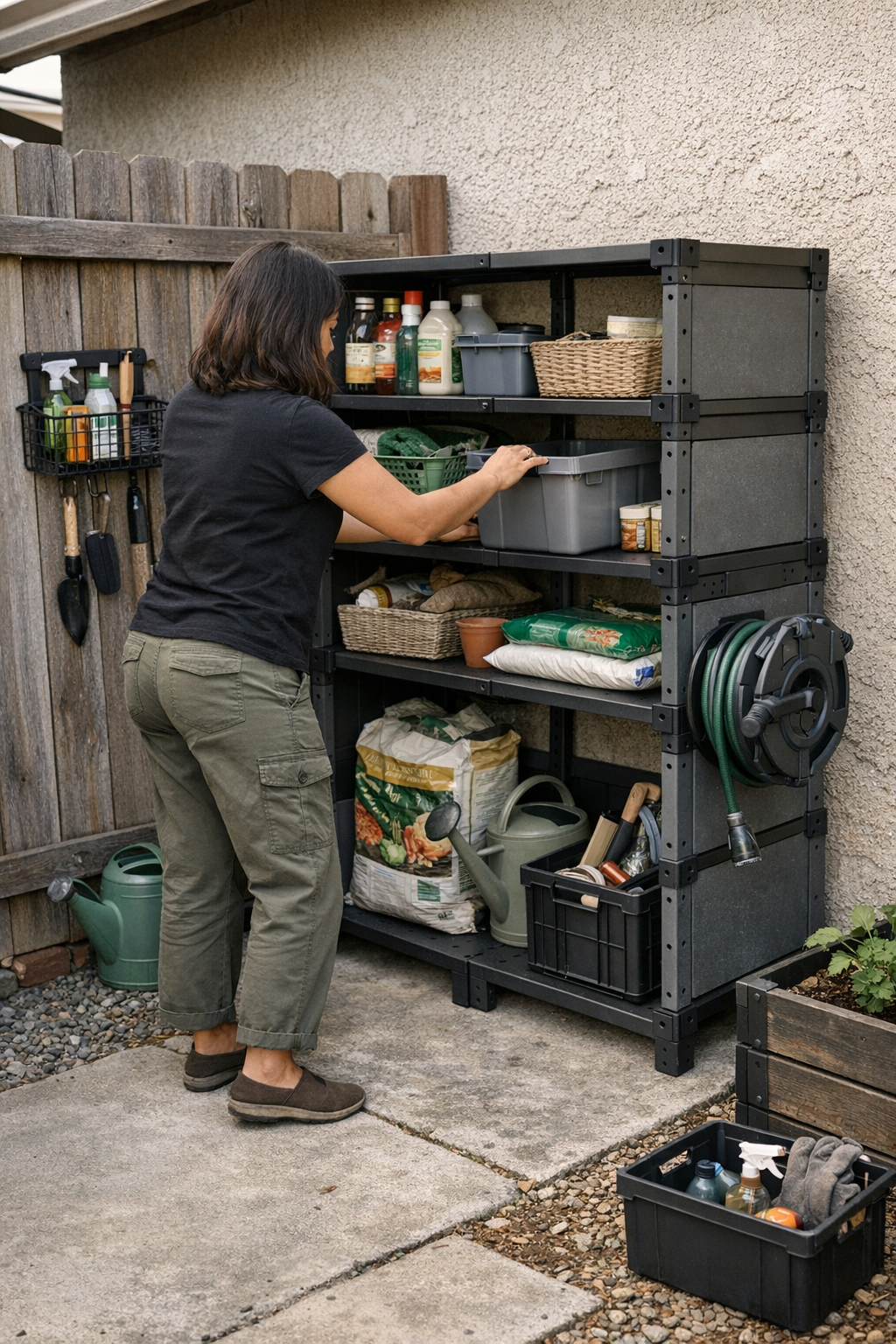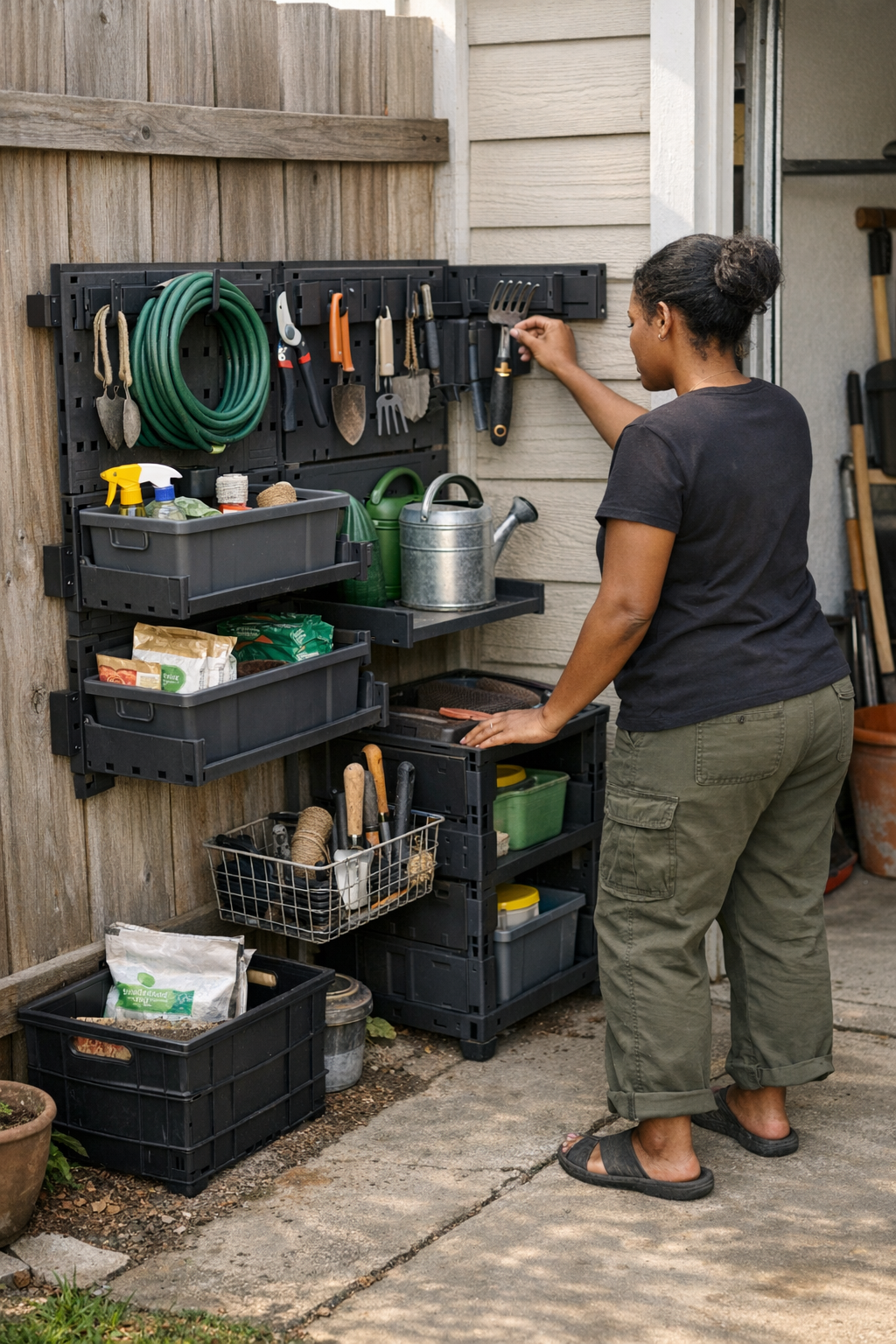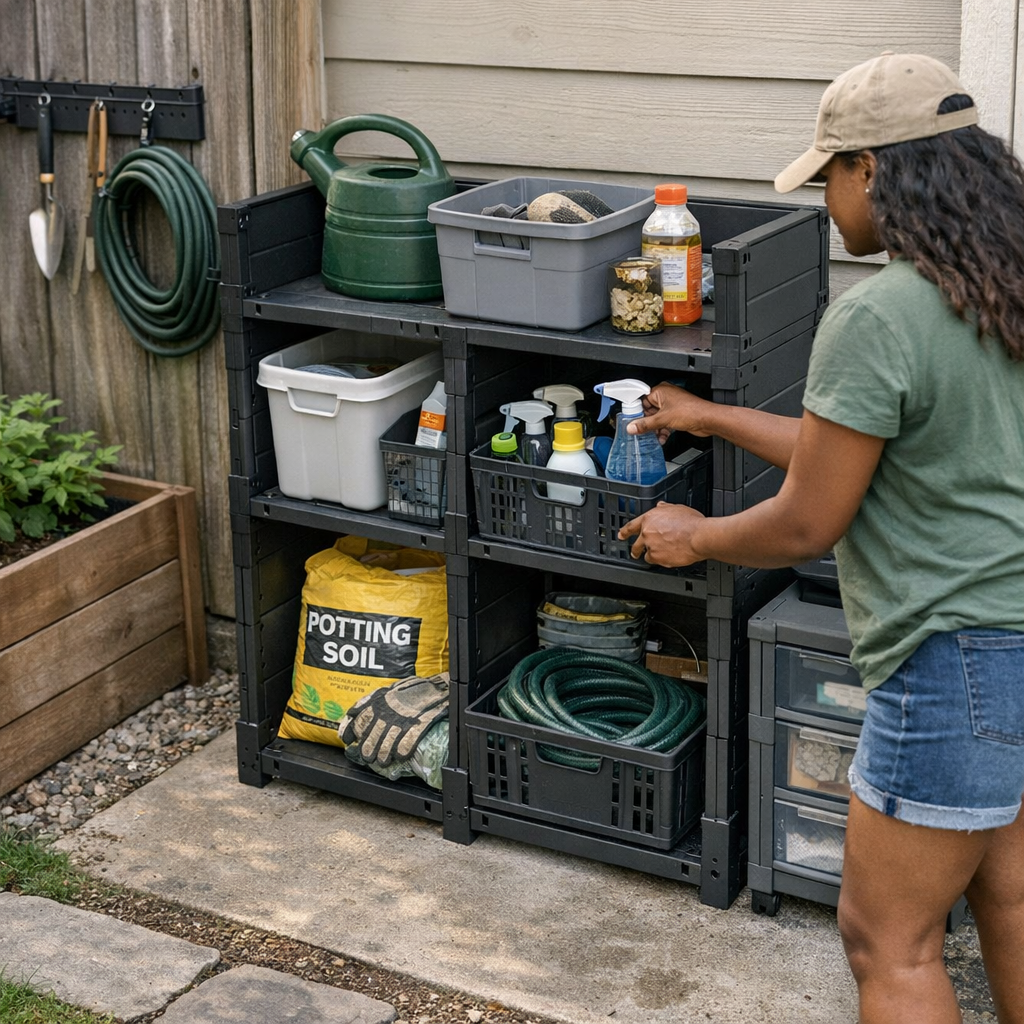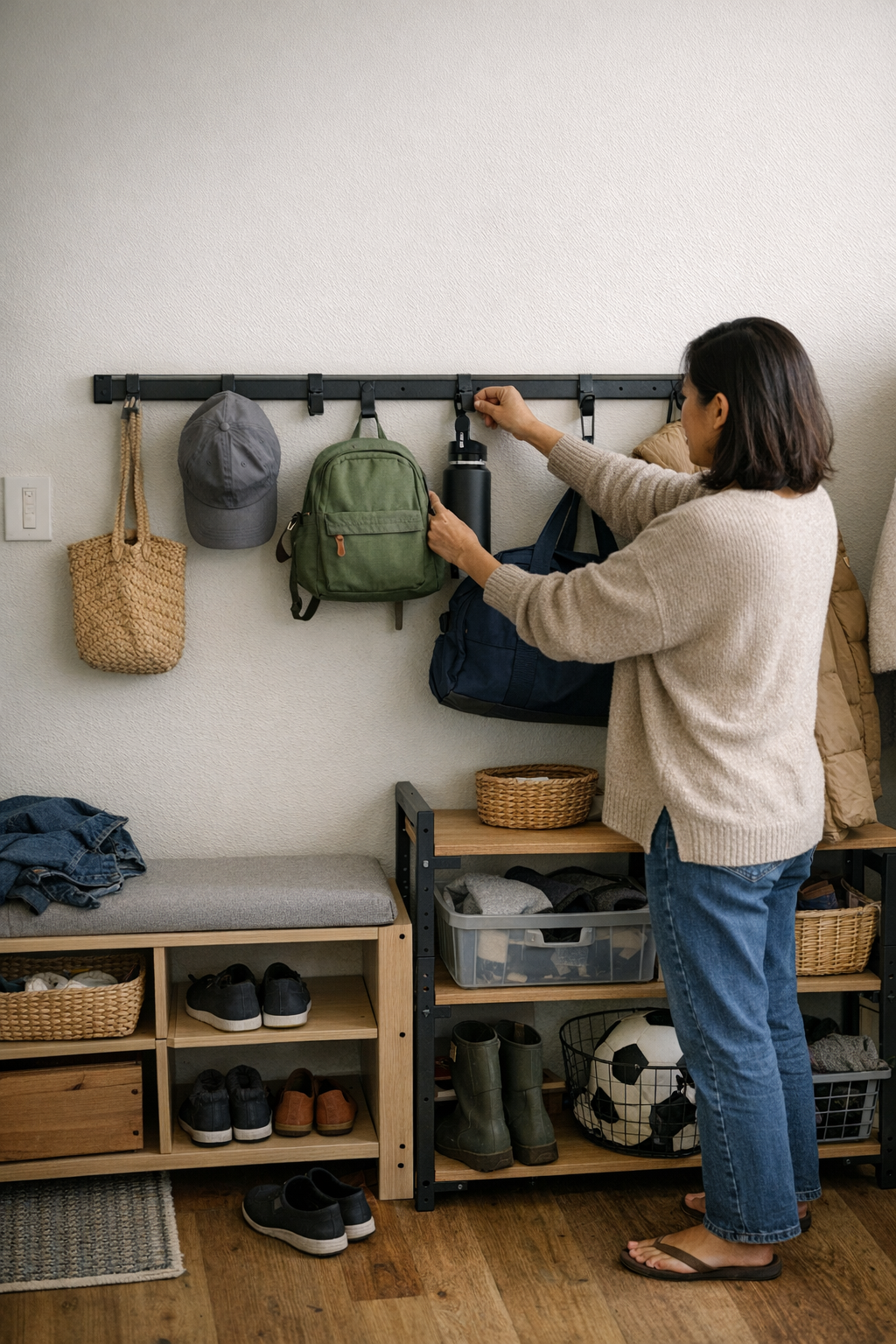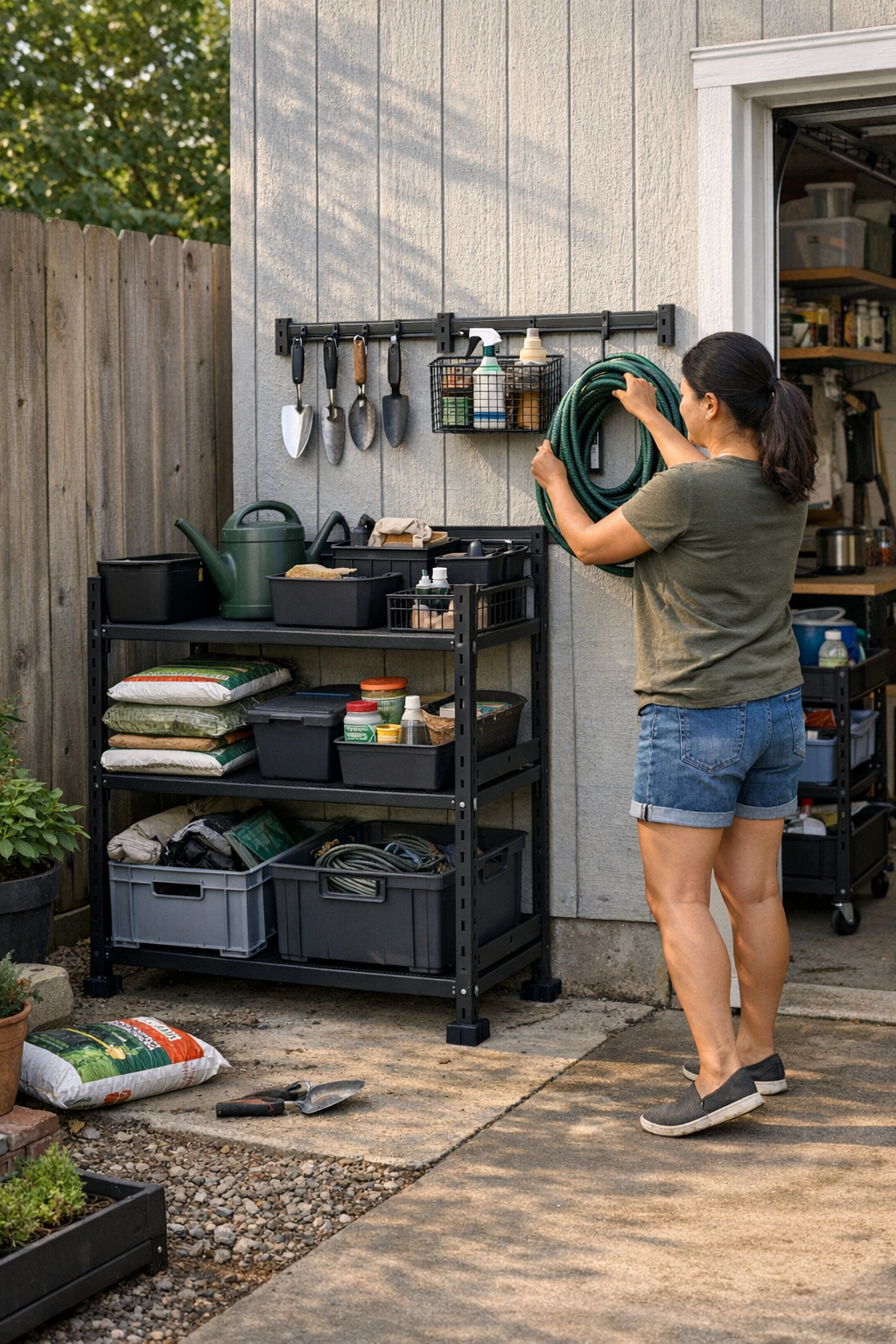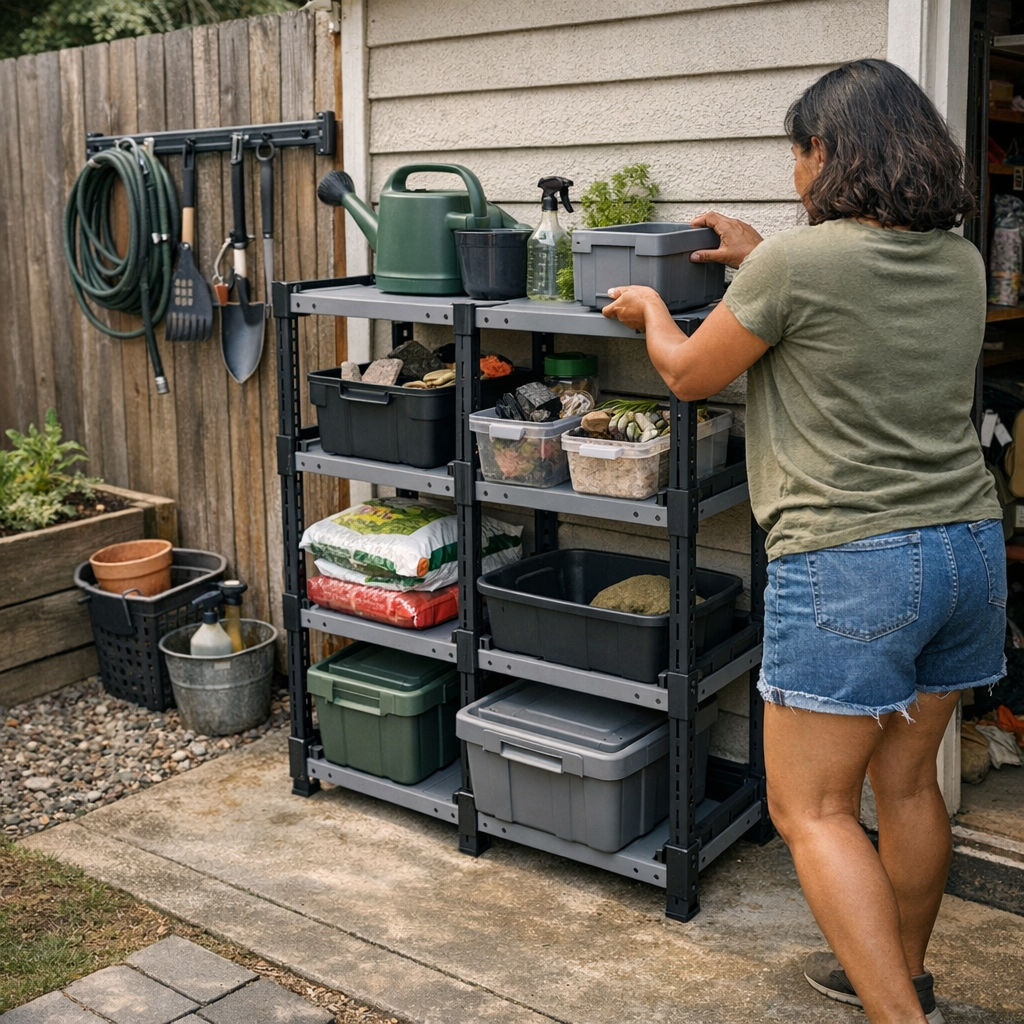
Spot the pattern in any real backyard, side yard, or garage edge: New racks or bins arrive, and for a few satisfying days, every tool and ball has an assigned spot. The patio paths clear. Suddenly, the area looks ready for company, for projects, for anything. But give it three weeks. A rake leans where you meant to walk. Overflow piles shadow the side-yard wall. The lidded bin that seemed like the answer now hides your best hand trowel behind a jumble of forgotten hoses. Returning one thing means dragging two others across the floor or bumping into the overflow you promised to deal with last weekend. Outdoor organization doesn’t fail in a single day; it’s in these slow but steady resets—where once-slick setups reveal their weak points, one blocked path and awkward shuffle at a time.
Why Most Outdoor Setups Fall Apart
Yards don’t become unworkable overnight. Instead, everyday friction creeps in quietly: tools left “just for now” behind bins; folding chairs wedged near the garage doorway; gloves tossed over a fence rail with every good intention. Resets that should take seconds turn into little projects, then into tiring chores put off until “later.”
The problem usually isn’t what you own—it’s how easy it is to restore order after each use, especially when the routine keeps changing. An awkward modular shelf, a too-deep cube, or an unmovable rack may look perfect on setup day, but these quirks force micro-reshuffling every time you need to grab (or return) something fast. The interruptions are small but relentless. Tools disappear into the void, walkways narrow again, and before you notice, the floor fills with another round of “temporary” clutter that somehow never leaves.
Where Setups Lose Their Grip: The Return Bottleneck
The wrong kind of storage turns every reset into a hassle. Supersized bins swallow gear but also bury what matters. Slim wall racks promise visibility, but exposed shelves start showing mini-disasters after one busy afternoon. To fish out a spade, you end up shifting a stack of folding chairs blocking the shed door. A single umbrella forces a strategic shuffle just to free your gardening tote. That “five-minute tidy” balloons into more time messing with your storage than using what’s inside.
Open wall systems reveal the chaos as it happens. Everything is visible, but that also means every rushed drop or unfinished return is fully on display. Start cramming gloves, dog toys, or coiled hoses onto any available hook, and your promising rack quickly becomes an impossible shelf of twisted piles. The visibility is a double-edged sword: useful for quick access, but proof when resets slip.
- Leaning a shovel “just for now” and blocking access to the only bin you need next.
- Folding chairs gracefully stacked after an event—until someone wedges them over the storage drawer and blocks every return.
- Hand pruners lost in a deep cube, invisible until you empty half the contents onto the patio stones.
- Walkways and corners near the garage or fence slowly collecting buckets, gloves, or garden bags—each one a minor obstacle that quietly grows.
Every ignored friction point is a missed reset, and every missed reset makes the next one harder. Reshuffling becomes expectation rather than exception. The difference between an organized yard and a clutter magnet lies in these small, repetitive jams—not in how tidy the space looked on day one.
When “More Storage” Means More Trouble
It’s a tempting mistake: go bigger, go deeper, hide the mess out of sight. But oversized containers cause silent chaos. Instead of quick returns, you end up fishing through the bin for the one tool that’s sunk to the bottom. Layered storage becomes a scavenger hunt. The result? Mess that grows out of view and resets that get postponed until the next “big” sort—usually after something breaks, disappears, or that patio project finally demands action.
Contrast this with shallow racks and open, wall-mounted shelves designed for steady use:
- Each tool and toy is visible—no more than one layer deep, no room for “out of sight, out of mind.”
- Overflow doesn’t hide; you spot it as soon as it creeps in, so the area never slips fully off track.
- Resets shrink down to quick, small corrections—often literally a few steps and seconds, rather than a twenty-minute scramble.
The trade-off: You see your stuff, for better and for worse. But the very lack of cover forces more deliberate returns and catches issues before they spiral. The right friction, in the right place, nudges you to fix small problems now instead of dragging them out for later.
Trouble Spots in Real Yards: Practical Scenes
The Garage Edge Logjam
After guests leave and tables fold, the pile that lands near the garage wall becomes a blockade almost instantly. That low rack for rakes, shovels, or sports gear gets walled in by folding chairs you meant to move “in a minute”. Returning a single yard tool now means sliding two chairs out, so the tool stays out too. The next time, the pile is bigger—and you’re less likely to bother.
The Fence-Line Overflow
Wall-hung racks make sense—until a heavy garden week. Now the rack is overloaded: gloves on top of hoses, hand tools jammed beside wonky balls, yesterday’s project leftovers squeezed anywhere they’ll fit. The clutter is right in your line of sight, but so is the inertia, as even one extra item starts the whole layer shifting and no one wants the job of putting things back “the right way.”
The Narrow Side Yard Trap
That tight zone between the house and fence is a classic dead spot. Deep bins make promises—“just group it all”—but even medium-sized pots, extension cords, or hose nozzles vanish behind bags of soil. Nobody notices missing gear until the next use, and the area drifts back into being a vertical junk drawer. Swapping deep bins for a single, shallow wall shelf kills the hide-and-seek: you see what’s there, and have to return items properly or nothing else fits. Neglect becomes visible tension, and that’s usually all it takes to avoid letting piles form in the first place.
Design That Keeps You Ahead—Not Behind
Start with this test: For high-use zones—especially garage edges, side-yard strips, or fence walls—limit storage depth to eight inches or less. This one decision guarantees you never bury what you need. Shallow cubbies and racks cut off the retreat of clutter, making it clear where overflow starts and forcing a reset before the mess spreads into your walking path.
Tight drop zones are another unsung benefit. Racks or bins by doors should fill up quickly—that pressure is good. It shouts for action (“deal with this”) before the overflow snowballs into a reset that needs hours instead of seconds. Corners where storage never quite works can be reclaimed with vertical shelves or narrow racks, converting the “last resort” dump into a clear, managed nook rather than an excuse for structural mess.
Here’s What Actually Changes With Smarter Setups
- No more gatekeeping clutter: Returning a single spade doesn’t require a minute of shifting chairs or clearing a path to the wall.
- Quick, routine resets: End-of-day or post-project clean-up becomes a series of tiny habits, not an all-Saturday ordeal.
- Less guessing, less hiding: Everything is either where it should be, or obviously out of place—so regular upkeep happens automatically.
- Setup that reinforces your habits: Hard-edged storage zones and right-sized shelves force a check-in—a visible nudge before small chaos spirals into major pileup.
Staying in Front of the Mess (Without More Work)
No setup can freeze time. Outdoor areas are always in motion, especially in multi-use yards with frequent projects or family traffic. But the goal isn’t perfection; it’s building a layout that can take the churn. Shallow racks, visible shelves, and clear, hard storage boundaries stop hidden buildup before it starts. Instead of waiting for the next big rescue, you’re nudged into small, frictionless resets that actually stick. Less time searching, less energy dreading the tidy-up, and more space that works the way you move—not just the way it looks in a catalog photo.
For outdoor setup ideas made for real routines and real friction, visit TidyYard.