
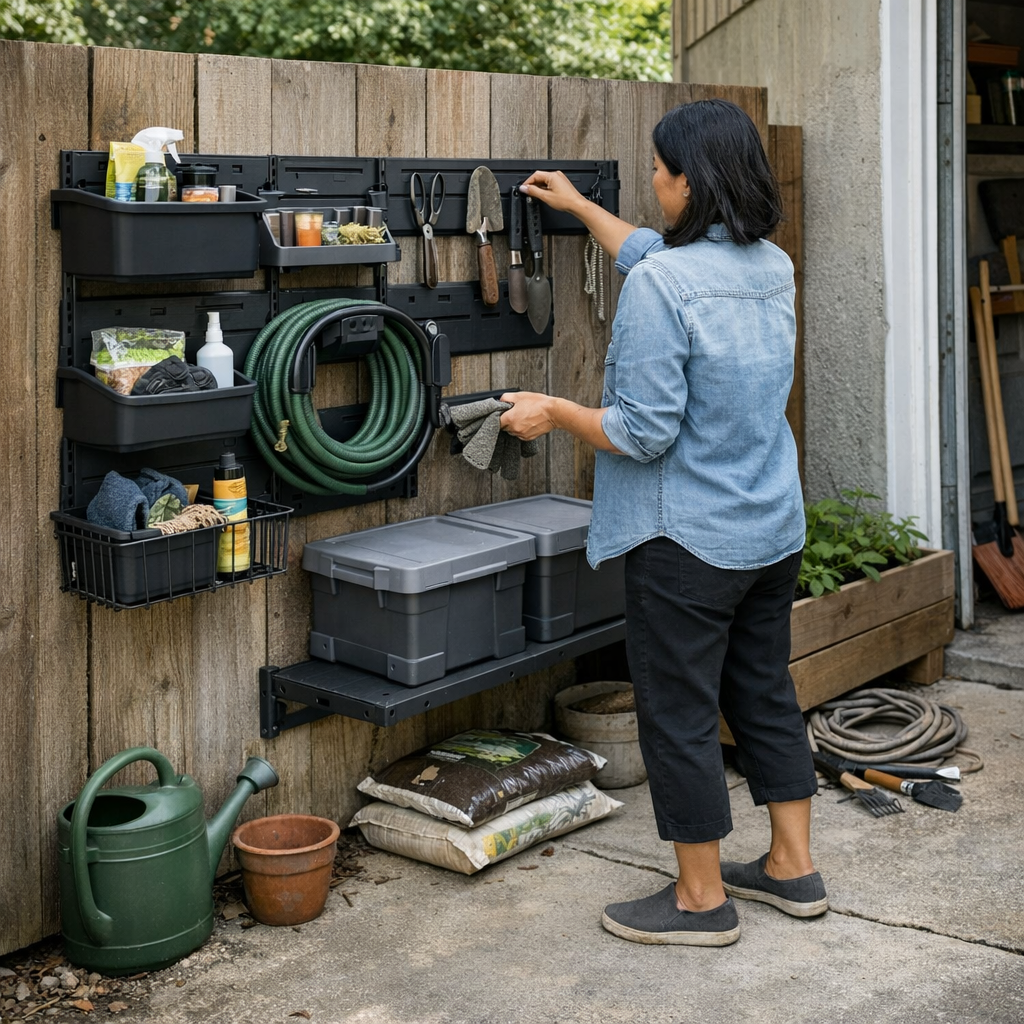
Small yards live and die by storage choices—you notice the difference in a week, sometimes in a single day. One wrong bin, a bulky chest, or a “space-saving” cabinet that claims a corner, and suddenly the best outdoor plans choke and stall. If you’ve ever tried grabbing a single tool and ended up stuck behind plastic bins or dodging deck box lids pinching the walkway, you know: the right setup isn’t about what fits on paper, but how the space actually moves around you after the first reset. In side strips, patio edges, narrow garage thresholds, even a few inches lost to a bad decision can jam up the whole routine.
When “Functional” Storage Makes Things Worse
The big-box promise is always the same: more cubic feet, problems solved. Until you live with it. Delivery day, the new upright cabinet looks solid—tight to the fence, “out of the way.” Three days later, you’re already sidestepping open lids, or bumping handles when crossing to the back. The good intention leaks out fast:
- Bumping a shed door every time you want to pass, even when your hands are full.
- The main walkway squeezed down to a shuffle, where one bin divides yard from garden.
- The “extra” storage morphs into a pile-up—sports gear jammed behind, tools balanced on top, folding chairs wedged in sideways when you’re in a rush.
Outdoor storage that looks organized in photos starts breaking the flow in real life. It isn’t just about space used—it’s the new friction. Storage that keeps you shifting, rerouting, or doubling back means every quick grab is its own routine, every return bogs you down, every small reset takes more effort than it should.
How Setup Friction Grows (and Spreads)
No small yard is single-purpose. One patch is a shortcut in the morning, a play zone after school, a grill station by dinner. But if getting the ball means dragging a chest forward, or putting the hose away buries the gardening gloves further, routines start clashing instead of overlapping. The pressure builds quietly, but quickly:
The lived-in struggle: Return a trowel at dusk and realize the hose now blocks the only open spot. Fetch a ball, only to see it’s rolled behind a stubborn deck box. A system that stutters on the basics—gear returns, clear movement, quick resets—doesn’t just slow you down. It turns every main route into a narrow, cluttered gauntlet. The area you thought you’d “maximized” is soon robbing back square foot by square foot.
Scenes That Signal a Bad Fit
- Getting out a folding chair means wrestling two bikes leaning precariously on a bin, plus a rake that’s found its way into the tangle.
- The fence path used to be the clear line through—now overflow and spillover (buckets, tools, soccer balls) stack up, waiting on another reset that never happens fast enough.
- Corners stay wasted, collecting old debris and whatever you couldn’t fit anywhere else—the worst kind of “out of sight, out of mind.”
These aren’t rare blips. In a tight layout, every misplaced inch turns into repeated bottlenecks, small annoyances multiplying with each new use.
Why Wall-Mounted and Modular Storage Resets the Flow
The fastest relief usually comes from the least-used space: walls, fences, shed sides. Floor units sprawl, but a modular rail or hooked shelf at waist height reroutes the whole routine. This isn’t just theory—you feel it nearly right away:
- Tools and hoses in reach, never buried or blocked behind a bin lid.
- No more precision sidestepping—pathways stay open, the width is real, not theoretical, and moving a stroller or cart or a pair of bikes takes seconds, not a full minute of choreography.
- Cleanups become a straight, direct “return flow”—hang, shelf, move on—no multi-step shuffles or unstacking.
One week in, the shift is obvious. The end of the day isn’t a mini-move: you work your way down the line, everything goes back up, no piles gather and corners don’t quietly fill with the overflow. Every foot of walkway works as planned. The zone flexes instead of bogging down.
Modular Systems: Keeping Up When the Yard Changes
No real outdoor area stands still. It’s a garden and a tool drop. Play area and project bench. Movable racks, hooks, and shelves mean you don’t need to empty the space just to set up for a BBQ or finish a repair. Hooks adjust. Rails shift. Shelves pop off or move location when the kids’ gear grows. You’re not locked into a “forever footprint” for gear you use differently each month.
Oversized chests or fixed cabinets—once convenient—are suddenly the biggest headache when priorities pivot. Anything immovable becomes a magnet for mess. Each change of season means another dreaded overhaul and a reminder the setup never really matched the way you use the yard.
Avoiding the Routine Traps
Look for repeat friction. If opening a gate or crossing a path always means picking up—then putting down—two items that “fit” but block the way, that spot is a problem, not a solution. Test every route with full hands; the places where you slow down, or have to shift storage just to pass, are the true trouble points.
Think down the wall, not just at eye-level. Pegboards or rail setups at arm’s reach (for both adults and kids if you need it) let you restore order fast—without stacking or reaching dangerously. Leave high racks for long-term stashes—stuff that stays put, not your everyday gear.
Does the Yard Feel Ready, or Always Waiting for You to “Fix” It?
Patio-showroom looks don’t matter if the setup quietly steals time every day. The real test: after the rush of a weekend, or when the work week is in full swing, are the paths still open? Is every item returned without a dance, or do you see gear trickling back to the ground, gathering in corners, waiting for another big reset?
The setups that actually work don’t demand constant rearranging. They keep the main spaces moving, keep clutter out of the motion zones, and never make you feel like you’re working for the storage itself. When storage flexes to match the way you use the space—the difference is obvious, and the yard finally feels like it’s keeping up with you, not holding you back.
Find practical storage and setup options for real outdoor spaces at TidyYard.