Category: Yard & Utility

  • Why Over-the-Door Storage Fails Without Strong Hinges in Busy Entryways

    Hang an organizer over your entryway door and things look handled—until daily use exposes the cracks. Bags start stacking, shoes crowd pockets, and every extra coat adds weight you barely notice until the hinge sags, the door sticks, or the rack slumps sideways. These aren’t just minor annoyances: each pass-through increases the pressure, turning a quick fix into a chronic clog at your most-used threshold.

    Where Over-the-Door Storage Falls Short

    On paper, over-the-door racks promise a slim, vertical answer to chaos. But the load doesn’t stay vertical or tidy for long. The real weak link is the door itself: every backpack and muddy boot you stack hangs off fragile hardware not designed for this shifting weight. Soon, the edges catch, the door scrapes, and racks shift or slip. The zone that once looked clean doubles back into problem mode, often without you seeing it happen.

    Most people discover the failure mid-rush. A child dumps a heavy bag in a stretched pouch, a wet umbrella plugs the far side, and the door jams halfway open. The “quick fix” morphs into constant resets—slide the rack back, unstuck the hinge, gather fallen shoes. Every effort to restore order just adds to the underlying tension. What began as vertical, accessible storage now doubles as a slow-motion breakdown that blocks your entry, spreads bags across the floor, or forces you to adjust the rack every other day.

    Real-World Threshold Friction: The Rapid Breakdown

    Entryways aren’t galleries—they’re collision zones for gear, shoes, and daily returns. Real use means rushed exits and hurried drop-offs: two bags trade places with slippers, lunch boxes and mail mix in the same pocket. An over-the-door rack absorbs all that, but with each load shift, the moving door gets heavier, less stable, and more likely to warp or jam. You notice it in stiff swings or a door that suddenly never closes flush. Over weeks, hardware loosens, fabric stretches, and the limited floor space beneath the rack fills with overflow that edges back into your pathway.

    Unlike wall hooks or a stable bench, these racks force you into a loop of quick drops, immediate errors, and awkward resets. Shoes slide out after a rushed swing; bags droop lower as slots stretch beyond spec. The “organized” look survives a day or two before you’re shuffling bags off the threshold, picking up dropped sneakers, or nudging a jammed door while heading out. The more you use it, the more it interrupts the exact flow it’s supposed to support.

    Why Hardware Fatigue Often Wins

    Entry doors swing open and shut hundreds of times a week—enough for even a few extra pounds to do damage. Heavy racks weigh on hinges that aren’t built for it; every layer of gear amplifies how much stress gets transferred to screws, pins, and joints. Creaky movement, doors that hang off-axis, or the need to pull hard just to get in signal that something’s gone wrong already. Cold, wet seasons—fresh with boots and dripping coats—only accelerate this wear. Shared spaces and older doors show these breakdowns fastest: racks walk down the door, screws loosen, and before long, you’re trying to unjam an overloaded threshold just to walk in with groceries.

    Once the rack starts to slip or tilt, access shrinks, bags catch on the frame, and daily use means constant correction. The repair cycle—readjust, retighten, pick shoes off the floor—becomes part of your routine, not a rare fix. That’s not a storage solution; it’s a source of ongoing friction occupying your main in-and-out lane.

    Comparing Lifespans: Over-the-Door vs. Anchored Storage

    When you compare the aging curve, anchored setups win. Wall hooks, slim cabinets, or utility benches ground the load—bags and shoes get their place, but the door stays unburdened. Resetting is faster, with items going straight to their proper zone instead of dangling and drifting. If guests arrive, if winter gear takes over, or if kids start leaving sports bags daily, the wall absorbs the chaos, not your main passageway.

    Anchored storage isn’t just neater; it keeps movement through the entry clear and cuts the reset process down. Shoes slide under a bench without clogging the path. A wall-mounted rack absorbs bags without pulling on moving parts. When the layout shifts—more gear, surprise weather, weekend visitors—the fix holds, and the domino effect of pileups and repairs never gets rolling. You go from rerouting every return to a threshold that invites gear drop-off without betraying you an hour later.

    Reality in Motion: Resetting vs. Reshuffling

    Real mornings pile on small interruptions: shoes dropped where the row ends, bags half returned, a backup of umbrellas left swinging in the way. With an overloaded door rack, a simple return—like stashing a single scarf—means finding a free slot, untangling something, or pausing to jostle pockets back into line. The more gear, the less stable everything feels—and the more likely you are to drop items back onto the floor “just for now.” That “for now” quickly becomes a new normal of blocked passage, with clutter creeping from the door to the surrounding floor.

    Switching to a wall anchor or slim cabinet changes the pattern. Drop-offs become direct: shoes go under the bench, bags slide onto a hook, and nothing’s dangling in the way. Resetting takes seconds, not a series of nudges and corrections. The flow between dropping gear and moving on feels natural, reducing the daily buildup of friction and making the pileup at the threshold a problem of the past.

    Small Tweaks for Stronger Entryways

    Try these realistic changes to cut down on threshold chaos:

    • Stop loading the moving door. Wall-mounted racks, sturdy hooks, or a compact cabinet near the entry shift bags and boots onto solid structure, keeping walkways open and hardware stress-free.
    • Reserve over-the-door storage for light, low-friction items. Scarves and hats won’t warp a door, but backpacks, boots, or sports gear will shorten hardware life and turn resets into repairs.
    • Watch for early warning signals. A sticking latch, a door that hangs wider, racks slipping lower—use these as cues to rework placement before a small issue blocks your only path in or out.
    • Make returns frictionless. The easier it is to drop off shoes or bags in their place, the less likely piles will settle by the door. This keeps your pathway open for real movement, not storage overflow.

    Structure Over Surface: Lasting Setup Wins

    The best entryway isn’t the tidiest at first glance but the one that holds up under repeated, busy use. Durable setups—like anchored benches, wall-mounted shelves, and vertical cabinets—make movement easier and clear buffer space for drop-offs and pickups in real motion, not just on organizing day. Surface neatness fades fast if it’s packed into a moving part; true order comes from choosing layouts that leave the routine unblocked and shrug off both daily gear and the next reset.

    The goal isn’t just order—it’s a threshold that absorbs chaos and bounces back, day in and day out.
    http://www.betweenry.myshopify.com

  • How Modular Wall Storage Transforms Narrow Yard Accessibility and Flow

    Outdoor storage headaches rarely explode—they creep in, one inch at a time, until the simple act of crossing your side yard or garage threshold feels like threading an obstacle course. Yesterday’s neat setup turns into today’s shuffle past leaning rakes, a bag of potting soil dropped “for now,” or a bin so stuffed it’s faster to just leave gear outside. It doesn’t start with chaos; it starts with one item that can’t quite go back, a floor corner lost to overflow, a path you no longer walk straight through. You keep sidestepping because the system that looked right last month now quietly resists every return, every reset. The cost isn’t just mess—it’s momentum lost, routines disrupted, and real space stolen from your week.

    When “Organized” Isn’t Usable: Where Outdoor Setups Break Down

    Most outdoor storage looks fine right after a cleanup—hooks lined up, bins stacked, everything in place. But real use isn’t a single Saturday. The question isn’t whether the garage or fence line looks tidy today—it’s whether you can get the mower out on Wednesday without moving three things first, or walk the side yard after a storm without steering around soggy bags and loose gloves.

    Ground-level bins attract stray gear like magnets. Trowels, soccer balls, garden shoes—anything left “just for a minute” lands in the same bin, quickly mixing tools with toys until finding one means digging and reshuffling. The garage edge designed as a quick drop-off spot morphs into a permanent holding pattern. Getting to what you need means shifting something else—an endless chain that makes every trip slower, every reset heavier. The space still looks organized, but you’re working around it, not with it.

    Real Trouble Spots: Overflow Zones and Blocked Paths

    Take the classic side-yard strip. Meant for stashing tools or the mower, it starts clear. But on a hectic weekend, the storage bench gets piled with a tangled hose and rake across its lid—now nothing inside is accessible. The wall above, maybe with a fresh pegboard, keeps smaller hand tools tidy—until a basketball shows up and crowding begins again. Wall systems that seemed organized double as catch-alls. Overflow isn’t loud; it’s quiet, gradual—the lane narrows, the “return” gets skipped, and floor space shrinks until shuffling sideways is routine.

    How Movement Gets Interrupted—And Why It Adds Up

    In real outdoor corners, the penalty for poor storage isn’t always visual; it’s the way movement bogs down. Floor bins and shelf units drift into walkways. Bikes get wedged behind bins, hoses spill over into footpaths. Every out-of-line shelf or rogue bag costs another lost second—multiplied by every family member, every week. At first, you only notice when the mower’s stuck. But by Friday, there’s always something in the way, and clearing a path requires a five-minute shuffle that saps momentum before you’ve even started.

    You’ll feel the difference after a single week: On Sunday, you set out chairs for a barbecue, carving a lane through garden gear. By midweek, something’s dropped “out of the way” against the fence. Suddenly the zone is half its original width. The routine isn’t stopped by a mountain of clutter—it’s slowed by the routine friction of reshuffling, sidestepping, rerouting. The space becomes mentally taxing, not just physically crowded.

    Reset Fatigue: When Systems Don’t Absorb Real Life

    This is reset fatigue—when every return or cleanup is slowed by the system, not by laziness. If nothing has a clear slot—if hooks double up, rails overflow, bins swallow stray gear—overflow never leaves. It just trades places, lingering in new forms. Even the best-looking closed cabinet can betray you: stash too much, and it becomes a barrier, not a helper. The floor in front collects the latest drop-off, so you shuffle gear just to reach what you put away “neatly” two weeks ago. It’s a shell game—and eventually, the shell cracks, and mess fights back.

    What Really Changes the Routine? Modular Wall Rails in Action

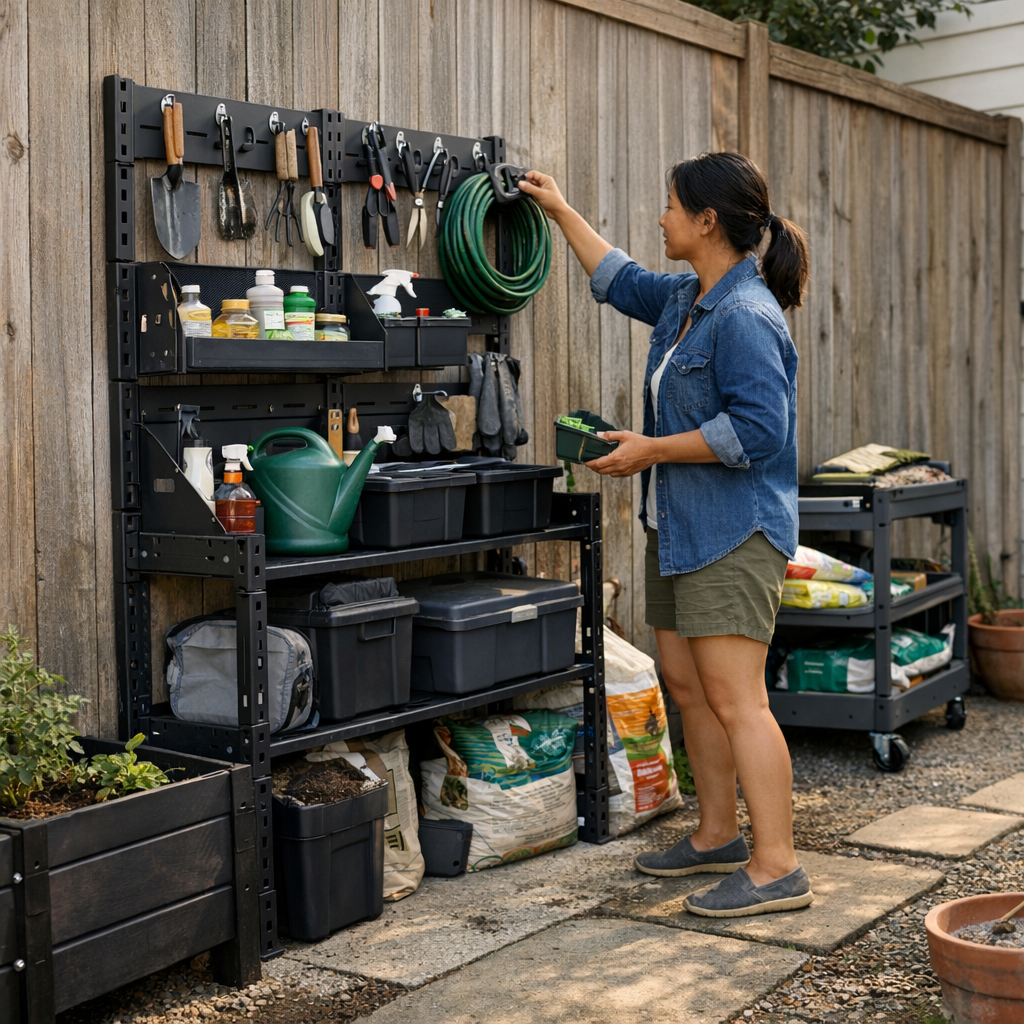
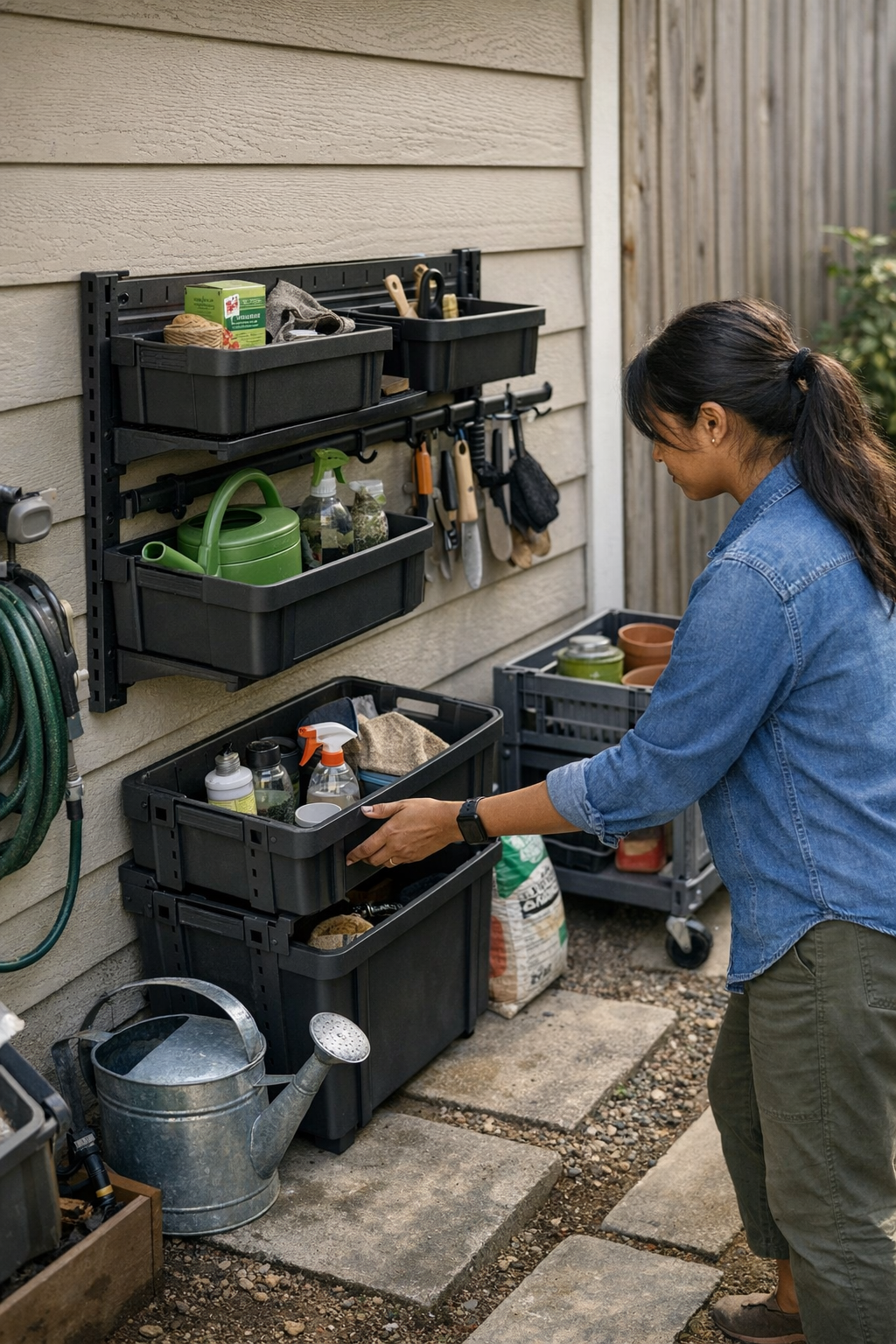
    The only setups that truly break the spiral are the ones that adapt to the repeated flow—not just the initial organization. In one garage-edge spot, adding a modular wall rail at the single busiest choke point changed everything. Rather than cramming overflow onto the floor or into endless bins, the most-used rakes, hoses, and bags went up into fixed slots, reclaiming a foot and a half of pathway in a single move. Now, pausing with gear no longer meant creating a new trip hazard. The rhythm changed: return up, not out. Anything left in the walkway at week’s end wasn’t just visual clutter—it was a direct signal that the setup needed a tweak, not a blind spot to be ignored.

    With real slots, routines tighten. Each tool’s slot is visible, fixed, and not up for overlap. Wall segments get reconfigured as needed, but doors and walkways stay clear. Instead of rearranging to recover floor space, you adapt wall rails or swap a hook. Small yards and narrow strips—where one out-of-place shelf can choke access—become passable, even during high-traffic weeks.

    Are Mobile Carts the Answer—or Just Another Source of Drift?

    Mobile carts sound flexible, and sometimes they are. Haul gardening tools out for a full afternoon, sure. Wheel party gear right where you need it. But if a cart always ends up stationed by the only exit or right in front of the shed, “mobility” just means relocating the bottleneck. The real question: when the weekend rush is over, does the cart roll out of your path, or is it another piece to route around? Flexibility only counts if it actually reduces routine irritation, not just changes where it appears.

    Effortless Isn’t the Same as Tidy—What Holds Up After Real Use

    Organization that survives busy weeks isn’t about perfection—it’s about systems that absorb mistakes before they pile up. The best outdoor setups keep walkways unblocked, use wall slots that match repeated patterns, and avoid overlapping categories. If resets drag over ten minutes, or overflow comes back before the week is done, the setup needs revision—not more discipline. Storage isn’t a battle; it’s a buffer you trust to handle reality, not just appearances.

    Practical Checks: Does Your Setup Really Work?

    • Is your main path as open on Friday as it was on Sunday? If not, something’s feeding everyday drift.
    • Do items have dedicated return slots, or are you shifting things just to clear a route after “normal” use?

    If you’re constantly moving gear or confronting the same pile every weekend, it’s the system holding you back—not your habits. The structure should do the heavy lifting, not you.

    Three Tweaks That Deliver—Without Adding More Stuff

    • Walk your routes regularly: Test your path after a normal week. Any tight squeeze or backup is a real-world signal—not a minor inconvenience.
    • Limit the reset: A decent system resets in ten minutes or less, even after storms or parties. If not, there’s friction at the wall or in the flow that needs fixing.
    • Enforce slot-only assignments: If everything can’t fit on fixed wall slots or rails, reconsider what belongs in prime zones. Stop stacking categories on single hooks or rail strips.

    Let Your Storage Catch the Clutter Before It Hits Your Day

    Outdoor areas—the garage edge, narrow side lane, fence corners—will always test your system. Perfection isn’t the goal. But a setup that defends walkways, makes return-to-slot frictionless, and absorbs the churn of real weeks turns annoying resets into a non-event. Instead of fighting the same battles, you reclaim time and space—making the yard work for you, not against you.

    http://tidyyard.myshopify.com

  • How Stackable Pantry Bins Transform Snack Storage and Daily Access

    Stackable pantry bins look like an answer—until daily routines start pulling them apart. The first setup feels almost surgical: snacks sorted in neat blocks, labels staring forward, shelf space suddenly squared away. But one week later, as kids grab quick breakfasts, someone hunts for the last granola bar at midnight, and new groceries squeeze onto crowded shelves, the old system shows its cracks. Bins inch forward, stacks lean, and what started as clear borders between categories blurs into a tangle. The promise of order turns into a tug-of-war between easy access and actual organization—right where you need storage to just work, not slow you down.

    When Early Order Meets Everyday Reality

    Those first stacked rows of snacks, crackers, and breakfast bars create a satisfying illusion of control—until real life scrambles the logic. A bin is pulled for popcorn and never slides perfectly back. Someone, hands full, shoves chips wherever there’s a gap. Return flow breaks down. By Friday, bins have migrated, categories drift, and the lowest shelf is blocked behind a stack leaning toward the aisle. At a glance, the pantry still looks “organized” to visitors, but inside, the route to the right snack is confusing, crowded, and slow. Reaching twice for the same item—or yanking out a front bin just to check what’s slipped behind—becomes normal, not rare.

    The Subtle Friction of Stack and Access

    Stacking bins deep isn’t just about storage capacity—it’s about what happens every time you grab or return something. Most households don’t return things in the same perfect order. Every new hand multiplies the chance of a bin left angled, categories blended, or a “blocked” snack that’s technically stored but now buried. The more traffic, the quicker the breakdown: bins covering each other, with a growing pile at the front—a row you keep reshuffling just to see what’s left at the back. This starts slowly but adds up. Missed snacks go stale. Restocking takes longer because you have to fix the system before you can use it. Reset burden creeps in, quietly pushing the space from quick-access to reset-required.

    One sign things aren’t working: your midweek grocery run turns into a puzzle of where to fit new snacks, since old bins have shifted or filled out of sequence. The grocery restock that once took a few easy moves now drags out, and snacks get lost or doubled up. This isn’t just an annoyance. It’s a signal your storage system isn’t matching the way your household actually moves through the space.

    The Hidden Cost of a Slow Reset

    When bins no longer return to reliable positions, what started as a two-minute shelf reset after groceries turns into a mini-overhaul. Stacks lean, labels disappear, and fishing for buried snacks means pulling out half your system. You start to work around the storage—leaving overflow in random zones, finding expired food in bins you haven’t touched for weeks, and giving up on returning things exactly. High-traffic shelves become friction points, not flow points. The “organized” look hides a growing mismatch between the system as designed and the pantry as lived-in.

    Pushing Back Against Overflow and Drift

    Burst shelves, bins hovering half off the edge, and snack piles mixing in the front row: these are everyday signals of “storage creep”—the natural slip from order into entropy. One zone packs tight while another sits empty, and return flow turns into guesswork. Ask who’s really sticking to the old categories. Usually, it’s no one. The cost? Extra time rearranging, more overlap, and a system you quietly dread resetting.

    The fix isn’t more discipline—it’s adaptation. After trying the classic column-stacking, a deliberate stagger made more difference than any strict rule. By leaving each bin offset—a thumb’s width forward—every front edge stayed visible and reachable. Snacks could go straight in or out without moving other bins, and restocks started flowing again. The shelf absorbed small misalignments without losing overall clarity; maintenance dropped back to seconds, and the dreaded all-bin resort faded away.

    Seeing Small Trouble Before It Turns Big

    Don’t wait for the perfectly collapsed stack before acting. Notice when bins drift forward, categories start to bleed together, or stacks block each other—these are small invitations to fix flow before real mess sets in. A five-minute midweek correction—nudging bins, clearing spillover, or sorting a single row—can spare you the headache of full resets and lost snacks. Letting tiny drift build up only guarantees rediscovering last month’s crackers or abandoning the system until the next deep clean.

    Matching Storage to Real Routines

    It’s not about looking organized on day one—it’s about the setup staying usable when the household is busy or plans change. Storage systems that allow visible, independent access (staggered bins, clear fronts, or non-slip bases) keep retrieval quick and returns frictionless, even as snack stock and hands shift every week. Find yourself able to grab what you want without a full-bin shuffle? That’s a real improvement. When categories still mostly make sense and resets are rare or easy, the pantry space holds up against daily pressure.

    For single-person pantries or strictly monitored snacks, traditional stacking might survive. But most shared kitchens see shifting stock, different routines, and hands that blur the original order. Here, the difference is measurable: spaces that look fine but feel slow, versus setups that stay quick on the busiest days. A workable pantry is not just sorted, but resistant to quiet category-drift and hidden clutter build-up.

    Small Shifts That Keep the System Moving

    Try offset stacking—just enough so each bin’s front is clear to grab. Or pick bins that won’t slip or tilt, even if they get nudged out of line during a rush. Use labels where you need them, but keep shelf lines flexible enough to absorb overflow without trapping snacks for weeks. Don’t wait until the back row is out of sight and out of mind; clear it while things are fresh. Practical adjustments protect your setup from the slow breakdowns that block retrieval, crowd the path, or force a total reset in the middle of the week.

    Stackable pantry bins can be the backbone of a reliable storage system—if you let the setup shift with your real use, not just the neatest photo. The payoff is a pantry that looks organized and actually makes daily access faster, not harder. When storage meets your routine, order has a way of holding its line—and the friction of daily living finally gets out of your way.

    See more practical storage solutions at Gridry

  • Why Entryway Storage Fails Without a Real Item List and How to Fix It

    Entryway storage usually fails for one hard reason: it doesn’t match what really hits your doorstep. The drift begins the first time you stagger in with a wet bag, a dirty pair of shoes, or armfuls meant to land “just for now.” Day one, the setup looks sharp—hooks aligned, bench empty, shoes in a row. By week two, the truth appears: you’re sidestepping a line of half-wet boots, hunting for keys buried under bags, or wrestling for space to sit. Every pass-through adds invisible friction, forcing small resets and erasing whatever calm “organization” promised. The cost isn’t just clutter—it’s blocked paths, slower exits, and a daily loop of putting things back before you get out the door.

    Where Entryway Storage Breaks Down—And Why You Notice Too Late

    Failure in the entryway never arrives as a sudden avalanche. Instead, the system just starts dragging at your routine: shifting shoes to reach your own pair, unstacking bags to clear a seat, tripping over that one “temporary” bin that’s always in the way. Shared entries pile on awkwardness—a bench covered with someone’s gear, hooks that look full even when half are buried by layered jackets, and bags retreating to any available surface the moment routines overlap.

    The problem isn’t surface mess. It’s a slowdown that accumulates—extra seconds to untangle shoes, minutes lost moving bags, repeated detours around a “solution” that only fits when nothing changes. Every reset—shoving aside a block of boots, scavenging for lost keys, clearing a bench—confirms the setup’s not keeping pace with reality.

    The Trap of Open, Unitemized Storage

    The starter-kit fix is universal: wall hooks, a narrow bench, a simple rack. It’s organized at rest, but almost none of it is assigned to real, repeating items. Add rain, groceries, or an extra person: the shoe rack doubles up, soaking soles meet clean sneakers, and every “grab-and-go” zone turns into a game of shoe shuffle. The bench, meant for a quick tie or pause, becomes a soft overflow—bags settle, then multiply. The “open” look masks invisible friction: you’re always tidying, with no memory of how it slipped from streamlined to cluttered.

    Even wall-mounted bins—meant to absorb leftovers—get loaded with odds and ends, then forgotten. When there’s no specific rule (“bags here, gear there”), every bin becomes a catchall. Visual chaos is hidden, but daily function breaks down: searching for a single glove, fishing through random piles, or dodging what can’t dry fast enough. By midweek, the open system looks blurred; by Friday, you’re fighting it.

    Pressure Points: What Happens When Real Life Hits

    The real test hits with shared entries or bad weather. Imagine this sequence:

    • You and a housemate step in—heavy coats, dripping bags, boots still wet.
    • The bench vanishes beneath a pair of grocery totes.
    • Shoes skid off the rack, stacking sideways, then blocking the door swing.
    • Keys migrate to the first flat surface—windowsill, radiator, even the shoe rack—building new clutter that nobody owns up to clearing.
    • Adding “just one more hook” leads to overlapping coats, tangling sleeves, and vanished wall space.

    In these high-pressure moments, small issues reveal the structural gaps. You sacrifice flow: set something down and pick up three, block another person’s path, sidestep rogue shoes and sprawl, or simply abandon order. The problem isn’t always too little space—it’s that the space can’t handle daily, real-time entry churn.

    Real-World Correction: The Power of Purpose-Built Zones

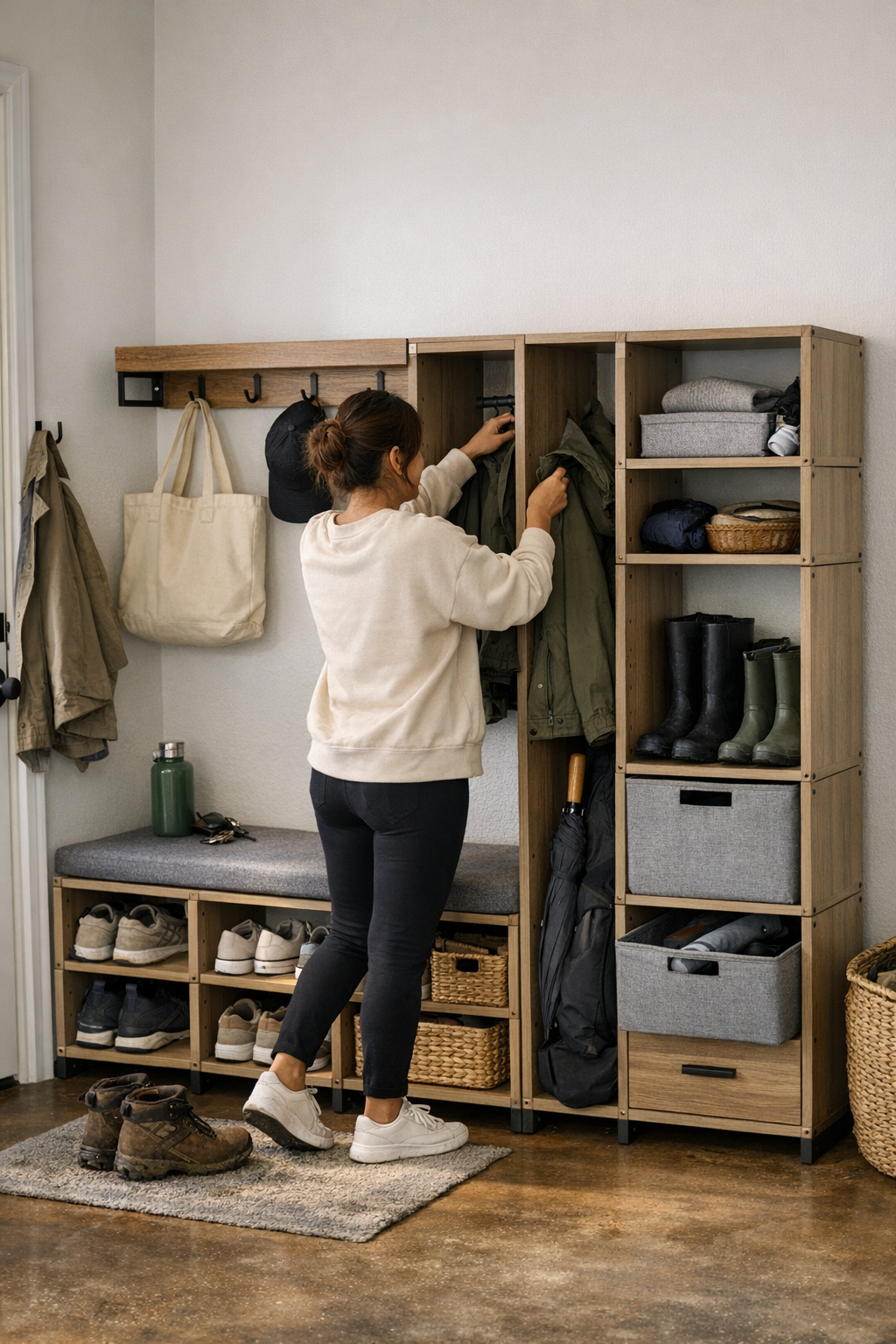
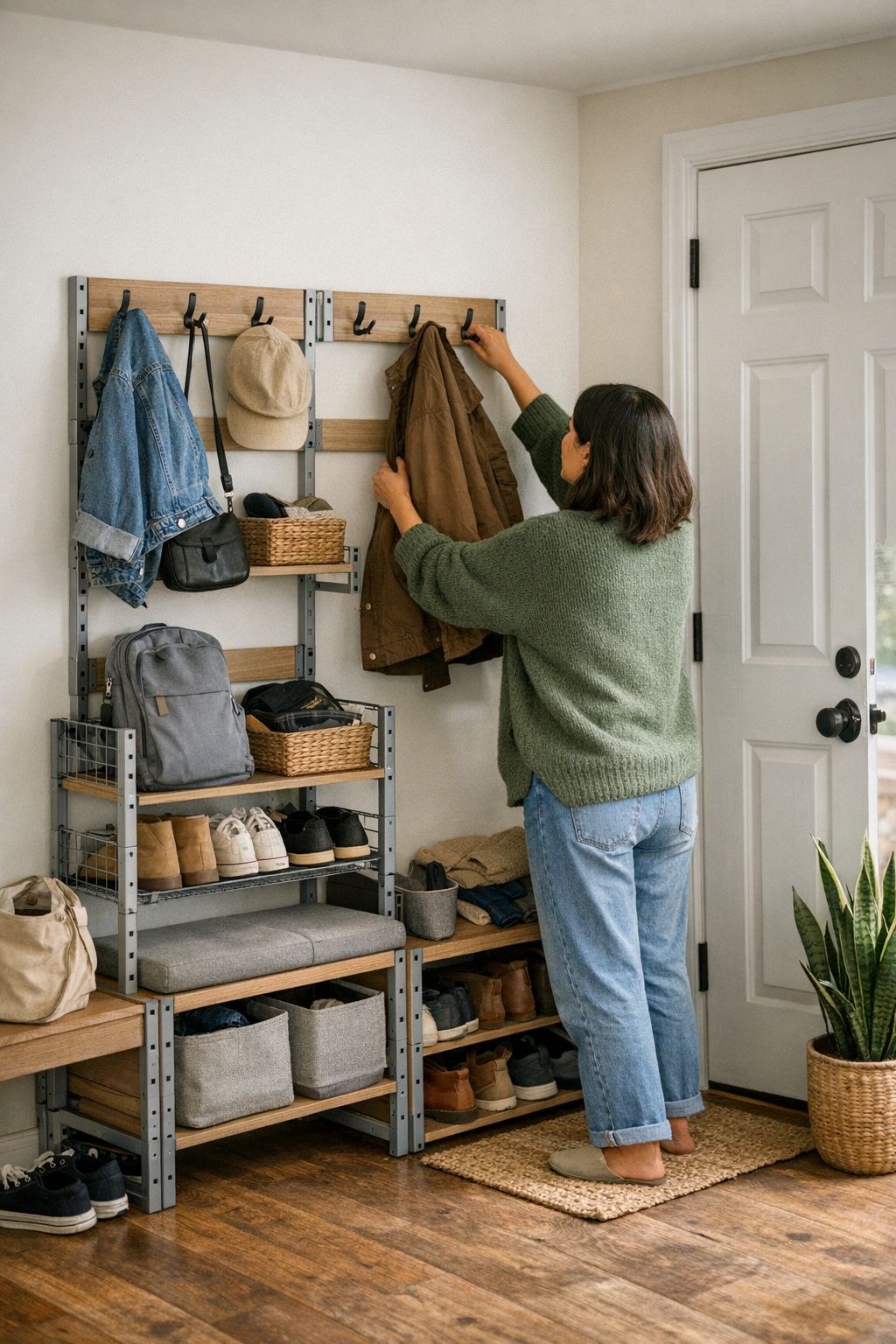
    What solves this isn’t “more storage”—it’s sharper borders and the right container for each category. A real fix recognizes what always returns and builds around the messiest moments, not the cleanest. Modular cubbies change the physics: replace a low bench with a single row of shoe slots and a tall upright beside it. Shoes land side-by-side, never on tiptoe or in tangles. Tall gear—umbrellas, oversized bags, saturated boots—get their own vertical slot: not crammed, not left leaking onto the mat, never blocking a seat. Routine items boomerang to their spots without pause. The bench edge once used for mail and keys stays clear—defaults become habits, not nightly chores.

    • Daily shoes in quick-access cubbies prevent pileups in the main walkway.
    • Tall, segmented storage contains everything awkward: rain boots, briefcases, gym bags, or folded umbrellas—no more “where now?” cycle.
    • The bench becomes predictable seating, not an accidental shelf.

    The outcome isn’t perfection. It’s stability you feel—the five-minute nightly reset shrinks to seconds, the zone recovers without drama, and the daily “drop” loses its sting.

    Trouble Signs: When Storage Feels Like More Work Than Help

    Every overpromised “organizer” has weak points that show up fast in real use:

    • Rows of shoes migrate outward, stalling in passageways, demanding constant swipe-backs to reclaim safe footing.
    • Bags on an empty bench vanish for a minute, then return by evening in a repeating cycle—the bench is both seat and overflow, so always halfway full.
    • More hooks don’t equal more order: coats double up, guessing whose is whose, with out-of-season layers hiding under the latest arrival.
    • Open bins tempt drop-ins, but become a fast blur; closed bins look sharp until you’re digging blind for backup hats or last week’s scarf.

    Once the system starts to need as much attention as the mess itself, the storage becomes its own work. Watch for spreading shoe rows, bags settling wherever you rest, or bins whose contents you can’t account for—these are warning lights that the routine is breaking down, not being streamlined.

    Make Each Slot Count: Tuning Storage for Real Use

    The difference between “organized once” and “organized for daily use” comes down to control at the item level. Every repeating object gets a defined home:

    • Daily shoes in front-access cubbies—visible, always ready, never double-parked.
    • Bags on their own hooks or vertical slots, never forced to share with coats unless you build it for that overlap.
    • Wet, dirty, or oversized gear in a tall, open segment, not on the bench and not at the door’s edge.

    Shared surfaces—like benches without rules—inevitably become mess magnets. The bench is for sitting, full stop. Wall hooks and vertical slots break up the spread, but only if each category has its territory. The best entryway layout blocks clutter drift by default, not because you micromanage it.

    Open Storage vs. Closed Storage: Picking What Fits the Routine

    Open storage always wins on speed—instant see, grab, go. But open systems show disorder fast: the clutter is in plain view, especially once more than one person collides in the space. Closed cabinets, by contrast, hide the mess but breed new ones of their own: the quick dump, the disappearing act, the stack of “found later” things that gum up routines. The middle path is blunt: closed bins for what’s rare or bulky, open access where you need speed, and clearly marked zones for everything you drop daily. Don’t copy catalog images—plan for the mess that happens under pressure, not for how it looks at rest.

    From Control to Routine: Keeping Entryways Clear When It Matters

    The entryway that doesn’t backfire isn’t the most stylish—it’s the one mapped to the churn of real re-entries and resets. Count what you really bring in. Watch where things always land by accident, not where you wish they did. A working setup accounts for busy departures, slushy boots, late returns, and just-enough moments when one more thing tips the balance. If the gap between “looks fine at rest” and “works in motion” keeps tripping you up, the cost isn’t aesthetics—it’s time, blocked flow, and a daily sense you’re working around the system, not with it. Map a real return path for every shoe, bag, and coat, tune for daily rhythm, and the worst friction falls away: the threshold clears, and the zone flexes with your real life instead of fighting it.

    For modular and transition-focused storage solutions built for real entryway pressure (not just clean looks), explore Betweenry.

  • Preventing Clutter in Outdoor Workspaces with Smart Storage Solutions

    An outdoor work zone doesn’t fall apart in a month—it falls apart in days. It starts fast: a storage tote wedged near the gate, a clawed-up rake sticking into the walkway, garden bags parked “just for a minute” exactly where you need to walk. The first setup tricked you; everything had a slot, a shelf, at least a decent pile. But by midweek, you’re dodging obstacles and sliding tools out of the way just to pass. The problem isn’t laziness; it’s a setup that lets friction leak back in, every time the routine collides with real-life mess.

    Where Outdoor Clutter Actually Breeds: Subtle Weak Spots

    Every backyard corner and side path hides at least one “temporary” zone. Maybe it’s a floor bin nudging the edge of the path. Maybe it’s a shelf meant for “just the overflow.” The first few rotations—morning watering, slow pruning, pulling out a hose—feel manageable. But as those patterns stack up, something shifts. The gloves stay draped over the bench. A trowel ends up balanced on a bag. Suddenly, every pass means sidestepping bins or sliding a crate over with your knee just to reach the compost cart.

    The trickle is real, and it builds fast. Bins crowd the walk. Bags inch out from the wall, each new one justifying its own little gap. Racks and baskets advertise themselves as easy storage, but they rarely force items all the way home—or hold the line when two rushed days in a row throw your schedule. The loose edges of the setup invite overflow: a half-used crate, a half-folded tarp, a bag marked “tomorrow” that quietly becomes next week’s stumbling block.

    Real Organization Is About Movement—Not Looks

    The photo-ready layout fools almost everyone—until you use it. The real test? One week of normal work. If your system makes it easy to reset the space and hard to let clutter creep back, it’s working. If not, the routine starts grinding: more shuffling, more dodging, more things living outside their assigned zones.

    Why Wall-Mounted Setups Last Longer

    Hang pruners, hang gloves, hang anything you touch every day: that’s how a path survives. With everything a meter off the ground, the floor stays open for movement—not blocked by baskets looking for a home. By day five, wall slots still open the way for a quick sweep or last-minute tool grab; nothing piles where your boots need to go. If you’ve ever found yourself tripping over bins that drift wider every week, you’ve lived the opposite math—floor setups spread until your “organized” zone is just another obstacle course. The tired rush at the end of a project always adds another shortcut, and the floor takes the hit.

    The Closed Cabinet Trap

    It’s tempting to shut everything away, especially if you want the chaos gone. But when getting a tool out—or putting it away—means lifting lids or opening doors, friction creeps in. Closed cabinets gather “almost-finished” piles outside their doors: secateurs not quite dry, packets of fertilizer for “next time,” random odds and ends that pile up because putting them away means pausing the job. The door is supposed to clean things up; in reality, it just delays cleanup until the zone sags under waiting clutter.

    How Pathways Actually Choke Up: A Side Yard in Real Time

    Picture a narrow 90 cm run beside the house—bins tucked below a bench, mulch stacked along the fence, everything with its place on Monday morning. By Thursday, after two bed clear-outs and a seedling session, the setup reveals its weakness. A crate of stakes lives where you turn the corner. Gloves sag across the gate latch. At both ends, makeshift piles stall movement. Instead of returning all tools to their home in one motion, you now lug items to a spot, then reach back, then shift something else to make room. The daily reset gives up: every return trip spawns a new pile, every shortcut builds the next jam.

    This isn’t failure—it’s the real-world verdict on what the setup couldn’t prevent. Floor storage lets you skip steps, but never clears a real path. Each delay gets longer, every return means dodging something left behind. By the time you’re negotiating around the old “temporary” bag for the third day in a row, the friction is winning—and the layout you trusted is now part of the resistance.

    The Fix: Storage That Guides Movement, Not Just Holds Stuff

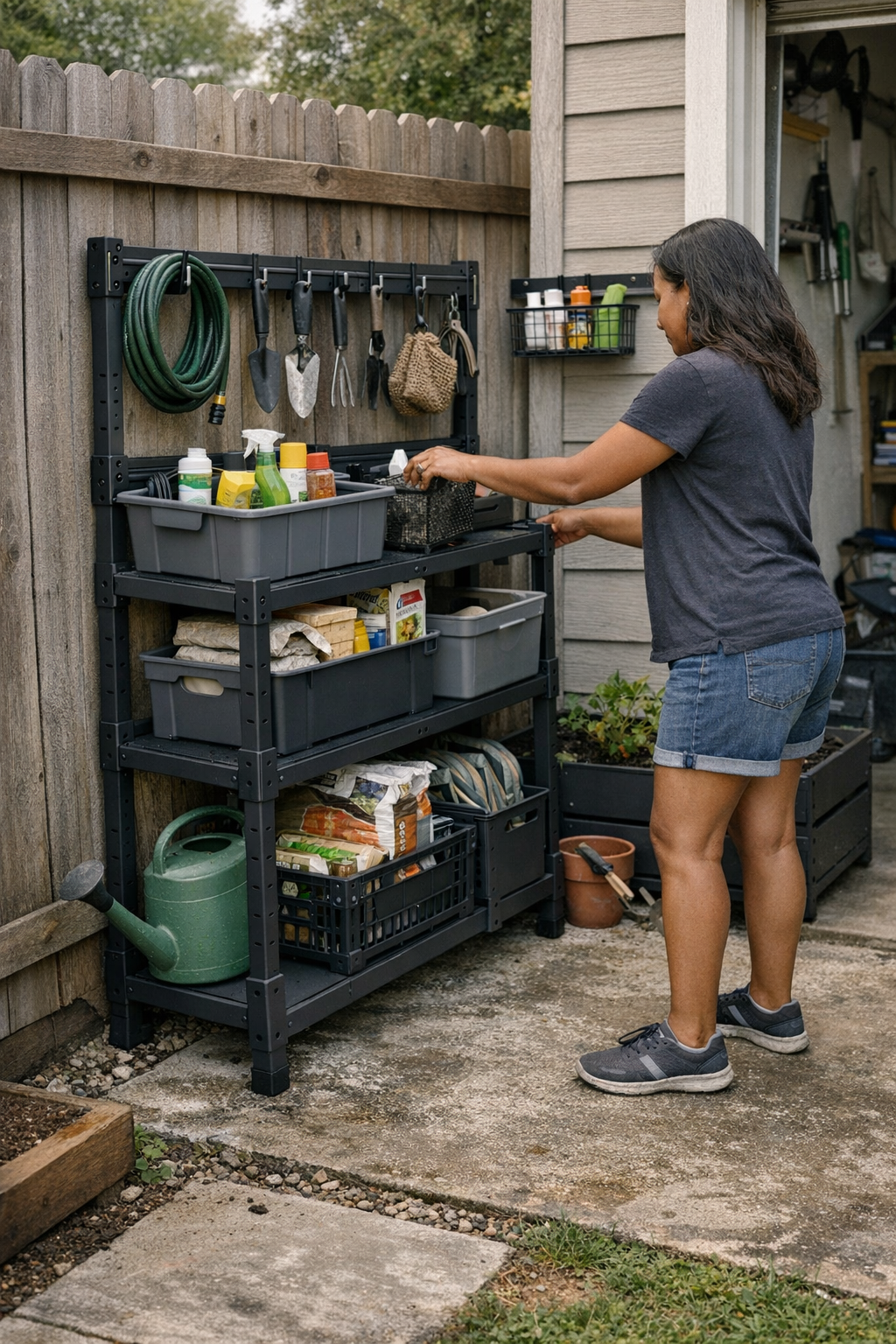
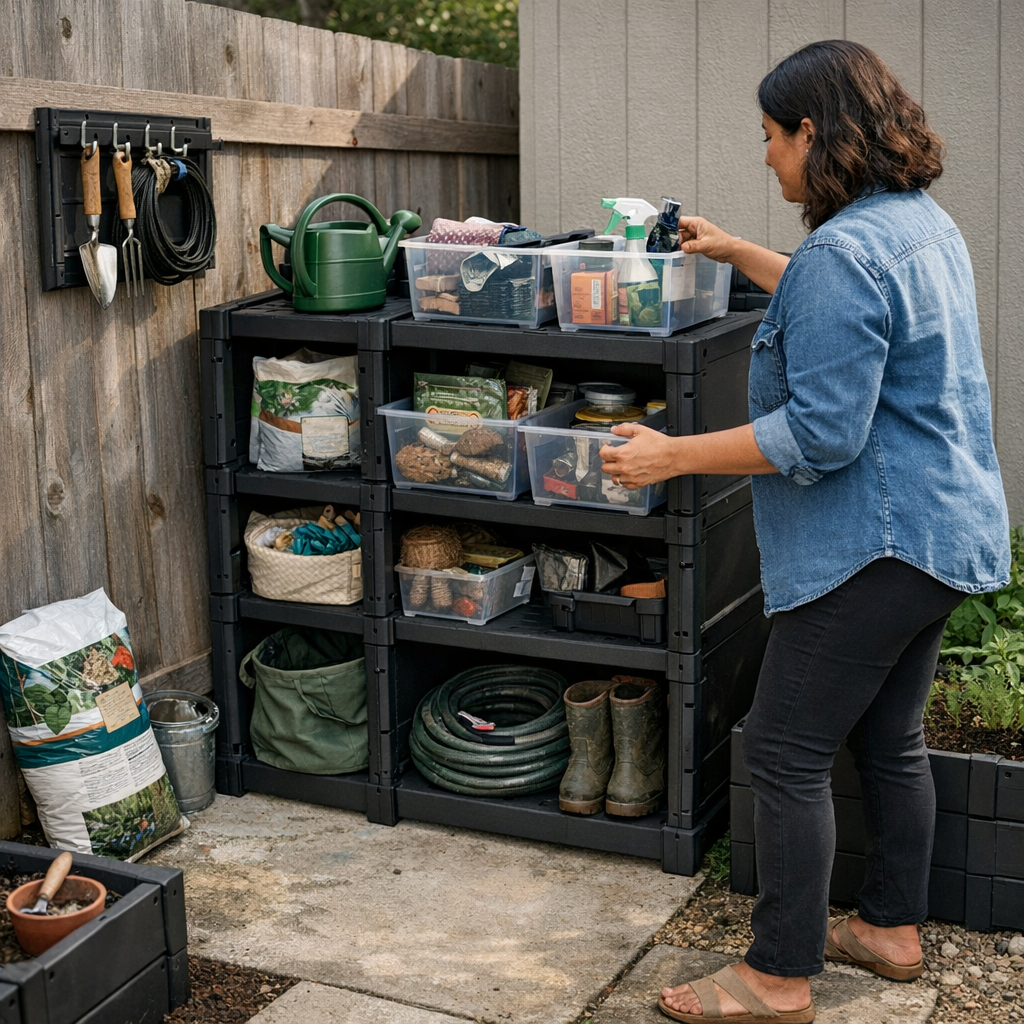
    Swap floor crates for wall-mounted racks and you change the traffic pattern instantly. Shift the core storage up along the fence, and the walkway gains a precious 30 centimeters—for a side yard, that’s the difference between a single-file squeeze and an actual working lane. Hooks, rails, and labeled bins put daily-use tools exactly where your hand expects, not where your boot will crush them. One deliberate, compact drop-off bin near the gate quarantines fast clutter: drop it there on a busy day, don’t let it spread back through every zone. Resetting takes half the time. The floor stays clear, the routines remain friction-light, and the “mystery piles” at the entry never build a foothold.

    No layout is immune to sudden chaos—big projects will still push the system. But if your structure pushes back—vertical slots nudging returns, segmented bins that force you to decide where things go—then resets feel routine, not like another project. Legs get fewer bruises. Cleanups shrink from thirty minutes down to ten. A crowded week doesn’t mean starting from zero all over again.

    Little Tweaks, Big Differences

    Give every tool a visual anchor: wall hooks for pruners, shallow caddies for gloves, bins that make “maybe later” impossible to ignore. When the same item keeps migrating, it’s a sign its “home” doesn’t match the real workflow. Huge storage crates for stray bits only amplify confusion; they turn into clutter sinks. If you can see a tool’s shadow on the wall, you’re less likely to leave it floating, and the setup polices itself—at least a little.

    Hard-Working Setup Tips for Human-Sized Spaces

    • Elevate, don’t crowd. Use wall space even if all you have is a wire fence or a narrow shed. Daily-use items belong above the action, not underfoot.
    • Designate a drop zone. At the main entry or pinch point, install a small, obvious “holding” container. Keep it limited—when it fills, you know it’s time for a reset before the mess creeps further.
    • Test the path with your arms full. Simulate a real job—if you’re forced to move something just to pass, the setup is a trap waiting to happen.
    • Be ruthless with floor storage. Every loose crate is an invitation for the next pile. Restrict floor zones to bulky items only, and keep them off main traffic lines.

    How to Tell When Your Setup Isn’t Pulling Its Weight

    The giveaway signs aren’t subtle. Notice if, while returning a tool, you accidentally block another with your armful of gear. If the back corner requires shifting bins every time you reach for something new, that’s inefficient design winning out over intent. When one wall packs tight in a week but the other stays awkward or ignored, your flow isn’t matching real movement. Watch for that same “temporary” pile forming in the same spot—bench, gate edge, or odd corner—no matter how many times you clear it. If a simple five-minute tidy spins out into a full reshuffle, the routine is signaling for help.

    The strongest outdoor setups aren’t the ones that look best on day one—they’re the ones that actually work on day seven, after real-world use tries to unravel them. The right setup doesn’t just house the mess; it blocks the return of old traffic jams, cuts down on shuffling, and makes every reset less of a chore. With every small boundary—another hook, a clear path, a bin capped before it bursts—you win back headspace and foot space, one week at a time.

    Shop TidyYard for outdoor organization setups that hold their shape after real use.

  • Choosing Heavy Duty Utility Shelving Racks That Withstand Daily Bulk Use

    Most shelving breaks down not in a dramatic moment—but in the slow, daily tension between storage and use. The racks that look perfect when empty start to sag when the third case of paper towels arrives. Loading and restocking doesn’t reveal their flaws all at once; instead, shelves dip, categories blur, and overflow creeps forward until the original “system” is quietly defeated by real-life routines. An area that seemed organized by sight becomes a friction zone after a single grocery haul or big-box delivery. And no one wants to be the person rearranging spilled cleaning supplies wedged behind last week’s bulk buy.

    From “Sorted” to Stuck: Where Bulk Storage Breaks Down Fast

    Visit any high-traffic storage zone—mudroom cubbies, a narrow basement stretch, or the utility hallway shelf—and watch what happens after a busy week. Neat rows unravel into catchalls. The most common storage failures show up quickly, and often with three visible consequences:

    • Bowed shelves under real weight: Stack up warehouse specials—detergent jugs, twelve-packs, bags of salt—and the midspan sags. The shelf holds, but every new box feels like a dare. Joint creaks become background noise. It never quite looks right again.
    • Front-row crowding, blind-back syndrome: Everything ends up at the edge where you can reach with one hand. Less-used items get entombed at the back. They’re easy to forget and hard to retrieve without shuffling through a pile-up in front.
    • Blocked access and drifting zones: When fits are tight or items overhang, users improvise—snacks end up next to fertilizer, toolboxes crowd next to boxes of cereal. Mistakes become contagious. The next person copying yesterday’s shortcut inadvertently pushes the whole area further into chaos.

    Everyday Routines, Everyday Interruptions

    Inside storage problems aren’t about spectacular failures—they’re about persistent, grinding slowdowns. You reach for the same laundry refill twice, not because it’s truly buried, but because it migrated behind a stack of off-season boots. The one shelf meant to hold extras becomes the home of expired batteries, random tape rolls, and last-ditch items dropped anywhere they’ll balance. The area may look generous in square footage, but awkward movements give away the real problem: sidestepping one shelf to get to another, stooping to dig out a package lost behind sagging bars, or abandoning an item because nothing fits smoothly back. By Wednesday, even a routine reset feels like a disruptive event—“just put it down for now” becomes the new normal.

    Lightweight Looks, Heavy Frustration: The Underrated Weakness of Floor Storage

    Initial appearances deceive. Floor racks lined against a wall seem ready—until a week’s worth of supplies lands. Stack heavier boxes and you notice it: a slight sag turns into a visible dip, bottles start to wobble near the edges, placing a new load nudges others dangerously off kilter. Soon the most accessible edge becomes a traffic jam, while backup stock disappears into the unreachable back. Every retrieval risks a chain reaction of supplies shifting, and the logic behind the original setup unravels in shared use. The result: the area crowds at the front, categories muddle, and the confidence you had in your “sorted” space evaporates by the third restock cycle.

    Shared Zones, Shared Chaos: Mudrooms and Utility Corners in Practice

    No mudroom or utility area belongs to just one person. Bulk dog food, an overflow of cleaners, someone attempting to wedge another pack of paper towels into an already-bending shelf: every contributor unwittingly tests the weakest point. Eventually, that corner becomes the designated overflow—an unspoken signal that “anything goes here.” Once one return is awkward, every other user follows suit. Kids and adults alike default to stacking wherever space is barely available; categories dissolve. By the time anyone tries to restock or clean up, backup items are either lost to the back row or doubled up at the edge, while the same congestion and reset burden lingers week after week.

    The Reset Spiral: Why Instability Magnifies Mess

    If a shelf gives way or blocks up after a handful of restocks, regular maintenance turns adversarial. Users skim from the top layer, avoid planned returns, improvise space, and gradually disconnect the area’s original logic from its daily use. This isn’t just untidiness—it’s a routine-breaking roadblock. The difference between a workable storage area and a frustration trap is less about total capacity and more about how well the structure holds up to unpredictable, repeated, multi-user demand.

    Turning Friction Into Flow: Details That Make Heavy Duty Shelving Work

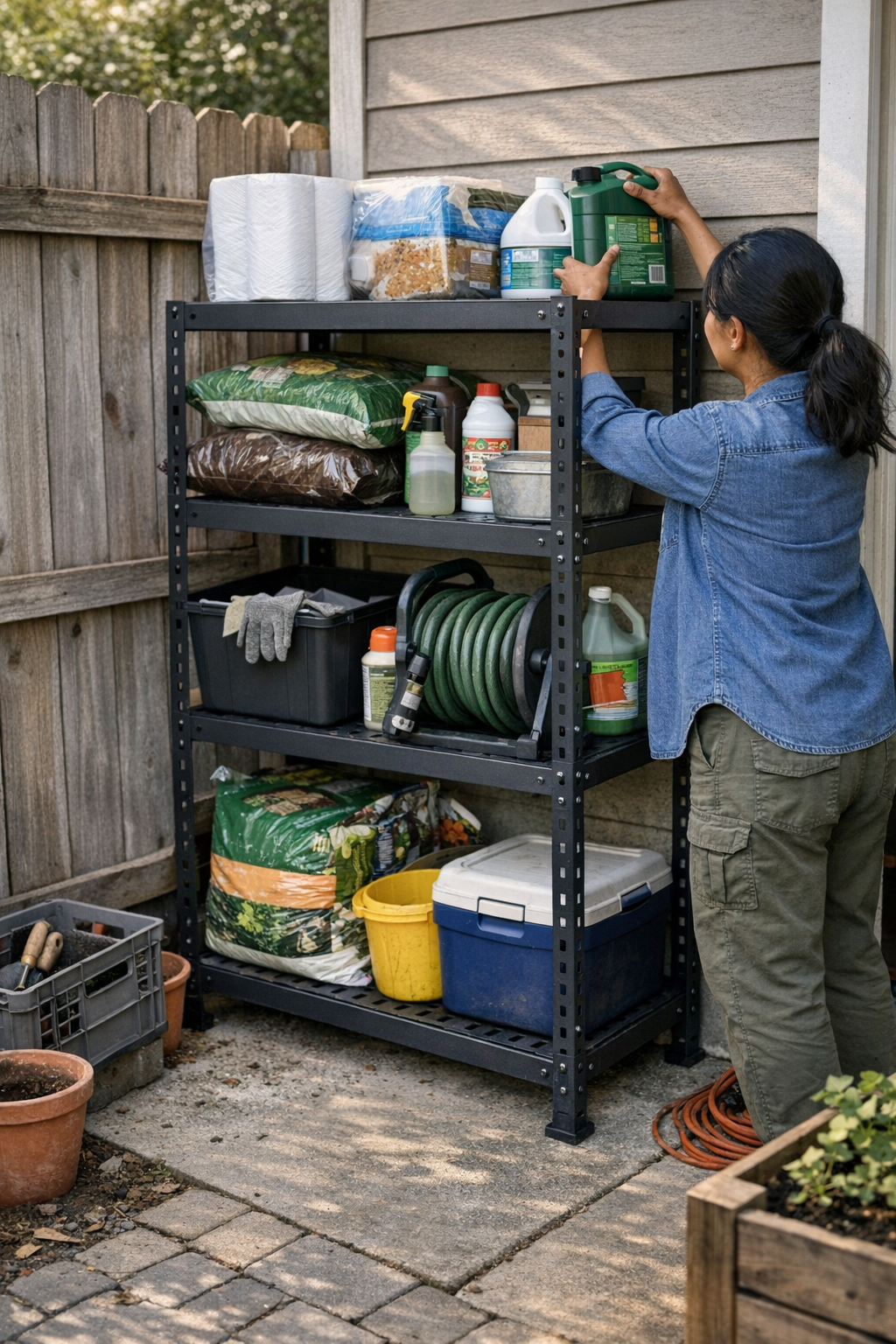
    What actually stops this spiral? It’s not a generic “stronger” rack; it’s structural details that respond to real-use pressure. One inside-storage fix meant swapping in a shelf with thick-gauge steel and actual welded crossbars—no more imaginary support lines. By leaving at least a five-inch clear strip at the front, every item got a usable path in and out. Shoving faded as a habit. Even family skeptics started returning things to the right zone, mostly because it took less effort to do things right than to improvise a fix. The system didn’t just look tougher; it changed the flow and the fallback behavior in real time.

    • Reinforced shelves with real crossbars—no mid-span slump, even under deep or heavy loads.
    • Medium-depth design for visible, single-row access—so no hiding lesser-used items behind a bulk wall that blocks retrieval.
    • Open clearance at the front edge—making natural return paths possible and stopping “dump wherever” before it starts.

    These tweaks may look minor on a product spec sheet, but you notice when reshuffles disappear, battery boxes stop piling up at the overflow edge, and everyone—even the least-organized housemate—starts following the system because it’s actually easier than doing it wrong.

    When Organization Holds Up, Routines Actually Get Easier

    The difference between “looks organized” and “functions under stress” turns up after a few unpredictable weeks. A truly heavy-duty storage rack, with open retrieval space and visible zones, absorbs a flood of new items without buckling—and more importantly, it streamlines resets to a single, fast sweep instead of a dreaded overhaul. No setup is immune to clutter, but design that resists bowing, blocking, or bottlenecking keeps small problems from snowballing into big ones.

    If you’re reassessing your own shelves, focus less on first impressions and more on what happens after the next big stock-up. Does your system still let everyone find and return items with minimal reshuffling? Or do you find yourself bending, shifting, and restacking day after day? The “hidden cost” of the wrong setup isn’t just wasted space—it’s wasted time, repeated frustration, and supplies lost to chaos. The right utility shelving turns pressure points into smooth routines, and that feel is worth keeping in the flow.

    Explore more utility shelving options at Gridry.

  • How a Simple Inventory List Stops Duplicate Seasonal Purchases in Entryways

    Organizing an entryway works—for about a week. A row of shoes lines up by the wall, mail stacks neatly on the bench, rain gear squeezes into a bin. But as soon as daily life returns—rushing out in the morning, scrambling for a missing glove, juggling kids or groceries—the illusion cracks. The “clean” zone can’t keep up with repeated use: shoes start to drift, bags multiply, and hunting for a scarf in bad weather means dragging out three bins to find last year’s buried gear. The difference between a setup that just looks tidy and one that actually survives the week appears fast—especially when storage helps hide the mess rather than keep it under control.

    When Visual Order Slips: How Overflow Hides in Plain Sight

    Entryway order erodes quicker than you expect. Fresh bins and empty shelves look promising. But with each week—one extra bag, another pair of boots, one forgotten donation—what’s stored quietly overflows its boundaries. Shared areas see coats and bags stacking atop each other; one guest visit, and the shoe row now blocks the path. Grab a raincoat in a rush, and you might end up with a pile dumped on the floor, searching for what’s lost somewhere “in the system.” Without visible tracking, duplicate items sneak in, and the time to reset increases every day. Over time, dropped bags creep into the walking zone, slowing down exits and making return home less smooth, while the line between order and backlog blurs with each new week.

    Typical Scene: Where Small Delays Turn Cumulative

    Rain starts on a weekday. Someone needs boots—one pair appears, but it’s the kid’s old size. The “right” boots? Buried under coats and two other pairs. What should be a grab-and-go becomes a shuffle: bench lids half-open, bags sliding off as someone squeezes past. Instead of speeding up, the entry route slows with each extra step—dodging piles, fishing through bins, resetting dropped items. What began as “just a bit tight” turns into repeated irritation: missed gloves, bottlenecked pass-throughs, and silent promises to clean up “next weekend.”

    The Problem with Looking Tidy Versus Staying Usable

    Wall-mounted shelves, slim storage benches, and closed cabinets deliver quick visual relief—at first. But when storage focuses on hiding clutter, not managing use, friction returns. Bins fill with stray hats and gloves nobody sorts; the shoe rack gets double-parked with outgrown sizes. Each “temporary” bag sits on the bench until the path narrows. The system looks calm when reset, but doesn’t survive Monday morning’s grab, Wednesday’s pileup, or a guest visit. Storage that’s too closed off traps overflow in place, making resets bigger but less frequent, and disguising the gradual loss of actual access.

    Temporary Placements Become Semi-Permanent Obstacles

    A dropped backpack instantly makes room for another—mail, keys, or a rain jacket—“just for the day.” By Friday, the bench is a holding zone; by the following week, a layer of out-of-season gear joins the pile. Temporary turns semi-permanent, blocking both seating and storage. In tighter spaces or homes with overlapping schedules, this slow sprawl means more time unblocking pathways and less time actually moving through the entryway. Every extra layer adds friction, and the official drop zone slides toward becoming an untracked backlog for everything with no clear spot elsewhere.

    Why Duplicate Purchases Follow Untracked Storage

    A missing inventory means repeated uncertainty. No one remembers if spare gloves are still around or vanished last winter; umbrellas could be lost, lent out, or just stuck under someone’s coat from two holidays ago. The uncertainty leads straight to duplicate buying: another pair “just in case,” more hats for next season, a backup bag for when the main one can’t be found. Every unaccounted-for item crowds the available space, making every retrieval slower and each return more fraught. Before long, the pile-up causes you to buy what you already have—wasting both money and valuable entryway real estate.

    The Value of a Visible Inventory: Beyond Surface Tidy

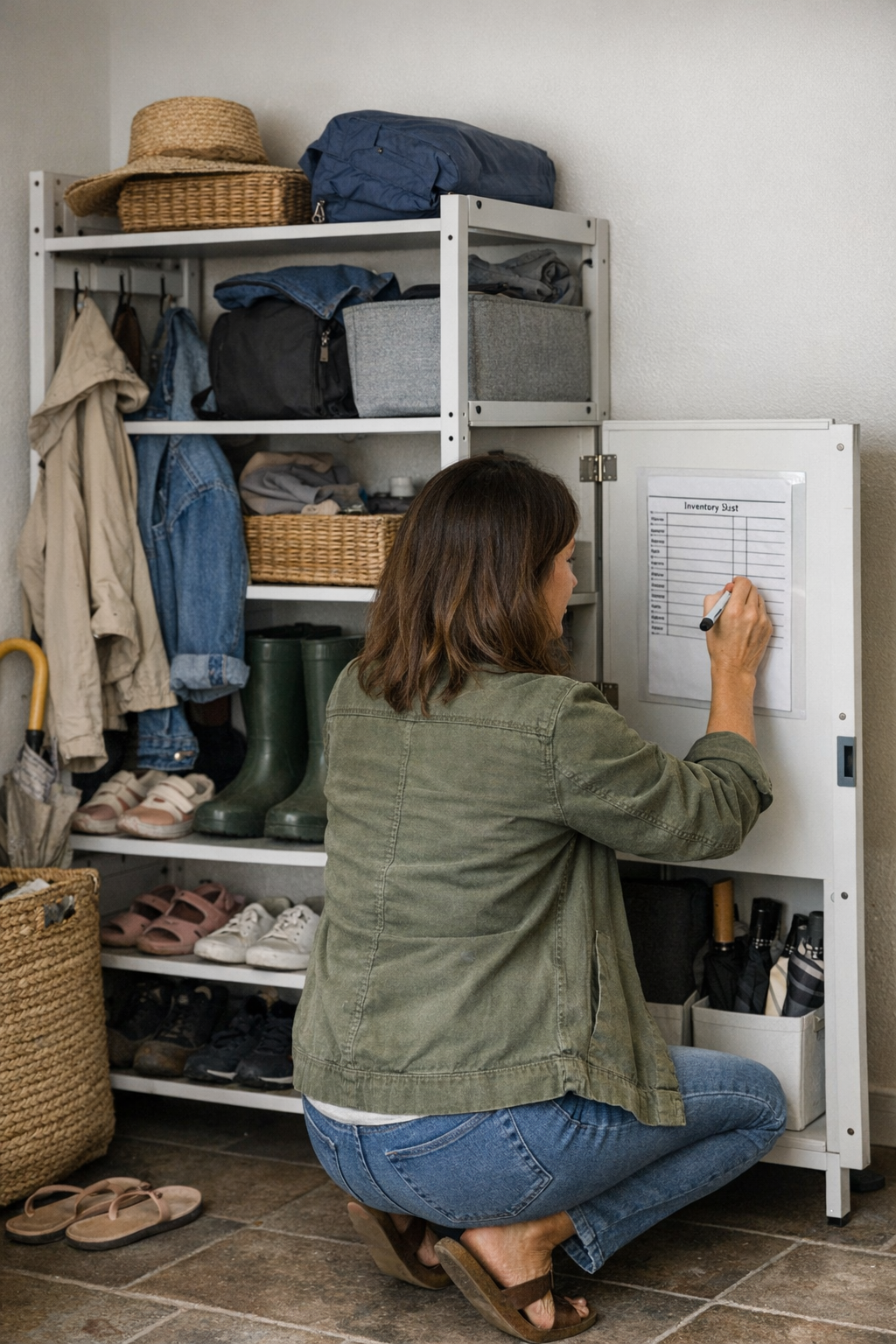
    Inventory isn’t a decoration—it’s the daily difference between visible order and gradual entropy. Pin a list to the back of a cabinet, hang it next to hooks, or mount it within arm’s reach of the bench. When each bag or shoe comes and goes, jot an update. No item moves in or out without a glance at the tally. You see crowding as it happens—if the glove count is off, or the shoe row overflows, you fix it then, not after weeks of drift. This practiced friction—brief but frequent—catches clutter before it settles in, shrinking the reset burden and making crowding visible while it’s still easy to fix.

    The First Month: Real Contrast Between Passive and Active Zones

    After a few weeks, the split is clear. The entryway without tracking feels calm until a drawer reveals three mismatched mittens and two outgrown sneakers buried under newer pairs. The setup with a live, visible list looks blunt, but there are no mysteries: every extra umbrella, every lost glove, sparks a small reset before things get out of hand. Instead of gradual backlogs and Saturday marathon cleanups, you get five-second checks and fast corrections. Activity pushes problems into daylight, not deep storage.

    Real-World Routine: Using the List in Both Directions

    The inventory only works if it’s in your face—right where shoes are pulled off or bags dropped. The best spot is wherever hands go first: inside a busy cabinet, next to a sitting bench, or even mounted to the side of a utility shelf inside the door. Visibility beats appearance if it stops buildup at the source. Each coming or going doubles as a tiny reset moment—if the zone is crowded, something leaves; if space opens up, nothing gets hidden. This replaces the wait for a big, infrequent reset with steady, two-way flow.

    Tip: Laminate for Lifespan

    Slipping a laminated or dry-erase sheet onto your chosen spot keeps updating frictionless. A cheap marker hangs on a hook—one quick note for every item added or subtracted. The habit replaces wishful “mental accounting” with something everyone sees and uses, making misplaced and duplicate items rare even for busy families or shared entryways. Over time, this detail saves both money (no more duplicate buying) and movement (no more daily shuffle to find what’s missing).

    Avoiding the Return to Backlog Staging

    When seasons swap—cold to warm or dry to muddy—visible inventory is what stops the drop zone from swallowing up both summer hats and winter boots. Instead of deep-bin rummaging or panic shopping, everything is kept current to what the threshold actually sees. Less stagnation means quicker resets, open floor, and an entryway that stays a launch point, not a bottleneck. Overflow gets caught before it spreads, and fewer misplaced items mean every pass-through stays easier for real-life use.

    When to Reset, Where to Place the List

    The habit to aim for: check the list both coming and going. This catches overflow creeping back, keeps bins from going ignored, and trims back crowding before it explodes. Place the list right at eye-hand level where people naturally pause—inside the main cabinet door, next to the wall hooks, or even taped beneath the bench lid. The goal isn’t a perfect-looking note, but a list that’s obvious enough to interrupt buildup as it happens, not after it’s too late.

    When Storage Looks Clean but Interrupts the Routine

    Entryway storage that reads “finished” or “organized” is only a win if it keeps pace with actual routines. The difference isn’t design or decor—it’s whether the system calls out what doesn’t belong and makes it easy to clear. When drop-off points pile up, shoe rows spread too wide, and paths tighten each week, the friction signals a system lagging real life. An active inventory habit turns resets quick, return flows smooth, and makes accidental repurchase less likely—removing pressure at the door, not just hiding it behind closed bins.

    See more practical transition-space storage solutions at Betweenry.

  • How Strategic Outdoor Storage Transforms Yard Usability and Cleanup

    Outdoor storage isn’t neutral—it can open up your yard or quietly choke its usefulness. Step outside and you’ll see it: shoes crowd the side path, hoses loop across the walkway, hand tools sprawl under the back steps. You’re not just fighting clutter; you’re fighting blocked routes, broken routines, and the slow build-up of obstacles that turn a weekend reset into a familiar slog. The real problem isn’t “not enough storage”—it’s storage cut off from where it’s actually needed. Move bins, racks, or boxes just a few paces away from the action and suddenly, “I’ll put it back later” wins. Paths fill up with what should have disappeared. By Friday, you’re shuffling the same gear back and forth, stuck in a cycle where the setup seems organized but movement is broken.

    When Storage Doesn’t Match Routine

    If you’ve ever tried to keep a narrow backyard or lanky side strip under control, you know order is less about form than flow. When storage drops out of your route, even by a step, resets get clumsy. You finish watering—gloves get tossed onto a step, not back into a box. The sprayer sits by the hose instead of disappearing. A spade rests near the beds. Soon, it’s not just a pile in one corner—awkward footprints and drip zones block the gates, a bike trip becomes a balancing act, “quick fixes” stay stuck in mid-task. Every day, you find yourself nudging boots or kicking hoses just to get through.

    So you add another bin. But most yards already have enough “solutions.” The issue is timing—can you actually return gear when it counts? If a bin’s lid jams or a wall hook asks you to detour, order collapses. The telltale signs pile up: a back corner behind a storage chest where overflow settles, a fence line that catches whatever’s in your hand as you head inside, a paved edge you keep promising to clear “this weekend.” The wrong setup quietly guarantees repeat mess.

    Placement and Flow: Where Setups Fail or Succeed

    The difference comes down to inches and instincts. Look at floor storage eating up walking space: a bin in a high-traffic zone actually triples its footprint, trapping access and making you step over, not through. Freestanding boxes at the far end of the yard almost never get used for daily tools—the useful stuff piles up where you actually work, not where a catalog said it should “fit.” Wall racks that cut across a path—so you have to dodge boots or duck past a ladder—swap one pinch for another. The flow gets slower, not smoother.

    Shelving seems open-handed, promising speed, but a half-emptied rack just advertises the next mess, making you avoid it instead of using it. Closed cabinets look neat for a day—but if you need to step out of your normal loop to reach them, leftovers collect outside, and the chore of “resetting” grows. Placement that’s off isn’t just inefficient; it quietly sabotages every reset you attempt.

    Real Yard: The Setup in Practice

    Picture a yard where everything—watering, pruning, sweeping—ends at the same bottleneck. For months, a lidded storage chest lived two strides beyond the hose bib. The result: gloves and pruners never made it inside. Gear clustered on top of the lid, then migrated—one piece at a time—along the fence or into the main walk, until blocking the path was just the way things were. A single extra step was all it took for “putting things away” to become “stashing things out of the way.” Every Friday, energy for another “proper reset” wore thin, and the setup that looked organized failed the only test that mattered—routine use.

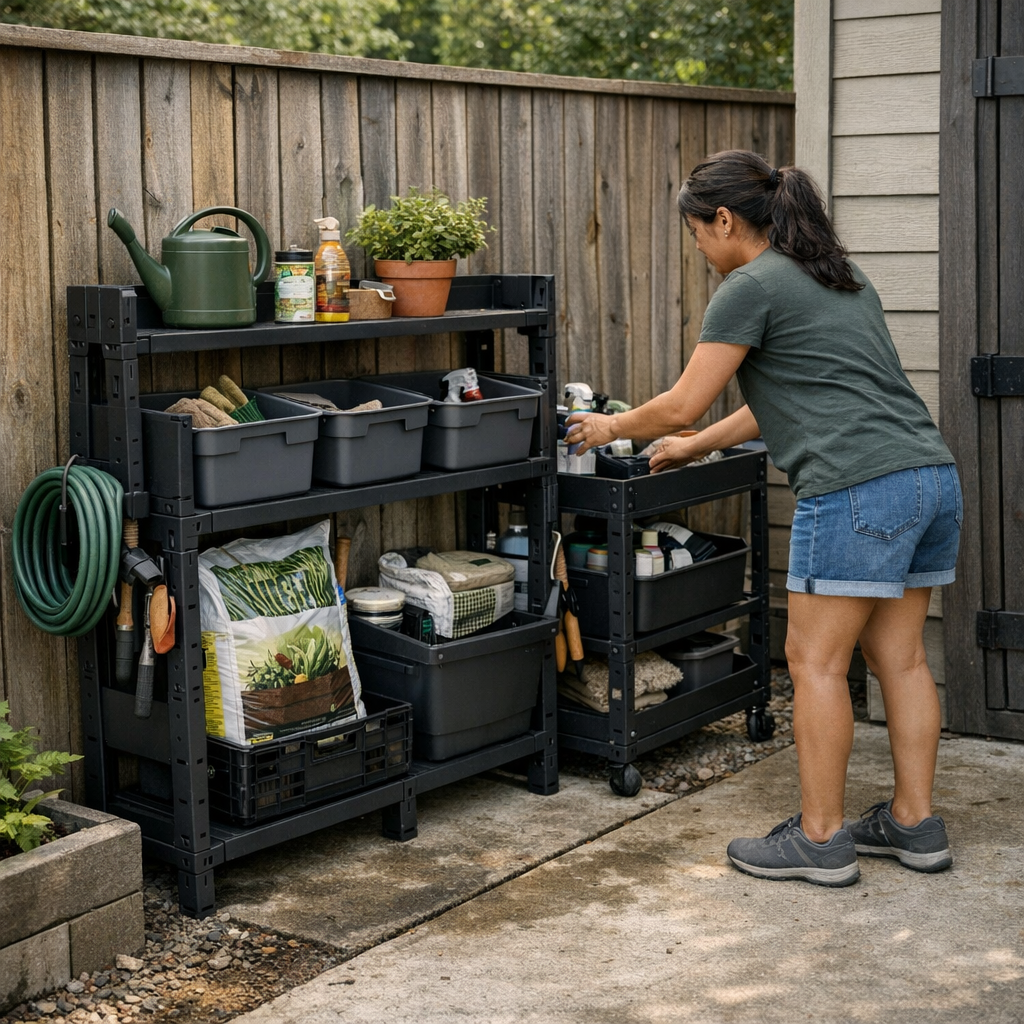
    Just relocating the storage—a modular rack right by the fence, where the hose ends—instantly changed the pattern. Gloves or sprayer needed no detour to drop. Suddenly, the side path stayed open; gear stopped wandering, and the patch that always collected overflow actually cleared. The reset shrank from a full chore to a five-second move—the real result was fewer bottlenecks and an outdoor space ready for the next use, not stuck in catch-up mode.

    Setup Habits: Tiny Friction, Big Impact

    Clutter is only the symptom—the real fight is against little barriers that turn returns into chores. It only takes one awkward hinge, one out-thrust rack, or the wrong-sided bin lid to make a “solution” slower than leaving things out. A shoe rack poking into a side gate, a bin lid hinged away from the hand you carry gear with, a storage seat that won’t open unless you move everything stacked on top—these are the slow leaks that kill good intentions week after week.

    Dead corners and blind strips set the trap: what doesn’t have a proper return zone starts pulling the rest of your gear out of line. If a wall system soaks up overflow faster than you can deal with it, or your reset speed drops midweek, it means your storage matches the blueprint, not your habits. The patio looks tidy from a distance, but the routine—the moving, reaching, fixing—still gets stuck. That drag is what makes a place feel “off,” not a few weeds or scattered tools.

    Making Storage Match Real Movement

    The most resilient setups aren’t the ones that check every box—they’re the ones where organization takes no extra thought. Position storage at task endpoints. Hang caddies right by the faucet or mount utility hooks where shoes come off naturally. Trade out bins you have to step around for wall racks that use dead air, not floor space. If a corner keeps snagging stray gear, make it the new drop spot—not a last resort.

    Even small tweaks matter: a hook placed within reach of the garage entry trims seconds off every reset and cuts back visible mess. Swap a deep chest for a shelf at shoulder height, and you stop squatting but also stop blocking the way. The faster you can move through a routine drop-and-return, the less likely clutter is to migrate—so resets get lighter and the cycle of “should sort this out” actually breaks.

    Real-World Reset: Accepting Imperfection, Stopping the Slide

    No outdoor setup erases hassle, but the best ones make everyday resets more like muscle memory, not another weekend burden. Don’t chase a static, pristine shed or a patio ready for catalog photography—aim for setups that flex and recover through wet weeks and busy evenings. Fast resets, obvious drop points, paths you can actually use—even when things aren’t perfect, those are the wins that last.

    Watch your own patterns: what zone pulls in the leftover boots after a rainy day? Which entry gets blocked first, and which “solution” secretly creates one more mess? Reset your storage to match those daily routines, not what looks best in a brand photo. Every yard, big or small, develops its own use-rhythm—effective organization simply rides that beat, not the other way around.

    Explore practical outdoor solutions at TidyYard.

  • How Labeling High Entryway Storage Prevents Clutter and Speeds Resets

    When you start stacking shoes or bags on the high shelf or upper cabinet “just for tonight,” you’re not organizing—you’re setting a trap for your own routine. Those upper entryway zones are supposed to keep occasional gear out of the way, but the first time you toss something you’ll need tomorrow up high, your reset flow starts to buckle. The problem is immediate: every ‘temporary’ drop adds invisible friction, and your well-intentioned storage turns into a slow-motion pileup above eye level, right where you don’t want it.

    When Backup Storage Turns Into a Catchall

    High entryway shelves and cabinets—built for backup coats, guest gear, or once-a-month tools—only work if they stay truly backup. But busy weeks break that rule fast. The intent is always, “I’ll move it in the morning.” Instead, umbrellas land on the top shelf after a wet school run, the gym bag rests out of sight “for now,” and before you notice, long-term spots are full of daily overflow.

    By the week’s end, the upper zone becomes a silent dumping ground. Now gloves mix with outdated mail and yesterday’s tote. Shoes you meant to keep lined by the bench inch their way upward when the floor gets crowded. The difference between backup and everyday blurs, and your entry starts fighting against you every time you look for something you actually need.

    Quick Resets, Slow Retrievals: The Cost of Compromised Upper Storage

    The slowdown shows up right when you need speed: someone’s late, opens a cabinet, and finds a tangle of wrongly grouped stuff—jackets jammed with paper bags and mismatched shoes. That easy “drop and grab” flow is gone. Simple movements stall while you dig through bins that now hide as much as they store. Each extra step is a penalty for yesterday’s shortcut, and the habit grows with every “just this once.”

    The routine gets corrupted by small decisions: a fast bag toss you plan to fix later, a pair of shoes exiled higher because the lower shelf got crowded, a bench seat that never clears because it’s where overflow lands between trips. You don’t see the drift until you’re standing on tiptoe, rummaging, annoyed, while everyone waits by the door.

    How Upper Storage Drift Actually Feels

    You try to hold the line: shoes in a row near the door, bench open for putting on boots. But the boundaries start to bend. The row of shoes spreads until it blocks the path. A bag left on the bench nudges someone else to drop their stuff on top. The closed cabinet keeps the mess out of sight, but inside, bags, hats, last week’s receipts, and off-season gloves are crammed as if tomorrow might never need them. The “backup” shelf becomes a silent overflow trap—especially right when the entry is busiest.

    The Tipping Point: Overflow Eats Up Movement

    Transition spaces fail slowly, then all at once. Add one more basket perched up high and soon you’re dodging loose gear just to reach the door. Once the backup zone turns into a catchall, movement tightens—benches become bag piles, walkways shrink, and every reset takes longer. It isn’t chaos, but it’s enough to add micro-delays that stack up every week.

    Drawing a Hard Line: Why Labels Matter

    What actually fixes this? Distinct boundaries, not just neatness. Move all daily gear to within easy reach—benches, floor, or low cubbies only. Label every high bin with what belongs (“Rain Gear Backup,” “Guest Accessories”). When a bin is labeled, anything that doesn’t match stands out. The system draws the line for you: stray shoes or regular bags have nowhere to hide above eye level, and the messy upward drift stops cold.

    Clear, labeled bins force choices you can see. No more rooting through random containers: you know you’re only checking once a month, not every morning. The urge to stash daily clutter goes away—if it doesn’t fit the label, it doesn’t go up high. The high zone becomes controlled again, not just hidden mess.

    Reset Speed: The Real Test of a Good System

    You’ll feel the reset speed improve almost immediately. When you can open a cabinet and spot exactly what’s inside—no double-checks, no shuffling, no mystery—you cut the time and hassle out of packing up or returning. Shoes stay below, backup stuff stays up top, and your flow from in to out and back again keeps moving instead of sticking.

    Real-World Routine: Signs Your Setup Is Slipping

    Most entry setups don’t fail suddenly. It starts with a pinched sidewalk or a doorway blocked by a stray bin. Next, you take an awkward pause to remember where you hid your main bag, or you keep climbing to the high shelf for things you should have on hand. The signals are clear: daily items drifting upward, every reset taking longer, more thinking required to leave or enter—and the return path feels always one drop away from gridlock.

    If you’re re-sorting the upper shelves every week, your boundaries are gone. That’s the sign not just to tidy, but to redraw the lines: relabel, relocate, and reserve the top for what really stays out of rotation.

    Practical Tips to Keep High Zones Working For (Not Against) You

    • Label every bin clearly. One glance tells you backup vs. overflow.
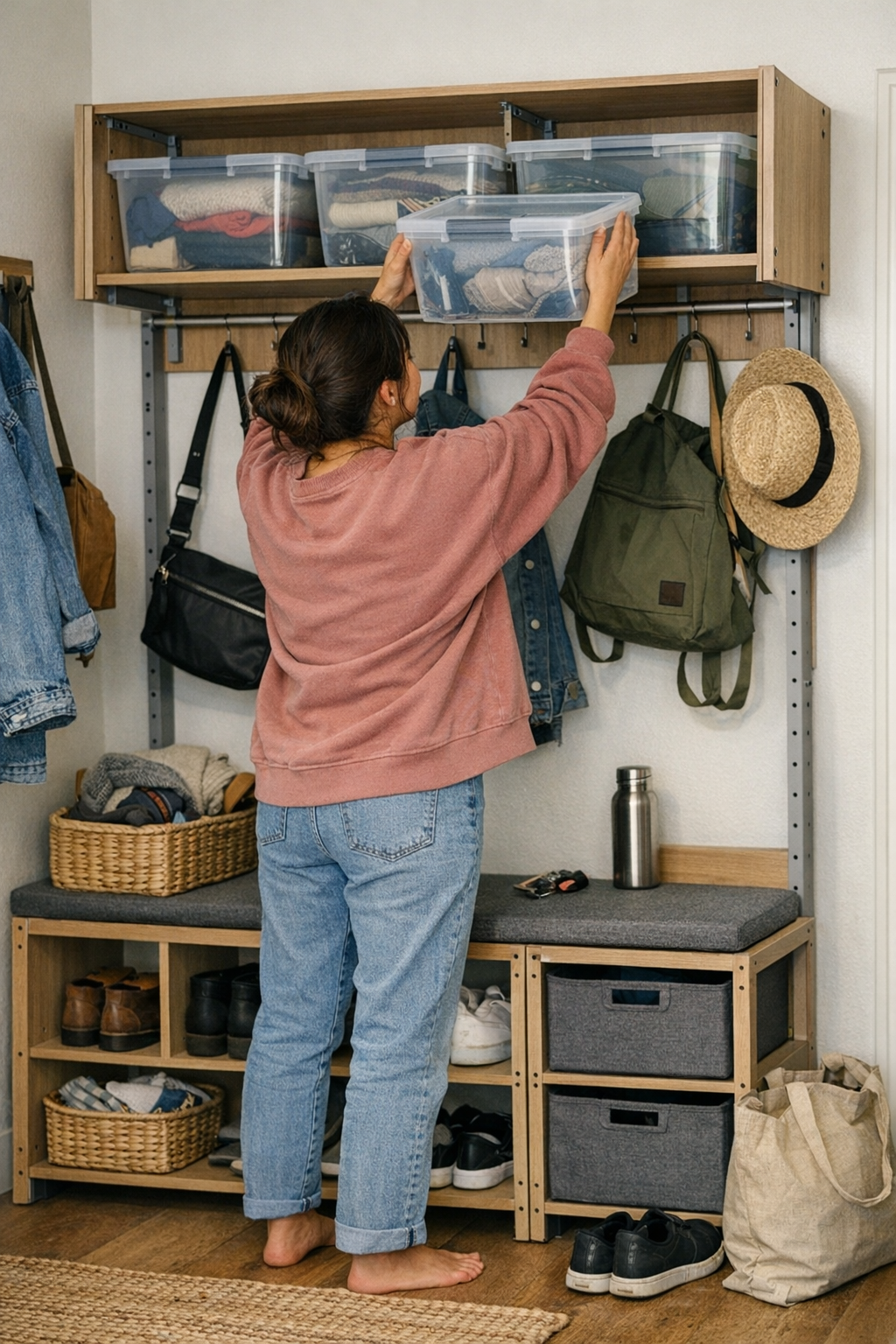
    • Use see-through storage for upper zones. Visibility discourages accidental stockpiling and stops hidden mess.
    • Set a quick monthly review. Take five minutes to keep categories honest and boundaries sharp before drift sets in.
    • Keep the essentials where you reach them without climbing. Shoes, go-bags, and wet-weather gear belong at hand or foot level—never up high.

    Looking Controlled vs. Working Every Day

    The biggest trap in transition storage: setups that look organized but fail on a normal morning. True function is measured by reset speed and flow—how rarely you have to re-sort after daily use, not by how tidy things appear at rest. As soon as high storage shifts from true backup to overflow trap, the consequence is a daily grind—hidden, but felt by everyone who passes through.

    With the right rules and clear signals, high zones become backup again—not friction points. The entryway keeps its flow: shoes line up beneath, bags are dropped where they belong, and every trip in or out is predictable instead of unpredictable. You lose the need to reshuffle, the entry stays functional, and reset is quick no matter how many trips it sees in a week.

    http://www.betweenry.myshopify.com

  • Why Practical Shelving Outperforms Decorative Options in Everyday Use

    The trouble with many modern shelves isn’t how they look—it’s how quickly they stop working under actual daily pressure. Step into any entryway or hallway, and the surface often seems organized: keys in a bowl, chargers tucked behind a planter, mail stacked neatly. But after a few days, the cracks show. Each rushed exit means digging behind a frame for your keys, shifting mail to avoid the spillover, and risking a pile-up at the edges. Visual calm lingers just long enough to hide the underlying mess growing below the surface. The mismatch is clear: the shelf stays photo-ready, but daily life starts knocking items out of place. 

    The Trouble with Picture-Perfect Shelves

    Many shelves look flawless in catalogs—slim, spare, barely structured. But shelves optimized for a perfect first impression usually sacrifice practical barrier and depth. Without a raised edge, shallow lip, or enough grab space, a single new item nudges everything closer to chaos. Stacks slide, categories mix, and one new charger sends your sunglasses pile tumbling. By Thursday, you’re straightening something every time you walk by—and by Sunday, that “minimal” arrangement is now a crowded shuffle every morning.

    This is where function splits from appearance. A shelf that masks its weak structure behind tidy staging leads to stalled exits, repeat hunting, and arbitrary switching of zones. Each missed category or slow return flow costs real minutes, even if you barely notice the shift from “organized” to “always managing a spill.” The time drain isn’t dramatic, but it adds up with every week the wrong shelf stays in place.

    When Shelving Gets in the Way of the Routine

    Any zone used by more than one person—entryways, hallway drop zones, busy living room corners—quickly exposes a shelf’s design flaws. Real problems show up as:

    • Double-reaching for essentials: Keys slip behind a decorative object, or your wallet slides to the far edge. You’re moving two things just to grab one.
    • Relentless reshuffling: Each added mail piece, cord, or pair of sunglasses pushes older items to an awkward edge. Instead of running smoothly, every reset becomes an annoying ritual, not a quick glance-and-go.
    • Broken return flow: In real use, items land wherever there’s open space. Structure-free surfaces erase categories—mail bleeds into cords, wallets mingle with outgoing forms—so finding anything means wrestling the whole zone.
    • Invisible accumulation: Back rows and corners quietly hoard what you can’t see until you need it—and by then, digging through the pile costs you time you didn’t plan for.

    Most days don’t call for a full overhaul. They call for shelving that defends against entropy with built-in structure, letting you keep order without daily negotiation.

    What Changes with Practical Structure

    The fix for chronic shelf drift isn’t decorative—it’s physical. Swap an open, flat shelf for one with a subtle lip or backstop and the difference appears in use:

    • Edge containment stops small slides: Mail and wallets won’t slip away, even in a rush. Retrieval and return speed up, especially during busy exits.
    • Extra depth buffers overflow: Deeper surfaces cushion the brief chaos—one forgotten keyring or an extra charger doesn’t trigger a domino effect of items falling off.
    • Quicker, simpler resets: You can scan everything at once, and resetting takes seconds, not a ritual of pushing and shuffling.

    After a week, the payoff isn’t in how untouched the shelf looks—it’s in how friction-free your routine runs. The right structural details keep you in control, not always reaching for a fix.

    Recognizing the Signs of a Decorative-First Shelf

    If your shelf causes these pains, looks are winning over use:

    • Returning something always feels like a balance act
    • The surface fills alarmingly fast, even when you’re “keeping it minimal”
    • You’re routinely fishing for things nudged out of reach
    • Every reset turns into rearranging, not just straightening
    • Any sense of organized categories fades a few days in

    Shelves that skip practical features—edged sidings, real depth, basic dividers—force the user to compensate. Over time, visual order alone becomes a maintenance headache.

    Where Weak Shelving Creates Real Friction

    This gap isn’t limited to first-look spaces. Throughout the house, these failures repeat in familiar forms:

    • Pantry shelves: Cans and boxes tumble backwards and get buried as new groceries arrive. Retrieval gets slower the fuller the shelf gets.
    • Closet shelving: Folds collapse, and stacks lose shape after a week of daily pulls—because nothing physically guides or corrals each category.
    • Bathroom shelves: Shift happens fast—bottles topple at a glance, makeup makes a break for the nearest ledge, and morning routines stall over tiny messes.
    • Hidden storage: Instead of freeing you, it slows you: opaque bins bury must-find items, so “tidy” means extended hunting.

    What links these scenes isn’t mess—it’s the mismatch between storage that looks sorted and storage that actually absorbs your routine’s real pace and pressure.

    Picking Storage That Stays Useful

    It’s easy to misjudge how much friction a busy shelf zone absorbs. Before setting up—or resetting—a high-traffic area, press test against these criteria:

    • Structure at the edges: Lips, ledges, or backings prevent objects from wandering, so categories survive each week’s additions.
    • Sufficient usable depth: Accommodates both intended storage and inevitable overflow without defaulting to a crowded pile.
    • Unobstructed retrieval: If you’re forced to move items more than once a week just to reach something, the setup isn’t holding up.

    When these basics are skipped, “clutter” is often just a product of poor setup. Good storage isn’t about perfect tidiness on day one—it’s about compressing reset time and making routine use consistently smoother.

    Practical Tips for Staying Organized Through Real Life

    Tame the reset with intent, not effort. Sort the highest-use items—keys, mail, chargers—to the most accessible zone. Shallow trays or quick dividers keep roles clear and retrieval fast. Watch what accumulates, then shift layout or structure (not just contents) to plug emerging pain points.

    Test by speed, not just by sight. After seven days, has the shelf’s shape held—or are you back to daily shuffling? Track what moves, what lingers, and which spots repeatedly bog down your flow.

    Your habits will highlight whether your setup solves real friction or simply recycles it.

    Long-Term Order Is Built Into the Setup, Not Just the First Look

    Visual calm is a start, but long-term order lives in unglamorous details: edge guards, real depth, and usable categories that survive Monday through Sunday. The best shelf isn’t flawless; it just quietly resists drift, collapse, and category blur every week. If you’re spending less time rescuing lost items and resetting crowded zones, your storage fits your real life—not just the showroom snapshot.

    See more ways Gridry builds usable inside-storage for real indoor life.