Category: Travel & Drive

  • How Smart Pet Travel Bags Reduce Stress and Speed Up Your Trip

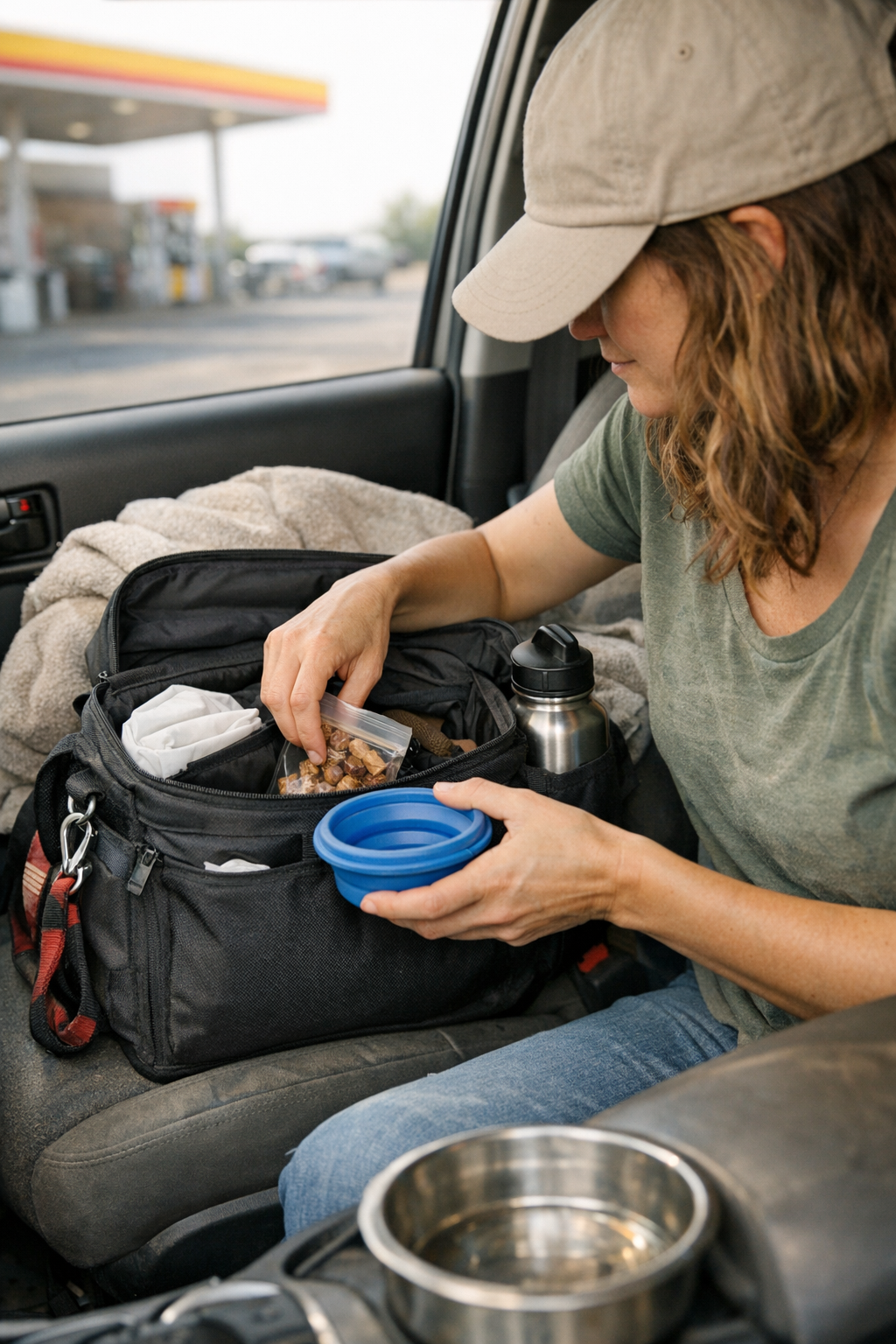
    It’s easy to trust your pet travel setup before the trip starts—but the real test comes the first time you need something fast and can’t get to it. You feel the friction as soon as you reach for a wipe with one hand while steadying your dog, or fumble to find a bowl at a rest stop only to dig past a blanket and documents. In pet travel, the problem isn’t how organized your bag looks; it’s how those “just-in-case” layers, overlapping pockets, and blocked zippers add seconds of hassle at the exact moment you need flow, not friction. PawGoTravel lives in these pressure points—where travel gear either quietly breaks your rhythm or keeps pace, stop after stop.

    When “Looks Ready” Isn’t the Same as “Works Smoothly”

    An organized pet bag looks reliable at first glance. But the real divide shows up the moment movement starts. Maybe your leash slips in front of the main zipper, or wipes end up wedged behind a spare shirt. The collapsible water bowl, so logically packed, becomes a buried obstacle every time. The system looks calm until repeated stops reveal that well-zipped sections can still act like locked boxes—each extra second adds a layer of frustration to what should be basic travel routines.

    The Repeat Offenders: Small Delays That Add Up

    Fast access isn’t about carrying more, but about smart reach. A calm bag at the gate can become a source of clumsy struggles by the third trip to the aisle, especially if quick-grab gear drifts downward or gets trapped behind comfort items. You usually don’t notice until you’re forced into an awkward twist—one hand trying to keep your pet steady, the other sorting through a mess of “organized” layers. That’s when the difference between well-packed and well-placed items gets loud, every single stop.

    Scenes Every Pet Traveler Will Recognize

    Pet-travel setups rarely fail from lack of compartments. More often, it’s the mismatch between actual travel flow and how compartments behave under stress. Friction creeps in during:

    1. The Stop-and-Search Cycle

    A layover hits. Your carrier’s on one shoulder, your pet shifting with each announcement. You know your wipes are packed, but with one hand on the carrier and the other digging, it takes shuffling through larger items—blankets, harness, documents—before you finally reach them. That “organized” start is gone, replaced by the dreaded unpack-just-to-access rut. The original order offers zero help when every grab becomes a multi-step process in public, under pressure.

    2. The Overlapping Zones of Owner and Pet

    It’s routine: charger cords creep into pet supply pockets, snack bars wedge next to treats, or vaccination paperwork blocks leash access. Owner and pet items—blended for efficiency—end up making retrieval a two-sided chore. You’re repeatedly shifting your own things to deal with your pet’s, the line between the two getting messier at every rest stop or seat change.

    3. The Comfort-But-Complication Dilemma

    The cushion you add for a smoother ride or the plush toy meant to soothe your pet all have a knack for migrating on top of immediate needs. That “comfort-first” choice pays off only until you try to grab cleaning supplies or slip out a bowl—forcing a mid-trip reshuffle. Soothing one problem quietly sets up the next: calm pet, blocked access, slower you.

    Packing Logic vs. Access Logic

    Most travelers trust “packed and zipped” means ready. But motion—boarding, stopping, seat changes—exposes what static organization keeps hidden. Essentials packed under low-use gear turn single-handed cleanups or mid-trip snacks into unpack-and-repack drills, especially with bags lacking top or front pockets. The absence of true quick-access means routine actions demand both hands and extra seconds, just when you have no extra to spare.

    Not Just a One-Time Hassle

    These aren’t isolated annoyances. Real trips run on cycles: reach, pause, reshuffle, and repeat. If you’re always pulling out the wrong pouch first or shifting aside your own cables to reach the pet bowl, your bag structure is quietly working against you—and every restart gets heavier. The inconvenience is cumulative: small interruptions drain focus from your pet and slow down every return to movement.

    Adapting for Real, Repeatable Travel Moments

    What fixes the problem isn’t clever folding or more pockets. It’s noticing which items you actually grab first, over and over, and setting them up for reach—a side pocket for wipes, top slot for bowls, leash clip that doesn’t snag. That way, you avoid digging, don’t interrupt your pet’s calm, and sidestep the cycle of minor delays stacking up. The change isn’t about the gear’s look but about building access patterns that match the trip’s real tempo.

    “Looks Prepared” vs. “Feels Easier”

    No bag fails at the start. Weakness appears when the stable, backseat-perfect kit turns unreliable after a few cycles—subtle overlaps jam key move points, or visual tidiness hides access issues no one sees until routines repeat. Over time, bags built for smoother reach—not prettier lines—keep you and your pet in forward motion. Faster comfort, quicker cleanup, fewer restarts: set structure right, and every small action keeps the trip moving, not stalling.

    Practical Observations from the Field

    • External and top-access pockets save more time than their size suggests: that one-second reach beats any “deep clean” at every delay.
    • Bags geared for one-hand-only retrieval let you handle brief stops without breaking your carry or making your pet wait longer than necessary.
    • A neat setup under inspection is meaningless if the first delay exposes that essentials are always two layers away from where your hand lands.
    • Owner/pet item overlap is a recurring pain—dedicated, reliably placed pet pouches prevent the need to unpack and repack for the same action, again and again.

    Making Each Restart Smoother, Not Slower

    The measure of a travel setup isn’t its initial order, but how many silent pauses you avoid after each stop. Gear that keeps wipes, bowls, treats, and leash exactly where you reach next time means less reshuffling, less pet anxiety, less drag on your focus. The smoothest pet-travel setups aren’t necessarily sleeker—they’re quieter in use, dissolving friction so you and your pet can actually keep moving together, not working against your own system.

    Explore practical pet-travel organizers and setups that actually keep pace at PawGoTravel.
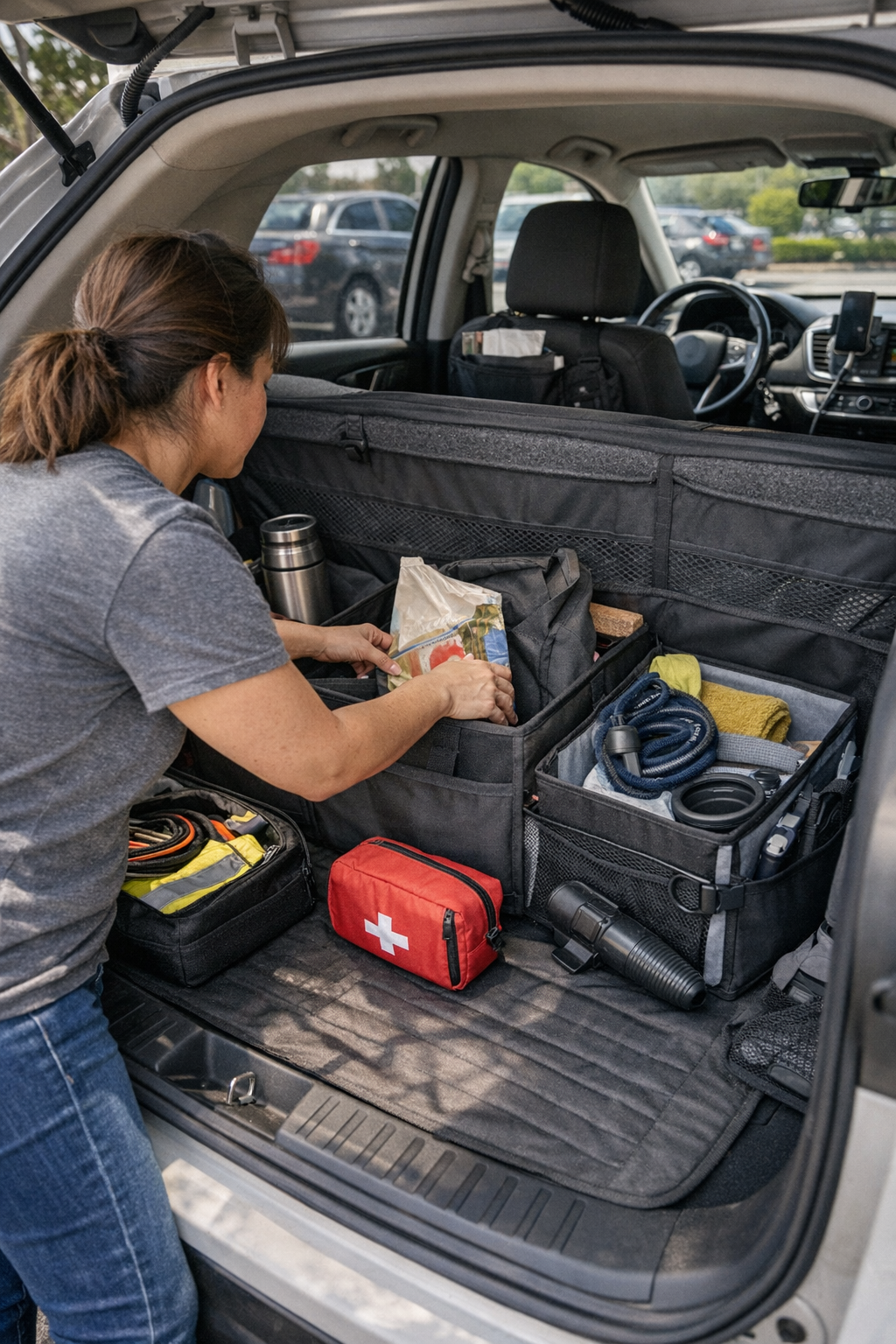
  • How Small Car Interior Details Shape Your Daily Driving Comfort

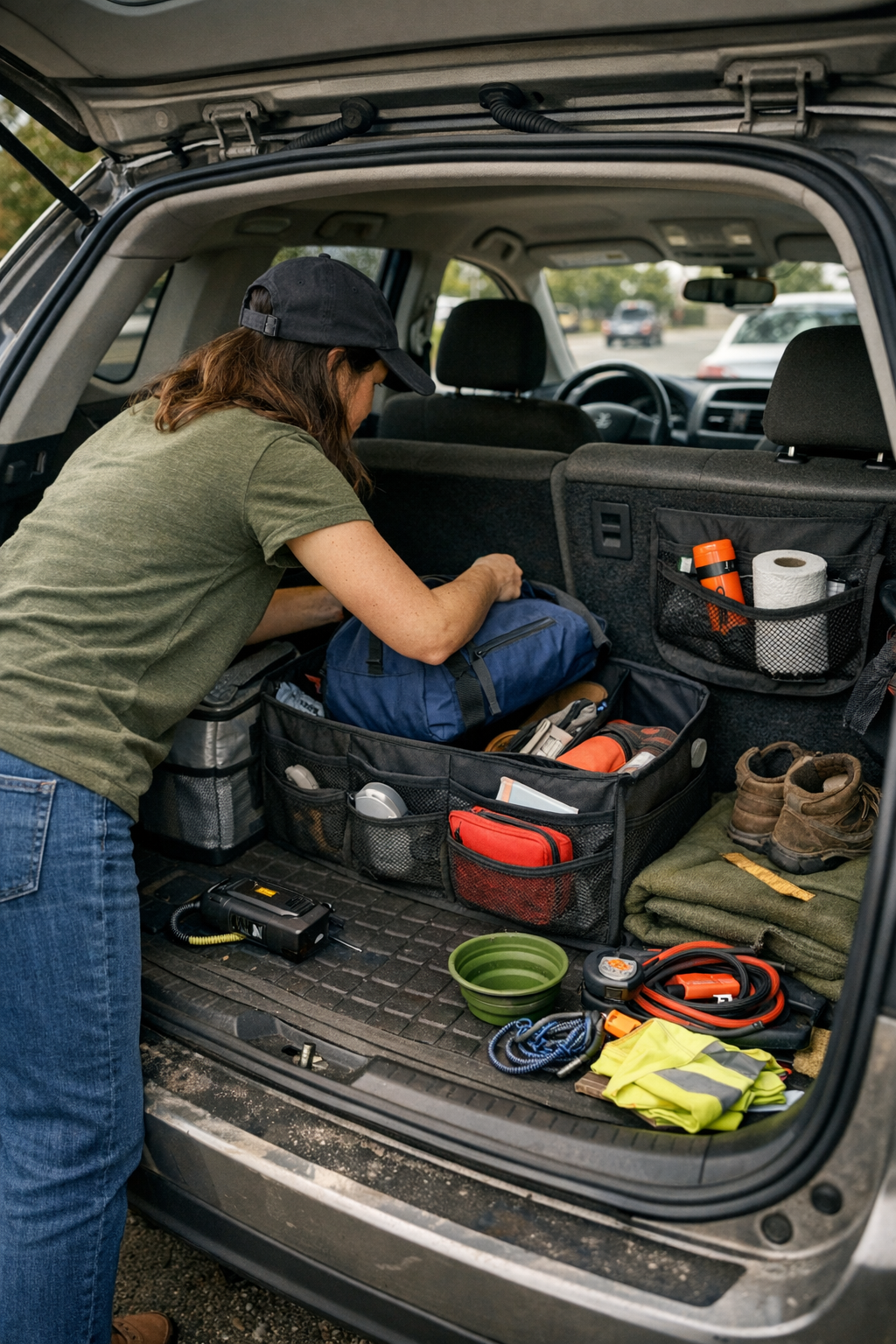
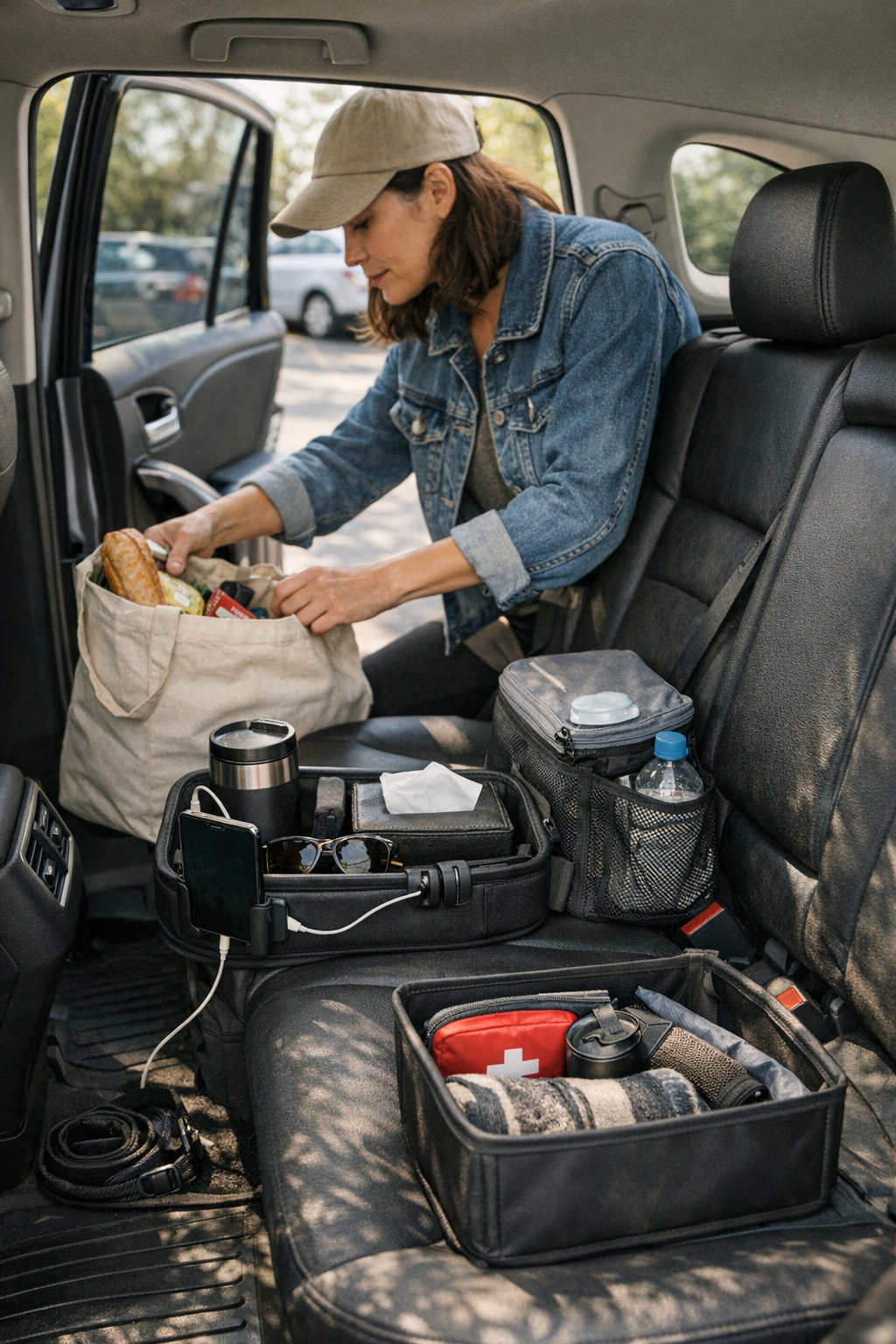
    If you’ve ever slid into your “organized” car—catching your heel on the edge of a bunched floor mat, nudging a phone mount out of the way for the third time that week, or feeling for your charging cable only to find it tangled yet again—you already know what a showroom-tidy interior hides. An interior that looks fine can still fight you in all the small, repeated ways: cords pinched under seats, cargo bins shifting during turns, dog covers fixed on Monday and crumpled by Thursday. When you use your car for real routines—parking haste, fast pickups, grocery loading, and endless re-entry—a setup that’s only neat on the surface quickly reveals its flaws. What matters is how your gear holds up, not during the first clean sweep, but after dozens of ins and outs when shortcuts and stopgaps start breaking down.

    The Repeated Reach: When “Organized” Still Sabotages Access

    Organization you don’t feel fades fast—what slows you down is always noticed. You remember the friction whenever a cable needs fishing out from under the cupholder again, or when a quick stop means fixing a floor mat before closing the door. That “just tidy enough” setup turns on you during rushed routines. A phone mount might look minimal, but if it blocks your charger or crowd the shifter, each in-and-out becomes a fumble. The thousand tiny corrections pile on: essentials sliding an inch out of reach, cords wrapping around gear levers, small items wedging where hands must go. One interruption is forgettable; a dozen a week means you’re losing flow and time every day you drive.

    Hidden Friction: When Comfort and Convenience Unravel

    It’s one thing for a setup to seem stable—until your floor mat slides forward as you step in, or your seat cover starts to curl away with every entry. Console organizers that dig into knees or elbows turn every drive into a negotiation with your own gear. An out-of-the-way cable route on day one becomes a hunt beneath the seat by week’s end. Tasks you expect to be automatic—coffee drop, charger grab, glove tap—turn into momentary stumbles when your setup can’t withstand real, repetitive movement. Fast errands, school runs, and back-to-back pickups reliably stress-test interiors far past what “neatness” can handle. Even when mess stays hidden, you notice every time something essential is a stretch too far or stuck behind another accessory.

    Not Just a Visual Problem

    Many “solutions” trade visible mess for buried hassle. That side door pocket stuffed with random cables and receipts? Looks clear, but you dig for keys every time. A low-profile mount may save your view but block a vent dial you reach constantly. Weak points show up as repeated reaches and corrections—never as Instagram-ready as they first seemed, always as practical slowdowns in the rush of real use.

    The Week’s Patterns: When Setup Defects Steal Your Time

    The difference between “done” and “functional” never shows up all at once. You only notice what’s weak after routines stack—toting a kid, juggling bags, grabbing the phone a dozen times. A cargo bin that glides loose at every hard stop means every trunk unload starts with a nudge back into place. Console bins that block your knee or swallow small items quietly turn retrieving a ChapStick or parking stub into a two-hand event. The wrong gear doesn’t ruin a single drive—it erodes your routine in fragments, one frustrating moment at a time, until daily trips feel heavier than they should.

    Invisible Failures That Add Up

    • Gas station detour: Phone is jammed beside the seat, cable knotted; every pit stop is a fresh tangle.
    • Errand unload: Cargo organizer has shifted, again, misaligning the latch so you can’t open the trunk smoothly.
    • School pickup: Seat cover’s edge scrunches as kids pile in, and you reflexively yank it flat before the next drive.
    • Evening commute: That side-mounted bin presses against your elbow—the same sore spot, every ride.

    No one episode is catastrophic, but the sum is time lost, rhythm broken, and just enough drag to sap energy from already busy days.

    When Setup Choices Become Everyday Obstacles

    It’s easy for car organizers and mounts to promise order. The harder test? A week of real use—does your setup dissolve quietly into the background, or trip you up again before Friday? Drift-prone mats force a reset on each entry; cables running wild catch your foot or fall beneath the pedals; trunk bins not anchored right slide just when you’re rushing most. Even “smart” organizers and covers can block crucial access if their fit ignores actual movement patterns, turning convenience back into manual labor.

    Protection That Needs Constant Correction

    Seat protectors that bunch at the door edge start as peace-of-mind, end as a fixed annoyance. Fitted mats, perfect before the first slushy walk, shift and curl a bit every wet day—until “protection” becomes yet another maintenance chore. The real frustration isn’t mess but the subtle, persistent burden of gear that only half works: solved in one way, sabotaged in another.

    What Actually Helped: Anchoring Change in Real Use

    Real fixes go unnoticed—because they stop producing extra steps. A mat anchored under the pedals stopped daily heel drags. A well-placed cable clip meant one-handed, one-shot phone grabs—no more cable yanking or cupholder battles. Simple, reachable storage for your daily-use gear took seconds—and a little tension—out of every routine. These are small gains you feel every time, even if nobody else notices. True organization isn’t impressive at first glance; it’s the absence of friction after the tenth drive or the hundredth re-entry. That’s when you actually trust your interior to keep up, not catch you out.

    Find practical gear that upgrades usability, not just appearances, at DriveWellSupply.

  • Streamline Your Carry-On for Faster Access and Less Travel Stress

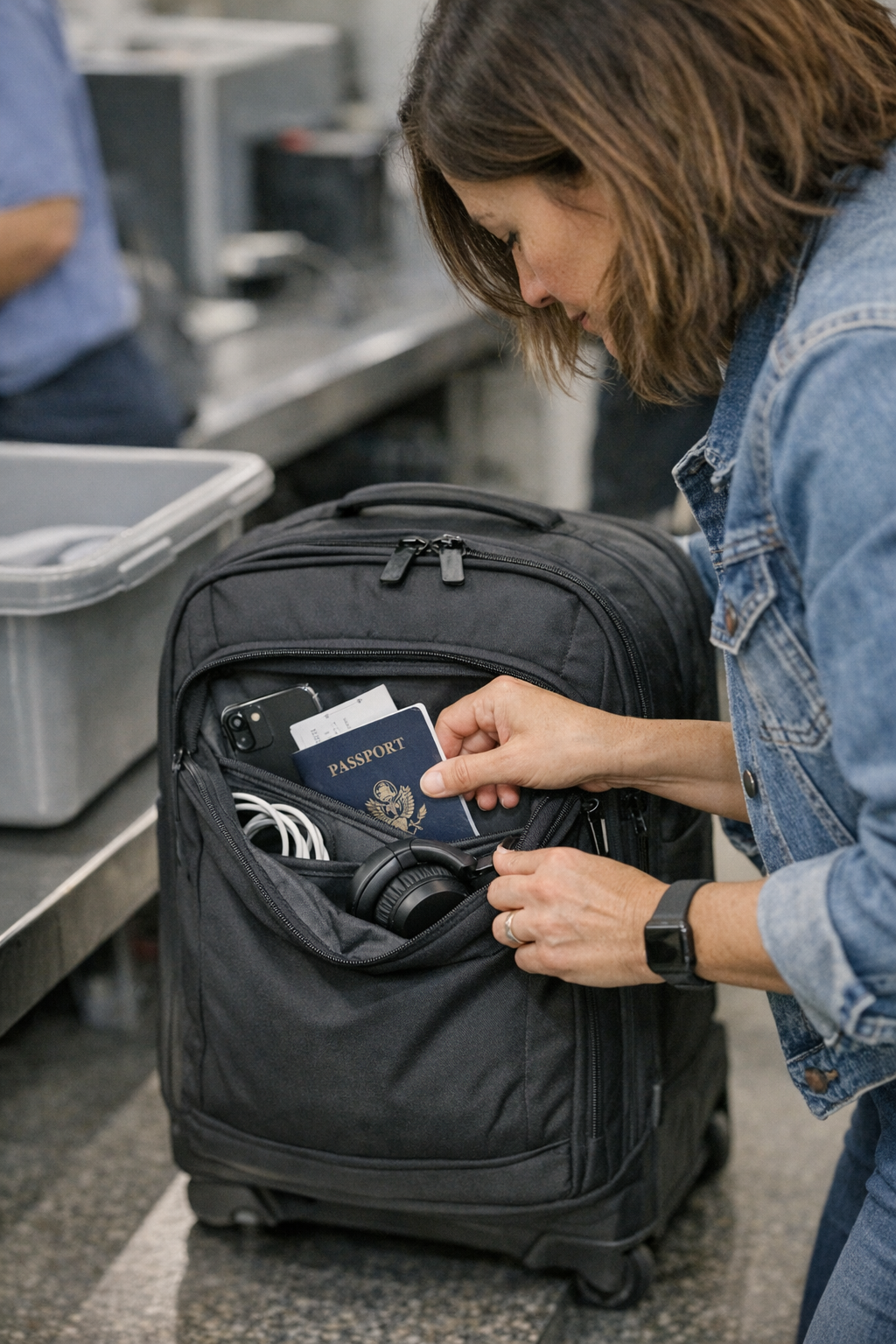
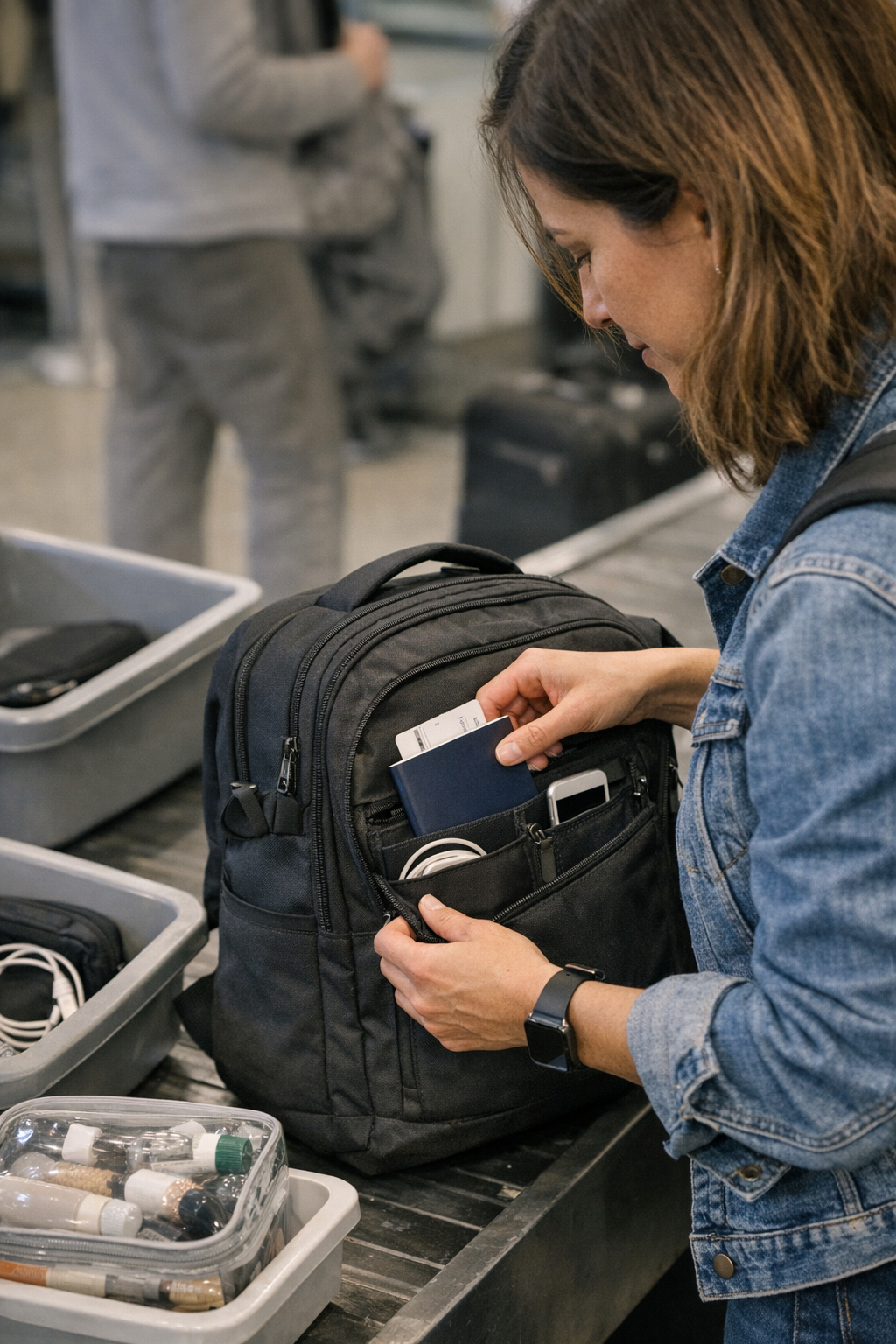
    A carry-on that looks organized still breaks down the moment you need it most. That neat setup—pouches lined up, cables in order, passport visible—unravels at your first real checkpoint. It isn’t big chaos, but the second you’re digging past a pouch for your boarding pass with a security line behind you, the “well-packed” setup turns slow and clumsy. You might only need two things, but both are wedged behind something else. The main problem isn’t visual mess; it’s hidden friction. The bag you perfected on your kitchen table rarely stays that way once you’ve reached for your passport, fished out a charger after boarding, or tried to get your headphones without blocking the aisle. In real travel, organization fails quietly—by demanding two or three steps where there should be just one, by hiding the item you just put back a moment ago, by turning fast movement into hesitation.

    Pocket Competition: Where Friction Starts

    Friction in carry-on use is less about visible disorder and more about losing single-step access under pressure. The first reach might work. The third reach—the one where your hand pauses—exposes the flaw: passport under a mesh pouch, charger stuck behind toiletries, document sleeve migrating again after security. Bags shift in trays, compress in overhead bins, reorganize themselves during seat entry. Every squeeze, shuffle, and re-stack turns that “clean” configuration into an unpredictable sequence. The result isn’t dramatic mess—it’s a stacking of micro-delays, fumbled motions, and interrupted flow, especially when the right zipper path is suddenly blocked or the outer pocket feels overcrowded.

    The subtle slowdown shows up fast when travel flow matters most. Pockets overlap, pouches press against each other, and zippers stick—not because they’re broken, but because your setup was built for packing, not repeated checkpoint access. Resetting feels constant: slide this pouch aside, dig for the buried passport, tug a charger cable that’s looped around something else. Nothing is “lost,” but everything takes longer than it should—stealing your mental focus and making you more visible in moments when you just want to get through quickly.

    Home vs. Airport: Why Packing Logic Breaks Down

    At home, the packing rules favor symmetry and contained categories—a tech pouch here, a tidy document holder there, toiletries stacked perfectly, each layer deliberate. It looks disciplined and prepped for anything. But travel doesn’t reward tidy layers; it punishes setups that force repeated digging. The first time you unzip your bag at the airport—one foot forward in the security line, arm awkwardly reaching from above—you often grab the wrong organizer or tip over a pouch, only to find your passport or boarding pass has migrated. Now what seemed efficient becomes a sequence: unzip, fumble, re-stack, repeat. Multiply that by every checkpoint: the time lost to correcting small packing errors adds up, and your supposed “system” becomes a quiet liability.

    The Reality of Layered Organization

    Visual order rarely equals functional speed in repeated use. Each checkpoint—document checks, bag searches, gate calls—tests whether your layout works under pressure. A setup that passes for order at a glance often fails fast in motion. What matters is whether you can grab essentials in one fluid reach, not whether every pouch has its category. If repeated access to primary items means moving or dislodging something each time, you’re trading away the only rhythm that matters in transit: smooth, fast retrieval without backtracking.

    Checkpoint Slowdown: Small Delays, Compounded

    Real burden isn’t a dramatic spill but a quiet, repeated drag: standing in a boarding queue, half-listening for your zone while wrestling with a zipper; reaching for headphones only to find them tangled around a charger in the main pocket; pausing at security as you try to slide a document sleeve out without exposing toiletries. Instead of quick, one-step retrievals, you build a ritual of shuffling and mental mapping. Each time, small delays pile up. You block the aisle, stall the security tray, and start to see the tradeoff—every time you go past three items for one, the order you created yesterday has already failed the day’s first real test.

    It isn’t about losing your place; it’s about repeating pointless micro-motions until travel feels tiring before you reach your gate.

    A Better Rhythm: Single-Zone, High-Frequency Access

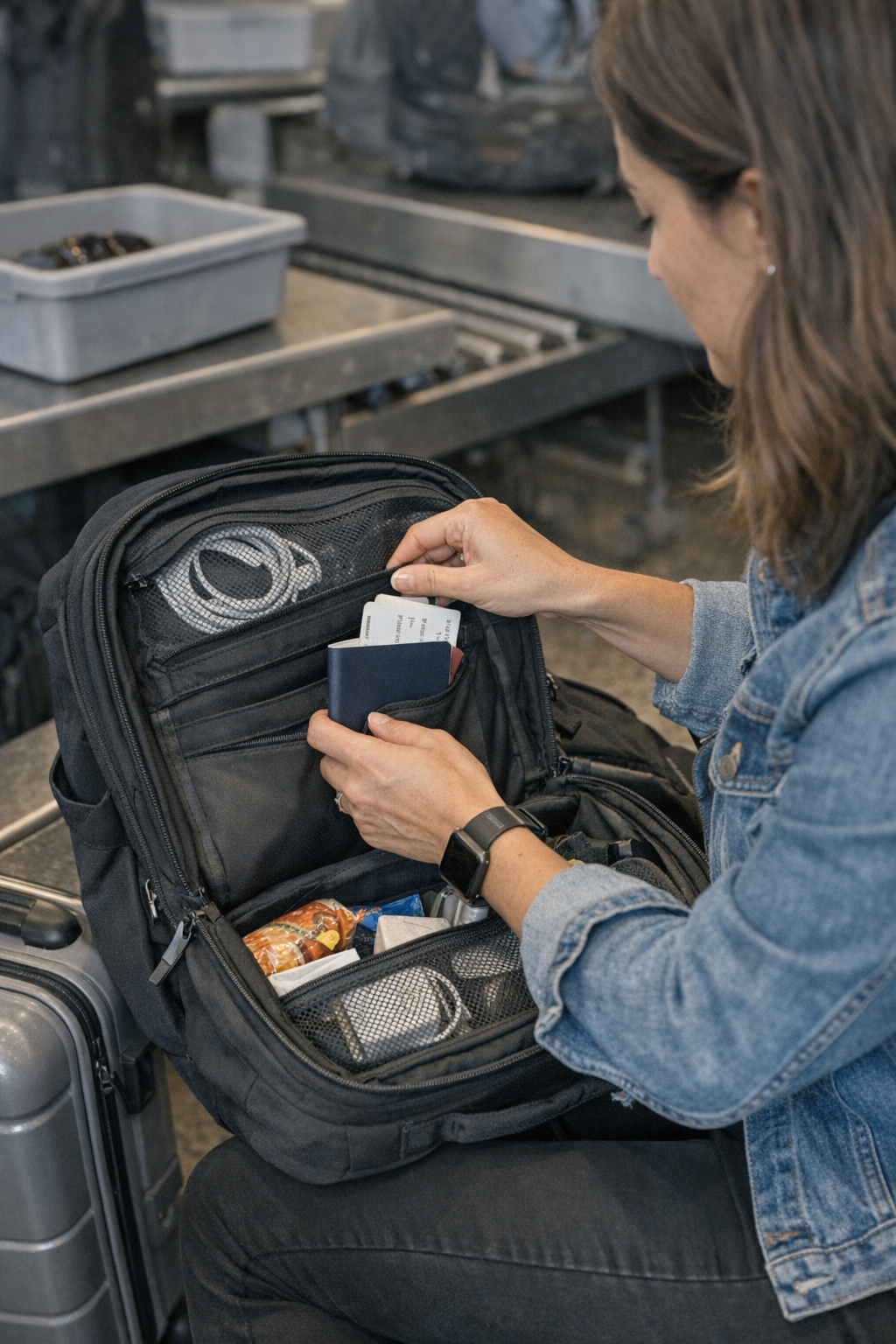
    The difference is obvious once you focus on a structure built for repeat movement, not just initial tidiness. The answer isn’t to add more pouches or separate everything—it’s to group all high-frequency essentials (passport, wallet, phone, chargers, glasses) into one stable, outer-access pocket. No more unzipping layers, digging through stacked organizers, or remembering where to repack after every tray check. All secondary items—change of clothes, backup cables, snacks—can stay deeper in the main compartment, untouched through most of the routine. You eliminate the need to shuffle the same few pieces multiple times in every sequence.

    Less Shuffling, More Movement

    The payoff is clear the first two times you use the setup in the wild. In security lines, documents pass from bag to tray and back in one motion. In the boarding aisle, headphones come out without knocking over pouches or re-layering the whole bag. Returning items is automatic—everything lands in the same place, no re-mapping, no reshuffling. You stop monitoring your own process. Instead of quietly resetting after each move, you experience continuous flow—multiple retrievals without friction or regret. By the third checkpoint, the travel drag is gone. The fact that you barely notice your setup is evidence the structure works.

    The Invisible Difference: Look vs. Feel

    A carry-on can look flawless zipped up and still betray you in real use. The mark of a better setup isn’t how the bag looks before departure, but how little it interrupts your movement after two hours of travel. The best structure stays invisible—everything you actually need is always a single reach away, no matter how much the bag gets jostled or compressed en route.

    If you find yourself double-checking compartments, digging for the one thing you just used, or opening multiple sections after a short walk, the underlying structure is fighting your actual travel needs. Streamlining high-frequency items into a single, stable access zone isn’t just a trick—it’s a real test of travel resilience. Efficiency is built with fewer pouches for the things you grab every time, not by adding new containers to solve yesterday’s tangles.

    Redesigning for Repeat Access

    Designing your personal carry-on structure for repeat access doesn’t mean losing control or order—it means recognizing that repeated use matters more than initial symmetry. The “packed well” setup is only proven by how it performs: checkpoint to gate, aisle to seat, arrival to hotel. When every reach is quick and repeatable, when your hand always finds the right pocket, travel stops feeling like a cycle of minor corrections. That’s the turning point—when order and function finally meet, flight after flight.

    Explore carry-on travel tools at CarryOnSupply

  • How Separating Essentials in Carry-Ons Speeds Up Travel Movement

    Your carry-on bag never shows its real character until you’re in motion—standing at security, boarding, or pressed against the line for another document check. That neat, sorted setup you zipped shut at home will be tested the moment you need your passport, charger, or boarding pass for the third or fourth time. What seemed “organized” in your living room can turn slow and frustrating under airport pressure: each repeated reach reveals new tangles, new interruptions, and the same pockets forcing you to repack on the fly. A real carry-on system isn’t judged when it’s closed but by how it handles relentless, in-transit access.

    When “Organized” Still Slows You Down

    The trap is familiar: color-coded pouches, slim sleeves, everything snug in its compartment. But at the first checkpoint, quick-access pockets become bottlenecks. Digging into an “organized” outer pocket, you’m forced to untwist a charger from your passport or slide a boarding pass out from beneath your headphones—one grab derailing five minutes of home sorting.

    Essentials packed together break down in real motion. What promised fast retrieval as you packed instead means every rummage nudges documents into creases, cables across pockets, and comfort items into the security tray by accident. Suddenly, the single “quick grab” spot you relied on turns into a mini-repacking station—especially when you’re shoeless at security or maneuvering bins with one hand.

    Small Moments, Repeated Friction

    Actual inconvenience isn’t dramatic—it’s the fraction-of-a-minute lost each time you dig for what you need. Leave security, and your carefully stacked pouches have shifted; by the third document check, you’re fishing out not just your passport, but a tangle of cables and snacks you thought were stashed away.

    This is where visible order collapses beneath real demands. Mixing tech, documents, and creature comforts causes new friction every time you reach, turning each retrieval into a minor repack cycle. What seemed efficient now creates an unpredictable pile—reliant on luck as much as planning to stay sorted until your destination.

    The Subtle Cost of Overlapping Zones

    Airports magnify every overlap. Place a charger and passport in the same accessible spot, and you’ve introduced a silent tax: every retrieval is slowed by something blocking or tangled around what you actually want. The stop-and-search rhythm of travel—gate checks, x-ray trays, surprise boarding calls—brings out the fault lines in “general access” setups.

    Retrieval delays aren’t theory—they’re the moment you pull out headphones and spill a mask and granola bar on the jet bridge, or unzip a packed pocket in your seat, only to spend three trips resealing it as each movement re-scrambles its contents. Your bag isn’t emptying, but functionally it’s becoming messier and slower with every checkpoint.

    How Good Setups Break Down Under Real Use

    The common oversight: what looks efficient at home chokes under routine travel motion. “Tidy” falls apart as trip rhythms demand access in places and moments you can’t fully plan for.

    Cluster all your “need in a hurry” items in one outer pocket, and it’ll only take one security scan for things to slide, shuffle, or block each other. By boarding, that surface-level order is gone—a charger pressed against your passport, receipts and headphones mixed in. Every retrieval builds more disorder, compounding micro-delays into real stress as the journey drags on.

    Real-Life Adjustment: Separation for Reliable Access

    The fix usually isn’t stricter organizing—it’s real separation where it counts. Move travel documents into a dedicated holder with a side-zip, and suddenly they’re not buried. Throw headphones and chargers into their own mesh pouch, and you can reach them without pulling up paperwork.

    This isn’t theory—it’s a proven tweak: on an ordinary multi-legged journey, going from three zipper movements per document check to just one changes the tone of every airport stop. Without overlap, tech tangles and accidental “extractions” disappear, and routine retrieval becomes a matter of one clean motion—not rummaging and repacking before rejoining the flow.

    The Cycle of Open, Retrieve, and Repack

    Travel drag comes as much from putting things back as from taking them out. Drop your passport into a mixed pocket, and returning it means a fumble against wires and wrappers—inviting new mess every time. Overlapping “quick-access” zones ensure each return causes another pile-up, so by landing you have predictable chaos to sort out.

    Dedicated paths—one lane for documents, one for tech, another for in-flight needs—rebuild the rhythm you started with. Retrieving and returning stops feeling like negotiation, and bins, trays, and seat pockets all work better because nothing is hidden, blocked, or shifted by another category’s gear.

    Why Recovering True “Quick Access” Matters

    Visual neatness promises peace, but it’s the bag that can take ten unzips, ten grabs, and ten returns without losing structure that quietly changes your trip. The system that survives repetition, not just the first impression, is what you want walking into the next checkpoint queue.

    No bag is immune to the occasional missed pocket or buried pen. But layouts that prevent categories from colliding and force nothing through a mixed zone—these let mistakes reset fast. Every retrieval feels intentional, every return lands right, and you stop treating each access like a small repack emergency.

    Practical Takeaway: Structure for Momentum, Not Just Tidiness

    The carry-on you want isn’t the one that photographs neat at departure, but the one you can still use efficiently by the fifth checkpoint and the end of a crowded flight. Compartmentalize: separate slots for passports and docs, pouches for tech, lanes for comfort, even a catchall for “just-in-case”—that’s how you cut slowdowns and keep airport flow on your side.

    You’ll notice the change in the way lines move, how fast you clear trays, how easy it is to grab the next essential and put it back for next time. Your rhythm—the actual trip, not just the packing scene—becomes smoother because your setup works when it matters, not just when you close the zipper. Every reach, every retrieval, every repack feels like travel done right, no matter how many checkpoints remain.

    CarryOnSupply

  • Focus on High-Use Car Areas to Cut Down Daily Cleaning Hassles

    Open your car door after work and, at a glance, everything looks in place. Slide into the driver’s seat and you instantly feel grit under your heel. Reach for the charger and your fingers land on crumbs wedged alongside a tangled cord. The console, spotless two days ago, now hosts lost wrappers and loose change, while the edge of your seat is smudged again—proof that even a “clean” car sabotages smooth routines in the spots you use most.

    Almost every car, even the ones you organize obsessively, develops friction zones that outpace the rest: the narrow seat edge you graze each morning, the center tray where cables never stay untangled, and the heel patch that refuses to stay clean for more than a drive or two. These aren’t just minor distractions—they slow you down, hiding small hassles inside every basic action. Each re-entry resets the mess, no matter how recent your last cleanup.

    Why Certain Messes Reset Fast—And Where to Watch for Trouble

    You don’t need a busy month to see how quickly high-contact areas fall apart. After just a handful of commutes and errands—plugging in devices, stashing receipts, sliding out for groceries—your “tidy” interior backslides. The clean dashboard means less when your heel hits a strip of sand or the phone cable scrapes over a sticky floormat. Time and effort vanish not because you missed spots, but because daily motion keeps targeting the same weak points.

    Console Trays and Charging Cables: Organized Until They’re Not

    No cord stays coiled for long in real life. Charging cables collect grit, dust, and splashes while wrappers and keys wedge beneath them. Run the cable to your phone, and every drag picks up what you missed on the floor mat. Instead of smoother charge-ups, you dig through a tangle and feel your setup unravel: snapping cords, lost pens, sticky change—basic actions becoming little wrestling matches. A neat tray at the start of the week morphs into a clutter sinkhole by Thursday.

    The Heel Patch: Permanent Wear Zone

    Every entry brings fresh fragments from outside—crumbs, street salt, playground gravel—all settling just behind the pedals. Vacuum on Sunday, and by Tuesday the patch is rough again. The rest of the cabin can look untouched, but the spot beneath your heel still gives itself away. You may not notice at first, but that roughness shapes your first impression every time you step in, dragging down the feel of the whole interior.

    Seat Edges: The Overlooked Entry Trap

    The driver’s seat edge tells the truth of repeated use. You slide across it hundreds of times a month, bringing in fibers, lint, stray receipts, or remnants of last week’s coffee. These stains and grit lines linger even after most cleaning passes. Ignore that edge and it feels “gritty” under your hand. Focus only on visible surfaces and you miss the friction that makes entry and exit quietly irritating, day after day.

    The “Clean Everything” Trap: Why It Doesn’t Last

    The urge to deep-clean every inch is strong—but it doesn’t survive daily routines. A full detail might leave your dash shining and floor mats fresh, but within days the same touchpoints bounce back with new mess. The areas you “finished” yesterday are the first to reset, because your routine targets them each drive: phone plugging, heel shifting, seat sliding. General cleaning doesn’t block the return of daily inconvenience.

    The real pattern: messes reset fastest where you make the most contact. Over-invest in total interior cleaning, and you’ll still find yourself chasing repeat offenders zone by zone.

    Real-World Friction: When Organization Still Gets in the Way

    Reach Frustration: Hidden Clutter, Same Disruption

    Picture a normal post-work stop. You return to your car with bags, reach for your phone charger—and the cord is trapped under a pile of receipts, dragging floor sand as you pull. Pulled cables knock loose gum wrappers into the tray. What was organized last weekend now slows you down, as every routine grab becomes a re-sorting chore.

    The Cable Path Paradox

    Some charging setups look pristine—until you try using them. Routing cables under the mat or behind organizers means shoes, bags, or coats repeatedly cross their path. Each phone charge turns your cable into a dirt collector, redistributing grit and crumbs between high-contact zones. Clean setups don’t always translate to zero-friction access: sometimes, going for a streamlined look just creates new movement obstacles.

    The Seat Edge Snag

    Seat covers and protectors block some stains but introduce their own drag—edges bunch, dust creeps underneath, or covers slide during entry. Even with protectors, you slide in and sense hidden sand or a sticky line that resists quick cleaning. The edge becomes a “no-solve” problem: covered, it gathers debris; exposed, it stays the first spot to look—and feel—unclean.

    How Focused Cleaning Disrupts the Cycle

    Switch from “make it spotless” to “tackle the friction points.” Real change happens when you target the exact zones that never stay clean or organized, with quick habits like:

    • Wiping the cable path along the console or mount area, so cables stop tracking in new debris every drive.
    • Quick-brushing the under-heel patch before and after regular trips, avoiding the feel of packed grit underfoot.
    • Regularly spot-cleaning seat edges during entry or exit, rather than burying them under slip-prone seat covers.

    These micro-moves outlast full-cabin detailing. It’s minutes spent on the real pressure points—giving you a car that actually feels better to use, not just to show off. High-use areas stay under control, while low-touch zones need less attention.

    Function vs. Appearance: The Difference You Feel While Driving

    A gleaming dash is easy to achieve—what matters more is whether daily actions flow without snag. Reaching for your charger, tossing a backpack on the seat, searching for keys: smooth routines depend on the structure you build around repeat use, not just how ordered it looks for guests. Many car setups feel organized until you start repeating your habits—then, micro-hassles pile up: tangled cords, uneven mats, blocked access. What passes for clean is not always workable.

    The real value? It’s in driving and never having to think about whether your phone cable will drag crumbs onto the console, or whether your heel will grind sand into the mat after three parking lots. Handle the pressure points, and inconvenience stops being a daily feature.

    More Usable, Less Ornamental: Lasting Control, One Zone at a Time

    If you keep losing ground in your car’s most-used spots, stop fighting the whole cabin at once. Notice where you reach, slide, or charge every drive—these pressure points reset fastest, no matter how neat the rest looks. Taming cable clutter, sweeping the heel zone, and checking the seat edge don’t just clean things up temporarily—they change how your car feels on the next re-entry, the next load-in, and across another week’s routines. The payoff: your car works with you, not against you, even as life reintroduces small messes hour by hour.

    http://www.drivewellsupply.myshopify.com

  • How Smart Pet Travel Bags Improve Access and Ease on the Go

    The common letdown: you load up a pet travel bag or carrier that seems perfectly organized in your entryway—until your third stop, when the real test begins. Out of the car, juggling a leash, you need fast access to wipes or a travel bowl, but now they’re buried below towels or wedged behind your dog’s squeaky toys. Supplies aren’t missing; the setup itself is working against you every time you reach in under pressure. What looked efficient at home becomes a tangle of blocked pockets, delayed cleanup, and slow restarts that kill momentum right when your pet needs calmest handling. The friction isn’t the gear; it’s the structure—and it fills your trip with small but cumulative interruptions PawGoTravel was built to outmaneuver.

    What Slows You Down: Reaching, Fumbling, and Repacking

    Pet owners know the pattern: you stop for a break, try to grab waste bags, but end up rooting past towels and half-zipped snacks while your pet twists or tugs at the leash. The wipes you thought were handy? Now beneath a shifting pile, or shoved behind a folded mat. Clean-up blends with comfort—they migrate or mix, so repacking just sends must-have items deeper and resets nothing. Each stop, what started organized slides closer to a slow-motion puzzle. The more you try to speed up—one-handed, eyes on your pet—the more the structure works against you.

    No single moment is a crisis. But add up the wrong zippers, two-handed digging, or accidental dump of the leash to the bag’s bottom—and your “quick stop” leaves both you and your pet agitated. Even a couple missed seconds at each break stretch a trip into a string of recoveries, where you’re reshuffling gear instead of moving forward.

    Order vs. Usability: Where Looks Deceive

    Segmented travel bags and layered carriers look “ready”—pet snacks, cleanup gear, jacket, all in assigned spots. This feels impressive after packing, but most systems surrender to real travel conditions:

    • Wipes hidden under bottles: you’re forced to unload during a mess, growing tension with every misplaced reach.
    • Leash buried deep: actual retrieval means half-emptying a compartment, not a clean handoff.
    • Bowl behind the blanket: every thirst stop stalls, requiring an unpacking mini-event.

    Each delay chips away at calm travel flow. A bag that’s “ready” at the start slowly delivers more fumbles and fatigue—revealing the disconnect between static organization and repeated use. Organizational pride fades when every stop repeats the same small fight with your own travel kit.

    Real Scenes: Ordinary Stops, Repeated Interruptions

    Picture a hotel lobby: your pet alert, lobby noise rising, a bag you counted on delivering a leash that’s now blocked by a harness and half-spilled treats. It’s not just slower; it shoves you into awkward repacking, one eye on your pet, one hand on zippers. At a highway rest stop, a spilled snack creates a scramble—blankets, not wipes, surface first. The wipes? Slid out of reach again, leaving hands searching and patience wearing thin.

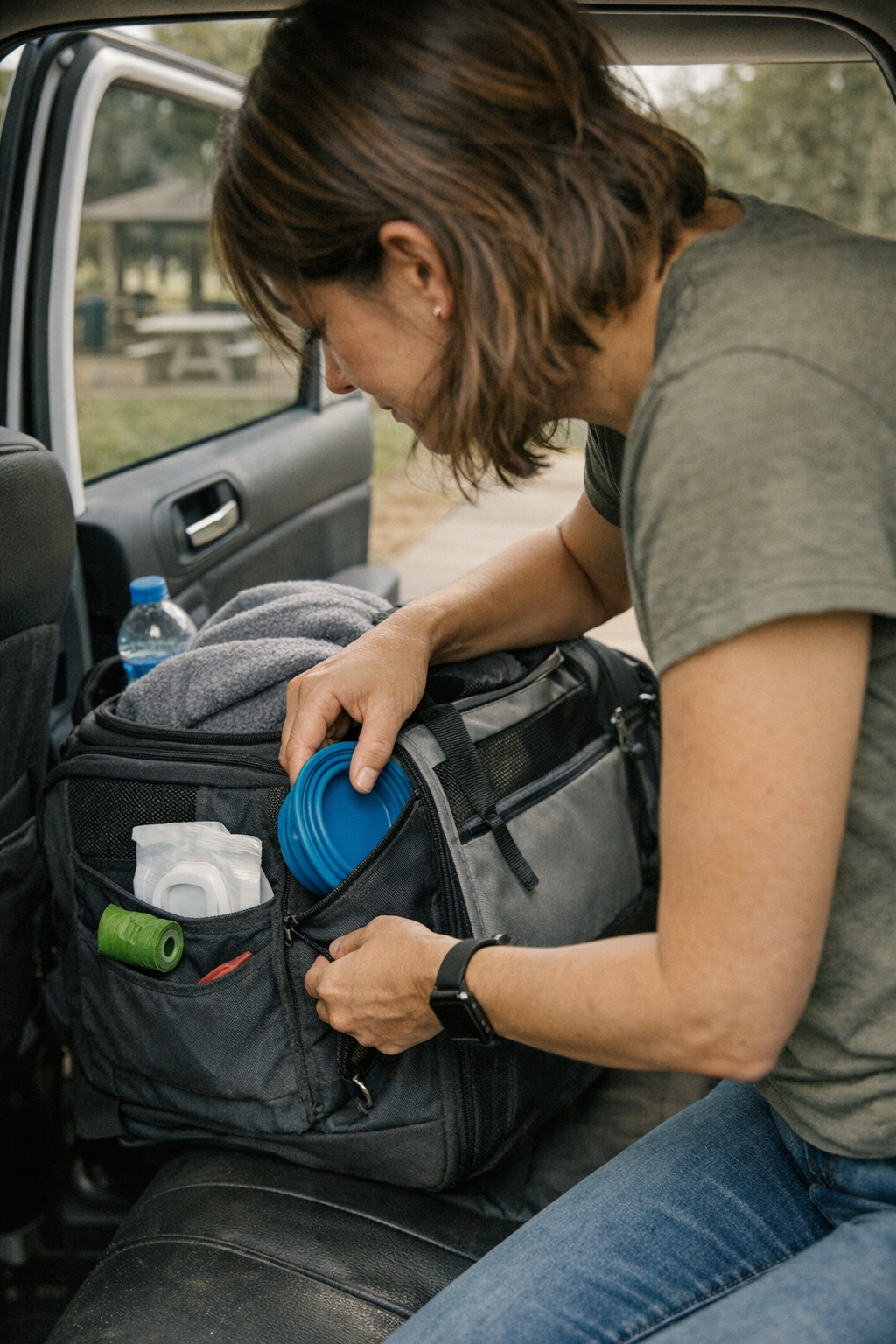
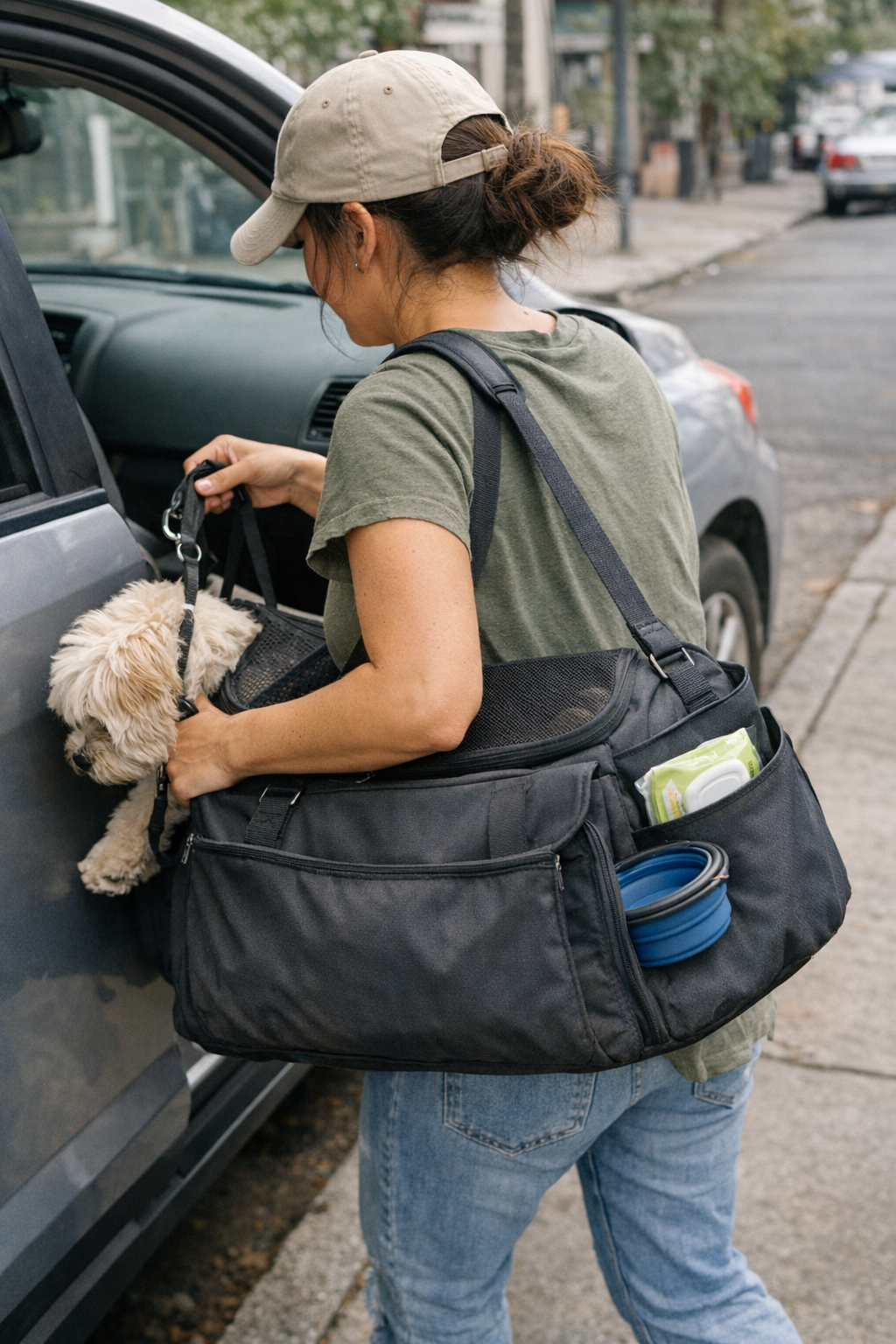
    Now swap that with a setup that works like this: collapsible bowl positioned in an exterior pocket, waste bags fixed at the outer edge, wipes within a thumb’s reach from the side. No gear shuffle, no hesitation. You supply water or leashing in seconds, cut through to cleanup, and your pet stays settled—because the pause is as quick as you need. The difference isn’t in appearance, but in how many accidental hold-ups you sidestep at every movement.

    One Small Change: Moving High-Frequency Items Outward

    The small, real fix: migrate wipes, bowls, backup leashes from zipped centers to exterior side pockets or seat-edge organizers. Suddenly, the reach drops from hands-full awkwardness to a near-automatic grab. Repeat stops get smoother not because you packed more but because you now rarely have to fight the bag at all.

    The effect isn’t a dramatic “transformation”—just interruptions slipping away. You pull a wipe without stopping, hand water calmly, leash up before the dog gets overexcited. Travel becomes less about pausing for your bag and more about keeping your pet moving and soothed. Even if the system doesn’t look “interior-decorator neat,” it finally tracks with your stop-and-go reality—helping you recover flow instead of draining it each round.

    Hidden Friction: How Organized Setups Still Create Slowdowns

    Even highly organized bags break down in the field when owner and pet gear blend: that means keys, treats, or waste bags overlap so one tangle starts another. The biggest repeat mistake is packing comfort items—blankets or chews—over or with essentials, so a single grab triggers a full reshuffle. The neat solution, under motion, becomes a source of low-level stress and lost time.

    Over-segmentation isn’t a bonus, either. Too many pockets force you to mentally map where each piece is—or worse, check multiple doors, finding nothing first try. It’s not overload—it’s just an artificial sense of readiness that doesn’t hold up when the clock is ticking and your pet needs you to keep momentum.

    Shaping a Setup That Feels Reliable During Real Travel

    The best pet travel arrangement isn’t about picture-perfect packing—it’s about repeated, seamless reach for just-used items with zero lag or confusion, despite how many stops you make. How does that happen?

    • High-use supplies immediately at hand: Outer pockets, edge slots, or snap closures. No multi-zipper detour.
    • Separate cleanup and comfort zones: No chew or blanket between you and crisis wipes—ever.
    • Owner and pet items never mixed: You know where your keys live; treats and leashes don’t invade.
    • Tested for restart: Structure survives several refits without slowdowns. Packing once isn’t enough—the system must recover itself between moves, not degrade.

    If you’ve tested your own structure and still hit the same block at every stop, the next win isn’t just a neater look—it’s the certainty you’ll grab what you need, when you need it, at any routine interruption. Fewer fumbles, calmer transitions, less wasted motion: that’s travel flow designed not for first impressions, but for the way repeated real use always exposes weak points.

    Find more practical travel setups at PawGoTravel.

  • How Small Carry-On Changes Can Speed Up Airport Travel

    If organizing your carry-on only works until you hit the first airport line, you’re not alone. Most “packed neat” setups break down fast: the passport you stacked up front ends up under a layer of cables; the tidy pouch system translates to extra zippers to open at the tray; and what looked efficient at home turns into delays with every document check, repacking motion, and in-flight grab. When a bag’s order slows you down just as pressure builds—security, boarding, seat entry—you start noticing the gap between what looks organized and what actually runs smooth.

    When “Packed Neat” Isn’t “Ready to Use”

    A carry-on can look flawless on your bed—document sleeve placed “just so,” chargers wound tight, and all the right pockets zipped. But travel isn’t a static scene. The moment you start moving—bumping through a terminal, rerouting at security, switching trays—your carefully built order starts to get in your way. You unzip one pocket for your passport, but it’s wedged under your headphones. You grab a charger, but you drag out paperwork and coins with it. That top layer you planned for “quick access” quickly becomes a mixed jumble. Each layer means another pause—a fast process in theory, a slower one every time you repeat it under a deadline.

    The friction isn’t in visible clutter—it’s in reach and reset speed. Layering your ID under a pouch or letting travel docs share space with cables creates a hunt-and-peck routine. Each required item triggers a mini-scramble, and every “convenient outer pocket” turns unpredictable as soon as one access resets the order you thought you built.

    Real Carry-On Friction: Scenes That Repeat Themselves

    The Airport Security Stall

    Security is a display of just how fast an organized carry-on can come undone. You’re next in line, sure you left your passport right on top—until your hand closes on a charger first, and a charger tangle brings the whole contents closer to spilling into the tray. The zipper barely closes. Toiletries, meant for the top, have slipped toward the middle. That “system” that looked ready at home now exposes you at the checkpoint—retrieval isn’t instant, and behind you, the shuffle builds. The more you try to move fast, the more items migrate under pressure.

    The Boarding Lane Shuffle

    Boarding time. Your compartment for documents now hosts sanitizer, receipts, and a power cable that wasn’t there five minutes ago. Instead of a quick reach, you fumble—hand half-blocking the aisle, bag half-open, aware of the line waiting for you to finish. Even if nothing spills, you sense the layout just got messier. The next access will be slower unless you reset everything on the spot—or live with the growing backlog.

    Crammed Overhead and Compounding Repack

    Now at your seat, juggling overhead space, you face a choice: overstuff your “grab zone” pocket so everything is close (but jammed and friction-prone), or risk stashing crucial items out of reach—guaranteeing you’ll have to stand and retrieve, then repack, mid-cabin. Grabbing one item shifts the rest, making the compartment a puzzle to close again. The packed-tight strategy that saved space is the same one that multiplies annoyance every time you repack during connections, takeoff, or arrival. By day’s end, the structure returns visually, but function lags with every small reset. The bag looks in order but feels slower with use.

    The Subtle Slowdown of Overlapping Setups

    Most travel friction isn’t a disaster; it’s a sequence of access delays that pile up, raising the drag of every routine move:

    • Pouches drift and bury your travel wallet under bulkier items.
    • A “top-level” document pouch now sits wedged below headphones or became wedged sideways in the shuffle.
    • Cables slide out of designated slots, trailing from “overflow” sections every time you reach.
    • You pause, trying to reconstruct which zip pocket got your phone this time.

    Each of these slowdowns feels minor, but the weight is cumulative. You end up shouldering not just your bag, but the mental load of re-sorting, remembering, and correcting. The common theme: travel smoothness gets blocked because overlap and multi-purpose pockets pull your setup apart in pieces with every use.

    Outsmarting Slow Access: Small Tweaks That Change Flow

    The answer isn’t just repacking tighter or stacking more things together; it’s about separating the actions that matter most. Assign each high-frequency item—passport, boarding pass, phone, charger—its own outside-facing pocket or pouch, with zero overlap. No doubling-up with snacks or coins, no cross-function pockets. What looks less engineered for symmetry suddenly works for speed.

    For example, a slim outer zip holds only travel documents—nothing that moves, nothing with a cable. The charger sits in its own mini sleeve inside a side pocket, not shared with pens or chewing gum. Security becomes a direct move: passport out, tray done, passport back before the next shuffle. Boarding is a single quick reach, not a rearrange-the-bag event. The crucial point—each retrieval resets only what you touched, instead of shuffling the whole pack. Stress is cut not by discipline, but by structure.

    Why “Easy to Reset” Beats “Perfectly Packed”

    It won’t win for appearance—outer pockets and minor bulges might look unstyled—but ease of reset pays off again and again. Every layout that avoids overlap keeps you from returning to square one at each checkpoint. Less fixing, less remembering, more flow. One concrete sign: you no longer second-guess where things are as you roll between gates or re-board the train. The travel guesswork vanishes because the bag interior stops moving around on you.

    Signs Your Carry-On Needs a Reset

    If any of these show up in your routine, your carry-on setup is exposing its real limit:

    • You wonder what will tumble out before you unzip a front pocket.
    • The same cable slips, tangles, and reappears where you don’t expect it.
    • Your documents hide behind new obstacles every time, even though you “put them on top.”
    • Each minor repack pushes must-have items deeper until you lose the order entirely.
    • The boarding line stalls behind you—and the problem isn’t slow hands, but layout-induced scramble.

    The difference after one structural change: Partition each must-reach item into its own consistently returned pocket or pouch, and regular airport routines stop grinding. No repeated unzipping, no search-and-recover, no multiplying “just a second” apologies with every move.

    Practical Setup: What Works Repeatedly

    The setups that hold up through actual travel are the ones designed for repetition, not just for first-glance order. That usually means outer pockets that only ever hold travel documents and are cleared of everything else; quick-reach pouches that never double as cable bins; tech and chargers kept distinct from paperwork and receipts. The point isn’t perfection—it’s an arrangement you don’t have to rethink each time you pass through a terminal, switch seats, or stand up for another gate change.

    The real payoff is mid-trip, not pre-departure: fewer micro-fixes, less escalating drag, and a bag that gives you the same easy access at your connecting gate as it did at your first. You won’t banish every travel delay, but you will avoid compounding the slowdown—and in airport terms, that’s the kind of order that keeps you moving.

    See practical carry-on tools, pouches, and travel access accessories at CarryOnSupply.

  • How Thoughtful Pet Travel Setup Eases Repeated Stops and Rest

    Your pet travel bag may look prepared when you leave, but the first real stop usually exposes the flaws. In the driveway, everything seems “set”: leash coiled, treats zipped, wipes and water bowl wedged into assigned spots. Fast forward to the first parking lot break—suddenly, the leash is snagged under a shifted water bottle, the treats are buried beneath wipes you just used, and you’re fumbling through mesh pockets with one hand while steadying your pet with the other. What started out as “organized” quickly turns into a routine of digging, untangling, and reshuffling. If your pet setup makes you hunt or disrupt the bag after every minor stop, those frictions keep stacking up, dragging down even short trips and making quick restarts more stressful on both you and your pet. This is the split between what looks tidy and what actually holds up—an everyday fail point that signals why structure matters more than a clean-zip start.

    Why “Neat and Ready” Isn’t Always Enough

    A travel bag that looks sorted is rarely ready for repeated use. After the first or second stop, the gaps in your system surface: a leash hidden under bedding, a half-collapsed bowl locked in by a seat, wipes shoved deeper after a rushed cleanup. A setup that takes even ten extra seconds to access adds up fast—each interruption throws off your flow, your focus, and your pet’s calm. By the third shuffle, the “organized” feeling is gone, replaced by a low-level annoyance that leaves both hands busier than they should be.

    Packed doesn’t mean functional. Neat cubes, zipped pouches, and matched sets can stall when you actually need a single piece in a hurry. Under pressure, the flaws in organization become obvious—especially when each stop looks simple, but the restart routine keeps growing messier with every round.

    Real Friction: Where the Setup Stumbles

    Access Delays Creep In

    The first stop tests your plan. Maybe you reach the treats or wipes with no effort. But by the next use, small changes derail the system: the leash falls deeper into a bag corner, the wipes slide out of view, essentials are pinched between blankets or crowded by your own items. Good organization breaks down not with dramatic accidents, but with repeat access—turning brief pauses into knotted searches and awkward, one-handed contortions while your pet circles and waits.

    Blocked Quick Access in Real Use

    Consider that water bowl you stashed in a side mesh pocket—fine at home, but now wedged against the center console, impossible to reach without pulling half the bag out of its place. Or treats intended for quick rewards buried two compartments deep, so every stop means one hand rummaging while the other holds a leash. It’s not mess, but misplacement—pockets and sections that seem clever until repeated shuffling turns the bag into a slow-motion puzzle.

    The Hidden Cost of Overlapping Items

    Most “sorted” setups hide a problem: owner and pet items overlap, forcing constant reshuffling. A leash sits under wipes, treats migrate behind your wallet, your phone sits next to the waste bags. Every time you open the bag, you’re greeted by a previous move, now out of place. Rather than one-time inconvenience, it’s a cycle—repacking the same section after every routine action. What was “in its place” now feels like a restless tray, always being rearranged instead of ready to move.

    Compounded Strain Across Multiple Stops

    The pain point grows with each restart. You plan for a quick leash clip and wipe grab—then find the leash migrated under your jacket, the treats are deep in a pouch, and you’re juggling bag, bowl, and impatient pet while trying not to spill your own stuff. Rarely is the strain visible from outside; you just feel focus draining and the routine stretching, with your pet reading every second of delay. That’s when a “neat” bag finally unravels: it’s not the storage that breaks down, but the ability to keep your hands moving smoothly from stop to restart, again and again.

    By stop five, you know: nice arrangement didn’t make up for slow access. The moment requires more work, more handling, more micro-adjustments. The bag is not a mess, but you’re still fighting it—and so is your pet, who now reacts to every extra step you didn’t expect.

    What Actually Fixes the Routine

    The difference isn’t better packing—it’s setup that keeps essentials isolated and instantly reachable, even on repeat. Moving wipes and treats out of mesh pockets and into a dedicated, top-access compartment ends the multi-step dig. Swapping hidden leash rings for a genuine exterior loop lets you grab and attach or detach on the fly, without shifting the whole carrier. The trick: single-move grab zones for whatever you touch most, structured outside the main jam of shared space. Clean-up, comfort, and control each get their own spot—so you don’t have to hunt.

    This is not about achieving a perfect look, but about a system that stays fast and stable by the fourth stop as well as the first. It’s a small but real reduction in handling time: less grasping, fewer resets, and a routine that favors one-step movement, not repeated fidgeting. What holds up isn’t tidiness, but return-to-motion speed—even when the car is packed, your pet is restless, or the pit stop cuts into your planned timing.

    Seeing the Difference: Real-World Examples

    Scenario: Pulling Over for a Fast Cleanup

    You hear the scrape of a tipped water bowl. Wipes are somewhere—are they under the blanket or next to the carrier wall? If their pouch is hidden, you’re halfway through the bag, waving your pet aside and dragging out blankets, losing the window for a calm reset. But with a single-exposure pocket right up top, the wipes are out in seconds, mess is handled, and you’re back in motion before your dog gets jumpy or your own patience wears thin.

    Scenario: Repeated Reach for the Same Item

    Each time you stop to reward your dog, treats are harder to reach. First time, easy grab. By stop three, they’re blocked by a sliding bowl or pressed under owner gear. Constant rummaging distracts you and interrupts the reward. Shift those treats forward—into a solo grab-and-go section instead of a crowded mesh or combo area—and the rhythm changes. You get to reward, reset, and move without friction, and your dog quickly recognizes new stops as reliable, not uncertain.

    Small Adjustments, Big Returns Over Time

    The setups that work aren’t just tidy—they’re built for constant, friction-free repetition. When quick-use items are on their own turf and flows match real routines (open, grab, clean, restart), even minor stops feel controlled. You minimize the overlap between your things and your pet’s—so there’s less backtracking and fewer mistakes every round. The change isn’t in a visual upgrade, but in movement: fewer hands lost to sorting, less pet restlessness, and less second-guessing at every stop.

    By your tenth trip, a setup designed for repeat reach and one-handed control beats appearance every time—especially when each stop can either grind or glide, depending on what your bag actually lets you do. Mess can be managed anywhere; access and flow decide if travel is really easier on you and your animal.

    Find travel setups that handle real movement at PawGoTravel.

  • How Small Car Clutter Creates Driving Distractions and How to Fix It

    Looks can fool even the most experienced driver. On Sunday, a cleaned-out car feels ready—every cable neat, every bin in place, nothing cluttered. But midweek, that same car turns into a silent stubborn opponent: phone cables snake back into the footwell, storage bins slide at every turn, and tissues migrate until they’re wedged out of reach. The “organized” look means little when every entry or exit triggers the same micro-battles. The real problem isn’t dust or visible mess; it’s setups that fall apart the minute you put your car through normal weekday routines. For anyone who wants their drive to run smoother, these friction points—hidden until you use the car repeatedly—signal the difference between cosmetic order and function that holds up. The difference sets the tone for what DriveWellSupply solves every day.

    Why a Tidy Look Doesn’t Mean a Seamless Drive

    It’s easy to celebrate an interior that looks settled after five minutes of tidying—until your routine exposes what’s missing. Monday: cords tucked, bins balanced, tissues where you swear you’ll reach them. By Thursday, the same charger blocks pedal access, pens vanish under the seat, and you’re stretching for tissues that slid across the cabin after only one turn. The signs are all physical: that tug when you unhook a cable caught around your shoe, small containers edging across the floor, groceries or backpacks shoving essentials out of position. What started as “organized” becomes a reset loop—especially if your week stacks up with errands, kids, or quick work stops.

    The Hidden Cost of Drifting Essentials and Loose Cables

    Your real setup weakness doesn’t show at first. First drive after cleaning: every cable routed clear, floor mats lined up, quick-grab items right where you want them. By midweek, routine pressure tells the truth—charging cords wander, bins nudge into new territory, and a simple backpack drop creates tangles or sends gear underfoot. Each return to the car means shifting cables (again), sweeping hands for that tiny item now out of sight, sliding mats back by a few inches, reclaiming sunglasses from impossible gaps. Anything unanchored keeps moving. Over several stops—school pickup, groceries, routine parking—what mattered most on Sunday was supposed control. What matters by Friday is how much annoying rework your system causes.

    When “Organized” Slows You Down

    Most people accept some version of a sensible setup: organizer bin up front, charger lines tucked, daily items within reach. But practicality dissolves under normal driving. Inside a week:

    • Storage bins that don’t grip drift toward feet and pedals, scattering their contents or causing slowdowns as you reach down mid-parking.
    • Loose phone cables and mounts cross into your bag drop zone, snagging every tote, lunch bag, or coat tossed onto the seat.
    • “Contained” trash or small items slip loose, so wrappers and coins roll out somewhere you can’t reach quickly enough.

    Even after cleaning, exits run slower: cable slack snags around a purse, bottles wedge onto floor mats, small bins need adjusting—often before you can even start the engine, let alone hurry off.

    How Recurring Friction Sneaks In

    One missed detail returns with every loop. Maybe it’s a tissue box that won’t stay put, a coffee cup on a permanent migration under the seat, or a cable that circles back to the floor after every drive. None are dramatic, but each steals your focus just long enough to interrupt flow. You realize: the car isn’t truly “in order,” because each trip you do the same quick fixes. The more you rely on the vehicle—work commute, family errands, repeat stops—the more those tiny obstacles stack up. Instead of seamless transitions, it’s ongoing mental and physical drag—reset, reposition, dig out, unplug, retuck. An interior can look neat and still produce low-grade annoyance every time you need to get moving fast.

    Putting Structure Where It Actually Matters

    Real improvement only starts when your setup answers repeated-use pressure. Choosing “organizers” by look alone misses the point; what you need is stability when your schedule gets busy and your hands are full. Long-lasting setups take shape around physical anchors and thoughtful structure.

    Real-World Tweaks That Make a Difference

    • Weighted edge organizers with cable guides stop liners and wires from drifting into hazardous or inconvenient spots—so when you reach for your phone, nothing catches, uncoils, or slides underfoot.
    • Non-slip bins with raised edges lock against seat bases for actual containment. Stops and corners no longer launch essentials across the floor, and cleanup drops from minutes to seconds.
    • Clip-based or slotted cable routing keeps charger lines accessible but never in the way, dodging snags on gear shifts or bag drops—removing that daily negotiation with your own charging setup.

    The winning pattern isn’t “more features,” but direct blocking of every little drift, tangle, or clutter your routine keeps exposing—a realistic answer that stands up to repeated entry, not just staged photos.

    The Real Test: Does the Setup Hold Up to Daily Life?

    Forget launches and labels—how long before you’re fixing the same mess? That’s the real test. Switch to a weighted organizer, lock down cable sprawl, use bins that stay put, and after a week you’ll see: sunglasses still within reach, cords never need wrangling, and the ritual scavenger hunt fades. More critically, your mind is on work or dinner pickup, not on untangling your own car before every drive. The space no longer resists: nothing slows you down, switches get hit, bags unload fast, and you spend zero time staging a return to comfort.

    From Visually Managed to Actively Easier

    Sharp interiors don’t guarantee an easy drive—sliding organizers, tangled chargers, or bins that refuse to stay in place turn “tidy” into tedious. The difference is friction: does your protection or containment block problems, or just pause them? Choose structure over appearance. Secure the hazards, anchor the distractions, and your car stops being almost-ready for use. Suddenly, even after a dozen short hops or a rush-hour dash, every return is smooth and non-eventful. That’s the proof that a better setup is less about having a clean look and more about always being ready to go—no matter how full, fast, or unpredictable your week gets.

    Find practical car-use solutions at DriveWellSupply

  • Why Choosing a Wide-Turn Pet Travel Bag Transforms Your Routine

    The first sign your pet travel bag isn’t working comes before you reach your destination—a quick reach, an awkward twist, or a knee smacked by a stiff bag edge as you wrestle keys and leash at the curb. No matter how carefully you pack, the real test of a pet travel setup is what actually happens in those stop-and-go moments: seat to sidewalk, lobby to elevator, coffee stop to car re-entry. What looks neat on the seat often turns clumsy in your hands. A bag that seems organized in the quiet of your driveway can become a bottleneck once you start juggling pet, leash, and your own essentials while trying not to trip over an overloaded side pocket. Yes, structure matters—because repeated travel exposes flaws far faster than any tidy first impression.

    Why Bag Shape Isn’t Just a Style Choice

    Pet travelers rarely test their bags anywhere but home and car, which hides the real pressure points. The appeal of a narrow, compact bag is obvious—it hugs your side, lines up with the seatbelt, stacks vertically. But movement tells a different story. Muscle memory breaks down when you need to swing your bag clear of your pet’s carrier, avoid pinching the leash, or slide out of a tight parking space. A slim shape that sits pretty will, after two or three transitions, knock your knees, force your wrist into odd angles, and limit your ability to grab wipes or treats without shuffling everything around. One-handed lifts grow messier by the hour.

    The little hits compound. Each pause on the road makes you more aware of blocked pockets, squashed items, and the grind of elbow-against-bag every time you guide your pet in or out. The difference surfaces fastest during short, repeat stops—the opposite of Instagram’s smooth travel setups.

    The Hidden Cost of Looking Tidy: Repeated Micro Frustrations

    Organized does not mean accessible. Stop for a gas station break or a quick errand, and the “perfectly packed” bag reveals its buried flaws. The wipes you need after your dog’s shake are wedged under the comfort pad, requiring a half-emptying just to reach. Grab for a water bowl and get the treat bags first—again. The pet carrier leans as you fumble zippers in search of what should be handy. Meanwhile, your wrist blames you for designing a pocket lineup that stacks essentials behind tight seams rather than opening up at your side.

    None of this is a one-time hassle. Each shuffle, each blocked reach, means repacking and recalming—not just for the pet, but for you, and not just once, but at every pit stop and pause.

    The “Wide Turn” Fix—and Why It Changes Everything

    The game changes when your bag shape supports real movement—especially around doors, seats, and those fast curbs that demand quick handling. A bag or organizer with enough width is not about carrying “more stuff.” It’s about avoiding that swing-tight, pocket-block pattern that narrow bags seal in. The payoffs are immediate:

    • Body movement stays natural. Your arm swings out, not pinned by straps against your side. The bag arcs away from your knees and clears your stride by default, not with forced contortions.
    • Pockets and essentials open sideways, not in stacked layers. Instead of digging deep or rearranging every time, you reach laterally—wipes, bowls, toys each within sight and grab range, even during a quick stop.
    • Pet side stays calmer. During seat exits or sudden stops, the bag tracks away instead of slamming into your pet or leash hand, saving both of you that startle-and-reset cycle.

    This isn’t about organizing more neatly; it’s about breaking the reset loop, letting you recover from interruptions faster and restart movement without the same doomed repackings every few stops.

    Real Use: How Narrow Bags Keep Tripping You Up

    It’s a cycle most pet travelers will recognize: Park, unclip, try to squeeze your hand past a bottle and snack pouch. The handle’s jammed; your elbow scrapes a door pocket. You start to slide out, but the bag thumps your knee, again. On the sidewalk, you need wipes, but they’re buried, and the pocket you want is blocked behind the carrier. Pull out one thing, and everything else shifts, tangling leashes and pet gear. Comfort mats and toys are meant to smooth the trip—until they cover what you need, forcing more reshuffling.

    The bag still looks prepped. The travel routine collapses anyway. Packing perfectly at home fixes nothing about repeated sideline searches and blocked access once you’re actually using the setup for stops and starts.

    Choosing a Setup That Works After the First Trip

    The shift comes from switching to a travel bag or pack that lets you reach into a wide central compartment—not a pair of stacked, slim pouches that demand constant rearranging. Now, instead of a blind hunt or forced emptying, bowls, waste bags, and wipes land in your palm with no contortion. The bag swings out of knee range during seat exits, and after each pause, you restart moving instead of wasting time coaxing your pet and repacking lost gear. Real relief is not about a bag never getting messy, but about less friction every single stop after the first.

    The Compromise of a Clean Look

    Slim, tightly-packed travel bags promise tidiness at the expense of speed. If you must dig for a comfort mat meant to soothe your pet—but it’s blocking wipes or leashes—you lose both order and calm at crucial moments. It’s not a matter of packing more carefully; it’s about picking a layout that handles movement and sudden need, not just shelf appeal.

    What Happens When Pet and Owner Items Collide

    The overlap of “your” stuff and “their” stuff is rarely a one-time annoyance. You reach for pet cleanup and grab your own keys first, search for sanitizer only to tangle with a chew toy. Cross-packed pockets don’t just slow things down; they create repeat interruptions that compound every stop. The more compressed your packing, the more owner and pet gear crowd into the same bottleneck, and the more common these hiccups become—especially if you try to consolidate into one sleek, divided pouch.

    Does “Compact” Ever Work?

    Stacked dividers and compact, multi-pocket organizers make sense—right up until you try to use them while moving. If your bag forces you to stop, reshuffle, or double-check every time you need wipes, water, or a comforting toy, it’s working against you, not for you. The reality for anyone making repeated short stops: narrow, packed organizers create more stops-and-starts and more jostled pets, not fewer.

    It’s not about appearances—it’s about how your travel setup actually moves with you. Choose structure that supports wide, natural turns and single-move access to essentials. Your commute, weekday errand, or even road trip will run with fewer snags, quicker recoveries, and less pet stress. Neatness is easy. Handling, in the real world, is where a well-structured pet travel setup earns its keep—again and again, in every repeated use.

    Find practical, real-use-focused pet travel setups at PawGoTravel.