
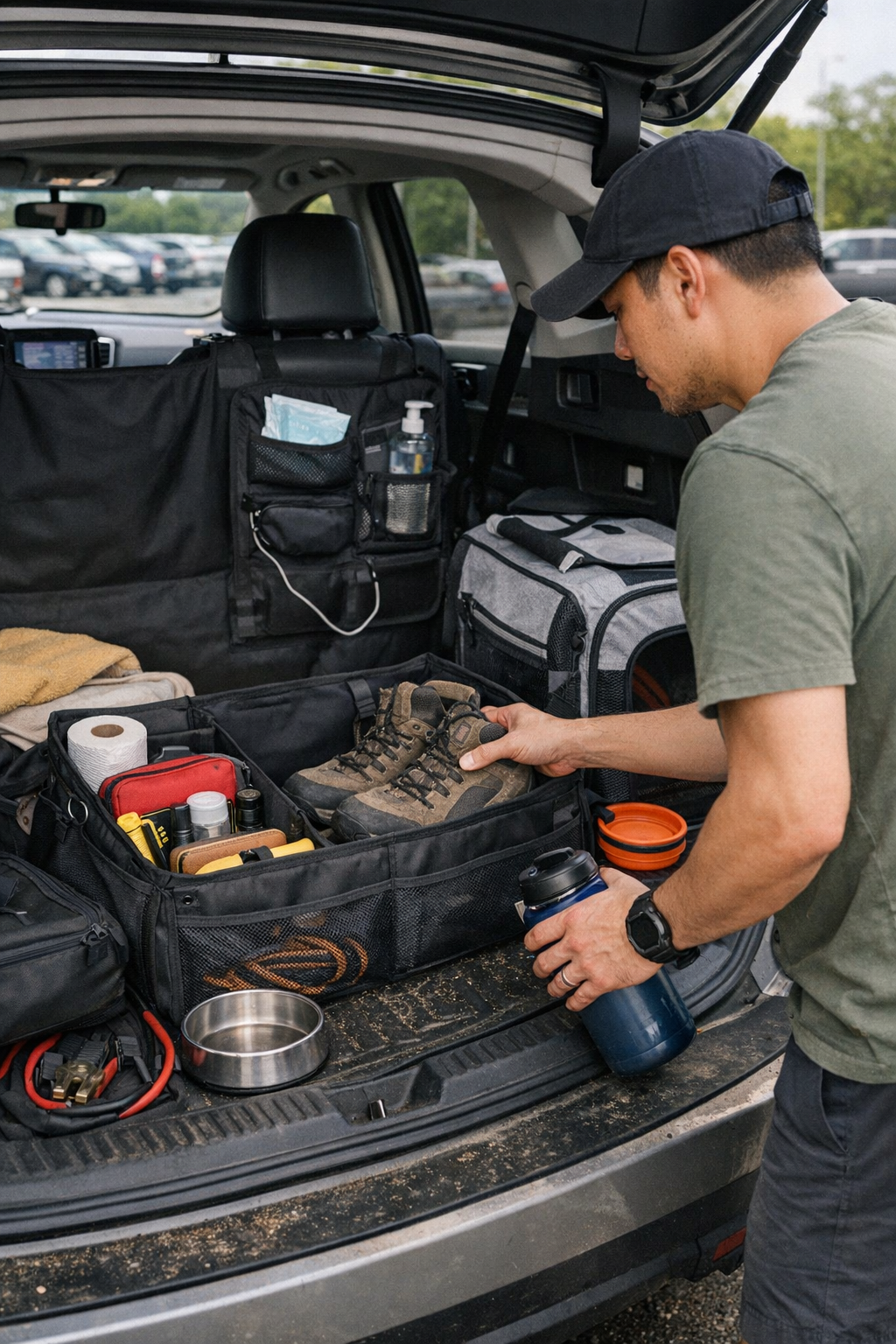
The truth about “organized” cars: looking tidy after a deep clean rarely survives the realities of daily driving. That appearance fades the moment regular life returns—morning commutes, round after round of errands, quick charger grabs, wet gym bags tossed into the footwell. The real test isn’t how your setup photographs, but how it handles another week of re-entries, cord pulls, stray snacks, and items that always seem to end up just out of reach. Anyone can make a car look set in place for a day; it’s what that setup does after five days of rush-hour stops and door slams that matters for actual use.
When Neat Turns Into Never-Ending Adjustments
An organized start—clean dash, mats aligned, cables tucked—barely lasts against normal use. By Friday, your quick-access charger is buried under to-go napkins and shopping bags, so you dig and fumble for a simple plug-in. Cables that once ran along the console now creep toward the seat edge, snagging your bag or your coat every time you scoot in. Floor liners that seemed snug inch away from the door frame, exposing the strip your heel grinds into, collecting new grit and crumbs right where you step.
“Clean” isn’t the same as useable. When you have to hold your coffee in one hand and untangle a cord with the other just to charge your phone, or when pulling out wipes for a spill means digging past papers that have drifted across the center console, the system breaks down. Each workaround—another minute, another double-check—starts to pile up. Especially when you’re cycling through multiple stops in a tight window, or managing a backseat loaded with school gear and the day’s groceries.
The Hidden Cost of Surface Order
A car that looks uncluttered can still interrupt your routine. Hidden storage means keys stuffed in a too-tight bin or charger cords dropped out of sight—so when you finally need them fast, you’re stuck stretching for awkwardly placed gear or scraping through semi-blocked door pockets half-filled with receipts.
These setups don’t collapse—they just chip away at your speed and convenience. A charger routed tightly under mat edges looks clean, but becomes an extra task every time it comes loose from moving a seat—so now you’re re-threading cable instead of getting moving. A cargo divider promising neatness can mean groceries wedge into deep, stiff sections you can’t unload without reaching far under the hatch—slowing your exit and turning rain or mud into a bigger nuisance.
Repeated-Use Fatigue: Noticing the Slowdown
No crisis—just accumulating friction. Door-pocket wipes slide backward after every bump, so a spill means you stop and reach. Floor protectors migrate from their starting spot, so cleaning up after soccer practice turns into scraping sticky grime from corners, not the liner. “Put away” often means “out of reach”—so the charger, the wipes, the keys become routine interruptions. Every buttoned-up solution that blocks direct access adds a pause where you used to move right through.
That’s the catch: what appears organized at first just moves the hassle into smaller, more frequent steps. Instead of one obvious mess, you get dozens of tiny slowdowns—each one draining time and focus during tasks that should be automatic, like parking and peeling out for another pickup.
Designing for Real Driving: Where Your Hand Actually Lands
The measure of car organization shows up when routines get tested, not during a final wipe-down. Consider:
- Sliding into the driver’s seat with a handful of items—can you connect your phone in one motion, or does the charger hide under a tangle, forcing a search every time?
- Mid-traffic spill—are wipes squeezed behind paperwork or clipped open at seat level for one-handed grabbing?
- Quick stop after the dog park—can muddy leashes and towels air out in a reachable spot, or are they buried in a trunk bin that turns unloading into a multi-step hassle?
- Loading groceries in bad weather—does a tight trunk organizer slow down the dump-and-go rush, or does an open section let you finish fast and get out of the rain?
Small decisions multiply over the week. Seat-level pouches trump hidden cubbies for fast-access items—phone, wipes, or sanitizer. Cables routed along the edge of the console stay grab-ready, never lost in deep bins, so plug-ins happen in one move even when you’re juggling bags or a restless kid. Proper floor covers lock under the seat to stay stable—no liner drift, no uncovered carpet, and no double cleanup after a run in wet shoes.
Shifting the Focus: Visible Access vs. Hidden Storage
Trying to hide every tool or cable forces miniature searches at the worst moments. Chargers or keys in zipped bins mean disassembling your setup just to get rolling. When you stage essentials where your hand lands—door pouches for scrubbing wipes, organizers at seat base for chargers—the rhythm of daily use keeps flowing. The difference isn’t just aesthetic: it’s fewer “where did that go” pauses and more reliable grab-and-go in real routines.
Smart Storage for Traffic Moments
Clip the wipes pack near your seat, not inside a cluttered door pocket. After dog walks or grocery loops, you reach over, grab a wipe without breaking stride—no need to pull over or sort through layers of paperwork when cleaning up on the fly actually matters.
Guided Cables Over Buried Lines
Run your main charging line along the visible console edge. With direct routing—never under mats, never loose in the footwell—your cord stays accessible for single-hand plug and unplug. This is what survives the week: fewer cable drops, fewer tangles wrapped around shoe or groceries, less extra cleanup from wires collecting dirt and gunk near the floor.
The Real Payoff: A Car That Works With You (Not Against You)
Enough weeks of chasing chargers, digging out wipes, or fighting trunk pockets and you see it: surface “order” by itself just shifts annoyances into routine use. Small structure tweaks—especially in charger guides, seat-side organizers, resilient floor protection—deliver actual payoff every drive, not just after Sunday cleaning. The setups that last make repeated tasks automatic: cables where you need them, wipes always on hand, loading and unloading that’s as quick in real weather as it seemed in your plan.
Function beats appearance—every time—when real driving and real messes hit. A car that fits how your week really works means cleaning up less, not just hiding corners for later. That’s the difference you keep noticing on the third school-night commute or the next muddy errand run: setup that keeps up with you, not the other way around.
Find practical car-use solutions at DriveWellSupply.